Madhu Sriwastav is Assistant Professor of English. She is based in Kolkata. She is a poet, translator, critic and reviewer. She has published poems in various national and international journals and anthologies. She has performed poetry in several poetry festivals. She writes on anything that touches her. She is working on her upcoming book of poems.
.
.
PLEASE NOTE: ARTICLES CAN ONLY BE REPRODUCED IN OTHER SITES WITH DUE ACKNOWLEDGEMENT TO BORDERLESS JOURNAL.
Everyone has a nose and an opinion on the new normal. It can get overwhelming sometimes. But there is one category whose views have been ignored and dismissed as ‘unimportant’ at a time when the world needs fresh voices and perspectives the most.
That category is none other than children, the very same set who will inherit the world.
In a world obsessed with keeping children ‘engaged’, everyone is an expert on home-schooling and DIY ideas but no one pauses to ask children how they feel.
How has life changed for the pre-teens and teenagers? What are family equations like? What do they miss? What are their aspirations? What moves them? What disappoints them? What surprises them? Who inspires them?
At Bookosmia, India’s premier writing platform for children, these are some of life’s intriguing answers the brightest young minds choose to share with Sara.
Sara, the storyteller
Who is Sara? She is India’s first stereotype busting sports loving girl and storyteller. Sara is already a big hit amongst parents and kids alike. She was rightly and fondly called “our new best friend” by The Hindu and has since then been featured extensively for creating a repository of stories, poems and essays written by children, giving a unique insight into their minds.
Sara wants every child to tell their story in their own words.
And so, day after day, week after week, she is flooded by entries from bright 7-16 year olds in New Delhi, Gurugram, Bareilly, Vadodara, Mumbai, Chennai, Ranchi, Kolkata and even Switzerland exhibiting powerful emotions and viewpoints that are truly eye-opening.
Her latest writing prompt #GratitudeDuringCovid, an effort to encourage young voices during a difficult time was hailed by parents and children alike.
While younger children wrote to her about being thankful for nature, getting to spend time with their parents and hearing the chirping of birds, the 12-year-olds and above shared pieces on becoming conscious of the privilege they have, of the freedom to “go inside themselves if not outside”, of empathy for their domestic staff and of exploring a new self.
The series was a first of its’ kind insight into the minds of the children and was covered by national media like The Hindu and The New Indian Express.
“While we see many memes on parents facing difficulties in handling their children during this long lockdown, we hardly bother to think about how these children might be feeling. But someone did think of them,” noted The New Indian Express while lauding Bookosmia’s writing platform for children.
It is in this context that we are stoked to bring select essays, poems and stories from our young writers at Bookosmia’s ‘Sara’s Corner’ to Borderless, a truly revolutionary international journal that has made such a deep impact within a short period. We can think of no better place than Borderless to encourage these young writers to write down the emotions they bottle up for fear of judgement.
Through this association with Borderless (see rules of submitting in Submissions), we are confident that young writers will come home to exactly what they were looking for — a warm, welcoming, and healthy space to express, learn, discuss and debate.
Let’s put those webinars and Zoom classes on hold for a bit. It’s time to listen to what the wise young ones have to say.
—-Team Bookosmia
Essays
Its OK Not to be OK
By Nivedita Chawla, 17
Michael Jackson said “stop existing and start living.” I feel this lock-down was about slowing down and changing our yardstick of measuring things.
Personally, my yardstick of happiness, was being productive.
I love getting things done and checking them off my to- do list, and then I love making more to do lists. I would see my friends doing 100 push-up challenges, doing various courses on Coursera, cycling every morning and naturally I’d compare their progress to mine, and felt like i was lagging behind. But I realized that this is pandemic, not a productivity contest.
Some days if i manage to get out of bed after a sleepless night, shower and sit for my political science class, its enough. It’s okay to have a dauntingly long to- do list and not get anything done on it, its okay to not have a to do list at all. This pandemic has made me realize that its okay to not be okay. You can’t change this situation, all you can change is how you deal with it.
Being privileged in your AC rooms doesn’t necessarily mean you HAVE to be in an emotionally better place. Grateful that you’re in a better place than struggling migrant workers and failing businessmen? Sure. But your 17 year old self doesnt have to take up the responsibility to heal the world. Today, if all you do is water the plants, watch the sunset and play cards with your family, its okay. Amidst all your luxuries and comforts you can still choose to feel discomfort. The world is healing in its own ways, you can heal in yours.
***
Children look forward to future pandemics?
By Meghna Girishankar, 16
Children look forward to future pandemics?
During a time when the world has been massively hit by the effects of COVID-19, with almost every individual facing its brunt, there might actually be a certain set of them who are loving what the pandemic has to offer. And they are children.
Before we can even attempt to fathom the logic behind this, pessimistic thoughts would have already started coalescing in our minds: How can one be so self-centered? Aren’t such ill-fated thoughts purely selfish? But as the saying goes, “Don’t judge one’s choices without understanding their reasons.” In order to truly comprehend this seemingly inexplicable desire of children for wanting future catastrophes akin to the prevalent one, we must analyse their thought- process behind the same.
Children like to receive their parent’s undivided attention and to be loved, by engaging with their family. In the pre-corona world where both parents were working, getting to play a game of chess or having a family movie date was almost unimaginable and tantamount to a privilege, for children. Working parents would be consumed with their work lasting till the wee hours of the night. As a result, they barely, if at all, could make time for their children, who, all along, have become accustomed to this treatment.
Now, anything that reverses this trend, with children seeing more of their parents around and getting to experience more quality time with them would definitely provoke feel-good vibes. And this is just what the pandemic has achieved. As parents are working from home, they have more time to bond with their kids over activities like cooking, gardening and dancing. Children are certainly liking this whole new experience of having their whims and fancies being addressed, and would want it to continue in the future as well.
However, they are anxious that this might only be a ‘limited period offer’. Post rehabilitation, once economic activity resumes, things would go back to being the way it used to be. Ingenuous as they are known to be, children hence feel that the outbreak of such pandemics is a good omen for them. We cannot entirely blame them for such thoughts, as they are young and oblivious to the fact that what they consider fair might not actually augur well with the rest of the society.
In fact, parents are partly to blame. If they had ensured to set aside time off their other commitments to bond with their children on a regular basis, this notion wouldn’t have even crept into children’s minds.
It is a parent’s duty to reason with their kids that what they see as right, might not necessarily be so, since it is quintessential to take cognizance of a broader viewpoint. This will only be instilled in children when parents are more involved in their child’s life. Parents should therefore make a conscious effort to maintain a healthy work-life balance so that children don’t feel left out.
After all, children do not remain juvenile forever, but while they do, better to cherish those priceless moments with them!
These are the appellations I gave to my feelings before this lockdown. I was constantly overlooking my blessings. I did not know what I loved nor the things that I owned. It is the last two months that have allowed me to reflect. They have given me credence about my thoughts because believe me, I was just a lonely, friendless child before this turn of event.
The two little words in LOCK-DOWN have actually played a contrasting role to my thoughts and feelings. I have “unlocked” them and obtained wisdom through stories. Stories of people who made their lives worth living on this planet and left it while inspiring others through their creations, experiences, and their service to this world. These stories have allowed me to have a sagacious vision of how people function to make their lives meaningful. It has made me structure my long term goals of becoming an entrepreneur and making a difference in this evanescent world that we live in. In fact, this lock-down has taken care of the seemingly little things in my life – my sleep schedule, fitness, my connection with novels, and it has even helped me to end my addictive relationship with Netflix.
This lone time led me to ponder upon the ideas I never thought I had, such as how each and everything has a philosophical side to it and how faith, imagination and intuition have influenced us to perceive things in our own way. I started to observe the smaller fragments of the approaches people take towards a situation. I watched how my mom and dad work with each other, how my younger brother imagines his day before starting it, and how my grandfather integrates his religious knowledge into his tasks.
This lockdown has practically defined the word “growth” for me. Not for a moment did I believe that my life was going to ameliorate this way, but this short period has unleashed my imagination to its endless possibilities, and it has helped me reconstruct my beliefs.
I have been integrating several views of people around me to find the true perspective of the world and myself. I did this while building solid relationships with a few friends that I know will last a lifetime. Because, after everything that I will have achieved in the future, the things that will matter the most are these friendships that I spend time on now.
So the words that I would attribute my thoughts to are- Appreciative. Creative. Developmental. Conscious. Magnified and finally, Introspective.
***
Poems
There is no one to blame
By Lavishka Bajoria, 7
I am thankful that we have beds to sleep,
Poor people who don’t have it, they weep.
.
I am thankful that I can wake up late,
By staying at home I am also safe. Late and safe don’t rhyme.
.
In this lock-down I am in a happy mood,
I am also thankful that I get food.
.
We are always playing a game,
There is no one to blame.
***
Grandma’s Tale
By Ahaana Kandoi, 13
“And there was no sign of an individual on the streets Not even one where there used to be a myriad. All engrossed in the news Hoping that some positive message comes along.
That was the situation of the virus outbreak, a disturbed time for all beings” said grandma. “Both you and me were held captive in our houses The towns had ceased to function.
Death rates increasing with the blink of an eye And the infected were the hostages There was the lot of the careless few, Who were determined to not care There was the lot of the educated illiterate Who always seemed to be heedless.
However changes began as true leaders came forward. Many people set good examples and they were followed. Soon people disappeared into solitude They began to follow the rules. They stopped complaining and took to action They were ready to give up on social lives “We can get through this, we can do it,” Were the words on everyone’s lips.
Development of technology began Even in these terrible times People began working from home And brought about a progress in their countries.
And oh! The world how beautifully it evolved The earth was once again replenished. Turtles, dolphins and other creatures seen rarely, Were now a common sight.
And if we look at the bright side No theft, rape, abuse, slaughter occurring And all were once again enthusiastic The happiness again restored.
The people were now jolly and jovial, 7.8 billion smiles had driven the virus away. So children, the lesson we learn today is the greatest one of all, United we stand, divided we fall.”
***
The world is better because of you!
By Vansh Garg, 17
Ode to Mother
Mother
A being like no other
One capable of exuding so much love
So much inspiration to fly above
One capable of becoming equally as harsh
.
When your diligence and manners run scarce
As I wake up every morning,
My mom holds me close
Oh, I could enjoy this forever,
Alas, if only this moment forever froze
She lies there, a being infinitely wise
This feeling of warmth, it moistens my eyes
.
Years pass by, oh, there my youth goes
I’d never give up this feeling, her holding me close
The creator has created
The perfect master plan
To run this world, on its own
Clan after clan
.
I’m part of this creation
As real as can be
Made possible by my mom
Who gave birth to me.
.
To her, I’m foolish
I am naughty and naive
Nevertheless, a part of her
Blessed to be alive
I may be annoying and childish
But my smarts are what mom gave me
.
I strive to be as infinitely selfless
As my mom, its epitome
I want to meet the creator
For them to feel the magnitude
Of, at being my mother’s son, my
unending gratitude
.
To all mothers, a Happy Mothers’ day
Achieving what you have I’ll never be able to
We dedicate to you this day
The world is better because of you.
***
Stories
Pumpkin Girl
By Ira Shenoi,6
Once upon a time there was little girl called Iri in a village very close to deep dark forest. She was walking in the forest and found a small pumpkin. It was a magic pumpkin and started to grow bigger and bigger. It grew so big that the girl decided to make it as her home. Slowly day by day she carved a bedroom, living room and balcony for her inside the pumpkin. It was the cutest house and everyone called her pumpkin girl because she lived inside a pumpkin.During the day she would go around the forest picking berries, nuts and fruits to eat. All the animals in the forest like rabbits, butterflies, squirrels and bears were her friends.
But, other side of the village lived a big monster called Big Tummy Monster. He was called so because, he had a big stomach and a huge appetite. No matter how much food he ate, he used to be hungry all the time. People from the village had to cook for him and take food many times in a day, otherwise he would scream and threaten villagers saying, “I will eat you all up!” People in the village were very sad and crying! The pumpkin girl saw people crying and asked them what the reason was. They told her that all the food they had was given away to the Big Tummy Monster and now they would not get anything to eat, even for their kids. If they don’t give food, the monster would eat the up.
The girl thought of a plan, she went to the monster and said, “Hey Big Tummy Monster, you are hungry , right? All you need is food, right? if you are really strong come and eat my pumpkin house!”. The monster came over and started eating the pumpkin, the pumpkin was so big that the monster could not finish it up. But the monster didn’t want to give up, and kept on eating and the stomach blasted out open, the monster ran away into deep dark forest in pain and was never seen again.
The pumpkin girl had rescued the villagers from monster, but now she didn’t have a house to live it. The villagers thanked her and offered to build her a home. But she was not interested, she went to forest and kept looking for a pumpkin. She found a small cute pumpkin. When she touched the pumpkin, it turned into a huge one. She could make it as her new home, the villagers helped her turn into a home, and she was happy as ever. “Do good and be kind.”
***
“Holi is for everyone,” it is said. Even for colour black?
By Anoushka Poddar, 10
“What in the world were you thinking?” the boss cried. “Who would want to buy a black colour for holi? I know you are new but that doesn’t explain why you made a black colour. Now pack all of it up and throw it in the bin outside.” The worker meekly agreed and did as he was told and I was tossed outside. I was feeling very cramped and stuffy inside that packet. I tried wiggling out but ended up spilling a bit of me instead. My eyes widened in alarm as I lay still like a brick. This new worker at Colours Factory had accidentally made me, a batch of black organic colour. Nobody would have played with black colour so the boss told him to throw me away. As I lay on the trash, surrounded by fruit peels and plastic bags, little black rose heart filled with self-pity and remorse, I asked myself what had I done to deserve this? I had only been myself! I guess there is punishment for that too. Many days passed as I lay in the garbage bin and Holi was very near. On the eve of Holi, a little beggar girl came wandering by. She started searching in the bin, looking for something she could use or sell. When she saw me her eyes lit up and filled with tears. Laughing and crying at the same time, she picked me up and started twirling me around. I felt so happy and at ease. Me, a packet of black colour was giving someone so much joy. I was on cloud nine. The girl immediately took me home. All her family members were so elated that they almost jumped with joy. They stored me on a wooden shelf, hoping to play with me on Holi. The next day I was taken out and opened. The family had a wonderful time playing with me as they could not afford colours and very rarely got them. I was soon finished but the family was not sad. In fact they were very happy that they at least got to play with me.
This was a very quick end to my short and dramatic life but I felt amazing that I was able to help somebody have a good Holi. I felt that this is the true spirit of Holi. When they say ‘Holi is for EVERYONE’, they are right!
The Pied Piper of Hamelin- a retelling!
By Riddhiman Gangopadhyay, 13
The rat infested city of Hamlin was in distress when the mayor finally decided to take some action against the vermins. A few days later he brought a funny dressed person with a pipe to drag away the rats. The person said that his name was the Pied Piper and that he was worthy of removing the rodents from the city of Hamelin. Both the mayor and the Pied Piper had agreed on the sum of 1000 guilders. About a week later, the Pied Piper was out on the streets with an army of rats which was getting bigger and bigger with every joining rat following him. They followed him to a cave on the outskirts of the forest where the rats disappeared. He went back to the mayors office to get his payment and leave the city. But the mayor jumped up on his chair when he heard that the payment of thousand Gilders had to be made as if the deal had never been made in the first place. Riddhiman, a little boy of Hamlin was hearing impaired and although the other children laughed at him, he could never hear the sounds of the laughter. When people cried, he could never hear the sounds of sorrow either. But he knew that what God had taken from him in hearing he had gifted to him in curiosity and alertness. On the other hand, the Pied Piper was planning something that would certainly spell do for most of the people of Hamlin. Next day, the Pied Piper was executing his plans. Children, chanted by the sound of the Pied Piper‘s piping came flowing out of every street. The parents did not have a chance to stop the children for they were under the spell of the pipe too. They were made into temporary living statues.
The young Riddhiman, driven by curiosity followed the group of the enchanted children. As he was deaf he could not hear the music and therefore was not under the spell of the Pied Piper but he understood that the Piper was kidnapping the children to take revenge on the mayor. Riddhiman followed the children into the cave where the Piper had taken the rats. He pretended to be under thr spell too. He waited for the Piper to sleep then he slowly came out of the cave and locked the cave entrance by pushing a rock.
He then went to the mayor to strike a deal with him in sign language. He said that he would take 3000 guilders to tell them where the children were and hand over the Pied Piper as well. The mayor agreed. With the children back home safely and the Pied Piper sent off with a reprimand, Riddhiman bought a cruise ship and sailed away into the seas like he had always dreamt about.
***
.
PLEASE NOTE: ARTICLES CAN ONLY BE REPRODUCED IN OTHER SITES WITH DUE ACKNOWLEDGEMENT TO BORDERLESS JOURNAL.
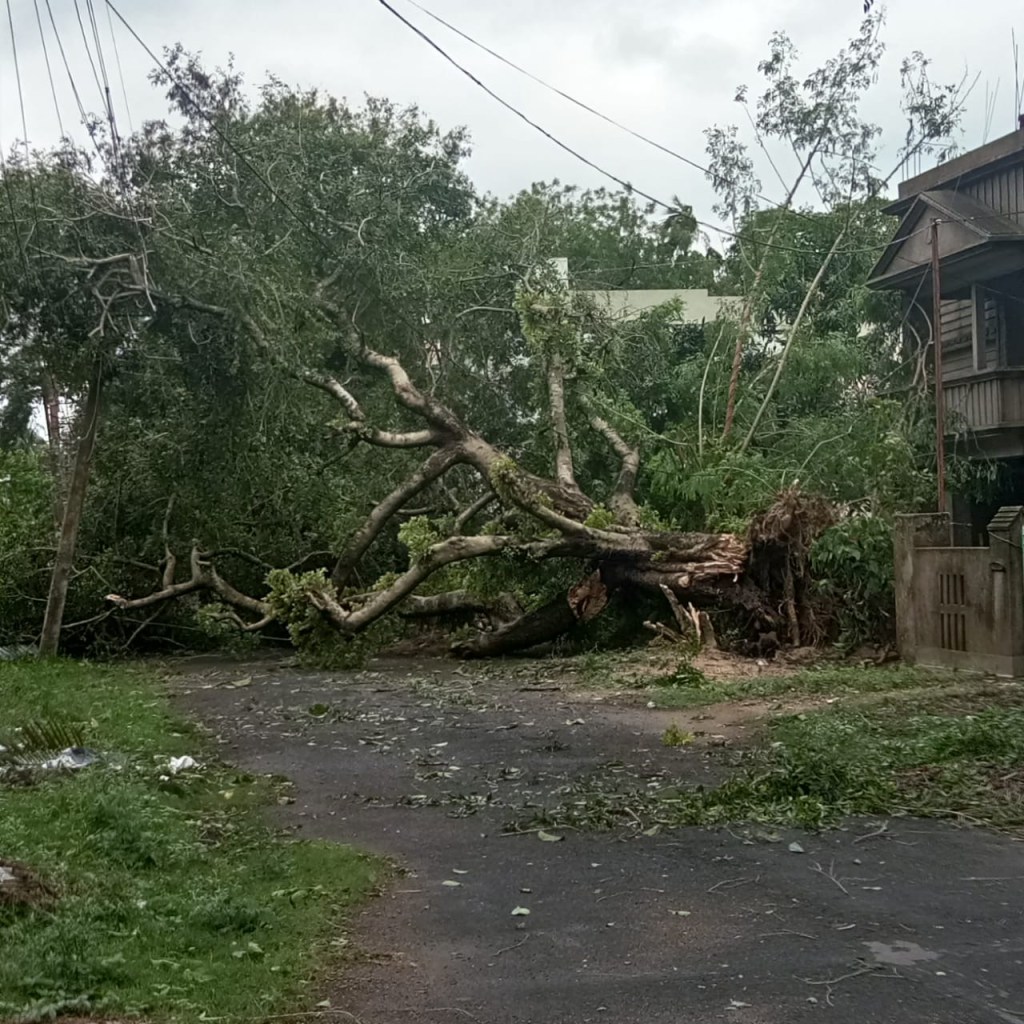
The giant tree was pulled away from the bosom of the Earth after an intense struggle that lasted for several hours in the dark. It was razed to the ground much like the vandalized bust of a dictator overthrown in a coup.
The birds in all their wisdom had chosen to build their nests in the sturdy tree that came with the implicit assurance of a safe haven. The tree that listed several encounters of surviving severe cyclones in its resume had caved in this time after four decades of brawny existence.
Birds asleep quite like passengers in long-distance trains that collide in the middle of the night – a big jolt wakes them up to discover their world turned upside down. Something similar must have rattled the birds when they found themselves closer to the ground through the thick foliage of leaves that cushioned their unceremonious fall.
Imagine those moments of confusion and hopelessness when they extricated themselves from the wreckage to fly off to nearby safety. The swaying electric wires clutched their nervous feet as they tried to make sense of the world during the incessant downpour, vigorously shaking their rattled heads to puff up resilience in their wings, waiting patiently and calling out other members of the family to unite.
In the wee hours of the morning, I woke up to hear fresh new voices in the garden. As I opened the window of my study, the reality outside and my imagination matched like the blood group of two strangers. The guava tree was the makeshift home where the homeless birds had now gathered and perhaps united with their loved ones. Their chirping was probably their excited conversation to chalk out the future plan of rehabilitation. More birds flew in and sat beside their families, sharing updates of empty spaces available in the mango and jackfruit trees where they could build new nests. Agile and faster than human beings in rebuilding homes, some were already flying around carrying pieces of straw and wires in their beaks as the new foundation for cosy, durable nests to cuddle in.
Quite a few of their flock sat still and gazed at the uprooted tree, perhaps fondly recollecting the good times they enjoyed up there. Like us, they were probably fond of living in grandeur. Maybe they were also proud of having an opulent residence in a giant tree that looked like a mansion. With no other tree of such magnificence around, they would now have to settle down with some modest options.
I joined the birds in observing the uprooted tree. The vacant space was brimming with strange, unfamiliar brightness. What stood hidden behind the tree all these years was now clearly visible. The balcony of the neighbour was in full view. The death of the tree had brought us visually closer. I was not too happy with the new reality and I do not think he would be happy either to reveal the colours of his innerwear left to dry on the balcony railing every day.
I was habituated to look in that direction because of the giant tree. I looked at it whenever I was thinking of ideas. The circle of leafy delight energised my mornings. The sight of the tree stirred and stimulated creativity. Now the neighbour would think I was gazing at him or waiting for the beautiful women of his household to stage an appearance there. He would go further to call it an invasion of privacy – the arousal of voyeuristic tendencies.
I suspect my repeated gaze would make him erect a glass window to cover up the balcony area, to stay safe from my ogling. I would still be looking at the giant tree because it is planted in my mind forever. I would still look at it through my inner eye and seek inspiration. Difficult to make people understand that creative folks often fix their gaze at something but they think of something completely different.
The relief team arrived with a truck – hearse to ferry the mortal remains of the tree. They were more brutal than the cyclone as the dead tree was axed further, chopped into small logs to be sold as timber. Only the tree trunk was left behind and people gathered to click its photos for their social media feeds. Some strangers passing by stood silent to mourn its demise more sincerely than the residents around. The uprooted tree created no signs of emotional distress in the people who lived in its vicinity. Perhaps it is true that the death of a family member does not necessarily cause much agony to the survivors in the family – people who have no blood relationship are also likely to shed more tears.
A fleeting thought of grafting its small branch in my garden – with a concrete slab to perpetuate its memory – did cross my mind. And the epitaph recording the cause of its death: Amphan. Does a tree deserve to be immortalised? Does a tree become evergreen in history? Or it remains just like us ordinary mortals who come and go? Enlightenment makes all the difference. We are all uprooted from time to time, in so many different ways. The uprooted tree left behind a lot for me to dig up within.
.
Devraj Singh Kalsi works as a senior copywriter in Kolkata. His short fiction and essays have been published in Kitaab, The Bombay Review, Deccan Herald, The Assam Tribune, The Sunday Statesman, Earthen Lamp Journal, and Readomania. Pal Motors is his first novel.
.
PLEASE NOTE: ARTICLES CAN ONLY BE REPRODUCED IN OTHER SITES WITH DUE ACKNOWLEDGEMENT TO BORDERLESS JOURNAL.
Ndue Ukaj (1977) is an Albanian writer, publicist and literary critic. His poems has been included in several anthologies of poetry, in Albanian, and other languages. He has published several books, including Godo is not coming, which won the national award for best book of poetry published in 2010 in Kosovo. He has also won the award for best poems in the International Poetry Festival in Macedonia and another prize. His poems and texts are translated into English, Spanish, Italian, Romanian, Finnish, Swedish, Turkish and Chinese. Ukaj is member of Swedish PEN.
The lockdown has, in various aspects, limited me to circumscribing through the daily routine, inside my house. It might sound odd but for the last few days, my timetable has been rudimentary and timed, something that has never happened before.
I have returned to my old home at Chandannagar where I hardly stayed as an adult. There are the same old forces at work, ordinary things like burning the incense sticks, drying the towel out, filling the water bottles — not quite voluntary but somewhat of a meditational retreat, almost like a recreational conformity. Amid these circumstances, I re-watched Alfonso Cuarón’s Roma (2018).
Revolving around an indigenous domestic worker in 1970s Mexico called Cleo (Yalitza Aparicio), this film plays out, with novelistic depth, inside the confines of a middle-class family where she serves. Upon revisiting it even now, I did not find myself being attached to Cleo’s domestic work, but ended up feeling part of that parallel universe, so embedded within the domestic borders. I understood how I was substituting myself as a silent member within the house where Cuarón set his wonderful film, in a way that I did not anticipate when I watched it earlier. I realise that this association occurred this time because of my position in this lockdown, at this particular point of time. Roma, then, felt not just a reminder of the cinematic power of connection but also of the universal quality of compassion which is able to erase political and economic concepts of border.
Roma takes place within the household of Cleo’s patron, Sofia (Marina de Tavira). She follows Cleo as she performs her daily chores with an effortless sense of rhythm and precision. She cleans up the yard, picks up the clothing from the bedrooms to do the laundry, and collects the youngest child, Pepe, from the kindergarten. The camera revolves around the breath of the house with abundance of tracking shots that serve to catch Cleo’s movement around the house as she carries out her endless duties whilst the family’s privacy takes place in the background.
There were so many layers to just this single sequence. Like Cleo, I find myself detached from the discourses that form the chaotic energy of my house. Even though my mother knows how much I prefer a sense of privacy, she is unable to ascertain it within the household. Someone or the other is always talking to someone else or to himself only, in a way that the other members of the house stand witness to every single incident. The only difference is that I am a member of my own home, unlike Cleo who is still a mute outsider, a perennial reminder of class divide.
In Roma, the viewer is led to identify with Cleo — since the film allows one just to see and hear what she does — it is in this way that Cleo’s relation with the domestic space and the exclusion that she suffers are experienced by the audience. When Sofía and her husband are arguing, for example, the camera does not enter into the couple’s room. Instead it tracks Cleo’s descent as she makes her way down to the ground floor and then it makes a 360-degree pan to register her last working round of the day. Whereas, it is me in my daily lockdown reality who shuts the door and moves out to a different room. I do not, for once, identify with Cleo’s subjectivity, but do so with her muteness and tightened repetition, finding myself incapable of ignoring the emotional reflexes and patterns of the domestic household.
The microcosm of my quarantined life has achieved a macrocosm– identifying traits in minor variations of routines — even in the clicking of the kitchen door that signifies lunch is almost ready. Within the perimeters of my house confinement, I have found a radical sense of individuality.
It is a realisation that betrays the very essence of togetherness — my silence to the constant bickering between my parents, insensitive political concerns, and negligence to the privacy of an individual within the space of the private. Quarantined with a dysfunctional family has its own set of demands, that aforemost erases the possibility of peaceful negotiation. Memory becomes a weapon, bluntly rummaging through unwanted topics that inadvertently creates a trigger.
Where do I begin with the subtle jabs at the past, the utter substitution of trauma with grief, that erodes any possibility of calm? It is in the simple habits that I find myself traversing the past — unable to discard the remnants in the present disposition. In this way, I remain so absorbed with my own personal inclinations, that it covers up matters of the world outside. In the heavy noise of my everyday existence, the immediate world outside slowly ceases to matter– although the ruptures of public life determine the private life inevitably.
In Roma, Cuaron deftly stitches the personal with the political, the private with the public in the staging of the Corpus Christi massacre that took place in 1971. These riots are portrayed in the narrative of Roma when Cleo and the grandmother Teresa are buying a cot for Cleo’s baby. Cleo’s miscarriage occurs while they are in the store, when some wounded students enter the store to take shelter and the paramilitaries follow them there and threaten the clients (it is actually Fermín — who impregnated Cleo in the past and left her, who now points a gun at Cleo, causing her waters to break). This sets up for the devastating sequence that is to follow in the birth of Cleo’s stillborn child.
The entire sequence is masterfully choreographed in one shot, with the audience beside Cleo on the operation table, as if permitted inside in order to comfort her. I knew what was to come — this being my third watch– and yet I found myself emotionally wrung. It was uncomfortable, and most certainly surprising to feel this deeply empathetic towards Cleo at that moment.
I never had a nanny while growing up, and stayed mostly outdoors, all by myself. Home, as it was, remained an idea, replenished with each hostel room. I never had my father looking after me, just like the patriarch of the household in Roma. I understood the soft power of domestic work, having seen my mother in my own home, and being on the receiving end of their love for years. Now, quarantined inside home, more than ever before.
Furthermore, through Roma, I saw what looked like a man’s attempt at revisiting the past, through a lens of atonement. The film serves for Cuarón a way to process how much his own childhood maid, Libo, might have had to put up with on his behalf, an effort to see the politics and loaded gestures he missed as a young child. This singular take on revisiting the past also resonated with me, of how I am more akin to the shifts in the power structures within my family now.
Today, I am aware of my presence in the room, strong and silent, completely able to exercise my opinion. Cleo is never given that agency to exercise the discourse, and even if she was, that would have never been realistic. Her silence was a necessity, not a choice.
This realisation of my control over the unnoticed, mundane noise of daily existence with such a consumptive focus makes me more anxious with each passing day. The deserted streets which I observe from the verandah of my house are haunting and haunted, a daily reminder of how I wake up to this gradual unfolding of the coronavirus catastrophe. Like Cleo, I face each day with rhythmic deterrence, but unlike her — monitor a new found vision of control. It is weird, this contrasting force of Roma that binds, and somewhat wonderful in the way it still manages to free me from its cinematic constraints. It feels just like a revelation, more certain than anything else at this moment.
.
Santanu Das is currently pursuing his Masters in English from Jadavpur University, India. He writes for CinemaCatharsis and Highonfilms. He lives in Chandannagar, Hooghly.
.
.
.
PLEASE NOTE: ARTICLES CAN ONLY BE REPRODUCED IN OTHER SITES WITH DUE ACKNOWLEDGEMENT TO BORDERLESS JOURNAL.
Dustin Pickering in conversation with Mitali Chakravarty
He talks of love and religion and writes poetry that is often critiqued by some as similar to verses from the past. And his role model is from the Renaissance — Michelangelo. To some, he is a loyal friend in need, a person who whips up essays and articles on demand. He is often published within India, which could well be his second literary home. He is prolific with his writing and publishing. He also does paintings and sings songs with a guitar on you tube. Some might have guessed by now — he is Dustin Pickering.
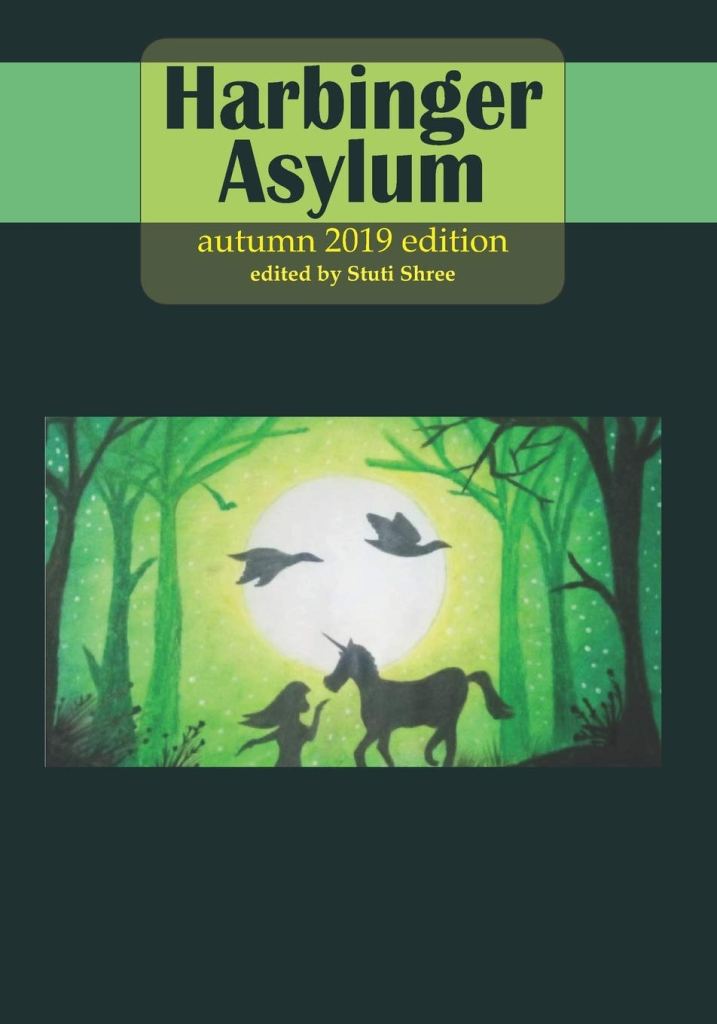
Pickering is the founder of Transcendent Zero Press. This year one of their books, Neon Apolcalypse by Jake Tringali, has been nominated for the Elgin Award 2020 along with names like Ilya Kaminsky, Marge Simon and Brian Dietrich. Pickering is also the founding editor of Harbinger Asylum, which was nominated for best poetry journal by the National Poetry Awards in 2013. That same year, Pickering participated in Houston’s Public Poetry reading series and was interviewed on 88.7 KUHF. He has been a featured poet for Ethos Literary Journal, a contributor to Huffington Post, and has published essays in Cafe Dissensus, Countercurrents, Borderless, Journal of Libertyand International Affairs, as well as reviews in The Statesman (India), Tuck Magazine, Lost Coast Review, World Literature Today, and Inverse Journal. He placed as a finalist in Adelaide Literary Journal‘s 2018 short story contest, and was a Pushcart nominee in 2019.
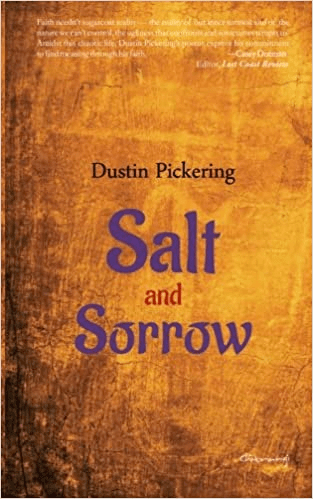
His books include The Daunting Ephemeral, The Future of Poetryis NOW: bones picking at death’s howl, Salt and Sorrow, A Matter of Degrees, Knows No End, Frenetic/No Contest, The Alderman: spurious conversations with Jim Morrison,O’Riordan: spurious conversations with Dolores, The Madman and Fu, Be Not Afraid of What You May Find, The Red Velvet Robe, The Forever Abode, and a collaboration with Dory Williams called Imitations of Love Poems. He recently attended New York City Poetry Festival, and has been a reader at Austin International Poetry Festival many times. He hosts the interview and oddities for authors site thedailypoetsite.com. He co-edited the anthology Selfhood: Varieties of Experience, and published its companion Epiphanies and Late Realizations of Love. He has written introductions for books by Amit Saha Sankar, Kiriti Sengupta, Bitan Chakraborty, and Jagari Mukhergee. He was given a Jury Prize at Friendswood Library’s Ekphrastic reading in 2019, and was awarded with honourable mention by The Friends of Guido Gozzano in 2019. He lives in Houston, Texas, USA. In this exclusive, Pickering reflects on his journey as a writer.
Why do you write?
Within me, there seems to be a deep passion and yearning for something inexplicable. I also write to combat doubts, leave a record of my thoughts for myself, and to tell the world whatever interior mysteries I uncover within my own mind and studies.
When and why did you start writing?
Very young. One boring day at home in 1st grade, I asked my grandmother what sort of activity I should do. She suggested I write a story about something I wanted but didn’t have. I wrote a children’s book called The Little Red Wagon about a child who loses a wheel on his wagon. He looks everywhere for it and finds it behind a tree where he least expected to find it.
What form came to you before — poetry or prose?
Prose, but poetry is always more natural to me.
Lots of your essays and poetry have to do with God or spirituality. What makes you weave these into your lore?
I was raised Catholic, and as they say, “Once a Catholic, always a Catholic.” I model myself after an early hero of my teen years, Michelangelo. I consider myself a person of Renaissance nature. I also believe we are in a pivotal moment in human history where the guidance of God and Spirit is needed. I think poets are the best people to bring this message to the world, that science and faith are compatible.
You have a whole book dedicated on God, I believe, which did rather well — Salt and Sorrow. Do you believe in God or are you an atheist? Do you believe in any religion? If you are an atheist why do you write on God?
I counted myself an atheist for many years, beginning at age 13. I was probably led there by the punk band Bad Religion and may have inherited it from my mother whose father was also an atheist. Yet some part of me felt connected to the mysteries of Spirit I could not apprehend and did not want to. Something moves the world and the universe, but I believe that is something I am inclined to believe is sentient, not merely pure accidental motion. I believe this because my life has always felt purposeful to me. I also borrow from Christian humanists such as Erasmus, the Renaissance artists, Shakespeare, many others who share a love for humanity and a sense of purpose for our existence. Although Macbeth did say:
“Life’s but a walking shadow, a poor player
That struts and frets his hour upon the stage
And then is heard no more: it is a tale
Told by an idiot, full of sound and fury,
Signifying nothing.”
The use of the word “signifying” is mysterious to me. It seems to designate a sense of randomness or entropy — perhaps humankind is the idiot? Yet life is a tale told, passionately!
You have published Salt and Sorrow in India. Was there a reason for that?
I connected with publisher Kiriti Sengupta a few years ago after publishing the acclaimed Indian poet Usha Akella’s masterful work The Rosary of Latitudes. He saw a lot of my Facebook posts at the time concerning spirituality and asked me to write a collection that brought out “the God of the Bible.” For some reason, perhaps my sensibilities, I have developed a strong presence in India. I have never visited, but I hope to someday!
You often refer to fossil in your poetry, especially in your upcoming collection, The Skin of Reality, you have a poem that says, “I stare but see an empty fossil:/ what is final is never the end.” To what purport do you see the fossil? Is it a relic from the past? Why do you use the image of fossil?
The simple answer is I am fascinated by rocks, fossils, embodiments of history. What came before. It is still present in the very earth we walk on. I believe the human genome is a record of where we have been, and it also records where we are individually and contains a lot of animal history. Jung’s archetypes and collective consciousness seem to indicate this as well. As a child age 5, I used to sit on the playground where there were a lot of rocks. I picked them up, observed them. I kept some but the teacher told me I could not take them home. I told her they were fossils. She examined them herself and agreed, surprised. She allowed me to take one home. I still have it. That line seeks to illumine the truth I see that death is not final—who we are leaves an impression on the world irrevocably.
Where will you be bringing out this collection? In India or US?
I don’t have a publication plan right now. It is still in its infancy.
Where do you find/seek your inspiration?
Most of my ideas come from a lot of readings and thought. I don’t even entirely understand a lot of what I read, but it shapes my creative impulse in an extraordinary way. I am very forgetful too, so I have to continuously reinvent myself and how I choose to express my ideas. A lot of my imagery comes from life, including my long battle with mental health struggles.
Which writers fascinate you the most? Have any of them influenced your writing?
I cite as my primary influences in thought and writing the German philosopher Friedrich Nietzsche and The Holy Bible, particularly The Old Testament. I also am intrigued by mystical writings from the Kabbalah, St. John of the Cross, sacred Hindu texts such as The Upanishads and Bhagavad Gita, St. Francis of Assisi, and the endless list of mystics. I also found metaphysical poetry interesting in my college years. I accidentally stumbled upon John Donne and found him interesting. Milton influenced me in my teen years as well. My senior yearbook quote was, “The mind is its own place and in itself can make a hell of heaven, a heaven of hell.”
I love the surrealist poetry of David Gascoyne. I read all of William Blake, W H Auden, and a long list of others, but those seemed to have left the strongest impression. I’m also interested in psychoanalysis and have read a lot of Anthony Storr, Freud, Jung, Kay Redfield Jamison, and several others.
I appreciate philosophy too, and enjoy works by Plato and Aristotle, Heidegger, Sartre, Emerson, Burton, and many others. Among fiction writers, I enjoy Henry James, Tennessee Williams, James Joyce, Samuel Beckett, Hermann Melville, Dostoevsky, and many others. I especially love Dostoevsky’s psychological acumen in The Double. I tend to prefer short fiction but have read all of Joyce. Nietzsche has invaluable insights into the art of writing, but you have to mine them.
You bring out a popular quarterly, Harbinger Asylum. Did you start that? When and why?
I founded the journal in 2010 with my longtime friend Alex Maass who sometimes writes the “Not Quite a Political Column” and suggests themes. I started it after a poetry gathering at University of Houston-Clear Lake. I was invited by my new friend at the time Dru Watkins, who was an early contributor, and after coming home I thought about how I could better serve the literary community. The journal started with an anarchist bent and I published a lot of libertarian writing. I also included writing by friends. Over the years, we’ve had submissions from highly regarded poets such as Simon Perchik, Joseph Bottone, and others whose names I ran across before getting their submissions. Later on, we acquired two new editors Z. M. Wise and Stuti Shree. Z. M. is my good friend and business partner, and Stuti is a university student in India.
You run a blog that belongs to Transcendent Zero Press. It is a strange name. Any reason for calling it as such?
Transcendent Zero Press is the company through which I publish Harbinger Asylum, as well as other books. It’s the name of my publishing company. Years ago, it was my punk band that never happened. I liked the concept. So, I re-made it into the publishing company.
It began with a word I read in the dictionary combined with the popular song “Zero” by Smashing Pumpkins. I thought it had a distinct conceptual flavor. Ultimately, I also designed the logo to be conceptual. On one side of the zero, there is a dark crescent. The other side has a bright crescent. This symbolizes Ultimate Nothingness, the idea that all is in harmony. Essentially my own mystical concept. Then a “T” crosses it, symbolizing the axis of the universe. I also conceived of God as having the qualities the Tao ascribes to great leaders. A person who does nothing yet let’s all happen. Lao Tzu wrote, “A leader is best when people barely know he exists, when his work is done, his aim fulfilled, they will say, we did it ourselves.” Zero signifies such an approach to life.
What are your future plans as a writer, editor and publisher?
We recently expanded into publishing literary criticism. So far, the books have dealt with Indian works in English. I would like to publish more literary criticism but about literature in other countries. We will soon have an anthology of Albanian poetry released. I’m interested in Southeast European literature as well. I may publish a broad collection of Edgar Lee Masters’ lesser known work. I have a friend, Dr. Ryan Guth, who plans to work that out for us.
Any message for aspiring writers?
My English teacher in high school Mrs. Teltschik used to say, “Write because you have to.” Something in you must answer a call. Write to contribute but write for yourself. It is hard to break in at all. Don’t shoot high if you are young unless you have exceptional talent, connections, or both. Work your way through. Don’t be afraid to learn. Be thankful and mindful of all your successes, and consider failure and rejection an instructor, not an obstacle. Don’t fear revision. Stay focused. Write a lot. Read a lot. Find what makes you spin rapturously and write about it. Keep a journal, especially if you are young. Don’t throw away your writing. Mine old material or edit when you are dry on inspiration. Most of all, learn to enjoy! Live as well as write. Travel!
.
PLEASE NOTE: ARTICLES CAN ONLY BE REPRODUCED IN OTHER SITES WITH DUE ACKNOWLEDGEMENT TO BORDERLESS JOURNAL.
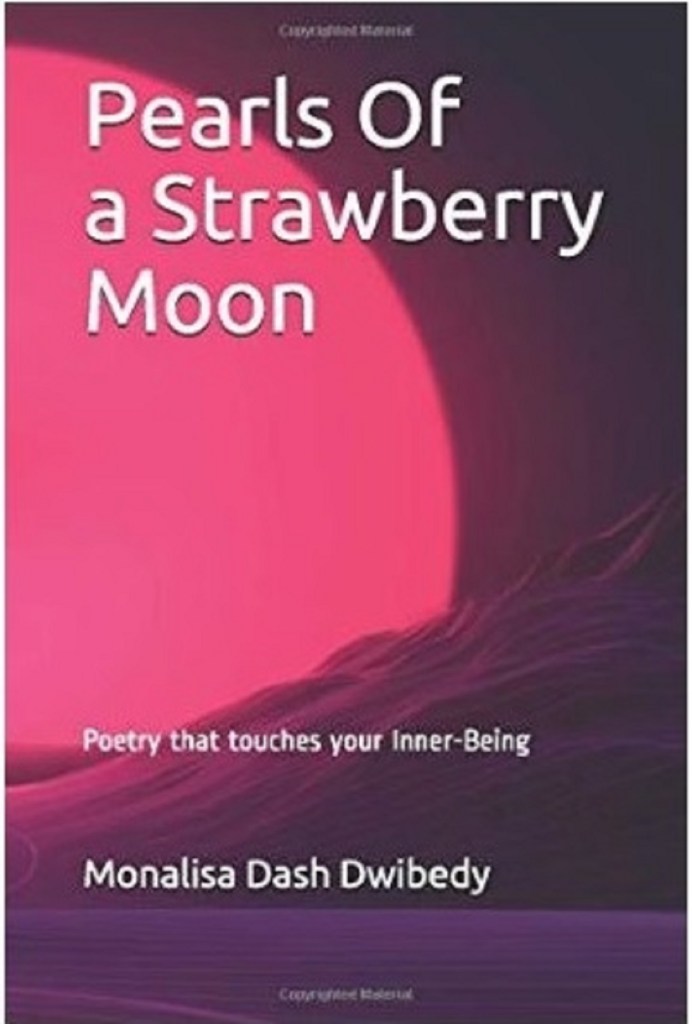
Monalisa Dash Dwibedy’s Pearls of a Strawberry Moon is not an ordinary collection of poems that only records the mundane realities of our times, our successes and failures, or our memories and hopes for the future. The poet meditates on the world around her, grows, and allows her awakened self to introspect objectively. She provides us with a yogic view of the world; not renunciation but an evaluation of the self and makes herself a witness to the demolition of her own ego.
In the times when poetry has been reduced to mere narratives of our own experiences, Monalisa has made it a vehicle for a serious purpose: search for wisdom
Everyone is subject to the pain and pleasure of their own life experiences. But they are not poetry in themselves. Churning those experiences for the realization of the ‘truth’ is what makes poetry. Monalisa has demonstrated herself as a meticulous observer of both the outer and the inner world.
She has divided her poems into three thematic sections: ‘Life’, ‘Lament’ and ‘Miracles’. The poems in the life category describe the human endeavour to seek happiness. They portray life in its totality. Verses in the second category ‘Laments’ include the ones of sufferings, regrets and failures. The last category, ‘Miracles’, covers the future, an alternate reality as perceived by the poet. All these poems are woven by a single thread of reflexivity of an awakened self.
The first poem in the collection,’My Life in Two blue Suitcases’ is a testimony of the poet’s divided self between the promises of the far-off lands and the warmth back home:
When the distant tracks call me,
Opening their arms,
I walk out of my comfort zone,
To embrace red-dusted earth and blue skies.
…..
Staring far along the open roads,
As long as the sun shines upon me,
I try not to look back,
So many lives,
So many places,
Unseen.
There are millions of people who have left their birthplaces for better opportunities, but they have never been sure if that was really what they wanted. A perpetual desire to belong to the past continues to haunt their existence.
In ‘Soul of a Forest’, the poet tries to observe what is forgotten and neglected, the unseen. It is that unseen that has protected the seed of our life; that has nurtured the fragrance and the light we crave for. When she roams in the wilderness of the jungle, she finds darkness all around. But darkness is not the end. She reveals she knew that “the forest had a soul”.
In ‘A Butterfly’, the poet tries to find an answer to the question: what is the ultimate truth? The butterfly showcases an analogy of transformation from a caterpillar to flying wings! Change is the essence of existence. Being is not remaining static but transforming—probably for a higher goal. She writes:
A caterpillar to a butterfly,
Evolve through the dark,
I will gift my wings,
Kiss the sun.
Human beings are the slaves of their own ego. Our conscience is dictated by our ego. It is only when a great inspiration drenches us with all its compassionate blessing, we forget the ego. The real bliss is in surrendering the ego. ‘In Presence of the Master’, the poet creates an oxymoron to present this difficult passage of spiritual growth where the “surrendering of ego” becomes the most “ego-satisfying”:
Time stands still,
I melt in his presence.
Surrendering remnants of ego,
Was never so ego-satisfying.
The poet has tried to expose the limitations of human beings in ‘To the Atlantic’. In the poem, man’s vulnerability to nature is described in this way:
To the mighty ocean! We raised a toast
Roaring afternoon waves
Silenced our chorus,
The sea mocked and waves laughed
Watching us lose our thunder.
‘Let Me Unlock’ appears to be a romantic poem on the surface. But diving deep, we find out that it echoes the importance of independence and freedom of expression.
My love is locked,
In the vast vacuum of your heart,
Unable to find expressions.
The poems in the thematic section ‘Miracle’ resonate the poet’s expectations. In ‘A Thousand Love Affairs’, the poet expresses her unconditional love to the human and non-human. She loves them without purpose, with no expectations for any return: “My heart blossoms as it does not know heartbreak, despair or dark abyss.”
‘The World Goes Blind’ has the poet imagining that the universe has stopped and the world’s reverses from darkness to light. This reflects the poet’s sensitivity towards the darkness of inhumanity that prevails in the world. And she sincerely wishes to reverse it. Another poem, ‘A Speck of Dust’, is a meditation on how a seemingly insignificant dust speck is the source of magic for nature’s worldly manifestation.
‘Strawberry Moon’, the titular poem shows that the moon is eternal but is hung on its axis and man is transient and craves for the eternal. This incongruous juxtaposition of the moon and man provides us an opportunity to contemplate our lives – our desires and the reality we are destined for.
‘Fall’ tells the story of a season that undoes nature’s artistry. Everything has a limit; even creativity and construction. The old has to be demolished so that it makes place for the new. Everything has its time.
‘Niagara’ is a mystic poem where the poet imagines transforming herself into water droplets to immerse with the vastness of water:
How I can become one with the magnificent, majestic nature
Until I transform myself into a drop of water?
‘Goodbye’ brings forth the eternal struggle between the worldly ego and the awakened self. The first is merely a role player without knowing that she is a role player. The awakened self is a conscious witness. The poet wishes to bid goodbye to the unconscious self.
The last poem in the anthology, ‘I Set My Soul Free’ is, if not a declaration, at least a reflection, on the inner desire of the poet. The poet continues to live in her bodily form. Free soul is a metaphor of liberation — not only her personal social freedom, but freedom from desires.
A sincere delving into Monalisa’s poems clearly suggests the range of her imaginative horizon and poetic craftsmanship. I feel privileged to write my feelings for her poems. I invite the readers to have a go at them.
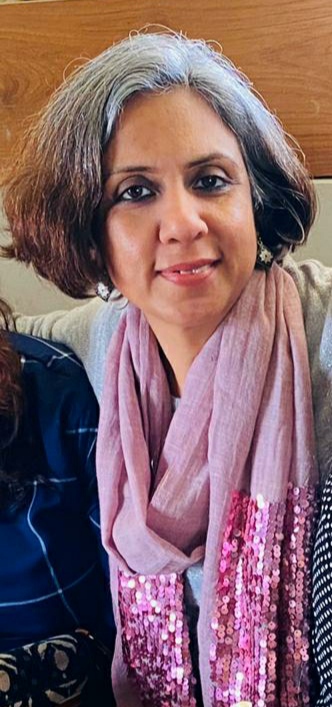
Keshab Sigdel is a poet, translator and critic based in Kathmandu. He is also the International Coordinating Committee Member of World Poetry Movement (www.wpm2011.org). He teaches poetry at Central Department of English, Tribhuvan University.
He did not like animals. Or so he said. In any case, the children were discouraged from harbouring dreams of ever having a pet.
He was an asthmatic. Viewed from that perspective, it made sense. “Father’s allergy will be triggered by pet fur,” they were told.
He was also a stickler for hygiene. He disapproved of children playing with animals, even the pets of friends and relatives. “Wash your hands!” he would say. “Don’t let them jump onto the bed! They must be harbouring all kinds of germs and parasites… And they’ll shed their fur all over the place!”
And so on, for years.
It was a rainy day. The family was away visiting the maternal grandmother, but he had come home for lunch as he always did. He had flexible timings and he wasn’t planning to go back this afternoon. He could work on the research paper he was writing, from home.
He had his lunch, then listened to songs on the radio until he drifted off into afternoon siesta. When he woke, the downpour had increased. It was only 4 p.m. but the overcast skies made the world look dark and gloomy.
He rose slowly, put on his slippers and listened to the sound of the rain increasing in volume. He went around the house, shutting the windows that were still open. Then it was time for his coffee.
He brewed fresh decoction and heated milk in a pan, all the while watching the rain through the kitchen window. After he mixed himself a cup of strong coffee, there was still some warm milk left. Covering the pan with a lid, he took his cup out into the living room to have it in the comfort of his favourite armchair.
The room was now quite dark. He switched on the light and as he did so, he thought he heard something on the verandah and paused to listen.
The sound was very faint, but then he coughed involuntarily, and he could now hear it again, loud and clear. It was a cat! No doubt seeking shelter from the rain in the safety of the verandah, and having heard him cough, responding to him.
“As long as you stay there!” he muttered to himself as he went to sit down. But the mournful mewing only grew louder.
He tried ignoring it for a while, but the incessant wailing soon began to get on his nerves. In addition, the creature was now moving backwards and forwards outside the verandah door, and each time it passed, would thump against it.
He could not enjoy his coffee.
“Shoo!” he called out loudly. “Go away or be quiet!” But this only made the cat more persistent in its clamour to get his attention.
He took another sip of his rapidly cooling beverage and as he did so, there was a difference in the sound of the rain as it seemed to change direction. He could see from the window that it was now pouring in a slanting fashion, at about forty-five degrees to the ground.
The verandah must be completely wet, he found himself thinking. He listened carefully but couldn’t hear anything now. Hope it’s gone away.
He needed some more coffee, a piping-hot cup this time. But when he rose to go back into the kitchen, he paused for a moment, then changed his mind and moved towards the verandah. He walked softly, making as little noise as his slippers would allow him, and pressed his ear against the door. Just the steady, monotonous sound of the rain.
Still, he could not turn away. Curiosity — or perhaps, something more — compelled him to linger a moment longer. He thought he heard something now, very faintly.
He had to know.
Very, very gently, he turned the doorknob and using his knee, carefully nudged the door open a crack.
He was greeted by a loud and pitiful yowling and at the same time caught sight of what looked like a damp black rag, which immediately unfurled itself and started pacing frantically, barely keeping an inch away from the door.
He hesitated. He could hear the rain, smell the fresh, damp earth, and feel the chill through the sliver of gap between the door and the jamb. He could also see that the entire verandah was drenched, right up to the door.
He wrestled with something within himself, then made a sudden decision. “Move aside,” he said. “I’m going to open the door now, move…!”
As he carefully pushed the door open still further, the cat’s yowling hit his ears like a blast of wind, even as the elements themselves tried to pour into the room. He stepped back a little, and emboldened by his moving away, the little bundle of fur slunk towards the door, then shot quickly past him and into the warmth.
He shut the door again.
They eyed each other warily for a moment, and when he did not make any threatening movements, his unwelcome guest started mewing pitifully again, all the while looking up at his face.
“Stop that now!” he said sternly. “I’ve let you in, haven’t I? Now sit still and leave me in peace!”
But it wouldn’t.
It stepped closer to him and before he could realise what it was doing, started rubbing its wet little body against his legs. It took a moment for him to recover from the shock, and then he gave a yell and stamped his feet to chase it away.
“Stay away from me!” he ordered crossly. “Go, go!”
He went back to his armchair and sat down, keeping a stern eye on the cat all the while. When it found that he had no intention of moving again for the time being, it jumped onto another chair nearby and settled into a snoozing position, intermittently making faint mewing sounds which gradually tapered off.
He watched it like an eagle until he felt fairly certain that it had finally dozed off. Its eyes were shut and its paws were tucked snugly beneath its little body, and its breathing was soft but sounded — as if it were wheezing…
It sounded just likehim.
He listened for some time, lost in thought, and when he finally looked down at his coffee cup, he was almost surprised that it was empty; he had forgotten.
Well, it was time for a refill!
But as he stood up, the feline sprang to life, jumping off the chair and running to him with loud, hungry mews. Once again, he stamped his feet and ordered it to keep away, but though it moved away from him, it continued to yowl and tried to approach him from a different direction.
Scolding, stomping, slapping his free hand on the surfaces of furniture, he managed to make his tortuous way into the kitchen and shut himself in. “I better stay in here if I want to have my coffee in peace!” he muttered to himself.
As he lit the stove to warm the milk again, the mewing and yowling continued outside the kitchen. The periodic thumping against the door too resumed.
He switched off the stove and tried to peer through the window. The visibility was so low he could barely see the trees outside, and the rain showed no signs of abating.
He sighed.
***
He found a soft slice in the bread box. Rummaging in the cupboard turned up a shallow unused dish. He tore the bread into small pieces and put them in the dish.
Then he reached for the warm pan, and as he poured, the dish filled with the milk of human kindness.
***
Revathi Ganeshsundaramtaught in a Business School in South India for several years until she recently decided to take a break to study Counseling Psychology. A self-professed introvert, she is comfortable in the company of family, books, and herself — not necessarily in the same order. She finds the written word therapeutic and, hence, loves reading and writing fiction, sometimes dabbling a little in poetry.
.
PLEASE NOTE: ARTICLES CAN ONLY BE REPRODUCED IN OTHER SITES WITH DUE ACKNOWLEDGEMENT TO BORDERLESS JOURNAL.
Words dribble down from the corners
of your mouth. From within the temple,

gods tremble with your frosty voice —
they now need a glass of moonshine.

The night is paused on LED screens.

The quietness of eating alone
in this rented room is too loud to bear.

Someone screeches—
a staccato bark of madness.
Is it your heartbeat?

There is pain that seeks its way out
through the crack in your heart.

This too shall pass as time goes by.

The overhead yellow light is on —
you are by yourself at the dinner table.

Pick up the pen, bleed poetry.
Bibek Adhikari is a poet and critic based in Kathmandu. A full-time technical writer for Deerwalk Inc., he divides his time between poetry and ‘unpoetic’ documentation. His poems and narratives have been published in some prints and online publications, including The Kathmandu Post, República Daily, and Annapurna Express. Currently, he’s working on his manuscript of poems.
.
PLEASE NOTE: ARTICLES CAN ONLY BE REPRODUCED IN OTHER SITES WITH DUE ACKNOWLEDGEMENT TO BORDERLESS JOURNAL.
The roads were clear of people and machines, covered with fallen leaves on both sides, leaving the centre untouched. The contrast of yellow leaves and black tar was striking, soft and fragile leaves against tough and durable tar. After decades one could delight in bird song, crystal clear, not buried under the noise of incessant traffic. Feast for eyes, feast for ears, heart’s delight. My feet walked me to the first grocery store.
“Stay outside, we will bring what you need.”
“Black chickpeas,” I requested. But of course, the stocks had been emptied weeks ago; I’d woken up late to the emergency.
“Sorry, ma’am. No chickpeas.”
***
Eating chickpeas soaked overnight has proved a healthy diet for my chronically troubled stomach. And how easy it is to prepare. Black chickpeas, the pebble-like ugly ducklings of the world of lentils and pulses, are high in dietary fiber, rich in vitamins and minerals, good for digestive disorders, diabetes, and cardiovascular health. And I was left with a few grams at home. I didn’t want to break this new diet regime – the latest and healthiest start to my day.
The before-noon sun on the last Saturday of March in Delhi was lovely and lukewarm. It brightened the outside world and removed the darkness within me, so what if it were only temporarily. I walked to another store, only to get the same response. I checked out a few more grocery shops in the vicinity but none had the black diamond! One has to try her best…
Before I set out, my father had asked me to go to another small store, but it was in the opposite direction from all the others. He had sounded sure that I would find a few packets there. I was neutral, leaning toward ‘no luck.’ I knew I wouldn’t find them but I went and checked anyway. My Organic India jute thaila (bag) was heavy with other things I’d found (four bars of soap, one hand wash, five or six packets of cookies, etc). My right shoulder hurt, but I couldn’t dare shift the thaila to my left arm – no physiotherapy has persuaded my tenacious tennis elbow to go gently into the good night.
“Lord, it’s not something I should ask you for. So, if I find chickpeas, it will be your wish/prasad. If I don’t, it would still be your will.”
The store was only a few yards away now. I wondered how my father, who has been confined to the house for several years, knew about it when I did not. Had a neighbour told him about it?
“Uncle, do you have black chickpeas?”
“Yes, beti (daughter),” he replied warmly.
“Give me two kilos if you can, please.”
“I only opened my store to collect my own rations. I was going to close the shutter in a few minutes. My wife has asked me to stay home for the next couple of weeks. Why should one risk one’s life and health for money?”
“Oh, so the store will remain closed for weeks! Please give me one more kilo if you have the stock.”
“Yes, I do, beti.” And I also found matchboxes that other stores had run out of.
A man wearing the uniform of a security guard arrived and asked the shopkeeper for a bar of Lifebuoy soup. “No stock!” he was told. I had four bars of another brand of soap. Soap is soap. In the times of lockdown one can’t be choosy.
We are bereft of essentials and have things of little use in abundance. During wars, natural disasters, pandemics, humanity is reminded of what we really need to survive: food, water, shelter. All other accumulations, to collect which we waste away our lives, become a source of misery in these times. Recently, someone posted a status on WhatsApp: ‘Ghar utna hi bada hona chahiye jitni jhado lagane ke aukaat ho. (The house should be only be as big enough to meet one’s needs)’. I have known my needs for decades, and that’s why I have been wanting to downsize my home to a one-bedroom studio apartment.
I offered the security guard a bar of soap. He took it. But he didn’t pull back the hand in which he held a tenner. A tenner was not what I needed. I had received chickpeas prasadam (blessings) from the lord. The security guard needed a bar of soap, by His grace he found it. These small blessings are what make life a beautiful journey.
What happened on the last Saturday of March has stayed in my consciousness. It has brought me a sublime joy that no big things have brought. One has to experience something like this to be able to understand that what we need is little things at the right time, not luxuries in a future perfect never-never land.
Promila Chitkara is a technical writer by profession but a seeker of the Truth at heart. Working with an MNC, she lives in New Delhi. Her inner search has led her to allied interests such as astrology, tarot, past life regression, Pranic and crystal healings. She knows she has a long journey ahead.
.
PLEASE NOTE: ARTICLES CAN ONLY BE REPRODUCED IN OTHER SITES WITH DUE ACKNOWLEDGEMENT TO BORDERLESS JOURNAL.

















 Borderless