A BENEDICTION

Two men go every evening
to chip shops on the opposite sides
of town and they frown
each time they pass each other
on the way back
but give no other indication
of acknowledgement
and thus there is no brotherhood
of those who love chips.
A rather sad sight,
chips that pass in the night,
but on the iron balcony high above
is a girl with oven gloves
and she is discarding the ruins
of a failed casserole
onto the dark street below.
Oh, proud men who convey chips
along the thoroughfares
of the sprawling metropolis,
may peas be upon you!


MY BABY JUST CARES
(with apologies to Nina Simone)

My baby don’t care for coffee.
My baby don’t care for brandy.
    My baby just cares for tea.

My baby don’t care for obtuse angles
that complicate the corners of academic
      quadrangles.
     My baby just cares for tea.
Unseasonal unflappability is not in her
     nature
and even mild crocodiles who insist they
      don’t hate her
together with those alligators who won’t
      actually ever see her later
are something she can’t tolerate.
      My baby just cares for tea.

My baby don’t care who highly rates her
but if you own a tea plantation you are in a
       good position to placate her
provided you don’t try to sedate her
by committing the cardinal sin of adding a
        tot of whisky or three
or even a lot more to her porcelain teapot
because then she would probably regard you
        as a rotter.
    My baby just cares for tea.

My baby don’t care for grandfather clocks
that tick and tock all night even  when
     muffled with socks
and not even finely adjusted barometers
or precision thermometers
can hold her attention for longer than the
     briefest mention.
   My baby just cares for tea.

My baby don’t care for stress or tension
and guilt and confession are quite beyond
     her consideration
and the tricks employed to gain mental
     leverage
are far beneath her appreciation.
   My baby just cares for tea.
My baby don’t care for therapy
because anything connected with
      psychology
has almost nothing to do with her favourite
       beverage.
    My baby just cares for tea.

My baby is something of a mystery.
Only one week old and yet already a
      connoisseur of tea.
Servants hurry back and forth with cups and
       saucers
whenever she demands refreshment brought
       to her private quarters
and I can’t help but worry with all this toing
        and froing
maybe there’s trouble brewing!
      My baby just cares for tea.
.
Rhys Hughes has lived in many countries. He graduated as an engineer but currently works as a tutor of mathematics. Since his first book was published in 1995 he has had fifty other books published and his work has been translated into ten languages.
.
PLEASE NOTE: ARTICLES CAN ONLY BE REPRODUCED IN OTHER SITES WITH DUE ACKNOWLEDGEMENT TO BORDERLESS JOURNAL.
I dreamt of you again. Waves of lazy mustard fields rolled over the plains. Crowns of ancient firs, pines and deodars, brushed the feet of the giant mist-drenched peaks. Silver white sprays surged and throbbed down bare, black rocky slopes and foamed into turquoise pools. The rise and fall of the gold sand stilled the earth.
I was part of you when you broke into the world and drank your first breath. Now I am alive in over a hundred and eleven million pulsing hearts and minds and spread over your countless tribes and towns. Yet, I remain, in most part, ignored, abused, oppressed, and repressed. I am struck and beaten with sticks and rods. I am stripped, raped, and paraded naked. I am doused in petrol and set on fire. I am shot and beheaded. I am killed for honour they stuck between my legs. You gained your independence; yet I still seek mine in the promises you made me. You swore to honour and protect me with the rights my religion freed me with over a thousand years ago. And on this day, seventy-four years after Independence, I tell myself again and again, mil ke rahe gi azadi.
You forget I sacrificed my life for yours when you were a whisper, a glimmer, and gossamer of hopes and dreams. You forget how I risked my life and honour and stole out of my safe home into the treacherous shadows to join secret councils and meetings in which they spoke your name for the first time. I clapped and cheered for you on the roundtables. Breaking laws and curfews, I spied and snuck out letters and telegrams. I traded my gold bangles to fuel your strength. I disobeyed and defied my family, friends, and everyone else who dared to oppose your right to exist. I ran out into the streets, marched along the crowds, led the protests, and screamed your name when they charged me with lathis. I raced up the civil secretariat to pull down the British flag and replaced it with yours. When I was arrested and imprisoned, I continued to protest without food and medicine, and when I was freed, I joined the women’s National Guard. As the violence erupted, I rushed to the refugee camps to aid the injured, distribute food, and boost the broken spirits. “Muslim women are… more impatient for Pakistan than men,”[i] I clung to the mantra feverishly even when my breath and body burnt and ached.
At dawn, before I could rise, stand tall and step out, you pushed me inside, shrouded me with a chador (stole), and bound me to your newfound, draconian ideals of law, religion, and culture. I fought for your freedom, and you seized mine. With every act and ordinance, you suppressed my right to speak, to be heard, and slashed the worth of my testimony and evidence. You questioned my right to education and work. You shredded my right to be safe in my country. I am made of brilliant shades, yet you chose to see the dullest in me.
Even then, blazed by determination fiercer than fire, I trudge to triumph and break barriers to win awards for sports, science, poetry, prose, business, theatre, entrepreneurship, academics, and filmmaking in an infinite longing to make you recognise me as your own. Yet every day you sell more of me, over and over again, into slavery, drudgery, and lifetime of servitude. I live in jhuggis (huts) of mud, rusted tin and cardboard and watch light fade from my daughters’ eyes while they watch me sweep your streets, gutters, and toilets. I earn less than you can count, and my earnings are not mine. I sow and harvest your fields from dawn to dusk; yet my daughters wither into waste, hungry.
I make up nearly half the country, yet in your parliament I represent less than twenty percent of the total. In your courts my testimony is never enough. My mind is starved; yet, just over half of me attends a primary school. And all of me, over a hundred million of me, is threatened by violence inside and outside my house. I am told to cover up, but I am groped and pinched in the crowded bazaars. I am hauled out of my car and raped in front of my small children. I am violated for the crimes my sons, brothers, and fathers commit. When I am assaulted, you subject me to the “two finger” test or call me immoral. When I protest, I am silenced in the name of honour. I am coerced to forgive and accept blood money. Some dare to taunt me “Apni Izzat Apne Haath Main (your honour is in your own hands).” I promise you that if I held my honour in my hands, I would not cower like a hunted beast, I would hold it up high above my head, and march free through your lands.
You declare I have a right to education but forbid me from going to school or marry me off when I am eleven, twelve, or thirteen. You offer me rights with one hand and snatch them away with the other. I carry and birth your children when I am a child myself. When my husband beats me, my father begs him to forgive me and when my religion grants me my due share, you cheat me out of my inheritance. You sign accords, and agreements, local and international with powers big and small, but tomorrow if my brother, lover, husband father chops me into pieces; you tell me it is my fault, and the perpetrator walks away free. Sometimes. I tell myself it’s my fault. I am a daughter, a wife, a mother, a sister, but I am also a traitor to myself. Where is my self-worth?
Even the earth protests. The dry winds over the cracked barren soil moan my pain. The dark wet sounds of the rising sea echo my resentment. When I cheer for my champions, conflict tears and cuts the conversation. You call me a liar. You twist and wrench my heroes, the ones who struggle for my freedom, and turn them into demons and traitors. What if Malala Yousafzai was a boy? Would you have protected and honoured her, and called her yours? Would you have given her a home? In the end you forget that your independence will never be complete without mine. You forget I am part of you. “There are two powers in the world; one is the sword and the other is the pen. There is a great competition and rivalry between the two. There is a third power stronger than both, that of the women.”[ii]
Courtesy: Creative Commons : Quaid-i-Azam or Great Leader — the sobriquet stands for Mohammad Ali Jinnah, the first Prime Minister of Pakistan
[i] Quote by Begam Jahan Ara Shah Nawaz, Dec 25, 1945
[ii] Quote by Quaid-e-Azam Muhammad Ali Jinnah, Jinnah Islamia College for Women, Lahore, 25 March 1940
.
Aysha Baqir grew up in Pakistan. Her time in college sparked a passion for economic development. In 1998 she founded a pioneering not for profit economic development organization, Kaarvan Crafts Foundation, with a mission to alleviate poverty by providing business and marketing training to girls and women in low-income communities. Her novel Beyond the Fields was published in January 2019 and she was invited to launch her book at the Lahore and Karachi Literary Festivals and was featured in the Singapore Writers Festival and Money FM Career 360 in Singapore. Her interviews have appeared in Ex-pat Living, Mount Holyoke Alumnae Quarterly, Kitaab, and The Tempest. She is an Ashoka Fellow. www.ayshabaqir.com
PLEASE NOTE: ARTICLES CAN ONLY BE REPRODUCED IN OTHER SITES WITH DUE ACKNOWLEDGEMENT TO BORDERLESS JOURNAL.
Why I write


I write when the world fails to listen
I write when the self introspects
I write when there are thunderstorms raging within

I write when the list is over
I write when nothing feels right
I write when there is a blur

I write to survive

I write to feel the bounding pulse

I write to make the weathered will withstand the whirlwinds of time
I write and let meaning dissolve in the chaos
I write and fly free in the newly-discovered terrain of self worth
I write and I un-write

the fears that seize the soul
the promises of coherence
the ‘I’ that isn’t.
Priyanka Panwar teaches English at University of Delhi. When she isn’t reading or teaching, she likes to travel and observe.
.
PLEASE NOTE: ARTICLES CAN ONLY BE REPRODUCED IN OTHER SITES WITH DUE ACKNOWLEDGEMENT TO BORDERLESS JOURNAL
An empirical ocean of unmetrical pearls
rolled and crawled
like a serpentine
fluid of life
from the unconscious
up to the future's nucleus
where millions
of bifid pens
are now entwined
with planetary algorithms
and dance in a marvelous
arabesque

alfa - androgynous voices
spring out turning into
liquefied, crystallized hybrid gems
endlessly
taking shape and colour

they are meant to startle and soothe
to mesmerize and haunt
like thorny rainbow roses
that never sting
yet they make the spirit
bleed
Mihaela Melnic, born in Romania, currently lives and writes in Rome, Italy. Her recent work was published at Dissident Voice, Setu, Lothlorien Poetry Journal and Noiqui. Other poems of hers are forthcoming this summer in different venues. Mihaela’s bilingual debut poetry collection Change of Seasons was released in 2018.
.
PLEASE NOTE: ARTICLES CAN ONLY BE REPRODUCED IN OTHER SITES WITH DUE ACKNOWLEDGEMENT TO BORDERLESS JOURNAL
Our Home in Myanmar – Four years in Yangon by Jessica Mudditt is a thought-provoking memoir about a foreigner’s experience as a journalist and outsider in Myanmar, a country emerging from decades of military rule and international isolation.
Australian Jessica Mudditt arrives in the former Burmese capital of Yangon in 2012 with her Bangladeshi husband Sherpa just as the nation is moving towards greater democracy and opening up to the world after decades of oppression, dictatorships, civil wars, and economic sanctions.
Newly arrived Mudditt discerns a fresh optimism and hope for transformation in Yangon as she negotiates the culture shocks and cultural quirks of enigmatic Myanmar (also known as Burma). Yet there are few happy endings in ‘Our Home in Myanmar’, just some sobering realities.
While their outward quest is to find a place to call home (and secure visas to legally work), the couple’s inner journey is about trying to understand the complexities and contradictions of a largely Buddhist country where monks are among the most vocal protestors — and the daughter of the independence leader and founder of the armed forces had been under house arrest for 15 years.
Covering a speech by Aung San Suu Kyi is just one of the assignments Jessica undertakes; her role as a journalist for various publications and organisations gives her access to the newsmakers as well as those seldom featured in the media. But for every door that opens, another one slams shut. Nevertheless, the reader gets a window into the machinations, superstitions, and craziness of the military regime in what appeared to be its decline. Spoiler alert: in light of current events, it turned out to be a false spring.
She gets a frosty reception from the old-hand expat editors at the major English language newspaper co-owned by an Australian maverick media mogul, but later one of the most emotional high points comes in 2015 when Suu Kyi’s National League for Democracy (NLD) gets a landslide victory while Mudditt worked as the first foreign editor at the newspaper considered the propaganda mouthpiece of the junta.
This underlying theme contrasting expectations and realities gives the book momentum, as do the challenges and hurdles for a naïve foreign journalist struggling to comprehend the strange yet fascinating aspects of Burmese life and governance during this turbulent time. While many visiting media have fawned over Aung San Suu Kyi, she finds the NLD leader lacking charisma, in contrast to the vibrant President Barack Obama who champions Myanmar’s freedoms during a landmark visit.
The book weaves personal narratives with political backstories and cultural backgrounders. The author’s vulnerability and bravery make it a riveting read, with the reader drawn into the risky plight of the writer as well as the precarious situation of her host country. With a clear empathetic voice, attention to detail, and well-crafted chapters, Mudditt, who has written for The Telegraph, Marie Claire, GQ, and CNN, reveals she is not just a good storyteller but has something to say. She survives sudden earthquakes, dilapidated hospitals, and tropical turbulence, often finding solace in cigarettes, alcohol, and her Sherpa. She is a social butterfly with the cool expats who have arrived in Yangon, but her work for the UN and the British Embassy shatters the dream that Myanmar has broken free of its backwardness and nastiness. Amid the moments of despair and farce, thankfully there are dashes of absurdity and humour.
The author left Myanmar in 2016 amid a rise in Buddhist nationalism, but an ‘Epilogue’ has been added to highlight the unexpected but not unsurprising military coup earlier this year. The book concludes with a ‘where are they now’ update on some of the key people depicted in its pages.
Perhaps without realising it, Mudditt has chronicled a significant period in Myanmar’s modern history. Our Home in Myanmar is a good introduction to Myanmar, as it sheds light on the intriguing former British colony, its rocky road towards freedom and democracy. The author was fortunate to be in Myanmar during a small window of opportunity.
With Myanmar’s military leader Min Aung Hlaing declaring himself prime minister at the start of this month, but promising to hold elections by 2023, Myanmar remains out-of-bounds for any outsiders. By the middle of August 2021 as much as half of Myanmar’s 55 million population could have Covid-19, experts reckon.
Burma-watchers will find it nostalgic and insightful, while democracy-watchers and those concerned about press freedoms, will find information and substance. Intrepid travellers to the Land of Golden Pagodas will find the book provides a fresh perspective on modern Myanmar, a troubled country facing a difficult uncertain future. Given Myanmar’s strategic buffer location between superpowers China and India, the former British colony will continue to play a significant role in the region’s development, direction and alliances. That’s why anyone with an interest in South Asia and South-east Asia should read this perceptive and illuminating book.
Keith Lyons (keithlyons.net) is an award-winning writer, author and creative writing mentor, who gave up learning to play bagpipes in a Scottish pipe band to focus on after-dark tabs of dark chocolate, early morning slow-lane swimming, and the perfect cup of masala chai tea. Find him@KeithLyonsNZor blogging at Wandering in the World (http://wanderingintheworld.com).
.
PLEASE NOTE: ARTICLES CAN ONLY BE REPRODUCED IN OTHER SITES WITH DUE ACKNOWLEDGEMENT TO BORDERLESS JOURNAL
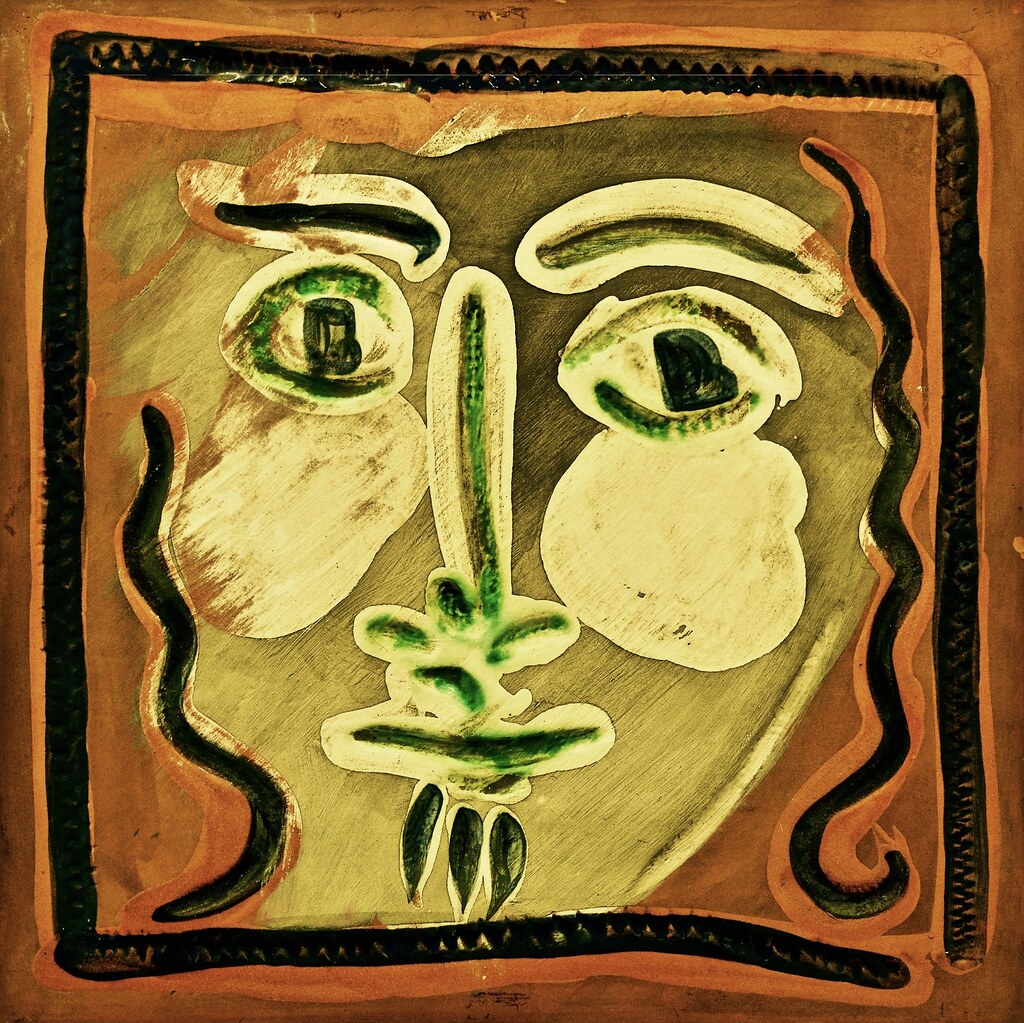
Visage aux cheveux bouclés (1956) – Pablo Picasso (1891 -1973). Courtesy: Creative Commons
cordant umbilical,
a mistress to one but Time;
that flurry of falsehoods, coats of paint
sporting jammed zippers,
dredging lakes of hard sink water
with cracked cups for hands,
persistent blackheads in the facial tick
lime disease grass
when something catches your eye
like an errant frisbee
from freckled double-dare water-winged children
of the long splashing summer
Ryan Quinn Flanagan is a Canadian-born author residing in Elliot Lake, Ontario, Canada with his wife and many bears that rifle through his garbage. His work can be found both in print and online in such places as: Evergreen Review, The New York Quarterly, Borderless Journal, GloMag, Red Fez, and The Oklahoma Review.
.
PLEASE NOTE: ARTICLES CAN ONLY BE REPRODUCED IN OTHER SITES WITH DUE ACKNOWLEDGEMENT TO BORDERLESS JOURNAL
Kroger opened at 7:00 a.m., and normally if I got there when they opened, I got the fresher produce, baked goods, and meats. Of course, I had to walk carefully through the parking lot to avoid slipping on the snow and ice. I had to put my mask on and remember to put my reading glasses on when I was checking the expiration date on the packages before the readers fogged. I learned the trick about checking the packages in the back or on the bottom as their expiration dates tended to be a few days into the future.
I gathered up the spinach, carrots, avocados, apples, and blueberries and headed to the meat area. The area looked dark, there was nothing in the glass case, and nothing I wanted in the display case. They had plenty of pork, but I tried to avoid that because of gout. I did see one of the butchers and asked him if he had any ground sirloin.
“Truck hasn’t come in yet.”
“You have any in the back?”
“No. We don’t open until 10:00 a.m.”
“10:00 a.m.? Why aren’t you open if the store opens at 7:00 a.m.?”
“I don’t know.”
“Why wouldn’t the truck deliver before the store opens?”
“I guess because of the snow.”
I laughed a little because I made it in the snow and didn’t even have a truck. I pushed my cart on to the dairy aisle, where I picked up the butter, cheese, and milk for our teenager. When I got to the bakery and deli, I found some blueberry muffins that were on the bottom that had a whole week before they expired unlike the one on top which expired the next day, so I got the fresher pack and pushed my cart to the deli counter. A lady was putting out fried chicken, and it smelled good, but it was too early for fried chicken, and I was interested in thinly sliced turkey for sandwiches. When she finally saw me, she said, “Hon, we don’t open until 9:00 a.m.”
“Why? The store’s open.”
She shrugged her shoulders. I thought about how I’d broken up with Wal-Mart the month before because when COVID struck, they changed their hours to 7:00 a.m. Before that, they’d been open twenty-four hours, seven days a week. I hadn’t paid much attention to the time, walked inside, got a cart, wiped it down with their alcohol wipes, and headed toward the cosmetics/ drugs/ personal hygiene section when an employee blocked my cart. “We ain’t open yet,” she snapped.
I didn’t correct her grammar. She was way bigger than me and I didn’t feel like she’d understand the lesson. “The door was open, the sign said the store was open twenty-four hours, and I walked past at least five employees who didn’t say a word.”
“Well, the store ain’t open yet. They never changed the sign.”
“What time is it?”
“Five ‘til seven.”
“So, would you like for me to walk across the store, go back outside for five minutes?”
“Well, you can stay, but you can’t check out until after 7:00 a.m.”
“I won’t,” I said. I stayed and shopped, but I decided that it wasn’t worth what little I saved to go there, and when I finished checking out, I told the lady at the door that I was breaking up with Wal-Mart.
“Okay,” she had said. I don’t even know if she heard me, was listening, or cared.
When I went to check out, there were no cashiers. There was one older man at the self-checkouts.
“I have too much to go through self-check,” I said. “Where is a cashier?”
“They don’t get here until 8:00 a.m.,” he said. “You’ll have to use one of these.”
First, I needed my glasses to read the screen, so I pulled the mask down below the bridge of my nose, so they didn’t fog, and prayed COVID was elsewhere. Then, I scanned the items and bagged them, but when I turned the bag holder to get to the next set of bags, the machine scolded me: “Make sure to scan your items and place them in the bag.”
When all four bags were full, I cleared space in the cart and put those bags in the cart, his tired eyes checking every move I made as if I were a common thief. The automated voice from the machine repeated: “Make sure to place the items in the bag. Make sure to place the items in the bag. Make sure to place the items in the bag. Press if you need assistance.”
“Can you please turn this annoying machine off before I knock the hell out of it?”
“I’m sorry. The manager has to do that and she’s on a smoke break.”
I’d seen this “manager” before. It gave new meaning to the expression “Good help is hard to find.”
I tried to block out the voice, found what looked like a cut in one of the Gala apples and handed it to him and said, “I don’t want that one. Someone’s cut it. Might be poisoned.” He set it aside, and I knew once I was out the door, he’d put it back in the bin and someone would purchase it, or he might add it to the ones they have prebagged so customers can’t check them.
I paid with my debit card, pushed the cart out the door, and realised I would need to go slow on the snow and ice, but I had no idea how difficult it was to push a cart through ice and snow. Plus, I had to walk past the empty handicapped spaces and the new and empty pick-up spaces before I got to my car halfway across the parking lot. I had noticed some of the other stores, banks, and even restaurants had cleared parking lots with snow plow equipment, but Kroger hadn’t. It bothered me they didn’t care much for the safety of their customers to do more. I wondered if anyone else noticed.
Later that afternoon after my nap, I wrote an email to their customer service and got an automated response. The next week, I got a form letter with a $25.00 discount coupon off my next week’s shopping if I spent over $200. We’d never spent over $200, and I’ll bet they knew that, too. If they keep raising prices to pad corporate salaries and taking advantage of the little people, even collecting donations for charities from customers and getting a tax a break for those donations, I’m going to have to break up with them, too. I’ll jump on the bandwagon, “go local”, and plant a garden, just like my grandparents did before capitalism spread like a cancer and made everyone dependent. In the meantime, I plotted how I might use the $25.00 discount and keep my tab less than a dollar over two hundred. I also figured I could tell my neighborhood association, my Sunday School class, and everyone at work how they could get a $25.00 discount, too.
.
Niles Reddick is the author of a novel, two collections, and a novella. His work has been featured in nineteen anthologies, across twenty-one countries, and in over four hundred publications including The Saturday Evening Post, PIF, BlazeVox, New Reader Magazine, Citron Review, and The Boston Literary Magazine. Website: http://nilesreddick.com/
.
PLEASE NOTE: ARTICLES CAN ONLY BE REPRODUCED IN OTHER SITES WITH DUE ACKNOWLEDGEMENT TO BORDERLESS JOURNAL
I wave my flag in thorny poems
Because I am too embarrassed to show you off in tatters
Stripped of your stripes
Your crescent eclipsed
Your pointy star blunted

My words are meant to prick
But they are not daggers nor keris
It's not good for my constitution to keep them inside
It's also bad for my heart

But if you look closely
You can see the patriotism in the whites of my eyes
You can feel the nationalism when they are bloodshot red
You can hear the anthem of my soul crying out when I am blue
You can sense the pride when I march in unison with my fellow yellows
(We link arms and sing the Negaraku because—hey—it's our country too)

My poems are my battle cry for you
My rhymes are there to straighten their crooked lines
My alliterations are a raucous rallying rap to get us back on track
My puns are the stitching of your sides
My consonance are the higher thread count of your fabric, the higher ground we tread to discount their dread
My imagery yearns to return your colours that have run, insane
My metaphors are my longing to unfurl you in the sun, again

My Malaysia is a million valiant vigorous voices wanting to raise a nation's flagging fading fervour
Don't need to stand in attention to appreciate it
Just pay attention
Because it's freely given
And if they still can't take the brave words of us poetic souls
Then they can just hang us from the nearest pole
.
Julian Matthews is a former journalist and trainer currently expressing himself in poetry, short fiction and essays. He is based in Malaysia
.
PLEASE NOTE: ARTICLES CAN ONLY BE REPRODUCED IN OTHER SITES WITH DUE ACKNOWLEDGEMENT TO BORDERLESS JOURNAL
A short story by Dev Kumari Thapa, translated from Nepali by Mahesh Paudyal
Dev Kumari Thapa (1928-2011). Photo provided by Mahesh Paudyal
What a hen-pecked man! Not even aware of his wife wrapping him around her little finger, though he was a college teacher.
Mother was commenting with someone in the kitchen. Shyam thought, the gossip was about himself. Before that day too, his mother had counseled him many a time. Rupa cared for no one. She was beautiful and well-educated, having brought up in an atmosphere of freedom. Whenever Shyam remembered Rupa, he could not help a smile. It’s true that he had loved and married Rupa, in spite of knowing everything about her. On her part too, she loved and chose him from among numerous other youths and married him with her own will. Her character too was blotless; only that, she was quite liberal in her thoughts. It would have been better, if Rupa restrained herself in a little more. She was not just a woman now; she also was a daughter-in-law. But then, how much should anyone counsel her! She could not change her ways or did not even want to change them. In that case, what could Shyam do? Leave Shyam alone; every man in his position would be helpless.
Even the French warrior, Napoleon Bonaparte, who dreamt of conquering the whole world, could not keep his consort Josephine under control. Why so? Because, like Shyam, he also loved his wife very much. She was four years older to him, and a widow of a soldier in his own army. She was a spendthrift. Expenses for her clothes and cosmetics had rendered Napoleon’s coffers empty. When he was busy in the battlefield, she indulged herself in the lap of luxury. But then, Napoleon always gave in to her, and fulfilled each of her demands. He died alone at St. Helena, far away. Before breathing his last, he took the names of his motherland and his beloved Josephine. Some women are born merely to amuse their men.
Shyam smiled again, as if he was remembering a thrilling experience. His mother entered his room carrying a cup of tea for him. Beset by ill-feelings, Shyam could not raise his hood and talk with his mother. Instead, he kept himself busy flipping through the pages of a newspaper that lay nearby. Raising the issue of Rupa once again, Mother had said, “Good that you have got a wife, my child. But then, if your old mother has to do all the chores, what use is her presence here?”
He said nothing. Taking a deep sigh, his mother walked out of the room.
When it was fairly dark in the evening, Rupa entered the house. Seeing Shyam look dejected, she said with a smile, “Hello Professor!”
He giggled, but said with a grim face, “Why had you been so late?”
Rupa said lightly, “Am I your student that I have to give clarification?”
He shouted, “It’s not about clarification. I want to see that people do not critique you. That’s all.”
Rupa said in her natural tone, “Why should anyone critique me? I have not guilty of anything wrong. I cannot chang my inborn nature, no matter how much I want. Nor can you force me to change, Mister Professor! What are good and bad characters, after all? They are effects of the hormones one has. The pituitary gland in my head is more active; I am therefore more nimble, active and shrewd than others. Kamala nextdoor has less amount of thyroid, so she looks dull and people call her a good woman. That’s all you ought to understand.”
Rupa’s words made Shyam laugh. He was also rendered speechless. A lecturer by profession, he was a man of grave nature, a visionary, a lonely son of his mother. He loved his mother very much. He loved Rupa equally deeply. How wonderful it would be, if he could work a balance between the two people he loved! He could neither counsel Rupa, nor could Rupa appease her mother-in-law.
Shyam was spending his days amidst such dilemma, when his aunt — his father’s sister — and her young daughter, Shyama, paid them a visit. His aunt had come to town from the village to arrange for her daughter’s college education here. Shyam’s mother was meeting her after a long gap, and their meeting made both of them very happy. His mother requested her sister-in-law to stay with them at least for a month before returning to her home in the village. She advised her to admit daughter Shyama to her son’s college. Accordingly, Shyam got her admitted to his own college, and this made the mother’s quite contented.
After having lived with them for a month, the aunt returned to her home. Shyama started living under her aunt’s care, and studying.
Shyama from a wealthy and cultured background was of a serious nature and had a sharp mind. In no time, she had become everyone’s favourite at the college. Shyam was extremely delighted to see her progress. The brother and sister went to college together and returned home together.
With such a turn of events, the suffocating atmosphere at Shyam’s home improved to some extent, and there was some light now. Shyam’s mother started loving Shyama like her own daughter. Shyama also started helping her in household chores. Shayma established a friendly relationship with sister-in-law Rupa.
One day, Rupa asked Shyama to accompany her to the cinema. With all modesty, Shyama pleaded that she could only go after her examinations were over. Rupa went alone. By then, Shyama had come to know that her aunt had to do most chores in her own family, but she kept quiet, thinking it unwise to make a comment on someone else’s family.
After a short conversation with his aunt, Shyama went to her study. She could not focus for long; so, she went to the kitchen and started making tea. She gave a cup to her aunt, poured two for herself and for Shyam. She walked into Shyam’s room with the tea. Shyam was delighted on seeing her, and in a jocular way, said, “So you happen to be the cook of this family, isn’t it?”
With a smile, Shyama said, “Does it make one a cook if one does her own housework?”
Shyam said in a fond voice, “Sister, how happy mother is ever since you arrived here? I could not serve her as a son must. You serve her on both of our behalves. I congratulate you, and you have all my blessings.”
Shyama said, “Brother, you have me a place in your family. Else, I would be languishing in a hostel. You have also helped me with my lessons. I am obliged to you and can never pay for your favour. It’s my privilege to get this opportunity to serve you both.”
This way, brother and sister conversed for a long time. Shyam forgot the lack of a sister in his life.
Rupa returned home from the movies. Seeing Shyama inside her room, she said, “Shyama, the movie was wonderful. You didn’t agree to go with me.” Expressing his support for Shyama, Shyam said, “Can a student afford to go to the movies?”
Rupa didn’t like Shyam’s intervention. She gave a strange look and rushed out of the room. After Shyama was gone, Rupa returned and said to Shyam in a voice of dissent, “Two of you are together, both at the college and at home. I can see closeness growing between teacher and student.”
Shyam said in a light-hearted manner, “Are you jealous?”
Rupa said, “Go. Take the girl and leave her at a hostel.”
Shyam was astounded, seeing such a narrow outlook surface in Rupa. Counseling her, he said, “Pooh, what a mean thing you said! I thought you were educated and liberal.”
In the meantime, Mother came to ask Shyam to join dinner. The issue was dismissed.
That night, Shyam was restless for a long time. He could not manage even a nap. It occurred to him that Rupa, whom he considered an educated and magnanimous person, could also be envious. She had overlooked that jealousy was making her mean. Fie! Her thoughts were as mean as the froth on the surface of the sea. Where was the depth expected of an educated heart like hers? Shyama? Sister Shyama was a goddess born and brought up with ideals.
That night, he could not sleep.
After a few days, Rupa gave Shyam a new bit of information. She was pregnant. The news made Shyam extremely happy. Taking her into his arms, he said, “Congratulations! I think our baby will now make your pituitary gland smaller. Won’t it?”
Rupa blushed with embarrassment. Shyam was deeply moved by her newfound shyness — a novelty from Rupa.
.
Dev Kumari Thapa (1928-2011) is a story writer. She wrote stories both for adults and children. Though she was born and educated in Darjeeling, India, she later moved to Nepal and settled in Biratnagar. A nurse by training, she wrote form her schooldays. Her published story collections are Ekadashi, Jhajhalko, Seto Biralo, Tapari, Bhok Tripti, Pralaya-Pratiksha and Dev Kumari Thapaka Pratinidhi Katha. She also wrote some biographies and essays.
Mahesh Paudyal is a lecturer of English at the Central Department of English, Tribhuvan University. He is also a poet, fiction writer, translator and critic. He has the permission from the family to translate this story.
.
PLEASE NOTE: ARTICLES CAN ONLY BE REPRODUCED IN OTHER SITES WITH DUE ACKNOWLEDGEMENT TO BORDERLESS JOURNAL.
A tribute by Sutputra Radheye for Pulitzer Prize winning photojournalist, Danish Siddiqui, who died while covering a clash between Pakistan, Afghan security forces and Taliban on 16th July 2021. He is known to have said :”I shoot for the common man…”
For Danish Siddiqui

“I shoot for the common
 man”

in the future
when no one will remember
the crows anchoring
inside the small boxes
we call televisions
Danish and his photographs
will be discussed --
appreciated far beyond
the boundaries
of classrooms and exhibitions
in streets, in protests
in the songs of humanity
and in the voices of people

the streets will never forget
the smile, the eyes
and the camera that could speak
write stories
and shake the city
inside every human
where humanity lives
Sutputra Radheye is a young poet from India. He has published two poetry collections — Worshipping Bodies(Notion Press) and Inqalaab on the Walls (Delhi Poetry Slam). His works are reflective of the society he lives in and tries to capture the marginalized side of the story.
.
PLEASE NOTE: ARTICLES CAN ONLY BE REPRODUCED IN OTHER SITES WITH DUE ACKNOWLEDGEMENT TO BORDERLESS JOURNAL.





 Borderless