Whenever I wear a new shirt or my favourite one, a bird flying overhead, perhaps jealous of my snazzy outlook, quickly drops something on it. When I notice the mischief, the miscreant disappears. I fret and fume, keep hurling invectives that make other people around me feel mighty impressed with my audacity and marvel at my ability to employ a bilingual vocabulary of expletives in public. Circumstances bring the worst out of the finest human beings. No wonder, I am also establishing the truth of this observation though I do not stake any claim whatsoever to being even remotely close to what is called finest. Victimisation from bird-droppings is an embarrassing experience to undergo for people of all ages, groups and genders across all communities and countries, and we end up airing almost the same line of thought: “Oh Shit!”
The other day I had just put my favourite white T-shirt to dry on the clothesline. Promptly, a sparrow perched on it. I tried to shoo the bird away from the balcony, but my desperate pleas fell on deaf ears. When I finally went to collect it in the afternoon, I noticed a prominent yellow exclamation mark emblazoned near my right shoulder.
Sometimes, I wonder how their surgical strike turns out so precise. Whenever I pass by a tree-lined street or cross the road, the droppings invariably choose me as an unwilling target. Is it a punishment of sorts for me? I do not know what makes the timing so perfect. One step ahead or one step behind, and I am saved. But no, it is always spot on. Nanosecond perfection. Perhaps I am destined to be the beneficiary and get back what I have delivered to others in this life and in previous births.
Apart from clothes, my fluffy grey hair and sometimes my spectacles have been the targets of avian ordure. As soon as I gather what has hit me, I dash off to the nearest tap by the roadside where I clean as much of the stuff as possible. It happens, especially on days when I am on my way to some vital assignment. It makes me a tad superstitious – as if it is an indicator that the denouement of the scheduled program is also going to be like the bird dropping.
Imagine if you are partying with a group of friends, and the guano drops right into your cup of tea! They break into peals of laughter. You look up at the crow or any other culprit bird to identify if it has personal enmity with you and whether this outcome is nothing but plain sweet revenge. Having been through such multiple experiences since my childhood, I have become cautious of anything flying overhead. I did think of wearing a cap, but in summers, it becomes unbearable.
Pigeons, sparrows, and crows are common in my area. I have decided to strike friendship with them so that their manners improve. I make it a point to set aside some rice from my lunch plate. The sparrows come to the windowsill around the same time, hoping for a treat. Their memory and navigation are incredible. They identify the window from where they can see me, and they start making noises to register their arrival. Their incessant chirping sends an alert, and I serve them without delay, or else they might spoil some trousers or shirt left out to dry. This strategy seems to have paid off as I notice an improvement in their disposition. These birds do not sit on my clothes and always prefer to occupy an empty slot.
The cemented floor outside my house looks snow white every morning. It is a collective output of several birds when they fly out of trees at the crack of dawn. It is an indicator about the numbers who take refuge in the tree in my home every night. The regular floor clean-up task offends the domestic help who seeks a raise for this extra chore. If this tree gets cut, they will be rendered homeless or perhaps then make the parapet their temporary abode or choose to fly into a neighbouring tree. On the flip side, I hear their early morning twitter at sunrise and wake up without the need of any artificial alarm clock. These birds gift me the wee hours to write and meditate. I cannot be so ungrateful as to deprive them of their home sweet home within my precincts.
Sometimes their meetings turn chaotic during the evening time, and I wonder why such commotion prevails. What rattles them? But it is tolerable vis-à-vis the din emerging from the neighbour’s villa. The birds go silent suddenly, and there is absolute peace. As my lights remain on till late, their sleep might possibly be disturbed. I hear tender appeals in their soft cries, urging me to switch off the lights. I oblige before my tasks get over.
As a preventive step, I have now started making it a point to stay away from trees. You never know when the birds choose to answer nature’s call. Bird-dropping is a common problem faced by all. It is a random event. Sometimes you are working on a presentation in the garden, and the laptop screen gets smeared. Sometimes the briefcase on your lap gets this smattering while you munch chips. Most of the time, a low-flying cawing bird commits this brazen nuisance and then spreads its wings as if in celebration of a victory and flies overhead in a tilted posture before finally settling on the overhead electric wires.
Sometimes in a crowded place, after a long struggle, you finally find an empty seat but stained with bird droppings. To occupy the seat, you look around for a leaf to wipe it off if it is creamy or hunt for a twig to scratch it off in case it has gone dry. All the shame and hesitation turn secondary because you value the seat more than anything else. It is lucky that you find the seat and bird dropping is no reason to let go of it. Strange are our reactions and behaviour patterns. Sometimes we find it easy to brush aside all the crap, and sometimes we raise a fuss over it.
Perhaps, the birds know how to gain our sympathy. Sparrows and crows come out of their hiding spots after a heavy downpour, vigorously shaking their feathers to get rid of water from their backs. They look so cute, and the colours appear brighter – black looks jet black. Seeing them thus makes me overlook their scatological whims.
Devraj Singh Kalsiworks as a senior copywriter in Kolkata. His short stories and essays have been published in Deccan Herald, Tehelka, Kitaab, Earthen Lamp Journal, Assam Tribune, and The Statesman. Pal Motors is his first novel.
PLEASE NOTE: ARTICLES CAN ONLY BE REPRODUCED IN OTHER SITES WITH DUE ACKNOWLEDGEMENT TO BORDERLESS JOURNAL.
WORDS

I gather words,
As a forest gathers sunlight through the interstices,
As a hut collects light through the crevices of a thatched roof.
The book I open is the sun that is ready
To beam into the depths of the earth in full swing,
But is impeded by the dough made in between
Neighbours ringing the doorbell.

I read a sentence,
And someone pops up from nowhere
Demanding a chit-chat I can’t shake off.
I read the next line --
It stumbles on twigs and leaves,
Orders of tea and snacks,
Demands for meals to be cooked and served,
To water plants,
Relentless demands of the household.

I read one more line and I am held up by offshoots.
My boy comes asking me to join him,
If not in play, to nap with him,
 “Please don’t read Mama, simply look at me.”

Dropping on these leaves and limbs,
The light in its fullness forms rays and showers.
Still, I get glimpses to gather,
The filtered vignettes of lights and beams
 I convert into,
Lightning and thunder.
Shareefa Beegam PP is an academic and a writer from India. She is an Assistant Professor at PSMO College, Tirurangadi, Kerala. She is also a researcher at Farook College, Calicut. She has translated contemporary Malayalam stories into English.
.
PLEASE NOTE: ARTICLES CAN ONLY BE REPRODUCED IN OTHER SITES WITH DUE ACKNOWLEDGEMENT TO BORDERLESS JOURNAL
How beautiful this darkness! The air is still and comfortably warm, which for people of that age is surprising at this time of night. Half an hour and today will be over and night will have tipped into tomorrow’s early morning. The darkness will remain for an hour or two, more in fact now the year is turning too, with another season slipping into place.
Houselights are already off, not that there are many to be seen in any case down here in the valley: only the glimmer of one or two through the trees at each end of the river’s wide curve, and of the farm of course, behind, upon the rising ground. The double pizza-slice of flat grass field is a flood plain for when the river rises after heavy rain miles away upstream on the high fells. It has gathered becks as it falls and flows, and under the strictures of Civil Servants who have environmental boxes to tick no-one now who lives alongside keeps the channel clean, but natural processes clog and choke it for years until some catastrophic surge scours it out, bringing down fallen trees to smash bridges and riverside buildings to smithereens, collapsing banks and gouging the channel clean to bedrock.
The river’s nobody’s friend now; nobody’s resource. But miles away suits in offices can put up on their screens all sorts of proofs that everything is as it should have been since the ice-sheet’s retreat, when no-one lived here.
But tonight, the darkness is so complete that even the black amphitheatre of trees beyond the river’s further edge has merged with the black cloud-lagged starless, moonless sky and all has fallen silent. And people of that certain age, surprised at how pleasant it is to be motionless and silent, as if in a void, and to smell the faint odour of the distant pines and to feel the air warm upon their still warm skin, and to catch the sharp tang of salt upon their lips from tears running down their cheeks, they wait.
Mike Smith lives on the edge of England where he writes occasional plays, poetry, and essays, usually on the short story form in which he writes as Brindley Hallam Dennis. His writing has been published and performed. He blogs at www.Bhdandme.wordpress.com.
.
PLEASE NOTE: ARTICLES CAN ONLY BE REPRODUCED IN OTHER SITES WITH DUE ACKNOWLEDGEMENT TO BORDERLESS JOURNAL
HOW TO COOK TENDER WOMEN

Preheat your ovens
because we are about to get cooking.
Today we are cooking females --
The tender kind.

It’s a fairly simple recipe --
All you need are ribs, apparently.
From a cow, a pig, or a man.

Cook your female for nine months.
And once she’s out --
raise her,
braise her.

Ask them feasters how they like their meat.
With just the right amount of seasonings,
Just the right amount of saucy.

Make sure she’s tender,
And stays humble to her roots -- the rib.
For the first batch of women
were surely a wasteful plate.


EDEN STEAKHOUSE

Welcome to Eden Steakhouse
I’m your server, Gabriel.
Tonight’s special are our ribs
Ribs that come from
100% grass fed men.

Vegetarian options are available.
Veggies grown in our backyard soil
The same soil that made Adam.
The same soil, that in a trial and error,
made his first wife.

But c’mon- this is a steakhouse
A place of meat and masculinity.
May I suggest having soil grown plants in your salad --
And ribs as your main course?

Ribs it is? Excellent choice, Sir!
And for the lady? A stack of ribs too.
How cannibalistic.

Let me also add that all fruit desserts
Are off the menu tonight.
How about
some fig leaves and shame to go?
Arshi Mortuza is the author of the poetry collection, One Minute Past Midnight. She has a MA in English Literature from Queen’s University.
.
PLEASE NOTE: ARTICLES CAN ONLY BE REPRODUCED IN OTHER SITES WITH DUE ACKNOWLEDGEMENT TO BORDERLESS JOURNAL
I, a young girl, yearn to study. I have dreamt of being an inspirational figure all my life, but literally, society wishes me a different fate. I always dream for a better future with full freedom. But most go against it. They believe girls deserve no freedom.
In reality, women are eagles born to fly very high, but society has broken their wings and made them susceptible. It always tries to cage them by taking their dreams away. Society makes them helpless. They speak in silence.
They want to chain women. For them, gender matters the most. They say women are born to be married off and should be only regarded as progenitors. But women are born to live free, to live by their own dreams. The world today recognises the right of every girl to have a say, to have an education and a better life. But in my society, most women stop studying when they are married off or when they pass their matriculation for many societal pressures. I spoke to some friends.
“As a female in Balochistan, I was compelled to relinquish my education when my parents married me off at a very young age. Very soon after our marriage, my husband started taking drugs. As a result of having drugs, he always beats me to give him money to buy more drugs. Being a woman (mainly his wife), I say nothing and bear it all. I embroider to earn a small sum of money to feed ourselves. It was too tough for me to say goodbye to my education, but I did. It ended my future dream of becoming a doctor,” bewails a 14-year-old friend who requested I leave her anonymous.
Society has already destroyed her dream. Another married friend, Sara, told me: “To become a lawyer was the foremost dream that I had all my life. The members of my family tried to stop me from getting an education and learning about my rights, including other women. They still want to annihilate my dream. They create difficulties in my path. I still wish to be a lawyer.”
It has been an uphill battle for married women to get an education. Their dream to get admission in a college or university to study like men remains unfulfilled. How will it be if they continue uneducated and unaware of their rights?
“With each passing night, I sit in a corner of my room and think about my existence. Sometimes, I laugh at myself, sometimes, I curse myself for being a girl. But sometimes, I feel proud as a peacock for being a very decisive young lady. I, too, laugh at the people around me.” says Sara.
Everyone has the right to freedom to choose their course in life. Balochistan possesses many creative women, but they are all in chains. Like me too. I would like to be free, to soar like an eagle and find my footing.
Then it happened.
An angel beamed into my dreams and gave me an idea to materialise my longings. Perhaps writing this will slowly be a move towards it – my voice will be heard somewhere, and the silence will be broken. Women and men will walk together in harmony, with equal rights to education.
.
Munaj Gul Muhammad writes for different national newspapers and has won Agahi Award (Pakistan’s biggest Journalism Awards) in the category of Human Rights in 2018. He can be reached at munaj1baloch@gmail.com.
*This story is based on a report published by Munaj Gul Muhammad in Balochistan Voices.
PLEASE NOTE: ARTICLES CAN ONLY BE REPRODUCED IN OTHER SITES WITH DUE ACKNOWLEDGEMENT TO BORDERLESS JOURNAL
THE ETERNALS

Discomfort is no friend to be called upon fruitless night,
nor enemy pushed over slanderous blade,
no cavernous mythical beast you may find on a mahjong table;
even prison escapes prisoner sometimes.

Rafters high as angelic asbestos,
persistent cowlick wetted down by tongue and finger
so often never yours, my failures collected like stamps,
mailed off to distant corners.

Odourless resilience, pristine fascinations –
stiffened embankments of the eternals, the devil-less breath,
cackled skullduggery in open doorways;
what I have seen is not enough and what I have lived, too long –
our final dark friend extolled like sweet shop candies to all.

And this simple snap of graphite, more plumbago than diamond,
sheen-less dullard of whoosh whoosh long coats...
grant this pencil recycled hours;
if not for mine, then perhaps that deep swelling culvert
of your many obstructions was never for tears.
Ryan Quinn Flanagan is a Canadian-born author residing in Elliot Lake, Ontario, Canada with his wife and many bears that rifle through his garbage. His work can be found both in print and online in such places as: Evergreen Review, The New York Quarterly, Borderless Journal, GloMag, Red Fez, and The Oklahoma Review.
.
PLEASE NOTE: ARTICLES CAN ONLY BE REPRODUCED IN OTHER SITES WITH DUE ACKNOWLEDGEMENT TO BORDERLESS JOURNAL
Yesterday, it was cloudy.
Today, it's my cup of tea.
It's died in me.
You can see
It turned into the desire of the sea.
The desire of the sea just splashed through me.
I sensed the loss without the key.
But, why am I anticipating the next cup of tea?
As if I am not fulfilled. No idea. No key.
I wish this could be my last cup of tea
with no desire to go cloudy.
Prasanta Kumar B.K. is a Ph.D. candidate in International Relations at Sichuan University, China. He holds master’s degrees in both English literature and international relations and diplomacy from Tribhuvan University, Nepal. He has been working for Nepal Airlines as a senior officer.
.
PLEASE NOTE: ARTICLES CAN ONLY BE REPRODUCED IN OTHER SITES WITH DUE ACKNOWLEDGEMENT TO BORDERLESS JOURNAL
An Amish FamilySentinelese in AndamansPhoto Courtesy: Creative Commons
When you read sci-fi novels and they have most of the world living in small sections of the planet, in endless skyscrapers, the future can feel a little dystopian. As practical as living in close proximity is, some of us yearn to be away from the maddening crowd. As our world swells in number (7.753 billion as of 2020, projected to reach 9.8 billion in 2050, and 11.2 billion in 2100 according to UN statistics) is it feasible to live off the grid any more? Is it becoming more difficult not to be part of the mainstream?
During a time of illness, I watched a strange TV show Alaskan Bush People, I would not usually entertain. It was a wilderness show about a family who chose to live off-the-grid. I watched it the way we view any reality TV, with disbelief and morbid curiosity. However, with time, I began to get involved. I admired that these eccentric people — even if some of it was spoofed for the camera — could live in this way. They valued being able to live off the land. I began to wonder if we put too much onus on city-urban-dwelling to the detriment of other life-styles. If we judged those who lived more basically, assuming we were sophisticated. If the grid failed in some way, if electricity or the internet failed, or a giant EMP burst took everything out, we’d need those lost-skills, we’d value those kinds of people more. Maybe we should know that now, before it does, and not get caught up on judging people on how large their house is, or what car they drive. After all, we’re rapidly hurtling toward a future where ‘big’ is going to be problematic and finding alternatives will be prized.
When I moved from a large city to a smaller one, I felt completely cut off from what I termed the trappings of city living, such as the ballet, theatre, good book stores, interesting alternative restaurants. It took me some time to adjust and settle into a slower life with less options. Part of me never stopped missing the variety of a large city, its diverse heart. But I did appreciate the calm that came with a slower pace of life. Sometimes less is more. Moreover, when I met people from big cities, I noticed how their identities were hinged on their experiences of ‘culture’ and how judgmental they were about what counted and what did not. Even the use of words like ‘native’ or ‘naïve’ artist, seemed patronising and racist. Who said one culture or city had more value over another? When did we start respecting the business man over the farmer? When our very existence depends upon the latter? It’s a little like what happened during Covid-19. We realised the value of nurses and front-line-workers a little late in the day.
There are many reasons people crave moving from larger communities to smaller ones. The most obvious is retirement. You may live in a large city but it’s expensive and fast-paced and when you retire it is possible you need different things. You may swap the city for the beach, mountains or lakes. You may find a retirement community has more to offer at that juncture in your life, you may want to have a horse farm or live in another country with more sun. The retiring Baby Boomer generation has caused a massive uptick in house prices throughout desirable parts of America, as they take their affluence to other areas and bring their expectations with it. “Baby boomers held an average wealth of $629,683 in their 50s, equivalent to $704,158 in today’s value. Worse off is Generation X who, on average, owned $396,293 when they started reaching their 50s,” Boomers may be the last ‘affluent’ generation in America to have this mobility and generational wealth. It has changed the landscape of America in terms of house prices.
Take for example a town: New Braunfels was a sleepy little town with nothing to recommend it. Boring but by a river, with an outlet mall nearby. New Braunfels is currently growing at a rate of 5.96% annually and its population has increased by 76.03% since the most recent census, which recorded a population of 57,740 in 2010. It had nothing much to recommend it. Retirees began to move in because it was affordable, had year-round good weather, you could get a lot more for your money than if you chose the more traditional retiree communities in Florida and Arizona. This incoming wave perpetuated another; an exodus of large companies from expensive states like California, wishing to re-settle in cheaper ones. They brought jobs and housing. Before you knew it, this little town was one of the fastest growing towns in America, which is baffling given it has very little to recommend it. But like anything, exodus isn’t always based upon seeking the best, but seeking the most practical, which in some ways it was. More baffling; Texas is home to seven of the 15 fastest-growing cities, which when you compare the beauty of other states, seems non-sensical, but speaks to consumers need for less expensive, warmer states, seemingly at any cost.
However, some smaller communities exist by choice before retirement. Historically there have been reasons people have chosen to live separately. Not long ago, the majority of the world was rural and historically that historically the case. But in the last 100 years, this has drastically changed with more opting for urban living. Religious difference and cultural practice are among the most common reasons people have chosen to live apart. In the 1960s and 1970s ‘fringe’ groups and sub-culture became more familiar among the main-stream. Perhaps because in the 1950’s the idea of being a ‘teenager’ really took off and emancipated young people into being more diverse and following their own interests over their parents. This led to more sub-cultures popping up. That said, is it really such a recent phenomenon?
Alexander the Great was only eighteen when he ravaged a quarter of the planet with his conquests. Other famous historical conquests were at the hands of what we’d deem today, very young people. So younger people have always sought to strike out on their own and forge their identities. The suffragettes in the 1930s, the Zazou in France in WW2, Jazz Age of the 1920’s, the Fin de siècle amongst artists from 1880 onwards … the list is endless. Existentialists, LGBTQ, Nudists, Dadaists, counterculture in the 1960’s, there are so many explosions, one would be forgiven for thinking there is no mainstream, but in reality, these groups have always been the minority and often fleeting.
Youth and age aren’t the sole determinants for such sub-cultures to evolve. People seem divided into those who seek homogenisation and those who seek diversity. For some it may not be a choice, such as LGBTQ or those on the spectrum or isolated communities that were ‘discovered’. But for others, it’s a deliberate attempt to dislocate from the mainstream to express their individual perspectives. Of those isolated communities and uncontacted people, it is hard to establish how many would have wished to become mainstream and how much choice they had in the matter. Some indigenous peoples are in voluntary isolation, and do not require ‘saving’ as per the modern cultural assumption. Some indigenous groups live on national grounds, such as the Brazilian Vale do Javariin and those who inhabit the North Sentinel Island in India.
I have visited Quaker, Shaker Mennonite and Amish communities as they have fascinating insights on how to live outside the mainstream. Some do without electricity, others have seemingly flexible prescriptions where their ‘young’ can leave the community once adult and spend time in the outside world before choosing whether to return or not, this is known as ‘rumspringa’. This seemed risky as many could seek the excitement of the unknown, but ironically more return to the community. It reinforces the idea that small communities have staying power, which large communities may dismiss.
There are groups of youth, doing one thing, middle-aged, doing another and a whole spectrum of interests in-between. I find this particularly interesting when you go to a fair or show, and suddenly thousands of people all interested in the same thing turn out. It makes you wonder, where have they been hiding? I have experienced this at rock concerts, medieval and renaissance fairs, comic con, tattoo exposes and vampire balls. I attended out of interest but as an outsider. Watching people who are committed to their passions, get together in fantastic outfits, is a fast insight into how many sub-groups exist. Perhaps all of us have within our main-group, sub-genre groups of interest.
Back in the day we called these cults, clans, cliques and (other) but most of those terms have become insulting to future generations, that saw the impact of labeling. After one of the first American mass murders committed at a school (Columbine), the two shooters were described as ‘Goths’ and consequently, many who dressed in Goth style, were attacked. Sadly the Goth movement had nothing to do with violence but this is what happens when we assume people different from us, must have negative attributes; “Qualitative results reveal that students themselves highlight the importance of exposure to diverse others, family upbringing, the media, and several other key factors as important considerations in how they treat other people; this suggests a multitude of ways that people create their beliefs.” The same happens in America with the church of Satan which does worship the fallen angel, Lucifer, as an alternative God-head, but does not condone or sanction many of the ‘evil’ practices associated with Satanism. It isn’t hard to understand why there would be misunderstanding with such extremes but what of less extreme smaller communities?
The Mormon church not only owns Utah but much of other states too. It is one of the richest religions based out of America and has a huge recruitment reach worldwide. When Mitt Romney, an elder in the Mormon church of America, ran for President, one of the reasons he lost was due to a fear of Mormonism. The ‘other’ aspect to their faith, set them apart from the more mainstream Christianity. However, this is shifting as more politicians of Muslim and Hindu faith are becoming key figures, the fear of ‘other’ is lessening. One could argue some fear of ‘other’ isn’t a bad thing, but it’s the extent to which we react to it, that matters. I may not approve of Mormonism, I may think it’s a phony made-up version of Christianity (The Book of Mormon talks of the history of two tribes of Israel—the fair-skinned, ‘virtuous’ Nephites and the dark-skinned, ‘conniving’ Lamanites. Much of its ‘story’ is a direct retelling of The Bible, unoriginally claiming the same events occurred in North America as in Israel. To me, it seemed like racism dressed up as scriptures). Mormonism has been said to act like a pyramid scheme, but should I be prejudiced against someone on the basis of their being Mormon alone? No. We can be cautious or disagree with a religion without being prejudiced against it. On the other hand, shouldn’t we be conscientious of trying to maintain truth, which means if something perturbs us, like the church of Satan or Mormonism, bringing that to light for others to make an informed choice? Perhaps with faith there is no room for choice, it is a matter of faith, and none of us can persuade another to change their perspective. This might be why wars are so often about faith.
Currently throughout America there are many sects and groups who thrive in relative obscurity and are untouched by the mainstream. Whilst group polarisation clearly exists, the famous stories of cults throughout the world committing mass suicide like the Branch Davidians, or fighting against authorities, isn’t as common place now, but that doesn’t mean they’re not out there. Social media has made it easier to be underground and thrive but people always find ways. Whether those communities can come together, depends upon how incompatible they are. Near where I live there is a conservative Jewish community where only conservative Jews live. They chose to live separately because of a high number of hate crimes throughout America, where Jews continue to be the #1 most attacked group.
Other groups have become more comfortable co-existing. Twenty years ago, you would not have seen as much diversity as today. In my neighborhood, there are people of every culture and skin colour — Sikhs, Jews, LGBTQ, single parents, tattooed bikers, affluent conservatives, communists. It has been interesting to see how they are able to come together over a mutual interest and get along. When it’s a special event like Halloween, everyone let their children free to trick or treat. They do not avoid certain houses like they once did. There is an acceptance that we have more in common than we have differences and even if we vote differently, look differently, believe differently, we can put some of that aside for a common good.
Just recently I was asked how I could tolerate someone who was say, a Trumpster. It got me thinking that there must be a cut-off in terms of what we do tolerate. For example, if someone were a racist, a Nazi, a pedophile, I would not wish to be in touch with them or live next door to them. But both my neighbors voted for Trump, and I didn’t vote for Trump, but that isn’t enough of an ideological divide for us to not run in the same circle. Interesting they are both Hispanic and there was this idea Trumpsters were Anglo which isn’t always the case. It is those perpetuated stereotypes that cause the most harm. We can get past differences in ideology but most of us have sticking points such as extreme hate, prejudice or harm to children that would be unrecoverable differences. This is how society polices itself to some extent and legitimizes blame. If we didn’t then racism would be more acceptable, but the nuance is sometimes subtle.
The media has a powerful influence on people and can be responsible for promoting a stereotype of a particular group or enhancing scapegoating behavior. People let loose on social media and are uninhibited in their vitriol. This can create more divisions between us. It is difficult to police prejudice because it involves opinion, which may not always show itself in ways that are unlawful. But when we consider communities; communities can thrive with difference, without becoming contentious. Perhaps because our wish to be united is greater than our wish for division. Secularism is misrepresented often. Although when you drive through parts of the American South as a person of colour, you could be forgiven for thinking ‘secular people’ can be hateful, because there are towns where you will definitely not be welcome. Some groups may not outright say they don’t accept others (people of colour for example) but they will actively encourage segregation through their secularity. This may be unavoidable as much as it is racist, but how can we really change that? Would it work to demand racists accept people of colour as next door neighbours? Would it be good for the people of colour to be part of that experiment?
Another concern is a subject brought up by famed linguist, Professor Anvita Abbi, in relation to bringing distant or smaller cultures into the mainstream and their impact. Dr. Abbi received her Ph.D. from Cornell University, USA and began teaching Linguistics at Kansas State University, where she says, she “realised that a large number of Indian languages especially those spoken by the marginalized communities are under-researched.” This led to Abbi wishing to “unearth the vast knowledge base buried in the linguistic structure of Great Andamanese before it is lost to the world.” In the process, as she recorded in her book, Voices from the Lost Horizon, she realised this language was “a moribund language of the only surviving pre-Neolithic tribe, the remnants of the first migration out of Africa 70,000 years ago.” Awareness of the Great Andamanese, resulted in invariable negatives; “Outsider-contact has brought diseases, subjugation, sexual assault, and ultimately decimation of the tribal culture, tribal life, and tribal language.” But what has been learned from this outside culture, is invaluable. Sadly as Dr. Abbi says; “Jarawas maintained the isolation and now they regret the interaction with us.” Which if we consider other ‘first contact’ scenarios, seems a universal response.
‘Mainstreaming’ is a colonial model, which can suppress the indigenous dignity of people in favour of assimilation. But assimilation isn’t the same as ‘fitting in’ because often, the qualities of incoming cultures are derided by this colonial model, leaving those incoming, feeing disrespected and alienated. In America, Mexicans are considered ‘less than’ other immigrants (Asian predominantly) because they may have lower education rates. This breeds a division between immigrants that undermines those least appreciated by the host-country. With Asians set to overtake Hispanics in America, this has been at the forefront of race-relations and considerations lately, with some tensions building up as for a long time it was anticipated America would become Hispanic. When Donald Trump was President, he actively encouraged immigration from certain countries over others, because he believed those countries had more valuable people. This sounds an awful lot like the argument for eugenics and, at its core, it shares a lot with racists who believe certain groups have more potential than others.
When Abbi was asked what the ideal way for Great Andamanese integration to occur where language and cultures were not eroded but blended with the mainstream, she said in her experience,“[t]he idea of mainstreaming and merging these tribes into our civilisation is nothing but usurping their rights to their land, forest, water, and way of life. ‘Development’ may kill these tribes. These tribes have amalgamated their life with nature so well that they are aware of secrets of life. Any kind of interference will disturb this harmony.” Perhaps we can learn from the poor, exploitative outcomes of assimilation between developed communities versus those they perceive as less developed. The fault of perceiving difference as ‘less than’ is not appreciating the dignity and abilities of those cultures. Linguistically, socially, they may have many advanced ideas over mainstream culture, but are relegated to ‘less than’ in xenophobic or colonialist thought.
Take the Native Americans of America as one example. They believed the earth was for everyone and no one group should own the earth. They are often considered one of the first cultures to be environmentalists because of their acute awareness of balance and the need to give back to the land rather than rape it. When colonialists came to America, they didn’t respect that and demanded ownership of shared lands, as well as working the land sometimes to death. Slavery and mistreatment of land have that in common, the need to conquer, own and a capitalist model of growth. Those under the yoke of such tyranny do not thrive, only the ruling minority do. In this sense, it is not far removed from fiefdoms and seems to be a penchant of humans given the opportunity. But what happens when we visit cultures where a more egalitarian approach is mainstream? Less oppression and greed in favour of sharing?
It could be argued this is why capitalist model countries like America still fear Communism and Socialism. They recognise this alternative model would undermine the oppressive aspects of Capitalism. Whilst no one ethos appears to work without serious flaws and hypocrisy, we’d probably do better to work together, blending aspects of all, than continue a ‘cold war’ about our differences. When you look at the recent antagonisms between countries, it become apparent, war solves nothing, and the wealth which could be poured into helping countries, are being squandered on military posturing and grandstanding. Until larger communities respect the dignities of smaller groups, we cannot expect this to change. On the other hand, can we afford to give up that military grandstanding if other large countries insist on becoming the conquerors we once were? How can we unite together without becoming vulnerable?
Studies have shown that integration helps overcome prejudice and racism. When people have LGBTQ children, they are more likely to become accepting of LGBTQ and racists become less racist, when people of colour move into their neighbourhoods. This suggests some of the hate is more ignorance and fear although that doesn’t justify it. But should the minority have to stomach that hate to find acceptance for their progeny? Maybe they always have. If we consider the years it has taken some minorities to become more mainstream, it has always been through personal sacrifices. Even Martin Luther King Jr’s murder galvanised more social and racial change in America. Such tragedies create martyrs, harbingers of change, but at what cost? Should it take such extremes as assassinations and mass shootings to wrought change? It seems human nature only understands things when they’re extreme. A case in point is the environment and the long duration where campaigners have warned we’re dooming future generations but business interests were put first.
How with so much division even on subjects that can be proven, such a climate change, can we hope to lay down our differences and come together? Perhaps the best we can hope for, is if enough of us try to embrace difference instead of letting our xenophobic tendencies frighten us, we will do a better job.
Immigration in America is considered a ‘problem’, but it can equally be a solution if we redefine things. Immigration is the bedrock of how America came into existence — from the Native Americans who came across the Barring Strait and made a deserted land, home, to the European conquerors who stole it but equally populated it from diverse cultures. As much as we have fought and hurt one another, we have needed each other.
Each epoch in people’s lives, shifts what matters to that particular generation, and perhaps it is the fear of being obsolete or an inability to get onboard with new ideas (or a fear that old ideas will be ignored) that causes inter-generational strife. But again, if we balance and appreciate the diverse perspective, we all have something to offer, we are stronger together than apart. If we humble ourselves and remember to learn from those cultures that may not have had as much attention given them, but held great wisdom, we may learn alternate ways of cooperating and thriving. If harmony is the goal for most of us, we need to vote and avoid dictators taking that freedom away.
Candice Louisa Daquin is a Psychotherapist and Editor, having worked in Europe, Canada and the USA. Daquins own work is also published widely, she has written five books of poetry, the last published by Finishing Line Press called Pinch the Lock. Her website is www thefeatheredsleep.com
.
PLEASE NOTE: ARTICLES CAN ONLY BE REPRODUCED IN OTHER SITES WITH DUE ACKNOWLEDGEMENT TO BORDERLESS JOURNAL.
EXTREME DROUGHT OR CALIFORNIA DREAMING


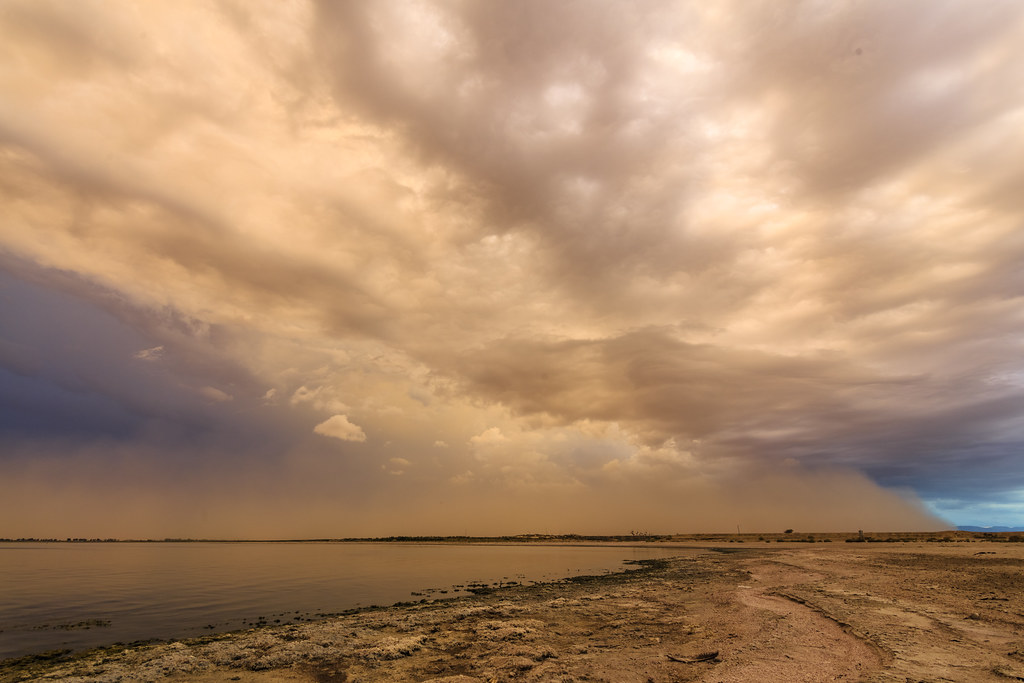
There, on the horizon, a cloud.
I watch it as it moves slowly closer.
I think I know clouds, all kinds of clouds.
This cloud moves toward me.
I see it change as it moves, it thins out,
Becomes lighter, less a cloud than a wispy space in the air.
It isn’t a rain cloud, I know that. However much I want it to be.
I’m disappointed. It’s an extreme drought --

Just beyond my window is a copse of magnificent gum trees.
The leaves and limbs move in the gentle breeze.
Downwind a spray of fine oil droplets hangs in the air.
It’s what gum trees do – it’s what makes them burn.
It’s the price we pay for fast-growing, softwood trees and their wonderful shade.
I’ve seen them burn and release their glowing embers.
I’ve watched their devastation move like a living, ravenous daemon.
Like a creature unleashed from a Japanese Sci-fi movie.

We cover the signs of the drought with green stuff.
It’s Cali and we do that here.
We douse the surface with water we pump from below or bring from 500 miles away
It’s Cali and that’s what we do.
We live in a luxurious, verdant world of green.
We are oblivious to the reality, the drought.
If we can’t see it, it isn’t really happening. It’s Hollywood.
So, there is no drought here, no extreme drought.

The lighted sign above the Freeway flashes EXTREME DROUGHT conserve water,
The edges of the freeway are green and lush and need to be mowed.
The sign over the freeway continues to tell us the big lie – Extreme Drought.
How can there be a drought? Everything I see is in denial, part of the deceit.
It’s a scam, a con, the government can’t be trusted.
Look at the Covid vaccines.
I must water my shrubs when I get home.

Longest in recorded history – that’s what they say.
Indian tribes moved their dwellings to a new place to follow the water.
We move the water to follow us. As long as there is water to move.
Droughts are always followed by floods, aren’t they?
We will wait for the floods.
El Nino isn’t going to save us this time. His sister is in charge.
One more year? Can we last for one more year?
The green will lose its power to deceive in a few months and then what?
Extreme Drought – conserve water!

PS: The freeway signs have changed!
Don’t drive drunk!
Ron Pickett is a retired naval aviator with over 250 combat missions and 500 carrier landings. His 90-plus articles have appeared in numerous publications. He enjoys writing fiction and has published five books: Perfect Crimes – I Got Away with It, Discovering Roots, Getting Published, EMPATHS, and Sixty Odd Short Stories.
.
PLEASE NOTE: ARTICLES CAN ONLY BE REPRODUCED IN OTHER SITES WITH DUE ACKNOWLEDGEMENT TO BORDERLESS JOURNAL
It was one of those harshest summer days. The simmering hot sun was sucking up the remaining moisture from the already parched soldiers. The small contingent of infantry, cavalry and elephants led by King Mahendra himself was moving at a snail’s pace. The elephants and horses kicked up the dry soil, which formed a cloud of dust. The whole unit was moving inside a red cloud of dust.
The purpose of their mission was accomplished, but no one cared to rejoice in the victory. They did not attach much significance to the events in the battlefield. It was the eighth time they had defeated the neighbouring state. Every move of the other side was as familiar as the back of their hands. There was nothing new or exciting about the battle. King Jayavandan of the neighbouring state never wanted to accept defeat. He continued his incursions into the border areas of the princely state of Rajgarh. Eighth time, King Mahendra decided to put an end to it by finishing off the king. He had pardoned Jayavandan seven times and let him off with stern warnings. This time, he himself led the unit, asking the Commander-in-Chief of the army to stay back in the capital city.
Soon, the flag of Rajgarh, atop the fort and the canon-mounted bastions, became visible from a distance. As they got nearer, the drawbridge over the moat was lowered and the fort gate opened with a giant creaking noise. The guards bowed their heads to pay their respects to the King. Once the King was in, the door once again creaked as it shut behind him.
The soldiers, horses and the elephants moved towards the western gate and entered the other side of the fort. The stables for horses and elephants, the ammunition storage room, jail and the soldier quarters were closer to the western gate.
The King on horseback moved towards the large palace that stood tall at the centre of the fort. On one side, was a temple and a durbar[1] hall on the other.
As he alighted from the horse, his younger brother Prince Upendra came out of the palace and walked towards him. Midway, he signalled to the guards on both sides. The guards moved fast with their drawn swords and circled Mahendra. It took just a second for Mahendra to realise that it was a coup.
A large contingent led by the commander-in-chief took control of the situation. The soldiers lined up behind him. By then, the prime minister and the members of the ministerial council stood on either side of Prince Upendra.
“Chain him,’’ Upendra ordered. Mahendra clasped his hands as the soldiers handcuffed him and clamped iron chains around his wrists. They led him towards Upendra.
“From now on, I am the King of Rajgarh. The entire administration is under my control. Those who have objections, can raise their hands,” he said to a group of people who stood in pin-drop silence.
Mahendra too maintained a stoic silence. He stood calm and composed. There was no sign of anger or shock on his face. He looked at the people who stood around him.
“Put him in jail. Two days later he will be executed,” Upendra announced. As a customary obligation towards a dying man, he asked: “Do you have any last wish?”
Mahendra looked around and pointed his finger towards a guard and said, “He will die with me.”
Everyone turned their heads towards the guard in dismay. The guard stood shell-shocked.
“Take them,” Upendra ordered. As the soldiers held him and dragged him after Mahendra towards the jail, the guard kept on pleading innocence. “I have done no wrong. Please spare me. I have a family to take care of,” he cried aloud.
Inside the jail cell, Mahendra walked up and down. His life resurfaced before his eyes — one episode after another. When he thought about his father, he saw his 10-year-old self staring at the royal court from near the throne. His father sat on the throne exuding power and authority. When he remembered his father, his heart swelled with the same pride he had felt decades ago.
The next scene that rushed into his mind without an invitation was not a pleasant one. People inside the palace were running out towards the gate of the fort. There was a commotion and he could hear women crying. As the fort gate opened, he saw his father’s mutilated body being brought back from the battle ground.
He remembered the day when he moved out of the large palace along with his mother and brother, to the servants’ quarters. It was after his uncle’s ascension to the throne. The new queen’s servants came into the palace room and asked them to move out. He had never seen anybody talk rudely to his mother till that day. The servants did not even allow them to pick up their essential things. Bare-handed, they moved into a dingy room in the servants’ quarters.
He thought about the secret meetings with the generals in the army and with King Jayavandan of the neighbouring state, promising him a few villages along the border in return for a favour. That was just before his uncle’s last battle. Then he remembered with pride the day when he walked up the steps, which took him to the throne. He sat on the throne like his father decades ago and looked around at the royal court. It had completely changed in the intervening years.
A soldier interrupted his chain of memories. The soldier walked up to him and announced: “The royal priest is here. He wants to meet you.” He unlocked the door of the jail cell for the royal priest.
Mahendra stood up to show respect for the royal priest. He was an old lean man with overflowing grey hair and beard that gave him a saintly look. The priest held his hand and said, “This has been quite unfortunate. Everything happened in such a short time. I had no inkling about what was happening behind the scenes.”
“You should not worry. I have reconciled to this reality,” Mahendra said.
“Don’t you feel betrayed by Upendra?” he asked.
“This is the life of a king. I had a predecessor and the moment I ascended the throne, I knew I would have a successor. When you climb the steps pushing someone down, it is certain that someday someone else will push you too. That is how power works. I had visualised this scene several times in my mind. Just that, it was not clear who would replace me,” Mahendra said.
“What about the ministers and the Commander-in-Chief?” the priest asked.
“They serve the throne and not me. They also have to look for their own personal gains. Plants grow around the tree when it falls.” Mahendra was more philosophical than what the priest had imagined him to be.
“Why did you wish death for the guard? Everyone found it intriguing. You would have never noticed him. You don’t know him, leave alone having any enmity with him,” the priest was curious.
“When the new king ordered death for me, I was looking around. Upendra’s face was filled with jealousy. He is still jealous of me, of my greatness and my achievements. He would have usurped the power, but he still feels that I am much mightier than him. It made me feel good.” Mahendra’s face filled with pride.
“Then I looked at the prime minister and the other ministers. They had hung their heads in shame. They never looked up. Despite supporting Upendra, they continued to feel that I was right and what had happened to me was unjust. The Commander-in-Chief had a frigid expression on his face, revealing his helplessness towards what was happening around. I looked at the soldiers. Most of them were in a shocked state. When they looked at me, I understood that they still had immense respect for their deposed king.”
“Among them, I saw only one scornful face. This guard – he was in fact sneering at me. I accepted jealousy and treachery. They always come along with power. That will never diminish your greatness. But that sneer. It made me feel like a despicable creature. It stripped me off the pride I had carried all through my life. One day I would relinquish the throne and one day I would leave this world — that was certain and I was prepared to face them. But, I wanted to leave behind an image for posterity – that of a great ruler and a powerful king with awe-inspiring achievements. While looking back at the history of Rajgarh, I would shine as the mightiest king. I could not afford to give an opportunity to even a single person to think lowly of me,” Mahendra said.
The guard interrupted them. “The Commander-in-Chief says your visiting time is over, Royal Priest,” he said as humbly as possible. The priest walked out of the room as the door closed behind him.
Sangeetha G is an Assistant Editor with Deccan Chronicle newspaper in India. She writes on business-related news and has over 20 years of experience in mainstream media, including visual media, news agency and newspaper. Her short fiction has been published in the literary magazine ‘Indian Review’.
.
PLEASE NOTE: ARTICLES CAN ONLY BE REPRODUCED IN OTHER SITES WITH DUE ACKNOWLEDGEMENT TO BORDERLESS JOURNAL







 Borderless