Written by and translated from Korean by Ihlwha Choi
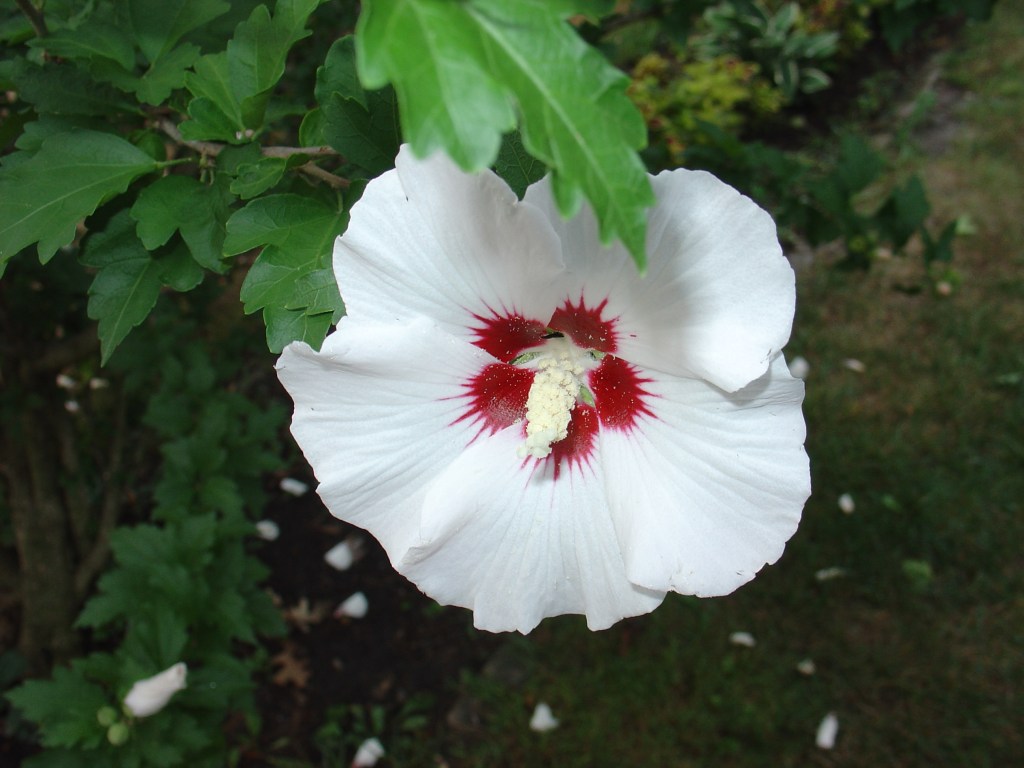
Sunflower, a symbol of Ukrainian resistanceTaegeuk, the national flower of KoreaCourtesy: Creative Commons
Like a flower blooming in the crack of the rock, love blooms everywhere.
The grey metropolis is a big flower garden.
In a bus rattling on the country road,
Where old men die lonely, love revives as a flower.

In the hearts of the wayfarers sitting around the tavern,
Also in our empty hometown, a flower blooms brightly.
In the dark grating of the jail, or, in the complexionless faces of the orphanage,
Love blooms brightly as a bundle of flowers.

Love does not sway only to the rhythm of hymns,
Or,  to the voices raised in prayers.
Like a flower blooming on the veranda or on the office desk,
Near the pale hearts of the street vendors, a blossom flourishes.

Love does not grow only in the hearts of Saints,
But in the whistle of the night guard or in the hearts of the criminals.
The root of love is strong and its flower so beautiful.
The tears of the penitents are all beautiful flowers,
Every agony and grief is a flower bud ready to bloom immediately.

In the hearts of the departed lovers, love grows again before anyone knows.
The flowers are already in full bloom,
In the hearts of the Northern and Southern Koreans,
Also in the hearts of the people of Ukraine and Russia.
The hearts of the peoples are always beautiful flower gardens.
Those are brilliant gardens of May, where so many flowers of love bloom endlessly.
Ihlwha Choi is a South Korean poet. He has published multiple poetry collections, such as Until the Time, When Our Love will Flourish, The Color of Time, His Song and The Last Rehearsal.
.
PLEASE NOTE: ARTICLES CAN ONLY BE REPRODUCED IN OTHER SITES WITH DUE ACKNOWLEDGEMENT TO BORDERLESS JOURNAL
Meredith Stephenswrites ofsailing to Tasmania when the pandemic had just started loosening its grip
Neither the wind speed nor direction were favourable as we tacked our way upwind. It was my turn to make the soup. I headed into the kitchen, grabbing rails and fixed furniture to steady myself. With each wave the boat lurched violently. I opened the fridge and a bottle of drink torpedoed across the galley. Then, on my hands and knees, I opened a bilge compartment trying to find the root vegetables. As I stood up, another wave surged and I nearly fell into the bilge. As I was trying to find cutlery I heard Luke’s voice offering to help me. I gladly accepted and found refuge after retreating to my bed. Luke’s steady sea legs meant the soup was ready in minutes.
We were sailing from Granite Island to Robe, in South Australia, on our way south-east to Tasmania. A four-hour journey by road would turn out to be thirty-six-hours by sea. Alex and Luke took three hour shifts at the helm overnight. The waves lurched beneath us. The sails were disobedient. Alex attached the tether to his belt and the rails, and headed out to the foredeck to fix it. Luke was at the helm and I held a rope at the rear deck. They shouted directions to me to pull and then release the rope. Alex fixed the sail as the boat accelerated.
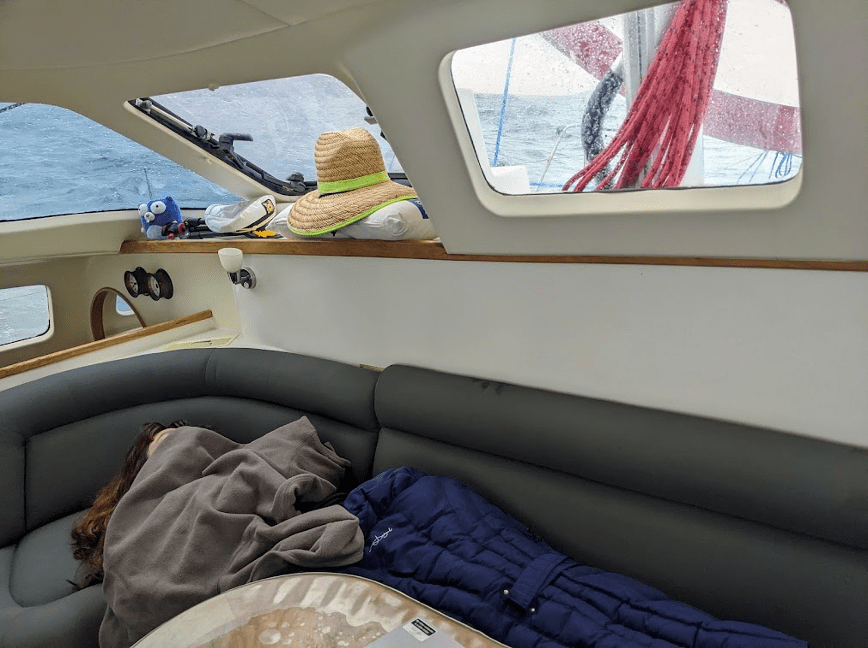
That night the bed in my cabin surged with every crashing wave. There was no relief in the morning when the harsh Australian sunshine pushed its way into the cabin and gave me a resounding migraine. Trying to find relief from the skylight above my bed I staggered up the stairs to the saloon, lay down on the sofa and hid from the sun under a hoodie and coat.
Alex entreated me to lift my gaze to the horizon and so I peeped out and reacquainted myself with the shoreline. My normally healthy appetite disappeared and I had an overwhelming desire to sleep. But Alex was an experienced sailor and never gave up on encouraging me, pushing me beyond what I imagined I could do. Rather than curling up into a ball and giving up, I heeded his encouragement, and my seasickness gradually dissipated. I was well enough by the evening to accompany Alex on the twelve am to three am shift, but noting my tired expression, Alex told me to take leave and go to bed at two thirty am. Luke took over the three to six am shift, and then Alex took over from six am. When I woke at eight the waters were calm. My seasickness had gone and my appetite returned. I enjoyed a hearty breakfast and we calmly motored on to Robe.
We had to sail continuously for two long days and nights on the voyage from Robe to King Island, Tasmania. Alex consulted the app Predict Wind for the weather forecast and assured me that there would be little wind. He, of course, was disappointed because he wanted to sail, but I was quite happy to motor on calm seas if it meant I could be spared from seasickness. He is a climate warrior and wanted to rely on natural sources of energy such as wind. I knew we shouldn’t use fossil fuels, but I decided to tease him, urging, ‘Let’s use diesel!’, knowing full well how it contradicted his principles. He put my needs first, foregoing his love of sailing to motor on calm waters instead.
I only knew about King Island because of its specialty cheese production, and looked forward to some cheese tastings. Alex asked me to do some research on King Island, and soon I learned that it had been the site of around 800 shipwrecks. This was not what I wanted to hear. I knew Bass Strait was notorious, but not that this single island in the strait had been the site of hundreds of shipwrecks. Nevertheless, Alex had equipped himself with state-of-the-art navigational equipment, and had the assistance of sailor Luke who had once sailed across the Atlantic, and he was unperturbed. I trusted Alex, and his confidence was contagious.
“It’s pretty shallow here,” I announced to Luke from the cockpit during my shift. “Only twenty-five metres.”
Luke and Alex guffawed. “That’s only because it’s too deep for the instruments to measure. It’s actually 1500 metres,” Alex explained.
I had a book ready to read for my three-hour shift but I left it unopened. I was enraptured by the milky and glassy surface and the ripples that glistened in the sun. I scanned the horizon for vessels, and tried to discover the ones that appeared in the monitor reported by Automatic Identification System (AIS). Unlike us, the other vessels on the monitor were container ships. Black birds perched on the surface of the water and took off as we approached.
“Where are the dolphins?” I quizzed Alex.
“It’s too deep for them here.”
We repeated the shifts. As Alex’s research had predicted the waters were calm. My seasickness had disappeared altogether.
Two days after leaving Robe, the township of Currie on King Island came into view. Anchoring took a while because of the many submerged rocks. Finally, Alex was satisfied with the anchorage, and we decided to hop into the dinghy and go ashore. First, we had to register online with the Tasmanian e-travel. I completed the documentation on my laptop and finally was required to receive a verification code by SMS on my phone. I kept requesting new codes but none came. It turned out that there was no reception on this remote island for my phone provider. I gave up.
The four of us lowered ourselves into the dinghy with our bags. Alex pulled the cord to start the outboard motor, and we weaved between the other berthed boats to the shore. A police vehicle was parked on the shore facing us. A barrel chested police officer in a fluorescent orange vest motioned where we should land. At the wharf he was accompanied by a biosecurity officer.
The police officer greeted us politely and asked whether we had the necessary paperwork for entry. Luke and Alex had theirs, but Verity and I did not. Despite numerous reminders from Alex I had procrastinated and now I was paying for it. We clambered out of the dinghy to the wharf, and the officers took down Verity’s and my details.
I had not been able to complete my application because my phone would not receive signals in this remote location. Alex tethered me to his phone, because his carrier had coverage. I fumbled around in the sunshine to download various apps to process my application. The phone screen was too small and the glare from the sunshine disturbed my vision even further. Even though I was traveling domestically, it was like trying to enter a foreign country without the right visa.
“I don’t want to hold you all up,” I said to the others. “Let me go back to the boat. I don’t care. I can read a book.”
Alex would have none of it. Then the biosecurity officer briefly disappeared, and reappeared with paper forms.
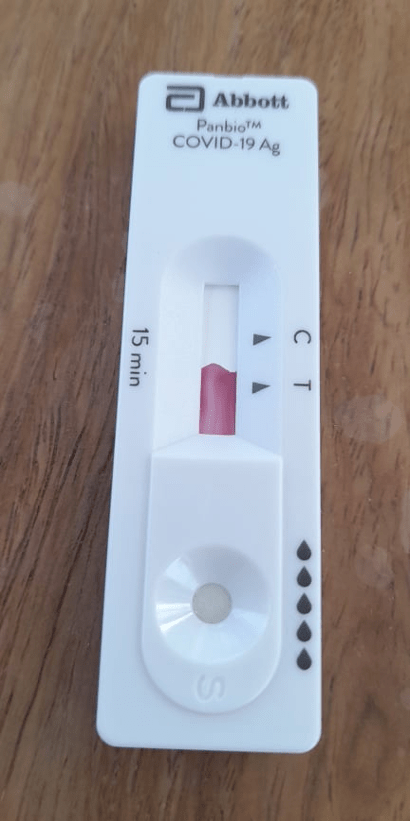
“You can fill these out instead,” he offered. “Then you will have to take Rapid Antigen Tests back in the boat and wait fifteen minutes for the result. If it is negative you are free to travel. I’m just going to make a detour to the airport to pick up the tests for you.”
The biosecurity officer made the eleven kilometre trip to the airport and back to retrieve the Rapid Antigen Tests. Meanwhile, Luke cleverly engaged the police officer in banter, trying to find out the best places for tourists to visit on the island.
“The races are on this afternoon,” he kindly informed us. “They are held four times a year over summer.”
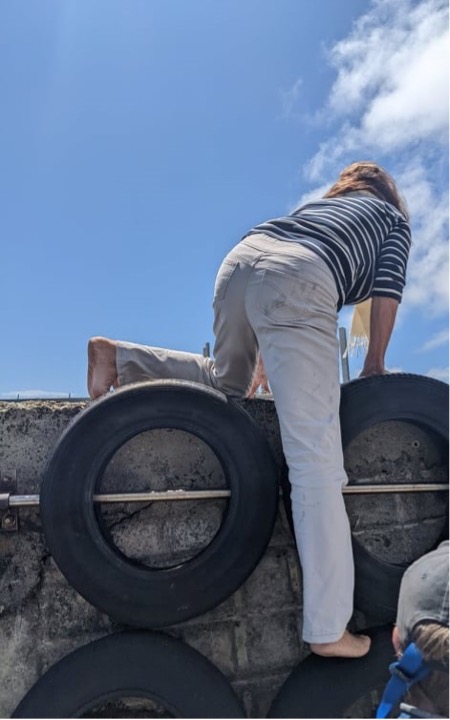
If it weren’t for the banter with the police officer we could never have learned this. We scrambled back into the dinghy with the Rapid Antigen Tests. Or to be more precise, the others scrambled into the dinghy. I lost my footing on the tires on the way down and collapsed in a heap into the dinghy. The mask had obscured my downward vision and I couldn’t see where I was placing my feet. I was rattled after having been greeted by a police officer and a biosecurity officer on the shore of the quiet fishing cove nestling alongside Currie. The others gasped as I fell and then fussed over me and I soon recovered. We sped back towards the boat.
“What else did the police officer tell you, Luke?” we probed, once in the dinghy.
“He said that the other day another vessel had come here from interstate. They too had had trouble getting internet access on this remote island and did not know that the entry requirements for Tasmania had changed while they were on board. They were so upset at being greeted on the shore by a police officer and a biosecurity officer that they started an altercation and had to be locked up.”
Hearing this I felt grateful that we had been treated with such civility. Again we clambered back on to the boat. Exhausted but relieved that we had been able to go on land in Tasmania, we decided to celebrate with Luke’s bottle of Chardonnay. Then, we proceeded with the tests.
As expected, we all tested negative and we took the dinghy ashore to explore Currie. We followed the police officer’s advice and walked through the town to the races. Alex and I were sitting in the stands, enjoying not only the horses but the spectacle of the local crowd in their finery. Alex abruptly looked up to the end of the aisle.
“Is that the police officer?” he asked me.
I studied him chatting to other racegoers in full regalia of his flack jacket, guns in his holster and fluorescent orange vest.
Alex turned to me and quipped, “Maybe that is why he seemed to be in a hurry to process our entry? He wanted to be at the races.
I had been struck by the story that Luke had heard from the police officer that the other interstate visitors had acted defensively when they heard about the new complicated entry requirements to Tasmania. Why had we been treated so differently? We were simply sent back to the boat and the officers had trusted us to act appropriately on the basis of the results of the COVID test. The officers seemed to be in a bit of a hurry to let us get on our way. Now we had an inkling why.
*All the photographs have been supplied by Meredith Stephens.
Meredith Stephens is an applied linguist from South Australia. Her work has appeared in Transnational Literature, The Muse, The Font – A Literary Journal for Language Teachers, The Journal of Literature in Language Teaching, The Writers’ and Readers’ Magazine, Reading in a Foreign Language, and in chapters in anthologies published by Demeter Press, Canada.
PLEASE NOTE: ARTICLES CAN ONLY BE REPRODUCED IN OTHER SITES WITH DUE ACKNOWLEDGEMENT TO BORDERLESS JOURNAL
HAWK AND SPARROW

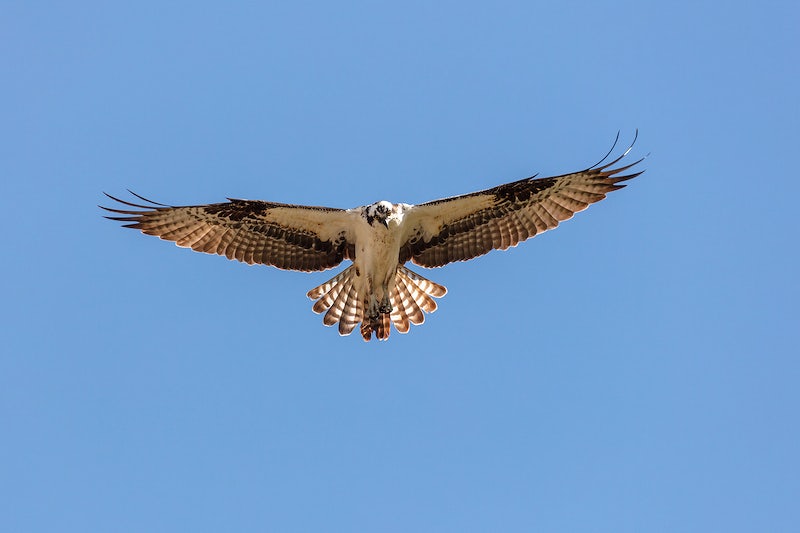
The hawk plunges.
I’m on the side
of the majestic, powerful hawk.

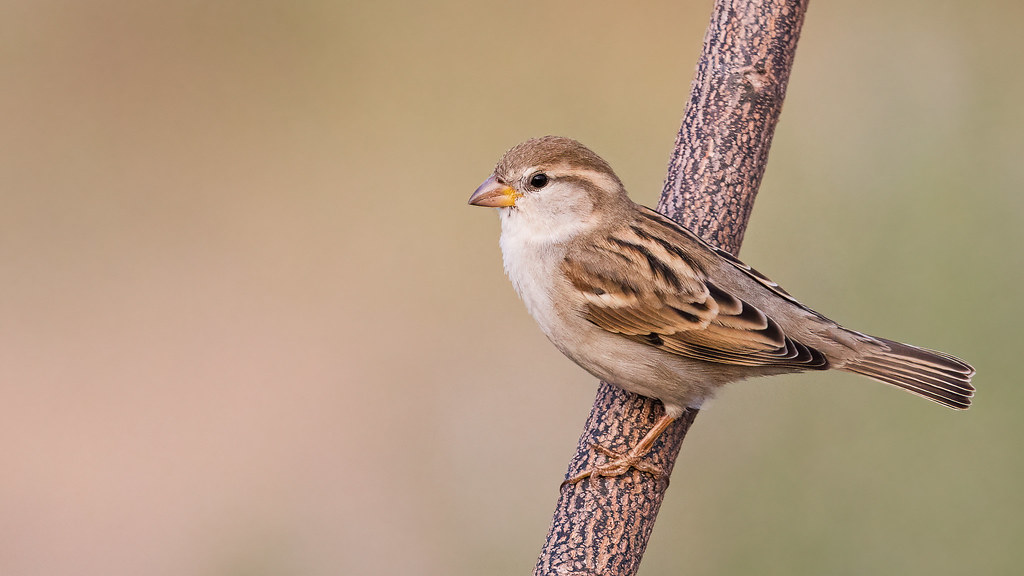
The sparrow reacts
with sudden panicked flight.
I’m on the side
of the tiny, defenseless sparrow.

The tussle in a nearby treetop
could mean the hawk snares the sparrow
or the sparrow eludes the hawk.

Whatever happens,
I win, I lose.
John Grey is an Australian poet, US resident, recently published in Sheepshead Review, Stand, Poetry Salzburg Review and Hollins Critic. His latest books are Leaves On Pages, Memory Outside The Head and Guest Of Myself, available on Amazon.
PLEASE NOTE: ARTICLES CAN ONLY BE REPRODUCED IN OTHER SITES WITH DUE ACKNOWLEDGEMENT TO BORDERLESS JOURNAL
DAWN

There is a murmur in the wind.
The night is on the alert to flee.
Daybreak is dawning
As shades of soft white mix
To make the darkness light.

Trees are barely visible
In the silence of the dawn.
Birds awaken, chirp aloud.
Golden hues paint the sky
To give the dawn a bridal glow.

Hung high are the curtains
Of the dawn, which blow open
On landscapes of hopes anew.
But dawn’s span is short.

A torrent of light let loose
Is set to conquer the world
As dawn awaits in reverence
To breathe in the freshness
Of its first droplet.

Draped in the first rays of light,
Dawn bows out of the stage.
Pramod Rastogi is an Emeritus Professor at the Swiss Federal Institute of Technology (EPFL) in Lausanne, Switzerland. He is a Member of the Swiss Academy of Engineering Sciences. He is the 2014 recipient of the SPIE Dennis Gabor Award. He is currently a guest Professor at the IIT Gandhinagar, India.
.
PLEASE NOTE: ARTICLES CAN ONLY BE REPRODUCED IN OTHER SITES WITH DUE ACKNOWLEDGEMENT TO BORDERLESS JOURNAL
Story by Amreen, translated from Hindustani by Janees
Songs of Freedom bring stories from women — certainly not victims, not even survivors but fighters against the patriarchal status quo with support from the organisation Shaktishalini.[1]
–Sanjay Kumar, founder, pandies
Amreen hails from Khadoli village in Uttar Pradesh. She is 22 and currently pursuing distance education to complete her high school. She courageously braves writing down a peek of her life’s challenges as a survivor/fighter of gender and religion-based abuse with the intention of providing support and solidarity to underprivileged and disadvantaged women around the world.
Moh-Reen
How am I at fault Ammi? Abbu?
Are you upset that I am alive? (Does my being alive upset you to the core?)
You never tried to reach me, even for once!
You have never asked me how I was doing, never enquired whether Amreen was even alive….
I want to ask who gets to decide my worth?
Why have I been rendered helpless to make my own decisions?
Why is the conflict between humanity and religion forced upon us time and again? Are you telling me they cannot go hand-in-hand in harmony?
There always had been huge sermons on the unity of religions…of how all paths lead to the same God (Ishwar)…then why wasn’t my marriage with Mohit acceptable? Were we not in sync with our God who is the same, just called by different names?
Amreen hails from a small village, ‘Khadoli’ in the Meerut district of India’s largest state, Uttar Pradesh (UP). She is currently living in Delhi…but in fear…She has fled home.
Year 2005
Amreen, lovingly called ‘Lalli’, had a pleasant childhood…She would even go on describing it as happy and beautiful. Getting dressed for school early morning, then school, followed by a wave of excitement as the clock struck 3 and she was home. At home, she would have lunch in a rush only to catch up with her friends. Lalli loved her friends, what she loved more was spending time with them. After a long day of play and fun, Lalli would go back home and refuse to help with chores. After all, she had worked so hard at playing.
She loved wandering in the alleys of her village and wouldn’t trade anything in this world for that freedom.
Year 2010
Lalli’s life suddenly took a turn. Her elder sister got married as a virtue of which Lalli dropped out of school. Now her days were mostly marked with helping her Ammi with never-ending household chores. She lost touch with friends. Lalli had to grow up at a tender age.
Amreen would get lost in her desperation and sing to herself: “The darkness has set foot on our path for a long time, come what may the sun must rise now…”
Year 2019
This is the year Mohit took their companionship and love a step ahead and proposed to Amreen.
“Put your hand in mine, with a promise of a love lifelong, I shall stand by your side.”
“I yearn to walk all my life with you. Let’s embark on this journey hand in hand, faith in souls.”
Year 2020
Amreen mustered the courage and disclosed her decision of marrying Mohit. She put in everything to convince her family. But is there a bigger sin in this world than loving/marrying someone from a different faith or caste? It turns out it’s a sin bigger than murdering entire humankind.
The moment Amreen disclosed her yearning to be with Mohit to her family, she understood what she had signed up for. All the mental and physical abuse on one side and now, her marriage was fixed with a man from her community. Yet she braved the decision to keep on trying to convince them, only to be met with pain and despair. Where else does one go with expectations and burdens other than to a family?
There seemed no other way, but the one Amreen dreaded the most. She never wanted to elope. In fact, she was hopeful that as parents, her Ammi and Abbu would understand her, or at least prioritise her happiness over all else. But alas, to fit into a society!
March 16, 2020
Amreen and Mohit left their respective homes. They embarked on a journey to make a home to be called theirs. They reached Delhi where a new hardship was awaiting their arrival. Due to the outbreak of Covid-19, a nation-wide lockdown was announced. As a result, all the courts were suspended indefinitely. Amreen needed a place to stay in the new city. She couldn’t live with Mohit. They feared the reactions of their families. What if the police were after them and Mohit would be framed falsely in the case? What if the patriarchs of both the families were on their way to kill them? What if their village was being torn apart by communal violence because of what they had done?
Amidst this, the lockdown!
During this time, Dhanka Sanstha (an organisation for interfaith couples) and Shakti Shalini (an NGO that supports victims of gender and sexual violence) came to Amreen’s rescue. For the first time in her life, Amreen felt cared for, supported for her decision-making ability, and came to know what solidarity feels like.
July 29, 2020
After all the hardships and agony that Moh-Reen went through, the day they had been desperately seeking finally arrived. Amreen and Mohit tied the knot.
Year 2021
Moh-Reen were blessed with a little angel, whom they named, ‘Tamanna’ — a wish. It was their wish to have a daughter, a wish fulfilled. But it seemed Mohit’s family were upset with the sex of the child. They wanted a son – a son they would call theirs, not Muslim woman’s daughter.
It had only been five days after Tamanna was born and Amreen was brought home, that Mohit’s family started mistreating her. She was denied food. For days Amreen was only able to have tea and biscuits, which was also the time Tamanna was being breast fed by her famished mother. Amreen patched up with her elder sister, the only family member who was considerate enough to stay in contact. Her elder sister couldn’t bear to look at Amreen’s plight and took her home along with Tamanna, where they looked after the mother and child for almost two months.
The mistreatment continued even after Amreen moved back with Mohit’s family. She was verbally abused by her mother-in-law and sister-in-law for giving birth to a girl.
February 10, 2022
The previous year’s series of agonising events finally made Moh-Reen move out and rent a place of their own. Mohit, Amreen, and Tamanna live here peacefully. Amreen hopes her story is not confined within the frame of a short story but goes beyond touching lives of many people…even if it means changing a single woman’s life for good.
Mohit wants to fulfil Amreen’s dreams. Amreen is currently enrolled in tenth standard [grade] to catch up on her studies. She is on her to become someone – somebody known for her own self, where she will be known by her name and not just as someone’s wife, daughter, or mother.
Are we going to end this story with the same questions as asked in the beginning? Or are there questions that need to be asked from your side as well? There’s one definite question for sure – whom will you hold accountable?
.
Janees is an independent researcher and theatre-practitioner who has been associated with Pandies for the past five years.
[1] “Establishing itself as a premier women’s organisation in India from 1987, Shaktishalini has spread out and deals with all kinds of gender based violence. A shelter home, a helpline and more than that a stunning activist passion are the hallmarks of this organisation.
“pandies and Shaktishalini – different in terms of the work they do but firmly aligned in terms of ideological beliefs and where they stand and speak from. It goes back to 1996 when members of the theatre group went to the Shaktishalini office to research on (Dayan Hatya) witch burning for a production and got the chance to learn from the iconic leaders of Shaktishalini, Apa Shahjahan and Satya Rani Chadha. And collaborative theatre and theatre therapy goes back there. It is a mutual learning space that has survived over 25 years. Collaborative and interactive, this space creates anti-patriarchal and anti-communal street and proscenium performances and provides engaging workshop theatre with survivors of domestic and societal patriarchal violence. Many times we have sat together till late night, in small or large groups debating what constitutes violence? Or what would be gender equality in practical, real terms? These and many such questions will be raised in the stories that follow.” — Sanjay Kumar
.
PLEASE NOTE: ARTICLES CAN ONLY BE REPRODUCED IN OTHER SITES WITH DUE ACKNOWLEDGEMENT TO BORDERLESS JOURNAL
FALLS
Bodies strewn about the gym floor – 14, 15, 16! Nancy carries on.
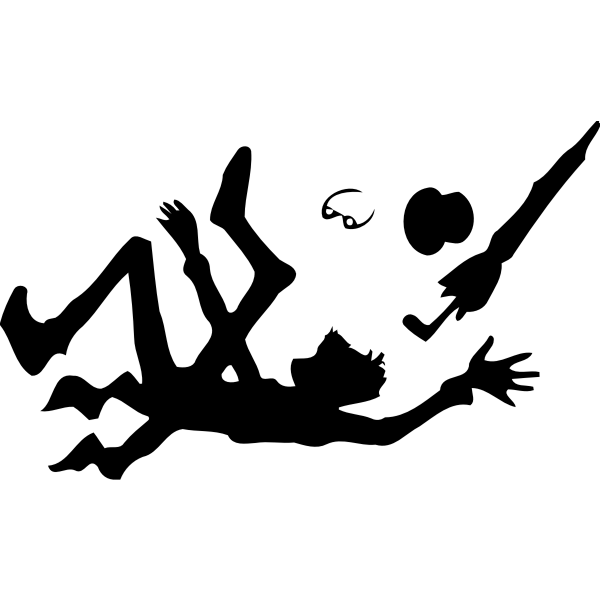
I’ve seen bodies falling lately.
Not from great heights, simply disappearing from my field of view.
Missing the chair seat, losing the tenuous balance required to stand up
A little hazy, dizzy, vertigo.
Then the gathering, the collection of those nearest to the fallen person.
To help, to see, to be a part of the action – the crowd.
“911, call 911!”
“Call the front desk, call the Care Center.”
“Did he hit his head?”
“Wow that was loud.”
“Is he hurt?”
“Can he stand up?”
“Leave him alone.”
“The EMT will be here soon.”
“Why did it take so long to give the information to 911?”

I’ve seen bodies falling lately.
Old bodies, not limber pliable resilient bodies.
Tipping over backward is the worst – the back of the head impacts the floor.
Concrete is worse, wood not so bad, carpet is best.
Still, it is an aged, shrunken brain in a rigid skull.
A hip is bruised, damaged, cracked.
Recovery time is measured in months - if ever.
The hospital, rehab, have their own horrors.
“I don’t want to go to the hospital.
They will want to keep me overnight!
I’ve got things to do tomorrow!
I’m not going!”

I've seen bodies falling lately.
I check my balance, shift from side to side.  Feels OKAY I test the horizon; should I sit down?
I bend my knees, I flex, I’m feeling stable, strong, good.
What can I do for him?
What can I do for myself? Let’s get physical, get personal.
Stay strong, stretch, add muscle, do squats, get up from the chair, sit down in the chair, Repeat! Repeat.
Remember the sound of a body impacting the floor -- concrete, wood, carpet.
Stretch, balance, squat, squat, squat.
Ron Pickett is a retired naval aviator with over 250 combat missions and 500 carrier landings. His 90-plus articles have appeared in numerous publications. He enjoys writing fiction and has published five books: Perfect Crimes – I Got Away with It, Discovering Roots, Getting Published, EMPATHS, and Sixty Odd Short Stories.
.
PLEASE NOTE: ARTICLES CAN ONLY BE REPRODUCED IN OTHER SITES WITH DUE ACKNOWLEDGEMENT TO BORDERLESS JOURNAL
Although Navalgund had been roused from its slumber by the Mainavati elopement episode, in a few days after the eloping couple returned, going by the saying, ‘she becomes of this earth when she starts lighting the hearth’ the scandal lost steam and the town went back to sleep again.
The people returned to their busy routines of asking each other in the mornings if they were up, and turning their faces to the skies in the afternoon and saying “What do you know? There’s not a hint of rain yet.” They went back to sitting on the knoll near the Lalgade temple until darkness stepped in and until the concluding strains of the raag Bhairavi of the Magdum’s band rehearsal became thin air, they discussed such pressing matters as the ghost in the tamarind tree beside the Sankawwa pond, or the yard-long wheat-hued cobra that had slithered into the rock cluster before the Taluk office, or the Halladmatha’s Sire’s persistent cough, or Mamlatdar’s minor wife Mandakini, or the plague mice falling dead in Hubballi, or Bal Gangadhar Tilak. After ruminating over these never-ending topics, they would hasten home to eat their evening meals and shut their doors upon the darkness outside and turn in before the wicks in the kerosene lamps in their respective homes went off with a phtt. The womenfolk kept themselves busy with hearth, childbirth, and a little mirth of water’s worth on their way to the pond. Once in a while, they created their own entertainment with gossip and slander and quarrels – scold this one, taunt that one or mock another one.
Navalgund has grown considerably in the thirty or forty years since the mutiny. Fleeing the Company’s oppression, many families from Nargund are now settled in Navalgund. With the increase in population, more merchants have set up shops. Earlier, Adoni’s was the only trading family in all of Navalgund. Now, with the addition of Mhantshetty, Mhankali, and Yirapakshimath, there are four merchant families. The Queen’s government had laid down with great care gravel roads because of which trade and businesses are growing. Open-topped and covered bullock carts and even horse-drawn carts are now plying from town to town on these roads. The municipality that has been there for a while has now started a school, a library and — can you believe it — even an English hospital! But no one goes to that hospital because it is rumoured that they put the flesh of chickens, sheep, and donkeys in their medicines. Hence, Vasudevaachar’s patients are constantly growing in number. Bullock carts crowd at the Panths’ door every morning. Moaning, groaning and coughing patients covered in woollen blankets wait in their veranda. Vasudevaachar walks among them bare-chested, stroking his sacred thread with both hands and advising the patients on their medication, treatment and diet, offering soothing words of courage or stern reprimands as the occasion demanded.
“Ningawwa, if give up garlic chutney for two days the sky won’t fall on your head”
“Krishtya, I’ll give you a Shankhvati. Powder it, mix it with lemon juice and lick it. Your stomach will be alright. You won’t die if you cut down on your food for a couple of days”
“Bharmya, I’m giving you this bottle of Balantsyrup. Give it to your wife and don’t drink it yourself, you whoreson…”
“Basangauda, you have the sugar disease. Fire two of your farmhands and do their work yourself. You must also eat less…”
“Subbi, I told you that feeding your daughter-in-law the red figs of the Banyan tree will beget her children. But I don’t remember promising they would be male children!”
“Do not eat or drink undrinkable and uneatable things, you sons of unwed mothers!”
“Goudra, your lady is showing signs of consumption. See if her spittle is red-tinted. It’s a terribly infectious disease. Stay away for a few days – it’s good for you and also for her.”
“It’s not just medicines that will cure you, Shambhu. You must also have faith in god. Here, repeat after me, ‘medicine is the waters of the Ganges, the doctor is a manifestation of god’. Now, once more…”
Such medical jargon could be heard in the halls of the Panth house every day.
From early morning to the ripening afternoon, Vasudevaachar sits in the outer hall attending to his patients. He then heads to the backyard, draws seven or eight pots of water from the well and pours it over himself completing his bath before heading to the altar and sitting down for a two-hour long, uninterrupted prayers. Sometimes the municipality’s three o’clock bell would have rung before his prayers are complete. Then, after a meal and a short siesta, with only a thin shawl covering his bare chest, he heads to the Lalgade Hanamappa temple for prayers in the late afternoon. Sometimes, if there is a sermon or sacred storyrecitation on, he sits down to listen to it. If not, he sits a while on the stone bench that’s open to the skies outside and lets himself afloat in Magdum’s melodies before slowly heading back home.
On one such rippleless evening, Tulsakka and Vasudevaachar sat chatting on the porch outside the house. The children who had gone out to play hadn’t returned yet and Ambakka was at Antambhatta’s corner house, when suddenly Rukuma rushed from the backyard to the main-door looking excited and coughed a couple of times to draw Tulsakka’s attention. She then called out to her sotto voce, “Tulsakka… tssst… come here… come quickly…” Sensing her excitement and strange expression, Tulsakka left Vasudevaachar behind and walked over looking quizzically at Rukuma who began gushing and flailing her arms animatedly.
“She’s here!” she said.
“Who ay Rukuma? Who is here?” Tulsakka asked in her normal calm voice.
“She… she!” Rukuma insisted.
“She who?” asked Tulsakka as calm as before.
Rukuma came close to Tulsakka and said with wide eyes, “She! The one from Annigeri”
Taken aback by her words, “What’s this new drama now” Tulsakka exclaimed and followed her to the backyard.
Covering the child in her lap with the loose end of her sari, she sat by the stack of cotton twigs in the backyard, her poignant face both nervous and hopeful. As soon as Tulsakka and Rukuma came close, she stood up and held the child out and her eyes filled with tears.
“Please don’t be angry, my lady… it’s three days since he’s burning with a fever. Even the master of my home hasn’t visited in a while. Do what it takes but please save my child. I heard the master of your home is a great doctor with healing hands. So I came running here. Please don’t tell my master that I was here… he will be very angry. This is my only son… please save him for me…” she implored them.
Tulsakka hesitated for a moment and then said, “Come, sit here…” and showed her to the holy basil pedestal. The Annigeri woman sat down where she was asked to. Then spotting someone else, she suddenly covered her face with her sari, handed the baby to Rukuma and stood back in fright. Even Rukuma and Tulsakka were a little scared as they turned around and saw that it was Vasudevaachar. He fixed a dark gaze upon them for a moment before looking at Rukuma and saying “Bring the child in, I’ll take a look.” He walked back to his desk in the outer hall and Rukuma followed with the baby.
The Annigeri baby’s fever was owing to a knot in the stomach. Vasudevaachar gave a handful of small sachets to Rukuma and said, “Tell her to mix this in thin, watered-down milk to make a paste and feed it to the baby four times a day. Children often get fevers. Tell her not to worry. The baby will be well in a couple of hours. Open one of the sachets and give it to the baby yourself so she can learn how it’s done. Also, tell the mother to drink boiled water and to feed the baby a little less for the next four days.” He sent Rukuma away and went back to sit on the porch outside.
As Vasudevaachar’s instructions were being carried out, Rukuma and Tulsakka had formed an easy friendship with the Annigeri woman as only women could with one another. ‘Where are you from? How many years since you came to Annigeri? What did you say your name was? Mhaashaabi? What does it mean? Where did you meet Venkanna? Is this your only child?’ they were asking her. ‘How many grandchildren? I hear you haven’t seen your own lands in Annigeri… why don’t you visit once? If the baby gets well soon, I will go to the annual fairat the mausoleumof the Yamanoor saint…’ she was saying to them when suddenly Ambakka walked in through the backyard door straightening the parting in her sari. Upon finding out who the stranger was, Ambakka sprung back as if stung by a scorpion. “Ayya may her pyre be lit!” she started shrieking, “That thing may have no sense, but what about you? You have let it in like this! Hey, you! Get up… you have polluted the holy basil with your touch… pick your child up…” Rukuma and Tulsakka were saddened to see the Annigeri woman’s plight. Tulsakka spoke with her usual calm and dignified voice.
“Ambakka, please be quiet. Is this how you treat a guest?” At this Ambakka suddenly came into her wild avatar and started yelling in a shrill, sarcastic tone.
“Ayya… who’s stopping you, my lady? It’s your home… do what you like in it. Who am I to tell you anything? Venkanna mistress is your sister-in-law after all, isn’t she? She’s brought her son home moreover… it’s the procession of the family’s heir. Get the cradle out. Welcome him in, bestow gifts into her lap, give her a new sari– you haven’t given her one on her wedding, have you? Who am I to stop you…?”
“I don’t understand what she’s saying” exclaimed Mhaashaabi alarmed by the scene Ambakka was making. She said a hasty “I’ll take your leave, madam” to Tulsakka and left quickly.
The next day, after the atmosphere had cleared a bit, Rukuma went up to Tulsakka and said in a low voice, “Did you notice the baby’s nose, Tulsakka? Wasn’t it exactly like Venkanna’s?” and smiled knowingly.
A few days since then, Venkanna cornered Ambakka in the backyard. “Ambi, this is the last time. If you stick your nose in my affairs again, I’ll erase all traces of you. Be warned” he said menacingly.
ABOUT THE BOOK
A sweeping historical novel. Shortlisted for the Lucien Stryk Asian Translation Prize, 2019. The original work Halla Bantu Halla won the Central Sahitya Akademi Award.
It is the year 1857. A great uprising — what would come to be known as the first war of Indian independence — has broken out. Two brothers, emissaries of a northern king, on a mission to garner the support of the southern rulers, wander lost and hungry in a forest not far from their destination. They are captured and one of them is hung by the British. Caught in the rough and tumble of the mutiny, the other brother settles down in a place that was never meant to be more than a temporary refuge. He spends his life far away from home among people who do not speak his language. The novel spans the story of three generations of his family living under the burden of inherited nostalgia, a story that unfolds with all its flying fancies and stumbling follies on the threshold between tradition and modernity. Set against the backdrop of the freedom movement, the novel explores the lives of the people of the Dharwad region of Karnataka; their acts of faith and the realpolitik of ritual. Masterfully and sensitively translated from the Kannada, A Handful of Sesame is funny, tragic, ironic, satirical, lyrical and deeply allegorical of a young, modern nation.
ABOUT THE AUTHOR
Shrinivas Vaidya was born in the Dharwad district of Karnataka. He conceived of the plot of Halla Bantu Halla — inspired in part by the history of his own family — a long time ago, but it wasn’t until he retired from his four-decade long career in banking that he managed to sit down and write it. The novel won the Sahitya Akademi award – the highest honour by India’s National Academy of Letters. He has written several collections of short fiction since then.
ABOUT THE TRANSLATOR
Maithreyi Karnoor is the recipient of the Charles Wallace India Trust Fellowship for creative writing and translation at Literature Across Frontiers, University of Wales Trinity Saint David. She has won the Kuvempu Bhasha Bharati prize for translation and has been shortlisted for the Lucien Stryk Asian Translation Prize and is a two-time finalist of the Montreal International Poetry Prize. Sylvia: Distant Avuncular Ends is her debut novel.
PLEASE NOTE: ARTICLES CAN ONLY BE REPRODUCED IN OTHER SITES WITH DUE ACKNOWLEDGEMENT TO BORDERLESS JOURNAL
VISITING MOM

When I die and if souls are eternal as they say --
Things such as heaven truly exist,
The first person I would like to meet up there
Is my mom. God listen to me if you are there –

It would be banality if I expect mom to look after me again,
I merely want to thank her for all things she did for me here.
I was to care for her in her late age
And I didn’t.
This gives rise to the desire
To believe in the presence, the timelessness of the soul,
To believe in consciousness as an after-life truth,
To believe in all the inanities born of the lust to live for ever --
Destruction of all that is sane and meets the purpose of logic.

Mom is mom, her concrete efforts to improve
The standard of my living cannot die,
Either as concept or as proof of having been,
Something that cannot melt, dissolve or be burnt.

I call upon her, I call upon on her
As brief of my lost goodness.
There she stands, more like in alter
Hazy and clouded
Not able to see or recognise,
Though the eternal mom has her soul in peace
That I have arrived.
Saranyan BV is poet and short-story writer, now based out of Bangalore. He came into the realm of literature by mistake, but he loves being there. His works have been published in many Indian and Asian journals. He loves the works of Raymond Carver.
.
PLEASE NOTE: ARTICLES CAN ONLY BE REPRODUCED IN OTHER SITES WITH DUE ACKNOWLEDGEMENT TO BORDERLESS JOURNAL.
The ship hauled anchor then glid smoothly over the placid, thick black waters. Overhead, thousands of stars studded the midnight sky. Most of the passengers chose to sleep but not Reuven, who at starboard, leaning heavily on the railing, inhaled and exhaled that nocturnal air of sea lust he nurtured, yearned and desired. Reuven had walked the decks of so many ships at night. He slept restlessly during the day. For it was at night that the treasures of the sea beckoned him with their illuminating allure, whose phosphorescent radiance touched and tugged at his heart as he attempted to pry open the lid of that still undiscovered treasure hidden unfathomed within him.
The ship rocked ever so gently as he peered into the inky depths. Deeper and deeper Reuven sought to probe, to sound, to err amongst the phantoms. But as night advanced, and the air grew cooler and he had to stop. His lungs were at the point of bursting. He gasped for air. He had failed once again, panting breathlessly. It was only the first white ray of the morning that he returned to the surface, throbbing with anguish, shivering with cold, smelling of brine.
He would have to exercise himself more strenuously, discipline his breathing rhythms, purify his heart further in order to attain … to attain what ? The un-pried trove ? The entrance to the azure cave whose lithic cavities and chambers would deliver him to the heart of his ‘Quest’ ? “But all three are One !” he murmured to the morning light. “All three are decidedly One, I’m sure of it.” He concluded.
But was he absolutely sure ? Since the nineteen-seventies how many years, how many vessels, how many dives into the oceans and seas of the world had he waited, ridden out, taken in in search of the seemingly unattainable? How many nights aboard the rocking and rolling bridges, under the brilliant or luminous less skies had he held his breath and made the vital plunge ? At times, he felt that he had ‘touched’ something : shoals of darting fish, a school of breaching dolphins, curious at this interloper, a lone blue or white whale ready to swallow him up like Jonas, yet hesitant due to the urgency of the diver’s dive downwards, and perhaps also to the oddity of such a ‘mouthful’. Once a soft, silken squid touched him with its suction-cupped tentacles. This touch sent icy chills through his body. Other odd phantoms that wiggled through the depths eyed him with their bulging, bulbous eyes rolling in their protruding orbits as they rubbed noses with him. Alas, this was the furthest he had sounded: the crushing coldness of the sea enveloped his body, and his lungs, aching, failed him once again. His lungs and his will ! This lack of intestinal fortitude and energy in overcoming the frigid deep would bring tears to his red, fatigued eyes …
“How many plunges would it then take ? How many crossings and trials ? Confrontations with the phantoms of the deep ? Were these uncanny and oftentimes terrifying creatures the guardians of the cherished trove ? Were they responsible for my lack of will … my shortage of breath … my fear of limits ? But is not the tracing of a limit a means of surmounting it ?
“I class these plunges as voyages. They are extraordinary. Extraordinary because beyond what I may call ordinary reality. For this extraordinary reason I believe my will retracts, my lungs fail, my fear reaches an acme of indescribable terror. Yet, I persevere. No treasure chest is easily discovered and its lid pried open. This knowledge I acknowledge, and in doing so, have hurried half the way by overcoming the consensus of a sole vision of reality. For I have come to understand that the treasure I have so desperately sought lies not in an ordinary vision of things, but within them, through them, over and under them. There lies the treasure I am speaking about. There in a land or space of the ‘Other Reality’,” wrote the dauntless diver in his logbook.
“And this space exists ! I have plunged into it, but have been thwarted in my attempts to reach ‘the bottom’, if that is all possible. The ‘bottom’ where lies the treasure …”
And so many years passed. Many decks paced. Many plunges plunged. Many expectancies sunk …
“It was on this particular cargo vessel as we left Southhampton for Cape Town that my efforts would prevail …or I believed would prevail. At the equator, one very still and humid night, the waters of the Atlantic were as thick as molasses, as calm as a pond in a wooded glen, as black as pitch. I leaned at the railing, quite alone at late hours of the night. I peered down into this uncanny oceanic instant and a sentiment of great excitement crept up upon me …
“It was the instant expected : I plunged anew …
“As I slowly descended the stillness of the cool waters, the titillating sensation of my kindling blood awakened a contrast that my mind found difficult to organise. It were as if my subjective make-up, my ‘personal space’ lay exposed to the various living entities that either obstructed my way, obliging me to circumvent them, or rushed towards me as if to scrutinise this alien interloper that had trespassed their ‘personal space’. It was not an uncomfortable feeling at all, but the collision of the two ‘personal spaces’ seemed to meld into an ‘impersonal one’, drawing me now out of my self now drawing them into me. Beautiful crimson corals provided the backdrop of this alternating movement, aglow with bulbous branch tips that undulated at my approach ; its branches were aswarm with sponges, molluscs, star fish, sea urchins and sea spiders. The coral quivered and quaked under their continual agitation, a silent and stunning quavering as I passed them by, several detaching themselves to examine the diver! Yet, they kept at a reasonable distance, hardly inhospitable, even friendly, my ‘human aura’ perhaps attracting them as they slid through the myriad incandescent branches …
“I felt so relieved that these fellow creatures welcomed my presence amongst them, and I thanked them for not upsetting my rhythmic breathing as I descended. I broke through layers of soft, silent, swishy beds of seagrass of the most viridian green. Nothing stirred within them; only the strong current of waters tossed them to and fro — like the sea vessel that I had long since abandoned — or so it seemed. Here at these depths ,Time had lost its tick-tock humdrum. It had become Space.
“Gradually the waters became terribly cold. My heart was palpitating. At these inky depths, no ray of the sun penetrated. No sound, human or other, pervaded. Now the queerest of creatures swam in the wake of my vertical drop, glaring at me either through tubular eyes that swivelled or through telescopic ones with lenses. They appeared amiable, in spite of the fact that I had disturbed their environment. They meant me no harm, even a giant squid, terrifying creature, who had made a bee-line towards me, stopped a short distance away. The creature began to feel my body with the many suction cups that padded its lengthy tentacles. I imagine it was verifying whether I were friend or foe. After several minutes, it let me pass, its beady eyes encrusted in its bulbous mantle fixed on me as I drifted deeper into colder waters, waters that were compressing my body and soul more and more.
“The darkness became truly frightening. My drop slowed down as if the waters were solidifying, gripping me in some viscid, glutinous substance. An image from the past darted through my mind : it was in the Pacific, I had encountered the terrible phantom of the abyss and had skirted that danger, miraculously. All of a sudden I was shaken out of my reminiscence by many spots of soft ochre-yellow light that sluggishly trudged their way towards me : I believe they were lantern fish flashing upon their prey. They swarmed around me, training their luminous photophore organs into my face. What an unusual prey they had stumbled upon! So huge. So unappetising. So unlike their daily diet. I think I was dealing with a viperfish, whose enormous dagger-like teeth shone under the softness of its lantern organ. And there, to the left, swimming as speedily as the thickness would allow it, a humpback angelfish, an ugly beast indeed with its deadly spiked teeth ready to devour me. Both of them eyed me, until at length turned against themselves. The turbulence of the waters blurred my vision, thousands and thousands of bubbles jolted and jostled me from left to right, dragged me downwards, helplessly caught in the vortex of this bellicose maelstrom. When the tempest had abated, peace and darkness reigned once again. Regaining my composure, I ventured a peek upwards: nothing …
“Heavier and heavier my body weighed, lighter and lighter my head as I plummeted to deeper depths, quite unknown to me. I became estranged from my Self … from my human identity. I had never experienced such uncanny emotions in my former marine voyages. It were as if my body had blended into the environment, had become one with it, whereas my mind, quite lucid, refused to yield to this inhuman ‘It’. Was my body detaching itself away from my mind ? How could that be ? They are inextricably connected … or so I thought … How many hours now beneath the ocean ? How many days ? Would I have both the physical and mental strength to weather the fathomless Deep … the soundless ‘It’ ? To overcome the abyss ? To reach the treasured Depth ? Yes, I must advance wither : Had I any other chance ? It was too late to turn back … Yet I had to surface at some time …
“Ah ! Now what is this ? I’ve seen that bugger before in picture-books – the black swallower. This phantom of the deep can be a deadly adversary with its bloated, distensible belly that even swallows small whales. It’s coming straight at me and I have nothing to defend myself, only prayers, only a thought of the Absolute One whom I seek with firm resolution. And there, a blazing light burns through the thickness. Either it too is headed for me or for the charging black swallower. It’s the pelican eel that was going into battle against the other, brandishing a large photophore at the end of its tail to attract the terrible black swallower away from me. Its enormous mouth has dropped open and in a jiffy the unprepared black swallower existed no longer, gobbled up within the grinding cavity. The spot lights of the eel flashed on and off as it struggled to digest such a crude repast. All this emotion caused my heart to beat faster and faster … my chest ached and swelled. My breathing became more and more erratic, almost uncontrollable. As I witnessed these turbulent events a rather metaphysical thought crossed my mind : Are all these creatures not traces, imprints, vestiges of His Presence ? Are they not, in the chilliest depths of the deep, enigmatic signs, obscure indeed, even frightening, of my communication … no, of my communion with Him, however ugly, gruesome or hostile their appearance be to me ? They are the true signs that I am on the right road : the Royal Road …
“My eyelids no longer obeyed their nerve commands to remain on the alert. I wished to sleep. To lay down and doze off for a while … a long while. I’ve had enough. I’ve come too far and my quest has come to nothing. I long to see the light of day, to savour earthly creatures, to breathe an unsalty air. I yearned to return to humankind. To the colours and sounds of life … Yet, I’m still alive, or at least I believe I am alive, albeit everything I touch has no feeling. A numbness has settled into my drifting body ; so light, so weary, so empty … a floating debris from an embattled, erring vessel …
“The debris floats into the crevice of a sponge-like lithic palisade. I am penetrating some sort of grotto, drifting in an airless, soundless world, tugged along horizontally as if a strong current were tossing and rocking me gently from one wall to the other. The haze that had veiled my eyes slowly lifts, and I discern a phosphorescent glow of myriad colours. The colours played upon my sensations without disturbing the numbness that had seized my body. At last, the ‘Separate Reality’? The twilight of gleams and glimpses ? Of undulating figures or phantoms that emerge in my mind when I feel myself entwined within the fumes of sleep ?
“But I am fully awake to my novel surroundings: A purple haze has crept into this grotto, chandelier-like stalactites hang in series of threes, all perfectly symmetric in their sponge-like textures and forms. I reach out to touch them but I felt nothing, my arm balancing heavily in some sort airless vacuum. Gigantic stalagmites studded with bulging, knotty boles and prominent tumours soared high into empty chambers like frothy fairy chimneys, dripping colours of blue and green, fading fast as they penetrate the darkened upper cavities. And away I drift, billows of silken lithic walls roll by. I serpentine like a snake through this intestinal gallery, chamber to chamber, passageway to passageway, the air or water current conducting me deeper into intermittent contrasts of sapphire flush, ultramarine malachite and pall blackness. Air or water current ? My body breathes ‘normally’, although I cannot ‘feel’ the air through my nostrils or throat. Have I transcended the conditioned reality ? Have I identified myself with this unknown alienness … reached the ‘Separate Reality of the Divine One’? The Absolute One is indeed known to us naturally, but will I be able to recognise him ?
“Nothing moves: no fish, no reptiles. I myself cannot move, yet beyond the inertness of my corporality something enlightens me upon the marvels of this cavernous world. All beauty does have a sense of the physical. Alas, I am quite unable to participate ‘corporally’ in that sensation, for I possess at these very moments none. A tulle-like curtain is drawn before my eyes; but on each side of me what an enchanting view of so many enfiladed pillars, like ossified soldiers on guard duty. Are they real ? Am I dreaming them ? I must say, however, that in spite of my benumbed state, I do feel this polychromic beauty. A sort of conscious feeling of a penetration of colours and configurations that leaves trails and traces as I sail by them, or better put, as they engulf me then expel me further into the never-ending warren of passageways and chambers.
“Ah ! Wonders of wonders ! Here and there I discern mural drawings of the most exquisite artistic stamp : aurochs, bisons, horses, hands with thick thumbs, tiny ochre-coloured men shooting arrows … Perhaps these regions were inhabited by creatures like myself. Prehistoric or primitive artists carving out their visions of reality, real or imagined.
“Am I then dead to this forlorn world ? To mine ? Am I passing into the Other World ? Is this where the quest has brought me … to the end … or to the beginning ? The phosphorescence glows of melding colours: blues slipping into turquoise, greens into shades of violent. Slashing amber yellows drip into rushes of rusty reds, which in turn suddenly explode into large patches of black shutting out all until bursts of dulcet rose and bright orange bring tears to my half-closed eyes. This I sense but without a sense of being separate from it all.
“Yes, there is something eerie about this voyage, something uncommon. From one of the arched, vaulted chambers a shower of arrow-like sparks falls upon me ; yet I feel nothing. I speed through a maze of silver and gold. I circumvent a sulphurous gauze of stalagmites of the most confounding shapes: pillars whose capitals overflow with spongy tendrils and drooping pistils, sprouting mushrooms, swollen menhirs, frozen standing stones and other awesome monoliths coated with red damask, crustacean Moorish arches, spiky gold steeples and then the passage cleaves into opaque chambers, odourless, soundless, fraught with the feeling of hopelessness. From one of the greenish Moorish arches, I see a stone mouse hanging by its tail, or so it appeared, and from another, silken silvery threads of weird waning, waxing waterfalls.
“Here, afloat, I am spinning through a wondrous world quite impervious to its smells and touches, yet moved by it as if it were sheltered within me. Sheltered by the commotion of colours and the seductive shapes, the endless erring of the same patches of pitch black, exposed to the sudden bursts of iridescent colours, I turn and turn and turn in circles ever wider.
“The momentous moment has it arrived? The Great Encounter — I mean between myself and the Absolute. No, impossible, why all this turning and turning ? Why the intermittent snatches of blackness that smother the chromatic bursts of phosphorescent hope ? Why am I not able to voice or move within the vortex of the revelation ? And the sacred trove ? Am I not worthy of it ?
“My heart bursts with melancholic joy. Pangs of glee spill out … I sense the midst of mellow musings rising like a curtain; the lid has opened, and the image of the Invisible One has come upon me … I gasp in awesome delight: No more angry, reddening suns will henceforth set upon me…”
*
After several hours of searching the sailors finally found Reuven’s bloated body floating in the ocean. The crew and passengers had been searching for him since his disappearance on deck after midnight. The doctor aboard concluded that his lungs had burst. His body was filled with water and microscopic sea creatures.
When the cargo ship ported at Cape Town, the captain reported the incident to the police. A certain Reuven Whaler had apparently fallen overboard during their route, and not having been seen by either crew or passenger, had drowned. When the police enquired whether he might have committed suicide, the captain shrugged his shoulders. When asked about a possible murder, the good captain turned red and vehemently denied any possible attempt of murder, premeditated or not!
In spite of the captain’s affirmative disposition against any sort of mischief aboard his vessel, all the crew members and passengers were subject to long interrogations: No one was permitted to disembark for two or three days until the coroner’s inquest had been completed and delivered to the police aboard the ship. The inquest stated that the aforementioned passenger, Reuven Whaler, forty-nine years of age, had drowned by accident off the coast of Gabon. As he had no family or close relatives, no further enquiries were made.
Reuven’s death thus remained somewhat veiled in mystery. Whether his body was buried or thrown back into the sea is anyone’s guess …
Now the readers may be curious to know how is it that I have come to relate these incidents given the fact that Reuven vanished one balmy night off the coast of Africa quite alone. How is it that I can account with such precision and emotion his ‘plunge’. Fortunately I was Reuven’s cabin mate aboard that cargo vessel, and when his body was discovered, before the captain arrived to check his cabin belongings, I quickly recuperated the logbook that he had been keeping and hid it in my belongings. I do not consider it as a theft, but as a keepsake … a testimony to Reuven’s ardent quest for the Absolute.
Paul Mirabile is a retired professor of philology now living in France. He has published mostly academic works centred on philology, history, pedagogy and religion. He has also published stories of his travels throughout Asia, where he spent thirty years.
.
PLEASE NOTE: ARTICLES CAN ONLY BE REPRODUCED IN OTHER SITES WITH DUE ACKNOWLEDGEMENT TO BORDERLESS JOURNA
WHAT COLOUR IS THE SUN?

what colour is the sun?
      a barren eye can make
           no claim, perhaps a vicarious
       orange or yellow, so flamed

at the perch of a day’s
      beginning or end. then it is
           a pink, sandwiched between
      blue evening and inky

dusk. we know the sun only
       by its making a colour more
           a colour: leaves gleaming a
       greater green, primroses a

weaker shade of pale, spots
      of cadmium in the bushes, and the glistening
           of receding snow. rays of light
      shoot out as a twinkle. tracing

back the beams to a searing
      hot white, one sees of the sun
          the grace of its radiance, known
      only by what
              it reveals.


TYING A TIE

he tightens the tie, taut
around the neck, ready
for the day’s trickle,
damp patches at
the collar, folds
of fabric, tie chosen to
match shirt, belt, glasses,
shoes, some juvenile
compulsion, making sure
its tip falls right over
the buckle. he thumbs
through his father’s
drawer of ties, so many
thin and silky, comically
gaudy, strips of yellow
and baby blue, good
for some pop during
another sullen
meeting. tying a tie
for a dream of
decorum: what was
victorian idyll, what
was comfortably
industrial, what was
a tourniquet
for a wound, what
was a small, defiant
knot for a mercenary.
he wraps a full
windsor around his
neck, unready, unsteady
for the humid, humid
days.
Jonathan Chan is a writer and editor of poems and essays. He is the author of the poetry collection, going home (Landmark, 2022). His writing can be found at jonbcy.wordpress.com.
.
PLEASE NOTE: ARTICLES CAN ONLY BE REPRODUCED IN OTHER SITES WITH DUE ACKNOWLEDGEMENT TO BORDERLESS JOURNAL






 Borderless