It’s carnival time today.
Serfs and plebeians pour into streets.
Behold the giggling, decked up undertaker’s wife,
That man over there, completely soused, is her spouse!
He holds his pay tight in his fists and grins grotesquely,
See the sweeper there, lips reddened by betel leaf!

There he is— the constable— sporting a shiny wristband.
And look at that rotund young eunuch—
All merry, like dusky Abyssinians or Afghan revellers in the rain.

Today it’s time to collect wages and bonuses and forget files.
Today superiors have trade place with subordinates

And mandarins have transformed themselves into mere clerks.

The roly-poly slave and Kishorimohon Das
Sleep fitfully next to each other near the town reservoir,
Stirred again and again by the mayor’s snores,

The hapless water bearer gets completely wet.
The woman over there is a streetwalker,
Visiting town for the first time with her snotty-nosed brother.
That man there trades in lead, and there is the perfume seller,
He is the accountant, and he, the treasurer,
And next to him on this day of intermittent rain
Is the petty thief’s no-good brother.
And there— leaning, bent by the weight of his imagination,
As if in a trance, is the poet, the king of poets!

This day all have spilled out into the streets and stroll there
Endlessly — intransitive
Wrapped in newly spun silk.
Masud Khan (b. 1959) is a Bengali poet and writer. He has, authored nine volumes of poetry and three volumes of prose and fiction. His poems and fictions (in translation) have appeared in journals including Asiatic, Contemporary Literary Horizon, Six Seasons Review, Kaurab, 3c World Fiction, Ragazine.cc, Nebo: A literary Journal, Last Bench, Urhalpul, Tower Journal, Muse Poetry, Word Machine, and anthologies including Language for a New Century: Contemporary Poetry from the Middle East, Asia, and Beyond (W.W. Norton & Co., NY/London); Contemporary Literary Horizon Anthology,Bucharest; Intercontinental Anthology of Poetry on Universal Peace (Global Fraternity of Poets); and Padma Meghna Jamuna: Modern Poetry from Bangladesh(Foundation of SAARC Writers and Literature, New Delhi). Two volumes of his poems have been published as translations, Poems of Masud Khan(English), Antivirus Publications, UK, and Carnival Time and Other Poems (English and Spanish), Bibliotheca Universalis, Romania. Born and brought up in Bangladesh, Masud Khan lives in Canada and teaches at a college in Toronto.
Jaydeep Srangi is an academic who writes beautiful poetry. letters in lower case is his tenth collection of poems. The poem that bears the title in the first section, blithely mentions the names of super figures such as Tagore, Tutankhamun, Ashoka and others in lower case, like it is an act of defiance, with the last three lines taking on a tongue-in-cheek tone to explain:
my letter to my boy hood idol is undelivered navigating an outswinger, the peon is on leave. all letters are in lower case. (Letters in Lower Case)
He dedicates this book to his father-in law:
I know not how to pray -- the hot tears I possess with that I will worship your cold feet. (Dear Departed)
The poems are classified broadly under three sections – ‘Laws of the Land’, ‘Gesture of Surrender’ and ‘The Window you Hold’. Poetry is often born between the said and the unsaid. Sarangi’s best poems leave some things half-said to reverberate in the mind of the reader. Sarangi returns to the lower case in another poem in the last section, only this time it is not just letters but life itself that is in lower case.
I take off the shirt that i liked so much, names written in only lower case here i shall rest in peace. (Life in Lower Case)
The ‘I’ takes its place in a diminutive ‘i’.
Sarangi’s poetry has a distinct sense of geography. Jhargram in West Bengal where the poet spent his boyhood days, together with the river Dulung, become powerful motifs. They are magnified manifold times to haunt, to evoke associations and emotions that one cannot always explain. Sarangi writes:
Stand near me, speak to me. Time arrives at my lips.
He goes on to evokes a series of vivid images before he concludes:
With body carrying memories, dysfunctional habits, I wait for your green touch sometime, somewhere. (When You Visit Jhargram)
In a number of poems, Sarangi has internalised the river so deeply that it seems to flow in his bloodstream.
Dulung in summer.                                                                                                                                        Where farmers can cross                                                                                                                         Cows can walk down.                                                                                                                                                          Each leaf is green.
In love, I ask you to become a river.                                                                                        …
Dulung is sleepless tonight.                                                                                                                        It can’t wait to see                                                                                                                                 How dreams meet in a river. (Gifts of the Night)

Dulung calls you at this hour,                                                                                                                        trees are deep with the night,                                                                                                       mysteries of the world are back                                                                                                                         with bats calling a bad weather. (Dulung Moment)

where do we all go? my mate, you know me --                                                                                                           for years, since my family nestled on your bank                                                                                          you have watched me with care and concern.                                                                                                        you always instructed me what to do and how to do.

dear river, pure silver of the earth                                                                                                                     true mineral in humans, by blood and voice                                                                                                                     lead me to your honest home, always faithful,                                                                                       but never take away the window you hold. (My Growing up as a River)
Like rivers, the rain holds a special fascination for poets, music composers, singers, dancers, and all artists. Interestingly, it means different things to different people. Sarangi’s poem “Rain Means” needs to be read whole to absorb the impact of the line ‘Rain brings me back to you’ that begins each stanza. So does the beautifully written poem ‘Rains in my Garden of Dreams’ and ‘Raining Always’. Life, memory, new experiences are all inextricably woven into the poem ‘Where the Rain is Born’. However, my favourite is ‘Waiting for Summer Rains in Kolkata’ with its laconic, understated humour, held on a tight leash. There is supplication, anticipation, yet an awareness of the wayward, capricious nature of rain. It is structured in a superbly ironical mode.
If she decides to come,                                                                                                                                               she may not.
If the forecast is, she will come,                                                                                                            she will not come.
Taking her on our side,                                                                                                                                               we keep white flowers on doorways
The third section of the collection is refreshing in its mix of poems about some of the most precious things in our lives, such as friendship. A poet’s best tribute to a friend is to pen a poem that could be remembered. It was a joy to read Sarangi’s ‘Makers’ to his ‘Friend Forever’, reminiscent of feelings evoked while reading Alfred Tennyson’s ‘In Memoriam’.
With friends, Sarangi returns to rain again: ‘my old friends are fresh raindrops’ he declares. Other poems evoke memories so vivid and alive that Sarangi could have opened a box of perfectly preserved treasures. ‘In Folders’, he gives a feel of nostalgia with Jamdani muslin saris or his grandmother’s ‘delightful Bengali silks’. It is in the interstices between paradoxes and enigmatic ironies that Sarangi’s poems speak much the way life does – in fragments, snatches, lucid glimpses and haunting fade outs.
Keep me in the waiting Once you attend to my call My lines will lose charm. (Gifts of the Night)
Lakshmi Kannan, also known by her Tamil pen-name ‘Kaaveri’, is a bilingual writer. Her twenty-five books include poems, novels, short stories and translations. For details regarding the fellowships and residencies she received, please visit her website http://www.lakshmikannan.in
PLEASE NOTE: ARTICLES CAN ONLY BE REPRODUCED IN OTHER SITES WITH DUE ACKNOWLEDGEMENT TO BORDERLESS JOURNAL
HOPE

We die
like great trees
but the roots of
memories hold
deep into the earth
that waits for the
fresh monsoons
of our dreams
to sprout some
hopes around.

GRIEF

a tear runs down
the earth’s eye

a sandpiper tethers along
these sandy dunes of
a prolonged absence

here a half sunk boat
dilapidated by broken dreams
stinks of dead fish

birds winter again
and the silence of desire
worms the blood
before the soul’s last flight
to the bleeding Sun

A DESTINATION

Those bruises -- time’s ashes
beneath these aging feet
will bring home a love
beyond all our meanings;
but not yet, since the
ash flakes of these dreams
still blur the way.
Sreekanth Kopuri is an Indian poet, Current poetry editor for The AutoEthnographer Journal Florida, Alumni Writer in Residence, and a Professor of English from Machilipatnam, India.
PLEASE NOTE: ARTICLES CAN ONLY BE REPRODUCED IN OTHER SITES WITH DUE ACKNOWLEDGEMENT TO BORDERLESS JOURNAL
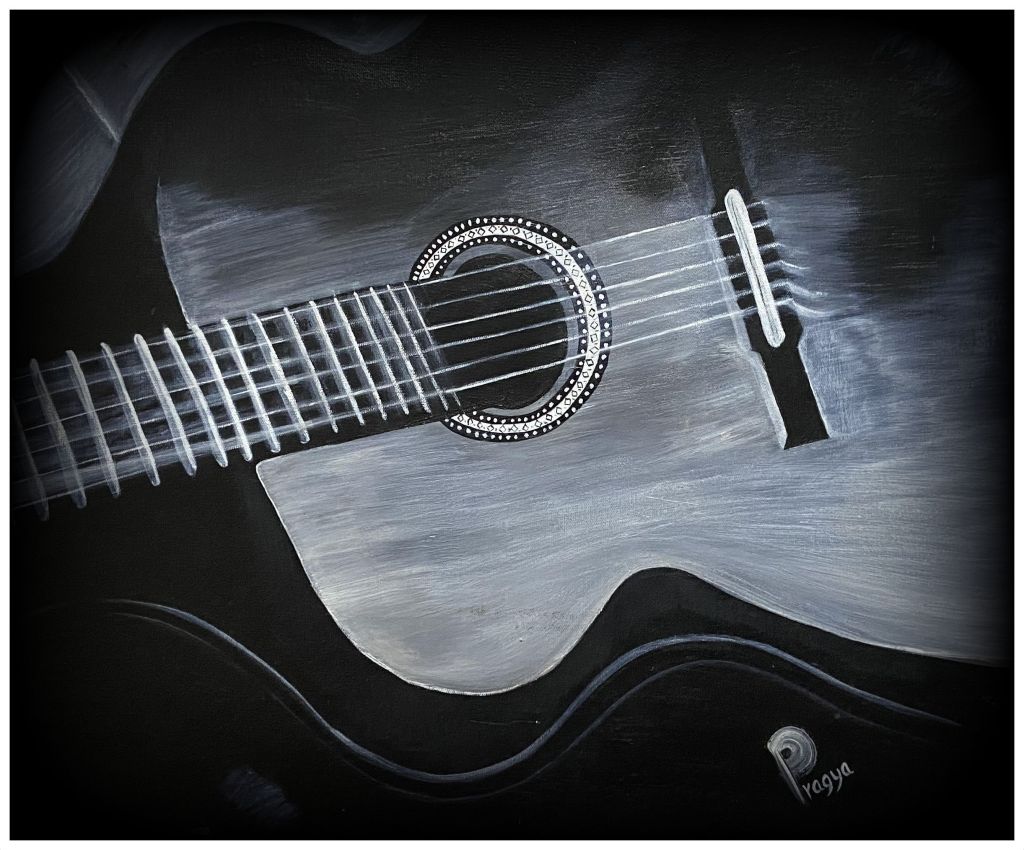
Seared into my mind’s eye, is an image that crops up every time I think of Dhampus, a hilly village situated at a height of between 1600m to 1900m in Nepal. I recall a rainy day with clouds blanketing the surrounding hills and a young chap strumming a guitar and singing a Nepalese folk song in a restaurant.
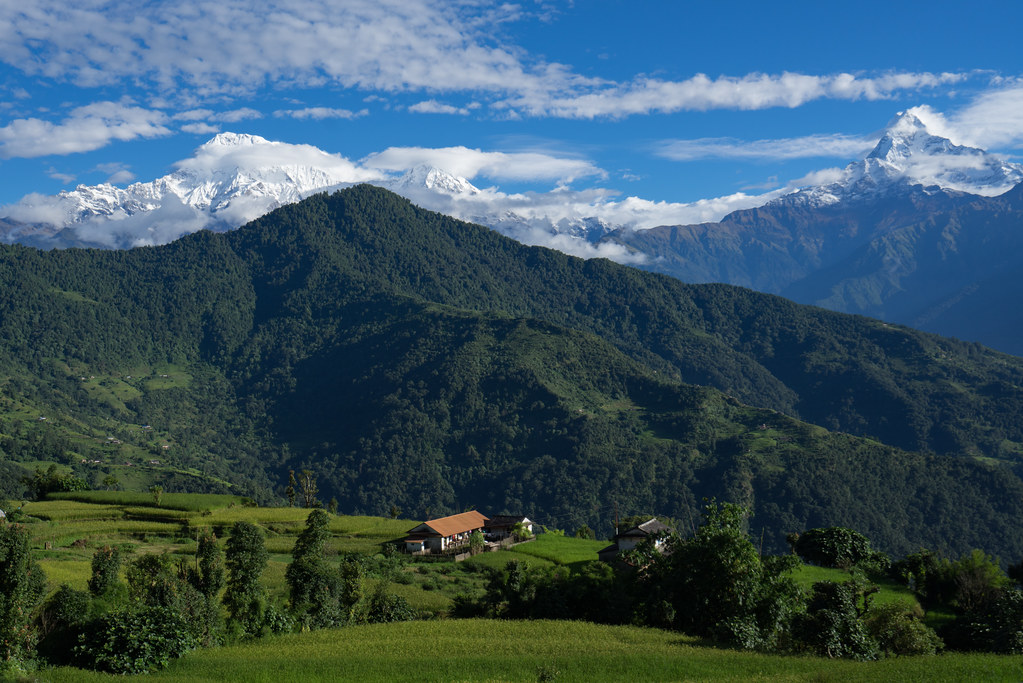
Dhampus is drenched in rain during the monsoon but most of the water flows down quickly and there is water scarcity during the summer. The views of the Annapurnas and Machapuchhare to the north are spectacular. The Australian Base Camp is nearby and is a popular trek with foreigners. The base camp used to be a herding place for cows, goats and buffaloes and was called thulo kharka (big pasture). The mountain view and the peace and quiet attracted Austrians who used to camp here for a few days during the 1980s. The locals found the word Austrian hard to pronounce and the camp was termed the ‘Australian’ camp.
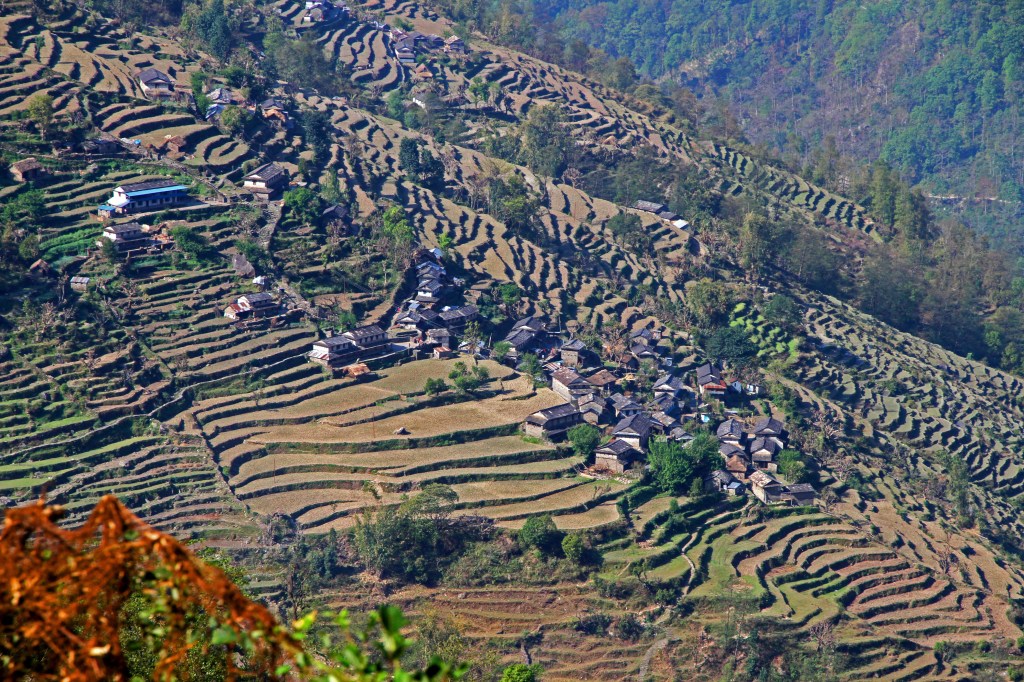
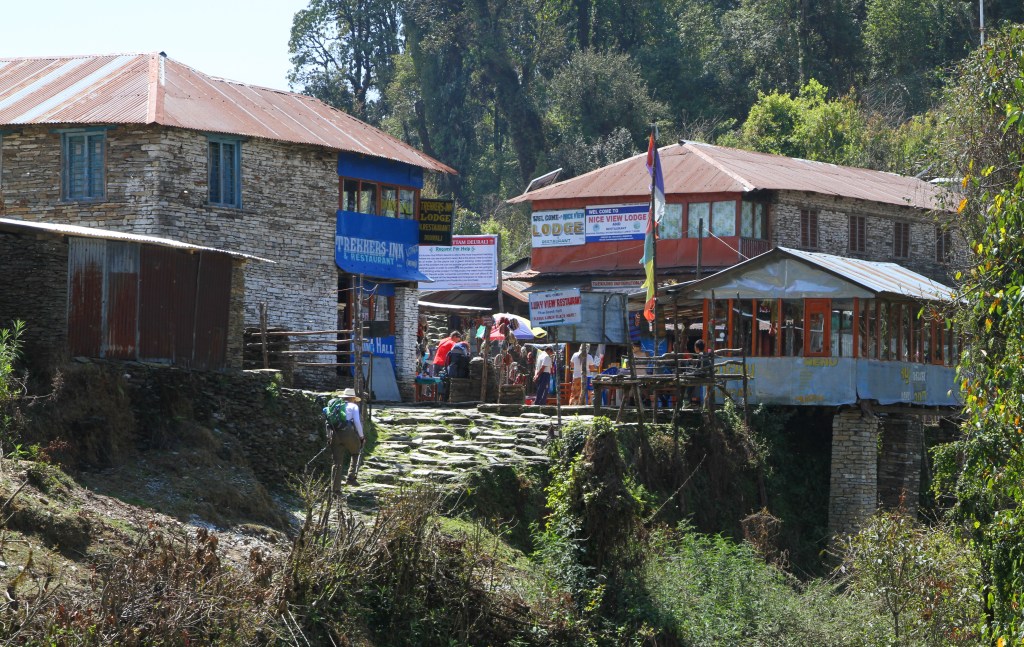
The village is mainly inhabited by Gurungs who are one of the many hill tribes who form the famous Gorkha soldiers. The village sprawls over ridges and the houses are spread apart. There are stone paved streets in the center of the village with houses on both sides. The village is one of the entry points to the Annapurna Conservation Area Project (ACAP) and in early 2000 had five or six lodges.
Carrying a change of clothes in our day bags, two packets of Wai-wai (a Nepalese noodle brand), a bottle of water and two packets of biscuits, we were at last in the village of Dhampus near Pokhara, Nepal with a group of medical students and their two community medicine preceptors. We visited the subhealth post in the village and the students obtained first-hand insights into the working of the Nepalese primary healthcare system. We were now waiting for lunch to be prepared at one of the many restaurants in the village.
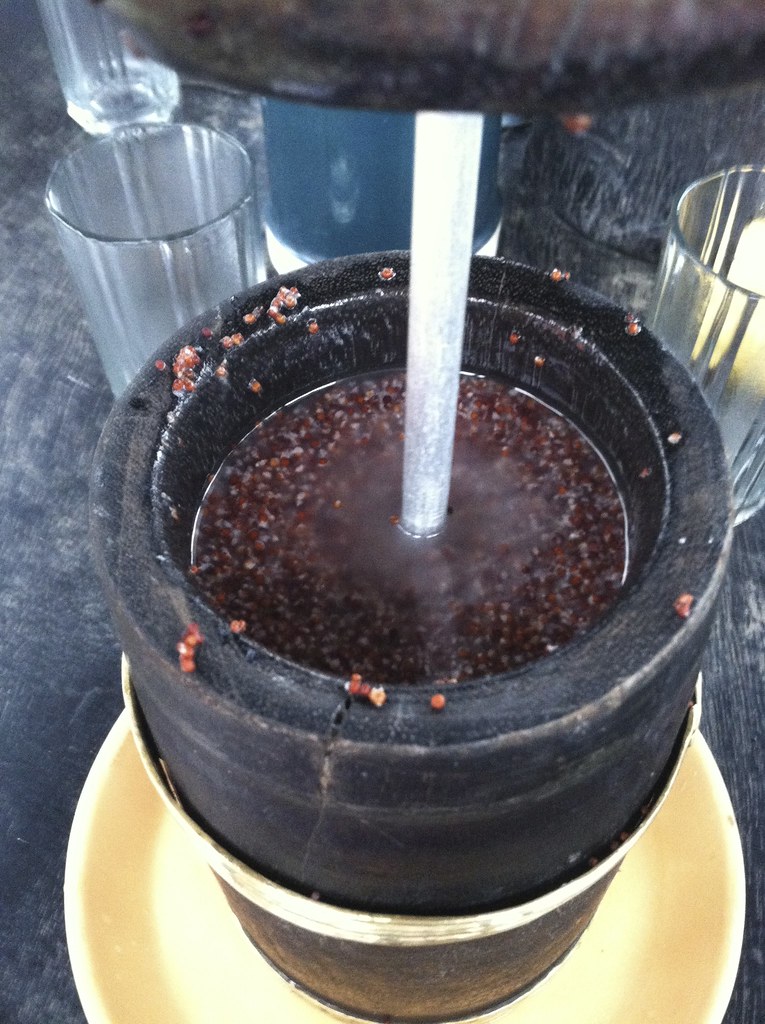
The climb to the village of Dhampus starts right from Phedi (the base of the hill in Nepali) on the Baglung highway. The climb was initially very steep and on stone staircases. The terrain was rocky but gradually became more fertile. Bamboo groves were in evidence with scattered houses and a few rhododendron trees (Lali guraans in Nepali). There were shops selling cold drinks and snacks along the trail. The main lodges and the houses are situated at the top of the ridge. An attraction for many is Thongba. This is a drink made from fermented millet. The grains are served in a container. You add hot water, wait for a few minutes, and then slurp it through a straw.
We soon reached the settlement of Pothana. The settlement consists of a few lodges run by people of Tibetan descent. Many Tibetans migrated to Nepal as refugees in the 1950s and 60s and settled around Pokhara. There is a large Tibetan refugee camp on the Baglung highway.
While we were waiting for Nepalese chiya (tea) after our lunch, it started raining. The students were scurrying down the hillside to get to the waiting college buses at Phedi. You can climb down in about forty-five minutes to an hour but this is hard on the knees. However, some of us were determined to continue our overnight hike. The rain was testing our resolve. Eventually, we set off along the ridge. The hills were shrouded in mist. A few water buffaloes were climbing the ridges and probably getting back to the shelter of their homes. The buffalo is an adaptable animal. The ones raised in the plains of India cannot climb hills, but the Nepalese ones do so with ease.
We were drenched and cold. We decided to have cups of Nepalese tea and warm up. The tea in Nepalese trekking lodges is often served in steel mugs. They may use milk powder or milk from the local buffaloes if available. The milk is usually burnt slightly giving a distinct taste that may not be to everyone’s liking. The rain stopped and we decided to continue.
We soon regretted our decision. The rains started again with renewed vigour. The light was also beginning to fade. It was thundering around us, and we lost our way. On top of that, we were assaulted by bloodsucking leeches. I had encountered these creatures earlier at the Eravikulam national park in Kerala. But that is another story.
We were now getting scared. The trail was not evident. We eventually met a farmer and asked him the way to the village of Landruk. At that time our knowledge of Nepali was rudimentary, and we communicated through actions. He volunteered to show us the trail in return for a small fee.
We continued along the main trail to the village of Landruk but darkness was falling fast. The trail was uphill, muddy, and slippery, and the leeches gave us little respite. Eventually, we saw the light of a lodge on top of a hill. We reached the settlement of Deurali at 2300 m. Deurali means a pass in Nepali. This small settlement had no electricity. We were sweaty, dirty, and wet. The leech-bites were oozing blood. The next hour was spent carefully examining our legs and removing the leeches by applying salt to the wounds. Luckily Nepalese leeches are smaller than the ones in India and the wounds do not bleed so long.
En route from Dhampus to LandrukA Lodge at Deurali Pass Courtesy: Creative Commons
We dined on rice, lentil curry, green vegetables and dried meat and settled in for the night. The darkness was absolute once the lamps were extinguished. I had never previously experienced this level of darkness. The rain continued to drum through the night. The dawn was cloudy, and we could see hills in every direction. The Himals to the north were blanketed in clouds. The lodge had some sel roti (a Nepalese specialty resembling a doughnut) prepared the previous day and we had these for breakfast along with an omelette and chiya (Nepalese tea).
I later did the trek to Landruk and beyond in better weather. Someone once said that weather can make or break a trek. I wholeheartedly agree. The views of the Annapurnas from the trail are spectacular. The forests are green and dense, and the trail is mostly broad and easy to walk on. Landruk has several excellent lodges to spend the night. You can continue down and cross the Modi Khola and then join and climb the main trail to the village of Ghandruk. I have spent a few New Year’s Eve in the lodges of Dhampus. The village is a day hike from Pokhara and the mountain views on a clear day are spectacular. A night hike like the first one I had with leeches and rain is, of course, different in many ways from a day one.
Longer hikes of between a week to two weeks are an enjoyable activity and provide you with a different perspective on life. As roads penetrate ever deeper into the hills, hike trails have become shorter. Today mobile connections are available nearly everywhere. During the early 2000s however, going on a long hike meant being out of contact with the outside world. You stayed in basic lodges and ate simple food. You carried what you required in your rucksack and obtain other necessities at lodges. You realise how much extra baggage all of us carry during our lives. A hike is a step back to a simpler gentler time. I have met several people doing hikes after completing their military service, finishing university, after a breakup, or while contemplating what to do next. You climb stone staircases, cross suspension bridges, crawl through landslides and make way for mule trains. The lack of vehicles makes for a quieter world. As the chaotic voices of the outer world begin to fade, you become more attuned to your inner voices and begin to listen to your soul!
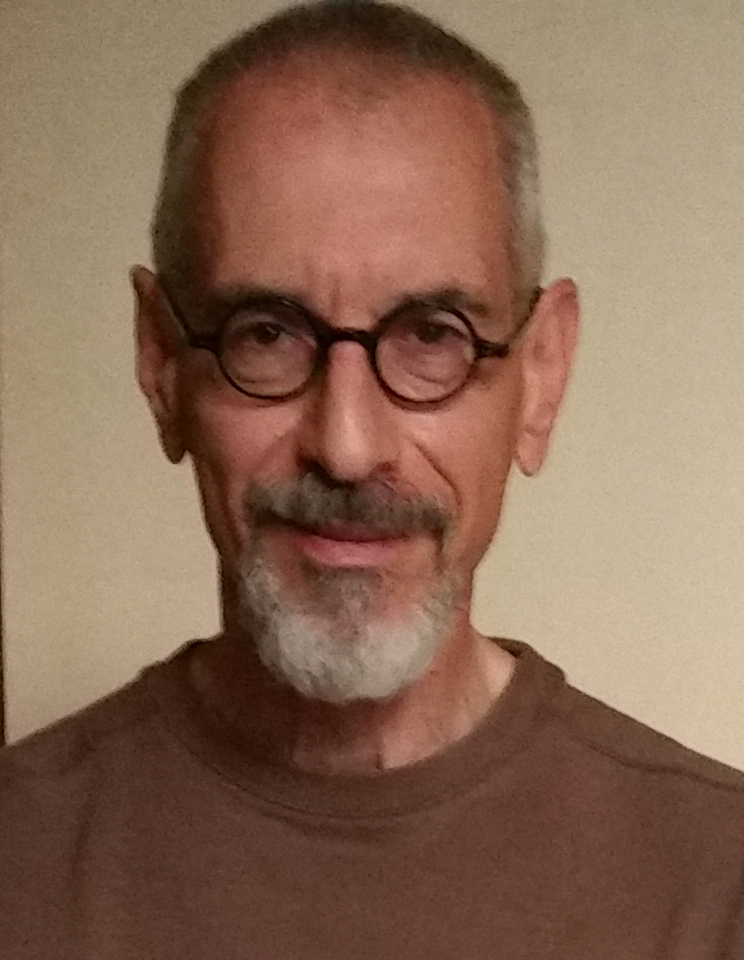
Dr. P Ravi Shankar is a faculty member at the IMU Centre for Education (ICE), International Medical University, Kuala Lumpur, Malaysia. He enjoys traveling and is a creative writer and photographer.
.
PLEASE NOTE: ARTICLES CAN ONLY BE REPRODUCED IN OTHER SITES WITH DUE ACKNOWLEDGEMENT TO BORDERLESS JOURNAL
A BLOB OF GOO?

. . . instead of being like an empty room
 (a really big room) space is more like
a huge blob of thick goo.
 ~ Jorge Cham & Daniel Whiteson

When I was just a child I knew
the universe was awfully full
of emptiness and nothing more
surrounding us—that was the lore
taught in those times, the teacher’s store—
but now they say that’s bull.

Astronomers have changed the facts.
It’s hard for me to understand
how space can be a blob of goo
when astronauts tell us they flew
up to the moon itself, and new
research says space expands.

It’s not like taffy, that I know.
Not sticky gunk or sludge or slime.
It’s not like goop. It doesn’t jell.
Invisible. It doesn’t smell.
So what it is, I just can’t tell.
I hope I’ll learn sometime.

What Einstein said was surely true—
he said that space can stretch and bend.
Space goo is something like the air
in which we walk without a care
and hardly notice anywhere—
without it life would end.
Wilda Morris’s third full-length book of poetry, At Goat Island and Other Poems is scheduled for publication by Kelsay Books this spring. She lives in Bolingbrook, Illinois, USA.
PLEASE NOTE: ARTICLES CAN ONLY BE REPRODUCED IN OTHER SITES WITH DUE ACKNOWLEDGEMENT TO BORDERLESS JOURNAL
The change whose start no one observed
Continues. Just above the roofs
What was sky becomes dark water.
Trees convert to flame and throw
Their orange light up at the waves.
Now the earth rolls out from under
And takes its new place overhead,
Soaked black with authority
That will not entertain appeals.
Everything depends on it.
Come, it’s time to hold our hands
Out to how it’s going to be
And accept with gratitude
The beggar’s share that’s spared for us.
Peter Cashorali is a psychotherapist, previously working in community mental health and HIV/AIDS, now in private practice in Portland and Los Angeles. He is the author of two books, Gay Fairy Tales (HarperSanFranciso 1995) and Gay Folk and Fairy Tales (Faber and Faber, 1997). He has lived through addiction, multiple bereavements and the transitions from youth to midlife and midlife to old age and believes you can too.
PLEASE NOTE: ARTICLES CAN ONLY BE REPRODUCED IN OTHER SITES WITH DUE ACKNOWLEDGEMENT TO BORDERLESS JOURNAL
Since I struggled with poor health most of my life, I imagined those who enjoyed good health must be happier too. As the saying goes, “Be fit and healthy and the world is yours!” The strong ones can till and plow the land, but that doesn’t win them the world, as far as I can tell. When I was younger, I naively believed that only the athletes at our college were truly vibrant and alive. The entire college and district worshiped Ahsanullah. Kabbadi[1] was a popular sport back then, and Ahsanullah a peacock strutting in the kabbadi arena. He would tag the opponent and remain standing. “Dare to tackle me big guy!” he seemed to say, before slipping away. Clapping his hands, he would be off and running and onlookers would marvel – “There he goes!”
We witnessed a new race of men when the team from Jullundhar’s Khalsa College arrived. The players — tall, big and heavy– were built like wrestlers. Unlike us, they didn’t tackle opponents with moves like the scissor or the squeeze or run with lightning speed. They would simply grab a man by the arm and immobilise him with sheer force. When they were the ones caught, a few vigorous shoves were enough to help them escape. But they failed against Ahsanullah. They couldn’t even touch him. He slapped the opponent, grabbed him in a tight embrace as if a vine had wrapped itself around the Sardar. Then he spun him to make him lose his balance. A carefully applied tug followed, enough to send him crashing to the ground. The Sardars realised that Ahsanullah’s slight frame was misleading. He was strong as iron. In the end, his opponents always lay defeated at his feet. Thanks to Ahsan and Shareefa, Zamindara College came first in all of Punjab. Khalsa College Jullundhar came in second. But gone are the days of college and kabbadi. Zamindara College was never the same and hockey and kabbadi met their demise. What a strange race everyone joined once the sports grounds disappeared.
I remained friends with all the kabbadi players. Shareefa became the head of a police-station and even played for the police. Ahsanullah would be invited to the village or the college for informal matches. Once he got married, worries seemed to swallow him up. Glasses appeared on his studious face. Kabbadi proved useless for all the players, except Shareefa who put it to good use, tackling and hustling even at his prison job. Thana, Bala, Qooma, Abdullah Raja, all my companions, simply disappeared from my life. The game of life is all about money and power. Some of them were even so-called leaders, honoured with titles like Chaudhry of the village, but being a Chaudhry is meaningless without also being a crook. Despite my ill health, I managed some thuggishness now and then. But those farmers didn’t manage too well. Some thirty years passed.
I left my job and moved to the US, but college days remained etched in my memory. Gujrat had turned into a graveyard where my youth lay buried. Lahore swallowed up everyone. And from Lahore I made my way to the US. The United States – a place filled with endless worry and anxiety, in which everyone seemed to be in a rush to get somewhere. The bright lights and women added some colour, but there was no time to look up.
One day, in the midst of all this, a man caught my eye. A partner in misery, he was staring at the ground. He was wearing glasses and sat slightly hunched, but I recognised that jawline of chiseled iron and the long nose sticking out. “Ahsan Sahab!” I called out. He looked up but his face showed no emotion. “I am Nadir Ali, from Dharekan!” I said.
“What fix have you gotten yourself into?” he asked. No greeting, no salam. What sort of a question was this? He shook my hand without enthusiasm and patted my back. “Managed to find any work?” he asked. I had addressed him as Sahab out of respect for my kabbadi hero. But this man was bent on remaining distant.
“Yes, I did, by the grace of Allah,” I replied mechanically.
“The grace of God does not make it to distant places like New York. It has yet to reach me,” he went on.
“What’s the matter Ahsan Sahab? Is everything alright? Are you well?” I asked.
“The night refuses to end!” he said. “Earlier, I worked a night shift. Now I work at a store at the bottom of a skyscraper. By the time sunlight makes it to the ground, it is evening.” His eyes, full of sadness, seemed to be longing for the sun just then.
“We are in a foreign land, Ahsan Sahab!” I said, acting all mature suddenly.
“Well, it is not like Pakistan is our father’s estate either!” he replied. He got off at the 34th Street station in midtown. I was free and decided to accompany him. He was carrying some stuff for the store, and I gave him a hand. It was not a long walk.
We both stood outside the store. The owner hadn’t yet arrived. Ahsan took out a hash-filled cigarette and lit it. “You didn’t smoke back then!” I commented, trying to put him at ease.
“It’s not like I play kabbadi anymore!” he said and smiled sweetly at last. He didn’t seem to be doing too well. He didn’t ask about Gujrat, and I didn’t bring it up. “I get off at six in the evening. Stop by if you are free,” he said, extending some warmth for the first time.
I returned at a little before six that evening and noticed that he smiled again. It was faint, yet for me that smile was worth a million. “Like the road to my village, like the path that leads me home”– words from one of my poems came to mind. He took me to a bar. “Two whiskeys!” he called out and presented cash at the bar as was New York’s custom. He sat silent. He had always been on the quiet side. But we were both comfortable in our silence.
A few drinks later, I noticed a slight sparkle in his eyes that hadn’t been there before. I felt intoxicated. “Brother, I should stop now,” I said, “I have exceeded my quota.” Once we were outside, I blurted out, “Ahsan Sahab, I write poetry.” What a thing to say! I noticed the moon was visible in the sky. “I have never been able to see the moon in New York before! How did it manage to survive the rough and tumble and make it up there tonight? Good lord, the memories!”
Ahsan Sahab benevolently prodded me — “What are you remembering?”
“You are the moon, Ahsan Sahab! Somehow, God made you appear tonight.”
“But this is the waning moon, Chaudhry!” he replied, sighing deeply.
Two weeks later, he was dead. Someone at the mosque mentioned that they were raising funds to return the dead body to Pakistan. Words tumbled out of my mouth as I helped lift the coffin for the journey. “He was worth his weight in gold!”
.
[1] Traditional contact sport of Punjab. Players “raid” the opponent’s territory and tag or touch opponents and then attempt to make it back. The defending team tries to stop the player from returning.
.
This story is a translation of Nadir Ali’s short story, first published in a collection titled Kahani Paraga , published by Suchet Kitab Ghar in 2004 in Lahore.
Nadir Ali (1936-2020) was a Punjabi poet and short story writer. In 2006, he was awarded the Waris Shah Award for his collection Kahani Praga. Coming late to writing, particularly fiction, Nadir Ali is credited with spearheading a unique style, blurring the boundaries between significant and petty, artistic and ordinary, primarily due to his preference for and command over the chaste central dialect understood by the majority of Punjabi speakers. He is also noted for writing and speaking about his experiences as an army officer posted in East Pakistan at the height of the 1971 war.
Amna Ali is Nadir Ali’s daughter. She translated a selection of Nadir Ali’s short stories into English in collaboration with Moazzam Sheikh. The translations were published by Weavers Press in USA in a book titled Hero and Other Stories in 2022. She is a librarian and lives in San Francisco with her husband and two sons.
PLEASE NOTE: ARTICLES CAN ONLY BE REPRODUCED IN OTHER SITES WITH DUE ACKNOWLEDGEMENT TO BORDERLESS JOURNAL
Right Strings

Life, at all stages, even in a difficult hour,
Is never without dreams, joy and beauty.
If you have a heart to wonder,
Eyes to see and mind to think positively.
Flowers wither and seasons fly,
But passion for life never dies.
There is eternal spring in the human heart
And bliss even in small things
If you strike the right chord,
And play the right strings.
Ashok Suri is a retiree and is settled with his family in Mumbai. He tries to convey in simple words what he wants to say.
.
PLEASE NOTE: ARTICLES CAN ONLY BE REPRODUCED IN OTHER SITES WITH DUE ACKNOWLEDGEMENT TO BORDERLESS JOURNAL
A schoolmate was fond of creating a big impression of being an avid reader. He knew there were benefits of reading that were largely unknown to genuine book lovers. He fell in love with the idea of reading as he wanted someone to fall in love with him because of this good habit he cultivated. On the way to school, whether inside the bus or train, he always sat with a storybook, trying to cast a furtive glance and observe the bevy of girls noticing him engaged in this pedantic pursuit. He had faith that some girls would become curious and smitten very soon.
With the fond hope of a conversation with them someday, he kept doing the same thing. The book covers kept changing. As he became desperate, he picked up a romantic novel to send the signal. When he did not have a storybook, he fished out a textbook. The compulsion to have some reading material in front of his eyes helped raise a façade of erudition. He wanted to be seen as a reader whenever girls were pottering around.
The impact of reading was severe for him. He was classified and identified as a bookworm. The bespectacled first-rank holder in our class never read so much. Much to his disappointment, girls did not take an interest in him or his reading. It was scary for the fun-loving types. The guys who boarded a moving train at the last minute or disembarked from a speeding bus were heroes to them.
Driven by fatigue for the first time, he was ready to flirt with other options. When he realised books were futile in winning fans or praise, he switched his strategy to something that involved more daring. He went and stood near the entrance door. Ignoring the warning sign ‘DO NOT LEAN OUT’ crafted capitals and in red, he put almost half of his body out of the train compartment, suspending his weight with the support of the hand railing above his head, hoping to be noticed by girls for his bravado.
Before he could realise what had happened, he was hit on the head and rushed to the nearest hospital at the next station halt. He underwent multiple stitches and survived a life-threatening experience. When he regained consciousness, no girls were waiting with bouquets and get-well-soon notes outside his cabin. He found just a few of us with fruit baskets. Such a misadventure, though unintended, did not elicit any wave of sympathy, but he ended up being famous as a silly boy who could not keep himself safe.
Some girls enquired how he was after he rejoined, but it was a formal query devoid of affection. The one he had a soft corner for did not seek any update. The poor fellow failed miserably in reading as well as heroism. Now he was always made to sit inside the coach, never allowed to stand near the door. Some of us cracked jokes, but he often lost his temper after this brain injury. We read it as a change of personality traits. He sat with a bandaged head for some days expecting sensitive queries, but he had stopped being an object of curiosity or pity for the entire class.
Inside the school, during the recess hour, he stopped playing indoor games like chess. He changed his strategy by approaching a lady teacher with suggestions for his reading list during lunch break. He went to the library and got some uncommon books issued, expecting that lady teachers would gauge him better, unlike the carefree girls. Inside the classroom, he raised irrelevant questions and drifted our attention to storybooks, making other students grumble as the lessons were incomplete.
When the copies arrived checked, he performed below average. Soon, the new English teacher understood his ulterior motive. He used difficult words to flaunt his vocabulary and to impress the woman English teacher. Most of us did not know the meaning of the words he used. He derived wicked pleasure as we were shown as ignoramous despite scoring better in English. He loved the idea that he was advanced in reading. He firmly believed someone would appreciate him better and attune themselves to his wavelength. Turning bespectacled before eighteen was a plus point for him as he thought readers looked like that. But the truth was that some vitamin deficiency had led to his poor eyesight.
Most of us saw him spending time in the library scanning books. He would ask us the names of the author on his list. He recalled many names and titles unheard of as his memory appeared sharpened after the head injury. Since we failed to answer, he was pleased to find us ignorant. He mentioned some names to enlighten us. Most of us thought he would become a writer one day since he was discussing what we never bothered to know in such depth. Perhaps the system of education was not doing justice to him.
When we reached high school, a creative writing contest was organised in which the toppers took part. He was asked why he had stayed out of it. He was quiet for a while and then replied the teachers who were judging had not written anything in life, so he would not insult himself by writing for them and submitting to them for assessment. We did not know whether it was his arrogance, or his statement had an iota of truth attached to it.
Years later, it was shocking for him to know I was dabbling in writing. He was still trapped in the world of books, as it appeared from the pictures he sent me of the sprawling library at his residence, and his various poses with books. I asked him what he was doing when Google did not list his name in the top five pages. He said he was doing a regular job for a living that gave him ample time and freedom to read and write. He also said he was the president of the local literary club for youth and a part-time social worker. Although he was eager to know what I wrote, he did not ask me anything as he feared being asked what he wrote all these years, I guess. I told him what I read, and he said he had finished reading those authors a long time ago – pretty advanced, as usual.
He mentioned without radiance that he wrote love poems in his mother tongue using a pen name. It must be for the girl he liked – who qualified as a doctor. Maybe, he still went around her old house on his bicycle to feel her presence though she had moved overseas to another country long ago. His unreciprocated love had many shades, and he kept it alive through poetry.
He forwarded me pictures of reading in the garden, terrace, recliner, et al. In this age of emojis, if you are seen reading, you get hundreds of likes. But in those days, you did not get a single like. These likes – for the book or his reading nook – would have made him confident then. The well-crafted image of being a pretentious reader he remains stuck with – despite no rewards. Possibly, these likes warm the cockles of his sad heart.
I realised I owed him a few likes and pressed the love icon for some of his social media posts as an act of repentance. Being a friend, he deserved likes from me. He messaged me saying one like during those school days would have worked. Even though I praised him today, he understood I was faking like many others. True, I was always a miser when it came to showering praise.
Devraj Singh Kalsiworks as a senior copywriter in Kolkata. His short stories and essays have been published in Deccan Herald, Tehelka, Kitaab, Earthen Lamp Journal, Assam Tribune, and The Statesman. Pal Motors is his first novel.
PLEASE NOTE: ARTICLES CAN ONLY BE REPRODUCED IN OTHER SITES WITH DUE ACKNOWLEDGEMENT TO BORDERLESS JOURNAL
Their eyes locked in a momentary glance,
The first time they met was by mere chance.
But neither could forget the other's face.
’Twas as if their souls had exchanged places.

She grew restless and dissatisfied,
For nothing in the world could provide
The same joy that his presence brought.
She yearned to know who he was, her thoughts distraught.

"Who is he? Where has he gone?
Appearing briefly, then withdrawn,
Am I dreaming, or is this real?
My heart aches, weakened by what I feel."

He, too, was plagued by thoughts of her,
His discipline and propriety a mere blur,
As he longed for another fleeting sight,
Of the girl on the balcony, his heart's delight.

Their hearts beating in harmony,
Drawn together by a mysterious symphony,
They could not help but yearn for more,
A thousand more times, they wished to explore.


(Inspired by RK Narayan’s Ramayana, the scene where Sita and Rama see each other for the first time)
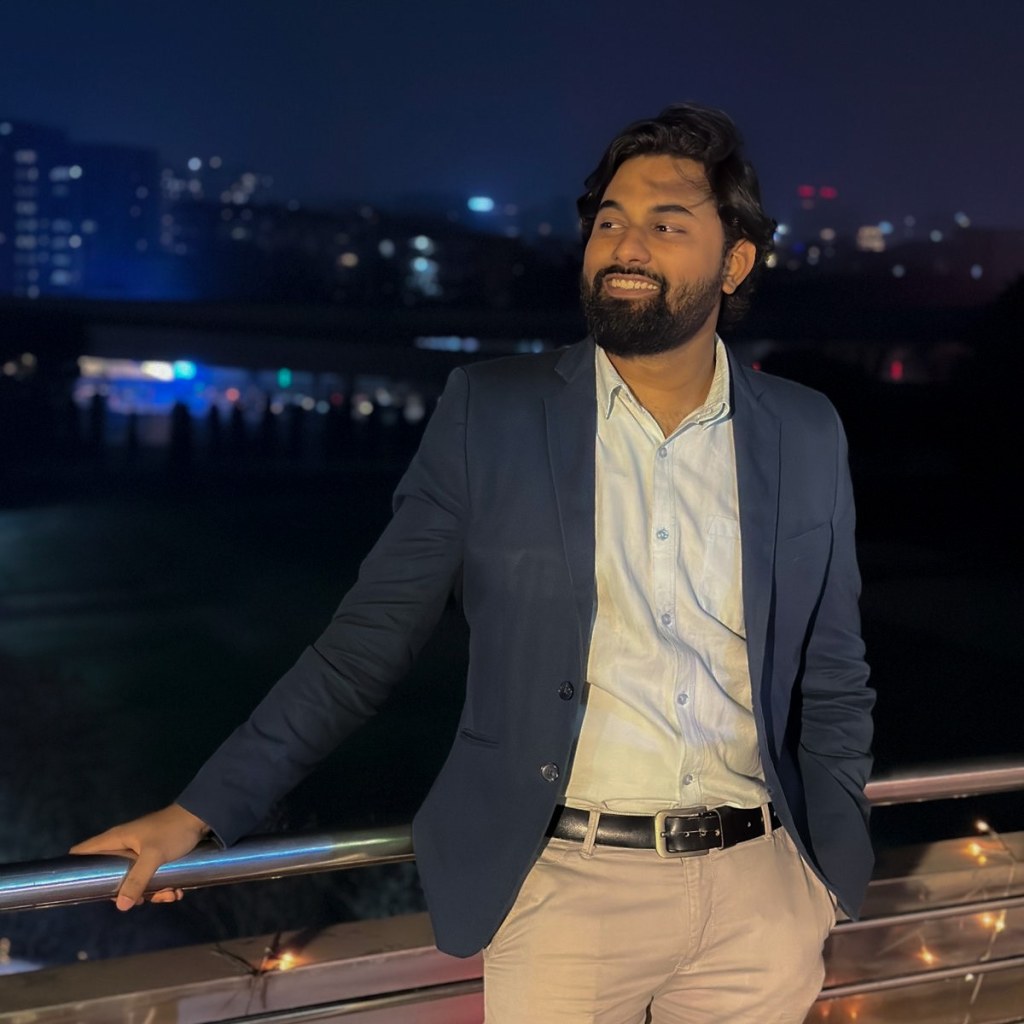
Shahriyer HossainShetu is a student of English and Humanities who indulges in writing prose fiction and poetry during his free time. His philosophy is to live life to the fullest.
PLEASE NOTE: ARTICLES CAN ONLY BE REPRODUCED IN OTHER SITES WITH DUE ACKNOWLEDGEMENT TO BORDERLESS JOURNAL






 Borderless