Title: Behind Latticed Marble: Inner Worlds of Women
Author: Jyotirmoyee Devi Sen, translated from Bengali by Apala G. Egan
New Delhi: Niyogi Books
The very mention of the name of Jyotirmoyee Devi (1894 – 1988) brings to our mind the strong feminist Bengali writer, author of the famous Partition novel, Epar Ganga Opar Ganga (The River Churning), mainly depicted the lives of the women in Bengal who bore the burden of this communal divide, their bodies being inflicted with sexual violence, rape, and social exclusion as a consequence to the former two. Owing to the dearth in the literature that records such gruesome atrocities that were inflicted upon women, till date her work is extremely important. This present anthology however focuses on a totally different perspective of the writer where she tells us interesting stories about the life of the women and little girls of Rajasthan, and the discriminatory gender and caste norms that policed and defined their existence.
Jyotirmoyee Devi was born in Jaipur in an upper-caste and economically well-off family. Her grandfather, who had emigrated there from Bengal during the British Raj, rose to occupy a high administrative position as the dewan or prime minister to the Maharaja of Jaipur. Thus, Rajasthan had a profound impact on her writings in the later years. Not being given an opportunity for formal education, her sole means to establish a relationship with reading became her grandfather’s library where she, along with her sister, were assigned to arrange newly arrived books and magazines. Therefore, even though she was a little girl, she attempted to make use of her multiple privileges that could help her access books and writing material. Married at the age of ten and widowed at twenty-five, she returned to her parents’ home along with her children and became a prolific writer during her long period of widowhood.
The ten fictional narratives in this anthology are all set in Rajasthan, and they create an elegant tapestry amidst the backdrop of Rajput grandeur and chivalry. Based on an eyewitness account of life in royal harems, these stories describe the very human interaction between men and women in this milieu. They highlight power play, disinheritance, and the threat of assault, which are perennial concerns for women. These include fascinating narration about the machinations that went on inside the royal households, as well as stories which tells us the plight of the veiled women in different strata of society. For instance, in “Beneath the Aravalli Hills,” a young village girl Dhapi disappears in the city where her father sold her for two hundred rupees. She is kept in a harem and punished for entering the festive hall without permission, she ends her life in prison. In “Frame Up” when the king dies, there is a heavy pall of suspicion in the kingdom that the queen had murdered him. Two decades later, when she is on her deathbed, she calls her son to tell him that the harem housekeeper and the chief eunuch had hatched a plot to kill his father but the young king walks away without acknowledging his mother’s innocence. In “The Child Bride” we read about the plight of a young widow Kesar whose jewellery is unlawfully snatched from her by the in-laws and she spends the rest of her life in poverty by serving like other destitute widows in the Govindji temple at Vrindavan.
Women-centric issues also recur in a story called “The Queen and the Concubine” where despite having plenty of riches befitting the Rajput royals, the ladies muse secret sorrows since their husbands, seldom, if ever, visited them. They spent their time in their sumptuous villas by holding pageants, dance dramas, and musical soirees. It tells the story of how the protagonist Kesar moved to the king’s harem upon his desire, metamorphosed from a mere maid to a courtesan, till she was burnt to death in the end. As per the rules of the state, sons of courtesans and concubines also lived luxurious and leisure lives, but somehow there always existed a fine dividing line between these men and the real heir to the throne. “The Taint” tells us of the king’s youngest son Samudra, who after receiving college education decides to take up a simple job in the British Indian army while his father arranges for his marriage with plenty of dowry albeit without his consent.
The human side of man is beautifully expressed in “Ungendered” where the royal eunuch decides not to have an heir and lets two young boys live a normal man’s life. Several other stories reiterate tragic tales of women in purdah and how many of them reach unfortunate ends when they try to escape from the strict socially imposed patriarchal norms that keep them totally voiceless. “The Princess Baby” (Beti ka Baap or Father of a daughter) calls for attention towards the evil of female infanticide by feeding them with an overdose of opium and focus on the limited social interactions allowed to young women. Though sometimes repetitive, the stories overall try and tell us about the miserable plight of women in Rajasthan, whether they were commoners or part of the royalty.
Before concluding, a few words about the translation. This anthology contains ten stories, each of which had been translated and published in different journals abroad (nine in different American journals and one in Turkey) before collating them into this present volume. The translator, residing in the USA, obviously had the western reader in mind and sometimes several complicated and difficult words and phrases are used probably to remain politically correct to the original text. But what this reviewer finds problematic is the introduction by the author. Who are the targeted readers? In her introduction, she mentions at random women’s issues from around the world and in different ages one wonders why the context of the stories translated here is not provided at all — except for giving us a bio-note of Jyotirmoyee Devi which is briefly included in the back flap cover. Also, the page-long bibliography provided at the end of the rather out-of-context introduction seems totally redundant. Apart from this lacuna of course, the volume will interest those readers who marvel at the eyewitness accounts of life of women and men, common and royal alike, in Rajasthan in the first few decades of the twentieth century.
Somdatta Mandal, author, academic and translator, is former Professor of English at Visva-Bharati, Santiniketan, India.
.
PLEASE NOTE: ARTICLES CAN ONLY BE REPRODUCED IN OTHER SITES WITH DUE ACKNOWLEDGEMENT TO BORDERLESS JOURNAL.
Title: Greening the Earth: A Global Anthology of Poems
Editors: K. Satchidanandan & Nishi Chawla
Publisher: Penguin Random House
Preface
Humanity’s power to degrade the environment has become unprecedentedly dangerous. In fact, we have already changed the environment irreversibly, and suicidally so. What we call nature is no longer nature in its pristine glory. Human intervention has transformed it into something sub- rather than semi-human: a combination of climate, topography, the original environment and the effects of the long history of human intervention. If it was agriculture that had transformed the landscape once, it is now urbanization that has affected the broader areas of our environment. Managing the environment is becoming a practical rather than a theoretical problem. It is not enough that we create theme parks or conserve a select few areas. ‘Museumizing’ nature and landscape will not be enough. Several animals and birds are on the verge of extinction; the list is growing, and human beings can easily be next in the at-risk list. What we require today is not isolated action, but concerted action at the global level. Techno- fascism that leads to eco-fascism—both have their roots in human greed and aggression—is one of the inevitable fall-outs of blind and unsustainable patterns of development.
While a few poems in this anthology offer a perspective on how humans can respond to the reality of extinction, others give us an awareness of how we can struggle to keep what we still have. Some poems share earnest insights into our own evolution, and others offer grim warnings or raise voices against the imminent threat of extinction and the fate of our planet. Some poets spin interconnected incantations and weave healing nature through their blood, and others honor it by connecting the sustainable with their personal poetic bones. The environmental theme of most poems can inspire meditation as well as a commitment to apocalyptic action. The poets anthologized here offer landscapes of beauty and joy, of rustic retreat, of communion with our natural world, against the larger looming questions of human survival, of spurring towards conservation and preservation, of recognizing our ancestral knowledge, of a complicated pact and a complex impact. The anthology, in short, is our kind of shock tactic to the glaring lacunae within our urbanized, post-industrial society. What distinguishes us further, is that our anthology is a global chorus of poetic voices. We cannot stress enough the ‘sustainable’ route felt in the ‘sustainable’ poetic voices of our anthology. Along with our conscious eco warrior poets, Greening the Earth is our kind of responsible activism.
Extinction
Maren Bodenstein
here
on the prairie we measure
the years
by the extinction of insects
that visit our porch lamps
the brittle
longhorn is gone
for a while now the giant
stick insect no longer flares its scarlet wings even
the bluewhite chafers have succumbed
to the heat
by day we dwell in the creek
my sisters and I
one of us pregnant
but I keep forgetting
if it is me
look I am full term now
I tell them stroking my flat belly
on the horizon
a fire roars
through the grasses and over
the houses it marches
the last army of insects
into the bellies of storks
a confusion of vehicles
full of belongings flees
towards us
Ma in her car
with the poodle
comes rushing at us
get in she shouts
misses the bridge
plunges deep
we must rescue her
I tug at the metal
but my sisters
heavy with chatter
do not hear
Ma broken mermaid sneezes
opens her blue-eyes
happy
to see me
Beholden
Erin Holtz Braeckman
I come to you as Crow. But not before you first come to me. My bones are left like tinder in the dark ashes of my feathers when you find them. Crouching low in the crisp clutch of Spring the way the grandmothers once did, you speak words of ritual from the cave of folk memory you’ve walked right into without knowing. And you ask—before you hear my totem call from the pines high overhead; you ask before you slip one of my bones into your pocket. Because wrapped inside the song of that old teaching circle you stepped within was this telling: what you collect, you become the caretaker of. Not the thing itself, but its living story. Those crystals on your altar? You are the steward of their mountains. Those shells lining your windowsill? You are the custodian of their oceans. The pressed petals and dried acorns and vials of sand—the bones; in them there are entire fields and forests and feral ones of whom you are a curator. Which is why I come to you this time, a cackle-caw of shade-shifters stalking through your sister spruces. The others fly when you near, leaving me below in the corner fencing, the wing you took the bone from a tangle of black shadow throwing back the light. I feel the moment you are beholden, Crow-Keeper; how you fold the wild beating of my body into your hands, placing me like a stone on a cairn into the bracken beyond; how those grandmothers come to braid feathers into your hair.
(Excerpted from Greening the Earth: A global Anthology of Poetry, Penguin Random House)
About the Book:
Greening the Earthis a rare anthology that brings together global poetic responses to one of the major crises faced by humanity in our time: environmental degradation and the threat it poses to the very survival of the human species. Poets from across the world respond here in their diverse voices-of anger, despair, and empathy-to the present ecological damage prompted by human greed, pray for the re-greening of our little planet and celebrate a possible future where we live in harmony with every form of creation.
Editors:
K. Satchidanandan is a leading Indian poet He is also perhaps the most translated of contemporary Indian poets, having 32 collections of translation in 19 languages, including Arabic, Chinese, Japanese, English, Irish, French, German and Italian, besides all the major Indian languages. He has 24 collections of poetry, four books of travel, a full length play and a collection of one-act plays, two books for children and several collections of critical essays, including five books in English on Indian literature besides several collections of world poetry in translation. He has been a Professor of English, and also the chief executive of the Sahitya Akademi, the Director of the School of Translation Studies, Indira Gandhi Open University, Delhi and National Fellow, Indian Institute of Advanced Study, Shimla. He is a Fellow of the Kerala Sahitya Akademi and has won 52 literary awards from different states and countries, including the Sahitya Akademi award, India-Poland Friendship Medal from the Government of Poland, Knighthood from the Government of Italy and World Prize for Poetry for Peace from the Government of the UAE. His recent collections in English include While I Write, Misplaced Objects and Other Poems, The Missing Rib: Collected Poems, Not Only the Oceans, Questions from the Dead and The Whispering Tree: Poems of Love and Longing.
Nishi Chawla is an academician and a writer. She has six collections of poetry, nine plays, two screenplays and two novels to her credit. Nishi Chawla holds a Ph. D. in English from The George Washington University, Washington, D.C. USA. After teaching for nearly twenty years as a tenured Professor of English at Delhi University, India, she had migrated with her family to a suburb of Washington D.C. She has taught at the University of Maryland from 1999 until 2014. She is now on the faculty of Thomas Edison State University, New Jersey, USA. Nishi Chawla’s plays get staged both in the USA and in India.
PLEASE NOTE: ARTICLES CAN ONLY BE REPRODUCED IN OTHER SITES WITH DUE ACKNOWLEDGEMENT TO BORDERLESS JOURNAL
A BLOB OF GOO?

. . . instead of being like an empty room
 (a really big room) space is more like
a huge blob of thick goo.
 ~ Jorge Cham & Daniel Whiteson

When I was just a child I knew
the universe was awfully full
of emptiness and nothing more
surrounding us—that was the lore
taught in those times, the teacher’s store—
but now they say that’s bull.

Astronomers have changed the facts.
It’s hard for me to understand
how space can be a blob of goo
when astronauts tell us they flew
up to the moon itself, and new
research says space expands.

It’s not like taffy, that I know.
Not sticky gunk or sludge or slime.
It’s not like goop. It doesn’t jell.
Invisible. It doesn’t smell.
So what it is, I just can’t tell.
I hope I’ll learn sometime.

What Einstein said was surely true—
he said that space can stretch and bend.
Space goo is something like the air
in which we walk without a care
and hardly notice anywhere—
without it life would end.
Wilda Morris’s third full-length book of poetry, At Goat Island and Other Poems is scheduled for publication by Kelsay Books this spring. She lives in Bolingbrook, Illinois, USA.
PLEASE NOTE: ARTICLES CAN ONLY BE REPRODUCED IN OTHER SITES WITH DUE ACKNOWLEDGEMENT TO BORDERLESS JOURNAL
Since I struggled with poor health most of my life, I imagined those who enjoyed good health must be happier too. As the saying goes, “Be fit and healthy and the world is yours!” The strong ones can till and plow the land, but that doesn’t win them the world, as far as I can tell. When I was younger, I naively believed that only the athletes at our college were truly vibrant and alive. The entire college and district worshiped Ahsanullah. Kabbadi[1] was a popular sport back then, and Ahsanullah a peacock strutting in the kabbadi arena. He would tag the opponent and remain standing. “Dare to tackle me big guy!” he seemed to say, before slipping away. Clapping his hands, he would be off and running and onlookers would marvel – “There he goes!”
We witnessed a new race of men when the team from Jullundhar’s Khalsa College arrived. The players — tall, big and heavy– were built like wrestlers. Unlike us, they didn’t tackle opponents with moves like the scissor or the squeeze or run with lightning speed. They would simply grab a man by the arm and immobilise him with sheer force. When they were the ones caught, a few vigorous shoves were enough to help them escape. But they failed against Ahsanullah. They couldn’t even touch him. He slapped the opponent, grabbed him in a tight embrace as if a vine had wrapped itself around the Sardar. Then he spun him to make him lose his balance. A carefully applied tug followed, enough to send him crashing to the ground. The Sardars realised that Ahsanullah’s slight frame was misleading. He was strong as iron. In the end, his opponents always lay defeated at his feet. Thanks to Ahsan and Shareefa, Zamindara College came first in all of Punjab. Khalsa College Jullundhar came in second. But gone are the days of college and kabbadi. Zamindara College was never the same and hockey and kabbadi met their demise. What a strange race everyone joined once the sports grounds disappeared.
I remained friends with all the kabbadi players. Shareefa became the head of a police-station and even played for the police. Ahsanullah would be invited to the village or the college for informal matches. Once he got married, worries seemed to swallow him up. Glasses appeared on his studious face. Kabbadi proved useless for all the players, except Shareefa who put it to good use, tackling and hustling even at his prison job. Thana, Bala, Qooma, Abdullah Raja, all my companions, simply disappeared from my life. The game of life is all about money and power. Some of them were even so-called leaders, honoured with titles like Chaudhry of the village, but being a Chaudhry is meaningless without also being a crook. Despite my ill health, I managed some thuggishness now and then. But those farmers didn’t manage too well. Some thirty years passed.
I left my job and moved to the US, but college days remained etched in my memory. Gujrat had turned into a graveyard where my youth lay buried. Lahore swallowed up everyone. And from Lahore I made my way to the US. The United States – a place filled with endless worry and anxiety, in which everyone seemed to be in a rush to get somewhere. The bright lights and women added some colour, but there was no time to look up.
One day, in the midst of all this, a man caught my eye. A partner in misery, he was staring at the ground. He was wearing glasses and sat slightly hunched, but I recognised that jawline of chiseled iron and the long nose sticking out. “Ahsan Sahab!” I called out. He looked up but his face showed no emotion. “I am Nadir Ali, from Dharekan!” I said.
“What fix have you gotten yourself into?” he asked. No greeting, no salam. What sort of a question was this? He shook my hand without enthusiasm and patted my back. “Managed to find any work?” he asked. I had addressed him as Sahab out of respect for my kabbadi hero. But this man was bent on remaining distant.
“Yes, I did, by the grace of Allah,” I replied mechanically.
“The grace of God does not make it to distant places like New York. It has yet to reach me,” he went on.
“What’s the matter Ahsan Sahab? Is everything alright? Are you well?” I asked.
“The night refuses to end!” he said. “Earlier, I worked a night shift. Now I work at a store at the bottom of a skyscraper. By the time sunlight makes it to the ground, it is evening.” His eyes, full of sadness, seemed to be longing for the sun just then.
“We are in a foreign land, Ahsan Sahab!” I said, acting all mature suddenly.
“Well, it is not like Pakistan is our father’s estate either!” he replied. He got off at the 34th Street station in midtown. I was free and decided to accompany him. He was carrying some stuff for the store, and I gave him a hand. It was not a long walk.
We both stood outside the store. The owner hadn’t yet arrived. Ahsan took out a hash-filled cigarette and lit it. “You didn’t smoke back then!” I commented, trying to put him at ease.
“It’s not like I play kabbadi anymore!” he said and smiled sweetly at last. He didn’t seem to be doing too well. He didn’t ask about Gujrat, and I didn’t bring it up. “I get off at six in the evening. Stop by if you are free,” he said, extending some warmth for the first time.
I returned at a little before six that evening and noticed that he smiled again. It was faint, yet for me that smile was worth a million. “Like the road to my village, like the path that leads me home”– words from one of my poems came to mind. He took me to a bar. “Two whiskeys!” he called out and presented cash at the bar as was New York’s custom. He sat silent. He had always been on the quiet side. But we were both comfortable in our silence.
A few drinks later, I noticed a slight sparkle in his eyes that hadn’t been there before. I felt intoxicated. “Brother, I should stop now,” I said, “I have exceeded my quota.” Once we were outside, I blurted out, “Ahsan Sahab, I write poetry.” What a thing to say! I noticed the moon was visible in the sky. “I have never been able to see the moon in New York before! How did it manage to survive the rough and tumble and make it up there tonight? Good lord, the memories!”
Ahsan Sahab benevolently prodded me — “What are you remembering?”
“You are the moon, Ahsan Sahab! Somehow, God made you appear tonight.”
“But this is the waning moon, Chaudhry!” he replied, sighing deeply.
Two weeks later, he was dead. Someone at the mosque mentioned that they were raising funds to return the dead body to Pakistan. Words tumbled out of my mouth as I helped lift the coffin for the journey. “He was worth his weight in gold!”
.
[1] Traditional contact sport of Punjab. Players “raid” the opponent’s territory and tag or touch opponents and then attempt to make it back. The defending team tries to stop the player from returning.
.
This story is a translation of Nadir Ali’s short story, first published in a collection titled Kahani Paraga , published by Suchet Kitab Ghar in 2004 in Lahore.
Nadir Ali (1936-2020) was a Punjabi poet and short story writer. In 2006, he was awarded the Waris Shah Award for his collection Kahani Praga. Coming late to writing, particularly fiction, Nadir Ali is credited with spearheading a unique style, blurring the boundaries between significant and petty, artistic and ordinary, primarily due to his preference for and command over the chaste central dialect understood by the majority of Punjabi speakers. He is also noted for writing and speaking about his experiences as an army officer posted in East Pakistan at the height of the 1971 war.
Amna Ali is Nadir Ali’s daughter. She translated a selection of Nadir Ali’s short stories into English in collaboration with Moazzam Sheikh. The translations were published by Weavers Press in USA in a book titled Hero and Other Stories in 2022. She is a librarian and lives in San Francisco with her husband and two sons.
PLEASE NOTE: ARTICLES CAN ONLY BE REPRODUCED IN OTHER SITES WITH DUE ACKNOWLEDGEMENT TO BORDERLESS JOURNAL
“If only you had some wisdom, then you would not have raised that issue. I am going to block you. I am going to sever all ties with you. Bye!” The harsh words kept echoing in Farzana’s head. Her eyes moistened. She could not control the incessant tears rolling down her cheeks. The man behind the counter looked at her sympathetically. Farzana tried to smile back but her face distorted. She had never ever been able to control her emotions.
She was standing in the immigration line to board the next plane to New York from Dhaka.
The last one year came flashing back.
She had come in contact with Tariq during an official online meeting in Bangladesh.
He was a man of great repute. They had to contact each other often for business purpose. Gradually, their relationship changed from that of an acquaintance to very close friends. They would talk almost every day. He would go on telling her about his life. How he had built a million dollar business. How unfortunate he had been in his personal life. She would listen patiently.
She met him twice during two workshops on financial management. Tariq had invited her many times but somehow they had never been able to meet in the real world.
Tariq was a short squarely built man. But there was an air of personality that was undeniably magnetic. His well-articulated deep voice and the twinkling smile in his eyes were enough to make women swoon over him. He was witty and had a sense of humour that made him very attractive. He had sharp twinkling eyes but something told Farzana that he was a sad man, hiding behind his witty and jovial nature.
Their professional relationship turned into friendship.
Tariq would tell her details of the problems he faced in life and ask her to pray for him. Farzana became emotionally attached to him as a friend and would pray for him religiously every day.
Four months passed. One day they were chatting lightly and having fun in an online conversation on Messenger. Suddenly, Tariq got irritated and muted the Messenger box. She had never faced anything like this before. She felt insulted. She called and urged him to unmute, but he was reluctant.
A week later Farzana sent Tariq birthday wishes on his phone.
He called her and apologised. He told her he was very sick that day and couldn’t control his anger and, hence, had muted her.
Life became normal. Months passed. Farzana would wait for him to call or message her. When he called he would go on talking about his problems, his life and sometimes even flirt with her. Farzana knew he was just having fun. She would ask him to be serious and then again they would have the normal conversations.
She never called him because he was a busy person and he would remain sick for days too. Sometimes Farzana had doubts that he was lying to her.
“Why? We are not romantically involved. We are just friends so why does he lie to me?” she would ponder.
*
She was getting ready to meet Tariq today. He had invited her for a candle light dinner in one of the fanciest restaurants ‘Rose La France’. This was the first friendly meeting with him. Farzana wore a pink chiffon blouse and saree. The white pearl necklace set with earrings and bangles were a perfect match: simple, yet elegant. As she looked in the mirror, a smile curled up on her face. The reflection of a tall fair woman with an athletic supple and strong physique with a pair of hazel coloured eyes and thick black eyelashes stared back. She brushed her shoulder length wavy auburn hair. She was an attractive woman in her 30s. She was aware of the fact that her presence, anywhere, made quite a few heads turn.
Tariq picked her from her home and they drove to the restaurant. Somehow Farzana felt very conscious of herself as Tariq smiled at her.
“You look ravishing.”
“Thank you,” she smiled.
“Is it happening? Is he falling in love with me?” Farzana was quiet for a while.
Farzana wanted to change the topic, “You can recite so well. Please recite the poem you were reciting on that day over the phone.”
“First you have to kiss me,” Tariq said mischievously.
Farzana burst into laughter. She couldn’t stop laughing.
Tariq looked intently at her.
*
“Why do you text? Don’t text me.” suddenly Tariq fumed one day.
Click!No sound on the other end. Farzana called every other day to check but the calls would only show ‘calling’, no ‘ringing’ sign. The messages she sent also didn’t pass through.
After trying a few days she realised he had blocked her everywhere without any reason that she could think of. She would cry long nights. No one knew that she was suffering inwardly as she would act totally normal in front of her family.
Farzana knew that Tariq was the only child and couldn’t control his emotions, but deep down he was a compassionate man. He always made amends so sweetly and genuinely that it was impossible to resist.
*
Tariq loved the way Farzana talked. The smile on her lips and twinkle of her eyes somehow vibrated through the calls. He could visualise the innocent smile on her happy face talking with fervour. She would also listen to him talk patiently for hours.
“Oh Lord I am in love with this angel!” The moment it popped in his head, he felt his nerves playing havoc in his mind. He cut off the line. He blocked every single thing: Telephone, Facebook, WhatsApp and Viber.
“No, I cannot destroy her life. She is such a kind soul. I am not suitable for her. I am a devil, and she is an angel. What if I propose her and get married? What then?” He kept rambling, “I am sick and she will suffer seeing my illness. I cannot let anything sadden her.”
Tariq had a very traumatic childhood. His father was an alcoholic and mother was on drugs. Almost each day they would have fights. The fights did not end just in verbal abuse but would turn into physical scuffles.
He lived in terror of such violence as sometimes he would also become the victim.
His father would point at him and say: “Ah. This bastard! Who is his father? Tell me now or I will kill him.”
His mom would just sit there and keep laughing and say. “Why? aren’t you man enough to have a child of your own?”
His father would then push away Tariq and start kicking his mother.
One day Tariq’s grandparents came and took him away. That was the turning point for him. He had a loving aunt who started looking after him. Slowly his life became more meaningful. He started to have great results at school.Soon he got involved in sports. The confidence in him attracted the attention of his teachers and they started mentoring him for inter school competitions.
Success followed him everywhere. It was as if he was with vengeance erasing his past life and pouring the best that he had into his present. Rather than being defeated by the harsh childhood he had had, he became adamant to succeed. But the trauma remained with him. Often he would have panic attacks and it was difficult to calm him down.
On top of that he was diagnosed with bi-polar disorder on his 39th birthday. Occasionally, he would become violent and would hurl abuses at anyone who came in contact with him. It seemed as if his parents’ demons overpowered him during those times. He seldom remembered what he had done. He was an informed man and knew the consequences and symptoms of this disease.
As he had suffered in his childhood, he didn’t want anyone to be hurt by his behaviour. So he asked his caretaker to tell him everything that happened during those attacks. Later when he regained sanity, he would beg forgiveness in such a gentle way that no one could stay angry with him.
Though he was a famous and moneyed man, his compassionate nature earned him respect from everyone who came in contact with him.
*
For some days she had been having stomach aches. She saw a doctor and had to do some tests.
“You have appendicitis and need surgery,” the doctor informed.
“If something goes wrong and I die?” she mused.
She knew it involved a major surgery. Though fatality was rare but it could happen.
She didn’t want to leave the world with the regret of not having talked with Tariq. So she contacted Tariq’s friend, told him about her surgery and requested him to tell Tariq to call.
That evening Tariq called. He was very rude with her and threatened that he would not unblock her. She pleaded that she wanted just to talk normally with him before the surgery. She wanted to be mentally strong and prepared. She just wanted him to be friends again. He cut off the line.
The next evening Farzana called him. He had unblocked her. They talked for an hour. Farzana disclosed to him about the surgery next morning. The call ended on a friendly note of wishes and prayers.
The next morning, as Farzana was getting ready, he called her and wished her. These small little gestures made him irresistibly charming.
The surgery was successful.
Days passed. Farzana was happy. Sometimes in the mornings Farzana would see that Tariq had called her at night, knowing fully well that she did not take calls at night. She would say “sorry” in her texts.
“Has he fallen in love?” She would muse.
Another evening he called and told her that he was sick. Farzana was concerned.
“You know I have been praying the whole night for your…”
Stop! She was cut short in the middle of her sentence.
“You know what? This is why I don’t want to talk to you. If only you had some wisdom, then you would not have raised that issue. I am going to block you; I am going to sever all ties with you. Bye!”
*
Tariq knew that Farzana had developed a soft corner for him over time. He had fallen madly in love with her. She was there all the time in his heart.Whatever he did he could not get her out of his head. Her gentle sweet smile was like a magnet and oh her eyes! Those had so much innocence and concern that they were irresistible. He had fallen madly in love with her.
He knew that if she saw his condition when he had those panic attacks, she would not be able to bear it. She was too gentle. She would be heartbroken for him and he could not let that happen.
He would call her but somehow it was so painful not to be with her that he would become rude and cut the line off. There was an unbearable silence as Farzana sat dumbfounded. She couldn’t say a word.
Suddenly all emotions dried up. She knew that Tariq was a self-made man. Though soft at heart, it had made him proud and egoistic too. But it did not give him the right to be so discourteous and ungrateful towards her. He knew fully well that she wished him well unconditionally and his welfare had always been a priority for her.
“This is the end,” she muttered. “I have been supportive of him all through, prayed for him every day. Yet, he treats me like trash. He knows that I care for him too much. Perhaps, this is why he has taken me for granted.”
The thought of abandoning him suddenly made her realise that she was in love with him. It would be unbearable for her to part with him.
She couldn’t take it anymore. “I have been sympathetic all through but there’s a limit to being compassionate. He has his tantrums, but I am also human. I have my pride.”
In her heart she knew that she loved him. But there was no hope for this love to materialise. So she needed to leave him before she did anything irrational.
Her decision was final.
She decided to go back to the USA. She knew if he was ever alone and needed her, she would come back to help him; give him company in his old age. But right now she needed to leave.
“Your ticket Madam.”
“Oh, sorry,” Farzana replied unmindfully. She showed the ticket and passport to the immigration officer.
Leaving Tariq without telling him was painful. She couldn’t hold back her tears. The man behind the counter looked concerned. Farzana gave him a reassuring smile and wiped away her tears confidently.
She felt a heavy stone lifted away from her chest. Too much neglect and verbal abuse had made her strong. She was free now.
“Thank you,” she smiled and waved. “Have a wonderful day!”
As she walked towards the shuttle bus, she felt the warmth of the sun on her face. Everything around her wore a brighter look. She was ready to face the world: alone but stronger. The needle pricked her heart and she flinched in pain.
“Is he thinking about me and in pain?”
Whenever Tariq needed her she had this feeling inside.
“It can’t be!” Her pace slowed down.
Tariq stood behind the glass looking at the girl whom he loved with all his heart. He prayed silently. Teardrops rolled down his cheek for the first time
She would never know…
.
Tasneem Hossain is a multilingual poet, op-ed, columnist, fiction writer, translator and trainer. Her writings have appeared in different countries. She has authored two poetry books and a book of prose.
PLEASE NOTE: ARTICLES CAN ONLY BE REPRODUCED IN OTHER SITES WITH DUE ACKNOWLEDGEMENT TO BORDERLESS JOURNAL
TEDDY BEAR ON THE WAR FRONT
(News Report from Irpin, Ukraine, 2022)

The teddy bear sits benumbed
presiding over the rubble
Of civilisation
Of compassion
Of humanity
A debris of fun and play

Teddy sits smirking over the
Skeleton of the cat, her
Bones, a curled cadaver
Her couch and cushions
in smithereens

The house shredded by the missile
Walls cracking and crumbling with the
Child’s screams as shards
From the tiny throat

Teddy bear, the dumb survivor,
No arms to melt his frozen heart
Watching the carnage with
Big round buttons
gyrated into unseeing eyes

Wrapped in grief
The gentle wool on Teddy spikes
The bristles stand stiff and sharp
Rivers of tears flow
Into the turbulent ocean

And a tsunami of teddy bears
Marches into the war zone
Looking for children to comfort


TELLING VIGNETTES

It’s dementia…

For grandmother
It’s a staccato war

Ends each day and
Starts the next morning again

            it is a re-wind
                     to World War II

        the wake of bombing
        kills people seventy years later

*

Pregnant with deadly nightmares
Moskva the missile cruiser sank

The Black Sea swallowed all her bombs
Stuffed with a thousand deaths


*

Bullet marks on the walls
        remnants of war
people in homes behind
	unhealed

*

Ghosts born of bombs
are stripped of death
        Sans the mortal attire

        They live on to haunt

*


The web of nerves on
      the inert dog’s neck
             pulsates
                     with lifelessness
It’s wartime


*

More live than the forlorn dog
are the shadows of bullets on
the walls of Irpin

Deep craters on the earth
hold silence
born of the boom

*

They are not moon craters

       These on the earth mark
       technology of warfare

       Massive progress
       in hunting and
       getting the big kill
Sukrita Paul Kumar, former Fellow of Indian Institute of Advanced Study, Shimla, held the prestigious Aruna Asaf Ali Chair at Delhi University. An honorary faculty at Corfu, Greece, she was an invited resident poet at the prestigious International Writing Programme at Iowa, USA. Her most recent collections of poems, are Vanishing Words,Country Drive and Dream Catcher. Her critical books include Narrating Partition, The New Story and Conversations on Modernism. She has co-edited many books, including Speaking for Herself: Asian Women’s Writings (Penguin). An Honorary Fellow at HK Baptist University, Hong Kong, she has published many translations and has held exhibitions of her paintings. Currently she is series co-editor of “Writer in Context” volumes being published by Routledge UK and South Asia.
PLEASE NOTE: ARTICLES CAN ONLY BE REPRODUCED IN OTHER SITES WITH DUE ACKNOWLEDGEMENT TO BORDERLESS JOURNAL
POTENTIAL PEACE BENEATH THE WAR

Does humanity, as a concept
exist in a vacuum?
Where humble sentience is
dislocated in the parched throat of self-interest?
Where does the common man find solace?
Lost moniker describing individuals seeking equity
in twitching furnace of somnambulist society,
their labour rebuked for birth right or whimsy,
inequality sewn into flimsy lapel, the holes of their shoes
before any nation’s birth is death; for what nationality
does anyone possess? Or own? What land is
ours or yours? What power? What skin?
What impotent sieve tries to retain enough water before the monsoon shifts?
Drunk, before any of us knew we could protest
what was never going to be given freely --
that division of us all, made clay, made stalagmite
what are anyone’s true wishes? Who hears?
When war makers fabricate the mould and send
into battle, scolded and uncooked, their children?
What does the crowing babe think; when war flies
its planes and machines overhead? Raining red loss
upon the downtrodden, seeking only, meagre sense of existing --
hardly able to drag their weary bodies to vote
nor contemplate chess pieces above artificial stations.
Perhaps Marx had a point, the silver infusion
of distraction, an ultimate opiate, or
is it just our water-borne natures? If there is such
collective nature? To fight in dust -- swirl until we’re tired
then lay our guns down and pick on each other
with weary, blooded fists. Is anything appeased in our
vain battles or are mere silly devils playing ruined
games on a board where nobody watches?
Save the ember curl of time, reminding all;
Those who do not remember history
are bound, to repeat its grievous wounds.
Then: Break free mockingbird
find your own voice, not choked by common
dust, for we are all, for we all can find
potential peace beneath the war.
.
Candice Louisa Daquin is a Psychotherapist and Editor, having worked in Europe, Canada and the USA. Daquins own work is also published widely, she has written five books of poetry, the last published by Finishing Line Press called Pinch the Lock. Her website is www thefeatheredsleep.com
.
PLEASE NOTE: ARTICLES CAN ONLY BE REPRODUCED IN OTHER SITES WITH DUE ACKNOWLEDGEMENT TO BORDERLESS JOURNAL.
The wish to laugh and shrug off differences that create unhappiness and wars is a universal one. The majority of us want to avoid unhappiness at any cost. There is however, a downside to trying to avoid unhappiness by being too open about unhappiness. When we begin to pathologize everything as a disorder, we may inadvertently neglect our ability to generate better mental health.
Before mental illness was discussed en mass, it was private and considered shameful. This had obvious detrimental effects on those suffering, but one could also argue there was a benefit to not making everything so extremely public. Like with any argument, there are pros and cons to how far we publicize mental health. The extreme of ignoring it, didn’t work. But does the extreme of talking about it to death, really help people as much as we think?
In the second half of the 20th century, owing in part to a neglect of, and a need for; improved mental health care, societies began to shift from encouraging suppression of emotion to a recognition of psychological distress and its impact. Institutes and then the de-institutionalisation movement, became ways of coping with people who struggled to function in society. But these people didn’t choose to be unhappy. Whilst it’s obvious this shift to publishing mental health instead of hiding it, has been highly beneficial in some regards; we should also consider its far reaching ramifications.
“(Historically) Many cultures have viewed mental illness as a form of religious punishment or demonic possession. In ancient Egyptian, Indian, Greek, and Roman writings, mental illness was categorised as a religious or personal problem. In the 5th century B.C., Hippocrates was a pioneer in treating mentally ill people with techniques not rooted in religion or superstition; instead, he focused on changing a mentally ill patient’s environment or occupation or administering certain substances as medications. During the Middle Ages, the mentally ill were believed to be possessed or in need of religion. Negative attitudes towards mental illness persisted into the 18th century in the United States, leading to stigmatisation of mental illness, and unhygienic (and often degrading) confinement of mentally ill individuals,” states an article on this issue.
By publicising everything, in reaction to the days when mental health was viewed with more stigma, we have not improved suicide statistics or mental illness numbers like we’d logically assume. When something is freed of stigma and shame, more people admit to suffering from mental illness than ever before, which will make it seem like more people have mental illness, when it could simply be that they are more willing to admit to having it. On the other hand, there is an observed phenomena of things becoming socially contagious.
How can we be sure we’re not increasing mental health numbers by making it so acceptable to be mentally ill? By over-emphasising it on social media? Publicising the struggle to avoid stigma, is positive, but the degree to which we discuss mental illness may be so open, as to increase numbers or over-diagnose people. For example, everyone gets sad sometimes, that doesn’t mean everyone suffers from clinical depression. Everyone gets anxious sometimes but that doesn’t mean everyone suffers from anxiety. The distinction is: Is it a disorder or a feeling? Do clinicians spend enough time considering this when they give patients a life-long diagnosis? And what is the effect of such a diagnosis?
When psychiatrists diagnose mass numbers of people, especially easily influenced teenagers, with serious life-changing mental illnesses, that immediately means the reported numbers swell. Who is to say they would be that large if diagnosis weren’t so open ended? Nebulous? Open to outside influence? Or even, the pressure of pharmaceutical companies and desperate doctors wanting quick fixes? What of parents who don’t know how to handle their rebellious teen? Is that mental illness or just life? If they demand treatment and the teen is labeled mentally ill, do they fulfil that prophecy? And if they hadn’t been diagnosed, would their reaction and outcome be different?
Our innate ability to laugh and shrug things off, comes from the challenges in life that were so terrible we had no choice if we wanted to go forward. If we remove those challenges, are we teaching our kids how to cope with hard things or wrapping them in cotton wool and medicating them? When a family of ten children ended up with eight routinely dying, how else could families cope with such tragedy but to have that coping mechanism of laughter and the ability to shrug off despair and horror? It did not mean anyone was less caring, or feeling, but that sensitivity had to be weighed against our ability to endure. We could argue we endure less pain now than ever before, as we are less likely to lose a great number of people we know, die due to disease and famine and other historical reasons for early death. Many will never even see the body of a dead relative, so how can they process that loss?
The modern world brings with it, its own attendant risks and stressors. People growing up in 1850 may not have had to worry in the same way, about looking young to keep a job, or trying to ‘do it all.’ On the other hand, they might have had to worry about not having a society that helped them if they lost a job, or how to stop their families from starving or their village from being raided. They had fewer social cushions in that sense and more of a risky day-to-day. This was starkly true when we compare the recent pandemic outbreak with say the plagues of earlier centuries. People died in the street and were left to rot, whereas now, even as we struggled and many died, we had a modicum of order. For all our terrors with Covid 19, it could have been far, far worse and has been. I say this from a position of privilege where I lived in a society that had access to medical care, and I’m fully aware many still do not, but nevertheless if we directly compare the experience of the Black Death with Covid-19, we can see tangible improvement in what those suffering, could access.
This means whether we believe it or not, appreciate it or not, we have over-all an improved quality of life than even 50 years ago. At the same time, we may have swapped some deficits for others. It may seem a minor consolation for the myriad of modern-day woes, but we are better off than our grandparents who were called ‘The Silent Generation’. They grew up learning to not speak of their struggles but cope with them silently. These days we have outlets. And in other ways, we are more alone, it is a strange mixture of progress and back-tracking. Some would argue our grandparents had a simpler, healthier life. But if average life expectancy is anything to go by, we are growing older because for the majority, our access to medical care and over-all nutrition, are improved. On the other hand, more grow old but sick-old, which is not perhaps, something to aspire to.
When we consider how badly many eat, and in truth, we do ourselves no favour when so many of us are obese and suffering from diseases of modern living such as lack of exercise, heavy drinking, lack of sleep and eating fast-food. It might be most accurate to say we have swapped some deficits such as dying due to curable diseases, and dying from malnutrition or lack of access to care and antibiotics, with modern deficits like increasing cancer rates and increasing auto immune disorders, all of which are increasing with the swell of the modern world and its life-style.
What it comes down to is this; through the wars of the past, people stood next to each other in trenches whilst their friends were blown to pieces or died in agony. They had PTSD[1] then, they suffered from depression and anxiety, but they also had no choice but to carry on. For some, the only way out was suicide or AWOL[2], while for many, they stuffed their feelings down and didn’t speak of it. Clinicians thought this way of coping caused illness and it led along with other reasons, to an improved mental health system.
But, now, in 2022, you might be forgiven for thinking EVERYTHING was a disease, and EVERYONE suffered from something, and you might find yourself wondering if some of this perceived increase was the direct result of going from one extreme to the other. Initially, nobody was mentally ill. Nowadays, who isn’t? Is this a better model?
Having worked with mentally ill people for years as a psychotherapist, I can attest that mental illness is a reality for many. I knew it was before I ever worked in the field, and it was one reason I chose that field. I wanted to help others because I saw viscerally what happened to those who did not receive help. Despite this I came to see the value of sometimes putting aside all the labels and diagnosis and medications and treatments and trying to just get on with the process of living. If we tell someone they are mentally ill and medicate them and coddle them and tell them they don’t need to try because they are so sick, then it doesn’t give them much motivation to see what else they can do.
True, for many, they are too sick to do anything but survive and that in of itself is a big achievement. So, when we talk about the need to motivate ourselves beyond labels, we’re talking about those who we’d call high functioning. People who may suffer from depression, or anxiety, but are very able to do a lot of things despite that. Does medication and therapy and labeling them, really help them make the most of their lives? Is putting them on disability for years without reviewing if things could or have changed, help? Can they learn something from our ancestors who had to just laugh and get on with it, no matter how tough things got?
It may seem a very old-fashioned approach to consider ‘toughing it out’ and having come to America and seen how much onus they put on toughing it out, I have mixed feelings about the value of doing so. The idea of being tough enough means there is always the reverse (not being tough enough) and that feels judgmental. Being judgmental, I think, has no place in recovery.
What does have a place in recovery, is doing the best you can and not letting labels define or defeat you. In this sense, I see a lot of commonalities with those struggling today and those who struggled 150 years ago. Maybe we can all learn from them and combine that with some modern prescriptivism that give us more chance to laugh and thrive, rather than fall under the yoke of a diagnosis and its self-fulfilling prophecy?
I have had many clients who felt their diagnosis disincentivized them from any other course of action than being a patient. The medication route alone is fraught with ignorance. For so long SSRIs[3] and other anti-depressants were heralded as lifesavers for depressed people, but what proof existed for this aside the hope a cure had been found? Years later studies showed only 30% of people seemed to respond to anti-depressants versus placebo.
Then second and third generation drugs were created, all the while charging exorbitant prices, and patients routinely took 2/3/4 medications for one ‘illness.’ Aside the expense and physical toll taking that much medication can do, there was a mental cost. Patients felt over-medicated, but not happier, not ‘better.’ By tputing their faith in drugs, they lost their faith in other ways of getting ‘better’ and some spiraled downward. The reality is we are all different and we process life differently. Some of us are more forward-focused, others, through imitation, genes or experience, may not be. It isn’t a deficit or illness, it’s a personality, that can change somewhat but should also be understood as the diversity of how humans cope.
Treatment Resistant Depression became the new diagnosis when modern medication failed, and new drugs were considered in tangent with current drugs, but this led to people taking more drugs, for longer periods of time, often with little improvement. How much of this is due to a negligent approach to treatment that only saw drugs as the answer? Meanwhile therapy was cut-back or became prohibitively expensive, cutting off other options for treatment. It’s logical that therapy can help avoid feeling isolated, but when the system prefers to medicate than provide therapy, there are so many taking medicines for years, that were only meant as stopgaps.
Should the media or your general physician, be the one telling you what drugs you should be taking, if at all? Preying on the desperation families by the introduction of for-profit medication, muddies the waters further. The disparity of information means no one source can be trusted, especially as information is ever-changing. More recently a study showed that anti-depressants may not work at all it was commonly held clinical depression was caused by a chemical imbalance and studies show correcting that imbalance does not improve depression as was once thought.
This shows us that psychiatry still has a long way to go, and when they claim things as facts, they rarely are. It contends we should not blindly trust what has become a profit led industry, where many of its practitioners see patients for a short time but somehow still diagnose them with serious mental disorders. Surely, we should consider equally, the importance of conservative diagnoses and recognise that normal variants are not necessarily disorders. In many cases, it may be that under diagnosing rather than over-diagnosing could work better.
For example, I know of many (too many) patients who told me they were diagnosed with bipolar disorder, before the age of 21 by a regular non-mental health doctor, or by a psychiatrist. Their subsequent mistrust of the system is understandable with that experience. How can someone tell you that you have bipolar disorder at 17 years of age, from a 20-minute conversation?
Even the diagnostic criteria for bipolar 1 or 2 in the DSM (Psychiatric Diagnostic and Statistical Manual), is flawed, because it’s too generalised and only highly trained professionals would be able to understand the nuance. Most are not that trained and therefore take at face value, when a diagnostic tool says someone has bipolar if they experience an episode of mania. But firstly, are they defining mania correctly? Is the patient describing mania correctly or being led? Were there mitigating factors?
If you diagnose a child with a serious mental disorder and medicate them, how can you be sure their brains aren’t affected by taking that strong medication before they have reached full development? How can you be sure they are not becoming what they are told they are? Too often, people spend years under the cloud of medication, only to emerge and realize that what was a discrete episode of depression, was medicated for decades, robbing them of the ability to recover? Doesn’t a label make it likely that some will feel helpless?
Moreover, how much power does a label have on our sub-conscious? If we are told, we are (will not be able to do something, why would we even try? If we believe we are depressed, are we less or more likely to fight against it? Isn’t some fighting a good thing? Likewise, diagnosing older people with a disease like Bipolar (a disease that occurs after puberty), shows the mistakes of the psychiatric world. How can a 70-year-old man ‘suddenly’ be Bipolar unless he has a brain-tumour or otherwise? Dementia is often misdiagnosed as Bipolar because badly trained doctors seek answers for aberrant behavior, without considering the whole story, such as how can someone of 70 develop a disease that affects those around the age of 18? Sure, some can slip through the gaps, but often, it’s the frustration of the family or doctor colouring the diagnosis. Such life-long labels should not be given lightly.
What if we treat mental illness depending upon its severity, in a different way? Consider the value of improving real-world ways of copying despite it, instead of relying on medications that were only ever meant as a stop gap and not developed to be taken for years on end? Nor over-medicating without due cause. Nor medicating young people based on very loose diagnostic expectations. Or assuming everyone who says they feel depressed or anxious, is clinically depressed or anxious, or that medication is their only solution?
Organisations that take vulnerable teens who often have co-morbid diagnosis of drug-or-alcohol abuse alongside mental illness, into the wilds, seem to be a real-world way of encouraging those young people to find coping mechanisms outside of addiction and reliance upon medication. Equally, when a young person (or anyone really) is productively employed in something they feel has meaning, this is one way anxiety and depression can improve.
We’ve seen this with Covid-19 and the necessary isolation of so many school children. Whilst it was unavoidable, the rates of depression spiked, in part because studies show people need interaction with each other. This is why online learning has a poorer outcome than classroom learning, this is why older people are less at risk of dementia if they socialise. We are social animals, we feed off each other and we empower each other. Finding your place in the world is always in relation to others to some extent.
We may never avoid war completely or our human tendency for strife, but we also have a powerful other side that urges people to do good, to help each other, to laugh and shrug off the differences that divide us. What good does’ division ever do? Unhappiness is unavoidable at times, but sometimes it’s a choice. We can choose to recognise something is hard and actively pursue ways of improving it. We can struggle through and feel good about the struggle and the effort we put in. if we take that all away and don’t encourage people to try, we give them no way out. Sometimes there is no way out of suffering or mental illness, but often we cannot know that unless we have tried.
Many years ago, people valued older people because they were considered wise and able to impart valuable life lessons to impetuous youth. Nowadays, the elderly are not respected and are often siphoned off into homes before their time, because people find them an inconvenience. There is a theory that humans became grandparents because grandparents were an intrinsic part of the family make-up. This explained why humans were among the only mammals to live long after menopause. Most animals die shortly after menopause, nature believing once your reproductive years are behind you, you have no value. But humans were distinct because they live long after menopause. The grandparent theory supports this by demonstrating the value of grandparents, and we can learn a lot from what nature already knows. It is never too late to have value, it is never too late to learn and grow, and it is never too late to laugh and come together, setting differences aside.
Those who achieve that, may well be happier and live healthier lives, as laughter is shown to be a great anti-ager as well as an improvement on our overall mental and physical health. Of course, what we can learn from the extremism found in the cult of positivity, illustrates there must be balance and we cannot expect to be happy all the time or unaffected by tragedy when it occurs. But staying there, and not attempting to move beyond it, to reclaim ourselves and our futures, seems to be a way to avoid going down that dark tunnel of no return.
Experience shows, we are what we think. We don’t have to be positive 24/7. To some extent any extreme sets us up for burnout and puts too much pressure on us to be ‘up’ all the time, when it’s natural to have down times. But striving for happiness, or contentment, or just finding ways to shrug off the smaller things and come together, those are things most of us wish for. So, it does no harm to direct our energies accordingly and prioritise our ability to cope. Perhaps our differences are less important sometimes, than what we have in common, and what we can do to make this world a more livable place.
Candice Louisa Daquin is a Psychotherapist and Editor, having worked in Europe, Canada and the USA. Daquins own work is also published widely, she has written five books of poetry, the last published by Finishing Line Press called Pinch the Lock. Her website is www thefeatheredsleep.com
.
PLEASE NOTE: ARTICLES CAN ONLY BE REPRODUCED IN OTHER SITES WITH DUE ACKNOWLEDGEMENT TO BORDERLESS JOURNAL.
Keith Lyons introduces us to Kenny Peavy, an author, adventurer, educator and wilderness first-aider who has travelled far and wide and wishes everyone could connect with the natural world right outside their door.
Kenny Peavy in Bali
American Kenny Peavy has spent three decades getting people outdoors. He believes that by playing in and exploring the natural world, we can discover or re-kindle a deep connection with Nature and learn to respect and take care of the planet we all share.
For the last twenty one years, he’s been based in Asia, working in Thailand, Malaysia and Indonesia. He’s currently at possibly the coolest school in the world, made of bamboo and nestled in lush jungle, the Green School Bali. Kenny is an advocate for education and learning outside the classroom.
In this conversation, we are going to learn about growing up in the South of the US, how his environmental awareness was instilled, what brought him to Asia, and some of the biggest cultural differences (including breakfast). In addition to his questioning memoir Young Homeless Professional, in 2007 Kenny co-authored the pioneering environmental education handbook, As if the Earth Matters, and recently, an illustrated book, The Box People , was re-released digitally to enable children, young people and their parents and educators anywhere in the world to use the book. He also created Waffle House Prophets: Poems Inspired by Sacred People and Places.
In efforts to raise awareness about conservation and sustainability in Southeast Asia, he’s paddled around the island of Phuket in Thailand, and ridden a bamboo-frame bike from Thailand through Malaysia to Singapore and Bali. As well as being a nature guide, project fundraiser and science teacher, Kenny is also a qualified wilderness first responder and first aid trainer. In Bali, he had to flee with his family when an erupting volcano threatened their village.
Kenny has some advice for city-dwellers afraid of the ‘sometimes scary’ world away from concrete and mobile phones.
Tell me about growing up in Georgia, as I only know it being famous for peanuts, and being the birthplace of Julia Roberts, Kanye West, Martin Luther King Jr, Ray Charles, and Hulk Hogan?
I was born in 1969 so, essentially, I was a kid in the ’70s and ’80s. Since the ’80s were my high school years, I consider myself a child of the ’80s in all its hair metal, boom box, Pac Man and Donkey Kong glory!
It was very rural. A lot different then. We weren’t as aware of the outside world and didn’t have access to a lot of things like we do now.
I distinctly remember going to my first ‘real mall’ in about 1984 or maybe 1985. It was Gwinnett Place Mall. A huge commercial shopping centre. Up until then, we only really had local mom-n-pop shops. So, it was astounding. One of my friends could drive and he had a car.
None of us had much money so we all pitched in a couple of dollars for gas. The parking lot was dizzying and the mall was an amazing place to watch people. We tried this new thing none of us had ever heard of called a Gyro wrap and it was absolutely delicious and strange. Then afterwards I had an Oreo ice cream. Something I had never experienced before since we only had vanilla, strawberry and chocolate ice cream at the local shop. It was all brand new.
Growing up in the countryside we didn’t have that sort of food or flavours so even those simple things we take for granted today were fascinating novelties back then!
Aside from that, as I said, it was very rural. Most folks had land and cows or chickens. A lot of pine trees which means pulp mills to make paper. Plenty of dirt roads. Atlanta was the BIG CITY and most of us were kind of afraid to go there because we never heard anything but bad news about city folks.
What was the environment you grew up in like?
Most folks were into fishing, hunting and other similar recreations. I went to a public school and took the free bus to school. We definitely had jocks, hicks, geeks and other ‘distinctive’ social groups. Me and all my friends were into hard rock and heavy metal and we saved our money so we could see all the shows from AC/DC, Bon Jovi, Ozzy Osbourne and White Snake when they came to Atlanta (even though we were scared of the Big City and fast talking city folks).
Our big entertainment was cruising the strip mall where they had a McDonalds and a hardware store. We’d all just drive in circles wasting time and gas while blasting The Scorpions so we could wave at people we’d seen at school the very same day.
I think most families were basically Blue Collar with jobs in construction, factories or some kind of farming. We all grew up working and my first job at age fifteen was washing dishes at a steak house in town. Other jobs we had as teens were cutting grass, painting curbs, running cashier in a gas station and other similar tasks.
How did you get into writing, was it something you developed a talent for early on, or did you have some inspiration and guidance from others?
I always wanted to be a poet and swoon the girls with poems and fancy quotes from far-flung novels. It never worked.
I also wanted to be that professor with the patches on the elbows of his tweed jacket and a pipe dangling from my mouth as I pontificated wise philosophical diatribes to impress the masses. I’m still working on that one!
Your interest in Nature, the environment and science, where did that come from?
Essentially, from growing up and playing outdoors. We were always outside and not allowed in the house during the day. So, we’d get bored and flip over logs, explore the creeks, go fishing and ride our bikes all over the trails in the woods.
This lead me to get curious about the critters we found under the logs and hiding out in the rocks in the stream. Combine that with a love for hunting and fishing and I eventually studied biology at university.
I basically wanted to know how Nature worked. What made it tick? How did all the pieces fit together? That also lead to jobs at the Institute of Ecology at the University of Georgia where I learned a heap about aquatic macro-invertebrates, ichthyology (fish) and ecology — and had a private lunch with the Father of Modern Ecology and author of the very first ecology textbook, Professor Emiritus Eugene Odum.
That’s why I firmly believe that a childhood spent outdoors playing and exploring will later lead to an insatiable curiosity for Nature and an ethic for conservation and stewardship.
You document in your book Young Homeless Professional about a time in your life when you immersed yourself in the natural world, and were searching for answers. What did you learn from that time about the world and yourself?
I essentially have many of the same questions today. I think I understand the inner workings of Nature and life’s mysteries a bit better now. With a modicum more insight and quite a few more experiences under my belt than 20+ years ago, I think what’s most important is the process of questioning. The ability to stay open to life’s possibilities is key. We most likely will never fully comprehend or understand life, our roles in the cosmos and Nature’s mysteries, but if we stay curious, keep exploring, stay open to the possibilities and keep questioning then I think that’s the key to finding a place in this world we all share.
How did you end up moving from the US to teaching in Asia?
On a whim. I wanted adventure. I wanted to see and experience new cultures, try weird foods, learn about different religions and philosophies. Speak strange languages. So with US$ 8,000 in the bank, a teaching degree and a hankering to see the world I set out for Kuala Lumpur in the year 2000: I’ve never looked back!
What are the biggest differences between life in the US and your current life and environment in Bali?
The biggest difference has to be that it’s a majority Muslim country. My wife is Muslim and I’ve grown quite comfortable being married into a different culture and religion. And here in Bali, it’s mostly Hindu which is vastly different from Islam. Growing up in the Southern US, I was only ever exposed to Methodist and Baptist forms of Christianity. All of this was new to me 20 years ago when I moved here.
I think the tropical climate and easy-going beach lifestyle are also very different from growing up in the foothills of the Appalachian Mountains.
Another HUGE difference is having rice for breakfast! I was always a hash browns and eggs or better yet, grits, kind of guy. We don’t really have either one of those here. But instead, they eat rice with a spicy sauce and crispy chicken or fish for a typical Indonesian Breakfast!
As well as being a teacher, you’ve done a lot of activities, organising events, initiating projects and raising funds. What’s your motivation for doing these?
I feel like we should give back. Whatever we have to share, to teach, to give to others is valuable. Being part of something bigger than ourselves, whether it is a project, a group, a movement or an ideology is fundamental to achieving a sense of fulfilment and belonging. When we give, we receive back way more joy and happiness than we originally gave. It gets multiplied! Through giving of ourselves and sharing what we have, we receive a sense of being part of a larger cause and a sense of contentment which is multiplied many times over.
One of your most notable achievements, in addition to your writing and educational work, is riding a bamboo bicycle across Southeast Asia from Thailand to Bali to raise awareness on sustainability. What was the hardest part of that adventure?
It was all fun with plenty of excitement and adventure. There were actually very few hiccups and hardships. But I would have to say that cycling some of the monotonous palm oil plantations through peninsular Malaysia from the Thai border to Singapore was hot, boring and so sad. It was heartbreaking to see what was once a beautiful rainforest converted into endless palm oil plantations and a never-ending paved highway.
You also kayaked around the island of Phuket to raise awareness about marine conservation. How important is tangible action to bringing about change?
Taking action is paramount. We can say anything we want. We can project an image of being eco-friendly and sustainable. We can GreenWash anything. But if you want to see what someone truly believes, watch what they do. Pay attention to their actions. Tangible action, hands-on, in the field, is where it’s at! Especially, if we truly want to bring about change and make a difference we have TO DO, not just SAY or BELIEVE.
Environmental education seems to be at the heart of your mission, how do you encourage students, teachers and adults to re-connect with Nature?
Ironically, I spent 2 years researching this question as part of my MS degree and what I discovered and concluded after hundreds of peer-reviewed papers, conferences, surveys and questionnaires is that the best way to connect to Nature is simple… get outside and play!
Free time, exploring and playing in Nature are way more effective than any curriculum or lesson plan. When we take time to just wander and wonder we connect in ways that can’t be facilitated through constructed lessons or planning. It happens naturally and spontaneously when we get lost in play, discovery and exploration.
What are people’s (particularly city-dwellers) biggest fears about the natural world?
I think the main thing people are afraid of is boredom. They don’t know how to wallow in boredom until the sense of wonder kicks in. We’re so used to instantaneous entertainment that we’ve become afraid to just sit, observe and take things as they come.
Another big one is mosquitos! And leeches. People are terrified of leeches!
Tell us about the environmental education book you co-wrote with Thom Henley As if the Earth matters?
It’s basically a teacher training manual and activity guide. We wrote it back before there were any resources to train teachers in Southeast Asia. So, the activities are meant to get kids connected to nature through exploration and engaging the senses. We put an emphasis on showing Southeast Asian flora and fauna as well as locals in Thailand, Malaysia and Indonesia as instructors and participants to make sure it would have a multi-cultural approach to environmental education.
I am hoping to take some of the activities in the book and update them and create a much smaller activity packet. I think it’s now more important and relevant than ever that we try to connect kids and adults to Nature.
As well as working as a nature guide, trek leader, science teacher, you are also a wilderness first aid instructor. What inspires you to be so active?
I think the main driver and inspiration comes from a sense of curiosity. I always wanted to be a National Geographic explorer, or some kind of adventurer!
When I was young, I was inspired by the Indiana Jones movies, David Attenborough and TV shows that featured people exploring exotic places, getting lost in mysterious jungles, landing in the middle of some kind of misadventure or a quest.
Those images stuck with me and keep me excited and curious to this day! There is always something new to learn, a new place to see, a new style of music to hear, and new flavours to be tasted.
You’ve also done some personal service projects, such as in Bali helping those affected by the volcano eruption. How challenging is it to initiate projects, particularly in a foreign country?
It’s easy to do a project but it’s incredibly difficult to do it right.
The key seems to be relationships. If you have a relationship with someone in the village or even someone that knows someone in the village then things tend to go well.
The main issue I see is that many foreigners want to help in some way but they simply don’t know how. During the Mount Agung crisis, we were at a refugee camp and saw a car pull up and start tossing food into the crowd. The local villagers were then forced to run around and grab the donations up off the ground. It was very demeaning. I vowed to never approach any type of service project that way.
Essentially, you just need to ask the village what they truly need. This is the crucial step and it’s often overlooked. What I mostly see are people with good intentions making assumptions about what a village needs and then donating completely irrelevant or unwanted and unneeded stuff. Whether this is inappropriate food items that won’t be used, hot thick blankets in the tropics or painting a wall at a school when the funds and volunteer time could be used much wiser the missing ingredient is always communication with the locals to find out their true needs.
In the case of Mount Agung, what we discovered after meeting the heads of the villages is that they wanted fresh vegetables, fresh fruit, spices, electric fans and N95 masks. They said everyone had donated rice and instant noodles and that they needed something they could cook to go with it! In the end, we delivered those items based on their needs and wants not on assumptions.
So, if and when folks want to help out and do service projects it’s most helpful to find a trustworthy local that can help facilitate communications to ensure that the project is effective and truly wanted and needed.
How much do you feel you are an American in Asia, or a global citizen of the planet?
I don’t feel very American anymore. Aside from my mom, dad and sister, I don’t have many connections to my country of birth these days.
I’ve been overseas for more than 20 years now. I’ve changed quite a bit personally and the USA has also changed a great deal in that time.
I would say nowadays I definitely feel more like a global citizen and can be comfortable in almost any situation. These days I’m used to being surrounded by, working with and keeping company with locals of whatever country I am working in.
Being surrounded by people of diverse cultures, exploring and learning about different peoples, traditions, foods and ecosystems are what keep me happy!
When it comes to communicating and writing, what’s your process?
Ideas always come to me at the strangest times. The best ideas seem to come when I am not thinking about writing but instead, when I am on the motorbike, bicycle, drifting off to sleep or distracted or focused on something entirely different. To catch those ideas, I always keep a pad of paper and pen next to the bed, my phone has a note-taking app and I have a zillion sticky notes. I even e-mail ideas to myself sometimes! So that’s step one. Catch the idea and record it.
Then I tend to forget about it until I come across a similar thought or idea through reading, listening to a podcast or hearing something or someone that triggers more thought. That’s when I tend to gather up those ideas from the emails, sticky notes and note-taking app and start to map them out and write an outline. Then I forget about it again for a while.
Finally, when I revisit those ideas, I try to develop them into an essay, poem or even a book!
For the writing, I try to use my Southern American voice and interject colloquialisms. I normally write it. Edit it. Re-write. Edit again.
I find the editing is ongoing and every time you ‘rest’ in between versions and then look at your writing with fresh eyes you catch phrases that could be written better, sentences that can be shortened and different ways to say and express things that make them more interesting. Lastly, the thesaurus is my best friend!
What advice do you have some someone reading this, who wants to find their purpose, and also make a difference in the world?
Stay curious. Stay open. Seek out adventure. Don’t be afraid to fail. Keep learning new skills and spend long periods of time reflecting on who you are and what you have to contribute to the world.
You can follow Kenny Peavy on Twitter @kenny_peavy or Instagram @kenny_peavy, and he will reply if you email him at kennywpeavy@gmail.com.Kenny also has a FB group about the Box People project (https://www.facebook.com/groups/boxpeopleunboxed ), and there is more information about the book on Amazon (https://www.amazon.com/Box-People-Out/dp/B09M4R6PRB/), or direct from Kenny via email kennywpeavy@gmail.com
Keith Lyons (keithlyons.net) is an award-winning writer who gave up learning to play bagpipes in a Scottish pipe band to focus on early morning slow-lane swimming, the perfect cup of masala chai tea, and after-dark tabs of dark chocolate. Find him@KeithLyonsNZ or blogging at Wandering in the World (http://wanderingintheworld.com). .
PLEASE NOTE: ARTICLES CAN ONLY BE REPRODUCED IN OTHER SITES WITH DUE ACKNOWLEDGEMENT TO BORDERLESS JOURNAL
A Maori family in European dress (nineteenth century). Courtesy: Creative Commons
The indigenous Maori people of New Zealand, like many other first nation people including the Aboriginal tribes of Australia and Native Americans of North America, have a differing view of family to dominant mainstream Western culture. Maori culture prizes the family over the individual, a person gains the most respect through their commitment to their community, not through their individual accomplishments.
The Maori word: “Kaumatuatanga,” is concerned with keeping families and the Maori community together, and “Whakawhanaungatanga” relates to the Maori belief that family bonds should always precede other matters in life, and benefit the whole, again rather than the individual. A good friend, adopted by Anglo-New Zealanders but biologically Maori, and taught in the Maori ways, explained that; “Maori’s respect the White man’s ways, but have their own, especially where family is concerned. To Maori, family is history and future, the individual must work to strengthen their future collectively and respect their history, or their individuality has no value. In other words, family guides the individual and each individual Maori is made aware, irrespective of adoption or other circumstance of his/her history.”
My Maori friend, Esther explained that while she was adopted, given up by her birth mother who at sixteen did not feel she could care for her child, she was embraced by the Maori when she sought them out years later, and was taught of her ancestors, whose record of arriving in New Zealand, in minute detail, was recorded in the Maori tradition and passed on from generation to generation. Esther was able to find out the name of her specific tribe, the head of that tribe and the name of the boat her tribe took when they embarked for New Zealand from Polynesia, years prior to any Anglo settlers. Esther explained that; “Having such a rich history, knowing not only where I came from as an individual but as a people, gives me more security than any Anglo child I know, irrespective of my adoption. Even if my birth mother had not embraced me, my people, my extended family, did, and I have always felt accepted and welcomed by my culture. This leaves me feeling less dislocated and unaware of my history than most people and I find it impossible to be insecure with such a rich extended family.”
Contrast this with the story of Susanna from Toronto, a Canadian 33-year-old single-mother. Susanna’s family is of English/French descent. Her mother lives in Vancouver, she has never met her father who left her mother soon after Susanna was born. At 25, Susanna, in a relatively stable relationship at the time, became pregnant and had Emily. Soon after Emily was born, Susanna’s partner got a job offer in the US and chose to leave with another woman whom he had been seeing. Devastated by the loss of her partner both financially and emotionally, Susanna was unable to support herself and sank into depression. She continued to struggle financially and received little assistance from her mother who has remarried and her half-sister from that marriage.
“At times, it feels as if I have no family,” Susanna says, smiling at her daughter who she reports, has lots of friends at school and is doing well. “I fear for Emily’s future because she has no support network, she doesn’t see any of her grandparents, she has no brothers and sisters and if something were to happen to me, I really don’t know who would take care of Emily. I didn’t think in 2007 anyone would be as isolated as I feel, but then I talk to other single moms, and they tell me they’re struggling too. Sometimes I don’t think anyone really considers us, or the impact of our isolation and what effect that has on our kids. I know Emily is getting old enough to notice when I get depressed and be adversely affected by the state our finances. I want to give her so much more, but I never feel I have anyone to turn to for help. My social life died as soon as I had Emily because I couldn’t afford a babysitter. I’m only 33 but I don’t remember the last time I had a night out, sometimes my frustration gets really bad, and I lose my patience with Emily. It’s not her fault but it’s not mine either, I didn’t know I was going to be dumped, I didn’t think my lack of own family would impact me as negatively as it has, I used to have a lot of friends and now I only know other single parents who like me, struggle to make ends meet, we’re a lonely bunch.”
Susanna is only one of the roughly 1 million (Statistics Canada, 2001) single-mothers in Canada today, juggling a full-time job and full-time childcare with radically different support networks. No longer able to rely upon an extended family for baby-sitting; Susanna has had to adapt to the changing face of Canada’s traditional ‘family’.
It may be ironic that developed countries have significantly higher rates of single-parent family households, with the US leading the way at 34%[1] and Canada close behind at 22%. Historical reasons for single-parent families have been replaced with modern-world explanations linked to the evolving social and cultural demographic changes especially in the last 30 years. Despite cultural shifts, many negative connotations remain associated with single-parent families, and “non-traditional” families, despite this “non-traditional” model eclipsing the old normative two-parent, two-gender nuclear family. Today it seems, anyone can be a family, and the word “family” is associated more with an experience of (family) than a tightly fitting model. The question then becomes multifaceted; Have we identified what needs these new family structures have? Are those needs of the individual being met by the new family dynamic? And are the needs of these differing faces of family being met by social institutions?
Single Mothers by Choice (SMC) founded in the US is the largest advocate and networker for single mothers in North America. Statistics compiled by SMC show that many single-mothers are electively having babies by themselves, for a variety of reasons including a wish to have children outside of a marriage, by oneself, or in a same-sex coupling. Motherhood is, likewise, no longer restricted to marriage, nor do women have to abide to the old-fashioned concept of having their children in their twenties ‘just to besafe’. Career women in particular, are finding, motherhood later in life, fulfills their maternal instinct and equips them with greater financial resources to meet the needs of single motherhood. Many women are eclipsing their male partner’s earnings and as such, some men are opting to share if not take over the rearing of children, whilst other women find job-sharing roles with their counterparts a more practical way of meeting motherhood responsibilities while remaining in the work force. The 1980 comedy film, Nine-To-Five, exemplified the struggle that began in the 80’s with women entering the work place in increasing numbers due to emancipation, a wish for a career and financial necessity often the result of divorce. In the film, a character is fired because she misses work due to her child’s illness. Later on, she is reinstated by a female boss, and permitted to job-share so that she might work and have time for her children. This trend extended to childcare facilities being available onsite and special incentives for mothers.
Despite progress, women continue to earn less than men, typically being responsible for the children and often receiving little or sporadic financial support. While the French Government, concerned with falling birth rates, recently instituted a programme to incentivise women to have more children, paying them more per child and “rewarding” them for having children, as well as making it easier for them to work, this program and others like it do not cover the issue of a spartan or non-existent family network. Can we really hope to replace the extended family with social institutions?
Out-dated theories of the ‘ideal family’ continue to be quashed by the ever-evolving modern reality of today’s family structures. Kids born in the 1960’s and 70’s may have directly experienced divorce and thus, have different perspectives of what a family structure entails, and how best to form it. Laws in Canada allow same-sex couples to adopt, and prior to that, same-sex couples who had children from previous unions, did so anyway. The law cannot dictate a family, it can only work to support those families that emerge from its society and hope to be effective in meeting those changing needs. Stacy, growing up in the 70’s was reared by her father, at the time a very unusual move. Her mother, a die-hard careerist, had little interest in children and left Stacy in the care of her father. At the age of six, Stacy was questioned by school social workers who were concerned that Stacy might become the victim of sexual abuse, simply on the basis of her living with her father.
Stacy’s father never abused Stacy and she grew up to campaign for the rights of single fathers, who Stacy says, often receive unequal treatment at the hands of biased social institutions who favor a mother’s rights over her children. Adults like Stacy are the parents of 2007, bringing with them a different perspective of what is permissible and acceptable child-rearing. “I never felt like a boy just because I didn’t’ grow up with my mother. My father can still sew better than I can, and he wanted to parent me, my mother wasn’t interested. To me, an interested parent is far more valuable than a disinterested one, irrespective of gender,” says Stacy, now actively involved in the Canadian Equal Parenting Group, with her own family, Stacy decided not to marry because she prefers the; “Goldie and Kurt” model.
When Susanna found herself abandoned by her partner, pregnant and unable to hold down a well-paying job, she turned to online message boards and found that she was not alone. “I felt like such a failure but began to see that we condemn ourselves the worst and if we can believe we’re capable of doing a good job, maybe society will catch up and not condemn us. I wasn’t a 16-year-old ‘welfare mom’ as many young moms are called, but even if I had been, I’d like to think I’d have been given a chance, people are quick to judge but who is judging the fathers who leave? Or the social institutions that fail to provide?” In online communities, Susanna found groups of single mothers who networked to provide childcare and support, as well as a healthy dose of information about how to get through the sometimes-confusing system of healthcare and welfare available for single parents.
Recently Susanna has connected with single-parent camp organisers for Emily. Although most are private and can be expensive, there are reductions based on income and plenty of notice available for planning and saving. Likewise, the organisation Canadian Parents Without Partners (CPWP)[2] offers friendship and support for those parents like Susanna and also those parents who actively chose to become single parents. This said, in an article entitled: Navigating Family Transitions: Evidence from the General Social Survey (Beaupré, Pascale, Cloutier, Elisabeth)[3] points at both positive and negative consequences for changing families in Canada, including resources available to young families with less familial support than ever before and the economic consequences of divorce. In The Divorce Revolution: The Unexpected Social and Economic Consequences for Women and Children in America (1985) by Lenore J. Weitzman[4], studies confirmed societies worst fears, despite the liberising effect of divorce, women were suffering, with 14% of female divorcees seeking Welfare during the first year of divorce and divorced men seeing a 42% increase in their standard of living versus a 73% drop in living standards for the average divorced woman. Over ten years later, the same author wrote in the American Sociological Review an article named ‘The Economic Consequences of Divorce Are Still Unequal’ (1996)[5] and today they remain gender biased. What can Canada’s services do to support those families still falling through the cracks?
In the article, ‘Social Support and Education Groups for Single Mothers’[6], authors Lipman and Boyle report that one in eight Canadian children live in a family headed by a single mother, “vastly overrepresented by families living below the poverty line.” The studies exiting research showed an increased need for societal support and social assistance to improve the educational and mental-health outcomes of single-parent households. Further, it pointed to the vast improvement in status for those individuals who did receive adequate social support and education. This link between education, social support and family success for those headed by single women, only reiterates a pressing need for more resources and greater attention given to the needs of these family units. Human Resources and Social Development Canada (HRSDC) claims responsibility for Canadian citizens from the cradle to the grave and aims to improve the quality of life and skill set of every Canadian. This aim must continue to adapt with the changing face of family today, to ensure no Canadian is left behind, neglected by the slow turning wheels of a bureaucracy.
Few Canadian women today will believe their future will be that of housewife, not in the work force, unskilled for that work force, with children, while her husband supports them through a job. Many families today require a dual income, women want to work, husband’s might not, husband’s may not exist, couples may not marry, marriage does not guarantee safety! These and other considerations have factored into the evolution of the face of Canadian families today, we may have temporarily lost ourselves in this metamorphosis, as often happens when change is not matched with response to change, but as with any evolution, we will recreate the face of family in Canada and find new and continually evolving ways to meet the needs those new families present through programmes like JumpStart, a Canadian community-based charitable programme that helps kids in financial need participate in organized sport and recreation. The Government and its social bodies must be swift to anticipate the trends and directions Canadian families take, and in lea of such agency support, women make their own connections, online, in groups and through networks of like-minded women, doing what they do best, surviving and building.
Look around you. Women are doing it for themselves. Fathers are rearing children and joining together to have an informed parental voice, same-sex and transgender couples flourish as the rainbow families of diversity, mixed-race families continue to educate their children about discrimination and the pride of being multicultural. Studies indicate no harm to children brought up with the absence of one gender, or in mixed-race households. Much of what has historically held us back and limited acceptance is our own unwillingness to embrace change or try to understand it. Scores of children have lost parents for a variety of reasons, and will continue to, with the ravages of war, divorce, abandonment. Change is ever-increasing. We can never impede change. It is part of our biological destiny.
Children will continue to bear witness to ever-new forming families, with step-siblings, step-parents, different cultures, traditions and genders, complex extended families that cannot be measured in neat categories but are perhaps the building blocks of any social structure, the purpose being, for people to come together and support one another. The key is to find extension if not in our immediate family but those we make, and to avoid isolation, the real cause of depression and loss. Children can grow as long as they are loved and cared for. If we find ourselves lost it is our role to build a ship and invite others aboard. As Esther, my Maori friend, said:“My family is all around me, and my adopted family remains in my heart also. I can share my family with everyone because they share my pride in my heritage and where I came from. Everyone should have some pride about where they came from so that they may dream and have somewhere to place that dream so that it continues safe.”
[5]The Economic Consequences of Divorce Are Still Unequal, Lenore J. Weitzman, American Sociological Review, Vol. 61, No. 3 (Jun., 1996), pp. 537-538
[6]A Randomized and Controlled Trial of a Community-Based Program, Ellen L. Lipman, Michael H. Boyle, published at www.cmaj.ca November 17, 2005
Candice Louisa Daquin is a Psychotherapist and Editor, having worked in Europe, Canada and the USA. Daquins own work is also published widely, she has written five books of poetry, the last published by Finishing Line Press called Pinch the Lock. Her website is www thefeatheredsleep.com
.
PLEASE NOTE: ARTICLES CAN ONLY BE REPRODUCED IN OTHER SITES WITH DUE ACKNOWLEDGEMENT TO BORDERLESS JOURNAL.






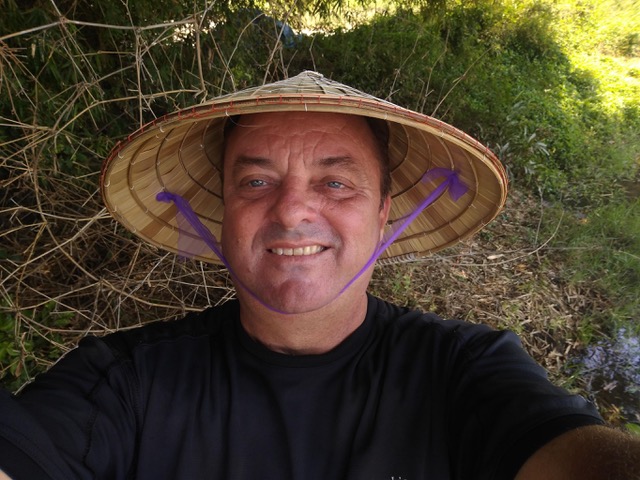
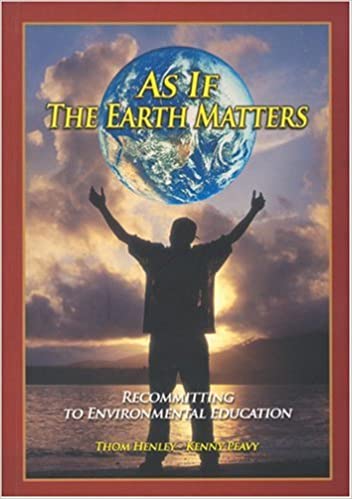



 Borderless