Categories
Conversation

‘Words, still photos, moving images – they are all storytelling’

Ratnottama Sengupta introduces and converses with a photographer who works at the intersection of art and social issues, Vijay S Jodha
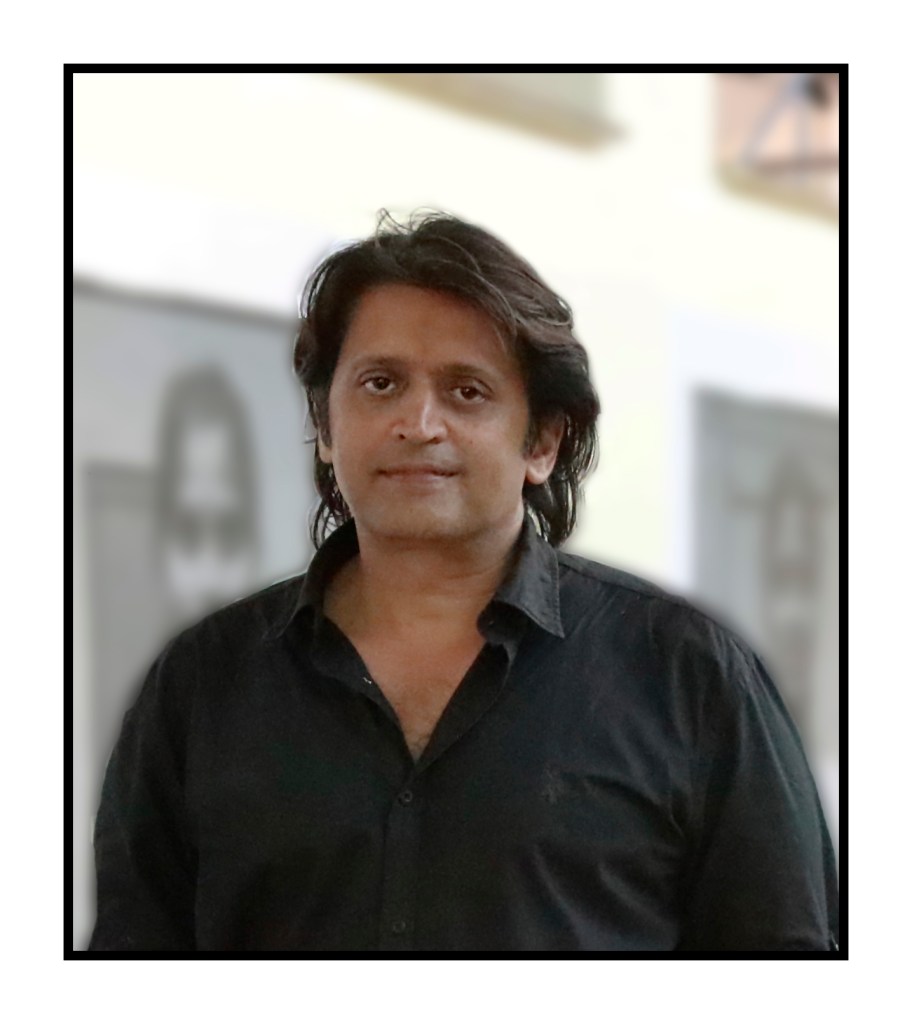
Vijay S Jodha was yet to become one of India’s leading lens-based artists at the intersection of art and social issues. Back then, in the 1990s, he had no inkling that 30 years later he would be the chairperson of UGC-CEC[1] jury for selecting the best educational films made in India. Or that he would be the national selector and trainer in photography for the National Abilympics Association of India.

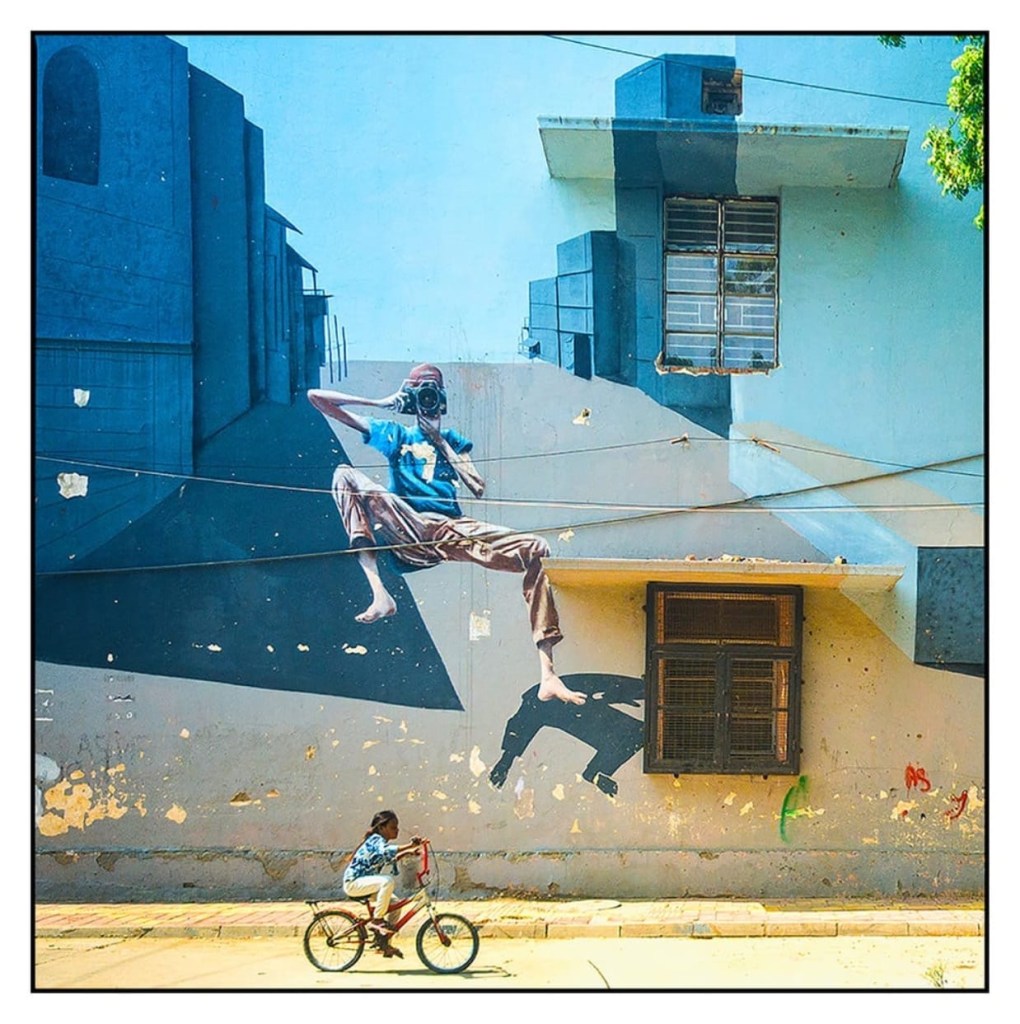
When I first met him, he was mounting a collaborative exhibition of his work with the elderly, their contribution to society and the care they deserve. Little did I know that the entire bent of this journalist-turned documentary filmmaker-turned photo artist would go on to focus on subjects ranging from mob violence, riot victims, farmers’ suicide, 75 years of Indian constitution to Joys of Christmas and the Bus Art of Tamil Nadu. 
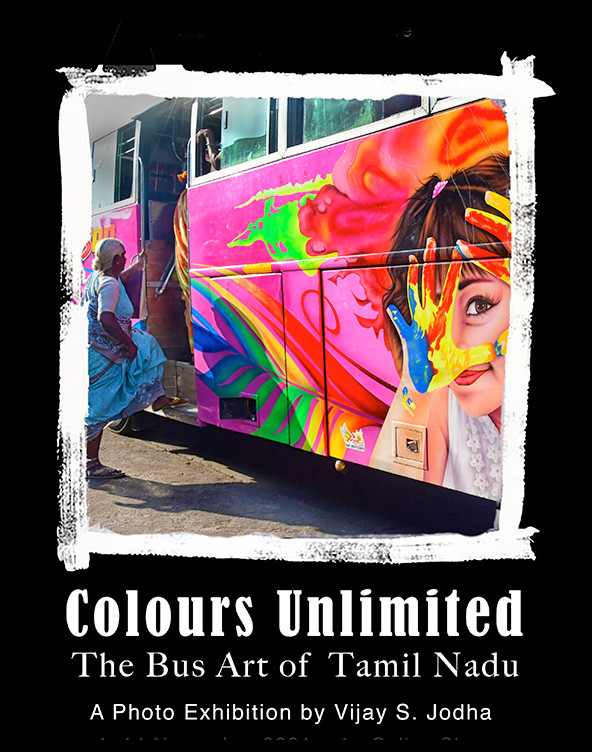
Not surprising that the International Confederation of NGOs has honoured Vijay with the Media Citizen Award for using media to drive social change. And it is only one among hundreds of honours he has received in two dozen countries. These include awards and grants, from Swiss Development Agency to Ford Foundation and Bill & Melinda Gates Foundation. Screening of his films on 75 channels worldwide and in 250 festivals in 60 countries.

These seem tedious details? So, interestingly, two public showings of his work have been vandalised. And a false police case against him took eight years to be thrown out by India’s courts!

Conversation

Vijay how did you come into photography? 

I’m a trained filmmaker – I mastered in film production – and have been making films for two decades. My films have shown on 75 stations including Discovery, CNN, BBC. But training in photography I have none. All my photography is non-fiction work. Actually my films are also non-fiction or reality based work. I just find still photography very relaxing because, unlike films where a director is responsible for so many things, here I’m on my own. But there’s no production deadline. No huge budget is needed. I can address any subject that catches my fancy and pursue it over several years, without any worry. Otherwise it’s the same: photos or films, you’re storytelling around substantial issues that interest you, in a manner that does justice to those issues, and — hopefully — engaging to the viewers.

So who was your inspiration?

In photography it is obviously the greats who defined the grammar of the medium itself such as Robert Frank[2] and Cartier Bresson[3]. They’ve inspired us all in some manner. I’m fortunate that, as a part time journalist in New York decades ago, I got to meet and interview top filmmakers and photographers like Gordon Parks and Richard Avedon. 

I once did a course at New York’s School of Visual Arts where they honoured Mary Ellen Mark and she had come across. As a journalist, I covered Sebastião Salgado’s launch of his workers’ project that put him on the map (of photography). I met Raghubir Singh while doing a project on Ayodhya in India, and again in New York where we put up the same exhibition. He also photographed some of us – myself, Siddharth Varadarajan, the editor-publisher of The Wire who was then a student at Columbia University, and other Indian students — were protesting some human rights issue.

I’m also fortunate to have our finest photo-journalists and lens-based artists as friends. I can take across my work to get a feedback or pick their brains. This beats the best photo schools in the world. In fact years ago I did a book which had photos from all of them! This was the biggest photo project on the Tiranga[4] as listed in the Limca Book of Records. They have all done many books on their own but this is the only one where all these masters appear in a single volume, their works united thematically. Apart from Raghu Rai, Ram Rahman, Prashant Panjiar,  Dayanita Singh,  T Narayan, and the late TS Satyan, I’d also interviewed people across India, from the then Prime Minister Vajpayee to those selling flags at traffic lights for a few meagre rupees.

You did not go to any international school to train in the art or the technology aspect. So what prompted your PhD?

Three decades back when I decided to go into mass communication as a career there were few computers, no internet, no private TV channels, or mobile phones. Sorry if that makes me seem Jurassic but it was a world with very few media opportunities. Post college, I had got  admissions into a trainee programme with a newspaper as well as in the MA programme in International Relations at India’s premier Jawaharlal Nehru University. My father felt that a masters and exposure at JNU would be a better investment for journalism – probably the single best advice I’ve got in my entire career — and I followed that. 

Then for some time I worked in print media: I freelanced for newspapers, edited and published a journal for a business house, scripted for a film and worked on a book with one of my journalism heroes – late Kuldip Nayar. But in the pre-internet era newspaper articles had a very short life, so I felt the need to produce something that would last longer such as film. So I decided to get a degree in Film. It also encompassed all my interests, from writing to art to music, travel and photography.

You’ve not been a photo-journalist working for any journal or newspaper. Yet you felt inclined to do projects on environment, elder care, survivors of riots and mob violence, farmer suicide, art that travels. Was it inevitable, given your father’s background?

Actually I’ve done a bit of photo journalism too. During my film school days at NYU I was a writer-photographer for their student-run newspaper, Washington Square News. I’ve also been a stringer for mainstream dailies including The Economic Times where I shot images parallel to my writing. I did stills for Mira Nair’s Monsoon Wedding and of course stills for my own film projects. So I’ve a lot of published images in papers worldwide though my main gig has been films. 

Frankly I don’t see much difference between these mediums. Be it words, stills or moving images; an academic paper, photo books, or films, short or long – all this is story telling. I’m a story teller.

And subjects? I’ve filmed every possible subject except wildlife: I just don’t have the patience for that. Otherwise everything, from artist biopics — on Paritosh Sen and Prokash Karmakar, whose inaugural screening you also attended in Calcutta years ago — to films on environment. My The Weeping Apple Tree (2005) was among the first ones on climate change in India. It won the UK Environment Film Fellowship Award 2005 and had multiple screenings on Discovery, with an introduction by Sir Mark Tully.

At that time, few knew about climate change. So Delhi govt organised a special screening for their MLAs and officers of water, electricity and sanitation departments. It was screened at UNEP headquarters in Nairobi and in various festivals. UNIDO and other grassroots level NGOs used it to create awareness. Some years back an IFS {Indian Forest Service} officer told me that Himachal government uses it to train their forest officers. 

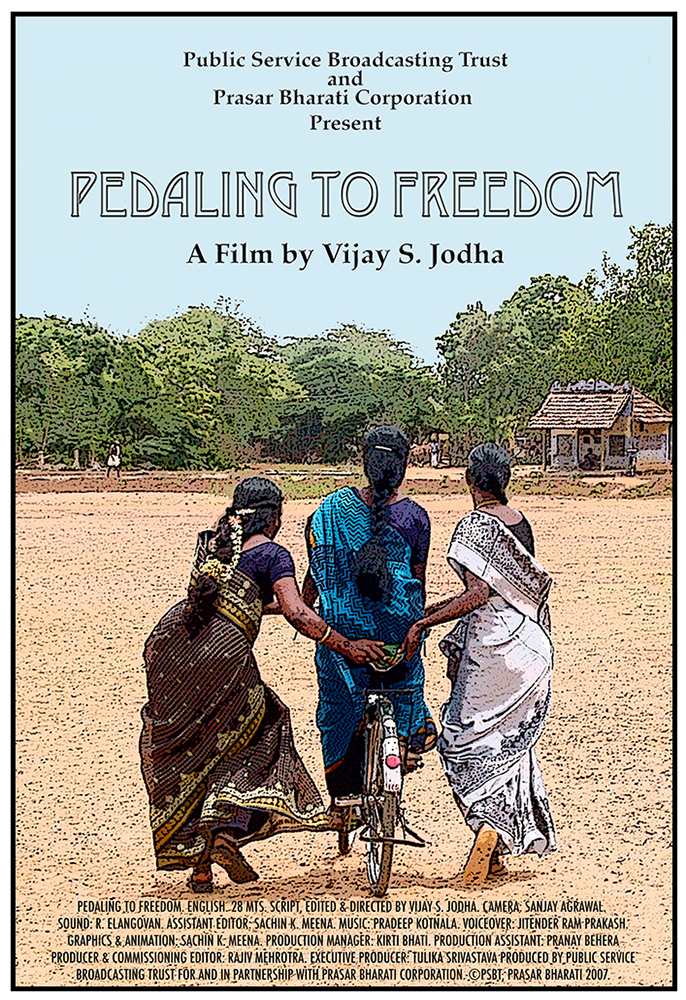
My film on gender, Pedalling to Freedom (2007) revisited an old initiative in one of the poorest parts of the world. It traced the life-changing impact of teaching 100,000 women to ride the bicycle. That film is in the US Library of Congress. It was also chosen for archiving at OSA Budapest, world’s premier repository of materials dealing with human rights. 

Then there are films that get food on the table. Training films. Corporate films. I once did a ‘funeral film’ on a well-known personality whose passing received a lot of press coverage in India but the NRI son could not come for the funeral.

What motivates you Vijay — money, international honour, or the possibility of social change?

Well, all this is livelihood so the money part is important. But doing work that gets recognised far and wide, that is substantial, to hold good for a long time – that’s a huge motivator. 

I have a slightly spiritual take towards this. I feel that regardless of our profession we are all bound by a dharmic or sacred duty. A teacher’s duty is to teach and a doctor’s is to heal. For those in the business of storytelling — including photographers — the sacred duty is to document, bear witness, push things forward. And believe you me, this has little connect with means or accessibility. 

To give you an extreme example: After the Nazis lost the war and Berlin fell, soldiers from the victorious allies army raped virtually every woman in Berlin. Few rapists were taken to task and  to top it, despite all the extensive coverage of the allies victory by forgotten photographers as well as superstars like Margaret Bourke-White  (known to us through her famous Gandhiji with charkha portrait) or Robert Capa (regarded as the greatest war photographer of all time), there was no coverage of this mass outrage in Berlin by anyone be it in photo essays in Life Magazine, or World War photo books. It appears in no Hollywood film or TV series.  

Likewise, fifty years ago, when India came under the draconian Emergency, our courts also endorsed the robbing of our Constitutional rights. Nobody documented, then or since, the forced sterilisation of 6,000,000 who were stripped of their reproductive rights. We, as photographers and filmmakers, failed on this front.

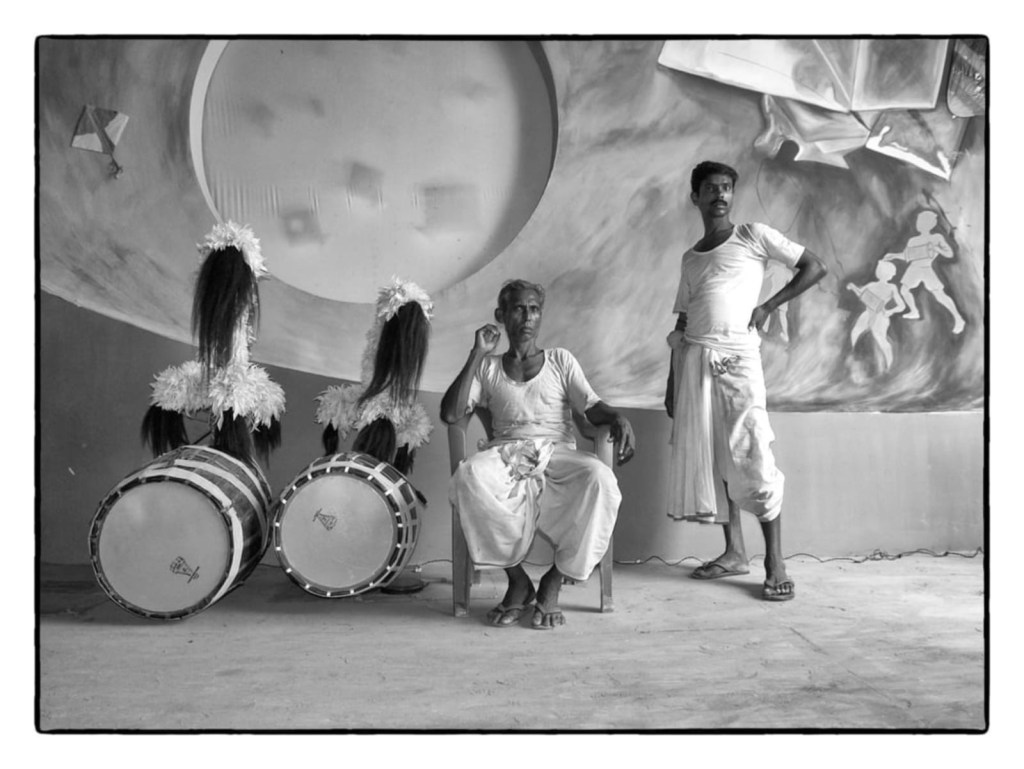
The First Witnesses is my project around farmer suicides. It is not an unheard issue nor something hard to get access. But how many have found it worth their while to document the issue? How many are documenting a disappearing art form or livelihood? Or our urban heritage being torn down? Our movie theatres once represented cinema as an inexpensive and readily accessible mass culture. Now they are being torn down even in smaller towns. Each had a unique character. Is anyone documenting that?

I documented Durga Puja in Kolkata 20 years ago when I was working with painters there. Durga astride a tiger, slaying the demonic Mahisasur emerging out of a buffalo: these elements get interpreted in hundreds of ways across the city each year. Each pandal has a different aesthetic interpretation, inside and outside. The religious aspect is no less important. But  these are also like site-specific installation art works shaped by the imagination of so many talented people but designed for impermanence. How many books of photos exist around this work now recognised by UNESCO as Intangible Cultural Heritage of Humanity?

How successful have you been in achieving this?

The merit of my work is for others to judge. I’m happy that, though India doesn’t have many foundations or support for non-commercial oriented art, I’ve been able to do at least a few things that are genuinely pathbreaking, substantial and have gone around the world. To be invited to UNESCO headquarters in Paris to screen a film and address delegates from 193 countries, or be honoured by our President for India’s best ever performed at Abilympics — these are certainly my career highlights.
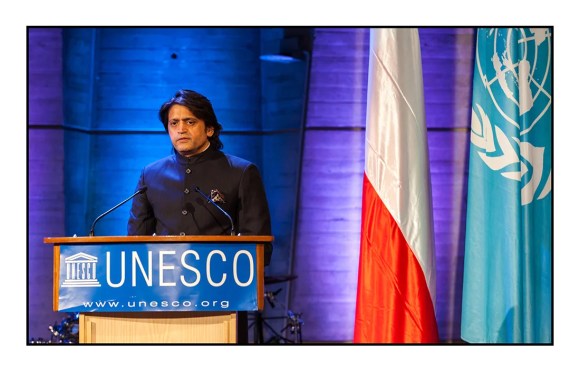
Vijay S Jodha at UNESCO introducing his film. Photo provided by Vijay S Jodha

My work has received over a hundred honours across 24 countries, but what truly motivates me is when people I look up to, my heroes, appreciate what I do. That kind of recognition carries a different weight. For instance, Magsaysay awardee P Sainath, whose ground-breaking reportage has long inspired me, saw my farmers project when it was exhibited alongside his photographic work at the Chennai Photo Biennale 2019. We hadn’t met before, so when he praised my effort, it felt like receiving a medal.

Another moment that has stayed with me was post my time at NYU. My professor, George Stoney, referred to as the father of public access television and mentioned in history books on documentary cinema, mentored Oscar-winning directors like Oliver Stone, Martin Scorsese, Spike Lee, and Ang Lee. When he watched The Weeping Apple Tree, he said, “Vijay, this is better than Al Gore’s An Inconvenient Truth. That was a glorified PowerPoint by comparison.” That one comment meant more to me than most awards ever could.

As a photo artist what is the biggest moment of joy for you — technical hurray or the joy of the subjects?

As I just said, recognition and praise of my heroes gives the maximum joy. There are other honours. Two photo projects listed in Limca Book of Records for being the biggest and path breaking. The first was on ageing that I did over eight years with my brother Samar Jodha – he did the images while I did the concept research, writing and interviews. The other was the aforementioned Tiranga. My film Poop on Poverty (2012) won a Peabody award, the oldest honour for documentary films, and more international honours than any non-fiction film produced out of India. 

After landmark exhibitions in Hong Kong and New York I donated two complete sets of The First Witnesses, my farming crisis project, to two farmer unions including our oldest and biggest All India Kisan Sabha (AIKS). They are using it for awareness raising across villages. That’s a real high as a photographer.

Then there’s high coming from those we pass down our expertise to. Among those I’ve taught or mentored is a highly talented though physically challenged youngster from Vijayawada with missing digits and motoring issues. His family runs a Kirana shop. When he started school, they sent him back saying he cannot even hold a pencil. He won a bronze medal in photography for India at the last Abilympics in France. Another student has himself become a photography teacher in a school for hearing impaired. This is the kind of stuff that gets me very excited. 

Thirty years ago as a volunteer writer and researcher I helped Sanskriti Foundation set up India’s first international artist retreat. That novel venture raised crores in grants and set up three museums. Today it is being scaled back as its founder O P Jain is in his 90s. But that idea caught on and you have scores of artist retreats across India. 

How has digital technology influenced photography as an art form? Has it done more harm? Or widened its spread?

Digital has been a mixed experience. It democratised the process of production and dissemination — be it still images or movies. This is a fantastic thing. But it killed a lot of the processes and livelihoods such as the printing labs, film production and processing facilities. It has also killed an art form like print making. It’s a specialised skill in itself, so a lot of artistry, understanding, appreciation and sustenance of it has got compromised.

The emergence of deep fake images and piracy of work is bad news too. But it has allowed more people to become story tellers. They now bear witness, as filmmakers and photographers, of issues and events that was earlier impossible.

I can cite examples from my work. I’m National Selector and Trainer in photography for National Abilympics Association of India (NAAI) and my students are in different parts of India. Two are hearing impaired, two others have motoring issues and physical challenges. Thanks to digital tools, we’re running long distance classes every week. NAAI provides me sign language interpreter but I can send and receive digital files, use zoom to conduct classes, use google translate to send instructions in Tamil, English and Marathi to my students. Now one student, despite hearing challenge, is running a photo studio. The student who has issues with his leg also works as wedding photographer. Workshops with institutions and festivals, within and outside India, are now easy and inexpensive thanks to these digital tools and communication modes.

Has selfies on mobile camera shortened the life of portraiture?

It has certainly democratised the process while the average person’s patience to study or appreciate any art work — portrait or landscape photo — is shrinking by the minute. Of course, good portraiture requires some skill to make as well as appreciate – that cultural literacy is a challenge everywhere, not just in photo medium. As a seasoned art critic you would have noticed that in the world of painting and sculpture too. Sadly we don’t have that education in our schools. 

You have continued with still images even after doing many documentaries. What is the joy in either case?

I’m doing still photography and movies parallel to each other. Last month I had a book on public policy, as I mentioned. Also launched last month – by our defence minister –was my film on our Armed Forces Medical Corps – it’s one of the oldest divisions in the world, going back 260 years. I’m working on a project on the Indian Constitution and a biopic on Amitabh Sen Gupta, the artist whose retrospective exhibition this year is organised by Artworld Chennai. My still photography project on the farmers crisis is also going on for the past 7-8 years.

All projects are joyous and offer their own challenges. It’s like bringing children into the world. You do the best you can, hope they’ll do well and go far, but you don’t know which one will. Regardless of their line of work you feel happy with each of them and what they achieve. 

What is the future of Arriflex, Mitchell, Kodak Brownie? And that of Yashica, Nikon, Canon, Leica, Olympus…?

Some old camera brands like Konica and Minolta have merged, or evolved into digital Avatars like Arriflex. Others, like Kodak, have faded into history. Interestingly, a small Indian company has licensed their name to market TVs under Kodak brand name now. For those of us from the analogue generation, it’s a bittersweet feeling. When a beloved brand disappears, it feels like saying goodbye to an old friend. But such is the nature of change.

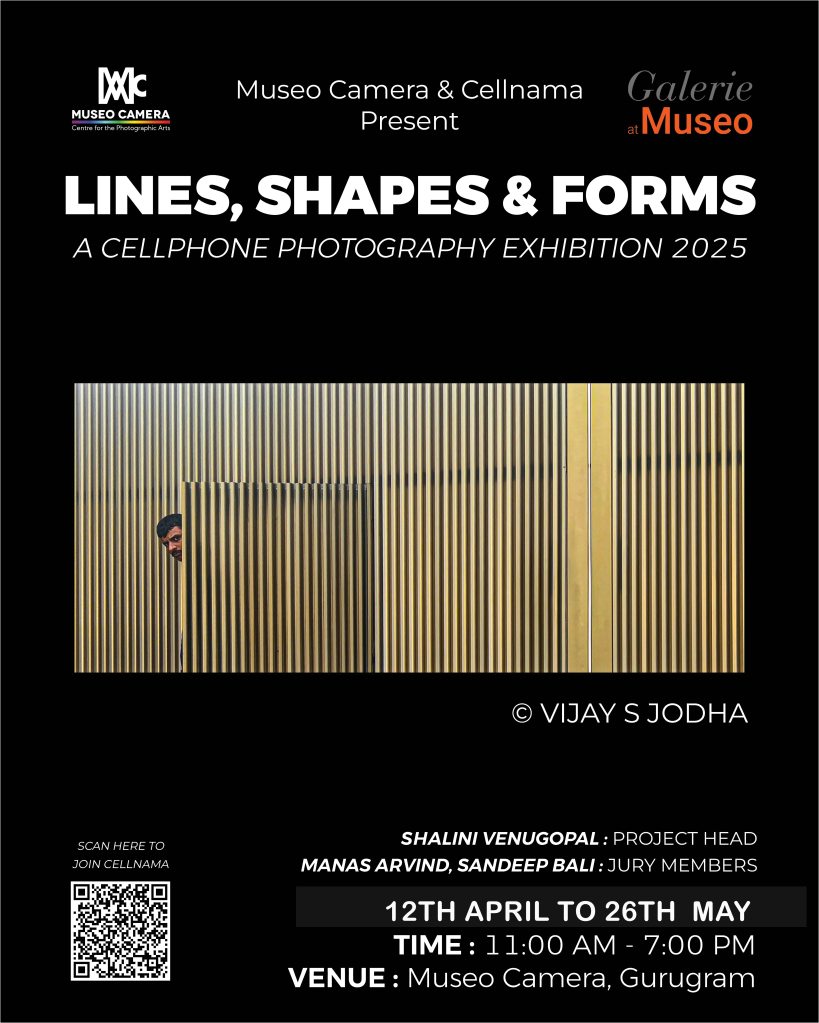
My friend Aditya Arya, one of India’s eminent photographers and a passionate camera collector, has created a remarkable space to preserve this legacy. He established the Museo Camera in Gurgaon, a non-profit centre promoting photographic art, which has become not only a camera museum but also a leading art and culture hub in the Delhi national capital region. If you’re an old time photographer passing through Delhi, it’s a wonderful place to revisit these “old friends.”

(Website of Museo Camera https://www.museocamera.org)
[1]  University Grants Commission-Consortium for Educational Communication

[2] Robert Frank (1924-2019) was a photographer and documentary filmmaker. 

[3] Henri Cartier-Bresson (1908-2004) was a humanist photographer, a master of candid photography, and an early user of 35mm film. One of the founding members of Magnum Photos in 1947, he pioneered the genre of street photography, and viewed photography as capturing a decisive moment.

[4] Three colours, published in 2005

Ratnottama Sengupta, formerly Arts Editor of  The Times of India, teaches mass communication and film appreciation, curates film festivals and art exhibitions, and translates and writes books. She has been a member of CBFC, served on the National Film Awards jury and has herself won a National Award. 

.

PLEASE NOTE: ARTICLES CAN ONLY BE REPRODUCED IN OTHER SITES WITH DUE ACKNOWLEDGEMENT TO BORDERLESS JOURNAL

Click here to access the Borderless anthology, Monalisa No Longer Smiles

Click here to access Monalisa No Longer Smiles on Amazon International
Categories
Stories

Disappearance

Story by Bitan Chakraborty, translated from Bengali by Kiriti Sengupta

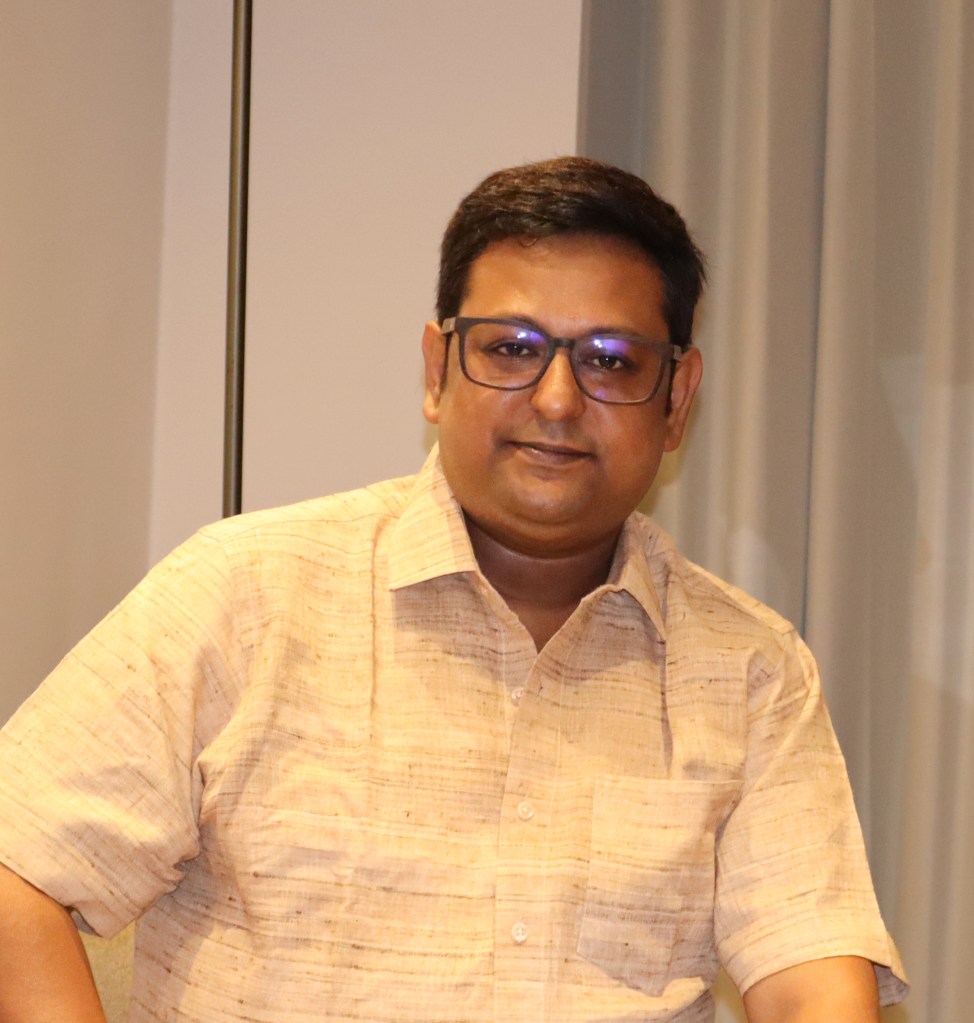
Bitan Chakraborty. Photo Courtesy: Kiriti Sengupta

The black smoke rises in a straight line. It will fade into the air as it reaches a certain altitude in the sky. The wind feels still today, causing a grey layer to form. Not long ago, Lali experienced recurrent bouts of excruciating pain, but now it refuses to subside. She tries to relax, her spine loosely resting against the wall of the leather factory. Lali shrinks again as her little baby stretches its limbs inside her womb. In the distance, her husband, Fatik, is tending to their domestic belongings in the dilapidated house. He is vigilant, working hard to safeguard their utility items. He won’t let anyone take away their hard-earned household goods. Fatik does not know what will be put into the fire. A few government-appointed people collect the crushed bamboo walls from the ghetto and add them to the flames. The more they burn, the more smoke rises. At a safe distance, a curious crowd observes the unfolding events.

Fatik packs goods in small quantities and takes them to Lali, who is resting under the shade. He quips, “I could have packed up sooner if I had someone to help. You’re in pain, huh? Hold on for a bit; we will board the train shortly.”

“Hey scoundrels, that’s mine. Keep it there, I’m telling you! Otherwise, I’ll put y’all in that fire.” Fatik rushes to their ruined house. It’s not a house anymore! An empty stretch reveals the impressions of bricks laid down for years. Fatik’s shanty looks the same — a square piece of land with torn plastic sheets and scattered, fragmented earthen roof tiles.

Lali continues to endure pain. Fatik appears exhausted; he is busy organising goods. There’s no point in disturbing him further with another complaint of discomfort. Lali remains silent and attempts to sketch the new place they will inhabit for the next few months or possibly years. No one will be a stranger there; they cannot afford the luxury of exploring exotic living. Fatik once told her, “Shashthida has affirmed that we can come back here once the air cools down.”

It’s easy to earn a living in the city, but finding a job is difficult in the countryside, where opportunities are scarce. Once the flyover is built, Fatik plans to return and set up a small eatery for the evenings. In a tone filled with love and care, Fatik tells Lali, “No one can resist the mutton curry you cook. All visitors will become regular customers at our shop.” Lali adds a touch of sass to her response, “I won’t. I’d rather teach you the recipe. You can then cook and feed them.” Gazing at the ceiling with wide eyes, Fatik remains lying in bed.

Lali does not believe in Fatik’s words that they will be able to come back here again. A few minutes ago, Hema came to see her, “My bad luck; I won’t get a chance to see your child. But you never know if I will meet you again somewhere else.”

“Won’t you come back here?” Lali asks.

“They will not allow us here again,” Hema replies. “The officials informed us that they were planning to build a marketplace below the flyover after its construction.”

Mum’s the word when Lali relays the news to Fatik. He murmurs, “But then Shashthida[1] has assured…”

“You can pursue a small shop in the proposed market,” Lali advises.

“I can’t say; they might ask for a cash lump sum as advance payment.” Fatik appears worried.

The pain shoots once again. Lali flings her legs aimlessly. The dusty floor reflects her movements. She remains silent. On the other side, Fatik gets into trouble with Dulu and his family. Dulu’s mother seems to have taken Lali’s rice pot. Lali raises her voice, “The pot is mine!” Unfortunately, her words go unheard.

2

Fatik knocks Lali with his bag, “Come on, the Hasnabad local is at platform eight. Walk along the straight direction.”

Lali has heard of the Sealdah railway station, but she has never been there. It is a large station with several platforms, numerous trains, and huge crowds. Passengers jostle against one another. With great caution, Fatik quickly walks across the platform to board the train and get into a compartment by any means necessary. There are likely a few travelling ticket examiners around, but during this time, they usually don’t enter the coach. Lali is unable to keep pace with Fatik and remains far behind him, but she compensates for the distance by tightly gripping one side of the gamcha[2] draped around his neck. Fatik collides with the commuters approaching from the other end, and a few passengers express their annoyance with a word or two of irritation. Fatik does not respond at all. Lali pulls her saree to cover her breast. She has no control over the saree girded around her head, which has now slipped onto her back.

The train will start in ten minutes. All coaches are full; not a single seat is vacant. Fatik quickly decides on a favourable compartment and boards the train with his wife. Lali cannot stand any longer, so she sits on the floor beside the door, her hands resting on her belly. Fatik arranges their bags around Lali. An elderly gentleman asks, “Where will you get off?”

“Barasat,” Fatik answers.

“What the hell are you doing here? Get inside the coach. Have you lost your mind or what? How can a sensible man board the train in such conditions?”

Fatik turns to his wife and whispers, “There aren’t any vacant seats. Do you still want to go inside?”

Lali refuses to move. The spasm has taken over her body and mind. She cannot stand up. She wants to stretch her legs to give her baby more space. However, the situation does not allow for that privilege. With each passing minute, more passengers crowd the coach, and the draft is cut off. In a dry voice, Lali calls out to her husband, “I cannot breathe. I need some air.”

“Wait a moment. The crowd should thin out after we pass two stations,” Fatik says.

As soon as the train departs, more than a handful of late passengers hurriedly board the coach. They will travel a long distance and want to get inside. The bags and goods piled around Lali create an obstacle to their movement. One of them raises his voice, “Is this a place to sit?” Another man from the crowd yells at Lali, “Stand up, I said!” Someone empathetically informs, “Try to understand; she is carrying.”

“Oh! This is horrible. Hey brother, you aren’t pregnant, are you? Better you stand up. More passengers will enter the coach at Bidhan Nagar and Dum Dum. They will smash you to death.”

Fatik gets anxious and follows the instructions. Lali shrinks in fear, feeling breathless. In her womb, she carries their only child, who waits to see the world — as if the baby complains, “I cannot stay in this small dark space anymore, Ma!” The passengers become frightened as Lali lets out a low moan of pain.

“Are you okay?”

Fatik bends toward Lali as much as possible to ask, “I’m sure it’s terrible to bear any longer.”

“No air; it’s suffocating!” Lali sounds fragile.

“It won’t be long; I’ll take you to the hospital as soon as we reach there. Shashthida has shared the address.”

Lali’s facial muscles contort in extreme agony. Fatik isn’t sure whether she has heard him. Intoxicated, Fatik had seen her suffer from pain before; during those times, he did not feel her distress. Lali wept profusely. Fatik never intended to hurt her but lost control as he downed liquor. The very next day, Fatik committed to his wife, saying, “I won’t trouble you anymore. All I want is a son!”

With a hint of dejection in her eyes, Lali poked, “Right! So, he can run a liquor shop you longed for.”

“Shut up! I’ll make him a real gentleman,” Fatik readily addressed her concern.

3

Several travellers board the train as soon as it stops at the next stations. Lali, who somehow remains seated on the floor, gets pressed painfully against the legs. She feels worse than ever. Fatik seems restless and cautiously peeks out from behind the crowd to read the station names. At times, he turns to look at the goods around him. A few passengers become irritated, saying, “What’s wrong with you? Why don’t you stand still?”

“Be careful, dada! Take care of your pocket. You never know…Dasbabu lost three hundred bucks yesterday only.” Someone from the crowd airs the words of caution.

Fatik understands the meaning of such lines. He does not utter a word, for he knows if he begins an argument, they will forcibly push him out of the coach at the next station and beat him like hell. He requests the passenger beside him, “Dada, please let me know as we reach Barasat.”

“We are currently at Cantonment. Please be patient; it will take another thirty minutes or so to reach Barasat.”

4

Lali wants to scream. She feels thirsty. Amid the numerous legs visible to her, she cannot identify Fatik’s. Even when Lali looks up to see the faces, she is unable to locate her husband. The child in her womb revolts; it will not tolerate the torture to which the mother is subjected. The baby twirls, rapidly changing positions. Lali realises that her child is responding to the world — specifically, the passengers in the coach. The tiny tot wishes to emerge from confinement to greet them. Lali is afraid — will they treat the child as lovingly as their family?

Fatik bends down and says, “We will get off at the next station. Several others will disembark. I’ll first grab the bags, and then I’ll help you off the coach. Be careful.”

Lali gathers her courage and prepares for the exit. She moves her palm over her belly, saying, “A little more waiting, Baba[3]!”

The train halts at Barasat. Passengers disembark from the train like a vigorous flow of water. Fatik feels puzzled as the bags scatter. A few passengers are still getting off. Meanwhile, many commuters waiting to board the train begin to enter. Ignoring the chaos, Lali tries to stand but fails. Fatik quickly gathers their bags and helps them to ensure a swift exit. The passengers ready to disembark push him out of the coach. Fatik cannot withstand the force and is shoved away from the train. The coach has room for more passengers and fills up quickly. Lali crouches toward the gate and cries, “Help! I’ll get off; stop the train.” People leaning out of the coach warn her.

No one can hear Lali. Fatik rushes to the coach to grip the gate’s rod, but he fails every time he stretches his hand to grasp it. A guy leaning out of the coach holds it in such a way that Fatik cannot access the rod. He refuses to give up and keeps running alongside the train. The thick crowd challenges his swift movement. Amid several passengers inside the coach, Fatik sees his wife’s hands and the two pairs of bangles she wears. He reaches the far end of the platform.

Fatik breathes rapidly. He is exhausted and sweating profusely. He shivers while keeping his head lowered. A drop of sweat rolls down his forehead and falls onto the tip of his nose. Fatik can see the passengers hanging out of the coach, trying their best to get inside. Amid their relentless efforts, Lali’s hands disappear.

[1] Dada/Da: In Bengali, the elder/older brother is calledDada(Dain short).Dada or Daissuffixed to the first or last name when addressing an acquaintance, relative, or stranger during a conversation. Bengalis also suffix Babu to a name (first or last) to show respect.

[2] A traditional, thin cotton cloth (generally, a handloom product) of varyinglengths used in Bengali households to dry the body after bathing or wiping sweat. It is also used in several Hindu rituals.

[3] Baba is father. But parents often use this word affectionately to address their sons.

(Translated from the original Bengali by Kiriti Sengupta. First published in the EKL Review in December 2021)

Bitan Chakraborty is essentially a storyteller. He has authored seven books of fiction and prose, translated two collections of poems, and edited a volume of essays. Bitan has received much critical acclaim in India and overseas. Bougainvillea and Other StoriesThe MarkRedundant and The Blight and Seven Short Stories are four full-length collections of his fiction that have been translated into English. He is considered one of the flag-bearers of Indian poetry in English, being the founder of Hawakal Publishers. When Bitan isn’t writing or editing, he is photographing around Rishikesh, Varanasi, Santiniketan, among other places. He has successfully participated in the 3-day-long Master Class on Photography led by the legendary Raghu Rai. Chakraborty lives in New Delhi with Jahan, a pet Beagle. More at
www.bitanchakraborty.com.

Kiriti Sengupta, awarded the 2018 Rabindranath Tagore Literary Prize and the 2024 Nilim Kumar National Honour, has had his poetry featured in various publications, including The Common, The Florida Review Online, Headway Quarterly, The Lake, Amethyst Review, Dreich, Otoliths, Outlook, and Madras Courier. He has authored fourteen books of poetry and prose, published two translation volumes, and edited nine anthologies. Sengupta serves as the chief editor of Ethos Literary Journal and leads the English division at Hawakal Publishers Private Limited, one of the top independent presses established by Bitan Chakraborty. He resides in New Delhi. Further information is available at www.kiritisengupta.com.

.

PLEASE NOTE: ARTICLES CAN ONLY BE REPRODUCED IN OTHER SITES WITH DUE ACKNOWLEDGEMENT TO BORDERLESS JOURNAL

Click here to access the Borderless anthology, Monalisa No Longer Smiles

Click here to access Monalisa No Longer Smiles on Amazon International
Categories
Review

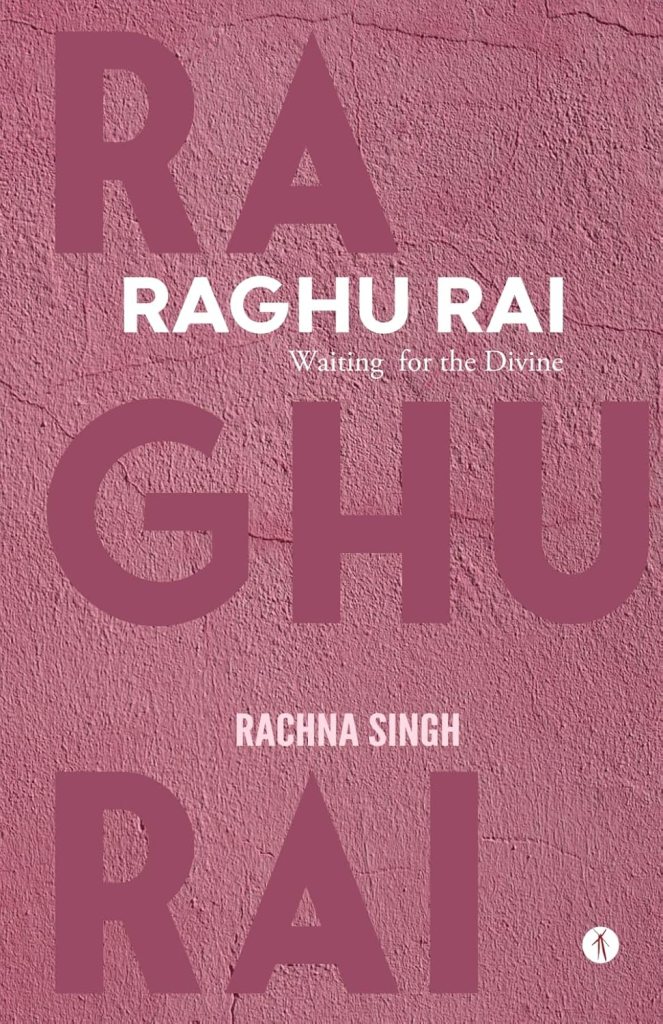
Mapping Raghu Rai: A Photo Journalist’s Journey

Book Review by Malashri Lal

Title: Raghu Rai: Waiting for the Divine

Author: Rachna Singh

Publisher: Hawakal Publishers

“My story should remain simple, step by step, click by click.”   -- Raghu Rai

Rachna Singh, notebook and recorder tucked in her bag, pen in hand, first meets Raghu Rai in his picturesque home nestled in the Mehrauli forest of New Delhi, a landscape with occasional medieval structures peeping through the trees. Away from a concrete encrusted city, Rachna, a patient biographer, knows that the legendary photographer whose images shaped the visual progress of a nation, has his own deep stories.  But will he reveal them? She pries the tales open by carving pathways through Raghu Rai’s photos— and a remarkable book about the person behind the camera is captured by a literary image-maker, in this sensitive, tender, and insightful biography. Rai permeates  a series of chapters that play intricate games with memory because every frame in the camera is connected to myriad threads of experience.

Since the book is sub-titled “Waiting for the Divine”, I naturally look for references to Mother Teresa and the Dalai Lama to discover how the transcendent power of Raghu Rai’s photos of these two personages emerged. Entry into sacred precincts is never easy, and a camera in hand signals a definite obstacle. However, at the Sisters of Charity in Kolkata the photographer is permitted to follow the Mother unobtrusively. Yet, when a curtain flutters to reveal angel-like nuns and Rai dives to the floor to catch the best angle and the right light, even the Mother’s equanimity breaks and she is aghast! From such “shadowing” emerges the divine photograph titled “Mother Teresa in Prayer” with every crease in the luminous face catching the glow, an expression transporting her to realms beyond ordinary comprehension.

If Raghu Rai’s association with Mother Teresa is marked by reverence, his link with His Holiness the Dalai Lama is marked by friendship—one that extends to warm handshakes and brotherly embrace, informal conversations and a conviction about universal compassion. Says Rai, “His Holiness is an uninhibited, wonderfully loving man. How gracious of him to say he is my friend.” Again, it is the camera lens that reveals remarkable facets of the Dalai Lama– his childlike smile as also the sombre spiritual leader of a people in exile. Rachna Singh recounts an almost surreal story of a protective stone gifted to Rai by His Holiness that saw him survive a severe heart condition of ninety percent blockage while still chasing images of a crowded procession!

This takes me back to Rachna Singh’s intention, “My book is not a third-person memoir nor a chronological recounting of Raghu Rai’s life. Instead, it unfolds through candid conversations, inviting the readers into an intimate dialogue.” The reader’s response being part of her textual strategy, I too could add my account of the mystical energy felt in the presence of the Dalai Lama. The book’s attraction lies in this fluidity of the biographer, her subject and the reader being part of the evolving discussion of the deep philosophical pool from which photos are created. The trajectory of Raghu Rai’s life is well known—the photo journalist with The Statesman and India Today; his famous photo essays in the international magazines Time, Life, The New Yorker and numerous others, the award of a Padma Shri, his eminent friends and compeers, but Rachna Singh’s book probes Rai’s mind, his consciousness, his search and his beliefs. Therefore, it offers gems of information through anecdotes and the atmospherics of events, and some delectable quotations in Punjabi and English.

I turn here to Raghu Rai’s series on the Bhopal gas leak of 1984. “The black and white picture of a dead child, eyes open, staring sightlessly into space, lying in the rubble with a hand gently caressing the ravaged face in farewell,” describes Rachna, calling Rai a ‘Braveheart’ who painted a “searing picture of the tragedy.” The conversation is strangely matter of fact as though both the biographer and her subject are numbed by the enormity of that night of terror. Did Rai fear for his health or safety in the toxic air? The answer is “No” because the human pain around was greater than the instinct for self-preservation. All the journalists visited the mass cremations, the hospitals, the dead and the dying as though it was a “job”, Rai being practical enough to say, “You cannot let your spirit turn soggy with emotion.” Those of us who read of such tragedies and see photos in newspapers while sipping our morning tea should admire the intrepid people providing the raw material from ground zero.

Another memorable series was on Bangladesh refugees after the 1971 war—emaciated women and men often carrying sick children in baskets. Rai had been in the frontlines of the war and had once been surrounded by a hostile mob. Rachna is on tenterhooks as he narrates the details but he declared “I was more excited than scared … there was actually no time to feel scared.” At one time he even smiles and says, “It was a lot of fun.” Which brings me to probe the extraordinary grit and strength of photo journalists or reporters from war zones. Where does compassion and newsworthiness meet? Is image more important than the decimated human body? What lasting imprint does such witnessing leave?

Perhaps the answer lies in Raghu Rai’s quest for the Divine—beyond image, outside time. He was born in pre-partition India, in the village of Jhang that is now in Pakistan. He speaks haltingly of the childhood terrors—homes in flames, of escape in the pre-dawn—Rachna notes the tremor in his voice and the reluctance to recall those years. Yet she astutely links Rai’s portrayals of hurt and human sorrow, his sensitivity yet distancing from those early experiences. Finally, it’s been a holistic calm. Rai is quoted: “Photography has been my entire life—it has, in fact become my religion, a faith to which I have dedicated myself completely. My craft led me toward a meditative path that gave me insights to life and the divine.” And that quest bridges the beatific and the aesthetics in this most commendable book.

Malashri Lal, writer and academic, with twenty four  books, retired as Professor, English Department,  University of Delhi. Publications include Tagore and the Feminine, and The Law of the Threshold: Women Writers in Indian English. Co-edited with Namita Gokhale is the ‘goddess trilogy’, and also Betrayed by Hope: A Play on the Life of Michael Madhusudan Dutt  which received the Kalinga Fiction Award.  Lal’s poems Mandalas of Time has recently been translated into Hindi as Mandal Dhwani. She is currently Convener, English Advisory Board of the Sahitya Akademi. Honours include the prestigious ‘Maharani Gayatri Devi Award for Women’s Excellence’.

PLEASE NOTE: ARTICLES CAN ONLY BE REPRODUCED IN OTHER SITES WITH DUE ACKNOWLEDGEMENT TO BORDERLESS JOURNAL

Click here to access the Borderless anthology, Monalisa No Longer Smiles

Click here to access Monalisa No Longer Smiles on Kindle Amazon International