Ratnottma Sengupta revisits an exhibition full 25 years later
Images from exhibits at Anadi . Provided by Ratnottama Sengupta
On November 1 of 1956 was born a state in Central India called Madhya Pradesh. And 44 years later, on exactly the same day of November 1, in the year 2000 it was remapped. A new state — Chhattisgarh — was carved out of the land that had been home to the oldest Indians: the men and women who had peopled the caves at Bagh and Bhimbetka.
Standing at the threshold of that new beginning, I had curated an exhibition titled Anadi – that which has no beginning and, therefore, no end. The exhibition card was designed by M F Husain who came on the inaugural day in Delhi. The next day was graced by the presence of Madhavrao Scindia, scion of the royal family that continues to throw up political leaders. I was fortunate to have friends like collectors Anand Agarwal and H K Kejriwal, bureaucrats Bhaskar Ghose and Sarayu Doshi, art lovers like poet Gulzar and artists like Yusuf Arakkal. Happily, then, the exhibition travelled to Birla Academy in Kolkata to Chitrakala Parishath in Bangalore to the National Gallery of Modern Art in Mumbai. And with it travelled a batch of youngsters who were soon to be among the most sought after names in Indian Contemporary Art.
What made that exhibition so special? The card? The multi-venue display? The star viewers? The exhilarating combination of tribal paintings, figurative sculpture, and abstract images? Twenty five years later, I will look back to find an answer.
Images from exhibits at Anadi . Provided by Ratnottama Sengupta
At the intersection of two millennia I was amazed to note there was no rupture in continuity. Anadi offered a fresh look at a continuum that lives on beyond the geopolitical redefinition, because it began at a time when Chhattisgarh was not Madhya Pradesh, nor the Central Province of the Raj. Bhopal, Indore, Raipur, Jagdalpur, Sanchi, Vidisha, Malwa… these cities had no chief minister back then, nor a Prime Minister. Why, there were no Begums nor a Buddha. No Baj Bahadur loved a Roopmati nor did Kalidasa send a Cloud as Messenger. It was a time when the intrepid fingers that harnessed stones and hunted hides also painted rocks to sing of life. In the process – around 10,000 BCE – they crafted the rockbed of Indian Art at Bhimbetka, the UNESCO World Heritage Site mere miles away from Bhopal.
Bare lines that captured with only a twist and a turn the vigor of hunting and the verve of dancing, rock art is that elusive genre which is narrative, figurative and abstract – all at one go. And that is a characteristic common to the tribal stream of art which flourishes in the state from a forgotten past. There is a story in every figure painted by Bhuri Bai or Sukho Korwa. She paints a cart and tells you of the festival day when on its wheels it goes round habitats, collecting all the bimari and driving illness out of the village. He paints a bird that pounces on a snake which devours a rat, recounting the lifecycle that sustains ecological balance. But where is the third dimension? Where’s the likeness to the world of five senses? We see no effort here to evoke either. Instead, there is a stylization which is unique to the region that is home to the Bhil, Gond, Sahariya, Baiga, Saur and other tribes. A stylisation that abstracts the essence of the physical reality they celebrate through colour and line.
Images from exhibits at Anadi . Provided by Ratnottama Sengupta
Dots and crosses, circles and squares all come into play as the vivacious blues and reds, yellows and greens acquire life. A line is not simply a straight line or curve: that would be an unappetising repetition. The quest for variety and individuality finds Kala Bai, Lado, Sumaru break up the lines into an intricate arrangement of countless motifs. When the subject is the same, as too the colour, it’s the dots and crosses, dashes and stars that give the work the imprint of individuality. In the process, these artists who work in a community and send off their creations to markets in distant cities, have worked out a way of ‘patenting’ artistic property. Tradition did not require them to ever sign off a work with their names. In the age of copyright awareness and intellectual property rights, they might put their signatures on the canvas – but the unmistakable imprint of the artists lie in the manner of their assembling the familiar patterns.
That, make no mistake, is the sign of a master, be he in the tribal mould or a modernist. For corroboration, we have only to look at a painting by Maqbool Fida Hussain, N S Bendre or Syed Haider Raza. Madhuri or Mahabharat, Gandhi or Indira, M F Husain constantly painted figures. Eminent and easily recognised ones at that. And yet, they lived not in the details of their features but in the lines and colours that spelt ‘Husain’ to seasoned viewers. Likewise Bendre’s forms had little concern for photographic realism. In Raza’s case, it is the arrangement of colourful geometrical bindus (circles) and squares alone that speaks of the artist. So, regardless of whether or not there is a ‘McBull’ or ‘Bendre’ inked on the canvas, we readily identify these masters who, incidentally, all came from this same state of Madhya Pradesh.
Images from exhibits at Anadi . Provided by Ratnottama Sengupta
Note one more thing about these names. Each of them had set new watersheds for Indian contemporary art. All of them had opened up new avenues for artists who came after them. Bendre, the first to head the art education at the Maharaja Sayajirao University of Baroda, gave not just one more centre for mastering the brush. He gave shape to an institution which still assimilates the best of the home and the universe, giving the MSU artists a rare acceptability in India and in the West. Raza, who lived in Paris for years and years, did not sever his umbilical cord with this soil, yet carved a niche for Indianness in the Mecca of contemporary art. And Husain? The life as too the art of this ‘Picasso from Indore’ had become a legend in his own lifetime. Who else but MF could raise the high water mark at auctions, again at again, at home and abroad? Who but him could open up the markets for Indian artists, including those who preceded him like Jamini Roy?
Images from exhibits at Anadi . Provided by Ratnottama Sengupta
Talking of the masters who opened vistas, especially in the context of Madhya Pradesh, one comes to J Swaminanthan who facilitated a two-way transaction. While holding the reins of Roopankar Museum in Bhopal, he assimilated tribal art to such an extent that he could understand it, explain it, talk about it, write about it and paint after them, using their earth colours, and the bareness of their lines. At the same time, the outsider who became an insider gave, through Bharat Bhavan, all of Madhya Pradesh a new standing in the realm of contemporary art. Artists from all over the country would congregate in Bhopal with their art, exhibit it, discuss it threadbare in seminars, impart it to those keen to learn. Small wonder, the state boasts a host of artists like Akhilesh and Anwar, Seema Ghuraiya and Manish Pushkale, Yogendra and Vivek Tembe, Jaya Vivek and Jangarh Shyam. Artists who steal the attention of the world today.
This breed, which was born with the emergence of the state, came of age in artistic terms as the province consolidated its presence on the marquee. And an overwhelming number of them express themselves in just lines and colours. They care not for things like market – which seems to have an insatiable appetite for figurative art. Nor for the narrative tradition of the forefathers who painted on rocks. These neo-masters are all distilling forms, extracting experiences, working out their own equations with abstraction.
But, come to think of it, isn’t this exactly what the original artists of this land – and every other land on earth – set out to do when they picked up the sharpened tool that was millennia away from the paint brush?
Ratnottama Sengupta, formerly Arts Editor of The Times of India, teaches mass communication and film appreciation, curates film festivals and art exhibitions, and translates and writes books. She has been a member of CBFC, served on the National Film Awards jury and has herself won a National Award.
.
PLEASE NOTE: ARTICLES CAN ONLY BE REPRODUCED IN OTHER SITES WITH DUE ACKNOWLEDGEMENT TO BORDERLESS JOURNAL
Ratnottama Sengupta introduces a prolific, popular and celebrated Bengali writer and an artist
Dhruba Esh; Courtesy: Kamrul Hasan Mithon
“Dhruba Esh, born 1967, is a full time cover designer – and a part time writer. He has authored stories for children and thrillers for grown-ups. A total of 40 books — or maybe more.”
This is from the cover flap of one of the artist’s published works. Cryptic? Yes. But it does not fail to convey the whimsy every Dhaka-based publisher and poet identifies with the name, Dhruba Esh. Read what Humayun Ahmed (1948-2012), a prolific author, dramatist and director of unforgettable films like Ghetuputra Kamola[1], saysabout the designer in Chaley Jaay Basanta Din[2]. “Must get hold of Dhruba Esh. For some unknown reason he’s been out of reach. Pasted on the front door of the flat he lives in is an A4 sized paper. It is adorned with the sketch of a crow in flight and is signed off with these words in Dhruba’s handwriting: ‘The Bird has Flown the Nest.’
“What I need to do is this: Throw away that A4 sheet and replace it with another, inscribed by these words: ‘Come back, Birdie!’
“Dhruba Esh might not know, but a bird that takes to its wings always returns to its nest. Only the caged bird has nowhere to fly off to. Its only reality is to stay put in one location…”
Why am I taking a serious note of what Humayun Ahmed wrote? Not only because Dhruba Esh has penned the biography, Tumi Achho Kemon, Humayun Ahmed? More so because this custodian of Bangladesh literary culture, who continues to be a top seller at Ekushe Book Fair[3], is one of the cornerstones of modern Bengali literature on either side of the barbed wires.
Dhruba Esh is himself a legend in the Bangla literary firmament, I learn from Kamrul Hasan Mithon, a photographer turned publisher cum writer has been instrumental in reconnecting me with my father, Nabendu Ghosh’s roots in Kalatiya, once a village in Dhaka district that is now a suburb of the capital city. Bhaiti, as I affectionately address him, has been writing a column, Dyasher Bari (Ancestral Home), in Robbar (Sunday) magazine published online from Kolkata. Featured in it are all the major names of Bengali art, literary and cinema world — from Suchitra Sen, Mrinal Sen, Paritosh Sen to Ganesh Haloi, Miss Shefali, Sabitri Chatterjee and not forgetting Baba.
“Dhruba Esh is just one of his kind. He does not have a wife, no mobile, nor a Facebook page. He does not even ride a bus or train. If a destination is too long to walk, he travels only by rickshaw. He is most indifferent to money matters. But he is most enthusiastic about painting and designing.
“Starting in 1989, when he was still a second year student at the Dhaka University, he has designed nearly 25,000 book covers. In addition he has designed music albums – and T’s too! Three years ago he was bestowed with the Bangla Academy Literary Award for his contribution to Children’s Literature – with titles such as Ayng Byang Chang[4] and AmiEkta Bhoot[5].”
I fell for ‘Amiyashankar…’ at the very first reading. How effortlessly the surreal narrative etches a contemporary reality obtaining in the land of my forefathers!
Amiyashankar Go Back Home
Story by Dhruba Esh, translated from Bengali by Ratnottama Sengupta
Subachani or Bar footed Geese flying over Himalayas: From Public Domain
“Amiyashankar Go Back Home!”
“That’s the title of the book?”
“Yes Sir.”
“Is there a poem by this name?”
“No Sir. There’s no mention of Amiyashankar in my poetry.”
“No mention at all? Oh!”
“Can I send you some of my poems?”
“You may send.”
“Can you do the cover within this month?”
“Not this month. You’ll get it on the 12th of the next month. Only sixteen days to go now.”
He started laughing.
He’s a small town poet. A young professor. I have been to the town where he teaches in a girls’ College. It’s like a watercolour painting. There’s a river to the north of the town. Blue mountains in the distance complete the view.
The geese of Subachani had flown over this town on their journey towards the Manasarovar to restore Ridoy to his human size. The poet was unaware of this. He has not read Buro Angla[6].
“What is the book about? Birds?”
“You can find the PDF on Google.”
“Thanks. I will read it.”
Two days later he called. “Reading BuroAngla has sparked some fireflies in my mind. I’d not read the book until now.”
He was given my number by Rasul Bhai, a poet and a cricketer from the same town. He just about looks after the family publishing business. A good person. Last year I had done the cover for his book of poems, Lake Mirror of the Full Moon.
The poet had emailed his poems. He had said he’d send some poems, instead he had sent the PDF of the complete book. On the basis of Divine Selection I read 13 poems. He cannot be faulted for not reading Buro Angla. This poet writes good poetry. In two days I readied the cover for his book.
*
“Is Amiyashankar a friend of yours?”
“No.”
“Why are you telling him to go back home?”
“Because he is Amiyashankar.”
“What?”
“His wife waits for him.”
“He has no one of his own but his wife?”
“He has kids. One son, one daughter.”
“What does he do?”
“He’s a teacher in a government primary school.”
I was startled. Subhankar, Tushar, Amiyashankar, me — we are childhood friends. Our Amiyashankar is a teacher in a government primary school. He has a son and a daughter. The poet who lives in another town has never been to our town. He is not likely to have set his eyes on or made an acquaintance of Amiyashankar. Or, is a person likely to know another person through social media?
“I am not on social media,” said the poet.
“Why?”
“I get disoriented. Confused.”
“Oh. Your Amiyashankar’s wife is named Mitra?”
“Mitra. Yes, I did not tell you, sorry. Amiyashankar’s son is called Arnab, his daughter is Paramita.”
“Why are you creating Amiyashankar?”
“I have no friend.”
Our Amiyashankar’s wedded wife is Mitra. His son is Anu, Miti his daughter.
I call him.
“Hey, what’s the proper name of Anu and Miti?”
“Here — Anu is Arnab…”
“And Miti is Paramita?”
“Yes. You know it already.”
Really tough to suffer this.
I mentioned the poet. Amiyashankar did not read or write poetry. He had never heard of the poet.
“A modern poet?” he was curious.
“A post-modern modern poet.”
“Now what is THAT? Good to eat or wear?”
“Eat. Wear.”
“Does it hide your shame?”
“It covers your shame.”
“Good if it hides all.”
“Yes. Right. Where are you now?”
“I’m here, at Moyna and Dulal’s stall, sipping tea.”
“Aren’t you cold? Go back home.”
Amiyashankar, go back home.
*
On the 12th I sent the EPS file of the cover to the poet.
“If you don’t like it you may discard it,” I messaged.
Reply: “Will you design another cover then?”
Reply: “No.”
Reply: “This will do. I like it. There’s no Amiyashankar but one can visualise him. Thanks. Do I pay you online through bKash?”
I sent my bKash number. He sent the money.
End of give-and-take.
*
I blocked the poet’s number. I deleted every bit of communication in the mail. We had an Amiyashankar in flesh and blood. The poet had concocted an identical Amiyashankar. That Amiyashankar did not live and breathe – how’s that? Such convolution and complication! I was fed up of continuously, endlessly, unendingly living in complexity.
Better to shut my eyes and think of uncomplicated glow worms in my mind.
.
[1] A 2012 film by Humayun Ahmed centring around the exploitation of ghetupatras – young boy performers, Komala being a ghetupatra.
[6] Book by Abanindranath Tagore (1871-1951, nephew of Rabindranath Tagore) published in 1953. Buro Angul is Thumb in Bengali. This is the humorous story about a mischievous boy, Ridoy, who was shrunk to the size of a thumb. He had to journey to the Mansarovar in Himalayas to regain his original size and meets various creatures, including the geese referred to here.
Dhruba Esh, born 1967, is a full time cover designer — and a part time writer. He has authored stories for children and thrillers for grown-ups. A total of 40 books — or maybe more. This story was first published in Bengali in a hardcopy journal called Easel.
Ratnottama Sengupta, formerly Arts Editor of The Times of India, teaches mass communication and film appreciation, curates film festivals and art exhibitions, and translates and writes books. She has been a member of CBFC, served on the National Film Awards jury and has herself won a National Award.
.
PLEASE NOTE: ARTICLES CAN ONLY BE REPRODUCED IN OTHER SITES WITH DUE ACKNOWLEDGEMENT TO BORDERLESS JOURNAL
Ratnottama Sengupta introduces and converses with a photographer who works at the intersection of art and social issues, Vijay S Jodha
S Vijay JodhaLines, Shapes & Forms – Vijay S. Jodha’s group show is on view at Museo Camera Gurgaon till May 26, 2025Photo Courtesy: Vijay S Jodha
Vijay S Jodha was yet to become one of India’s leading lens-based artists at the intersection of art and social issues. Back then, in the 1990s, he had no inkling that 30 years later he would be the chairperson of UGC-CEC[1] jury for selecting the best educational films made in India. Or that he would be the national selector and trainer in photography for the National Abilympics Association of India.
When I first met him, he was mounting a collaborative exhibition of his work with the elderly, their contribution to society and the care they deserve. Little did I know that the entire bent of this journalist-turned documentary filmmaker-turned photo artist would go on to focus on subjects ranging from mob violence, riot victims, farmers’ suicide, 75 years of Indian constitution to Joys of Christmas and the Bus Art of Tamil Nadu.
Photo Courtesy: Vijay S Jodha
Not surprising that the International Confederation of NGOs has honoured Vijay with the Media Citizen Award for using media to drive social change. And it is only one among hundreds of honours he has received in two dozen countries. These include awards and grants, from Swiss Development Agency to Ford Foundation and Bill & Melinda Gates Foundation. Screening of his films on 75 channels worldwide and in 250 festivals in 60 countries.
These seem tedious details? So, interestingly, two public showings of his work have been vandalised. And a false police case against him took eight years to be thrown out by India’s courts!
Conversation
Vijay how did you come into photography?
I’m a trained filmmaker – I mastered in film production – and have been making films for two decades. My films have shown on 75 stations including Discovery, CNN, BBC. But training in photography I have none. All my photography is non-fiction work. Actually my films are also non-fiction or reality based work. I just find still photography very relaxing because, unlike films where a director is responsible for so many things, here I’m on my own. But there’s no production deadline. No huge budget is needed. I can address any subject that catches my fancy and pursue it over several years, without any worry. Otherwise it’s the same: photos or films, you’re storytelling around substantial issues that interest you, in a manner that does justice to those issues, and — hopefully — engaging to the viewers.
So who was your inspiration?
In photography it is obviously the greats who defined the grammar of the medium itself such as Robert Frank[2] and Cartier Bresson[3]. They’ve inspired us all in some manner. I’m fortunate that, as a part time journalist in New York decades ago, I got to meet and interview top filmmakers and photographers like Gordon Parks and Richard Avedon.
I once did a course at New York’s School of Visual Arts where they honoured Mary Ellen Mark and she had come across. As a journalist, I covered Sebastião Salgado’s launch of his workers’ project that put him on the map (of photography). I met Raghubir Singh while doing a project on Ayodhya in India, and again in New York where we put up the same exhibition. He also photographed some of us – myself, Siddharth Varadarajan, the editor-publisher of The Wire who was then a student at Columbia University, and other Indian students — were protesting some human rights issue.
I’m also fortunate to have our finest photo-journalists and lens-based artists as friends. I can take across my work to get a feedback or pick their brains. This beats the best photo schools in the world. In fact years ago I did a book which had photos from all of them! This was the biggest photo project on the Tiranga[4] as listed in the Limca Book of Records. They have all done many books on their own but this is the only one where all these masters appear in a single volume, their works united thematically. Apart from Raghu Rai, Ram Rahman, Prashant Panjiar, Dayanita Singh, T Narayan, and the late TS Satyan, I’d also interviewed people across India, from the then Prime Minister Vajpayee to those selling flags at traffic lights for a few meagre rupees.
You did not go to any international school to train in the art or the technology aspect. So what prompted your PhD?
Three decades back when I decided to go into mass communication as a career there were few computers, no internet, no private TV channels, or mobile phones. Sorry if that makes me seem Jurassic but it was a world with very few media opportunities. Post college, I had got admissions into a trainee programme with a newspaper as well as in the MA programme in International Relations at India’s premier Jawaharlal Nehru University. My father felt that a masters and exposure at JNU would be a better investment for journalism – probably the single best advice I’ve got in my entire career — and I followed that.
Then for some time I worked in print media: I freelanced for newspapers, edited and published a journal for a business house, scripted for a film and worked on a book with one of my journalism heroes – late Kuldip Nayar. But in the pre-internet era newspaper articles had a very short life, so I felt the need to produce something that would last longer such as film. So I decided to get a degree in Film. It also encompassed all my interests, from writing to art to music, travel and photography.
You’ve not been a photo-journalist working for any journal or newspaper. Yet you felt inclined to do projects on environment, elder care, survivors of riots and mob violence, farmer suicide, art that travels. Was it inevitable, given your father’s background?
Actually I’ve done a bit of photo journalism too. During my film school days at NYU I was a writer-photographer for their student-run newspaper, Washington Square News. I’ve also been a stringer for mainstream dailies including The Economic Times where I shot images parallel to my writing. I did stills for Mira Nair’s Monsoon Wedding and of course stills for my own film projects. So I’ve a lot of published images in papers worldwide though my main gig has been films.
Frankly I don’t see much difference between these mediums. Be it words, stills or moving images; an academic paper, photo books, or films, short or long – all this is story telling. I’m a story teller.
And subjects? I’ve filmed every possible subject except wildlife: I just don’t have the patience for that. Otherwise everything, from artist biopics — on Paritosh Sen and Prokash Karmakar, whose inaugural screening you also attended in Calcutta years ago — to films on environment. My The Weeping Apple Tree (2005) was among the first ones on climate change in India. It won the UK Environment Film Fellowship Award 2005 and had multiple screenings on Discovery, with an introduction by Sir Mark Tully.
At that time, few knew about climate change. So Delhi govt organised a special screening for their MLAs and officers of water, electricity and sanitation departments. It was screened at UNEP headquarters in Nairobi and in various festivals. UNIDO and other grassroots level NGOs used it to create awareness. Some years back an IFS {Indian Forest Service} officer told me that Himachal government uses it to train their forest officers.
My film on gender, Pedalling to Freedom (2007) revisited an old initiative in one of the poorest parts of the world. It traced the life-changing impact of teaching 100,000 women to ride the bicycle. That film is in the US Library of Congress. It was also chosen for archiving at OSA Budapest, world’s premier repository of materials dealing with human rights.
Then there are films that get food on the table. Training films. Corporate films. I once did a ‘funeral film’ on a well-known personality whose passing received a lot of press coverage in India but the NRI son could not come for the funeral.
What motivates you Vijay — money, international honour, or the possibility of social change?
Well, all this is livelihood so the money part is important. But doing work that gets recognised far and wide, that is substantial, to hold good for a long time – that’s a huge motivator.
I have a slightly spiritual take towards this. I feel that regardless of our profession we are all bound by a dharmic or sacred duty. A teacher’s duty is to teach and a doctor’s is to heal. For those in the business of storytelling — including photographers — the sacred duty is to document, bear witness, push things forward. And believe you me, this has little connect with means or accessibility.
To give you an extreme example: After the Nazis lost the war and Berlin fell, soldiers from the victorious allies army raped virtually every woman in Berlin. Few rapists were taken to task and to top it, despite all the extensive coverage of the allies victory by forgotten photographers as well as superstars like Margaret Bourke-White (known to us through her famous Gandhiji with charkha portrait) or Robert Capa (regarded as the greatest war photographer of all time), there was no coverage of this mass outrage in Berlin by anyone be it in photo essays in Life Magazine, or World War photo books. It appears in no Hollywood film or TV series.
Likewise, fifty years ago, when India came under the draconian Emergency, our courts also endorsed the robbing of our Constitutional rights. Nobody documented, then or since, the forced sterilisation of 6,000,000 who were stripped of their reproductive rights. We, as photographers and filmmakers, failed on this front.
The First Witnesses is my project around farmer suicides. It is not an unheard issue nor something hard to get access. But how many have found it worth their while to document the issue? How many are documenting a disappearing art form or livelihood? Or our urban heritage being torn down? Our movie theatres once represented cinema as an inexpensive and readily accessible mass culture. Now they are being torn down even in smaller towns. Each had a unique character. Is anyone documenting that?
I documented Durga Puja in Kolkata 20 years ago when I was working with painters there. Durga astride a tiger, slaying the demonic Mahisasur emerging out of a buffalo: these elements get interpreted in hundreds of ways across the city each year. Each pandal has a different aesthetic interpretation, inside and outside. The religious aspect is no less important. But these are also like site-specific installation art works shaped by the imagination of so many talented people but designed for impermanence. How many books of photos exist around this work now recognised by UNESCO as Intangible Cultural Heritage of Humanity?
How successful have you been in achieving this?
The merit of my work is for others to judge. I’m happy that, though India doesn’t have many foundations or support for non-commercial oriented art, I’ve been able to do at least a few things that are genuinely pathbreaking, substantial and have gone around the world. To be invited to UNESCO headquarters in Paris to screen a film and address delegates from 193 countries, or be honoured by our President for India’s best ever performed at Abilympics — these are certainly my career highlights.
Vijay S Jodha at UNESCO introducing his film. Photo provided by Vijay S Jodha
My work has received over a hundred honours across 24 countries, but what truly motivates me is when people I look up to, my heroes, appreciate what I do. That kind of recognition carries a different weight. For instance, Magsaysay awardee P Sainath, whose ground-breaking reportage has long inspired me, saw my farmers project when it was exhibited alongside his photographic work at the Chennai Photo Biennale 2019. We hadn’t met before, so when he praised my effort, it felt like receiving a medal.
Another moment that has stayed with me was post my time at NYU. My professor, George Stoney, referred to as the father of public access television and mentioned in history books on documentary cinema, mentored Oscar-winning directors like Oliver Stone, Martin Scorsese, Spike Lee, and Ang Lee. When he watched The Weeping Apple Tree, he said, “Vijay, this is better than Al Gore’s An Inconvenient Truth. That was a glorified PowerPoint by comparison.” That one comment meant more to me than most awards ever could.
As a photo artist what is the biggest moment of joy for you — technical hurray or the joy of the subjects?
As I just said, recognition and praise of my heroes gives the maximum joy. There are other honours. Two photo projects listed in Limca Book of Records for being the biggest and path breaking. The first was on ageing that I did over eight years with my brother Samar Jodha – he did the images while I did the concept research, writing and interviews. The other was the aforementioned Tiranga. My film Poop on Poverty (2012) won a Peabody award, the oldest honour for documentary films, and more international honours than any non-fiction film produced out of India.
After landmark exhibitions in Hong Kong and New York I donated two complete sets of The First Witnesses, my farming crisis project, to two farmer unions including our oldest and biggest All India Kisan Sabha (AIKS). They are using it for awareness raising across villages. That’s a real high as a photographer.
Then there’s high coming from those we pass down our expertise to. Among those I’ve taught or mentored is a highly talented though physically challenged youngster from Vijayawada with missing digits and motoring issues. His family runs a Kirana shop. When he started school, they sent him back saying he cannot even hold a pencil. He won a bronze medal in photography for India at the last Abilympics in France. Another student has himself become a photography teacher in a school for hearing impaired. This is the kind of stuff that gets me very excited.
Thirty years ago as a volunteer writer and researcher I helped Sanskriti Foundation set up India’s first international artist retreat. That novel venture raised crores in grants and set up three museums. Today it is being scaled back as its founder O P Jain is in his 90s. But that idea caught on and you have scores of artist retreats across India.
How has digital technology influenced photography as an art form? Has it done more harm? Or widened its spread?
Digital has been a mixed experience. It democratised the process of production and dissemination — be it still images or movies. This is a fantastic thing. But it killed a lot of the processes and livelihoods such as the printing labs, film production and processing facilities. It has also killed an art form like print making. It’s a specialised skill in itself, so a lot of artistry, understanding, appreciation and sustenance of it has got compromised.
The emergence of deep fake images and piracy of work is bad news too. But it has allowed more people to become story tellers. They now bear witness, as filmmakers and photographers, of issues and events that was earlier impossible.
I can cite examples from my work. I’m National Selector and Trainer in photography for National Abilympics Association of India (NAAI) and my students are in different parts of India. Two are hearing impaired, two others have motoring issues and physical challenges. Thanks to digital tools, we’re running long distance classes every week. NAAI provides me sign language interpreter but I can send and receive digital files, use zoom to conduct classes, use google translate to send instructions in Tamil, English and Marathi to my students. Now one student, despite hearing challenge, is running a photo studio. The student who has issues with his leg also works as wedding photographer. Workshops with institutions and festivals, within and outside India, are now easy and inexpensive thanks to these digital tools and communication modes.
Has selfies on mobile camera shortened the life of portraiture?
It has certainly democratised the process while the average person’s patience to study or appreciate any art work — portrait or landscape photo — is shrinking by the minute. Of course, good portraiture requires some skill to make as well as appreciate – that cultural literacy is a challenge everywhere, not just in photo medium. As a seasoned art critic you would have noticed that in the world of painting and sculpture too. Sadly we don’t have that education in our schools.
You have continued with still images even after doing many documentaries. What is the joy in either case?
I’m doing still photography and movies parallel to each other. Last month I had a book on public policy, as I mentioned. Also launched last month – by our defence minister –was my film on our Armed Forces Medical Corps – it’s one of the oldest divisions in the world, going back 260 years. I’m working on a project on the Indian Constitution and a biopic on Amitabh Sen Gupta, the artist whose retrospective exhibition this year is organised by Artworld Chennai. My still photography project on the farmers crisis is also going on for the past 7-8 years.
All projects are joyous and offer their own challenges. It’s like bringing children into the world. You do the best you can, hope they’ll do well and go far, but you don’t know which one will. Regardless of their line of work you feel happy with each of them and what they achieve.
What is the future of Arriflex, Mitchell, Kodak Brownie? And that of Yashica, Nikon, Canon, Leica, Olympus…?
Some old camera brands like Konica and Minolta have merged, or evolved into digital Avatars like Arriflex. Others, like Kodak, have faded into history. Interestingly, a small Indian company has licensed their name to market TVs under Kodak brand name now. For those of us from the analogue generation, it’s a bittersweet feeling. When a beloved brand disappears, it feels like saying goodbye to an old friend. But such is the nature of change.
My friend Aditya Arya, one of India’s eminent photographers and a passionate camera collector, has created a remarkable space to preserve this legacy. He established the Museo Camera in Gurgaon, a non-profit centre promoting photographic art, which has become not only a camera museum but also a leading art and culture hub in the Delhi national capital region. If you’re an old time photographer passing through Delhi, it’s a wonderful place to revisit these “old friends.”
[1]University Grants Commission-Consortium for Educational Communication
[2] Robert Frank (1924-2019) was a photographer and documentary filmmaker.
[3] Henri Cartier-Bresson (1908-2004) was a humanist photographer, a master of candid photography, and an early user of 35mm film. One of the founding members of Magnum Photos in 1947, he pioneered the genre of street photography, and viewed photography as capturing a decisive moment.
Ratnottama Sengupta, formerly Arts Editor of The Times of India, teaches mass communication and film appreciation, curates film festivals and art exhibitions, and translates and writes books. She has been a member of CBFC, served on the National Film Awards jury and has herself won a National Award.
.
PLEASE NOTE: ARTICLES CAN ONLY BE REPRODUCED IN OTHER SITES WITH DUE ACKNOWLEDGEMENT TO BORDERLESS JOURNAL
The year1955 is precious in the annals of Indian cinema. That year had seen the release of the Bengali classic, Pather Panchali in August and the Hindi evergreen, Devdas, in December. The opening month of that very year, a certain Mandakini Nursing Home in Bandra, the western suburb of Bombay had seen Manobina, wife of director Bimal Roy, give birth to a son, and Kanaklata, wife of writer Nabendu Ghosh, give birth to a daughter.
“Mita (Friend) Bina was expecting after three daughters and Kanak Boan (sister) was also in labour for the fourth time, after two sons (her first born had gone within months). And we were all praying that Mita should have a son, and Kanak should have a daughter – not the other way around!” This family lore comes from Mary Jethima, wife of music director Arun Mukherjee, first cousin of thespian Ashok Kumar.
So, every time the month of January came around, I would wonder, what if the Roys had a fourth daughter and the Ghosh family a third son? I have wondered but never needed an answer. Because? I have been ever grateful to the powers that be to have Joy as my virtual ‘twin’ born six days apart.
This bonding was forged years before our birth – when Nabendu Ghosh had watched Bimal Roy’s directorial debut, Udayer Pathey[1], in a theatre in Rajsahi, now in Bangladesh; and Bimal Roy had read Nabendu’s allegorical novel, Ajab Nagarer Kahini[2], wanting to film it before Pehla Aadmi[3]became a reality. “Never have I seen a film like this!” Nabendu had echoed what hundreds, thousands, were saying when Udayer Pathey released in 1944. And he had prayed, “If ever I get to work with this director, my dream will be fulfilled!”
Bimal Roy, on his part, had said to him, “Your writings have a graphic visual quality that is so important for cinema.” And when he took up Ashok Kumar’s offer to make Maa for Bombay Talkies, and moved to Bombay in 1951, he invited Nabendu to join him as his screen writer.
That momentous journey has moulded our lives.
*
My earliest memory of the Roys at Godiwala Bungalow on 5 Mount Mary Road is of a toy horse-drawn carriage that had come from some distant land, and a life-size doll – both properties of Joy. I would take turns to ‘drive’ the carriage through the giant hall. And the doll? It opened its eyes and shut them too and even said ‘Maw!’
Outside the bungalow was the garden, a beautiful landscape hemmed in by boulders that created nooks and corners where we children could play hide and seek. But wait, there was a swing and a seesaw too, and I had all the time in the world! There was a spoilsport well at the far end of the garden that I stayed as far away from as I could. “There are ghosts in the well!” – I remember Joy telling me in a hushed tone that was perhaps meant to fool me. But when Joy said something, could I ever doubt it?
The aforementioned giant hall indoors was dominated by an imposing photo of Jethu foregrounded by 11 identical statuettes. These dancing ladies, I later learned, were the coveted Filmfare awards he had won in his illustrious career studded with unforgettables like Do Bigha Zamin[4], Devdas, Madhumati, Sujata, Bandini. As long as he lived and for years after that, Bimal Roy was the sole ‘owner’ of that many ‘Black Ladies’. But, to a girl yet to grow up, more attractive were the Japanese beauties in colourful kimonos adorning another end of the hall. However, what struck even greater awe was a ‘mosaic’ image of Madonna that Joy had crafted while in school — at age 12? It still adorns a part of his world at 6 Mount Mary Road.
Joy had a natural gift for drawing cats: One large O, another horizontal O, a curve that was an inverted C, two bright eyes and perked up ears… How effortlessly he breathed life into the lines! Joy and Bubundi’s house is now overrun by cats but back then only two brown dogs ruled, Toto and Burikin.
*
Joy was the reason I trailed into a shooting floor for the first time in life. We were maybe seven when Benazir[5] was under production at the now-extinct Mohan Studios. As the producer, Bimal Roy need not have stood next to the camera when Meena Kumari, half lying on a mehfil-style chaise lounge, would sit up, sing a single line of a tarana, discant, and the director would say ‘Cut!’ Since the fans would all stop whirring as soon as a voice called ‘Action!’, every ‘Cut!’ was followed by the make-up person trotting up to the diva and retouching her beautiful face. How many ‘Cut!’ did we survive before Joy and I skittered off the floor? No idea. But to this day I remember the deep affection in the eyes of Jethu[6] who became an icon when Joy and I were yet to outgrow the tenth year of our lives.
We were not yet teenagers when Teesri Manzil[7] released in Bandra’s New Talkies which normally screened Hollywood films. Ma and I arrived when Joy, Bubundi and friends were heading for an evening show. I got included naturally. The super hit entertainer had smashing songs in a tautly constructed suspense tale – yet I was not floored. When I said this to Jethima[8], she said, “You are speaking like a critic Uttama!” Unknown to me, that comment had perhaps set me on the course of dissecting a film like an initiated viewer.
After our school finals, Joy took to studying Commerce at Sydenham College, while I marched on with the Arts. So, I joined the Elphinstone College where all the Roy sisters – Rinkidi, Tatudi and Bubundi – had studied English Literature. Bubundi – Aparajita is her bhalo[9] name — was in the final year of BA when I joined the institution. And after she graduated, I inherited all her books and notes. With her benign presence she has been the Didi I never had in the Ghosh house, I realised in the process of preparing the short Aparajita, for her 70th birthday.
The Ghosh’s and the Roys at a family wedding. Photo provided by Ratnottama Sengupta
And when she got married, just like Joy I missed classes for days and weeks. More so because my elder brother, Dipankar, married Lesley Christine around the same time. Consequently, both Joy and I were least prepared for our MA exams. Together we shared our doubts with Mouni Baba, our spiritual guide who had come from Ujjain. “Do not entertain any doubt or fear,” Baba had drilled into us. “If you utter the word ‘No’ you say that to your inner self, and you will not succeed.” This priceless lesson has been my ‘Kindly Light’, leading me on at every turn of life.
*
* Jethima passed away when the 33rd International Film Festival of India was celebrating seven accounts of Devdas in Indian cinema, in 2002. In the chill of Delhi’s winter, Joy and I sat down in the Siri Fort lawns, clung to each other and howled away, oblivious of the curious stares darting in our direction.
* Joy was in Italy when Baba passed away in December 2007. The biggest bouquet at his funeral had come from Joy.
* Along with Aparajita and Yashodhara – that’s Tatudi’s formal name – Joy had completed Remembering Bimal Roy, a centenary tribute to their father. He had commenced its shooting with Nabendu Kaku, the most authentic and reliable resource person, having been with his father from Maa (1952), through Parineeta ( Wedded, 1953), Biraj Bahu (1954), Naukri (Job, 1953) and Yahudi ( The Jewess, 1957), till the very last Bandini (1964). There was another reason, as Joy himself wrote on Baba’s 90th birthday in March 2007. “He has expressed faith in my abilities even in my darkest moments of self-doubt and always encouraged me to come out of shell and move ahead in life.”
* Year 2008. Bimal Roy’s birth centenary was round the corner. Joy and I met my friend Neelam Kapur. As director, she lost no time in scheduling the tribute in the IFFI [10] at Goa. Serendipity! That very year, IFFI also paid a homage to Nabendu Ghosh who’d passed away the previous year.
The screenings, the press conferences, the purchases, the idling on the beach – more than all of these, I recall the time we spent on a boat that had ladies from Commonwealth of Independent States dancing away to glory. While most of the guests toasted with whiskey or wine, Joy and I sipped on our mineral water. Because? It happened to be a Sunday, the one day in a week we were enjoined by Mouni Baba to forego every food except one salt free vegetarian meal before sunset!
*After Remembering Bimal Roy had been feted internationally and enhanced Joy’s fan following at home, he said to me, “Here’s the entire conversation with Nabendu Kaku. I’ve used only a few minutes of it. I’ll be glad if you can use it.”
I can never thank him enough for this generosity. For, I culled 20 minutes out of the 2-hour conversation, added clippings, posters, stills, book covers, letters, reviews and critical comments to the hour-long documentary And They Made Classics… This centenary tribute traces the unique bonding Nabendu Ghosh shared with his Film Guru.
*
But let me circle back to the birth of a Bundle of Joy and the Best of Jewels in the Roy and Ghosh families respectively.
Days before 21 January 2015 Tatudi called me up. “Joy is turning 60, and how can the celebration be complete if you are not there?” Needless to add, I put on hold my preparation to retire from The Times of India just five days later, and boarded a flight bound for Mumbai. I alighted with just enough time to change into a joyous outfit, for I’ve always revered Tatudi’s good taste and Joy’s flair for dressing just right for any occasion. And was I glad I did so! For, when I reached the venue, I was speechless.
Filmmakers Behroze Gandhy and Dilesh Korya’s documentary,Kekee Manzil – The House of Art offers a glimpse into the interiors of a heritage home, shedding light on its iconic residents Kekoo and Khorshed Gandhy. Kekoo established the only picture-framing company in Asia in the 1940s and later opened the city’s first contemporary art gallery, Gallery Chemould, now known as Chemould Prescott Road, run by his daughter, Shireen Gandhy. The documentary captures how Kekoo and Khorshed displayed compassion during challenging times, stayed true to their secular ideals, and remained engaged civically, while building frameworks within which art could grow in post-colonial India.
What did I admire most? The heritage Kekee Manzil overlooking the Arabian Sea? The gathering of friends and family, including Gen-X of Bimal Roy’s team? The drinks, the amsatta paneer, the grand Birthday Cake? All of this, yes. But most of all, I will cherish for the rest of my life the taste of another cake that Tatudi and Bubundi and Joy had got. Inscribed on it were these words: “Happy Birthday Uttama!”
Some bondings start with our birth, but they live on beyond our life.
Ratnottama Sengupta, formerly Arts Editor of The Times of India, teaches mass communication and film appreciation, curates film festivals and art exhibitions, and translates and writes books. She has been a member of CBFC, served on the National Film Awards jury and has herself won a National Award.
.
PLEASE NOTE: ARTICLES CAN ONLY BE REPRODUCED IN OTHER SITES WITH DUE ACKNOWLEDGEMENT TO BORDERLESS JOURNAL
My aunt Ranjita and uncle Praphulla Ghosh were tenants of a barsati[2] at 4A Motilal Nehru Road. Next door lived Padma Khastagir, who would become the first woman chief justice of West Bengal. And if you walked through the gate separating the two houses, you would walk into the house owned by Purabi Chakladar — Khokondi to us.
One day, while we were visiting from Bombay, Baba abruptly stopped in his track. “Mrinal Babu!!” he called out. The gentleman in white kurta and Aligarhi churidar spun around, and responded at the same pitch, “Nabendu da[3]!!”
I was taken aback. I did not know Mrinal Sen then. Instead, I knew his lanky young lad, Kunal, though only by sight. I knew him because, as my friend Haabu — ‘good name’ Tapan — told me, he used to call his dad ‘bandhu[4]‘. In return, his father too calls him bandhu, Haabu had added, to my amusement and intrigue. Leapfrogging through time, I am now reading with a smile on my lips that Bandhu is the title of the biography of Mrinal Sen penned by his worthy son Kunal…
I also knew that Kunal’s mama[5], Anup Kumar, lived with them in that house. So was the actor famous as ‘the’ Palatak[6] really his maternal uncle? Naah! But I wasn’t intrigued. After all, Dulal mama and Amal kaku[7] and Sudhir mama too lived with us, in our tiny house in Bombay…
Soon I got to know Mrinal Sen. The director. Because I got to watch Bhuvan Shome[8]in a private screening at Indrapuri Studios. I had tagged along with baba[9] for the screening where the only other viewers were the Hrishi kaku — the famous Hrishikesh Mukherjee — and the lights wizard, Tapas Sen, and the man who had played the eponymous role of Bhuvan Shome. Yes, Utpal Dutt. And let me excerpt from my piece in Sillhouette and my piece in Blue Pencil’s Tribute to Mrinal Sen and provide a glimpse of that evening.
*
It was the summer of 1968. Hrishikesh Mukherjee, Nabendu Ghosh, Utpal Dutt, Tapas Sen and Mrinal Sen had gathered in Indrapuri Studios. A special preview had been organised for a film Mrinal — an associate of the other four from those IPTA [Indian People’s Theatre Association] days at Paradise Cafe — had just completed for Film Finance Corporation [FFC]. A 12-year-old – me – had tagged on. They watched in complete silence as the strict bureaucrat [Bhuvan Shome] from a metropolis took a break from his Rail Board office in the Kutch Backwaters, went on a wild duck shoot, was charmed by an innocent village belle and pardoned her husband, a corrupt ticket collector. The viewers were engrossed in the pristine landscape, the unspoilt villager, the incorrigible bribe-seeker. And they laughed when the quirky disciplinarian stood before a mirror, stripped, made faces, yelled and danced in joy, feeling liberated from the harness of doing the ‘right’ thing.
The scene was straight out of Mrinal’s own life: he’d enacted it in 1951, when he quit as a medical rep in Jhansi. All through the evening at Indrapuri, Mrinal was tense, wondering how the viewers would respond to the Bonophul story he’d wanted to make since 1959. The seasoned group of writers, directors, actors and theatre persons were a barometer the director trusted completely. Although he had eight films behind him, Mrinal was starting from a ‘zero point’. It was a radical departure for even him — and Indian viewers had certainly not seen such idyllic outdoors, such visual poetry, such disregard for romantic conventions. No sets, no stars, no songs, no happy endings, the dark comedy thumbed its nose at morality. FFC had agreed to fund it only because the amount was so low. But after the failure of the Oriya Matira Manisha (1966), Mrinal was sitting idle, with no Bengali producer willing to back him. He simply had to prove himself with this Hindi film.
Little did the man with salt-n-pepper hair, silver sideburns, rumpled kurta and Aligarhi churidar know that the evening’s youngest viewer — who had been completely ignored by the grey heads — could indicate the popular response to Bhuvan Shome. Here was a movie that had thrown traditional narrative to the winds and replaced it with a sweeping vision! It would sweep off its feet an entire generation of filmgoers who had no affection for mainstream affectation, social tragicomedies, or action drama. Unwittingly, Mrinal had ushered the New Wave in Indian cinema.
*
Wind the clock and set it forward by a few years. Mrinal da‘s biography was being launched at Kolkata’s Park Hotel. Baba arrived at the venue accompanied by me. Mrinal da got off the stage and headed straight for him. On his own he signed a book and placed it in Baba’s hand.
On the 90th birthday of Nabendu Ghosh, 27 March 2007, Mrinal Sen wrote:
“As a writer and a creative individual, Nabendu Ghosh has never believed evil is man’s natural state. Along with his characters, he has been confronting, fighting, and surviving on tension and hope.”
That same year, on 15 December 2007, Baba passed away. The minute he got the news, Mrinal da called me up. “Where are you people going (to take him)? Keoratala? I will be there.”
Without waiting for anybody — from the family or the press — he rushed to the cremation ground.
When we reached there, that presence was a balm for us in our bereavement.
[1] These musings are occasioned by the ongoing Birth Centenary of Mrinal Sen, which has seen the publication of two books on the cine maestro this month. These are Blue Pencil’s ‘Tribute to Mrinal Sen’ in English, and Bally Cine Guild’s Prasanga Mrinal Sen in Bengali. It is a matter of great joy for me that my writing is part of both the books.
Of equal joy to cineastes is that three films have been made in the Centenary year – by contemporary masters. Palan is Kaushik Ganguly’s sequel to Sen’s Kharij (1982). Padatik is Srijit Mukherjee’s biopic of the master featuring Chanchal Chowdhury of Bangladesh. And Chalchitra Ekhon traces Anjan Dutta’s journey with his mentor that started with Chalchitra/ The Kaleidoscope (1981).
But let me circle back to the very beginning – the story of Mrinal Sen and Nabendu Ghosh…Clickhere to read an excerpt from Nabendu Ghosh’s autobiographywhere he describes his interactions with Mrinal Sen.
[2] Rooftop housing, literal translation, a shelter from rain
[3] A respectful honorific for someone older – elder brother.
[6] Translates to Runaway, 1963 Bengali movie is the title of a Bengali movie by Jatrik, remade by Tarun Majumdar in Hindi as Raahgir/ The Traveler (1969)
[9] The late screenwriter and director, Nabendu Ghosh, is Ratnottama Sengupta’s father
Ratnottama Sengupta, formerly Arts Editor of The Times of India, teaches mass communication and film appreciation, curates film festivals and art exhibitions, and translates and write books. She has been a member of CBFC, served on the National Film Awards jury and has herself won a National Award.
.
PLEASE NOTE: ARTICLES CAN ONLY BE REPRODUCED IN OTHER SITES WITH DUE ACKNOWLEDGEMENT TO BORDERLESS JOURNAL
Ratnottama Sengupta shows the impact of Gandhi and his call for non-violence on her father, Nabendu Ghosh as she continues to emote over his message of Ahimsa and call for peace amidst rioting
Eka Naukar Jatri (Journey of a Lonesome Boat)Gandhi. Courtesy: CReative Commons
The ferocity and senselessness of riots — Nabendu Ghosh had personal experience of both. In his autobiography, Eka Naukar Jatri (Dey’s Publication, 2008, Journey of a Lonesome Boat), he writes at length about grappling with the riots that had rocked Calcutta, Bengal — nay, the entire Subcontinent on 16th August 1946.
The Direct Action Day call was given out by Mohammad Ali Jinnah to press the demand for a separate Muslim State, Pakistan. The epicentre was Calcutta, a flourishing centre of business and education, that had Suhrawardy of Muslim League as its chief minister. On that black Friday, they unleashed unprecedented bloodletting along communal lines. At least 4000 deaths were reported on the very first day of the ‘Great Calcutta Killing’ that continued for more than four days. Many women were raped, many were kidnapped, many killed and hung naked in public areas… Dismemberment, forced conversion, bustees set on fire… Violence spread to Khulna in East Bengal, and Bihar. Within a year the hatred ignited on religious grounds culminated in the Partition of India.
The savagery of the mindless bloodbath had left such a deep dent on the yet-to-be-thirty writer, that he wrote a number of stories and novels on the theme: Phears Lane, Dweep, Trankarta, Ulukhar, ‘Chaaka’(Full Circle), and ‘Gandhiji’.
Gandhiji builds majorly on the author’s own memories of a darshan[1]of Mohandas Karamchand Gandhi while he was passing through Patna, sometime in early 1931. This is how he records his ‘encounter’ with the Saint of Sabarmati who worked magic on the masses with the mantra of Ahimsa, non-violence.
“By 1930 all of India and its British rulers too were uttering one name with awe: Gandhi. One evening it came to my ears that the Mahatma would reach Patna at 7 am the next morning, spend the day in the city and leave by the Punjab Mail at night.
“I did not sleep well that night. I was up at the crack of dawn and left home at 5 am on the pretext of getting a book from a friend. But I could not get anywhere near the Patna railway station, which was teeming with people who had arrived before sunrise. It was no different along the path he would be driven down. I hung around at one end of the platform, eyes glued to the exit gate.
“Policemen on horseback trotted past me. A police van was parked close by. Those patrolling the platform carried bayonets and batons. Because of my green years and my small built, I was allowed to inch ahead. From time to time the sky was rent with the cry of ‘Mahatma Gandhi ki jai! Long live the Mahatma!’
“All of a sudden, perhaps to steel myself, I started to whisper: ‘Vande Mataram! I salute you, my Motherland!’ As if on a cue, the man next to me cried out aloud: ‘Vande Mataram!’ The crowd roared in an echo: ‘Vande Mataram! Vande Mataram!!’
“Suddenly a train rolled in with a long whistle. And people all around me broke into the cries of ‘Mahatma Gandhi ki jai!’ ‘Bharat Mata ki jai!’ ‘Vande Mataram!’ I found myself matching their voice…
“Soon people started saying, ‘There he goes…’ Some cars came forward with Gandhi-topi clad volunteers. And then, there was the face so familiar from the newspapers, peering out of a hood-open Ford. Mahatma Gandhi, clad in a knee-length khadi dhoti, a chadar draped over his bare torso, a volunteer on either side, was greeting everyone with folded hands. What an inspiring image!
“I also broke into the cry of ‘Mahatma Gandhi ki jai!’‘ The crowd had started running behind the moving car. I joined them, without a pause in the slogan. A few paces later, I bumped into someone and fell down by the wayside. As an elderly gentleman lifted me up and soothingly dusted me off. I felt a resolve surface in my thoughts: ‘Freedom must be won!'”
*
Nabendu Ghosh may or may not have had another prototype for the protagonist Ratan in Gandhiji. But it is said there actually lived close to College Street — where Nabendu lived at the time — a person named Gopal Mukherjee who owned a meat shop. He was a devotee of Subhash Chandra Bose and a critique of Gandhi. Reportedly this ‘paatha‘ — butcher — was funded by some Marwari businessmen and he led his team to retaliate from the fourth day of riots. After Independence, when he was urged to surrender his guns, knives and sword to Gandhiji, he apparently refused, saying, “I would willingly lay down my arms for Netaji, but not for Gandhiji. Why didn’t he stop the killings in Noakhali?”
The author may have woven in some traits of Gopal Paatha but, like a mirror image that is identical yet opposite, his protagonist Ratan is transformed by the iconic personality so that he surrenders his weapons — expressed symbol of violence — at the feet of the Mahatma.
*
As I watched Kamal Hasan’s Hey! Ram (2000), I was reminded of this story, ‘Gandhiji’ that was published in the collection Raater Gaadi (The Night Train) in 1964. Perhaps unknowingly the character played in the film by Om Puri reflects the protagonist Ratan.
In Hey! Ram, A rioteer who has snuffed out scores of lives walks up to the fasting Gandhi in Beliaghata, throws a roti towards him and says, “I have bloodied my hands with many lives but I will not have your death on my conscience.” He resonates Ratan, the butcher who finds his biggest high in draining out human blood but once he rests his eyes on the frail sage, something happens deep inside him. He who wondered why his taking a life should matter to ‘Gendo’, stakes his own life to protect a Muslim.
*
Nabendu Ghosh experienced the magic of the Mahatma at age fourteen, long years before he became my father.
I felt the magic of the man whom Rabindranath Tagore gave the name of Mahatma when I was well into my forties, and was doing a Fellowship in Oxford, on a Charles Wallace award, on John Ruskin and his Influence on Gandhi and Tagore.
Then, almost 20 years later, we were at the critical juncture in time when we were completing 70 years of Gandhi’s passing and approaching his Sesquicentennial Birth Anniversary. That is when I started wondering: “What does Mohandas Karamchand mean to those acquiring voting rights in India now? Is he only the face on every Indian currency note? Is he only ‘M G Road’ — the high street of every city in India? Is he a boring memory who forces every one of his countrymen to shun drinking on his birthday?”
Or, is there any valid reason to recall what he said — in Natal and Transvaal and Pietermaritzburg; in Kolkata and Noakhali, Chowri Chowra and Dandi, Bombay and Delhi? Is there anything in his actions that can change the lives of not only Indians but everywhere in the world where people are tired of terror strikes and gunshots and discrimination in the name of caste or creed or colour?
For, influence he certainly did, the lives of so many personalities… Not for nothing was Mohandas of Porbandar to become Gandhiji, Mahatma, Bapu, Father of the Nation.
Ratnottama Sengupta, formerly Arts Editor of The Times of India, teaches mass communication and film appreciation, curates film festivals and art exhibitions, and translates and write books. She has been a member of CBFC, served on the National Film Awards jury and has herself won a National Award.
.
PLEASE NOTE: ARTICLES CAN ONLY BE REPRODUCED IN OTHER SITES WITH DUE ACKNOWLEDGEMENT TO BORDERLESS JOURNAL
Gandhi (1869-1948)The victims of the 1946 riots in Calcutta (now Kolkata)
The sun went down.
One after another the lamp posts in the winding lane sprung to life. Their brilliance was dimmed by the smoke from the homely clay oven, sigri. The darkening sky above got dotted by a glittering star or two. And that is when Ratan’s feet became unruly like a wild steed. Donning a mulmulkurta he got ready to go out for the evening.
Jasoda had entered the room to pick up something. She came to an abrupt halt.
“Off?” she asked, her voice laced with sarcasm. “Can’t stay put at home any longer, can you?”
Solemnly Ratan nodded his head. “Yes, just need to take a round.”
Jasoda knitted her brow, “Just take a round? Chhee! Don’t do that. Pour some down your throat too, okay?”
“Jasoda!”
“Why? Am I saying something wrong, haan[1]? Something not quite done?”
Ratan did not utter a word in reply. He only glared at Jasoda for a second before walking out in rapid steps.
He didn’t stop until he reached Jatin’s house. His friend Jatin who sells fish every morning and evening. He has no family save his aged mother – he had married but his wife died years ago, and he made no attempt to have another after that.
They all gather in his house – Haaru, Potla, Jaga, Radhu and a few others. Since most of them are in the business of selling fish or meat, they have cash in their pockets. They easily turn uproarious as mutton chops and prawn cutlets stream in to enhance the pleasure of downing country liquor.
In a room foggy with fumes of cigarette, they settle down to a few games of card. They play as long as they feel like; when they don’t want to, they storm the cells of Gendi or Bunchi in the dark of the night. Or, when they are told to, they dive into the alleys of the Muslim neighbourhood and toss a few hand grenades.
Yes, the responsibility to curb the riot – a euphemism for hunting down Muslims – has suddenly come to rest on their able shoulders. They didn’t anticipate or expect it to, but it did. All of a sudden the wealthies of their end of the city started to pamper them. They raised funds through donations, to arm Ratan and his friends with small weapons so that they could protect the prestige of the Hindus, and of the womenfolk.
The way things were going, this was bound to happen. They had outdone everyone in severing head from the torso of walking talking men.
*
They were all there. Haaru, Potla, Jaga, Radhu – all of them had showed up. Ratan lent the final touch.
“Come in saala[2], come!” Jatin affectionately welcomed him.
Laughter and banter followed.
There was a sudden lull in the spate of riots that had been on sporadically for a year since the Direct Action Day, and had got a spurt when the country won its freedom on 15th August. But God knows what went wrong? All of a sudden the darkness of hatred started to melt, and the two warring units that had been at each other’s throats, suddenly saw themselves in the mirror: they embraced each other in brotherhood.
Since that day their ‘work’ had gone down. Further calm has descended since Gandhiji appeared in the city. He is camping in Beliaghata. He has been saying that he will not go anywhere until there is peace. Why, he has even staked his life! He will give up his life if he has to, to stop the riots! That is why Ratan and his company are spending more hours in downing liquor and visiting the sluts in the forbidden quarters, singing in their hoarse voice and walking with unsteady steps.
The chops and cutlets from Nitai’s shop were hot off the oven. The air thickened with the smell of blended oil. And their eyes sparkled with the spirit.
“Abey Jatin, get the bottles out…” Ratan urged.
“Haan bey,” Jatin was most willing to oblige.
A bitter-sharp smell spread through the room. The earthen cups filled to the brim were emptied in no time. The world before their eyes started dancing like a flame. Nasha… stupor.
“Bring out one more bottle, saala…” Ratan nudged Jatin.
“Haan bey, I will…”
“Arre call for more chops and cutlets.”
“O-K-K Sa-a-la…”
Jaga suddenly sprung to his feet. “I’m off, bye…”
“Where to?” Jatin wanted to know.
“To Bimli’s…he-he-he…”
“Get back to your chair” – Jatin barked at him. “We will all go in a group.”
Jaga wasn’t too pleased, but he sat down again. “Okay baba, that’s what we will do. Meanwhile let me have a bite of the cutlets…”
The room was filled with the odour of country liquor and smoke. Reddened eyes and numbed responses. Tidbits dropped on the floor, empty bottles and used cups and dishes piled up. Vegetable salad and sauces dripped to stain their clothes. None of them cared to wash their hands, silently they went on downing the liquid fire. Periodically they pulled their faces and uttered satisfaction, “Aah!”
“Hear that?” Ratan turned to gaze at Jatin.
“What?”
“All of you here can hear this?”
Potla shook his head, “How can we hear if you don’t spit it out, saala…”
Ratan crinkled his face, “This Gendo[3] of yours has thrown a spanner in the wheel, re…”
A gentle murmur coursed through the room. Almost as if a gentle breeze had rustled dry leaves.
Gandhi – yes, Gandhi! Superannuated Gandhi, old rascal Gandhi. This Gendo chap is a fraud. He is in cahoots with the Muslims, enemy of the Hindus, foe of the Bengalis…
“Yes, he has thrown us off-gear,” Jatin spoke through gritted teeth. “But for how long can he stymie us? He can’t get away with his bujruki, his hoax …”
Jaga spoke in a tired voice, “I just want to see Bimli for a while…”
“Sit, you owl!”
“Whatever you may say,” Haru spoke in a soft voice, “Gandhiji is a good soul, hanh?”
“Good soul?” Ratan roared out a nasty abuse, “My foot! All of us can sing bhajans and paeans to Ram if we had a life of comfort like him, buddy! And this guy alone is responsible for the Muslims daring to go so far as to demand a separate land. But this can’t go on! Now we have gained Independence. This is Hindustan – we will put an end to the last Muslim standing here!”
“Right! Right you are!!” they chorused in their boozy voice.
“Riot! We must hack every invader, every single Yavan!”
“Listen!” Jatin ran his eyes over them, “What Ratan is saying is hundred percent correct. Gendo can’t have a run of the state. No. D’you know what that chap is up to now? He’s saying he will bring back every single Muslim and rehabilitate them in the bustee[6]at Beliaghata. Why, I ask you dear, why couldn’t you say this to our people? What did you, all told, achieve in Noakhali?”
Ratan nodded in agreement and let out a mouthful of smoke. “No, such humbug will no longer work here. Enough. The guy wants to unite Ishwar and Allah[7]! As if you can do that at will!”
“Shut up bey!” Jatin cackled.
“Tomorrow. We will rake it up tomorrow itself. The Babus had sent for me today – everything is fixed.”
“All fixed?” Ratan’s face brightened at this, “Good. I’m relieved.”
“Oh, good. Come on, baba Jatin…” Haru called out, “bring out another bottle Jatin!”
“Die, you pests!” Jaga stood up and spoke in excitement, “None of you are sober. I’m off to Bimli’s.”
“Saala can’t wait to get there,” Ratan chuckled. “Arre baba, we’ll all go with you…” They all got to their unsteady feet.
*
Ratan couldn’t contain his glee. As he strode forward he kept thinking, “So there’ll be riots again – good!”
The lull in the violence these past few days was most irritating. He simply couldn’t take it anymore. He had tasted blood – and that is a dangerous addiction. For years, he had been a butcher and beheaded goats and lambs. But the thrill of killing a man, a live human being, was something else.
The first day he stabbed a man he understood that this was the king of highs. Day after day, he had sought out Musalmaans and delighted in putting the knife into them – and now it had spread through his veins. Now he felt out of depth on the days when he did not snuff out a life. He felt rather unwell.
He had a faint recollection of one particular afternoon.
He was sipping tea in Bipin’s tea stall.
All of a sudden some boys dragged in a young Muslim fellow. They told Ratan, “Now you have to finish the job Dada[9]. We are exhausted.”
Ratan grinned, “What’s so tough, idiots?”
“You’re mistaken bhai[10]…” the young man broke into tears. “I’m a Hindu!”
“Really?” Ratan laughed uproariously. “I’ll check that out once I’ve finished with you.”
The youth was dragged to a dark end of the lane and done with. After the job was over, a curiosity gnawed Ratan. He was absolutely certain that the kid had claimed to be a Hindu out of sheer fear. Still… He bared the body and checked the genitals of the naked corpse. “Shhuh, I got fooled!! This guy was actually a Hindu…”
They were outside Bimli’s door. There was no one else in the gully but them. The entire city was holding its breath, too scared to breathe in the riot-torn air. And then, it was late in the night. The gaslight was casting eerie shadows. Silence ruled.
*
Jatin’s words came true. The riots broke out the very next morning. And there was severe rioting. But this time around it was the Hindus who were aggressive, not the Muslims. The bombs and sten guns resounded across the sky and the air was rife with fear.
Ratan finished one round and returned home. Aah ! He felt somewhat relieved today.
But Jasoda was furious and would not relent. “So! You do have to come home to Jasoda, yeah? So liquor and sluts are not your cup of tea round the clock!”
“Jasoda!”
“But why are you losing your cool? I’ll get it for you – after all, you have been doing so much work! Boozing… whoring… killing…”
“Jasoda I’ll knock your head off!”
“Don’t I know that?” Jasoda’s fiery eyes bored through him, “The day you will fail to find a human to stab, you’ll twist your knife into me to satisfy your thirst for blood…”
Jasoda walked out of the room.
After a while she sent a khullar[11] of tea through her little boy but she herself stayed away.
Ratan was displeased. He spent the rest of the afternoon sleeping. Let the others take the responsibility to keep the fire aflame; now that it has been lit again, it will spread on its own steam.
That’s exactly what happened. By nightfall the riots took a sinister turn. Tension gripped the air of the city, dread filled the dark of the eyes. There was hardly any footfall in the streets.
*
When they met in the evening, Jatin said, “See how easy it was to rekindle the flame! But…”
“But?”
“It seems that Gendo chap is fasting since morning.”
“Fasting! Really?”
“Yes. Crazy, this man is. He will fast unto death, he won’t eat a morsel until the riots stop, he has said.”
“Arre let him!” Ratan hissed. “Let the oldie die. This is how he has been pampering the Musalmaans. Forget him – he should die!”
“Right you are,” Jatin nodded in agreement, “let him die. You come with me, there’s work to be done.”
A while later the sky lit up with the blaze of a burning slum. The fire brigade rushed to the spot with sirens blaring. The city cowered, trembled with fear, as the sound of bombs rent the air every now and then.
Coming home, Ratan was again subjected to the tongue lash of Jasoda. What is this vixen, a virago? No fear in her soul!
“So you’ll kill him? You will kill Gandhiji?”
“And what if I kill him?”
“What if you kill him! Are you a human being? You’ll kill a sage like him? You’ll rot in hell if you do that, understand? You’ll burn in hellfire…”
“Piss off! Just shut up and go. Get lost — ”
“Chhee! What are you, a man?”
“Jasoda!”
“What? You’ll kill me too? Go ahead, do that!”
But what good was silencing Jasoda? Ratan simply couldn’t sleep that night.
That Gandhi has gone off food?! What stuff is the man made of? If I kill two men, you’ll fast yourself unto death? What a dissembler. But otherwise the man has done so much! That the country has gained independence – it is largely due to this man, they say. So what? Why must he pamper the Muslims to this extent? If he’s really so bothered, why doesn’t he go fast to stop the riots in Punjab? Humbug. Let him rot.
*
The same story repeated itself the next day. The sacrificial fire kept devouring human flesh.
“What a hassle,” Jatin grumbled. “This Gendo simply won’t eat a bite, I hear! He’ll kick the bucket day after if not tomorrow.”
“All this is willed by Goddess Kali, d’you realise Jattye?” Ratan added with a wave of his hand, “It’s best he shuffles off his mortal coil and drops dead.”
Stray incidents filled the day. Then it started to pour. They couldn’t do very much after that. When the rain stopped, Ratan stepped out to stretch his legs. He noticed that people were gathering here and there, reading newspapers, discussing something in a grave voice. Gandhiji, the name, kept recurring. They all looked worried, sounded concerned, crestfallen.
All his countrymen genuinely worshipped Gandhi. He has actually done a lot – gone to great length to gain independence for the people. Not just the Lord Saheb, even the King of the British rulers held him in deference!
Suddenly Ratan hastened his pace. Why not go upto Beliaghata and take a look at Gandhi? To this day he had not set his eyes on this man, what was the harm in sizing him up? Ratan was not enamoured of Gandhi, he didn’t care two hoots whether he lived or died. Still, a peek at the man would do no harm. All said and done, he’d made a name for himself, perhaps even a place in history.
Ratan was overcome by a strange emotion. Inscrutable. Without much thinking he showed up in Beliaghata for the evening prayers. There was a large crowd waiting outside the house. He nudged and pushed to wend his way and find a footing in the front row. After a long wait he got to see Gandhiji.
A short statured, dark complexioned ageing man with the radiance of a child on his face. Bare bodied, Khadi-clad, he had a meditative calm about him. So this was the magnanimous Gandhiji!
A tremor passed through Ratan. It was as if he had suddenly come face to face with a morning sun. As if he was standing on the shore of the Pacific Ocean, as deep as its boundless expanse.
In a flash something happened deep within Ratan. Everything turned topsy turvy as if shaken by an earthquake high on the Richter scale. He realised he had finally encountered a magnificent personality. One who would not bow his head to anything unjust or immoral. One who would not daunted by guns and bullets.
As he looked on, Ratan turned misty eyed. Who said Gandhi was a pygmy? To Ratan he seemed like the Himalayas piercing the sky. Ratan trembled, he panicked, he fled.
All kinds of thoughts beset Ratan and he became restless. He headed straight for Jatin’s house. He felt like settling down with bottles of the fiery stuff. As he felt the liquid sear down his throat, the daze cleared somewhat.
“Know what Jattye?” he tried to draw his friend’s attention.
“Seems a sadhu, right? Yes, the fellow has actually done a lot for the country…”
“That’s what I hear. So many times he has been incarcerated and been to the jail. So much suffering he has put up with…”
“But that one failing! He has spoilt all his good actions by pampering and mollycoddling the Muslims, over-indulging them…”
“You have hit the nail on its head!”
One by one the others joined them. In no time the place was abuzz with food from Bipin’s Stall and bottles of country liquor. Downing the liquid in rapid succession they were quite a boisterous crowd.
“Follow me, Ratnya?” Jatin slurred, “this…”
“Unh?”
“Gendo is fasting, let him. He won’t kick the bucket in a day or two, will he? Old bones are sturdy – he’ll last. Meanwhile, in two days we’ll clear out all the ragheads, won’t we?”
“Yes Jatye, spot on…”
“Here, some more… f-o-r youuu…”
“Yeah… g-i-v-e mee…”
Ratan could not walk straight when he reached home.
“Why?” Jaosoda came at him like a bull at a gate, “Why are you back here? Was there no space for you in Chandravali’s love nest?”
“Shut your trap Jasoda!”
“The frigging bastard won’t let me be in peace.. Maa-go!”
Ratan flopped in his bed and murmured, “Q-u-i-e-t Jasoda! Shut up and keep quiet bhai…”
“Bhai! Bro? Shame upon you, no-good burnt-face monkey! You see a brother in me?”
Jasoda kept on muttering long after Ratan had started snoring.
*
Next morning the rioting picked up in momentum.
Ratan and his chums returned to action big time, complete with sten guns. From the rooftops, on the streets, wherever they were, they kept firing towards the Muslim shanties. After almost three hours there was a lull in the firing. The police and military forces had arrived and by afternoon things were quiet again.
Vans with loudspeakers were blaring that, unless the riots came to a stop, Gandhiji would cease to be. He would end his life.
The peaceniks took out a procession. The violence started to wane.
“That was quite a blast, wasn’t it Ratnya?” Jatin was smiling ear to ear when they met in the evening.
Ratan simply nodded.
Jaga returned from the paan[14] shop with a fresh stock of bidis[15]. “Folks have you heard this? Gendo is about to snuff out!”
“Who said that?” Ratan was startled.
“The newspapers have headlined, it seems, that Gendo has refused to relent in his fasting because there’s no let-up in the riots.”
“Ohh!”
“Arre that’s bullshit!” Jatin reacted. “Two more days of action at this level and all the Mullas will be shown their place.”
“Hunh!” Ratan nodded unmindfully, “but Gandhi is in such a poor shape, he’ll conk out, they’re saying…”
“Arre forget it! Rumour – that’s all it is. Come, let’s have a toast.”
“Well then, let’s go.”
*
Ratan joined Jatin to open a liquor bottle long before sunset. The tumult in the morning had left him exhausted. A few drops of hard core liquor might just be the tonic. But Gandhiji? There’s something about him… a halo. He had touched the heart of thirty crore men and women. Ardently they cried out, “Mahatma Gandhi ki jai [16]!” All-pervading emperors and powerful lords had not succeeded in intimidating him. Mahatma Gandhi!
At this point Madhu ran up to them. “Hey guys, come fast! I’ve cornered one of them…”
“What?!”
“Bastard!”
Suddenly the thirst for blood got the better of him. Sitting bolt upright Ratan said, “Come on Jattye.”
The three of them strode forward. Jaga, Haru and Potla were waiting round the corner, a middle-aged Muslim in their grip. They’d got the better of the man who was walking down the street lost in thought.
“Please let go of me bhai !” the man pleaded.
“Let go of you?” Jaga laughed out loud, “Why? Are you my wife’s brother, saala? Does your sister sleep with me?”
In silence Ratan went up to the man and grabbed him by his hand. Agitation tinted the blood that was coursing through his body. Blood! Unless he spilled blood his head might burst!
“Who’ll twist the knife in – you?” Jatin asked. Ratan nodded, “Yes.”
“How many will this be in your count of heads?”
“Maybe a score and half…”
“Well then, go on. Get over with it.”
“You’ll kill me?” The man wailed out, “Please let go of me baba – I implore you! Believe me, I have a son at home who is critically ill – I came out only to buy some medicine for him…”
“Shut up!”
Just then a voice floated across from a loudspeaker being played from a van: “Gandhiji is in a critical condition…”
Ratan pricked up his ears. Jatin looked towards the van, “Hey, what are they saying?”
“Gandhiji’s priceless life is in your hands today…” the voice was faint but the words were clear. “If you don’t stop killing, Gandhiji will not return to life. Stop now – and bring Gandhiji back to life…”
The voice receded in the distance.
“Go on, finish the job at hand Ratnya,” Jaga spoke, “or leave it to me.”
Ratan looked at the man.
Instantly the man smiled. “You’re determined to kill me, Baba?”
“Abey why are you showing your teeth?” Potla rudely demanded.
“Kill me,” the man said. “But don’t forget, killing me means stabbing Gandhiji.”
“Shut up!” Jaga roared, “not a word more…”
Still the man went on, “Listen to me Baba, now I’m not speaking for myself. Don’t kill me – let Gandhiji live!”
“Enough! Don’t want to hear the devil quote scriptures – hold your tongue.”
“Kick the rascal!”
“Go for it Ratnya!”
‘What’s holding you Ratnya??’
“Go go go…”
Unexpectedly Ratan turned around. He stood in front of the Muslim guy and said in a determined voice, “No.”
“Meaning?!” Jatin was stupefied, “What’re you saying Ratnya?”
“You heard me right Jatye — I’ll let this man walk.”
“Nope.”
“Yes, I’ll let this fella go Jatye. If you try to stop me, you’ll have to fell me first.”
All the others moved back a few steps.
“Have you gone out of your mind ?!” Jatin couldn’t make head or tail of it. “What’s the matter, I say?”
Ratan didn’t reply. Instead he addressed the man, “Come Mian[17], let me take you to the high road.”
The two of them took a few steps forward.
“Bah ! Won’t you even tell us why you’re letting him off? Hey Ratnya?”
“Ratnya! Hey bugger!”
Without a pause in his walk Ratan said, “Don’t call out to me.”
After escorting the fellow to the safety of the main street Ratan headed home.
*
Soon the night set in. The curfew hour started. The roads emptied out. From the lane they could make out that the military trucks and police vans were whizzing around the city. Some light escaped the windows of neighbouring houses. A handful of faces peeped out now and then. Swiftly, a dopey silence engulfed the habitat. The city seemed to be drained of vigour. The yellow gaslights on barren roads imparted a ghostlike ambience. The night deepened.
Jasoda noticed the worry lines on her husband’s visage and frequented her rounds of the room.
Out of the blue she even asked him, “What’s the matter with you, go[18]?”
“What? Nothing!” Ratan responded.
“Today you didn’t down bottles of liquor. Such good fortune!” She grinned at him, then wondered, “Why, you’re not even angry!”
“Hunh !”
“Feeling unwell, are you? So you’re missing your Chandravali Brigade! Care for a cup of tea?”
“Get it.”
Jasoda left to get the tea. Today Ratan was happy to see Jasoda.
Amazing! Something was the matter with him surely. He just could not bring himself to stab the man! One man’s life is so precious? People were correct about him. They worry for him, to protect him. To save his life, they appeal to all and sundry, even to strangers!
Yesterday he had visited that One Man. Short of height, dark of complexion, an octogenarian with a halo about him. A man like the Ocean, like the Himalayas, like the Sun. Boundless his sacrifice; immense his patience, unending his hope. Forgiveness, compassion, truth, love, ahimsa [19]– he defined all these virtues.
Magician, he was! He had crazed thirty crore men and women who chanted in unison ‘Gandhiji Ki Jai! Victory for Gandhiji!’ He has made them fearless, and independent. Yesterday he saw his Ram with his own eyes. It was all rubbish, he was no one’s enemy. He was ajatshatru, his enemy had yet to be born. Everyone in the country was his child, his progeny. He did not punish one for the failings of another. The punishment due to everyone he placed on his own head – a crown of thorn.
The night deepened and darkened.
Lying in his bed Ratan started to leaf through the album of his life. Alcohol, meat, women, neglect of a wife like Jasoda, butchery, rioting and killing more than a score of lives… And that enlightened Old Man? He had won the country, the world, in the brief bracket of a lifetime.
The night rolled on, towards sunrise.
At daybreak Ratan rose from his bed. He searched through his house and pulled out every piece of hand grenade, bullets, knife, and tied them into a bundle. Jasoda was still not up. Ratan cast a silent look at her and stepped out of the house.
The sky had not yet lit up, but the curfew hours were over. A handful of souls had stirred out on the streets here and there. A few cars had set out for some destination.
Ratan took full strides eastward. That’s the direction from which a red sun would rise. But Ratan was not headed towards that sun. He was thinking only of the sun fasting in a dilapidated house in Beliaghata. Ratan would go to him and lay down the bundle of his sins at his feet and pray to him, “Oh sun! Please end the fasting soul within me and light up the inner soul so far deprived of light…”
Nabendu Ghosh’s (1917-2007) oeuvre of work includes thirty novels and fifteen collections of short stories. He was a renowned scriptwriter and director. He penned cinematic classics such as Devdas, Bandini, Sujata, Parineeta, Majhli Didi and Abhimaan. And, as part of a team of iconic film directors and actors, he was instrumental in shaping an entire age of Indian cinema. He was the recipient of numerous literary and film awards, including the Bankim Puraskar, the Bibhuti Bhushan Sahitya Arghya, the Filmfare Best Screenplay Award and the National Film Award for Best First Film of a Director.
.
Ratnottama Sengupta, formerly Arts Editor of The Times of India, teaches mass communication and film appreciation, curates film festivals and art exhibitions, and translates and write books. She has been a member of CBFC, served on the National Film Awards jury and has herself won a National Award.
Ratnottama Sengupta travels down the path of nostalgia with her ancestors, her parents, eminent writer, Nabendu Ghosh and his wife, Kanaklata
Nabendu with his children. From right to left: Ratnottama Sengupta, Nabendu Ghosh & Shubhankar Ghosh. Photo provided by Ratnottama Sengupta
Nabadwip Chandra Ghosh of Dhaka was an advocate who had mastered in both, Sanskrit and History. And he was a kirtan[1] singer par excellence. Both these traits have familial roots: His father was a court clerk, his cousin a doctor of those times. And all the males in the Vaishnav family — devotees of Prabhu Jagadbandhu Sundar of Faridpur — were good singers, a talent that was to continue with his sons and grandsons.
It was for his kirtans in particular that P R Das, brother of freedom fighter Chittaranjan Das (1870-1925), asked Nabadwip Chandra to join him as his junior in Patna High Court. The year was 1920. Bihar which was a part of the Bengal Presidency, was steeped in casteism. The Ahirs — Yadavs who tended cattle and sold milk — were exploited by the Bhoomihars, who were Brahmins, and if they retaliated, they were arrested and put in jails. By 1920s, the freedom movement too had gained steam but the political prisoners were also clubbed with the ‘hooligan’ Yadavs. Nabadwip Chandra fought courtroom battles to win this deprived section their political right, and came to be highly respected – a father figure for a large section of people in Bihar.
In fighting those battles Nabadwip realised one thing: the acute need for education among the so called Backward Classes. “Unless a person has education, he or she is not respected and remains vulnerable to exploitation, economic or otherwise,” he maintained. And education is best spread through mothers. Consequently he sought marriage alliances for his sons with daughters of teachers, sisters of lawyers and doctors, and — later — with undergraduates and graduates.
His elder son was married to Kalyani, the daughter of a school teacher. His third son’s wife, IA passed Sundara, was the daughter of a BA-BL – a lawyer in Bhagalpur. His fourth son’s wife, Namita was again the daughter of a teacher from Ranchi — and she was a graduate who was already teaching before she married, and did her MA after her wedding. So had Nabadwip Chandra’s daughter Rani who, after her tying the knot with Mahesh Chandra of Jorhat, completed her schooling and mastered in Economics. Further she taught in JB College, Jorhat and went on to become the vice principal whose students included Tarun Gogoi who rose to hold the high office of the Chief Minister of Assam.
In fact, Nabadwip Chandra’s own wife, Suniti Bala, was the daughter of a minister in the minor royalty of Jessore — a man who won a gold medal as one of the first matriculates of British India. His entire family was keen on education — and Suniti was not only literate, she received formal education at home before she was married at the age of 15 — which was pretty advanced for the first decade of 1900s. All her life, after child bearing, rearing kids, attending to household chores in the kitchen, she would spend her ration of leisure hours reading books and in her later years, telling stories to her grandchildren.
*
Nabadwip and Suniti’s second son Nabendu inherited his parents’ love for letters. And he took it to a much higher level as a writer who carved a place for himself in the history of Bengali literature and of Hindi Cinema. He started writing early, when still in middle school, as he wrote for and co-edited a handwritten magazine. Even as a teenager he would attend Sahitya Sammelans and while in College he got published in sought-after literary magazines.
But Nabendu did not stop with words alone. Along with singing kirtans, a talent he inherited from his father, he trained himself to dance in the mould of Uday Shankar. He would regularly dance and act on stage, in Patna and elsewhere in the state, and subsequently played memorable cameos in Bombay films too. Before he passed away at the full age of 91, he had penned 16 novels, 28 collections of stories, and nearly a hundred screenplays for Bollywood classics.
On January 31, 1944 he married Kanaklata. Sister of advocate Bhupendranath Ghosh from Malda. She turned out to be an architect of human lives. Kanak was born to Chandrakanta Ghosh, a landed gentry who was forward looking enough to will large tracts of agricultural land to his daughters at a time when all they were entitled to was Streedhan — jewellery given at the time of marriage. Still, his wife Dakshayani, who was ‘Karta’ — head of the Hindu joint family — after his death, decided to live a part of her sunset years in Vrindavan, the holy land of Vaishnavs.
Kanaklata had not completed her school years when she was married to Nabendu. But being a doughty soul, the 16-year-old not only read Nayak O Lekhak — Nabendu’s first published novel; she got it critiqued by an academic cousin (who later became a professor) before she consented to the marriage with a man older to her by ten years.
Kanaklata’s own education had to be shelved as she became a mother twice over; lost her first born; faced an uncertain future as Nabendu lost two successive government jobs because of his ‘seditious’ – anti-imperialist — writings; and then Partition uprooted the family that had to leave Bengal and seek livelihood in Bombay’s tinsel town. But, despite her young years, it was she who instilled in her husband the spirit to soldier on with his pen and not succumb to any compromise in his literary efforts.
Kanaklata: Photo Courtesy: Monobina Roy
She herself did not surrender her appetite for formal education to circumstances. Years after her sons and daughter had graduated from universities and she had become a grandmother thrice over, she enrolled in Open Classrooms and got her Master’s certificate in Bengali language.
In the intervening years? Her home provided a platform to umpteen writers, country cousins, sisters, nephews, nieces, even to nobodies. She was there at 2 Pushpa Colony when they wanted to pursue higher education in Bombay, or make a career in the country’s financial capital, or shine in the tinsel town. She helped to negotiate marriage proposals, and she supported in every way she could, those who sought medical intervention by specialists. Simultaneously she secured the financial future of her nuclear family by judiciously building houses and investing in government bonds.
Most of all, Kanaklata was the architect of the lives of her three offspring. Her eldest son Dipankar who, as a child, was legendary in family gatherings for his mischiefs and pranks, was groomed in Shivaji Military Preparatory School. Thereafter she ensured that he trained in Medicine at the Nil Ratan Sarkar Medical College in Kolkata. Once he became a doctor he served with Oxfam during the Bangladesh Liberation War.
This education stood him in good stead when he went to UK and joined the Royal Army Medical Corp that swung into action during skirmishes in Belize, the Carribian country in Central American land, in 1986, and again in Desert Storm, the first Gulf War of 1991. When the Berlin Wall fell in 1990, he was serving in Belsen, where the Nazis had set up a concentration camp sometime in 1943. He went to the minefields of Bosnia, which Princess Diana visited in 1997. In mid-1990s he was stationed in Brunei, where the British Military protects the Sultan; at the turn of the millennium, he was in Cyprus, which the British forces use as base for both military and humanitarian operations in the region that often saw dissonance. What a rich life of experiences in helping the injured and ailing!
At her insistence, Kanaklata’s second son Subhankar was trained in direction at the Film and Television Institute of India. He came out to be Associate Director of Damul (1984). He rose to partner his father in the making of the classic, Trishagni (1989), to direct the National award winning Woh Chhokri (1993). With teleserials like Yugantar, Nishkriti and Dances of India showing on Doordarshan he was a name to reckon with on the National network in its heyday. Then he went on to teach filmmaking in Mumbai’s Whistling Woods and to set up the wing of Filmmaking Studies in the National University of distant Fiji.
*
And Kanaklata raised the youngest of her brood, their only daughter Ratnottama, to cultivate the inheritance from her father, in literature, cinema and the arts. Even before the word global environment gained currency, by demonstrating how not to chuck everything in the bin, she drove home to her daughter the concepts of ‘re-use and re-cycle’. Blessed with green fingers, she shared with neighbours and friends the fruits of her ‘farming’ in the patch of green surrounding their Goan-style bungalow in the Mumbai suburb of Malad – and inculcated in her children the importance of green environs. Cooking, she taught me, was as significant in our everyday life as banking or management of money. And she drilled into me when I was still in school, that “you must earn, even if it’s only a hundred rupees every month. Else, even your own children will not respect you.”
I am always delighted to give this one example of her practical thinking. Soon as her daughter joined college, the home-maker booked a Life Insurance policy for her and directed her to pay the annual premiums. And how could she do it without compromising on her studies? “Simple. Clean the house, sell the waste to the raddiwala; put the ‘income’ in the bank.” At the end of the year, she had the money for the insurance premium and also the experience of banking. This, at a time, when majority of account holders in the bank were men.
Through all this, long before the world started celebrating International Women’s Day, Kanaklata had taught her daughter to be “no less than a son.” For, she ingrained in her, “there is nothing you cannot do if it spells well-being for people in your care…”
Nabendu and his wife, Kanaklata. Photo provided by Ratnottama Sengupta
Ratnottama Sengupta, formerly Arts Editor of The Times of India, teaches mass communication and film appreciation, curates film festivals and art exhibitions, and translates and write books. She has been a member of CBFC, served on the National Film Awards jury and has herself won a National Award.
.
PLEASE NOTE: ARTICLES CAN ONLY BE REPRODUCED IN OTHER SITES WITH DUE ACKNOWLEDGEMENT TO BORDERLESS JOURNAL
Ratnottama Sengupta writes of a time when a language freed itself and a palace called Bardhaman House became the centre of a unique tryst against cultural hegemony. The Language Movement of 1952 that started in Dhaka led to the birth of Bangladesh in 1971. In 1999, UNESCO recognised February 21 as the Mother Language Day.
The window at Bardhaman House. Courtesy: Kamrul Mithon
All through the day Kamrul Mithon was standing in front of this window, waiting. He was waiting to be allotted a stall in Ekushey Book Fair 2022. This year the annual book fair in Dhaka is being hosted by the Bangla Academy from February 15 to 28.
This window is a part of the Bardhaman House. The first boimela or book fair had started under the banyan tree facing this very window. Kamrul Mithon, who earns his bread and butter by the click of his camera, is a book publisher by passion. The freelancer for National Crafts Council of Bangladesh is the Associate Visual Editor at Nymphea Publication who have just published titles like Cannes Diary and When the Mango Tree Blossomed, in the ongoing book fair. The day he spent facing the window was the day the lottery was held – so the best way to while his time was by clicking away, capturing all that captivated his fancy.
Later it occurred to him that he could post the pictures on Facebook to announce the forthcoming boimela. And when he did so, he captured my attention. “Is this a painting? A poster? A book cover?” My curiosity was piqued. “Neither,” Kamrul replied. He went on to give me a brief history of ‘Burdwan House’ – the architecture from the British Raj when Dhaka, the second biggest city of Bengal Presidency, housed estates of many erstwhile royalties including the Raja of Burdwan.
Maharajadhiraj Bahadur Sir Bijay Chand Mahtab (1881-1941) was the first in the Burdwan family to obtain formal education qualification, tour England and Europe, write his memoirs. Adopted at the age of six, he was bestowed the title of Rajadhiraj at the coronation in the Delhi Durbar. Though only eighteen then, he had the savvy to build a Gothic style gate to welcome Lord Curzon when the Governor General visited Bardhaman. That gate continues to be a historical landmark in the Indian state of West Bengal.
In 1908, when Bijoy Chand Mahtab risked his life to save that of Sir Andrew Fraser from a Nationalist bullet, Lord Minto elevated him to the title of Maharajadhiraj. He represented the Bengal zamindars in the Bengal Legislative Council and in the Imperial legislative Council for years. President of the British Indian Association, this philanthropist in education and health welfare was part of the committee that recommended replacement of Zamindari by the Ryotdari or tenancy system. After all this, though, he extended hospitality to Gandhi in 1925 and to Subhash Chandra Bose in 1928. Did he sense that the sun was soon to set on the British Empire?
The mansion in Dhaka was one of the many palaces of His Highness of Burdwan: the one in Darjeeling was his Summer Palace. Through the year he resided in the Burdwan House in Kolkata’s Alipore area. That stately home is now rented out for weddings and other occasions. So, I was especially happy to learn that Dhaka has transformed the classical architecture into a centre for research and preservation of Bangla. “Indeed this was where the Bangla Bhasha Andolan spread out from,” Mithon cues me in, “since this was where the instruction went out on the evening of February 21, to fire on the students of Dhaka University.”
Mithon further leads me through the various chapters of the Movement. “In 1952, being the residence of Nurul Amin, the Chief Minister of East Pakistan, Bardhaman House witnessed the escalation in our demand that Bengali be accorded equal status with Urdu as State Language of Pakistan.”
I remember hearing the backstory of the movement from my father, writer Nabendu Ghosh: he was forced to leave Kolkata, the home ground of Bengali literature, theatre, cinema, art – indeed, of Bengali culture – and live in Bombay after the Partition of the Indian subcontinent. Because? The readership of Bangla literature had been halved as had the viewership of Bengali films. Keen to build upon its Islamic genes, the government of the newly formed Pakistan decided that Urdu would be the state language. And to impose that decision even in East Pakistan, its eastern wing separated by 2000 miles of land and rivers, language and culture, it decreed that even Bengali, its lingua franca, must be written in the Arabic script!
Mithon encapsulates the story of rebellion against the firman – the decree — that took the masses unaware.
“1947, December 5. The working Committee of the Muslim League was meeting in Bardhaman House. The students and teachers of Dhaka University were stunned by the unfair decision that would impact the lives of the 44 million Bangla-speaking citizens who formed roughly 2/3rd of the 69 million population. They took out a procession to demand that Bengali be made the language of education and administration in the state — and at the Centre, it should be accorded the same dignity as Urdu, adopted by the Western wing of the divided India that encompassed large part of Punjab and Sindh, where the lingua franca was Pubjabi and Sindhi.
“1948, January 8. Evening at Bardhaman House. Leaders of the Language Movement met Prime Minister Najimuddin. The purpose? To protest the arrest and torture of the Bhasha Andolan (language revolution) activists — under section 144 — for demanding that they be allowed to freely read write and speak Bangla.
“1948, March 15. On the eve of signing the State Language Agreement, the then Governor Khwaja Najimuddin met the students involved in the Andolan. The next day a procession set out for Bardhaman House to demand the cancelation of the draft agreement. The police were let loose on them, for disobeying the orders under section 144, and the students and teachers were severely wounded.
“February 21, 1952, was Phalgun 8, 1358 on the Bengali calendar. Governor General Nurul Amin sent out the order that took the lives of Rafiq, Salam, Barkat, Abdul Jabbar, Shafiur Rahman, teenaged Aliullah, 17 other students, teachers, progressive intelligentsia and non-communal individuals, rickshawallahs and labourers… The tower that came up overnight in the University campus was not the only direct fallout of the inhuman firing: The symbol of Power, Bardhaman House became the target of people’s anger.
“After the heinous bloodbath, the demand to turn it into a Centre for Language Studies gathered momentum. And four years later, in 1954 it gained formal sanction prior to the elections. The 21-point Charter of Demands put forth by the Jukta (United) Front spelled out that the Prime Minister move into a less luxurious residence, leaving the mansion to be used as a Student’s Hostel and, subsequently, to be turned into a Research Centre for the language.
“Eventually the Pakistan government had to bow to the unrest: On May 7, 1954, Bengali was adopted as one of the state languages in the Constituent Assembly of Pakistan. And on December 3, 1954, the Chief Minister of East Pakistan, Abu Hosain, inaugurated the Bangla Academy in the Burdwan House.”
Quite naturally, along with research and nurturing of the language, Bangla Academy has taken care to perpetuate the memory of the Amar Ekush (eternal 21st) martyrs. The first floor of the Bardhaman House is home to the Bhasha Andolan Museum. Inaugurated on February 1, 2010, it preserves historical photographs, newspapers, memorial documents, cartoon, letters, publicity leaflets, manuscripts, book covers and memorabilia of the language martyrs. And in the ongoing Boimela, Nymphea has brought to the reading public volumes like Ekush: A Photographic History of the Language Movement (1947-1956) and Kaaler Kheya (The Boat of Time) about passing on Bangla from generation to generation.
The events of February 21, 1952, shed a long shadow that culminated in the emergence of the sovereign nation of Bangladesh which sings, Moder garab moder asha – Aa mori Bangla bhasha (Our pride, our inspiration, O sonorous Bangla!)… The love for its language has seen the nation adopt Tagore’s creation as its national anthem, Aamar Sonar Bangla. And even before that, Renaissance personality Satyajit Ray saluted the language by penning Moder nijer bhasha bhinna aar bhasha jaana nai … O maharaja, we speak no language other than our own, and we celebrate through that very language, Mora sei bhashatei kori gaan…
Indeed, the world salutes the struggle and sacrifices of the people of Bangladesh to be able to sing their songs. In November 1999, UNESCO paid tribute to Amar Ekush, the movement for safeguarding Bangla – with all its proverbs and poetry, myths and songs — by declaring February 21 as the International Mother Language Day.
.
Ratnottama Sengupta, formerly Arts Editor of The Times of India, teaches mass communication and film appreciation, curates film festivals and art exhibitions, and translates and write books. She has been a member of CBFC, served on the National Film Awards jury and has herself won a National Award.
.
PLEASE NOTE: ARTICLES CAN ONLY BE REPRODUCED IN OTHER SITES WITH DUE ACKNOWLEDGEMENT TO BORDERLESS JOURNAL
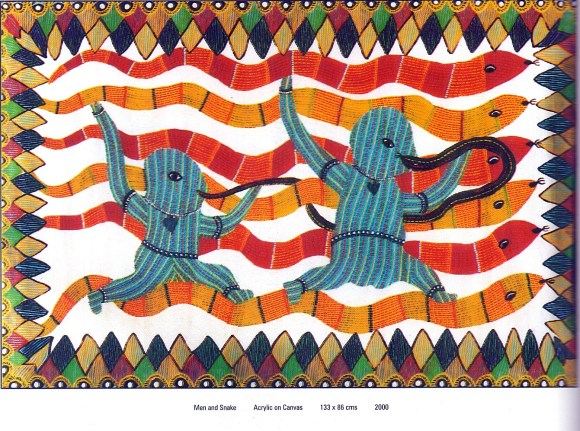
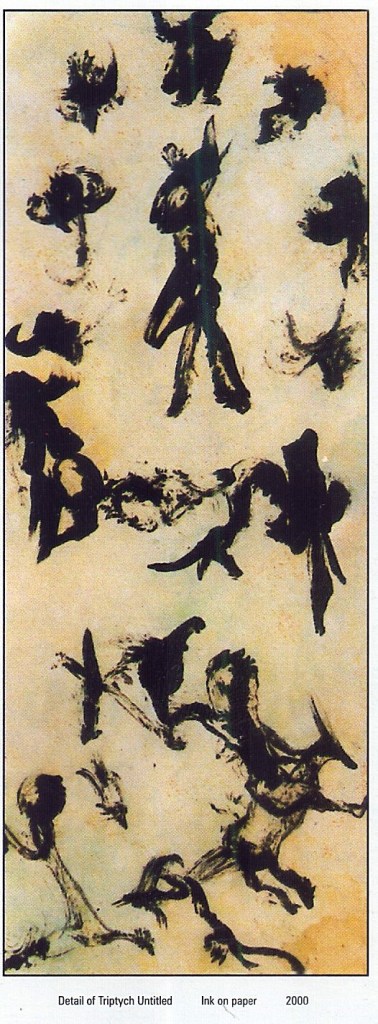
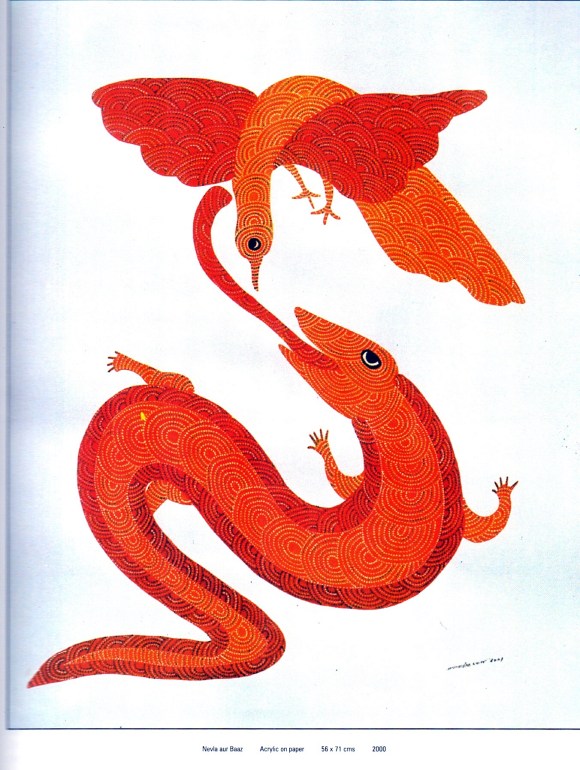
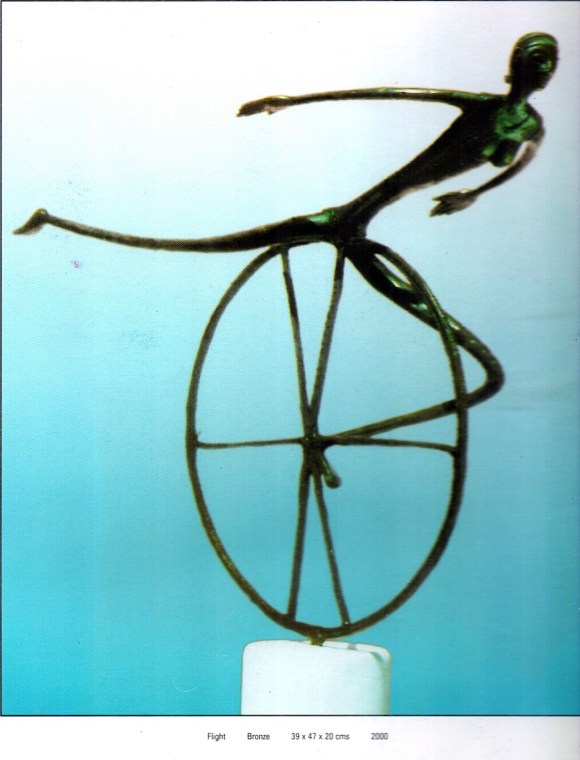
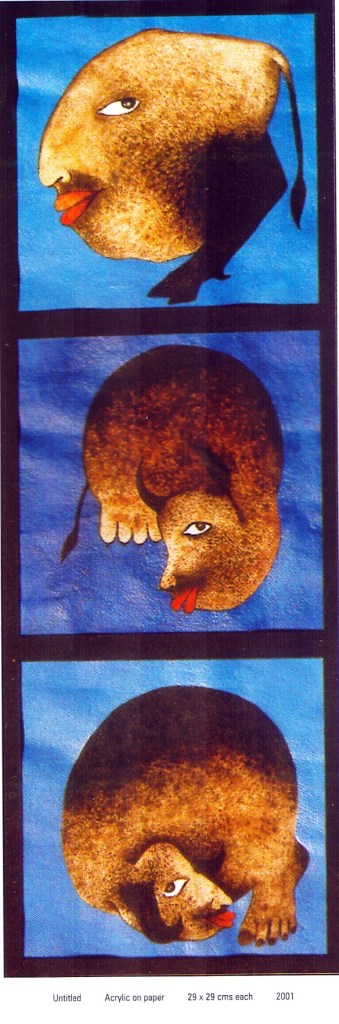
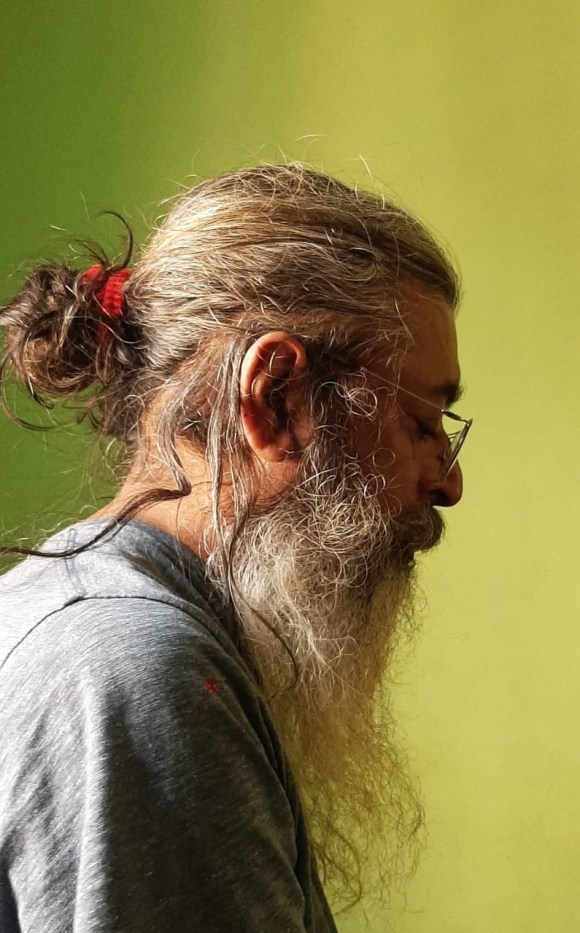
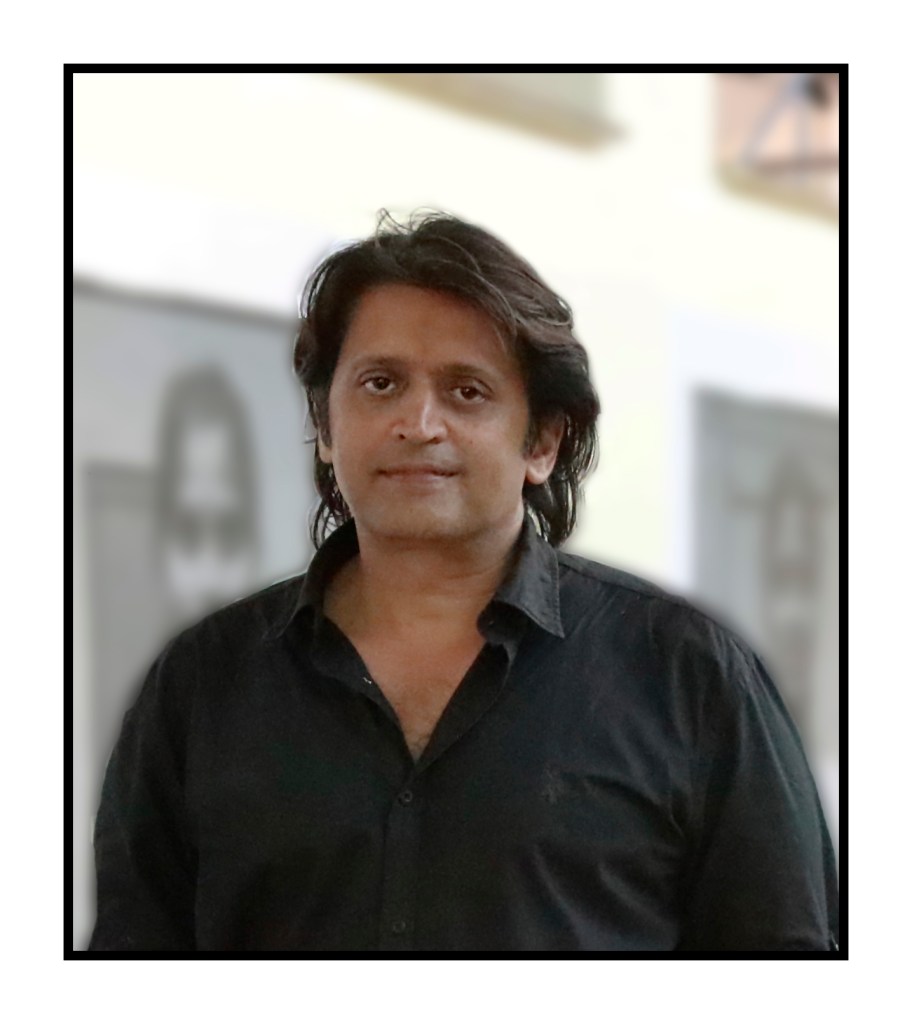
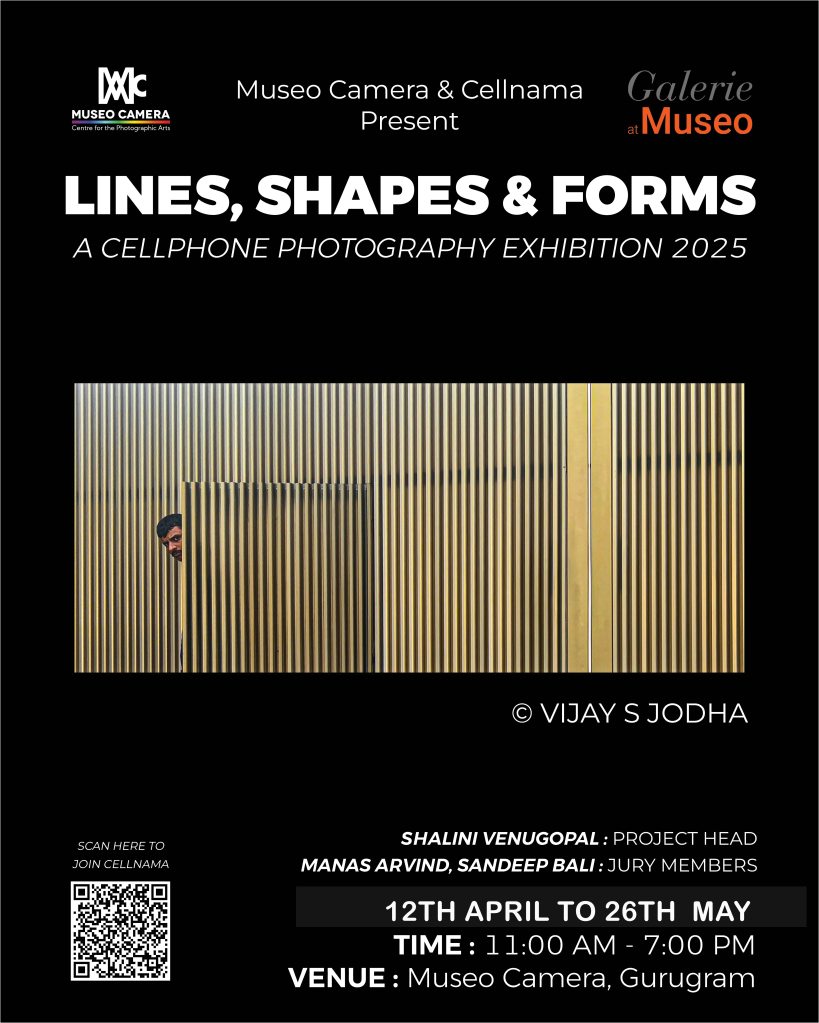
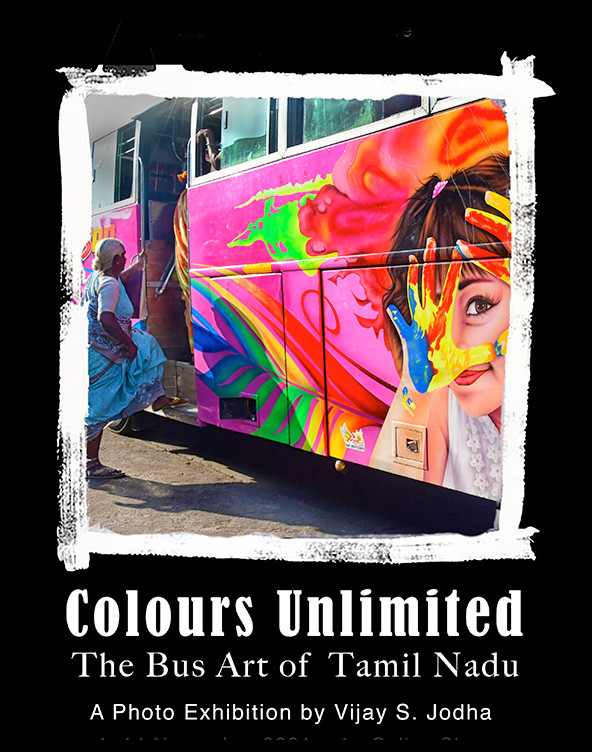
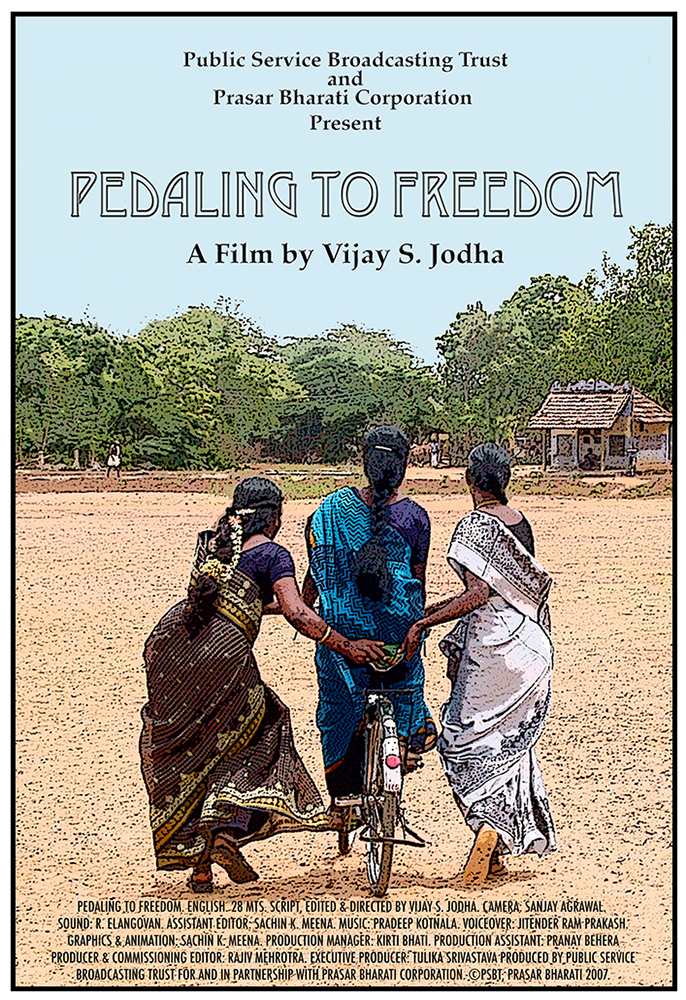
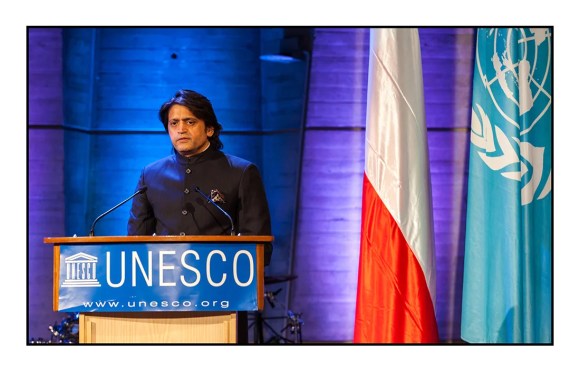
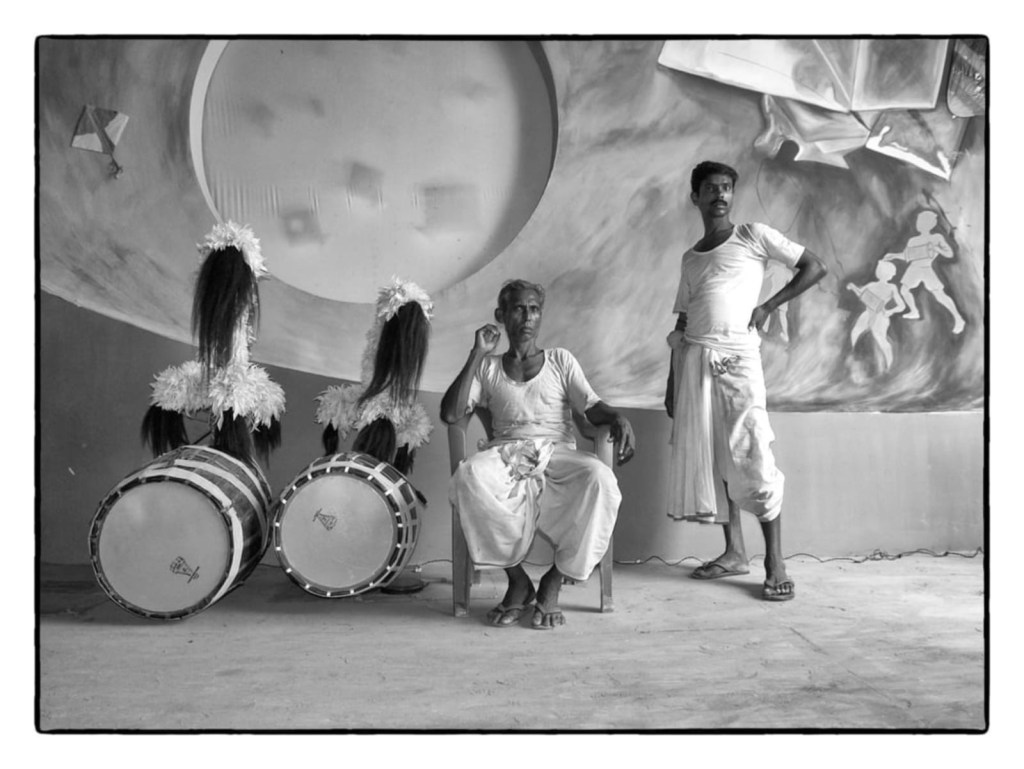
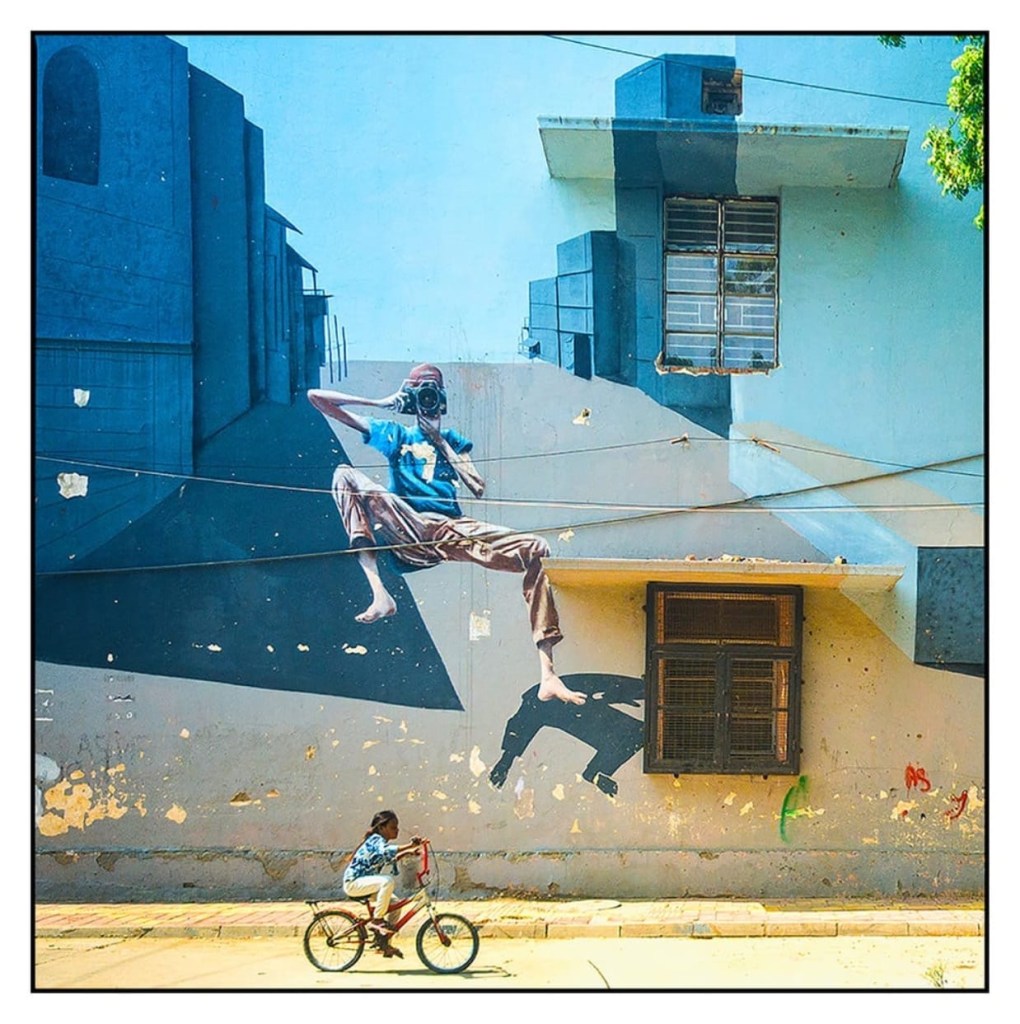
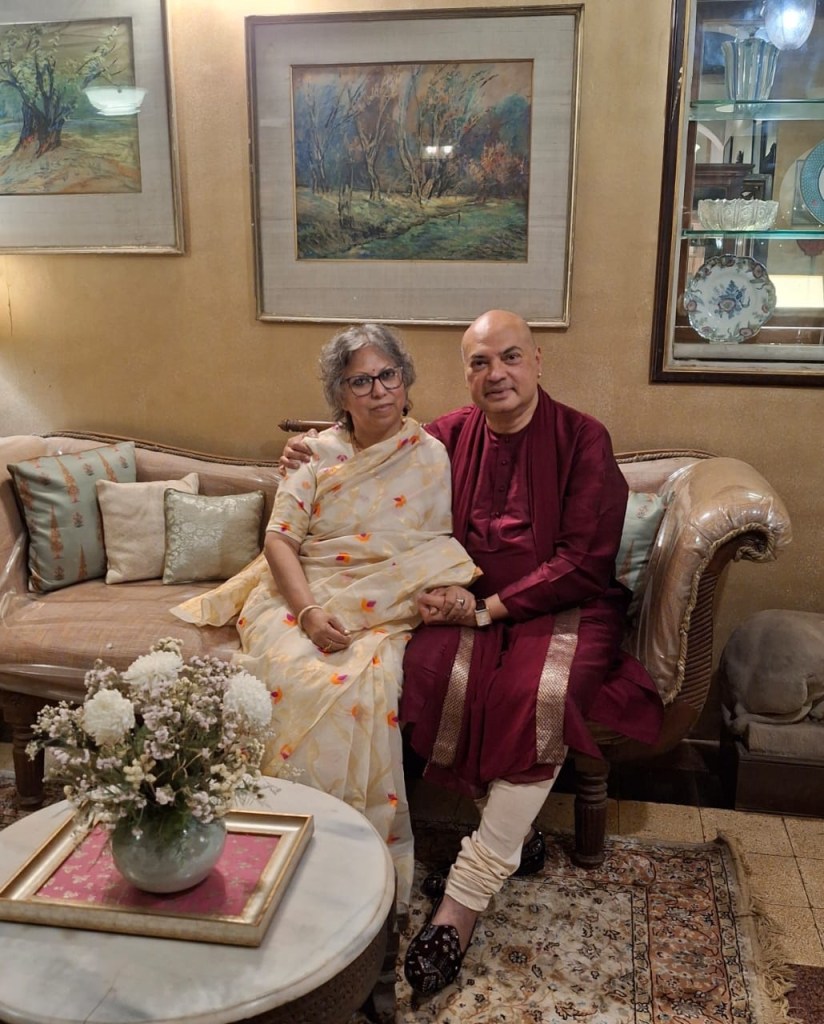
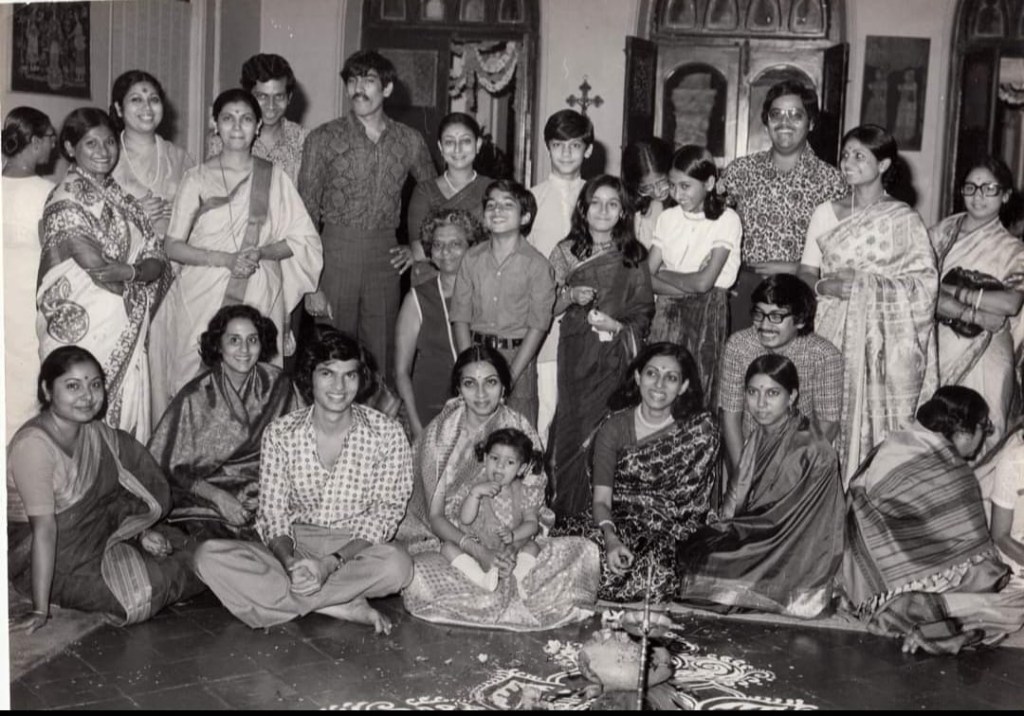
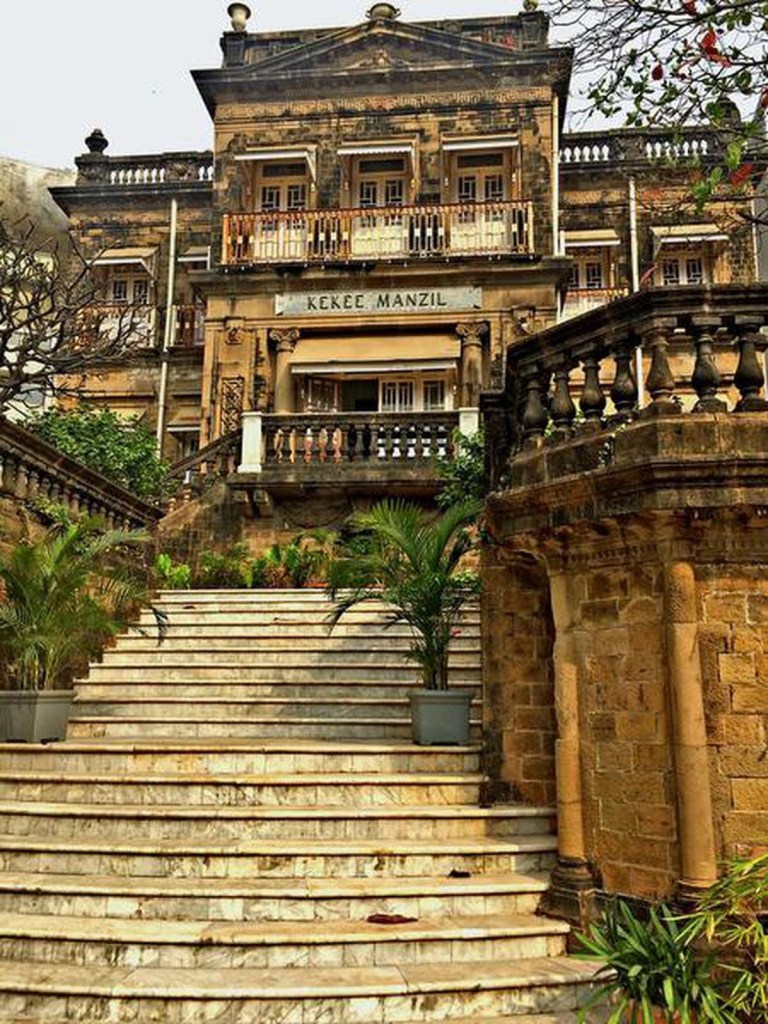


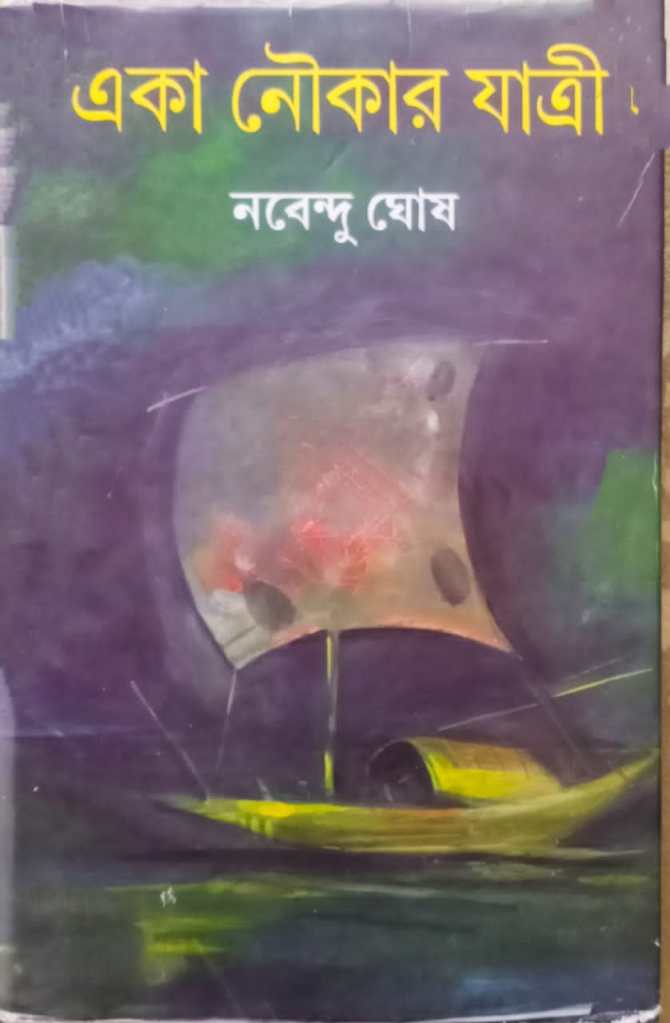
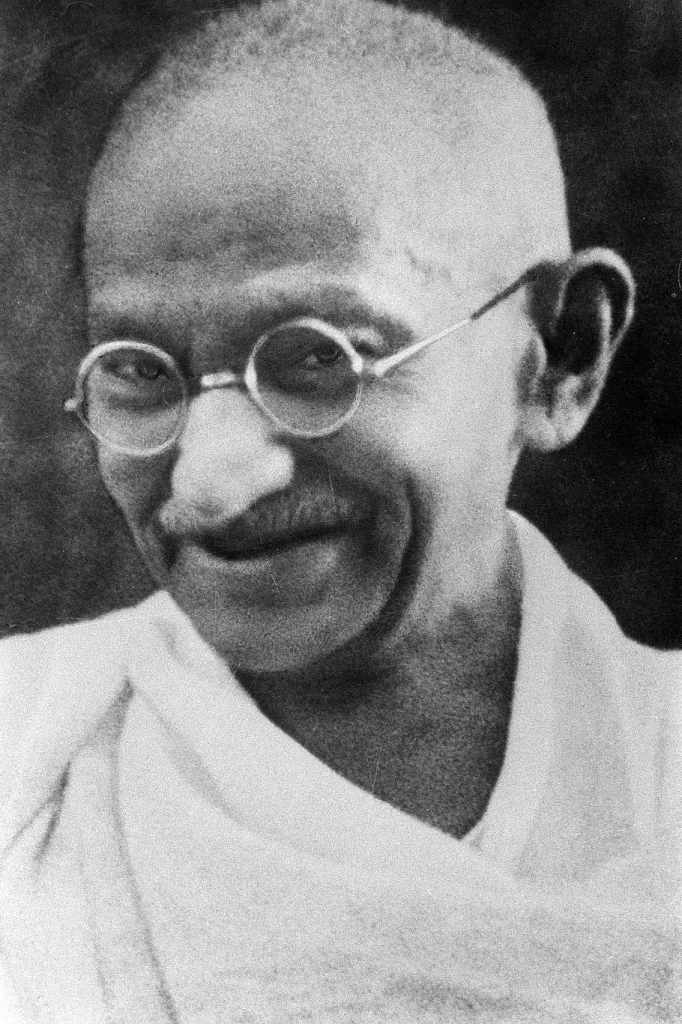


 Borderless