Categories
Review

Connecting Diverse Cultures and Generations

Book review by Bhaskar Parichha


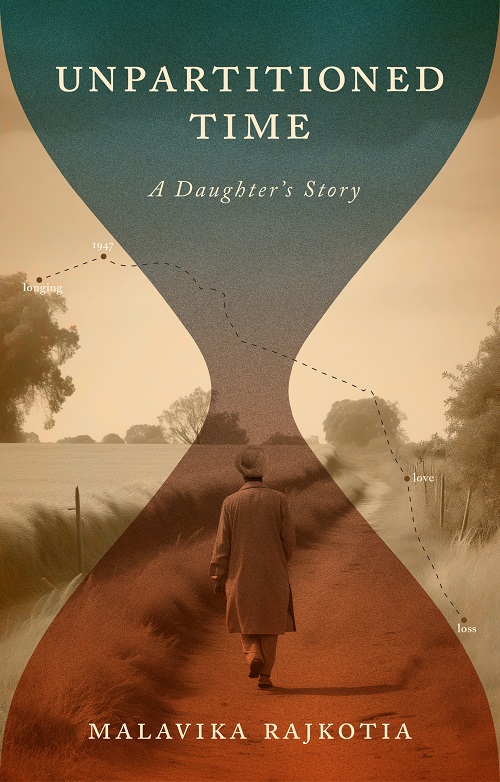
Title: Unpartioned Time: A Daughter’s Story 

Author: Malvika Rajkotia

Publisher: Speaking Tiger Books

Malavika Rajkotia is a prominent divorce attorney based in Delhi. She has collaborated with numerous non-governmental organisations addressing civil liberties and human rights concerns. Additionally, she has a strong background in theatre, participating in approximately thirty productions in both Hindi and English. She has also served as the host of Shakti, the inaugural television talk show in India dedicated to women’s rights.

Her memoir, Unpartitioned Time: A Daughter’s Story, is a complex tale that intertwines the history and current experiences of a family following the Partition. Jindo, Malavika Rajkotia’s father, arrives in India amidst the chaos of the Partition riots. He is allocated a piece of desolate land in the small town of Karnal, where he must clear and cultivate the land to reclaim his role as landlord and patriarch. However, devoid of his past and confronted with an uncertain future in a place where the language is foreign to him, he undergoes a significant transformation. Rajkotia intricately weaves a narrative around this generous, humorous, loving, and increasingly despondent figure, delving into her family’s history and present.

The story explores themes of yearning and belonging, the nature of privilege and its loss, while reflecting on the resilience of a people stripped of their autonomy. Through her evocative and lyrical writing, she leads readers through the challenges faced by a large family—comprising uncles, aunts, siblings, cousins, and esteemed figures—who are all in pursuit of recognition, identity, and stability.

Rajkotia fearlessly confronts her milieu, whether navigating the radical Khalistan movement, the tensions between the Sikh faith and Hindu nationalism, or the pervasive cynicism of Indian politics. Her vivid, meditative, finely detailed portraits of a rich family life are filled with moments of tears, laughter, and music, and a diverse array of characters who are immensely relatable. Ultimately, this brave and moving book is about the enduring quest for meaning and fulfilment that transcends cultural boundaries.

Narrates Rajkotia: “The diffused light of dawn lit a dull, flat landscape cut by the highway, gleaming under randomly spaced streetlights. Until about thirty years ago, this single carriageway witnessed an almost daily carnage that left heavy and light motor vehicles, bicyclists, and bullock carts in confused mangles. Everyone had a personal story of loss on this road. Three of my family was killed in two separate accidents. A splintered windshield glass lodged in a young girl’s throat. An aunt and cousin died when their car rammed into a truck to avoid a cyclist.”

She has a detailed account of the road in Karnal town thus: “For over 2,500 years, this road has streamed with traders from Central Asia, scholars from China, adventurers from Europe, sadhus from the Himalayas, and armies coveting Hindustan. This portion of the road was the battlefield of the story of the eighteen-day Mahabharata war, marking the cusp of the end of the Dwapar Yuga and the rise of the Kali Yuga. Eighteen days of soldiers’ cries and trumpeting elephants and neighing horses, each ending with sunsets blackened by smoke from the funeral pyres hanging heavy until impelled by the sounds of wailing women.

“From myth, we come to somewhat recorded history in 300 BCE, when Chandragupta Maurya built this road to connect his fast-growing kingdom, spanning the north of the subcontinent from the source of the Ganga to its northwestern limits. The road was developed by Sher Shah Suri. My father remembered the time when it was called ‘Jarnailly Sadak’ under the British, and then GT Road, its official name, The Grand Trunk Road. The government of independent India called it Sher Shah Suri Marg, the Sanskrit ‘marg’ guillotining the English ‘road’ and the Urdu ‘sadak’.”

The memoir stands as a testament to the power of storytelling in bridging gaps between cultures and generations, ensuring that the voices of those who experienced Partition are heard and remembered. As part of the growing body of literature on this subject, it encourages further exploration and discussion, ultimately contributing to a more nuanced understanding of the complexities surrounding Partition and its enduring legacy.

.

Bhaskar Parichha is a journalist and author of UnbiasedNo Strings Attached: Writings on Odisha and Biju Patnaik – A Political Biography. He lives in Bhubaneswar and writes bilingually. Besides writing for newspapers, he also reviews books on various media platforms.

.

PLEASE NOTE: ARTICLES CAN ONLY BE REPRODUCED IN OTHER SITES WITH DUE ACKNOWLEDGEMENT TO BORDERLESS JOURNAL

Click here to access the Borderless anthology, Monalisa No Longer Smiles

Click here to access Monalisa No Longer Smiles on Amazon International

Categories
Excerpt

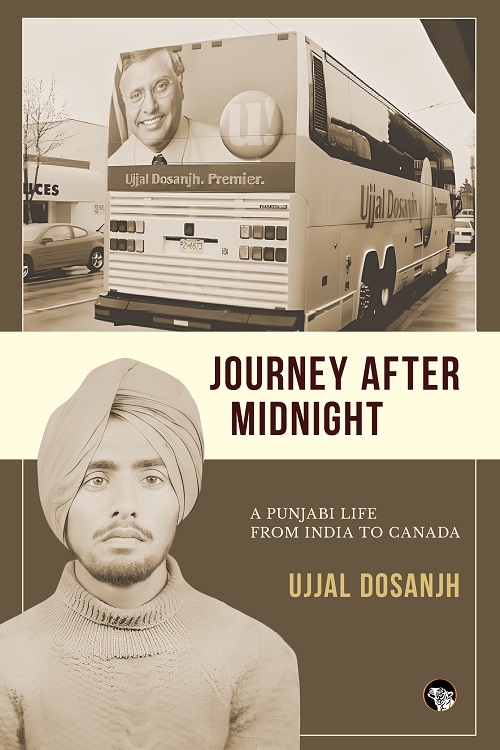
Journey After Midnight

Title: Journey After Midnight: A Punjabi Life from Canada to India

Author: Ujjal Dosanjh

Publisher: Speaking Tiger Books

50

A variation on the common Indian expression “Mullan de daur maseet taeen,” which roughly translates as “An imam’s ultimate refuge is the mosque,” sums up my relationship with the world: India is my maseet. I have lived as a global citizen, but India has been my mandir, my masjid, and my girja: my temple, my mosque, and my church. It has been, too, my gurdwara, my synagogue, and my pagoda. Canada has helped shape me; India is in my soul. Canada has been my abode, providing me with physical comforts and the arena for being an active citizen. India has been my spiritual refuge and my sanctuary. Physically, and in the incessant wanderings of the mind, I have returned to it time and again.

Most immigrants do not admit to living this divided experience. Our lack of candour about our schizophrenic souls is rooted in our fear of being branded disloyal to our adopted lands. I believe Canada, however, is mature enough to withstand the acknowledgement of the duality of immigrant lives. It can only make for a healthier democracy.

Several decades ago, I adopted Gandhi’s creed of achieving change through non-violence as my own. As I ponder the journey ahead, far from India’s partition and the midnight of my birth, there is no avoiding that the world is full of violence. In many parts of the globe, people are being butchered in the name of religion, nationalism and ethnic differences. Whole populations are migrating to Europe for economic reasons or to save themselves from being shot, beheaded or raped in the numerous conflicts in the Middle East and Africa. The reception in Europe for those fleeing mayhem and murder is at times ugly, as is the brutal discrimination faced by the world’s Roma populations. The U.S. faces a similar crisis with migrants from Mexico and other parts of South America fleeing poverty and violence, in some cases that of the drug cartels. Parents and children take the huge risk of being killed en route to their dreamed destinations because they know the deathly dangers of staying. Building walls around rich and peaceful countries won’t keep desperate people away. The only lasting solution is to build a peaceful world.

Human beings are naturally protective of the peace and prosperity within their own countries. A very small number of immigrants and refugees, or their sons and daughters, sometimes threaten the peace of their “host” societies. But regardless of whether the affluent societies of western Europe, Australia, New Zealand and North America like it or not, the pressure to accept the millions of people on the move will only mount as the bloody conflicts continue. Refugees will rightly argue that if the West becomes involved to the extent of bombing groups like ISIS, it must also do much more on the humanitarian front by helping to resettle those forced to flee, be they poverty-driven or refugees under the Geneva Convention. With the pressures of population, poverty and violence compounded by looming environmental catastrophes, the traditional borders of nation states are bound to crumble. If humanity isn’t going to drown in the chaos of its own creation, the leading nations of the world will have to create a new world order, which may involve fewer international boundaries.

In my birthplace, the land of the Mahatma, the forces of the religious right are ascendant, wreaking havoc on the foundational secularism of India’s independence movement. I have never professed religion to be my business except when it invades secular spaces established for the benefit of all. Extremists the world over—the enemies of freedom—would like to erase both the modern and the secular from our lives. Born and bred in secular India, and having lived in secular Britain and Canada, I cherish everyone’s freedom to be what they want to be and to believe what they choose to believe.

I have always been concerned about the ubiquitous financial, moral and ethical corruption in India, and my concern has often landed me in trouble with the rulers there. Corruption’s almost complete stranglehold threatens the future of the country while the ruling elite remain in deep slumber, pretending that the trickle of economic development that escapes corruption’s clutches will make the country great. It will not.

Just as more education in India has not meant less corruption, more economic development won’t result in greater honesty and integrity unless India experiences a cultural revolution of values and ethics. The inequalities of caste, poverty and gender also continue to bedevil India. Two books published in 1990, V.S. Naipaul’s India: A Million Mutinies Now and Arthur Bonner’s Averting the Apocalypse, sum up the ongoing turmoil. A million mutinies, both noble and evil, are boiling in India’s bosom. Unless corruption is confronted, evil tamed, and the yearning for good liberated, an apocalypse will be impossible to avert. It will destroy India and its soul.

On the international level, the world today is missing big aspirational pushes and inspiring leaders. Perhaps I have been spoiled. During my childhood, I witnessed giants like Dr. Saifuddin Kitchlew of the Indian freedom movement take their place in history and even met some of them. As a teenager, I was mesmerized by the likes of Nehru and John F. Kennedy. I closely followed Martin Luther King and Robert Kennedy as they wrestled with difficult issues and transformative ideas. I landed in Canada during the time of Pierre Trudeau, one of our great prime ministers. Great leaders with great ideas are now sadly absent from the world stage.

The last few years have allowed me time for reflection. Writing this autobiography has served as a bridge between the life gone by and what lies ahead. Now that the often mundane demands of elected life no longer claim my energies, I am free to follow my heart. And in my continuing ambition that equality and social justice be realized, it is toward India, the land of my ancestors, that my heart leads me.

Extracted from the revised paperback edition of Journey After Midnight: A Punjabi Life from Canada to India by Ujjal Dosanjh. Published by Speaking Tiger Books, 2023.

About the Book: Born in rural Punjab just months before Indian independence, Ujjal Dosanjh emigrated to the UK, alone, when he was eighteen and spent four years making crayons and shunting trains while he attended night school. Four years later, he moved to Canada, where he worked in a sawmill, eventually earning a law degree, and committed himself to justice for immigrant women and men, farm workers and religious and racial minorities. In 2000, he became the first person of Indian origin to lead a government in the western world when he was elected Premier of British Columbia. Later, he was elected to the Canadian parliament.

Journey After Midnight is the compelling story of a life of rich and varied experience and rare conviction. With fascinating insight, Ujjal Dosanjh writes about life in rural Punjab in the 1950s and early ’60s; the Indian immigrant experience—from the late 19th century to the present day—in the UK and Canada; post-Independence politics in Punjab and the Punjabi diaspora— including the period of Sikh militancy—and the inner workings of the democratic process in Canada, one of the world’s more egalitarian nations.

He also writes with unusual candour about his dual identity as a first-generation immigrant. And he describes how he has felt compelled to campaign against discriminatory policies of his adopted country, even as he has opposed regressive and extremist tendencies within the Punjabi community. His outspoken views against the Khalistan movement in the 1980s led to death threats and a vicious physical assault, and he narrowly escaped becoming a victim of the bombing of Air India Flight 182 in 1985. Yet he has remained steadfast in his defence of democracy, human rights and good governance in the two countries that he calls home—Canada and India. His autobiography is an inspiring book for our times.

About the Author: Ujjal Dosanjh was born in the Jalandhar district of Punjab in 1946. He emigrated to the UK in 1964 and from there to Canada in 1968. He was Premier of British Columbia from 2000 to 2001 and a Liberal Party of Canada Member of Parliament from 2004 to 2011. In 2003 he was awarded the Pravasi Bharatiya Samman, the highest honour conferred by the Government of India on overseas Indians. 

Click here to read the interview with Ujjal Dosanjh

.

PLEASE NOTE: ARTICLES CAN ONLY BE REPRODUCED IN OTHER SITES WITH DUE ACKNOWLEDGEMENT TO BORDERLESS JOURNAL. 
Categories
Review

A Journey, a Memoir and an Inspiration

Book Review by Bhaskar Parichha

Title: Journey After Midnight – A Punjabi Life: From India to Canada

Author: Ujjal Dosanjh

Publisher: Speaking Tiger Books

The Punjabi Diaspora is a global phenomenon that has grown in size and complexity in recent years. It is estimated that there are around 20 million Punjabis living outside the Punjab region in India and Pakistan. This is stretching across multiple continents and countries. Punjabis have migrated to different parts of the world since the British Raj. However, this diaspora has become more visible in recent decades due to technology and global connectivity.

Highly diverse and dynamic, with different groups of Punjabis living in different places around the world. In North America, Punjabis are concentrated in the United States and Canada. In Europe they are mainly settled in the United Kingdom, Germany, Italy, and France. In the Middle East, they are found in the United Arab Emirates, Qatar, Kuwait, and Saudi Arabia. In South East Asia, they are mainly settled in Malaysia, Singapore, and Indonesia.

Punjabis have had a significant impact on the culture and economy of the countries where they have settled. Their positive contributions were felt in multiple industries, from agriculture to tech. They have been key to spurring economic growth in the areas where they have settled. They have also had a major influence on the culture and cuisine of these countries, with Punjabi food being a popular choice in many areas.

Journey After Midnight – A Punjabi Life : From India to Canada by Ujjal Dosanjh speaks about the Punjabi diaspora in all its splendor.  Dosanjh was born in the Jalandhar district of Punjab in 1946. He emigrated to the UK in 1964 and from there to Canada in 1968. He was Premier of British Columbia from 2000 to 2001 and a Liberal Party of Canada Member of Parliament from 2004 to 2011, including a period as Minister of Health and Minister Responsible for Multiculturalism, Human Rights and Immigration. In 2003 he was awarded the Pravasi Bharatiya Samman, the highest honour conferred by the Government of India on overseas Indians.

The blurb contends: “Journey After Midnight is the compelling story of a life of rich and varied experience and rare conviction. With fascinating insight, Ujjal Dosanjh writes about life in rural Punjab in the 1950s and early ’60s; the Indian immigrant experience—from the late 19th century to the present day—in the UK and Canada; post-Independence politics in Punjab and the Punjabi diaspora— including the period of Sikh militancy—and the inner workings of the democratic process in Canada, one of the world’s more egalitarian nations.”

Dosanj states candidly: “Today’s world has few leaders brimming with great ideas. The paucity of great leaders afflicts India as well. There are no inspiring giants on the national stage tall enough to lead India out of the ethical and moral quagmire. Asked whether he was working to create a new India along with seeking its independence from Britain, Mahatma Gandhi had declared that he was trying to create a new Indian–an honest, fair and just Indian for a proud, progressive, prosperous and caring India. Since the Mahatma’s time the moral and ethical values of India have decayed. In Indian politics, civil service and public life, there is little evidence of the ideals he lived and died for.”

He continues: “A substantial portion of the Indian economy is underground; all due to the sadly enduring disease of corruption. The albatross of financial, ethical and moral corruption is strangulating and shortchanging the country. Those who say economic progress will by itself free India from corruption are just as wrong as those who in the 1950s maintained that education by itself would reduce corruption. It obviously hasn’t, and India finds itself counted among the most corrupt countries on earth. Corruption shatters human dreams and stunts ingenuity. It constrains personal and political liberties. It severely limits opportunities. The main hindrance in the path of social, political, economic and cultural progress is the disconnect between knowing what is right and doing the right thing; most know what is the right and the ethical thing to do, but they continue to do the wrong and the unethical thing; hence the ubiquitous corruption.

Calling upon the Indians for a moral revolution Dosanj writes: “The sculpting of Gandhi’s Indians, and the building of the India of the dreams of its founding fathers and mothers, requires a moral and ethical revolution-a revolution of values that are of Indians, by Indians and for Indians. No matter how bleak the political and ethical scene today, I’m certain there are great minds fearless, humane and brave among the billion plus residents of India. We may not see
them, but they exist. We may not know them, but they are among us. They must heed India’s call. They must come forward and lead. India’s destiny demands it.”

In the ‘Afterword’ he laments about the state of affairs of Punjab in recent times: “Punjab is staring at the prospect of turmoil, radicalization and violent fundamentalism, and yet many in the government and otherwise seem obsessed with presenting and treating the likes of the late singer Moosewala as modern Punjab’s heroes. That the young singer’s life was cut short by gangsters’ guns was horrible and must be condemned. Beyond that the AAP and others must be careful not to glorify violence. Unfortunately, almost the whole of Punjab seems taken with Moosewala; the young man was a talented singer but much of his poetry and music was about guns and aggressive machismo. Is that what Punjab needs and must idolize?”

Dosanjh writes candidly about his dual identity as a first-generation immigrant. And he describes how he has felt compelled to campaign against the discriminatory policies of his adopted country. He opposes regressive and extremist tendencies within the Punjabi community. His outspoken views against the Khalistan movement in the 1980s led to death threats and vicious physical assaults, and he narrowly escaped the bombing of Air India Flight 182 in 1985. Yet he has remained steadfast in his defence of democracy, human rights and effective governance in the two countries he calls home—Canada and India.  

The writing style is fluid and languid. This is not a book that can be judged on the basis of its literary merit. It isn’t just a simple memoir, but rather a record of a turbulent period in India’s history. It is a book that represents a lifetime journey, crossing oceans and cultures. As a memoir, Ujjal Dosanjh’s book is at once personal and political, but most importantly, it is inspiring.

.

Bhaskar Parichha is a journalist and author of UnbiasedNo Strings Attached: Writings on Odisha and Biju Patnaik – A Political Biography. He lives in Bhubaneswar and writes bilingually. Besides writing for newspapers, he also reviews books on various media platforms.

.

PLEASE NOTE: ARTICLES CAN ONLY BE REPRODUCED IN OTHER SITES WITH DUE ACKNOWLEDGEMENT TO BORDERLESS JOURNAL

Click here to access the Borderless anthology, Monalisa No Longer Smiles

Click here to access Monalisa No Longer Smiles on Kindle Amazon International

Categories
Stories

Among Our People 

By Devraj Singh Kalsi

Sardar Dayal Singh had lived all his life in a predominantly Punjabi neighbourhood. The cluster of Sikh families provided a feeling of warmth, making him feel safe even when the threat to life and property assumed horrific proportions. In 1984, the entire colony was converted into an impenetrable fortress, with the men and boys ready with a stockpile of soda bottles and swords, prepared to put up a brave fight against the pillaging mob. Fortunately, the area remained safe from any such orchestrated communal attack. Despite the presence of over a hundred Sikh families, it was a mystery why Kishanganj was not looted when the entire city witnessed sporadic incidents of violence against the minority community in those three days. The most plausible reason that surfaced was its distant location on the outskirts of the city. 

The Sikhs of Kishanganj gave asylum to persecuted Sardars who fled from other localities and stayed with them for several weeks before returning to their burnt homes to salvage what remained, to collect the debris, and make a fresh beginning. For Sardar Dayal Singh, it was mentally less agonising as he realised how being together with people of the same community ensured safety when the entire city was up in communal flames. 

Three decades later, after retirement from his job, Sardar Dayal Singh was not the same man who basked in the warmth of his community. A series of incidents had shaken him. All he wanted was to sell the ancestral house in Kishanganj and move into a gated community, a mixed society where he would feel safe. With the young generation relocating to foreign countries in search of a better future, those left behind in Kishanganj were small traders and pensioners.  

With rising intolerance against the minorities, the high-rise complex was the safest place for Sardar Dayal Singh who did not want to flaunt his nameplate on the door. The flat number was a safe identity on the letterbox or the initials of his name on the main door of his apartment. The upper floor apartment in a high-rise building would keep him closer to God all the time and also provide him with safety from an irate mob. He did not expect any frenzied outsider, armed with a weapon, to climb the fifteenth floor to reach his flat and hack him into pieces. 

Sardar Dayal Singh and his spouse, Charan Kaur moved into a spacious luxury apartment, equipped with Jacuzzi and Spa, with an extra-wide balcony to enjoy the sunset and a glass of whiskey. His Canada-based son was glad to hear that he had sold his ancestral house and bought a three-bedroom flat where the old couple would now get trained to accept a cosmopolitan daughter-in-law.  

Charan Kaur, fondly called Charno by her friends and relatives, did not find the new life exciting. She missed her Punjabi friends in Kishanganj. Within a few months of moving to the apartment, Charno started feeling lonely — as if she was living in a foreign country. She had to mingle with neighbours who spoke other languages she was not fluent in. While Sardar Dayal Singh was happy to adapt, Charno often complained that the gurudwara was located far away from the residential complex. She had not found a single Sardar family in the entire building with who she could interact. This was the place where she felt she was living in a minority environment but in Kishanganj, with scores of Punjabi families around, she never felt she belonged to a minority community.   

To stay connected to her roots, Charan Kaur began to listen to Punjabi music and watched Punjabi channels. Even if others spoke in Hindi or English, she replied in Punjabi, as if it was her duty to keep the language alive and in circulation inside the residential complex. When she spoke to the housemaid, the liftman, or the security guard, she used Punjabi all the time without bothering to know if they understood it or not. 

Sardar Dayal Singh noted the emergence of a communal streak in his wife. He hoped the people would not take the old lady seriously. His advice to become liberal and speak in other languages was ignored by her. She started organising a small together every weekend and invited her Punjabi friends from Kishanganj, to make her new neighbours understand that she had a robust social network of Punjabi women who would rally behind her if the situation demanded. Charan Kaur was happy to spend time with them and sometimes she went to Kishanganj to revive old memories. 

During her last visit, Charan Kaur stood in front of their ancestral house that was demolished. A new building was yet to come up, but the old mango tree stood tall in the vacant land. She told her close friends she was not happy with the decision to sell such a big house and live in a flat. She blamed Sardar Dayal Singh for the reckless decision and wiped her tears. 

On the eve of their fiftieth marriage anniversary, she invited the entire Sardar community from Kishanganj to her flat. Sardar Dayal Singh used this opportunity to influence some other retirees to move into this residential complex by selling their properties in Kishanganj, but Charan Kaur fiercely opposed his suggestion, “Never sell your house. Guru would protect all in Kishanganj even if the younger generation is away.” Turning to Sardar Dayal Singh, she asked, “Is there a place or an address where death does not come, Sardarji?” He could not reply to her in front of the guests who supported Charan Kaur on this issue.   

Gathering the courage to explain his point of view in the hope that he would not be misunderstood by his people, Sardar Dayal Singh said, “Cluster living was dangerous for a small community these days. We did not have the option of apartments then, but now with so many complexes coming up we should mix and spread everywhere, to avoid detection based on religion. Mobs do not come looking for one or two heads – they need hundreds to loot and plunder and a Sikh locality is a prime target.”

His views were diametrically opposite now and there were no supporters. His old-time friend, Sardar Jasbir Singh finally spoke his mind, “Dayal, only the fear of death does not keep us together. We are together in Kishanganj because we love to be together, for culture and bonding. It is good for mental wellbeing and mutual help. You live in a flat now, but I am sure you miss the manji (charpoy) sessions in the courtyard where we sat together and drank and discussed everything under the sun.”

 The core point Sardar Dayal Singh was making was that the safety of Sikhs was high in residential complexes. He defended his stance: “Nobody knows a Sardar family is living here. I am safe from mad mobs, but you are still facing the same threat we survived in 1984. When you have a chance now, why not spread here and there? We can still keep meeting wherever we want and keep our social connections strong.” 

Sardar Jasbir Singh responded with greater conviction, “One crazy man is enough to kill a dozen. Such mad people are there in these residential complexes as well. If something untoward happens, if Sikhs hog the headlines for the wrong reasons anywhere in the world, imagine the possibility of the liftman stabbing you in the elevator to seek revenge. Have you given this a thought?”

Sardar Dayal Singh was hit hard, and he could deny this possibility. There were many such incidents of men going berserk and opening fire, those racial attacks of stabbing and firing at point black range. 

The next morning, Sardar Dayal Singh was wary of the liftman who glared at him. There was a case of sacrilege in Punjab and a youth had been lynched. The liftman charged him while he was coming out of the lift. “Sardarji, do you think what happened in Amritsar yesterday was right? All Sikhs come together and beat a young man to death. Is this Sikh justice?”

When the security guard also joined the liftman, Sardar Dayal Singh tendered an apology and condemned the incident. The tobacco-chewing security guard sought updates from the liftman who checked his smartphone for the latest feed on this issue.  

Sardar Dayal Singh came home from the market and sought a candid opinion from his wife, “How likely is that the liftman goes mad and stabs me in the lift?”

Charan Kaur gauged something was not right but maintained her calm demeanour. Handing him a glass of water, she replied, “It is very much possible. You are wrong to think the people inside this complex will not turn into a crazy mob and attack us if the situation worsens. If a riot breaks out in the city, maybe a big mob does not get in here but two crazy people like the liftman or the gardener can open fire at us. Even if they do not kill us, they can threaten us, abuse us, make barbed comments, or torture us. Such repeated attacks will hurt sentiments and disturb our mental peace.”

Sardar Dayal Singh kept observing their behaviour in the coming days. He found nothing worth complaining to the committee. But there were undercurrents he could feel. Such behaviour or reaction based on stray incidents in a far-off place was really strange and he was not supposed to answer anything. He thought if he complained and the liftman lost his job, he could become violent and seek revenge.   

Sardar Dayal Singh reduced his daily trips downstairs. He tried to placate the liftman with smiles whenever he met him. He followed the same strategy with the security guard who made a weird statement one evening: “We thought Sardarjis are good.” Sardar Dayal singh avoided answering it but his reticence seemed to annoy the guard who waited for a reply while he stepped out of the main gate. 

Sardar Dayal Singh spoke about the simmering discontent with his son on the telephone and he advised him to keep some emergency helpline numbers ready. 

When the farmer protests started, Sardar Dayal Singh sensed a fresh series of verbal attacks. He desperately wanted Sikhs to remain out of the headlines. Just keep the culture beat alive with Bhangra and Balle-Balle and keep making sacrifices at the border to keep the nation convinced of patriotic fervour. 

Whenever the Khalistan issue was raised abroad, the domestic atmosphere got vitiated. What happened on Republic Day was indeed shameful and he felt the Sikhs were inviting trouble for no reason. Those extremist-minded groups wanted to destabilise the state by demanding a separate homeland. He felt ashamed and wrote fiery letters to the editors. He felt it was important to assert his national identity to stay safe.   

Charan Kaur wanted to visit Kartarpur in Pakistan, but Sardar Dayal could not decide. On the one side, he also wanted to visit the place where Guru Nanak lived for so many years and on the other side, he was fearful of the consequences of visiting that country.   

“If you don’t dare to go, I will go there with my friends from Kishanganj,” Charan Kaur clarified. Finding her determined, Sardar Dayal Singh agreed to join her and Kishanganj friends on this pilgrimage trip. 

After returning from Kartarpur, Sardar Dayal Singh warned his wife to keep it a secret. He urged her not to reveal where they had been to, not to any neighbour or even the housemaid. But within a couple of days, he was surprised to hear the liftman say with a grin, “Pakistan settle ka plan, Sardarji?”  

Sardar Dayal Singh was numbed to hear that. He found almost the entire complex had come to know of their visit to Pakistan. So, there was no point denying and creating further discord. To be called a spy at this age would be really humiliating for the elderly couple. 

Sardar Dayal Singh remembered that the small reaction he gave to a national TV channel reporter at the border was a blunder. Neighbours started to isolate themselves and their gnawing silence was felt by Sardar Dayal Singh and his wife. There was nothing to explain but they thought he was a Pakistan sympathiser at heart. He had just gone to pay respects to Guru Nanak. Was this modern nation not going to allow him that?

His car parked in the covered parking zone was likely to be attacked. IK Onkar sticker on the windshield was immediately removed to avoid identification. But the security guard knew it was Sardarji’s car. Sardar Dayal Singh was reminded to be careful by the liftman whenever he met him. He felt the old couple could get killed in the flat by crazy people any day.  

Charan Kaur decided to move to Kishanganj, and Sardarji supported her decision. He rented his flat to a company instead of an individual and went to stay in a rented house in Kishanganj. Although Sardar Dayal Singh faced no direct threat, he lived under the gaze of threat all the time. A lot had changed in one year. The farm laws were repealed, and the farmers returned home after several incidents of violence.  

In Kishanganj, some TV reporters came to report the reaction of the Sikhs. They were bursting crackers to celebrate victory when the reporters arrived with guns in a black SUV emblazoned with a press sticker. “You Sardars still depend on Kirpan, have some AK-47, and stay secure.” 

Sardar Dayal Singh stood in front and urged them to go back with their guns. The local Sikhs chased them away and gathered their swords and soda bottles. They did not want to launch an attack but were prepared to defend themselves. The video of Sardars with swords on the rooftops went viral and they were projected as bloodthirsty goons. While no offensive was launched, it was a clever move to lure them with guns and get their reaction. The identity of those reporters who came with guns remained unknown. It was certainly an act of mischief, and the Sikhs were trapped.  

As Republic Day was approaching, Sardar Dayal Singh wanted the community to hoist the national flag, shoot a video and post it online. They wanted Kishanganj Sikhs to be seen as patriotic and nation lovers. 

While addressing the mixed crowd of Sikhs spanning three generations, Sardar Dayal Singh thundered: “Sikhs have to stop talking of past sacrifices. They have to make new sacrifices and avoid taking credit for what their earlier generations did. With new sacrifices, we become known as real patriots and assert our love for the country…We should be the first to hoist the flag early in the morning and conduct celebratory events the whole day. The blood donation camp is the best event planned for Republic Day tomorrow. Sikhs must give their blood to save the nation and save human lives. If health permits, all Sikhs must donate blood. Instead of spilling it on the roads due to mob attack, we should donate blood.”

Sardar Jasbir Singh raised a query at this point: “Should we call it Sikh Blood Donation Camp? Or Blood Donation Camp?”  

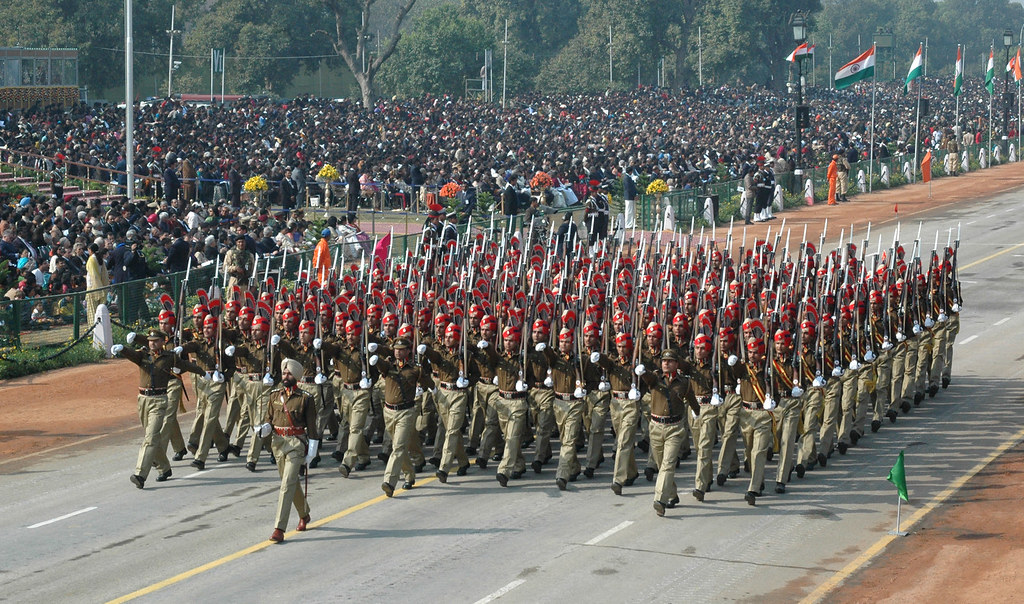
India Republic Day parade. Courtesy: Creative Commons

Notes:

1984: Riots between Hindus & Sikhs after the assassination of PM Indira Gandhi.

‘Pakistan settle ka plan’ — You plan to settle in Pakistan, Sardarji?

.

Devraj Singh Kalsi works as a senior copywriter in Kolkata. His short stories and essays have been published in Deccan Herald, Tehelka, Kitaab, Earthen Lamp Journal, Assam Tribune, and The Statesman. Pal Motors is his first novel.  


PLEASE NOTE: ARTICLES CAN ONLY BE REPRODUCED IN OTHER SITES WITH DUE ACKNOWLEDGEMENT TO BORDERLESS JOURNAL.