Categories
Conversation

‘Words, still photos, moving images – they are all storytelling’

Ratnottama Sengupta introduces and converses with a photographer who works at the intersection of art and social issues, Vijay S Jodha
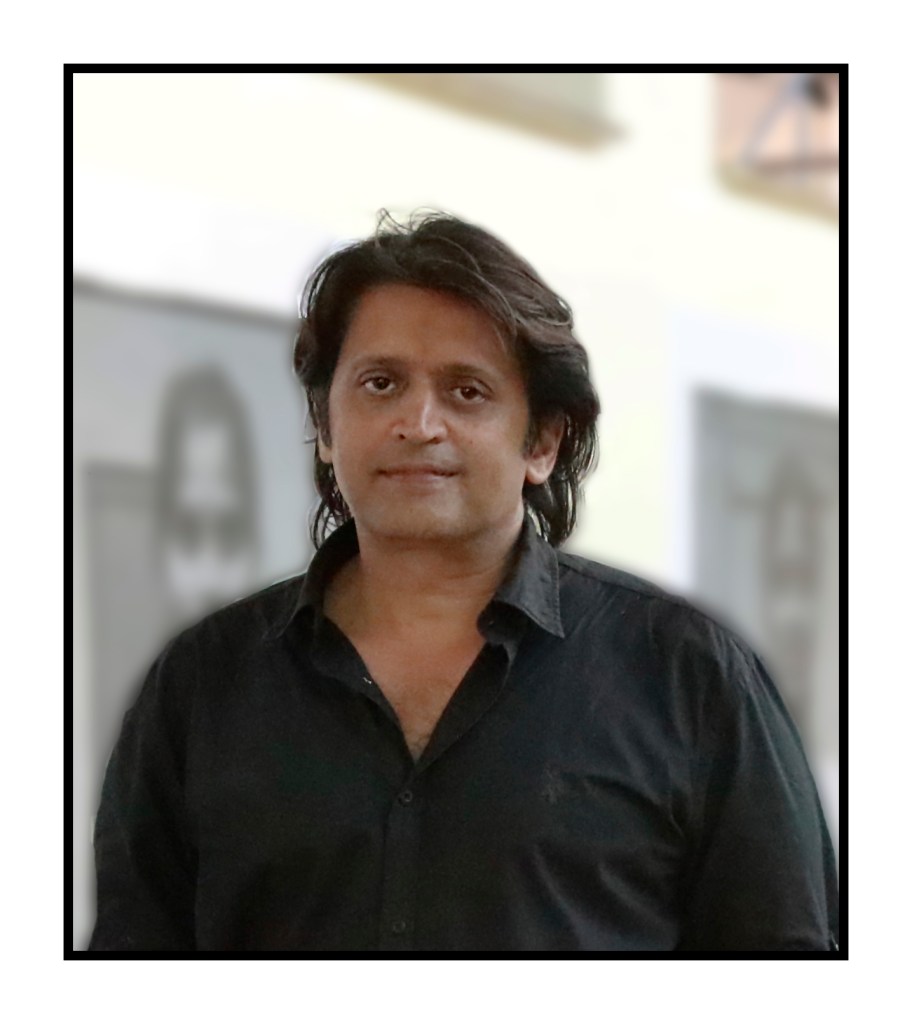
Vijay S Jodha was yet to become one of India’s leading lens-based artists at the intersection of art and social issues. Back then, in the 1990s, he had no inkling that 30 years later he would be the chairperson of UGC-CEC[1] jury for selecting the best educational films made in India. Or that he would be the national selector and trainer in photography for the National Abilympics Association of India.

When I first met him, he was mounting a collaborative exhibition of his work with the elderly, their contribution to society and the care they deserve. Little did I know that the entire bent of this journalist-turned documentary filmmaker-turned photo artist would go on to focus on subjects ranging from mob violence, riot victims, farmers’ suicide, 75 years of Indian constitution to Joys of Christmas and the Bus Art of Tamil Nadu. 
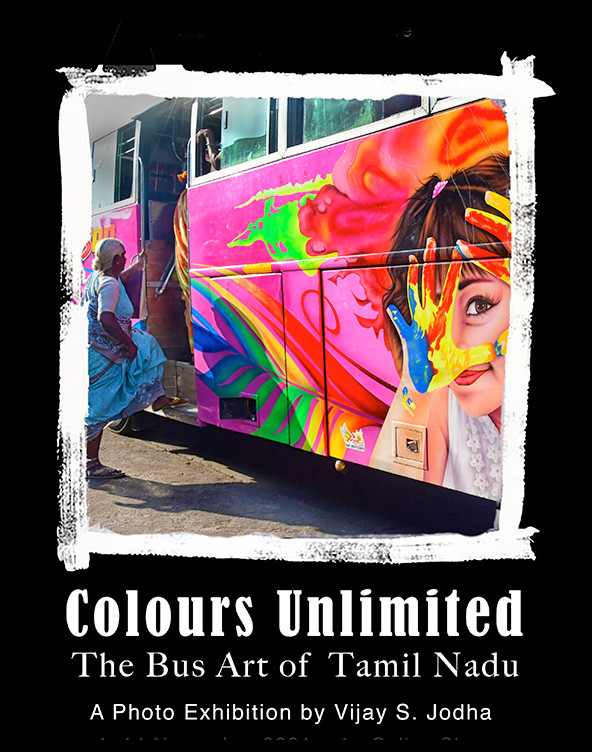
Not surprising that the International Confederation of NGOs has honoured Vijay with the Media Citizen Award for using media to drive social change. And it is only one among hundreds of honours he has received in two dozen countries. These include awards and grants, from Swiss Development Agency to Ford Foundation and Bill & Melinda Gates Foundation. Screening of his films on 75 channels worldwide and in 250 festivals in 60 countries.

These seem tedious details? So, interestingly, two public showings of his work have been vandalised. And a false police case against him took eight years to be thrown out by India’s courts!

Conversation

Vijay how did you come into photography? 

I’m a trained filmmaker – I mastered in film production – and have been making films for two decades. My films have shown on 75 stations including Discovery, CNN, BBC. But training in photography I have none. All my photography is non-fiction work. Actually my films are also non-fiction or reality based work. I just find still photography very relaxing because, unlike films where a director is responsible for so many things, here I’m on my own. But there’s no production deadline. No huge budget is needed. I can address any subject that catches my fancy and pursue it over several years, without any worry. Otherwise it’s the same: photos or films, you’re storytelling around substantial issues that interest you, in a manner that does justice to those issues, and — hopefully — engaging to the viewers.

So who was your inspiration?

In photography it is obviously the greats who defined the grammar of the medium itself such as Robert Frank[2] and Cartier Bresson[3]. They’ve inspired us all in some manner. I’m fortunate that, as a part time journalist in New York decades ago, I got to meet and interview top filmmakers and photographers like Gordon Parks and Richard Avedon. 

I once did a course at New York’s School of Visual Arts where they honoured Mary Ellen Mark and she had come across. As a journalist, I covered Sebastião Salgado’s launch of his workers’ project that put him on the map (of photography). I met Raghubir Singh while doing a project on Ayodhya in India, and again in New York where we put up the same exhibition. He also photographed some of us – myself, Siddharth Varadarajan, the editor-publisher of The Wire who was then a student at Columbia University, and other Indian students — were protesting some human rights issue.

I’m also fortunate to have our finest photo-journalists and lens-based artists as friends. I can take across my work to get a feedback or pick their brains. This beats the best photo schools in the world. In fact years ago I did a book which had photos from all of them! This was the biggest photo project on the Tiranga[4] as listed in the Limca Book of Records. They have all done many books on their own but this is the only one where all these masters appear in a single volume, their works united thematically. Apart from Raghu Rai, Ram Rahman, Prashant Panjiar,  Dayanita Singh,  T Narayan, and the late TS Satyan, I’d also interviewed people across India, from the then Prime Minister Vajpayee to those selling flags at traffic lights for a few meagre rupees.

You did not go to any international school to train in the art or the technology aspect. So what prompted your PhD?

Three decades back when I decided to go into mass communication as a career there were few computers, no internet, no private TV channels, or mobile phones. Sorry if that makes me seem Jurassic but it was a world with very few media opportunities. Post college, I had got  admissions into a trainee programme with a newspaper as well as in the MA programme in International Relations at India’s premier Jawaharlal Nehru University. My father felt that a masters and exposure at JNU would be a better investment for journalism – probably the single best advice I’ve got in my entire career — and I followed that. 

Then for some time I worked in print media: I freelanced for newspapers, edited and published a journal for a business house, scripted for a film and worked on a book with one of my journalism heroes – late Kuldip Nayar. But in the pre-internet era newspaper articles had a very short life, so I felt the need to produce something that would last longer such as film. So I decided to get a degree in Film. It also encompassed all my interests, from writing to art to music, travel and photography.

You’ve not been a photo-journalist working for any journal or newspaper. Yet you felt inclined to do projects on environment, elder care, survivors of riots and mob violence, farmer suicide, art that travels. Was it inevitable, given your father’s background?

Actually I’ve done a bit of photo journalism too. During my film school days at NYU I was a writer-photographer for their student-run newspaper, Washington Square News. I’ve also been a stringer for mainstream dailies including The Economic Times where I shot images parallel to my writing. I did stills for Mira Nair’s Monsoon Wedding and of course stills for my own film projects. So I’ve a lot of published images in papers worldwide though my main gig has been films. 

Frankly I don’t see much difference between these mediums. Be it words, stills or moving images; an academic paper, photo books, or films, short or long – all this is story telling. I’m a story teller.

And subjects? I’ve filmed every possible subject except wildlife: I just don’t have the patience for that. Otherwise everything, from artist biopics — on Paritosh Sen and Prokash Karmakar, whose inaugural screening you also attended in Calcutta years ago — to films on environment. My The Weeping Apple Tree (2005) was among the first ones on climate change in India. It won the UK Environment Film Fellowship Award 2005 and had multiple screenings on Discovery, with an introduction by Sir Mark Tully.

At that time, few knew about climate change. So Delhi govt organised a special screening for their MLAs and officers of water, electricity and sanitation departments. It was screened at UNEP headquarters in Nairobi and in various festivals. UNIDO and other grassroots level NGOs used it to create awareness. Some years back an IFS {Indian Forest Service} officer told me that Himachal government uses it to train their forest officers. 

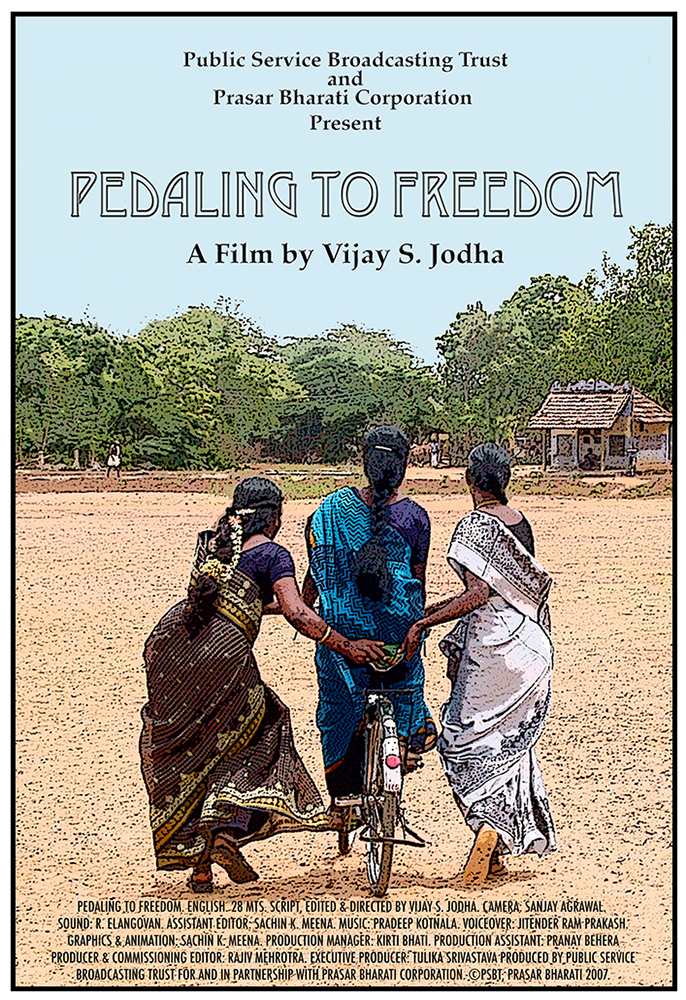
My film on gender, Pedalling to Freedom (2007) revisited an old initiative in one of the poorest parts of the world. It traced the life-changing impact of teaching 100,000 women to ride the bicycle. That film is in the US Library of Congress. It was also chosen for archiving at OSA Budapest, world’s premier repository of materials dealing with human rights. 

Then there are films that get food on the table. Training films. Corporate films. I once did a ‘funeral film’ on a well-known personality whose passing received a lot of press coverage in India but the NRI son could not come for the funeral.

What motivates you Vijay — money, international honour, or the possibility of social change?

Well, all this is livelihood so the money part is important. But doing work that gets recognised far and wide, that is substantial, to hold good for a long time – that’s a huge motivator. 

I have a slightly spiritual take towards this. I feel that regardless of our profession we are all bound by a dharmic or sacred duty. A teacher’s duty is to teach and a doctor’s is to heal. For those in the business of storytelling — including photographers — the sacred duty is to document, bear witness, push things forward. And believe you me, this has little connect with means or accessibility. 

To give you an extreme example: After the Nazis lost the war and Berlin fell, soldiers from the victorious allies army raped virtually every woman in Berlin. Few rapists were taken to task and  to top it, despite all the extensive coverage of the allies victory by forgotten photographers as well as superstars like Margaret Bourke-White  (known to us through her famous Gandhiji with charkha portrait) or Robert Capa (regarded as the greatest war photographer of all time), there was no coverage of this mass outrage in Berlin by anyone be it in photo essays in Life Magazine, or World War photo books. It appears in no Hollywood film or TV series.  

Likewise, fifty years ago, when India came under the draconian Emergency, our courts also endorsed the robbing of our Constitutional rights. Nobody documented, then or since, the forced sterilisation of 6,000,000 who were stripped of their reproductive rights. We, as photographers and filmmakers, failed on this front.

The First Witnesses is my project around farmer suicides. It is not an unheard issue nor something hard to get access. But how many have found it worth their while to document the issue? How many are documenting a disappearing art form or livelihood? Or our urban heritage being torn down? Our movie theatres once represented cinema as an inexpensive and readily accessible mass culture. Now they are being torn down even in smaller towns. Each had a unique character. Is anyone documenting that?

I documented Durga Puja in Kolkata 20 years ago when I was working with painters there. Durga astride a tiger, slaying the demonic Mahisasur emerging out of a buffalo: these elements get interpreted in hundreds of ways across the city each year. Each pandal has a different aesthetic interpretation, inside and outside. The religious aspect is no less important. But  these are also like site-specific installation art works shaped by the imagination of so many talented people but designed for impermanence. How many books of photos exist around this work now recognised by UNESCO as Intangible Cultural Heritage of Humanity?

How successful have you been in achieving this?

The merit of my work is for others to judge. I’m happy that, though India doesn’t have many foundations or support for non-commercial oriented art, I’ve been able to do at least a few things that are genuinely pathbreaking, substantial and have gone around the world. To be invited to UNESCO headquarters in Paris to screen a film and address delegates from 193 countries, or be honoured by our President for India’s best ever performed at Abilympics — these are certainly my career highlights.
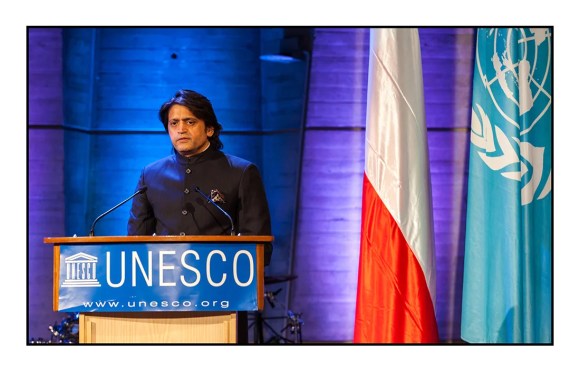
Vijay S Jodha at UNESCO introducing his film. Photo provided by Vijay S Jodha

My work has received over a hundred honours across 24 countries, but what truly motivates me is when people I look up to, my heroes, appreciate what I do. That kind of recognition carries a different weight. For instance, Magsaysay awardee P Sainath, whose ground-breaking reportage has long inspired me, saw my farmers project when it was exhibited alongside his photographic work at the Chennai Photo Biennale 2019. We hadn’t met before, so when he praised my effort, it felt like receiving a medal.

Another moment that has stayed with me was post my time at NYU. My professor, George Stoney, referred to as the father of public access television and mentioned in history books on documentary cinema, mentored Oscar-winning directors like Oliver Stone, Martin Scorsese, Spike Lee, and Ang Lee. When he watched The Weeping Apple Tree, he said, “Vijay, this is better than Al Gore’s An Inconvenient Truth. That was a glorified PowerPoint by comparison.” That one comment meant more to me than most awards ever could.

As a photo artist what is the biggest moment of joy for you — technical hurray or the joy of the subjects?

As I just said, recognition and praise of my heroes gives the maximum joy. There are other honours. Two photo projects listed in Limca Book of Records for being the biggest and path breaking. The first was on ageing that I did over eight years with my brother Samar Jodha – he did the images while I did the concept research, writing and interviews. The other was the aforementioned Tiranga. My film Poop on Poverty (2012) won a Peabody award, the oldest honour for documentary films, and more international honours than any non-fiction film produced out of India. 

After landmark exhibitions in Hong Kong and New York I donated two complete sets of The First Witnesses, my farming crisis project, to two farmer unions including our oldest and biggest All India Kisan Sabha (AIKS). They are using it for awareness raising across villages. That’s a real high as a photographer.

Then there’s high coming from those we pass down our expertise to. Among those I’ve taught or mentored is a highly talented though physically challenged youngster from Vijayawada with missing digits and motoring issues. His family runs a Kirana shop. When he started school, they sent him back saying he cannot even hold a pencil. He won a bronze medal in photography for India at the last Abilympics in France. Another student has himself become a photography teacher in a school for hearing impaired. This is the kind of stuff that gets me very excited. 

Thirty years ago as a volunteer writer and researcher I helped Sanskriti Foundation set up India’s first international artist retreat. That novel venture raised crores in grants and set up three museums. Today it is being scaled back as its founder O P Jain is in his 90s. But that idea caught on and you have scores of artist retreats across India. 

How has digital technology influenced photography as an art form? Has it done more harm? Or widened its spread?

Digital has been a mixed experience. It democratised the process of production and dissemination — be it still images or movies. This is a fantastic thing. But it killed a lot of the processes and livelihoods such as the printing labs, film production and processing facilities. It has also killed an art form like print making. It’s a specialised skill in itself, so a lot of artistry, understanding, appreciation and sustenance of it has got compromised.

The emergence of deep fake images and piracy of work is bad news too. But it has allowed more people to become story tellers. They now bear witness, as filmmakers and photographers, of issues and events that was earlier impossible.

I can cite examples from my work. I’m National Selector and Trainer in photography for National Abilympics Association of India (NAAI) and my students are in different parts of India. Two are hearing impaired, two others have motoring issues and physical challenges. Thanks to digital tools, we’re running long distance classes every week. NAAI provides me sign language interpreter but I can send and receive digital files, use zoom to conduct classes, use google translate to send instructions in Tamil, English and Marathi to my students. Now one student, despite hearing challenge, is running a photo studio. The student who has issues with his leg also works as wedding photographer. Workshops with institutions and festivals, within and outside India, are now easy and inexpensive thanks to these digital tools and communication modes.

Has selfies on mobile camera shortened the life of portraiture?

It has certainly democratised the process while the average person’s patience to study or appreciate any art work — portrait or landscape photo — is shrinking by the minute. Of course, good portraiture requires some skill to make as well as appreciate – that cultural literacy is a challenge everywhere, not just in photo medium. As a seasoned art critic you would have noticed that in the world of painting and sculpture too. Sadly we don’t have that education in our schools. 

You have continued with still images even after doing many documentaries. What is the joy in either case?

I’m doing still photography and movies parallel to each other. Last month I had a book on public policy, as I mentioned. Also launched last month – by our defence minister –was my film on our Armed Forces Medical Corps – it’s one of the oldest divisions in the world, going back 260 years. I’m working on a project on the Indian Constitution and a biopic on Amitabh Sen Gupta, the artist whose retrospective exhibition this year is organised by Artworld Chennai. My still photography project on the farmers crisis is also going on for the past 7-8 years.

All projects are joyous and offer their own challenges. It’s like bringing children into the world. You do the best you can, hope they’ll do well and go far, but you don’t know which one will. Regardless of their line of work you feel happy with each of them and what they achieve. 

What is the future of Arriflex, Mitchell, Kodak Brownie? And that of Yashica, Nikon, Canon, Leica, Olympus…?

Some old camera brands like Konica and Minolta have merged, or evolved into digital Avatars like Arriflex. Others, like Kodak, have faded into history. Interestingly, a small Indian company has licensed their name to market TVs under Kodak brand name now. For those of us from the analogue generation, it’s a bittersweet feeling. When a beloved brand disappears, it feels like saying goodbye to an old friend. But such is the nature of change.

My friend Aditya Arya, one of India’s eminent photographers and a passionate camera collector, has created a remarkable space to preserve this legacy. He established the Museo Camera in Gurgaon, a non-profit centre promoting photographic art, which has become not only a camera museum but also a leading art and culture hub in the Delhi national capital region. If you’re an old time photographer passing through Delhi, it’s a wonderful place to revisit these “old friends.”

(Website of Museo Camera https://www.museocamera.org)
[1]  University Grants Commission-Consortium for Educational Communication

[2] Robert Frank (1924-2019) was a photographer and documentary filmmaker. 

[3] Henri Cartier-Bresson (1908-2004) was a humanist photographer, a master of candid photography, and an early user of 35mm film. One of the founding members of Magnum Photos in 1947, he pioneered the genre of street photography, and viewed photography as capturing a decisive moment.

[4] Three colours, published in 2005

Ratnottama Sengupta, formerly Arts Editor of  The Times of India, teaches mass communication and film appreciation, curates film festivals and art exhibitions, and translates and writes books. She has been a member of CBFC, served on the National Film Awards jury and has herself won a National Award. 

.

PLEASE NOTE: ARTICLES CAN ONLY BE REPRODUCED IN OTHER SITES WITH DUE ACKNOWLEDGEMENT TO BORDERLESS JOURNAL

Click here to access the Borderless anthology, Monalisa No Longer Smiles

Click here to access Monalisa No Longer Smiles on Amazon International
Categories
Poetry

A Tale of Hair Knots

By Swetarani Tripathy

A TALE OF HAIR KNOTS

She barely ties her hair or pulls it together into a knot or a bun.
It prefers the taste of liberty, sometimes kissing the breeze until it dries.
As whimsical as it can be,
or sometimes it's ideally set on a shoulder; cascading.

It mirrors the river that flows at will; one uncontrollably ferocious river,
evoking constructed sensuality and stigma alike.
Like the same river whose fervour is captured by civilisation in dams,
a civilisation whose women are confined to four walls.
So, it refuses to be kept, on their face in a rebellious act.

She fears the tangled ones though,
stubborn knots like those inevitable questions put forth to women who set to fly.
But the quest to undo them is perhaps life;
life that women live in their quest to be seen.
Should the mess be kept in an updo?
Because it's an absolute fear if someday she finds someone untangling those tousled ties,
while wrapping her in all sorts of bindings.

Like that woman, forever tending the furnace that keeps and sustains her home,
sweat of whose work would deny the hair to touch the nape.
So in a perpetual bun, her hair remains, the way she is stuck to flawed familial bargains.
Whether tied or untied, kept or unkept,
for her, it's a constant elopement to stay unattached from the old skeleton of woman-being,
and if free, it always escapes the arms of new bindings.

Swetarani Tripathy is a feminist scholar based in India. She is currently pursuing a PhD in Economics at Jawaharlal Nehru University of Delhi.

.

PLEASE NOTE: ARTICLES CAN ONLY BE REPRODUCED IN OTHER SITES WITH DUE ACKNOWLEDGEMENT TO BORDERLESS JOURNAL

Click here to access the Borderless anthology, Monalisa No Longer Smiles

Click here to access Monalisa No Longer Smiles on Kindle Amazon International

Categories
Feature

Interviewing Bulbul: Remembering Mrinal Sen…

A writer, a painter, an actor too? Which of these have I known in my friend, Bulbul Sharma? Ratnottama Sengupta ponders as she reverses the gear in the time machine

Bulbul Sharma

I have never formally ‘interviewed’ Bulbul Sharma. That’s because I was editing her writings even before I met her, became friends with her, with her brother Dr Ashok Mukherjee, her sister-in-law, Mandira, whose brother-in-law, Amulya Ganguli, was a much-respected political commentator including with The Statesman and The Times of India which I joined after I shifted to Delhi.

There were many journalists in her family. Bulbul herself was a columnist with The Telegraph when I joined the ‘handsome’ newspaper. Her columns on ‘Indian Birds’ would always come with her own illustrations. These later combined to become The Book of Indian Birds for Children – and now she’s penning stories for neo-literates. So I have never been able to separate the two souls of Bulbul – a writer whose books have been translated into French, German, Italian, Finnish, and an artist in the collection of National Gallery of Modern Art, Lalit Kala Akademi, UNICEF, Chandigarh Museum, Nehru Centre, London, National Institute of Health, Washington.

Bulbul, born in Delhi and raised in Bhilai, studied Russian and literature at Jawaharlal Nehru University before going to Moscow for further studies, in 1972. When she returned a year later, she decided to pursue her other love and made a career in art. So, in mid 1980s, once I shifted to Delhi, I got to know the artist Bulbul at close quarters. By then she was an active graphic artist who worked in the Garhi Artists’ Studio.

She would do papier mache items – sculptures, or of day-to-day usage. Then, she was teaching art to children of construction site workers left in the care of the Mobile Creche. Soon she was handholding me in creating monoprints in printmaking workshops, while my son started taking serious interest in art even as he keenly participated in her storytelling sessions.

And then one day Bulbul invited me to join her and Dolly Narang of The Village Gallery in Hauz Khas, to do a workshop with the inmates of Tihar Central Jail, one of the toughest in Asia, which had started off on its reformation trail under the no-nonsense IPS officer, Kiran Bedi, who dreamt of giving convicts “the hope for a better future once they stepped out as free people.”

The other avtar of Bulbul is the one you are most likely to encounter online. A gifted narrator who depicts people and places she has known and seen in person, styled with little complication, to bring out the beauty in everyday life. Her first collection of short stories, My Sainted Aunts (1992) had bewitched me as much as my son, then in his pre-teen years. For, it etched with endearing affection the reality in a Bengali household that abounded — especially in my childhood — with pishimas[1]and mashimas[2] who were eccentric yet lovable. These aunts are easily identifiable and not easily forgettable though few aunts today are widows in white, eating out of stoneware, shunning onions, or an ‘outsider’: caste, creed, chicken and dog — all were barred.

A few years down, Bulbul, a naturalist who grows herbs in her orchard in the folds of Himalaya and often etches carrots and onions, came out with The Anger of Aubergines (1997) which had cuisine and recipes layering the text. It is a collection of stories about women for whom food is passion, or obsession. “For some it is a gift, for some a means of revenge, and for some it is a source of power,” as Bulbul herself might summarise. Once again, my gourmet family loved it.

Food is the most elementary aspect of human society and culture. And Bulbul has repeatedly capitalized on this multi-contextual significance of food. Not surprising, when I was editing an Encyclopedia of Culture, for the publishing house Ratna Sagar, I directly went to Bulbul for the chapter on ‘Cuisine’. In quite the same way, when a literature festival in Amritsar’s Majha House got Bulbul and me together on a panel, it was to talk about food as an expression of culture.  “Learn everything you can, anytime you can, from anyone you can. There will always come a time when you will be grateful you did…” Bulbul once told a classful of students what she herself has practiced through life.

But with all this, I had virtually forgotten that Bulbul had acted in a film by Mrinal Sen[3]. Bulbul herself reminded me of this after reading my interview with Suhasini Mulay[4] occasioned by the ongoing birth centenary of the director of watersheds in Indian cinema like Bhuvan Shome[5]. I promptly wrote to her asking her to remember the salient ‘truths’ she had learnt by acting in the first of Sen’s Calcutta Trilogy[6].

Interview (1971) was a slim tale – a uni-linear storyline that unfolds on screen as a non-linear narrative. Stylistically it was the opposite of Calcutta 71 (1972), the second of Sen’s Calcutta trilogy, which built on stories by eminent authors like Manik Bandopadhyay, Prabodh Sanyal, and Samaresh Bose. Interview was about Ranjit, whose love interest Bulbul, was enacted by Bulbul Sharma.

The story went thus: A personable, smart but unemployed Ranjit is assured, in Calcutta of the post-Naxal years, of a lucrative job in a foreign firm by a family friend – if he shows up in a suit. It can’t be such a big ‘IF’, right? Wrong. He can’t get his suit back from the laundry because of a strike by the labour union. His father’s hand-me-down doesn’t fit him. He borrows from a friend but, on his way home, a fracas ensues in the bus and the net result is Ranjit is without a suit to appear in for the critical Interview. Will he, must he, go dressed in the hardcore Bengali attire of dhuti-panjabi?

Just the year before, Pratidwandi (1970) had been released, and it too had an interview at the core of the script. The first of Satyajit Ray’s Calcutta trilogy[7], it had cast newcomer Dhritiman Chatterjee, who would play the pivotal role in Padatik (1973), the clinching film in Sen’s trilogy. But Interview had cast another newcomer who was crowned the Best Actor at Karlovy Vary for playing Ranjit. In subsequent years, he became a megastar of the Bengali screen whom Ray too cast in his penultimate film, Shakha Prosakha (1990). And even as he was scoring a century in films, Ranjit Mallick’s daughter, Koel, was scaling heights as a lead actress.

Bulbul Sharma and Ranjit Mallick in Interview: Photo provided by Ratnottama Sengupta

Contrast this with Bulbul: She did not pursue a career in acting. So how had she come to play the Bulbul of Interview? Let’s hear the story in her own voice.

Bulbul Sharma: I was visiting my cousin sister Sunanda Devi — Banerjee who was a very renowned Bengali actress in the 1950s. She had featured in New Theatre’s Drishtidan[8] (1948), directed by Nitin Bose; Anjangarh[9] (1948), directed by Bimal Roy; opposite Uttam Kumar in Ajay Kar’s Shuno Baranari[10](1960) and Chitta Basu’s Maya Mriga [11](1960).

Sunanda Didi and her husband[12], who was a film distributor, had produced Mrinal Sen’s first film, Raat Bhore[13](1957). Mrinalda had come to her house to discuss something with her husband and he saw me. He asked my cousin if I would like to act in a Bengali film. I was 18 years old and a student at JNU then. I was thrilled but my parents were not keen at all. However, though reluctantly, they agreed since it was Mrinal Sen. By this time he had won national and international awards with Bhuvan Shome. 

Me: How did you prepare for the character? Did Mrinalda brief you? I don’t think he had a script in hand…

Bulbul: I did not do anything to prepare. My name in Interview is ‘Bulbul’, and Ranjit Mallick is ‘Ranjit’. Mrinalda said, “Be your natural self. Don’t try to act.” In fact I am an art student in the film. The only problem was that since I had lived all my life in Delhi, my Bengali accent was not very good. He often teased me about it. “Keep that smile for my camera,” he would say to me.

Me: Tell me about your co-actors Bulbul. Do you recall any incident that stays on in memory?

Bulbul: I remember my co-actor, Ranjit Mallick, was a serious, very quiet person. I think he got fed up of my constant chatter. He asked me once if everyone in Delhi talked so much. I was not surprised that he became one of the biggest stars in Bengali cinema but we did not keep in touch, alas.

Me: Why did you not think of pursuing acting as a career?

Bulbul: Acting was not something I had ever thought of doing. This film just happened by chance. Painting and creative writing was my passion and still is. But don’t lose hope! Recently I was offered a role of a grandmother. I might just do it!

Me: How did you respond to Interview when it released more than 50 years ago? And how do you respond to it now?

Bulbul: When I saw the film almost fifty years ago I don’t think I really understood what a brilliant film it was. I was 18 and just happy to see myself on the big screen.

Now when I saw Interview again, I really admired the way the everyday situations in a middle class Bengali home are played out. The scene when Ranjit’s mother, the great actress Karuna Banerjee – who had played Apu’s mother in Pather Panchali – searches for the dry cleaner’s receipt is just heart breaking.

The interview scene itself is so sensitively done. You want Ranjit to get the job but you know it will not happen. There is such understated humour, anger and sadness in that scene. I wish I could tell Mrinalda all that today!

Me: Interview, the first of Mrinalda’s Calcutta Trilogy, is considered a milestone in his oeuvre because of its socio-political content as well as its naturalistic form. How does it compare with the other two films of the Trilogy – Calcutta 71 and Padatik?

Bulbul: Unfortunately I have not seen these two films.

Me: Would you compare it with Ray’s Pratidwandi which also centred on a job interview?

Bulbul: Yes, Ray’s Pratidwandi also deals with the theme of unemployment during that turbulent period – 1969 to 1971 – in Kolkata. Yet they are not at all similar.

I think Mrinalda’s slightly impish, dark humour is lacking in the other film. Both are amazing films by our most brilliant directors. Films you very rarely get to see now.

Okay Bulbul, now my son and I will both wait to meet your onscreen Grandma avtar!

[1] Paternal aunts

[2] Maternal aunts

[3] Indian filmmaker,

[4] Actress, had her break in films when she was picked by Mrinal Sen for Bhuvan Shome

[5] 1969 film directed by Mrinal Sen (1923-2018)

[6] Three films by Mrinal Sen: Interview (1971), Calcutta 71 (1972), Padatik (The Guerilla Fighter, 1973)

[7] Known collectively as the Calcutta trilogy, The Adversary (1970), Company Limited (1971) and The Middleman (1975) documented the radical changes Calcutta.

[8]  Translates to ‘Donating eyes’

[9] Translates to ‘Unknown Fort’

[10] Translates to ‘Listen, Wealthy Woman’

[11] Translates to ‘Illusory Fort’

[12] S. B. Productions

[13] Translates to ‘Night and Dawn’

Ratnottama Sengupta, formerly Arts Editor of The Times of India, teaches mass communication and film appreciation, curates film festivals and art exhibitions, and translates and write books. She has been a member of CBFC, served on the National Film Awards jury and has herself won a National Award. 

.

PLEASE NOTE: ARTICLES CAN ONLY BE REPRODUCED IN OTHER SITES WITH DUE ACKNOWLEDGEMENT TO BORDERLESS JOURNAL

Click here to access the Borderless anthology, Monalisa No Longer Smiles

Click here to access Monalisa No Longer Smiles on Amazon International

Categories
Poetry

Let there be Light…

By Papia Sengupta

Fire! Fire! Run, said the voice
But where? Where should we go?
It is the smell of burnt souls all around us
Not just dreams, aspirations, hopes and love

No, we do not have any place to go
Just a last flicker
That the fire will light the heart of those
Who use it to burn homes, forests, and hospitals

Illuminate the lives of all
I wish for such a fire within
For all my fellow-beings
A gleam, a flare to escape
this darkness of war, death, and violence

Still, I dream with hope
Of children's innocent laughter, not wails
Of blooming ferns, of love returned,
Of holding hands, of playing with clay,
Of eating together, of sharing that unbridled laughter
With the blaze called life without borders

Papia Sengupta is an academic, poet and artist who teaches at Jawaharlal Nehru University.  . Her poems have been published in RIC Journal and Yugen Quest. Presently, she is a British Academy Fellow at the University of Sheffield.

PLEASE NOTE: ARTICLES CAN ONLY BE REPRODUCED IN OTHER SITES WITH DUE ACKNOWLEDGEMENT TO BORDERLESS JOURNAL

Click here to access the Borderless anthology, Monalisa No Longer Smiles

Click here to access Monalisa No Longer Smiles on Amazon International

Categories
Stories

The Slip

By Sushma R.Doshi

Her face looks pale. How do I console her?

It started with the onslaught of Covid and the sudden imposition of the lockdown. Fear enveloped the city. The otherwise congested city of Kolkata bore a quiet and eerie look. Rinku, our maid, who stayed in our servant’s quarters and worked in a couple of other houses apart from ours, was suddenly jobless.. Most households fired their part time maids without a thought and without a salary. The part-time maids were the ones who traveled by public transport or walked to work everyday, from their homes. Without any means of transport, they were unable to reach the houses they worked in.

The only domestic help who retained their employment were the full-time residents of the houses they worked in. Rinku was still fortunate. She had a place to live and continued to work for us and the old couple, the Ghoshes, who lived in the apartment next door. We didn’t fire her. It wasn’t because we were better human beings. The reason was that she lived in the servant’s quarters downstairs, and she wouldn’t bring in infections from other places. The Ghoshes retained her because they had no choice.

” Why did the rest of the houses chuck me out? Dipu da[1] and Mishti di[2] phoned me and told me not to work at their houses anymore…at least till Covid is over…Why?” Rinku asked me dismally. “I stay in your house and walk it down to their place. It takes me twenty minutes. I could easily have continued to work there.”

I didn’t answer. I couldn’t tell her that the urban educated upper classes of the city assumed that the maids coming from the ghettos and slums and traveling by public transportation were the carriers of the virus. Even those living close by in a tenement or in a servant’s quarters were not welcome anymore.

“Thank God that Ghosh jethu[3] has asked me to continue working for them,” Rinku finished with a tinge of relief in her voice.

The Ghoshes lived next door: Mr Ghosh, eighty-five and his wife, eighty-two and undergoing chemotherapy. Breast cancer — we had been told about a couple of years back. We would watch as Mr Ghosh, struggling with his arthritis, would walk down to the market to buy the week’s provisions. Treatment was expensive and appointing full time help or a cook on their pension was beyond their means. Rinku washed the utensils and mopped the floors in their house. On a good day, Mrs Ghosh would help her husband to cook and do the rest of the chores. On other days, the old gentleman would plod through the day with stoicism. The lockdown instilled fear in everyone but the Ghoshes couldn’t afford to let Rinku go. 

“You people are old, more prone to infections…don’t let the maid in,” they were advised by every well-meaning neighbor.

“We can’t,” Mr Ghosh stated dryly. “We simply cannot manage without help.”

Some not so well-meaning neighbors advised me not to let Rinku work in Mr Ghosh’s house.

“Why are you letting her work in their house? She stays in your house…Just threaten her with eviction…tell her she can work for you exclusively if she wishes to stay in your house.”

I couldn’t be so ruthless. I knew Rinku was under financial stress and that the Ghoshes needed a maid badly. I just decided to be a better human being this time around.

Rinku continued to work for us and the Ghoshes. Fear continued to rise with the news of the rising number of cases and subsequent rise in death rates. It was then that I heard the news.

“Do you know? Mrs Ghosh has tested Covid positive…she has been hospitalised,” Anita told me over the phone. “I’m told she visited the doctor in the hospital for her treatment. People are saying that’s where she got it from.”

I felt a cold chill in my bones. This was the first case in our locality. The news spread like wildfire. Had Mr Ghosh also contracted covid? What about Rinku? What was I to do if Rinku developed symptoms of Covid? Had I made a mistake by allowing her to work for the Ghoshes? I should’ve insisted she only work for us.

Fortunately, with contact-tracing that the government enforced, Mr Ghosh and Rinku were tested and the results were negative.

I wasn’t sure who was more relieved…. Mr Ghosh, Rinku or I. Then I felt guilty. My thoughts flew to Mrs Ghosh. Eighty-two, frail, sick and alone in the hospital.

“She’s as good as gone,” Anita told me soberly.

Yes. We knew. We wouldn’t be able to see Mrs Ghosh ever again. The neighbourhood fell into a melancholic mood. Phones buzzed with reminisces about the Ghoshes. People talked about the stories they had heard about them — how they had moved into the apartment, how desperately they wanted a child, undergone every treatment available to conceive but failed. Their love for each other withstood all trials and tribulations. They didn’t have anyone except each other.

“Remember the lovely sarees Mrs Ghosh would wear during Durga Puja and how Mr Ghosh would look at her?”

“She used to sing really well. I’ve heard her accompanied by her husband on the harmonium.”

“Her fish curry was incomparable…of course, before the cancer destroyed her.”

We all called Mr Ghosh to find out how his wife was faring in the hospital. Poor chap…he seemed dazed…at a loss.

“I don’t know much…this lockdown…can’t visit the hospital…they just keep telling me they’re doing the best they can,” he would say.

“Please pray for her,” he would finish softly.

I don’t know whether anyone in the neighborhood prayed for her. We were too busy worrying about ourselves. As a fortnight passed by, we stopped calling Mr Ghosh. We mused amongst ourselves whether it was best that Mrs Ghosh pass away peacefully. But how would Mr Ghosh manage? His life centered around his wife.

“I’ll take up the job of the cook in his house….in any case I’ve lost most of my jobs…I have ample time on my hands, ” Rinku said as she heard me discuss this over the phone with Anita.

“Yes. It’s a good idea,” I agreed.

“Have you spoken to him?” I queried.

“I did…but he didn’t answer…I don’t think anything is registering…seems to be totally lost,” Rinku replied sympathetically.

I nodded.

“How much money do you think I should ask for cooking in his house?” Rinku asked me the next day.

“You are just going to be cooking for one person…so not much I should think,” I shot back.

Rinku flushed. She understood the note of reprimand in my voice.

“I’m really hard up, I really need another job,” she retorted defiantly. “With his wife gone…he won’t have to pay for her treatment…I’m sure he can easily pay me what I deserve.”

I didn’t answer.

Another week passed with mounting deaths. We read and watched horror stories unfold across the world. On television, on our phones…everywhere. There was nothing else to read, talk or think about. People lost loved ones and heard about it on their phones. I lost a cousin and a friend to Covid. They were survived by their elderly parents, spouses and children. We all grieved our losses within the confines of our homes. Somewhere in the corner of our hearts, we were glad it wasn’t us or our children. We just prayed to survive tomorrow.

“I’ve heard the government is not allowing proper funerals for those dying of Covid. …because it’s so contagious…they’re just cremating all the bodies together…Is it true?” Rinku asked.

I nodded again.

“God…this is so wrong! Dark times indeed!” Rinku sniffed. “The soul is not liberated until the rites are performed…Ghosh jethu is such a religious man…he will be so disturbed if he cannot perform the last rites for jethi[4].”

I didn’t know whether religious rites brought peace to the dead. More important than what followed death was the way one met death. To die alone, in fear amongst strangers in a hospital was not the way anyone should die…certainly not Mrs Ghosh.

It was a hot sultry day. Rinku was mopping the floor. I was lazing on the bed. I heard the ringtone of my phone. I wore my spectacles to read who wa calling. It was Mr Ghosh.

I swallowed. News of death. Again. I pick up the phone. “Hello Ghosh da,” I spoke softly.

Rinku had stopped mopping the floor. She was unashamedly eavesdropping…as she usually does. Her eyes awee big and sympathetic.

“Sushmita!” Mr Ghosh’s voice rings out clearly. Elated. Euphoric. “She’s…I mean…Ronita…she’s recovered. The hospital called me. She is coming back tomorrow.”

“Recovered?” I shout in happy disbelief. “That’s great…God has been kind!”

“Yes!” Mr Ghosh.”Bye now…. I’ve to call the others.”

“Bye.”

I swivell towards Rinku smiling. I stop. Rinku has heard the news. Her face looks pale. How can I console her? I can’t tell her….”I’m sorry your hopes of being appointed as a cook in the Ghosh household have been dashed because Mrs Ghosh is alive” — life’s little ironies. I am not sure whether I should feel sorry for Rinku or just chuckle and say — there’s many a slip twixt cup and lip.

The Ghoshes continued to live in the apartment next door. People say that it was her husband’s love that brought back Mrs Ghosh from the dead. The pandemic is over or so they say and Rinku is not so hard up anymore. She continues to live in our house and work at the Ghoshes…mopping the floors and washing the utensils …. only. She works in a couple of other houses and manages to get by. I wonder what tomorrow will bring.

[1] Elder brother

[2] Elder sister

[3] uncle

[4] Aunty

Sushma R Doshi acquired a PhD in International Studies from Jawaharlal Nehru University, New Delhi. She dabbles in writing fiction and poetry.  Her short stories have been published by Contemporary Literary Review India, Writefluence, Culture Cult Magazine and Press and Sweetycat Press amongst others. 
PLEASE NOTE: ARTICLES CAN ONLY BE REPRODUCED IN OTHER SITES WITH DUE ACKNOWLEDGEMENT TO BORDERLESS JOURNAL

Click here to access the Borderless anthology, Monalisa No Longer Smiles

Categories
Stories

Stranger than Fiction

By Sushant Thapa

Old Mr. Bubble sat in his armchair and observed the passers-by. The city rose in the morning when the clock struck five. The silence gave way to morning sounds.

Women walked and talked on the footpaths about educating their daughters and little sons. They believed every lesson should not be taught more than forty-five minutes. The leader’s inability to rule the country became a conscience of some new job holders. The morning walk seemed to be all about venting such problems.

The road ran across the suburban sight. No cargo trucks were parked in the morning although, the day ran on wheels. The path was spacious, and the children played without being deterred. The road carried buses, vans, students cycling to school amidst flocks of sheep that strayed into the road as they grazed along the greenery that often lined the edges or some abandoned patch of grass under the supervision of shepherds.

The city felt like it had to be observed more closely and that is where characters like Mr. Bubble stepped in. Mr. Bubble was a high school teacher. He lost his son during the civil war period in the army. His son’s memories haunted him and every day he washed the memories with a heavy heart. Every evening Mr. Bubble took a walk on the highway. He had lost spaces in his life. Now he seemed to be filling merely a vacuum. The lack of action in his life made him realise the pauses. Fishes do not think of dying when they are safe inside the water. Mr. Bubble was in his bubble and he was still safe until things started getting out of his hands like the time when his son died. He couldn’t stop his son from dying and that did him no good.  

One evening while he was on his regular jaunt, he discovered a grassland beside the highway. There was a small pond which did not look dry although, the water was slightly muddy. The trees seemed to bear fruit and some looked burnt. The grass seemed to be smeared with chemicals so that they could not grow. If the place was meant to be abandoned why bother spreading chemicals on the grass so that they would not grow? Mr. Bubble was already inside that grassland and away from the road.

The evening sun was on its way to the dark land somewhere behind the moon. It was about to hide itself and let one part of the world be steeped in darkness. The sun knew when to get hot or when to get cold. Mr. Bubble thought that the world was a fabulous discovery till it was over-used by all.

One thing that Mr. Bubble’s pondered was why houses seemed deserted in the grassland? Perhaps nature took matter into its own hands when things were not cared for by humans, this was a fact and not fiction. Fiction, after all, had been manmade although it could contain natural ingredients. How we perceive every other reality can contain details like clockwork as even things have their hours, minutes and seconds that keep ticking. A beating heart has always been a clockwork before it could be forgotten for good.

Mr. Bubble was really alone after losing his son. When the closest people walk away or disappear, we really cannot make friends with inanimate things. There can always be a reality which engulfs the truth which is stranger than fiction.   

A lonely house and again a vast grassland where wind blew alone without a purpose, the sight of an old man and somewhere far, how tides hit the beaches lining the ocean went unnoticed.

Mr. Bubble just waited for another day and another lonely walk away from people’s sight, but he wasn’t running away from himself. Old age was a thing that one could not run away from because death came slowly — speed was only for the escapists. Those who have the time to wait do not worry about the passage of hours, minutes and days…

Sushant Thapa is an M.A. in English Literature from Jawaharlal Nehru University in New Delhi, India, who lives in Nepal. His poems, essays, short stories and flash fictions are published in numerous journals and books.

.

PLEASE NOTE: ARTICLES CAN ONLY BE REPRODUCED IN OTHER SITES WITH DUE ACKNOWLEDGEMENT TO BORDERLESS JOURNAL. 

Categories
Interview

In Conversation with Anvita Abbi

Unfolding a linguist’s tryst with the Great Andamanese tribe and lost languages

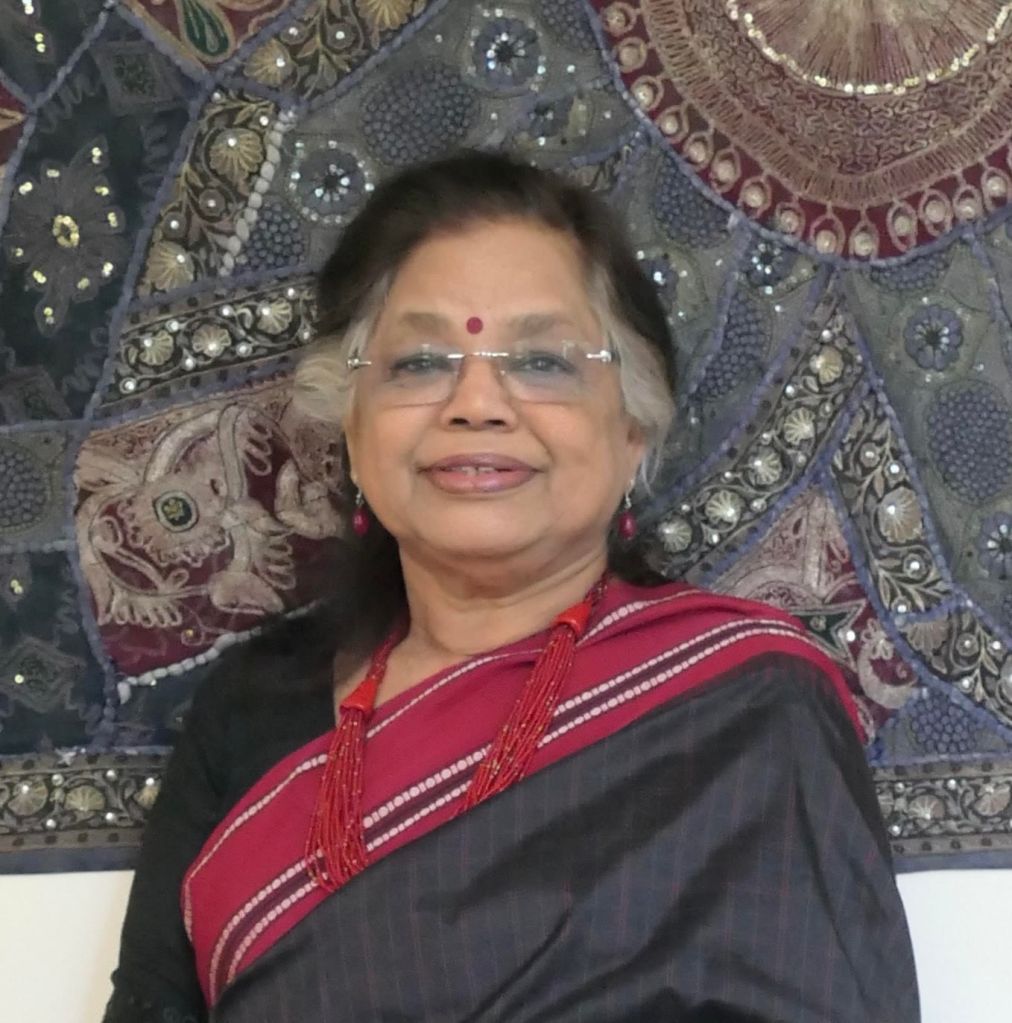
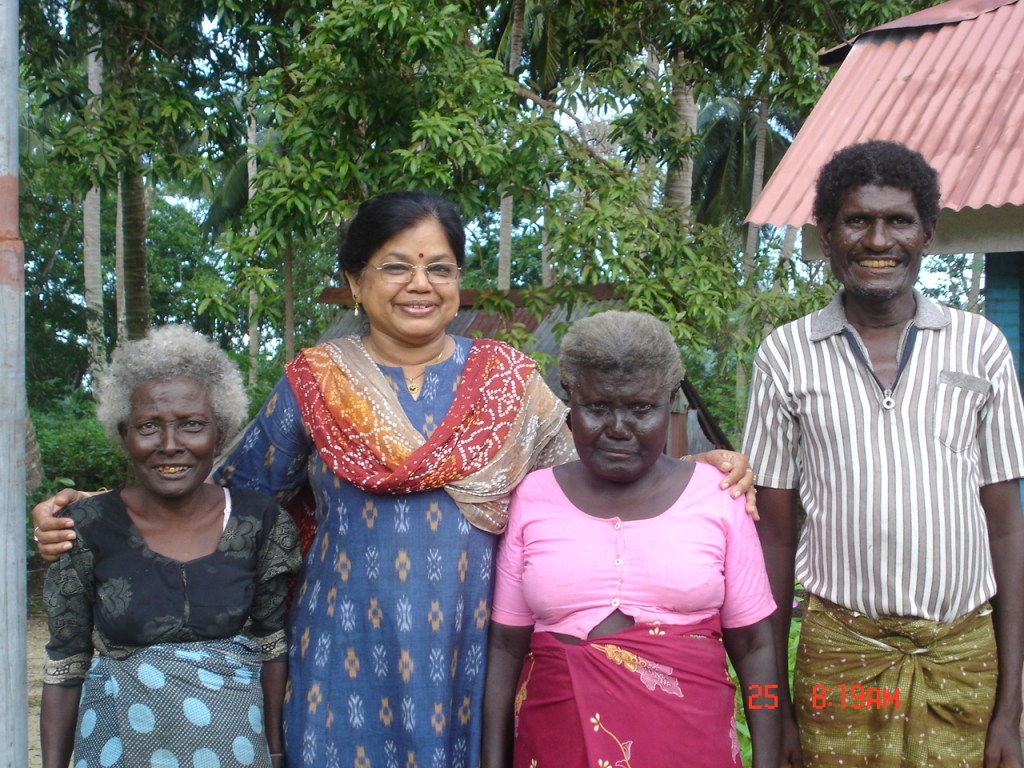
Anvita Abbi

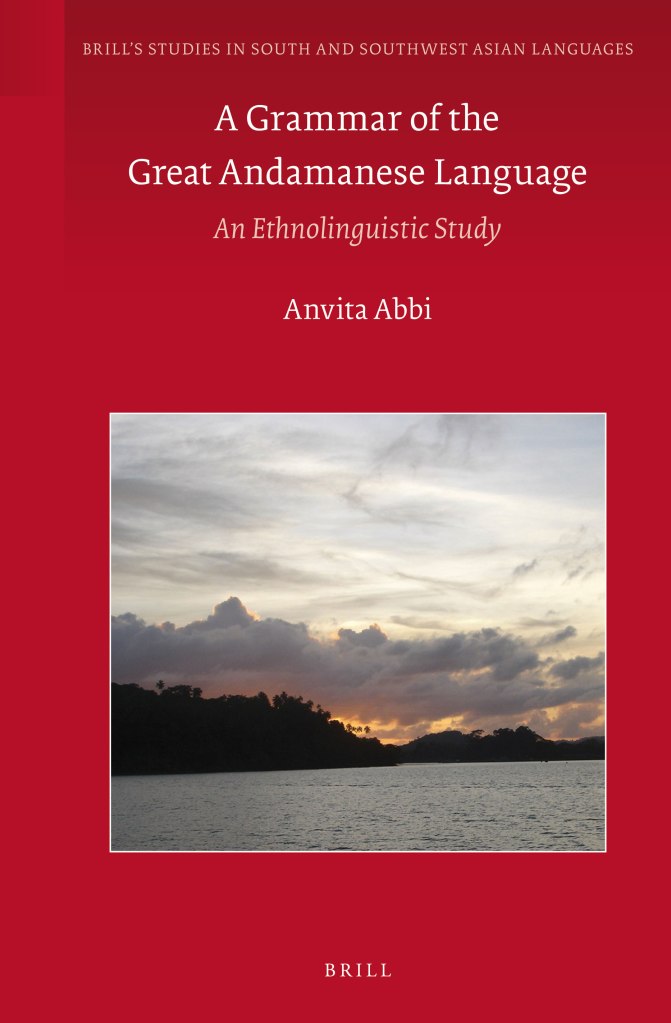
Time moves fast and we move with it, partly carrying the past with us and partly shedding it. Languages evolve. Sometimes, they get left behind. People forget them and with that where they came from. Why would familiarity with our roots or a moribund language be so important? Perhaps, Professor Anvita Abbi, a Padma Shri from India who has done amazing work with the Andamanese uncovering their fast ebbing language and culture, has some answers. She is a linguist who stretches beyond universities to uncover the roots from which mankind evolved and to exhibit to us the need to be in touch with what our ancestors knew. She urges us to accept the varied colours of mankind for a more humane and tolerant outlook.

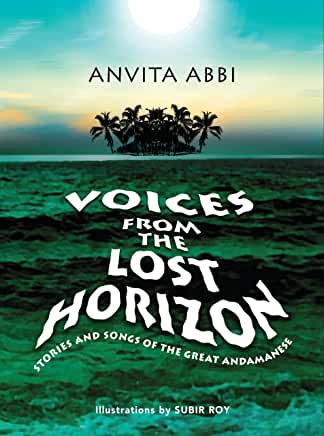
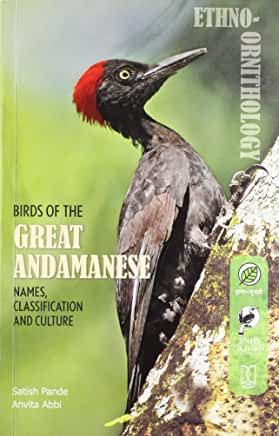
Abbi has written a number of books on her experiences in Andaman. Reading Voices from the Lost Horizon (2021, Niyogi Books), her recent publication with videos embedded in both the hardcopy and softcopy versions, has been an adventure that transports one back to a civilisation that has its roots in Neolithic times. Unique in form and content, her book not only talks of her trips to Andaman and meeting the indigenous people but also shows how the lores of this culture can teach the civilised a number of things including, basic survival skills. She has summed this up in a recent interview, “When the tsunami came on December 26, 2004, tribes of the Andaman, Jarawa, Onge and Great Andamanese saved themselves as their knowledge about the tsunami was intact in their language. They interpreted the patterns of waves and sea churning and ran to a safe place.” Shuttling between different continents and time zones, Abbi is as unconventional as is her book. She unfolds her journey towards integrating the past into the present.  

You are from a literary family. What made you opt to become a linguist? Did your environment impact you in some way? What kindled your interest in ancient and moribund languages?

Yes, my background exposed me to different writers of my time, and I started writing short stories in Hindi and earned a name for myself very early. My first book of collection of short stories Muthhi Bhar Pahachan (Hindi, A Handful of Recognition) was published on my 20th birthday.  I was pursuing my interest in literature along with my first love for Economics. However, my father, the famous poet of Hindi, Shri Bharat Bhushan Agrawal, thought that I was pursuing a wrong profession and forced me (yes, absolutely against my wishes) to join Linguistics at Delhi University at the cost of quitting Delhi School of Economics. Once I started studying Linguistics, I realised I was made for this subject and never looked back. Subsequently, after receiving Ph.D from Cornell University, USA I started teaching Linguistics at the Kansas State University, Manhattan. While there, I realised that a large number of Indian languages especially those spoken by the marginalised communities are under-researched. The question ‘how different or similar are these languages to the known languages of the country’ motivated me to take the major decision of quitting the regular job at the KSU and move to India. I joined the Jawaharlal Nehru University in 1976 and was instrumental in designing and developing the course of Field Methods that took me and my students to remotest corners of India from the Himalayas to the Andaman and Nicobar. My experience in India has been very enriching as I have worked on more than 95 languages of India so far and experienced India at the grass roots. At present, I am working on two languages of the Nicobar Islands.

How long have you been researching on Andaman?

Since late 2000. I wish I was there earlier!

Tell us why you chose Andaman as your arena rather than any other?

There were several reasons that drew me towards working on this language intensively. The topography of the area, the unexplored terrain, its people, and their antiquity and above all scant availability of published material on their language coupled with the fact that my observation in 2003 after conducting a pilot survey of the languages of the Great and Little Andaman that this language seemed to be a class apart from the other two languages of the region — Onge and Jarawa. Unlike Jarawa and Onge, Great Andamanese is a moribund language and breathing its last. I was encouraged by my linguist friends at the Max Planck Institute of Evolutionary Anthropology, Leipzig, Germany to study and document the language widely, to unearth the vast knowledge base buried in the linguistic structure of Great Andamanese before it is lost to the world. Not only were my results of 2003 later corroborated by geneticists in 2005, but it also gave me assurance and proof beyond doubt that this group of languages forms the sixth language family of India.  I was moved by the speedy process of erosion of scientific and cultural treasure that this ancient world had embedded into its language. I had to plunge myself into its structure come what may!

You said that this group of languages was almost pre-Neolithic in age — “a moribund language of the only surviving pre-Neolithic tribe, the remnants of the first migration out of Africa 70,000 years ago.” Does it have any similarity to the clipping Khosian languages spoken in Africa or any other African languages?

Not that I know of. We must understand that any similarity, if it existed, would have completely evaporated in so many years especially in a contactless situation. Anyway, we know very little of what human language sounded like 70,000 years ago.

Now a new language has evolved — Great Andamanese — from four languages (Jeru, Khora, Bo, and Sare). How long has Great Andamanese been in use? How did all these languages merge into one?

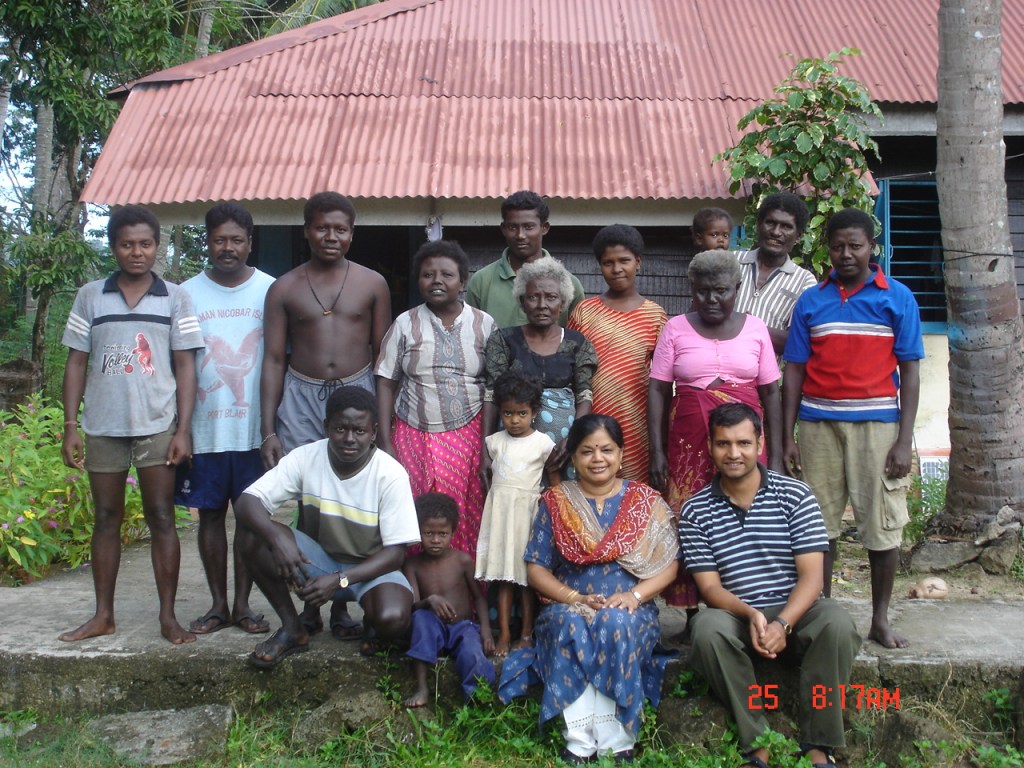
It is named Great Andamanese because it is spoken in the Great Andaman Island. The original name of the island in the heritage language is marakele and was habited by ten different tribes speaking ten distinct but mutually intelligible languages. I named this language Present-day Great Andamanese (PGA) so as not to empower any one of the four North Great Andadamanese languages of which it is a mixture. Present form of the language has been in use since all the four different tribes, Jeru, Khora, Sare and Bo were moved from the north and rehabited in the Strait Island, 56 nautical miles away from the capital city of Port Blair since early seventies by the government of India. However, the language is closest to Jeru in its grammatical structure.

Do people use Great Andamanese or Hindi? Which languages are commonly used by the local people and why? Is there a historic reason?

Most of them have forgotten their heritage language and speak only Andamanese Hindi. Some of them have a passive knowledge of Bangla. When I reached the island there were ten speakers of the PGA but now only three remain who can speak PGA but prefer not to. Colonisation by mainland Indians exposed the tribe to babu Hindi as well as to the lingua franca Andamanese Hindi existing in the Island. As of today, a few of them are hired by the government in Port Blair and some children go the local schools so that exposure to local Hindi is intensive. 

One of the interesting things I noticed in your book was there was a lot of use of ‘potato’ in the stories. Potato was brought into India by the Portuguese. So, how old could these stories be? Or have the colonial invasions altered their myths?

Potatoes that we eat were perhaps imported by Portuguese, but roots of yam and potatoes always grew in our land as all Adivasis have been using their indigenous varieties of potatoes called by different names. Great Andamanese also have more than five varieties of potatoes that they have been consuming since their establishment in the island. These potatoes appear and taste very different from ours. English word ‘potato’ may be considered a generic name for the tuber like products in the current work and bear no resemblance to the modern word ‘potato’.

The Andamanese sing: “O, God, Bilikhu! / We pray to you.” They have burial customs where they burn, bury, feed to the vultures, and throw into the sea. It is like an amalgamation of multiple religious customs. What is the religion the Andamanese actually follow?

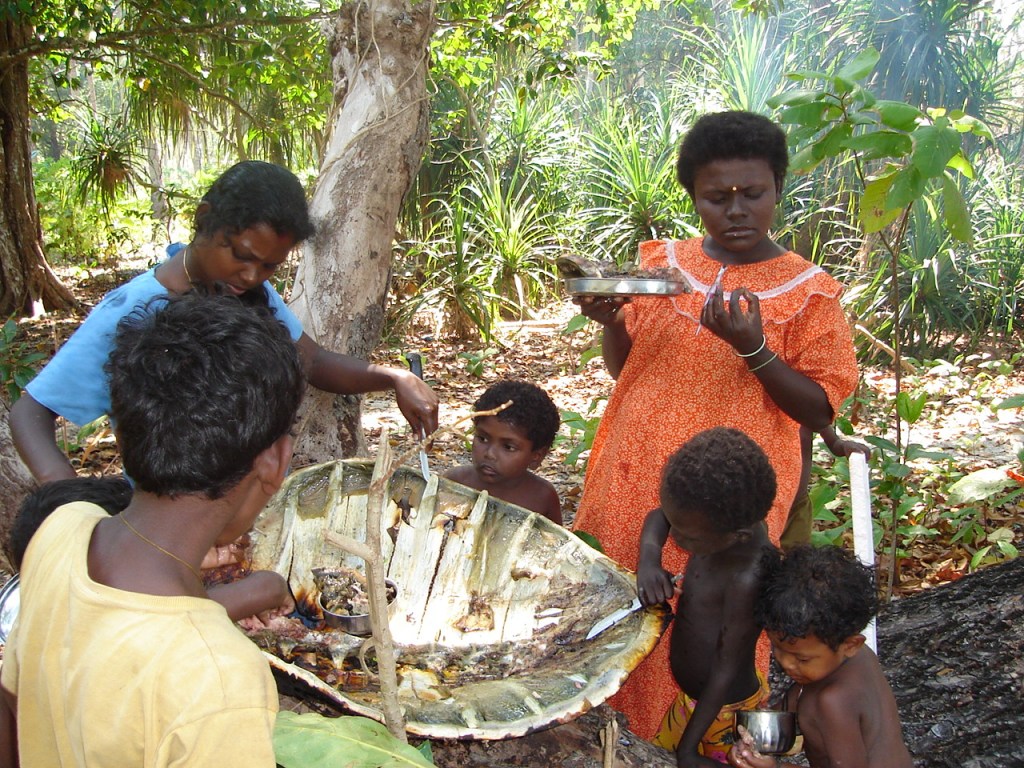
This prayer that you quote seems to be a modern version created copying Hindu religious practices that the Andamanese see all around them. ‘Bilikhu’ means spider also and is considered sacred but not equivalent to our concept of ‘God’. They remember Bilikhu before going into the sea for any sea escapade like hunting for big animal such as turtle and dugong.  Andamanese do not follow any religion. They believe in their protectors jurwachom who protect them in the sea and in the jungle. They give respect to and remember their ancestors believing that the ancestor’s spirits surround them all the time. What more, the tales in the book convey an intimate relationship between people and birds as a ‘family’. One story, ‘Jiro Mithe’, depicts the origin of birds from the Andamanese people.

As far as the cremation of the dead bodies is concerned, you may have read that I have explained how one of the stories ‘The Tale of Juro the Head Hunter’ informed me that there were four different ways of cremation depending upon the way a person dies. Quoting from the book, these were:

“1. When a person dies of a natural death or in illness, s/he is buried in the earth (‘boa-phong’ meaning ‘hole in the earth’).

“2. When a person dies while hunting/killing, then s/he is put on a platform made on a tree (‘machaan’ in Hindi) and burnt.

“3. When a person dies because of choking on a fishbone, their body is taken to a particular place near Mayabandar in the northern part of the Andaman Islands and left for a month on a tree for vultures to eat. The bones are collected after a month.

“4. When children pass away, they are not buried initially; they are left untouched for a few days, then they are cremated.”

Often the villains and the demons depicted in their stories are cannibalistic. Was cannibalism an aberration for them? Was cannibalism ever accepted by them?

They are not villains or demons. They are people with supernatural powers. The practice of cannibalism existed — so it seems through these stories. However, it was always deplored as being against the survival of humanity. The story mentioned above depicts it very clearly. Nao Jr the key narrator of these stories compared Juro with Hindu goddess Kali saying that both were involved in similar activities. The story and my elicitation process involved in it explains the whole phenomenon of cannibalism that existed in the Great Andamanese community.

How did the colonials and the independence of India impact these people, their culture and language?

The history of present Great Andamanese is a tale of many tales. Outsider-contact has brought diseases, subjugation, sexual assault, and ultimately decimation of the tribal culture, tribal life, and tribal language. It is not new to witness as voice of the most powerful of the land…colonizers, makers of empires, and policy makers silence the voices of the vanquished and marginalized whether by annihilation or assimilation.

For years, Jarawas maintained the isolation and now they regret the interaction with us.

These tribes are neither poor, nor uneducated (their knowledge of environment comprising birds, fishes, medicinal plants and their uses, sea life, weather predictions, and the Earth they walk on is amazing), nor cowardly, nor violent (they safeguard their folks both women and children from outside intervention) nor fools. They have known the wonders of isolation and that is what they want to maintain. However, we have lost Great Andamanese culture, language and worldview as the process of mainstreaming them started with colonisation first by Britishers and later by Indians. With the result they are nowhere now, neither connected to their roots nor connected to the world that the government offers. Cultural amnesia and loss of their heritage language has affected their cognitive and perceptive powers adversely. The modern generation neither feels connected to the forest and sea life nor to the city life. It’s a lost civilisation bewildered of their present. In this scenario stories and songs of this book may serve as the only priceless heritage of an ancient civilisation of India.

Tell us of about some of your more unique experiences in Andaman.

There are plenty. You have to read the ‘Introduction’ of this book and log on to www.andamanese.net where I describe my experiences and many aspects of Great Andamanese culture. Great Andamanese is a culture that believes in sharing of everything that one has in life yet gives individual freedom to choose. We have misunderstood that this trait of theirs as ‘begging’ since they always demanded to share whatever we eat. Gender equality is worth admiration starting from the prenatal stage as the name of a child is assigned before birth, and both boys and girls are trained in hunting.

While it was sad to read that very few speak the language of the past now and yet a few more cultures are getting eroded, it is also a movement towards integration with the mainstream. What would be the ideal way for this integration so that the languages and cultures do not get eroded and yet they blend with the mainstream? What would be the best way of balancing languages and cultures so that we do not lose our past while embracing the present and moving to the future?

The idea of mainstreaming and merging these tribes into our civilisation is nothing but usurping their rights to their land, forest, water, and way of life. “Development” may kill these tribes. These tribes have amalgamated their life with nature so well that they are aware of secrets of life.  Any kind of interference will disturb this harmony. As I always say that Jarawa live a life of opulence where the supplies are in abundance in their forests — much more their demands. However, it is too late now in the context of the Great Andamanese. As I said earlier, they are a lost generation.

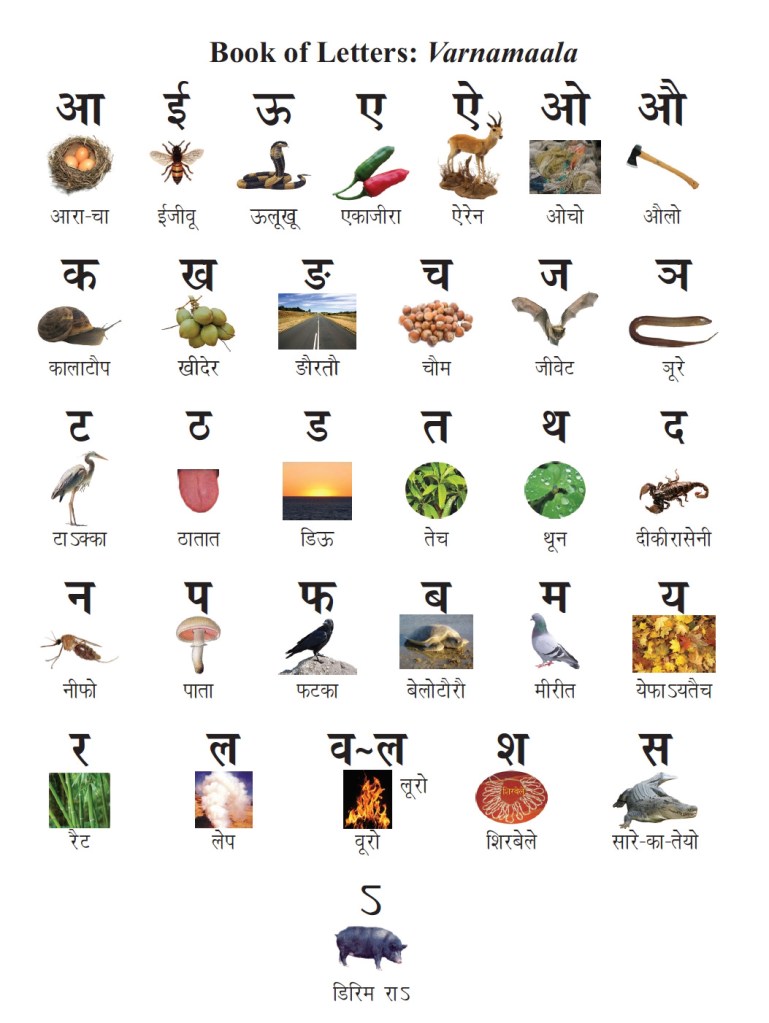
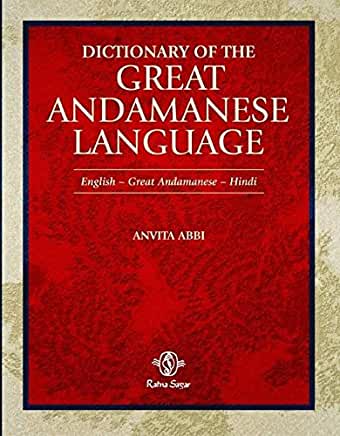
The best course to save their language and culture would be to introduce it in the primary schools in Port Blair so that the community feels motivated to retain this. Since the language has already been scripted by our team, reading and writing Great Andamanese is no problem. I have already produced the Grammar and the interactive pictorial talking Dictionary of the language that may make this task simple. One of the members of the tribe by the name of Noe who still remembers the language should be used as a resource before it is too late. Introducing these languages in the school will bring dignity and honour to our heritage language and will help the societies to overcome their inferiority complex.

(This is an online interview conducted by Mitali Chakravarty)

.

Click here to read the review of Voices from the Lost Horizon brought out by Niyogi Books, June 2021.

PLEASE NOTE: ARTICLES CAN ONLY BE REPRODUCED IN OTHER SITES WITH DUE ACKNOWLEDGEMENT TO BORDERLESS JOURNAL