Story by Sharaf Shad, translated from Balochi by Fazal Baloch
From Public Domain
One afternoon, I had just returned home from the hospital and was waiting for my wife to bring me lunch when I heard the sound of a motorbike stopping outside. Then echoed the sound of hurried footsteps on the porch, followed by someone asking my wife, “Is the doctor home?”
It was Ali’s voice. I recognised it instantly. A moment later, the door swung open, and Ali, short and heavyset, entered the room.
“Doctor, come with me, please. My wife isn’t feeling well; she needs to be examined.”
“I was just about to eat…”
“You can eat there,” he interrupted, grabbing my doctor’s bag and heading out to his motorbike. Since he was my friend, I didn’t argue and silently followed him.
On the way, Ali explained that his wife was in labour. As we arrived, I examined her and, after consulting with the midwife, gave her an injection. I waited in the guest room. A short while later, his wife gave birth. Just then, the door opened, and Ali came in, his face glowing with joy.
“Sir, I’ve been blessed with a son.”
“Congratulations!”
“Thank you.” His voice was sweet with happiness. I wrote a prescription for the patient and sent Ali to the medical store to get the medicines. He dropped me off at home afterward. As we arrived, Ali reached into his pocket, but I stopped his hand with a smile.
“No, doctor, that won’t do,” he insisted.
“Come on, let it go. Just take us on a picnic sometime,” I said.
“Don’t worry about picnics. You will have plenty of them,” Ali said with a laugh, heading out of the room, still beaming with joy.
*
A few years later, one night, Ali was in intense pain and I was woken up in the middle of the night. When I arrived, he was groaning in agony. His son stood by his bedside, looking at him with wide, worried eyes. I comforted him and treated Ali. After a while, he drifted off to sleep. As I stood to leave, Ali’s son asked me with curiosity:
“Doctor, will my father be okay?”
“Yes, don’t worry. He’ll be just fine,” I reassured him, gently patting his cheek before heading out.
The next day, Ali came to see me on his motorbike and paid my consultation fee. His son was with him. I took some of the money and slipped it into the boy’s pocket.
“Are you doing well?” I asked him.
He didn’t reply, but Ali spoke up. “After seeing you treat me last night, he says he wants to be a doctor when he grows up.”
I burst out laughing and looked at the boy, who blushed and hid behind his father. “May God fulfill all his wishes!”
“Ameen,” Ali said, and they both bid me farewell.
*
A few years later, Ali brought his son, Sabzal, to the hospital. The boy wasn’t feeling well; he had fever. Ali looked worried. After examining the boy and before writing down the medicines, I asked him:
“What grade are you in now?”
“Third,” he replied.
“If I write your name here, can you read it?”
“Yes!” he said proudly, puffing out his chest.
I wrote on the prescription: “Dr. Sabzal Baloch” and then added the list of medicines.
Happiness lit up both the father’s and son’s faces. They left, smiling.
One morning, as I was getting ready to head to the hospital, Ali arrived in a hurry.
“Doctor, please come quickly! My son is having trouble breathing.” When I got there, I gave him some medicines, but when his condition didn’t improve, I told Ali: “There aren’t the right facilities here. You need to take your son to the city hospital.”
Ali booked a vehicle and rushed his son to the city. A day or two later, the news came that Ali’s son had passed away in the hospital. Ali returned home empty-handed, and I was deeply saddened. The sudden death of young Sabzal cast a shadow of grief over our small hamlet for a few days. But eventually, the routines of daily life washed away that sorrow, and life moved on as usual.
One day, I saw Ali riding his motorbike somewhere. As soon as he saw me, he stopped. After greeting him, I pointed to an object wrapped in old newspapers resting in his lap.
“What’s this?”
“It’s a headstone, sir,” Ali replied. His once cheerful face turned somber. “It’s for Sabzal’s grave.”
With a sad expression, Ali began unwrapping the newspapers. He turned the headstone towards me, and I read:
Name: Dr. Sabzal Baloch
Age: 7 years and 6 months
I looked at Ali. Two silent teardrops rolled down his cheeks and rested on his face.
Sharaf Shad is simultaneously a short story writer, poet, translator, and critic. The richness of narrative is one of the defining features of his short stories. Death and identity crises are recurring themes in his works. A collection of his short stories, titled “Safara Dambortagen Rahan” (Journeying Down the Weary Roads), was published by the Institute of Balochistan, Gwadar, in 2020.
Fazal Baloch is a Balochi writer and translator. He has translated many Balochi poems and short stories into English. His translations have been featured in Pakistani Literature published by Pakistan Academy of Letters and in the form of books and anthologies.
PLEASE NOTE: ARTICLES CAN ONLY BE REPRODUCED IN OTHER SITES WITH DUE ACKNOWLEDGEMENT TO BORDERLESS JOURNAL
Zeeshan Nasir writes of a region whose carbon footprint is next to zero, yet it suffers some of the worst climate-related disasters…
From Public Domain
The perennial consequence of climate change is affecting the lives of people all over the world, particularly in the remote and underprivileged parts of Balochistan.
Noora Ali, 14, was oblivious to the temperature shifts because she had grown up in Turbat, a city in the centre of CPEC (China-Pakistan Economic Corridor). They had frequent floods during the monsoon season and blazing heatwaves during summers, with temperatures rising above 51 centigrade. Compared to other cities in Balochistan, Turbat experiences hot summers and typical winters. As a result, the majority of wealthy families in the city travel to Gwadar, Quetta, or Karachi during the sweltering summers and return to Turbat during the winters. The Water and Power Development Authority (WAPDA) moved Noora’s father, who works there, to the neighbouring Gwadar in 2022.
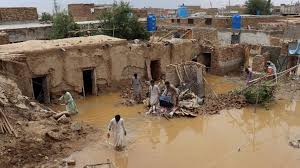
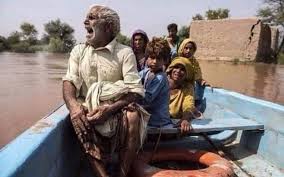
In the February of 2022, the sea seemed calm while boats of the fishermen busily dotted the waters of the Padi Zir (Gwadar’s West Bay). It was a typical Thursday morning when rain started pouring down. The rain was so intense that the sea became wild and uncontrollable. The roads were washed away, bridges collapsed, with streets being inundated with flood water and the port city became completely disconnected with the rest of the country. Back in Turbat, her ancestral hometown was also submerged under flood water.
Noora had also heard from her school fellows that Gwadar and Turbat had never experienced such heavy and intense rainfall before. She knew and felt that the temperature of her native city was rising and that Gwadar beneath flood water didn’t seem normal. “This is due to climate change.” Her elder brother told her. At the age of 14, typical children in Balochistan have no idea what climate change and global warming are but they are already feeling it impacts.
Like Noora, thousands of children in South Asia, particularly Pakistan, Bangladesh, Nepal, India and Afghanistan are at the risk of climate related disasters, as per the UNICEF 2021 Children’s Climate Risk Index. The report further reiterates that children in these countries have vigorously been exposed to devastating air pollution and aggressive heatwaves, with 6 million children confronting implacable floods that lashed across these countries in the July of 2024.
On the 11th and 22nd November 2024, over 20 youths urged the world leaders to come up with plans to mitigate the impacts of climate change on children at the 2024 United Nations Climate Change Conference (COP 29) held in Baku, Azerbaijan. Among those 20 resolute children was the 14 years old, Zunaira Qayyum Baloch representing the 241.5 million children and women of Pakistan.
Dressed in her traditional Balochi attire, with a radiant smile in her face and resolute in her commitment, Zunaira Qayyum Baloch, startled everyone. Hailing from the far-flung district of Hub in the Southwest of the Pakistan’s Balochistan, Ms. Baloch went to represent the children of a country whose carbon footprint is next to zero, yet it suffers some of the worst climate-related disasters. Her message to world leaders was clear: step up and combat climate-induced inequalities, particularly those affecting women and children.
She had always remained conscious about the changing climate in her city, observing the floods of 2022 that had wreaked havoc in Hub Chowki, initiating awareness programmes and youth advocacy guide training in her home city to advocate for girls right to education and climate change.
“After my father passed away, my mother became the sole breadwinner. She helped us get an education and met all our requirements.” Zunaira explains. “During the catastrophic rains of 2022, an incident changed my perspective on climate change. Rainwater had accumulated in the roof of our home and streets were flooded with water. The destruction was so overwhelming that I realised that such events were no longer rare but increasing constantly. “
During the COP29, Ms Baloch expressed her concerns with the experts how Pakistan, particularly Balochistan has been detrimentally affected by climate disasters like frequented floods, heatwaves, hurricanes and droughts. Lamenting that climate change was a child-rights crisis, she told the world how the changes in the climate had jeopardised the lives of millions of women and children throughout the world.
Asking the world leaders to join determined children like her to combat climate change, she addressed them in the COP29: “Climate change matters to me, and it should matter to you too.”
Stark Reality of the Past
Bibi Dureen, 80, is a testimony to how climate is continuously transforming. She hails from the outskirts of the Kech district in a town called Nasirabad.
“The seasons are changing.” She says with her voice laced with sorrow. “The heatwaves have become more aggressive, and floods are common. It all started around 1998 in Turbat. Then in 2007, a devastating flood destroyed our homes, date palm trees, livestock –and worst of all, it took lives.” She pauses, her wrinkled hands trembling.
As she talks to me in front of her thatched cottage, through which sunlight is streaming in, tears well up in her eyes as she recalls a painful childhood memory, “I was young at that time. It was a pitch-black night, and the rain was pouring down mercilessly when a man came shouting that the flood water had reached the fields.” She exclaims with grief. “My mother, desperate to save what little we had, sent her only son, my sixteen-year-old brother, Habib, our family’s only breadwinner, to find the only cow we had in the fields. Neither the cow nor Habib returned. Later some men found his dead body in the jungle.”
In June 2007, when the Cyclone Yemyin hit the coast of Balochistan, it wrought unprecedented damage to the province, particularly Turbat, Pasni and Ormara and rendered 50,000 homeless within 24 hours, including children. According to reports 800,000 were affected and 24 went missing.
The 2022 floods had a devastating impact across Pakistan, with the province of Balochistan being one of the hardest hit. With 528 children dying nationwide, 336 people died in Balochistan, including children as per the reports of the Provincial Disaster Management Authority (PDMA).
Tragedy struck again in 2024 when torrential rains engulfed 32 districts of Balochistan, particularly, the port city of Gwadar and Kech district. The PDMA put the death toll of children dying due to the flood at 55 out of the total of 170, with 16 others injured.
The Double Crisis Facing Girls
Regions in Balochistan, such as Naseerabad, Jaffarabad, Sohbatpur, Nokundi, Sibi and Turbat have seen severe heatwaves in the past few decades. On May, 2017, the Mercury rose to a record breaking of 53.5 centigrade in Turbat, making the district to be the hottest place of the year after Mitribah, Kuwait. During heatwaves, cases of fainting and health-related illness among residents, particularly children are rarely uncommon. According to a 2023 report by the Pakistan Meteorological Department, Balochistan has seen a 1.8°C rise in average temperature over the past three decades, leading to longer and harsher heatwaves.
Dr Sammi Parvaz, a gynaecologist at the university hospital in Turbat, tells that rising temperatures in the district not only contribute to higher dropout rates among school-girls but their menstrual cycle is also affected.
“According to the recent research of the National Institute of Health (NIH) , menstruation– a biological process that occurs in females when they reach puberty — is severely affected in countries which are vulnerable to climate change and Pakistan is one them.” She explains. “The menstruation in girl children living in extreme heat, such as, in Turbat and Karachi, becomes very intense, painful and with cramps.”
Dr Sammi further elaborates that this phenomenon is linked to the increased release of cortisol and oestrogen, the hormones which regulate the female reproductive cycle. “Girl children exposed to harsher environments such as severe heat or cold, experience hormonal imbalances leading to irregular periods and severe menstrual cramps. The hospitals in Turbat are frequented by patients suffering from intense cramps or irregular periods.”
Hygiene becomes another pressing issue during floods, especially for young girls. Research published by the International Journal of Environmental Research and Public Health states that floodwater contains lead, polychlorinated biphenyls (PCBs) and other chemicals which are the cause for irregular periods.
During floods thousands of girl children struggle to manage their periods amidst the chaos of the disaster and remain without period products. For instance, after the 2022 floods, 650,000 pregnant women and girl children in Pakistan were without essential maternal care, with a significant proportion from Balochistan.
Admist all this chaos climate activist like Zunaira Qayyum Baloch raise awareness while women like Maryam Jamali work directly on the ground to ensure that every women has ration in her house and access to menstruation products during catastrophes.
Madat Balochistan[1]— a non-profit organisation — has supported more than 31,000 people across 34 districts in Sindh and Balochistan. With its major work concentrated in and around Quetta, Dera Bugti, Jaffarabad, Jhal Magsi, Sohbatpur, and Khuzdar, they are a women-led organisation fundamentally prioritising women and young girls in their work because even on the frontlines, they are bearing most of the cost of climate change, according to its co-founder, Maryam Jamali.
“Our conversations on climate change vulnerability often treat everyone as ‘equal’ in terms of impact, when that is far from the truth. Vulnerability is a multi-dimensional concept and in a country like Pakistan where most of the women and girls are pushed to the margins of society in every way possible — we cannot just overlook their struggles.” Maryam Jamali tells.
“Take the 2022 floods, for example — the most recent catastrophes etched in our memories. Women and girls were responsible for most of the labour when it came to evacuating to safer places. As soon as they did, their needs when it came to menstruation or pregnancy care were completely ignored by aid agencies as they sent out packages or set up medical camps. Most of our work at Madat was compensating for things like this. We worked with midwives to ensure that women, who could not stand in lines for ration, received it regardless or women who did not want to interact with male doctors didn’t have to. In our housing projects, we prioritise women especially those who don’t have a patriarch in the household because that severely limits their access to resources for rehabilitation.”
Floods, heatwaves and other natural calamities are gender neutral. However, female children are more likely to be affected by them. According to the UN Assistant Secretary-General Asako Okai that when disaster strikes, women and children are 14 times more likely to die than men. In Pakistan, 80% of people displaced by climate disasters are women and children.
In patriarchal societies in Pakistan, women and female children are the primary caregivers of the family and they are the sole persons to grow crop, do house chores, fetch firewood and water. With little to no potable water nearby, girls have to travel far to help their parents, further exacerbating their vulnerability.
These household responsibilities create an educational gap. Girls are taken out of schools in Balochistan during floods. With Pakistan’s lowest girl literacy rate at just 27 per cent, the International Rescue Committee (IRC) reported that the province of Sindh and Balochistan have seen greater educational disruptions due to heatwaves and floods, with the 2022 flood causing more educational institutions closure than the combined two-year COVID-19 pandemic.
Extreme heatwaves and recurrent flooding in Balochistan have further compounded this gap. For instance, the 2022 flood damaged or destroyed 7,439 schools in the province, affecting the education of over 386,600 students and 17,660 teachers and staff members. Reports also mention that most of the government school were used as flood shelters in the province. In the 2024 floods, 464 schools were again damaged.
The destruction of educational infrastructure has forced many children out of school, contributing to the province’s high out-of-school rate.
Monsoon Brides during Floods
Though floodwater is no longer accumulating in the Mulla Band Ward of Gwadar district in Balochistan, the damage it has wrought will stay with the people for a long time for many years. For Gul Naz[2],16, the loss has been devastating.She was only 16 years at the time when flood water entered their home in 2022. Her father, being a fisherman, struggled to make ends meet, as the sea was completely closed for fishing, cutting off the family’s only source of income.
“I was in the Jannat Market and when I returned home, I was told by my mother that my marriage has been fixed to a man twice my age in exchange for money.” She discloses that her parents were given Rs.50,000 ($178.50) which is a whooping sum for a poor family, who survive on around one dollar a day.
“I have two kids now and I am a child raising a child.”
The sadness in Gul Naz’s voice is palpable and she isn’t alone in her predicament. During floods and emergency situations, families in Balochistan resort to any desperate means for survival. The first and most obvious way is to give their daughters away in marriage for financial relief — a practice that usually surges during the monsoon season, hence, the name monsoon brides.
In the Sindh province of Pakistan, where this trend is more prevalent, there has been a spike in the number of monsoon brides during the last flash floods of 2022. In the Khan Mohammad Mallah Village, Dadu district, approximately 45 were married off in that year, according to the NGO organisation, Sujag Sansar[3], which works to reduce child marriages in the region.
Pakistan stands at the sixth position in the world when it comes to marrying children below eighteen. While there has been a reduction in child marriages in Pakistan in recent years, UNICEF warns that extreme weather patterns put the girl child at risk.
Madat Balochistan has also been on the forefront in the reduction of child marriages in Balochistan, “It’s not intuitive to think of girls’ education or loan relief or housing provision as measures to build climate change resilience, but in our contexts, these are the very things that drive vulnerability to climate change.” Says the Maryam Jamali. “We have been working on supporting farmers with loan relief so that young girls aren’t married off to compensate for the financial burden of loans after a lost harvest. We are also working on initiatives for sustainable livelihoods for women as well as ensuring that young girls in all the communities we work in have access to education despite geographic or financial limitations.”
Jamali thinks that gender inequality is one of the biggest aspects here which makes it absolutely necessary for a region like Balochistan, where physical vulnerability and socio-economic vulnerability is high, to have young girls at the decision-making table.
“Activists like Zunaira can ensure that when we come up with solutions for climate change, we contextualize them through a gender lens and make sure that this does not become another instance of taking away women’s agency but becomes an opportunity to involve them in climate change policy decision-making.” Jamali contends. “It is rewarding to see the girls we support do great things. One of our girls from Musakhel is studying at Cadet College Quetta, the first in her family to be able to pursue education beyond 8th grade.”
The Way Forward
“Extreme weather can fuel conflict and be a threat multiplier,” says Siraj Gul, a lawyer at the Balochistan High Court, Quetta, citing the recent research published in the journal Alternatives: Global, Local, Political. He stresses that the decades long running insurgency in Balochistan stems from human rights violations, inequality and government negligence. “Climate related catastrophes further destabilise the region’s development. For instance, there was a surge in the number of protests during the 2022 floods in Gwadar, Lasbela and Turbat, reflecting the deep frustration and despair of the people.” According to Mr. Gul if children like Zunaira are given a platform to speak and work for Balochistan, they are not merely advocating for the environment, they are working for a more peaceful and tranquil region.
A climate resilient infrastructure and child-oriented disaster relief have become a must in climate-torn regions like Balochistan.
Zeeshan Nasir is a Turbat-based writer and currently pursuing his MBBS Degree from the Makran Medical college, Turbat. He tweets on X @zeeshannasir972. He has contributed to Daily Dawn, Countercurrents, Pakistan Today, The Diplomat and others. A different version of this essay has been published earlier in Countercurrents and Pakistan Today.
.
PLEASE NOTE: ARTICLES CAN ONLY BE REPRODUCED IN OTHER SITES WITH DUE ACKNOWLEDGEMENT TO BORDERLESS JOURNAL
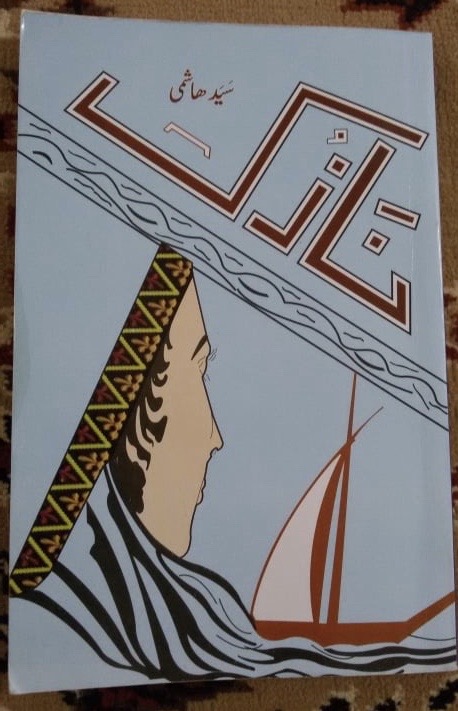
This is first chapter of the first Balochi novel that was published in 1976. It has been translated into Urdu and Persian. The narrative depicts everyday life and experiences of the people living around the coastal area of Makkuran especially Gwadar and its surroundings.
The cover of Nazuk. provided by Fazal Baloch.
For about a week, the weather had been pleasant, with a cool wind blowing across the sea—a true blessing for the fishermen. A calm sea meant loss for them, while a rough sea spelled devastation. Over the past few days, the fleet of fishing boats had been returning to the shore with plenty of catch.
The sun had completed three-quarters of its journey, racing through the sky like a messenger in haste in the final quarter. Its burning rays were yielding to the soothing coolness of the approaching evening. The long, serene shadows stretching behind the houses provided an ideal setting for a public gathering.
Away from the shore, an old voyager boat, anchored in the red sands, stood tall like a pyramid—a symbol of the unshakable bond between the boundless sea and its people. Who could say how many joyful and sad years the sea’s companions had spent navigating across its waters on that very boat? Though the sea often rocked their boat like a cradle, not once had these brave sons of the ocean furrowed their brows in fear or discontent.
The fleeting morning shadows soon vanished to the unknown but the evening shadows lingered longer, creeping towards the damp sands of the shore and eventually reaching the water, as if embodying the spirit of the giant old boat longing for the sea’s embrace to soothe its heart.
The shadow it cast offered an ideal venue for one of the biggest public gatherings in the evening. At times, it seemed as if people sitting on its plank were aboard the boat chatting to pass their time on a deep-sea trip. The cool breeze blew across reflected the pleasant weather at sea.
The wind had cooled the sands of the shore, making them so comfortable that those who lay on them forgot the comfort of even the most luxurious mattresses and cushions. Men, women, and children all came to enjoy themselves, especially today, which was more crowded than usual as it was Friday and no one had ventured into the sea for fishing the night before, giving the fishermen a day off.
For those who lived around the sea, there were only two vocations: fishing or navigating across the sea on a boat. And everyone acknowledged that sea navigation was one of the most cherished vocations in the world. Thanks to these navigations and explorations, humans had even set foot on the moon.
Navigation in the sea made fishermen exceptionally skilled and resourceful. They sailed from one country to another, learning about different lands and their people. Some sailors, despite being illiterate, exhibited such remarkable knowledge that even the learned were left in awe.
On the right, in front of a small roadside hotel, people sat on benches, sipping tea and chatting with each other. Some distance away, a group had gathered around a tall and smart man, listening intently to him. Let’s draw closer. Oh! He is Captain Naguman, moving his lips and hands alike. With his hands, he fidgets with a rope, perhaps knitting a net, while with his lips, he narrates the story of the First World War so enthusiastically as if he were a part of it himself. At that moment, someone called out from behind: “Captain! Hey Captain Naguman!”
Naguman turned around, shaking his head annoyingly, and said, “This jinxed fellow never lets me speak properly.”
“Captain! Hey Captain Naguman!”
The call came from inside the hotel’s kitchen, and from his voice, the Captain recognised him.
“Abdul is really a cursed man! Look how he disturbed the Captain in the middle of his speech,” someone said with rage.
“Exactly. He always jumps in during my speech,” Naguman turned somewhat dismayed.
“Hey Captain! Would you like tea? A cup of tea?” Abdul’s voice reached their ears again.
“If you’re going to give him a cup of tea, then bring it, you the cursed scoundrel,” someone whispered, and the Captain replied loudly, “Yes, bring it.”
Abdul immediately came and placed the cup before the Captain. He too sat down to listen. A few people from the audience cast side-glances at Abdul. The Captain smiled, sipped his tea, and resumed his speech, “Listen, you blind fishermen! Just in a single day, over a hundred planes swarmed in like locusts…”
A little farther away, a few women and children were sitting. Children were playing with the sands. The first woman was busy weaving a net, and the second one was keenly observing her. The third one was still pondering about what to do or say. The second woman said with great lament: “Mamma Papi didn’t help me weave a net. At least I could have moved my otherwise idle hands,” lamented the first woman.
“Move your hands or make some money?” replied the third woman, as if she had been waiting for the perfect moment to speak.
Papi raised her experienced eyes slightly, smiled gently, and stopped weaving the net and glanced around. When she was sure that nobody was looking at them, she retorted in a hushed tone, “The ‘Young Man’ wouldn’t let you bother yourself with work, dear Mahbalok!”
“Waiy waiy! Mamma Papi, don’t defame me,” Mahbalok said slowly, taken by surprise.
“Mamma Papi! Mamma Papi! Look there. He’s coming right here,” the third woman hastily whispered. No sooner had she uttered these words, Mahbalok became so edgy that she almost broke into a sprint.
But Mamma Papi let out a hearty laugh, then she threw the spool of thread and half-woven net on the ground. With both her hands, she held Mahbalok’s shoulders and said: “What happened to you, the cursed woman? Where are you going? Look, you’re even getting fooled by this little Hajok. I’ve had enough with you. You’re almost out of your mind,” exclaimed one of the women.
“Hajok! May the lord of the sea curse you! I’ve never seen such a jinxed woman in my entire life. Mamma Papi, by God, my heart almost sank,” Mahbok tried to maintain her unsteady breath.
“Waiy Mahbok! Hajok is your neighbor and best friend,” remarked Mamma Papi.
“By God, Mahbok, don’t tease me again. I wouldn’t like it,” Mahbok was yet to come to herself.
“It’s alright. Don’t open your basket-like mouth. Men are looking at us,” Papi warned them.
Rows of boats lined up along the arched shore, resembling horses ready for a race. It seemed as if riders had tightly held the reins and were waiting for the whistle to be blown. A few boys were playing tag behind those boats and yawls. On the left, some nets were placed on a plank.
“Come! They taste like halwa. Come! They’re fresh and hot,” Zalya shouted as if warning those who couldn’t get any that they’d only have to blame themselves. And it did the trick. In a moment, people swarmed around her cauldron. A while later, a young man and his friend called out to her:
“O, Mamma Zalya! Send us half a rupee worth of Mat, please.”
“Pindi, my son! I don’t have that much left. They’re barely worth twenty-five paisa.”
“It’s alright. Leave it.” Then he turned to his friend and said, “We’ll go to the bazaar and have tea with biscuits.”
Pindi and his friend Guli got up and made their way towards the bazaar. Two young men were playing Liddi. The game seemed to absorb to the duo as if it were the greatest challenge of their lives.
“Jalu! Jalu! Come on, boy. Pass this net to your uncle. Every day these blind fishermen return it damaged. They’ve spent their entire lives at sea, yet they can’t keep the net away from the rocks,” an old man, while weaving a net, turned to a boy sitting next to him.
“Jalu, my son! Go and get me your uncle Shahdost’s net.”
“Uncle, let me finish my peanuts first,” the boy replied indifferently.
“I’ll keep your peanuts. Get me the net first, then you can eat your peanuts.”
The boy slipped the peanuts into his pocket and scurried off. He returned almost panting and threw the net with a thud before his uncle.
He closely examined the net to determine the nature of the damage. Startled, he suddenly blurted out, “Such a new net! They have damaged it terribly,” he mumbled in anger. “They’re blind in both eyes. Neither do they know how to properly cast the net nor do they know how to untangle it.”
The sea was crowded. A few boys were playing tip-cat, and some other people were watching and enjoying the game. It’s played differently in different areas, but the version played in the coastal area is distinct. Some other boys were playing hopscotch. Two young boys were drawing sketches of fish, boats, and yawls in the sand with knife-like-sharp fish bones. A little farther away, a few young men were playing bazari. Two young men looked at them and tempted them, “You blind men! Is this the time to play this game? You’re flaunting your skills. We’ll challenge you to a match. Come tonight at the sands of Kala Teembok. We’ll show you how it’s played and won.”
A few girls were playing with beads, and some others were collecting salps[1]. It is believed that when you bury them in the ground, after seven days they will turn into beads provided no boy sees you burying them. On the seventh day, when they fail to unearth any beads, they wouldn’t turn dismayed. But at that moment, one of the girls would claim, “You know, Mami is a… he had been following us. He secretly watched us behind the wall. Thus, we couldn’t get beads.”
“Today I will complain to her mother,” the second girl replied.
“Anok! Anok! It’s better not to visit his mother.”
“Why, Jani?”
“Yesterday his father severely thrashed his mother… “
“Ah! But why?”
“You know Sayaki, the carpenter? She had visited his house.”
“May God keep us away from…”
Far in the distance, a woman called out, “Sharok! Come on, dear, look after the baby. I’ll be back from the bazaar just in a while.” Sharok, who was playing with beads, strode towards her mother. The youngest of them took all the beads from the girls, dismantled the holes, and chanted, “The game is over. Yes, it is all over.”
Two younger girls cried out, “Give us back our beads!” But by the time their sobbing subsided, she had already gone home. Determined, the two girls began digging through the holes again, hoping to find a bead hidden somewhere. However, there was nothing. Disappointed, they stood up and walked to the sea to wash their hands. Spotting other girls collecting salps nearby, they joined in, clinging to the hope that by the next Friday, the salps might somehow transform into beads.
The sun descended lower, casting the shore in hues of orange and gold. By sunset, the beach was nearly deserted, save for the men gathered around, engrossed in Naguman’s tale of the German War.
Sayad Zahoor Shah Hashumi (1926-78) is known as the pioneer of modern Balochi literature. He was simultaneously a poet, fiction writer, critic, linguist and a lexicographer par excellence. Though he left undeniable marks on various genres of Balochi literature, poetry remained his mainstay. With his enormous imagination and profound insight he laid the foundation of a new school of Balochi poetry especially Balochi ghazal which mainly emphasises on the purity of language and simplicity of poetic thoughts. This school of poetry subsequently attracted a wide range of poets to its fold. He also authored the first ever Balochi novel ‘Nazuk’ and compiled the first comprehensive Balochi-to-Balochi dictionary containing over twenty thousand words and hundreds of pictorial illustrations.
Fazal Baloch is a Balochi writer and translator. He has translated many Balochi poems and short stories into English. His translations have been featured in Pakistani Literature published by Pakistan Academy of Letters and in the form of books and anthologies. Baloch has the translation rights of this novel.
PLEASE NOTE: ARTICLES CAN ONLY BE REPRODUCED IN OTHER SITES WITH DUE ACKNOWLEDGEMENT TO BORDERLESS JOURNAL
Story by Sharaf Shad, translated from Balochi by Fazal Baloch
The moment he stepped into his home, he sensed that something was wrong. A strange desolation and silence crept down the walls and doors. His wife, upon seeing him, stood up. Her voice trembled overwhelmed with anxiety. She whispered: “The snow is melting.”
“What?” At the mention of snow, his eyes flared with alarm. He rushed to the room where the snow statue was kept. As usual, it stood there like an impregnable mountain. But now, a tiny teardrop was trickling down its right cheek. The line of the rolling tear seemed to slice the statue into two, like the slash of a sword. He knew that if the melting continued, the statue wouldn’t last much longer. The mere thought of this brought tears to his eyes.
A few years ago, the sea had gifted him that very statue. In those days, he used to visit the sea every evening. He adored the sea and its rising tides, drawn to the depths and the vastness that made him feel immortal. It was that very sense of immortality that pulled him to the shore night after night. Despite the violence of the waves rising and crashing, he continued captivated by them.
One day, as he was lost in watching the rise and fall of tides, he noticed the statue gleaming amidst the water, like a giant pearl. He picked it up, marveling at nature’s artistry. He wondered how such a beautiful statue could exist in the midst of such chaos. Then, a voice echoed from the tides, addressing him: “It’s a gift for you, from me. Every evening you came here and shared my grief. Take this statue home. It will bring you peace, health, and prosperity.”
The wind, tracing lines upon the surface of the ocean, was impressed by the sea’s generosity. It told him that, to help preserve the statue, it would maintain constant climate. When everything becomes kind to someone, time will surely follow suit. Thus, time assured him that it would never bring decay or harm to the statue.
He took the statue and placed it in the finest spot in his home. As the sea and the wind had promised, the statue became a symbol of prosperity and success. Under its shade, his life flourished. But that day, the snow had started to melt!
He knew that this was a sign that his life would soon be stormed with worries and torments. He quickly stepped out of the room. The wind was swirling dust in the courtyard. Like a man who finds comfort in a familiar face during a calamity, he tearfully told the wind that his snow statue was melting.
“Everything perishes in its due time,” the wind replied indifferently.
“But you promised to protect the statue and keep the climate unchanged.”
“I still stand by what I said. It is man who claims the climate is changing. Everything—the sky, the earth, the sea, the wind, the stars, and the moon—remains as it always has. It is only man who changes.”
“I don’t understand what you mean,” he blurted out in frustration. “Just tell me how to escape this curse!”
“Everyone must find their own way forward,” the wind replied.
“All roads seem closed to me,” he lamented.
“When all roads appear closed, that’s where a new one opens,” the wind whispered as it blew away, filling the lanes with dust.
To remind time of its promise, he turned to it for answers. The time listened patiently, as if it already knew the situation. After a brief silence, it gently spoke, “In this world, everything changes its shape sooner or later. Even things that seem unchanged eventually undergo some transformation. Your statue has fulfilled its purpose, and this is the law of nature. Everything new will turn old, and when it does, it changes. Your statue may have taken on a new form—one that may not be as appealing to you as it once was—but it will never truly decay.”
“My life now depends on this statue,” he said desperately. “By its virtue, my family has lived in prosperity. Since it arrived in our home, worries and sorrows of life have forgotten our door. Who knows what curse might fall upon us once it’s gone? Its new shape could bring harm and loss to me.”
“Who knows?” the time replied indifferently.
“If this statue continues to melt, my entire house will be ruined. That’s why I don’t want it to change its form.”
“It cannot be stopped from changing now,” the time said firmly.
Feeling disheartened by the time’s response, he wandered, lost in thought, searching for a way out of his dilemma. While he wandered absent mindedly, he felt a hand on his shoulder. Startled, he turned to find a tall man dressed in white, standing beside him.
“Hey man, I’ve seen you wandering these lanes for a while now. Is everything okay?”
Like a drowning man catching at a straw, he poured out the entire story. After listening, the tall man said, “You’ve pleaded with the wind and the time, and now you’ve told me, a mere wayfarer, your troubles. But you never approached the one who gifted you the snow statue.”
Startled by the realisation, he sprang to his feet, as if pulled up by ten men, and hurried away without thanking the tall man.
He rushed to the sea and bowed before it, pleading, “My snow statue is melting— please, do something to help me.”
“I cannot do anything,” the sea replied indifferently. “Your statue has run its course. Everything has its lifespan and eventually decays. It is an illness without a cure.”
“The fate of my house depends on this statue. There must be a way to escape this curse!” he cried, his voice filled with frustration and despair.
“The sea doesn’t find a way out for anyone,” the sea responded, its voice now filled with arrogance.
“Then no one should find a way for the sea either,” a voice echoed behind him. He turned and saw the same tall man standing there. The sea seemed embarrassed, lowering its head in shame. After a brief silence, its lips trembled as it muttered: “Go home. The blessing of snow will shower upon everything in your house.”
Overjoyed by these words, he grasped the tall man’s hand gratefully, thanking him. The fire that had been consuming his soul was suddenly soothed by the sea’s promise. He hurried home and rushed straight to the room where the statue stood. The teardrop that had once fallen from the statue had dried. Relieved, he smiled, content that the statue had been spared from decay.
Eager to share the joyful news, he went to find his wife and children. But as he stepped into each room, a strange, eerie air of grief and sorrow greeted him. Everything in his house had turned to snow—the windows, the doors, the curtains, and even his wife and children had transformed into frozen statues of snow. The sea’s words echoed hauntingly in his mind: “Go home. The blessing of snow will shower upon everything in your house.”
His heart shattered. Madness and despair took hold of him as he raced back to the sea. But when he arrived, his worst fears were realised. The sea was gone. In its place stretched a vast, dark desert.
He turned back and wandered through the streets, searching every lane and alley for the man in white. He needed to tell him how the sea had deceived and betrayed him. But after scouring every corner of the city, he found no trace of the man. Overcome with disappointment, he returned to the road leading to the sea, holding on to a faint hope that it might have returned.
When he arrived, there was no sea—only the endless desert stretched out in its place. His body, weak and exhausted, could go no further. He stood there, frozen, like a lifeless piece of wood.
He remained in that spot for years, unmoving. The changing seasons, the winds, and the harsh climates left their marks on him. Over time, his form withered into a blackened log, lying forgotten by the roadside. His body had turned dark — black as a stone, disconnected from the people, the sea, and the snow.
Sharaf Shad
Sharaf Shad is simultaneously a short story writer, poet, translator, and critic. The richness of narrative is one of the defining features of his short stories. Death and identity crises are recurring themes in his works. A collection of his short stories, titled “Safara Dambortagen Rahan” (Journeying Down the Weary Roads), was published by the Institute of Balochistan, Gwadar, in 2020. The story presented here is taken from that collection and is being published with the author’s permission.
Fazal Baloch is a Balochi writer and translator. He has translated many Balochi poems and short stories into English. His translations have been featured in Pakistani Literature published by Pakistan Academy of Letters and in the form of books and anthologies.
PLEASE NOTE: ARTICLES CAN ONLY BE REPRODUCED IN OTHER SITES WITH DUE ACKNOWLEDGEMENT TO BORDERLESS JOURNAL
Photograph by Kamachar Baloch. Sourced by the author
All the world’s a stage,
And all the men and women merely players;
They have their exits and their entrances;
And one man in his time plays many parts...

--Shakespeare, As You Like It (1623)
In life, certain individuals excel in their roles, leaving a profound impact despite their brief presence, imprint a lasting legacy that resonates long after they depart.
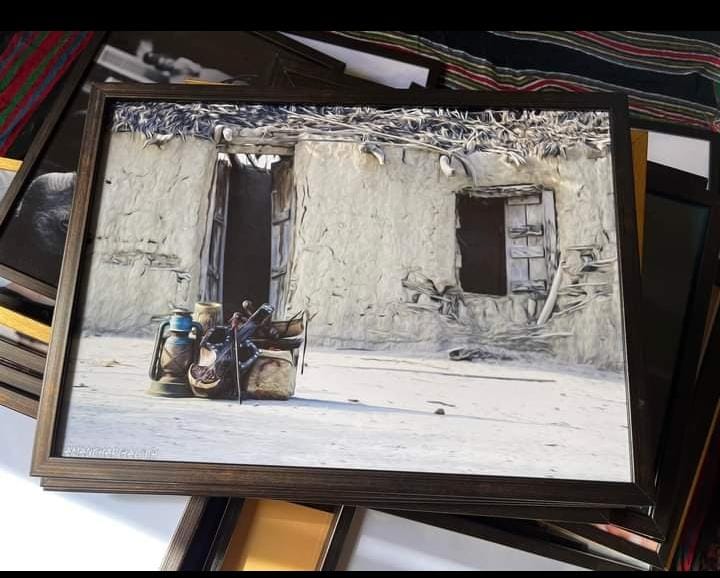
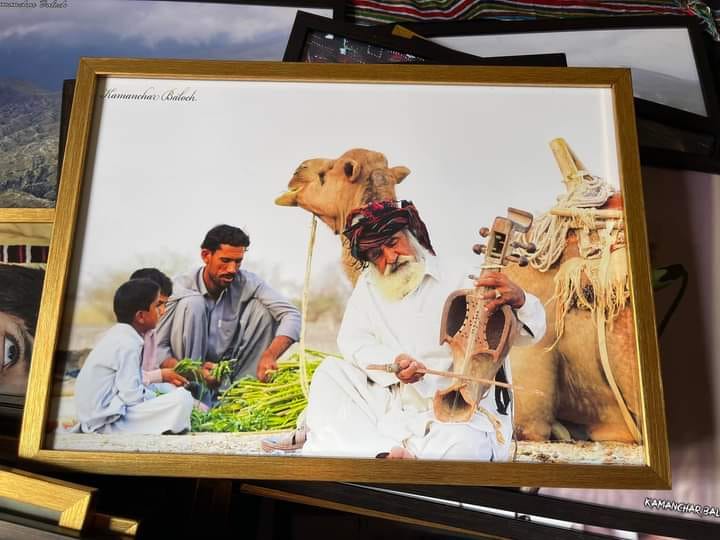
Such an individual was Ghulam Sarwar Baloch, commonly known as Kamanchar Baloch, a devoted photographer who captured the beauty of Balochistan through his photographs. On April 16, 2024, he departed after battling diabetes and tuberculosis.
Baloch was born in 1998 in the home of Anwar Jeehand in the Meeran Goth of Malir, Karachi. His ancestors were from the remote town of Mand in the Kech District of Balochistan. After receiving his primary education in Mand, Kamanchar Baloch enrolled in the Department of English Literature at Benazir Bhutto Shaheed University, Lyari, Karachi in 2020. However, driven solely by his passion for capturing the beauty of Balochistan through his camera lenses, he left his studies incomplete.
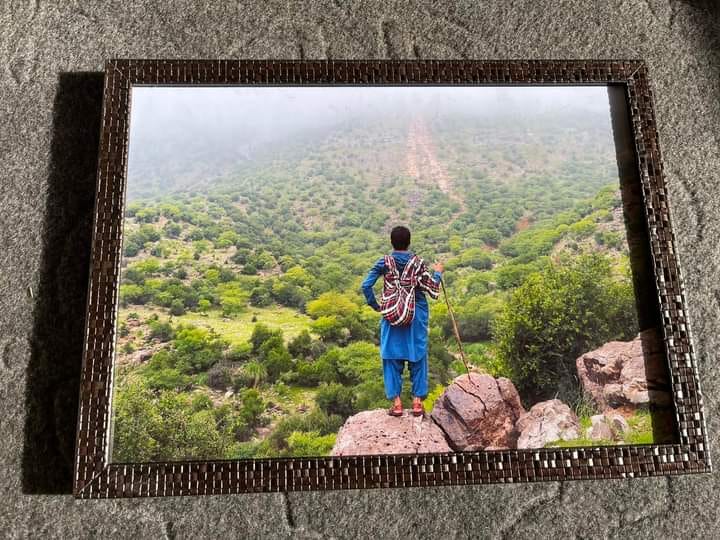
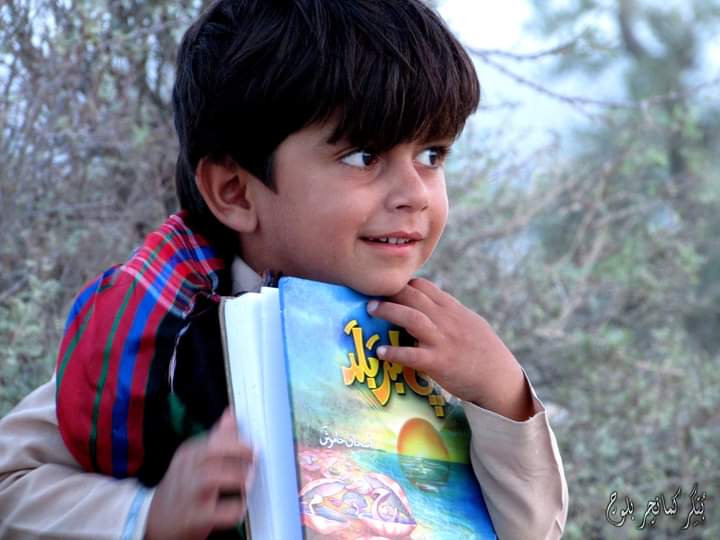
Kamanchar Baloch was a dedicated photographer. His unwavering focus was on capturing the beauty of Balochistan’s landscapes with his exquisite photography. It is often said that Kamanchar’s camera wielded a power like a gun, and as a marginalised Baloch himself, he consistently captured the struggles of the Baloch people within society.
Kamanchar’s passion for exploration led him to uncover the many facets of Balochistan: from Mand to Turbat, Turbat to Quetta, Quetta to Bolan, Bolan to Ziarat, Ziarat to Koh-E-Suleman, and beyond. Wherever his travels took him, he captured the scenery through the lens of his camera, embarking on journeys to mountains, bridges, hills, valleys, coastal shores, and encapsulating the beauty of this rugged land.
Photographs by Kamanchar Baloch. Sourced by the author
His photo exhibitions were held in various locations, including Karachi, Quetta, Gwadar, and Turbat. Kamancher not only explored every corner of Balochistan but also worked tirelessly to encourage and support young photographers and artists in appreciating the richness of Baloch heritage, land, and its beauty.
Photograph by Kamachar Baloch. Sourced by the author
Kamanchar’s legacy lives on in the images he immortalised and the voices he amplified. His departure has undoubtedly left a void in Balochistan, orphaning a community that looked to him as a beacon of hope and understanding. As the people mourns the loss of this exceptional artist, his work stands as a testament to the power of art to provoke empathy and incite change. The impact of Kamanchar Baloch’s life and artistry will continue to resonate, inspiring future generations to advocate for the marginalised.
Although Kamanchar passed away early, his legacy lives on through his photographs. He was still young and had much more to contribute to Baloch and Balochistan.
“It was Kamanchar who showed us that photographs will never come to us, but we need to look for them and chase them,” says Baloch filmmaker, Kamalan Bebagr.
May Kamanchar live in his art forever!
Photographs by Kamanchar Baloch. Sourced by the author
Munaj Gul is a lawyer based in Turbat, Balochistan. He tweets @MunajGul
PLEASE NOTE: ARTICLES CAN ONLY BE REPRODUCED IN OTHER SITES WITH DUE ACKNOWLEDGEMENT TO BORDERLESS JOURNAL
Balochi poem by Bashir Baidar, translated by Fazal Baloch
O kind and gentle moonlight!
In your embrace, hold me tight.
Like a mother, rock me with love
And chant to me the songs of delight.

Like the luminous rainbow
On lofty hills and mountains,
Shower pearls of light
On vast fields and arid plains.

Look at the downcast hamlets,
The mute and deserted pathways,
Where like a graveyard life stands
Perpetually silent and dismayed.

Fathom the pain of the blue sea,
Listen to the shrieks of the tides.
Night cried again the last night,
Look at the dewdrops far and wide.

I wonder at these canyons,
Barren caverns, and pastures --
These made wretched by time.
Will your bright scarf ever flutter?

If we do not reap the harvest of heads,
Of corpses, floods will not surge.
After all, how will a rainbow form
On earth, if the sky doesn’t rain blood?

How long will the night linger on
To kill all the stars one by one,
Smother the twilight over and over again!
Yet, I am sure, there will be a new dawn.
Bashir Baidar belongs to the generation of the Balochi poets that emerged on the horizons of Balochi literature in the 1960s. Drawing inspiration from Progressive Writers Movement, Baidar’s poetry is widely cherished for his political undertone. So far, he has published four anthologies of his poetry. This Poem originally featured in poet’s third collection of poetry “Mahikaan” (Moonlight), published by Gaam Publication Gwadar in 2011.
.
Fazal Baloch is a Balochi writer and translator. He has translated many Balochi poems and short stories into English. His translations have been featured in Pakistani Literature published by Pakistan Academy of Letters and in the form of books and anthologies.
PLEASE NOTE: ARTICLES CAN ONLY BE REPRODUCED IN OTHER SITES WITH DUE ACKNOWLEDGEMENT TO BORDERLESS JOURNAL



 Borderless