Categories
Review

‘Burradin’: An Indian Christmas

Book Review by Somdatta Mandal

Title: Indian Christmas: Essays, Memories, Hymns

Editors: Jerry Pinto and Madhulika Liddle

Publisher: Speaking Tiger Books

We all know that Christmas Day, the night that Jesus came to earth, bringing with him peace and love for all humanity, is celebrated by Christians all around the world with great enthusiasm and merriment. Interestingly, for a multicultural country like India, Christmas is equally celebrated — not only as a religious festival but also as a cultural one. For a country where less than three percent of the population is Christian, the central celebration is the birth of a child, but it takes on new meaning in different Indian homes.  Known in local parlance also as “Burradin”[big day] Indians from all classes and communities look forward to this day when they can at least buy a cake from the local market, shower their children with stars, toys, red Santa caps and other decorative items, and go for a family picnic for lunch, dine at a fancy restaurant or visit the nearby church. This syncretic cult makes this festival unique, and for Jerry Pinto and Madhulika Liddle editing this very interesting anthology comprising of different genres of Indian writing on the topic – essays, images, poems and hymns, both in English and also translated from India’s other languages is indeed unique.

In his introduction which he titles “Unto All of Us a Child is Born,” Jerry Pinto reminisces how he was surprised when he saw his first live Santa Claus. He was a figure in red that Akbarally’s, Bombay’s first department store, wheeled out around Christmas week. “He was a thin man, not very convincingly padded… seemed to be from my part of the world, someone who would climb up our narrow Mahim stairs and leave something at the door for us at three or four a.m., then take the local back to his regular job as a postman or seller of second-hand comics. The man in the cards and storybooks preferred London and New York. And a lot of snow. … Today, it is almost a cliché to say that Christmas, like every other festival, is hostage to the market.”

The other editor, Madhulika Liddle in her introduction “Christmas in Many Flavours” states, “According to the annals of the Mambally Royal Biscuit Factory bakery in Thalassery, Kerala, its founder Mambally Bapu baked the first Christmas cake in India”.  It was way back in 1883, at the instance of an East India Company spice planter he set about trying to create a Christmas cake. Liddle wondered what that first Christmas cake tasted like; how close it was to the many thousands of cakes still baked and consumed at Christmas in Kerala? She also writes about the situation in India, where instead of wholesale and mindless importing of Christmas ideas, the people have been discerning enough to amalgamate all our favourite (and familiar) ideas of what a celebration should be and fit them into a fiesta of our own.


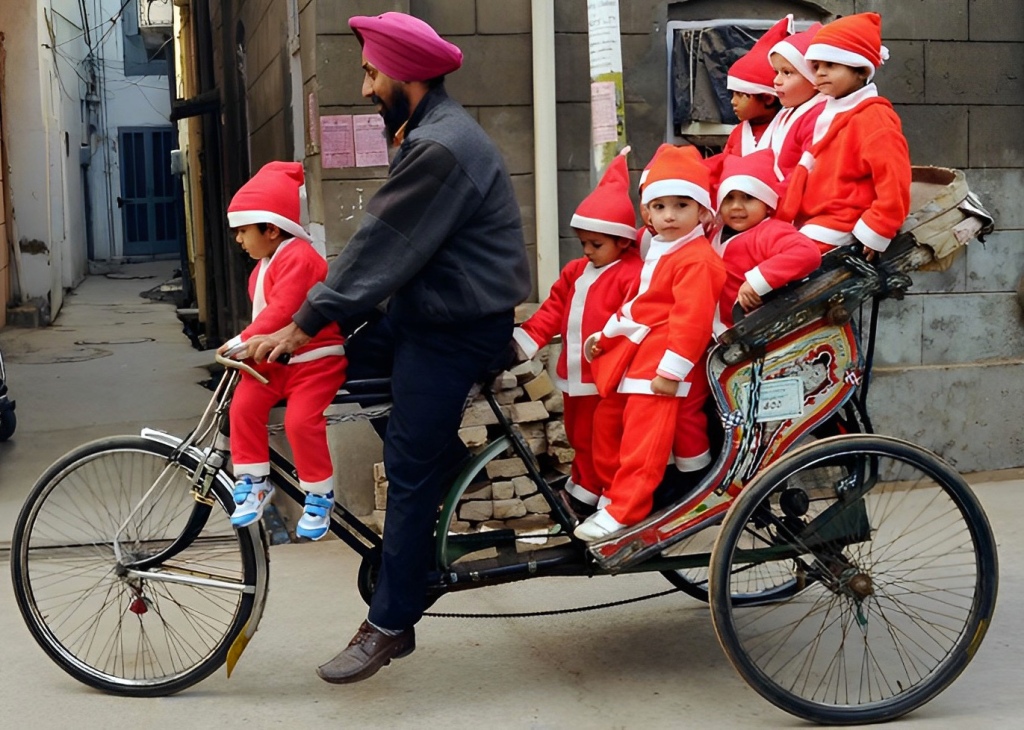
Images from Indian Christmas: Essays, Memories, Hymns: dressed up as Santa Claus leave for school in Punjab. (Picture courtesy: Ecocabs,Fazilka).

There are several other aspects of Christmas celebrations too. The Christmas bazaars are now increasingly fashionable in bigger cities. The choral Christmas concerts and Christmas parties are big community affairs, with dancing, community feasts, Christmas songs, and general bonhomie. Across the Chhota Nagpur area, tribal Christians celebrate with a community picnic lunch, while many coastal villages in Kerala have a tradition of partying on beaches, with the partying spilling over into catamarans going out into the surf. In Kolkata’s predominantly Anglo-Indian enclave of Bow Bazar, Santa Claus traditionally comes to the party in a rickshaw, and in much of northeast India, the entire community may indulge in a pot-luck community feast at Christmas time. Thus Liddle states:

“Missionaries to Indian shores, whether St Thomas or later evangelists from Portugal, France, Britain, or wherever brought us the religion; we adopted the faith, but reserved for ourselves the right to decide how we’d celebrate its festivals.”

Apart from their separate introductions, the editors have collated twenty-seven entries of different kinds, each one more interesting than the other, that showcase the richness and variety of Christmas celebrations across the country. Though Christianity may have come to much of India by way of missionaries from Europe or America, it does not mean that the religion remained a Western construct. Indians adopted Christianity but made it their own. They translated the Bible into different Indian languages, translated their hymns, and composed many of their own. They built churches which they at times decorated in their own much-loved ways. Their feasts comprised of food that was often like the ones consumed during Holi or Diwali.

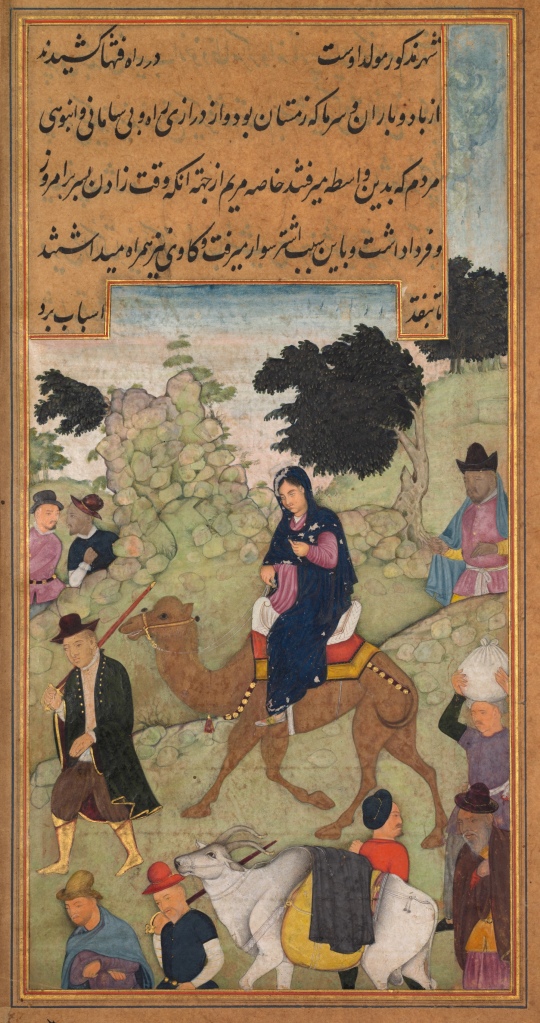
Thus, Christmas in India turned to a great Indian festival that highlighted the syncretism of our culture. Damodar Mauzo, Nilima Das, Vivek Menezes, Easterine Kire, Hansda Sowvendra Shekhar, Nazes Afroz, Elizabeth Kuruvilla, Jane Borges and Mary Sushma Kindo, among others, write about Christmas in Goa, Nagaland, Kerala, Jharkhand, Delhi, Kolkata, Mumbai, Shillong and Saharanpur. Arul Cellatturai writes tender poems in the Pillaitamil tradition to the moon about Baby Jesus, and Punjabi singers compose tappe-boliyan about Mary and her infant. There are Mughal miniatures depicting the birth of Jesus, paintings by Jyoti Sahi and Sister Claire inspired by folk art, and pictures of Christmas celebrations in Aizawl, Bengaluru, Chennai and Kochi and these visual demonstrations enrich the text further.

Interestingly, the very first entry of this anthology is an excerpt from the final two sections of one of Rabindranath Tagore’s finest long poems, inspired by the life of Jesus Christ. Tagore wrote the poem “The Child” in 1930, first in English and translated it himself into Bengali the following year, titling it “Sishutirtha.” But many years even before that, every Christmas in Santiniketan, Tagore would give a talk about Christ’s life and message. Speaking on 25 December 1910, he said:

“The Christians call Jesus Man of Sorrow, for he has taken great suffering on himself. And by this he has made human beings great, has shown that the human beings stand above suffering.”

India celebrates Christmas with its own regional flair, its own flavour. Some elements are the same almost everywhere; others differ widely. What binds them together is that they are all, in their way, a celebration of the most exuberant festival in the Christian calendar.

Apart from the solemnity of the Church services, there is a lot of merrymaking that includes the food and drink, the song and dance. The songs often span everything from the stirring ‘Hallulujah Chorus’ to vibrant paeans sung in every language from Punjabi to Tamil, Hindi to Munda, Khariya and Mizo tawng.

Among the more secular aspects of Christmas celebrations are the decorations, and this is where things get even more eclectic. Whereas cities and towns abound in a good deal of mass decorating, with streets and public places being prettied up weeks in advance, rural India has its own norms, its own traditions. Wreaths and decorated conifers are unknown, for instance, in the villages of the Chhota Nagpur region; instead, mango leaves, marigolds and paper streamers may be used, and the tree to be decorated may well be a sal or a mango tree. Nirupama Dutt tells us how since her city had no firs and pines, she got her brother’s colleague to fetch a small kikar tree as kikars grew aplenty in the wild empty plots all over Chandigarh. In many entries we read about how Christmas decorations were rarely purchased but were cleverly constructed at home.

A very integral part of the Christmas celebrations of course is music. In many Goan Catholic neighbourhoods, Jim Reeves continued to haunt the listeners in his smooth baritone: “I’ll have a blue Christmas without you/ I’ll be so blue thinking about you/ Decorations of red on a green Christmas tree/ Won’t mean a thing, dear, if you’re not here with me.”  Simultaneously, the words and music of “A Christmas Prayer” by Alfred J D’Souza are as follows: “Play on your flute/ Bhaiyya, Bhaiyya/ Jesus the saviour has come./ Put on your ghungroos/ Sister, Sister/ Dance to the beat of the drums!/ Light up a deepam in your window/ Doorstep, don with rangoli/ Strings of jasmine, scent your household/ Burn the sandalwood and ghee,/ Call your neighbour in, smear vermillion/ Write on his forehead to show/ A sign that we are one/ Through God’s eternal Son/ In friendship and in love ever more!/ Ah! Ah!” But the most popular Christmas song was of course “Jingle bells, jingle bells, jingle all the way….”

In “Christmas Boots and Carols in Shillong”, Patricia Mukhim tells us how the word ‘Christmas’ triggers a whole host of activities in Meghalaya and other Northeastern states that have a predominantly Christian population. Apart from cleaning and painting the houses, everything looks like fairyland during Christmas, a day for which they have been waiting for an entire year. She particularly mentions the camaraderie that prevails during this time:

“Christmas is a time when invitations are not needed. Friends can land up at each others’ homes any time on Christmas Eve to celebrate. Most friends drop by with a bottle of wine and others pool in the snacks and the party continues until the wee hours of morning. It’s one day in the year when the state laws that noise should end at 10 p.m. is violated with gay abandon. …Shillong [is] a very special place on Planet Earth. Everyone from the chief minister down can strum the guitar and has a voice that could put lesser mortals to shame. And Christmas is also a day when all VIPism and formalities are set aside. You can land up at anyone’s home and be welcomed in. It does not matter whether someone is the chief minister, a top cop, or the terrifying headmistress of your school.”

One very significant common theme in all the multifarious entries is the detail descriptions provided on food, especially the makeshift way Christmas cakes are baked in every home and the Indian way meat and other specialties are being prepared on the special day. There are several entries that give us details about the particular food that was prepared and consumed at the time along with actual recipes about baking cakes. “Christmas Pakwan[1]” by Jaya Bhattcharji Rose, “The Spirit of Christmas Cake” by Priti David, and “Armenian Christmas Food in Calcutta” by Mohona Kanjilal need special mention in this context.  Liddle in her introduction wrote:

“Our Christmas cakes are a reflection of how India celebrates Christmas: with its own religious flair, its own flavour. Some elements are the same almost everywhere; others differ widely. What binds them together is that they are all, in their way, a celebration of the most exuberant festival in the Christian calendar.”

Later in her article “Cake Ki Roti at Dua ka Ghar[2],” the house where they lived in Saharanpur, Uttar Pradesh, she wrote how her parents told her that ‘bajre ki tikiyas’, thin patties made of pearl millet flour sweetened with jaggery, used to be a staple at Christmas teatime at Dua ka Ghar[3], though she has no recollection of those. She of course vividly recalls the ‘cake ki roti’. This indigenisation of Christmas is something that’s most vividly seen in the feasting that accompanies Christmas celebrations across the country. While hotels and restaurants in big cities lay out spreads of roast turkey (or chicken, more often), roast potatoes and Christmas puddings, the average Indian Christian household may have a Christmas feast that comprises largely of markedly regional dishes.

In Kerala, for instance, duck curry with appams is likely to be the piece de resistance. In Nagaland, pork curries rich in chillies and bamboo shoots are popular, and a whole roast suckling pig (with spicy chutneys to accompany it) may hold centre stage. A sausage pulao, sorpotel and xacuti would be part of the spread in Goa, and all across a wide swathe of north India, biriyanis, curries, and shami kababs are de rigueur at Christmas.

This beautifully done book, along with several coloured pictures, endorses the idea of religious syncretism that prevails in India. As a coiner of words, Nilima Das came up with the idea that ‘Christianism’ in our churches is after all, a kind of ‘Hinduanity’ (“Made in India and All of That”). This reviewer feels guilty of not being able to mention each of the unique entries separately that this anthology contains, so it is suggested that this is a unique book to enjoy reading, to possess, as well as to gift anyone during the ensuing Christmas season.

[1] Cuisine

[2] Cake bread

[3] Blessed House

Somdatta Mandal, critic, academic and translator, is a former Professor of English at Visva-Bharati, Santiniketan, India.

Click here to access an excerpt of Tagore’s The Child

PLEASE NOTE: ARTICLES CAN ONLY BE REPRODUCED IN OTHER SITES WITH DUE ACKNOWLEDGEMENT TO BORDERLESS JOURNAL

Click here to access the Borderless anthology, Monalisa No Longer Smiles
Click here to access Monalisa No Longer Smiles on Kindle Amazon International

Categories
Stories

The Monk Who Played the Guitar

Short story by S Ramakrishnan, translated from Tamil by T Santhanam

It was Malavika who sent me the video of the monk who plays guitar. Malavika is my daughter. She is pursuing fashion designing course in Kingston University, England. Her desires and interests are a puzzle to me. Some days ago, she sent a recording of a poem by William Blake in her voice. After that, she sent a photo of her carrying a placard in a demonstration against global warming. As clouds change to forms unimaginable, her interests keep on changing. After watching a butterfly, she had sent her impressions in writing. It seemed as though it was from a seasoned writer. 

Children who leave home for far off places, in a sense, leave us. She was no longer the girl she was in Chennai. The new country and new environment have changed her. The changes are reflected in her appearance and deeds. My wife did not like these alterations. Below the video of the monk who played guitar, she had given the caption: “Music is Meditation”. I could not understand her. At the age of twenty-two, I thought she would be fondly giving herself to worldly pleasure. But she was immersed in meditation, agitation and museum visits.

In the video sent by Malavika, the monk must have been about thirty years old. His head was tonsured. He wore a robe coloured orange. His ears were slightly big. He had a sharp nose and small lips where a smile was frozen. It was hard to find out if he was a Nepali or a foreigner. On his left arm, was tattooed the image of Buddha.

It was funny to see a Monk with a guitar. The image we have formed about saints and the looks of current day saints are not alike. Perhaps, we refuse to update that image. Perhaps, the meaning of sainthood has changed.

The musical piece was given the title “Falling flowers”. From the way he was playing, it seemed as real as the blossomed cherry leaves falling gently. The normal rapidity and gush associated with guitar music was not there. Like an insect that moves in the water, his fingers moved on the guitar strings. Music tunes to the past more easily than photographs. A small piece of music is enough to take us back to our school days.

I saw the video once or twice. I felt the urge to listen to it again and again. While listening at night, I felt as if the fragrance of incense was wafting into the vacant spaces of my heart. I found His name was Limang Tolma while searching for his other videos. There were hundreds of musical pieces by him. All of them were only seven minutes long. Evidently, he played the guitar for only seven minutes in a day. That too under the sal tree in Coben Monastery seated on a stool. Hundreds of people from various countries pour in to listen to his performance. All this I gathered while browsing the internet. His music was melodious and sweet. Why did he play for seven minutes only at each stretch was beyond comprehension.

To know more about Limang Dolma, I called Malavika on her mobile. She sent a message that she was observing silence for the past five days. Why this silence? Tongue can be tied down. But the mind? 

I told my wife. She responded that she had scolded Malavika and that was why she was doing this.

I could not understand. What was the skirmish between mother and daughter? I sent a message to Malavika asking her how long her silence would continue. “God only knows,” was her reply.

As I am a senior executive in an automobile company, I had to conduct two to three meetings in a day. My blood pressure sometimes would rise after returning from these meetings.Sometimes, I would have a headache too. At times, the meetings would last for ten hours. After the meeting, I would feel as if somebody has placed a pile of iron on my shoulders. I would feel sick, wondering why we could not conduct our work without talking, discussing or fighting.

One day, before the commencement of the meeting, I started to listen to the monk’s guitar music from my cell phone rather impulsively. I closed my eyes for seven minutes as though I was in a deep meditation. It was as pleasant a feeling as a moist breeze caressing my body. There was peace in my heart and an exhilaration I had never known before. On that day, I could sense the change in my voice and the way I was moving towards a solution. Somehow the officials of the sales department seemed to understand this. After the conclusion of the meeting while coming down in the lift, Amarnath said, “There was something new in your speech today. You spoke like a Zen Master.”

“Yes” I nodded approvingly with a smile. I was just wondering how a small piece of music could bring such a tremendous change in me.

I wanted to know more about Limang Dolma. Searching through the internet I was more and more astonished. The real name of Limang Dolma is Christopher Cane. He was born in Milan. He had pursued Anthropology. After coming into contact with a Buddhist monk, he has embraced Buddhism and become a monk in the Buddhist Monastery. He plays the guitar only under the tree of the monastery and nowhere else. Young people throng to him. They listen to his music. Some of them stay there for days together to savour his music. They wear T-shirts bearing his image with the words, “Buddha plays Guitar”. In an interview, a young lady asks him. “All saints in India hold one or other instruments. Why does Buddha not play any instrument nor is seen holding one?”

“He himself is a musical instrument. One who knows how to tune himself finds no need for a musical instrument. In the same way, Nature tunes itself. Is there any tune better than what the water plays?”

“Why do you play only for seven minutes?”

“Seven is the symbol of consciousness in Buddhism.”

“Seven minutes is not enough for us. Can’t you play more?”

“Will you take honey in a gulp? Is a spoonful not enough?” he asks.

I admired Limong Dolma fo his speech, poise and the way he handled guitar. I too felt like wearing a T-shirt bearing his image. I sent the video of Limang Dolma to some of my friends asking them to listen to his music. Only Mohan Muralidharan, a neurologist and my school mate, sent a reply saying that a man from Turkey played better than the monk and shared the video. Why should one musician be compared to another? Can’t this foolishness be avoided?

I called Mohan and blurted out my irritation. He said in a mocking tone, “You’re aging. That is why you listen to a monk playing the guitar. Music should make us feel young. It should twinge our nerves. You have never touched a musical instrument in your entire life. Can you whistle atleast?”

Mohan was right. I haven’t even played the mouth organ which many played during my school days.

I felt like owning a guitar. The same evening, I went to a musical store in Leo mall. I showed the video of Limang Dolma and asked for a guitar like the one in the video. The face of the girl at the counter brightened. “Limang Dolma?” she asked. I felt glad that she too has listened to the music. She brought a guitar from inside. I told her, ” I don’t know how to play guitar. This is for my daughter.”

The girl told with a smile, “Limang Dolma was a thief. He was in prison. After his release, he became a Monk. People say he speaks to Buddha through his music.”

“Really!”

“I overheard two girls talk of it when they came to purchase a guitar.”

“Do you believe that?”

“I believe it partially.”

“Which part?”

“That he speaks to Buddha,” she smiled.

She looked like my daughter when she smiled. Perhaps for young girls Buddha is a different personality. May be, the Buddha known by the ones who have crossed fifty years like me and the Buddha these young girls adore are not the same.

When I brought guitar home, my wife chided me.

“Why have you brought this? Who will play?”

“Just let it be,” I responded.

“Is it a show piece to be kept just like that?” she asked.

I did not reply.

I placed the guitar in Malavika’s room close to her bed. I had a feeling that Malavika had returned. I sent that night the picture of guitar to Malavika by WhatsApp. She sent an emoji of two clapping hands. Also, she sent a message “We are going to visit Limang Dolma.” 

Though I felt happy, I was eager to know who was the other in the ‘We’. I did not venture to ask Malavika. Instead, I asked, “When?” She did not respond.

After five days, she sent a picture to me. She was among the hundreds of youngsters before Limang Dolma, as he was playing the guitar. My eyes were cast on a young man with long hair, not on Limang Dolma. The young man hung his arms around Malavika’s shoulder.

Who was this fellow? How long had she known him? I could not see his face properly. I widened the image. An European face. Perhaps was he also a musician?  I thought of asking Malaviika. But I curbed that thought and went on to ask about the musical event, as I called her. She was full of cheer. She told me,” Listening to Dolma’s music, one feels like a kite fluttering in the air. I do not know what to say. Flying to heaven.”

“I read somewhere that he was a thief,” I said.

” Oh, that’s a myth constructed by magazines. When asked about this, Dolma says raindrops do not have a past. Jonah and myself were in the Monastery for three days. Wonderful experience!”

A question arose on my mind as to who Jonah was. I was not sure whether to ask her or not. Why wouldn’t she talk about him?

I asked, “Is Jonah a musician?”

“Dad, how do you know? Indeed, he is. He plays the guitar well. It was he who introduced me to Dolma’s music.”

“Is Jonah your classmate?”

“No, he works in a bar where I hold a part time job.”

“You didn’t tell me,” I pretended to be angry.

“Dad, don’t tell Mom about this.”

“About your working in bar?” I asked deliberately.

“About Jonah too?” she laughed. As she was so laughing, she seemed to be some other young girl. After she hung up, I was thinking about Jonah. Was he a good person or bad? Was he also a thief earlier? Or could he be a drug addict? Who were his parents? Was he in love with Malavika? Had I become old? Was Mohan right? I

 admired a Monk playing guitar somewhere. But I do not like Jonah who also plays guitar. Why? I was perplexed. Suppose if Limong Dolma put his arm around the shoulder of my daughter, would I dislike him too? I was confused.

Two days later, Malavika forwarded a video of Limang Dolma downloaded in her phone. Limong Dolma walked as though he was floating in the air. He sat under the tree. Peace was on his face as he tuned the guitar — the same music that I savoured earlier. No longer did I feel close to that music. Somehow, instead of Limang, Jonah’s face came before me. I felt as if a bitterness had settled down on my tongue.

The same night, Malavika called me. Before my asking anything, she said, ” After visiting Limang Dolma, I do not feel like listening to his music again”

 “Why?” I asked as if I did not know anything.

“I do not like it any more just the way I suddenly liked it before.”

“How is Jonah?” I asked intentionally.

“Do not talk about him. I hate him. I hate whatever he introduced to me.”

Inwardly I was happy.

” Any problem? Shall I talk to Jonah?”

“Why should you talk to him? The days I moved with him, it was a nightmare. Daddy, why do you not rebuke me?”

“You are not a kid, after all.”

“But you think of me as a kid only. You don’t know me as Mom does.”

I was flummoxed. I could hear Malavika sobbing for the first time ever. I did not know how to console her. I hurriedly gave the phone to my wife. She started walking towards the kitchen with her words of consolation. What has transpired between her and Jonah? Why was she weeping? I could not make out. At the same time, I was happy that she disliked the world she created for herself and moved back towards my world. A thought arose that she was coming home. I asked my wife what Malavika had said.

“That boy is not good. I told her from the beginning itself. But she did not pay heed.”

“Did you know about Jonah before?”

“She told me six months back. I scolded her saying that your Dad will not like this. I have spoken to Jonah also.”

“To Jonah? You?”

“Yes, I could not understand a bit of what he spoke.”

“What is the problem now?”

“It’s over. No use talking about it!”

I could not understand what happened. But Malavika had been closer to her mother than to me. She had shared everything with her mother. I was pained at this. Why then did she asked me not to tell her mother? Why this drama? Children after growing up, treat their father as a plaything. The daughter I know is now the girl I do not know. I could not reconcile myself to this.

I heard the guitar music of the monk that night. I was more attracted to the tree than to the music.

Leaves do not stay on the tree for long. When a leaf falls, the tree does not reach out to catch it. When falling leaves sail along the wind, the trees can do nothing but look at them in silence. Somehow, the music stirred a grief in me.

As I prepared to leave for office next morning, I saw my wife keeping the guitar next to dustbin. What was the fault of the guitar after all?

” What are you going to do with this?” I asked.

“Anish told me, he will take it. What do we do with this? Malavika does not want it any more.”

I nodded giving the impression that she was right. But I felt sorry while doing that.

.

S. Ramakrishnan is an eminent Tamil writer who has won the Sahitya Akademi Award in the Tamil Language category in 2018. He has published 10 novels, 20 collections of short stories, 75 collections of essays, 15 books for children, 3 books of translation and 9 plays. He also has a collection of interviews to his credit. His short stories are noted for their modern story-telling style in Tamil and have been translated and published in English, Malayalam, Hindi, Bengali, Telugu, Kannada and French. 

T Santhanam is a retired Bank Executive in Bangalore, India. He has a passion for literature with a special affinity for poetry. He writes poetry in Tamil. He is also a blogger.

.

PLEASE NOTE: ARTICLES CAN ONLY BE REPRODUCED IN OTHER SITES WITH DUE ACKNOWLEDGEMENT TO BORDERLESS JOURNAL

Click here to access the Borderless anthology, Monalisa No Longer Smiles
Click here to access Monalisa No Longer Smiles on Kindle Amazon International

Categories
Poetry

Rani Pink

By Carol D’Souza

RANI PINK

Oh Lord, trees. How they dress and undress
unhurriedly through geological time!
This one I pass on my way to tea
is presently putting on a blush
of rani pink that stands out so
jauntily against the clear blue
drape of the April sky in Chennai.
Oh, how the colour becomes it!
I stop dead in my tracks every time,
staring anew. Life in hues. So old. So new.

Carol D’Souza lives in Chennai. 

PLEASE NOTE: ARTICLES CAN ONLY BE REPRODUCED IN OTHER SITES WITH DUE ACKNOWLEDGEMENT TO BORDERLESS JOURNAL

Click here to access the Borderless anthology, Monalisa No Longer Smiles
Click here to access Monalisa No Longer Smiles on Kindle Amazon International

Categories
Stories

Annapurna Bhavan


By Lakshmi Kannan

Courtesy: Creative Commons

 The next two hours were free for Tara to spend them any way she desired. She wanted to maximise the time spent she spent with her dear friend Sunita who was admitted in a hospital near Mylapore, Chennai. She sat with her in her private room, took her lunch tray from the hospital staff, and personally served her as she reclined on the bed.

I must somehow restore Sunita to Sunita, she told herself. She was such a chirpy, positive person. How did this surgery take away all that from her?

In between sips of soups, mashed rice with dal and vegetables, Tara gently coaxed Sunita to eat well, to get strong so that her discharge papers could be processed, and she could return to the comfort of her home and slowly resume her work online. “It’s the digital era,” she said, as if it needed a reminder. “We now have the wonderful opportunity to work from home until one can resume work. So, Sunita, work towards that goal. We’re all waiting to see you on your feet again,” she encouraged. Sunita gave her a weak smile.

 “What about your lunch Tara? It’s well past lunch time,” she asked.

“No worries. I’ve a car at my disposal, have made arrangements for my lunch. I’ll have a quick bite somewhere and join my family,” she assured. “Come on, have some custard. You must eat well, Sunita. Promise?”

Sunita nodded, her eyes incongruously bright on her wan face.

Tara tucked her back into bed, said goodbye with a thumbs up sign and came out of the room.

 *

Waiting for the elevator, Tara recalled how she had warded off all the lunch-suggestions by her family before she came to the hospital. She told her family that she would grab a quick lunch somewhere and then join them for the rest of the day.  Instantly, her family had pulled out their phones and googled for restaurants that would qualify as ‘good’ even if it meant driving some distance. Tara had responded that New Woodlands Hotel was close to the hospital, so she could use the time to be with her friend, then have a quick meal and join them. A chorus of voices said New Woodlands was just ‘okay’. “It has improved a bit, has a Family Section where you can get some privacy,” still it wasn’t one of the best they argued rather patronizingly. They suggested other outlets. One of them suggested that she drive past New Woodlands, get on to Anna Salai road and reach the Taj Connemara. “It has The Verandah restaurant with a multi-cuisine buffet. You can mix and match the dishes any which way you like and eat your fill.”  

“Or try Raintree Hotel,” said another. “It’s also on Anna Salai Road.”     

“Isn’t there a Rain Tree at Alwarpet? I heard it has a nice restaurant on the terrace, appropriately called Above Sea Level,” said another.  

They showed her the Google maps and advised her to follow them on her phone. Poor New Woodlands, she thought, now relegated to a middle class eating joint, used only as a landmark by her family. “Go past New Woodlands…” — Ruthlessly bypassed after all these new fancy upscale restaurants have mushroomed in the city.

“Fine, thanks a lot. I’ll go to one of these you suggest and join you all soon, don’t worry, I’m on my own turf. So, I’ll sail through my way speaking in Tamil. The driver Dorai seems to be a nice chap. Bye for now,” she waved and was off to the parking space. Inside the car, Tara wondered why nobody in her family thought of where Dorai would have his lunch. Why ask him ‘to eat somewhere’ and then go to The Verandah, or Above Sea Level to pick her up? That will delay things unnecessarily. Why not have lunch at New Woodlands, both Dorai and I, she thought. That would be neat. It will cut the time taken for waiting. She had rushed to the hospital and was soon ushered into Sunita’s private room. She was glad she got some time to linger with her and coax her to eat lunch.

*           

Tara came out of the hospital and got into her car.

“Dorai, please take me to New Woodlands,” she said. “We’ll both have lunch there, and then we’ll drive up to where my family is waiting for me,” she said.

He turned back and smiled. “Amma[1], I’ll drop you at New Woodlands and go to another place for my lunch.”

“Oh no!  It’ll take time. That’s exactly why I suggested New Woodlands so that both of us can eat there and then move on.”

“No worries Amma. My votel[2] is also nearby only. It won’t take long.”

“I see. Why Dorai, don’t you like the food in New Woodlands? I’ve been there.  It was so good.”

“Not just good Amma, it’s excellent,” he nodded.

“Then why do you want to go somewhere else?”

  Dorai turned away and stared through the windscreen.

“What’s the matter, Dorai? Please tell me. Of course, you can eat wherever you prefer to.”

He turned back again, this time with a shy smile on his face.

“Amma, how can I explain? You won’t understand.”

“What!”

“Yes Amma, if I mention some dishes that only small, humble votels offer, you may not even know those items.”

 “Such as?”

He grinned, but lowered his eyes. “Amma, there’s a small place called Annapurna Bhavan. It serves rare things like paruppu podi[3], mormilagai[4], vatral kuzhambu[5], karuvadaam[6], palapp pazham[7], a tumbler with neer mor [8]garnished with karuveppilai[9] and ginger and much more…”

Tara burst out laughing when she noticed that Dorai was almost salivating when he listed his favourite dishes.

“Wonderful, Dorai! I know those dishes very well, because I’ve grown up on them. I’m also very fond of them as remind me of my mother’s cooking when I was small. I’m glad you’ve located a place that has all these.”

Amma, not only do they make these dishes well and put it all out on a large plate with cups. They also serve Amma, item by item, and they serve so ungrudgingly. It is as if satshat[10] Devi Annapurni[11] has descended, to give us food like a mother.” “Maybe that’s why it’s called Annapurna Bhavan!” said Tara, laughing.  

Hee, hee, yes!” chucked Dorai, nodding his head vigorously.

“Fine. Let’s both eat there.”

“Oh no! It’s not a place for you, Amma. I just can’t take you there. Saar[12] will be angry with me if he comes to know,” he protested.

“Then we don’t tell, Saar. Simple!” she smiled. “Dorai, I just told you how much I love the items you mentioned. It has been a very long time since I ate those things. I live in far-off Delhi, you see.”

 “I know, I know, but Amma, it’s not a suitable place for you. Saar phoned me about The Verandah and the other place, Sea something…”

“Above Sea Level. No! I don’t want to go to all those places. Just take me to Annapurna Bhavan. I’ll tell Saar I went to The Verandah,” said Tara, firmly.

“Oh Amma, how can you tell a lie like that? Please listen to me. It has no parking area. I’ve to park the car on the main road and then walk through two narrow lanes to reach the votel. It’s a small one, you see.”

“I can very well walk on a lane. Come on, Dorai. Start the car or we’ll be late.

*          

Tara got out of the car and Dorai led the way to another street that was cutting the main road at an angle. Vendors in carts selling vegetables and fruits were lined on both sides of the street. They walked for about two hundred meters when Dorai said, “This way, Amma,” pointing to the right. Tara followed him on a narrow lane that had a mix of houses, grocery shops and places for repairing cycle and scooter. A few stray cows ambled about lazily. Annapurna Bhavan was on the opposite side, joining two small buildings. Even as they entered the restaurant, the smell of food wafted over to the small reception in the front.

“Do you have a family section?” inquired Dorai.

 “Ah…Yes. But I’m sorry. It’s full. If you wait for about half an hour, I can find a table in the Family Section for Madam.”

“It doesn’t matter,” said Tara. “I’ll go to the general section.”

“No, no! Can’t you try, please?” pleaded Dorai.

The man at the reception thought for a minute but shook his head to indicate that it was ‘full’.

“What I could do is to find Madam a table in the Ladies’ section, will that do?” he asked.

“Okay, okay, at least do that. Thank you,” said Dorai, still disgruntledby the whole idea, a ‘bad’ one, according to him.

He came with her till the door of the Ladies section and then pointed to the left.

 “I’ll be going there Amma, to the general section,” he said.

“Have a good lunch, Dorai. No need to hurry. We’ve enough time,” smiled Tara, going into the hall that had multiple rows of tables. They were already occupied by women who were blithely chatting with one another.  The hall echoed with their loud laughter and uninhibited chatter. Just as Dorai said, there were no large plates with multiple cups. Food was being served course by course on a banana leaf, like in a wedding. She was ushered to a table.

“One meal, Amma?” asked a waiter.

“Yes please.”

He placed a large banana leaf on the table, served her a steel tumbler of water and waited. She looked at him for a moment, then took the cue from others and sprinkled water on the leaf. She then cleaned it with her hand, like the women were doing. He placed another tumbler and poured thin butter milk into it from a steel jug. It was flavoured with curry leaves, ginger and salt.

“I will tell the boys to serve you a meal, Amma,” he said and left.

Tara sipped at the butter milk and looked around. Already, some of the women seemed to be halfway into their meal. The hall swarmed with women in brightly coloured sarees, their glass and gold bangles clinking on their wrists, their faces eager to catch up on news while they went on a sustained friendly banter over their lunch. It looked like many of them were friends who had fixed up a date and time to meet here, for a Girls Day Out, thought Tara. She was amazed to see the way they could keep a lively thread of conversation going while at the same time, they were mindful of what reached their ‘leaf’ and what got missed. Tara was amused to note that each one of them referred to her leaf impersonally as ‘this leaf’, instead of ‘my leaf’.  Some women called out to the waiters variously as ‘Anne[13]’, ‘Empaa[14]’ and so on and said, ‘Here, give more poriyal[15] to this leaf. And that leaf needs rice, more rice! She called out for you, but you didn’t hear. Aiy Shenbagam, you asked for rice, di[16]!” said the woman looking after her friend’s ‘leaf’ along with her own. Tara noticed how they kept a tab on each other, like they were members of a family.    

They had no qualms whatsoever, in demanding the men to serve them more. On the table next to her on left, and on the one opposite, sambar, and then rasam was being served. Another boy ladled out spoons of something. Instantly, the women mixed the rice and brought their hand to their nose to smell. Tara turned her face to the left and saw the same thing. Women brought their hands up instantly to their nose to smell.

Her meal came with varieties of vegetables, poriyal, karuvadam, fried appalam[17],  and other things from the four-chambered cornucopia the man carried, so deftly. He put some paruppu podi[18] in a corner of her leaf and asked her to make a hole in the center. Then he poured some til[19] oil into it. Tara motioned him to come closer to hear her.

Empaa, why are those women smelling the oil the minute it is poured into their rice?”

“Because it is not oil, Amma. It is pure is nei[20] that is poured for sambar and rasam rice. I’ll also be serving nei as soon as the boy gets hot rice for you.’ He smiled.

“Oh. All right. But why should they smell it, each one of them?”

The man laughed till his shoulders shook. “Amma, you seem to be new here. These women are all so clever and shrewd, you see. They want to check instantly if we’re serving them pure nei, or craftily passing off some oil as nei,” he grinned. “They’ll catch us by the neck if we cheat. Nobody can fool them. They’re all well trained in cooking, you see. They just come here for a change, to enjoy one day when they don’t have to serve their family or eat with their family watching. Okay, now let me ask the boy to hurry up with your rice,” he said, walking away with an amused smile.

Tara was fascinated. The women were clever to the core and didn’t want to take any chance. Ghee had better be genuine ghee, or else…!

Rice was served steaming hot. She mixed it with paruppu podi and til oil and relished the taste. It transported her to the days when her mother gave her and her siblings paruup podi whenever she couldn’t find the time to make sambar and was busy with other things. PP had gone out of the menu, and the lexiconof Tamil cuisine. The potato poriyal, the simple dish of fresh sautéed string beans with soft coconut scrapings, and the koottu[21] made with white pumpkin – everything was tasty. More rice was served, with hot sambar[22] into which the man poured ghee. Tara could smell it without bringing the mix to her nose. The man gave her a broad smile. Tara noticed that it was the same man who had served her til oil with paruppu podi and explained why women instantly took their hands to their nose the minute ghee was served.

 “Don’t want to smell the nei, Amma?” he smiled, with a mischievous twinkle in his eyes. Tara smiled back at him, nodded and smelt her hand just the way the women were doing. The aroma of pure ghee filled her heart. The man laughed and said, “I’ll now bring rasam[23], Amma. Want some more rice?” he asked.

“No, I’ve enough rice. Just bring me rasam.”

 “Very well Amma. You’ve hardly eaten anything,” he said, before he went.

“This leaf didn’t get payasam[24],” said a woman loudly, on the next table.

“This leaf needs some koottu.”

“This leaf…”

“This leaf…”

Anne, this leaf…have you forgotten?”

“No, no! How can that be? I’ll get it for you, in a minute.”

Tara watched, fascinated by the informal camaraderie between the women and the men who served them.  The woman sitting at the opposite table told her waiter, ‘Anne, why are you ignoring this leaf? You’ve forgotten to even ask me if I need more rice, or poriyal.”

“Ayyo, excuse me thangacchi[25], I didn’t do it on purpose. Someone else was calling me and …here you are,” he said, ladlingout rice with a large, curved serving spoon. “What would you like with it, morkuzhambu [26]or sambar again?”

“Both!” said the woman, bursting into peals of laughter that was echoed by her companions at the table. One woman teased her for stuffing herself with enormous quantity of sambar rice. “Watch out Shenbagam, or you’ll put on weight,” she warned.  

“Shut up, di! I feel like I’ve come to my mother’s house. I can eat as much as I want without…”

“Without your husband’s elder sister, or his widowed aunt, or your mother-in-law staring at you with a frown?” she helpfully completed the sentence for her. “Exactly! They think we women should not eat heartily, it’s considered unseemly,” she said, slurping her rasam.

“Well then, let them come and take a look at us. We’ll show them how decorous we’re in eating,” the woman laughed. Other women from the tables joined her and there were squeals of laughter all around that group. 

 “Amuda, Aei Amudavalli[27]!” said a woman.

“Did you have morkuzhmbu? It’s A-1. Have some more, it’s your favourite.”

“I will Akka, thanks for reminding me,” said Amuda.

 Another man came with a small steel bucket of koottu. “Anybody wants koottu? Come on all of you, eat well, eat shamelessly,” he repeated. Two women smiled and started teasing him.

 “Anne do you help your wife in cooking, at your home?”

“What! what a question?” he chuckled, pausing for a minute with the utensils in his hand. “Home is a different matter, why’re you talking about home? Forget everything now and eat heartily.”

“Tell us, Anne. Isn’t your wife a very lucky woman that she gets to be served by you?”

“Oh ho! You naughty women. Yes of course, she is lucky, but home is a different place,” he grinned.

Another woman said, “Anne is very clever. He is dodging us. I bet he doesn’t serve his wife at home. It is she who has to do that. Am I not right, Anne?”

“Stop gossiping and hurry. People are waiting outside for their turn. Shall I get you jackfruit and honey?” he said, turning to walk out of that row.

Again, there was a peal of laughter. One woman screamed above the din, “You’re a very good man, Anne. Really.”

  Tara forgot the food on her leaf and watched fascinated. The warm banter   between the women who gobbled upthe food from their leaf and looked after the ‘leaf’ of their friends, and the men who served them generous helpings of whatever they wanted in a reversal of role — both of them seemed to have moved on to another stratosphere! The women looked so happy, and so did the men who put a smile on their face.    

Tara returned to herself when she heard the man say, “Amma, let me get some fresh hot rice for you, and then curds.” 

“All right.”

He came back with rice and curds that he served with mormilagai. He kept a small plastic cup and poured payasam into it. From another large steel bowl, he took out freshly peeled ripe jackfruit. Tara looked at the gold-hued fruit. Each one of them had an opening on the top. The man waited.

She looked at him, not knowing what she was supposed to do.  

“Amma, won’t you hold out your jack fruit for some honey? I’ll pour some for you,” he said.

“Oh, yes. Sorry I made you wait. Here, please pour the honey. This is fantastic!” said Tara. She had forgotten for a moment that Dorai mentioned jackfruit as part of the menu.

The man poured honey carefully into each one of the fruits on her leaf.  

 “Anything else Amma?”

 “Eh… no. Let me eat this first. I feel so full.”

“There’s no hurry. Please take your time. Call one of us when you need something. We’re all here,” he said and bustled over the next table.  

“Who wants more payasam, or jackfruit?” he asked, glancing at the row of women on the two tables.

Tara ate her jackfruit nervously, worried if some honey would dribble over her dress. There were no tissues around this place, but who cared? She pulled out another handkerchief from her handbag and sucked in the honey carefully. What a great combination —  jackfruit and honey. She remembered Molly, her friend from Kerala who would often bring a delicious sweet prepared with jack fruit. After the routine school lunch with their mutual friends, the two of them would escape for ten minutes to the playground at the rear portion of the school, find a shady place to sit and share the sweet in secret.

Tara’s long hair was parted in the middle, plaited in two sections, then folded double and secured with satin ribbons on both sides of her head. She was eating at home with her siblings and cousins. Some honey had already dropped on to her school dress. Must wash it of before she left for school. Also, she would have to brush her teeth to subdue the fragrance of jack fruit or else, she wouldn’t be able to open her mouth to speak. People would instantly find out that she had eaten jackfruit. She’d tell her mother that from tomorrow, she would have jackfruit after she returned from school.  

No time to compete with her cousins that day. “Four.” “My score is seven.” “Eight,” boasted another.

“You’ll get sick,” she warned, as the boy carried on nonchalantly, swallowing one fruit after another.  

Through the window of the dining room, Tara could see the rear garden of their house. The banana tree laden with purple banana fruit, the tall, gnarled jackfruit tree that seemed to ‘stand guard’ over the garden like an old, trusted care-taker. The fragrance of jasmine floating from the plants, the heady smell from the marukkozhundu patch from the right side of the window…

 “Hurry Tara, or you’ll be late for school,” her mother was urging her to eat fast…

“Amma, shall I get you some more payasam? Did you like it?” asked the friendly waiter.

“Thank you. It’s very good and I’ve already had a lot. I’m full.”

“Then let me get you another tumbler of neer mor. It’s a digestive. The ginger in it will make you feel better. And when you go out, please have beeda[28] from the reception. Each one is wrapped with thalir vetrilai[29]. It has kraambu [30]and that’ll also help in digestion,’ he suggested.

He offered a plate of saunf[31] with small pieces of kalkandu[32].

She put some in her mouth and placed three hundred- rupee notes on his plate.

“Amma! It’s too much,” he protested.

“Sshh! Just take it. You transported me to my childhood today, even if was for only one hour,” she smiled. “And all of you have given a happy Girls’ Day Out for these women who slave in the kitchen every day,” she thought, glancing over his shoulder to take one last look at the chattering women. Their voices rose above the din and clatter of waiters who walked up and down the aisles between the tables. The man took the money with a smile and pressed his palms together. He accompanied her to the door. Dorai was waiting for her, his face a picture of consternation.    

Tara beamed a smile at him and at the man who was now pointing at the beeda on the reception table. She paid for two, gave one to Dorai and walked out. It felt as is a great weight had slid off from her shoulders. She felt light on her feet. To think that she had re-lived her childhood in the most unlikely of places, and in a totally unexpected way… A bird fluttered its wings and flew out of her chest. As she walked out of the place, the chatter of women in brightly coloured sarees floated behind her, their care-free laughter, their bangles tinkling on their arms, faces lit up with mirth and mischievous jokes while they bonded over food and the serving waiters. Their mother Annapurni watched, waving a wand of bonhomie that wrapped around each one of them.     


[1] Mother. Here used like ‘madam’

[2] A typical way of pronouncing hotel by people in Chennai. 

[3] Roasted lentil that is powdered with pepper and other ingredients. It is mixed with rice and oil and is a favourite side dish.

[4] Chillies that are soaked in buttermilk, and then dried in the sun. They are used after frying in oil. 

[5] A preparation made with dried vegetables and thick tamarind solution.

[6] A salty, spicy preparation made with a combination of rice, bengal gram and other ingredients ground into a moist paste, and then dried in the sun. It is fried in oil and eaten with meals.

[7] jack fruit

[8] Thin buttermilk.

[9] Curry leaves.

[10] Like someone has actually appeared.

[11] Also called Annapurna or Annapurneshwari, she is known as the Hindu goddess of food and nourishment and is believed to be a manifestation of Parvati.

[12] Colloquialism for Sir

[13] Brother

[14] An informal way of addressing a male

[15] Fried vegetables

[16] Elder sister

[17] Made with black gram and sundried before being fried. Called papad in Hindi.

[18] Roasted lentil that is powdered with pepper and other ingredients. It is mixed with rice

[19] Sesame

[20] Clarified butter or ghee

[21] Vegetables cooked with lentils and coconut.

[22] Spicy lentil cooked with tamarind juice in Southern India.

[23] Thin lentil soup made with tomatoes and cumin seeds.

[24] A dessert made of milk and rice

[25] Younger sister

[26] Also called southern wood, it’s a leafy plant with a strong fragrance

[27] Aei is an intimate way of addressing a close friend, like ‘hey!’ Morkuzhambu: A spicy dish made with sour curds

[28] Roll of betel leaves with pieces of areca nut, clove, coconut scrapings and other aromatic ingredients.

[29] Tender betel leaves

[30] Clove

[31] Fennel

[32] Rock-candy

Lakshmi Kannan, also known by her Tamil pen-name ‘Kaaveri’, is a bilingual writer. Her twenty-five books include poems, novels, short stories and translations. For details regarding the fellowships and residencies she received, please visit her website http://www.lakshmikannan.in

PLEASE NOTE: ARTICLES CAN ONLY BE REPRODUCED IN OTHER SITES WITH DUE ACKNOWLEDGEMENT TO BORDERLESS JOURNAL

Click here to access the Borderless anthology, Monalisa No Longer Smiles

Categories
Stories

Eyes of the Python


Written in Tamil by S.Ramakrishnan, translated by Dr.B.Chandramouli

Raghav dreamed of a python again. He had never dreamed of a snake till he was thirty. But ever since he married seven months ago, the python had recurred several times in his dreams. Mirudhula was to blame.

She was fond of pythons. When she admired one, her eyes would widen as if she were swishing her tongue at a delicious gulab jamun. In confusion, he used to wonder: “What kind of woman is she?”

In the city zoo, there was a cage with an artificial tree containing a twelve-foot python. They did not know where they got it; it was the first thing they went to see as newlyweds.

“Ragav, look at its eyes. They flash with a secret. Its texture, the style of its coils, the small movements, all of it are amazing. I like it; I want to hold it in my lap,” said Mirudhula.

Ragav hid his fear and asked, “Should we go?”

“We just arrived. Why are you rushing?” she said, standing near the barrier, watching it with interest.

He could not understand what interested her.

“You know it is non-poisonous. Even at school, I got a prize for drawing a python,” said Mirudhula.

“It is still a snake,” said Ragav. She was snapping pictures with her mobile. A boy who came there hid behind his mother with closed eyes. His mother was pulling him forward, urging him to look.

Ragav left her alone and went to see the white tiger. When he returned, she was still admiring the python. He felt irritated to see her slowly licking an ice cream cone and watching the motionless python.

Young newlyweds go to the movies only. Mirudhula was not interested in the movies; in all of her 26 years, she had seen only less than ten.

“I fall asleep at the cinema,” she said. He could never fall asleep in a movie theater.

In his college days, he would watch all three new releases for Diwali and Pongal non-stop. The three movie theatres in his town changed movies twice a week. In a week he saw six movies, mostly second shows. If it was too late to go home, he would sleep on friend’s open terrace and in the morning, go to the college from straight from there.

Why did he marry a girl who disliked movies – he wondered.

 Mirudhula was a salesperson for a multinational company. She was the single daughter of a dentist. She graduated from Manipal University after attending an Ooty convent. Having worked in Italy for two years, she was fluent in four or five languages. She made 1.5 lakhs per month.

They connected on a matrimonial site. When they first met in Amethyst’s coffee shop, her perfume intoxicated him. He couldn’t take his eyes off of her black and yellow salwar-kameez.

She spoke fluently and naturally with a fake smile on her face, as if speaking to a customer. She ordered an orange ice-tea, which Ragav had never tasted.

Twice, she repeated the same question: “Are you the only offspring?”

“Yes. My father is a college professor and my mom a schoolteacher,” he replied.

“Thank God you aren’t a teacher too,” she said. He didn’t get what was funny about it but laughed politely. Her charming beauty seduced him, as one might desire decorated pineapple pieces in a five-star hotel.

She seemed to be purposefully using a seductive voice.

“May I know how much you weigh?” she asked.

No girl has ever asked him that. Feeling shy, he said, “Sixty-eight”.

“You must lose 5kg, ” she said, smiling.

While opposite her, he felt as if it was drizzling on his face.

She winked, “Do you have any other questions?”

“You are very beautiful,” said Ragav. 

“I am aware of it.”

“I am lucky,” he laughed lightly.

“I’m still deciding – have to think more. I rush nothing.” Mirudhula said, “I am different and difficult to understand.”

“Different how?”

“I don’t want to scare you off yet, but I am like that only.”

She licked her small lips as she spoke. Her lips were sexy; the upper one was slightly smaller.

‘I think I am an inch taller than you,” she said.

“Is that so?” he exclaimed. “It is not a problem.” 

“It would be a problem for me. You should wear platform shoes,” she said.

“Sure. I can do that.”

“Do you drive?” she asked.

“No, I only ride a bike.”

“I got a car as soon as I got the job and drive to work daily. I love driving.”

“That is really cool. We don’t have to use ola then,” he said.

She disliked that comment. Slowly combing her distressed hair, she munched on the orange wedge.

“Aren’t you curious about my car?”

“Sorry. I know nothing about cars.”

She teased him, “Do you walk on the road with your eyes closed?”

“I wear a helmet. I hardly notice anything else.”

While she ate a sugar cube, she regarded him quietly. Her eyes seemed to seek something in him. What was she looking for? He could not stand her scrutiny.  

She smiled. “We will meet again.”

 Her perfume lingered long after she left. Ragav picked up and tasted a sugar cube just like her.

It was the first of their three dates. After that, their families got together and arranged the wedding. Unlike traditional marriage hall weddings, theirs was a lavish affair at a beach resort. Mirudhula’s father spared no expense. They honeymooned in Hawaii. She enjoyed varied foods, including fish. Raghav craved rice.

Even when she was kissing him in bed, Mirudhula was slow and deliberate. Her kiss was emphatic. Her embrace was slow and long. Their lovemaking was urgent and refreshing, like eating ice cream in the summer.

They temporarily stayed at Mirudhula’s apartment upon returning to Chennai. Mirudhula was serious about renting a new home. She rented a flat on the top floor of a newly built apartment building with 34 floors.

Ragav said, “A first-floor flat would have been nice.”

“One must live in the highest location possible. It is nice to see the city beneath my feet,” she said.

He felt uncomfortable living so far up.  What if the lift failed? What if the balcony glass barrier cracked? Why was there so much glare in the morning? His mind bubbled with doubts, questions, and fears. But her morning routine was to stand on the balcony with the morning brew in the hand and admire the sprawling city below. The fast wind blew her hair in waves. He disliked standing on the balcony.

Mirudhula was a great cook, but she only cooked when she liked it. The other times, they catered from the hotel only. She was never late for work. Even at home, she never seemed to rest and kept moving. Ragav, however, liked to relax on the sofa after work. On Sundays, he slept until noon. Not her.  She exercised every morning. She took great care of her figure and health.

Leaving together by car, she dropped him off at the metro station and proceeded to her workplace. She never drove him to work. She often got home by 9 p.m., whereas he was back by 6 p.m.

While waiting for her, he watched television. Occasionally, he cooked for himself. All his dreams of married life were dashed in a few weeks. He felt that his life was like a book read and finished in a hurry.

One day Mirudhula fought, saying he lacked toilet etiquette. He yelled at her another day for storing Chinese food in the fridge that smelled foul. Despite the petty fights, she often surprised him with gifts. He too took her shopping every week without fail. To appease her, he ate in some restaurants that he disliked. Her poise was evident in her every action.

She had the habit of buying strange things online. She bought wall mounted blue lights for the bedroom. The rotating blue light made the room look like a pool. When she moved around in the room, it was as if in a dream.

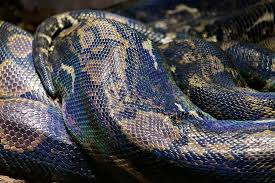
Another time, he was busy at work when she sent him a video and texted him to watch it right away. It was a revolting scene that showed a python swallowing a baby monkey.

Angrily, he called her and demanded to know why she sent him that video.

“Did you see? The python swallows the monkey and turns, looking eerily silent…something strange…”

“Isn’t the baby monkey unfortunate?”

“Snakes eat when they’re hungry–anything wrong in that?”

“Don’t send such videos anymore. Why would I look at them?”

“I liked the video so much I watched it 30 times today. You are my better half, so I shared it with you.”

 He cut the call with “Stupid”

It was two days before they spoke again. He became more enraged when she ignored his anger.

That Sunday, she made many of his favorite dishes. She deliberately wore a silk sari. Showered him with kisses; his anger melted away.

A few days later, she told him while leaving for work, “I’ll get a package; accept it but don’t open it. I’ll open it.”

“What package?” he asked.

“Surprise” she laughed.

A guy delivered a big box, just as she said. It came from Taiwan.

Despite being curious, he did not open it, not wanting to anger her.

Unusually, she called before coming home that day: “Did the package arrive?””

“They delivered it in the afternoon itself,” he said.

“Can I get you something from McDonalds?” she asked.

Knowing she wasn’t planning to cook, he replied, “Pick it up yourself.”

She asked, “What sweet would you like?”.

“I’ve given up sweets,” he said flatly.

She cut the line by saying, “Well, we’re eating today.”

Mirudhula came home carrying two bags. One package contained food and the other sweets. Was it her birthday today? He wondered. Then he remembered her birthday was on May 8th. He could not figure out what was special about that day.

 The package she carefully unwrapped contained a rubber python folded six times. She caressed it lovingly.

“Touch it and see how soft it is”

“What is this for, Mirudhula?” he asked.

“They have included a hand pump to inflate it; please help me,” she said

He took the hand pump and inflated the rubber python through a port. He watched it slowly expand. The snake unraveled to over ten feet of smooth coils. She wore it on her shoulders and smiled.

“Come close… let us wear it together,” she said.

As he grudgingly consented, she wrapped the inflated python around his shoulder as well.

“How is it? Can you feel the silky touch?” she asked.

“It feels strangely slimy, “he said as he tried shaking it off.

“I searched online and ordered it from Taiwan for 300 dollars,” she said.

“It’s not worth it. What made you buy it? I don’t like it,” said Ragav.

“I will spend my money as I wish. You like nothing.” She said, reclining on the sofa, hugging the python. He was a bit scared to look at her. As she stroked the python’s head, she stroked it with her cheek; only its tail was dangling outside the sofa.

“Ragav, I am thrilled today. Let us celebrate.”

“What is there to celebrate?”

“You won’t understand. Even before we were married, I said I was different. You even nodded your head.”

“That doesn’t mean you should have a Python at home… who would do that?”

“This is not a true snake, just a toy.”

“Why do you need a toy?”

“Then why do you have a fish tank? You like watching fish, right? Did I question it?”

“It is not the same.”

“It is all the same. Look Ragav. Whether you like it or not — us living together means compromising on some things I like.”

“There is no such rule.”

“No problem.  I don’t need your permission, anyway.” She laughed and sat down on the couch to watch an Italian channel. When she was angry, she would speak in a foreign language and watch foreign language channels.

Ragav locked himself in his room. His anger took a long time to subside. She might even bring the rubber python to the bedroom, he thought. Luckily, she left it on the sofa. She ate alone and came to bed as if nothing had happened.

She took the python to the bathroom the next day. She rubbed soap suds on it as she played with it in the shower. The wet python dried on the balcony.

He suppressed his rage and left for the office.

In the car, Mirudhula said, “You are overreacting, it’s just a toy.” This is like you playing video games; try to understand.”

He did not reply. That day, she drove him to his office on purpose. He came home to find the dried python in the hall, left there by the maid. He was furious.

When he touched its body, it felt like a snake but with motionless eyes. The plastic tongue twitched when he pressed its head. In the mirror, his visage looked strange as he wore the snake, like she did. It was such an expensive costume. What would someone from his hometown think? What is so special about this python?

 He deflated the python. Folding the rubber shell, he cast it in the kitchen corner. It was the first thing she looked for when Mirudhula got home at 9.30 pm. Not finding it, she shouted, “What did you do with the python?”

“It is in the kitchen”

“You would have deflated it, I know.” She said, walking to the kitchen.

“Yes. It is disgusting to look at.”

“The problem is yours. What you did is inevitable; you’re a pervert.”

“I’m not perverted. Does anyone else keep a python at home?”

“I don’t care if others keep it or not. I’m not like others.”

“You are adamant.”

“Yes. I am like that only.” She said, deliberately inflating the python with the hand pump. It grew much larger than its usual size. She walked to the bedroom, lovingly hugging the python. Loud music blared. Maybe she was dancing with the python.

Ragav slept on the sofa that night. The python accompanied her to work in the morning. In the lift, an old man asked her, “Is that a rubber toy? Where do they sell it?”

“Taiwan” she said, laughing.

“I’ve seen a python in the Assamese forests,” said the old man.

She put the python in the back seat. She did not drive him to work that day. He rode to work on his bike. He could not concentrate at work. When he spoke to his mother, he told her what had transpired.  His mother asked incredulously, “A rubber snake? Why did she buy it?”

“Who knows? She is a strange type.”

His mother was shocked. “Thank goodness she did not buy a live snake”

“She might even do that. I don’t know what to do.”

He heard his mother cursing in anger. Perhaps she spoke to Mirudhula’s father. Mirudhula’s mom called her the next day.

“Why did you talk to others about our problems?” Mirudhula demanded.

“I told my mother only.”

“Are you a schoolboy to run to your mother? What do you have in your mind? Am I crazy?”

“Yes.”

“I can’t live up to your expectations, Ragav.”

“I understood it very well long ago.”

“Then you better close your eyes and ears.  If you complain again like this to my folks, I do not know what I will do.”

“Why do you torture me? You can leave if you don’t like to live with me.”

“Why should I leave? I will stay here.”

“Well, I will leave then.”

Walking to the balcony with the python, she said, “It’s your choice.”. Leaning on the barrier, she held the snake up, and it wave in the air. To express his anger, he left for work early in the morning.

He arrived home late that night. The home was empty. He didn’t bother to look for her. She did not return the next day as well. He rang her father, but his father did not pick up the phone. After three days, Mirudhula called him one afternoon. “I have decided Ragav. I am leaving”              

“It is your choice.”

“The house cost me over two lakhs. You must return it. I have informed the owner that I will vacate the home, since I have paid for the advance. You better find a new place. Our marriage was a bad dream. That is all I can say.” She hung up.

Ragav thought she’d return after her anger subsided. He couldn’t stand her stubborn behavior. He wanted to call her back and give a piece of his mind. When he called again, she did not pick up the phone.

Upon returning home that night, he discovered she had emptied the house of her clothes and belongings. But she had left behind the rubber python, which lay alone in the middle of the hall.

Why did she leave it behind? It was the root of all their problems. What was she seeking? Her wants were so weird.

He kicked the rubber snake with his foot, but even then, his rage did not fade.

To vent his anger, he trampled the snake with his feet. After deflating it, he took it to the balcony and cast it into the wind.

 Flying in the air, the snake looked beautiful indeed. 

Glossary

Gulab jamun: Indian sweets

Diwali, Pongal: Festivals

S. Ramakrishnan is an eminent Tamil writer who has won the Sahitya Akademi Award in the Tamil Language category in 2018. He has published 10 novels, 20 collections of short stories, 75 collections of essays, 15 books for children, 3 books of translation and 9 plays. He also has a collection of interviews to his credit. His short stories are noted for their modern story-telling style in Tamil and have been translated and published in English, Malayalam, Hindi, Bengali, Telugu, Kannada and French.  

Dr.Chandramouli is a retired physician.. He is fluent in English and Tamil. He has done several English to Tamil, and Tami to English. He has published some of them.

.

PLEASE NOTE: ARTICLES CAN ONLY BE REPRODUCED IN OTHER SITES WITH DUE ACKNOWLEDGEMENT TO BORDERLESS JOURNAL