I forget the names of streets. My memory has slowed in time. I am just happy to be able to think with this mind.
I am often in the clouds with this mind thinking how long will it be when it rains again. I forget the exact date it did
rain. I know it was more than a month or maybe two months ago. I was looking at the sky
when the rain fell inside my eyes. I do not know what street I was at when the rain came down.
NAMING CLOUDS
I tried to name each cloud I saw throughout the day.
I called one dark angel which had a serpent’s tongue and a devil’s tail. Every time
I looked up was to name another cloud. Infierno
was the name I gave the hell cloud with its heart
on the outside. Hell I named it. Saintliness was far from
its design. Rimbaud I named another cloud just because.
I SAY ENOUGH
I say enough about the best and worst of times. It is nature and the cosmic voodoo of life that keeps this itch alive to let my anger, joy, and sadness out. What about love? I say a little about it some days too. I say enough of love when I am stuck in reflections of when I believed in such things. My cloudy mind is often lost in a shadow of doubt.
Born in Mexico, Luis Cuauhtémoc Berriozábal lives in California and works in the mental health field in Los Angeles. His poetry has appeared in Abramelin, Barbaric Yawp, Blue Collar Review, Borderless Journal, Fixator Press, Kendra Steiner Editions, Mad Swirl, The Literary Underground, and Unlikely Stories.
.
PLEASE NOTE: ARTICLES CAN ONLY BE REPRODUCED IN OTHER SITES WITH DUE ACKNOWLEDGEMENT TO BORDERLESS JOURNAL
“We’ll need to do more tests to determine what stage it’s in, but … yes, we’re sure.”
Megan sat motionless, her eyes fixed on the framed photograph of a colorful hot air balloon hanging on the office wall behind the oncologist. She wished it were her who clutched the balloon’s basket rail and drifted away toward the far hills and the sea beyond. But her husband’s grip on her left hand had tightened so much that it crushed her fingers and destroyed her ability to escape.
“I know this is a hard thing to be told,” Dr. Marcum said. “But we can fight this and, with luck, you can beat it.”
Megan managed a weak smile. “I’ve never been very lucky … except maybe marrying Ted and having Kaylee.”
“Maybe we can change your luck.”
“How much … how much time do I have?”
“That’ll depend on the severity of your disease and how it responds to treatment. If it’s localised, with surgery to remove part or all of the pancreas, the one-year survival rate is over 70%.”
“And if it has spread?”
“Well … that’s not good … 10% or less.”
The silence built. Megan let out a deep breath and continued to stare at the balloon photograph.
Ted cleared his throat. “So … so what’s next, doctor?”
“We’ll do PET and CT scans to get a good picture of what’s going on, check the liver and lymph nodes to see if the cancer has spread, do blood tests, and biopsy the tissue. Hopefully, we’ve caught it early; more testing will tell us. But … but you should know that most patients don’t report problems until the cancer has metastasized, which limits treatment options.”
Megan sighed. “Great, more tests and poking around just to narrow down how soon I will die.”
“We’ll do everything we can,” Dr. Marcum said.
“Thank you for that,” Ted whispered.
Afterward, the couple sat without speaking in their Subaru, the early September heat baking them slowly. Finally, Ted started the car and they drove home, taking the long way that skirted the coastline, the Pacific’s green waves breaking hard against the rocky shore.
“So what should I tell Kaylee?” Megan asked.
Ted chuckled. “She’s thirteen going on twenty-five. I think she can handle the truth.”
Megan sighed. “Yeah, she puts on a good act. But she’s still a little girl.”
“If you want, I can talk with her,” Ted offered.
“No, no. I’ll do it. She’s going to know that something’s wrong, especially if they recommend surgery. And then there’s the chemo and maybe even radiation.”
Ted ran his hands through his thinning hair and shivered. “I think we should wait until we know what we’re up against. After the tests we can tell Kaylee the whole truth.”
“Okay. But we can’t wait too long.”
*
The afternoon sun burned golden on the surface of the creek, just above the weir with its steelhead fish ladder. In the distance, the onslaught of Pacific breakers kept up a steady rumble. Megan and Kaylee sat on a bench shaded by a huge oak, taking a Saturday afternoon together, a break from schoolwork for the over-achieving girl, and a secret break from cancer for her mother.
Megan had grown thinner with dark circles under her eyes, testing finished and her first round of chemo scheduled for the following week. She stared at the three elegant male mallards that glided across the creek’s mirrored surface, chasing a lone female.
“I’ve something to tell you, Kaylee. But I don’t want to scare you.”
The girl turned to face her mother. “I think I already know.”
Megan’s eyes widened. “What do you know?”
“I found the test results of your scans and biopsy. You left them on the dining room table last week. I can read, you know. What I didn’t understand, I Googled.”
The two stared at each other. Kaylee’s lips trembled and tears filled her eyes.
“I’m sorry you had to find out that way. We were going to tell you but I wanted to make sure we had all the facts.”
“It’s not good, is it Mom?”
Megan sighed, admiring and at the same time resenting her daughter’s directness. “No, it’s not good.”
Kaylee came into her arms and they sat together in the warm shade, weeping silently. Megan remembered how, when Kaylee was a baby, she would strap her to her front and carry her everywhere, enjoying the warmth and pressure of the child’s body against her own.
“So what happens now?” Kaylee asked.
“Chemotherapy.”
“No … no surgery?”
“You know about surgery?”
Finally, they separated.
Kaylee frowned. “Yeah, people have a better chance of … of surviving it they remove the …”
Megan laid a hand on Kaylee’s arm. “It’s too late for surgery. The cancer has spread. The chemo might slow it down … but not stop it.”
“It’ll make you sick, right?”
“Yes … and I’ll probably lose my hair.” Megan grinned.
Kaylee seemed to ignore her mother’s last comment. She crossed her arms and rocked back and forth. “So … so you’re going to die?”
Damn, there’s that directness, probably gets it from me … and she seems angry, resentful. “Yes, Kaylee, I’m going to die.”
The words seemed to float out across the water into the dappled sunlight. The female mallard madly flapped her wings and flew upstream and out of sight, leaving the drakes alone and probably frustrated.
“But … but you can help me and your father. You will probably grow up faster than normal … and I’m sorry for that.”
“Mom, I’m 13 and I’ve already grown, you know.”
“Yes, yes, I can see that.” Megan chuckled and clutched Kaylee to her.
“I’ll help, Mom. Just tell me what you want.”
“Well for one thing, I want you to study hard in school, make friends, and don’t become some crazy teenager like I was.”
“Sure, Mom.” Kaylee rolled her eyes, paused, and then managed a quiet smile.
*
Their dust-covered SUV bounced along the farm road toward the line of sycamores, oaks, and willows that bordered the creek. Megan winced with every bounce of the car but kept smiling. Over the past six weeks she and Kaylee had developed a bond stronger than before cancer. It took her daughter that long to shed her anger and sadness and come to accept her mother’s condition, well, almost.
“Mom, just what the heck were you thinking with that wig?” Kaylee reached over and tugged on a long curl of blonde hair. “Are you trying to look like Dove Cameron?”
“Who the heck is Dove Cameron?”
“Come on, Mom. Don’t you know anything?”
“Evidently not. I was actually going for Dolly Parton. Always wanted to try being a blonde with big hair. But your father likes … liked my dark hair.”
“My turn. Who the heck is Dolly Parton? Is she that old lady singer?”
“Yes, I suppose she is. But she still looks great.”
Megan pulled the car onto the road’s fringe and parked. A patch of waist-high fennel bordered a drainage ditch.
She turned toward Kaylee. “I think this is a good spot to check. Didn’t you say that the swallowtails like to lay their eggs on fennel plants?”
“Yeah, this place looks cool.”
“Let’s see if we can find some of their eggs, or better yet, the caterpillars.”
Kaylee grinned. “Sounds good. I’ll get the jars and the clippers.”
The two scrambled from the car, both eager to do something that had nothing to do with cancer.
Kaylee moved quickly through the fennel, checking each plant. “I found some, I found some,” she called.
Megan joined her and they stared at two plants where green caterpillars, with black, orange and light blue markings vigorously munched away on leaves, stalks, and fronds. The duo had struck butterfly gold.
Kaylee unscrewed the tops of two quart-sized Mason jars. Megan carefully harvested parts of the fennel plants that held four caterpillars, placed them in the jars and closed the lids that were perforated with holes to let in air.
“That was quick,” Megan said, breathing in deeply, the black licorice smell of the fennel strong in the afternoon heat.
“Yeah. We could take more. But four should be enough for my science project. Miss Jasperson doesn’t want us to disturb nature any more than we have to.”
Kaylee had come to her mother complaining about having no idea for what to do for her eighth-grade project. With coaching from Megan, Kaylee had chosen the raising of butterflies because, “The swallowtails are so beautiful and I won’t have to kill anything to complete it.”
Megan had nodded, feeling that enough death had stared down their family and that maybe studying butterflies could bring them some joy.
“You know, Mom, my friend Tiffany has a butterfly tattooed on her shoulder. It looks really cool.”
Megan scowled. “Did her parents let her do that? Don’t you even think about doing such a thing. Tattoos are forever and you don’t want to mess up your body so early, then regret it.”
“Like you did with that Chinese symbol on your butt.”
Megan chuckled. “Yes, just like that. Time and body changes can be cruel to tattoos.” For a moment she thought that it might be fun to get her own butterfly tattoo, to carry that experience with her daughter to the grave, and maybe beyond.
Before they left, Kaylee took multiple photographs of the fennel plants, some with swallowtail eggs, some with caterpillars. As a freelance graphic artist, Megan had agreed to help prepare display boards and a slide show for her daughter’s class presentation, with close-up photos of all stages of anise swallowtail development.
Returning home, Kaylee set the Mason jars on her partially-shaded bedroom windowsill. The caterpillars proved to be voracious and every few days mother and daughter harvested more fennel for the fattening wigglies to eat. Finally, the caterpillars formed hard chrysalises and began the internal change process of becoming butterflies. Megan felt like she too should curl up and form a shell around herself, pray for change that would allow her to fly, to leave this life as something beautiful.
*
Within a couple of days, all four of the caterpillars had pupated, forming camouflaged green and brown chrysalises.
“How long before they emerge as butterflies?” Megan asked Kaylee.
“I’m not sure … I think just a few days. And some might not make it.”
“That would be sad … to go to all that trouble and never live to fly.”
“Yeah. We just have to keep watch and hope.”
The mother and daughter went quiet and Megan knew that her daughter was preparing herself for a poor outcome. So was Megan.
After about ten days, Megan grabbed Kaylee the minute she returned home from school and hauled her to her bedroom. The two stared at the butterfly jars, grinning. Three yellow and black swallowtails had emerged from their chrysalises and slowly beat their wings to dry them.
“Come on. Grab your cell phone for photos,” Megan said. “We need to release them.”
They returned to the fennel patch and carefully removed the new butterflies from their jars. The insects worked their wings slowly in the Indian summer sunlight before taking off and flitting toward the trees.
“What happens now?” Megan asked.
“They will search for a mate and the females will then lay eggs on the fennel plants. Then everything starts over.”
“You’ve read all about the mating part?”
Kaylee grinned. “Oh yeah. Some male butterflies go through quite a courtship dance, and the actual mating act can last for hours.”
“Sounds something like humans, although I’m not sure about that ‘lasting hours’ part.”
“Mom!”
“Sorry, didn’t mean to embarrass you. So, how long do swallowtails live after mating?”
“Maybe a couple of weeks.”
Megan sucked in a deep breath and turned away from her daughter.
“You okay, Mom?”
“Yes … yes,” she said and dabbed at her eyes. “I’m just glad I’ve had thirteen years with you and more with your father.”
“So am I.”
The duo returned to the car. “So what should we do with the last chrysalis?” Megan asked.
“We’ll keep it. A butterfly could come out in a few days.”
“Oh I hope so, honey. I love to see them flying away.”
*
Days passed, and then weeks. Megan started a second round of chemo that weakened her even further. She spent her time sitting on the front porch trying to read, but mostly just staring at the hills that surrounded the town, hills that turned magically from gold to green after the first autumn rain.
Every day, while Kaylee was at school Megan checked the butterfly jar. Nothing changed and she had the sinking feeling that it never would. Finally, she and Kaylee decided to get rid of the chrysalis to avoid the daily reminder of its fate. After Kaylee left for school, Megan grabbed the jar and shuffled onto the front porch, heading for the car. But she couldn’t think of killing or ditching it, at least not then, the idea was too painful. She opened Keylee’s old toy box, slid the jar inside, and closed the lid, out of sight and hopefully out of her dreams.
The late fall and winter rains settled in, a cheerless time for Megan, with Keylee away at school and Ted at work. She tried contacting her commercial art clients to see if they had any jobs that might distract her from the pain and dark thoughts of the future. But the economy seemed to be stagnant and many of her clients were doing their own artwork using a variety of software tools.
The second round of chemo ended, leaving Megan mostly bedridden. Dr. Marcum didn’t recommend radiation. Ted had hired a home healthcare worker to help Megan take her medications, and to do light housework and provide transportation. Kaylee spent her after-school time doing the same. Winter came and went, the air warmed, the hills glowed greenly, almost like those in photographs of Ireland. The apple tree in their front yard started leafing out. Confined to bed or a wheelchair, Megan spent most of the day watching TV or sitting on the front porch and gazing at nothing in particular.
One afternoon, as she meditated, knowing her passing was near, Kaylee climbed the porch steps and sat on the bench next to her.
“How are you, Mom? You look … lost in some kind of dream.”
“I’m good. I’m good. Just glad to have time with you and your father.”
Kaylee gazed at the surrounding hills then down at the dust-covered toy box resting next to Megan.
“Mom, why’s this old thing still here? I haven’t played with toys since I was little.”
“It wasn’t that long ago,” Megan cracked.
“Hey, I’m fourteen and I was six of seven then.”
“You’re right, that’s half your lifetime ago.”
Kaylee bent down to open the box. At that moment Megan remembered the discarded Mason jar and its unborn butterfly.
But Kaylee was too quick and had the box open and let out a squeal. “What’s this?”
The girl reached down and retrieved the butterfly jar. Inside it, a beautiful black and yellow anise swallowtail beat its wings slowly, trying to dry them before flight.
Megan sat forward in her wheelchair and stared, wide-eyed. “I … I put it there last October, couldn’t bring myself to kill it or just throw it away.”
“Well, I’m glad you didn’t. I can’t believe it lasted that long. Come on, let’s get the healthcare worker to drive us to the fennel patch and let it go.”
When they returned from their last butterfly release, Megan lay smiling in her room, gazing at the walls where Ted and Kaylee had pasted a cluster of swallowtails, cut from prints of digital photos taken for her daughter’s science project.
Kaylee entered and sat on the edge of the bed, excited. “I did some Internet research,” she began. “It seems that a change in light or maybe temperature can make some butterfly pupa go into hibernation, sort of like bears do in winter.”
“Really?”
“I think that’s what happened. It got cold or the light went away when you put the jar in the toy box … and it went to sleep.”
Megan sighed. “We were just lucky that we opened the box when we did.”
“I know, I know.” I’m going to tell my science teacher what happened. It’s so weird and really cool that they can hang out that long in their little shells.”
That evening, Megan lay in her hospital bed next to a snoring and exhausted Ted on his portable rollaway. She thought that her own hibernation of sorts was ending, that it was time to fly. The healthcare worker had given her a full dose of morphine to dull the sharp pain in her abdomen and back. In the dim glow of the nightlight, she stared at the swallowtails on the walls. They seemed to flutter and move in some sort of dance. She felt like she was one of them, having dried her wings, ready for the next stage as the royal purple night closed softly in.
*
“When were you going to tell me about those tattoos?” Erick asked, propping himself up in bed.
“Oh, during our honeymoon,” Kaylee said and laughed. “But neither of us could wait for that. Do you like them?”
“A whole flutter of butterflies across your beautiful shoulders … what’s not to like?”
“My mom got me interested in swallowtails when I was a young girl, got me interested in entomology and how strange and magical the lives of insects can be. And now, here I am with a PhD in Ent and teaching at the university, down the hall from you.”
“And here you are with me.”
“My mom would be happy.”
Swallow Tail Butterfly. From Public Domain
Terry Sanville lives in San Luis Obispo, California with his artist-poet wife (his in-house editor) and two plump cats (his in-house critics). He writes full time, producing stories, essays, and novels. His stories have been published by more than 480 different journals, magazines, and anthologies including Folio, Bryant Literary Review, and Shenandoah. Terry is a retired urban planner and an accomplished jazz and blues guitarist – who once played with a symphony orchestra backing up jazz legend George Shearing.
.
PLEASE NOTE: ARTICLES CAN ONLY BE REPRODUCED IN OTHER SITES WITH DUE ACKNOWLEDGEMENT TO BORDERLESS JOURNAL
Time has erased the road where I walked as a child. The last time I walked through here there were trees and grass.
Time has eroded everything. There is no shade, no flowers blooming, and no fruit on the vines. It is all rubble.
How sad it makes feel to see this road go away like if it never existed. I have only returned to say goodbye.
THE END OF SILENCE
I am almost at the end of silence. I am way past the end of love. Everything is almost over.
Where could I go now? And does it really matter? I feel the wind in my eyes. In a matter of time, I will be blind.
Summer is long gone. The glass is neither half empty nor half full. The leaves that fall at my feet will be followed by their mother trees.
I will spread out like a tortilla The sea will carry my remains away toward sunset like my will says. The sky will fill with clouds and birds will sing my goodbye song.
My time will soon run out. I could still hold out for a moment. I am as impassive as solitude. My eyes are fixed upon the sun.
Lay my soul to rest. Let me pass like all things.
THE FOG BELOW MY FEET
The ceiling has dropped. There is fog below my feet. The ceiling has dropped. I can barely see the street.
I can imagine this a meeting of ghosts gathering all around us. It must be their mouths blowing smoke out of a ghost cigarette.
I grounded my car. I left the keys on the nail. I grounded my car. If I drive, I am sure to fail.
I can imagine I am walking on clouds rising from the ground. It is nature, the fog-maker, reminding us to look out and slow down.
Art by John Constable ( 1776-1837). From Public Domain
Born in Mexico, Luis Cuauhtémoc Berriozábal lives in California and works in the mental health field in Los Angeles. His poetry has appeared in Abramelin, Barbaric Yawp, Blue Collar Review, Borderless Journal, Fixator Press, Kendra Steiner Editions, Mad Swirl, The Literary Undeground, and Unlikely Stories.
.
PLEASE NOTE: ARTICLES CAN ONLY BE REPRODUCED IN OTHER SITES WITH DUE ACKNOWLEDGEMENT TO BORDERLESS JOURNAL
“My gang members are lookin’ for a score and think there’s money inside a storefront full of old pianos.”
“How’s your gang going to steel a store full of pianos?”
“Those are Steinway pianos and handmade from the finest woods, metal, and copper. We’ll bust ‘em apart and sell the salvaged metal and wood. Get your ass over there and scope out the inside of the store for me.”
“You have until the end of the week or I’m throwin’ you out on the street.”
*
I never expected to find friendship in the most unlikely place, a dusty old piano store on Whittier Boulevard in an East Los Angeles barrio[1].
I stepped inside, greeted by the musty scent of wood and rusting metal. The store was quiet, almost sacred, and I was drawn to a black grand piano in the corner. As I pressed the keys, their voices rang out clear, strong, and unexpectedly comforting.
Suddenly, a head popped up from behind the piano.
“What are you doing here?”
“I just came into look around, Sir.”
“I’m Saul Bernstein, the store’s owner and a piano tuner by trade.”
“I’m Lupe Jimenez.”
“Do you play the piano?”
“No, but I’m curious about all these pianos. Do you sell them?”
“I run an orphanage for Steinways. These orphans are used, broken, abused, and seldom sell. They have souls and require a home just like people.”
“Where do they come from?”
“Some were rescued from burnt out homes, piano teachers with arthritic fingers who could no longer teach, and some from great performers who passed away. I gave them all a name. The gold grand Madame is ‘Goldie’. ’Red’ was owned by a famous singer songwriter who used it in his longstanding Las Vegas act. The others are called ‘Blackie’, ‘Ginger’, ‘Mira’ and ‘Rose’.”
Saul showed me the intricate insides of the Steinway, explaining how each string and key were crafted from beautiful wood and metals. The Steinways, he said, had personalities and stories including joy and tragedy just like lives. I watched as Saul spoke to them, dusted their keys, and shared memories of their former owners. In those moments, the store felt less like a place of business and more like a House of Worship.
Saul beckoned me over to “Goldie”, his hands steady as he opened the lid to reveal the intricate strings and hammers inside.
“Tuning a piano isn’t just about tightening strings. It’s about listening to what each note wants to say.” He pressed the key, and a slightly sour note rang out.
“Hear that? It’s off. Now, watch.”
He placed the tuning hammer on the pin and gently adjusted it, his ear close to the strings.
“You don’t force it. You coax it, like you’re persuading an old friend to sing again.”
He invited me to try. My hands trembled as I fitted the hammer onto the pin. Saul guided my fingers, showing me how to turn just enough, then play the note again.
“Now, listen for the waves resemble a beating sound. When the waves slow down and disappear, you’re in tune.”
I listened, adjusted, and played the note. The sound grew clearer, steadier. Saul smiled. “That’s it…You’re tuning not just the piano, but learning patience, care, and respect for the instrument.”
Saul became my mentor and friend. He taught me how to tune pianos, how to listen to the subtle differences in sound, and how to care for each instrument as if it were alive.
His passion was contagious, and I found myself returning day after day, eager to learn more.
*
My uncle pressed me for information, convinced the Steinways were worth a fortune if stripped for their materials. Torn between loyalty to my family and my growing affection for Saul and his Steinways, I invented stories to delay any plans for theft. Each day, the risk grew, but so did my resolve to protect the store and the friendship I’d found there.
The bell rang above the doorway one day and an ominous looking man with arms of steel, full of tattoos, wearing a red cap embroidered with “Ace” approached the counter. I witnessed that look of desperation in a man’s face many times before and feared for Saul’s safety.
“Where’s Saul?”
“Saul is over here tuning ‘Blackie’. How may I help you?”
“I’m Ace Menendez. You sold me a piano on an installment plan for my little girl.”
“I seem to remember you and a friend came in a big truck and picked up the piano. Is the instrument out of tune?”
“No, Sir. I’ve come to apologize for being three payments behind and ask for more time to bring the account current. My trucking business hauling shipping containers is suffering due to the strike at the port, and all the truckers in the neighborhood are struggling financially. It would break my daughter’s heart if you came to repossess the piano. My wife and I fear that without the discipline and love for the piano; she’ll fall victim to the crime elements in our poor neighbourhood.”
“When you’re ready to settle your account, just stop by.”
“Thank you, Mister Berstein. You have a big heart.”
“Tell that to my family wanting me to sell this joint. Vaya con Dio’s, Ace.”
I came to learn, Saul, ever generous, offered installment plans and low interest rates, caring more about the music and joy the Steinways brought than about profit.
He lived a sparse existence upstairs with only a cot, hotplate, while surviving on canned food, crackers, fruit, and his love for the Steinways sustained him.
Saul shared stories of the Steinways he tuned over the years, each with its own history and quirks.
“Every piano has a soul. And every tuner leaves a little piece of themselves behind.”
With each lesson, I grew more confident not just in tuning, but of myself. The shop became a place of transformation, where the music we coaxed from the old Steinways echoed the changes happening within me.
Saul watched as I gripped the tuning hammer, my knuckles white with concentration. I turned the pin, but the note wavered, stubbornly out of tune. Frustrated, I pressed the key again, harder this time, as if force would tune it into harmony.
“You’re fighting the piano. It’s not about strength. It’s about finesse.”
He took the hammer from me and demonstrated his movements slowly and deliberately.
“Hear those waves? That’s the sound of disagreement between the strings.Your job isn’t to overpower them, but to guide them into agreement.”
He handed the hammer back.
“Try again, but this time, breathe. Turn the pin just a hair, then listen. Let the sound tell you what it needs.”
I followed his instructions, turning the pin more carefully, my ear tuned to the subtle changes. The waves slowed, then faded. The note rang true.
“Remember, tuning a piano is a conversation, not a battle. If you listen, the piano will tell you when it’s ready.”
Saul wasn’t just teaching me about Steinways. He was teaching me patience, respect, and how to listen, not just to music, but to the world around me.
“Let’s tune ‘Mira’ who I rescued from a closed piano bar. She was soaked in decades of spilled booze and witness to trashy cocktail bar conversations.”
Saul watched as I struggled with the tuning hammer, frustration tightening my grip. The note wavered, refusing to settle. He gently placed his hand over mine, stopping me.
He took the hammer and demonstrated, his movements calm and precise. “Tuning a piano is like tending a garden. You can’t yank the weeds or drown the flowers. You have to be patient, gentle always giving each note what it needs to grow strong and true.”
He struck a key, letting the sound linger. “If you rush, you’ll miss the moment when the music is ready to bloom. But if you listen, really listen, you’ll hear when everything comes into harmony.”
He handed the hammer back to me. “This time, treat each string like a seed you’re coaxing to life.”
I breathed, relaxed my grip, and turned the pin with care. The waves in the sound slowed, then faded. The note rang clear and bright.
Saul smiled. “With patience and respect, you help the piano find its voice and your own along the way. Life is much the same. Sometimes, you can’t force things to happen.You have to listen to what life is telling you, make small adjustments, and trust that, with time, things will come into tune.”
I realized Saul wasn’t just teaching me about tuning a piano. Saul taught me how to live a life of harmony.
*
The next time my uncle pressed me for information about the store, I remembered Saul’s advice.“You have to listen to what life is telling you, make small adjustments, and trust that, with time, things will come into tune.”
I paused and listened to my conscience. I could make small, careful choices to protect what mattered. I lied telling my uncle that the store was under CCTV surveillance including a silent alarm system, a warning that steered him away without confrontation.
*
When I struggled at public school, frustrated by lessons that never seemed to stick, I recalled Saul’s metaphor. I stopped blaming myself for not learning as quickly as others. Instead, I adjusted my approach, asking for help, taking breaks, and celebrating small victories. Gradually, things began to make sense, and my confidence grew. I was told I could earn a scholarship to college to study music. I wanted to share the good news with Saul.
After school, I ran to the store and found Saul on his knees gripping his chest. I phoned for help. The paramedics told me Saul suffered a heart attack and invited me to ride to the emergency room with them. Saul gripped my hand and smiled. “I’m as tough as piano strings. I keep a card inside my wallet with my family emergency contacts for the hospital.Remember what I told you, ‘…every tuner leaves a little piece of themselves behind.’I hope a little piece of me is left behind inside you, Lupe.”
The doctor informed me Saul passed away, and the family was on its way. He handed me the keys to the store saying Saul had instructed him to place them in my possession.
Saul took a big piece of me with him to the beyond and the fate of the Steinways hung in the balance. I faced a chorus of doubts and obstacles, remembering,“Don’t force, listen.”
*
I reached out to the community, listened to their ideas, and coordinated efforts with patience and care. I was told to visit the neighborhood parish and speak with the priest who took me to a school for developmentally disabled children.
It was a room of beaten up, out-of-tune, upright pianos with eager students stridently following the teacher’s instructions. Others simply tried their best, pounding on the keys.
“Piano music is a miracle and enables these learning-disabled children to find joy and a sense of accomplishment in playing the piano. I’ll make inquiries with fellow priests, and we’ll pray for a home for Saul’s Steinways. The logistics of moving those heavy Steinways may be insurmountable.”
I learned to trust the process, and to believe that, with time and care, even the most troublesome moments could come into harmony like Saul’s garden metaphor.
*
Night had fallen over Whittier Boulevard. The streetlights flickering outside the dusty windows of the piano store. I stood inside the store, surrounded by the silent witnesses of my transformation, Saul’s beloved Steinways.
My uncle’s voice echoed in my mind, his demand clear:
“Tonight is the night!”
The gang was waiting. All I had to do was unlock the door and let them in.
I gripped the tuning hammer Saul had given me, its weight familiar and comforting. Memories flooded back about Saul’s gentle guidance, his stories, the metaphor he’d shared: “Tuning a piano is like tuning your life. You can’t force harmony; you have to listen, make small adjustments, and trust that, with patience, things will come into tune.”
My heart pounded. I could betray Saul’s legacy, give in to fear and loyalty to my uncle, or I could honour the music, the lessons, and the hope these Steinways represented.
I closed my eyes and listened to the notes from each piano signaling my decision. I imagined more children, their faces alight with joy as they played the rescued Steinways. I remembered Saul’s faith in me, his belief that I could choose a different path.
With trembling hands, I locked the door from the inside and dialed the police. As sirens approached, I stood by the Steinways, ready to face the consequences of my choice.
The gang sped away, but I remained, surrounded by the instruments that had given me a second chance. In that moment, I understood Saul’s lesson fully, “Sometimes, the hardest notes to tune are the ones inside us. But with patience, courage, and a willingness to listen, even the most discordant life can find its harmony.”
*
Without Saul, the piano store no longer felt like a happy orphanage for rescued Steinways but a dark, soulless, graveyard. His family, overwhelmed by grief and unable to afford to move the Steinways, decided to dismantle them for scrap. The thought of those beautiful instruments, each with its own story, each witness to Saul’s kindness being destroyed was unbearable.
Desperate, I remembered Saul’s lesson: “You can’t force harmony; you have to listen, make small adjustments, and trust that, with patience, things will come into tune.”
I reached out again to the community and anyone who might care. The parish priest had found a network of schools inside Mexico in need of pianos. Word spread, and soon a group of neighbourhood truckers led by Ace volunteered their time and their trucks. The plan was bold: we would transport the Steinways to poor schools in Mexico, where children with learning disabilities and limited resources could discover the joy of the Steinways.
*
On the moving day, a procession of battered trucks lined up outside the store. Men and women from the neighbourhood, some who had never set foot in the shop before, worked together to carefully load each piano. The journey was long and uncertain, but the spirit of Saul’s generosity guided us.
The Steinways found new homes in schools where children’s laughter and music filled the halls. I watched as students, many barely able to speak, some communicating only in sign language, sat at the old Steinways and played with wonder and delight. The instruments, once gathering dust, now sang again.
After betraying my uncle and the gang, I couldn’t return home. The priest arranged for me to move into a parochial school with boarding facilities run by a nunnery.
*
Years passed. I grew up carrying Saul’s lessons with me. Eventually, I returned to one of those schools, this time as a teacher. On my first day, I walked into a classroom filled with the very Steinways we had rescued. Their familiar shapes and worn keys greeted me like old friends.
“Hello, class. I’m Ms. Jimenez, your piano teacher. I was once a young person like you sitting in front of a grand piano called a Steinway. Don’t fear it’s size or complexity. Make it your friend, trust it, and it will take you on a journey into happiness you can’t yet realise.”
I realised that Saul’s legacy lived on inside me, not just in the music, but in every child who found their voice through these instruments. The harmony I had sought for so long was engrained inside my soul and spilled into the lives of those who needed it most.
And in the quiet moments, when the sun set over the schoolyard and the last notes faded, I would whisper a thank you to Saul, knowing that, together, we had tuned not just Steinways, but futures.
“With patience and respect, you help not just a piano, but your own life, find its voice.”
Jonathan B Ferrini has published over eighty stories and poems. A partial collection of his stories has been included in Heart’s Without Sleeves: Twenty-Three Stories available at Amazon. Jonathan hosts a weekly podcast about film, television, and music, titled “The Razor’s Ink Podcast with Jonathan Ferrini”. He received his MFA in motion picture and television production from UCLA and resides in San Diego, California.
.
PLEASE NOTE: ARTICLES CAN ONLY BE REPRODUCED IN OTHER SITES WITH DUE ACKNOWLEDGEMENT TO BORDERLESS JOURNAL
We’re looking for one in particular. We find 130 Michael Smiths.
I’m standing at the kitchen counter chopping an onion at eleven in the morning. We’ve just walked seven miles, on what feels like the first day of spring. Real spring: The sky is blue, the maples are in lush full leaf, the ferns along the east side of our house are burgeoning. The birds are so noisy even with these bad ears of mine I can hear them. Ten minutes into our walk I pull off one of my two layers, the long sleeve shirt.
“That’s a lot of Michael Smiths,” I say now. Tizi is looking for him on her IPad.
And I’m thinking, there could be a joke– How many Michael Smiths does it take to…? But it’s 130 obituaries we’ve found. An obituary is not funny.
Earlier today, on our walk to the top of Van Ness, an avenue of maples near our house, we stopped and talked to Carol, a friend from the local senior center, which we abandoned during the plague, then never went back to, post-Covid.
“Will you look at us,” she says to Tizi, pointing first at her own hair, then at Tizi’s. Both gorgeous silver. Carol is sleek, energetic and funny. This morning she’s dressed in slim jeans, a gray fleece, and running shoes. When we walk up her driveway she’s stabbing a weeding fork into dandelions along her front sidewalk. She says her house is too big. She’s lived here, post-divorce, thirty some years. Too many flower beds, she says. Too much work. When I ask, she says her hip replacements were a great success. Yes, she tells Tizi, she did go back to the senior center, where there are some of the same people. And there are those, like us, who never came back. And, she says, there are some new seniors too. I think: Does that make us old seniors?
“What about Ed?” Tizi asks.
I know she’s afraid to ask. Ed’s the trumpet player. Ed’s the leader of the senior center big band. Occasionally he took the elevator downstairs to the exercise machines and didn’t exercise. Mostly he sat at the round table upstairs, drank coffee, and dispensed witticisms. A few years ago, we missed his 90th birthday bash. He had a yellow Corvette in the parking lot but didn’t drive much. One Tuesday nights, I took him (or he took me) to a jazz jam session over on Woodward Avenue. We sat through two sets. Every so often, he wiped tears from his eyes. He drank one glass of beer.
“Gone,” Carol says now.
Tizi shakes her head. “I knew it.”
Carol says, well, Ed was 92. “But Michael Smith?”
He was a young senior, with a shock of very premature gray hair and a wicked sense of humour. He had no business being a senior. And now, he has no business being dead.
*
Like Carol I think about the flower beds. And the basement. And a spare room upstairs. Every house has a junk drawer. We have a junk room. At our age, you begin to reckon with the too-muchness of a house. At least I do. Tizi not so much.
Part of the problem is accidental shopping. We try to avoid Home Goods. There’s one right next to Costco. If you’re waiting for Costco to open, you can kill time at Home Goods. But there’s peril. We don’t need another pan, another serving dish. We have enough tongs. When I open kitchen and bathroom and mudroom cupboards, I find soaps we bought at Home Goods and forgot about.
I find soaps with a French accent–savon pour les mains (soothing, it says on the label, soft cotton), three 17-ounce pump bottles of those. I also find Lemon Verbena made by or for aromatherapy rituals; Ginger Mandarin Hand Soap, which, according to the label, is “pure and good”, biodegradable and plant-based; we have Rain Forest Collection of Ecological Products (meaning, judging from the look of them, soaps); we have Thyme Vegetal Soap and Cedar Vegetal Soap; Kirk’s Original Coco Castile pure botanical coconut oil 100% natural hypoallergenic skin care with no synthetic detergents soap. We have The Chef’s Soap (not A chef’s soap) also made in France. All that soap makes me want to get dirty. It also tells me don’t buy any more soap, maybe ever.
Online shopping has exacerbated the problem. It’s too easy to buy stuff.
A helpful message popped up on my phone one day. I’m paying too much for hearing aids was the message. That day, it just so happened, I came home from Shake Shack, a stressful outing with a grandson involving touch screen menus and digital ordering and a flood of hungry young professionals, and I was missing one of my hearing aids. I tried calling. Did you find a small electrical thingie on the floor… and learned if you press 1 you can place your order and if you press 2 you can leave a message for the manager but really you really can’t. Press 2 and you go nowhere. They don’t ever say wait for the beep. There’s no beep. I pictured Big Beaver lunch traffic passing through Shake Shack, my dinky, obscenely expensive device under foot, smashed.
This ad on my phone said, “Get new hearing aids for less than $100!”
They arrived two days later. The operating instructions, a 12-page manual only slightly larger than a postage stamp, said it can take up to two weeks to get used to them. I lasted three days. The problem was feedback, annoying high-pitched squealing coming from the direction of my head. I could hear the feedback just fine. The frequency-adjusted audible world that came to me sounded like sharpened knives. Tizi said, “What’s that noise?” She meant the feedback. The one-button control panel on the side of these things, which are the size of a peanut inserted into your ears, is no bigger than the head of a pin. Press the head of the pin three times to adjust volume. Squeal. Hold the head of the pin down for three seconds to change the mode. Squeal.
When my father got old and wore hearing aids, his fingers were always in his ears, adjusting, pressing, fiddling, which I think now, in my case, is only slightly less unsightly than a finger up my nose. No one wants to see that. I am becoming my father. Deaf, like him. Old.
I sent them back.
*
Poor Michael Smith. We never find the obit. Nor the death notice
Next day I’m thinking about him again, walking out of a local market, and I see Ted. I’d see him at the senior center, too, but he and I go back a number of years. We go way back to the BC (before Covid) years, to the years our kids were in school together. He is heavier. He has unkempt gray hair and an unruly goatee.
He squints as we pass each other in the parking lot. “I know you,” he says.
“Ted,” I say.
“What’s your name?”
The look of irrecognition is on his face, in his eyes. I tell him my name, feeling a shiver of alarm. He says, “How do I know you? Do you go up North?”
I say yes, we go up North. I tell him we’ve been to his house up there. This doesn’t register. He’s trying to puzzle it out. I can see he’s tired of puzzles. “We sat all those nights by the Herman’s pool?”
“The Hermans,” he says. He gets that. Then: “Whatever happened to them?”
I feel a moment of panic of my own when I can’t remember his wife’s name. I ask, Grandchildren? Yes, he has two.
“We’ve got three,” I say. “We’re going to California on Tuesday to see the new one.”
He asks again, “Do you go up north?” If he knows me, I can’t tell. He has other things not on his mind.
When I get home, I tell Tizi. She says she surprised Ellen lets him drive.
Ellen, I think. That’s right.
Before lunch I step outside to walk around the house, to feel the spring air again, to stand in the sun. In Tizi’s patch of trillium we have a lump of rock that’s a foot tall and comes to kind of a point on top. Every year on a day like today we’re likely to see a chipmunk perched on top of it, looking around in its nervous, jerky chipmunk manner. This is one of those days. It’s the first chipmunk day of the year. I can’t hear it chipping and chattering, but I know it does that.
What I do hear is a sound in the distance. At first, I think, electric bicycle, the distinct whine as it picks up speed, probably just down the street. Then I realise, no, it’s a motorcycle accelerating, running through the gears in the far distance, going who knows where, fast, and enjoying it.
.
Rick Bailey blogs about family and friends, home and travel, food and wine, the odd and ordinary in everyday life. He has published four collections of essays, a memoir, and a novel.
.
PLEASE NOTE: ARTICLES CAN ONLY BE REPRODUCED IN OTHER SITES WITH DUE ACKNOWLEDGEMENT TO BORDERLESS JOURNAL
When I was five years old, my father transported our impoverished family from the banks of the Licking River in Eastern Kentucky to Bound Brook, New Jersey, just off a tributary of the Raritan River. My mother had not wanted to leave her beloved Kentucky or depart from her numerous kin there, but she did want to stay married. And my father wanted to find work and get away from anything connected to hollows, moonshine, and that old-time religion. Mother also hoped that she, and especially her four children (with a fifth on the way), would be better off. As it turned out, we children mostly were, while she likely wasn’t.
My father chose Bound Brook, New Jersey, because he planned to work in the trucking business managed by his older brother. In Bound Brook, my father moved us into a place described as “Garden Apartments,” but there weren’t any gardens. It was post WWII housing, mainly for immigrants and working class people who could not afford to buy homes. Since I had been transported from a shack in Appalachia, the two-bedroom apartment in New Jersey, even for parents with five kids, seemed palatial: A bathtub and flush toilet! Hardwood floors! A gas stove and oven! Sidewalks, and even a nearby building for doing laundry. Stupendous, indeed!
Bound Brook, New Jersey, was a town where most people worked in restaurants, retail, construction, trucking, and schools; plus, there were countless employees at a couple of highly polluting chemical plants located just above the west end of town. (Sometimes strange odors and actual particles released from American Cyanamid drifted into our schoolyards, homes and playing fields.) I considered townspeople who were low-level bankers and teachers wealthy. Of course we all knew a few kids whose parents were doctors, high-level bankers, or businessmen. Those were the really rich people who did not live in project-style apartments or in low-income housing in the sections of town populated by immigrant Poles, Italians and Irish, with perhaps a random exotic Cuban or Indian family. It was rare to see a Black person or hear Spanish in Bound Brook in the 1950s.
In Kentucky, my mother was a vibrant woman who worked in the County Courthouse. Living in New Jersey, she devolved into a burdened housewife with no local kin and no capacity to access a new community or social life. When the sixth child was on the way, the apartment management informed my parents that they had to move out because they had too many kids. Our family was given two days to leave or pay an extra month’s rent, and regardless, we were being evicted. It happened that there was some new home construction on our west end, near a brook that occasionally overflowed its banks. I knew about the development because we local children frequented the site to steal plywood, tarpaper, and nails to construct lean-tos down the brook. We also nabbed construction cable, which the big kids affixed to tree limbs to make sturdy “Tarzan” swings for sailing from bank to bank across the brook.
At age eleven, I surreptitiously joined a group tour of the model home in the completed new development, where the available space and the fancy furniture smote me. I raced back to our apartment to tell my mother about the model house, and she sent my father over to take a look. Fortuitously, he ran across a salesperson that informed him that as a veteran of WWII, he qualified for mortgage and down payment assistance. Child number six arrived shortly after we moved into one of the newly constructed homes in the development. Then, deep into the following year, my Mother delivered my youngest brother, child number seven. Our new house afforded a shared bedroom for me and my two younger sisters, and an elongated attic room for the four boys.
Sadly, as the duration of her stay in New Jersey and the number of kids in our family increased, my Mother’s mental state diminished. She went from intimidation and apprehension about her life in Bound Brook to what could have been clinically diagnosed as agoraphobia and paranoia. In Kentucky she had been a proud and self-confident woman; in New Jersey she was increasingly unkempt, unhinged, and functionally disabled. I remember having to fake her signature on my report card and school permission slips because she was too distracted to sign or even look at paperwork; in fact, she opted out of most any activity not related to basic household management and cooking.
Without filtering her outbursts, my mother jabbered with religious fervor about her afflictions and her rage at our father who had brought her to New Jersey. She lamented that she would not live long enough to see us grow up. She sang sad and sometimes-scary gospel tunes like, “The Old Rugged Cross,” with lyrics about suffering and shame. She also warned us about rich “Republican snakes” that didn’t care about poor people, and dangerous immigrants with funny-sounding names who spoke strange languages (Polish, Italian). She denigrated both poor Black people and neighbouring Jewish people who didn’t love Jesus the way that she did. And she did love Jesus, and the church, even though she thought church people up North dressed too fancy, sang without spirit, and passed the collection plate with too many expectations. She loved us kids unconditionally, while often relying upon us for the basics of daily living. She was unhappy in her marriage and with living in New Jersey, but she was proud of her children, despite her disappointment when most of us went hippie and unchurched and, worse, two voted Republican.
Sports events and churches consolidated the people in the town of Bound Brook. Officials and functionaries would save your soul if you let them, and, if you were male, tone your body. My brothers were better than good enough at sports, which won them friends, attracted mentors, and enabled them to acquire college scholarships.
I was an excellent gymnast, runner, fielder, and could handle baseballs, basketballs and footballs as well as many boys. And I could maneuver a cable swing and play ping-pong better than most boys. At an inter-school Sports Field Day, I won all six of the proffered blue ribbons. Nonetheless, I didn’t get scholarships, rewards, or accolades. Instead I was mocked as a tomboy for wearing sports attire, and teased as a “skinny-bones” because I didn’t eat or grow much. After leaving rural Kentucky where I was used to drinking raw milk, the New Jersey pasteurised milk did not taste right, and my mother was reduced to serving canned vegetables and mystery meat from a supermarket. I hated the ground meat, hot dogs, and strange overcooked vegetables she served up. So I mostly didn’t eat. At a time when women were expected to be voluptuous and alluring, I was lean and agile. I hated New Jersey.
In fact, I never embraced living in NJ the way I “owned” my early years in Eastern Kentucky and my adult years in New York City. My best friend Janice said whenever she told people she was born in New Jersey, they laughed. She even wrote a song about that. I wasn’t born in New Jersey, but had enough of it imposed upon me to understand the song. Although there were plenty of kids to play with and make “fun trouble” with in the apartments and in our new housing development, I was bullied by big (literally) girls in the neighbourhood, and spurned at school by stylish girls from the better-heeled households. To survive, I became fleet of foot and quick of tongue, able to either run away from dicey situations or talk my way out of them. I fully realised I had to get out of Bound Brook, New Jersey.
In the interest of fairness, I must report that in the late 1950’s and early 1960’s Bound Brook had excellent schools and recreation facilities. Unfortunately, I had not attended any school in Kentucky, so, upon entering elementary school for the first time, I was both shy and academically lost. I also suffered from undiagnosed dyslexia, so I didn’t learn to read until almost 6th grade and never learned to write script, to the chagrin of teachers charged with improving me. Self-conscious about my “hillbilly” accent, I also did not talk at school, a definite deterrent to making friends and getting teacher approval.
I finally caught up by playing and sparring with the kids on the west end, many of whom had worse family situations than me and had the kind of personal and academic issues that were not going to resolve with time. (Being a west end kid certainly informed me that the required “Dick and Jane” school readers did not represent most families.) By the end of fifth grade I could read slowly, print neatly, and participate orally in classes. Best of all, I learned about the local library where I took refuge and read about places and events beyond what I was exposed to at home or in school. I was determined to find a way out of New Jersey.
By high school I was considered one of the smart students who was also a discipline problem. I understood socio-economic differences and realised (without knowing the specified words) that I was from a home with domestic abuse and child neglect. We kids were essentially on our own because our mother had checked out mentally and our father was irritable, sullen and mostly absent. (His absence was a good thing, considering his PTSD rage disorder from WWII.) Never really fitting in either at school or in the neighborhood, I engaged in bravado and resentment to camouflage my fears and vulnerability.
While most of us west end kids were petty thieves and street combatants, my weapon of choice became wit. I assailed bad teachers with derision, mockery, and scorn, refusing to cave to silly authoritarian directives and relentlessly challenging their biased views or misinformation. In short, I was learning about and exposing racism (then called “prejudice”) and political manipulation (still called “patriotism”).
The good and honest teachers admired my audacity and laughed at my antics, but the bad teachers were threatened and became vindictive. I teamed up with Grace, a classmate from the neighbourhood. She came from a single parent household (rare for Bound Brook in the early 1960’s), and lived in one of those so-called garden apartments with her mother. Suffice it to say, Grace and I created a lot of “smart trouble” at school. Soon we were not allowed to be in the same classroom. Worse, despite my qualifying grades, I was barred from the National Honor Society and kicked out of senior English. I had to report to the guidance office where I befriended the guidance counselor, who arranged for me to graduate despite my not completing the English requirement. This all probably happened because English was my best subject, and I was beginning to nurture my lifetime commitment to human rights and civil rights. I held New Jersey in contempt.
I desperately wanted to get out of Bound Brook and away from my home life, but I had no information, experience, or resources to facilitate those yearnings. I had never even traveled to another town by bus or train.
Toward the end of my senior year, I got work at the local recreation center, where I met a woman who was attending Montclair State College. (At the time, Montclair was the best of the New Jersey State colleges.) My older brother was putting himself through Rutgers State University, where female applicants were relegated to their Douglas College campus, close enough to Bound Brook to have required me to live at home and commute. At the last minute, I mailed an application to Montclair State and got a late acceptance with a State Scholarship that covered the $150 annual tuition, without which I could not have attended. Best of all, I was required to find housing near the college, away from home.
I had managed to escape Bound Brook but not New Jersey. I only had enough savings to live off-campus and attend college for one year, so I was prepared to drop out when President Lyndon Johnson saved me by signing the Economic Opportunity Act. Based on family income, I was part of the first wave of acceptances. Yes, to socialism and good government! I was grateful and shocked to receive money for housing, books and general spending.
Moving onto the 7th floor of a new dormitory with a stunning view of the New York City skyline, I rejoiced. Furthermore, because of Montclair State’s proximity to New York City, I was able to partake of a broad liberal education in the arts and sciences. I could actually envision departing New Jersey, so I vowed never to use Bound Brook as my mailing address again. (As it turned out, my instincts were correct: the two of our seven siblings who remained in Bound Brook eventually voted unabashedly for Donald J. Trump.)
Still, my transition out of New Jersey was a long and winding road. I returned to the State (though not to live in Bound Brook) a couple of times for temporary work or educational opportunities, and I never abandoned my New Jersey family or friends. My escape route led me to explore living in Berkeley, California; Bangkok, Thailand; Hiroshima, Japan; Honolulu, Hawaii, and, finally, to settle permanently in Greenwich Village in New York City. My daughter was raised as a proudly triumphant New Yorker.
It was, therefore, not exactly serendipitous that in my early 70s I returned to the place of my former captivity: the state of New Jersey. My choosing a late-life summer residence in the Garden State just kind of happened. My sister and I had been looking in Cape Cod, Massachusetts for places to rent or buy near the ocean, bay or sound. At the time, I was living alone in New York City and Karla lived in Massachusetts. I wanted a get-away place; she was seeking a year-round home. After a couple of thwarted attempts and some financial reality testing, we conceded we could not afford Cape Cod.
Back in New York, we investigated numerous beach towns, with similar financial results. Then, in the New York Times, I read that Asbury Park, on the north coast of the New Jersey shore, was undergoing massively successful development. With more trepidation than excitement, Karla and I hopped on New Jersey Transit to check out the Asbury Park options. We were in the habit of referring to our old home State as “New F*cking Jersey” and reassured each other that “Down the Shore” is not the same thing as NFJ!
From my youth and during the early days of my marriage, New Jersey towns along the ocean were not unfamiliar to me. In the 1980’s, my husband and I had joined resources with our New York City friends to rent summerhouses in towns close to the ocean. We were emulating our previous summer rentals in the Hamptons, except none of it was like the Hamptons or Amagansett. It was New Jersey.
The Garden State has the shore, not snooty beach towns. You go “down the shore,” not to the beach. The Jersey shore is much cheaper than the Hamptons, but also has far less cache. Thankfully, most of the Jersey Shore is also not like the TV series of that name, at least in the experience of my friends, who were college professors, psychotherapists, artists, or in media-related professions.
In the late 1980’s the shore rentals in New Jersey were affordable, the commute was a dream, and the ocean was fabulous, even if the food and entertainment were not top notch. Of course this was the early days of Bruce Springsteen, so we knew about the Stone Pony, but the town and boardwalk areas of Asbury Park were a wreck. We also knew that next to Asbury Park was an odd little town called Ocean Grove, which was developed and managed by the Methodist Church Camp Meeting Association. The church people did not allow driving on Sunday or the sale of liquor at any time. Entry to the beach was blocked until noon on Sunday mornings. (You were supposed to be in church at that time.) At best, we New Yorkers, many Jewish and all borderline atheists, thought this Ocean Grove place was endearingly bizarre.
We stuck to upscale towns like Spring Lake for our summer rentals. By 1992, when I was 47 years old, we ended our group rentals in New Jersey and eventually most of the friends and their marriages dissipated.
It was not until 2016, when I was 71-years-old, that my sister Karla and I sadly discovered, on a sweltering summer day, that the newly renovated Asbury Park was also not affordable. Dismayed, we crossed an inviting footbridge in Asbury that led to the Ocean Grove side of the Wesley Lake estuary. Meandering around the quiet, spiritually immersed town, we noted the striking contrast to bustling Asbury Park.
Needing a cool down, we spotted an air-conditioned realtor’s office and inquired, without enthusiasm, about properties near the ocean. The prices were considerably cheaper than Asbury and the town was charming, but could we contend with the controlling Methodists? (Certainly our Mother would have approved!) The realtor patiently showed us a couple of listings on the market, but none were very appealing.
As an afterthought, probably because she was kind, it was a slow day, and we were likeable, the agent mentioned that next door to her home was a large Victorian house that had been converted to condos a couple of decades ago. The gaudy blue structure was facing the ocean and included a small 2-bedroom apartment, which had been languishing vacant and unsold for about ten years. We asked to see it, and despite the heat, the realtor agreed to climb over thirty steps in the giant house to show us an unpolished, but fully furnished, top floor unit. A series of convoluted real estate and legal processes that dragged out for a year (plus simple naive luck) enabled us to purchase this condo in the turret (meaning attic) of a magnificent old house, with ocean views throughout. Yes, it was located in Ocean Grove, NEW JERSEY!
Nowadays, I very much enjoy spending my summers down the shore, gazing at the sea from our New Jersey condo and happily catching waves in the buoyant salty water. (Fortunately, my sister lives there year-round to help maintain it.) It is indeed ironic that lacking finances, but having good fortune, delivered me “down the shore” for the summers of my elderhood. Have I come to terms with NFJ? Recently, I had lunch with a nephew visiting me in New York City. When he nonchalantly asked if I ever considered living year-round down the Jersey shore, I let out a resounding, “NOOO!”
.
Karen Beatty’s work appears in over 30 publications, including Chicken Soup for the Soul, Books Ireland, Non Binary Review, and Mud Season Review. Her novel, Dodging Prayers and Bullets, was published in 2023.
.
PLEASE NOTE: ARTICLES CAN ONLY BE REPRODUCED IN OTHER SITES WITH DUE ACKNOWLEDGEMENT TO BORDERLESS JOURNAL
What if I crossed the border after 50 springs, summers, falls, and winters? After all the learning, the forgetting, the labour, and lost loves, after all the growing pains, the births, deaths, and family joys and tragedies? What if I returned to the land of my youth, a much older man than the seven-year-old, wide-eyed boy? I will offer the best of me. Who will offer me the best of them? I will have to find a place to call home, a seat at a table where I will have my meals, a place where I could have a conversation with someone other than myself, a room where I could read and write, and most of all sleep. Who will break bread with me, help me decorate the house with books and flowers, with paintings and plants, and share stories, laughter, and wine from time to time? As I write these words, other words are being twisted, designed to make people like me to return to the place of our birth, if we are fortunate enough.
BUCKETFUL OF RAIN
If it is goodbye, I could use a bucketful of rain to drench this fire. Reduce it to smoke before this heart becomes ash.
Even the light trembles and the sun is blushing seeing this conflagration. I should have seen the signs but I hope too much.
Play that violin soft and slow. Speed up the pace as the fire spreads out of control. I can take the heat just a little bit longer.
LIMITS
I climb the branch to the flower; the spider-from-mars’ web-to-the-stars; I flow and fly with the wind further still; through time and newborn worlds; I allow my thoughts to remain on earth; keep the sun and magnifying glass away from me; even an ant has its limits.
Luis Cuauhtémoc Berriozábal was born in Mexico, lives in California, and works in Los Angeles.He has been published in Blue Collar Review, Borderless Journal, Chiron Review, Kendra SteinerEditions, Mad Swirl, and Unlikely Stories. His most recent poems have appeared in Four FeathersPress.
.
PLEASE NOTE: ARTICLES CAN ONLY BE REPRODUCED IN OTHER SITES WITH DUE ACKNOWLEDGEMENT TO BORDERLESS JOURNAL
Art by Frederic Edwin Church(1826–1900). From Public Domian
I WANT SPRING

As autumn begins
I want spring.
I don’t want winter.
I don’t want summer.
I want spring.

I am straying from
the current
season. I want to
go away to spring.

Carry me off through
all the bers, September,
October, November,
and December.

Take me away from
the rys, January and
February. I do not
need to make any
resolutions on the
year’s first day. I do not
need Valentine’s Day.

I want spring.
I want spring
all in bloom.


WHEN AUTUMN COMES

My hands are full
living in solitude.
I love a little less
when I feel destroyed.

I feel anti-social
when autumn comes.
This is just a phase
I have stretched out.

I inaugurated sadness.
I curse the owl
that predicts my fate.
It does not like me.

I will love again.
I feel it in my skin.
I know it sounds absurd.
But I will love again.


IN THE SHADOW OF NIGHT

Stumbling in the shadow of night
where the scarcity of light bleeds
over what could not be seen. It
could be a monster or fiend or friend.

It is easy for me to pretend what
is not there. I don’t really know if
anyone is asking. What if it was me
who is slower than most? I am not

some great thief who comes out
at night. I am not brave enough to
fight the monster or the fiend. I
could face my friend with a smile.
Luis Cuauhtémoc Berriozábal was born in Mexico, lives in California, and works in Los Angeles.He has been published in Blue Collar Review, Borderless Journal, Chiron Review, Kendra SteinerEditions, Mad Swirl, and Unlikely Stories. His most recent poems have appeared in Four FeathersPress.
.
PLEASE NOTE: ARTICLES CAN ONLY BE REPRODUCED IN OTHER SITES WITH DUE ACKNOWLEDGEMENT TO BORDERLESS JOURNAL
Parry Lines was an ordinary fellow, so much so that even his friends couldn’t be bothered to find out his actual name and were content to call him “Parallel,” his nickname since childhood. Regular, indeed nondescript features were surmounted by his trademark bald pate; the most you could say was that occasionally he wore a bright plaid shirt in neon pastels to liven things up a bit.
Ten weeks A.G. (After Gherkin)
Yet his death (by gherkin) caused a butterfly effect that changed the world. Until the incident with the gherkin, the most notable thing that had ever happened to Parry was when his surprisingly dashing teenaged son had consumed an entire teacup full of gravy during Thanksgiving dinner. Honoured guests had watched in horror as Parry Jr. (PJ for short), notable for his twinkling hazel eyes and flowing chestnut hair, gulped down the rich, brown fluid–though they should have expected something of the kind when he poured the gravy from the pitcher on the table into the China cup ready at his place setting for after-dinner tea.
Present at that event, and at the gherkin incident as well, was Mrs. Honoria Tadpole, English professor and amateur sleuth. Her demure, conservative appearance (she always wore a smart, tailored suit–or at least the best the local thrift shop could provide–and had her silver-blonde hair cut in a perky, short bob) and her self-effacing manner and diminutive (if plump) stature belied the sharpest mind north of California. It would fall to her to unravel the complicated mystery that the local paper dubbed “Gherkingate.”
Interviewed by the features’ editor, as the criminal trial of the alleged murderer dragged on, Mrs. Tadpole was asked the inevitable question of how it had all started. The interview took place in Mrs. Tadpole’s well-appointed parlour, a room replete with Victorian bric-a-brac. With characteristic hospitality, she poured out a strong brew of BC Bold to accompany the delicate sandwiches (ham, egg, and cucumber) and homemade oatmeal cookies that were her signature “high tea,” known to local islanders as a four o’clock tradition at the old manse where Mrs. Tadpole rented a small suite.
“Now, Mrs. Catchpole, I understand you were part of the original party that travelled to Moany Bay,” the interviewer began.
“Tadpole,” Mrs. Tadpole corrected. A veteran instructor of nineteen- and twenty-year-olds, she was used to misspellings and mispronunciations. Marpole, Rumpole, Toadpole: she had heard and seen it all, and could make the necessary correction without even flinching anymore. She cast her mind back almost three months to a mid-summer weekend off British Columbia’s Sunshine Coast.
She began with an allusion to classic culture: “Just sit right back and you’ll hear a tale, a tale of a fateful trip…”
Sadly, the features’ editor of the Island Gleaner failed to catch the reference to Gilligan’s Island, one of the best sit-coms of the 1960s. Mrs. Tadpole had been a toddler when the series was first aired, but its popularity throughout her childhood made it a touchstone for, really, almost everything in life, according to her observations. She knew that some people accorded such a status to the iconic, original Star Trek, but what did Captain Kirk have that “the Skipper” did not? Not much, thought Mrs. Tadpole.
The premise of Gilligan’s Island was classic: a small number of people, randomly-assorted, stranded on an island together with no real prospect of deliverance. After all, wasn’t that just the paradigm of human existence? You didn’t need to be an English proffessor (though Mrs. Tadpole was one, of course) to figure that out.
That fateful weekend, when the seeds of the gherkin incident was sown, had been rife with undertones of Gilligan’s Isle.
Breathing deeply of the fresh Pacific breeze, the passengers sat out on the deck of the vessel as it hugged the rugged BC coastline. The rushing water behind the Skirmish flumed out into a fan of spray, while the murky depths offshore spat out seals and sealions–even the occasional humpback whale–with random irregularity. Black bears hid among the rocks and evergreens in the uninhabited areas; cabins dotted the beaches in the populated areas of cottage country. On the way up the coast, the party of friends and family had composed their own version of the theme song, with each member of the group assigned to a role from the original cast. Mrs. Tadpole was the Professor, of course. Never mind that the community college where Mrs. Tadpole worked had opted not to accord academic titles to their teachers, or that the original Professor in the TV series was a man. (As Mrs. Tadpole had been known to say to her first-year college students, we live in a post-gender, post-glass-ceiling world. And if we don’t, we should).
Aboard the Bayliner, Skirmish, Parry Lines was the Skipper, and his hapless, gravy-drinking son was typecast as the irrepressible Gilligan, full of mischief and ridiculous ideas. Mrs. Tadpole could only hope that her adorable niece, Mary Anne (same name as her Gilligan’s Island counterpart!), was immune to his sauce-swilling charms.
The Millionaire role was assumed by the reclusive entrepreneur Deadhead, Mickey Garcia (if that were in fact his real name), accompanied by his charming wife, Penelope, a voluptuous brunette. Together they had built an empire founded on tribute bands and biopics. The rumour mill had it that there was trouble in paradise, but no one outside his immediate family had seen Mickey for years, so it was difficult to substantiate the gossip.
The cast was fleshed out (so to speak) with a bona fide movie star, the internet sensation who began as one of the central figures in a YouTube series called Project Man Child (“For the price of a cup of coffee… you can buy this underemployed househusband a cup of coffee!”) and had gone on to a viral barrage of TikToks under the sobriquet of “The Naked Gardener”. Mrs. Tadpole was relieved (as no doubt were the others) to note that all the passengers aboard the Skirmish, including this one, appeared to be fully clothed.
At least, all whom she could see wore conventional travelling attire: Mr Garcia, recovering from surgery and groggy with heavy opiates, was shrouded in a blanket and wearing dark glasses. He slumped a little to the side, and his heavy breathing attested to a well-earned reputation for napping as a pretense in order to ignore his surroundings.
As Mrs Tadpole later told the Gleaner interviewer, the real concern of the trip quickly emerged: not the rapprochement of Mary Anne and Parallel Jr., but the burgeoning, even violent antagonism between Parry Sr. and Penelope Garcia, whom the latter insisted on calling “Cherry” with a suggestive leer while her husband languished in his bunk. “Is he grateful? Or just dead?” quipped Lines. One night, Penelope went so far as to brandish a knife in Lines’ general direction and had to be restrained by Mrs Tadpole and Mary Anne in tandem.
Although Madame Garcia was the only one to meet his taunts with open animosity, no one was spared the self-proclaimed wit of Parallel Lines.
He had the nerve to call Mrs Tadpole’s beloved niece, whose sunny disposition was outshone only by the sweet, fair face that perched above her perfect figure, “Mistress Mary, Quite Contrary” –nothing could have been further from the truth! Of course, Mary Anne merely smiled and shrugged it off, as if no insult could penetrate her cheerful exterior … but others were less armour-clad.
The bully referred mercilessly to the Naked Gardener as “Jamie Oliver, the Naked Chef” (whom he slightly resembled) a slur that obviously got under the man’s skin (“I couldn’t boil an egg to save my life!” he protested angrily. “That’s not my brand at all! He’d better watch his back…”).
Even Mrs. Tadpole (surprisingly resilient after having been bullied through her shy youth as resembling a chubby little toad) came in for her share of abuse, rechristened as “Mrs Toad” after making her one of specialties, toad-in-the-hole, for her shipmates. (Once she discovered that the galley of the Bayliner was stocked with a potato ricer and La Ratte potatoes, there was no holding her back. A ring of caramelized onions surrounded each serving dish, with two nut-brown sausage-ends sticking out of the centre, for all the world like a couple of froggy eyes.) “No one calls me Toad,” she intoned ominously.
Cruelly and unaccountably, Parallel Lines saved his worst tirade for his own son. Recalling that terrible moment of youthful folly, that mind-gripping shame that only time could heal, the father saluted the son like a champion hog-caller summoning his prize sow. “Sooooo-Eeeeee! Want some gravy with that?” Alternatively, he would break into song to the tune of ‘Hey, Jude’:
"Au jus,
Just make it fat,
Take some gravy
And make it wetter..."
It was pitiful to see the boy’s response, especially in front of Mary Anne. His pale face was suffused with a ruddy glow beneath his chestnut fringe, and hot, angry tears rose in his sensitive, hazel eyes.
“I’ll kill him,” PJ muttered under his breath.
And now the tranquil Mary Anne, who couldn’t have cared less about any vitriol directed her way, was at last roused to fury in defense of her maligned and helpless friend. “I’ll do it for you!” she offered. “By G—!”
Two Hours B.G. (Before Gherkin)
Suffice it to say, no one was all that distressed when Parallel Lines failed to return to the Skirmish after an afternoon in the seaside village of Egmont (pronounced with an “egg” and not an “edge”).
Penelope had steered Mickey off in a collapsable wheelchair they had stowed on the boat; “the millionaire and his wife” were off for lunch al fresco, heading for a picnic table in an accessible, though private, spot. Roast beef sandwiches and condiments, along with champagne and a couple of plastic flutes, had been assembled into a decorative yet sturdy straw basket which the amazon-like Penelope slung easily over one arm as she manouevred the wheelchair down the forest path.
The movie star had gone in search of Egmont’s famous cream cheese cinnamon buns, hoping to be recognised at the Forest Cafe by someone who would do a double take and exclaim, “Hey! Wait! Aren’t you that man child?”
Mrs Tadpole and her niece decided to go for a refreshing swim in the brisk waters of the bay, washing off the grime of shipboard life before stopping at the Village Green Room for a bowl of veggie curry soup and some fresh, hot rolls.
As for PJ, he declared himself too upset to leave the Skirmish, and was hoping to curl up with a graphic novel, a diet soda, and a bag of Doritos, to forget all his cares for a few hours while the rest of the party looked around Egmont Village.
But where was Parallel? It was time to cast off. If they didn’t leave soon, they wouldn’t make it to the Coastal Lodge before dark. And–not to mention–P. Lines was the skipper!
“I’m perfectly capable of getting us there,” insisted PJ, fortified by his power nap. “I’ll bet you anything, dad’s holed up at the Drifter Pub, and he’ll crash at the hotel there. I’m sure he’s as tired of us as we are of him. Let’s just go. We’ll all have cooled off by tomorrow morning, and I’ll swing back and get him then, bring him up to the Lodge for the rest of the weekend.”
The plan sounded good, and all agreed to it willingly. Off they set for the rustic cabin someone had dubbed the Coastal Lodge in hopes (quite justified, as it turned out) of charging a tidy sum in AirBnB rates. Never mind that it featured a remote outhouse and a camp kitchen; the setting was beyond beautiful, and the (now) congenial group looked forward to beach and forest walks, blazing bonfires, and midnight swims. Mrs Tadpole insisted on taking charge of the outdoor kitchen: she had brought the ingredients for her famous moussaka and looked forward to the challenge of cooking it in a casserole dish on the barbecue. PJ and Maryanne diced feta, tomatoes, onions and cucumbers for a Greek salad, while the movie star tried in vain to get a cell signal and the millionaires played cribbage by the big bay window in the cabin.
Parallel Lines could cool his heels at the Drifter until morning, thought PJ and crew.
G.T. (Gherkin Time)
“So,” said Mrs. Tadpole to her interviewer, “Can you guess who did it?”
“Uh,” said the Features editor. “Nope.”
“I’ll give you a hint: don’t ask who was the perpetrator. Ask who was the victim!”
“Well, that would be Mr. Lines, would it not?”
“Would it? What if the wheelchair-bound invalid, Mr. Garcia, was really Parallel Lines in disguise?”
“But–”
“He was wrapped in a blanket, wearing dark glasses and a mask, slumped in his chair. And there was a switcheroo.”
“A what?”
“A switch. In the forest.”
“Well, I’ll be jiggered. Why haven’t you said anything?”
“Blackmail.”
“You’re blackmailing the unlikely lovers? Parry Lines and Madame G?”
“No, they’ve been blackmailing me. But it’s time to come out. My trans-formation is at hand!”
“Mrs Tadpole! What a story for the Gleaner–and for the world! May I be the first to congratulate you?”
“You may.”
Deborah Blenkhorn is a poet, essayist, and storyteller living in Canada’s Pacific Northwest. Her work fuses memoir and imagination, and has been featured in over 40 literary magazines and anthologies in Canada, the United States, Britain, the Netherlands, Germany, Australia, Brazil, India, and Indonesia.
PLEASE NOTE: ARTICLES CAN ONLY BE REPRODUCED IN OTHER SITES WITH DUE ACKNOWLEDGEMENT TO BORDERLESS JOURNAL
Mountains are baked into the earth, caked with mud, green grass, rocks and dirt.
Somewhere between trees and brushes, howling wolves belt out nature’s blues.
Blades of grass, smooth, and rough pebbles, lead to the edge of the mountain’s
peak. In the fog, in the pines, a lone wolf keeps to itself as birds
sing all day long, far from the towns, cities, in the baked mountainside.
FINEST PAINTBRUSH
Unfold your finest paintbrush to night’s blackboard, with gentle strokes fill the darkness with starlit skies. In the morning clean your paintbrush, dip it in orange, red, and yellow colors to paint the blue skies for the amusement of lovers and friends, even strangers.
Do not languish in apathy. Bring that paintbrush around and cover every square inch of the canvas that surrounds us. Unleash your Leonardo, your Michaelangelo, and your Vincent. Splash the skies like Jackson, spread out like Diego and Frida. Make the roses blush and open.
PULL THE BLINDS
Pull the blinds, outside our illusions live as birds, their monotonous song
fill the skies. I love them. They are fragile. With their wings they are safe.
I pull the blinds. It is like taking masks off. For days I close the blinds. For days I leave them open. For all I know, I just pretend
there are no blinds. I do not care about what happens outside in the light or darkness.
I pull the blinds for the last time.
Born in Mexico, Luis Cuauhtémoc Berriozábal lives in California and works in the mental health field in Los Angeles. His poetry has been featured in Blue Collar Review, Borderless Journal, Mad Swirl, Rusty Truck, and Unlikely Stories.
.
PLEASE NOTE: ARTICLES CAN ONLY BE REPRODUCED IN OTHER SITES WITH DUE ACKNOWLEDGEMENT TO BORDERLESS JOURNAL





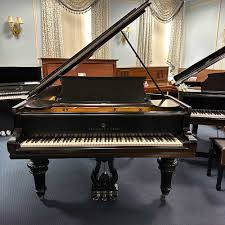

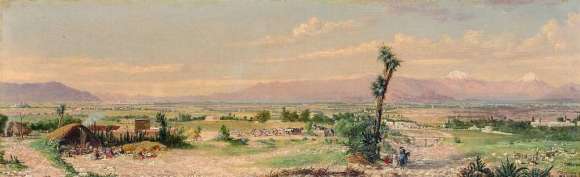
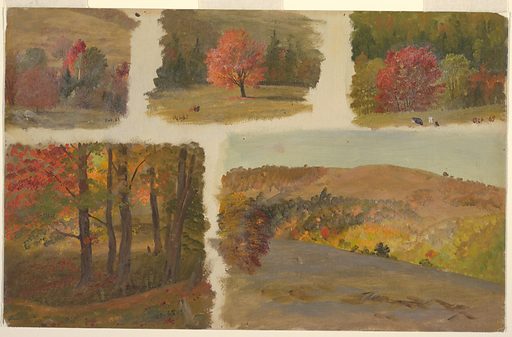


 Borderless