How can a 470-page long book turn into a page-turner when it is neither a historical novel nor a whodunit thriller that compels the reader to go on reading as quickly as he/she can? That too when it is a motley collection of twenty-six essays written on different occasions and on different topics for the last twenty-five years. The answer is of course Amitav Ghosh who can literally mesmerise his readers with his multi-faceted interests and subjects ranging from literature and language, climate change and the environment, human lives, travels, and discoveries. Divided into six broad sections, Ghosh clearly mentions in the Introduction that the pieces in this collection are about a wide variety of subjects, yet there is one thread that runs through most of them: of bearing witness to a rupture in time, of chronicling the passing of an era that began 300 years ago, in the eighteenth century. It was a time when the West tightened its grip over most of the world, culminating ultimately in the emergence of the US as the planet’s sole superpower and the profound shocks that began in 2001.
A subject very close to his heart and that is reflected in all the books that he has been writing over the last decade or more, the six essays of the first section are on “Climate Change and Environment.” Ghosh writes about different aspects of migration (both in the sub-continent and in Europe), about the storm in the Bay of Bengal, cyclones, the tsunami affecting the Andaman and Nicobar Islands, and about Ternate, the spice island in Indonesia. According to him, by knowing about anthropogenic greenhouse emissions and their role in intensifying climate disasters, it is no longer possible to cling to the fiction of there being a strict division between the natural and the political. Climate change and migration are, in fact, two cognate aspects of the same thing, in that both are effects of the ever-increasing growth and acceleration of processes of production, consumption and circulation.
According to Ghosh, each of the six essays in the second section entitled “Witnesses” grew out of the research he undertook for his four historical novels, The Glass Palace, and the Ibis Trilogy. All the essays in it “are attempts to account, in one way or another, for the recurrent absences and silences that are so marked a feature of India’s colonial history”. While looking for accounts written by Indian military personnel during the First World War, Ghosh came across two truly amazing books, both written in Bengali, on which three pieces in this section are based. The first of these books is Mokshada Devi’s Kalyan-Pradeep (‘Kalyan’s Lamp’; 1928), an extended commentary on the letters of her grandson, Captain Kalyan Mukherji, who was a doctor in the Indian Medical Service. The second, Abhi Le Baghdad (‘On to Baghdad’), is by Sisir Sarbadhikari, who was a member of the Bengal Ambulance Corps, and is based on his wartime journal. Both Mukherji and Sarbadhikari served in the Mesopotamian campaign of 1915-16; they were both taken captive when the British forces surrendered to the Turkish Army in 1916 after enduring a five-month siege in the town of Kut-al-Amara – the greatest battlefield defeat suffered by the British empire in more than a century. He also writes about how these two prisoners of war witnessed the Armenian genocide.
Regarding the exodus from Burma, Ghosh narrates the plight of one Bengali doctor, Dr. Shanti Brata Ghosh from whose diary (written in English) we are given incidents of events that are a striking contrast to British accounts of the Long March. What the doctor remembered most clearly were his conflicts with his white colleagues and his diary represents a personal assertion of the freedom that his nation’s hard-won independence had bestowed upon him.
Section Four entitled “Narratives” consists of three essays. Speaking about the etymology of the word ‘banyan’, and a short personal anecdote about 11 September 2001, we come to the essay from which the title of this collection – Wild Fictions – is taken. It shows us how the policies and administrative actions have divided landscapes between the ‘natural’ and the ‘social.’ Discussing several environmental issues related to the manner in which over many decades there has been a kind of ethnic cleansing of India’s forests and how the costs of protecting nature have been thrust upon some of the poorest people in the country, while the rewards have been reaped by certain segments of the urban middle class, Ghosh warns us why the exclusivist approach to conservation must be rethought. Before environmental catastrophe happens, we have to find some middle way, one in which the people of the forest are regarded not as enemies but as partners. The idea of an ‘untouched’ forest is none other than a wild fiction.
As mentioned in the beginning, Ghosh’s intellectual curiosity ranges from exploring themes of history, culture, colonialism, climate change and the interconnectedness of human and natural worlds and the readers will get a sample of these different topics in this rich collection. Over the years, we had read some of the essays in journals like Outlook, The New Yorker, The New York Times, The Hindu, The Economic and Political Weekly, The Massachusetts Review, Conde NastTraveller and so on, and some of the articles have been the product of his detailed research before he commenced writing a novel. The five essays in the penultimate section titled “Conversations” begins with a long correspondence that Ghosh had with Dipesh Chakraborty via email after Provincilaizing Europe was published in 2000. The two never met personally as Chakraborty was in Australia at that time, but the exchanges between these two scholars on such wide-ranging issues is surely a reader’s delight. The pieces on Shashi Tharoor’s An Era of Darkness and Priya Satia’s Time’s Monster which were written as reviews also form parts of ongoing dialogue. As Ghosh states, Sattia’s work “has given me new ways of understanding the role that ideas like ‘progress’ have played in the gestation of this time of monsters”. In ‘Storytelling and the Spectrum of the Past’, we are told about the historians versus the novelists view of seeing and documenting themes.
The final and sixth section comprises of three pieces that were originally conceived as blogposts or presentations, accompanied by a succession of images – “the texts that accompany my presentations are scripts for performances rather than essays as such”. In the first one, Ghosh gives us new insights from his diary notes (the Geniza documents) about how he chose to study social anthropology and how In an Antique Land was made—about the Muslim predominance in the Arab village where he stayed and how he evaded the attempt at conversion. In a lecture he delivered at Indian Institute of Technology, Kharagpur, Ghosh asks us to think back for a moment to the intellectual and historical context that led to the foundation of such institutions as the IITs, the IIMs and the outstanding medical institutions of contemporary India. He tells us how we cannot depend on machines alone to provide the solution to our social problems and talks about mercenaries, prisons, the hegemony of the Anglo-American power and how the empires kept close control over rights to knowledge. One of the great regrets of Ghosh’s life was that he never met A.K.Ramanujan and in the concluding essay of this section, he tells us how he considered Ramanujan to be “one of the foremost writers and intellectuals of the twentieth century and how one of the most important aspects of his work is the context from which it emerged.
In the introduction to this collection Ghosh wrote that we were now in a time between the ending of one epoch and the birth of another – ‘a time of monsters’, in the words of Antonio Gramsci. In the Afterword he mentions how the strange thing about this interstitial era is that it could also be described as a ‘time of benedictions’ in that it has suddenly become possible to contemplate, and even embrace, potentialities that were denied or rejected during the age of high modernity. He reiterates that it is the elevation of humans above all other species, indeed above the Earth itself, that is largely responsible for our current planetary crisis. “The discrediting of modernity’s anthropocentricism is itself a part of the ongoing collapse that we are now witnessing.” The only domains of human culture where doubt is held in suspension are poetry and fiction. Though it is not possible to discuss all other aspects that Ghosh deals with in this anthology as the purview of the review is rather limited, I would like to conclude it by quoting the last couple of sentences written by Ghosh himself when he categorically states: “High modernity taught us that the Earth was inert and existed to be exploited by human beings for their own purposes. In this time of angels, we are slowly beginning to understand that in order to hear the Earth, we must first learn to love it.”
.
Somdatta Mandal is a critic and translator and a former Professor of English at Visva-Bharati, Santiniketan, India.
.
PLEASE NOTE: ARTICLES CAN ONLY BE REPRODUCED IN OTHER SITES WITH DUE ACKNOWLEDGEMENT TO BORDERLESS JOURNAL.
No one knew his name nor wished to know it. Only his face attracted those who came into contact with him. So it was said. A face whose huge, glowing eyes were turned both inwards and outwards, simultaneously. A face whose florid complexion, cheery and unfurrowed, bespoke a life of leisure, albeit not one of procrastination; a life of ease, but not sloth. In short, a life of early, unfought for independence.
I met my nameless stranger one fine autumn day in the Andalucian town of Granada, Spain, where he had been residing for several months, visiting the Alhambra Palace every day during those months. We had met in a small, non-distinct eatery, and he was very willing to converse with anyone who had leisure to tete a tete. We fell into lively conversation. Taken aback by his daily visits to the remarkable Palace, I enquired why he spent so many hours there.
“The Palace was built as a sign of religious, political and cultural power,” he began, munching energetically on his paella of rabbit. “But since 1492, that sign has been condemned to utter uselessness, reduced to a mere tourist attraction, however noteworthy. It has become completely useless since its mediaeval abandonment because it’s been drained of its original value.” Here he paused, I imagine, for me to intercede. I didn’t …
“You see, this is what attracts me most to the Alhambra; its utter uselessness for our world today. I do not consider mass tourism as an instrument of usefulness.” I kept silent to goad him on, for the turn of conversation piqued my curiosity. “The Alhambra epitomises all that I have spent my own life experiencing, consciously: the pleasures of uselessness.”
“Is uselessness a pleasure?” I nettled with a sunny smile.
“That depends upon whom it has been bestowed, sir. That depends for whom it has benefitted. The circumstances of my life and will to understand and decipher them, have conspired to draw me now into and outside of myself. My own self has become as useless as the objects that I set my eyes on each and every day as I saunter through the streets, gardens or palaces of wherever I happen to be. I have realised that such an absorption into social uselessness, and thus distance from social use, has constituted my raison d’être. And there lies the pleasure: this mode of existence is a project of life; a pure project of pleasurable uselessness to society and to myself.” His face, alit with integrity, bent low to attack the chorizos cooked in white wine sauce.
“When did you begin experimenting your project?” I asked, sipping my sangria.
“I would formulate it differently: When did uselessness experiment me!” he mumbled, his mouth full of chorizo. “It all began in Africa some thirty or forty years back, during my youthful days wandering through the Sahara desert en route to Timbucktoo. The Blue Men of the Sahara appeared absolutely useless to anyone or anything that we Europeans would call useful.”
“Such as?”
“Well, a roof over one’s head, a shower every hour, a steady, well-paid job, a car and such things … what we Europeans would term as useful, conditioned to adhere to the philosophy of infinite progress; to infinite social and political usefulness. All the Blue Men seemed to require were a few hours of sleep, food, water and the desire to procreate. Needs that all mankind need so as to account for our very presence on Earth. I lived in the desert for over a year, and little by little discovered that this lifestyle suited a possibility of existence, a life not of a desert-nomad mind you, but one of a useless idler, which as time went by, proved possible, be it in the cities of Europe and Asia or in their countryside towns and villages.”
“As I understand it, social success has no meaning for you at all?”
“Not at all. Success only invites humiliation or cruel jealousy, and the pursuit of wealth is a path marked by ruthlessness. I earn my living simply to eat, to dress according to the climate, to have a roof over my head when needed.”
“But a roof over one’s head could be expensive…” I intervened.
“I spend most of my nights out under the stars when the weather is warm. With the coming of winter, I seek refuge in Catholic missions, poor men’s shelters or in the numerous Salvation Army shelters. Any asylum that will not turn me down. As far as any permanent residence, I have taken up lodgings in the homes of generous people for a meagre fee, or have laboured on farms for my food and bed. Do not confuse uselessness with doing nothing. I’m no couch potato; I have done many things, but they do not fit into our social machine of imposed well-being. My life may appear negative to those who hold me in contempt, but my usefulness is as useful to mankind as it is to myself. Don’t forget what one Belgium writer once wrote: ‘It is thanks to a certain number of men who seem useless that there will always be a certain number of useful men.’”
“Who wrote that?”
“I forgot. But what difference does it make?” He wiped his mouth delicately, smacking his lips. He proceeded: “I imagine you probably believe me to be a social parasite or a social zero as Balzac once wrote, useless even as a human being. But read Friedrich Nietzsche on this point,” and he quoted: “’Thevalue of a human being does not lie in his usefulnes; for it would continue to exist even if there were nobody to whom he could be useful.’”
“Quite an imposing thought,” I acknowledged, sitting back. “But you must admit that you have been useful to the kind people who hire you on or who lodge you, even for a small fee.”
He snorted: “Perhaps. But I cannot speak on their behalf, only mine.” I noted that he wiggled out of that one quite ingeniously. His face shone with a strange light. An aura of mystery gradually covered it like a gossamer veil. The light suddenly went out.
“I’m sure your effort to separate yourself from the social body must be a terrible struggle,” I pursued without irony. “I believe that to be estranged from the social body is commensurate with being estranged from one’s own self. Am I right in assuming this?”
“Perhaps, but not from the individuals of those societies. I am not a misantrope. This being said, solitude, fasts and meditation have prepared me for outer trials and tribulations, which I believe, without vanity, to have overcome.” He began picking his teeth with a very long fingernail.
“And God?” I rebounded, eyeing him steadily. His lips broke into an artful grin.
“He has been my only Friend since the beginning, sir. And why is that? Because we have been useless to each other since our initial communion.” He stood, evidently undesirous to develop this rather paradoxical statement. I let it drop …
We slipped outside and my nameless companion suggested that we have a quick jaunt through the ‘Arab Market’ in Zacaten. Indeed, the weather was warm, that Autumn weather which I have always found so stimulating in Granada; Granada, perched high in her mountainous refuge like an eagle in her lofty nest. My strolling companion strolled into my reverie.
“Look at the sky, a bluish turquoise which reminds me so much of the domes of the mosques in Bukhara, Uzbekistan. That turquoise which solicits silence and contemplation.”
“So you’ve visited Uzbekistan?”
“More than visited, my friend. I lived there for five years studying under the spiritual guidance of the Nakishbendi Brotherhood, a Sunna movement founded by the Shah Nakishbend, and which has survived the anti-religious crusade of the Soviet Union. With those kind and learned monks I learnt the virtues and powers of silence, contemplation, discipline, simplicity and periodical talks.”
“In what language did you speak to them?” I ventured, a bit intrigued by this singular experience.
“In Uzbek, of course!” he responded dryly. “I also learned to read Arabic.”
“But are silence and talks not contradictory?”
“Not at all, sir. Clusters of roses certainly grow silently, but good soil, air and pure water are needed for their basic growth. If accompanied by a soft, melodious voice, they grow better. Roses heed to that voice as silence heeds to constructive talks. It was during the alternating passages of silence and talks that our spiritual guides opened our eyes and senses to the uselessness of worldly matters, and since then, this uselessness has become my second nature, even my first! Mind you, this discovery has nothing to do either with self-love or atomistic individualism. As I said, I have relations with people, albeit brief; and although I keep aloof from community aggregation and national gatherings, I have never spend my life gloating in an ivory tower. No sir, I live for wanderlust not social or individual hubris! The lust for wandering … And when one wanders one cannot but converge with people, learn from them. This does not necessarily mean that I derive an extraordinary pleasure from communicating with them. To tell the truth, I prefer my own company, if I may say so …”
“But you surely feel a responsibility towards others?” I pursued, more and more fascinated by this nameless chap, who by now had led me into a marvellous little garden out of whose spouting fountain splashed tinkling sprays here and there.
“Responsibility?” he chortled, as we sat down enjoying the perfumed scents of honeysuckles and roses. “Responsibility is only towards oneself. My words or gestures will be felt by others. Would you harm or humiliate your fellow man? Uselessness does not mean selfishness or egoism. In fact, it disciplines you to an awareness of others, an awareness those who whole-heartedly believe in social relevance will never come to understand for they must belong to a community, club or ideology in order to give pride and reason to their usefulness. They discredit the experience of uselessness. Don’t get me wrong, I do not live in a fantasy world like those who tout infinite progress or community spirit. These are abstract schemas for me. My Way is to strive to overcome anger, hate and jealousy within my own sphere of existence. This entails peeling away the veils that dim the lucidity of reality; my reality of being useless to the devastating machine of the useful well-being of mankind.”
“I would then conclude that your manner of living may be called cynical or indifferent?”
He was mortified by my question. “Cynical? A cynic questions then condemns derisively the circumstances that emerge before him or her; I neither question nor condemn. I simply carry on from place to place, experimenting novel circumstances, accepting them as if they had always been mine. Indifference? Well, if you mean stepping back and out of the world’s commerce, and not to take either that commerce or oneself seriously, then I am indifferent. The crisis of many individuals today is that they take themselves much too seriously, much more seriously than the seriousness of their work or vocations. And when this self-seriousness is struck down or dethroned a dreadful sense of uselessness seizes them, causing depression, or worse, suicide. My uselessness to myself and to others is more serious than myself. I am in the world but not of it!”
As we sat in silence, I gradually felt myself transported to another dimension of time and space. Scenes of my own life flashed before my eyes, lively colourful scenes and gloomy ones. I could not resolve whether this nameless fellow fascinated or revolted me. My own life had been ensnared in a web of social irresponsibility and imposed representations. I had become one of the many cogs in the slow and steady vast social wheel that turns and churns, and I sensed that mine had become worn-out and useless. I had so yearned to be of some use to society … But now? Yes, now? How could I restore my previous enthusiasm that had long been abandoned? I had to admit, though, that this man’s experiments heightened my ardour to … to do what? Was he sent to me like some mentor? He suddenly stood and bid me a good day with a whimsical smile, as though he had been reading my thoughts.
Before leaving, however, he said: “Tomorrow I shall have a walk in the gardens of the Alhambra. Please join me, I’m sure we have much to discuss. Meanwhile, let silence be your companion until that walk.” And he disappeared into the milling crowd.
Waking early the next morning, I resolved to meet my new and somewhat eccentric companion at the beginning of the long avenue that leads to the Gate of Justice. An avenue lined with sentinels of cypress and other trees, within whose morning freshness ran a warren of narrow paths.
We met at precisely eight o’clock. With a sort of fraternal benevolence, he took my arm and we strolled upwards past the Gate of Justice, the pompous palace of King Carlos the Fifth, paid our tickets and entered the palace proper, almost religiously, under the storied vaulted corridors, by the pencilled ornaments and tiled walls of arabesque blue, over the smooth, shiny marbled floors.
“Have you read Washington Irving?” he asked in a quavering voice, as if not to disturb the mediaeval palace denizens.
“Yes, a marvellous story-teller and keen observer,” I replied softly.
“You know he led a life of ridiculous usefulness until sojourning within the walls of this soporific fairyland. Gradually Irving fell under the pleasant and industrious spell of uselessness.”
I stopped walking.
“How so? That’s contradictory!”
“Is it?” he beamed, smiling that wide, wicked, whimsical smile. “Yet so it was. He learnt through daily experience that this whole palace of enchantment lies under the layers of absolute uselessness. Layers and layers of poetry, conversation, lyrical jousts and insignificant gestures which disappeared as quickly as they were conceived. Nothing! Nothing remains of that imagined uselessness. And that is precisely why he wrote his Tales of the Alhambra[1] ; it was out of the need to express his useless life within these lyrical stones.”
My sauntering companion fell silent. Only our footfalls could be heard weaving in and out of the slender colonnades, intermingling with the chanting fountains. The blue ceramic shone on the walls like a mirror reflecting the azure …
“I see your point, I think. Before dusk, at times I watch the sun glide from East to West over the Palace walls, the dark greys slipping into ochre reds, soon to be daubed, as the sun sets, by the overglow tones of chestnut, roan and dun.”
“Yes!” he whispered excitedly. “That is perfect uselessness. It serves absolutely no purpose to anyone … even to yourself. For, unlike Irving, who snapped his experiment in uselessness, succumbing to the desire of writing it down for all and sundry to share, I presume that in your case you have no urgency to express any posthumous glory?”
I shook my head thoughtfully, then asked: “You don’t feel the desire to keep a diary?”
“Write? A diary? What for — to satisfy my blotted ego seeking a useful outlet? These are vain insinuations, my good friend. No, it is quite enough to feast my sovereign eyes, to feed my independent emotions on this marvellous honeycomb frostwork and these fine, mullioned windows[2]. These artifices are as useless as the ephemeral poetry and conversations that rang euphoniously within the hallowed halls and courts. And indeed, why should we, mere strangers to this mediaeval marvel, impose an artificial usefulness to it all? Why should we break into lyrical extravagances of the budding rose or the flight of the owl? Into flights of phantasy poeticising upon the Towers above us where verses of love spilled forth their honied fragrances into a void of mute forgetfulness? None of that for me, sir. Within these courts and gardens I have come to the inevitable conclusion that my Destiny lies in perfect uselessness; namely, in my refusal to reanimate the beauty or the ugliness that has crossed my path for the past fifty years in Asia, Europe, the Americas and Africa. I decline to spoil the uselessness of beauty and ugliness, to encumber my spirit and soul by searching for a ‘proper use’ for such human emotions and achievements.”
We had walked through the remarkable Court of Lions and were now entering the gardens of Lindaraxa, Sultan Boadil’s[3] wife. We sat down inhaling the gay scents of roses, oranges and lemons.
He sniffed the air, then murmured: ”A vague of indescribable awe was creeping over me,” here hepaused, lifting his eyes upwards: ”Everything began to be affected by the working of my mind, the whispers of the wind among the citron-trees beneath my window had something sinister…” My companion had chanted this broken sentence in a sort of drawn-out litany. “Yes, something sinister, indeed,” he ruminated to himself. “That point of inspiration led Irving from absolute uselessness to the search for putting uselessness to use. I enjoy reading Irving, but will never convert a ‘something sinister’ to a million-copy, world-wide read book.”
The sun rose higher and higher coating the pink tongues of dawn with a purplish blue. I turned to him: “Still, I cannot see how we as humans can escape from being useful Beings!” He looked at me, his facial features had suddenly hardened, or perhaps it was due to the effects of the shadows off the sun-lit fruit trees.
“Does my speaking to you now fulfil an emotional need? Was our conversation a psychological issue to such a profound hoarding of uselessness?” I asked.
He laughed so loud that a few puffy-eyed guards turned their heads in our direction. “Dear fellow, you have hardly understood our morning jaunt. We are simply idling our time away as uselessly as possible, as useless as a leaf dropping from that citron-tree, as a person who labours all his life to survive, a hermit in his remote cave, a desert-dweller, a traveller without name or record. How many of those intrepid souls took refuge in monasteries of the East and there left no trace of their earthly footfalls? They experienced true uselessness …”
“Even to God towards whom they must have addressed their prayers?” I enquired. He raised a quizzical eyebrow.
“That is neither for you nor me to answer, my friend.” He stood, shook my hand and left the gardens back through the Palace halls.
I felt a bit put out by his prompt and unexpected departure. It were as if he had abandoned me to unravel that last enigmatic thought of his. A silly feeling of course, but one that clung to me like the scents of the roses, oranges and lemons. My mind slowly became dull, my body numb. Had the nameless wanderer put me under a magical spell? The redolence and balminess of the gardens added to my discomfiture. At the same time, however, I understood that idleness is not a state or a condition which I could bear or champion as he does. I rose, heavily. Enough of this palatial beguiling and futile jaunting. That man, whoever he is, taught me a sound lesson: a person is born into our world to accomplish a particular use, one that is his or hers alone. There is no doubt in my mind about this.
I dragged myself from the gardens back to my hotel in the Old Market at Zacatin, an effort that enlisted all my emotional and physical strength.
I must confess that during the following days, in spite of my firm resolution towards usefulness, I idled my time away seeking out that nameless idler, tramping from street to street, garden to garden, restaurant to restaurant. Every morning I rose early and scoured the halls, courts and gardens of the Alhambra.
He had vanished into thin air, as the saying goes …
*
A few years later back in Amsterdam, my eye caught sight of a book entitled The Denizen of theUnderworld : The Art of Uselessness. I bought it out of some urgent curiosity that I could and still not explain rationally. The first sentences read : ”I am without shame, without guilt, without bad conscious. I truly prefer my cave swimming with mermaids, dwarves labouring at the furnaces, fairies hunting out medicinal plants. Here I breathe the air of pure uselessness, shielded against the charm and seduction of use.”
The author of the book had an odd name — Vigilius de Silentio — a name that might have fitted the face of my nameless companion whom I had met so many years ago in Granada. On second thoughts, though, that name could have fitted any face.
To tell the truth, the book bored me to death …
.
[1] Washington Irving, edition Edilux, Granada, Spain.
[2] A vertical element made of wood or stone that divides a window in two. It is applied in Islamic and Armenian architecture.
[3] The last Sultan of Muslim Spain, exiled to North Africa.
Paul Mirabile is a retired professor of philology now living in France. He has published mostly academic works centred on philology, history, pedagogy and religion. He has also published stories of his travels throughout Asia, where he spent thirty years.
.
PLEASE NOTE: ARTICLES CAN ONLY BE REPRODUCED IN OTHER SITES WITH DUE ACKNOWLEDGEMENT TO BORDERLESS JOURNAL
The Scream by Edvard Munch(1863-1944). Courtesy: Creative Commons
I met Gustav Beekhof twice whilst travelling in North Africa, once in Tunisia on the island of Djerba, and then in Algeria when I emerged from the desert after spending about seven months living amongst the Touregs.
Gustav was a Dutchman, tall, slender, long blond hair falling to his rounded shoulders. His blue eyes shone like scintillating mountain lakes in the morning sun. He spoke excellent English, French and German, all learned at school but polished and refined ‘on the road’ as he said in his high, nasalised voice.
Over a glass of tea, we spoke about many subjects, he emphasising that the voyager must touch Africa with his or her feet, and not ‘do’ it either in vans or in Land-Rovers as so many ‘doers of Africa do’. Gustav indeed had a whiff of smugness about him.
We split, the cocky Dutchman en route to Morocco, I back into the desert to Tamanarasset. Before leaving, however, he gave me his phone number and insisted that if I ever found myself in Amsterdam I should look him up. He threw back his long blond hair and as he got up to leave, said that he held my friendship in high regard.
Seven years later this was exactly what I did! I had been shuffling between Madrid and Burgundy France as a Flamenco guitarist at Rosario’s dance studios in the mornings and Antonio’s mesón[1]at night, and as a grape-picker at several farms between Dijon and Beaune in Burgundy. Every Autumn I would hitch to Burgundy from Madrid and for a month or so labour in the fields, in the wine-cellars, bottle wine and study oenology with the wine-growers in my spare hours.
The life of a mediocre musician and a seasonal farm labourer made no sense. I needed a change. Was not life a thick forest of possibilities ? One day as I treaded wine in one of the enormous kegs that aligned the cellar of a famous wine-grower, what the Burgundians call ‘piger‘, I suddenly thought of Gustav Beekhof. That night, back in my little room on the farm, I searched through my belongings and found his address. Yes, I would go to Amsterdam for that change.
When my work had finished on the farm I left my guitar with some friends, borrowed a bicycle and cycled up to Holland via Liechtenstein and Belgium, a strenuous journey, given the fact that the bicycle had no gears. I arrived in Amsterdam, thoroughly exhausted, but immediately set out to find my ‘friend’, if I may say so at this point in my narrative.
And indeed I did find him: having telephoned Gustav, that nasalised voice gave me directions to his home. I set off on my bike in search of him. It took me hours as I crossed bridges, turned in and out of little roads and lanes. As I struggled on, I had a strange feeling that Gustav did not know with whom he was speaking over the phone. Be that as it may, I finally found his ‘humble home’ as he merrily said, one of the many barges that float listlessly in the canals that criss-cross Amsterdam. A rather shoddy one at that, but its bohemian appearance did suit the personality of the individual I had met some seven or eight years ago in North Africa, and who was at present standing on the plank that led to the barge from the grassy pavement-bank. He was all smiles. He gestured for me to come ‘aboard’, shook my hand and led me into his ‘humble home’ …
A home that rocked and rolled ever so gently when a barge cruised by. Gustav warned me that to live in a barge one must develop sea-legs. He laughed, and the twinkle in his eye intuited that the Dutchman had no idea with whom he was speaking. I felt rather uncomfortable at first, but this loss of memory seemed not to disturb my host who spread out his long arms as if to engulf all the belongings that swam before my eyes: dozens and dozens of paintings, either framed, rolled up in clusters or on easels covered the uncarpeted ‘bottom deck’ along with hundreds of acrylic paint tubes, whilst more books and documents rose in high stacks against the unpanelled ‘starboard’, barring the grey afternoon light from penetrating two ‘portholes’. Large packages lay on a bunk bed at the ‘stern’. There were no rooms, only a very long and narrow ‘hole’ with a kitchenette at the ‘prow’. Rusting red-painted iron beams horizontally crossed the ‘hull’. Two tables had been placed in middle of this capharnaum[2], one for writing, I presumed, and one for eating ; both had seen better days. The toilet, a cubby hole, was located on ‘portside’ …
I was overwhelmed by the quantity of paintings, some of which I recognised.
“How do you like my prized collection ?” Gustav began. His tone had an undercurrent of secrecy. “I have acquired them at great pains, some are originals, others copies … and a few a result of my own genius.” Modesty was never a quality of Gustav’s personality … not even false modesty !
“But you have a Jasper Johns[3] … a Frans Van Mieris[4] and a Nicolais Astrup[5]!” I rejoined in amazement. They must have cost a fortune. My host shrugged his shoulders.
“Why do you think I live on a rubbishy barge and not in a golden palace, my dear lad ?” He threw back his long blond hair and motioned to the hackney table, where two plates, two forks and two knives had been neatly set. I sat opposite a lovely Laurits Andersen Ring painting: Road in thevillage of Bunderbrøde. Original or copy ? From the kitchenette Gustav sailed back gingery to the table carrying a large tray of chips ; they were dripping with oil. I put one or two in my mouth and felt sick to my stomach. From a cupboard near the toilet he brought forth a bottle of Jenever which presumedly was to wash down the chips. I looked over to his writing table and observed an open notebook.
“My Waybook,” he laughed. “I’m writing a collection of poems and stories about my voyages in India, Central Asia and Africa. Poems and stories written out ‘on the road’, but here in my barge-solitude, polished to a lacquered lustre.” My host was beaming with self-complacency.
I let Gustav make inroads on that greasy stack of chips whilst I cast cursory glances at those many paintings… “Remember those horrible mosquitoes in Africa ?” he reminisced. “They always bit me … perhaps because my blood is so sweet.” His voice had a fluty tone to it. I nodded perfunctorily.Was his blood sweeter than mine ?
I left about midnight, rather sozzled from all that Jenever.
For the next few days, my Dutch friend took me about Amsterdam, especially to the bars where we would invariably get thoroughly drunk, but also to the countryside on bicycle, gliding by the still standing windmills cranking their sails, the tulip fields in blushing bloom, over a streamlet or two, our bicycles poled over on small barques. One day we stopped near one of those streamlets to indulge in some Gouda and Edam cheese. It was there that Gustav, his mouth full of cheese and bread, made me a proposition which I was to regret for the rest of my living days …
“Listen,” he began, munching merrily, washing down his cheese and bread with a few shots of Jenever. “Since you’re out of work, how about working for me ?” I raised a quizzical eyebrow. He gave me a sly wink. “Don’t worry, it’s not hard labour. I need an itinerant salesman for my paintings. You know, I’m stuck here in Amsterdam and can’t meet the demands of all my clients. I have clients in Italy, Spain, France, England ; all over Eastern Europe, too. You’d be a perfect dealer for me, you know many languages, you have a bit of artistic talent yourself to explain certain niceties, and above all, you’re honest. I know you won’t cheat me.” His grin stretched from ear to ear. A strange grin, plastic-like. “I’ll give you ten percent of the proceeds.” And he had another spot of Jenever.
“Why ten ?”
“Why not ? It’s a number like any other. And don’t forgot, some of those paintings are going for over 8,000 Guilders, even double that in other currencies. What do you think ?” He eyed me fixedly, the deep blue of those two tarns swirling before me like turbulent whirlpools.
It took me three days to think over his proposition, and during those three days, when I visited him, we tramped about Amsterdam’s bars, drinking and conversing. Never once did he enquire about my decision. It was whilst licking off the foam of my Heineken in one of Gustav’s favourite bars, where it was his wont to reach into a drinker’s open poach of tobacco, serve himself a good pinch and roll a cigarette without ever asking permission, a rite that he alone exercised at the counter, that I decided to accept his offer. “Fifteen percent !” I added. He winced at first, but that mask slowly transformed into a broad smile. We shook hands and the deal was sealed. He ordered another round for us whilst pinching a bit more tobacco from the pouch of his displeased but stoic neighbour …
And that is how I became an itinerant dealer for Gustav Beekhof’s paintings. My wanderings took me to the most remotest of European towns, and to the most hideous suburbs of those towns. Instead of dealing with rich bourgeois families, small museum curators or private collectors, Gustav’s mailed instructions directed me to shifty-eyed men, well-dressed and well-spoken indeed, but shifty in our negotiations. Besides, we effected our transactions in the oddest of places: warehouses, depots, repositories, seedy hotel rooms. I would remove the paintings from long, plastic cylinders similar to those that the Chinese use to carry their scrolls, unroll the merchandise they were expecting, and after a thorough inspection, the head of these delegations would produce a wad of bills, and without counting them push them into the pocket of my vest. They would leave me standing there without a word, although now and then, one of them was given orders to drive me to the centre of the town and drop me off at my hotel.
Gustav had advised me to deduct my fifteen percent from the purchases, deposit the maximum amount of cash that was permitted in one of the subsidiaries of a Dutch bank, found in Greece, Norway, Belgium, France, England, Luxembourg and Germany. If a large amount of cash remained, I was to travel to another country, locate another subsidiary and deposit the rest. Gustav had absolute faith in my integrity; at any time, I could have run off with thousands of francs, liras, pounds or any currency and simply disappeared. Of course the thought never occurred to me. As to the paintings themselves, they were sent through a special mail service along with a note at one of my hotels directing to the addresses where I had my the appointments. In this way I had no need to return to Amsterdam.
These proceedings continued without respite for two years as I scurried from country to country and town to town. I must admit that over the course of time I began to question the probity of the individuals I was dealing with, for all these transactions seemed enshrouded in mystery, carried out by dubious characters, each and every one of whom bore a rank odour of unprincipled morals, although their behaviour towards me was always impeccably polite, aloof indeed, but nevertheless perfectly respectful. I, thus, disregarded these apprehensions; after all, I was earning vast amounts of money. And I wasn’t one to, as the French say, cracher dans la soupe[6] !
One fine Spring day, I received six paintings at my hotel in Thessaloniki, Greece, and a note directing me to Istanbul, where an Armenian merchant was waiting impatiently to buy the paintings at a very handsome price. However, the note warned me that the merchant was a bit of a rogue, and a clever one at that. I smiled inwardly; I had been to Istanbul several times and could negotiate quite well in Turkish. I rubbed my hands ready for the joust …
It was on the fourth day of my arrival in Istanbul by bus from Thessaloniki that our appointment had been fixed in the Armenian’s small shop near the Armenian Church of Üç Horan (Trinity) inside the Fish Market. His shop, crowded with every object that one could possibly find on the face of the earth: wooden religious statues, candelabras, thuribles, musical instruments, Ottoman-styled hanging lamps, church paintings, ikons, antique furniture, travelling chests dating from the Ottoman Empire, sabres and shields, made it difficult for me to find the merchant seated behind a long, knotty mahogany table upon which had been stacked books, paper-weights and a scruffle of yellowing documents. He had a sinister look about him, doleful, suspicious, a darkly look that matched his dark frizzy hair, thick eyebrows and beard. When he noted my arrival he sat there in frozen silence which lasted longer than I had expected of a potential buyer of Gustav’s long-sought paintings. I sensed something amiss … something which did not sit well in this Ali Baba’s cave.
The Armenian stood and cleared away the books that encumbered his table. He bade me deposit the paintings in his outstretched arms. I took them out of the cylinder and placed them gently in the crooks of his arms, where like a mother holding her child, he cradled them for a few long seconds before laying them delicately on the knotty mahogany table.
Without a word he unrolled each one, admiring the colours, the textures, the shapes, the lines.
“Very nice … lovely !” he finally said in rough Turkish. “The colour saturation of this one is marvellous. And here, the crackle paste indeed gives the village a mediaeval aura. The application of mica flake certainly highlights the effects of the tempest over the sea, whilst here, the dry brush technique impresses an eerie velatura of the Scandinavian landscape.” He looked up at me. “And what do you think of Jasper Johns’ Between the Clock and the Bed ?” The question snapped me out of my reverie; no client had ever posed a question to me concerning the contents or quality of the paintings ; all my dealings had always been conducted with the utmost taciturnity.
“I don’t know … I’m not an art specialist, only a dealer.”
He chuckled : “Are you now ?” He touched the painting ever so delicately. “Pop art ? Expressionism ? What do you think, dealer ?” I remained silent, fidgeting about, the atmosphere had become unbearably oppressive. “Look, these fourteen colours set out like a lithograph should have been painted on Japan paper … do you follow me ?” I shook my head, ignorant of all these technical details. “Well, Mr Dealer, this is not Japan paper, consequently, the painting it not an original, which leads me to surmise that it’s a forgery !” The word forgery shot through me like a bullet. “So are those four, all falsified due to over-enthusiastic scrambling[7]. Only one is an original: The Scream, one of the eight versions by Munch, stolen this year from the Munchmusect in Oslo !” He stopped, stealing a glance at me. “How did you steal it?” he asked in a deep-toned voice, authoritative, one that does not brook rebuke. “And all the others stolen from museums, private collectors and galleries ? Just how do you do it ?” I cringed, feeling engulfed in a welter of confusion.
Mouth agape, I stammered : “I’m not a thief … I sell paintings for Gustav Beekhof, that’s all. I know nothing about where the paintings come from, except that …”
“I shall repeat the question once again,” retorted that deep-toned voice: “How do you steal them ?”
I stepped back. The whole affair was becoming a nightmare. “I told you I sell paintings for Gustav …”
My interrogator bent over the table and slapped me twice in the face. The violence sent me reeling backwards into some wooden statues. He circled round the table and stood menacingly over me. “We have been following your doings for months and months Mr Gustav Beekhof. Your repugnant affair has brought death and destruction to many innocent people.”
“Please, I don’t understand …”
“Shut up and listen !” And he punched me in the stomach, doubling me over. “Interpol shall be here in a moment or two to question you. But I would suggest you tell me everything here and now, for their methods are far from savoury.”
“Really … I’m not Gustav Beekhof … my name is Vigilius Notabene …”
“Oh really ?Vigilius Notabene ? Well now, Mr Notabene, let me inform you that you have been selling stolen paintings and forgeries to underworld criminal organisations and terrorist groups. Do you understand what that means Mr Notabene ? That means with the money they earn by selling what you have sold them for double or triple your amount, they buy arms to execute military personal and politicians, bombs to blow up train stations and aeroports. Did you think you could continue your lucrative affair with impunity ?” He grasped my collar, his face screwed up.
Suddenly, the shop door swung open. Three or four burly men dressed in civilian clothes wove their way towards us. They took me by the arms whilst the Armenian slapped me repeatedly across the face. I began to swoon. He turned to the men: “Gustav says his name is Vigilius Notabene.”
“But … I’m not Gustav !” I whimpered.
“Shall I juggle your memory ?” continued the Armenian. And that powerful fist drove into my chest. I cried out, hanging limp in the strong arms of the agents who looked on indifferently. “No, I’ll tell you your real name. Javier Fuentes, born and raised in Madrid, lover of bullfights and flamenco music. You left Spain for Holland where you changed your nationality and became Gustav Beekhof, amateur painter, counterfeiter and arch-cozen. Do you think we would never get on to your little affair ?” Again that hairy fist ploughed into my ribs.
I gasped for air. In low voices, the agents spoke to the Armenian in Dutch and in Turkish. I was amazed that I understood every word that was said. “Yes, yes Mr Beekhof, you understand everything we are saying. Polyglot, dilettante painter and musician, intrepid thief and casual traveller — it has taken us a while to corner you. And here we all are in my little shop. Cozy, eh ?”
A blow to the midriff sent me hurtling against a gaggle of porcelain geese, where I then slid squirming to the floor breaking the necks of two ! The agents violently grabbed my long, blond hair and stood me up.
“I’ll give you Gustav’s address …” I managed to gasp, my mouth filling with blood. Two agents squeezed my rounded shoulders so hard that I buckled over.
“Still on about Gustav, eh ? There is no Gustav Beekhof in Amsterdam on a barge. Gustav is right here in front of me, and there he will remain until he tells us the truth … If not …” I lifted my arms to ward off a blow, albeit none came.
“Come, come Gus, your mind has been unsettled by all these false identities ; all these wanderings in and out of cheap hotels, dealing with a bunch of thugs and killers. Fifteen percent ? Why give yourself fifteen percent when you deposit the rest in your own name in a Dutch bank account ? You must be completely daft!” I stared at my interrogator in disbelief. How did he know such precise details ?
“We know everything about you, Gussy!” as if reading my mind. “Everything except how you managed to steal these paintings from the museums. That remains a mystery to us all.”
“I’m Vigilius Notabene, born in Gotland on a farm. My parents died when I was thirteen so I left for Holland, Spain and France. In France …”
“Enough!” The Armenian began pummelling me. The agents stopped him. Then I heard the door of the shop swing open. I caught a glimpse of four men dressed in white ; tiny, white skull-caps coiffed their bald heads. They forced me into a straitjacket and hurried me into an ambulance. I was given an injection and that is all I remember until now …
I awoke in a small room, an all ghost-white room: white walls, door, window bars, curtains, bed and bedsheets, writing table. The whiteness pricked my eyes. My arms were strapped to my sides ; they had straitjacketed me. I lay helplessly surrounded by all this monochromatic melodrama.
One day a man, dressed in white whisked into the room, threw me a cursory glance, laid a notebook and pen very carefully on the white, metal table then strode to the bedside. He undid the straps of the straitjacket, pointed to the notebook on the table, and left as quickly as he came, wordlessly.
I stretched my stiff limbs and sat at the table. I had no idea where I was, and no one to turn to: no family, no friends, no lawyers … no one. I stared down at the white, lineless, notebook pages. Yes, I knew what they wanted from me. Ah, Gustav, you are a slippery sod. Here you are at last slipping out of that phantasmagoria of so many faces and places. So many existences that never existed! Take note that Vigilius Notabene will expose the truth of the past. As to Javier Fuentes, he had no future. Gustav is the true wayfarer, the ever-questing pilgrim present, here and now.
So in a renewed state of extreme excitement I now record on those very white pages :
“I met Gustav Beekhof whilst travelling in North Africa…”
.
[1] A small bar or tavern where people eat, drink and listen to flamenco music if there is a guitarist and a singer present.
[7] A technique that allows to paint over areas of a painting to enhance the tone of dark-coloured areas.
Paul Mirabile is a retired professor of philology now living in France. He has published mostly academic works centred on philology, history, pedagogy and religion. He has also published stories of his travels throughout Asia, where he spent thirty years.
.
PLEASE NOTE: ARTICLES CAN ONLY BE REPRODUCED IN OTHER SITES WITH DUE ACKNOWLEDGEMENT TO BORDERLESS JOURNAL
Vanitas Still Life, painting by Evert Collier(1640 –1708). Courtesy: Creative Commons
Back home in Madrid, having abandoned Adamov Plut to his posthumous fate, I was a bit surprised that neither the New York Times nor the Washington Post reported anything about the murder, not even a paragraph, or as the French so imagitively put it, an entre-filet ! I soon realised, due to this journalistic silence, that the time had come for me to give a full account of my relation to Mr Plut ; that the time had come for me to expose, publicly, by way of this revelation, his ‘mysterious murder’.
My information is of the surest sources for the simple reason that it was I who had Mr Plut murdered ! Yes, I ! And for reasons that shall be shortly disclosed. A mysterious man he might have been; however, his methods of acquiring priceless books and other inestimable valuables can hardly be called mysterious: Mr Plut was a vulgar thief, a scoundrel, an ingenious trickster whose singular flair caused much grief to many individuals, enraged those whose trust had been flouted.
It was in Istanbul, where I was invited to sojourn with an Armenian merchant, that I witnessed Mr Plut’s dupery. And if my naive friend fell for his crooked smile, I certainly didn’t swallow his high tale of returning to pay him for the two illuminated manuscripts my friend had graciously offered the blighter on condition that he be held accountable for them. His thick, coarse lips translated a smile that held contempt and disdain towards those who trusted him. So infuriated and insulted did I feel on behalf of my friend that that I reacted on a lightning urge and decided to follow him. I said nothing of this to my disbelieving companion, but left immediately in pursuit of my game — and game it was — for I, to tell the truth, had nothing more substantial to do at the moment and felt disposed for a good hunt.
I said that Mr Plut was a genius. Yes, in his own way. However, genius has its limitations. His arrogance and haughtiness knew no bounds, although he knew that his foul doings had attracted the attention of police and Interpol. Some may surmise that a certain paranoia drove him to invent individuals tracking him down like a wild boar or moose. No, no one was tracking him down except me, and that as subtlety as possible. In Uzbekistan, I actually chatted with him over a cup of coffee on two occasions disguised as a professor of Slavic philology, dressed in a quilted chapan robe and silk embroidered tubeteyka cap. There we sat in Samarkand, sipping our thick beverages in the vaulted bazaar at one of the storied cafés that dot the town. He was all smiles, obsequious and gold-toothed. I had the impression that I was dealing with a child or a mentally-dwarfed man whose sense of reality lacked all discernment or sagacity. I concluded that he had come into quite a bit of money, and never having had to work for a livelihood, traipsed about the world at his leisure, buying or stealing books, cheating people out of their invaluable collections. So self-indulgent and confident was he that he never saw through my masquerade as we conversed in broken Russian.
It was at that café where I learned about his fabulous treasure, as he called his book hoard. Only an idiot would have divulged this information to a perfect stranger, but as I said, Mr Plut’s contemptible demeanour caused him to fall into the most infantile traps. Traps that I began laying out for him, and that would lead to his downfall. For I had begun to design my own plan to relieve the rogue of his fabulous possessions, all the more so since he also let slip that his parents had passed away, and he had inherited the house. How I would make his treasure mine and ‘disinherit’ the owner still remained vague in my mind.
We departed as ‘friends’, as two strangers seeking an answer to the mystery of their existence. Or so I made him believe. Mr Plut appeared to me a dying species, a worldly aesthete, in spite of his extreme vulgarity and ponderous gait, whose debonair demeanour masked a loathing for his victims, a bent for the lowest duplicity, a gratification in spinning the most treacherous stratagems in order to allay his desire to prevail.
Mr Plut slipped out of Uzbekistan without my knowing it. He probably used his Russian passport, one of the four of five in his possession. I felt a twinge of misgiving. Had the fat fellow got on to me? After many enquiries, I finally discovered that he had crossed into China at the Xinjiang border, and was hastening towards the Yunnan. Why ? I hadn’t the faintest idea …
His brief sojourn in the town of Lijiang enabled me to catch up with him. My Chinese was fluent enough not only to query his whereabouts in that lovely town, but more important still, to learn of his new ‘purchases’, once I had questioned the director of the Dongba Museum of Culture. Mr Plut had planned to gone there to acquire several Naxi pictographic sacred books, which he did from a rather corrupt priest with whom he had been corresponding for some time, using a special code so as not to be unmasked by the Chinese authorities of the Centre. The director only learned of this a week after the unlawful negotiations had occurred, and three or four very valuable Dongba liturgical books had been stolen. It goes without saying that the rapacious priest was severely punished.
I immediately left Lijiang much to my displeasure for it was indeed a quiet, pleasant place, and set out in hot pursuit of the marauder. I followed his all too familiar scent through Nepal into North-western India to the Zanskar region where he put up for a while at the Phuktal Gompa[1], a strange spot to make a halt. But a perfect hideout to gain time in order for planning his next move, whilst at the same time inveigling in the most repulsive manner his generous hosts.
The monastery is nestled in the most remotest of valleys, ensconced within a cliff of tuft of fairy chimneys, crags and honey-combed spires which bulge black and red against the background of sandy, dazzling ash and cinerous tones of hemp. I had trekked there from Lamayuru in twenty days, and as I was to learn, Mr Plut had arrived there three days ahead of me, but by way of Padum. To gain the main entrance of the gompa, the pilgrim had to climb a steep path, keeping his or her right shoulder to the seventeen chortens[2] that mark the steep climb towards the vaulted entrance. I had shaved my head, grown a long beard and donned a woollen chuba tightened around my waist with a long colourful sash. It kept me warm, for in spite of it being Summer, the nights were very cold, and my cell had only a small wood-burning stove to keep me warm.
I spent three weeks at the monastery, sleeping on a ratten matting, eating skieu, tsampa and chappatti, drinking steaming salt-buttered tea off a chopsey — a low, small table — reading or gazing out of the little window that offered me a full view of the dusty, treeless courtyard below, where monks would mutter their mantras, and beyond into soundless nights whose stars were generally veiled.
Without Mr Plut’s slightest suspicions, I assisted at all the ceremonies, mornings and evenings, even vigils, while in the afternoon, I would venture out into the monastic complex, twisting and turning in the warren of lanes, under the low archways and high ladders, at times pursuing my promenades upon the rather precipitous mountain paths. As to Mr Plut, he hardly left his cell, and when we did cross paths, he most probably took me for a Buddhist pilgrim. Once or twice I sat near him in the prayer hall in the meditation grotto, but he never attempted to communicate with me, albeit he did not seem very deep in prayer or contemplation. He was probably scheming his next miserable move. His face had become terribly pale and flabby. His darting, black eyes seemed to have sunk deeper into their sockets. Unable to sit cross-legged on the low benches at the back of the prayer hall, he sat ‘western style’, staring off into the clusters of chanting monks, tilting his huge, bobbing head every so often to the banging drums, blowing ox-horns and tinkling triangles. Observing him from afar, I sought to sound his soul, to wring out his innermost thoughts, to extract from his evident lassitude and apathy his flight from both his victims and himself. But Mr Plut was a sphinx. Would he rise out of his own ashes when his hour came ?
I left the good monks three days after his departure, a hasty one indeed. And they were furious! The scoundrel had stolen several pustuks[3] and thangkas, and failed to pay for the prayer masks that he ‘purchased’. They implored me to find the culprit, inform the police and recover their stolen property. It was perhaps the beseeching words of the infuriated monks, after having received such incomparable hospitality from them, that my plans to have the thief killed began to germinate ! The theft was not only gratuitous, it exposed the very ugliness of the man’s heart, blackened by greed, cynicism and remorselessness. It would only be a matter of time before he tasted a soupçon of his own medicine.
Meanwhile the cat would play with the mouse, a rather fat mouse at that ! I boarded the cargo ship that took the fugitive from Karachi to Oakland via Japan. On the long, monotonous voyage across the Pacific, my ominous shadow crossed his at the most unsuspecting moments. Attired as a Pashtun merchant, bearded, long-haired and turbaned, Mr Plut sensed an onerous presence whenever he laboriously carried his huge body across the decks. How many times had my eyes penetrated his anguish, his torment, his pangs, not of compunction, but of incomprehension. He scented a sleepless menace pressing him. Fear inflamed his dark, beady, mirthless eyes like the burning incision of the trenchant knife.
Oakland … Sacramento … Reno … Tombstone … Boulder … Santa Fe … Saint Louis … Chicago … New Orleans … Birmingham … Miami … Atlanta and finally New York. Yes, New York, where the curtains would finally fall on this tragic fat figure. Where upon the stage of 8 million walk-ons, and against the backdrop of the grottiest of hotels, the last act of Mr Plut’s abominable performance would be played out.
His infatuation with Louis Wolfson amused me, as well as his grandiose project to write twelve stories in twelve different languages signed by twelve different authors. I found all this quite pompous and pathetic. A real exercise in self-indulgence to say the least. All this information I culled when I ‘accidentally’ met him in the ill-lit corridor of that hotel on Water street in downtown Manhattan. In New York, I played the role of a French researcher in mediaeval literature, a field that he completely ignored, in spite of possessing several manuscripts of Anglo-Norman stamp, apparently purchased (so he said ?) from a London book-seller. I pretended to be interested, taking the opportunity to study him closely. Besides, he was such an inveterate liar how could one believe anything he said ? He lied to curry favour and win confidence, only to swindle and steal from the naive and simple-hearted. Better to observe his eyes, his gestures, his bouncing from one tongue to another. These were all genuine signs of his distorted psychological make-up. To play my part well, I sported an immaculate white suit, orange tie, a pair of silver-rimmed glasses and spanking new alligator shoes. I had shaved my beard and moustache and had my hair cut very short, leaving a few gossamer wisps which touched the tips of my ears and fell bouncily on my forehead.
Every day I followed his Humpty Dumpty gait as he waddled to and from the public library, in and out of Central Park. And it was there, in Central Park, that I noted two blond-haired rough fellows slouching on a bench, eating the remains of fried chips or chicken sandwiches, cursing and making gross signs at the passers-by, drinking beer and spitting. They were seated at the same bench daily — the bench that Mr Plut walked by every day. They seemed to know him because they would hoot at him, call him names and ask for money. Fatso passed by without even a glance at them.
One Saturday, I decided to approach the two ruffians. They sized me up with obvious contempt, and made it perfectly clear that I was intruding on their ‘territory’. I sat down none the less, and exposed my scheme to be rid of Mr Plut once and for all, explaining how the culprit had cheated and robbed so many people. The two burly blokes, former marines in the Green Beret (or so they vaunted!) listened attentively as I unfolded my plan: Three thousand dollars for each if they would simply walk up to his room in the early morning hours, the night porter always being asleep, knock at his door and kill him, however, without any blood shed or theft of his belongings. It must be a murder without reason, without any sign of bestial violence. One of them suggested strangulation. Yes, excellent idea. It would thus be a ‘clean’ murder.
And so it was, very professional at that I must say. They were paid off, as agreed. And I left New York two days later, as planned, a very satisfied man indeed …
This all happened five years ago. Now … well, here is where my account ends and my confession begins. For you see, Mr Plut was never really murdered ! Those two ‘ruffians’ were in fact F.B.I. agents who had been trailing me since disembarking in California. To tell the truth, Interpol and local police had been following me since the Istanbul affair. How and why they began doing so I cannot say. During my trial neither the judge nor the prosecuting attorney afforded any information as how the F.B.I. learnt of my scheme, nor why they had decided, at one point in time, to cooperate with Plut. What was I convicted of ? What was my indictment ? As to my appointed lawyer, a young short-sighted clerk more than a seasoned lawyer, who could be easily cajoled by the ‘evidence’ against me, pliantly manipulated by the prosecutor, after he had taken the floor and had made an absolute fool of himself. He let out a sigh of relief when the judge pronounced a sentence of fifteen years instead of twenty-five! The wigged judge, a grotesque figure studded with huge warts, yawned throughout my lawyer’s deplorable speech for the defense, as well as during my feeble plea. There was no jury either to lament or to applaud his verdict. It was a trial held at ‘huis clos’[4], military style. I buried my face in my hands. As expected, my lawyer made no effort to appeal.
Had Plut sensed my innermost aversion towards him ? Or seen through my many disguises ? He was a clever man, and probably had hired detectives to learn why I was following him. The hotel room murder was staged. Plut lay recumbent on the floor, waiting for me to steal his papers so that I would be indicted for premeditated murder (although there was no murder!), of paying off hoodlums to commit this murder (although they were F.B.I. agents!) and the theft, which indeed it was (but fifteen years for that?) of his household papers, keys, and other official documents concerning his inheritance … and that vile short story of his.
So here I sit in my rancid smelling cell in Madrid, having been arrested at the aeroport on my arrival some five years ago, writing out this confession. I do not to repent mind you, I have no intention of atoning for my doings, nor avowing my sins. These words wrenched from my pen seek to vent the animosity and hatred I harbour towards that fat impostor who had the cheek to write me a letter from the Seychelles revealing how he had got on to me since Uzbekistan, and how our little cat and mouse game had amused him greatly : “You thought me a fool, deary, but I sawthrough your pusillanimous scheme in Samarkand ; that was some outfit, but you forgot the galoshes ! Not to mention your pilgrim weeds at Phuktal which truly charmed me, and your blazing orange tie in New York. Come, come, what French professor would ever sport an orange tie with a badly tailored, cheap white suit ?” The vicious irony underlining these sentences, along with a soupçon of cynicism caused me to gag. The blighter added in a post-script that he had sold all his books for a fabulous sum of money, and had retired from the world’s wearisome fair. In the envelope I found a photo of him sipping coconut juice, lying on the golden sands of a crescent-shaped beach under groves of swaying palm trees and an indigo blue sky. I laughed bitterly, and yet, in spite of my nettled nerves, pinned up the blasted photo in my lonely cell, a sort of souvenir of our enshrouded relationship …
One day at the prison library, browsing idly through a dull, detective story, I thought of Plut’s or Hilarius Eremita’s story The Enchanted Garden, which I had taken and read to amuse myself on the aeroplane to Buenos Aires. Had anyone ever published such ridiculous trash? To my horror, the answer came three days later whilst I rummaged through a new batch of literary magazines, some of which contained short stories in English, French and German. And there it was — The Enchanted Garden, by Hilarius Eremita, Plut’s pen name. I couldn’t believe my eyes — someone had published that rubbish ! Plut indeed had the last laugh, adding insult to injury, salt to my festering wounds.
I savagely tore out the pages of his story from the magazine, went to the toilet, ripped them into tiny pieces and flushed the filth down the bowl. So much for hiss ‘first of the twelve’ ! I shan’t be punished for it, no inmate in this prison reads any language besides Spanish, and that with a dictionary … I’m sure it was Plut who sent me that magazine to drive the knife deeper into my wounded pride. The miserable rat !
So here I sit at my iron table, staring at Plut’s photo as he sips his coconut drink under the blue skies and swaying palm trees whilst I sip my wretched thin noodle soup with strips of hard, nervy beef under a cracked, peeling, dirty grey prison ceiling …
[2] The Tibetan word for stûpa, a Buddist shrine which initially housed the relics of the Buddha.
[3] Books used for Buddhist ceremonies written in Tibetan.
[4] Behind closed door without any public participation or observers. It is a French legal term.
Paul Mirabile is a retired professor of philology now living in France. He has published mostly academic works centred on philology, history, pedagogy and religion. He has also published stories of his travels throughout Asia, where he spent thirty years.
.
PLEASE NOTE: ARTICLES CAN ONLY BE REPRODUCED IN OTHER SITES WITH DUE ACKNOWLEDGEMENT TO BORDERLESS JOURNAL
Narrative by Paul Mirabile with photographs by Françoise Mirabile.
The Treewood sculpture by Çağdaş Ercelik of Sait Faik greets the visitor at the Burgaz docks on his or her arrival.
To have sojourned on Burgaz Island was such a marvellous experience. This experience resulted from the fact that I worked twelve years in Istanbul and had rented a small flat on the island from an Armenian woman whose daughter had been a student of mine at University.
I rented the small, rooftop flat for about five or six years. Then I met one of the protagonists of my story, Abi Din Bey, a Turkish Alevite[1] who had been living on Burgaz since the 1940s in his two room wooden dwelling on the beach, opposite Yassi (Flat) Island and Sivri ( Pointed ) Island in the Marmara Sea, which he and his brother had built. He sold coffee or tea with little cakes or grilled cheese sandwiches to infrequent visitors, hikers or swimmers who happened to stumble across his home on the beachhead. That was in fact how he made his living. We got to know one another well, and soon he offered to rent me the smaller room of his lodgings whenever I arrived on the island for week-ends or for the longer holidays at a much more advantageous price than my flat in the village. I took him up on it without a second thought …
Abi Din Bey’s front gardens, peppered with shady fruit trees, under which he had placed long or square tables with benches or chairs for the occasional visitors, touched the stony beach. From those gardens one had a wide open view of the Sea of Marmara. It was truly a place of magic ! In the mornings we would take our coffee or tea in the gardens and contemplate those placid waters lapping the pebbly strand, a slight breeze coming in from the North, the sky and the sea, enamel blue. Hikers or visitors would stop in after eleven, and he would serve them cold beverages and grilled cheese toast, which he prepared in his kitchenette. I would help him on the week-ends when students arrived with their tents to stay on for a day or two on in the wooded areas.
Marmara Sea seen from Abi Din Bey’s front gardens. Pointed (Sivri) and Flat (Yassi) Islands can be seen in the background
Burgaz, the second of the four Princes’ Islands of the Sea of Marmara, known to the Greeks as Antigone, was as popular if not more than the first island Kınalada (Prōtē), the third, Heybeliada (Halki) and the largest Büyükada (Prinkēpos). Their Greek names fell out of use after the Greek-Turkish War in 1921, and following the founding of the Turkish Republic in 1923. Burgaz was a world of poetry, in rhythm wth the movements of steamers coming and going, lapping waves and rough winds … screaming seagulls, the long solitary walks up into the hilly woods and along the sandless beaches, by the evening strolls amongst the white-washed nineteenth century wooden Ottoman-era mansions of Burgaz village, whose fretted pitches mounted from the cornice to the high gabled roofs of the façade. Bougainvillaea and wisteria of bright blues, purples and whites overflowed from the cast-iron balconied façades. Neatly kept gardens hugged the quiet lanes and streets fringed with mimosas and pomegranate trees, pricked here and there with aging trees, one of which near the House of the Alevites, was said to be over six-hundred years of age.
Indeed, life on Burgaz contrasts so starkly with that of Istanbul: no vehicles, no mass movements of people rushing to and from work, no tram, metro or train ; a world of enchantment and marvels, of monasteries, churches and cathedrals, of dancing boats at the piers, of leather-faced fisherman casting nets or having tea; of forested hills, rocky cliffs, of bougainvillea sagging in great clusters and copses of cypress … of crimson sunsets dipping into the Marmara. Truly, Burgaz is ideal for the painter’s palette …
How I inhaled and exhaled those wonderful visions as I made my way down upon the winding path towards Abidin Bey’s home — splashes of roses, honeysuckles and oleanders blazing orange and crimson through the deep forest greens. And as I did, the voice of my foremost protagonist, the hero of this story, Sait Faik Abasıyanık[2], would implore me to reanimate his presence on this island paradise, to hearken to and bring forth, as if snatched up in some dreamy reminiscence of poetic éclat, that forlorn, melancholic voice:
Yes, that Sait Faik voice, elliptic, forlorn and melancholic, as if he solicited an unaffected sincere souvenir of his masterful art: the Art of Poetics … of the short-story, a palatable keepsake of his short-lived grandeur :
The wind that bears the salt to the shore,
I hear the swimming of the fish
I listen to the seaweed talking amongst themselves,
So many journeys into the past borne by that doleful voice of the solitary poet and story-teller of fishermen, wood-choppers, street vendors, birds, steamers, cafés; of motley dressed street children, long, starry nights meditating the brushing waves of the Marmara Sea along the indented coasts of Burgaz … of insular Freedom …
What exactly is insular Freedom? A land free of noisome noise; the islanders hear only the laughing seagull in flight, the chants of fishermen repairing their nets, the brays of donkeys, the wheedling of jays and the coarse hawking of merchants on market days, the neighs and snorts of work-horses, the cock-a’doodle doos of roosters at the break of dawn.
A land where the naked eye embraces gold-gilded sunrises and dragon-red sunsets at the not so distant point where the azures of the sky touch those of the briny sea.
A land of a myriad flowery perfumed fragrances, free from the toxic fumes of vehicle emission, from chemical discharge and human waste. A land of powerful telluric forces where the islanders’ footfalls tread dirt tracks, sandy or stony beachheads, soft, leafy trails; where he or she communes with the trees, the sea, tastes the salty air free of pollution. Even the taste of Burgaz coffee smacks of that island brew, a nice commingling of robust richness and timeless tincture! Freedom which releases all the senses from their ensnared urban uniformity, their artificial, conventional urbanity of foot-shuffling routine and tiresome ennui …
So I descended and descended towards Abi Din Bey’s strand home, winding steeply in zig-zag fashion, alive to that distant but clear, impelling voice:
When reading or listening to these verses I experienced a veil of despondency, a dash of fury that underscores a struggle of consciousness, of surpassing vanity as the principal motivation of solitude within an island envelope. The consciousness may be called nostalgia; that is, suffering of and from a past, familiar lieu, a stead-sickness of some remote time within the fantastic unfolding of a man’s former existences. And yet, these former existences may not be as remote as I believed. So I continued to lend an ear as I approached the beachcomber’s humble abode:
Ah, Sait, you have been my faithful road companion ; the herald of the short story, of the furtive glimpse, of the snap-shot of possible realities which have been the ardent desire of our existential Way … the Flame of Life …
Here, at long last, Abi Din Bey has come to greet me at his welcoming gate — a hearty greeting indeed. Abi Din Bey towers over me in all his nobleness; he is a descendent of the great Ali, fourth Caliph of the Sunna, first Imam of the Shia.[7] He took great pleasure and pride in showing me his genealogical tree finely printed out on vellum in triptych form as he had done in the past every time I visited him. He had it done by specialists at the Vatican for a meagre fee. He never fully explained why he had it done at the Vatican.
Noble, humble, ascetic and combative like his distant descendant, he stands erect for his advanced age (perhaps eighty), and remarkably lucid when discussing religious matters and Sufi poets. He was well versed in Ali’s conquests as well as Sait Faik Abasıyanık’s life and personality, whom he knew personally in his younger days. How many nights under a speckless sky did my friend and host narrate Saik’s life to me, abridged of course, and oftentimes modified to enfold the atmosphere of that night’s solicitude, the turbulence of the waves pounding the jutting rocks, the scrapings of the pines against the rising cliffs that arched over his diminutive home.
It was the month of May in the year 2006. The mimosas were in full bloom as we sat in his front gardens, breathing in the fresh balmy air of the calm, morning sea. The fragrance of rose attar mounted from the morning dew which clung to the garden trees like hoarfrost. The tea, too, had a fresh taste to it. Abi Din Bey looked out upon the cool blues of the late morning sky and waters :
“Sait was a rebel !” he began abruptly in his deep, coarse voice. “You know, he didn’t look to transform the world like some revolutionary, he wanted to be as useless as possible to the whims and caprices of our political and economic decision-makers, to the ideological escapades of social redeemers or misfits so as to accomplish his own destiny for the benefit of all Humanity.”
“Is that why he wrote ‘The Useless Man’?” I ventured, a lovely short story that I had translated several years back.
“Yes, for the whole of Humanity,” he continued excitedly as if not hearing my rhetorical question. “That may sound strange because he lived such a hermit’s life, a socially useless life, especially here on Burgaz. However, if you’ve noticed, and I’m sure you have noticed, he always wrote ‘on the road’ : at the docks waiting for the steamers, on the steamers, in cafés, whilst strolling about the island plunged in his world of creative imagination … even when fishing or rowing. He loved to stroll up the dirt tracks into the forested hills and visit the Greek priest on Hristo’s Hill in his chapel.
“Nothing revolutionary. No message to peddle or to plead, only the solemn and sober cheerfulness of his flamboyant and oftentimes eccentric character which he consciously or unconsciously weaved into his short stories and poetry. His voice was not the authoritative, pompous voice booming from above, but the unfettered voice of pure simplicity, describing simple gestures, simple acts, simple conversations, freed from conventional social and literary shackles. A rebel is neither serf nor master: he is absolutely free from social rank and class …”
Abi Din Bey paused to take a sip of tea. This man, too, lived an unfettered, unconventional life in his two-room cabin on the pebbly strand of Burgaz, alone, besides the occasional visitor. But he was no rebel ; his parents had long since been deceased, and since he had never married had no children. His only brother died many years ago of alcohol in middle age. And so there we sat, alone, the sun rising high on the wooded hills of the Kalpazankaya peninsula bay, Abi Din Bey spinning his own tale of Sait, a timeless reminiscence where story-telling reveals not only the pleasures of listening, of sharing, but more important still, the essence of identification with the Other of that story …
“You know, he hadn’t always lived on Burgaz; he had his schooling in Bursa, where he lodged at a boarding school for boys. His father wished him to be a merchant or a diplomat, but this lifestyle suited him not. Deep in his heart, Sait yearned to be a wandering, carefree writer who observes the details of life that wheel and whirl around him. It was in High School where he wrote his first story ‘The Silken Handkerchief‘ (Ipekli Mendil). It aroused much interest from his literature teacher who encouraged him to work harder to flesh out his ideas, rear in his galloping imagination. His father, on the other hand, disliked the route his son was taking, so he promptly sent him to Switzerland in 1931, I think, to study economics. Unstable as he was, the agitated student dropped his studies and left for France, exploring its towns and literature, especially those short stories of Maupassant, the finest of the French short-story writers, which he read in the original, as he developed a solid base in that language. Finally in 1935, he returned to Istanbul via Marseilles by ship, and there took up different employments, ignoring his father’s growing obsessions about lumber merchant opportunities. He even taught Turkish at an Armenian School for orphans …He translated, too. Since he excelled in French, he translated André Gide’s books for the literary journal Varlık (Existence). Translation served as an exercise in style and intellectual perspicacity for his own writings, which by the way, were gaining more and more attention within the small literary cliques of Istanbul.”
Abi Din Bey stopped for a moment to gather his thoughts. This was not the first time he was narrating Sait Faik’s story to me (and assuredly to others), with of course the usual modifications. I noted, however, that his memory seemed to wane and to compensate for its loses and lapses, he filled in the gaps with judgemental remarks. Oddly enough, his attitude towards Sait became more and more distant, almost academic, as if Sait’s person, long since passed, betrayed Abi Din Bey’s own anguish of passing … His relation to Sait had been casual, not intimate ; yet, there were moments when recounting the events of Sait’s life that Abi Din Bey gave the impression that he was reliving his own past, concomitantly with Sait’s ! This might have explained the urgency in his voice, often broken, the lapses and chronological errors. Did he already know that he would be expropriated in the not so distant future? I cannot say …
“He never earned a great deal of money from his stories, although they were quickly catching the eye of important literary critics and publishing firms. It was his father’s money that provided his bread, tea … and alcohol. More and more collections of his narratives poured out from his energetic pen, written in every possible place on every possible situation that he experienced. How many I cannot say or remember … I haven’t read them all …”
I interrupted to refresh his memory, “Semaver (The Sarmovar), Lüzsüz Adam (The Useless Man), Alemdağ’da Var Bir Yılan (There’s a Snake on Alemdağ), Son Kuşlar (The Last Birds), Az Şekerli (A Wee bit of Sugar), Havuz Başı (At the Poolside), Mahalle Kahvesi (The Neighbourhood Café), Şahmedan (The Pile Driver).”
“Yes! Yes, so many stories in those collections!”
“There are twenty or so in each collection,” I added quickly.
“Have you read them all?”
The question posed so bluntly caught me off guard. I shook my head : “No, perhaps twenty or thirty. I’ve only translated seven or eight of them.”
“Yes, seven or eight,” he echoed in a flat voice, gazing dreamily out to sea beyond his front garden fence. A few young people were strolling amongst the smooth rocks jutting into the sea.
“You know, Abi Din Bey, his stories are not easy to translate,” I rejoined, observing that my loquacious host remained unusually silent. “His vocabulary jumps from Ottoman word-hoards to Burgaz jargon ; from street talk to poetic solipsism. His syntax, so elliptic at times, coils like a snake on the branch of a tree on others ; to follow this coiling I had to slither like a snake.” Abi Din Bey broke into a wide grin : he enjoyed simile and metaphor. “Saik Fait’s reasoning defies Cartesian logic with his uncanny sounding rhythms and odd visual associations ; he had such an eye for details.” I pursued after Abi Din Bey had withdrawn into his cabin to procure a few cakes and returned to our table. “I’m sure I have done violence to the English language with my translations. Then again, my approach to translation has always been a Poetics one ; that is, a unique adventure by which Sait’s enonciations and utterances, his ‘style’ of writing if you like, are ‘transferred’ to my poetic expression in English. Poetics in translation is not one of language to language, but discourse to discourse …” Abi Din Bey nodded kindly in my direction. He knew nothing about translation, but had been grateful to me for having translated his deceased brother’s poems, a marginal poet amongst the plethora of Turkish poetic writers[8]. Yet, Abi Din Bey refused that I seek out a publisher for them; his brother’s tragic death would not be flaunted and besmirched publicly by the blood-thirsty horde of scandalmongers who called themselves literary critics. His poetry, whatever its worth, translated or not, would remain a ‘family affair’ … which it did … Abi Din Bey poured out some more tea, then resumed his reminiscing. He was drifting into his favourite souvenirs, those to which, I am sure, he identified himself: “Many so-called critics despised Sait. Not his stories but his way of living ! They trumped up intrigues against him, accused him of political incorrectness, of social disorder. But this man never advocated any political ideology, nor did he mingle with criminals, as some imbeciles claimed. How the mediocre can conjure up calamitous falsehoods through jealousy, malice and hate. He reacted badly to these accusations and insinuations, withdrawing from the world’s fair ; it was also then that he began to drink very heavily and lead a very unproductive life.
“His father died, and Sait, fed up with all that puerile scandal-mongering, left for Burgaz, where he inherited his mother’s lovely two-storey house near the Greek Cathedral of Saint John. A whole new existential vista opened up for him on his island retreat, far from vanity and pseudo-intellectualism. On Burgaz, he regained that the freedom of the beachcomber, that artful notion of being humane to all living creatures, confronting Nature’s formidable forces, interlacing his childhood dreams and fantasies with natural surroundings. He explored the psychic of individuals of meagre living and of strenuous trades. Sait Faik’s daily existence transpired on the pages of his stories : modest or tragic family events, streets filled with vendors or motley children, fishing expeditions, prawn catching at midnight, flocks of seagulls on the wing and shoals of fish frolicking in gay abandon. He recorded the voices that echoed off the walls of cafés filled with fisherman, spoons tinkling in their glasses, the crisp sounds of cards shuffled or dominoes tumbling. His was an unaffected world of banal circumstances acted out in harmony or disharmony with roaming wildlife, teeming vegetation or simple, working people.
“Sometimes I met him at his favourite café, which no longer exists. There we chatted and chatted for hours; I know he was using me as his first reader, narrating details of his day’s activities, and those of the islanders.
Sait Faik’s house and Gardens on Burgaz facing the façade of Saint John’s Cathedral
“You know at that time very little Turkish was spoken on Burgaz ; many of the inhabitants spoke Greek, Armenian or Jewish-Spanish. Sait savoured these foreign sounds, so exotic to his ears since he none of these languages. But he listened as if he understood them perfectly. Anyway, we would meet every now and then, stroll about or just have tea or coffee in the village. He led a simple, hermit’s life.”
“Like yours?” I put in slyly.
He turned a bit red, the limpidity of his eyes losing their usual sunset softness. He rubbed his arching nose: “Perhaps. But I never wrote a sentence or verse in my life ; that was my brother’s destiny. And please, don’t publish those poems of his that you translated,” he admonished me in a colourless voice.
I promised not to do so for the hundredth time. Abi Din Bey, relieved for the hundredth time, resumed rather pedantically: “Sait rubbed shoulders with people of whom he had ignored the very existence, whether in Bursa or in Istanbul, and by all this rubbing, however awkward or uncouth, he came to realise that his Destiny was one of Freedom, a philosophy of Life, an Art of Existence that he gradually cultivated here on Burgaz, and which blossomed out into the most beautiful bouquet of literary flowers.”
“Yes, Abi Din Bey,” I began slowly, pleased at my host’s sudden poetic élan. “A Destiny of a sovereign being who regards each and every being as equal in value. An equality of value that can be gauged not particularly by choice of theme, but rather in the glimpses of detail that strikes the ear and eye: a miaowing cat, a reduplicated adjective or noun, the howling wind or soft breeze, a bright scarf on a darkening day, a bird hopping among the trees or on the wing ; details that play not a major role in the setting of his stories but should not be regarded as mere rhetorical artifice. They produce not a ‘local atmosphere’ but generate an intensity to his oftentimes plotless narratives or actionless plots. In fact, they rhythm the levels of narrative threads that weave the dramaless narrations no matter how insignificant or banal. I have never experienced a climax or a ‘dénouement‘ in any of his stories.”
Abi Din Bey agreed, then added: “Unlike most Turkish writing, Saik’s stories are written in plain language, they carry no overweening pomposity.” (Here I refrained from objecting : Orhan Pamuk[9] does not write in any overweening, bombastic language !). “They are unburdened by bloated images. His choice of vocabulary captures the accents of Greek, Armenian, Jew and Turk of Burgaz and Istanbul at that time. You noticed, of course, that there are no proverbs in his writings, so salient in Turkish literature ?” I of course had noted. And it is true that Sait shied away from the Persian and Arabic influences in Turkish literature, still read in modern or contemporary Turkish writers. “You know why?” I did, but shrugged my shoulders ; I preferred to hear his opinion on the subject. “Because proverbs are associated now with the Ottoman aristocratic literati, the çelebi we call them, now with the folk sayings of the Anatolian Turkish villagers. Sait created a new form of writing in Turkish …”
“On the road writing or insular writing?” I chanced. He took out a handkerchief and wiped the perspiration from his large forehead. I wasn’t sure whether he subscribed to my viewpoint or simply ignored it. “Sait was not a writer who sought desperately to compose a great œuvre, but one who arranged movement by movement the myriad glimpses of human reality. There lies his universality!”
There followed a profound silence between us. The waves broke against the rocks. The pines scraped against the flat roof of his abode. The seagulls screamed. Abi Din Bey scratched the remaining white bristles on his round head then spoke in a half whisper:“He was such a mild-mannered man, so gentle, so attentive to others, never intrusive, only curious of life’s gifts to mankind.” He shook his big head sadly: “Can you imagine, the literati of Istanbul dared call him a tramp and a vagrant!”
“They were devoured by jealousy, Abi Din Bey. The majority of those critics hardly ever wrote one sentence that could rival with Sait’s whimsical seizing of gestures and conversations, his alacrity and precision in story-plot and transition. Had any one of them ever traced a vision of the world where animals commingle with humans, children with adults, elders with youngsters? Ostriches and seagulls are compared to human beings; he even compares himself to an ostrich! Had any one of them ever composed homespun characters who express their inner world of trials and tribulations without the narrator meddling in their affairs, however tragic or exuberant? Had any one of them ever experienced the insular life as a source of narrative inspiration, then externalise it, touching the sensitive notes on the scale of universality? His was the open, horizonless, borderless life, in spite of an existence as a ‘recluse’. Instead of sentences written at a desk and smelling of the oil lamp, his literary creations exude the aroma of cypress and spruce, the fragrance of the salty sea, of the fisherman’s catch and the common man’s labouring moils. The rusticity of his new life on Burgaz was in no way condescending, nor the parenthetical plunge of a dilettante.” I concluded.
“Sait never caroused with the literary lackeys and scribblers during his short life.” Abi Din Bey stated emphatically with a bit of harshness in his tone. “He told me that he had found comfort and inspiration here on Burgaz, and that we were all children of a timeless present … of a past fallen into oblivion.”
“So true,” I rejoined immediately. “The writer explores the many levels of reality which diverge and converge as silently and indiscreetly as dreams, phantasies and musings cohere with daily mundane events. Does this not mark the novelty of the modern short story, of which Sait was one of the initiators, artisans and masters ?”
“I shall not object to that!” he laughed. “He even won a prize for his stories, but I have forgotten the name.”
“The Mark Twain Prize,” I reminded him. “In 1953. I remember it because it was the year of my birth.”
“Mark Twain … an American short-story writer, I think? Yes. How tragic, he died a year later of cirrohis, like my brother … They both drank too much rakı[10]… Horrible stuff ! It has killed off many excellent Turkish poets. His doctor, the good Selahatin Hanın, warned him about his heavy drinking, but the doctor, too, would indulge in bouts of boozing with Sait! What a shame … You know, we would sometimes meet. He would chat about the events of the island, his writing, or this or that. Then he would just get up and leave, stroll slowly along the beach, stop to converse with a visitor or an islander. He was not a man who impressed you by his stature or knowledge or personality; he would just carry on a conversation whilst dreamily looking out to sea, or follow the flight of the seagulls. He never invited me to his home, although I visited it when it became a museum. What a shame …”
With those words said in a broken voice lacking in resonance, Abi Din Bey stood and with a half smile trudged languidly into his lodging to retire for an afternoon nap ; the heat was becoming unbearable. I observed him disappear into his room. I noted that his footfalls had lost that former blithe spring to them, and his hunched back seemed more and more enshrouded in a halo of solitude … of quiet resignation. I turned my attention to the sheen of the sea growing bluer and bluer, the seagulls plunging downwards to fetch their silvery prey. Tonight would be my last night on Burgaz. The next afternoon I had classes at the university …
In fact, it would be my last night spent with Abi Din Bey. For little did I know that in a few months I would begin a three-year teaching sojourn in Siberia. And when I did return to Istanbul, take the boat to Burgaz and amble down that old and winding path to my friend’s humble home nothing appeared to have changed : the steep path, the dense, leafy vegetation, the briny fragrance of the sea, the laughing seagulls. Yet upon reaching the welcoming gate it had been sealed shut by order of the municipality! The shutters of his home were closed. The tables and chairs in his garden overturned and strewn about. The plants and trees unattended … lifeless. The barefoot islander who, for some unknown reason, would pile up the stones on the beachhead every day into huge cairns here and there, strolled over and informed me that the authorities had expropriated the ‘old man’s’ property, which forced him to leave Burgaz. Apparently he died of loneliness and of a broken heart. So said the bare-footed stone cairn piler of Burgaz …
Abi Din Bey was the last descendant of the great Ali ibn Abi Talib, and the last person to have personally known Sait Faik Abasıyanık, one of the finest short story writers of the twentieth century …
Portrait of Sait Faik Abasıyanık by Sabri Erat Siyavuşgil hung in Sait’s Burgaz museum-home
[1] Alevites are a branch of Muslim Shias who settled in Anatolia Turkey during the Middle Ages.
[2] Turkish writer, 18 November 1906 – 11 May 1954
[7] Ali ibn Abi Talib was Mohammad’s son-in-law, having married Fatima, the Prophet’s only daughter.
[8] Ali Ekbar Aksu, and his collection of poems ‘Bir Göz Orda Bir Göz Burda‘ (A Glance There A Glance Here) and ‘YaArif Kul Ya BoşÇul‘ ( Ether a Wise Servant Or an Empty Moneybags).
[9] Turkish novel writer who won the Nobel Price for literature in 2006.
[10] A strong alcoholic beverage commonly referred to as arrack in English.
Paul Mirabile is a retired professor of philology now living in France. He has published mostly academic works centred on philology, history, pedagogy and religion. He has also published stories of his travels throughout Asia, where he spent thirty years.
.
PLEASE NOTE: ARTICLES CAN ONLY BE REPRODUCED IN OTHER SITES WITH DUE ACKNOWLEDGEMENT TO BORDERLESS JOURNAL
Title: A Taste of Time: A Food History of Calcutta Author: Mohona Kanjilal Publisher: Speaking Tiger, 2021
To say that this is a rattling book on the food culture of Kolkata will be an understatement. Indeed, there couldn’t have been a better book than this on the food history of the City of Joy. In the thriving universe of Indian food books, this clearly stands out.
A Taste of Time–A Food History of Calcutta by Mohona Kanjilal goes the whole hog in digging out the culinary history of Kolkata with every minute detail. The book is massive and gorgeous.
An alumnus of Loreto College, Kanjilal spent most of her childhood in Bengaluru. From a freelance journalist to a full-time writer, newspapers have been her invariable guidance. She dabbles in short stories, too.
Says the blurb: “Calcutta, once the nucleus of the Raj, was at the heart of a thriving economy and unparalleled administration. Over the centuries, this teeming, cosmopolitan metropolis has become home to people from various communities who have lent its food and culture their distinctive tastes and culinary rituals. The heady romance of palates and flavours in the ‘Royal Capital’ has fostered diversity in food and culture all the while adhering to the city’s Bengali roots.”
Divided into four sections and about a dozen chapters, Kanjilal brings to the platter a full account of the food culture of Kolkata and it, surely, is an intellectual nourishment.
The book is a perceptive journey through the ever-changing landscape of Calcutta’s food and cultural environment, from its decades-old cutlet, jhal muri,and puchka stalls to its iconic continental restaurants like Firpo’s and Flurys. Whether it is the oldest tea shop, Favourite Cabin, set up in 1924, to the 21st-century fine-dining restaurant “threesixtythree”, Mohona dexterously captures the stories behind the city’s adorable culture of ‘bikel chaar-ter cha’ (tea at 4 p.m.).
What makes the volume fascinating is her authentic research. From Calcutta’s renowned bakeries like Nahoum’s to the invention of rasgullas and samosas (or shingara), Kanjilal does a 360-degree exploration. Diving into Calcutta’s blazing history, she shows how the food habits of early European settlers, Jewish, Armenian, Chinese, Parsi and other communities, and the city’s next-door neighbours like Odisha, have made the culinary fabric of Calcutta immensely flush and stratified.
Food, Kanjilal says, “has always been an integral part of the lifestyle of the residents of Calcutta… whether it is… the phuchka wallah… the jhal muri wallah, selling the spicy puffed rice preparation… or the ghugni wallah, serving… the semi-dry and spicy preparation of whole yellow peas…”
In close to 500 pages, she weaves scholarly accounts of historians and food writers with the everyday fables one hears from a famous paanwallah or an old-timer of a club. In the introductory part; she deals with the founding of Calcutta — from the Mughal empire to the coming of the British and latter part of the twentieth century when Calcutta became a bursting metropolis.
Writes Kanjilal: “As the capital of British India (1858-1911), Calcutta became a culinary melting pot of Armenians and Parsis from Iran, Jews from Syria and Baghdad, the Chinese fleeing their revolution, and local migrants such as Gujaratis, Punjabis, Marwaris, Sindhis, Oriyas, Biharis and South Indians. Her book explores this culinary evolution across a variety of cuisines and time periods. She structures the book according to when these migrants figured into the city’s consciousness. It is divided into four sections, with each section taking up the culinary influence of a particular set of migrants and the dishes they influenced in a Bengali household’s repertoire.
“The British were responsible for introducing certain food habits that have, over the years, become pillars of Calcutta’s culinary culture. One of their major contributions was the introduction of beverages to the Bengali table. Tea, coffee and fresh fruit juices are a fixed part of the average Bengali’s breakfast spread today because of the British influence. This nation strongly influenced the foods Bengalis ate for breakfast as well, introducing typical preparations of egg, sausage, bacon and bread to the local palate. Chops and cutlets, which are today as essential to a Bengali as rice and fish curry, also owe their popularity to the role played by the British in Bengali culinary history. Today, kiosks in every nook and corner of the city make and sell these fried foods, usually as accompaniments to what many perceive as a quintessentially British meal: afternoon tea. Finally, egg-based puddings, now a fixture on Calcutta’s dessert menus, were introduced to the city by the British.”
Her investigation is truly fascinating. From the British influence to the Portuguese influence; from the Anglo-Indian to the Armenian; from the Jews to the Nawabi influence; from Chinese to Parsi cuisine, she digs out hundreds of recipes. Then, there is a whole chapter on Bengali cuisine itself. She also deals with Pan-Indian cuisine and the influence of nearby Darjeeling district.
If one ever wants to read a book about Calcutta that takes to the vignettes and the history surrounding the favourite dishes and eateries, this is the book. If you want to hear stories about which famous personality (e.g. Subhas Chandra Bose) ate what and where, and if you want to repeat those experiences for yourself, then this is the suitable guide.
This delicious and all-embracing history of food in Calcutta, peppered with mouth-watering nuggets, recipes and incendiary accounts is a boon for the bon vivant.
Glossary:
* Puchka, jhaal muri and ghughni are savoury snacks.
Paanwallah is the seller of paan or betel leaf.
Bhaskar Parichha is a journalist and author of No Strings Attached: Writings on Odisha and Biju Patnaik – A Political Biography. He lives in Bhubaneswar and writes bilingually. Besides writing for newspapers, he also reviews books on various media platforms.
.
PLEASE NOTE: ARTICLES CAN ONLY BE REPRODUCED IN OTHER SITES WITH DUE ACKNOWLEDGEMENT TO BORDERLESS JOURNAL
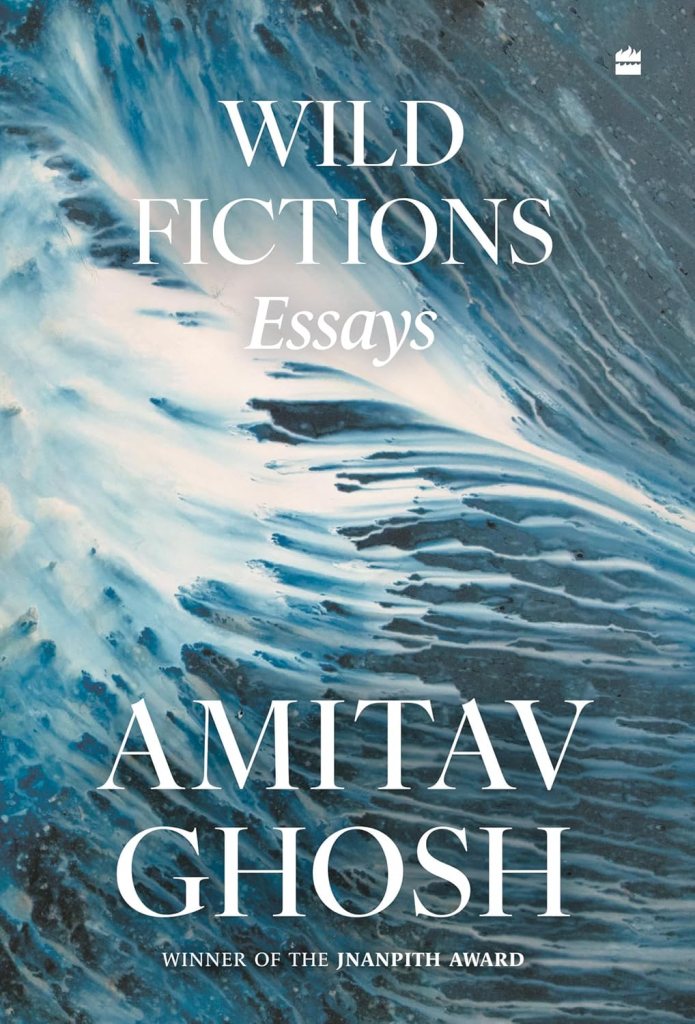
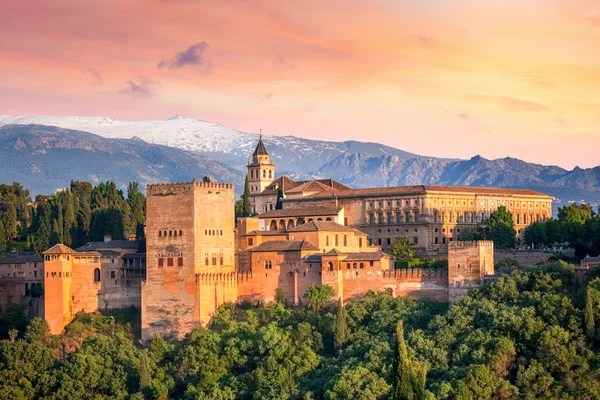
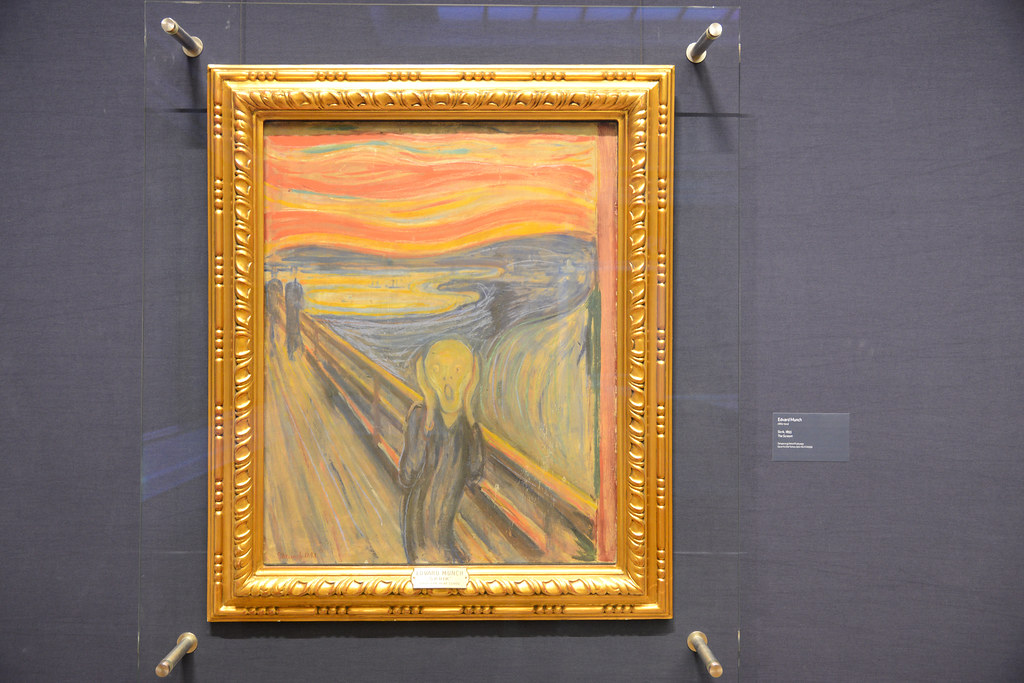
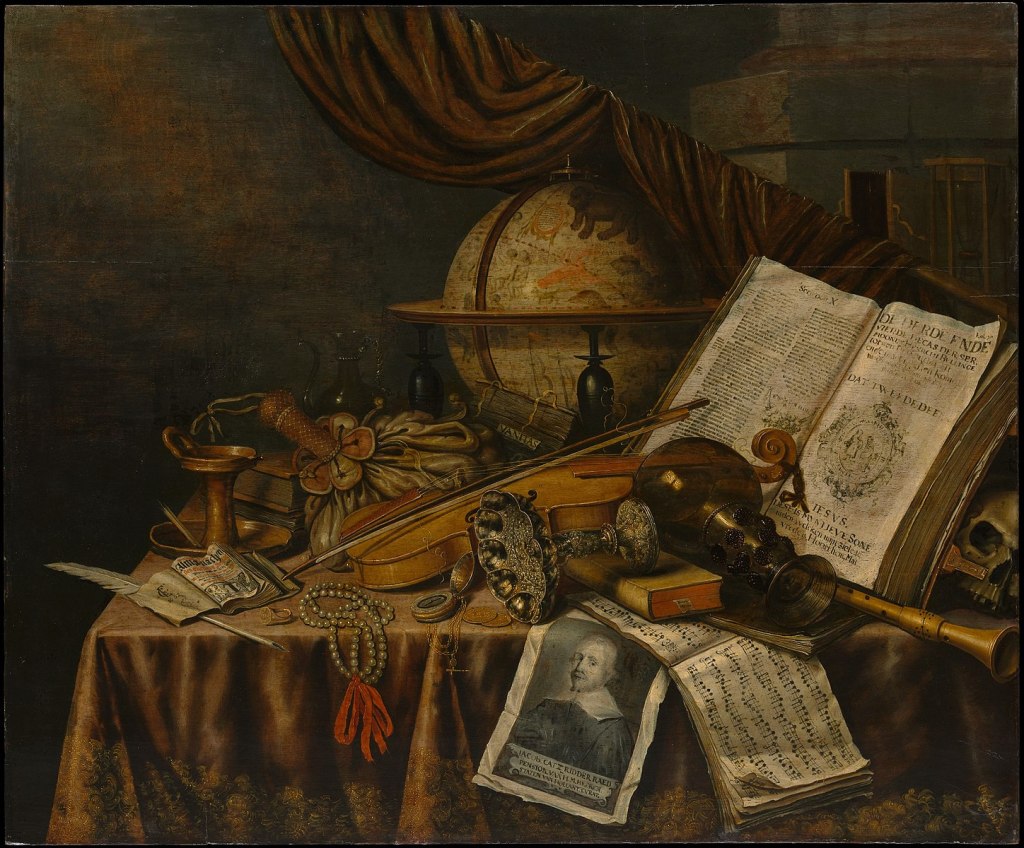


 Borderless