Categories
Stories

Vasiliki and Nico Go Fishing

By Paul Mirabile

From Public Domain

It was Easter holiday. Nico had ten days off from school. His grandfather, Vasiliki, had promised his grandson to take him out on a fishing expedition for a few days on the island of Pontikos to the south-east of Hydra. It was a tiny island hardly inhabited by man where wildlife roamed freely. Vasiliki had been there several times with his father. They always stayed in a cave which lay hidden in a small creek, unknown to all, save of course, themselves …

So one April morning, the sky more or less clear and the sea calm, Vasiliki weighed anchor and they set out in his motorised sailing dinghy. Making sure the motor was not in gear he pulled the pull-starter to ignite it. An instant later he choked it.

“Why did you choke the motor, grandpa?” Nico enquired, eating sardines with a slab of goat cheese and bread.

“Have to warm her up a bit, my boy. The fuel needs a few seconds to fill her.” Vasiliki again tugged at the pull-starter and away they glided, humming slowly away from the make-shift pier, Nico now hauling in the tie-ropes. Vasiliki took firm hold of the throttle, steering the boat out of the coastal waters.

“Shouldn’t we hoist the jibe, grandpa?”

“Not today. There isn’t much wind and Pontikos is far off. Thanks to my new motor, we’ll get there quicker … Tonight we’ll be eating shrimp,” he shouted over the pleasant humming of his new motor. “ And tomorrow morning we’ll fish for sea bream. Prawns and shrimp rise to the surface of the water at night and sea bream during the day.”

“Why is that, grandpa?” Nico sat sleepily on coils of rope at the bow wiping off the pieces of bread that had fallen on his anorak. He enjoyed the smell of the sea, that briny, seaweed smell. The air had a sweet taste to it that he could not identify, perhaps oleander or fuchsia.

His grandfather scratched his silvery beard: “I really don’t know why. Fish are like us humans. They have different reactions to different circumstances.” Nico, although not quite satisfied with this response had not the heart to pursue the subject.

“The sky was red last night,” continued Vasiliki, gently manoeuvring the throttle, steering the sail-less dinghy further out away from the dangerous rocky shores of Hydra. “You know what they say: ‘Red at night, sailor take delight; red in the morning, sailor take warning.’ No storm will be on us this morning.”

“Why do they say that, grandpa?” asked the inquisitive Nico.

Vasiliki observed the clouds moving in behind Hydra: “I really don’t know, Nico. It’s just one of rhymes that fishermen and sailors have repeated for centuries.” Vasiliki sniffed the air: “The weather will be clear only for us up till tonight, Nico. Who knows, we just may see a rainbow.”

“Only for us, grandpa?”

Vasiliki smiled: “Well, we’re the only ones out on the sea this morning, right?”

Nico nodded. Indeed their vessel was the only one seen on the whole wide horizon. The boy looked up — white puffy clouds plodded across the blue like camels over desert sands.

The motor raced them out into an Aegean smooth as silk. Gentle wavelets slapped the sides of the dinghy. The plodding caravan continued it’s heavenly voyage, the sun peeping over and to the sides of their creamy white humps. Nico gasped, he was witnessing an amazing spectacle of Creation! The early morning breeze stung his cheeks a crimson red. It was his first time out on a fishing expedition with his grandfather. How excited he was. He shot a glance behind him: a few dark clouds rose above the bleak cliffs of Hydra.

“The northern winds, grandpa,” he informed the steering Vasiliki, his voice a bit shaky. “They’ll be on us.”

“No bother, my boy, we’re out-racing them thanks to our new motor. That’s why I didn’t hoist the jibe, you see. Don’t forget : ‘red at night is sailor’s delight !’ Anyway, we’ll be at Pontikos in a few hours, long before those nasty black clouds chase or swallow those lovely white puffy ones.”

“Like the sea monsters that swallow boats and their crew, grandpa?”

Vasiliki offered no reply.

Three hours later, Vasiliki slackened speed by gradually easing up on the motor until he pressed the choke button on the throttle. He then took up the oars and began rowing strenuously, the muscles of his arms and shoulders contracting to the rhythmic movements of the current.

“Why have you cut the motor, grandpa?”

“Cause we’re entering the creek where our cave is. We have to be very careful to avoid snags. The strong current will also help us through the creek and push us right to the mouth of the cave. I know these waters well, my boy. You see, I’m not even rowing, it’s the current that’s doing all the work. Just look at this creek, Nico. It’s magic to the eye.”

Vasiliki gazed dreamily at their surroundings. He had indeed pulled up the oars and now let the current eddy them through sprays of seaweed toward the sandy beachhead. With the rising mist, the towering cliffs of Pontikos loomed eerily before them, encircling the indented crescent creek, although paths could be discerned on the pebbly strand, widening and snaking amidst the huge fissures and cavities of the cliffs. Tiny maritime parasols clung precariously off the jagged crags. The ruddy colours of the late afternoon bathed the whole scene in a marvellous fairy-tale aura. Nico sat mesmerised before the slightly rolling reflexions of the craggy palisades in the turquoise waters of the creek, over which his grandfather was now rowing prudently to avoid any collisions with the flat rocks that surged up here and there on the foamy wavelets. He envisioned himself on a page of A Thousand and One Nights, or on one in Robert Louis Stevenson’s Treasure Island which he had just finished reading …

“There she is, Nico … the mouth of our cave. That’ll be our home for a few days.”

Suddenly Nico cried out: “Grandpa! Look, a seal on the rock, I heard her cry … There she is!”

Nico stood up at the bow to get a better look. “It’s a fat seal with tiny white eyes.” The seal squealed in delight and dived into the cool, clear waters. “What a beautiful seal, grandpa!” added an overjoyed Nico.

“She sure is, Nico. Now let’s do the same. We have to jump into the water to haul the boat on to the beachhead. Take off your sandals and roll up your trousers.”

“I’d love to dive like that fat seal,” Nico called out as he hauled away. “I’d be able to catch so many prawns and sea breams and …”

“Get a hold of the rope and tie it to a few of the trailing vines that criss-cross the beach,” broke in Vasiliki, rubbing his calloused hands. Then he dropped anchor. “Get our bags out of the dinghy, but leave the fishing gear inside.”

Nico gathered up their bed-rolls, firewood and spittle, carrying them into the cave. Meanwhile his grandfather busily cleared and smoothed the floor of the cave to make it comfortable to lie on and build a fire. “I hope she comes up again,” Nico said, listening to his echo.

“Who?” 

“The seal, grandpa.”

“She’ll come up. My father and I always saw her come up and dive back down.”

“Can seals live that long?” Vasiliki glanced at his curious grandson.

“Well, I’m not sure she’s the same one. It may be her baby.” After that rather enigmatic reply, Vasiliki vanished into the deepest shades of the cave in search of prawns caught in the many shallow pools of water. Nico sat on the strand watching their boat dance suavely upon the wavelets that lapped the shore like ripples of laughter. The sun was setting over Hydra. The seagulls were laughing and the cormorants crying, both now on the wing, rising from the darkening waters, lifting their wet wings, flapping them madly. Suddenly the seal jumped up again on to the flat rock with a joyous squeal. The foamy waves brushed against the flat rock, soundlessly. She dived back into them. A call from the cave! Vasiliki had netted dozens of small prawns and was now scooping them out of the pools.

“Nico, get the big pot from the boat. We’ll be having boiled prawns with goat cheese, olives and bread tonight.” Vasiliki appeared stirred by the idea.

No sooner said than done! Whilst Nico searched for the big pot, Vasiliki dug a small hole, filled it with dry wood bits and made a fire. They used bottled water to boil and drink since no drinking water was found on Pontikos. 

Nico and his grandfather ate a hearty meal that first night. Tired from their voyage, they spread out their bed-rolls and lay down in the silence of the dim, fire-lit cave. Nico used his anorak for a pillow. He observed the last plumes of smoke rising to the rocky ceiling where there, they fanned out, the wisps tracing weird configurations: shapes of birds perched upon gigantic cliffs, deep-sea fish and reptilic creatures all moving slowly … very slowly. Nico rubbed his exhausted eyes, the phantasmagoria gradually vanished into the black rock. The fire lowered, then died out …

Streams of orange rays broke into their dreamless sleep. Vasiliki awoke first: “Nico, go out and find some brush and underwood for our fire. Be careful on the paths between the boulders, there may be scorpions or snakes.”

Nico rolled out of his bed-roll, splashed his face with a bit of briny-scented seawater, then throwing a sack over his shoulder which he retrieved from the dinghy, set out in search of firewood. The agile boy had not been at it for long when he stopped dead in his tracks. On the strand lay a seagull shaking her orange legs, pecked at the reddening morning sky with her horny beak. He approached the bird carefully. She opened her eyes as if pleading for help. Vasiliki soon joined his grandson.

“What’s wrong with the bird?”

“She’s dying, grandpa.” Nico lamented. “Look, she can’t fly when she spreads her wings.” Vasiliki shook his head sadly and turned to leave.

“We got to get to the boat, my boy, the fishing will be good today.”

Nico cradled the seagull’s head in his hands then poured some seawater onto her beak. She shook her head violently, closed her eyes and lay still. The boy dug a hole in the warming sands, placed the dead bird gently in it then covered her with sand and pebbles. He erected a little mound on the burial spot. The gloom-filled boy retraced his steps to join his grandfather at the boat, his bag full of wood bits and dry brush.

“What’s wrong, Nico?” asked Vasiliki as they pushed the dinghy into the still waters.

“The seagull’s dead, grandpa. I buried her.”

Vasiliki eyes shone with warmth. “Seagulls die, my boy,” he mulled, waist deep in the creek. “Like us, we die too.”

Vasiliki took up the oars and rowed out towards the open sea. Pulling them in, he let the dinghy float gently on her own whilst he prepared the fishing lines.

“We’re not too far out, grandpa?” observed Nico, fixing his line with a plummet and baiting his hook with worms and not with pieces of fish as the fishermen of Hydra would always do much to the dislike of his grandfather.

“No … Have to keep that coastline in sight,” reminded Vasiliki. “These waters can change in a blink of an eye.”

Nico fixed his line and sent it spinning through the rod out into the choppy waters. He sat on the coil of ropes sniffing the pleasant morning breeze. The air smelt of flowers. He scanned the watery horizon where he felt overwhelmed by a strange sensation of encountering a primordial world when primitive men hunted, fished, built fires in caves … sang dirges to the dead. Would he chant a dirge for the dead seagull that night in the warmth of their cave fire?

Hours passed. Both stared dreamily into the sea as they held their rods steady, a sea so creamy, so milk-like. Now and then a slight turbulence, perhaps a whirlpool, tossed the dinghy from side to side.

“Do you see any mackerel?” Vasiliki asked, peering over the surface of the sea.

“I’m not sure if they’re mackerel or scad fish, grandpa,” answered the boy, tugging lightly at his rod.

“Well, the mackerel chase the scad, so you know that the mackerel are behind them.”

Nico nodded.

“Tell me about the seagull, Nico.”

Nico peered at this grandfather’s aging face, leathery from the wind and sun, at his deep, gimlet set eyes. “Which one, grandpa? The one I just buried or Dimitri’s?”

“Dimitri’s?” 

“Yes, remember Dimitri, he was one of my classmates … He had a seagull for a pet.”

“A seagull for a pet? That’s strange. Tell me about her.”

“She was a different kind of seagull. A domesticated seagull. She would fly up on to a rock whenever Dimitri and his father were out fishing. From that rock, she would observe them with her beady eyes. Then she would dive straight down to the boat but she never perched on Dimitri’s father’s side of it, only on Dimitri’s side. His father was a grouchy old man and the seagull never cared for him. Dimitri would throw her fishbones, picarels and other bait. His father would get angry, saying that bait was for fishing and not for that blasted bird ! Dimitri never listened to his father. He would just wave a hand and keep feeding his companion. They were an inseparable pair, you know. When Dimitri died of the flu the seagull flew off and was never seen again … »

“Where did she fly off to?” enquired Vasiliki, intrigued by this tale.

“Perhaps she flew to China, grandpa … Like the Nefeli[1] …”

“To China?” Vasiliki eyed his grandson thoughtfully.

“Yes, grandpa. Or to somewhere unknown, or at least not known to us.” Vasiliki bowed his head. They shook their rods : nothing yet …

The sun was high in the sky now. It warmed their bones and skin. Nico threw off his anorak. How beautifully the sunbeams bounced off the blue waters. They shimmered like the scales of a fish just caught on the line. From time to time, the gulls and the cormorants that glid over their heads swooped down and skimmed the surface of the white foam in search of scud or other schools of fish that were presently leaping at the surface. The birds certainly had more luck than our two fishermen. Plunging downwards, fluttering their huge wings, their graceful dives and surges hypnotised Nico. Meanwhile in the fathoms of the deep, millions of sea-creatures pursued millions others. The microscopic fish were swallowed up by the bigger fish, and in turn were swallowed up by even bigger fish! The whole lot of them were then completely disappeared in one enormous suction into the hollow vortex of the great whale. A great battle indeed was underway both in the inflamed sky and in the broiling sea. Nico felt enfolded in this chaotic struggle for life. Would he, too, be swallowed up along with his grandfather?

Nico shot a questioning glance at Vasiliki who suddenly broke the silence with cries of joy: “Ah ! Nico, here … a fish … two or three fishes!” Vasiliki, all agog, triumphantly displayed three flapping fish in his straw-weaved basket, their gills quivering silver in the intense sunlight. Nico, too, quite unexpectedly got lucky. Not only had he reeled in a mackerel, but also a big, white fleshy sea bream. He had at first lost his plummet, no doubt badly tied. But when Vasiliki showed him how to fix it properly the fish came to him as if the bait were a magnet.

“We’ll be having a hot-pot tonight, my boy,” rejoiced Vasiliki. “We’ll cook some vegetables with our catch. What do you think?”

Nico smiled. He thought it an excellent idea …That night when they had cleaned the fish, Vasiliki boiled them with an assortment of vegetables brought over from Hydra, especially egg-plant, red-pepper and tomato.

“How was the meal, Nico?” asked his grandfather when they had finished eating.

Nico, who had been listening to the moaning wind, turned to him: “Delicious, grandpa. But you know, I thought of the dead seagull all day when fishing. She should have been diving and catching fish with the others.” He paused a moment. “Grandpa, what did you think of my story?”

“What story?”

“About Dimitri’s pet seagull.”

“A good story, my boy. A beautiful story. A very beautiful one.” Vasiliki puckered his lips. “Why do you keep thinking about the seagull you buried ? Do you want to give her a name, like your boat that sailed to China?” Nico stared at his grandfather rather perplexed.

“No grandpa, I have no name for her. She’s gone far away … like the Nefeli … to another land …”

“We’ll build another boat together,” Vasiliki promised. “A bigger boat. The biggest of them all. But the seagull,” he hesitated. “The seagull has flown off to a land where we can never see her again. I’m sure it’s a beautiful land, like where the Nefeli is now on her way.”

“Wouldn’t you like to see that land, grandpa?”

“Well … not right now, my boy. Right now I’d like to close my eyes and sleep. Tomorrow we’ll be on the sea the whole day again. They’re biting out there.”

And that is exactly what the old man did …

The last embers of their fire cast undulating shadows on the walls of the cave. Vasiliki was sound alseep, snoring lightly. Nico strolled to the beachhead. The moon had risen, girt by a rosy halo. Darkened seagulls glided in and out of the misty moonbeams. They danced an eerie dance. Nico perceived Hydra’s beacon far, far off at the south-west tip of the island. A steamer passed over the sleepy waters heading for Hydra, her lights burning bright against the umber orb of the horizon. Nico thought of the Nefeli on her long voyage to China. Slicing unmanned, captainless over unchartered seas, like Dimitri’s pet seagull on the wing, perhaps she too flying towards unknown lands now that her master had long since departed. The seagull he had buried could also be flying off to some mysterious place, a paradise for seagulls where she could fly and fly and fly without a thought of ever diving for fish or of escaping the hunter’s gun. A peaceful place…

Nico’s grandfather told him that tomorrow night they would be eating mussels with lemon juice; a real regale his grandfather had beamed. With bread and olives, too. Olives always go so well with mussels, he said. Nico smiled. Why they always go so well together his grandfather never offered a reason. But Nico believed him. Nico believed everything that his grandpa told him, even about the monsters of the sea that swallow boats and their crews. Perhaps the Nefeli had been swallowed up by one of those monsters.

Nico stared at the shadowy moon. A slight wind began to groan. The dinghy tossed gently, the scraping of the pebbly strand under her bow prompted a rather strange rhythm like a saw sawing wood.

Nico strolled back into the dark cave. The fire had gone completely out. Nothing could be seen, only heard: his grandfather’s snoring, the seagulls screaming, the wavelets lapping, the dinghy scraping … He loved his grandfather. Yes, they would build a great, majestic boat, sturdier than the Nefeli — an unsinkable boat, one that would voyage all around the world like Magellan’s galleon. He would name the boat Mytho … Yes, that would be a fitting name for such a beautiful boat.

Nico stared at his unseen snoring grandfather. He would have liked to ask him why olives and mussels go so well together. And his grandfather would have probably answered: “Well my boy, it’s just a feeling I can’t really explain. But believe me, they do go well together.”

And Nico would have believed him. Would have accepted that answer as a perfectly acceptable answer …

Nico slipped into his bed-roll and immediately into a deep, deep sleep. He dreamed of seagulls on the wing, boats navigating on the high seas, underwater monsters with long, leathery tentacles chased by the great whale and caves full of gold and diamonds and other precious stones whose names Nico had not as yet learned but would surely ask his grandfather their names when he awoke.

[1] Read the story by clicking on this link.

.

Paul Mirabile is a retired professor of philology now living in France. He has published mostly academic works centred on philology, history, pedagogy and religion. He has also published stories of his travels throughout Asia, where he spent thirty years.

.

PLEASE NOTE: ARTICLES CAN ONLY BE REPRODUCED IN OTHER SITES WITH DUE ACKNOWLEDGEMENT TO BORDERLESS JOURNAL

Click here to access the Borderless anthology, Monalisa No Longer Smiles

Click here to access Monalisa No Longer Smiles on Kindle Amazon International

Categories
Stories

The Wise One

By Snigdha Agrawal

Dadu[1]…stop crying! Can’t you see her smile? She must be happy. That’s what you always say, right? Smile equals happy,” said nine-year-old Aanondo, tugging at his grandfather’s hand. His big brown eyes searched Dadu’s tear-filled ones, confused but earnest.

Dadu sniffled and tried to compose himself, wiping his glasses with trembling fingers. “Aanondo baba, it’s not that simple. Your Dida[2]…she’s gone. Forever. I’ll never hear her voice again, never see her smile, never feel her warmth.”

“But Dadu,” Aanondo tilted his head, his brows knitting together, “you told me people we love never really leave us. You said they stay in our hearts. So, is Dida in your heart now?”

Dadu sighed, his chest tightening. Sometimes this little boy sounded like he’d lived a hundred years. “Yes, baba[3], she’s in my heart,” Dadu admitted softly. “But it’s hard. It hurts knowing I can’t talk to her or hold her hand anymore.”

Aanondo climbed onto the bed and settled beside him, placing his small hand on Dadu’s weathered one. “Maybe Dida can still hear you. If you talk to her, she’ll know what you’re feeling. That’s what you told me to do when I miss Ma or Baba[4] when they are out of home, for long, during work trips, remember?”

Dadu gave a weak smile. “Yes, but it’s different. Your Dida was my best friend, my partner. We spent over fifty years together. Fifty years! How do I go on without her?”

Aanondo’s eyes widened. “Fifty years? Whoa! That’s almost as old as the dinosaurs you said weren’t real dinosaurs in the movies!”

Dadu chuckled despite his grief. “Well, not quite, but yes, it’s a long time.”

Aanondo’s face turned serious again. “You always said Dida was your sunshine. Doesn’t the sun come up every day, even when there are clouds? Maybe Dida is still your sunshine—you just need to look harder to find her.”

Dadu stared at the boy, his heart aching and marvelling at the same time. “You think so?”

Aanondo nodded vigorously. “See that picture of her?” He pointed to a framed photo of Dida, her smile as vibrant as a summer morning. “That smile isn’t gone. And you said she loved the garden, right? Maybe when the flowers bloom, that’s her smiling at you. Or when there’s a rainbow, that’s her telling you, ‘I’m here, old man!’”

Dadu laughed—a warm, real laugh. “Old man, huh? Sounds like something she’d say!”

Aanondo beamed, encouraged. “And in me, Dadu! You said I have her mischief in my eyes, her smile, and her kindness in my heart. So, if she’s in me, then she’s not gone, right?”

Dadu’s throat tightened as he pulled Aanondo into a hug. “You’re absolutely right, baba. She’s in you, in me, in everything she touched. I just need to remember that.”

Aanondo leaned back, giving his grandfather a stern look. “So, no more crying, okay? Or not too much. Dida would want you to smile. And I’m here to help. I’ll even smile extra if it helps you see her in me. Deal? Dida had told me to look after you after she’s gone.  I’m doing just that.”

Dadu nodded, his voice steadier now. “Deal. You’re a smart boy, Aanondo. Too smart for me sometimes.” Aanondo grinned. Then he puffed out his chest, his tone growing protective. “From now on, I’m in charge of keeping you happy. No frowning allowed. If you’re sad, just tell me, and I’ll fix it, okay?”

Dadu chuckled and kissed Aanondo’s forehead. “Okay, my little protector. We’ll be happy for her.”

“Good,” Aanondo declared, patting Dadu’s hand. “Now, let’s get some tea. Dida always said tea fixes everything!”

Dadu stood, feeling lighter than he had all day. “You’re right, baba. Let’s make some tea—and maybe sneak a biscuit too.”

Aanondo grinned mischievously. “Or two. Dida wouldn’t mind.”

And as they walked hand in hand, Dadu felt the warmth of Aanondo’s tiny grip anchoring him to a love that wasn’t gone, just transformed.

From Public Domain

[1] Grandfather

[2] Grandmother

[3] Used as a term of endearment, technically father

[4] Father

Snigdha Agrawal (nee Banerjee) is an author of four books and a regular contributor to anthologies and e-magazines published in India and overseas.  A septuagenarian, she writes in all genres of poetry, prose, short stories and travelogues.

.

PLEASE NOTE: ARTICLES CAN ONLY BE REPRODUCED IN OTHER SITES WITH DUE ACKNOWLEDGEMENT TO BORDERLESS JOURNAL

Click here to access the Borderless anthology, Monalisa No Longer Smiles

Click here to access Monalisa No Longer Smiles on Amazon International

Categories
Stories

Naughty Ravi

By Naramsetti Umamaheswararao

Ravi, a fourth-grade boy, could never sit still. His hands were always busy with some mischief. Whenever he found something at home, he would play with it, often damaging valuable items. Despite his mother’s occasional scoldings, Ravi never stopped his antics or playing around.

One morning, while playing with a ball inside the house, Ravi threw it at the television in the hall. The screen cracked, and his furious mother couldn’t hold back her anger. She hit him, but before she could deliver more blows, Ravi’s father intervened, rescuing the boy.

Through tears, Ravi said, “I didn’t mean to, Dad! I promise I’ll never play with a ball inside the house again.” His father calmed him down and persuaded his mother to forgive him.

But Ravi’s mischief didn’t end there. Another day, he saw a bug on the glass-top tea table in the hall. Picking up a cricket bat, he swung at the bug, but it flew away unharmed. Unfortunately, the table shattered under the force of his swing. The sound of breaking glass brought his parents running. They found Ravi holding the bat, standing next to the broken table.

Afraid of another scolding, Ravi glanced nervously at his mother. Before she could say anything, his father stepped in and asked, “Didn’t you promise not to play inside the house? What happened now?”

“I only used the bat to hit a big bug on the table, Dad. It got away,” Ravi explained, gesturing with his hands. His father patiently advised him, “Alright, but remember, no more damaging things at home.” Ravi’s mother, however, remained silent, visibly upset.

Another day, Ravi wanted a storybook from the shelf. Climbing onto a chair to reach it, he accidentally knocked down several books and other items. Hearing the commotion, his mother rushed in to find books and belongings scattered on the floor.

Frustrated, she scolded, “How many times have I told you to be careful? You’re always breaking or dropping something! Now clean this mess up!” Ravi tried to explain that the other items fell when he pulled out one book, but his mother refused to listen. Feeling deeply hurt, Ravi decided to leave the house for a while.

“If I go out, Mom will worry and search for me. She might even cry. That would make her stop scolding me,” he thought.

Ravi walked to the nearby park. Sitting amidst the greenery, he watched people, children playing in the distance, and ducklings swimming in a pond. Slowly, his irritation and sadness faded.

Just then, he noticed a baby bird falling from a nest in a nearby tree. The bird chirped loudly in fear. Ravi quickly ran to the tree and caught the bird in his hands before it could hit the ground. Gently stroking its wings, he calmed the frightened bird.

From Public Domain

Moments later, the mother bird flew down, circling Ravi and chirping anxiously. The baby bird flapped its wings joyfully at the sight of its mother. Ravi placed the baby bird carefully back near its nest. The mother bird covered it lovingly with her wings.

“The mother bird came back to protect her baby. Maybe my mom is already worried about me. I should go home and let her know I’m safe,” Ravi thought.

Ravi rushed back home. The moment his mother saw him, she smiled and said, “Where were you? I made some payasam for you. Come and eat.” Ravi sat down and narrated everything that had happened in the park.

Hearing his story, his mother’s face lit up with pride. She kissed his cheek and said, “You’re my precious little gem. You’re mischievous at home, but outside, you’re so helpful and kind.”

Ravi realised, “Mom scolds me when I do wrong and praises me when I do good. She truly loves me. I should never make her sad or upset again.” From that day on, Ravi started listening to his mother and became more careful both at home and outside.

Naramsetti Umamaheswararao has written more than a thousand stories, songs, and novels for children over 42 years. he has published 32 books. His novel, Anandalokam, received the Central Sahitya Akademi Award for children’s literature. He has received numerous awards and honours, including the Andhra Pradesh Government’s Distinguished Telugu Language Award and the Pratibha Award from Potti Sreeramulu Telugu University. He established the Naramshetty Children’s Literature Foundation and has been actively promoting children’s literature as its president.

.

PLEASE NOTE: ARTICLES CAN ONLY BE REPRODUCED IN OTHER SITES WITH DUE ACKNOWLEDGEMENT TO BORDERLESS JOURNAL

Click here to access the Borderless anthology, Monalisa No Longer Smiles

Click here to access Monalisa No Longer Smiles on Amazon International

Categories
Stories

 The Forgotten Children

By Ahamad Rayees

Photo Courtesy: Rayees Ahmed

The cold grip of winter had settled over the orphanage, where the silence of early morning was usually unbroken. Yet today, there was a palpable stir. Azaan, whose life had long been a steady rhythm of routine and absence, woke up with an energy he hadn’t felt in years. Today was different. Today, his father was coming.

He had learned the news the night before. His father, Usman, who had disappeared when Azaan was just a child—remarried and drifted from memory—had promised to visit. It wasn’t just a visit; it was a thread of hope, a promise of belonging. In the brief moment of connection, Azaan borrowed a phone from the staff and heard his father’s reassuring voice: “Once I’m near, I’ll come to your hostel and meet you.”

That voice, steady and calm, had been enough to reignite a spark of joy in Azaan’s heart. He dashed through the orphanage with the news, eager to share it with anyone who would listen. “My father is coming! He promised to meet me. He’ll bring gifts, so many gifts!” His voice was full of hope, fragile yet unwavering. Even the other children—those familiar with abandonment’s bitter taste—did not have the heart to burst his bubble.

The night passed in a haze of anticipation. Azaan dreamed of a time when his father wasn’t a distant figure but the man who had once walked beside him in the forest, laughing as they picked berries, chasing mushrooms after a storm. Those fleeting memories clung to him, serving as a quiet beacon of hope.

When morning broke, Azaan leapt out of bed, more alive than he had been in months. He hurried down the narrow hallway, bumping into Amir, who looked up groggily.

“Watch it!” Amir grumbled, half-awake.

“Today’s special! My Abba[1] is coming!” Azaan shouted, his face glowing.

In the washroom, he eagerly poured water from the orphanage’s boiler into a basin, enjoying the warmth it provided on this bitter morning. Carefully, he scrubbed his face, his hands, and then, with a small pouch of shampoo borrowed from Salim, he lathered his hair into a frothy mess. The others watched, amused by his energy and enthusiasm, but Azaan didn’t care. Today, he would look perfect.

His freshly trimmed hair—thanks to Salim Bhai, the local barber—looked sharp. “Abba will be proud,” he thought, smiling at his reflection in the dim hallway mirror.

Azaan moved to his iron trunk, his most prized possession waiting inside. A kurta his father had given him two years ago on Eid. He pressed it to his face, inhaling the faint scent of attar[2]still lingering in the fabric. It wasn’t just a piece of clothing; it was a symbol of love, of his father’s warmth, and it made him feel closer to the man he so longed to see again.

Dressed in the kurta, Azaan stood a little taller, feeling ready for the day. His heart raced with excitement. The hours passed slowly, but Azaan kept himself busy—washing and folding his clothes, tidying his room, and preparing for his father’s arrival. Everything had to be perfect.

As the day turned into afternoon, Azaan stationed himself by the window, his eyes fixed on the road. Every distant sound, every approaching car, made his heart leap. But the day dragged on, and the road remained empty. The gate didn’t open. No familiar face appeared.

The other children, sensing his growing unease, tried to comfort him. “Maybe he’s stuck in traffic,” one suggested. “He’ll come tomorrow,” another offered, though their words rang hollow in the air. Azaan simply nodded, his gaze still fixed on the road, the hope in his chest beginning to fray at the edges.

As evening drew near, Azaan could bear the waiting no longer. He borrowed the phone again and dialled his father’s number, his hands trembling.

“Your stepmother… she didn’t want me to come,” Usman’s voice was hesitant, full of an apology Azaan couldn’t quite understand.

The words struck him with the force of a blow. “Okay,” he whispered, unable to say anything else. The phone call ended, and for a long moment, Azaan sat still, his mind spinning with confusion and hurt.

That night, the other children gathered around him. They didn’t speak much. What was there to say? But their quiet presence, their comforting touches, spoke volumes. They led him back to his bed, where he lay staring at the ceiling, his heart heavy with shattered hopes.

Tears slid down Azaan face, silent and unbidden. He thought of the other children—his brothers and sisters in pain—who shared his grief. They were the Forgotten Children, the ones left behind in the shadows of society’s indifference. The world saw them as nameless faces, often forgotten even as donations flowed in for their care. People gave money, food, clothes—but few ever paused to ask how they truly felt, what they needed beyond material comforts.

In that moment, Azaan understood. These children were not just orphans; they were symbols of a broken world, a world that had failed to give them the love and connection they deserved.

As the darkness deepened, Azaan was surrounded by the other children. They didn’t have answers, and there was no fix for the pain he carried. But in their shared silence, in their collective resilience, there was strength. They had found a thread of connection, fragile but real, that reminded them they were not alone.

For Azaan, the pain of his father’s absence was sharp, but the quiet comfort of his orphanage family was there to soften the blow. And in that comfort, there was hope—not for the perfect reunion he had dreamed of, but for something more profound: the knowledge that no child, no matter how forgotten, was never truly alone.

One day, perhaps, the Forgotten Children would no longer be forgotten. But for now, in the presence of those who cared, Azaan found a glimmer of the belonging he had yearned.

From Public Domain

[1] father

[2] Perfume (normally rose)

Ahmad Rayees is a freelance poet and writer from Kashmir valley.

.

PLEASE NOTE: ARTICLES CAN ONLY BE REPRODUCED IN OTHER SITES WITH DUE ACKNOWLEDGEMENT TO BORDERLESS JOURNAL

Click here to access the Borderless anthology, Monalisa No Longer Smiles

Click here to access Monalisa No Longer Smiles on Kindle Amazon International
Categories
Stories

Persona by Sohana Manzoor

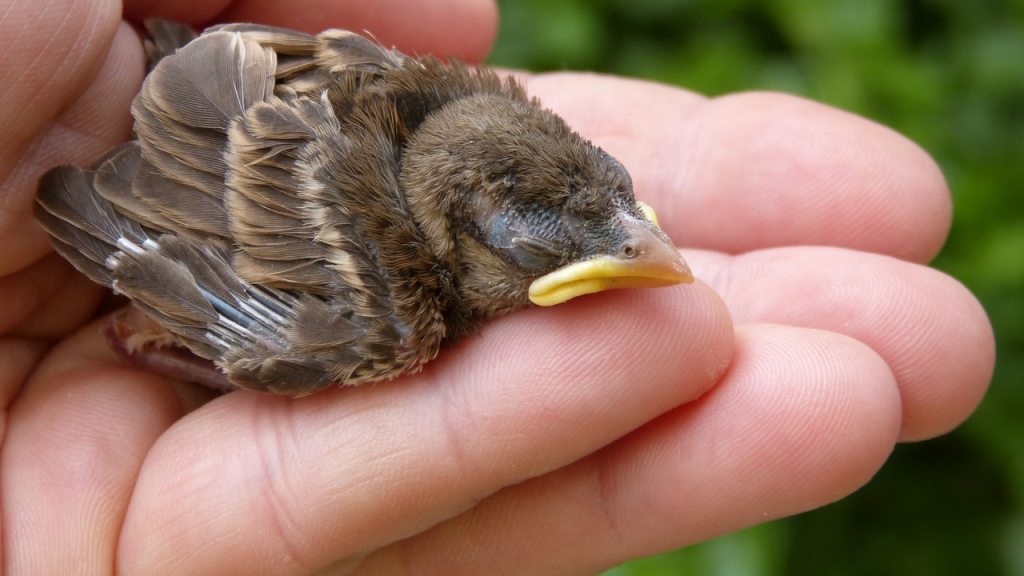
Painting by Margaret Macdonald Mackintosh (1864-1933)

Toma flopped onto the cushioned sofa in resignation and disgust. She cursed herself for being persuaded into believing that it would be a nice evening. She should have trusted her instincts. Now she regretted her decision to come to the party. Nothing to look forward to but the time when her uncle and aunt would decide to leave.

She sighed and took a sip of lemonade and noticed her uncle casting a worried glance at her. Feeling somewhat sorry for him, she smiled to assure him that nothing was amiss. It was not his fault, really. Her Latif Uncle and Rashida Aunty were doing their best to introduce Toma to the Bangladeshi community in Arlington. Back in Dhaka, Toma’s mother had lately been upset by her wayward daughter’s decision to stay on in the US to pursue a PhD after completing her Master’s. So, to appease her mother, she agreed to go to this party while visiting her maternal uncle and aunt in Virginia—a place to meet prospective bridegrooms and such. Toma herself had not been completely averse to the idea—she wouldn’t mind settling down eventually—but what she had seen so far was not very encouraging.

Early in the evening she had met Faiyaz, son of an eminent Bangladeshi doctor living in Fairfax, and himself a well-paid systems analyst with an MS from MIT. His mother had been crowing to the crowd about his recent raise. Toma could not help cringing. To her, such information was absolutely private, and she considered it as distasteful as a display of undergarments. Faiyaz, a stocky fellow of about 5 feet 4, smiled coyly at Toma, who was taller than him, poised, and very attractive. Throughout the evening, she had noticed quite a few men sizing her up and down. An elderly man even asked her if she had been in the Girl Scouts as she seemed to have an athletic body. Toma smiled politely and answered “no” before moving away feeling irritated and embarrassed.

Next came Tanvir and his parents. “Oh, how interesting! Both Toma and Tanvir begin with a T!” the father said with great mirth. Tanvir worked in a law firm in New York and was on the lookout for a prospective bride who would be smart and attractive, but not too career-oriented. He would be earning a lot, so he was more in need of a homemaker. The first question he asked Toma was what she planned to do after her master’s. When she replied that she was continuing into the PhD, he looked at her very seriously and said, “You are in physics, right?” Before Toma could reply he ploughed on. “You know, girls don’t have the right kind of aptitude for science. I don’t mean any offense. It’s just that research has shown that girls are better at languages while boys are better at mathematical and spatial cognition. In any case, with your degree and looks you can get a good job—why would you waste several years of your life on a PhD?”

Toma felt like scratching his eyes out. She took a moment before replying. “It has been my dream to become a physicist since I was in eighth grade,” she said. “Besides, I got accepted and funded at Purdue, so presumably, they didn’t find any problems with my mathematical and spatial skills.” Toma forced a smile before moving away.

After meeting Habib and his blabbering fool of a sister, Toma decided to take a break. After all, there was only so much one could take. She heaved a sigh and took another sip, no, a gulp at her drink. She could not understand why these people, who claimed to be so well-educated and cultured, acted the way they did. She looked across the room at the bevy of women in all their jewels and finery. To think that some day she might have to join their ranks made her feel nauseated. She saw a fat Mrs. Zoardar gesturing with her hands in such a way that everyone could see her emerald-studded bracelets. Another woman in a pale purple muslin saree was talking in a high-pitched voice, “Daud and I are planning to visit Europe next summer. I simply loove Paris—the Louvre is my soul. People here boast about cars and houses. You should all open your eyes and try to see the world. What is there in life, eh? Enjoy it!”

Toma grimaced and thought that the only person she could confide in about such nonsense was Mayeesha. Like Toma, Mayeesha too had been lately facing these situations. Actually, her case was worse since she lived in a city with a larger Bangladeshi community, whereas Toma had only come here to visit. Soon she would be back in the small university town in Indiana where the community would leave her largely at peace.

“Why so sad a face?” said a voice that sounded rather amused. Toma saw a woman occupying another sofa across from hers. She remembered seeing her before—a young woman who was accosted by a mother with two marriageable sons. She had deflected her by saying that she was already married and then had moved gracefully away from the vicinity. She was holding a glass in her hand, probably fruit punch, and Toma could not help noticing her fingers—the long, tapering fingers of an artist. She had an amused smile on her lips, but it was her eyes that made Toma take a second look at her. Her eyes were almost violet—a very unusual color for a Bangladeshi woman. Must be colored contacts, Toma thought. Still, there was understanding and compassion in her eyes. Unlike the other women in the room, she wore a simple vegetable-died, earth-toned cotton saree which made her all the more attractive.

“I am Urbee, I’m visiting too,” she said.

Toma smiled back. “I am Toma.”

“And you’re in the marriage mart?” said Urbee with her eyes dancing. It was more of a statement than a question.

Toma squirmed and then tried to change the topic. “I heard you say that you’re married. Is your husband around?”

“No,” replied Urbee solemnly. “I am actually separated from my husband. But I say I’m married to save myself from the old vultures. A woman here has no place unless she is under a man’s name.” She made a face and said, “Pathetic, isn’t it?”

Toma didn’t know what to say in response to this frank admission. “You’re not dressed like the other married women though,” she said.

“I’m still a student. So I can wear what I want. Besides, my husband is not here, right?” came the reply. “But there are also exceptions. See that lady over there? Urbee inclined her head and Toma followed her gaze to see a woman with a child seated on a sofa. She wore a crumpled silk shalwar-kameez, and seemed oblivious to the world. Her hair was casually tied at the back and she wore no make-up. As far as Toma could see, the only jewelry she had on was a pair of earrings, nothing gold or glittering. “Her husband is an economist, and she herself is a doctor. But she does not give a fig as to what people think of her,” murmured Urbee. “And now take a look at that decked-up camel.” Toma turned to see a tall, lanky woman in bright fuchsia pink lehenga passing by. She wore false eyelashes. The kohl eyeliner reminded Toma of Elizabeth Taylor in Cleopatra. She gave Toma and Urbee a fleeting glance as she walked by. Toma could almost see a camel in her awkward gait.

“She is a grad student at Virginia Tech—does she look like it? Her father pays for it, of course,” confided Urbee. “And there’s her sister who has come to visit from Texas.”

The sister looked normal, thought Toma. As if reading her thought Urbee said, “Wait till you see her with her son. They have a birthday bash for him once every month in anticipation of his first birthday this coming February. Oh, and they order several identical birthday cakes: one for the photos, one for the kids to smash, one for the kids to eat, one for the diabetic grandparents—you get the idea.”

Toma turned to look at her companion. “You’re kidding!” she spluttered. Urbee shook her head sadly. “No, I am not. Their father is a notorious government officer in Bangladesh. He is filthy rich. They have a ranch somewhere in Texas. The whole family spends time there every year. The decked-up camel is also in the marriage-mart, by the way.”

“She will fit in very well, I think,” answered a disgusted Toma.

Urbee smiled. Suddenly, a woman appeared from nowhere. “There you are. I’ve been looking all over for you.” Toma looked up to see a rather pretty but anxious-looking woman bending towards Urbee. “Don’t you think we should leave now?” she asked.

A flicker of annoyance crossed over Urbee’s face. But she replied in an even voice, “Come Rehnuma, I’ve just started enjoying myself. Don’t spoil it. Meet Toma. She is visiting too—like me. Toma, this is my cousin Rehnuma.”

Rehnuma glanced at Toma uncertainly and her lips stretched in a tight smile. Then she left abruptly but looked back at least twice. Toma felt somewhat uneasy. “Is there anything the matter? Your cousin does not like me, I think.”

Urbee laughed. “It’s not you. The problem is with me. I don’t fit in, you see. And she thinks I will get into trouble.”

“Do you get into trouble?” Toma was curious.

“Oh yes,” Urbee giggled. “If people bother me too much, that is. I told Mrs. Zoardar that she has a lot of similarity with the queen of pigs. And when Harun Ali’s brother came to look for a prospective bride, I told him nobody would be interested in a bald dwarf like him!”

Toma’s jaw dropped open. “What? No way! But why? Because they’re stupid?”

“Not just because they are stupid. Mrs. Zoardar has a daughter-in-law whom she treats very badly. And look at the woman—she thinks she looks like a queen. Yes, she is the Queen of Pigs.”

“And the other one?”

“That one is an absolute ass. He is a short, bald, hirsute fellow—not to mention almost middle-aged—yet he was looking for someone ‘beautiful and fair.’ Also, the bride would have to be less than twenty-five years of age. So I told him the truth. He has not found his bride yet, and that was three years back.”

A thought occurred to Toma. “You seem to know a lot of people around. How long have you been here?”

Urbee looked away. “I come here every December to visit my uncle. This is my fourth year in the US.”

“And Rehnuma is your cousin – I mean your uncle’s daughter?”

“Yes.” Urbee smiled. “She is rather cautious. Doesn’t like my ways.”

“Well,” laughed Toma. “I admire your courage. But I won’t be able to do what you do.”

“Oh, but you will,” replied Urbee with conviction, turning her shining eyes on Toma. “I, too, was polite and courteous once. But it seems a long time ago now. Sweet and enduring as my name. ‘Urbee’ means earth—did you know that?”

“I was thinking that yours is an unusual name. I have known a couple of Urmees, but no Urbee. But, seriously, you’re talking as if you’re my grandmother,” Toma laughed. “You cannot be more than three or four years older than I am.”

“I am thirty-seven, Toma. I may not look it but I am. When you reach my point in life, you too will think and feel differently.” She looked at Toma directly. “You too don’t fit in. You see things differently already.”

Toma shuffled uncomfortably. “A lot of girls feel like me. My best friend Mayeesha, for example.”

Urbee laughed. “I don’t know your friend. But you remind me of myself ten years back. I married because I thought I was in love.” She shrugged.

“I won’t get married until I find the right person,” Toma replied quietly.

Urbee peered into her face and laughed again. “And are you sure you’ll recognize the right person?” She shook her head. “You’re very romantic, just as I was,” she paused. “There’s no right person,” she shook her head. “There’s no man in this world to fit in the shoes….” Her voice trailed off. Then suddenly she got up and smiled brightly. “Best of luck in your groom hunting.”

Toma was suddenly angry. “I’m not looking for a husband,” she said firmly.

“Nooo?” Urbee looked at her wide-eyed. “What are you doing here then? Haven’t you been looking around and passing judgment too? ‘This one has a nosy mother, that one is too short, this one is too bossy’—isn’t that what you had been doing?”

Toma was too flustered to reply.

Her companion observed placidly, “We all do it, Toma. All the time. We are all in the same boat, only we think we are different.”

Toma found her tongue. “But you just said that I don’t fit in.”

“That too,” Urbee nodded. “You don’t fit into their world. You belong to another. That’s the problem. How will you survive in their world? Good luck.” Urbee walked away before Toma could stop her.

* * *

“Come dear, it’s time to leave,” Toma’s reverie was broken at the voice of her aunt. Rashida was smiling at her niece with genuine affection. Toma got up, relieved at the prospect of getting out of this place at last. Latif was already at the door, collecting their coats.

“I saw you talking to Tonima,” observed Latif when they were seated in the car. “What do you think of her?” he asked.

“Tonima?” Toma asked blankly. “Who is that?”

“The girl you were chatting with,” her aunt supplied.

“Oh! But her name is Urbee —was that her nickname, then?” Toma was a little perplexed.

Her uncle and aunt glanced at each other. “That was Tonima. What else did she say?” her aunt asked.

“I rather liked her,” Toma smiled. “She seems nice, though at the end I thought she was a bit strange. I would love to meet her again.”

“Did she say anything about herself?”

“She said she’s a grad student. But I don’t know what her discipline is, or where she studies. Why do you ask?” Then Toma added hastily, “She did mention that she is separated from her husband. . . you don’t disapprove, do you?”

Latif sighed. Toma went on, “She is a fine person, I think, even though different from most people.”

“She is not. . .  er, normal,” her uncle blurted out, a little embarrassed.

“Not normal!” Toma echoed.

“She used to be a scientist, a molecular biologist doing cancer research, but then she went crazy,” Rashida said quietly. “She lost her only child in an accident. Never recovered from the blow fully. Her mother-in-law blamed her for being careless. It was not her fault though. She tried having another child but miscarried. Her in-laws interfered and poisoned her relationship with Biplob. A year later, they were divorced. Tonima and Biplob used to be a lovely couple, always the life of the party.” Rashida looked out at the lighted building they had come out from. “She was such a talented young woman—such a waste,” she sighed.

Toma fumbled for words, “But. . . uh. . . why was she . . . what was she doing in the party, then?”

“It’s her uncle’s house. She has a nurse, I think, who checks on her from time to time.”

Toma remembered Rehnuma and her anxious face. “Rehnuma,” she whispered.

“What?” Latif asked absent-mindedly. “She has this weird habit—takes on the persona of different people. And makes up strange tales.” He looked at Rashida. “Do you remember how she freaked out poor Ashraf by telling him that she is the re-incarnation of some Indian goddess?”

Rashida laughed. “Yes, Kali. I thought that was hilarious.” She looked at Toma explaining, “I don’t like Ashraf. He acts like Mr. Know-It-All. I thought Tonima gave him a good put-down.”

Toma was still struggling to grasp it all. “But she seemed quite normal to me. I mean—I mean the way she observes people.” Toma repeated some of the things she heard from her new friend. “And she has a very good sense of humour,” she added.

Latif sighed again and started the car. “That’s the problem. She seems normal—almost. But then, she has these hysterical fits when she remembers what she had and lost. Her uncle loves her very much and takes utmost care. Sometimes she is very charming, but. . .”

“And that Biplob!” Rashida grumbled. “He simply relocated. Married again—lives somewhere in California, I heard.” Then she added viciously, “The only good thing is that the new wife banished her mother-in-law from the house when she tried to meddle too much.”

Toma sat quietly, thinking of all she has heard. Urbee seemed so natural, intelligent, sane, and normal. Her observations on the people of the room were accurate and exactly as Toma thought. Suddenly, she jolted and felt a shiver run down her spine. Tonima—that name was so much like her own. And she used to be a scientist, just like she herself hoped to be. But what was she actually looking for in her prospective husband? Was she just a husband-hunter, as Tonima had said? Would she find the right person, or the right direction? Didn’t Tonima say that Toma will become like her?

As the car plunged into motion, Toma sat still and looked out into the darkness, trying to imagine what the future had in store for her.

.

Sohana Manzoor is a writer and academic from Bangladesh, with a PhD in English from Southern Illinois University Carbondale. Her works have appeared in Bellingham Review, Eclectica, Litro, Singapore Unbound, Borderless Journal, and elsewhere. She was the Literary Editor of The Daily Star from 2018- 22. Currently, she is pursuing an MFA in Creative Writing at UBC, Vancouver.

.

PLEASE NOTE: ARTICLES CAN ONLY BE REPRODUCED IN OTHER SITES WITH DUE ACKNOWLEDGEMENT TO BORDERLESS JOURNAL. 

Click here to access the Borderless anthology, Monalisa No Longer Smiles

Click here to access Monalisa No Longer Smiles on Kindle Amazon International
Categories
Stories

Nico’s Boat Sails to China

By Paul Mirabile

From Public Domain

Winter, together with the northern gales, reached the shores of Hydra, an island belonging to the group of Saronic islands in the Aegean Sea. On the north-eastern side of Hydra, save a few monks in two monasteries, few human beings had built their homes. Hoary pines and cypresses intertwined with other plants, providing shelter and shade for the gangs of dangerous feral cats that roamed amongst enormous, solitary rocks and deep precipices hunting for food. Weird, colourful birds built their nests in the crevices of the towering cliffs whose plateaus were carpeted with red poppies and violet cyclamen. It was a desolate landscape unfavourable to human existence, although it was told that certain ‘wild’ islanders did dwell in the porous caves of the cliffs sculptured by the winds and rains overhanging the foamy waters far below …

It was in the south where the islanders enjoyed a relatively decent living, when of course the fish and tourists were plentiful. Now, however, the bathing areas lay silent and the villas, lifeless. Winter was the time for fishing. The sailing dinghies, catamarans and rowboats that had been hauled in for repairs were once again seen bobbing up and down upon the choppy waves. Seabass abound, as well as sea bream and sardines. Brightly painted sailing dinghies brought fish uninterruptedly to the market. But deep in this particular winter, the fishermens’ nets held little catch, and the islanders had to resort to eating vegetables that survived the cold from their gardens, the bread from their ovens, and now and then a partridge or a quail shot by those who owned rifles. Fish could be purchased from other fishermen in the neighbouring islands. But they sold their catch at a dear price. 

Old Vasiliki was preparing his multi-pronged fishhooks. The nets that he had mended long ago had snapped and ripped again. Up till then, winter’s catch proved hopeless. He had scarcely earned fifty drachma. Vasiliki still had earnings from renting the second floor of his house to summer tourists, but those savings were slipping away on fishing material, goods from the shops or fish bought from the fishermen of the other islands, where apparently the catch was abundant. Nico, his grandson, had fallen ill that winter and medicine was dear. The poor boy had not been to school for over two weeks …

School and notebooks cost money, too. So be it. Tonight, Vasiliki would go out fishing, so he carried on straightening out his turkey-feathered multi-pronged fishing-hooks, mending the rotten fishing lines, changing the rusting hooks. If he could catch a lot of fish, he could buy a petrol lamp and more candles for the house, a pair of shoes and a woollen vest for Nico. He would buy Nico a book of sailors’ tales that his curious-minded grandson longed to read. He would also buy him a huge picture of a Spanish galleon that he could pin up on to the yellow painted wall of his tiny room.

Vasiliki went out fishing in the evenings. Nico never knew when his grandfather would return …

Every night the boy dreamed the same enigmatic dream in the absence of his grandfather. He stood at the helm of a beautiful boat whose name was written in bold black letters but which he could never read. Enormous waves continuously surged and battered the solid vessel. Then a sudden volley of rocks or missiles assailed him from all sides out of a rising mist, accompanied by a deafening din of hysterical screams and raucous shouts. From above, a huge white-crested wave was about to engulf him … Nico would be startled out of this recurrent dream, never understanding how he escaped the missiles, the monstrous wave and screams because at that very instant he was startled out of sleep by the flapping of the curtains against the paneless window and the slow, heavy footsteps of his grandfather returning from fishing. Vasiliki, smelling of the briny sea, stepped into Nico’s room.

The boy sat up in bed: “Did you catch any fish, grandpa?”

“No, the sea was empty of fish tonight.”

“Empty?”

“A sea monster has surfaced, Nico. It is eating all the fish in the sea.” Nico blinked his eyes in mistrustful wonder.

“Have you seen the sea monster, grandpa?” The exhausted Vasiliki offered no answer. He shuffled out of his grandson’s room and retired to his own.

Whether Vasiliki really saw a monster always remained a mystery to Nico. He had read about weird sea creatures with lamps on their heads in the inky darkness of the deep; read about shoals of huge fish that swallowed dinghies and rowboats whole. His father, Constantine, had been swallowed up along with his crew by those horrible creatures … so his grandfather narrated, sadly. His mother, Myrto, died a few months later of tuberculosis … or of a broken heart. Or both. They were in their early thirties …

Vasiliki and his wife, Nefeli, took their grandson in. They did their best to bring up the lonely, melancholic boy. Then Nefeli fell ill with fever and died soon after. Vasiliki buried his beloved wife at the neighbouring cemetery. All that the old man cherished now was Nico, his taciturn grandson.

Vasiliki owned a small, green, two-storey wooden house, a house that belonged to his father. Summer was not far off so he could again rent out the second floor to tourists and earn a few lepta or drachma.

In the small sitting-room where the flower-dotted wall-paper was peeling off the badly cut boards, he had nailed photos of his wife and daughter, now yellowing due to the humidity. Vasiliki’s home was hardly furnished, although he had made an effort to provide low sofas, wicker chairs and sturdy tables for his guests upstairs. He even built a shower for them, a luxury that he and Nico dispensed with. They washed either in the sea or directly from the wash-basins in the garden behind the house. But since no one occupied the two rooms upstairs, ever so often they would shower upstairs and from the windows look out at the sea. Presently, Vasiliki climbed the five steps to one of the rooms, parted the laced curtains of the recently washed window and looked out towards the sea, whilst he mended his net, sang songs, thought of Nico’s future. His warm eyes slipped from his mending to the brilliant blue waters of the Argolic Gulf. That boy was all he had. His treasure. When he thought of Nico he awoke from his day-dreaming and smiled. He had promised him long ago that they would build a small boat and send it navigating on the high seas, like a bottle thrown amid the waves, and whose destination would be known to no one, a horizonless destiny for that little boat.

Vasiliki sighed: “I have to keep an eye on Nico. Those nasty children from town always take the thump him at school. He’s not big enough to fight on his own.” Vasiliki took up a needle and began stitching Nico’s torn trousers. “I have to walk him home after school so he won’t go sleeping under the olive trees or on the beach where the schoolboys could knock him up.” Vasiliki wondered where his grandson had gone …

Nico stood under a plane tree in front of his grandfather’s house. He was busy making a boat. It wouldn’t be his first boat. But this one would be the boat of all boats ! A long-voyage boat, built for the broad, open seas … the remote and unchartered seas, a boat that would weather stormy waves, glide over placid rolls, sail alongside monstrous creatures of the deep, a boat without a flag, a nationless boat, yet unmanned by pirates or corsairs, a boat completely independent. Nico put his whole heart into this project, his whole imagination of what such a boat should be made of, and how it should be navigated.

“Nico?” cried down Vasiliki from the upstairs window.

“Yes, I’m here, grandpa.”

“What are you doing?”

“Making a new boat.”

“Another one?”

“The biggest and the best, grandpa. It’ll sail to the other side of the world … to China …”

“Tomorrow you must go to school, don’t forget. You can work on your boat after school.”

“Yes, grandpa. I’ll work hard in school.”

“By the way, what will you name your boat?” Nico thought for a moment. At first ‘Neptune’ came to mind, but he quickly changed it as his grandfather’s eyes swelled with pride and joy at his grandson’s aspirations and imagination.

“I’ll call her Nefeli, grandpa.”

Vasiliki gave Nico an odd look. He didn’t know whether to smile or cry. He murmured the name several times on his lips, slowly, intimately. The old man burst out laughing: “Nefeli! Nefeli!”  he shouted. “Your grandmother would have been proud to know that her name will navigate the four oceans of the earth, my boy. Don’t forget to prepare your things for school tomorrow. We’ll be having sardines tonight that I bought from Dimitri. He sold more than a dozen at half price.” And Vasiliki returned to his mending and stitching since the yellowish light of late afternoon allowed his eyes to do so …

Nico went to school the following morning, shuffling along the dirt-packed road. What a burden to acquire knowledge that he would never use in ‘real life’. Neither Nico’s classmates nor his teachers held any interest for him. His two weeks’ absence afforded him time to dream … to concentrate on his boat-building. The boys who crossed paths with him on the way to school never wished him a good morning, nor did they enquire about his health. He was ostensibly shunned by all and sundry, even several of his teachers took a dislike to him.

Nico shrugged his shoulders, sitting in the back of the stuffy classroom, heated by a pot-bellied stove, gazing out over the bungalows to the wide sea. He envisioned the decks of galleons gleaming white from a good scrub, their sails bellowing in the refreshing breeze. Nico filled his lungs with the fresh, clean, ocean air. Yes, only the sea afforded the boy a pleasure in life, along with, of course, the voice and affectionate gestures of his grandpa. All other things to him seemed dull, lifeless … empty.

The children in his class thought only of the tediousness and boredom of their school work and the silly games they played with or against each other to compensate for that tediousness and boredom. None had any project to impassion their lives. None envisioned a future further than the next day at school or in the market. Few went swimming in the bay, where he swam too. They shrank away from his boyish laughter splashing about in the water, avoiding his company completely.

When Nico was not day-dreaming in school he was busy reading or making boats — all kinds of boats. Cutter in hand, he whittled small sailboats and rowboats … even catamarans! Everyday he whittled a raft as he contemplated the steamers’ coming and going in the glimmering Aegean. But his next boat would be huge. A huge boat with a bridge, lower and upper decks, a hold for cargo, masts, sails, portholes and a crow’s nest. This boat would be the largest, the loveliest … and the sturdiest of them all. A boat which had never been built before by a fourteen year old boy. And that day came. Nico, the fourteen year old boat-builder had completed his dream boat. For him this boat meant the world. He felt his heart swell with pride and satisfaction. Vasiliki inspected his grandson’s remarkable vessel. It was painted marine-blue. At the bow he had painted the head of Neptune. He had even cut a hole in the starboard for the anchor to be weighed or dropped using a big fish-hook tied to a long, thin rusty chain. The deck had been sand-papered to a dazzling gloss. He equipped her with a four-cornered small jibe[1], as white as the flesh of a sea bream. He had taken great pains to whiten that piece of cloth of a sail, rubbing and scrubbing away with aqua fortis. It took him days to attain that candid sheen …

All the rigging on the bridge was fixed solidly to the wide deck by thin copper wires rising high above all the rest, held securely with copper wires screwed into the thick wood of the deck and reinforced with English twine. Portholes had been carved out on both the portside and starboard for the cabins, for although Nico’s boat would be captainless — unless he himself exercised this task– his imaginary crew would be like the Lilliputians that he had read of in Gulliver’s Travels. How he had enjoyed reading those stories of sea and island adventures … Nico had even cut and inserted pieces of broken glass he found scattered about the streets to window the portholes, which he polished to a shiny, brassy gleam.

When all had been fitted out properly, he painted the endearing name Nefeli in bold, black letters on her portside. Vasiliki stood in quiet admiration of his grandson’s months of hard labour. It was indeed a work of art. He embraced him. His grandson may not be the best of pupils, but he worked wonders with his hands. Someday he would be a great boat-builder, and not just a poor fisherman like his father and grandfather …

The rising sun peeked over the watery orb of the sea. It was Saturday. That day Nico launched his boat into the placid waters of the Argolic Gulf. Vasiliki accompanied him on this long-awaited day, eager to witness her maiden voyage. The Nefeli once launched, slid with ease. At first, the boat floated unsteadily on her portside. But when the wind picked up, she rose to her full splendour and ploughed through the clammy waters with amazing ease, all sails aswell. Nico let the spool of English twine slide quicker and quicker from its spool. It unravelled rapidly, but the boy had full control of the situation. The spool held hundreds of metres of twine.

The Nefeli skimmed over the wavelets like a shark racing towards its prey. Vasiliki stretched out on the pebbly shore to mend a torn net, eyeing both the Nefeli and his mending in mute jubilation. He thought of his daughter and how proud she would have been to see her son manœuvre his own hand-made boat. His grandson, too, jubilated, running to and fro along the shore to manœuvre the cruising vessel as she swayed to the rhythm of the breeze. Suddenly an easterly gale drove her towards the shore. Nico slackened the twine. At the same time, though, he pulled her away from some dangerous rocks and uprooted pines. Any collision might have caused great damage to the Nefeli. After all, it was only a little boat and the sea a powerful force that no one should underestimate. Two hours or so later, Nico pulled her in, and he and his grandfather returned triumphantly homeward to eat.

News of Nico’s remarkable boat reached every ear on that small island. People from the big town would come to the shore to watch this young boy of fourteen manoeuvre his vessel. As promised, Nico launched his boat only after school as soon as he had finished his homework. For weeks now, the Nefeli had withstood the brunt of several white-crested waves and a slight collision against the rocky part of the shore. All in all, Nico’s boat proved robust and his manoeuvring worthy of any captain of the sea.

One fine, sunny Saturday Nico, as always, launched the Nefeli near a large grove of pine trees. A slight south-easterly wind was blowing. The twine unravelled rather quickly, the boat lying on her side, her stern twisting and turning in the foamy waters like a fish’s tail. He pulled at the twine and managed to steady her route. Nico sighed in relief … Suddenly he heard shouts, cries and screams from behind him. A gaggle of children were racing along the shore targeting his boat with huge stones, one of which, incredibly enough, after hitting its target, propelled her further away from the volley of projectiles. Two or three boys, whom he recognised from his class, had sling-shots and were letting fly stones with great rapidity but not necessarily with great accuracy. Nico ran faster, pulled at the twine, quickening the speed of his boat. But there were too many boys, many of them running faster than him. More and more stones were slung or thrown, luckily off their mark. Nico thought to haul the boat back to shore near the rocky cliffs in the hope that the scoundrels’ pockets would be emptied of stones by then.

The poor boy, however, stopped in his tracks. The Nefeli seemed to navigate on her own, wind filling her sails, skimming high and mighty over the angered waves in spite of the deluge of catapulted missiles. Then in one tremendous volley four or five of the bigger boys hurled dozens and dozens of stones at the speeding Nefeli, some of which broke through portside, others splintered the bridge and still others burst into the jibe and crow’s nest.

Nico’s wonderful workmanship managed to stay afloat for a half hour before sinking to the bottom of the sea. The last thing that Nico saw of his boat were the bold, black letters of his grandmother’s name: Nefeli.

The children vanished into the pine groves as quickly as they had appeared …

Nico turned his back to the dramatic sinking of his vessel. Opening the gate to his grandfather’s front garden, he strolled up to him.

 Vasiliki, cleaning several fish and shrimp that he had caught the previous night smiled at the approach of his grandson: “So, how did she sail …?” He suddenly noticed that Nico hadn’t the boat in his arms. He frowned and lowered his eyes.

“She set sail for the other side of the world, grandpa. She’s in route to China. The English twine snapped and off she sped out of the gulf towards the open seas disappearing over the edge of the waters …”

“Well, like a bottle thrown into the sea, right? You never know where she’ll land. I just hope the sea monster won’t swallow her up like it does all the fish.”

“No, grandpa. Monsters don’t swallow boats only fish. Did you see the monster last night?”

Vasiliki shook his head. “Can’t say that I did.” He put down his knife and scratched his white beard: “I caught some prawns last night Nico, what the Spanish call gambas. We’ll have a marvellous meal just you and me tonight.”

“It’s always just you and me that eat, grandpa,” Nico reminded his grandfather.

Vasiliki pursed his lips: “How right you are, my boy.” The old man paused for an instant taking up his knife: “Will you build another boat?”

The boy kicked up the yellowing grass in the garden with his torn sandals. “Yes, grandpa, I’ll build another one.”

“Bigger than the one that just sailed to China?”

“Yes, much bigger.”

“What will you name her?”

Nico furrowed his brow. He looked sadly into his grandfather’s eyes: “I’ll name her Myrto.

Vasiliki eyed his grandson affectionately. “I like that name Nico. It’s a beautiful name …”

“I like it too, grandpa.” And the boy shuffled off to his room …

[1]        Triangular staysails.

.

Paul Mirabile is a retired professor of philology now living in France. He has published mostly academic works centred on philology, history, pedagogy and religion. He has also published stories of his travels throughout Asia, where he spent thirty years.

.

PLEASE NOTE: ARTICLES CAN ONLY BE REPRODUCED IN OTHER SITES WITH DUE ACKNOWLEDGEMENT TO BORDERLESS JOURNAL

Click here to access the Borderless anthology, Monalisa No Longer Smiles

Click here to access Monalisa No Longer Smiles on Kindle Amazon International
Categories
Stories

The Heart of Aarti

By Priyatham Swamy

“Do you think my son will really make cartoons one day, Amma?” Aarti asked, leaning on the kitchen counter. Her face was tired but animated, her eyes filled with the kind of hope that could withstand storms. “He’s obsessed with Pikachu. Says he’ll create something even better!”

My mother, chopping onions at the time, paused. “And what do you say to him?”

“I tell him to focus on his homework first,” Aarti replied, laughing, the sound carrying the weight of her exhaustion and her joy.

That was Aarti—equal parts pragmatic and dreamer.

Aarti entered our lives quietly, one morning in June. It was the start of another humid monsoon, and I remember her standing at the door, wiping rain from her forehead, sari sticking to her frame. My mother had been looking for help around the house, and a neighbour sent Aarti our way. She was in her early thirties, with a bright, almost childlike smile that seemed at odds with the world-weary shadows under her eyes.

She wasn’t the kind of maid who kept her head down and avoided conversation. She had a way of speaking as though she were a longtime friend, not an employee. My mother, who was in her mid-fifties and naturally reserved, found herself talking to Aarti more than she did to some of her relatives.

Between chores, I often found them on the balcony, sipping tea, their laughter filling the space between them. It was an unlikely friendship, but one that felt natural.

My mother always ensured that Aarti had enough food, even extra servings. Aarti laughed it off, saying she had a big appetite and always finished everything she was given. She relished the food, always making sure to appreciate even the smallest gestures. We all ate from the same vessels, sharing the same meals without reservation. It was a simple act that, to me, symbolized the ease of their bond.

She’d sit on the kitchen floor, her back against the wall, and sip slowly, the steam clouding her face. It was during one of these moments that she spoke of Nepal, of fields terraced along the mountains, of her father’s small paddy field.

One rainy afternoon, as thunder rolled faintly in the distance, she told my mother a story from her childhood in Nepal. “I was four,” she began, her voice distant, as if she were looking through a window into a world she no longer inhabited. “There was a carnival near our village. My father had saved up for weeks to take us. It seemed so magical at the time—bright colours, laughter, everything perfect.”

She paused and smiled, the kind of smile that belongs to a person who has lived through too much. “That day, I thought we were rich. My father and mother seemed so tall, so strong.”

She laughed softly, more at herself than the memory. “It was only later, when we lost the fields and came to Chennai, that I understood. We weren’t rich, Amma. My father just wanted me to feel like we were. He gave me one perfect day.”

Aarti had two children—a boy and a girl—and she poured her soul into raising them. They were confident and outspoken. “She’s given them a rare gift,” she told me once. “A sense of self-worth. They don’t feel inferior to anyone, they walk into a room like they own it.”

Aarti’s children, despite everything, carried themselves with a quiet self-assurance that was hard to miss. They didn’t slink away in shyness or look down at their shoes when spoken to. Instead, they met people’s gazes with a steady resolve that belied their modest upbringing.

For her children, she was a fortress, shielding them from the storm of her struggles.

Her pride in her children was boundless. Her son wanted to be a cartoonist, her daughter a doctor. She had no doubt they would achieve these dreams, even if the path was steep.

One evening, as my mother and Aarti stood on the balcony watching the rain, she revealed a part of herself she rarely showed. “I was engaged once before Vikas,” she said softly. My mother, who had been watching the rain, turned to her.

“I was only fifteen,” Aarti continued. “He was just like me—talked a lot, dreamed a lot. Mad fellow. He wanted to become an actor. Said he’d be in all the TV serials one day.” She laughed, but there was no joy in it. “I believed him, Amma. He painted such a beautiful life for us. I loved him.”

“What happened?” my mother asked.

“On the day of the wedding, he ran away,” she said, her voice breaking for the first time. “Just disappeared. I still don’t know why. Maybe he got scared. Maybe he didn’t love me the way I loved him.”

After the failed wedding, Aarti’s life took a different turn. Her father moved the family to Chennai, fleeing debt and the cruelty of bad harvests. He found work in a sawmill, and they lived in a cramped room with thin walls that let in too much noise and too little light. The move was jarring—exchanging the cool air of the hills for the oppressive heat of the city, the quiet of village life for the chaos of urban sprawl.

After her father passed away in an accident, her mother remarried, and they moved to Hyderabad.  Aarti found herself in a new household with stepsiblings she adored. “They were kind,” she said once, “but I always felt something missing. A father figure, maybe.”

Her marriage to Vikas came a few years later. He was much older, a quiet man who had lost his job as a school peon. Their life together was neither loving nor hostile; it was functional. When Vikas lost his job, Aarti stepped into the role of breadwinner, working tirelessly to give her children the life she never had.

“Vikas isn’t abusive,” Aarti said once, shrugging. “He wasn’t unkind, but he never really saw me either. He is distant.”

It was her children who gave her life meaning. Aarti celebrated her children’s birthdays with a joy that felt almost contagious. She would save up for months to buy them small gifts—a toy car, a new set of crayons—and make simple but hearty meals for them. “We had a feast last night, bhayya[1],” she’d report cheerfully. “I made chicken biryani!”

 “We may not have much,” she often told her children, “But you are no less than anyone else.”

But life had a cruel way of catching up. Her body began to betray her. Years of standing for hours, washing utensils, and working in damp conditions left her legs covered in sores. She ignored them at first, brushing off the pain, but the wounds worsened. Then came the coughing, relentless and deep. Tuberculosis, the doctor said.

Vikas, who had always been distant, stepped in to cook and care for the children. But it was Aarti’s absence from our home that hit us hardest.

One afternoon, after a brief hospital admission, Aarti’s daughter came to our house. She was teary-eyed, and I knew something was wrong.

“Ma’am, my mother won’t be coming to work anymore,” she said. “She’s too sick. We’re moving to another locality.”

My mother’s heart sank. “What happened to her?”

“She’s just… sick. Her health has been bad for a while, and now… it’s worse.” The girl’s voice trailed off, and she left without saying another word.

My mother didn’t say much after that. She went about her chores in silence, but I noticed how often she paused, her hands lingering over the vegetables she chopped or the clothes she folded. It was as if a piece of her routine, her life, had gone missing.

Years passed. My sister moved to the US, married, and had a son. My mother visited her there, her excitement about becoming a grandmother filling our calls. I moved to another city for work, and though life pulled us in different directions, we sometimes found ourselves talking about Aarti.

“Do you think her son ever became a cartoonist?” I asked my mother once.

“I hope so,” she replied.

“She deserved more,” my mother said one day, her voice quiet.

“Maybe,” I replied. “But she always tried to make sure her children wouldn’t have to stay the same.”

And so, life continued, as it always does. But the memory of Aarti—her strength, her dreams, and the way she had woven herself into our lives—remained. Aarti wasn’t extraordinary in the way the world measures greatness, but in her quiet, unassuming way, left a mark on us all.

[1] Brother, used as a term of respect for her employer’s son.

Priyatham Swamy is an emerging writer exploring complex human relationships and societal narratives. He works in India’s rural and agriculture domain and is passionate about literature and human connection.   

PLEASE NOTE: ARTICLES CAN ONLY BE REPRODUCED IN OTHER SITES WITH DUE ACKNOWLEDGEMENT TO BORDERLESS JOURNAL

Click here to access the Borderless anthology, Monalisa No Longer Smiles

Click here to access Monalisa No Longer Smiles on Amazon International

Categories
Stories

Anand’s Wisdom

By Naramsetti Umamaheswararao

In the town of Kalyanapuram, there lived a wealthy man named Raghav. He had a daughter of marriageable age and was seeking a suitable groom for her.

Once, while Raghav was traveling to a nearby village called Bangaru Palem to explore a possible marriage alliance, he met Anand on the way. Anand introduced himself, saying he was from Machavaram village, well-educated, settled in business, and unmarried.

Raghav thought that Anand might make a good son-in-law, but he decided to test his intelligence and character before making a decision.

As they were traveling, the heat of the sun intensified, and Raghav felt thirsty. He asked a passerby, “Is there a well or a pond nearby?” The man pointed to a pond and said, “You can quench your thirst at that pond.”

Anand asked the man, “Is the pond water poisonous or life-giving?” The man replied, “I don’t know.” Raghav went ahead and drank the water from the pond. He thought to himself, “What a strange question Anand asked! Is he a fool?”

After some distance, two more travelers joined them. One was a farmer, and the other was a moneylender. The farmer was going to a neighbouring village to buy cattle, and the moneylender was on his way to collect old debts.

Anand asked the farmer, “Are you a provider of food or just greedy?” The farmer remained silent, unsure of how to respond. Then, Anand turned to the moneylender and asked, “Do you care for people’s well-being or just focus on squeezing them dry?” The moneylender also remained silent. Raghav now firmly believed Anand was indeed a madman and thought, “There’s no way I can accept him as my son-in-law.”

Even though Raghav continued walking with Anand, he kept his distance, disliking the way Anand spoke. The other two travelers also found Anand’s words odd and wanted to get rid of him as soon as possible.

A little further into the journey, it was noon, and the group felt hungry. They sat under a tree, unpacked their food, and began to eat. But Anand’s attention was drawn to a nearby bush. “It’s not safe to sit here. Let’s move away immediately,” Anand warned.

The other three ignored him and said, “We will eat here. If you don’t like it, go wherever you wish.” But Anand insisted, “I’m saying this for your safety. I sense a dangerous snake nearby. If we don’t leave quickly, it could be a threat.”

Raghav mocked him, “Did the snake come and tell you this in a dream? Or do you have some magical powers?”

Anand pointed to a snake’s skin near the bush and said, “Look at that freshly shed snakeskin. It’s about fourteen feet long and thick, which indicates the size of the snake. It must be nearby. I’m warning you based on this evidence.”

As soon as Anand finished speaking, the farmer screamed, “Look! There it is! The snake is coming toward us, just as Anand said.” In no time, all four ran far away to a safe place and had their meal.

Raghav ’s opinion about Anand began to change. He realised Anand wasn’t mad after all. However, Raghav was still curious why Anand had asked those strange questions earlier.

He asked Anand, “You seem to be a wise man. Why did you ask if the pond water was life-giving or poisonous?”

Anand replied, “Even if the water looks clean, it could be filled with dirt or dangerous creatures like crocodiles, which would make it deadly. On the other hand, water from a safe, clean source sustains life, making it like nectar. That’s why I asked.”

Next, Raghav asked, “Why did you ask the farmer if he was a provider of food or just greedy?”

Anand explained, “A farmer who grows food crops feeds others, so, he’s a provider of food. But if he only grows cash crops for profit, he is driven by greed. That’s why I asked.”

Hearing this, the farmer proudly declared, “I am certainly a provider of food!”

Then Raghav asked, “What was the meaning behind your question to the moneylender—whether he cared for people or just squeezed them dry?”

Anand replied, “There are two kinds of moneylenders. Those who consider the financial situation of the borrower and give them time to repay with understanding — they care for people. But those who are ruthless and demand repayment no matter what, are only focused on taking money and are like a burden on people’s backs. That’s why I asked.”

The moneylender, realising the wisdom in Anand’s words, said, “I am definitely the kind who cares for people!”

With all his doubts cleared, Raghav invited Anand to his home and expressed his desire to make him his son-in-law.

Naramsetti Umamaheswararao has written more than a thousand stories, songs, and novels for children over 42 years. he has published 32 books. His novel, Anandalokam, received the Central Sahitya Akademi Award for children’s literature. He has received numerous awards and honours, including the Andhra Pradesh Government’s Distinguished Telugu Language Award and the Pratibha Award from Potti Sreeramulu Telugu University. He established the Naramshetty Children’s Literature Foundation and has been actively promoting children’s literature as its president.

.

PLEASE NOTE: ARTICLES CAN ONLY BE REPRODUCED IN OTHER SITES WITH DUE ACKNOWLEDGEMENT TO BORDERLESS JOURNAL

Click here to access the Borderless anthology, Monalisa No Longer Smiles

Click here to access Monalisa No Longer Smiles on Amazon International

Categories
Stories

The Unsuspecting Suspect

By Paul Mirabile

The murder had been carried out with frightening rapidity and meticulousness. Roger preened before the mirror with unconcealed content at his exploit, however gruesome. At last, those evil eyes would never again stare stonily into his. Those lascivious lips curl into a sardonic snarl and snicker. And those hairy nostrils, never again to open in surly disdain. Two years of planning, two years of mounting tension … of burning desire — now that the vile individual was dead and buried, buried deep where no one, not even the sniffing police hounds could sense his other worldly lot, Roger breathed in relief and slept soundly, without apprehension or fear: his revenge had been just.

His hands, however, still trembled after the strangulation, still ached after hours of digging, his mind still aflame with abominable delight. Roger hence decided to take to the road to lead a life of a vagrant, of a wandering non-entity whose secret would lie hidden deep in a heart cleansed of ardent expectancy. He needed no one, desired nothing, only to guard that titillating secret entombed securely within that cleansed heart. Why did he leave now since his victim would no longer polluted his existence ? Because of his vile but indispensable act ? No. Because Roger had never befriended one person since his arrival at that town, never sought to marry and have children, never wished to climb the social rungs of power and prosperity at his mediocre profession. He was a person not without qualities, mind you, but whose indifference to those qualities confined him to the life of a unimaginative loner.

This being said, Roger always felt an instinctive drive for adventure, to strike out on his own so to speak, a picturesque wanderer, but at the same time terribly frightened of it. An adventurer fearful of adventure, however paradoxical that may sound! After the salutary slaying, he now experienced an élan that would send him forth into the wide horizons of the world as a mendicant, living from day to day with a knapsack for companionship, few thoughts of the future and certainly none of the past … Or so he wished …

So the fearless adventurer took to the road to experience a loneliness which he had voluntarily chosen, and this, regardless of the loathsome deed. Roger envisioned his departure merely as a reader who begins another chapter of a long novel.

Winter, spring, summer, autumn … How many seasons had come and gone ? He walked or hitch-hiked, sleeping under the stars or in abandoned, gutted homesteads, dreaming of vigilante squads at his heels, he hiding behind thick bushes or red tinted rocks, eyes scanning the horizon but never settling on his. Would the heavy rains drive the slain body upwards from its underworld plot for all eyes to see? To see and feast on the merciless truth? He dreamed these disturbing dreams, yet they never disrupted his slow but steady gait … never prompted misgivings. At times, the wanderer’s heart, albeit cleansed, longed for the silence of his act to break out of its soundless vault. Roger soon realised that his act was causing him an inexplicable sorrow, a sorrow that accentuated the mystery of his wanderings. Because in spite of his errantry he suffered the deed in lonesome insufferable suffering, the only person in the world to bear the secret of such an odious act. Had Roger fooled himself ? Had he been duped by his own vanity and puffy aplomb ?

He strode ever onwards, none the less, picking wild berries and figs during the day, laying his head on his knapsack or on lumps of grass on balmy nights. The brisk silvery air would, at times, revive his sunken spirits. His gait then would become more springy, more cheerful. There, in the violet blue above, a flock of kingfishers glided so majestically. He had an urge to join them on their migrating route. He arched his neck backwards; “Is the road not better than the tavern?” he wondered looking at the vanishing flock. As the last bird disappeared behind a cloudlet.

One warm spring evening as he shuffled along a dusty country road in an unknown shire, he was overtaken by a motley gaggle of beggars. They were singing bawdy songs of better days; days upon the bland or furious surface of the seas, of chopping wood in the mountainous forests, of pounding fists on the tables of taverns where beer and hydromel poured out of heady kegs. Roger bit his lower lip; these lewd ballads reminded him of an individual whom he had long despised and had disposed of. Yes, there was no doubt that he carried out what was absolutely essential to his well-being.

As soon as these songs died out, the beggars began arguing about something or someone, gesticulating wildly in their tattered garments, stomping their shredded boots. They stopped, hailing to Roger. One bent, glassy-eyed old fellow stepped forward and pulled at his sleeve, pressing him to bear witness on a vital issue: “Hey governor, you’ve heard the news about a murdered bloke rising up from his grave?” Roger suddenly stopped in his tracks.

The question baffled him. He shrugged his shoulders. “You see mates, he don’t know nothing about it!” the beggar cried out through rotting teeth, turning to his companions.

“Blimey, if he ain’t a halfwit,” coughed another. “Halfwit or just wanting to keep it all for himself.”

“The whole thing is rot, I say,” grumbled another, patting Roger on the shoulder. “Don’t worry governor, they don’t know what they’re on about.”

“The rains brought it up, I’m saying,” rejoined the first beggar, wheezing through his nose. “Strangled, dragged and buried he was by a pair of strong hands.” And the beggar took a covert glance at Roger’s strong hands. “The poor sod dragged like a sack of potatoes then thrown into a deep pit,” he stuttered, glancing harder at Roger’s hard hands.

“They’ll get the blighter for sure now,” added the still coughing beggar whose hair lay sticky on his broad shoulders. “They’ll hang him high. All the evidence is there.”

“What evidence?” Roger managed to ask, a bit distraught at all these insinuations, desperately trying to conceal his mounting fear.

“What evidence? What evidence?” he asks. They all howled in concert like a pack of wolves. “It’s written all over the corpse. Written in the stars, too. Just look up and read the evidence for yourself, mate.”

Roger involuntarily lifted his eyes to the darkening heavens where the stars were emerging in twinkling clusters. Was he able to decipher their twinkling? Were the beggars able to? When he lowered his eyes the whole pack had vanished round the bend of the road … Or so he thought. He wondered: “Was it a dream? An hallucination?” Roger sighed and moved on, glancing up every now and then up at the crowding stars.

Four weeks later as a harvest moon rose over some low-lying mountains, he trudged up to a cottage whose roof of browning straw and unsmoking chimney bespoke poverty. About to knock, his hand remained motionless mid-air: a woman’s voice reached his ears, a voice coarse but melodious, each syllable articulated in a maternal tone. The voice was reciting lullabies or children’s bedtime rhymes. A veil of sadness moistened his eyes. His mother, too, sang or recited nursery rimes and poems whenever her spirits had been dampened by grave or sombre events. And Roger mused: “Was the deed all that needful?” He knocked, his spirit traversed by qualms of uncertainty. A huge fat woman dressed in a thick woollen robe opened the door slowly. She stuck her red puffy face out: “Well, what do you want, tramp?”

“I’m down to the bone, good woman. Just a bit of bread and some water will do me. I’ve been on the road for so long.”

“Hungry hey! Had a good taste of the frost? And I suppose without a halfpence to your name. Well, come in and sit yourself at the table. I’ll give you some soup and bread … then off you be. I’m not particularly fond of vagrants.” The creaking of the door disturbed Roger who obsequiously side-stepped the fat, straightforward woman and sat down at a very long, knotty, oaken, wooden table. The ashes in the hearth lay cold like the atmosphere of the cottage … like the cold, dry voice of his host. Everything, cold as a grave …

She served him cold soup and rancid black bread. Roger ate with trembling hands, but without any real appetite. His head spun round; he felt estranged from his surroundings and from himself for reasons he couldn’t quite grasp. The woman wiped her huge, knotty hands on a greasy apron observing her ‘guest’ suspiciously: “Had enough? Want some more? You eat like a prisoner eats before execution.”

Roger gave her a strange look, but remained speechless. She scrutinised the speechless tramp: “Did you hear the news, they finally caught that lunatic who killed the real estate agent? I hope he gets what he deserves,” she rasped.

Roger shot her a terrified look: “Impossible!” he screeched, his mouth full of black bread.

“Why impossible? The bloody sod wasn’t very clever; he left so many fingerprints. He even left his calling card on the body. A real estate agent, they say he was. Probably a settling of scores.” Roger’s face went a deathly white.

“Did you see his photo in the papers?” Roger squeaked.

“I don’t read the dailies. It was the neighbours over the hill who told me. You act as if you know all about it. Did you know the victim?” Roger said nothing. “What’s up, cat got your tongue?” The fat woman eyed him leerily out of her beady eyes. “Your eyes tell me you have something heavy on your heart, something to hide,” she probed, a bit intrigued by the paleness of the tramp’s face, paling whiter and whiter.  “Your lips move and move but no sound comes out, and you squirm in your seat like a worm on a fish-hook.”

The woman read Roger all too well; he, indeed, had fallen into a sudden whirlpool of words, repeating events of his childhood under his breath, vainglorious events and despicable lies. His voice then rose to a pitch that shocked his host. She suspected him of evil doing.

“You know mate, if they hadn’t caught that killer, I would say that you had strangled and buried the real estate agent.” She moved towards him, arms akimbo, beetling her brows.

“Strangled? Buried?” Roger pushed back his chair, he suddenly felt very tired. His thoughts whirled about in his head, chaotically. He stood, arms limp at his sides.

“I have to sleep,” he managed to stutter.

“Words are sharper than swords, hey! And you’ve said too much already. Your thoughts are impure, weighed down by some great burden. I don’t want anything to do with you. Go out and sleep in the haystack. But I want you off my property by morning, right?”

Roger thanked the fat, beady-eyed woman and stumbled out of her cold cottage into the colder air. The harvest moon had risen high, orangey-brown and round. He had taken a half loaf of bread with him. “How could they have caught the killer?” he murmured. “I’m the killer! I’m the killer!” He checked himself, listening to the wind.

“I forgot to fill my gourd.” Roger turned back but the cottage had disappeared. The haystack, too, was nowhere to be seen. He sat down, his back against an oak tree. “Must have lost my way,” he whispered to the oak tree.

The cold wind bit through his cotton vest. The silence of the forest frightened him, penetrated the uneasy thoughts of his confused mind. Would his victim’s grave become the mirror of his ever-lasting reflection? No! He was not to be intimidated. His act was a righteous one; how long had that individual plagued his dreams … poisoned his waking existence? An act of faith! Yes, that’s it, it was an act of faith. Roger rubbed his blood-shot eyes.

The eyes of the forest were upon him, the eyes of the animals, the trees and other night creatures ; large, owlish eyes that crouched behind thick bushes and gnarled trees. Relentlessly they followed his every move. He contemplated the moon’s valediction behind the dark, wooded hills then finally fell asleep…a very restless sleep …

The morning dew dripped off his long, unwashed hair, beard and foul-smelling clothes. His muscles ached. Roger felt wretched. He nibbled on some black bread, then set out to find a path that would lead him to a village or town. Hours passed. The sun, like his lies and vainglory, lay heavy on his bowed shoulders … on his furrowing brow, dripping with perspiration and weighed down his worn-out footfalls. Roger stopped abruptly.

He heard the tinkling of goat or sheep bells to his left. The tinkling was music to his ears; it brought an unexpected joy to his fatigued mental and physical state. The tinkling was then accompanied by snatches of a young chanting voice; pastoral verses intermingled with the tinkling which created a sort of contrapuntal rhythm. Roger experienced an estranged longing to relive his childhood, so comforting, so filled with maternal attention and love. Had he really undertaken that horrible deed? Had his hands stirred up the dust of such an unforgiving reality? At that moment, to his right he espied a large grassy pasture dotted with bleating sheep and goats. And there was a shepherd boy, no older than thirteen. “Perhaps he has some cheese and milk,” he thought excitedly.

Roger limped over the thick grass towards the hobbling boy who now approached, tapping his staff in rhythm to Roger’s hastening stride. Roger put up a trembling hand: “Good day shepherd. I’m down to the bone. Might you have a bit of cheese and bread for a poor mendicant?”

The shepherd boy, squint-eyed and long-haired, stroked one of his goats without answering. The boy was barefoot. He sized up the medicant and pronounced in a reproachful tone: “You don’t look like a sponger, sir.” Roger, taken aback by the boy’s bluntness, smiled sheepishly, avoiding his cross, roving eyes.

“How so?”

“Your face and hands tell me you’re not a sponger, that’s all. I’d say you’re a townsman.” Roger stood dumbfounded; he couldn’t quite fathom what the lad was on to.

“So you won’t give me some cheese and bread?”

“Of course I will, but stop playing the sponger. You need not beg, just ask.” And the boy handed Roger a large slab of goat’s cheese and bread. 

He watched Roger eat the food with voracious grunts and groans, then asked him warily: “Did you hear about the killer … they freed him … the bloke who murdered the real estate agent?” Roger stopped munching.

“Freed ? Well, I’m glad to hear it. Then it wasn’t him after all who had killed that poor man.”

“No, it wasn’t him at all, sir. Do you know why?” Roger certainly did, but gestured indifferently that he hadn’t the faintest idea.

The shepherd lowered his squint eyes then chanted in a strange, fey voice: “The eyes, sir, the eyes are the windows of the soul. Through them all has been engraved, every word and deed all written bold. They are read like the stars by whose glitter stories are told. So put an end to your roaming days and come in from the cold.” The boy pointed his staff at Roger: “You are the murderer, sir ; the double-tongued wanderer who has senselessly misplaced the guardian of his heart and the shepherd of his thoughts.” The boy fell silent and began to caress his goat.

Roger felt faint; he wavered back and forth like a leaf clinging limply to its life-giving branch.

“I don’t understand you shepherd: guardian of the soul, shepherd of thoughts? Am I too ignorant to understand or are you having me on?”

The shepherd stared at Roger without compassion: “Like the shepherd who guards his herd, you are the guardian of your heart. Keep it simple, innocent of blood-letting, base defilement and scathing lies. Innocent like a child’s.”

“But if it has been contaminated?” Roger interrupted in a hushed voice.

The shepherd dropped his eyes, still caressing his goat. He replied : “Thoughts are like sheep; you must caress them and not let them wander into the clutches of wolves.”

“Wolves? What wolves?” All these enigmas troubled Roger dearly. The boy tapped his staff to the rhythm of the wind that had been steadily picking up, tinkling the bells of the herd animals.

“Those who wander in packs and feast upon the lone and parasitic sponger,” came the boy’s blunt reply.

“I only seek freedom, laddie. Freedom!” Roger said in a strident voice at a loss to grasp the shepherd’s intentions.

“Freedom from what, sir? Society? Your murderous hands? A bad conscious? Or free to be doomed? Doomed is true freedom.”

“That is a play on words,” the wanderer snapped scornfully.

“Is it ?”

A soft, silky evening veil mantled the wind-swept pastureland. The shepherd boy turned away, chanting a tune alien to Roger’s ears, but whose solemn undertone caused him to shudder. He suddenly turned round and shouted through the wind: “Stop bleating about the countryside like a lost sheep. You should know all this yourself. The murder that you have committed is like wind ripping through the weeping willows, a storm over the desert sands, a tempest upon the open seas. Right?”

Roger, mouth agape, could not reply to those metaphorical images as the shepherd hobbled away with his goats over the brow of a grassy hill.

Four more seasons passed in cheerless roaming …

Then one summer day, as lightning flashed and thunder boomed across the heavens, heavy rains pounded the parched earth. Roger was forced to find shelter in the dens of animals, cowering in the corners, petrified by the sudden lightnings, booms and downpours. He had never witnessed such a mystifying spectacle! Compunction pricked his heart with twinges of joy and grief, anger and jubilation, pleasure and remorse. Had the rains really lifted the corpse from its pit? Had the eyes that followed his every step penetrated the mask of apathy, the layers of indifference, the veils of contemptible aloofness? Perhaps he had never killed that real estate agent after all. Then the occult twinges and tugging made him doubtful while the lightning lit the heavens and the thunder resounded over the downs and through the dells. Was he really guilty of what he believed he had whole-heartedly accomplished, or simply pitied his empty, hapless existence?

One star-filled night when the storms had abated, Roger returned and slept in the same grassy pastureland where the shepherd boy had tended his gentle herd. Alas, the boy was nowhere to be seen. Roger felt terribly alone. And yet, he slept so soundly that night in the shepherd’s pasture; dreams of staring eyes, rising bodies, and he crouching in terror behind bushes or boulders had not plagued his slumber. A dreamless night the wanderer spent. A night without colours, without sounds, without memories … A dark night, the darkest of all nights …

So, waking refreshed, he left that green bed, glowing, strong and free like the morning sun rising from behind the dark surrounding hills … 

*

The Dunghill Daily News obituaries announced that real estate agent Roger Snider died of a heart attack at his home at the age of forty-five most probably in his sleep. On the following page, the usual, daily bulletin urged the good residents of Dunghill to provide any information about another real estate agent, Ralph Richardson, who had disappeared four years ago without leaving a word either with his family or with his friends. If anyone had any information about his disappearance they were asked to contact the local police.

.

Paul Mirabile is a retired professor of philology now living in France. He has published mostly academic works centred on philology, history, pedagogy and religion. He has also published stories of his travels throughout Asia, where he spent thirty years.

.

PLEASE NOTE: ARTICLES CAN ONLY BE REPRODUCED IN OTHER SITES WITH DUE ACKNOWLEDGEMENT TO BORDERLESS JOURNAL

Click here to access the Borderless anthology, Monalisa No Longer Smiles

Click here to access Monalisa No Longer Smiles on Kindle Amazon International
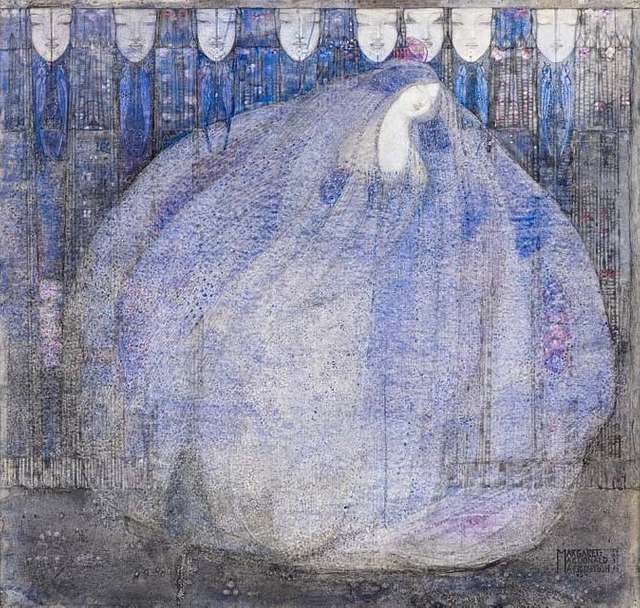
Categories
Stories

The Dance of Life

By Snigdha Agrawal

The sun often shone brightly in the small, quiet town of Uttarpara,[1] illuminating the newly laid asphalt-lined streets and vibrant gardens in front of most houses. But for Gowri, an elderly woman of seventy-eight, the light had dimmed to a dull flicker. Outside her window, life bustled, yet she felt it was happening on a different planet.

Once she had been the mover in her community—a fierce advocate for women’s empowerment, engaging them in revenue-earning activities, through pottery, painting, cooking, and weaving, supported by her husband Shekhar, a well-known and respected member of the society.   

 After her husband’s untimely death, the warmth in her home began to fade. She sought the warmth from her artist friends. This did not sit well with her children.  They objected to her carrying on with the social activities she was involved with.  Well-meaning yet misguided, they insisted it was for her safety. They believed that the world had grown too dangerous for someone of her age. So, they began the process of isolating her, one layer at a time.

At first, it was simple. “Mom, why don’t you let us help with the groceries? We’ll just do a quick online order,” they suggested. That meant not going out. Gowri, though reluctant, acquiesced. Next came the visits that grew fewer and further apart, their busy lives seeming to expand while her own contracted.

Then, her virtual connections crumbled. “We think it’s best if you take a break from social media, and all online activities” her daughter said, her voice filled with concern. “It’s so easy to get duped. There are scammers out to make a quick buck. We will handle all your banking activities, and promise to call more often.”  Once the financial control was in their hands, the calls dwindled as the months rolled by, replaced by a suffocating silence.

Gowri found herself trapped in a house that felt like a cage. The once vibrant laughter of her friends at the local art complex, housed in a garage, was replaced by echoes of memories. The absence of touch—of a hand on her shoulder, the embrace of a friend—left her feeling ghostlike, a shadow of her former self.  She missed visits to the Sunday haat [2] where her line of pottery drew large crowds, crafted from mud collected from the Hooghly River.   

As weeks turned into months, the isolation seeped into her mind, entwining itself with her thoughts. She felt as if she were part of a macabre dance, orchestrated by her family’s misguided affection. Each step in this dance led her further from the world, pulling her deeper into a solitude that echoed with the whispers of the past.

One night, Gowri stood by the window, gazing at the moonlit street. She could see the neighbours laughing, children playing, and couples walking hand in hand…a replay of vignettes from her life when she was younger strolling with her husband behind their skipping kids.  She felt punched in the belly wrapped in insufferable loneliness that old age had brought on.

She was unprepared for the awakening that followed. The local community centre hosted an art exhibition, and for the first time in months, Gowri felt a flicker of hope. She longed to see her friends, to share in their laughter and creativity. Summoning her courage, she decided to venture out, despite the concerns of her family. They would have no inkling of her movements being so far removed from her home in Uttarpara.

With a look of determination, she stepped outside, dressed in her favourite cream with red border jamdani [3] saree, which Shekhar had bought from Dhaka on one of his official visits.  

When she entered, the warmth enveloped her like a long-lost embrace. Friends turned, eyes widening in shock and delight. “Gowri!” they exclaimed, rushing to her side, their voices filling the air with the vibrant hues of life. At that moment, the dance of death that had surrounded her began to unravel, replaced by a lively rhythm of connection and joy.  The spark in her eyes returned as she mingled with them, admiring the work put up for the exhibition.  Her last painting rested on the easel occupying centre stage.  This gesture made her feel she was never truly alone.  A feeling of empowerment suffused her being.

Gowri realised that old age should not be a reason for isolation. It should not mean living in a cocoon, separated from the vibrant life that pulsed just beyond her door.

As she lay in bed, a smile crept across her face. The initiation into the dance of death had not claimed her; instead, she had stepped back into the dance of life, refusing to let anyone dictate the music. In the embrace of her memories and her friends, Gowri found a spark of defiance, a whisper of hope that would guide her forward.

The dance of death was only one story; the dance of life was hers to write anew.

.

[1] City in West Bengal

[2] farmer’s market

[3] saree woven in Dhaka (Bangladesh)

.

Snigdha Agrawal (nee Banerjee) is a published author of four books and a regular contributor to anthologies published in India and overseas.  A septuagenarian, she writes in all genres of poetry, prose, short stories and travelogues.

.

PLEASE NOTE: ARTICLES CAN ONLY BE REPRODUCED IN OTHER SITES WITH DUE ACKNOWLEDGEMENT TO BORDERLESS JOURNAL

Click here to access the Borderless anthology, Monalisa No Longer Smiles

Click here to access Monalisa No Longer Smiles on Kindle Amazon International