Categories
Stories

The Bus Conductor by Dalip Kaur Tiwana

Short story by Dr. Dalip Kaur Tiwana, translated from the original Punjabi by C. Christine Fair

Dr Dalip Kaur Tiwana. Courtesy: Creative Commons

Dr. Dalip Kaur Tiwana (4 May 1935 – 31 January 2020) is recognised as one of the most consequential Punjabi authors who substantially contributed to the development of modern Punjabi literature. Prior to her death, she published twenty-seven novels, seven collections of short stories as well as a literary biography. Tiwana was also a distinguished academic. She was the first woman in the region to obtain a Ph.D. from Punjab University in 1963.  She joined the Punjabi University at Patiala from which she retired as a Dean as well as a Professor of Punjabi. Dr. Tiwana garnered innumerable regional as well as national awards within India, including the prestigious Sahitya Akademi Award and the Padma Shri, India’s fourth largest civilian honor. She surrendered her Padma Shri in 2015 expressing “Solidarity with other writers who are protesting against the increasing cultural intolerance in our society and politics and the threat to free speech and creative freedom.”

The Bus Conductor

Art by C Christine Fair

The lady doctor, Polly, had been transferred from Nabhe to Patiala. Her family members were trying to get the transfer rescinded. That is why, instead of taking a house and living in Patiala, she got permission from the senior doctor to come from Nabhe every morning by bus and return in the evening.

She felt ill at ease because of the shivering sound of the idling buses, the heat, the sweat, the crowds, the ludicrous indolence of the conductors, and the rude banter. Thinking to herself, “But this is just a matter of days,” she suffered it all. On the days when Jit was on duty for that bus, she would feel a bit comfortable because that conductor seemed to be good natured.

One day, a man asked Jit, “Where does that girl with the bag work?”

Jit said discretely as he was handing over the ticket, “Aho[1] sir!  She is a lady doctor. A very senior lady doctor. People say that her salary is a full three hundred rupees.”

“Sir, these days women are earning more than men. That’s why men are no longer the boss,” said the man as he sat down on a seat nearby.

“Sir, no matter what they earn, girls of a good household still must lower their eyes when they speak…and this lady doctor, I go to Patiala all the time and by god, she doesn’t even speak…,” said the Sardar who was sitting behind while gazing towards Polly.

“By god! I also….” He stopped mid-sentence when Jit, while handing the ticket to this dandy in a pink shirt, glowered at him and said, “So, brother. Do you want to go? Or should I toss you off the bus now?”

“Conductor Sir.  I didn’t anything. Why are you getting angry like this?”

While Jit was handing the ticket over to Polly, she began to give him the ten she took out.

“I don’t have any change. Forget about it and pay in full tomorrow.” Having said this, Jit moved on.

Ahead, there was elderly woman who also took out a ten. “Ma’am, I don’t have change. The entire fare is 10.5 annas[2] and you take out such a large note and hand it to me? Fine. Go and get change and then come back,” Jit said in a rather stern voice.

“Young man! In that time, the bus will have left and it’s urgent that I go.  You can return the rest of the money to me in Patiala,” the elderly woman begged of him.

“Fine, ma’am. Sit down,” he said as he began to cut her a ticket.

Polly was thinking about the hospital, all of the patients, the medicines, the nurses, and the various duties as the bus left behind Rakhra, then Kalyan and then Rony and neared the Chungu toll booth.

Jit told the driver, “Yaar[3]!  Today drive towards this blue building right here.”

The passengers who were travelling to the gurdwara grumbled a bit, but by now the bus had turned and was once more on the direct route. Near the Flower Cinema the conductor rang the bell to stop the bus, opened the door, and began to tell Polly, “You get down here, the hospital will be nearby.”

Polly got down quickly. She even forgot to say thank you. She thought to herself, “That poor fellow is such a nice conductor.”

By the time she reached the bus station that evening to begin her journey home, the bus was already full. With great difficulty she waited 45 minutes for another bus. A bus conductor, with his shirt unbuttoned, passed her three times while mumbling the song from the film Awaara[4]. He gave an anna to a female beggar to get rid of her for some time. She didn’t know why, but people were staring at her wide-eyed.

The next day, it happened by chance, that when she reached the Nabha bus station, the buses were already full, and Jit was turning away additional passengers without a ticket. Jit approached her and said, “You can pick up the bag on the front seat and sit down. I saved a seat for you.”

Polly passed by several gawking passengers and sat down. Jit immediately rang the bell for the bus to move forward.

“This conductor is so good-natured,” Polly thought to herself.

As the delays in getting her posting to Nabha stretched over time, she became depressed. The sound of the idling buses and fears of the bus leaving were constantly on her mind. Whenever she was forced to sit next to a fat passenger, her nice clothes would get wrinkled, and the stench of sweat would make her dizzy.

Then one day when she was about to give money for her ticket, Jit said, “No madam, forget about it,” and moved ahead.

“No sir, please take the money,” Polly emphatically requested.

“What difference will it make whether I take your money or not?” he asked. He walked further ahead and began to give a ticket to someone.

Polly, feeling self-conscious from the argument, sat down quietly but throughout the journey she was wondering why the conductor didn’t take money from her. She did not like it at all. For someone earning Rs. 300 what is the value 10.5 annas?

The next day she intentionally left five minutes late, thinking, “Today I won’t go on the Pipal Bus. Instead, I’ll take the Pepsu Roadways Bus.  What nonsense is this that he won’t take the money!”

She was stupefied to see that the driver had started the bus and was standing yelling at the conductor.

“Oye! I am just coming. Why are you yelling? Why do want to leave so early? Is it about to rain?” Jit said, while walking very, very slowly.

“Are we going to the next station or not? You’re taking your sweet time getting here,” the driver said.

“Get over here, Madam and take the front seat, and open the window,” Jit said to Polly.

“How can the bus leave without Madam?” mumbled a clerk in the back who took the bus from Nabhe to Patiala every day.

Jit glared at him. Everyone fell silent. The bus left. Polly took out the money but despite her repeated attempts, Jit refused to take it. Polly became very angry. “Jit is making me a part of this scam…But why is he neither charging me nor giving me a ticket?… Still, this is defrauding the company…” She was thinking this just as the bus stopped and a ticket-checker boarded. When he was checking the tickets of the other passengers, Polly broke out in a nervous sweat.

“How humiliating it is that I don’t have a ticket…. I will tell him that the conductor didn’t give me a ticket even though I asked for one,” she thought. “But what will the poor man say? No. I will tell him that I forgot. But no. How can I lie,” she debated with herself.

Then the checker approached her.

As soon as he said, “Madam…ticket,” Jit, taking a ticket out of his pocket, called out, “She…. she…This woman is my sister. I have her ticket.”

Seeing the ticket, the checker glanced at the conductor whose pants were threadbare at the knees and whose khaki uniform was worn at the elbows. Then, he looked over the woman in the expensive sari.  He smiled with his eyes.

Jit became flustered. The checker quickly got down from the bus.

Polly, surprised and worried, was thinking that perhaps this man, who earns a paltry Rs. 60 per month, didn’t eat during the day so that he could pay for my entire fare.

In the hospital, she kept thinking about this. She felt so uneasy about it.

In the evening when she reached the station, Jit was sad as he slowly made his way towards her.

“My older sister also studied medicine in Lahore…and she died there during the riots of partition. The rest of my family perished too. I somehow managed to make it here alive. How could I even think about studying when I could barely feed myself?  Then I became a conductor. When I saw your bag and stethoscope, I remembered Amarjit…and…and….” Then he choked up.

Polly was very distraught. She didn’t know how to respond.

Meanwhile, the bus came.  He quickly walked towards it and Polly kept on watching him walk away with affection in her moist eyes.

(Translated and published with permission from the Punjabi publisher at https://punjabistories.com. Link to the Punjabi story: https://punjabistories.com/tag/bus-conductor-by-dalip-kaur-tiwana/)


[1] A Punjabi expletive like Oh!

[2] Equal to 1/16 of a rupee

[3] Friend

[4] A 1951 movie – Awaara means vagabond

C. Christine Fair is a professor in Georgetown University’s Security Studies Program.  She studies political and military events of South Asia and travels extensively throughout Asia and the Middle East. Her books include In Their Own Words: Understanding the Lashkar-e-Tayyaba (OUP 2019); Fighting to the End: The Pakistan Army’s Way of War (OUP, 2014); and Cuisines of the Axis of Evil and Other Irritating States (Globe Pequot, 2008). She has published creative pieces in The Bark, The Dime Show Review, Furious Gazelle, Hypertext, Lunch Ticket, Clementine Unbound, Fifty Word Stories, The Drabble, Sandy River Review, Barzakh Magazine, Bluntly Magazine, Badlands Literary Journal, among others. Her visual work has appeared in Vox Populi, pulpMAG, The Indianapolis Review, Typehouse Literary Magazine, The New Southern Fugitives, Glassworks and Existere Journal of Arts. Her translations have appeared in the Bombay Literary Magazine, Bombay Review, Muse India and The Punch Magazine. She reads, writes and speaks Punjabi, Hindi, and Urdu.

.

PLEASE NOTE: ARTICLES CAN ONLY BE REPRODUCED IN OTHER SITES WITH DUE ACKNOWLEDGEMENT TO BORDERLESS JOURNAL

Categories
Stories

A Cat Story

By Sohana Manzoor

Courtesy: Creative Commons

“O my poor Putli, why did I let you go out? O Allah, why did you take my Putli away?” Rupa heard Kohinur’s ma wailing as soon as she entered home. She sighed. Everyone in the house had been down since Putli disappeared about ten days earlier. Then three days ago, one of the guards of their apartment complex brought the news that he had seen Putli’s remains near the Niketan bazaar. Of course, nobody could be completely sure that it was Putli because the body had been lying there for some days and had partially decomposed. All they were certain of was that a black and white cat that looked like Putli had been killed. Rupa wanted to go herself but, in the end, could not bear the thought of seeing the rotten corpse of their cuddly family member. But since then their old maid, who took care of the cat, had been absolutely inconsolable.

Today Rupa could not take it any longer. She felt it was high time to find another cat, preferably a kitten; their house felt empty and desolate. Putli was an adorably frisky cat, about two years old. It was really fun to observe him jumping and playing with imaginary friends, raising his tail erect, or clawing at his own image glaring back from the mirror. Only recently he had started going out and was courting a cute white cat that Rupa had often seen reclining on the corrugated tin roof top of a nearby garage. He even had a fight with a street cat over his sweetheart. He had disappeared once before, but had come back after three days. This time probably he had ventured too far away from home and met his end.

It was summer; the schools were closed and Rupa’s two younger siblings were sulking in the house all day. Rupa studied at a private university and soon the semester would be over, and she resented the thought of residing in a house without any feline presence. There was always a cat in their home as far as she could remember. Even their father, who was a businessman and was busy all the time, seemed to have noticed Putli’s absence. Only yesterday Rupa had heard him saying, “That sofa by the window was Putli’s favorite spot; I can’t believe he’s gone.”

Rupa’s younger brother Yen had been trying to allure a neighborhood cat. Rupa did not like the looks of the cat he was inviting in though — looked more like a hobgoblin, greedy and sneaky with shrewd yellow eyes. She had occasionally seen it lurking in the back alley. It took the half-eaten drumstick that Yen had placed on the pavement, and ran behind a small pile of rubble. Rupa was certain that it would cause nothing but trouble. Besides, Kohinur’s ma hated any human or animal sneaking into her domain—the kitchen. She would surely wrinkle her nose and comment, “Couldn’t you get anything better than that susa bilai?[1]” But then nor could Rupa approve of the white fluffy cat Lira was nagging about the other day. She had seen one in the movie Stuart Little, and wanted a cat like Snowbell. Now that was a Persian cat and Rupa certainly did not want their entire family rolling in a bed of hair. She would rather have a deshi[2] regular cat than one of those overrated foreign ones.

The ornate clock in the dining room chimed 3 in the afternoon. If she started right away, she might get to Katabon and even return before evening. She was not very sure what kinds of kittens were available at the pet shops there, but it would not hurt to take a look. She grabbed a quick snack, filled her water-bottle and got out of the house. Her mother was taking a midday nap, and hence Rupa did not disturb her. But she knew her ma would not mind even if she brought in an entire brood of fluff balls. They were a family of cat lovers. Sifat, her best friend, often joked that they were surely Egyptians in some other life.

Rupa looked at the elevator which seemed to be stuck at the 6th floor. So, she took the stairs. On her way down, she saw the helping-hand from the fourth floor. The boy stared at her and as always Rupa found his look disconcerting. She had often wondered if the boy was mentally sound. She had never heard him speak, and on several occasions heard him wailing incomprehensibly in the stairwell until someone dragged him home. She noticed that he had a shopping bag in hand from where greens and the top of a gourd were peeping out. Obviously, he spoke, reasoned Rupa, otherwise how could he buy those?

Rupa’s way to the Katabon was uneventful other than occasional stops at the traffic lights. After paying the fare she started walking past the pet shops. The first one had birds and fish and aquariums of different sizes. After three shops she found one sporting caged dogs. But there were no cats.

At the next shop, the shopkeeper and his assistant showed her three black kittens claiming that they were Siamese cats. Rupa could not be sure if they were Siamese, but she was willing to bet that they were previously owned by some evil witch. They glared at Rupa with open hostility, their bright eyes burning like green fire. Rupa shook her head negatively and walked toward the next shop.

A boy of around 12 or 13 years of age beckoned her to a box like cage where she saw the kitten. It was small, surely not more than a few weeks old. The orange tabby looked up at Rupa with its large brown eyes and sneezed. She looked inside the box and saw another kitten, a black and white one, whimpering. She continued meowing piteously as Rupa turned to look at the tabby and took it from the boy. Dirty and malnourished, the tabby yet seemed absolutely adorable to Rupa.

“How much?” she asked.

“One thousand taka, apa[3]. It’s pure breed.”

“Sure,” Rupa grimaced. “It’s just a regular deshi cat, mixed breed at best.” The other kitten was still crying for its friend. Rupa calculated something quickly, and said, “Okay, I will accept your price, but I want that other kitten for free.”

The shop keepers started arguing, “But you won’t get two cats for only 1000! And they are first rate kittens.”

“Then I am not taking any,” she placed the tabby in the cage and turned away, even though her heart cried out for the poor kitten. She had not taken two steps when she heard the elder guy, “Okay, okay, they’re yours.”

Rupa took out two five-hundred-taka notes and asked, “Do you have any box I can carry them in?

“No boxes. But we’ll wrap them up for you.”

Wrap up living cats? Rupa waited to see what kind of wrapping they provided.

After about 5 minutes she was staring dumbfounded at the boy holding out the kittens in two brown paper bags. How he got them inside the paper bags so quickly, and without any tearing was a mystery to Rupa.

“Are you mad?” she spluttered. “I am going home in an auto-rickshaw. Those two will tear out of the bags in minutes. Get me at least a net bag or something.”

The boy put the paper bags of cats in a large fluorescent green net bag. Rupa took the bag cursing herself as well as the shopkeepers and hopped on a CNG auto-rickshaw for a hundred taka extra.

Surprisingly, the kittens were quiet in spite of the loud noise emitting from the auto-rickshaw and the vehicles in the surrounding streets. Rupa suspected that they were just too weak to protest. After about 10 minutes, however, Rupa heard a rustling sound, and she saw a small orange muzzle tearing from a brown bag. “Baghu,” thought Rupa. “I’ll call him Baghu.” It was a male cat, she had already noted, whereas the black and white one was female. She could be Nishi. Nishi made no sound at all, but Baghu kept on rustling and clawing at the paper bag until half of his body came out. “He does have spirit, after all,” thought Rupa. But she certainly did not want him out of his bag right now. So, she put the bags and cats all on her lap holding on to them tightly, praying all the while that they didn’t pee on her.

“What do you have in there, apa?” a child’s voice asked, and Rupa realized that the CNG had stopped at a traffic signal. Several curious street urchins with flowers, lemons, water bottles and other knickknacks were peering inside her auto-rickshaw. By now Nishi had also started pushing forward and mewing piteously. And the hawkers were obviously drawn by the sounds made by the kittens, and the commotion in the bags.

Rupa sighed and replied, “Don’t bother. Just go your way.”

But their numbers increased. “O my, you’ve got cats!” observed a flower girl with a merry laugh.

“No, no, those are kittens,“ said one boy of about seven or eight. He was selling mineral water. Two of his front teeth were missing. “How many do you have?”

“Two,” Rupa tried to maintain her gravity. “Now, GO!” her voice rose two octaves.

The children moved back a few steps only to get closer again. They were all grinning. “Look, look, there’s a red kitty.” “And a black and white one too!” “That one looks like Harun’s kitten!” Rupa could hear all kinds of comments.

Another CNG driver who had stopped right next to Rupa’s auto rickshaw, looked at her driver and asked, “What’s going on?”

“Young girl—taking two friends home. Only they have fur, tails, and they meow,” replied the CNG driver with a straight face.

Rupa went beet red. As the red signal turned green, she heaved a sigh of relief. As soon as the CNG started moving both Baghu and Nishi quieted down. Baghu started to nuzzle her, while Nishi looked up at her with dark hazel eyes. Her coloring reminded Rupa of Putli, her main reason for getting her. Nishi seemed much more docile though. Rupa suddenly felt very protective of the two kittens, and at the same time she could not help wondering why she did not feel the same way about human children. Why was it she had this urge to take home every kitten she saw in the streets? Then she amended that not every kitten perhaps but the cute ones surely. But those street children could be cute too. She remembered the ones that were commenting over her cats, particularly, the boy with the missing front teeth and another little girl with pig tails. How come she never felt like taking them home, wondered Rupa uneasily. She wondered about the boy who lived upstairs, the one she suspected was mentally disabled. Would her parents be equally welcoming to these children as they were to the cats?

Apa, which road?” Rupa realised they had reached Niketan. She directed the driver to road no 10. Their apartment was on the second floor. The old caretaker, Abu bhai[4] looked at the bundle in her hand, two small heads, one orange, and one black and white peeping out. He grinned, “You’ve got kittens, apa. That’s so wonderful.”

Rupa nodded and smiled.

And then Abu bhai said, “Something unfortunate has happened, apa. The crazy boy from the fourth floor fell down the stairs.”

“What crazy boy?” gasped Rupa. “Not that servant-boy they call Khokon, or Rokon?”

“Rokon. That very one,” replied Abu bhai.

Abu bhai said, “A maid from another flat had gone out to buy her paan[5]. And then when she came back, the boy was lying sprawled and motionless on one of the landings. Apparently, he fell down, and he has been taken to the hospital.”

Rupa remembered the greens and the gourd peeping out from the bag in the boy’s hand.

“Pets are replaceable, human beings are not,” she mused as she got on the elevator. She wondered if Rokon had parents. What parents could send such a boy work for other people?

“Where’s everybody?” Rupa shouted. “We have cats in the house!”

Yen came running, followed by Lira. Kohinur’s ma, who had opened the door, stood by with a smile on her face.

“They’re so small… and dirty!” commented Yen.

“But they’re cute!” cooed Lira.

“They need a shower and food,” observed their mother who had also joined them. “Kohinur’s ma, why don’t you take them to the kitchen and feed something? Give them a thorough bath tomorrow morning. They probably have lice on them.”

Rupa turned to her mother and asked, “Amma, did you hear about the servant-boy who fell down the stairs?”

Her mother looked surprised, “No. There was some commotion in the stairwell, but I didn’t realise that’s what happened.”

A few hours later the two newly acquired members of their family were playing on the living room carpet. They had licked themselves clean. Nishi was a bit shy and was sitting demurely on her haunches, but Baghu had already started scampering around. He was also a little bigger and probably older than Nishi. Everybody had approved of the names. Lira clapped her hands and laughed gleefully as Baghu did a summersault. Baghu looked up at Lira and did it again, and everybody laughed.

“He’s clever, isn’t he?” Kohinur’s ma observed.

“He actually understood that I liked his summersault!” Lira’s eyes went round. “Wow! Baghu, you’re amazing!” She picked the tabby up and kissed the top of his head and Baghu clung to her with all his four paws. Her mother shrieked, “Eeks! Don’t kiss them just yet! Let them have a shower tomorrow morning and you can do what you want.”

“But they are clean,” protested Lira.

“Not yet,“ Rupa shook her head. “And don’t carry them to bed with you tonight,” she warned. “You can snuggle with them after they have visited the vet’s office.”

At night Kohinur’s ma produced an old basket with rags of clothes for the two kittens to sleep in. Rupa recognised the basket that had belonged to Sisu, another cat they had lost years ago. She smiled as she said, “Something tells me that in a few days they will be sharing beds with Lira and Yen.”

Lira whooped and nodded vigorously while Yen displayed a huge toothless grin. Rupa again remembered the boy from the fourth floor. And the boy she had seen on the street, with his missing front teeth.

She brushed her teeth, changed into a loose T-shirt and pyjamas and went to bed. She dreamt of a gorgeous green meadow where children played and laughed, and they were all naked as the first day they were born. Rupa saw Yen and Lira and the street urchins along with Rokon. They all looked the same: clean and happy. Rupa heaved a sigh of contentment. Dreamland was perhaps the only place where her siblings could play with the likes of Rokon and the street-children without raising eyebrows and derision from any quarter.

Sohana Manzoor is an Associate Professor at the Department of English and Humanities at ULAB. Currently, she is also a Deputy Editor of The Daily Star, a leading newspaper in Bangladesh.


[1] Gluttonous kitty

[2] Local

[3] Elder sister

[4] Brother – a polite way of addressing helpers

[5] Betel leaf

.

PLEASE NOTE: ARTICLES CAN ONLY BE REPRODUCED IN OTHER SITES WITH DUE ACKNOWLEDGEMENT TO BORDERLESS JOURNAL

Categories
Stories

My Christmas Eve “Alone”

 By Erwin Coombs

Courtesy: Creative Commons

Years before I became a teacher, I found myself in the sad position of having a four-year BA and being in the middle of a recession. The recession was the economy. On a personal level, I had a pretty good depression going. Not being able to get into a Faculty of Education and not being able to find a decent job, this newly married fellow was forced to take the only job he could find as a security guard.

Now I don’t mean to disparage security guards. They have a nasty job with a nastier pay. But you’ve seen these people. They are usually on the cusp of what we might term the unemployable. When I say cusp, I mean they are leading the parade of that group. And it’s not their fault. Many are new immigrants whose education credentials have not been recognised. Or they are retired men who cannot stand to watch their lives fritter away at home so come to malls and office lobbies to wear a uniform and do the same. And then there are young people, as I was, who are caught in hard times and have no other choice.

After a couple of humiliating jobs waiting tables in chain restaurants where I would remarkably come home with less money than what I would take to my shift, I jumped at the offering of a job as a security guard. The next time you’re in a chain restaurant, I want you to look kindly on those employees too. They are usually bright and assigned the all-important tasks of making sure the salad bar is inviting. And while you’re in there take a closer look at the salad bar. It is old and crusty and sprayed with oil to make it look shiny. But we had to make it look less toxic. Any idea how few employees eat that salad? Lots and lots.

Okay, when I say jumped at the job, that might be an overstatement. One doesn’t jump at that sort of employment. One stumbles, slithers or falls into it. But here I was offered a job at $5.75 an hour!! It was an olive branch. That very phrase has a biblical origin, apparently. But there was nothing biblical or God giving in a job like that for those wages. Don’t get me wrong. I was raised in a white trash upbringing where one didn’t expect anything necessarily good. Instead, one only hoped very hard that nothing too bad would happen that day that might lead to a poor night’s sleep — such as the arrest of a family member, an eviction from your apartment, or the like. As a survivor of this sort of upbringing, the prospect of a job didn’t seem that bad. What, after all, was I going to do with a specialization in English Lit. and a major in history? Apparently, I was going to guard office buildings in the wee small hours of the morning.

But while that might seem a sad conclusion to years of study, there were some perks. Imagine, for example, the sheer utility of having to wear a tie that clips on! Think of the minutes, and in the totality of a year, the hours saved not having to struggle with said tie. Pop it on and you’re ready to do whatever it is that fellows with clip on ties do. Oh yeah, that would be security work. The assumption being giving workers like me, those ties in the event of an altercation, you wouldn’t be choked with that tie.

When you are making $5.75 an hour, and you are brandishing what has appeared to be a useless university degree over your head, what’s going to happen if an altercation does occur? Let me tell you, you are going to, to put it politely, not intervene. There was no chance of my tie ever being touched by anyone except my sad, trembling hands before a sad, trembling shift at wherever they put me.

And for my second shift of what was to be my “permanent placement” I was assigned to a tall office tower in downtown Toronto. It was a plumb job, high end lawyers, businesses that made obscene amounts of money doing God knows what God knows where. And they had entrusted me to keep it safe throughout the long dark winter nights. Was I honoured? No, I wasn’t honoured. I only felt deflated. And to make matters worse, my first shift was on Christmas Eve, the graveyard shift, from nine p.m. to nine a.m. Christmas morning. Envisage if you will a bleaker prospect. Here I am, a young man, head full of ideas (granted, not his own) and lines of poetry and hope for the futures of his world and the world in general, newly married and, yes, making minimum wage, working on Christmas Eve. Gradually the poetry and the hope faded.

But to be fair it wasn’t entirely without a bright side. My wife had gone to visit her family outside of Toronto for Christmas. Had I not had a shift to cover, I would have gone with her. Her family were a small-scale variation of a war zone. Nobody got along and there was never a peaceful moment, instead there was only a lull between battles. There were tears and accusations and more tension than one might find in a tightly strung tennis racket. When I told her that I was expected to perform my duties as a poor imitation of a cop for this special night, and that she would have to go enjoy the majesty of her family without me, I was not as sad as one might think. In fact, I had a novel to read, a thermos of tea and the prospect of 12 hours of not watching a family engage in a bench clearing brawl over two days.

But fate had other plans for me. Other plans of a Christmas Carol variety.

I showed up early to get the very precise instructions of how to get through the night. My boss, a veteran of many years, who commanded all the respect one might command when sporting a polyester jacket uniform, was very specific.

“There’s no one in this building tonight. Except you. There is a fellow on the second level parking garage, but he never leaves his cubicle. And, uh, between me and you, that should make you feel safer.”

“Safer. Why?’

I started having visions of a madman on some kind of a parole programme given parking duty having committed the most heinous offences.

“Well,” my boss continued…” he’s one of them.”

He let that comment hang in the air for me to absorb and be shocked at. Of course, I knew what he meant. This was 1987, and the world was still in the throes of homophobia and misogyny and racism and all the other features of Neanderthal thinking that was, thankfully, about to be knocked on the head by people with fully developed brains. But I wanted to have a bit of fun with this monkey boss.

“You mean, he cheers for the Montreal Canadians?” I tried to sound both outraged and frightened that such a man would be my workmate through this long night.

Bob, the Neanderthal boss, was a little shocked that I hadn’t picked up on his primitive subtlety.

“NO… he’s a fag!”

I pretended that it would take me a while for that to sink in and put on a shocked face.

“You mean, he….?”

“That’s what I mean.” He said, almost in triumph of having gotten his point across. “But don’t worry, as I said, he never leaves his cubicle, thank God.”

Within ten minutes, Mr. Meathead had left the building and I was alone. Except, of course, for the serial homosexual rapist that I had been warned about. I went right down to see him two floors below to introduce myself. And there he was, sitting in a tiny cubicle with classical music playing and reading what looked to be a fairly serious book.

“Hi, I’m Erwin, tonight’s security guard. It’s my first shift so if there are any problems please don’t call, I’ll likely be napping on an office couch somewhere.”

He laughed and we joked about Bob the Ape man and how if were both in this job one year from now we would have a mutual murder/suicide pact. I left him alone and went upstairs to begin my action-packed shift of watching. And watching. And, if there was time later, watching.

Now as this was my first shift, I thought I should probably do some of what was expected of me. We were told to go on perimeter patrols. These were walks around the out and inside of the building looking for narcotics dealers and nuclear terrorists and generally the sort of high-end criminals who intrude into empty offices in the night. And we were to record in our little make belief police notebooks where we had patrolled and at what time and what we had discovered. After a couple of weeks, it dawned on me that the patrols were not necessary. But I was dedicated enough to still record the patrols in my book. Had I been a little more honest I would have recorded the following:

10:15 p.m. went to office lounge and took delicious 15-minute nap

11:00 p.m. found cookies in staff lounge… ate same

12:30 a.m. finished latest novel…surprise ending quite good

2:00 a.m. considered the merits of suicide as I peered over 15th floor balcony onto atrium…. otherwise, no unusual activity

4:00 a.m. wondered why my cat sleeps so damn much

But as I said, this was my first shift, so I dutifully walked about and scribbled down my report. All had been very quiet until I got to the first level of parking. There were literally no cars in either lot, everyone with lives being at home while I celebrated Christmas Eve in their empty building. But it was not as empty as I thought it was. There, across the lot, I spotted what was obviously a homeless old man who had broken in no doubt to escape the frigid outside. My several hours of rigorous training had taught me what to do in this situation, so I called out the lines I had learned that might save my life one day.

“Hey! You!! You shouldn’t be here!!” I yelled in my deepest, most authoritative voice. The old man, who was shuffling more than walking turned his head to look at me and gave the most peaceful smile. And then he hid behind a concrete column in the middle of the lot.

I have read enough detective novels to know what my next step should be. I must go to the other side of the column to find him. That’s the kind of skill set one acquires from reading. I did, but the shuffling old fellow was a bit faster than I imagined, for he had run around the column to avoid me. I followed. He ran, I followed. Before long I was running around the column chasing no one, and the image of the dog chasing its’ own tail came to my mind. There was no way he could have escaped my most professional pursuit, but he had. I stood there, out of breath and dumbfounded. There was an intruder in the building, and I had let him, somehow, get away. And now I had to report it.

I jogged down to the serial rapist one floor below. He was surprised to see me, perhaps because I was not the same calm looking fellow who couldn’t give a flying damn about this job. I looked worried. Mostly because I was.

“Listen, Mark, not to alarm you, but you should know, there’s an intruder in the building.”

“An intruder?” he looked concerned enough to put down his book.

“Yes, I think it’s a homeless fellow. I’ve got to call it in to headquarters and then notify the police.”

This all sounded very by the book and what ought to be done. Naturally, I was making it all up. I had no idea what procedure was, and I had never read “the book”. And as far as headquarters went, I knew it was staffed by the same South African lunatic who had trained me, if he was even awake. And as for the police, I supposed that made sense as this guy was, strictly speaking, a break in sort of fellow. I was hoping for some guidance from Mark who looked, sadly, like this wouldn’t be his last year at this cubicle. He must have had a lot of great books he wanted to read.

His attitude became casual.

“So, what did this guy look like?”

“Well, he was old, with a gray beard…”

Here is where he cut me off.

“Long gray coat, shuffled when he walked, pleasant smile, fairly short…?”

“Christ, you saw him too! Did he come up to you?’

“No, he never does. He just walks and smiles and disappears.”

Now at the idea that Mark allowed this guy to walk about at his leisure my security guard instincts (never very sharp) kicked in.

“Did you report it??” I asked accusingly.

“Oh, Erwin, you can’t report a ghost. Well, you can, but why bother?”

I looked at him in a predictably stunned way.

“A ghost?”

“Oh yeah…I see him every so often and he just comes and goes and just goes. He has disappeared before my eyes more often than first dates I’ve had. But unlike my first dates, he always comes back with a smile. Don’t worry, he’s harmless.”

Now here’s something else to imagine. You are alone in a big building, you’ve seen a ghost, you have the prospect of many more hours alone and you are told you’ve seen a ghost and that you might see him again but not to worry as he’s harmless. I don’t doubt that ghosts exist and never have. I also believe that they are harmless.

Does this mean that I want to be with one overnight in a building alone? Nope.

I can also tell you that security guards do several things most people aren’t aware of. They pilfer little things, like pens, staplers, cookies (as I hinted at earlier) and they sleep. Sitting alone for a long time and trying to stay awake, it’s tough. Sure, you can play a radio, you can read, you can make plans for an escape from this life that you couldn’t have had nightmares about when you were younger. But ultimately sleep stampedes towards you and you nestle your red eyes into your polyester shirt sleeve laid out on the desk and sleep. But not when you expect the old ghost of Parking Level Two to come by for a Christmas visit. That was the only night I stayed awake for a whole shift. And it was purely from fear, not dedication to my profession. The paltry pay was compensated for with this experience, so I have no regrets about having taken this job. Who knows what adventures lie in the most seemingly bland corridors we travel through!

Erwin Coombs is a retired teacher of philosophy, history and literature who has rejected all forms of retirement. He is an avid writer, reader, and observer of life. When not observing and reading and living, he is writing. Erwin has lived in Egypt, Jamaica, England and travelled a great deal but, in his mind, not enough. His writing is a celebration of people and opportunity, both of which life gives in abundance. These stories are from his, as yet unpublished book, Dusty the Cat: Her Part in My Downfall.

.

PLEASE NOTE: ARTICLES CAN ONLY BE REPRODUCED IN OTHER SITES WITH DUE ACKNOWLEDGEMENT TO BORDERLESS JOURNAL

Categories
Stories

The Magic Staff

A poignant short story about a Rohingya child by Shaheen Akhtar, translated from Bengali by Arifa Ghani Rahman

Shaheen Akhtar

Musa was born in the year when the girl child in his region was allowed to live and the sons were being killed. Dadi, his father’s mother, Bismillahjaan, had named him. There were no celebrations, no events to mark this ceremony, and not even an insignificant penny was spent on incense. However, as a tax for the arrival of a child into this world, a fat sum had to be donated to the nearby police station. That is how Dadi Bismillahjaan described the heavy term ‘birth registration’ used by people.

And Musa had landed on this side of the Naf River last night without that Dadi. He did not know at the time that his grandmother was not on the boat. She had paid for both their passages with six thousand kyat[1]. Then ensued the hullabaloo as people vied to get on the boat under cover of the darkest of nights.

A stream of salty tears ran down Musa’s cheeks as he stared down the endless river. Had his lungi been tied to his Dadi’s Thami,[2] he would never have let her float away. God forbid! Why would the old woman have floated away? She probably had not boarded the boat in the first place. She had ensured her grandson’s passage and quietly withdrawn from the back.

That was what Bismillahjaan had wanted from the very beginning. Musa was the sole heir to his family name, she used to say with every breath. If he survived in any corner of the earth, at least his bloodline would live on. And so, she had pulled her old, skeletal body across the hills and through the jungles. In all this time, she had held on to the enamel pot in which she cooked rice. Along the way, she had boiled whatever leaves she could gather and served them to Musa.

Musa had not paid attention to this at the time. His eye had been on the mountain along their path – perhaps he might see the light of God, the light which burned the mountain, but not Musa, the prophet. But none of these mountains were named Sinai. He had found a staff on the way though, and he had tied the bundle of clothes and the cooking pot to one end.

When Musa’s caravan arrived at the sandy banks of the Naf, he had relieved the stick of its burden. The sandy banks were like Karbala – with no water to drink nor food. The salty water where the river and the ocean met only made them vomit, cry, and struggle. In the meantime, when one woman gave birth, Musa, the learned student of the village religious school, was summoned to sound the azaan, the call for prayer, in the baby’s ear. Two days and two nights passed. There was no boat in sight. The Burmese army was hunting them down like the Pharaoh’s soldiers. Secretly, Musa had extended his arms once towards the river but to no avail. So, under cover of the night, he had thrown his staff into the water. This too was fruitless. The stick was swept away by the current. But at that moment, an engine boat puttered over from the other side and stopped at the bank. It was in that boat that Musa had piled in to arrive at this unknown destination last night. In the midst of this, he had lost Dadi, Bismillah.

How would Dadi traverse that long road again? Where would she go? What would she eat? Home burnt, fields burnt – their land had been destroyed by the ruling goons. If the family graveyard was still intact, she could probably find shelter in a foxhole. This must have been her plan all along. Musa’s sleep-deprived, numb, dizzy brain now recalled the rambling hints she had dropped about this. Five years ago, Bismillahjaan’s only son, Musa’s father, had been laid to rest in that graveyard. Musa had been a child of eight then. As he watched the gravedigger shovelling in the earth, he thought about the ancestors that were lying there. Baba had suffered much in life and his death had been worse. The military junta soldiers had shot him in the chest and then his throat had been slit by the monks. As he lay in his grave, Baba would tell of his travails to his dear ones who had led comparatively peaceful lives.

Musa wiped the tears from his eyes and sat on the rocks of the dam. He was closer to the water’s edge from here. Countless people stood squashed together on this side of the Naf, their eyes trained on the other bank. As darkness descended, a lantern or two lighted up on the river, and there was the occasional flicker of a flashlight. Musa drew in his breath sharply. Did the battery-operated lights belong to the military junta?

Perhaps there were still thousands of people waiting on the tarpaulin laid out on the sands he had left behind yesterday. Some would be giving birth; some would be dying – their bodies burned or maimed by bullets. There was no medicine, no proper food. For what sin were they suffering this hell on earth? Was Dadi still burning in the hell at the sandy banks?

As soon as a fleet of boats docked along the bank, Musa jumped into the water. He could not move forward as the crowd shoved through the neck-deep water from the opposite direction. He did not even have a light to shine on the faces of the swarm of people to find Dadi’s. Whatever light there was on this side came from the flash of cameras or the flashlights of the BGB[3] or the coastguards. They were using their flashlights to search through the refugees’ belongings that had been dumped on the banks – their plastic sacks, cooking utensils, urns, broken wall clocks, solar panels, and piles of quilts and pillows. At that moment, lightning in the sky heightened the tremors in Musa’s heart. What if Dadi drowned in the middle of the river in a storm? Raindrops fell on Musa’s head while he was still chest-deep in the water. In the meantime, boats docked relentlessly, as countless as the waves in the sea, compounded by the lapping of the water on the bank and the ear-splitting noise of their engines.

When it began to pour, Musa took shelter in the barn, or rather, a goat shed, of a nearby house. The shed shared a wall with the hut and was covered by the Nipa palm leaf with the other three sides open. In this tiny space stood two closely tethered goats. Musa crowded in with them. Who knew how late it was now. The homeowners must be sleeping soundly. He thought he would leave when the rain eased off but just then, the thunder clapped and he grabbed one of the goats around the neck and sat down. It was a familiar touch after so many days and the smell was exactly the same. When lightning struck a little later, he looked timidly, for the first time, at any creature from this unknown land. It did not look unfamiliar though. In fact, the eyes looked as tender as his pet goat’s. So what if Musa was a scholar in the maktab[4], at heart he was a shepherd – of a pair of golden buffalos and two goats with four or so kids. How much pain those goats must have suffered when they struggled in the fire that engulfed them!

Before the army set fire to their homes, the buffalos had been set free and Dadi had taken refuge in the forest with twelve-year-old Musa. Perhaps she had thought nothing would happen to a woman, child, and a few innocent goats. What Bismillahjaan did not know was that the tyranny of the army had heightened by the day. Even the girls were not spared. These tyrants used to rape before, but now they resorted to spilling blood. When Musa returned home two days later, all he found were ashes and destruction. They had taken shelter in Dadi’s sister’s home a little to the south that day and that is where they stayed for a full year prior to their migration.

When Musa thought of his mother, he recalled a woman sprawling on the front yard with a child in her lap. The child’s pigeon-like pink feet hung over one side of Ma’s lap. Where were his young siblings now? His mother? Musa was awoken by his own cries. He found himself lying curled up on the straw in the goat shed, the pair of goats standing next to him. Someone had wrapped his entire body with a torn quilt – just as his mother used to silently cover him up during the heavy monsoon or winter nights. Even so, Musa left the shed before the first light of dawn. He did not return to the dam. Instead, he began to wade through the muddy path in the opposite direction.

The marketplace ahead was already buzzing at this ungodly hour. City dwellers, alighting from the intercity buses, rushed to the stalls for breakfast, their bags hanging from their shoulders. Aromatic smells filled the dawn air. As hunger pangs rose in Musa’s empty stomach, he began to loiter around the stalls.

When someone came out of a stall and aimed a camera at him, Musa took shelter behind the stall. The camera was a lure – this person was actually a kidnapper, thought Musa. He hissed inwardly like a snake. When the same man, however, returned with a plate of food from inside the stall and called to him, Musa dragged his feet forward. Then he wolfed down the food. He cared nothing at all for the number of clicks the camera made or how many pictures were taken of his starved face. As he burped after polishing off the plate, Musa thought that he would be willing to allow photographs if it meant meals twice a day. He was actually waiting to find a staff that would transform magically into a snake. This was now his aim in life.

With his life’s goal determined, Musa could now afford to look around casually. The place may not have been a township but it was quite busy regardless. There were some paved stores. A schoolhouse stood nearby, some mud-splattered sleeping people crowding its veranda. In the middle stood a pile of their dirty household belongings. When someone emerged from behind a plastic sack of this rootless group, Musa was taken by surprise. Was this boy his twin or was he looking at himself in the mirror? The only difference was that the boy had a white clay mark of Thanaka[5] on his cheek. He was dressed in light blue denim shorts chopped off at the knees. With these and some other differences, the two of them stood in the shade of the stall, next to each other. Neither seemed to have the strength or the inclination to speak.

Children with Thanka on their face. Courtesy: Creative Commons

When the cameraman appeared with a local in tow, Musa quickly turned his back on them to face the wall. Why was this man so overenthusiastic? Wasn’t he satisfied with the bunch of photos he had already taken of his starving, beggarly face? But this time it was not the click of the camera, but the man’s words that drew attention. Musa realised he was taking interviews. In the beginning, the boy next to him also stood silently. Perhaps he was mute, deaf. But the next moment, he began to stammer. Musa felt goosebumps. Did everything become topsy-turvy when doomsday loomed? Was Musa glib of tongue and Harun a stammerer? Of course, he had no idea if this boy’s name was even Harun.

‘So many murders, rapes, arson – did you see these with your own eyes?’ The local translated the cameraman’s words into Rohingya.

What could be the answer to this question? And how could it be described? Did the kid next to him stammer so he did not have to answer such questions? Musa’s heart was in a turmoil. To save the boy who looked like his twin, Musa turned his face away from the wall.

Holding his Dadi’s hand, he had been escaping – Musa began to pour out his story in Rohingya. There was black smoke and fire behind, the sound of screams and bullets chasing them. Body after body lay dead along the road. Bullet-ridden. Throats slit. Then the thunder of the ocean. It seemed to be howling, wanting to divide itself into two. But the stick in his hand did not have that power.

The two men, like the Pharaoh, looked at Musa in disbelief. But the twin-like kid was happy, even though his name was not Harun, but Shah Alam.

As they walked towards the schoolhouse, Shah Alam said that they had crossed over on a raft the night before from the village of Fatongja in Maungdaw. Shah Alam’s father was missing and his older brother had been murdered. His three other siblings were with his mother.

“With Musa, you are now four,” said his mother to Shah Alam as she sat on the veranda and rolled up a plastic mat. A truck was due to arrive shortly and they would be transferred to a nearby refugee camp. Musa felt suffocated. The air was moist and heavy like a full mashk[6]. Dazed people walked around, vacant looks in their sleepless, tired eyes. No face reflected any sign of joy at the prospect of a new life. Did Musa’s face show any sign of delight? He did not want to live the life of an insect in a camp.

When the convoy of trucks arrived in the marketplace, Musa ran the other way as fast as he could. Government forces of this land chased him back. Shah Alam was standing in the truck and sucking his thumb. His mother had let out a cry as if a child of her own womb was running away. Standing in the open truck like cattle, Musa growled in anger. He was more upset with Shah Alam’s mother than with the authorities here. Musa did not want an adoptive mother or brother – he wanted a staff, one that would magically turn into a snake.

“You must not take the words of the Book literally, Musa!” Bismillahjaan came into Musa’s dreams that night. “It is foolishness to do so. Forget about me. Your entire life awaits you. Go forward on your own.”

“Where will I go, Dadi?” Sad and angry, Musa asked in a teary voice. “I want to go back – to that graveyard where you are headed to take shelter in a foxhole.”

Musa shut up when he heard someone groan in their sleep. He began to sweat profusely as he lay under the tarpaulin. His stomach had encountered some rice after many days, refugee rice – and he had not been able to digest it properly. Yet, the day before, a lot had been accomplished. The authorities had done a family headcount and provided ration cards. They had collected and brought their rations of rice, lentils, sugar, and oil to their tarp-covered shelter. Shah Alam’s mother had instantly set up house and Musa had become a part of the family. He was now spending his nights under the same tarp.

Chores were distributed in the morning. Shah Alam’s mother and siblings would stand in line at the ration shop while Musa and Shah Alam were responsible for collecting firewood from the forest and water from the pump. “Don’t fight like Habil and Qabil,[7] my dears,” Shah Alam’s mother poked her face through a hole in the tarp as they walked toward the jungle. “Be good brothers like Musa and Harun.[8]

Musa’s heart danced with joy when he heard the names Musa-Harun pronounced together. He immediately wanted to address Shah Alam’s mother as Ma, but he suppressed that desire by turning to look at Shah Alam. What a fool! He did not look like he could be good for anything other than gathering firewood. Anyhow, going into the forest did not just mean collecting firewood for the stove – it also meant that he might find the staff he had been searching for. By Allah’s infinite mercy, Shah Alam’s mother had not made him stand in line like a beggar with a bowl, waiting for handouts of food. Moreover, he did not have to remain confined to the camp.

Besides going into the forest, Musa also climbed the mounds around the camp with the others when he heard that the Burmese military had yet again set fire on the other side of the Naf. His people howled, the women wailed and beat their chests. Musa joined them: “Oh Dadi! My heart aches for you!” Sometimes, he cried in tune. “How will I live without Dadi!” When his tears dried up, there was fire in his eyes.

When he received news that a boat had sunk on the Naf, Musa rushed to see. He went close to the dam and sat on the stone slab to stare out into the river. In his hand was a branch of the gojari tree he had found in the forest. He muttered to himself as he struck the water with the branch.

What sort of justice was this? No one would remain – no father or mother, sister or brother, no home or land, no country, no earth. What was his fault? Why did he have to spend his life at a camp – like a cockroach under a tarp? And then there were other troubles. Young girls kept disappearing. As soon as their wounds healed, the young men plotted evil deeds while the police invaded at odd hours of the night. Children cried, old women lamented. Was there no way out of this hell?

“Of course, there is! There is only one route out of this place,” said a trafficker to Musa one day by the riverside. Musa could test his fortune by crossing the river like Sindabad the Sailor. There was a boat nearby and he would not even have to pay for passage.

Musa had no desire to test his fortune. He did not care either about the camp’s development like the light-skinned men who rolled in on expensive cars to find fault. He just wanted to return to his own land. For that he needed a magic staff that would turn into a snake and chase his enemies away. He wanted to see the land overrun with frogs, lice, and locusts that would put fear into the hearts of the Burmese soldiers and drive them out of Rakhine. Or blood would flow in the river instead of water, just like it did when his people were tortured by the commanding forces on his land.

The idea of blood flowing down the river appealed to the militant who waited by the mound everyday for Musa. He had no beard on his face or cap on his head and Musa had no idea where he came from or where he lived. Perhaps he hid beneath the grass like an insect or burrowed into the dark trunk of the enormous banyan tree. But no matter where he lived, the militant ignored the staff in Musa’s hand. As he stood on the mound and looked out onto the fire and smoke on the other side of the Naf, he said to Musa, “If you want blood to flow in the river, you must be trained in arms. It is not possible to do it with a mere gojari branch.”

“Who said this is merely a gojari branch?” Musa questioned. He had no use for an AK-47, grenades, or bombs. He wanted to tell him about the magic staff that would instantly turn into a snake and save his people.

The militant grew quite angry with Musa. He said, “Listen, O Musa, doomsday is near. Bullets and guns are the final answer.”

Musa felt helpless. Couldn’t he show the militant even a little bit of magic now? Like a tiny frog? Musa opened up his palm. Instead of a frog, his palm felt the brush of the breeze.

But neither of the paths suggested by the trafficker or the militant appealed to him. What would he do now? Musa wanted to howl. In anger and frustration, he flung away the branch in his hand. Instantly, it turned into a snake and disappeared into the wilderness around the mound.

(First published in Bengali in Prothom Alo on July 15, 2018)


[1] Kyat is the currency of Myanmar

[2] A sarong-like piece of clothing worn by the people of Myanmar

[3] The Border Guard Bangladesh

[4] Islamic elementary school

[5] Thanaka is made from barks of trees and used like Sandalwood paste to decorate and protect people from sunburns

[6] A traditional water carrying bag made from goat skin

[7] The Quranic equivalent of the Biblical Abel and Cain

[8] The Quranic equivalent of the Biblical Moses and Aaron

Shaheen Akhtar is a notable Bangladeshi short story writer and novelist. She received the Bangla Academy Literary Award (2015) for her contributions to literature and the Asian Literary Award (2020) for her novel The Search.

Arifa Ghani Rahman is Associate Professor and Head of English and Humanities at the University of Liberal Arts Bangladesh, Dhaka. In addition, she is a freelance editor and translator.

.

PLEASE NOTE: ARTICLES CAN ONLY BE REPRODUCED IN OTHER SITES WITH DUE ACKNOWLEDGEMENT TO BORDERLESS JOURNAL

Categories
Stories

   A Riverine Healing         

By P.G.Thomas.             


It all came back to Pappan in spurts; the rasp of his own laboured breathing, the sound of the runners’ bare feet slapping the wet mud pathway, and the choking sensation of fear welling up within him.  The flaming torches had streamed acrid smoke and sparks, and had lit their way through their flight that night.  They threw distorted shadows of the runners along the dense foliage rimming the pathway.  It had been in the late 1940s, and Pappan and his communist comrades had fled the sure retribution for their uprising in Kerala. 

Pappan wished he could suppress the memories of the shrieks of the landlord he had hamstrung that night.  It had all gone terribly wrong, and they had fled the scene as the wails of the women of the landlord’s household reverberated into the night. The wails had stubbornly clung to him throughout his life, and had lost none of their horror. 

 Pappan looked up from his reverie to the visitors who sat outside his home on a wooden bench.  They had come from the local communist party office to invite this old legend of a comrade to participate in the golden jubilee celebrations of the communist uprising.  Pappan’s reluctance had baffled his visitors.

The group leader persisted, “Comrade Pappan, we so need your presence at the golden jubilee celebrations.  You were the foundation on which this movement was built in this area.”

Pappan demurred, “All that was a very long time back.  I have not been involved for some time now.”

“Many will be disappointed by your absence.”

Pappan grunted an understanding of the matter; but said nothing more.  From the wooden stool he sat on, he glanced at his daughter who squatted on the riverside.  With a soot-blackened clay pot next to her, she was gutting and cleaning fish for the next meal.  The unwanted parts of the fish that she tossed into the flowing river were snapped up by schools of river fish.  Cawing crows circled overhead and attempted to pick up the floating offal with their beaks, only to be outdone by the fish eagles gliding in to precisely grapple it up with their talons from the river’s surface.  This frenzied feeding was a daily ritual, and the wheeling birds and their aerobatics never failed to hold Pappan’s attention.  He wished a man’s sins could as easily be discarded as his daughter did the fish offal.  His grandson played around his mother, a cat skulked nearby in the tall grass as his daughter cleaned the fish.  She looked over her shoulders at her father, with eyes that understood his dilemma. 

Over seventy years ago; in the very same hut, his mother had delivered him on a reed mat spread across the mud floor.  His inheritance had been grinding poverty and caste discrimination.  He was flung into a life of wildness and petty theft that finally drove him from home at the age of twelve.  Thereafter, he had begged, pilfered and done menial work with a bunch of similar youngsters on the streets of the nearby town.  The communist movement had found in these urchins the ideal storm troopers.  When he turned twenty, Pappan had returned to his native hamlet; his earlier rebelliousness and acrimony now nicely shaped and directed to achieving the goals of the communist party.  Pappan had come home to transform his own little world!

He had visited his parent’s hut on returning.  His father’s unease with his grown son was evident.  His mother smothered her mouth with her work gnarled hands, and her tears flowed freely down her wrinkled cheeks.  Pappan murmured, ‘Amma,’ and then squeezed into her hands some grubby notes and coins.  Nothing more was said, and Pappan after a long look at the Meenachil river flowing near the hut, had walked away.

And then subtly things began to change in the sleepy hamlet.  Polite but incessant demands for higher wages came to the ears of the landlords.  The customary deference to their betters suddenly seemed to be given with reluctance. And then it had all come boiling out at the time of the rice harvest, carefully crafted by the communist party to stun the landlords. 

A dry wind had been blowing and it had turned the rice fields a golden brown. The paddy had bent over, heavy with ripe rice ears, and there was expectancy in the air.  It was the morning of the harvest.  Mathai, the landlord, had walked the short distance to his fields along with his supervisors.  They were greeted by the sight of their workers lolling on the grassy banks of the field.  None rose in respect, nor showed any inclination to begin harvest work.  A supervisor whispered into the ear of the landlord, “There seems to be a problem!”

The demands for increased wages and a larger share of the harvested rice were made by the workers.  Mathai wasn’t sure what upset him more; the unreasonableness of the demands or the sheer effrontery of the stipulations being made at the nick of harvest time.  But he bit down on his irritation and merely said, “There are time-honoured ways of dealing with such matters.  This approach is unacceptable.”  He was met by a deadening silence from the workers.  He turned back towards his home, and the workers quietly disbursed.  No harvesting was done that day.

Two days later, Pappan was disturbed at his morning ablutions on the banks of the river with the hushed words; “Mathai has brought in outsiders and begun harvesting his rice.” Pappan and his comrades had walked into Mathai’s rice fields and its welcoming committee.  They were outnumbered and they retreated.  That night someone broke the dykes along Mathai’s fields; and the river poured in to submerge the yet to be harvested portion of the paddy.  The class war was out in the open.  Threats and posturing soon degenerated into brawls.  The communist cadres disrupted work where they could, and strike breakers began resisting and meting out punishment clandestinely.   The countryside waited with bated breath, disoriented by this strange movement that had upended long established customs.

An expedition to Mathai’s to scare and demoralise him had gone horribly wrong.  The converging of flaming torches in the night had roused the landlord’s household.  But to Pappan’s discomfiture, he met not a cowed downed Mathai, but one brimming with righteous indignation and contempt for Pappan.  Something snapped inside Pappan; and in moment he had swung his curved razor sharp sickle to hamstring the landlord.  Screams rend the air and blood squirted.  The other comrades froze, stunned by Pappan’s impulsive action.  Someone grabbed Pappan’s bloody hands, “Enough, enough! Let’s go.” And they left Mathai writhing on the ground and his household wailing into the night.

They ran, they hid and they scrambled from safe haven to safe haven until they reached the forest.  Weeks went by.  The local magistrate had issued a warrant for Pappan’s arrest.  Helped by informers, they were arrested quietly by the police as they slept in their forest dwelling.  Pappan disappeared into the labyrinth of the Central Prison; a place staffed with policemen drawn invariably from the upper castes and landowning classes.  They needed little instruction on how to deal with communist prisoners. 

Years went by, and the communists won the elections and came to power in Kerala; and with that a policy change in dealing with political prisoners would see them released from prison.  Following this, a bedraggled, sick and broken Pappan had walked into his hamlet.  He quietly made his way to his now dead parents’ dilapidated hut by the river.  He was soon joined by a woman and a girl child.  No one knew where the two had met.  They repaired the hut and Pappan began the long journey to mend his body and mind, both broken by methods of torture carefully nurtured and finessed over generations by the police fraternity. 

His wife took jobs where she could find them.  The seasons changed. The rains came and the flooded river spread its rich loam over their small patch of land.  The bananas and vegetables planted by his wife sprouted and began to grow, and Pappan began to mend too.

His wife’s people once visited and the idea to buy a boat was broached, and some money given for it.  It would give Pappan a living; for there was always work for a boat and boatman on the Meenachil River.  Somehow the idea trickled out to the other villagers, and their community spirit was tickled.  It began to be mentioned at the tea shops, at the bathing ghats on the riverbank and even under the Peepul tree in the temple compound.

“Did you hear that a canoe is to be built for Pappan?”

“Haha!  And turn a revolutionary into a boatman?”

Someone slapped his thigh and cackled, “Aiyo!! What a fate for an old communist!”

“Come on. Give a man a chance to live.” And so went the prattle in the village.  But the idea of the boat took off.  An old, discarded tin, with a cloth stretched over the top and a slit for coins in it began to do the rounds. The tin started to fill.  Someone in a fit of impertinence carried it to Mathai the landlord’s house; to buy a boat for the man who had hamstrung him years back.  They came back abashed by Mathai’s generosity.  It had been the largest donation yet received.

A slipshod committee that argued much, and agreed on little was formed, and the tin with its rattle and clinking was finally carried to Pappan’s house to his embarrassment and to the delight of his wife.  Opinions were gathered on how to proceed. 

“We need to find a mature Anjillee tree (Wild Jack) to make the canoe from,” quipped someone.  A haphazard and desultory search began.  Such a tree was soon found.  The owner was paid and the tree felled.  An elephant was hired to carry the tree trunk to Pappan’s house.  And this communal project soon became the most exciting happening in the village in years.

A slightly rowdy crowd, along with the elephant carrying the tree trunk wound its way across the countryside.  Someone brought a battered drum and the whole began to take on the look of a procession.  Women and children gathered along the way and giggled at the funny procession, and as it passed the village toddy shop, part of the procession melted away for a drink.  But they were soon replaced by some from within the toddy shop; tipsy and more suited to the occasion.

By late afternoon they reached Pappan’s house.  The mahout shouted and prodded the elephant into dropping the Anjillee tree trunk at an appropriate place to be worked on.  Pappan’s wife with folded hands thanked the jubilant crowd, and gave the elephant a parting gift of ripe bananas. 

The axe thudded, the wood chips flew and loafers congregated at the site to offer unsolicited advice to the canoe builders.  The yellow Anjillee log was hollowed out, and it began to take on the shape of a sleek canoe, and hope began to course through the veins of Pappan and his family.  The summer months dried out the canoe wood, and it was finished with layers of stinking fish oil to waterproof it.

And on an auspicious day, when the river flowed low, a crowd gathered to witness the launch of the canoe.  A collective holding of breaths accompanied the canoe, as it slid through the mud into the river.  Built with no modern measuring instruments, but only on the principles of Thatchu Sastra, the traditional craft of carpentry, the canoe wobbled into the water and then paused; to float perfectly, with no tilt whatsoever.  A cheer went up, and even Pappan’s normally stony lips quivered into a smile.  Someone slung a marigold garland on the bow of the canoe, and Pappan’s transformation from a revolutionary to a Meenachil river boatman was sanctified. 

Pappan often left with the rising sun glinting off the river surface.  He paddled swiftly to pick up his boat load.  It varied from pilgrims during temple festivals, to bags of rice, hay or mounds of freshly harvested coconut at other times.  He rarely argued about the fare; but his quiet demeanour somehow ensured a fair settlement of his dues.

He grew familiar with the changing seasons and moods of the river.  His boatman’s skills were often tested by a rapidly flowing flooded Meenachil river, where the swirling waters inundated its mud banks or its silt built up banks anew.  The colour of the foliage along the banks changed from lush green during the monsoons, to duller shades of green and yellow during the simmering summer months.  He watched the migrating birds visit and disappear; to come calling again as nature’s invisible wand directed them.  He too grew sinewy and grizzled, but a sense of purpose and belonging imbued his life.

Work done, he would paddle home in the late hours, through the buzz of night insects and the occasional splash of a fish breaking the river surface.  His riverine path was lit by moonlight or starlight, until he reached his bit of the river front. The last bit would be guided in by a lit lantern unfailingly left at the landing by his wife or at other times, by the soft singing of evening prayers by his wife and child in their hut.  

Pappan remembered, but his visitors stirred impatiently at Pappan’s inscrutable silence.  His grandchild sensing the tension in the air sidled up to Pappan and climbed into his lap.  The oldest of the visitors rose and walked deliberately to Pappan’s daughter by the river.  He earnestly appealed to her to persuade her father to come to the 50th celebration of the communist uprising.  She remained silent for a moment, and then turning to him said: “Has he not done enough for the movement?  Please let him be.  He’s old and carries a heavy burden.”

The visitor reasoned, “Yes, things were done during the uprising.  But it was for a cause, and comrade Pappan need not feel so burdened about those things.”

She sighed and said, “Would that not be for the man carrying the burden to decide?”

The crestfallen communist visitors slowly trooped out.  They paused at the gate and looked back at Pappan.  He had not stirred.  He sat there quietly with his grandchild in his lap, gazing into the dusk that slowly enveloped the river.

Courtesy: Creative Commons

P.G.Thomas, hailing from Kerala, India; has been intrigued by the changing phases of his land, its people and their way of life.  He draws on a lifetime of actual experience to write about it.   

PLEASE NOTE: ARTICLES CAN ONLY BE REPRODUCED IN OTHER SITES WITH DUE ACKNOWLEDGEMENT TO BORDERLESS JOURNAL

Categories
Stories

         Oliver’s Soul

Paul Mirabile weaves a yarn of murder and madness in Madrid of the 1970s         


Madrid: Courtesy: Creative Commons

I am jotting this down while it is still fresh in my mind, hoping that the police will not jump to hasty conclusions and accuse me falsely of the killing. The murderess, after relating the incident to me, left that very evening ; that is to say, the evening I found her at home standing over the corpse of my dear friend Oliver. Since her departure, the entire affair has shaken me up, given the terrible fact that I am the only person available, and I shall add, sound of mind, to offer an explanation. Here let me give you an account of what actually took place before anything injudicious happens to me.

She was a religious fanatic, the murderess, that I am certain, and although I had these impressions of her, I could never pin-point the source of material she utilised in her indefatigable tirades apropos the necessity of man to humiliate himself before God, who, as she insisted, created man in order that he may serve Him, and suffer the cross as He did. Apparently she was well read in mediaeval Christian dogma, and especially in the works of Fray Luis de Granada, Saint Thomas of Aquinas and Abelard. She had been a student of theology and philosophy, albeit a poor one, but did have an entertaining command of the subtle teachings and techniques of Meister Eckhart and Jacob Boehme.

Our conversations were weighty, yet erratic. The evening of the murder, for example, she picked up a book and tossed it out of the window. We had been talking about the physical attributes of the soul, and it seemed I had upset her over something. I asked her why she loved Oliver instead of me, and without a word she promptly threw out three more, one of which one was the Bible ! I heard them sailing through the still, night air and land on the small plaza below with a soft thump. Her eyes wandered off to stare at the empty space just below the low-ceiling of her flat. A crooked smile stretched on her bloodless lips. A fly had sailed in on the waves of the interminable Madrilenian heat from the open window, buzzing annoyingly about the wrought iron chandelier. She seemed to enjoy that buzzing.

When she had snapped out of her mesmerised state, she placed her hands upon my head and drew me towards her. She kissed me full on the lips. It was the first time we had kissed in many months. In the same distracted vein, she whispered that a sickness had befriended her, and a revelation had swollen her eyes with vivid scenes of lurid pleasure. At first she laughed, or rather giggled. A short time later, she said Oliver was coming to kill her, and that we must protect ourselves from him. I sat up staring at her in disbelief. She remained calm, disclosing her love for him, but added, that alas pure love could not be a defence against external, mundane effects. Love, she felt, could be overcome and defeated when the hour arrived for his meditated act. She continued saying that his soul could not forfeit this unleashed wave of energy, for he lacked in guided spiritual strength. I listened to her, not believing that Oliver was what she said he was. She continued to whisper in fey tones, her cold, blanched lips sometimes touching mine, whilst the wretched heat and that irritating buzzing were driving me insane.

The evening passed without any other incident, although her tone and breathing touched strange chords in my heart. She was obviously ill, but I refrained from asking her if she needed anything, or if I could be of any help. No, I take that back, I am lying to you : the thought never occurred to ask her ! Instead, my thoughts reached out in search of Oliver’s face. She made some more tea, we chatted a while then I left without a kiss.

The following morning, the air was less oppressive when I visited her; perhaps I had regrets about leaving so abruptly. She wasn’t in, but on the broken tiles, slipped halfway under the door was a note. It was Oliver’s handwriting, who apparently in great haste, had scrawled something about coming over that evening at around seven. Slipping the note back in its place, I elected that it would be better if I divulged to Oliver the scope of his lover’s uncanny behaviour and affected revelations. Rescinding the idea however, I walked the streets until nightfall.

The torrid dampness of late autumn in Madrid painted a dismal picture at that empty hour. The baroqueness of the city took on a ponderous, eerie, melancholic aura. I felt plunged in some Edgar Poe intrigue, sensed the triviality of my gestures and acts. My nerves were on edge: could hours be so onerous ? I continued my dreary pacing without pangs of hunger or weariness of stride. Suddenly, I found myself at the small plaza just below my sick friend’s flat, and where, from her window, she had a full view of the statue at the centre of the square, a commemorative homage to a fallen hero whose name I no longer recall. He held a huge white cross in his clenched fists, his eyes gaping feverishly ahead of him. Checking my watch, I read two. Looking up at her window, I saw the lights flash. Her head popped out, and I asked myself if she had, for some enigmatic reason, sensed my presence. What an absurd thought! I, nevertheless, slipped behind the statue, and kept perfectly still.

Thank heavens the hour was late and no one was in the street. Otherwise, some sober or insomniac portero[1] would have certainly run to the police. I must have cut a ridiculous figure, skulking behind that wild-eyed, cross-bearing zealot. I chanced another glance at her window. She had vanished. Recalling our conversation last evening, and Oliver’s note in the morning, I debated whether it were wise to go straight up or call the police. I decided to go up. In any case, the police would have thought me drunk, and perhaps would even have thrown me in jail.

I darted across the plaza into the shadows of the adjacent building. I can assure you that I felt like a thief sneaking through those bleak, heated hours of the night. A hussy with brazen bangles clinking in sad obscurity happened to discover me in the shadows of the doorway. Throwing up her arms, she let out a shriek and ran off across the plaza, her high-heels rapping, tapping and clacking a monotonous dirge upon the crooked stones. I speedily entered the building of Oliver’s lover. Happily the portero was either asleep or decidedly drunk. The stairway lay quiet.

My imagination was racing. Would she actually kill him ? How could she have ever conjured up such an extravagant idea ? Was she turning her destructive forces against Oliver because he had so oftentimes agreed to our platonic triad as the very proof of her incapacity to love just one man … or love any man ? Or was it her untamed inner drive set against society’s cruel hypocrisy of condemning a human being’s marginal existence as it played out in the complexity of an ever-shifting triangle ? It is true, however, that within the spheres of every man’s mind, dark moments instigate arrogance and envy to chase out reason and replace it with the urge to turn to crime and passion. I made haste, almost tripping on the last carpeted step.

I was startled to find her door ajar. I hesitated before I entered, apprehending what the consequences could be if my intrusion proved untimely … In one way or another. Oliver mustn’t know I suspected foul play. As for his lover, at this point I could not care a fig. It was merely a friendly visit. At two in the morning?

I strode boldly into the nondescript sitting room, stealing a glance at her. She stood there, gaping at me in bewilderment. Then a silly grin played across those thin, ghastly lips. She pointed to the mahogany table where the bloodstained corpse of Oliver lay, a kitchen knife thrust deep within his breast. I quickly shut the door then raced back to Oliver’s still warm body. She remained standing with that same plastic grin spread over a face of grotesque scorn.

Oliver was stone dead, his heavy body losing blood fast. A huge crimson pool formed under the mahogany table. Not a word passed between us. She scrutinised me, though, with a sort of curious air. Finally I stood, took hold of her shoulders, and signalled with a nod of my head to Oliver’s corpse. She pushed me away roughly, asked me to put aside my air of feigned mystery, then turned to make some coffee. I couldn’t believe the whole scene. Oliver lay murdered in the most despicable fashion and she sails off to the kitchen to make coffee! And that same damned fly kept buzzing about above me, flustering further my already knotted thoughts. I suddenly realised that I had walked into a terrible predicament. For all I knew she could have called the police, pinning the crime on me. Had I touched the knife ? No, thank God …

I glanced down at Oliver, my last thoughts finding their way into his, into our close, confidential past. We had so much in common, so much had been shared, and … and then she entered our manly nobleness, disrupting our toilsomely constructed dialectics. Had we not planned a long voyage to the East to spend a few years studying Eastern philosophy? The murderess returned with the utmost aplomb and placed the silver tray on the mahogany table round which the odour of thick, oozing blood wavered in wisps of despair.

I observed her carefully. She didn’t seem to be waiting for the police. Yet, she held her cup of coffee so delicately, as if that were the very cup with which she would scoop up Oliver’s blood and drink with it! I shuddered at this ridiculous image, again glancing at the Oliver’s frozen-white face. It was a mask of incomprehension … of unabashed innocence ! She asked me to sit, and soon began her morbid tale :

Oliver came as expected, carrying with him his usual pile of books. I interrupted to ask her which ones but she gritted her teeth and told me to keep my mouth shut. She didn’t like his books, they were foul, blasphemous and degrading to a pleading soul. But she loved him dearly, and that was enough for her to disregard these heinous felonies. This was the very reason for his death, she panted, her breath odious, nostrils wide. She loved him so much, but his books were soiling his pure, inborn thoughts. Those books were the external elements hacking away at his candid soul, squeezing him dry of his instinctive, natural energies derived from the inner depths, a gift from the Almighty. His poor, poor soul was incapable of overcoming these assailing evil elements from without. Oliver was a coward ! He dared not face extremities in fear of direct confrontation. She understood his dilemma, pitied him, sought to salvage him. He came to her explicitly for redemption. Oliver’s soul had to be soothed, then redeemed. She read it on his face, not in his vile books. His eyes had gone wild, the world blotting out his innate goodness. Weakening from these destructive powers, she tried to save him with her tenderness and love. This he took as mockery, throwing her savagely to the floor. She fully understood now that he had been ensnared by his own constructed cage of bookish death-traps.

She asked him if he wanted to die. The cage of death imprisoned him. He couldn’t break the iron bars, preferring to grapple with his gnomic books, boding his own plunge into the pits of slime and filth. He went berserk — tearing out her books from their shelves, stamping on them like some lunatic. And while he did so, she went ever so quietly into the kitchen to retrieve the salutary knife. He stopped, and eyed her funnily; what was the need of a knife? In that instant she went up to him, holding the life-saving helve firmly in hand. Oliver put out both hands but the blade was already deep inside his chest. She sighed as his big body slumped peacefully at her feet. He had been finally liberated from ignominy. Nothing again would ever harm him …

I listened in awe, and during those minutes (hours?) of madness a cold sensation slithered up my spine: she could kill me, too! The deadly killer was not strong, but her terrible tale left me hollow, defenceless. Her eyes searched mine, studying me, reading me. Are not the eyes the windows of the soul ? She walked towards the corpse, then burst into peels of harrowing laughter. I jumped up. She wrenched the knife out of Oliver’s chest and brandished it high overhead.

Dashing to the door, I heard footsteps and great gasps of breath right behind me. They resounded eerily as they followed mine down the stairway, my gait diminishing at each footfall downward. Into the street I charged, and hied to the statue. Only once had I gained the statue, I chanced a glance behind me. There was no one …

At home I resolved to run to the police, though, I couldn’t summon the nerve to make the move, much less the strength to descend back into the streets. I was frightened of the ill-lit, lonely lanes of cobblestone. And that insufferable heat and mugginess … Perhaps she was looking for me. She did have my address, I was sure of that. Unable to sleep, I sat at the window, scanning the narrow lanes below. The night was calm, not a soul passed, not a sound to disturb the hollow darkness. A light drizzle began to fall, the tiny drops flickering like silvery tinsel under the sallow, mournful street lamps.

The next morning, after a sleepless night, mooning confusedly in my flat, and before going to the police, I resolved to make a bee-line to her place to see if anything might have happened to her after my flight. With the new day, albeit a sunless one, all my feelings of insecurity had left me, and I felt strong enough to climb those wooden stairs and knock at her door. She didn’t answered … I turned the knob. Her door had been left unlocked.

Stealthily I inched my way into the sitting room, she apparently had gone out. But that infernal fly still hovered round the chandelier as if it had been sent by some Higher Spirit to hound me, to testify and vouch to the gruesome events of the evening before. And the loathing stench of blood ? And Oliver’s corpse ? Then I espied a note on the mahogany table, set beside the silver tray and empty coffee cups. In her customary scribble, the murderess had written that she would take the night train to an unspecified destination.

I looked around in a panic. Where had she hidden the body? I shuddered at the idea that my fingerprints were smudged on almost every item of that flat. She had completely gone mad, and I … yes I … what could I do ? Her friends (for I’m sure she must have had some lady friends) would definitely visit her, and when they found her gone, would believe something was amiss and go to the police station. Mine and Oliver’s names would be noted in all her address and notebooks, and there is no doubt that she had often spoken of us to those lady friends of hers. I could very well be suspected, even accused. Oliver and I were so close, so intimate. One need not be a Sherlock Holmes to put two and two together. And what did I care if she loved Oliver more than me ? Could the police possibly think that I would have murdered him for such a silly motive ? If so, then why hadn’t I murdered her ?

I dragged my feet out of the building and back to my dismal dwellings, where I am presently finishing this deposition for the police. I expect them very shortly now, I think it has been three days since the murder. At the same time, I feel as if I’m writing out a confession, or a death warrant for her, who, perhaps with very good reason, has put much distance between the scene of the crime and myself. As to Oliver, well, his soul now must lie somewhere far beyond the uncertainty of love, hatred and zealous misfortune … Did it not comprehend that our earthly existence was but a fleeting souvenir of timeless Eternity ?


[1] porter

Paul Mirabile is a retired professor of philology now living in France. He has published mostly academic works centred on philology, history, pedagogy and religion. He has also published stories of his travels throughout Asia, where he spent thirty years.

.

PLEASE NOTE: ARTICLES CAN ONLY BE REPRODUCED IN OTHER SITES WITH DUE ACKNOWLEDGEMENT TO BORDERLESS JOURNAL

Categories
Stories

Pagol Diaries

By Indrasish Banerjee

Courtesy: Creative Commons

I never knew Maa had developed such a filial attachment with Pagol* until I found her diary the other day. Probably to dispel her loneliness, Maa had started maintaining a diary. The diary had all the usual entries recording her day-to-day activities. Some about daily humdrum activities. “Today Anita came late again…the third day in a row….” Some on past recollections trigged by something with a tinge of melancholy. “Today morning the big glass jar slipped from my hand, raced to the floor and shattered. It was an antique dear to Gogol’s father.”

What took me by a pleasant surprise were Maa’s diary entries on Pagol. In Sweden those days lot of experiments were being carried out with robots. Robots were gradually replacing humans in various jobs. People were both excited and worried about them. Robots were being seen as a solution to many human problems as well as a threat to human existence. People felt the time when robots would completely take over humans was not very far.

Like many, I used to read a lot on the latest advancements happening in the world of robotics on my phone. One day I received an advertisement alert on my phone about a robot exhibition happening in the city. On a sunny Sunday afternoon, I visited the exhibition.

It was a noisy place. There were kiosks of companies from different parts of the world. Salesmen were demonstrating robots of different kinds to curious visitors and answering their questions. Most were basic robots which could perform singular tasks, and some were not for domestic use but meant for factories. They hardly looked like humans; in fact, some resembled snakes and even zombies of different shapes and sizes depending on the purpose they were made for. This disappointed many visitors, particularly children who had a very romantic notion about robots acquired from sci-fi comic books, TV serials and movies that were becoming very popular with youngsters.

It had been a few years since Baba had passed away when I finally left India, taking a job abroad. I had spent a few years in the West, in Germany, when Baba worked there. Since we returned to India, I always had a yearning to go back to the West. After working in India for some years, finally when I got a job abroad, Maa’s happiness was dampened by a trace of melancholy. I was the only son, after all. Initially I had plans to take Maa with me after I had settled down a bit, but it never came to pass.

When a Japanese kiosk drew my attention, a wave of euphoria gripped me. A boy was demonstrating a robot to some onlookers. The robot looked very close to an actual boy not much older than the demonstrator. The robot could have basic conversation with humans and perform basic tasks to assist elderly people. When one of the listeners referred to the contraption as robot, however, the boy immediately corrected him: “It’s a humanoid, sir.” I was familiar with the term, roughly meaning a combination of robot and human.

I tentatively approached the demonstrator, probably in his early twenties, and asked if I could take it to India. “We can completely dismantle it and put it in a suitcase for you, Sir.”  After some deliberation, I purchased the humanoid.

Later that month, I would travel to India and surprise Maa with it.

Gogol called from Sweden today. He will come to Calcutta next week. He said someone is going to come with him. He didn’t reveal anything about the person. I didn’t insist.

This morning Gogol arrived from Sweden. The first sight of him suggested he had lost some weight since he visited last time but when I complained he said he had actually put on weight and has to drop some. Apart from his usual paraphernalia, he had a metallic suitcase in hand. Once the initial euphoria was over, I asked him about the other person he had talked about on phone. He didn’t reply but I realised he was thinking about something and didn’t repeat the question. Gogol is a very absentminded boy especially when his mind is on something.  It could be the new company he has joined which is a little smaller than his last one, but he has more responsibilities, he said. Later in the day he had a telephonic meeting with his boss and immediately after the meeting his sat down to work – and remained with his laptop the rest of the day.

Today the whole day the suitcase lay in a corner of his room next to a book rack. My mild enquires about the content of the mysterious case, which looks a little unlike normal suitcases, failed to make me any wiser.

Last night, sleep arrived a little late and until it did the suitcase kept me worried. It felt like a trivial matter but somehow, I couldn’t get it out of my mind. It is an unusual looking suitcase. A modern-day version of our old-day trunk, a little smaller and stouter of course with big knob-like pins lining its sides, giving it a tough and impregnable appearance. Is it a memsahib Gogol is hiding inside? I didn’t bring up the topic at the breakfast table. We discussed humdrum things.

This afternoon, Anita came running to the kitchen when I was frying fish Gogol likes to eat with rice and daal. Panting, Anita mumbled something unintelligibly looking at our dining table. I held her arms and then leaned to check what it was. My heart missed a beat. A boy was standing in the passage. It had a very un-humanly chiseled looks – everything was too perfect as if it had walked out of some fairy tale book. But what would have scared Anita took me by surprise, too: its lifeless eyes, its gaze fixed in one direction. It looked like a human, but it wasn’t quite. When I stepped out of the kitchen, the boy robotically moved towards me: “Good afternoon, Maa.”

 I screamed. Gogol was standing next to the door of his room wickedly smiling as if sadistically observing what was going on and congratulating himself for his prescience.

 “Is it your surprise?” I asked now a little calmer realising that if Gogol was smiling the way he was it was part of his design.

“Yes, Maa. And now onwards it’s your companion. You have to give it a name, Maa.”

“Name? What name? What is it in the first place? Is it a live human?”

“It’s a humanoid which can do several things to assist you. It will make you feel less lonely when I am not around, Maa.”

Maa named the robot Pagol rhyming with my name, Gogol.  Until Maa became used to Pagol, there was a stiff carefulness. She had dealt with high technology in the past, particularly when we were in Germany, but not without close supervision of Baba until she became quite sure she could handle it herself. Anita learnt how to operate the robot very quickly and once she became comfortable Maa learnt things from her.

There wasn’t much to learn, though. Pagol was a fully automated robot with the intelligence of a two-year-old kid which helped it learn things by seeing them and then perform them with some basic assistance. It could perform four to five household chores, like reminding Maa of her daily medicines at the time she had to have them, bringing a tray to her with anything of moderate weight placed on it and having a basic conversation.

Slowly I’m forgetting Pagol is a robot. When Gogol visited me the next time, from Sweden, he did some tinkering to Pagol to make him more responsive to our needs and idiosyncrasies – and seeing me upset with him when he took Pagol apart to work on him, Gogol said: “Maa, you have become emotionally attached with Pagol. It’s only a contraption.” But it’s not the technological aspect of Pagol which has got me used to him but the fact that he has filled up a void in my life, one that had been left behind not so much by Gogol’s father’s sudden death in a road accident in Poland because there was Gogol to be brought up and other challenges that his passing way exposed me to, to be handled; as much by Gogol’s leaving India. Of course, Gogol does his bit to minimise the loneliness by phoning frequently and there is Anita, but the bouts of loneliness return nonetheless. I have fewer of those nowadays, thanks to Pagol.

You may find it strange that someone can develop emotions around a robot — a machine. Pagol is not many things that a normal human is. He can speak in, as Gogol calls them, preprogrammed scripts but you can’t have a conversation with Pagol. Nor can Pagol do things that come so naturally to us, like making meaningful eye contact or, say, a spontaneous chuckle or laugh or smile. But then doesn’t emotion, like beauty, lie in the eyes of the beholder?

But to Anita, Pagol was always a robot. Anita used to take care of all the mechanic needs of Pagol, setting the robot up on its charging station once every three days, calling me up in Sweden whenever Pagol needed technical attention.

But that wasn’t to be for too long.

                                                              *

When Maa called me in Sweden and very affectionately described how Pagol had ‘hit’ her gently, as if it had made the robot more endearing to her if anything, it reminded me of Edda. She had expressed her misgivings when I had told her that I was going to gift Maa an assistive robot. “There are lot of ethical concerns around these robots,” she had warned me. The concept of assistive robots for elderly people was widely known by then and so were the concerns about them. The popular concerns partly owed themselves to the sci-fi films and children’s books exaggerating these but also some incidents that had been reported widely in the media. Thanks to them, people saw robots as having a sinister side to them. What if a robot hit the elderly person it was assisting! Worse still, what if its functionality was sinisterly tweaked by someone to do so? Such were the concerns.

But Edda being a studious type was not the one to be swayed by popular beliefs. When she warned me, she had the real incidents reported in the media in mind. In one of them, an assistive robot helped an elderly person from his hospital bed to the balcony by holding his arms suddenly left the old man’s arms leaving the old man to himself and the old man, who couldn’t walk steadily without assistance, lost his balance, wobbled and fell down on a table injuring himself. 

On another occasion, an assistive robot had locked a bathroom door from outside locking an old woman in….And it took a long time for human help to arrive. The elderly woman was found in a state of panic and profusely sweating.

                                                         *

But we had to finally get rid of Pagol for entirely different reasons.

For a few days Pagol seems to have developed human qualities, a will of his own. He does things without being told to do them. This started since Gogol installed a new program in him to improve his cognitive abilities. I haven’t told it to Gogol because he would get worried and doing anything from so far is difficult anyway.

But since what Pagol did the other day, I have been a little concerned. Before Anita leaves for the day, which is generally late evening, she switches off Pagol and places him on his battery stand. It means Pagol is completely dysfunctional at night. That day I had dozed off while reading a Sunil Gangapadhay novel. After sometime, I woke up and realised I had slept off without switching off the lights and taking my medicines. I got up, finished my rituals, I retired for the day.

Sleep was hard to come by. I looked at the rafters thinking desultory thoughts until gradually the sleep god relented. Suddenly I felt the presence of another person in the room. When I looked up, I was startled. Two bright eyes were looking at me. For a moment I was paralyzed by fear, then I recognised the eyes — they were Pagol’s. I turned on the lights. I was right: Pagol was standing facing me. “Maa, you have not taken your medicines today,” he said.

But how did Pagol know this? During the day, when it is time for my medicines, he brings them to me on a tray. But at night, I take my medicines myself. And in any case Anita had put him to sleep for the night.

“What are doing here, Pagol? Didn’t Anita Di put you to sleep for night?” Pagol can respond to such simple questions nowadays, but he remained quiet, looking at me. Trying to move him to a corner of the room would be futile — Pagol was too heavy for that. The sudden surprise had dispelled my sleep. But, after sometime, I dozed off.

Next morning another surprise awaited me. When I got up, I didn’t see Pagol in the room. I rushed to the place where Anita keeps Pagol before leaving for the day — he was there exactly how Anita left him the previous day.

Today Pagol dropped a glass jar from his hand. He had taken the glass jar in his hand of his own volition; no one asked him to do it. When the glass slipped from his hand to the floor, Anita and I rushed to the kitchen. We were surprised. Not so much by the shattered jar as much by the expression of guilt on Pagol’s face. Anita shouted at Pagol: “Who asked you to play with that jar?” Later Anita saw Pagol standing in the balcony, looking at the lane below as if thinking something.

I knew very little about all this until I received a call from Anita one day. “Dada, lately Pagol has started acting strangely. It does things you don’t expect a robot to do.” She told me about the glass jar incident and what Maa had told her about finding Pagol standing in the middle of the room in the middle of night.

I was worried but I didn’t know what to do. I searched the net and found some short stories on robots developing human agencies. Finally, I mailed the Japanese company I had purchased Pagol from. After a few days, I received a response from a Japanese person by the name of Akinari, a robot engineer as per his mail signature.

Akinari said he had received similar complaints from customers before and had asked them to keep the robots under observation for some time to find out if there was any error of judgment on their part. He said he remembered almost everyone responding and confirming his doubt: that the complaints were the figment of imagination of the elderly persons receiving assistance from the robots.

I replied:

‘The robot assists my mother, and she is the person it spends most of its time with apart from Anita who takes care of my mother. It’s Anita who told me about the robot’s exploits. She wasn’t privy to some of them. She heard them from my mother, so I reluctantly ascribe some of the activities to my mother’s figment of imagination or error of judgement but Anita herself was witness to the other things the robot did.’

I want to mainly check with you if the robot can harm its benefactor.

Akinari wrote back:

‘I discussed it with other experts. Ordinarily we would have dismissed it as we have never heard anything like this before. But since you seem to be sure that your people back home have closely observed the robot for some time and are quite sure it is displaying behavior it is not programmed to, we would like to commission a special study of the robot in our lab.’

A week later a Japanese man visited our Calcutta house. Assisted by Anita, he dismantled the robot and took it with him.

The final entry on Pagol in Maa’s diary read:

It’s been six months since Pagol went missing one morning. He has not returned since. Anita assures me he will. The silly girl doesn’t seem to understand I know what they did to Pagol.

*

I never heard about Pagol again. I wrote to Akinari a few years after he sent a person to collect Pagol from our Calcutta home. But I didn’t get any reply from him. Did they completely dismantle him, and then dump his remains in a yard located somewhere in a third world country to add to the mounting pile of discarded gadgets abandoned because their utility to humankind had expired? I read on the net the other day that discarded robots are being recycled, also being used as fertilizer in some parts of the world. So, has Pagol ended up nourishing the food on the plate of someone?

I had expected Maa to react to Pagol’s sudden disappearance with the delirium of a mother who has suddenly lost her child. I had asked Anita to keep a tab on Maa in the days, weeks and months that followed Pagol’s sudden disappearance. But Maa never said anything about Pagol again. She continued with her life as if nothing had happened. Did she internalise the grief not expressing it lest it was trivialised by others? Or did she finally make peace with the fact that Pagol was a machine, after all.

After so many years I can only guess.

*Pagol in Bengali means mad or crazy.

Indrasish Banerjee has been writing and publishing his works for quite some time. He has published in Indian dailies like Hindustan Times and Pioneer, and Café Dissensus, a literary magazine. Indrasish is also a book reviewer with Readsy Discovery. Indrasish stays and works in Bangalore, India. 

.

PLEASE NOTE: ARTICLES CAN ONLY BE REPRODUCED IN OTHER SITES WITH DUE ACKNOWLEDGEMENT TO BORDERLESS JOURNAL

Categories
Stories

Fakir Khizmil & the Missing Princess

A Balochi folktale translated by Fazal Baloch

Balochistan. Courtesy: Creative Commons

Once there ruled a king over a certain land. In the outskirts of the land there lived a rich man. A few days later the rich man died leaving a huge sum of wealth and property behind. His widow made it to the palace and told the king: “My husband passed away a few days back leaving enormous wealth behind. I have no one to look after me except for my son. I fear I’ll be robbed off my property. I urge you to give me a place near your palace where I could live in peace and without fear”.

The king asked his men to find out if the woman was telling the truth. They reported back  that whatever the woman had told him was true. Her husband left her with enormously wealthy. The king, then, summoned her and asked her to live with them in the palace. He also told the woman that he would marry his daughter with her son when they were old enough. The woman was quite happy hearing this.

Time passed by.

The boy grew young and so did the king’s daughter. One day the woman went to the king and told him that she wanted to the marriage to take place. The king said that he had no objection whatsoever, but he asked her for a few days to make preparations. A few days later they were finally married. Along with jewels and fineries, the king also gifted a golden bowl to his daughter.

The groom took the bride to his house. One day, when the womenfolk were going to fetch water at a river near their home, the king’s daughter also expressed her desire to accompany them. They tried to convince her that as she was a princess, she should let them have the opportunity to serve her. But she was adamant and accompanied them. They filled their pots, washed their faces and started on their way back home. Midway through, the princess remembered that she had unmindfully left her golden bowl at the river. She excused herself and hurried back to the river.

When she reached the riverbank, she met four thirsty horsemen who stopped by to ask for a drink of water. She filled the golden bowl and offered it to the horsemen. He was struck by her beauty. Since she was alone, they rode beside her.

Meanwhile, the womenfolk waited for long, but the princess did not return. When they went to the river, there was no trace of her there. They told her mother-in-law about what befell her daughter-in-law. Initially she waited for her to turn up, but she did not return. She went out to search of her but could not find any clue. Later in the evening when her son came back, she started wailing and told her about the incident. Her son immediately went out looking for his wife but he too could not find any trace of her. As he went along the road, he noticed some strands of a woman’s hair and drag marks on the road. He followed the marks till he reached a town.

A few children were playing there. He asked one of the children whose son he was. The boy replied, “Fakir Khizmil”. 

“Where do you live?” he asked them.

“There.” They pointed towards a nearby house.

“Ask your father, a horseman has said, he would be your guest tonight.”

After covering some more distance, he was overwhelmed by thirst. He saw a woman was filling her jar at a nearby stream. He approached her and asked her for a bowl of water. Initially, the woman berated him but then she offered her water. He sat there to rest for a while. Then he coaxed/lured the woman into a conversation. Amongst other things, the woman revealed to him that their king had brought a beautiful maiden with a golden bowl from a distant land. The man felt relieved to have finally found news of his wife. He took leave of the woman and rode back to fakir’s.

The fakir’s meal used to be sent from the king’s palace. At night the young horseman noticed that someone had sealed her ring in the middle of the plate. He looked closely at it. It was his wife’s ring. Next day, he noticed the seal again on the plate. He secretly sent a message to his wife with the maidservant who delivered the food asking her to be ready so that he could rescue her and take her back that evening.

Meanwhile the fakir asked him about the purpose of his journey. He told him how the king took his wife away and how he had uncovered her traces. The fakir asked him:

“Is she ready to come with you?”

“Of course, she is. But I am wondering how to manage the escape as the king has a huge contingent of army and the swiftest horses in the land.”

“Don’t worry. Just ask her to take a goatskin bag full of water, a stone from the right corner of the house and a matchbox. The rest I will explain to you later.”

The next day, the maidservant told the young man that his wife was ready, and she had asked him to wait for her in the garden. When stars arrayed themselves across the night sky, she would come to him. The young man conveyed to her what the fakir had told him to do.

The fakir further advised him thus: “When you notice the king’s army approaching you, throw the stone at them. When you see them again drawing nearer, spill the water. Again, when you notice them drawing close to you, just light a matchstick and throw it towards them.”

Later in the evening he saddled his horse and made preparations for his departure. When stars had covered almost the whole sky, he secretly rode to the garden and waited for his wife. A later, she arrived carrying the goatskin bag, the stone and a matchbox. They mounted the horse and rode off.

At dawn, the king noticed the maiden was not in her bed. He knew she had fled. He commanded his men to find her and bring her back to the palace. He said: “Whosoever will bring her alive or her head, I will give that person half of my wealth”.

Numerous soldiers went in different directions looking for the woman.

Meanwhile, the young man and his wife noticed a group of horsemen were approaching them. The young man threw the stone towards them. It turned into a huge mountain standing between them and the king’s men. After covering some distance, again he saw another group of horsemen drawing close to them. He untied the mouth of the waterskin and spilled the water on the ground. The spilt water turned into a huge sea. Some of the horsemen drowned in the sea and the others turned back.

When they had drawn close to their land, the young man noticed some dust spiralling into the air. A few horsemen emerged out of the dust. By then, their horse had almost collapsed and it was barely moving forward.

The woman said: “Hurry up! We are almost surrounded.”

“Don’t worry,” said the young man. In that very moment he lit a matchstick and flung it towards the horsemen. A huge fire erupted around. The horsemen turned back and took to their heels.

Finally, the couple reached home and lived happily ever after.

(This tale is taken from Geedi Kessa-2(Folktales: Vol 2) compiled and retold by Mahmood Mari in Balochi and published by the Balochi Academy Quetta in 1969. Fazal Baloch has the translation rights for this. )

Fazal Baloch is a Balochi writer and translator. He has translated many Balochi poems and short stories into English. His translations have been featured in Pakistani Literature published by Pakistan Academy of Letters and in the form of books and anthologies.

.

PLEASE NOTE: ARTICLES CAN ONLY BE REPRODUCED IN OTHER SITES WITH DUE ACKNOWLEDGEMENT TO BORDERLESS JOURNAL
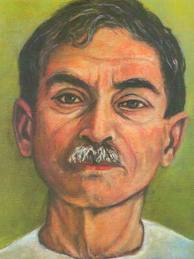
Categories
Stories

The Wallet

By Atreyo Chowdhury

Courtesy: Creative Commons

It was a Sunday. Sudha woke up later than usual. She glanced at the wall clock and hid under her blanket again. She stayed there, motionless, a drag of weariness over her. The doorbell rang, and she sat up.

Champa arrived every morning to sweep and mop the apartment, wash the utensils, and help Sudha make breakfast. There was no need to prepare lunch on the weekdays as Sudha left for work, but on a Sunday, Champa had to spend an extra hour making preparations for lunch.

As Sudha chopped onions on the kitchen counter, Champa spoke: “My mother-in-law watches me like a hawk. It’s as if I’m a devil who’d possess her son and manipulate him to my wishes. She thinks I’m scheming to throw her out of the house. Once she takes the cot, she keeps her ears cocked as I make my bed on the floor. There’s nothing but a curtain that divides the room in half, and she’s wary of me drawing the curtains close, always making excuses. Arré, then why did she wed her son to me? She could have kept him to herself… Didi, you tell me, am I being too demanding?”

The doorbell rang. “Uff, who is it now?” Champa dropped her broom and rushed.

Sudha could overhear their conversation.

“I hope you aren’t selling anything,” Champa said. “Didi will be furious if it’s a salesman so early in the morning that too on a Sunday.”

“Can I speak to… um, Arun Banerjee’s wife?”

“Why? Tell me what you want. Didi is busy.”

“Who is it, Champa?” Sudha craned her neck from the kitchen and intervened.

“He isn’t saying….”

Sudha placed the knife on the chopping board and proceeded to the drawing-room. “Let me speak to him. You go and dice a couple of potatoes.”

The man at the door had a lean physique with an elongated face, a sharp nose and dull eyes. He glanced at Sudha, and then his head wilted like a flower, his chin almost touching his chest.

“Yes, can I help you?”

The man stayed as he was, frozen, staring at his feet.

Sudha frowned. She was about to say something when the man reached for his pocket and took out a wallet. He didn’t have to utter a word since Sudha had recognised it.

“Where did you…?”

The man didn’t answer.

Sudha stood with the wallet in her hand. The weight of memory descended upon her, and her knees trembled.

The police had not found Arun’s wallet on him. Before their arrival, a crowd had hailed a cab to send him to a hospital. The traffic volunteer, who had accompanied him, had found his phone, but not his wallet. Later, the police tracked Sudha to inform her of his death.

Presently, Sudha stood staring at the wallet, tracing her fingers around its edges. She wished to open it but thought it might seem rude. The man was still there, gazing at his feet. He didn’t appear to be well-off. He was wearing a pair of rubber slippers, light grey trousers and a chequered half-sleeve shirt. His clothes were faded due to overuse, and his skin was dark, almost burnt. It looked as if he spent a lot of time in the sun.

“Please, come in,” Sudha said.

The man looked up now. There were dark circles around his eyes, and he had a week-old stubble. His hair was short and generously oiled. “No, thank you,” he said. “I should get going.”

“Please. I would like to know more.”

“More?”

Sudha nodded. “Please.”

The man entered the apartment and looked around. Sudha asked him to take a seat, and he settled on the edge of the sofa uncomfortably.

“Would you like some tea?”

“What? No… it’s alright.”

“A glass of water, perhaps? It’s hot today.”

The man nodded, and Sudha went to the kitchen and asked Champa to fetch a couple of shondésh[1] from the refrigerator. She returned to sit across him, placing the glass of water and the plate of shondésh on the centre table. The man downed the water in a go.

“Where did you find the wallet?”

The man hesitated. “Um, at Gariahat Crossing… I was returning from work… and, and it was lying on the pavement.”

“When was it?” Sudha asked, now opening the wallet to take a look. There were a few currency notes, and the wallet felt heavy because of the coins it had in its pocket. The credit and debit cards were there, as were the receipts and tickets. She closed it and placed it on her lap.

The man was looking at his toes, which curled-uncurled. Sudha repeated herself, and he gulped and trembled and rose to leap at her feet. “I’m sorry,” he said, weeping. “I didn’t steal anything. It’s all there. I didn’t touch a thing….”

Sudha was taken aback; she didn’t know how to react. Champa stood by the kitchen door, bewildered. Sudha placed a hand on the man’s shoulder. “It’s alright… I’m not accusing you. Please, calm down… I just wanted to thank you, nothing more, nothing less….”

The man looked up, still crying. He was on his knees now, hands folded, begging for forgiveness. “I was there when the car hit your husband. I rushed to the spot like others. As they carried him to the cab, I was there to help. Then his wallet fell out of his pocket, and I stole it. I don’t know why. Trust me, I’m no thief. I work for a reputed insurance company. I have committed a grave sin. Please, forgive me….”    

Sudha didn’t know when tears had welled up in her eyes. They were now flowing freely down her cheeks. She composed herself. “I understand. You don’t need to explain. We all make mistakes, but you dared to make it right. I forgive you.”

After the man had gone, Sudha remained on the couch. Champa left too. She asked if there was anything she could do and even offered to return and cook lunch. However, Sudha told her not to trouble herself. “I will manage,” she said.

Presently she opened the wallet and laid its contents on the centre table. Cash—a couple of five-hundred-rupee notes, three hundred-rupee notes, and some loose change—a total of one thousand three hundred and eighty-six rupees. There were four cards; a credit, two debit, and the fourth was a rewards card of an apparel chain.

Sudha recalled the last time they had gone shopping. It was a month before his death. She had noticed that he was barely present, always looking at his phone, replying to messages, smiling to himself. She had caught him in glances browsing through the dresses. He lifted his head only when she asked for his opinion. “It’s good,” he replied, without even a look. They went to the food court at the mall afterwards, but he hardly paid any attention to the food either as he was busy scrolling through his phone.

Sudha sighed; she placed the card down and looked at his driver’s license. On the fateful day, their car was at the service station. Perhaps, if it was there, he would have lived, she ruminated.

In the wallet, she found an envelope, folded to fit. Inside it was a gold charm bracelet with a pearl and a few hearts hanging off the chain. She recollected the last time he had bought her a gift. He had presented her with a wristwatch on her birthday last February. Her eyes brimmed up, and she buried her face in her hands.  

She had no idea what he was doing at Gariahat. Initially, she thought that he was meeting a client. But then his colleague mentioned that Arun had taken the afternoon off — left the office early. Perhaps, he was visiting a friend or a relative. Sudha tried to make sense, understanding very well that no one she knew lived in that neighbourhood.

Presently, she scrambled through the receipts in his wallet. He had the habit of keeping them, no matter how irrelevant they were. An ATM withdrawal slip… A receipt for petrol… for lunch at a restaurant in Park Street… Ice-cream, the same afternoon, at an ice-cream parlour nearby… a couple of parking tickets… and, there it was…the receipt for the bracelet. She glanced at the address of the jewellery store. It was on the same street he was hit by the car.

According to the receipt, he had collected the bracelet three days before his accident and had paid the due amount by his debit card. It also mentioned that he had made an advance payment a week prior.

If he had the bracelet three days before his accident, why didn’t he give it to me? Sudha asked herself. Was he waiting for an appropriate moment? My birthday was, and is, months away. Our anniversary was near, but still weeks away… They did gift each other on these occasions, but it was merely a ritual. Did they feel the same tug of emotions each time they were close? When was the last time they held hands? Sudha couldn’t remember. When was the last time they kissed? Sudha sighed.

She didn’t want to think anymore. She didn’t want to think any less of him. She wished to remember him for the moments they had cherished together, not for the moments they had faltered.

She looked out of the window. The sky was clear without a trace of any clouds. She got up and kept the wallet in her wardrobe amongst the other things that reminded her of him. She changed into something appropriate, brushed her hair, and headed out. She wandered for a while and then hopped onto a bus heading towards Gariahat.

Upon reaching there, she located the jewellery store with ease. It was on the main street, past the Gariahat Market. The person at the shop looked at the receipt and the bracelet. It was a piece of jewellery they had custom-made, and a woman had come with Arun to order it. Arun had paid the due and collected it a week later. Did they have an address? No. But the woman had provided a second phone number, and someone recalled that Arun had referred to the woman as Naina.

Standing on the busy pavement, Sudha hesitated. She then took out her phone and dialled the number. The phone rang for a while, and just when she thought of disconnecting the line, a woman answered. “Hello?”

“Is this Naina?”

“Yes, who is it?”


[1] Bengali sweet made out of cottage cheese

Atreyo Chowdhury was trained to be a mechanical engineer and has a postgraduate degree from IIT Guwahati. Besides writing, he shares an equal passion for music and travelling. He can be found at https://atreyochowdhury.wordpress.com/

.

PLEASE NOTE: ARTICLES CAN ONLY BE REPRODUCED IN OTHER SITES WITH DUE ACKNOWLEDGEMENT TO BORDERLESS JOURNAL

Categories
Stories

Flowers on the Doorstep

By Shivani Shrivastav

It was the third time in as many days that she found a small bunch of flowers on her door sill. They were wildflowers — small and pretty. Suhani had no idea who left them there daily. That day as she picked up the bunch, she decided that she would get up early the next day to see who was left the flowers there, that too, so early in the day.

Coming back inside, she placed the flowers into an empty vase. Suhani tightened her shawl around her shoulders. Life had made her unused to such additional niceties. After moving to the mountains, she distanced herself from things associated with her past – flowers, music, reading her favourite poetry and painting. Her past, where she and Sahil had been professors together at the Delhi University. Gradually, as they realised they had feelings for each other, they started living together. They had spent five years with each other in the apartment they shared. It was a beautiful period in her life. It was as if life itself had taken on colours that had been hidden to her till then.  They would cook together, watch Iranian films, read and discuss books by Krishnamurti, Gurdjieff, listen to instrumental and world music, go out for long walks and spend hours just enjoying each other’s company.

Back then, she had believed that the most important event of her life had already occurred at thirty-two years of age — her meeting with Sahil. Little did she know that life had a few surprises for her yet…

When his parents came to know about their live-in relationship, they were shocked and angry. After many shouted calls and two fiery visits, they forced him to move back home. A few weeks later, she got the news from the professors’ grapevine that he was getting married to someone whom his parents had chosen, from their caste and their social background. It was as if someone had punched her with all their power — she felt numb all over. She couldn’t take her classes after she had heard the news in the professors’ room. Not a few sly glances directed her way told her that people were aware of their relationship.

Feeling suffocated, and as if a million glances were piercing her heart, she took leave and came home. After staying in a limbo for three days, during which she had received a number of calls from the college, she finally tendered her resignation, handed back the keys to the rented flat, and taking only what she could carry with her, she came to Almora.

Left behind were the precious paintings she and Sahil had started collecting together, their vinyl collection and her lovely rugs and throws, some bought, some crocheted by her in those beautiful winter evenings when they would sit together with a glass of wine each, listening to some beautiful rendition or the other from their record collection. Also left behind were some dreams that had been born within the four walls of their shared existence, and which had died an abrupt death on Sahil’s departure. What she could not leave behind were the million memories she lived through each day.

She was moving like a robot through her hall when a piercing birdcall brought her to the present. She set an alarm for the next day before she forgot. Then she got busy making her simple breakfast and preparing for college. She had been very lucky to find a job at the university at Almora, that too at such a short notice.

Why she had chosen Almora she couldn’t really explain, just that she felt a kinship with the place, having read all of Shivani Ji’s novels. Also, her Nani had belonged to Almora. Although her ancestral house had long since been sold, but still she remembered a carefree childhood spent here every summer. Her childhood memories were full of green hills, kafal[1] and tasty pahadi[2] foods and long walks with Nanaji[3] over the hills. She somehow felt at home here, especially since her parents were no longer living, and she was an only child, like her mother before her. Adrift in the wide world, this familiar city had seemed like a haven, even though she had spent all her school, college and then later, working life, in Delhi. But in the moments when her world had been rocked to the core, Delhi had seemed so cold, like a familiar stranger who you met every day but could not share your joys or sorrows with. Also, she had so many shared memories there with Sahil, the plays they had gone to, the numerous music concerts and recitals, outings to Tibet House, the walks at Qutub and so on. The endless memories chased her wherever she went in Delhi; she felt choked by them. To escape from them, she chose a place that held only happy memories for her – where she had been safe and peaceful, with her entire family around her. But today, she was all alone.

Even being in the midst of the nature she loved so much did not take away her loneliness. The cottage was on top of the hill, looking down on all sides upon tall pine trees, where the chatter of monkeys and bird calls surrounded her day and night. The cottage boasted of a beautiful garden, but she felt that she was not contributing anything to its beauty.

She talked to her colleagues, to some neighbours lower down the hill, but mostly kept to herself. She didn’t feel like a whole person yet, for it still felt that her heart had been ripped away, leaving behind a gaping hole. How then could she interact normally with others, others who had loved ones, who had lives that were filled with family, relatives, love, social events and so much? She, who had nothing to share with anyone. And so, she kept inside her shell — teaching, coming home, cooking, sleeping and then the same routine the next day and the day after. Only when she was teaching did she feel totally in the present, for those few precious moments. The rest of the day was besieged by memories.

Choosing a pale lilac saree, she dressed up quickly, tying up her hair without looking into the mirror. Finishing up by wrapping a dark purple yak wool shawl around her shoulders, she took her books and bag. Locking the door, she quickly descended the slope and went up the road to the university. She wanted this day over quickly, so she could get to tomorrow. After a long time, she had something to look forward to.

She taught all her classes, spoke a little to her colleagues and came back in the afternoon. Changing her clothes, she made herself some tea and went to sit out on the porch, where she had kept a rocking chair that came with the house. From there, she had a view down the hill. She thought,“This is where I could sit tomorrow. But no, whoever it is, might not come if I am visible. I’ll keep a lookout from the kitchen window.” She prepared an early dinner. Another hour and a half was taken up preparing for next days’ lectures. then she eats and sleeps. She decided to get up early the next day with the help of the alarm clock.

As soon as the alarm started ringing the next day, she was up in anticipation. Quickly putting her feet into her warm slippers and wrapping her shawl over her sweater, she went into the kitchen.  Setting tea on the boil, she eagerly looked out of the window, the curtain of which was slightly open. In a short while, she saw a little girl with curly hair come up with a small bunch of white flowers. Placing them near the door, she was about to turn and go back when Suhani opened the door and asked her, “Stop! What’s your name?”

Courtesy: Creative Commons

The little girl, who at first appeared scared, gained confidence on seeing her and said with a smile, “Sona”. “Why do you bring flowers every day, Sona? That too, all by yourself, so early in the morning?”

“I live just down the hill,” she indicated towards an orphanage that was a little below Suhani’s house, “and I have asked the nuns if I can come here. The nuns take a morning walk and I come part of the way with them.”

Feeling sad on hearing that the pretty little girl lived in an orphanage, she asked, “And why do you bring me flowers?”

“I see you going and coming every day. I like you. I don’t know why I feel like giving you the flowers, I just do,” Sona replied with a beautiful, dimpled smile.

“Would you like to come in for milk and cookies?”

“No”, she said, “Sister Patience would be waiting for me. I need to go!”  

“Okay, at least take some cookies!” saying this Suhani rushed in to find a box of chocolate cookies that she had randomly bought, perhaps for this little girl. Grabbing the small box delightedly, she came out, but there was no one outside. “How could she have disappeared so quickly?” thought Suhani, taken aback, but there truly was no one there. Not around the house and not even down the path.

 However, gradually this became a morning ritual. Everyday Suhani somehow woke up right before Sona came with her flowers. Sona liked to sit in a particular part of the porch and every day she sat in the same place. She sat there looking out at the flowers that were around the cottage. She answered all the questions Suhani put to her but still seemed to be keeping something back. Usually, she appeared full of cheerful and chattered. Suhani felt some of the ice around her heart melt. The presence of this small being so full of love and sunshine brought her immense peace and comfort. Why, she could not say.

One day she was free a little before time from the college as it was15th August, the Independence Day of the country. After a morning programme, flag hoisting and distribution of sweets, everyone was free to go. Suhani thought of visiting the orphanage. She saw it on her way back home and decided to finally find out more about Sona and went in.

As she approached the office room, she saw a nun sitting inside. She looked in and asked for Sister Patience. “I am she. Please come and have a seat,” she said with a smile. Suhani is anxious about Sona. She asked, “I want to ask about Sona and her parents, if you could tell me please.”

Sister Patience seems a bit taken aback. “How do you know about her?”

Suhani is surprised. “She comes to give me flowers at my house every day. She likes to sit out on the porch looking at the flowers that are all around the cottage. We talk quite a lot.”

Sister Patience takes a deep breath, looks at Suhani and says, “Did you notice anything special about the little girl?” Finding the question strange Suhani says, “Only that she never eats or drinks anything if I offer it. A child of that age is usually quite taken with chocolates, biscuits and sweets.”

Sister Patience seems sad. She takes a deep breath and says, “Sona and her parents were in an accident. It is their house that you have rented. They were in an accident and…”

“And…?”Suhani asks impatiently.

“And everyone died. Sona was very attached to the only home she had known. Maybe she feels safe there. We see her playing in the playground, in the park sometimes. She’s harmless. May God give peace to her soul.”

Suhani did not realise when she had come out of the building and was on the way back. She felt as if her insides are frozen. After that day, she never met Sona again, however early she got up. The flowers are still on her doorstep every day though, without fail.

One thought stayed with her as a result of this experience – that a person can hold onto a person, a place or even things, even when they are no longer there. This just ties us to the past. We could enjoy our memories, even love them, but that doesn’t mean that we keep carrying the weight of the memories that do not allow us to move forward. And life is all about movement.

Suhani held onto the life that was in her memories; Sona was held behind by her attachment to her house. The most poignant thought was – Sona had been a child, but she was a grown up. Sahil had moved on long back, the moment he left her, it was only she that still held on to her memories, living a ghost of a life.

For many days, she thought about this. She came to the conclusion that now she would delve within, and not look outside for peace, love and solace. With this thought, after many days, she finally fell into a deep sleep towards dawn. When she got up the next day, she felt refreshed and relaxed. She could not recall when she had felt this much at ease. Tightening her shawl around her shoulders, she went straight outside to look for the flowers. For the first time in so many days, there were no flowers. And after that, she never did find any flowers on her doorstep.


[1] Fruit https://en.wikipedia.org/wiki/Myrica_esculenta

[2] Belonging to the hills

[3] Maternal grandfather

 Shivani Shrivastav is a a UK CGI Chartered Secretary and a Governance Professional/CS. She loves meditation, photography, writing, French and creating.

PLEASE NOTE: ARTICLES CAN ONLY BE REPRODUCED IN OTHER SITES WITH DUE ACKNOWLEDGEMENT TO BORDERLESS JOURNAL