
Categories
Poetry

Dino Poems by Richard Stevenson

Richard Stevenson
Moros (Moe -ross)

Just over a meter in length,
the Moros belongs to the same
family as Tyrannosaurus Rex.

Same short front arms –
look like they’d only be good
for holding hot dogs.

But, no, he had powerful eyesight
and was very fast.  Could out-run
most predators with ease.

Had good hearing too –
the better to scat for the mat
if larger carnivores were nearby.

Big teeth and a grin
that stretched from ear to ear.
Never brushed ‘em though –

Could probably gas his victim
before sinking any incisors
into its little quaking hide.

*
Pteranodon (TER an-oh-don)

Not a bird, but a flying reptile
that soared and glided high
above the fray.  No teeth
but a long beak with which
it scooped up fish and slow-
running smaller reptile prey.

Soared over plains and waterways –
mostly gliding on the thermals.
Swooping down to scoop finny prey.
Ate on the fly.  Imagine fly-by
burger joints, discus pizzas ejected
above car height in our time.
Would have been a zoo favourite!

Big crest, big chest, cutest talons!
Imagine zoo pedicures delivered
by trained reptoid cuticologists.
They could paint his talons red –
but that’d be a little ho hum –
maybe aquamarine, with sparkles!
Let’s call him Terrance Pteranodon.

*
Micropachycephalosaurus (mi-kro-PAK-ee-SEF-ah-lo-SAWR-us)

This late Cretaceous cutie
was one of the smallest dinosaurs,
but had the longest name!

While T-Rex was stumbling
over syllables trying to count ‘em
on his terrible lizard fingers

and figure whether this biped
whose name means small thick-headed lizard
could even begin to fill his gizzard,

this clever micropachycephalosaurus
had already processed the thought
that there was no point in butting heads,

His best move was to scoot!
And scoot his did – off into
the tuliewumps, where he hid.

A herbivore with Olympic
sprinter’s legs and good sniffer
generally lives to scarf another day.

*
Tyrannosaurus Rex (Tie-RAN-oh-SAWR-us Rex)

Guess there woulda been
no point in telling you to chew
before you swallowed.  You couldn’t
chew!  Hadda tear off chunks
of meat ‘n’ swallow’ em whole!

Messy eater!  Not that any reptoid
Emily Post was around to teach you
to brush your teeth.  Arms couldn’t
reach the front, let alone hard-to-reach
spots.  Whaddaya just gargle and rinse?

Guess no one’s gonna call you
on your bad breath either, bro’ –
Yer free to roam and stink up the place.
Maybe just lower your snout and roar
to gas little lizard pop tarts to stop.

Terrible lizard with an insatiable gizzard.
Best known bully on yer – or
any herbivore’s – block, baby!
Yer the beast with the baddest rep.
Heck, yer a cereal box plastic icon, dude!

Richard Stevenson recently retired from a thirty-year gig teaching English and Creative Writing at Lethbridge College in southern Alberta.  He has published widely.  Forthcoming titles in his cryptid, ET, and Fortean lore series include a trilogy, Cryptid Shindig, and the standalone volumes, An Abominable Swamp Slob Named Bob, Dark Watchers, and Hairy Hullabaloo.  Just out: Eye to Eye with My Octopi (Cyberwit, India, 2022) and Bature! West African Haikai (Mawenzi House, Canada, 2022

PLEASE NOTE: ARTICLES CAN ONLY BE REPRODUCED IN OTHER SITES WITH DUE ACKNOWLEDGEMENT TO BORDERLESS JOURNAL

Click here to access the Borderless anthology, Monalisa No Longer Smiles

Click here to access Monalisa No Longer Smiles on Kindle Amazon International
Categories
Poetry

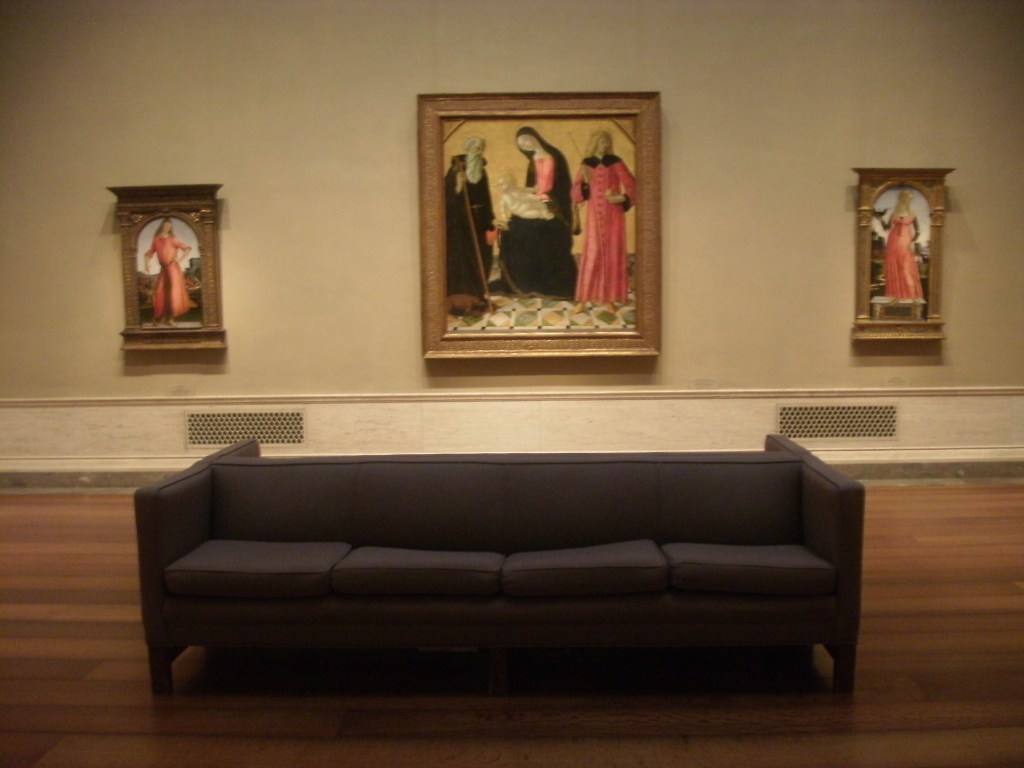
The Italian Renaissance Rooms Were Always Her Favourite

By Ryan Quinn Flanagan

Courtesy: Creative Commons
Wednesdays at the art gallery are free
and this muted street girl in rags files in 
just after open, the old docent with veins like curdled milk 
sees her there all the time, standing with a smile,
truly admiring the art, these sores all over her face,
not at all like the many oil models in the pictures,
but she seems happy, almost delighted!
The old docent starts bring coffee they can share,
then homemade sandwiches for the girl.  She says 
her name is Ashley and that the Italian Renaissance rooms
are her favourite.  The old docent not wanting to spook her,
so she never tries to pry.  Under that sprawling Diego Rivera 
mural in the atrium with so many 
busy bronzed men at work.

Ryan Quinn Flanagan is a Canadian-born author residing in Elliot Lake, Ontario, Canada with his wife and many bears that rifle through his garbage.  His work can be found both in print and online in such places as: Evergreen Review, The New York Quarterly, Borderless Journal, GloMag, Red Fez, and Lothlorien Poetry Journal

.

PLEASE NOTE: ARTICLES CAN ONLY BE REPRODUCED IN OTHER SITES WITH DUE ACKNOWLEDGEMENT TO BORDERLESS JOURNAL. 

Click here to access the Borderless anthology, Monalisa No Longer Smiles

Click here to access Monalisa No Longer Smiles on Kindle Amazon International

Categories
Poetry

Unbinding by Phil Wood

Courtesy: Creative Commons
We took to not talking in the easy hours
of walking. Worry days, study days, days
like wasps that never pause, that made life sour
with fret and flit... out of those woods we came

to fallow fields loitered with restless rooks,
then through a brambled kissing gate and found
a bridge, and from the rushing river leapt
a trout with appetite, its nature bound

in blood to hide and seek. We wandered back
along a pockmarked lane, tufted with grass,
hedge-tight. An unmapped night, the sky crow-black,
no moon disclosed. Not talking, just walking.

Phil Wood was born in Wales. He studied English Literature at Aberystwyth University. He has worked in statistics, education, shipping, and a biscuit factory. He enjoys watercolour painting, bird watching, and chess. His writing can be found in various places, including recently : London Grip, Noon Journal of the Short Poem, Borderless and a featured collaboration with photographer John Winder at Abergavenny Small Press.

PLEASE NOTE: ARTICLES CAN ONLY BE REPRODUCED IN OTHER SITES WITH DUE ACKNOWLEDGEMENT TO BORDERLESS JOURNAL

Click here to access the Borderless anthology, Monalisa No Longer Smiles

Click here to access Monalisa No Longer Smiles on Kindle Amazon International

Categories
Poetry

Many Splendored Love

Short poems by Masud Khan, translated from Bengali by Professor Fakrul Alam

Courtesy: Creative Commons
Magic
(Leela)


Like when a piece of iron falls in love with a piece of wood 
Causing the iron to float on water,
Or like when the magic of love casts a spell 
Making stone float on liquid,
For ages, in nation after nation, 
People contrive to float stones, 
For diverse reasons and occasions,
 
Letting love and desire take diverse forms 
In manifold texts and discourses...
 

A Fragrant Tale
(Sugandho-kahini)

The world is full of misleading, minus signs and foul smells   
                                                                                     
At times, the world feels as heavy and unbearable
As the weight of a son’s dead body on his dad’s shoulder,
Or as stressful as playing the role of a dead soldier, 
Or as formidable as a physically challenged person’s ascent up a mountain
Or as painful as caring for a precocious, traumatised child...
 
Nevertheless, occasionally such stress-laden memories will blur,
And suddenly, wafting on the wind’s sudden mood swing, 
A fragrant moment comes one’s way! 
 

Love
(Prem)
 
‘After all words die away, the heart starts speaking.’
 
When all heartbeats and hullabaloo die down,
Little by little the heart starts fluttering in a distinct metronome 
When all words ends, silence begins to reign.
 
Where mathematics ends, music begins.
 

Gradually the Role of the Third Actor Becomes Clear
(Kromosho Spasto Hoye Othe Triteeyo Praneer Bhumika)
 
Like in magic, in a seemingly miraculous move,
Two strangers will come together 
While a third will have to disappear
To remain awol forever— in reality!

Masud Khan (b. 1959) is a Bengali poet and writer. He has, authored nine volumes of poetry and three volumes of prose and fiction. His poems and fictions (in translation) have appeared in journals including Asiatic, Contemporary Literary Horizon, Six Seasons Review, Kaurab, 3c World Fiction, Ragazine.cc, Nebo: A literary Journal, Last Bench, Urhalpul, Tower Journal, Muse Poetry, Word Machine, and anthologies including Language for a New Century: Contemporary Poetry from the Middle East, Asia, and Beyond (W.W. Norton & Co., NY/London); Contemporary Literary Horizon Anthology,Bucharest; Intercontinental Anthology of Poetry on Universal Peace (Global Fraternity of Poets); and Padma Meghna Jamuna: Modern Poetry from Bangladesh(Foundation of SAARC Writers and Literature, New Delhi). Two volumes of his poems have been published as translations, Poems of Masud Khan(English), Antivirus Publications, UK, and Carnival Time and Other Poems (English and Spanish), Bibliotheca Universalis, Romania.  Born and brought up in Bangladesh, Masud Khan lives in Canada and teaches at a college in Toronto.

Fakrul Alam is an academic, translator and writer from Bangladesh. He has translated works of Jibonananda Das and Rabindranath Tagore into English and is the recipient of Bangla Academy Literary Award (2012) for translation and SAARC Literary Award (2012).

PLEASE NOTE: ARTICLES CAN ONLY BE REPRODUCED IN OTHER SITES WITH DUE ACKNOWLEDGEMENT TO BORDERLESS JOURNAL

Click here to access the Borderless anthology, Monalisa No Longer Smiles

Click here to access Monalisa No Longer Smiles on Kindle Amazon International

Categories
Poetry

The Meeting

By Anasuya Bhar

They met in an alien city
After thirty years. 
At first it seemed unreal -- 
She hardly had any expectations.
The other girl, now a woman,
Hardly emoted, but was civil,
Something that her corporate and rational 
Mind taught her well
Over the years. 
They were classmates, friends – 
She thought she was more
And also wrote a few letters
Which went unanswered. 
Life intervened – 
Careers, marriages, children 
After years of hearsay that are 
Now so regular over social media, 
The girl, now woman, called her up. 
It was another girl, now her daughter 
That needed help with literature. 
Shakespeare and the rest, 
Poems and the prose, 
Who made sense of them all
Beyond the ken of rationality, 
Or even of correct exactitude, 
Who could ever fathom what 
Magic words could do?
She was stunned – 
But she was a teacher, and not less 
A dealer of words, a reader 
Of poetry, a lover of the arts –
It could only be an exercise of pleasure.
She did, the daughter succeeded.
The arrow had hit the target. 
But this became a matter of course.
When the other day, 
The day of colours,
They met, it was the same correctitude
From the other woman and the daughter,
Merely a recollection of other fellow mates
Never an introspective look or a glance. 
She recollected, travelled back 
To moments of past warmth
Expectations, and dried up memories.
Of course, there was no hint 
Of all this in conversation.
Thirty more years may pass 
In the neverland of meeting,
She hardly cared, anymore.
It was important, perhaps, 
To say the proper goodbye,
Between wine and the splendour of 
Five-star accommodation. 

Courtesy: Creative Commons

Dr. Anasuya Bhar teaches English Literature at a postgraduate college in Kolkata, India

.

PLEASE NOTE: ARTICLES CAN ONLY BE REPRODUCED IN OTHER SITES WITH DUE ACKNOWLEDGEMENT TO BORDERLESS JOURNAL

Click here to access the Borderless anthology, Monalisa No Longer Smiles

Click here to access Monalisa No Longer Smiles on Kindle Amazon International

Categories
Poetry

Exile

By Vipanjeet Kaur

The wound of exile refuses to get healed.

The ghost of one’s nostalgic past;

the fairy of glorious future, designed

a division that refuses to get sealed.


I think of wanderers sometimes,

who went far and wide in search

of a mirage called “home” --

a piece of land that one calls one’s own.


Irony is that no true “home” exists

anywhere in the bounds of mind.

It is built, demolished and abandoned

to the storms of vagabond passion.


Isolation, inner or outer, will coexist,

No matter how far you go. She knows no border;

no human is foreign to her, the enchantress

of alienation will bewitch you,

haunt you and embrace your heart.


I think of those who wander in exile,

Perhaps they had to run for sanity,

Perhaps they had to choose between

death and life, and they chose life in exile.


Their owned world turned hostile,

That insane world didn’t spare their smiles;

didn’t house their self-esteem;

chased their aspirations and dreams.


Being exiled from a place was better

For them than exile in life.

Vipanjeet Kaur resides in India. Her poems have been published in Tangled Locks Journal, Hidden in Childhood anthology, White Enso, Cajun Mutt Press, Lothlorien Poetry Journal and Fevers of the Mind Poetry and Art Group.

.

PLEASE NOTE: ARTICLES CAN ONLY BE REPRODUCED IN OTHER SITES WITH DUE ACKNOWLEDGEMENT TO BORDERLESS JOURNAL

Click here to access the Borderless anthology, Monalisa No Longer Smiles

Click here to access Monalisa No Longer Smiles on Kindle Amazon International
Categories
Poetry

Funeral Wish by Jim Landwehr

Jim Landwehr
FUNERAL WISH 

At my funeral
I want you to put on the
J Geils Band vinyl 33 RPM
“Blow Your Face Out”
and dance until you’re 
sweated through
because when it 
comes down to it
life ain’t nothin’
but a house party.
That’s my dying request.
And, if instead,
you play On Eagles Wings
I will rise from the casket
and smash that record
like the woman
in It’s a Wonderful Life
because I don’t want to
be raised up like a raptor
I want to cut a rug
until I hurt

Jim Landwehr has five books of poetry and four full-length memoirs. He is poet laureate emeritus for the Village of Wales, Wisconsin and lives in Waukesha, Wisconsin.

PLEASE NOTE: ARTICLES CAN ONLY BE REPRODUCED IN OTHER SITES WITH DUE ACKNOWLEDGEMENT TO BORDERLESS JOURNAL

Click here to access the Borderless anthology, Monalisa No Longer Smiles

Click here to access Monalisa No Longer Smiles on Kindle Amazon International

Categories
Poetry

Bringing along their homeland

Poetry by Abdul Jamil Urfi

Delhi in the 1960’s:
Nostalgia about Lahore was high.
Partition displaced refugees spoke of 
misery, mayhem, murder. Deda Ji regretted 
that, at the time of leaving, a pillowcase of house jewels
was misplaced. Bhabhi Ji had similar regrets--
leaving priceless possessions behind in Lahore
and friends.
 
But what struck us-- newcomers to the grand city
were the names of shops.
So many of them were
named after places in Western Punjab,
or those now in Pakistan. For instance, 
A popular eatery called ‘Lahorian di Hatti’
‘Quetta DAV School’.
Small eateries served dishes called ‘Pindi ke Chholey Bhatoorey’. 
A shop with the name ‘New Lyallpur Cloth House’. 
There were ‘Lahorian Jewellers’, ‘Sindh Wood & Ply’, 
Karachi Sweet Shop, Karachi Stationery Mart, Quetta Store, 
Peshawar Sweet Bhandar, Lahore Watch Co., Sialkot Jewellers 
and also ‘Abbott Drycleaner’s’, whose shop, it turned out, 
had not been named after some monastery’s abbot 
but after ‘Abbottabad’ --a town in Pakistan 
(made famous by the capture of Osama Bin Laden by US Navy Seals)
Thus, many places in erstwhile undivided India, 
but no more in India now.
Lahore, Quetta, Rawalpindi, Lyallpur, Sindh, 
Abbottabad, Karachi, Peshawar, Sialkot 
made their presence felt in a walk in any area of Delhi. 
The Partition displaced people had suffered immense tragedies and losses
And had also brought a little bit of their homeland with them.

Abdul Jamil Urfi published ‘Memoirs of the bygone century, Beeswin Sadi- Growing up in Delhi during the 1960’s and 70’s’, which was extracted and reviewed in The Friday Times (Lahore)FirstpostIndia of the PastCaleidescopeNew Asian WritingScroll.in and The Quint. He works in Delhi as a university teacher. His poems have appeared in ‘Skylark’,  NAW and Vayavya.

.

PLEASE NOTE: ARTICLES CAN ONLY BE REPRODUCED IN OTHER SITES WITH DUE ACKNOWLEDGEMENT TO BORDERLESS JOURNAL

Click here to access the Borderless anthology, Monalisa No Longer Smiles

Click here to access Monalisa No Longer Smiles on Kindle Amazon International
Categories
Poetry

Porch Pirates by William Miller

Courtesy: Creative Commons
Once, boats on the river were floating prey
for fast schooner Turks who stole whiskey, playing cards,
even slaves. Now the barges are driven by one man,
a skeleton crew, a computer that sounds depths,
knows the tides better than any old salt.
But we adjust to time. In the Crescent City,
greed never takes a holiday. Today, every porch
is a cargo deck and all packages are contraband
anyone on foot, bicycle or stolen car can claim
for free. Up and down Poydras
or further north on Louisa, no home is safe
in spite of video doorbells, crime cameras
on telephone poles that scan with one black eye
the landscape of theft. The booty is whatever
can be pawned, resold or simply tossed
in the grass if it has no resale value. Watches,
perfume, I-Phones go quickly, even cancer drugs
if the pharmacy is open to a backdoor bargain,
the expiration date checks out. Nothing changes here;
slow-burning summer is the one season
we all suffer, the same sun that shone
on black men in iron collars, the pirates
who pinched a dozen then sold them back for a quick profit.
In the city that forgot to care, ghosts breed ghosts--
every hand is a grappling hook.

William Miller’s eighth collection of poetry, Lee Circle, was published by Shanti Arts Press in 2019.  His poems have appeared in many journals, including, The Penn Review, The Southern Review, Shenandoah, Prairie Schooner and West Branch.  He lives and writes in the French Quarter of New Orleans.

.

PLEASE NOTE: ARTICLES CAN ONLY BE REPRODUCED IN OTHER SITES WITH DUE ACKNOWLEDGEMENT TO BORDERLESS JOURNAL

Click here to access the Borderless anthology, Monalisa No Longer Smiles

Click here to access Monalisa No Longer Smiles on Kindle Amazon International
Categories
Poetry

Poetry by Scott Thomas Outlar

Courtesy: Creative Commons
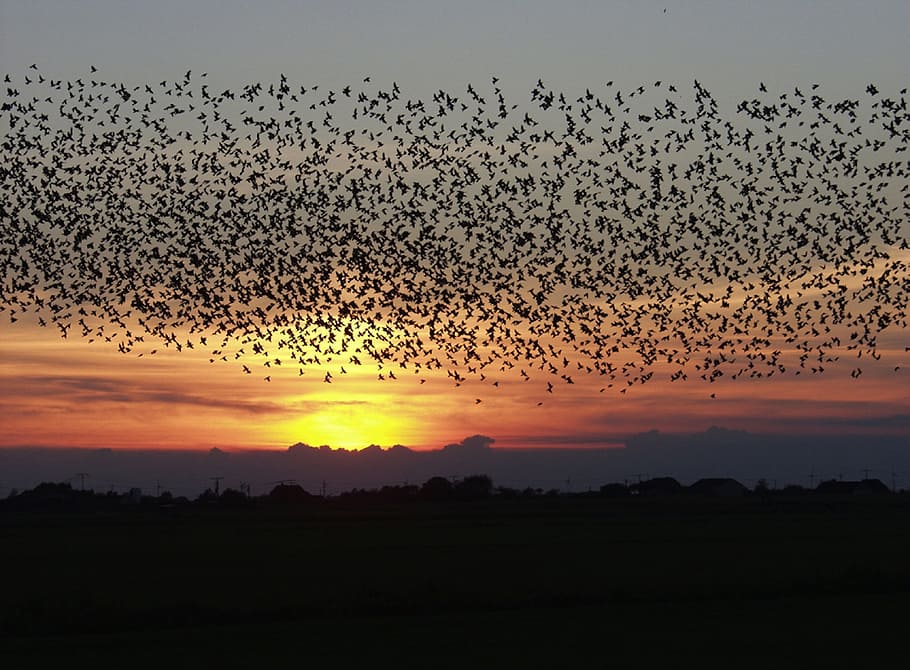
THE SWARM 
 
 
When night passed and came the morning
blackbirds enveloped the grass,
smothering green moss across the street,
moving as a synchronized cluster of fluttering wings.
 
I switched my position in bed to gain a better view,
squatting on the mattress while staring out the window
as the dark wave gained a new tide…
shrieking and soaring as one blanket mass
headed straight toward me.
 
For a brief moment, I feared that the yawning grave was calling me
back to the dust, dirt, and ash from whence I once came;
but then, in unison, the wave broke,
the aggressive wings grew calm, and
the swarm settled down as it landed again,
this time in my front yard.
 
I exhaled with a smile.
The beauty of chaos shifted
as order was reclaimed in my respite -
the reaper had granted a reprieve;
and though I now realise that he will surely
one day come hunting for me,
whether with a murmuration of blackbirds,
a flock of starlings, a flutter of sparrows,
an unkindness of ravens, a murder of crows, a wake of vultures,
or one-on-one, all alone, with a scythe in hand,
 
at least for the moment I can lay back
safely and soundly in my warm bed,
knowing that while I dream about the future
it will be the worms outside in the cold
that serve as today’s sacrifice to the cycle.
 
FATHOMED PERCEPTIONS 


You are neon electric
diamond gypsy thunder

You are passion incarnate
dreaming whispered caresses

You are focus ignited
dancing fiery atom

You are depth personified
dazzling magic moments

You are light ablaze
drifting smoky signals

You are crisis averted
dangling lusty kisses

You are power raptured
daunting crystal visions

You are truth pulsed
damning fallen systems

You are peace perfected
demanding creative explosion

You are sight opened
drenching weeping eyes

You are flesh experienced
dispersed energy released
 
ALPHA (ADRENALINE) /OMEGA (SATURATION)
 
 
I saw you blinking/pulsing/glowing
on the far side of chaos
with whispers of light
guiding/cajoling ships out at sea
to come home and roost
on the shoreline (of your sweet salvation).
 
I heard you singing/weeping/wailing
from a ruptured sky
with diamonds of fire
torching/igniting hearts of the dead
to burst forth into life
with yellow resurrection (of your primal passion).
 
I felt you loving/lusting/longing
in the empty bed of loneliness
with purest intentions of night
exciting/enticing thoughts of the truth
to dream their way to flesh
and taste the core (of your open bleeding heat).

Scott Thomas Outlar is originally from Atlanta, Georgia. He now lives and writes in Frederick, Maryland. His work has been nominated multiple times for both the Pushcart Prize and Best of the Net. He guest-edited the Hope Anthology of Poetry from CultureCult Press as well as the 2019-2023 Western Voices editions of Setu Mag

.

PLEASE NOTE: ARTICLES CAN ONLY BE REPRODUCED IN OTHER SITES WITH DUE ACKNOWLEDGEMENT TO BORDERLESS JOURNAL. 

Click here to access the Borderless anthology, Monalisa No Longer Smiles

Click here to access Monalisa No Longer Smiles on Kindle Amazon International