Categories
Poetry

I Called You Today

By Michelle Hillman

I CALLED YOU TODAY 

I called you today after I was reminded it was Breast Cancer Awareness Month.
You answered hurriedly and whispered like you do when you're in line at the market or Kohls.
You were at your six-month checkup and would call me when you were done.
It wouldn't be long, you said.
Today, I worried your breast cancer came back, and you didn't want to tell me.
Today, I worried you and Dad were home crying because you didn't know what else to do.
Today, I worried I hadn't called or visited enough, and months had passed since I said, "I love you."
Today, I worried the leaves are turning Thanksgiving colours, and I haven't driven the 45 minutes to see you since the summer.
Today, my heart beat out of my chest with unyielding anxiety.
I thought I would have to save your voicemails again like I did when you lost your hair so I could hear your voice whenever I wanted.
Today, I worried I’d have to preserve your best ALL-CAPS texts in a safe place whenever I needed a chuckle.
You said you would call, it wouldn't be long.
I waited for one of your classic messages when you have nothing to say except that you're at home and Dad's at the gym, eventually and abruptly ending with OK, BYE.
Today, I worried you would tell me you had breast cancer for the second time.
Hours passed. My throat tightened and burned. Tears filled my eyes just enough to blur my vision.
I called and you answered, breathless and happy.
You were on the golf course with Dad. Everything went great, you said.
OK BYE.

Michelle Hillman is a Boston-based freelance writer who lives with her husband, three children, two cats and a dog. She enjoys chaos and calm.

PLEASE NOTE: ARTICLES CAN ONLY BE REPRODUCED IN OTHER SITES WITH DUE ACKNOWLEDGEMENT TO BORDERLESS JOURNAL

Click here to access the Borderless anthology, Monalisa No Longer Smiles

Click here to access Monalisa No Longer Smiles on Kindle Amazon International
Categories
Poetry

Poems by Afsar Mohammad

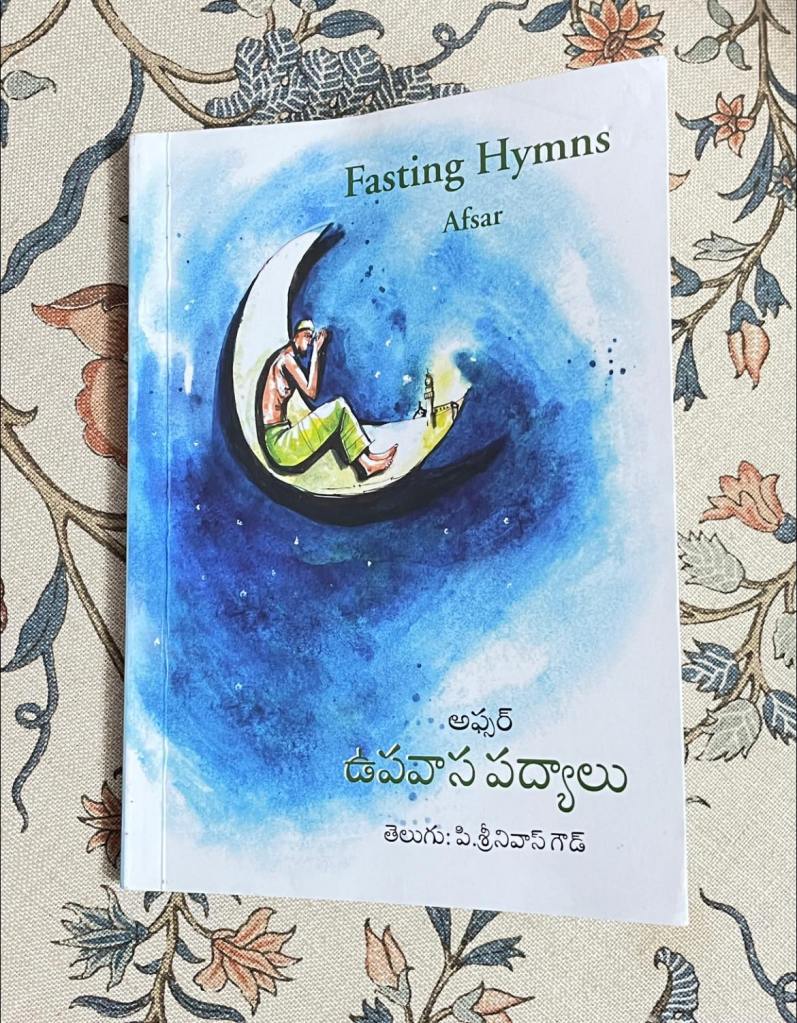
Photo Courtesy: Afsar Mohammad
As I finish this morning prayer

And hold the bread
I see a Gaza in every crumb.

***

Hiding from the death,
Children seek each other in a rubble.
their shut eyes still ask:
whose game was that?!

***

The emptiness of a stomach
during fasting resonates deeply with me.

The heart pounds incessantly,
As though on the verge of shattering.

Words and images
gather around me
like famished birds, murmuring their tales.

***

I understand
you're curious about
what makes my Eid
so memorable.

I would simply state that
I feel the shoulders of my fellow people
touching mine
without any barriers
or boundaries.

***

so tired of sermons
that escape from reality
so drained of empty words
that repeat nothing.

Then, what do you pray for,
morning through evening?

just open the naked eye
and see the begging bowls
praying around you!
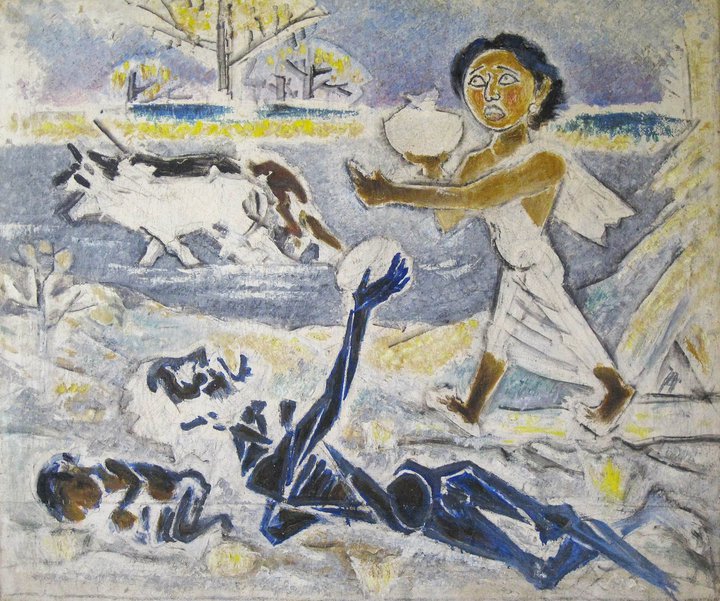
Painting by Ramkinker Baij (1906-1980). From Public Domain

Click here to read a review of Fasting Hymns

 Afsar Mohammad teaches at the University of Pennsylvania, and he has published five volumes of poetry in Telugu. He has published a monograph with the Oxford University Press titled, The Festival of Pirs: Popular Islam and Shared Devotion in South India. His Remaking History: 1948 Police Action and the Muslims of Hyderabad, has been published from Cambridge University Press.  His first poetry collection was Evening with a Sufi: Selected Poems.  These poems are from his second collection, Fasting Hymns, which has been translated to Telugu by P Srinivas Goud as Upavaasa Padyaalu. You can read a review of the book by clicking here.

.

PLEASE NOTE: ARTICLES CAN ONLY BE REPRODUCED IN OTHER SITES WITH DUE ACKNOWLEDGEMENT TO BORDERLESS JOURNAL

Click here to access the Borderless anthology, Monalisa No Longer Smiles

Click here to access Monalisa No Longer Smiles on Kindle Amazon International
Categories
Poetry

Lines on returning to Korea from Santiniketan

Poetry and translation from Korean by Ihlwha Choi

HOMECOMING 

(From Santiniketan)

How much longer will my life's list remain?
The journey, from trivialities to its end, is nearing.
I gauge the volume of toothpaste and soap scraps,
Count the dates of paid meals—homecoming is at hand.
Writing a day's journal, I confirm the remaining path.
The budget thins as much as my frame,
Unfinished books and unfulfilled plans erased,
Leaving behind the sprawling naps of stray dogs
And the countless steps of wandering gods.
Like autumn trees shedding leaves, I gather my departure.
Endless cycles of meeting and parting,
The wheel of samsara* turns again.
With the endless procession of foreign words fading,
I return again to a long-familiar daily life.
Affection, like water colour, spreads too easily.
The resilient chains of bonds encircle me like tree rings,
I endure the pain like a sharp needle's prick,
Packing all my lingering regrets carefully into my backpack.
How many seasons must pass
For the pain to ripen and fall once more?


*Sanskrit word for World

Ihlwha Choi is a South Korean poet. He has published multiple poetry collections, such as Until the Time When Our Love will Flourish, The Color of Time, His Song and The Last Rehearsal.

.

PLEASE NOTE: ARTICLES CAN ONLY BE REPRODUCED IN OTHER SITES WITH DUE ACKNOWLEDGEMENT TO BORDERLESS JOURNAL. 

Click here to access the Borderless anthology, Monalisa No Longer Smiles

Click here to access Monalisa No Longer Smiles on Kindle Amazon International

Categories
Poetry

Almost Everything

Poetry and Photography by Rhys Hughes

Almost everything
will work again if you unplug it
for a few minutes —
including you!

I passed that sign on the outside
wall of the ‘Relaxation Centre’
this morning
and I had to take a photo
to serve me as a future warning.

The message it conveys
has disturbed me
in so many ways, especially
logically. You see,
it seems to claim
that if you unplug yourself
(in other words stop working)
you will work again.
So if you stop working, you
will start working!

But I stop working when
I want to stop working,
not when I want to start working.
The ultimate result
of this message, if it is true,
is that we will be stuck
in an eternal loop of work.

What a nightmare!
The very notion hurts my brain.
I don’t want to work
forever. I don’t think it’s clever
to avoid holidays.
One of the perks of life
is that we have opportunities to
shirk stress and strife
by staying away from the office
and offering a kiss
goodbye to chores and labour.

In fact, I believe holidays to be
vastly superior
to toil and drudgery.
Even a budgerigar knows this
to be true. Who
doesn’t? Only the person who
made that sign.

Maybe they were drunk
on the wine of self-satisfaction
or thought they could
get a certain reaction that would
be useful to them
from intrigued passersby
but I question why they forgot
the simple equation:
we have earned the right to do
absolutely nothing
without expecting rejuvenation.

And now I am sitting in a canoe
next to you. We are
drifting down a stream and when
the stream joins the
river, and when the river reaches
the sea, together we
will paddle, you and me, to a new
land where work is
avoided as a matter of course. Call
it utopia if you like
or any other name. I only hope that
when it is our turn
to call it something, it will respond
with the smile of
a comfy paradise,
humming a lazy tune in our honour.

I don’t want to bother
with work: it irks me to think of the
trouble it perpetuates,
the ruthless facile way it decimates
sensitive minds. Our
canoe and every dream afloat in the
flimsy boat are more
true than management strategies and
meeting room agendas.

Almost everything
will work again if you unplug it
for a few minutes —
including you? No thanks.
I don’t intend to put it to the test.
My plan is to rest
for lifetimes, not minutes, on my
own serene terms.

Rhys Hughes has lived in many countries. He graduated as an engineer but currently works as a tutor of mathematics. Since his first book was published in 1995 he has had fifty other books published and his work has been translated into ten languages.

.

PLEASE NOTE: ARTICLES CAN ONLY BE REPRODUCED IN OTHER SITES WITH DUE ACKNOWLEDGEMENT TO BORDERLESS JOURNAL

Click here to access the Borderless anthology, Monalisa No Longer Smiles

Click here to access Monalisa No Longer Smiles on Kindle Amazon International

Categories
Poetry

Stories by Manzoor Bismil

Translated from Balochi by Fazal Baloch

A mythical Simurgh perched on the Tree of Life, to which it has special affinity. Belonging to Persian mythology, the Simurgh is said to have seen the world destroyed thrice. Photo from Public Domain.
Storytellers unfolded their tales,
Yet we paid them no heed.
Again, they unfurled their tales,
It didn’t bother us, indeed.

As tales unfolded, we drifted to sleep,
Fairies, demons, djins, and devils
Crept into their lore,
Yet we remained ignorant, as before.

When the Simurgh swallowed the snake,
Nothing we did care.
When the princess fled with a shepherd,
Curiosity filled the air.
When the thieves broke in the warehouse,
Clamours spread far and near.

And when war arrived, knocking at our door,
We left for the mountains, grasping the swords.
At last, we knew: stories are not lies anymore.

Manzur Bismil is a prominent Balochi poet. He emerged on the literary scene in the early 1990s and soon rose to fame, creating a niche for himself in the pantheon of the Balochi poets. He is widely known for his neo-classic style, especially in his verses. So far he has published eight anthologies of his poetry. This poem is taken from the poet’s poetry collection Sahaar (The Fear) published by Demrawi Majlis Muscat in 2017.

Fazal Baloch is a Balochi writer and translator. He has translated many Balochi poems and short stories into English. His translations have been featured in Pakistani Literature published by Pakistan Academy of Letters and in the form of books and anthologies. Fazal Baloch has the translation rights of of this poem from the poet. 

PLEASE NOTE: ARTICLES CAN ONLY BE REPRODUCED IN OTHER SITES WITH DUE ACKNOWLEDGEMENT TO BORDERLESS JOURNAL

Click here to access the Borderless anthology, Monalisa No Longer Smiles

Click here to access Monalisa No Longer Smiles on Amazon International

Categories
Poetry

Whose Life?

By Aman Alam

It's always the common people who pay first.  
They don’t write the speeches or sign the orders.
But when the dust rises, they’re the ones buried under.


In Gaza, families sit in the dark.
Electricity’s a luxury, water’s a hope.
No one asks why the rockets are falling.
They just run, or they don’t,
and then it’s over.


Across the world, leaders sit in rooms with polished floors.
They talk in circles, with words that don’t mean much anymore.
Peace, war, freedom, terror—
they shift with the wind, depending on who’s buying,
or who’s selling.


And somewhere far from the noise,
contracts are signed for more bombs, more tanks, more fear.
But it’s not their children pulling the pieces of homes out of rubble.
It’s all just business, isn’t it?
But what about the man who just wants to till his land?
What about the woman who looks for her son every morning
because the last time she saw him,
he was running away from the flash of a missile?
Who pays for them?


Borders mean nothing to the dead.
They don’t care for the politics,
the causes,
the flags.
It’s all blood and dirt when the shell hits.


Some fight for their homes,
some fight because they’re told,
and others, from far away,
fight to keep their markets alive—
selling death in clean packages,
delivered on time.


But the streets tell a different story.
Not of heroes or villains,
just people trying to live another day
under skies that grow darker by the hour.
The world burns in pieces,
but the ones who burn the most
are the ones who never asked for it.


And when the guns stop—if they ever do—
the fields will still be empty,
the cities will still be hollow,
and the people who once had lives
will stand in the ruins,
wondering why no one heard them.

Aman Alam is an English major at Jadavpur University, with a deep love for literature and a knack for thoughtful conversations. He’s always lost in a good book, writing poetry, or dreaming up ideas for his next big project. Along with his love for words, he’s equally obsessed with cricket and never misses a chance to debate life’s big questions over a cup of chai. Known for his laid-back style and sharp humour, Aman has mastered the art of doing everything at the last minute – yet still manages to pull it off with charm.

.

PLEASE NOTE: ARTICLES CAN ONLY BE REPRODUCED IN OTHER SITES WITH DUE ACKNOWLEDGEMENT TO BORDERLESS JOURNAL. 

Click here to access the Borderless anthology, Monalisa No Longer Smiles

Click here to access Monalisa No Longer Smiles on Kindle Amazon International

Categories
Poetry

Fire is their Life

Aagun taader Praan (Fire is their Life) by Manish Ghatak, translated from Bengali by Indrayudh Sinha

Manish Ghatak

Manish Ghatak (1902-1979) was a poet and novelist who wrote in Bengali. He was a writer from the Kallol era, a movement that broke away from Tagore’s humanism and turned to Freud and Marx.

FIRE IS THEIR LIFE

What light, what light, of the sun, as if an ocean

Of flames!

.

A torn famished field smothers while flaming pellets rise

The wave of fire floods the clouds, the air, fill faces and eyes

.

The iora folds its wings, and totters on the floor with thirst

The bull raises its nose from the fumes, no one nears to touch

.

Blood showers down on a bald branch of the butea, drop, drop, drop

The fire could not soak only this cascade of blood

.

The fire could not take away the ebony boy’s flute.

The laughter of the ebony girl, the fire couldn’t mute.

.

The fragrance of the mahua flower spreads fire on every path

The wine of the mahua flower sets fire to the blood

.

The ebony boy and girl, both burn in the fire by will

They cackle, cackle and laugh, and wallow, cheek by jowl

.

Fire is their life; they haven’t yet been doused

.

Indrayudh Sinha is a student of Social Sciences and Classics at Beloit College, Wisconsin.

.

PLEASE NOTE: ARTICLES CAN ONLY BE REPRODUCED IN OTHER SITES WITH DUE ACKNOWLEDGEMENT TO BORDERLESS JOURNAL

Click here to access the Borderless anthology, Monalisa No Longer Smiles

Click here to access Monalisa No Longer Smiles on Kindle Amazon International

Categories
Poetry

A Moonlit Meadow

By Ayesha Binte Islam

Life has got more than one scope.
A moonlight full of hope
reminds, do not lose inspiration.

The moon clads the grass and trees.
The meadow seems to release a laughter like a beautiful child in mild light.


Fireflies, at a side, in a cluster, emit random bursts of luster– making a joyous spread.


This joy is caught with leaps
by those who hide – the crickets who notify of the night,
chirping while being out of sight.


It ripples, in rows, the grassy mass, and flows across the blades of grass – A comfortable and pleasant breeze,
which fills the air and the heart with ease.

Ayesha Binte Islam writes as a hobby, and is currently pursuing a Bachelor of Science in Computer Science and Engineering.

.

PLEASE NOTE: ARTICLES CAN ONLY BE REPRODUCED IN OTHER SITES WITH DUE ACKNOWLEDGEMENT TO BORDERLESS JOURNAL

Click here to access the Borderless anthology, Monalisa No Longer Smiles

Click here to access Monalisa No Longer Smiles on Kindle Amazon International
Categories
Poetry

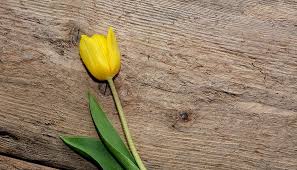
Girl with a Yellow Tulip

By Ryan Quinn Flanagan

From Public Domain
The message 
that came through back channels
was clear.

There will be a girl with a yellow tulip,
pretending to listen to music.

A single yellow tulip,
no other number or colour.

You will sit down,
share some light banter
before passing along
the information.

Then you will walk three blocks East
to a basement bookshop
in the village.

Ask the proprietor
if he has any Victor Hugo
on loan.

Before heading back home
and returning to your life.

Watering the plants in the window.
Fighting with the chain on the back
of the toilet
until one or both of you
have been pacified.

Ryan Quinn Flanagan is a Canadian-born author residing in Elliot Lake, Ontario, Canada with his wife and many bears that rifle through his garbage.  His work can be found both in print and online in such places as: Evergreen Review, The New York Quarterly, Borderless Journal, GloMag, Red Fez, and Lothlorien Poetry Journal

.

PLEASE NOTE: ARTICLES CAN ONLY BE REPRODUCED IN OTHER SITES WITH DUE ACKNOWLEDGEMENT TO BORDERLESS JOURNAL

Click here to access the Borderless anthology, Monalisa No Longer Smiles

Click here to access Monalisa No Longer Smiles on Kindle Amazon International
Categories
Poetry

Oh! You Would Not Believe…

By Saranyan BV

From Public Domain
THE HIDE-OUT IN MY BOTANY BOOK


Oh! You would not believe
For a while I thought Professor Livingstone fooled me.
He taught us botany, that tamarind is a leguminous species
With small little leaves and a central nerve.

Oh! You wouldn’t…
For a while I believed when I read somewhere all leguminous are like spinach*,
Good protein, sound for body and health,
No small leaves, no central nerve.


Oh! You wouldn’t…
When I referred back to my old text
That the Professor used for Botany, the book had holes,
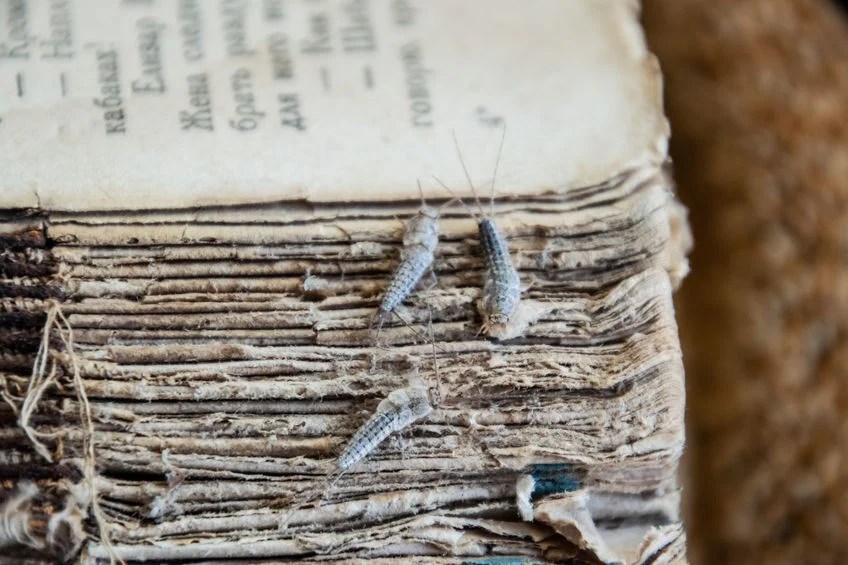
Smelt ancient, a silver fish or two crawled to shy away from light.

Oh! You wouldn’t…
The silver fishes ate the portions of the book
Which spoke about the species Tamarindus Indica
And the family to which it belonged.

Oh! You wouldn’t believe my dear Professor,
The tamarind trees belong to the leguminous after all.
I tried to hide my head in a borehole
Dug by silver fishes in the pages containing work on Phytomorphology*.


* http://www.dietamediterranica.pt/?q=en/node/240

*The study of external structures of plants
From Public Domain

Saranyan BV is poet and short-story writer, now based out of Bangalore. He came into the realm of literature by mistake, but he loves being there. His works have been published in many Indian and Asian journals. He loves the works of Raymond Carver.

.

PLEASE NOTE: ARTICLES CAN ONLY BE REPRODUCED IN OTHER SITES WITH DUE ACKNOWLEDGEMENT TO BORDERLESS JOURNAL

Click here to access the Borderless anthology, Monalisa No Longer Smiles

Click here to access Monalisa No Longer Smiles on Kindle Amazon International