Categories
Essay

The Idea of India

Anasuya Bhar explores the history of the National Anthem of India, composed by Tagore in Bengali and translated only by the poet himself and by Aruna Chakravarti. Both the translations are featured here.
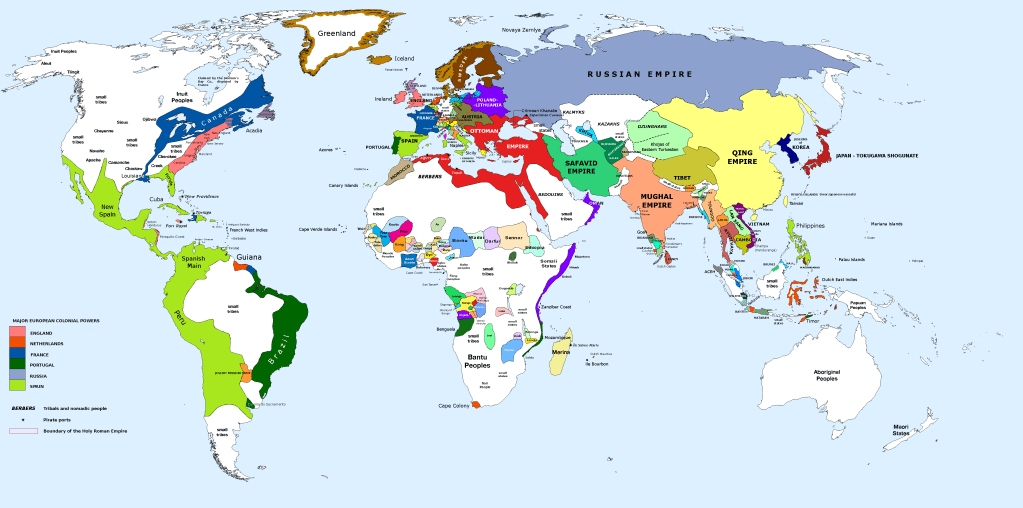
1700 AD: An illustrative map of the world in the early colonial period. The Mughal Empire in India was at its greatest territorial extent. Courtesy: Creative Commons

The national anthem and the national song of India are both parts of a post-colonial narrative and did not originate prior to the British colonisation of the country, which happened effectively, from the middle of the eighteenth century. India has been broadly classified as a civilisation and a cultural phenomenon, rather than a race or a territorial presence prior to the British colonisation.

India has remained an idea ever since the ancient times, perhaps even prior to the advent of the Classical Graeco-Roman civilisation of the west. The historicisation of India’s past has been a much debatable issue, with European historians representing India from their perspective. Much damage was done, for instance, by James Mill’s The History of British India (1817), which rubbished the country as thoroughly debased and wanting the civilisational touch of the European west. The reality of India, or more correctly Bharat, inhered in the local and regional historical specificities, its literature, culture, myths and legends. The historical perspective of our inhabitants was that of the Puranic history whose chronology, order and narrativity depended on a time scale different from the idea of time in the western rationale for chronology. In other words, the European west’s rationale consequent of the enlightenment, and the enlightened concept of history, was a later addition to the Indian consciousness.

The concept of a distinct nation, and as an individual entity in the consciousness of a socio-political presence in the history of the world, was also, a comparatively belated concept in our country. In fact, it was not earlier than the Mughals that the country was conceptualised as a unified entity from the North to the South, from the East to the West. The Indian sub-continent is strategically guarded by the geographical presence of the Himalayan range, the Indian ocean, the Bay of Bengal and the Arabian Sea. Hence, the territorial boundaries which become crucial in determining the political borders of the European or the American west are not of much consequence over here. The borders that are present in the former continents are a result of political aggression and imperialism. The borders that ensued in the Indian subcontinent and eventually created Afghanistan, Pakistan, India, Nepal, Burma, Bangladesh and also Sri Lanka, are, however, a result of the European and, particularly, British intervention.

The consciousness of India’s nationalism was, as mentioned in the beginning, a later one and quite clearly a colonial aftermath. Among the first to mention the lack of an indigenous history was Bankimchandra Chattopadhyay (1838 – 94), the celebrated novelist and intellectual of nineteenth century Bengal, who himself attempted to write, through his various essays, a historical consciousness for his country. The writer of our national song ‘Bande Mataram’ (in Anandamath, 1882), Bankimchandra was also the first to think of a ‘jatiyo’ or a nationalist consciousness, and attempted to take a fresh look at the puranic history based on myths and legends. He rewrote the narrative of Krishna, and also looked afresh at the fundamentals of the Hindu religion.

The nationalist consciousness was given a fresh lease through the several attempts for promoting indigenous products and enterprises by the Tagores of Jorasanko in Kolkata. The Hindu Mela (Hindu fair), begun since the mid-1860s by Dwijendranath Tagore (1840 – 1926) was among the first to strike concepts of an indigenous nationhood, by giving impetus through homespun fabrics, cultivation of rural handicrafts and traditional food items like pickles or ‘bori’, such that a space could be created independent of the parameters used by the colonial masters. Rabindranath (1861 – 1941) also refers to several attempts of his elder brother Jyotirindranath (1849 – 1925), in creating the matchstick factory or even striking a competition in the ship trade with their English counterparts in the waters of Bengal in his autobiographical Jibansmriti (My Reminiscences, 1911). He also mentions the latter’s attempt at designing a national dress for the country, trying to fuse various drapes of traditional clothing. This is again very interesting because, a distinctive sartorial appearance would help in identifying the Indian from the European, even externally. The sari  as we wear it now, was first conceptualised by Jnanadanandini Devi (1850 – 1941) of the Tagore household. She gave the Indian women a dignified attire by fusing the styles of Parsis and Gujaratis, and also by improvising on the styles of the European gown to give us the blouse-jacket. The unification of various styles automatically veered towards a oneness in the same territorial boundaries and the nationalistic consciousness came first through cultural means.

The Tagores of Bengal were also among the first, after Rammohan Roy (1772 – 1833), to venture beyond their homes. Dwarakanath (1794 -1846), grandfather of Rabindranath, not only stayed in England for a substantial period of time, but also endeared himself to Queen Victoria as the ‘Prince’. Debendranath (1817 – 1905), his son, was in the habit of touring the Himalayas extensively, and even took his youngest son Rabi along with him. Satyendranath (1842 – 1923), another of his sons, was the first Indian to qualify in the Indian Civil Service; he too, extensively toured several parts of India and abroad. Rabindranath was a frequent traveller from a very early age. The women of the Tagore household, beginning with Jnanadanandini Devi also moved out of their antarmahal  (inner quarters) and into the other parts of their country and even the world. Indira, Mrinalini, Sarala, Pratima along with Jnanada were frequent travellers both within and outside the country. Hence, the country and the ideology of India as a nation were familiar concepts to the members of this remarkable family from Bengal. Of course, there were other influential households in nineteenth century Bengal, but none so extensively influential.

The formation of the Indian National Congress (INC) in 1885, marked the culmination of several isolated and scattered attempts at nurturing a nationalist consciousness. I have, however, given a few instances from Bengal. I am sure similar attempts were made in other states as well. Even in the formation of the INC, we see the pivotal role played by Janakinath Ghosal (1840 – 1913), husband of the well-known litterateur Swarnakumari Devi (1855 – 1932), elder sister of Rabindranath. According to the memoirs of his elder daughter Hiranmayee, Janakinath was a key presence at the time of the formation of the Congress. Later, Sarala (1872 – 1945), their younger daughter, not only became a part of the Congress, but was also among the foremost figures in Bengal to enthuse young men into the national struggle through cultivation of physical fitness programs. Sarala also worked closely with Swami Vivekananda and Sister Nivedita in some of their philanthropic programs.

Jana Gana Mana, now venerated as our National Anthem, was most possibly first composed as a hymn, by Rabindranath Tagore. This hymn was first recited on the second day of the annual session of the Indian National Congress on 27th December 1911, by none other than Rabindranath himself. This was followed by a second performance of it in January 1912, in the annual event of the ‘Adi Brahmo Samaj’ or the Brahmo Congregation, and then it was published, for the first time in the January edition of the Tattwabodhini Patrika, which was the official journal of the ‘Adi Brahmo Samaj’, with the title ‘Bharata Bhagya Bidhata’ or ‘the determinant of Bharat’s destiny’. The journal was, at that time, edited by Rabindranath himself. The original song, composed in Bengali, has five stanzas. The Anthem makes use of only the first of the five and usually covers an average time of 52 seconds when sung. The original language has been retained, although its intonation is Devanagiri.
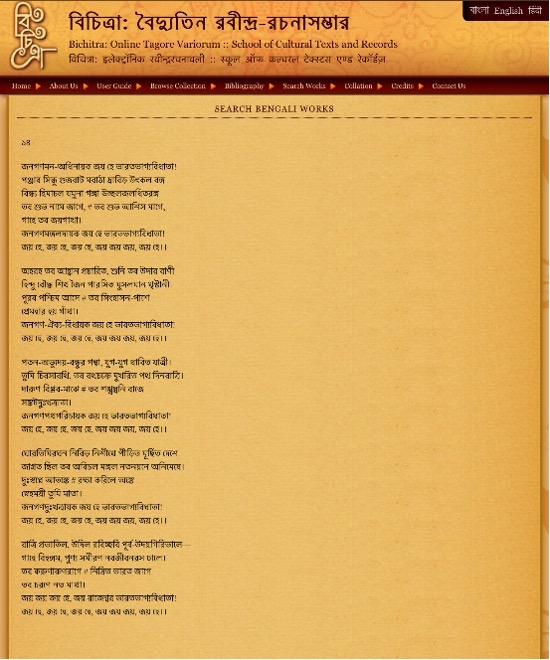
The Song in Bengali. Photo courtesy: Anasuya Bhar

The song is a hymn to the all-pervasive, almighty, and the maker of the country’s destiny, the power of whom presides over her natural boundaries of the Himalayas and other mountains and the rivers, and where resides individuals of all races, cultures and religions. It has been the benefactor, through thick and thin, assimilating the good with the bad, and when the country has been lying destitute in trouble and pain, has extended its hand in empathetic wonder. The sun of Bharat’s destiny will rise again and the pall of darkness shall be drowned in the light of a new dawn – a new beginning and a new hope. Rabindranath did not live to see this dawn, but his visions were realised and honoured by the makers of the Constitution of the Republic of India.

The hymn that originated in the poet’s fiftieth year, perhaps had its germs planted in him through his entire life as the beginning of this essay tries to elaborate. It was only time and the political needs of the country that expedited its utterance in the year 1911. The poet’s vision found embodiment in other and similar creations as well. His Gitanjali (1912) contains the well-known poem, ‘Where the mind is without fear’  (XXXV) –

Where the mind is without fear and the head is held high
Where knowledge is free
Where the world has not been broken up into fragments by narrow domestic walls
Where words come out from the depth of truth
Where tireless striving stretches its arms towards perfection
Where the clear stream of reason has not lost its way into the dreary desert sand of dead habit
Where the mind is led forward by thee into ever-widening thought and action —
Into that heaven of freedom, my Father let my country awake.

The year in which he composed and first presented Jana Gana Mana, that is 1911, was in many ways a very crucial year in his personal history. As mentioned earlier it was his fiftieth birth-year, and he was gradually beginning to be acknowledged for his poetic greatness in his own land. The following year, that is 1912, he would go to England, with some of his own translations into English, and which would, introduce him to the world as a major poet, among other poets. 1911, was also the year which marked the coronation of King George V and the transfer of the British capital from Calcutta to Delhi. In fact, Rabindranath’s hymn was initially mistaken to be sung in honour of the new Emperor of the British dominions, but was later clarified to be otherwise, and was acknowledged to be a ‘prayer’ for his own native land and independent of such intentions.

The period that we are considering is also a very significant one in Rabindranath’s own consciousness of the nation and his concept of nationalism. In 1910, he published his novel Gora where he underlined the irony inherent in religious exclusivity and bigotry. His protagonist, a staunch votary of Hindu values and virtues, ironically emerges to be an Irish foundling reared in a Hindu home. Through him Rabindranath proves the efficacy of such conservative religious bigotry. His song ‘Bharata Bhagya Bidhata’ pledges to go beyond external divisions of religion and politics, and endorses the value of humanity; nor does it discount the importance of the west, but believes in the fruitful coming together of the best of all worlds. His school at Santiniketan, later to be identified as Visva-Bharati, exemplifies this coming together of the best of all the worlds. In 1919, he delivered a series of lectures on nationalism, which came together in a single volume called Nationalism, and further endorsed his beliefs in finding the nation through culture, history and habits rather than through and in territorial, narrow parochial walls.  In Ghare Baire (The Home and the World, 1916), published around the same time, he offers us a critique of the Swadeshi Movement that dominated colonial politics in the first decade of the twentieth century in Bengal. He subtly interweaves a tale of the ‘personal’ with the ‘political’ in the triangular narrative structure of Bimala, Nikhil and Sandip, only to expose the petty hypocrisies that inhere within the grand narratives of ‘nationalism’, ‘patriotism’ and even ‘swadeshi’ at the cost of the common good and humanity at large.  

Jana Gana Mana was sung by Sarala Devi Chaudhuri, Rabindranath’s niece and daughter of Janakinath, in 1912, and who had distinguished herself as one of the earliest women nationalists of the country. The song was, then, performed in front of veteran Congress leaders. Outside Bengal, the song was perhaps performed for the first time by Rabindranath in the annual session of Besant Theosophical College in Madanapalle, Andhra Pradesh, on 28th February 1919. The Vice-Principal of the college, Margaret Cousins, was so enthralled by the song that she asked the poet to translate it for her. This Tagore did, and the translation is called ‘The Morning Song of India’. A facsimile image of the same is shown here.
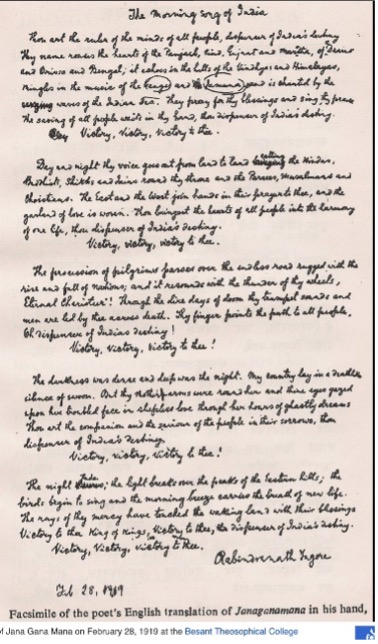
The Morning Song of India in Rabindranath’s handwriting. Photo courtesy: Anasuya Bhar

‘Jana Gana Mana’ has been translated into English by noted writer, academic and translator, Aruna Chakravarti. She is perhaps the only person to accomplish this beside the poet himself. The following is the translation made by her, along with the English transliteration of the Bengali original (Songs of Tagore, Niyogi Books):
Leader of the masses.
Lord of the minds of men. 
Arbiter of India’s destiny.
Hail to you! All hail!

Your name resounds through her sea and land 
waking countless sleeping souls
from Punjab, Sindh, Gurarat, Maratha
to Dravid, Utkal, Banga.
Her mighty mountains—Himachal, Vindhya, 
her rivers—Yamuna, Ganga,
the blue green sea with which she is girdled; 
her waves, her peaks, her rippling air
seek your blessing, carry your echoes. 
Oh boundless good! Oh merciful! 
Hail to you! All hail!

At the sound of your call the people assemble 
from myriad streams of life.
Hindu, Muslim, Buddhist, Jain.
Christian, Parsee and Sikh.
East and West stand by your throne 
hands held in amity,
weaving a wreath of fraternal love; 
of empathy, unity.
Oh you who bring us all together! 
Hail to you! All hail!

Nations rise and nations fall
on the perilous path of history.
And you Eternal Charioteer
guide the world’s destiny.
Through day, through night, your wheels are heard 
renting the air with sound,
dispelling terror, banishing pain;
blowing the conch of peace.
Oh true arbiter of India’s fate!
Hail to you! All hail!

In the deep dark of a turbulent night, 
when our swooning, suffering land 
lifted her eyes to your face in hope, 
she saw your unwavering gaze
raining blessings, alight with love,
banishing evil dreams.
Like a loving mother you held out your arms 
and changed her destiny.
Oh you who wipe out the pain of the masses! 
Hail to you! All hail!

A new day dawns; a new sun rises
from the mountains of the east.
Song birds trill; new sap of life
is borne on the holy breeze.
India awakes from aeons of slumber
to the strains of your lofty song.
Head bowed to your feet oh King of kings! 
Hail to you! All hail!

(Republished with permission from Songs of Tagore, Niyogi Books)

Outside of the country, the song was also performed as the ‘national anthem’ of independent India, under the leadership of Subhas Chandra Bose on the occasion of the founding meeting of the German Indian Society on the 11th of September 1942, in Hamburg, Germany. The Indian Constituent Assembly allowed the performance of Jana Gana Mana on the midnight of 14th August 1947, marking the close of the historical session in the Parliament. It was on the 24th of January, 1950 that only the first stanza of the song was accepted as the National Anthem of independent India. The paeans of a land millennia old, perhaps heading the dawn of all human civilisation alone, is sung through glory to the world over, till date, bearing the torch of an all tolerant, enduring land, by the name of Bharat. Perhaps we still need to be in quest of its  philosophy of oneness.

A full rendition of Jana Gana Mana by Swagatalakshmi Dasgupta

Dr. Anasuya Bhar is Associate Professor of English and Dean of Postgraduate Studies, at St. Paul’s Cathedral Mission College Kolkata, India. She has many publications, both academic and creative, to her credit.

.

PLEASE NOTE: ARTICLES CAN ONLY BE REPRODUCED IN OTHER SITES WITH DUE ACKNOWLEDGEMENT TO BORDERLESS JOURNAL

Categories
Essay

A Life Well-Lived

By Candice Louisa Daquin

A life well-lived tends to be interpreted by cultural needs. In China, maybe it is portrayed as the accumulation of wealth and taking care of ones’ family; in Africa it may be about survival, integrity, and hard work; in Italy, possibly about how many friends you have, how often you laugh, if you feed stray animals.  No one country shares a defined concept of what a well-lived life looks like, but as we are more homogenized than ever before we’re all cross-influenced by other cultures.

The other day I was watching a travel documentary about The Silk Road. The idea of so many foreign countries we’ve never visited, nor know very much about, can be incredibly humbling. We talk in international terms; we talk as if we alone have the right to proclaim for the rest of the world. Even the most avid traveler hasn’t been steeped in a culture long enough to make those assumptions, nor have they visited every shore, every mountain, every tribe. As that is impossible, no one culture or group should claim to speak for what is a universal truth, there is no such thing. How can meaning being separated from being human, thus subjective?

Growing up I was deeply influenced by my mother. She didn’t live with me, but she wrote me letters from all parts of the globe she visited with amazing letterheads and stamps. Eventually this became more than an expensive hobby, she opened a travel company that published newsletters and books on high end travel. In my teen years, I might not have appreciated what she did from afar because I felt ‘high end’ was exclusionary, and it is. But despite this, I have grown to respect what my mom did, because it wasn’t for a living, it was for passion, and in this, I felt she has always lived her life to the full.

True, who wouldn’t like traveling for a living? In high end hotels? Isn’t she just another example of privilege? But she wasn’t. She created this from scratch, having left a highly successful career in media that she attained on her own merit. I think if it were not for my mom, I would not understand how far people can go if they are determined and hard working. It’s definitely why I work hard. However, my own journey has been vastly different. I found it challenging enough at times, to get through life, let alone to thrive. I recall my mom saying love what you do, feel passion in what you do! I felt I was missing a magical ingredient.

Eventually, health issues seemed to close that door to a passion-driven dimension, and I began to be more pragmatic. My thoughts were more along the lines of: how can I support myself and ensure I will have enough to survive? What can I do to overcome or compensate for my shortcomings in health? I lost the advantage of just being able to dream, because I had to survive, and sometimes for many of us, we simply don’t have the luxury to dream. That led me to understand, a life worth living is necessarily subjective. Unequal life chances versus individual effort play a bigger role in the outcome.

Even so, the question of what a well lived life looks like, is one worthy of examination. In the world there are women who are essentially still indentured to their husbands. There are castes and groups who will never be able to rise above other castes and groups because of their birth. There are those so poor they couldn’t attend school if they wanted to. I think of how the girls of Afghanistan will fare with the UK and US leaving and the Taliban gaining their former foothold. Will girls be safe? It doesn’t seem likely nor permitted their former right to education. I envision a similar outcome to what happened to women in Iran. And then there are the fabulously wealthy and the comfortable middle class. We simply don’t all have the same access to a well-lived life to begin with!

Within all these groups lie many variables, not least, our physical and mental state, our chosen career(s), where we live and how expensive it is to survive there. Then there’s just the fickleness of luck, who gets to live, who does not. To boldly state a life worth living is any one of these options, belies the truth of our differences. A child born with HIV may have a different life than one born healthy; a child born blind might have different outcomes than a child born with athletic prowess. Even then, one advantage may be nothing, we may need more advantages. To proclaim as self-help books and life coaches do, that there is one way, seems redundant and missing out on the diversity of our experiences. You can do everything right and still not succeed.

We get older and we think back and wonder, did I make the right choices, was this the direction I intended? Am I satisfied or disappointed? When we’re very young, these considerations are rarely as important, as such we simply experience. Maybe in youthful hedonism, we miss the very moment we should be thinking of the future. Some cultures do a better job of forcing their young to consider the future, such as Germany, who asks the very young to pick a career before they are even in their teens, to help mold an often vocational direction rather than leaving them to decide many years later when it could be too late?

For example, if you had a child, would you wish for the child to take philosophy or neuroscience in university? Which would be more likely to land them a secure job? This surely is part of our role as parents, to ensure our children will be financially safe when growing up. At the same time, we know the potential value of philosophy, but how translatable is that value in today’s world?

I grew up very aspirant-minded because my mom was very successful. Even as I didn’t live with her, I saw her as a role model and believed naively I could follow in her footsteps. There were many reasons I did not. The locations and cultures had changed. The times had changed as in her day it was easier to walk into jobs. By the time I was looking for work, there were thousands clamouring for fewer positions. Often people cannot understand this change because they only have their experience to refer to, but things change a lot, including what was possible and what is no longer possible. 

One might argue, then you just must be better, to do better. This is true in India, China (a Confucian principle) and many other Asian countries, where an excellent and high achieving work ethic coupled with a huge population, causes young people to be under more pressure than ever to attain those coveted positions. This causes one of the following two things as en masse more people do excellently, the bar gets pushed higher, and people from such countries can often cherry pick jobs in other countries because they excel; or a greater division between those who succeed (the minority) and those who traditionally speaking do not (the majority). It’s about sorting out the reality from the stereotype.

America, a country long thought to possess no caste or class system, perpetuates other countries’ histories by having a quiet class system that is denied by the mainstream but very alive. For many families with money, sending their kids to schools that will guarantee the best universities and thus, the best networking and jobs, there is an obvious bias. We talk of ‘The American Dream’, but for the majority, the advantages they are born into, play an equal if not larger role in determining their outcome.

This is partly why discussions about reparation exist, because if families that were traditionally exploited are now generationally paying the price by not having generational wealth and influence to hand down to their children, they come from a position of inequality and inequity even as the American dream continues to be touted. And if those families are mostly families of colour, even more so, as you must consider the racial injustice of the past, which has been carried into the future by this ongoing inequity. The same is true in other countries, the idea we’re born equal and thus, we all have the same chance at a dream is naïve at best.

But how much does this play into a life well-lived? Is it essential to be conventionally successful to achieve such a goal? I would argue it is not. Whilst there are basic essentials coined by Psychologist Abraham Maslow (Hierarchy of Needs) that must be met to even be in the running. In other words, if you cannot afford the basics such as healthcare, economic security, education etc, you’re still stuck on trying to survive. In that sense, it’s a luxury for most to even consider a life well lived, because they are too busy surviving.

Let’s assume however, some of us reach that position of being economically sound enough to consider beyond the mechanisms of survival. Then let us ask ourselves what is a life well lived? Should it be like that of my mother? Being somewhat hedonistic but, true to myself, by doing exactly what she wanted and traveling the world where she could expand. When she passes, will she have felt her life was well lived? I’m guessing she will.

That’s because of a process called reconciliation. One must reconcile one’s regrets or things we were judged for, and if we are able to do this (many of us fail), then we find inner peace. With peace comes a sense of no matter what, we did the best we could, we gave it all we could, we’re glad for the life we lived. In a sense, this summation of a life well lived, is rooted in our self-perception and then that perception projected into a larger context. It takes a lot to consider more than our immediate circle. Perhaps if we could, we would be less fractured as a planet. Less liable to turn the other cheek when atrocities occur,  or put our head in the sand and not think of future generations.

By coming together, universally, thinking in terms of all of us, not just as an individual, as touted so long by the West, we consider wholeness. Can we be whole if others are not? Should we be? And at the same time, not going so far as to lose a sense of ourselves or be merged into a homogenised, possibly too socialised loss of self? In other words, balance.

As you age you realise what mattered then doesn’t matter as much now. Or maybe, you come to realise that what you have always cared about, still matters. For myself, I am very different from my 15-year-old self, where I lived relatively hedonistically, caring about animals and injustice, but not doing enough about it. I see that at 15 , I thought mostly of having fun and generally being a little unrealistic about life. Some 15-year-olds aren’t that way. Why do some children grow up responsible and mature before their time, whilst others can be 30 and still fail to launch?

We can blame parenting, modern society, all sorts of things, but it’s probably more complicated than that. In Japan, many young people are literally shut-ins, (known as hikikomori) living on the cud of their parents income, rarely leaving their room, immersed in an unrealistic life, mostly online. Why do so few Japanese marry or have relationships comparatively speaking? Did the parents mess up? Or is this a symptom of a bigger sense of futility and despair felt by the young because some do think of the future?

I recall as a child I was unrealistic in my expectations, I truly thought I could do anything, be anything and this just wasn’t an honest evaluation of my situation. For some children, they knew they would be dentists at fifteen. For others, they did drugs and lived lost lives, before reinventing themselves. That’s the luxury of youth. But it’s not a permanent state. When you are older you realise, there isn’t as much time to ‘do anything / be anything’ and maybe that’s why I find some self-help/life coaches a little jarring. How long can we ‘do anything’ for realistically? Especially now, where different types of jobs are less than ever before, we’re being asked to homogenise into ever decreasing employment options. Many graduate law schools, formerly considered the pinnacles for employment, find no openings in an already saturated market, but should we doom a child’s dream if that’s what they want to do? The labour market doesn’t have a skills gap, it has an opportunity gap.

Many young people want to be famous, emulate some truly scary people, be unrealistically rich and have celebrity status. Less people want to heal, they want to make big bucks. Maybe they have it right. After all, when we do altruistic things but remain poor, how good does that feel when we can’t afford a car? With price hikes, standard of living seems to be improving because people have technology, but actually, we’re more in debt, without savings and living on a razor’s edge. Which might work at 25, but at 45 with children ready for college?

Again, I hark back to ‘balance’ and the need to live within one’s means, to have dreams that are capable of being pursued, and to help our kids dream up realistic jobs. The younger generations do not have the inherited wealth of the older, and immigrants often come with nothing to a country, depending upon the charity of that country, which is shrinking as our social services are overwhelmed and underfunded, even as immigration is on the rise.

Is the answer to print money? As has been discussed among Democrats? Or tax the rich and risk them leaving? Or is that a myth? With Covid 19 recently closing everything down, many formerly low wage workers were given monetary Covid compensations due to extended unemployment, which ended up being more than they were making as a badly paid waitress or shop worker. With some of those jobs vanishing forever, those that do return, see no employees willing to work for those wages again, and rightly so. But can we sustain a country if we pay what economists would consider a living wage? When $15 is already too little for someone to live on once tax and benefits are removed.

Increasingly we’re seeing a rise in people who fall through the cracks, they are the invisible workers whom we don’t know about, the underemployed, the fragile self-employed. That micro economy might not even show up on official statistics but look around, it exists. How likely can those people consider retiring in 30 years’ time? Can we blame those generations who are trapped by a system that doesn’t make it very likely to find an American Dream and what of the rest of the world, where survival comes long before the luxury of dreaming?

Where in this do we find concepts of lives well-lived? I think no such thing exists fundamentally but individually as we age, we should consider are we congruent to our concept of what a life well-lived means to us? Can we do anything to get closer to it? If so, what?

Recently I thought about this a lot and realised struggling with my health was my tipping point. For some that’s not their tipping point. A friend of mine said hers was losing her home. For me it was being told I was developing premature Macular Degeneration and with no treatment for Dry MD would lose my sight whilst still young. Facing those kinds of things forces us to consider what matters, what does not, and really think about how we value existence.

When I talk to people today, I recognise the value of clarity of purpose. When we know how best to direct our lives, we can spend more time on being the kind of person we want to be, rather than picking up the pieces from a series of failed impulses. If we remember how lucky we are to even have choices, when so many do not, even reading this on a computer puts us in a position of privilege, so rather than lamenting about what you do not have, consider what you need to live a life worth living and then do your best. Even half-way there might be enough to one day say, I have lived a life well-lived.

 .

Candice Louisa Daquin is a Psychotherapist and Editor, having worked in Europe, Canada and the USA. Daquins own work is also published widely, she has written five books of poetry, the last published by Finishing Line Press called Pinch the Lock. Her website is www thefeatheredsleep.com

.

PLEASE NOTE: ARTICLES CAN ONLY BE REPRODUCED IN OTHER SITES WITH DUE ACKNOWLEDGEMENT TO BORDERLESS JOURNAL.

Categories
Essay

Peace: Is it Even Possible?

By Candice Louisa Daquin

We’ve all heard the adage, those who don’t know history are bound to repeat it. Maybe like any good saying, it’s been over-used and we’ve forgotten to consider its core truism. But think about it. If we don’t remember, we tend to repeat former mistakes, because human-beings are very alike in their actions and reactions, and we have a horrible habit of thinking we’re so unique when we’re anything but that. The ego of is young. Occasionally, ignorance shields us from historical realities. When we get older, we sometimes stop caring and leave it to those younger to us. But both approaches have deep flaws. They abdicate the responsibility of living in this world.

What reason could any of us have for truly abdicating responsibility to our grandchildren, and those who will invariably come after we are gone? Is being young an excuse? Is being old? Or are we intrinsically fond of passing the buck, as American’s say, and not believing we’ll make enough of an impact in this world to even bother? I don’t think it’s that. I think it’s apathy and a childish belief someone else will do it for us. Just look at people who drop litter in the ocean, they don’t care that it will cause havoc on sea-life, they are not thinking of the future repercussion, they are thinking only of now. They don’t see how that one act has this deleterious knock-on effect that reverberates throughout our planet.

If you’re rolling your eyes and are about to give up reading, consider this: What is your value? What do you stand for? If you died tomorrow what would have been your legacy? Don’t think wealth or children, but your place in the chain stretching from the beginning of humanity to now. What have you done to help that chain? If you don’t think that is relevant, consider why this isn’t important to you and why being self-interested is justifiable to you when so many suffer, and the world is damaged by those like yourself who don’t care.

Maybe that sounds judgmental because of course, it is. Too often we can look back in time and see these pioneers and campaigners who try to make a change and be swallowed by disinterest on the part of the masses. Literally speaking then, the masses are the problem, because whilst a few good apples stand out and speak to things we need to do, the majority are thinking of just their survival and their immediate gratification. The concept of immediate gratification has taken deep roots in the current times.

Psychologists and thinkers have many ways to explain why the majority do nothing and seem apparently not to feel they have any obligation to improve the world we live in. Some say, it’s about human development; few attain that stage of self-realization where they feel a need to contribute beyond themselves. Others point to the hardship of life, and how when you struggle, you often do not have enough left over to help others. Of course, we all know notable examples of those who despite a hard life, gave in abundance to others.

If we remove religion and its dictate that people should help each other as part of being a good (Christian, Hindu, Muslim, Jew, Buddhist) would we have a lawless approach to giving and caring, that made social concerns null void? I would say it has less to do with dogma and religion and more to do with personal ethics. There are plenty of atheists who do a great deal for others and this planet, without any desire for recompense or a place in heaven. Therefore, it seems to be a deeply personal choice or evolutionary step.

If so, why do some evolve more than others? What do we need to do to achieve that selflessness and why do not many not want to achieve it? Those questions many never be answered, but they are part of a larger picture, that of our place in this world, and what we do to ensure there is a decent world for our progeny. I’ve been told this is a utopian way of thinking and human nature is baser, seeking only to procreate and thrive, sometimes at the expense of others. I am an idealist in that I believe there is intrinsic good in many (not all) people and that’s what gives being alive its deepest worth. Without helping make the world a better place in some way, we are just oxygen users, having too many children, using too many resources and trying to kid ourselves this won’t affect the future.

Growing up I was familiar with the peace sign so popular in the sixties, and we touted many of those symbols without really considering their history or how ‘working toward peace’ had actually played out through history. Maybe like many words, ‘peace’ is over-used and we don’t consider what it means in relation to today’s world. It’s as relevant as ever. If we think we’re not needed to increase peace, we’re living in cloud cuckoo land. Peace is one of the only consistent needs we have, aside food and water. It is the erosion of peace that causes the majority of our concerns, and the dismissal of peace that leads to some of our greatest strife.

So many continue to live in a part of the planet where peace doesn’t ever reign. Let’s stop and really think about that for a moment. Those of us who don’t live in those parts often try not to think about it, because it makes us feel guilty. What can we really do? Yet if we watch the news, almost nightly politicians debate about how best to deal with this issue. Or that’s what we’re led to believe.

What if we’ve been lied to? What if major world governments and thus, the puppet political system, do not wish for peace but thrive on discord because it permits them to do what they really want, which usually has to do with power, domination/control and profit. Think of all the wars since the second World War  America has been involved in. Not one of them has brought peace, not one of them has ensured or guaranteed peace. The money spent is unfathomable and would have been enough to resolve many countries crisis’s forever. The profit is hidden and often in the sole possess of those who really pull the strings and many lives are lost. For what? Peace?

The idea of going to war to promote or guarantee peace is not a new concept. Traditionally however wars were fought for one reason only, one side wanted to conquer the other side to gain something (profit, land, slaves, control) and war was typically a male endeavor and one that seemed to exist in every society where human beings existed. You could say, war was uniquely human. Similar fighting has been witnessed in other primates, and animals, and they often share the occupation or protection of territory as their prime objective, so perhaps it’s an instinctual thing within our animal psyches to go to war. However, wars in the modern sense of the word have not been as basic, and their motivations have increased with the complexity of our societies, to make what we understand by war, a thoroughly human concept.

A complex society, invariably thinks of many more strategies related to war than a simple brawl in the old days, with sharpened rocks. The more complex, the more devastating and wide-reaching and drawn-out wars, think of Rome and their stampede across the world, or Alexander the Great’s conquests. Wars have been the cause of so many negatives, not the least; sexual assault, slavery, subjugation of people’s, famine, destruction of land and property and livelihood, physical and mental suffering and the collection of extreme wealth by the minority. Does that begin to sound modern to you? It does to me.

Today’s wars are all about the optics, the phantom, the illusion. Countries go to war to act out their own strength to ensure other countries don’t forget how mighty they are. The people who get caught in these, die or suffer terribly, the displaced cause huge economic fallouts and a minority get rich. It sounds a lot like a pyramid scheme to me. I began to think of the military machine as a pyramid scheme when I began studying the wars America has been in since WW2. One could argue without America half of Europe would be speaking German now. I personally don’t believe this is true, but it’s a common myth that thanks to America, Europe wasn’t destroyed. It might be worthwhile considering how WW2 began, what part America had in it, and the specific strategies employed, because it’s never as simple as it seems, not least this repeated thirst for groups to condemn and persecute other groups. Everyone involved has an agenda, few are as civic minded as they appear, and so a war is, as I said, more complicated.

What we do know is this: The World Wars (which sadly are being phased out of being taught at schools throughout the world, begging the question, if future generations don’t know what happened and why, how can we avoid a repeat?) was a consortium of countries, spearheaded by Germany, seeking to over-run vast parts of the world, and to promote a new ideology. I can resolutely say this needed stopping and at any cost because within that, were persecutions towards groups that led to mass slaughter. This is true in most wars but the difference is, this was on a larger scale (comparatively speaking with the then-populations) and anything less than involvement would have brought disaster.

What’s different about the wars since?

World Wars one and two were world wars, they involved nearly everyone, aside from Switzerland who decided in their neutrality they could make a tidy profit, and Spain, who were having their own civil war, and made a deal to be left out of it. When everyone is involved in a war that involves everyone, we can argue, this is a war that cannot be avoided, defused or worsened by involvement.

Can the same be said of Vietnam? Were the involvements of France and then America beneficial? Could the war have been avoided? Was it necessary?

The same can be said for many other so-called necessary wars, from the smaller (Falkland’s and the UK) to larger Korean or Afghanistan. In every situation, the involvement of other countries that were not directly affected, only worsened the war and suffering, the involvement was not simply to ‘help’ others, that was never the intention, the involvement had many motivations, and only one was a true sense of ‘aid’ with a view to peace. So why is it, when we see the soldiers leaving out, or the declaration of war, we also hear the word ‘peace’ bandied around? Why do people truly believe ‘going to war’ will ensue peace when history tells us, this is rarely the case?

Too often I have heard that people have to go to war for peace, or that peace-keepers will be sent in. I find it hard to find any war that has led to peace and even then, everyone involved would agree, if it could have been avoided, that would have been a better strategy altogether. In truth, WW1 and 2 could have been avoided, if you consider what really caused them. The feelings of helplessness and loss of face, led the German population for example, to vote for candidates who promised them a better future. Nobody knew how bad this would become, but the feelings of resentment and despair were the fuel for why extremism won the vote. In that sense, it’s very much a domino effect.

If then, most modern war begins with issues that can be resolved if identified, isn’t true peace keeping, to deal with those issues, before a war begins, rather than after that? Of course, those people are called diplomats and to be fair to them, many have thwarted worse outcomes through diplomacy, but just as diplomats can be successful, they are also used as pawns in a bigger system, that of the war machine. Certain countries wish to go to war almost at any cost. Consider the war between Pakistan and India and how culpable the English were for their interference with both countries as ‘peace keeper’ when in reality it was all about subjugation, control and imperialism. If we think this is an old-fashioned term, consider the patronizing tone of Western societies when ‘peace keeping’ in other countries, taking the paternalistic approach instead of considering what got them there in the first place. Years of exploitation aren’t easy to undo.

While this is never acknowledged and is hidden behind rhetoric about trying to protect others and ensure peace, we should bear in mind the true motivation. This doesn’t make us conspiracy theorists or negative thinkers, so much as realists who see history and its repetition of such wars and quiet conquests. The homogenization of the media has seemed on the surface, a good thing, but if the ‘facts’ are controlled then it’s more of an illusion of information, although preferable to the situation in those countries where international news is altogether restricted. When I moved to America, I was surprised at how little international news was on nightly TV and of that, how they only glossed over the most salient points. But it seems the rest of the world has followed suit, with the once immutable BBC now expressing opinion rather than fact, it seems they’re all spurred on by the rush to entertain rather than inform.

The outcome of exploitation is today greater than ever. It is the reason why so many refugees seek refuge in countries overburdened with too many asylums for their fragile infrastructures. A no win situation, begun after WW2 where Jews were not permitted asylum and the Geneva Convention acted to prevent this ever occurring again, to displaced peoples, yet countries who do not possess the jobs or social infrastructure like Spain, could not realistically take in the numbers arriving.  War is not always the sole determinant for asylum seeking, but it remains the main reasons. Small wars unreported on daily newscasts, prevail in areas ravaged by gangs and corrupt governments. The West might consider themselves far advanced from this desperation but if we consider how many times the West has been implicated (or should have been) in foreign affairs that led to wars, it’s definitely a fully fledged partner in the root cause.

Take the South and Central American refugees streaming into Mexico as I write, seeking asylum in America as a prime example. Thanks in part to years of American meddling in local politics. We can wash our hands of it and say: This is their war! But we should be mindful of what led to the war. It’s never as simple as it seems. Years of erosion, weaponization and drug sales that would not exist if wealthy countries were not buyers, there are so many factors to consider, many of which originate outside of the actual country in question. When civil or border wars begin, they are rarely unprovoked and locally generated, but the result of years of exploitation and meddling from foreign interests.

Maybe we don’t want to admit that. And many times, that’s what politicians do, they simply refuse to see what history proves is true. By stating categorically, ‘this is not our fault or problem’ they tap into those people who desperately want to hear that, rather than take responsibility for something they feel they had no part in. Sometimes they genuinely didn’t have a part in it, but oftentimes we are a part of the problem, even if we aren’t willing to admit it. Every time we buy deeply discounted goods from other countries, we condone through our purchase, the maquiladoras where underaged women work for pittance, displaced from their home towns because NAFTA (North American Free Trade Agreement) created a bigger market and eroded the traditional farmers. They now make our Levi’s jeans which we want at a good price, and therein is our part in the exploitation cycle.

True, we don’t have to admit this. We can turn away from the oceans filled with debris cast off from giant containers routinely sunk poisoning the sea and sea life, even as those containers give us the affordable middle-class existence, we feel we are owed. We can turn away from child labour, gunrunning, drug-crimes, all related to things we set in motion from influential countries. We can say if we specifically didn’t sell Mexico a US gun, we’re not responsible for kids being shot; if we didn’t smoke a joint at college, we can’t be responsible for the drug-trade and its fall out; but the situation is far more insidious. No one trade is in isolation, they are all linked. So, when you smoke a joint from weed coming out of Mexico, you’re not just supporting the drug-trade, you’re supporting the heroin trade, the smack trade, the child-prostitute trade etc.

None of us want to own that kind of legacy, so it’s easier to just say: I have nothing to do with it. I find myself thinking that when I want to buy a cheap dress from a chain store that makes things in China, I should be thinking of the worker who made it and how little they were paid. I feel it when I go for a cheap taco for lunch or expect a Mexican local lawn cutter to charge less for their services, there are so-called levels of ‘innocent’ subjugation we permit because they’re enshrined into our system and only the most moral will ever have the strength to protest them. With regard to peace, we also turn a blind eye, instead of holding people responsible, perhaps because we don’t know how to, we condone non-peaceful interventions throughout the world, in the ‘name’ of peace all the time.

With 9/11 the outrage in the US was at an all-time high. It was the perfect timing for launching a war that in any other setting would have been pronounced doomed, foolish and already tried and failed many times. Yet based on emotion and rhetoric that’s exactly what America did and few protested, because fear, fearmongering and inaccurate emotive rhetoric rules the day. Now with social media, this tendency has run amok and very little fact exists so much as knee-jerk reactions, immediate- gratification and social outrage which is more false outrage than accurate. We feel good if we speak out about injustice as we perceive it, cherry picked by social media as the dish du jour and we don’t ever question how much social media manipulates us.

I find those who are not on social media have the vantage point of not being susceptible to this invariable bias. When we go back and check our ‘facts’ as we perceive them, we run into mine fields of websites littered with inaccuracies and who has the time to truly fact check? Today, the media en mass is less accurate, more reactive, more immediacy-based, and we’re junkies of the like button and click bait more than ever before. In fact, I just finished watching a documentary about how social media is specifically set up to emulate the impulses you have when gambling, with one example being that tempting ‘ding’ we receive when getting a message and how hard it is not to check. This is all psychological programming, and it’s deliberate, but who ever considers that and its far-reaching consequence on truth?

As long as we have our new iPhone (criminally expensive), we’re all good. The modern world keeps us too tired and busy to really muster lasting outrage about anything. In fact, we’re gaslighted if we do. Unless of course it’s the sanctioned ‘approved outrage’ that’s flavour of the week. We’re controlled in our responses more than ever before but believe we are freer than we’ve ever been. What a fallacy and what a stellar job those who control us have done. And before you say, “I’m not controlled!” Think about it – really think about it.

So how can we live in a peaceful world if our very notion of peace is perverted by the long-standing agendas of those who really set the schedule? How do we as individuals have any power for change?  If we send our cousin off to war with misgivings and we’re told we’re not patriotic if we question his/her service, how can we ever expose the lies behind the notion of ‘peace keeping’ and what modern-notions of peace really mean? Just like Missionaries who originally might have had good intentions but essentially forced their way into cultures and demanded they adhere to a foreign God, we’re going into countries that have problems, possibly historically caused by the West, and thinking we know best. But there is absolutely no proof we do.

In fact, there is ample proof we don’t and we don’t learn. Of course, there are worse offenders. Iran’s shameful human-rights legacy, their determination to build a nuclear weapon are terrifying. But on the flip side, whilst I will never condone their punishment tactics or human-rights violations, I can see why they would wish to have access to a nuclear weapon if others have. What makes one country have the right to be weaponized and not another? Personally, I wouldn’t want Iran to have nuclear weapons but I also think it’s wrong of countries like America, the only country to have used (and some would argue, abused) a nuclear weapon, to dictate which countries can have access. It’s also wrong when you consider it is the very countries with weapons and power who often have sold those weapons to the countries, they then sanction for trying to build said weapons.

Ultimately as a peace striving person, I would wish NO country had nuclear weapons but how realistic is that nowadays? I think it’s like the Smallpox scenario. We can all agree to get rid of our Smallpox because we have eradicated Smallpox but what if one country keeps theirs and then has the upper hand over the rest? Can we ever trust other countries? Ideals aside, history tells us human nature is such, we rarely can trust even those closer, even our own governments. So perhaps skepticism and mistrust aren’t so much a peace-breaker as a natural response?

I’ve never felt there could be an ideal of total peace. I don’t think it’s within our purview as humans to achieve that. I hope I’m wrong and I hope the day comes that’s proven. Meanwhile, with America and Russia acting like stupid cold-war frien-amies again, I pause before I trust any country totally, not least my own. As such, we invariably have weapons of mass destruction to act as ‘deterrents’ as a stale-mate to prevent out-and-out war. Whether this will be our undoing, remains to be seen. It only takes one nuclear accident to prove anything nuclear wasn’t such a hot idea. Surely, we’ve learnt this? I would argue the younger generations haven’t because it’s not being taught and it takes me back to the idea of those who don’t know history are doomed to repeat it. If you believe your generation is ‘better’ and won’t make that mistake, consider how many generations had the same (wrong-headed) concept and the consequences thereafter.

Is there really an answer? I don’t have it But I think if we all stop hiding from reality and try to figure things out, we have a greater chance. Certainly, having a pie-in-the-sky approach doesn’t work anymore than being too reactionary does. At the moment, America is stymied by its polarization of thought and its reluctance to think. Until those change, we’re just a bunch of fussy children wishing bad things didn’t happen. I believe we can be more than that. Even if we don’t attain total peace, we can get closer.

 .

Candice Louisa Daquin is a Psychotherapist and Editor, having worked in Europe, Canada and the USA. Daquins own work is also published widely, she has written five books of poetry, the last published by Finishing Line Press called Pinch the Lock. Her website is www thefeatheredsleep.com

.

PLEASE NOTE: ARTICLES CAN ONLY BE REPRODUCED IN OTHER SITES WITH DUE ACKNOWLEDGEMENT TO BORDERLESS JOURNAL.

Categories
Essay

Corona & the Police

By Subhankar Dutta

A policeman wearing a ‘corona’ helmet in India to educate civilians on the pandemic

With the onslaught of the massive pandemic worldwide, state and central police forces’ activities increased significantly in India. From the street corner to the deep alleys, the police became one of the frontline forces having close proximity with the suspected victims and also with communities. While describing the exercise of power by the state apparatus on public, Foucault, the French historian and philosopher asserts, “We should not forget that in the eighteenth century the police force was not invented only for maintaining law and order, nor for assisting governments in their struggle against their enemies, but for assuring urban supplies, hygiene, health, and standards considered necessary for handicrafts and commerce” (The subject and power, p784).

Pondering upon the huge impact of the first wave and the ongoing second wave, we can see a close resonance of Foucault’s words in our present condition: the pandemic, nationwide lockdown, stay-at-home orders, curfew, and the overcrowded vaccination centers. This new avatar of police forces started to be seen, initially, with the awareness campaign during the first wave of the corona. Several creative re-creations of popular songs and dance numbers were performed by the police at the street corners, residential areas, markets, and other public spaces. Kolkata police gave a twist to Anjan Dutt’s iconic song ‘Bela Bose’ and cheered up the citizens staying inside the home during the national lockdown. The initiative taken by the Gariahat police station was acclaimed worldwide and shared by the Kolkata Police Twitter handle. Similarly, the celebrated song from Satyajit Ray’s Goopy Gyne Bagha Byne (1969) ‘O re sahar basi (Oh, the city dwellers)’ was deftly modified by the Rabindra Sarobar Police Station to reinstall patience and faith in the citizens.

Policemen in Kolkata performing Satyajit Ray’s famed film song adapted to create COVID awareness

Madhya Pradesh and Maharashtra police also adapted the popular Bollywood number ‘Zindagi maut na ban jaye Yaaro’(Friends beware, life should not become death)’ from the 1999 Amir Khan action-drama Sarfarosh and made it a corona awareness song.

Madhya Pradesh police performing corona awareness song, an adaptation from Bollywood movie Sarfarosh

Few more popular reincarnations of songs like, ‘Ae Mere Humsafar’ from the film Qayamat Se Qayamat Tak (1988) to “Ae mere deshbaisyo, ghar me hi tum raho. Bahar coronavirus hain, bahar na niklo (O my countrymen! you stay at home. Coronavirus is out there, do not come out)” by the MP Police; ‘Mera mulk, mera desh, mera ye watan (My country, my homeland)’ from the film Diljale (1996) by the Andaman Nicobar Police; and many more were modified and sung by Indian policemen to spread awareness as well as to keep people positive during the new-normal.

The Kerala police went a step ahead in this new creative exploration came up with a unique dance number, and the official uploaded video became an instant hit. Following a similar line, police from Chhattisgarh, Pune, Delhi and other states and cities, also made us experience a new creative side of them: an experience like roadside concert even in the lockdown. Not only in India but also the Spanish policemen were seen singing on the empty street of Majorca during their nationwide lockdown.

Police officers adapting popular song to educate on the pandemic

Holding placards, wearing coronavirus-inspired helmets, donning the attire of the Yamraj ( the god of death in Hindu lore), and the pop-cultural renderings of singing and dancing are the innovative side of the police, directing us towards a new orientation and new conception of the word ‘police’. Owing its origin to the Medieval Latin ‘politia’ meaning citizenship or government, it has changed its significance a lot with time. In the past few decades with growing urban violence, Maoist upsurge in several parts of India, student protest in the premier institutions, and communal combats around events and organisations, the term police and its social significance tend towards a more limited understanding of law, order, and control.

The ongoing pandemic presents before us a new image of police who sing songs, deliver food, campaign for health awareness, assist the migrants with food, water, and shelter; quite a close rendering of the words of Foucault, showing a new compassionate side of them. While we are disturbed, both physically and mentally, watching the viral videos of lathi-charge following the Tablighi Jamaat, huge mass gathering at Bandra (Mumbai) or Anand Vihar, or the farmers’ protest at Delhi, we should also look at the other side of the coin: a new public role that Indian police have been assigned.

Lokmani, a low-income wage-earning woman in Andhra Pradesh, giving cold drinks to the on-duty policeman with affection, was a warm acceptance of this new role: a mutual exchange of respect and care. The Indian police, which is often criticized for rudeness, bribery, and high-handedness, has to be seen from a more humane angle during this ongoing pandemic. A report prepared collectively by Hanns Seidel Foundation and Janaagraha Trust in Bangalore suggests that ninety percent of the surveyed citizens are accepting the police from a new positive perspective. A similar narrative prevails almost throughout the globe.

But what is the new lesson to be learned? It is something that demands mutual consents from both the government and the citizens. What corona taught us is a new image of the police and thus refers to a reformed legal sensibility that we all should bring into existence and carry forward. Our popular Bollywood films have often presented the hero figure or the ‘saviour’ image of police in the hits like Singham, Mardaani, Simba to Article 15, and many others. But when it comes to the real scenario of the police-public relationship, the narrative is quite different.

They are seen as the ‘privileged alien forces’ who are an obstacle to the smooth life conduct of general citizens. Similarly, the police station is also perceived as a place of fear and terror. The different spectacle of ‘policing’ by the police and other contextual brutalities created a fear-figure of them, very authentically. In our childhood, policemen were used to instill fear in us. This was probably the start of imbibing the ‘fearful-figure’ syndrome into our minds. But it is essential to bridge the gulf between reel life and real life, and the corona crisis provides us an idiom for that. This new attentiveness of the police towards the public, their different methods of spreading awareness, helping families in cremation, and other pandemic related help have made them a new emblem of hope and courage. As the Commissioner of Delhi Police, SN Shrivastava tweeted recently, “Policemen are living upto the motto of ‘Service’, even though it entails risk to their own safety. Despite many of them falling sick, it has not dented their morale and desire to help citizens gasping for breath. They are the ultimate saviour.”

On our part, we need to transform our concept of tyranny associated with policemen to a more humane identification of these men as our local guardians or local legal representatives. The government, on their part, should ensure the same by giving a permissible space where the local police and administration can frolic at ease. The police, because of its proximity to the public, can become a significant tool for public health, risk management, and other inclusive public services. The legal system could re-animate its view of law and police, from as an over-autonomous power which is separate and self-contained, to a kinder configuration where they are more constructive, interpretative, and contextual: rooted in the local life, local necessities. It is like giving the police more power: power to become more humane.

However, though this will not change mindsets overnight, it widens the possibility of making the police and the citizens work for each other in the future. Hopefully, corona will respond one day by becoming endemic or disappearing, to either the ‘Go Corona, Corona Go’ chanting at the Gateway of India, or to the vaccination drive (the sooner, the better), but the new affinity that is building up between the police and the civilian should be retained for a better future. As the corona crisis continues to hover, it has proven that we could learn to build a reciprocal sensibility between police and public for the benefit of both.

Go Corona chanting in Mumbai

Whenever the necessity comes, we should again be together with a safe distance and sing with the Chhattisgarh cop, “Ek pyar ka nagma hai, hum sabne ye thana hain, milke ab humko corona ko harana hain (This is a song of love, we have all decided in unison, together we need to defeat corona).”

.

Subhankar Dutta is a Research Scholar and Teaching Assistant at Humanities and Social Sciences Department, IIT Bombay. For more details, please visit the link. https://subhankarduttas.wordpress.com/

.

PLEASE NOTE: ARTICLES CAN ONLY BE REPRODUCED IN OTHER SITES WITH DUE ACKNOWLEDGEMENT TO BORDERLESS JOURNAL
Categories
Essay

A Prison of Our Own Making

The massive impact of a minuscule virus has been felt around the world, but what has it done to our sense of freedom and independence, asks Keith Lyons

Study of Sea and Sky, Isle of Wight by Turner (1775-1851) Courtesy: Creative Commons

The Covid-19 pandemic, which continues to ravage the world, has been like a mass experiment. The shared experience of apprehension, despair, and hope has highlighted the inter-connectedness of everybody and everything. 

Paradoxically, to combat the virus, we’ve had to give up something of our own selfishness and desire for the status quo, to unite and work together with trust that others will do the same. And we’ve had to keep our physical distance, while at the same time forging deeper bonds and more honest communication. It has been both an outer journey through these times — or more of a non-journey in being locked-down – as well as something of an inner journey as we reflect, discover what’s really important, and re-orient our lives. 

The mass experiment has revealed so many different approaches and coping mechanisms, and the reality that there is no escape, for the way out is through. Even the milestone of being personally vaccinated is no longer the endpoint, as the broader consideration is that we human beings are only as strong as the weakest link, and until everyone has trained their immune system to combat the Covid virus, its continued existence threatens us all. 

One lesson from the mass experiment on 7.674 billion people is that things will never be the same again, and that we won’t get back to the normality of pre-2020. The deeper learning from the event is that life means change. And everything is in a state of flux. As the world churns, we must find ourselves again, and realise that amidst disruptions we can still find our centre. 

There is much talk about resilience: the ability to adapt well to any challenges faced. Resilience isn’t just a personal outlook or habit. And it isn’t about being tough, having endurance, going it alone or taking on the mantra ‘think positive’. It is said those who are ‘resilient’ aren’t so despite pain, struggle and failure, but because of it. 

As we move out of stay-at-home lockdowns and into vaccination clinic queues, and then into the new world post-pandemic, towards the politicians’ goal of ‘business as usual’  and the announcement of ‘Freedom Days ’ at long last, perhaps the truth will eventually dawn on us: that we were always free. 

American writer William Faulkner, who lived through the influenza pandemic of 1918, noted in one of his letters, ‘It’s queer how the people one thinks would live forever are the first to go’. 

The novelist wrote, ‘We must be free not because we claim freedom, but because we practice it’.

Keith Lyons (keithlyons.net) is an award-winning writer, author and creative writing mentor, who gave up learning to play bagpipes in a Scottish pipe band to focus on after-dark tabs of dark chocolate, early morning slow-lane swimming, and the perfect cup of masala chai tea. Find him@KeithLyonsNZ or blogging at Wandering in the World (http://wanderingintheworld.com).

.

PLEASE NOTE: ARTICLES CAN ONLY BE REPRODUCED IN OTHER SITES WITH DUE ACKNOWLEDGEMENT TO BORDERLESS JOURNAL

Categories
Essay Independence Day

The Story of a Bald Eagle & a Turkey

Text by Penny & photographs by Michael B. Wilkes

Photography by Michael B. Wilkes, FAIA

Independence Day, celebrated on July 4, commemorates the Declaration of Independence of the United States of America. In 1774, on June 11, the first Continental Congress (John Adams, Thomas Jefferson, Benjamin Franklin, Robert R. Livingston, and Roger Sherman) worked on the draft of the Declaration of Independence.

The group designated Thomas Jefferson to write the text because of his superior writing skills and what they called his, “felicity of expression.”

The document declared that the thirteen American colonies would unite as free and independent states. They signed it into action on July 2 in 1776 and broke away from the British government under King George.

Now we celebrate Independence Day on July 4.

Photography by Michael B. Wilkes, FAIA

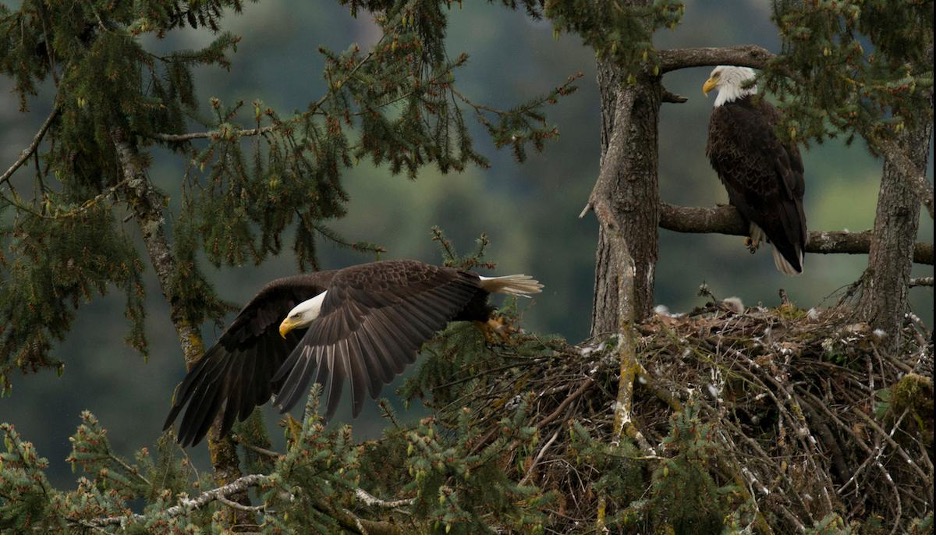
The Continental Congress gave Benjamin Franklin, John Adams and Thomas Jefferson the job of designing an official seal for America. The idea for the bald eagle proposed in 1782, received acceptance. It included an olive branch with arrows in the talons to symbolize war and peace.

Photography by Michael B. Wilkes, FAIA

When Benjamin Franklin saw the eagle on the Cincinnati medals, he felt it looked like a turkey. He said, “The turk’y is in comparison a much more respectable bird. Though a little vain and silly. The turkey remains a bird of courage who would attack any British grenadier who should presume to invade the farm yard with a red coat on.”  Franklin wanted the turkey as the national bird.

Photography by Michael B. Wilkes, FAIA

Congress adopted the eagle design on June 20, 1782. The bald eagle appeared on official documents, currency, flags, public buildings, and other government-related items. Instead of a turkey, the bald eagle became an American icon.

Photography by Michael B. Wilkes, FAIA

In the late 1800’s, America was home to 100,000 nesting bald eagles, but the number of birds shrank because of habitat destruction and excessive hunting. In 1978 the bald eagle arrived on the endangered species list. Bills passed protecting the elegant bird. In 1995, the bald eagle population had recovered enough for the status of the bald eagle to be changed from, ‘endangered’ to ‘threatened’.

In 2007 the “threatened species” list no longer included the bald eagle.

Photography by Michael B. Wilkes, FAIA

The Bald Eagle soars as America’s national symbol with its fierce beauty and proud independence. It symbolizes the strength and freedom of  The United States of America.

.

Penny Wilkes,  served as a science editor, travel and nature writer and columnist. An award-winning writer and poet, she has published a collection of short stories, Seven Smooth Stones. Her published poetry collections include: Whispers from the Land, In Spite of War, and Flying Lessons. Her Blog on The Write Life features life skills, creativity, and writing:  http://penjaminswriteway.blogspot.com/ . My photoblog is @: http://feathersandfigments.blogspot.com/

Michael B Wilkes is an award winning architect and  photographer who has collaborated on three books of poems with his wife Penny Wilkes. On two occasions he has received recognition among the 100 Most Influential peoples in San Diego by the San Diego Daily Transcript. Michael B Wilkes site:  http://mbwilkesphotography.com

.

PLEASE NOTE: ARTICLES CAN ONLY BE REPRODUCED IN OTHER SITES WITH DUE ACKNOWLEDGEMENT TO BORDERLESS JOURNAL
Categories
Essay

Here, There, Nowhere, Everywhere

Did life change or did I change from the events of the last year,’ ponders New Zealander Keith Lyons who was in the southern state of Kerala when the first cases of Covid-19 were detected in India last January.

Everything shifted last year. Priorities. Energies. Focus. 

Well, actually, there wasn’t much focus for me last year. For much of 2020, I felt unfocused, scattered, reactive. I was not achieving peak performance or being proactive going forward, if we were to use business language. I doubt if I was being the best version of myself either. I definitely needed to ‘pivot’, whatever that meant. 

What was initially a short holiday ‘back home’ to catch up with family and friends turned into something without a clear ending, as it dawned on me maybe I wouldn’t be travelling again for years perhaps, why, even ever. 

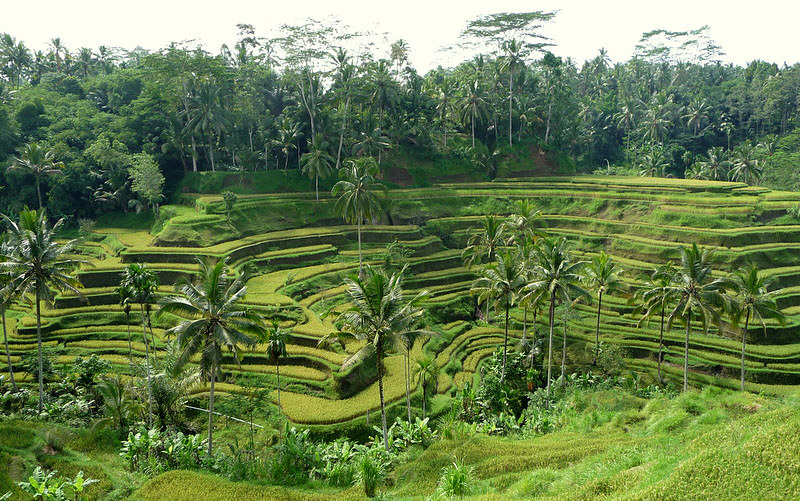
Usually, by May, I would be like the snowbird and migrate to warmer climes. I would head to my base in Bali’s Ubud, and then later in the year to southwest China and Myanmar, the three locations in Asia where I have caches of cotton shirts, swimming goggles, cycle shorts, hot water kettles, tea strainers and rice cookers. 

By November, I would surely be back in the country termed ‘the land of mystery, mysticism, mythology, miracles, multiculturalism and mightiness’ — India. 

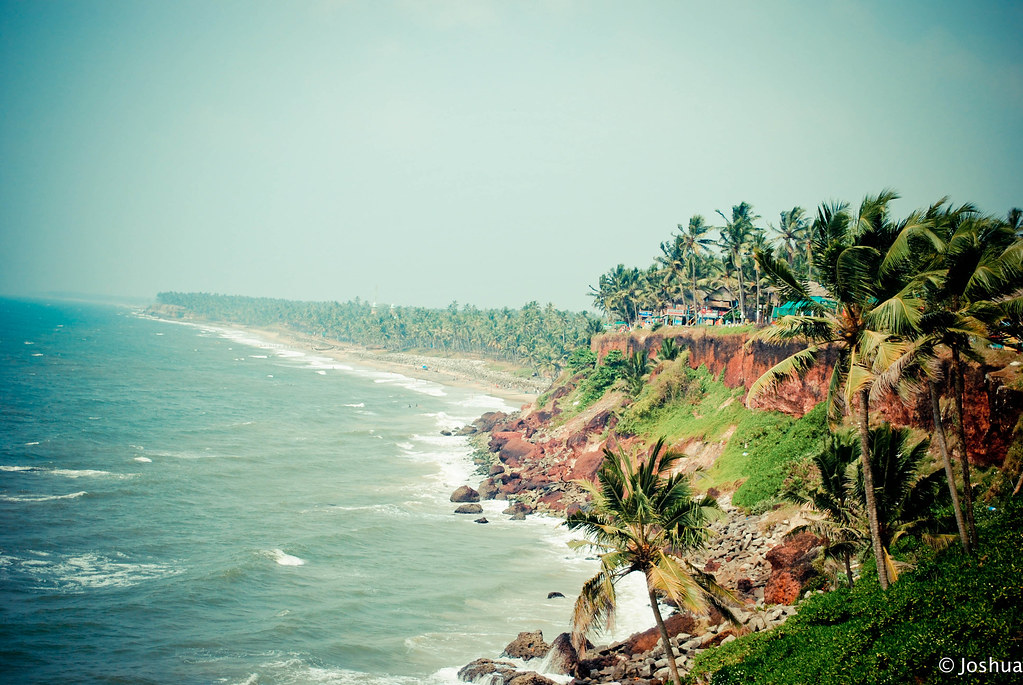
When I left Kerala’s Varkala Beach near Thiruvananthapuram in February last year, after my last dip in the warm breaking waves, I always thought I would be back for chai at one of the cliff top cafes overlooking the gleaming ocean, the lunchtime Rs.90(US$1.25) thali at True Thomas and falling asleep to the whirl of the fan and the shushing of the Arabian Sea. 

But it didn’t happen last Indian winter, and I doubt if it will happen this year or even next. The seasons turn, the tides come and go, the waves roll onto the main Papanasham beach and the less-visited Black Sand beach. True Thomas is ‘temporarily closed’ according to Google. In fact, the Kerala beach destination was already impacted by Covid-19 in March 2020, when an Italian tourist visiting for a fortnight tested positive for the virus. The English boss of Coffee Temple Cafe had got in trouble with authorities for his blackboard offering of ‘Anti-Coronavirus juice’ (150 Rs) made from ginger, lemon, gooseberry. 

I wonder how the Tibetan and Nepalese who work in eateries during the season, November to May, are surviving. 

Mid-2020 I found myself unable to continue my digital semi-nomadic existence of following mild weather and hopping on AirAsia flights I’d booked up to a year earlier. Instead, because of travel restrictions during the pandemic, and my own wish to stay safe, I was lock-downed in my hometown in New Zealand, cohabiting with my parents in the house I’d lived in since aged eight years old.

A friend on Facebook sent me a message saying she couldn’t wait to walk down the aisle, with a photo of an aeroplane aisle. Another sent an image showing the perfect Covid-19 sport which requires masks, gloves and 2m distance: fencing. 

In the post from China, I received a couple of full-face snorkelling masks. In between the time of ordering and the arrival of the goods, on YouTube, there was a video on how to convert to meet the N95 respirator standards, or how to modify for use as an emergency interface with a ventilator. Researchers even had a paper in Nature about using Decathalon snorkelling masks. I wouldn’t believe much else on Youtube. What a shame that many do. 

From Bali last year, there were claims that it was one of the safest places in the world as the recovery rate was high, and mortality rate low, compared to other places. This was attributed to a mix of sunshine, high temperatures, and a better (superior) immune system. 

Sound familiar, my friends in India? Later someone posted a graph showing exponential growth, with the caption ‘Bali, what happened?’ 

New Zealand, as it turns out, has been largely protected from the ravages of Covid-19, thanks to closing the borders, a short lockdown, and citizens acting together as a ‘Team of 5 Million’.

This time last year I went on lots of walks, I gazed at cloud formations, and watched sunsets. I cut down scraggly trees, sorted through books, and gave away many of my parent’s possessions as part of downsizing. Of the bounty of childhood books I distributed, one was the beguiling ‘The Owl and the Pussycat’ by Edward Lear, penned 150 years ago, which my father would read to us when we were young:

The Owl and the Pussy-cat went to sea
In a beautiful pea-green boat,
They took some honey, and plenty of money,
Wrapped up in a five-pound note …

I even sold the family silver. 

My parents didn’t get Covid, and just last week, got the first of two Pfizer pricks in the upper arm (so far, only 10% of the population in New Zealand have received their first shot). 

What changed dramatically was their circumstances. An operation in hospital for my 85-year-old father to reverse a previous insertion of a stoma didn’t work out as expected, and in late June last year the one night back home after his surgery proved to be his last night in the house they bought in 1976. He left in the back of an ambulance. He is now in hospital-level care in a rest home, and his wife, my mother, lives nearby in a retirement village. 

Before his surgery, they considered selling the house and moving to the retirement village together, but undetected earthquake damage from 2010-2011 was discovered by the real estate agent, and I had to initiate a claim to have the damage repaired. 

Being back home, many things were familiar, some things had changed, a few things were strange. I had become the parent of my parents. My days revolved around sorting out their problems. Instead of my independent existence and free lifestyle, I found myself taking on family responsibilities. Yet I was glad that in a time of need, I had been there to do the things they couldn’t do easily. 

The year 2020 was unprecedented (and UnPresidented), with so many unknowns, so many surprises. Sharing a birth date with a friend from journalism school, we went for dinner with her family. Little did I anticipate it was the last time I saw her husband, a blood doctor, who died suddenly during a video consult with a patient. 

My side hustle — a small travel agency working with ethnic minorities in southwest China — got its first inquiries in June last year. Several guides urged me to keep it open, as it was their main source of income. Before that, I hadn’t received any inquiries for the first part of 2020.

Several of the publications I usually write for have gone into hibernation, and some projects are on hold indefinitely. Before a job interview last week, I had to reflect on what I have been doing with my life. Or at least, the last 15 years. 

But what do I do these days? I swim most days, some days join a friend at the gym who wants to improve his heart. I drink one cup of coffee a day, recently, made from green coffee beans I’ve roasted in a popcorn machine. At least once I week I go out to have an Indian meal. This week it was a Kerala thali of a dozen delicious parts. Last week my friends ordered a family dosa, which had to be carried to the table by two waiters. 

My parent’s house is now my house, and each day I attend to its restoration and renovation, learning new skills of skim-coating, tiling, and concreting. Each month I get an email reminder that most of my AirAsia BIG Loyalty points are expiring soon.

Spending time with those I love is more important for me these days. We speak more frankly about what really matters. I’ve even started attending Death Cafe events, where anyone can share about their fear of death. 

Through it all, I feel like I am becoming a better friend to myself. I am my own guru. I am my own Jedi Master — it was just that I didn’t realise it before. I’ve learned to better cope with the challenges of life. As Jedi Master Yoda once said: “Named must be your fear before banish it you can”.

All I have to do is breathe. Breathe in. Exhale. Repeat. 

Last year, just a week after traditionally the coldest day of the year (one month after the shortest day), I saw my first golden daffodils, the yellow trumpets signalling that the winter had been mild, and that the warmer days of spring were not far away. 

Today on my way to the swimming pool, weeks before the solstice, I spied a row of daffodils in a neighbour’s garden and had to smile. I don’t know what the future holds, and I acknowledge that things will not return to normal like before. Yet I walk on, carrying in my heart hope, not so much as wishful thinking or expecting a positive outcome, but knowing that whatever the rest of 2021 and beyond throw up, no matter how disruptive, that the only way out is through it. 

Keith Lyons (keithlyons.net) is an award-winning writer, author and creative writing mentor, with a background in psychology and social sciences. Keith was featured as one of the top 10 travel journalists in Roy Stevenson’s ‘Rock Star Travel Writers’ (2018). He has undertaken writer residencies in Antarctica and on an isolated Australian island, and in 2020 plans to finally work out how to add posts to his site Wandering in the World (http://wanderingintheworld.com).

.

PLEASE NOTE: ARTICLES CAN ONLY BE REPRODUCED IN OTHER SITES WITH DUE ACKNOWLEDGEMENT TO BORDERLESS JOURNAL.

Categories
Essay

Remembering Shiv Kumar Batalvi

By Amrita Sharma

Shiv Kumar Batalvi: Sourced by Amrita Sharma

A shayar (poet) who received exceptional fame, a poet who became the youngest recipient of the Sahitya Akademi Award and a star who left too early at a young age of 36, Shiv Kumar Batalvi remains one of those few poets who lived and died within the embrace of poetic charm. Being an immensely popular poet during his lifetime who wrote in one of the Indian regional languages, Punjabi, he received international acclaim within a very brief span of time.

With around eight collections of poems to his credit and as a performer who read and sang his verses across innumerable public gatherings, Shiv Kumar Batalvi (1936-1973) remains a popular subject for critical writings ranging from doctoral thesis to popular magazines. Born on July 23, 1936, in a village, named Bara Pind Lohtian, situated in the northern part of pre-partition Punjab, Batalvi spent a peaceful childhood until his family migrated to India after Partition. As a young man in his twenties, writing in the 1960s, a period marked by a new force of modernity across the world, Batalvi’s verses ranged over a vast canvas of themes and wanderings. Though largely remembered as a love poet who was fascinated with death and grief, he wrote prolifically on subjects that even remained unconventional and anti-stereotypical for his time.

As the month of May marked the time of the year when Batalvi breathed his last, this article is a revisit to his poetic style that commemorates and celebrate his poetic vibrancy. Perhaps one of his most popular compositions remains his song titled “Ki PuCHde Ho Haal FakeeraaN Da” (The Condition Of Fakirs) that opens with the following lines that grew immensely popular with his performances:

Ki puCHdiyo ho haal fakeeraaN da
SaaDa nadiyoN viCHRe neeraaN da.
SaaDa haNjh di joone aaiyaaN da
SaaDa dil jaleyaaN dilgeeraaN da!

Why ask about the condition of fakirs like us?
We are water, separated from its river,
Emerged from a tear,
Melancholy, distressed!

With a poetic sensibility that remained enchanting with its rhythmic flow and vigour, Batalvi may be credited with enriching his first language with poetic compositions that captured its cultural essence. While not losing out on the classical Punjabi style, he wrote songs that were cast in a traditional tone and yet remained a part of the emerging modern verse. For instance, the following lines from his poem “Vidhva Ruht” (“Widowed Season”) read as follows:

Is ruhte sab rukh nipatare
Mahik-vihoone
Is ruhte saaDe sukh de sooraj
SekoN oone.
Maae ni par vidhva joban
Hor vi loone.
Haae ni
E loona joban ki kareeya?
Maae ni is vidhva rut da ki kareeye?

In this season the trees are leafless,
Without fragrance.
In this season, the sun of my happiness
Has no warmth.
But even more bitter
Is my widowed youth.
Tell me,
What should I do
With this bitter youth.

With suffering and its accompanying emotions remaining closest to Batalvi’s poetic outlook, he carved verses that spoke to his readers and listeners, thus, revisiting an oral tradition. Recreating and enticing the concept of sorrow with his love for the natural, Batalvi wrote of an optimistic vision to it in a manner of a folk song, as in his verse titled “JiNdu De BaageeN” (The Garden Of Life) where he writes:

k taaN taeNDaRe
Kol kathoori,
Dooje taaN dard baRe,
Teeja te taeNDRa
Roop suhaNdaRa
GalaaN taaN milakh kare!

Remember that you have
The sac of musk,
You also have great sorrow.
Thirdly you are
Beautiful,
And your words are precious

Batalvi’s verses thus particularly remain memorable for his fascination with grief, pathos and pain.

Though having suffered severe critical dismissals, Batalvi nevertheless remained extremely popular with the masses. Majority of his compositions have been now cast into songs by numerous popular singers on both sides of the border within the Indian subcontinent. Having lived a life that often became a subject of social critique and having died at a very young age due to failing health, Batalvi perhaps remains a singularly unique poet who lived and died with  the unconventionality of his poetic romance.

While India faces a surge in the outbreak of the Covid 19 virus, we continue to alternate between emotions of anxiety and grief. Poetry by Batalvi encapsulates within itself a range of emotions that contain the charm of enticing an entire tradition of such alternating emotions, it remains endearing to remember such poets today. Difficult times as those we face today may serve to strengthen our faith in the capacity of literature that helps us look beyond our immediate surroundings. Recalling Batalvi’s poetry, I would like to end by leaving you with the following lines by him:


Ih mera geet dharat toN maela
Sooraj jeD puraana.
KoT janam toN piya asaanu
Is da bol haNDHaana.
Hor kise di jaah na koi
Is nu hoNTHeeN laana,
Ih taaN mere naal janmeya
Naal bahishteeN jaana

This song more soiled than the earth,
As old as the sun,
For many births I have had to live
The weight of its words.
No one else is able
To bring voice to it.
This song was born with me,
And will die with me.

(The texts for the poems  and their translations were taken from http://apnaorg.com/poetry/suman/index.html)

Amrita Sharma is a Lucknow based writer currently pursuing her Ph.D. in English from the University of Lucknow. Her works have previously been published in various online forums.Her area of research includes avant-garde poetics and innovative writings in the cyberspace.

.

PLEASE NOTE: ARTICLES CAN ONLY BE REPRODUCED IN OTHER SITES WITH DUE ACKNOWLEDGEMENT TO BORDERLESS JOURNAL

Categories
Essay

The Day Michael Jackson Died

A tribute  by Julian Matthews

The day Michael Jackson died on June 25, 2009, I received a SMS from my eldest brother. He rarely messaged me, but since I was the only journalist in the family, I was the go-to person when any major news broke. “Is it true?” he asked.

I was away in Gua Musang, Kelantan, attending a funeral of a relative on my wife’s maternal side.

We had ferried my aging in-laws there from Ipoh. We checked in at a tiny hotel that didn’t have a lift and had to walk up three flights of stairs. My 90-year-old father-in-law was a little hard of hearing and had poor eyesight. So, when we placed him in a room several doors away from us, I showed him where ours was — he could knock if he needed anything.

The hotel didn’t have internet access, and I was unable to confirm the news with my brother.

My wife and I chatted about “MJ”, how we went to his concert in Singapore in 1993 and how we were blown away by his singing, dancing and the special effects at that memorable show.

Michael had taken ill after the first show, and we were informed of a postponement on the second show only after we had all gathered inside the Kallang Stadium. We chose to stay, extended our leave and burnt our return train tickets. We definitely were not going to miss this once-in-a-lifetime event. Expectations were raised by the delay but Michael did not disappoint.

I refer to Michael in the first person because I grew up watching him, as part of the brotherly quintet, The Jackson 5. Their afros rocked and they were a lot hipper and cooler group than the strait-laced, clean-cut Osmonds.

The Jackson 5 appeared on popular musical shows of the time: The Andy Williams Show, The Flip Wilson show, The Sonny and Cher Comedy Hour, and eventually had their own self-titled variety show. Even on the black and white screen TV, you could tell their outfits were colourful and funky with floral motif tops and wide bell-bottom pants.

Michael, as the lead singer with his fancy footwork, always took centre stage, never missing a beat in coordinated choreography with his brothers or sliding smoothly out to do his solo turns.

His stage presence was magnetic; he was the consummate performer, an entertainer extraordinaire, the star of every show. As kids, we often tried to mimic his trademark move — multiple 360° spins — and flopped miserably in front of the TV in fits of laughter.

Fast forward to my mid-20s, I remember after late-night partying, I often crashed at a buddy’s house in Bangsar. He would always blast Michael’s solo album Off The Wall on his stereo system with its meter-high speakers and we would lie in bed, happy and high, mouthing the lyrics to Don’t Stop ‘Til You Get Enough, Rock With You, Workin’ Day and Night,  and end with the lovelorn pathos of She’s Out of My Life, until we drifted off to sleep.

Then came the follow-up album, Thriller and we were sucked in by the mesmerising MTV music videos from the album — Beat It, Billie Jean and Thriller, the last with its iconic zombie-dance and Vincent Price’s ghoulish monologue and trailing creepy laugh.

In 1983, at Motown’s 25th anniversary concert, Michael unveiled the moonwalk, a gliding stride so smooth that it almost seemed he was floating backwards on stage. It was epic and became his new signature move, just when breakdancing was taking the world by storm.

Each subsequent album — Bad, Dangerous and HIStory — added to Michael’s popularity and allure, whether the songs leaned towards harder, edgier rock numbers, Bad, Dirty Diana, Smooth Criminal; or message-laden anthems in Black or White, Heal the World, Earth Song; or softer tunes reflecting his vulnerability in Liberian Girl, You Are Not Alone and the confessional Man In The Mirror. Only Michael could pull them all off.

Michael had transitioned from the precocious child star to adult superstar. And we were fans for life.

But by the mid-90s, along with fame came infamy.

Michael was nicknamed Wacko Jacko, the subject of tabloid fodder with some bizarre stories about his exotic pets, his penchant to sleep in a hyperbaric oxygen chamber (note: later denied), his multiple plastic surgeries, his failed and supposedly “sexless” marriage to Elvis’ daughter (note: Lisa Marie Presley was quoted as saying the couple’s sex life was “very hot”), his extravagant shopping sprees and endless scrutiny on his changing skin tone (note: he had vitiligo).

Michael was quoted as aspiring to be Peter Pan, the boy who never grows old. He even named his palatial home Neverland, built his own private amusement park and movie theatre there and lived with a chimpanzee named Bubbles and llamas named Louie and Lola.

Along with the rumours, came more credible pieces on an abusive father, being robbed of his childhood, and a desperate need to connect with children by inviting them over to Neverland for park rides, to play arcade games, watch movies over popcorn, or just climb trees. And, unfortunately, for sleepovers.

In October, 1996, Michael was scheduled to have his first-ever concert in Malaysia. My wife and I were expecting our first child and we were deep in the throes of preparing, with gynae visits, birthing classes and acquiring baby things — the crib, baby bottles, diapers, baby car seat.

By then, we were over our concert-going, partying phase and were looking forward — albeit with nervous, fevered anticipation — to welcome our new-born.

The news headlines suggested Michael was also expecting his first child with an Australian nurse and the gossip mill was churning out exposés on the surrogacy.

A previous accusation on child molestation had also re-surfaced.

The week that Michael was in Kuala Lumpur, we heard of a few sightings of him about town. We were rushing to a family gathering one day and stopped by at Toys ‘R’ Us to get a last-minute gift. Something was obviously amiss at the mall when we reached there. There were children dressed in costumes aligning the escalators and as soon as we entered the store, we heard screaming outside. Suddenly, a group of men in suits, surrounding a slender shadow, entered the shop and the staff pulled the shutters down. We were trapped inside, along with 20 or so other shoppers.

It was Michael Jackson and his entourage. We were distracted, but only momentarily, as we knew we were late for our event and eager to just shop and leave.

Then Michael appeared in the very aisle we were browsing in. No bodyguards, no minders, just him alone. He was in understated black and had dark glasses and a black mask on.

He pointed at my wife’s pronounced bump, gesturing in a semi-circle and mumbled. I remember acknowledging she was pregnant and introducing us. I proffered a hand and he shook it gently but firmly with a pale, un-gloved one. His dusky, bright eyes peered over his glasses and it appeared he wanted to lower the mask and say something.

It was a surreal moment.

Perhaps, he was trying to convey our commonality, the three of us as expectant parents – a language we could share, just a normal chat with normal humans on upcoming baby matters. But somehow, he sensed we were not up to that conversation. How could we be? Something had changed. Here before us was not the superstar we knew but just another man in disguise, who maybe, just maybe, had a predilection for young boys.

We just wanted to get our gift and go. He moved on — and so had we.

*

The years rolled by and after awhile, I tired of repeating the story of the encounter and seldom spoke of it.

Back at the wake in Gua Musang in 2009, a light, dreary rain came down and we huddled under the makeshift tent which stretched across the narrow road in the village. Amid the chanting, tiny bells rang with regularity, and the air was infused with the smell of joss-sticks and burning charcoal from a nearby kitchen. It was a Taoist ceremony, the family was of Hakka descent and all the close family members in the funeral procession wore white.

My father-in-law was seated in his usual long-sleeved light blue shirt, pressed brown pants, shiny black shoes and although it was already night, still had his dark glasses on. He had undergone eye-surgery again recently to rescue his vision after an earlier operation was botched. The dark glasses were for protection from the glare of the lights. This small-framed, Ceylonese man stood out in a sea of white.

As relative after relative came by to convey condolences to the family, there were whispers, a murmuring in Hakka among the older aunties and uncles, then raised voices recognising his presence.

Back in the day, my father-in-law, as a young medical officer, was a hospital assistant based at the General Hospital in Kota Baru in Kelantan. He must have treated many of those present at the funeral. They came up to him, acknowledged him, shook his hand and bowed low, almost in reverence. There was no language barrier in their paying homage to a 90-year-old man, who they obviously respected. With his dark glasses, under the glow of lights, he was a star in his own right.

Sometime in the middle of the night, after we returned to the hotel to sleep, I was awakened by someone knocking in the distance. I knew it wasn’t our door. The knocking grew louder and more persistent. I tried to get back to sleep, then realized, it might be my father-in-law!

I bounced out of bed, opened the door and sure enough, it was him.

He was knocking furiously on some stranger’s door, two rooms down the hotel corridor.

“Papa! Papa! Here!”

I alerted the wife and we sorted him out, got him a glass of water, and returned him to his room.

The next morning, on the return journey, the radio stations were playing many of Michael Jackson’s hits: Ben, Bad, Billie Jean, Beat It, Black or White, Man in the Mirror.

The one that finally got to me, though, ferrying my in-laws home, was Gone Too Soon:

Like a comet, blazing ‘cross the evening sky…Gone too soon.”

We grew up with Michael. We watched him evolve from the lovable child prodigy fronting his brothers on our black and white TVs, twirling and spinning for us, to churning hit after hit as a solo artist. He was a brilliant, talented musician who gave us his all in exhilarating music videos and energetic performances in live concerts, as he ascended into superstar status.

For Michael, at age 50, the boy who never wanted to grow old, death came a-knocking too early. And indeed, like a comet, blazing across the evening sky, he was gone too soon.

.

Julian Matthews is a former journalist and trainer currently expressing himself in poetry, short fiction and essays. He is based in Malaysia

.

PLEASE NOTE: ARTICLES CAN ONLY BE REPRODUCED IN OTHER SITES WITH DUE ACKNOWLEDGEMENT TO BORDERLESS JOURNAL

Categories
Essay

Tagore and Guru Nanak’s Vision

By Parneet Jaggi

Debendranath Tagore frequently visited Amritsar to pay obeisance at Shri Harimandir Sahib and also while on his way to Dalhousie hills for a summer retreat. He even spent a couple of months to learn Gurmukhi from the qualified teachers (Granthis) so that he could read and recite Gurbani (or the hymns of Guru) in original. Sikhism, being a monotheistic faith induced eagerness in him to gain the insights gifted by the ten Gurus.

Rabindranath Tagore accompanied his father, Debendranath, to Amritsar in 1872. This impacted his later writings. In his Jibansmriti, he mentions having a deep impact that the recitation of verses of Guru Granth Sahib (Sikh religious scripture) had on his mind. These recitations are said to have impacted the practice of recitation of Brahmo religious texts and the singing of Brahmo Sangeet at Shantiniketan.  As he witnessed the internal contradictions within the Indian society in his mature years, he turned more towards concepts of universal love, equality and unity preached by the poet saints, who had been allotted a revered place in Guru Granth Sahib. Many of his lectures like Seattle lectures (1916), Hibbert Lectures (1930), Kamla lectures (1933) mentioned Guru Nanak and Kabir for their words of unifying the nation by eradicating the ills of the caste-driven society.

Tagore believed that Guru Nanak’s vision envisioned a casteless, discrimination free society, which was a perfect model for carving out a new nation in India. His father encouraged him to read, understand and gain wisdom from gurbani. Rabindranath translated a few hymns from Gurmukhi to Bengali. As a teenager, he rendered into Bengali, several hymns (pauris) from the Japji, part of Guru Granth Sahib, some of which would then be sung at the Sunday prayer of Brahmo Samaj. One of the more famous translations is that of the Arti, a hymn that is part of the Sohila baani or Sikh bedtime prayers. It can be found in the fourth volume of the birth-centenary edition of Rabindrarachanavali.

 “Gagan mein thaal rav chand dipak bane, tarika mandal janak moti,

 The sky is puja thaal (platter used for the artis), in which sun and moon are the diyas (lamps), the stars in the constellations are the   jewels

dhoop malyanlo pavan chavro kare sagal banraye phulant joti,

The wind, laden with sandal-wood fragrance, is the celestial   fan/

 kaisi arti  hoye bhav khandna teri arti.”    (Guru Granth Sahib)

All the flowering fields, forests are radiance! What wonderful worship this is, oh! Destroyer of fear, this is your arti (prayer)!

Many other writings of Tagore substantiate his urge for a moral regeneration by following the wisdom of these saints. He read Janamsakhis that contained stories about the lives of the Sikh Gurus and the historical accounts of their lifetimes, and he wrote these stories in Bengali in the youth magazine Balak. The first of these was published in 1885 as ‘Kajer Lok ke’ (Bengali , meaning ‘For the Man who Works’) on the life of Guru Nanak. It unravelled the faqir in the temperament of Guru Nanak in contrast to the businessman-like character of his father who gave him some money to do a sacha sauda (a fair trade). Guru Nanak spent the whole amount on feeding hungry sadhus or mendicants and discussing the mysteries of the universe with them. He further narrates Nanak’s experiences at Sultanpur Lodhi and his travels and extensive tours to distant places like Haridwar, Mecca, Ceylon (Sri Lanka) and some more which he could access by walking to spread his message. Guru Nanak settled at Kartarpur in the later years of his life, living the life of a farmer. Tagore’s views coincided with this role model of Nanak who pursued his mystical goals while leading the life of a householder as he himself found his image of mangal (well- being of all) and kalyan (universal good) in universal love and doing good to all.  

His next engagement was with the lives of Sikh martyrs and significantly with Guru Gobind Singh, the tenth Guru. But he initiated his contribution to Bengali literature for children and youth in Balak  with a marked influence of Guru Nanak, his life and writings. Tagore realized that Guru Nanak’s disapproval of idolatory and his monotheism had stirred the elders of the Brahmo Samaj but that idealism would not touch children’s hearts. They would respond to a more lucid account in informal language. 

In the last paragraph of ‘Kajer Lok ke’, he tells his young readers: “The Sikhs whom you see around you today, men of sturdy built, handsome countenance, tough strength and unflinching courage, are the sishyas (disciples) of Baba Nanak.   There were no   Sikhs before Nanak. It was   his noble personality   and sublime spirituality    that brought   this race into existence. It   is through   his teachings that their   temper is fearless, they keep their heads erect, and their character and countenance are brightened with magnanimity” (Rabindra Rachanabali, vol.XV, trans. Amalendu Bose).

Today in times of uncertainty, proliferation of data-knowledge that lacks practical and spiritual wisdom, and the deadly pandemic, the world needs this vision of oneness of Guru Nanak and the inclusiveness of Tagore, who embraced everything that would work for the well-being of the individual and the nation, irrespective of any disparities and anomalies. The readiness to accept, imbibe and disseminate the best has been the quintessential attribute of Tagore.

Parneet Jaggi is Associate Professor of English, poet, critic, author of the historical fiction (co-authored) The Call of the Citadel.  She was declared ‘Poet of the Year 2019’ and ‘Critic of the Year 2019’ by Destinypoets, UK. 

.

PLEASE NOTE: ARTICLES CAN ONLY BE REPRODUCED IN OTHER SITES WITH DUE ACKNOWLEDGEMENT TO BORDERLESS JOURNAL