Categories
Essay

The Restoration of Silence

Andriy Nivchuk

 An Abridged Version by Andriy Nivchuk

The phrase “irony of fate” is usually illustrated with the image of a sailor dying of thirst in the desert. Neat. Canonical. But as a mental exercise, one might try to find others, less obvious, less obedient. For instance, history has no grave for Herodotus, the very man whom Cicero, with the confidence of a Roman who knew how to assign paternity, called the father of history.

No tomb. No urn. No reliably identified city where he saw his last sunrise, or survived (or failed to survive) upto his final day. No one knows now. No one knew three hundred years ago. And judging by the silence, no one was particularly eager to know then either.

What remains are versions. Hypotheses. And the thick, practiced silence of old Hellas.

Thurii[1] gave him his second name, his last one, acquired while still alive. Yet, Thurii never returned the favour. No monument. No plaque. No modest column leaning into oblivion. Athens, meanwhile, built him something closer to a pedagogical complex. It was recommended for students who expected from the Lyceum not only rhetorical muscle but moral posture. Almost a museum. Almost a cult.

This asymmetry conveniently feeds the supporters of the so-called Periclean Scraper theory. According to them, Herodotus died not in some conveniently barbarian elsewhere, but in radiant Athens itself. Symbolic. Elegant. As the theory goes, he was removed along with other initiates into Pericles’ grand ideas by men who had begun to feel less like assets and more like liabilities. Or worse, witnesses.

We are not inclined to dignify such conjectures by reinforcing their place in history. Still less to supplement them with later interpolations produced by interested hands. These surface periodically in northern Aegean archives as lists or tables.

Yet one fact remains stubbornly intact. Herodotus was involved in the founding of Thurii.

A “common” colony, raised almost at the site of ancient Sybaris. Almost. Instead of theatrically restoring the legendary city of pleasures and refined excess (the Sybaris that gave its name to an entire philosophy of living), Thurii was assembled in haste, shoulder to shoulder with the ruins.

It was populated by Athenian volunteers, new settlers, descendants of Sybarites by blood or coincidence. Every day they walked through the ruins of yesterday. Every evening they returned to today. Dour, makeshift Thurii, assembled without taste or patience, it was like a punishment for former luxury.

The only unresolved detail was the addressee of that punishment.

Herodotus’ role in the final phase of Athenian democracy remains opaque. So opaque that one is tempted to suspect the opacity was the point. Too many moments in his biography coincide neatly with zones where documents stop leaving footprints. From fragments, partial transcripts, unsigned notes, and a couple of discreetly scraped tablets, the following version has been reconstructed. Its coherence is provisional. Responsibility for interpretation rests with the reader.
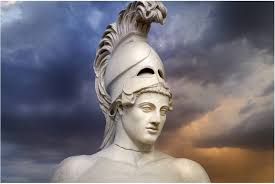
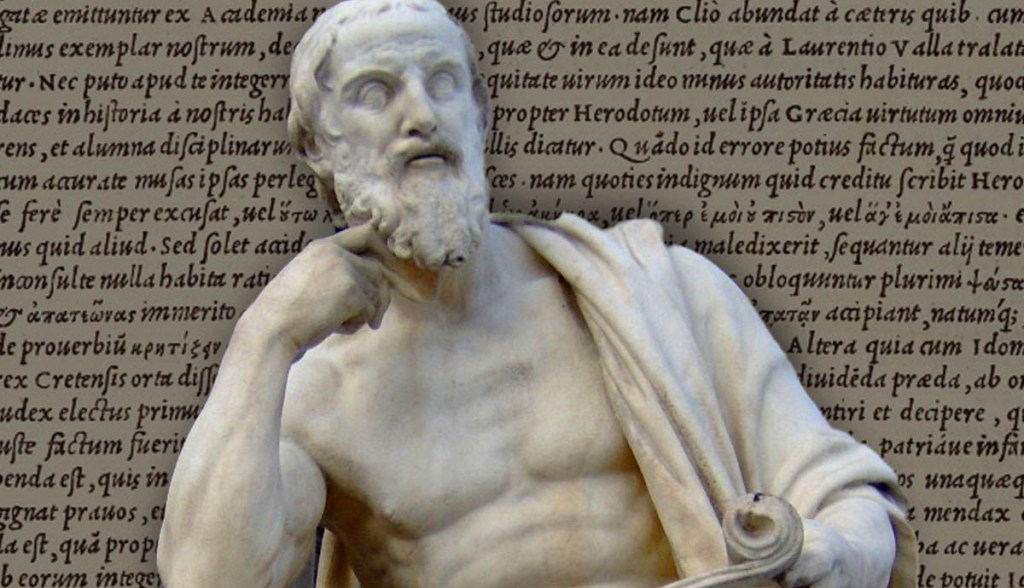
Pericles acted with the confidence of a mature servant of democracy. His concept of an external threat (Persia) was remarkably versatile. It justified emergencies, softened expansion, and wrapped ambition in collective security. The threat itself worked better than any actual invasion. While others clung to the marathon, Pericles spoke of the future. A unified alliance of poleis, decisions made swiftly, centrally, and preferably in his office.

In practice, matters were simpler. The democratic faction wanted more. Territory, tribute, votes in foreign councils. Everything else was rhetorical upholstery. Their opponents could read subtext too, so Pericles began by clearing the flanks at home. The Areopagus was “reformed,” officially. Thucydides and his circle were removed next, with minimal explanation and maximum finality.

In the end Pericles remained one of the ten Strategoi[2], exactly as the constitution prescribed. But he alone decided. The others attended meetings, signed when prompted, nodded often. Formally, it was a democracy. In reality, a political singularity noticed by everyone and addressed by no one, because addressing it would have required rewriting the rules.

Only then could the Idea of a greater Hellas[3] be carried beyond the sacred city.

Herodotus arrived in Athens the way one arrives when one’s biography has already begun to resemble the synopsis of a tragedy. Still negotiable, but increasingly reluctant to change genre. There had been an attempted coup in Halicarnassus. It failed, but failure in Athens was judged alongside the elegance of the leap itself. Exile followed. He sailed with the Athenian fleet. More excursion than service, but the checkbox mattered. What he brought back was not heroism so much as stories, trimmed, calibrated, arranged with care. Athens was perpetually hungry for narratives, especially those that began as personal experience and ended as matter of state.

Pericles learned of him long before shaking his hand. By their first meeting, Herodotus had already been tested in conversation, whetted at banquets, evaluated through third parties of both sexes and varying loyalties. When Pericles finally invited him, first informally, then into his office, Herodotus was already half-installed. They spoke like men who had been reading the same books for years and drawing incompatible conclusions. Herodotus offered careful directness, still marketable. Pericles listened, then made the small, economical gesture Athenians read fluently. This man would be allowed closer.

From that moment on, Herodotus ceased to be merely a gifted interlocutor and became part of the infrastructure. His notes were quietly reclassified as “auxiliary material for decision-making.” He began to appear at discussions of issues that officially did not exist, meetings without agendas, where unrecorded questions were discussed and ideas could not to be seen walking alone in daylight.

It was elegant. Herodotus believed he was being heard. Pericles ensured he was being used. Athens congratulated itself on the illusion of mutual benefit. In conversations with Pericles and those nearest to him, Herodotus eventually let slip two places that unsettled him by their scale, precision, and absolute dissimilarity to anything he had encountered among any monuments created by human.

It was an even octagonal platform, a night’s march east of Tyre, made of marble cracked by age, yet laid so carefully, and on such a foundation, that no one, however motivated, managed to pry out blocks or grind it down into reusable rubble. The vacant expanse, roughly the size of four Athenian quarters, stubbornly refused conversion into cheap building material. And also a pyramid sunk deep into sand, referred to as Shaytep by locals. Later it was imitated with scholarly enthusiasm by Egyptians who inherited the territory above it. Its accessible chambers suggested the scale of a ten-story palace, if such a structure could ever make sense as habitation. Immense, curiously pointless, poorly translated allegories, it had the same heavy geometry, the same sensation that it was not built for people.

The locals knew nothing. Those who called them tombs did not argue with those who believed them to be stations of the gods. But one detail struck Herodotus as well as Egyptians, Persians, border tribes – all speaking different tongues had the same conviction –  structures like these existed elsewhere.

No one had seen them. No one had mapped them. Yet everyone “knew” they must be there. Drunken sailors’ tales from the inhospitable north. Evening stories about distant shores of the Pontus. No names. No coordinates. Only background noise, the shadow of something once called knowledge.

Then there was Lampon, a seer, a priest, an interpreter of higher meanings knew how to speak with the gods or at least how to simulate the effect convincingly. In Athens he was respected not as a person but as a function. He had a lifelong right to dine in the Prytaneion, where the Council of Five Hundred formalised the will of the people. Lampon had access without election as he was said to have authority delegated directly from the sky. His task was to ensure no decision passed that might anger Olympus. A dizzying appointment for a supervisor overseeing assemblies theoretically designed to lack any single supervisor.

Lampon stayed close to Pericles, intimately close. Either Pericles believed in signs, or he understood the value of myth and knew how to deploy it. The two are not mutually exclusive. On the square, the people saw a priest and heard a voice as to who stood behind that voice remained speculation.

It was almost certainly Lampon who conceived the idea, layered like honeyed pastry. He compiled all reports of megalithic structures, convened a council of moderately learned men to interpret them, dispatched colourfully dressed priests with sombre escorts to the empire’s edges. And made the big announcement.

Athens, the statement would go, had recovered forgotten pre-literate knowledge. The knowledge of how to turn piles of stone into defensive infrastructure. Or, with fewer syllables, a wonder-weapon. Against it, Persian arrows and anonymous triremes would amount to little more than wind in a vineyard.

Domestically, it was signal geometry. Parallelograms of fact intersecting triangles of legend, with the Athenian party standing at the centre beneath the slogan. We read stone better than anyone. Anyone asking unnecessary questions simply would not be invited to the next symposium.

Externally, it was never about hoisting a catapult atop a pyramid. It was about saturating every diplomatic front with a myth. Athenian hegemony was not merely foreign policy. It was access to ancient knowledge, to a power beyond imagination.

Beneath the ornamentation lay the real goal – to ensure recalcitrant polies[4] would arrive voluntarily, bread and butter in hand, at a confederation where Athens controlled the bread, the butter, and the ledger.

Pericles did not merely approve Lampon’s hypothesis. He sealed it with an official nod and an unofficial proceed until it smoked. Marketability mattered more than the truth. If more than three neighbouring poleis believed it, it would cease to be a local myth and begin to function.

Herodotus received two sets of instructions. The written one was to collect and systematise material on the Greco-Persian Wars. Paperwork for the Academy and the gullible. The oral one was simpler – to locate traces of the “ancients” across the edges of the oikoumene[5], and try not to damage them too badly while taking measurements.

What would be done with the material was not explained, not out of mistrust, but pragmatism. Knowledge without leverage becomes ballast. And Herodotus already carried enough weight — nobility. faith in democracy coupled with dependence on his own authorial voice. Throughout the expedition, whose geography we know in exhausting detail, he sent Lampon encrypted reports with exemplary regularity about the locations of structures of titanic scale and improbable forms.

The earliest reports were meticulous, almost embarrassingly enthusiastic. As if he were seeking revelation in massive forms. He analyzed slab placement, light behavior, hypothetical priestly processions, even the dietary preferences of imagined builders. But by the eighth object the style thinned. By the tenth it collapsed into two lines, as if the text itself had grown embarrassed.

Geodesy and geometry remained precise. His team continued to perform duties in full compliance with instructions and payroll. But metaphors vanished. Comparisons evaporated. The rhetoric crumbled. The stones remained. The words did not.

Lampon followed the change with mounting concern. Some blamed fatigue, barbarian cuisine, women insufficiently trained in Hellenic desire. But Lampon was not convinced.

Herodotus’ second arrival in Athens was calm, without excessive praise. His report to Lampon was scheduled without urgency, for the evening. The time when architecture becomes philosophy and political maneuvering turns into liturgy. This meeting has been  reconstructed below as per the authors’ assumptions.

“We’ll pour the wine ourselves,” Lampon smiled. “So, did you bring us an oracle from the barbarians?”

“I did,” Herodotus said. “The oracle, and the barbarians.”

He did not elaborate.

Lampon pressed gently. Herodotus replied, almost apologetically. “I’m avoiding language. When you try to describe what was created outside description, you don’t move closer to understanding. You build a private labyrinth of words and find a sign reading Museum Closed.”

“At first there were words,” he admitted. “Epithets. Analogies. Cyclopean observatories. Celestial surgery. Shafts draining souls to Sirius. But these similarities are projection phantoms. My culture reflected onto something without a reflective surface.”

Lampon asked what changed.

“We see a monument like an unsolved equation and immediately insert familiar context,” Herodotus said. “Circle means cult. Twelve means zodiac. Stone means ancestors lacked better materials. And we’re satisfied because we’ve obtained an answer that stops thought. That isn’t research. It’s mental self-fertilization.”

“So you went looking for a different answer?”

“No. A different question.”

A pause, then. “If you want to understand a shadow, you don’t stare at the object. You examine the source of light. I looked at the invisible craftsmen. At the light they emitted so we could amuse ourselves by drafting plans in the shade of their buildings.”

“How do you encode emptiness?” he added. “The impulse faded. I accepted the emptiness as it was. And I began to write accordingly. As a witness, not an apologist.”

Then, unexpectedly clear, as though rehearsed to the point of premiere. “They caught the wind not for movement, but for taste.”

“That’s all?”

“I found not an explanation,” Herodotus said, “but an understanding. That if among the ancestors there was one whose mischief outweighed his fear, he said: let’s place the stones like this. By the stars. Or the other way around.”

“And others followed,” he continued. “Not because they understood, but because it felt exciting. Amusing. New. And it spread, like a fire no one meant to light, but everyone enjoyed feeding.”

Lampon pressed. “You reduce the work of titans to a game?”

“A game,” Herodotus shrugged. “Or play. Or fashion. Rituals without gods. I searched for depth where there was only the width of a moment. Sometimes a dolmen is just a dolmen. The imprint of laughter that has gone silent.”

Lampon looked inward, auditing the contents of his guest’s soul. He found no deceit. Herodotus had tried earnestly to assign cult and function to chaos. Each new structure replied: “No. Nothing. Calm down.”

By the tenth, the traveler had calmed down.

In practice, however, Thurii happened.

The initiative came from the democrats, formally from Pericles’ associates, informally perhaps from Pericles himself. Here the fog thickens. Was this merely bureaucratic arrhythmia, or the final phase of a longer operation? The sponsor colony’s paradox remained. It did not eclipse Sybaris. It multiplied despair by forcing a daily view of its ruins.

It was there that Herodotus acquired his enduring epithet, the Thurian. It was there, tradition says, that he unified his Histories, at least in the “recommended” reading. The sequence gently guides an inexperienced reader toward the conclusion that the author prioritised events that glorified Hellas. Everything before appears as clay, material to be kneaded into anonymous coating for tablets meant to record the “truly significant” milestones.

Later editors, we now know, divided the work into nine books. Another irony. A life devoted to weaving disparate accounts into a chain. Successors dismantled it into links, then displayed them in whichever sequence proved momentarily convenient.

For a time Athens mentioned Thurii only occasionally, as one recalls a long dinner with dull relatives. Then something occurred to pull Herodotus back into the field of managerial imagination.The answer is disarmingly prosaic.

The old man decided it was time. Not to die. To speak.

Publicly. Before an audience. With scrolls and a lectern, and that expression professional speakers wear just before and do you know what else? Publication was discussed. Workshops began calculating margins.

Word of this reached Lampon not as a fresh wind but as a warm exhalation of antique panic. Ready for readings was enough. He knew how easily Herodotus could forget the boundary between narration and confession when listened to attentively. The danger was not a direct accusation. Herodotus was no enemy. Far worse, he was a witness. In the vortex of his diegesis[6], scraps of geography, personal reflections, unapproved versions could be swept together. Everything Pericles had ordered to be formulated, but not pronounced.

The decision was swift. Herodotus was summoned to Athens. The pretext was patronage. A chair. An audience. A laurel wreath and a lifetime bust. Perfect timing. If there were readings, let them occur at the center of the world.

And on the way back, a stone, rain, a robber, a horse — the classic, well, age after all. In modern terms, something we would call prevention. The Greek lexicon offered a more refined word. Hygiene. If nothing else, the Hellenes knew how to keep a narrative clean. Thus, according to proponents of the Scraper theory, the true story of Herodotus ends. Pericles methodically erases associates from the commemorative board.

His work survived, though not without excisions, and the factual foundation thinned accordingly. Speculation about conjecture and truth continues to feed professional unmaskers.

Pericles never obtained his diplomatic wonder-weapon. No column trembled under an egregore’s vibration. Instead, two blocs of poleis emerged, welded by paranoia and ambition, and the Peloponnesian War followed. An internal conflict of unprecedented scale, like a culinary dispute between the two heads of a single serpent.

As if that were insufficient, a plague disembarked in the Piraeus — classical symptoms with a metaphysical aftertaste. Pericles himself exited through an emergency door politely opened by the Queen of Epidemics.

Lampon, however, seems to have drawn a different conclusion — divine retribution for attempting unauthorised access to the gods’ toy chest. He dissolved his name into topical comedies and administrative archives.

Time, as is well known, is not the enemy of knowledge, but its only victor.

The pyramids sink deeper each year, as if the earth were ashamed of their nakedness. Island statues once mistaken for fallen heroes increasingly resemble quirks of terrain. The blurrier the outline, the freer the hypothesis. The fewer the features, the louder the voices eager to explain.

Perhaps this is how history repaid Herodotus. Monuments built in the style of titans (?) simply fade just as the meaning of their existence once faded, just as Herodotus of Thurii himself faded, leaving behind only a controversial image.

Sometimes that is a form of immortality.

Sometimes, the only one.

.

[1] Ancient Greek city

[2] Greek military general

[3] Ancient name of Greece

[4] Ancient Greek city-states

[5] Civilized, the known or inhabited part of the world

[6] Narrative

Andriy Nivchuk is a Ukrainian-born author with a background in IT engineering. He spent fifteen years working as an artistic photographer in Paris and now lives in Ukraine.

PLEASE NOTE: ARTICLES CAN ONLY BE REPRODUCED IN OTHER SITES WITH DUE ACKNOWLEDGEMENT TO BORDERLESS JOURNAL

Bibliography

Herodotus (life, association with Thurii, traditional framing of the Histories)

Encyclopaedia Britannica: “Herodotus” (overview; biography and the tradition connecting him to Thurii; general context)
https://www.britannica.com/biography/Herodotus-Greek-historian

Cicero’s “father of history” attributionCroALa / Latin text of Cicero, De Legibus 1.5 (commonly cited locus for “Herodotus, father of history”)
https://croala.ffzg.unizg.hr/eklogai/capsa/cic-leg-1-5-1-9/

Thurii as an Athenian-backed “panhellenic/common” colony near Sybaris; Herodotus in the tradition of its founding

Encyclopaedia Britannica: “Thurii” (founding context; location near Sybaris; standard summary of the colony)
https://www.britannica.com/place/Thurii

Athenian political dynamics in the Periclean period (power consolidation as described by ancient biographical tradition)

Plutarch, Life of Pericles (ostracism of Thucydides son of Melesias; Pericles’ dominance in politics—useful for the political atmosphere the story draws on)
https://en.wikisource.org/wiki/Plutarch%27s_Lives_(Clough)/Life_of_Pericles

Areopagus “reform” and democratic reconfiguration (mid–5th century context)

Encyclopaedia Britannica: “Areopagus” (summary of the council and the traditional account of the curtailing of its powers)
https://www.britannica.com/topic/Areopagus-Greek-council

Athenian institutions referenced in the story (Council of Five Hundred; civic machinery)

Encyclopaedia Britannica: “Council of Five Hundred” (Boule; function and structure)
https://www.britannica.com/topic/Council-of-Five-Hundred-ancient-Greek-council

Click here to access the Borderless anthology, Monalisa No Longer Smiles

Click here to access Monalisa No Longer Smiles on Amazon International

Categories
Poetry

Who am I?

By Snehaprava Das

I could be a molecule of thought
Uncanny, secret,
Dimension less.

I could be all elements
--immense, eternal --
A cosmos holding galaxies of passion.

I may be a note of music
Hanging in the air, faint, feeble,
But repeating like an echo,

Or a speck of silence in a wind-funnel,
Gyrating into a tornado,
Sonorously lingering to infinity.

I’m overwhelmingly tender.
I hold worlds in a gentle embrace.
I’m also a razor blade,
Can slash love with a single stroke
And leave it to bleed to death.

I am war. I am peace.
Dispassionate and diligent,
I’m a nuance undulating through
Sangfroid and turbulence.

I’m a bubble forming, dissolving,
Forming again, breaking again,
Floating relentlessly to join waters
On alien shores
And linking minds.

I’m a length of thread from a kite that is
Stubborn in its desire to fly,
Connecting to the Earth
While scanning the strip of its sky.

I wander free, unfettered by
Diverse minds and tongues,
Wearing my happy pan-world face,

Spanning dams and deserts,
Oceans and mountains,
Freezing and erupting in alternate moments,
I travel borderless.

Snehaprava Das is an academic, translator and writer. She has multiple translations, three collections of stories and five anthologies of poetry to her credit. She has been published in Indian Literature, Oxford University Press, Speaking Tiger, Penguin and Black Eagle Books.

.

PLEASE NOTE: ARTICLES CAN ONLY BE REPRODUCED IN OTHER SITES WITH DUE ACKNOWLEDGEMENT TO BORDERLESS JOURNAL. 

Click here to access the Borderless anthology, Monalisa No Longer Smiles

Click here to access Monalisa No Longer Smiles on Kindle Amazon International

Categories
Stories

Decluttering by Vela Noble

Vela Noble

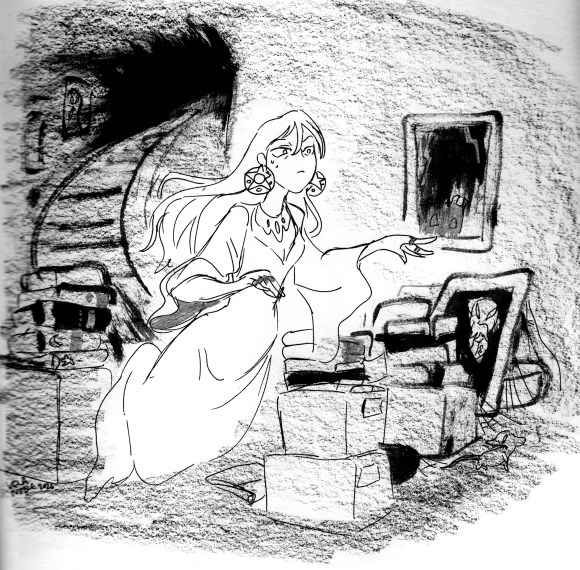
I levitate around my home. My toes barely graze the cold stone floor. Moving one box here, displacing another there, but still not getting any real work done. For I am a sorceress, a descendant from a rare and powerful subspecies of human who knows fearsome magic. Yet still, I cannot part with my piles of odd socks and large frocks. I clasp my slender, bejewelled hands together. That’s it, today I will declutter the castle for only twenty minutes – as that’s what the pros recommend.

There is a friction keeping me from knowing how to start, as too many souls have come and gone from this castle over the centuries. My father passed away grumpily in his bed in the north wing four decades ago. In his chambers, he left behind a husk of a gaming computer, piles of tangled tendril-like cables, a dusty vinyl record turntable and hefty piles of skating and street art magazines. He was bizarrely fascinated with the subculture he observed in mere mortals, one which he called ‘hip and cool’, despite being a gaunt three-hundred-and-forty-two-year-old wizard. He spent his last decades of life locked away in that room playing video games. I only ever witnessed an unearthly rainbow glow and pew-pew sounds from under his door day and night.

Then don’t get me started on my mother. She left behind her lifetime of artsy hobbies. From mosaic tile clippers, to a vinyl design t-shirt press, she had been the crafting queen. I don’t mind the crafting supplies, but other items of hers are more of a dilemma for me to know whether to keep. As a prolific vampiress, she had a tendency to never part with even a single skull belonging to her victims. They’re nostalgic, she used to parrot at me over the dining table. I opened the closet in her room and more than a dozen skulls fell on top of me. Mother, I am not up for dealing with your nostalgia right now!

Yet the worst of it all was my brother. It all happened one morning in the dead of winter, a blizzard was raging outside.

He said: ‘I can’t stand this place anymore!’

I remember his pained green eyes as he pushed open the large iron doors. With nothing but a bag on his side and tattered coat on his back, he left. That was half a century ago. It really worsened my father’s depression, and he never really got over it. I haven’t talked to my brother since then. I had assumed his old room had probably been taken over by clusters of breeding spiders by now. Yet, the one time a draught creaked the door open, I was horrified to see how empty it was — not a single book or a scrap of a poster left on any wall. Just bits of hardened Blu-Tak. Now whenever I pass by his room, I cannot remember the good times me and my spellcasting sibling had. I can only remember the hurt in his eyes when he left, so many moons ago. That memory is the one thing I cannot get rid of.

Decluttering is a challenging task, even for a wise and formidable sorceress such as myself, who can conjure up thunder and lightning with a mere twitch of my finger. It is inherently existential – well – it is for me at least. It makes you think about what legacy you’ll be leaving behind. Despite knowing I will probably live longer than both my mother and father, (both never, never exercised and the latter had a video game addiction, mind you) I feel such dread seize my heart just by looking at the piles. My lifelong research, reduced down to flaky and pitifully unsubstantial yellowy parchment.

I do not have any progeny, at least not yet, so will I leave behind a sorceress’s lifetime of sorry spellbooks that no living soul can decipher? How I wish there was any spell in one of these antediluvian old grimoires, anything to help me shift through these emotions and clutter! The only spell I can conjure up is to magically teleport everything to a storage shed in another continent, but my conscience gets the better of me.

The only living soul in this cold old mansion is me — and well, my greyhound, whose name is Speckles. I dust off my hands, I may not have made much progress today, but there is something I must do. I go into the kitchen to make myself a cup of tea. I then plop down in the loungeroom. Speckles snuggles his delicate pointed snout into my lap, I smile at him, I pick up a loose piece of parchment, dip my pen in ink and begin to write:

Hello dearest brother, how have you been?

Time will sort things out. The skulls in the closet can wait.

Illustration by Vela Noble

Vela Noble is multidisciplinary artist and writer based in Adelaide, Australia. She finished a BA majoring in Creative Writing at Adelaide University. You can see her work at velanoble.com.

.

PLEASE NOTE: ARTICLES CAN ONLY BE REPRODUCED IN OTHER SITES WITH DUE ACKNOWLEDGEMENT TO BORDERLESS JOURNAL

Click here to access the Borderless anthology, Monalisa No Longer Smiles

Click here to access Monalisa No Longer Smiles on Amazon International

Categories
The Lost Mantras

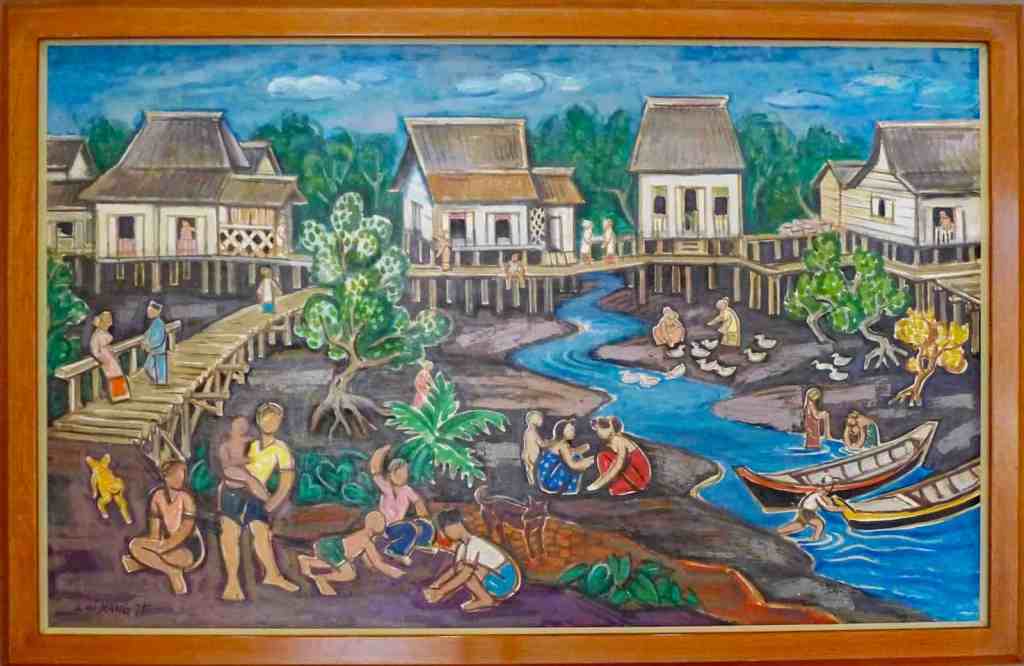
It’s but a Memory… More Poems by Isa Kamari

Poetry and translations from Malay by Isa Kamari

THE BENCH

The melodious magpie on the bamboo twig --
the passing breeze welcomed the chirping.
Sitting on a dilapidated wooden bench,
under the thick canopy of the mango tree,
village folks rested in the shade,
calming the tremors of troubled hearts.
The hardship evident in the sighs,
still hopeful of tomorrow’s dreams,
drying the sweat of weariness.
Honest earnings chased away worries.
A pinch on the thigh, a cry of pain.
Laughter and jokes were shared merrily,
teasing the maiden sitting by the door,
smiling sheepishly, welcoming attention.
Recollecting a slice of an old tale,
fun and camaraderie were reminisced,
firm and amicable bonds were fostered.
It’s but a memory. It’s but a memory. It’s but a memory.
Now alone in a room,
gazing at the handphone screen,
chatting aimlessly in social media—
do we remember and long for the dilapidated bench,
crafting old tales, forging firm and amicable bonds?
Do we remember and pine
for the maiden sitting by the door?


CUSTOMS


Customs are not like banana fritters
coated with rice flour, dipped in hot oil,
served instantly, crispy and delicious, eaten warm,
accompanied by sips from a cup of black coffee.
Customs are like rain
that falls on the whims of the weather.
It’s always there, although infrequent,
temperamental and purposeful,
sometimes an inconvenience— plans thwarted—
but always invigorating
and instils a sense of acceptance.
If received with gratitude,
directed with perseverance,
and tempered with wisdom.
Life is beautiful with droplets of grace.
Life is fertile with the pouring of bounties.
Life is prosperous with love bestowed.
Customs make the earth supple.
Customs make the village noble.
Customs make a people well-mannered.
Once in a while,
relish a crispy banana fritter
and sip warm black coffee
while it rains cats and dogs.
Momentary disruption of plans,
the alleys and roads flooded—
moments of reflection,
moments of appreciation for the day,
is inherent in droplets of grace,
inherent in the pouring of bounties,
inherent in love bestowed.
Shifting of time and signs
the soil is tilled with purpose.
The village gathers and collectively agrees,
the people ready to realise
aspirations of good character
and respected stature.


SMOKE

Like smoke billowing amidst rubbish,
he burns his self-worth,
dances in the flames,
when the fire is meant
to warm breakfast and meals to school.
Now like smoke,
his children are floating,
begging for favours
at tips of cigarettes and cars’ exhaust pipes,
crushed by confusion in the stifling air.
Who would be hungry
if the smoke does not billow in the kitchen,
and for generations,
our humanity returns uncooked to God?


CURSE OF A WARRIOR

Hail the snake and its venom!
Call it a callous and rebellious act!
Shame be endured,
head decapitated!
Surrender not, carry the corpse!
Foolish is the mind,
desperate are the moves.
Let death fulfil the curses.
Let death be executed by the Angel.
Destroy my body, take my soul.
The wooden club hit the coffin.
Pierce my tongue and neck.
Stab my chest, guts dis-embowelled.
Blood spurts, life departs.
The warrior kisses the earth.
Blood turns into pus.
Pus turns into ambers of Hell.
Let me die so you die.
Let us die so everyone dies.
I give you my sin, my hurt, my sadness.
You’ll bathe in blood.


Isa Kamari has written 12 novels, 3 collections of poetry, a collection of short stories, a book of essays on Singapore Malay poetry, a collection of theatre scripts and lyrics of 3 music albums, all in Malay. His novels have been translated into English, Turkish, Urdu, Arabic, Indonesian, Jawi, Russian, French, Spanish, Korean, Azerbaijan and Mandarin. Several of his essays and selected poems have been translated into English. Isa was conferred the S.E.A Write Award from Thailand (2006), the Singapore Cultural Medallion (2007), the Anugerah Tun Seri Lanang (2009) from the Singapore Malay Language Council, and the Mastera Literary Award (2018) from Brunei Darussalam.

He obtained a BArch (Hons) from the National University of Singapore in 1989, an MPhil (Malay Letters) from Universiti Kebangsaan Malaysia in 2008 and is currently pursuing a PhD programme at the Academy of Islamic Studies, Univeristi Malaya. His area of research is on the problem of alienation and the practice of firasat (spiritual intuition) in selected Singapore Malay novels.

The Lost Mantras is a collection that blends spirituality, Malay cultural heritage, and universal human experience. First published as part of Menyap Cinta (Love Greetings, 2022, Nuha Books KL), these poems are like a bridge between mysticism and everyday life, where traditional images (betel, jasmine, kris[1], oil lamps, setanjak[2]) are woven with Qur’anic echoes, prayers, and existential questioning. The collection carries a Sufi resonance—always circling back to longing, humility, surrender, and beauty as signs of God. The poems are not only lyrical but also function as cultural memory: they preserve Malay traditions, communal practices, and village life, while situating them in a cosmic framework of faith, sin, and redemption. The use of Malay customs, rituals, and objects is powerful: it asserts that spirituality is not abstract but embedded in heritage. This makes the collection uniquely Southeast Asian despite its universal in appeal.

[1]A dagger

[2] Malay headgear

PLEASE NOTE: ARTICLES CAN ONLY BE REPRODUCED IN OTHER SITES WITH DUE ACKNOWLEDGEMENT TO BORDERLESS JOURNAL

Click here to access the Borderless anthology, Monalisa No Longer Smiles

Click here to access Monalisa No Longer Smiles on Kindle Amazon International

Categories
Review

Taslima Nasrin’s Poetry: Between Silence and Defiance

Book Review by Anindita Basak

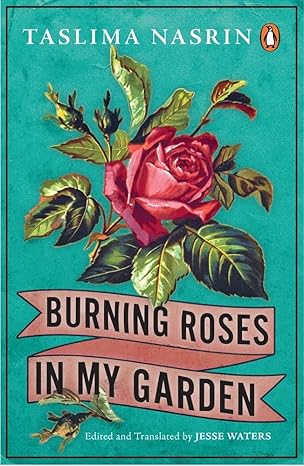
Title: Burning Roses in My Garden

Author: Taslima Nasrin

Translated from Bengali by Jesse Waters

Publisher: Penguin Random House India

Imagine a woman bound by shackles – not of iron, but of her own people, her country, her religion, and above all, by men. This is not just a metaphor; it is the reality that moulded Taslima Nasrin’s life and journey as a writer. Her first English poetry collection, Burning Roses in My Garden (translated and edited by Jesse Waters), gathers 103 poems that bear the scars of exile and the defiance of survival.

Nasrin, hounded by fatwas and banned for her unflinching criticism of patriarchy and religious dogma in Bangladesh, writes from the margins yet refuses to be silenced. The anthology commences with early meditations on passion and desire, seen in poems like ‘A Bouquet of Scarlet Envy’ and ‘On Love’, toward darker elegies like ‘The Cycle of Loneliness’, ‘Walking through This Life and into Death’, and ‘Am I Not to Have a Country of My Own?’ that grapple with loneliness, mortality, and the burden of political banishment. These poems become the very tools with which she breaks the restraints, not to escape them, but to forge them into weapons of truth.

The collection opens with poems like ‘On Love’, which delve into romantic love and intimacy as the poet tenderly explores physical connection through sensory detail. In the piece ‘The Last Kiss’, the poet reminisces about a lover’s touch that transcends geographical boundaries. “That kiss that brought an entire world within her grasp, /…a rush of youth, /His kiss was becoming more than him,” compares her memories to permanent imprints. These early poems in the collection reveal a different register – more vulnerable, more willing to dwell in private emotions rather than public testimony. It creates a counterpoint to the later poems of exile and loss, suggesting what was left behind when she was forced to choose between fragile love and unwavering candour.

Through images of loss and displacement, which work both as wound and testimony, the poet confronts her banishment with stark honesty: “To me, my country is now a crematorium. /A lonely dog stands and whines all night, a few/Pyre-makers lie here and there, drunk to the bone.” In her traversal of exile, she transforms personal anguish into universal questions of belonging and continues to write from a place of loss. Her voice carries the weight of those who cannot speak, turning poetry into both elegy and resistance.

Feminist consciousness also flows through Nasrin’s verses with unflinching directness. In ‘Another Life’, she exposes the grinding reality of women’s domestic servitude through devastating metaphor: “Women spend half of their lives picking stones from rice. /Stones pile up in their hearts.” The image suggests not only physical drudgery but emotional calcification – the heart itself becoming a repository of unspoken grievances. Her feminist vision extends beyond individual suffering to collective oppression, revealing how patriarchal structures trap women in cycles of invisible labour.

The poet’s political views turn philosophical, confronting mortality while examining the cost of speaking truth to power through the lens of displacement and exile. This progression from the collection’s early love poems to these darker meditations reflect not only her growing maturing but also usher in a socio-political awakening – the recognition that private desire cannot exist separately from public consequence.

Nasrin doesn’t shy away from contemporary political realities; instead, she shows how religious fundamentalism and state censorship became suffocating forces that compress individual expression. She highlights the way authoritarian systems silence dissent through both legal mechanisms and social ostracism. In ‘Am I Not to Have a Country of My Own?’, she directly questions the price of dissent and the meaning of citizenship when one’s own nation rejects its truth-tellers. In contrast, particular tender pieces like ‘Miserable Ma’ highlight the endurance of personal relationships despite geographical separation within the collection’s otherwise relentless critique.

This collection’s strength lies in its refusal to separate the personal from the global. An American poet and professor, Waters preserves Nasrin’s directness in her translation while maintaining the emotional intensity that makes her work so compelling. These poems serve as both autobiography and historical document, charting one woman’s journey from intimate expression to public testimony. Her masterful use of juxtaposition, placing tender domestic moments against brutal political realities, creates a poetic tension that amplifies both spheres of experience.

Ultimately, Burning Roses in My Garden becomes a new mythology of endurance, not the tidy myth that comforts, but a foul-weather myth that survives storms. In the current climate, Nasrin’s poetry resonates with startling immediacy – mass rallies, hardline backlashes, midnight vigils, and student protests – the streets themselves find their voice through her verses. As if to remind us what her poetry truly stands for, the last poem of the collection bears the words: “I don’t write poetry, I write life on paper. /I don’t write poems; the wind that hits my body/When I stand on the top of a hill? I pen it down.” In closing lines like “when all game ends… I’ll sit down to write about love,” Nasrin promises that love’s survival against cruelty becomes an article of faith. The world of the poet and that of the reader blur here, and in that blurring, a strange comfort arrives, a lesson that even in a country’s crematorium, the rose of hope can burn and perfume the air.

Anindita Basak, a student at the University of Calcutta, is an avid enthusiast of literature and philosophy. Her published works include poetry, prose, and reviews in reputed magazines.

PLEASE NOTE: ARTICLES CAN ONLY BE REPRODUCED IN OTHER SITES WITH DUE ACKNOWLEDGEMENT TO BORDERLESS JOURNAL

Click here to access the Borderless anthology, Monalisa No Longer Smiles

Click here to access Monalisa No Longer Smiles on Kindle Amazon International

Categories
Poetry

‘Shadows on a Screen’

By Jim Bellamy

AND MURDERED THROUGH


And murdered through their masks, as if to sift
My trembling from the air; the corridors
Grew longer, bending out of shape, and drift
Enshrouded every threshold. Through the doors
Came whispers, half‑remembered, half‑designed,
That pressed like winter’s knuckles on my chest;
And still the ward‑lights flickered, re‑aligned
To mark the pulse of something unexpressed.
I walked as though the floorboards might collapse,
Or tilt me toward a darkness I had known,
Where every echo tightened into traps
And every heartbeat felt no longer owned.

Yet through that trembling hush, a figure stood—
A patient, pale as frost upon a blade—
Who watched me with a calm misunderstood,
As if my fear were something he had made.
He raised a hand, then let it fall again,
And muttered fragments drifting into sense:
That storms of thought could batter any brain,
That none were proof against experience.
His voice, though cracked, retained a tempered grace,
A cadence forged from long‑endured despair;
And in the trembling angles of his face
I saw a truth too heavy to declare.

For madness, in its quietest disguise,
Can settle like a frost upon the bone;
It does not always shout, but softly lies
In corners where the mind stands most alone.
And so I passed him, feeling something shift—
A weight that was not his, nor wholly mine—
As though the ward itself began to lift
Its veil and show the seams beneath design.
The nurses moved like shadows on a screen,
Their footsteps merging with the humming vents;
The world grew thin, translucent, in between
The drifting of my fractured sentiments.

And still the year went on, a tightening thread
That pulled me through each hour’s unsteady frame;
The nights were long, the mornings filled with dread,
Yet somewhere in that cycle, something came—
A gentler breath, a pause within the storm,
A moment where the mind, though bruised, could rest.
It did not heal, nor wholly re‑transform,
But held itself with slightly steadier chest.
And in that pause, I learned to stand again,
To walk the ward without the same despair;
To see, in every trembling fellow‑patient,
A fragile strength that hovered in the air.

So through the endless corridors I moved,
Not cured, not whole, but slowly re‑aligned;
And though the year remained a thing unloved,
It left a quiet scaffold in my mind—
A place where all the fractured thoughts could meet,
Where shadows softened, though they did not cease;
Where every trembling pulse, though incomplete,
Could find a moment’s tentative release

Jim Bellamy was born in a storm in 1972. He studied hard and sat entrance exams for Oxford University. Jim has a fine frenzy for poetry and has written in excess of 22,000 poems. Jim adores the art of poetry. He lives for prosody.

.

PLEASE NOTE: ARTICLES CAN ONLY BE REPRODUCED IN OTHER SITES WITH DUE ACKNOWLEDGEMENT TO BORDERLESS JOURNAL

Click here to access the Borderless anthology, Monalisa No Longer Smiles

Click here to access Monalisa No Longer Smiles on Amazon International
Categories
Slices from Life

Champagne Sailing

Narrative by Meredith Stephens: Photographs by Alan Noble

Sydney Skyline

We are not champagne sailors. The only time Alex and I drink champagne aboard a boat is to celebrate the end of a voyage of hundreds of nautical miles. Our sailing expeditions are characterised by breakages, deprivations and isolation. Sometimes the seas are so rough that I cannot move around the boat, let alone change clothes. I can only bathe once a week, and that consists of a dip in the ocean at anchor.

Our meals often consist of fish we have caught and cooked, unless we consume them immediately as sashimi. A single fish might last us days, served in various guises. Other meals are prepared from lentils or canned foods. In contrast to land trips, I usually lose a kilogram or two when at sea. I prefer not to use the term ‘yacht’, because people imagine us sunning ourselves on the deck while sipping champagne. Instead, I use the term ‘sailboat’. I do confess to a tad of reverse snobbery in the deprivations I endure and look down on those I describe as ‘champagne sailors’. But was that about to change?

We had been invited aboard the luxury observer vessel known as The Jackson to watch the start of the annual Sydney to Hobart Yacht Race on Boxing Day. After Christmas lunch, we headed to Adelaide Airport to catch our ninety-minute flight to Sydney. Upon arrival at our hotel, we caught the lift to our room. The lift doors opened on the third floor to let two brothers in, aged around 10 and 12. They met our gaze.

“Would you like us to sing you a Christmas carol?” the younger one asked.

The older one looked a bit embarrassed, but I thought asking strangers to join in singing a carol in a lift on Christmas Day was a nice, if not brave gesture, so I nodded enthusiastically. The younger one started singing ‘We wish you a merry Christmas’, and facing us, moved his hands in the manner of a choir conductor. I joined in. Then the boys noticed that they had arrived at their floor and stopped singing.

“See ya!” said the older one, as they exited.

We continued to the seventh floor and deposited our bags. The light was fading, so we decided to head back outside to take a stroll around the harbour. We returned to the lift. Once we reached the fifth floor the doors opened and the two boys entered again. Three other guests were standing behind us.

“More carols?” asked Alex.

They nodded and smiled. “Yes!”

They launched into another familiar carol, and again I joined in. The tall guest behind me gave a kindly chuckle. Then they reached the third floor, bade us farewell, and exited. We continued to the ground floor and made a tour of Darling Harbour in the remaining light. It had been a wonderful Christmas Day, and what better way to end it than the act of goodwill in being serenaded by children in a hotel lift.

The next day was the yacht race, which has been held annually since 1945 and is one of the world’s great ocean races. The sailors would be competing in a gruelling and treacherous race of 128 boats covering 628 nautical miles (1,200 km), south down the Tasman Sea, across Bass Strait, to Hobart in the south of Tasmania. This race is one of the highlights of Boxing Day and a television staple.

Start of Sydney to Hobart race

We walked to the appointed wharf and noticed a long queue waiting to board. Upon being noticed by our hosts, we were directed to a shorter queue and were ushered up the stairs to the top deck, limited to fewer than sixty people. A ribbon with ‘The Jackson’ written on it was affixed to our wrists. We were greeted by a waiter holding a tray proffering a range of drinks. Alex picked up two glasses of champagne and handed one to me. Was this the beginning of my new career as a champagne sailor?

The Jackson soon departed and we headed out to the deck to view the boats lining up for the race. Even though it was summer the cold penetrated my body and my hands shook. I was determined to brave the cold in order to hold my place to view the start of the race. The lady next to me made some commentary.

“That’s the start line,” she said, pointing to two yellow buoys. The start lines are staggered depending on the the size of the boats to help prevent collisions. It’s a southerly, so that should help.”

I nodded, feigning comprehension. I was not yet a competent enough sailor to pick up the wind direction so quickly. The cannon sounded on the deck below, and a plume of smoke rose. The yachts set off. Soon they had overtaken our observation vessel and most of the guests moved back inside the boat to watch the race on a large screen. Alex and I and a few other hardy souls remained on the outside deck to savour the unique setting of Sydney Harbour. Waiters braved the cold regularly to top up our champagne and offer us canapes. We accepted each time, although I eventually slowed down and shared a glass of champagne with Alex. Had we become the dreaded champagne sailors?

The yachts sailed through the heads until most of them disappeared from view. The Jackson turned around and headed back to King Street Wharf. We remained outside on the deck in the cold, making the most of every minute because Sydney Harbour is so far from home, and we may never have this opportunity again.

I stubbornly refuse to accept the title of champagne sailor though. We are temporarily boatless (which is another story) but once we resume sailing again later this year, we hope to return to the days of self-reliance on the boat and sourcing our meals from the ocean. Maybe not too much deprivation though, because we will continue to uncork a bottle of champagne, as is our tradition, after completing a major ocean passage of several hundred nautical miles.

Sydney to Hobart race

.

Meredith Stephens is an applied linguist from South Australia. Her recent work has appeared in Syncopation Literary Journal, Continue the Voice, Micking Owl Roost blog, The Font – A Literary Journal for Language Teachers, and Mind, Brain & Education Think Tank. In 2024, her story Safari was chosen as the Editor’s Choice for the June edition of All Your Stories.

PLEASE NOTE: ARTICLES CAN ONLY BE REPRODUCED IN OTHER SITES WITH DUE ACKNOWLEDGEMENT TO BORDERLESS JOURNAL

Click here to access the Borderless anthology, Monalisa No Longer Smiles

Click here to access Monalisa No Longer Smiles on Amazon International
Categories
Poetry

The Clown by Shamim Akhtar

Shamim Akhtar
THE CLOWN

There was a grand fair
in the wide field outside our not-so-famous town.
People waited for it all year –
saving a little,
just enough to enjoy a day with friends,
with family,
to see new things,
to bring home something fancy,
a bargain to cherish.

The circus was the heart of it all.
I remember, as a child,
a clown who mocked his own misfortune –
his sorrow turned into laughter
for everyone else.
We laughed too,
forgetting, for a while,
the weight we carried.
The next year,
I went back, searching for that face –
the vividly painted smile,
his real face hidden beneath the colours
that shaped a foolish grin.

But the clown was gone.
There were the same acrobats,
the stunts on bikes,
the magician,
the elephants parading as before.

Except now, there stood a parrot –
clever, talking,
outsmarting its master,
earning the applause of everyone,
who didn’t even notice
the clown’s absence

Dr. Shamim Akhtar is an Assistant Professor in the Department of Management at ICFAI University Mizoram. He has recently authored a book titled Smoke and Society: The Culture, Consumption and Control of Tobacco in Mizoram. A researcher, writer, and passionate poet, he explores themes of memory, longing, and the human condition. His work often reflects a blend of lyrical sensitivity and deep introspection.

.

PLEASE NOTE: ARTICLES CAN ONLY BE REPRODUCED IN OTHER SITES WITH DUE ACKNOWLEDGEMENT TO BORDERLESS JOURNAL

Click here to access the Borderless anthology, Monalisa No Longer Smiles

Click here to access Monalisa No Longer Smiles on Kindle Amazon International

Categories
Musings

In the Company of Words

By Gowher Bhat

I did not grow up wanting to be famous. I grew up wanting to read. Books entered my life quietly, persistently, and stayed. They were never mere ornaments on a shelf. They were companions, confidants, and windows to other worlds. I read late into the night, bent and underlined pages in hand, learning early that a book could be as vital as breath. Reading became a habit, then a need, then a lens through which I understood life itself.

But reading is not always easy. Even as a child, I struggled with the distractions of the world around me, the noise, the pull of tasks, and the sense that books were a luxury rather than a necessity. Many children grow up without sustained access to literature or quiet spaces to engage with ideas. Many adults, too, lose the habit of reading amidst digital noise, constant demands, and a culture that prizes speed over reflection. In such a world, cultivating a relationship with words becomes an act of devotion, of care, and of patience.

I read widely and without rules: fiction first, then mystery, later thrillers, philosophy, psychology, literary novels, family dramas, clean romance, cozy mysteries, science fiction, and books about the craft of writing itself. I read what interested me, what unsettled me, what slowed me down. Each genre teaches something different. Mystery teaches pacing. Literary fiction teaches restraint. Philosophy teaches patience. Psychology teaches observation. Good writing, no matter the category, teaches honesty. And yet, for many, access to books, time to read, and the encouragement to do so are rare privileges.

Reading and writing have always been companions. To write well, I must read widely. To read well, I must be attentive to language and nuance. When I read, I am listening to other writers. When I write, I try to answer, in my own way, the questions they pose on the page. Books that stay with me longest shape my own sentences, not by imitation, but by instilling rhythm, precision, and empathy.

Reading shaped the way I think and the way I write. It taught me rhythm. It taught me silence. It taught me that a sentence does not need decoration if it carries truth. Over time, reading stopped being separate from writing. One fed the other. I read to learn how others solved problems on the page. I wrote to see if I could do the same.

But the act of reading and writing is more than personal; it is communal. Stories, essays, novels, poems, reflections—they connect us. They allow us to see beyond our immediate experiences and inhabit others’ lives. They create empathy in societies that can often feel distracted or rushed. They challenge assumptions, expand understanding, and remind us of shared humanity. Yet, in a time when attention is fragmented, cultivating space for reading and writing is an ongoing challenge.

Writing arrived quietly. I began by writing notes to myself: observations, small scenes, feelings I could not explain out loud. Writing became a place to sit with things without having to perform. There was no audience then, just the page and me. Even a short paragraph, carefully written, could provide clarity where speech often failed. It could contain emotion without spectacle, simplicity without emptiness.

I am an English educator by profession. Over the years, I have guided students in navigating language, finding their voice, and understanding the weight of words. Teaching sharpened my attention. It made me careful with words. When you teach, you learn how fragile confidence can be. You learn how much words matter. You learn that clarity is kindness. The classroom has also taught me patience and observation, qualities essential to writing. Students’ struggles, triumphs, and quiet moments often inspire characters or scenes in my own work. More importantly, it has shown me that access to words, encouragement, and mentorship can transform lives, opening doors to reflection, creativity, and understanding.

My writing grew in that same vein.

I am drawn to ordinary lives, to quiet moments, to people who carry more than they say. I am not interested in spectacle. I am interested in what happens at the table, in the hallway, during a phone call that lasts too long. The smallest moments often reveal the most. A pause, a glance, a question left unasked often speaks louder than any dramatic event. Writing, I have discovered, is about noticing these details and offering them gently to the reader.

I read Jane Austen years ago and understood something important. You do not need to explain everything. You do not need to impress. You only need to tell the truth and step back. That lesson stayed with me. My writing aims for simplicity, not emptiness. Austen’s writing taught me that character, dialogue, and subtle observation can carry a story, even without dramatic plot twists. This resonates deeply as I try to develop my own voice.

I write literary fiction, family drama, and clean romance. I write about relationships between parents and children, husbands and wives, people and their inner lives. I am interested in homecoming, in belonging, in the idea of home as something emotional rather than geographical.

Many of my characters search for peace without naming it. They live in ordinary spaces yet carry extraordinary emotions. Through their stories, I explore love, hope, and resilience, not as abstract ideas, but as lived experience. These themes are not only literary; they reflect challenges we face in real life, in understanding each other, and in finding space for reflection, empathy, and connection.

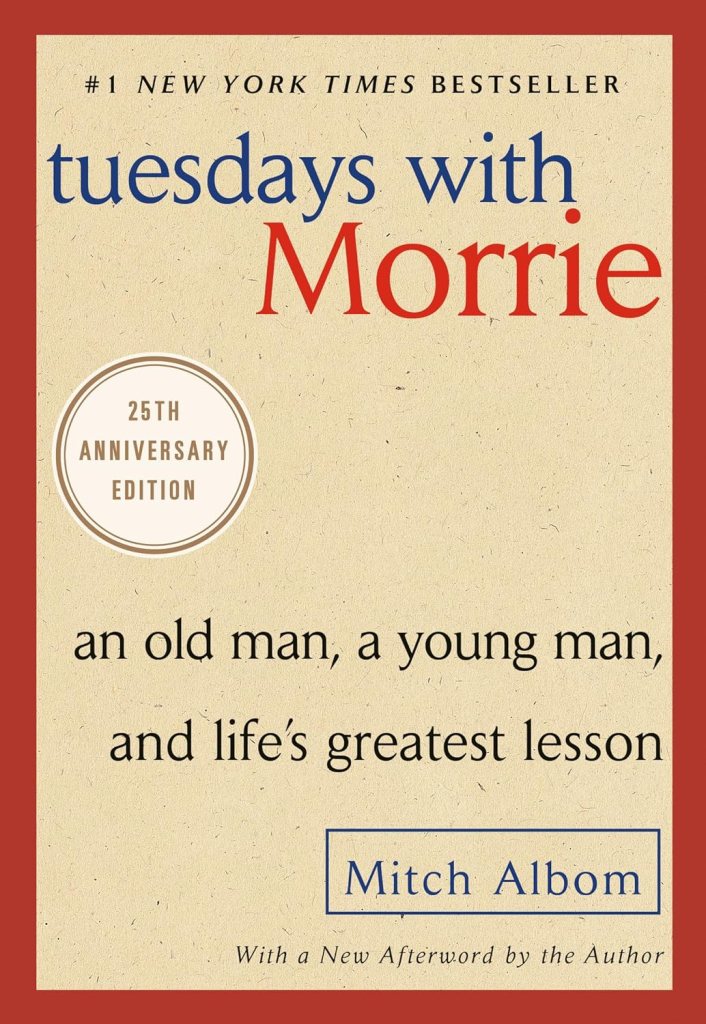
I read widely to guide my writing. I still read every day, sometimes for hours, sometimes only a few pages. I return often to books that once moved me deeply: Pride and Prejudice, Man’s Search for Meaning, Tuesdays with Morrie. Each rereading feels different. That is how I know books grow with us. Revisiting a familiar story allows me to notice things I had missed before, to understand new perspectives, and to refine my sense of narrative and character development.

I read craft books not to copy technique, but to understand intention. Why does this sentence work? Why does that scene linger? Reading teaches humility. There is always someone writing better, clearer, braver. Instead of discouraging me, that comforts me. It means the work is endless, and that is a good thing. There is always more to learn, always room to grow. This realisation keeps me grounded and committed to the long journey of writing.

I am part of some anthologies, and I have authored many articles over the years. These small contributions are part of my learning and practice, a way to keep writing while I work on larger projects. They are exercises in discipline and experimentation, testing different voices, formats, and perspectives. Each piece, no matter how short, teaches me something about structure, clarity, and the rhythm of language.

The life of a writer is not glamorous. Most of it is quiet. You sit. You doubt. You write. You delete pages you once loved. You rewrite. You keep going. There is no certainty, only commitment. Writing requires discipline more than inspiration. Inspiration visits. Discipline stays.

There were periods in my life when writing was the only stable thing I had. Work challenges, writer’s block, my daughter’s health issues, long waits—writing did not solve these problems, but it gave me a place to stand. It reminded me who I was when everything else felt fragile. Writing became a companion, a place to breathe, a way to make sense of the world. More than that, it showed me that writing, reading, and reflection are tools we all need, as societies and as individuals, to engage with ourselves and others.

My faith plays a central role in my life and writing. It teaches patience and surrender. Writing is similar. You do your part and let go of the outcome. You write honestly and accept that the work will find its reader when it is meant to. Writing, like prayer, requires consistency, trust, and humility.

I do not measure success by recognition. I measure it by sincerity. If a reader feels empathetic, the work has succeeded. If a sentence stays with someone longer than expected, that is enough. Every story, every paragraph, every sentence is a small offering, an attempt to communicate honestly, and that is enough.

I am still learning. Still reading. Still writing. That, for me, is a full life.

And it began, simply, with a book opened in silence.

Gowher Bhat is a a columnist, a freelance journalist, and educator from Kashmir. He writes about memory, place, and the quiet weight of the things we carry, often exploring themes of longing, belonging, silence, and expression. A senior columnist in several local newspapers across the Kashmir Valley, he is also an avid reader and book reviewer. He believes the smallest moments can carry the deepest truths.

PLEASE NOTE: ARTICLES CAN ONLY BE REPRODUCED IN OTHER SITES WITH DUE ACKNOWLEDGEMENT TO BORDERLESS JOURNAL

Click here to access the Borderless anthology, Monalisa No Longer Smiles

Click here to access Monalisa No Longer Smiles on Kindle Amazon International

Categories
Poetry

Bemoaned Air by Goutam Roy

Goutam Roy
BEMOANED AIR

Bemoaned air within the
raven canopy of progress,
where stars suffocate
in smog’s embrace,
withering—losing
their composites,
bereft of bearing.

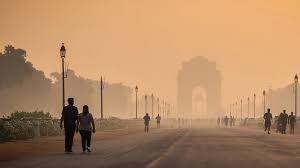
Lungs gasp in smog’s iron grip,
choked by veils of venomous haze,
while eyes weep rivers of fire,
stung by the city’s ashen blaze.

Cool-breezed dawns,
with golden sunshine’s kiss—
once poetry’s renewal—
now forgotten whispers,
swallowed by smog’s
fevered shroud.

All entities hover on
demolition’s razor edge,
where empires of bone
and starlight shatter
in a single, trembling breath.
From Public Domain

Goutam Roy explores philosophical, transcendental and societal themes with his poetry. 


PLEASE NOTE: 
ARTICLES CAN ONLY BE REPRODUCED IN OTHER SITES WITH DUE ACKNOWLEDGEMENT TO BORDERLESS JOURNAL

Click here to access the Borderless anthology, Monalisa No Longer Smiles

Click here to access Monalisa No Longer Smiles on Kindle Amazon International