Categories
Excerpt

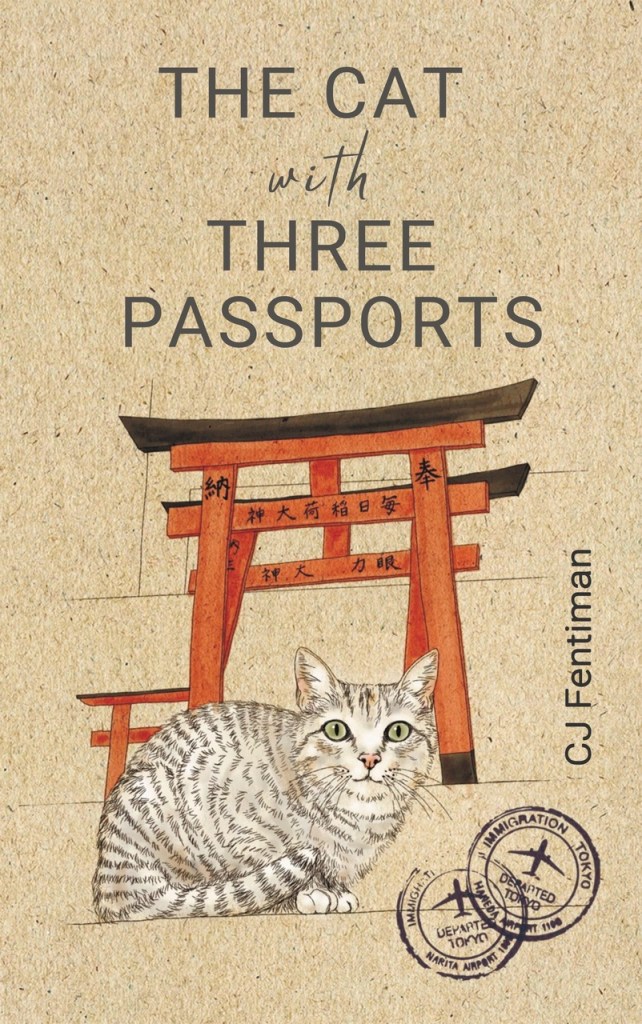
The Cat with Three Passports

Title: The Cat with Three Passports
Author: CJ Fentiman

Chapter 7: Better To Enclose A Cat Than to Scold It

Clothes shops kept irregular hours in Takayama. Three different days, at three different hours, we tried to visit a local vintage store, and each time we found it closed.

It was refreshing to see that a country that had appeared, at first, such a stickler for rules, actually had a whole community that seemed to do the opposite of what was expected.

‘It is ikigai,’ explained James, the bald Kiwi ALT whom we had called Jēmusu (the Japanese word for James) as a joke.

‘What is ikigai?’ I asked. ‘A fish?’

‘No,’ he said with a grin. ‘Ikigai means finding your purpose, your meaning in life, and combining it with your profession, your work. It is the balance of doing what you love while making a living and letting neither path control your life.’

I didn’t really understand ikigai until one spring day I actually found the vintage clothing shop open and went inside to explore as I’d longed to do for over a month. The owner, G-Kun, a snowboarder in his early thirties who wore his long black hair tied back in a ponytail, was busy checking orders on his computer.

Ryan was looking at skateboard tee shirts while I browsed some different-coloured beanies made from hemp that I loved and would probably never wear.

‘I’m so glad I finally got to come in,’ I said to G-Kun.

‘Why has your store been closed so often? Were you ill?’

‘Not at all,’ he replied with a friendly smile. ‘I have just been concentrating on something else.’

‘Like what?’

‘My music career.’

I stared at him.

‘I travelled in Europe some years back and became friendly with some European DJs,’ he continued. ‘I ended up co-producing some dance tracks with them.’

He had my rapt attention. To my very British mind, this was an entirely new concept. I had been told as a child to forget working with horses and get a job in a bank, because in England I was supposed to be a responsible adult with a steady good-paying job doing something I loathed rather than something I loved.

But in Takayama . . . Was what G-Kun telling me real? Could an avocation and a job actually be combined? And if they could, did I have my own ikigai, something that would bring deep satisfaction to my life?

Once I understood ikigai, I saw it all around me. In Takayama, many people had turned their passions into businesses from which they earned an actual living wage. Of course, that’s not to say all Japanese follow ikigai but it seemed widely practiced here.  And then there was Keisuke, who worked in a brewery and wanted to start his own saké company someday.

Twenty-something Keisuke was not particularly well educated or rich, but he seemed more contented than anyone I’d met in a long time. In fact, he was so happy and so passionate about his job that I never saw him in anything other than his cream-coloured brewery overalls.

One night in Keisuke ’s apartment, he proudly poured me his employer’s clear rice wine into a tiny white and blue ceramic cup, beaming with something more than pride.

Ryan took the first sip and beamed back at him. ‘This is good stuff! You’ve got the saké magic, Keisuke-san. Like Harry Potter.’

‘So, so, so,’ Keisuke said and paused for a moment to think. ‘You know what, I am not Harry Potter. But I am . . . the Saké Potter.’

And from that day on, that’s exactly what we called him.

A few nights later, while out for dinner with some friends, we came across a stray cat that was to begin my search for ikigai.

‘Kawaisō, it’s such a shame,’ Sayuri said. ‘There’s so many noranekos [stray cats] in Takayama. It’s sad.’

I leaned down to pat the bedraggled kitten and he tapped me with his paw, as if begging for more. ‘Poor baby,’ I said. ‘He must hang around the restaurant in the hope of getting food scraps,’ I said.

‘The staff probably feed him,’ Ryan said as he joined us, the kitten instantly turning to him for attention.

‘What should I do?’ I asked.

‘Why do you have do anything?’ Mike said, joining us.

Takako, our friendly waitress was standing at the door and confirmed our suspicions about the kitten. ‘Hai. Nora-neko desu.’ (Yes. It is a stray.)

‘Come on, you can’t save them all,’ said Dominic as he marched off down the pavement.

Reluctantly, I followed him, along with the others. But, as we wandered tipsily back to our apartment, the kitten tried to follow us. He looked unwell. Snot was dribbling down his scrawny face. Everyone picked up their pace.

I forced myself not to turn around as we walked back home. If I had, I’d have scooped that kitten up and to hell with the consequences. Actually, that would have saved me time and trouble, because when we got back to the apartment, all I could think about was the abandoned kitten with the big affectionate personality struggling to survive outside all by himself.

Our friends stood in the kitchen noisily making plans about how to get to the next party, oblivious to the kitten’s plight. I was unable to even smile, let alone participate. ‘I’m sorry. I’m not going to make it to any more parties or bars tonight. I’ve got a headache, so I’m going to stay here,’ I said.

After the noisy crowd, including Ryan, had left, I tried going to bed, but I couldn’t sleep. I was unable to purge the image of the friendly little feline from my mind. Finally, fuelled by Chu-Hai and cheese sticks, I got dressed, crept outside, grabbed my bike, and cycled along the fluorescent-lit pathway armed with dry cat biscuits and a cat carrier.

Sure enough, with no other place to go, the kitten was still at Murasaki begging for food and attention. He didn’t struggle one bit as I lifted him into the cat carrier and set it in the front basket of my bicycle. Apparently, taking his chances with the kindly stranger and her weird contraption was better than spending another dangerous night on the street.

I knew that Ryan would not be impressed with my philanthropy, and less than thrilled about this new addition to our household, but I also knew that this little boy didn’t stand much chance of survival if we left him on the streets. I also felt I could relate to the kitten’s predicament of abandonment. After all, I’d faced similar emotions myself as a child. Displeased boyfriend versus dead kitten? It was no contest.

Still, when I carried the cat carrier into the apartment, the enormity of what I had done hit me. Just as a matter of practicality, we couldn’t take on another kitten. We already had three cats we would have to re-home before we returned to England in December. Plus, this little guy was clearly sick. His eyes looked rheumy and painful. His nose was dripping. He might infect Iko, Niko, and Gershwin. I’d have to keep them apart. Into the laundry room he went with food, water, a litter box, and bedding. Fortunately, he had no interest in hiding under the washing machine.

Ryan got back the next morning looking a bit worse for wear, possibly hungover, and definitely sleep-deprived. Perfect. This was the right time to tell him what I’d done, while he was in a weakened state.

‘Don’t get angry,’ I said. ‘But there’s someone you might want to meet in the laundry room.’

Ryan looked at me with bloodshot green eyes. ‘Oh no! You didn’t. Did you?’

‘I couldn’t leave him there. Anyway, you’ve been gone nearly all night,’ I said, trying to shift the focus onto his fictional misdeeds.

‘Have you introduced him to the other cats yet?’

‘No, I’m waiting until I’ve taken him to the vet.’

‘Good idea,’ Ryan said wearily. He gave me a kiss and crawled into bed, leaving me to keep the cats separate as best I could, which was difficult, because Gershwin was eager to meet our houseguest.

It was at this moment that I realised I had found the start of my own ikigai. I wanted to incorporate my love of animals into my life’s work, but in order to do that, in the future I would need to find a healthier way to do so. So, my other cats didn’t get hurt.

I went to the vets that morning, surprising Dr. Iguchi when a bedraggled tabby kitten strode confidently out of the carrier, rather than Gershwin. Surprise turned immediately to concern as the kitten sat on the exam table, smiled at both of us, then sneezed violently, sending lots of yellow discharge all over the vet’s pristine white smock.

The prognosis was not good. ‘He could have feline flu,’ Dr. Iguchi announced. ‘Very contagious. Very bad. It could be much worse. He might have FIV virus.’

My stomach clenched. The dreaded and deadly cat AIDS.

‘There is a vaccine for your other cats,’ he continued. ‘For now, you must quarantine this kitten until we get his test results back.’

‘I think Gershwin has had the vaccination already,’ I said hopefully, ‘but I’m not sure about Iko and Niko.’

‘So, so, so. Gershkun had the vaccinations before, not the sisters. But you must keep all the cats away from the kitten for now.’

There was no alternative. If I didn’t want a house full of sick cats, and I didn’t, this was the only way. I just had to pray that the others hadn’t already been infected. I told myself they were strong, genki [healthy] animals and I was blithely certain they could fight off any infection, not realising in my ignorance how contagious and potentially deadly feline flu really was.

I drove home and put the kitten back in the laundry room, praying that he didn’t have anything that could kill him, or the other cats.

It wasn’t long before Gershwin wanted to go in and carouse with the kitten. He knew something was wrong straight away. He was always good at reading situations. So, he sat by the door and started meowing to be let in. When I came to see what was bothering him, he stared at me with every ounce of his feline superiority and demanded to see his potential Best Friend Forever. He uttered a particularly piercing nyan [meow] in protest at my having exiled the kitten to the laundry room.

‘You mustn’t go near him for a while,’ I said.

Gershwin rubbed his soft furry body against my even furrier legs and looked me straight in the eyes as if to say ‘Think again.’

When I wouldn’t give in to his demands, he started playing angrily, jumping onto the bookshelf, hurling himself off the top, somersaulting in mid-air, and landing unceremoniously a few centimetres from my feet.

‘Right, that’s it,’ I said as I picked him up, carried him to the bedroom, and shut the door.

It was always the same with Gershwin. Despite being a Ninja Attack Kitten, he had a delicate soul. Whenever he was reprimanded, he would become so hurt by the scolding that he’d disappear for hours (and once, for days) at the shock of being chastised. Then, it could be days before he would actually forgive us. He could out-sit our most ardent lures to be returned to his good graces. If I tried to tempt him with his favourite treats, he would sniff them with disdain, turn his back, and walk off scornfully. I was always the first to give in and let him have his way.

This time, Gershwin didn’t know best. He was banned from the laundry room. Iko and Niko took one look at the closed laundry room door, sniffed the scent of an unfamiliar feline, and avoided that part of the apartment just as they tried to avoid Gershwin when he came over all Ninja Kitten.

That night, I lay awake in bed worrying about what the test results would be. What if, in bringing this stray kitten home, I had inadvertently infected the other cats with the FIV virus? I felt deeply guilty at potentially jeopardising their wellbeing, even their lives. In trying to do the right thing by the sick kitten, I may have done an incredibly wrong thing by Iko, Niko, and Gershwin. If anything happened to them, it would be entirely my fault.

For the next week, while we waited for the test results, the poor kitten, whom I named Takashi after a jovial Bagus bartender, suffered from inflamed and discharging eyes and a badly running nose. I had never seen a cat in this condition before. His tatty coat needed some love and his sore eyes needed constant care. The vet had told me to wash them twice daily with saltwater, which helped them tremendously. He had also given me a medicinal orange powder that I was supposed to mix into his food. Cats being cats, he could smell the concoction a mile off and he was having none of it. I ended up mixing the powder with butter and rubbing it around his face, so he was forced to lick it off.

I agonised all that week. Ryan was equally concerned for the poor little guy. ‘When are you going back to the vets?’ he asked me daily. ‘You’re sure the other cats won’t get it?’ I dared not answer.

Finally, the dreaded, long anticipated morning arrived. A week after I had confined Takashi to the laundry room, I plopped him back into a cat carrier and drove off to see the vet and get the test results.

By now, I had become a regular and familiar face at the animal hospital. I was the only pet-owning gaijin in the vicinity, as far as I was aware, which meant I was a bit of a novelty in the waiting room. People stared at me and some smiled, a few of the braver ones even made conversation, which helped distract me from the potentially dreadful news I might be getting today.

Finally, Takashi’s name was called and, cat carrier in hand, I was ushered into an exam room. I waited nervously as the vet found the kitten’s file.

‘No Katto Eizu,’ he said.

Oh, thank God. Takashi didn’t have the FIV virus!

Before I could celebrate, he continued. ‘But Takashi-kun is very sick,’ Dr. Iguchi said in a somber tone. ‘He has cat flu.’

The tone of his voice was my first clue that feline flu was a far more serious disease than I had believed.

‘Very contagious,’ he continued. ‘Other cats should be immunised against the virus immediately, and Takashi-kun should be isolated from them for another week, maybe more. Keep giving him the medicine and bathing his eyes.’

My enormous relief that Takashi didn’t have a death sentence, and my fears for Iko, Niko, and Gershwin, warred within me all the way home.

CJ Fentiman with her cat

About the book: A girl struggling to fit in. A homeless kitten. An unexpected job offer in an unfamiliar country that changes everything. CJ had a long history of escaping places and people she wasn’t fond of. But for the sake of a silver tabby, she decided to stay in Japan for a while. This decision helped her open her heart and mind, revisit her way of thinking, and reconnect with her estranged family. Let this heartwarming memoir take you to the land of cats and cherry trees as you read about CJ’s adventures — from the craziness of Furukawa’s naked men festival, the experience of forest bathing and the significance of finding a life purpose or ikigai, to the temples of Takayama, and wonders of Cat Island — you’ll see what a homeless kitten found outside a temple in Japan taught her about an old culture and new beginnings.

About the author: CJ Fentiman is a British writer whose work has appeared in a wide range of the publications, from the Japan Times and Caravan World to Horses & People and Pets Bar. An expert on pet travel, she has featured in media in the UK and Australia including Readers Digest, SBS radio, Books on Asia, The Daily Telegraph, Herald Sun, the Courier Mail, and one of the biggest blog platforms on cats, Katzenworld. Her memoir, The Cat with Three Passports, received the award in animal narrative in the 2021 International Book Awards.

Categories
Review

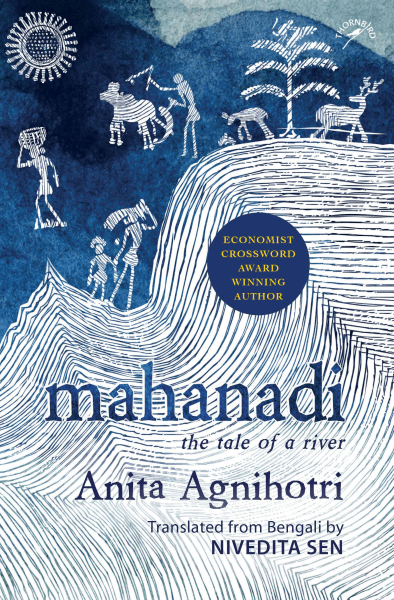
The Tale of a River

Book review by Bhaskar Parichha

Title: Mahanadi — The Tale of a River

Writer: Anita Agnihotri

Translator: Nivedita Sen

Publisher: Niyogi Books

 ‘I have seen the Mahanadi in so many ways: in the early morning light, in the reclining afternoon glow, in the blaze of the midday and in the shadow of the orange tinge of the sunset. I have seen this river in the form of its narrow current in winter, amidst profuse rain, in the forested region where it originates, and in the turbulent boundlessness of the estuary. And each time the river, serene, terrifying and quiet, has filled my mind with tremendous joy and nostalgia. Many people, both at the origin and basin of this river, are known to me. Their lives, inextricably linked with the river, have made me think, and have both fascinated and enriched me. The chronicle of this river, therefore, is also an extract of my life.’

One of the largest rivers of India, the Mahanadi has flown more than a thousand kilometers through Chhattisgarh and Orissa from the foothills of the Sihawa hills in Dhamtari district of Chhattisgarh and has fallen into the Bay of Bengal. Leaving behind the huge diamond reservoir at Sambalpur in Orissa, the archeological background of Subarnapur and Buddhist districts, the plains of Nayagarh, Cuttack and Jagatsinghpur flow through the middle of the deep forested gorge of Satakoshia, finally crossing the border near the port of Paradip.

But its journey is endless, as it flows day-after-day from the plateau to the forest to the ravine and finally to the plains. It unites with the sea every day. At every new turn, it leaves behind scores of villages, towns and cities. The din and bustle of a mofussil town, the solitary life in a standalone village, people’s struggle for survival, the episodes of their joys and sorrows, the sighs of the displaced people of Sambalpur during the building of the Hirakud dam mingles with the cries of the endangered people on the banks when the river overflows.

In the long journey of the river, it encounters mountainous plateaus, dense forests, villages and uninhabited emptiness. There are traces of the Paleolithic era at its source. There are ancient lyrical stories around it. Farmers, weavers and artisans have come and settled on the banks of the river to draw in the water. Mahanadi is to Odisha what Huang Ho is to China.

And so, Anita Agnihotri’s novel Mahanadi –The Tale of a River (translated from Bengali by Nivedita Sen) captures all these essential elements in a never written story of a stream which is a sorrow rather than a joy for crores of people in Odisha.

A civil servant, Anita Agnihotri, writes in Bengali in a wide variety of genres — poetry, novels, short stories and children’s literature. Recipient of prestigious awards like Bangiya Sahitya Parishad Award and the Bhuban Mohini Dasi Gold Medal conferred by Calcutta University, her writing explores the vast and complex Indian reality, many facets of human relations, and brings out the unheard voices of the marginalised and the underprivileged and has been translated into several Indian and foreign languages.

Translator Nivedita Sen taught English Literature at Hansraj College, University of Delhi. She worked on other popular genres, apart from Indian writing in English, post-colonial fiction and translation studies. She has translated Tagore’s Ghare Baire, and stories by Syed Mustafa Siraj, Leela Majumdar and others.

In the fiction, the narrative is through stories of the people living on the banks of the Mahanadi. Characters like Tularam Dhuru, Malati Gond, Neelakantha, Bhanu Shitulia, Parvati and others might never meet each other, but the story of their lives will remain strung together by the common thread of the ever– the streaming Mahanadi. The chronicle of Mahanadi is a journey through travails and misfortunes into life’s joys and mysterious beauty. 

Writes Sen in the ‘Translator’s Note’: “A socially conscious writer with a relentlessly dissident voice, Anita Agnihotri’s writing explores struggles in the lives of marginalised communities that are oppressed by underhand politics, social privilege and economic disparity. Though she was a member of the Indian Civil Service, she has maintained an anti-establishment stance throughout her writing career spanning four decades.

“In this novel, her non-noncompliance exposes the irony of Nehru’s urging those dispossessed by the building of the Hirakud dam to accept their suffering in the larger interest of the nation. She critiques the police turned into mercenaries by the state when they passively stand by during a violent attack on a social activist because they are paid to do just that. But she also elicits commensurate outrage at two policemen having to confront and succumb to senseless Maoist violence. The novel depicts how a cotton mill falls apart due to squandering of money and corruption in higher places and also how an upcoming steel factory with international collaboration threatens the livelihood of betel-leaf farmers. Her characters with enhanced sensibilities are haunted by the blatant social and economic inequality they witness all around. Yet Tanmay’s research on the abysmal living conditions in the slum clusters of Cuttack cannot resolve their problems.”

What is of significance is that there are a lot of facts in the novel that substantiates the geography, history and economics of the river and the state it mostly passes through. She sensitively kindles – rather in great detail — the realism, the deprivation and the travails of the people living on the riverbanks. The river forms the crux of the narrative, both as the central character and the primary subject.

As a novel, Mahanadi is poignant and is a fitting tribute to the place and people. Anita Agnihotri has been a percipient writer.

.

Bhaskar Parichha is a journalist and author of No Strings Attached: Writings on Odisha and Biju Patnaik – A Political Biography. He lives in Bhubaneswar and writes bilingually. Besides writing for newspapers, he also reviews books on various media platforms.

.

PLEASE NOTE: ARTICLES CAN ONLY BE REPRODUCED IN OTHER SITES WITH DUE ACKNOWLEDGEMENT TO BORDERLESS JOURNAL

Categories
Poetry

A Caged Bird Sings

By K Sheshu Babu

A caged bird sings

All the birds thronged
To hear the songs of this bird
Which inspired
Them because these songs were
Intertwined with oppressed peoples' lives.
The caged bird sang of freedom and liberty
Nature and its beauty,
Various forms of struggles
In Jharkhand hilly and forest areas.
Some vultures were nervous,
Implicated this bird with false charges
Imprisoned in a cage, tortured,
Questioned and assaulted
Till it lost its physical strength to fight
But had the mental strength and 'might'
To face the situation till its last breath!
The bird succumbed one day
And became vultures' prey
Leaving its admirers in sorrow
Who dreamt of a 'better tomorrow'!
Its songs still reverberate in the distant areas
And the sharp voice stings
Its detractors but all its friends and lovers
Hum the tunes of this 'bard' with wet eyes
Courageously march forward
Without looking ' backward!

(For Fr. Stan Swamy and Jiten Marandi, folk singer of Jharkhand, who was a member of Committee for release of political prisoners. Source: article published in Telugu monthly 'Vasanthamegham'  Oct  1, 2021)

.

K Sheshu Babu is a writer from everywhere, heavily influenced by Assamese poet Bhupen Hazarika’s ‘ Ami Ek Jajabor’ (I am a wanderer). Some of his publications, including poems, have appeared in  Countercurrents.org, Virasam, counterview.orgcounterview.net, Leaves of Ink, Tuck magazine, Scarlet Leaf Review, poemhunter.com, Dissident Voice and Sabrangindia.

.

PLEASE NOTE: ARTICLES CAN ONLY BE REPRODUCED IN OTHER SITES WITH DUE ACKNOWLEDGEMENT TO BORDERLESS JOURNAL. 

Categories
The Literary Fictionist

Fragments from a Strange Journey

By Sunil Sharma

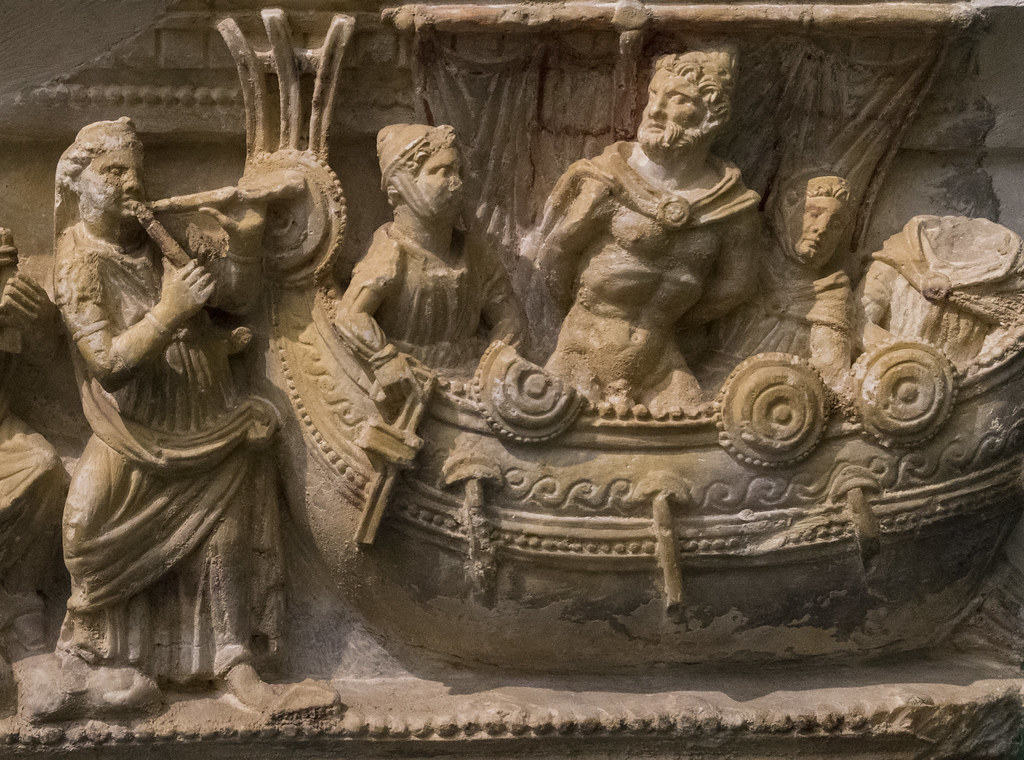
Odysseus: Etruscan alabaster urn 3rd – 2nd century BCE. Courtesy: Creative Commons

The Modern Odysseus

While travelling in the vast, vertical country buried in a grey-bluish haze in the post-modern hi-tech jungle, he saw bizarre and illogical things and recorded strange happenings in his notebook for a later recall. Some of the amazing things he noted during the course of this journey across an unfamiliar landscape are listed below in his diary.

— An unusual place. Folks are crazy. Do things non-natives cannot understand. For example: Reading the novels backwards. It is the fad picked up fast. One guy in a subway began this, somebody caught it on Smartphone and the two-second clip went viral. Since then, every decent guy doing it, as an in-thing. No rationale behind this act of reading! Just caught the fancy of the public. The Epilogue is big thing, because it contains everything — that is the fuzzy logic here! Like, eating the dessert first — skipping the main course in a fancy joint.

Folks!
Fads!

— Or, strange enough: Men buying bulky novels and not reading them. Saw a man tearing the fine art paper from the novel and using it as a tissue paper to wipe his low receding forehead that reminded viewers of his ancestors — the Neanderthals. Contemporary kin in designer suits and designer beards — minus the clubs! Next bus, everybody tearing the same art paper and wiping faces, sweat or no sweat!

— Other odd things. I saw a band of stiff musicians playing before a deaf audience who sat through the public performance with blank faces. Looking like regimented soldiers. The notes were discordant. There was no melody or harmony. Yet, after regular intervals, the deaf would all clap, on cue from an invisible prompter, the kind found in TV studios. Neither music nor audience connected or made sense. Yet, both parties continued the charade perfectly well. And yes, the five-star ambience and food were standard but folks were busy binge-drinking and eating only — music was mere noise in the background.

— In another part of the vertical city, I found a painter showing his paintings to completely blind persons in the antiseptic art district. The canvases were all bare. No colours, nothing. Some people were bored. Others were praising the experimental painter. Some rich were buying those large bare canvases. Art was in the air. Art in the form of emptiness, void — not visible but as understood by a mad visitor babbling around the long museum, where they were discussing money as the new erotica.

— A poet recited his long poem to empty chairs in an air-conditioned auditorium in an upscale wire-free section. After every pause, a round of applause was heard from the empty auditorium. The blind poet assumed it was packed with his admirers. I peered around but saw nobody but distinctly heard the claps — loud and clear. Strange! Maybe, somebody playing a recording somewhere!

— Writers wrote fantastic accounts of exotic journeys and sharing with each other in groups that had no memory cells intact, as their memories were all of the immediate instances that were there and then, lapsed forever, swallowed up in the gurgling mists of Time. They read, nodded and immediately forgot what they had read. Nobody could recall a single line, yet they talked books with aplomb!

— Entertainment stars walked the city as the new royalty and behaved like kings and queens. Their song/ scriptwriters begged on the indifferent streets filled with the hopefuls trying to be like them. Nobody bothered about them. They were fixated on the stars and their doings in closets and hotels. Trivia was sacred. Paparazzi, serious occupation. Star gossip magazines, roaring business! I saw poverty walking the glitzy roads—invisible!

— Publishers published books with blank pages. Yes. Like unwritten notebooks! Only the covers carried the titles; no authors’ names. They sold these to the public and school libraries.

Crazy country!

— I saw awards ceremonies. They were giving awards to the ones who said they had not done anything. For example, the state award for literature to a lab attendant who never read anything literary except soft porn. Or, to an ageing illiterate porter for bringing new perspectives and voices. Nobody questioned. The crowds hardly checked. Busy buying things in the mall during the discount seasons there!

— A long line of desperate poets, along with their collections of poems, ready to commit suicide by jumping into the ocean. I saw a couple of nutty ones — bearded and thin and mumbling — jump into the choppy sea waters also. One of them shouted at the amused spectators with their camcorders ready to film the event for their entertainment, “Better to die than live in an airless society that has banned poetry.”

— I saw huge mansions, gleaming offices and gardens and buildings but no living breathing beings, only dim shadows flitting about. I could see no figures, only mere outlines passing by the windows and disappearing in a second. It was strange! Unnerving. No presences. Only the ghostly voices that were hardly heard or understood by the other fleeting shadows. Only the soft whispers heard in passages or corridors dim and gloomy.

— Outside the metro limits, I saw a vast undulating plain called ‘The Forest’. There I saw paper trees and flowers planted everywhere. The real ones were all missing! The cut-outs and fakes were everywhere, bearing the names of 2000 trees that once grew in that country. A little stream was called Amazon. The hills were also fake. Miniature models representing huge hills. It was all manufactured. The kind seen in Hollywood. A studio set at a gigantic scale to replace the real that was extinct. It was scary scenario. The verisimilitude. The simulated reality. Although created artistically and with high fidelity to truth, the gnarled trees and green boughs and red flowers or pink could not fool me, the one who has, in a previous birth, visited many places and encountered many real adventures and even met the Cyclops and other strange creatures. The simulated version was disgusting and un-real!

— In the cities and the country, I saw only marching armies of synchronized machines with set timers and automatic expressions. It was hyper-reality and I desperately wanted to exit this nightmare…

— And I see mourners not mourning the dead but laughing at a funeral. In fact, on closer inspection, I see them neither crying nor laughing but completely blanch and dull, a void, the sound of laughter is coming from a chip in a micro-gadget strapped to their coats. It is recorded sound given by an actor! Nobody delivers farewell. They sit as a well-coordinated pack of automatons in grey suits and black ties, listening to the sounds of violin being played outside the funeral parlour by an old musician.

— The most frightening moment: I do not know if I am awake or sleepy; living or dead; real or fake; in present or past; writing or listening; watching the reality or being watched; an image or copy or genuine being in this strange land.

Am I sane or mad?

Sunil Sharma is an academic and writer with 23 books published—some solo and joint. Edits the online monthly journal Setu. 

.

PLEASE NOTE: ARTICLES CAN ONLY BE REPRODUCED IN OTHER SITES WITH DUE ACKNOWLEDGEMENT TO BORDERLESS JOURNAL.

Categories
Poetry

Deep in my Couch

By Michael Lee Johnson

Old Guitarist (1903-04) by Pablo Picasso (1881-1973) Courtesy: Creative Commons
Deep in my Couch 

 
Deep in my couch 
of magnetic dust,
I am a bearded old man.
I pull out my last bundle 
of memories beneath
my pillow for review.
What is left, old man,
cry solo in the dark.
Here is a small treasure chest
of crude diamonds, a glimpse 
of white gold, charcoal, 
fingers dipped in black tar.
I am a temple of worship with trinket dreams,
a tea kettle whistling ex-lovers boiling inside.
At dawn, shove them under, let me work.
We are all passengers traveling
on that train of the past—
senses, sins, errors, or omissions
deep in that couch.

Michael Lee Johnson lived ten years in Canada during the Vietnam era and is a dual citizen of the United States and Canada. Today he is a poet, freelance writer, amateur photographer, and small business owner in Itasca, DuPage County, Illinois. Mr. Johnson is published in more than 2033 new publications. His poems have appeared in 42 countries; he edits and publishes ten poetry sites.

.

PLEASE NOTE: ARTICLES CAN ONLY BE REPRODUCED IN OTHER SITES WITH DUE ACKNOWLEDGEMENT TO BORDERLESS JOURNAL

Categories
Musings of a Copywriter

Crematoriums for the Rich

By Devraj Singh Kalsi

Courtesy: Creative Commons

It is useless to make an effort to remind a dead person that there is actually no travelling class on the last journey. One who has always maintained class, travelled first class, and classified himself as an ultra-rich person should not lie next to a beggar waiting for his turn to be cremated. Driven by the noble thought to enable his departure from a premium crematorium, I have started preparing a feasibility report before approaching a venture capitalist to fund what looks at the moment like an ambitious adventure of sorts.  

It is such a pitiable sight to witness a rich family jostle in the crowd of mourners from poor families. Those working-class people who may not have broken class barriers in life but in death they seem to have triumphed in establishing the non-discriminatory approach by juxtaposing the rich dead with the poor dead. When the sizeable, privileged class has the resources to afford something ostentatious, a visionary entrepreneur like me should grab the opportunity to create a viable business model that converts funerals into a lavish and luxurious affair.

Just like resorts built in the outskirts of the city, a vast open space would need to be identified and grabbed cheap from farmers to construct an upscale crematorium. There would be a parking lot for buses on hire arriving with mourners, hearse vans, and personal cars. Gun-toting security guards manning the parking zone, with hourly parking rates would be applicable. Once the family of mourners approaches the entrance, they will have three types of schemes – Gold, Diamond and Silver. Depending on their budget and choice, they can pick what suits them best. There will be a discount offer during the festive season. You would be able to consider yourself fortunate if someone in the family expires during the festival time around Diwali or Dussehra. Besides, there would be an EMI (Enterprise Management Incentive) scheme included to bring in the aspirational upper middle class keen to emulate the rich. Yes, the salaried folks should also get to enjoy the enriching experience. When they travel the world using credit cards, they should get the exclusive facility during the last journey.

At the moment, I am thinking of hiring the advertising agency I work with – to look after the branding exercise and build a nice teaser campaign.  I have some ideas to share but I know they will get killed for being too creative. So, I would prefer to let the creative head take charge and make this campaign go viral.

Once the family has booked the option of lighting a pyre or the electric option, they get a card to flash at the entrance. They are led in by a team of young girls and boys in flowing white dress. There are provisions for four funerals at the same time inside this facility. The dead body is taken in by the authorised staff and the family has nothing to do in this regard – notice the element of comfort and convenience packed in. They are led into a room with LED lights, with soft devotional music in the background. As they would  have already specified the religion at the time of booking, they would find devotional music related to their religion. For example, a Sikh would get get Shabad Kirtan related to death. Some sombre instrumental music will play in the background.

The Diamond scheme would be pegged at three lakh rupees, the Gold scheme would be worth two lakh rupees, and the Silver scheme would be up for grabs for just one lakh rupees. The facilities will vary depending on the selected scheme. There will be a theatre that shows how the soul travels after death. There will be some celebrity Gurus offering live discourses and a case-specific analysis of the soul reaching God. The audio-visual experience from the voice of a priest will be calming and comforting for the bereaved family at the hour of grief. There will be a dining room for lunch and dinner facility and the menu truly five-star but purely vegetarian. Leading chefs will prepare favourite dishes and the families with trains of mourners can avail of the meal served in silver utensils. 

Once the cremation starts, the address system will inform the family to get inside and witness the cremation process beamed live. There is a provision to hire Rudaalis (professional mourners) if the family so desires. There will be arrangements to serve tea, coffee, cold drinks and other refreshments like burgers, pastries while they wait and watch the cremation. There will be steam and sauna rooms, massage sections and salons to get back in shape refreshed after several hours inside. There will be counselling sessions for the nearest of the dead, to manage their grief. Such healing sessions are important so that they can carry on living without feeling sad all the time. The Grief Minimization Therapy should make them go back and feel lively and energetic within hours. Trained international experts with specialisation in death-related sorrow will be hired to administer this line of treatment.

Once the cremation is complete, the family will be taken to the ‘Immersion’ section where they will be handed over the urn with ashes. There will be a lake behind. The family will have the option of immersing it there or taking a chopper ride to hover over  the nearest river to sprinkle the ashes and flower petals from above. After the ritual is over, the family will  return to the crematorium to join the rest of the mourners. There will be some gift bags for all containing prayer books, CDS on spirituality, a personalised CD on the entire burning process, handkerchiefs, photo-frames, prayer mats, incense sticks, and other religion-related paraphernalia apart from the photographs of the dead body and the mourners.  More details will have to be fleshed out to make it attractive.

The personalised experience for the grief-stricken family is the USP (Unique Selling Proposition) here and adding luxurious dignity to the dead makes it more desirable. The class he belonged to is the class he will travel in when he leaves the world. This should generate the big idea for the success of this innovative venture. To leverage its strength, we can begin a chain of luxury crematoriums in the metro cities first and then proceed to Tier-2 and Tier-3 cities depending on the response generated. Presently, we need to think of a suitable name – not Yatra (journey), Safar (trip), Manzil (tier) types – for this start-up and make a shortlist of potential investors to approach for its funding.  Given the huge number of cremations every year, within three years it should recover the investment and bring in tons of profit.

.

Devraj Singh Kalsi works as a senior copywriter in Kolkata. His short stories and essays have been published in Deccan Herald, Tehelka, Kitaab, Earthen Lamp Journal, Assam Tribune, and The Statesman. Pal Motors is his first novel.  


PLEASE NOTE: ARTICLES CAN ONLY BE REPRODUCED IN OTHER SITES WITH DUE ACKNOWLEDGEMENT TO BORDERLESS JOURNAL. 

Categories
Poetry

The Night Music

By George Freek

THE NIGHT MUSIC 
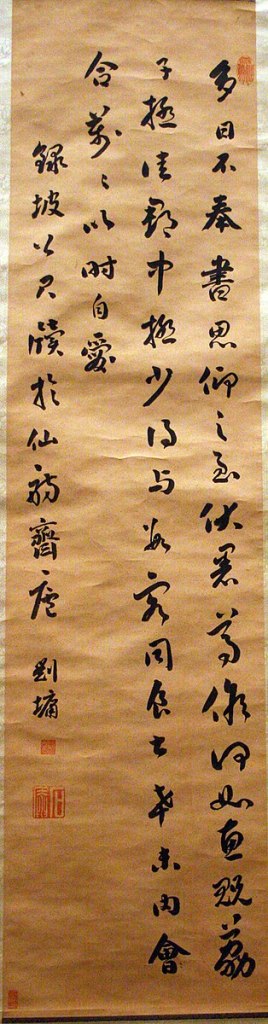
(After Liu Yong)

My clock ticks like
an incessant toothache.
Clouds soft as pillows
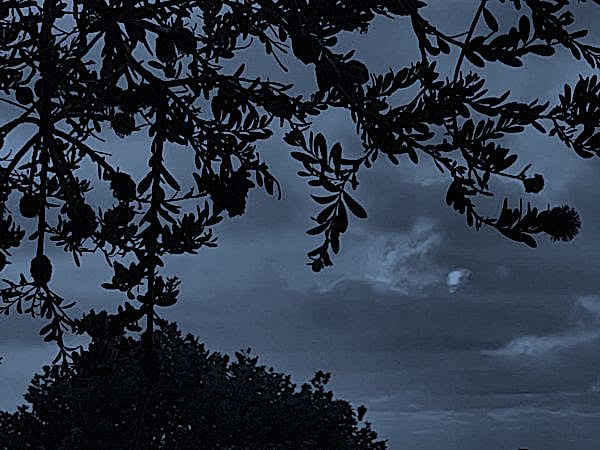
smother the moon,
as I sit beside the river.
All night I hear waves
beat the shore, as if
it were a door
they can’t open.
A bird shrieks from
joy or from fear.
Life is often unclear.
I’m nearing sixty.
I still have no idea
who I am, or why
I’m even here.

George Freek’s poetry has recently appeared in The Ottawa Arts Review, Acumen, The Lake, The Whimsical Poet, Triggerfish and Torrid Literature.

.

PLEASE NOTE: ARTICLES CAN ONLY BE REPRODUCED IN OTHER SITES WITH DUE ACKNOWLEDGEMENT TO BORDERLESS JOURNAL

Categories
Poetry

Rebranding

Written in Korean & translated by Ihlwha Choi

The Good Shepherd, Brussels: Courtesy: Creative Commons
Rebranding

 
Once in a certain village there lived a young man.

He was so poor that he stole a sheep.

The villagers branded ST -- sheep thief – on his forehead.


The nickname of sheep thief followed the young man.

He was despised and treated coldly.

But he did his best and did his own work in silence.

He also threw himself into hard work in the village.

He was always honest and faithful, regretful of his past faults.


The villagers' attitudes began to change gradually.


With the passage of time, his black hair changed to white.

The villagers began to give him their sincere respect.

The ST on his forehead was no more the initials of a sheep thief.


Every villager regarded the letters as the initials of a Saint.

The young man condemned as a sheep thief

became a grand old man revered as a saint by the villagers.

Ihlwha Choi is a South Korean poet. He has published multiple poetry collections, such as Until the Time, When Our Love will Flourish, The Color of Time, His Song and The Last Rehearsal.

.

PLEASE NOTE: ARTICLES CAN ONLY BE REPRODUCED IN OTHER SITES WITH DUE ACKNOWLEDGEMENT TO BORDERLESS JOURNAL

Categories
The Observant Immigrant

Is Sensitivity a Strength or a Weakness?

By Candice Louisa Daquin

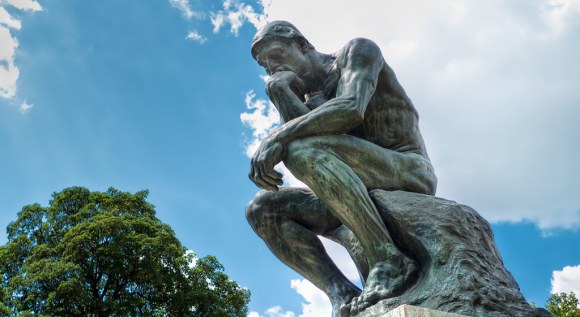
Rodin’s The Thinker. Courtesy: Creative Commons
“I may be a dreamer, 
 But I’m not the only one.” 
 -- John Lennon (Imagine). 

As a child I remember understanding on a very basic level the concept of cruelty. I recall vaguely thinking in the simple way children think; “Why is that person so mean?” It wasn’t because I wasn’t getting what I wanted and stomping my foot, it was more observing a cruelty and trying to make sense of it. Bottom line, children understand these things pretty early on and it forms what becomes their moral compass.

We can and do change over time but those early lessons tend to stick around. My early lesson was that I recognised that I cared. I observed that some other people did care too and some other people did not. I think ever since then I have wondered why some people are cruel.

More recently there has been a debate of sorts over the ‘value’ of being sensitive. Can you be too sensitive? Is there value in being sensitive? The issue is split. Some believe sensitivity is a weakness. Others recognise it makes life harder. Some think sensitivity is related to mental illness, whilst some believe we need more sensitivity in this world.

As a therapist I am often asked this question. I have also asked it of myself. I tend to berate myself when I am ‘too’ sensitive, but this is a learned behavior, based on being shamed for being sensitive in the past. The truth is I think you can literally speaking be too sensitive (for your own good, because it’s you who is hurt most by it) but most people who are told ‘you are too sensitive’ are being gaslighted or manipulated.

Through my life I have been told so a few times. Predictably, I felt ashamed because society perceives sensitivity as weakness. I consider myself a strong person, a resilient person, but I know the way I’m perceived by those who know I’m (also) sensitive, is weaker. This has never been truer than since moving to America, where the ‘bad ass’ mentality rules and women over-compensate by being emotionless and ‘strong’ as a rebuke against sensitivity.

Sensitivity is out of fashion; it has been for a long time. Maybe, by rejecting sensitivity, people believe they are automatically stronger (and perceived by others to be) we hold up role-models of impossibly strong people who are not depicted as sensitive. None of us seem to revere sensitive, kind people. On the contrary, we usually suspect them. We admire the person who is sarcastic, quick-witted, a little ruthless, and undefeatable. Therefore, I will seem like a sensitive person trying to justify sensitivity by writing this. And you wouldn’t be wrong. I think sensitivity has a bad rap and I’m personally tired of how insensitive people are. I don’t think this is commendable, cooler or something to aspire to, but sometimes I feel I’m in the minority.

Most recently I had two conversations within a day of each other, where I was told ‘maybe you’re being too sensitive’ and shortly after that I talked to a good friend of mine about this. Her answer got me thinking about the way sensitivity is perceived and how wrong-headed we are. She said ‘well maybe more people should be sensitive’ and those simple words were a bombshell. Exactly! We wouldn’t have to go around covered in armor if people were more sensitive! We wouldn’t have to be ‘bad ass’ if others were kind and thoughtful!

When did we become a people who worshipped coldness over warmth and compassion?

I might sound like a spiritual evangelist writing this, and ironically, I don’t believe in God, but many of my concepts are in keeping with those you might see in the Bible. Treat others as you would wish to be treated. Be compassionate and kind to those who need it. Those are not concepts we enact, instead we admire the person who is rude, emotionless, ruthless even. What happened to make this happen?

When I left university the first time, armed with my degrees I thought (naively) I could go out into the world and get a good job. Why shouldn’t I have thought that? I had worked hard I deserved it, didn’t I? When I recall how I thought back then, I was really a naïve person (though I thought I knew everything) with no comprehension of how hard the world could be. Not only was the job-market seemingly impenetrable, but nobody was impressed with anything I had to offer, and I felt utterly deflated within a short period of time.

Some would say bringing down a peg or two is a rite most young people go through when they get into the real world. But I still recall that time as being one of deep despair and sadness, to imagine a world that wasn’t fair or kind. I had genuinely thought it could be! The struggle to establish myself financially was uphill and took a long time. During which I experienced repeated knocks to my confidence and was told over and over that I was nothing/nobody. It seemed like colleagues, bosses, etc. thrived on putting down the young people who got on the first rung of the ladder.

I have never forgotten that. I ask people even now if they had the same experience(s); Some say yes, some say no. Initially I took it personally because it felt personal, but I came to realise it was a rite of passage, where young people were put down and put in their place by those who had come before them. It remains a horrible practice with no real value, after all, we need to believe in ourselves, not be trashed and put down. For some, it may be easier to get over than others. I was in the latter camp. I had grown up being put down, so the last thing I needed was for it to happen again.

This is when the idea of grin and bear it, muscle through, take it or leave it, man up, comes into play. This is but one of many times in life where the emphasis is on being ‘strong enough to endure it’ and to put aside one’s true feelings about a situation (outrage, hurt, confusion) in favor of ‘sucking it up.’ Given that I had not joined the military, I found the urge to react this way very strange. I wanted instead to ask why it had to be this way, why people let it be this way?

This relates back to my earliest understanding that some people are cruel. But our response to some people being cruel is weird. Instead of calling them out and doing something collectively about it so that they do not continue to have the power to be cruel, we seem to want to join them? The shaming of those who are sensitive seems a way to a line with those who would be cruel, even as logically all those who a line with the cruel, might once have been sensitive.

Why do we think being sensitive is such a weakness when it is far weaker to be a hard-nosed uncaring person who doesn’t give to anyone, than to be a caring person who wants to treat others as they would wish to be treated? I can’t say I understand it now any better than I did years ago. When my clients ask me, I remain as perplexed at people’s cruelty as I ever have. There simply seems no good justification for it. And moreover, why people glorify cruelty and think kindness is ‘suspect’ ‘insincere’ or ‘weak’ baffles me.

Sensitivity means you notice when someone is upset and you care. Insensitivity means you don’t care to notice what happens to anyone and you don’t give a damn. When you put that bluntly, I find it hard to understand why someone would wish to be the latter, other than it’s easier, and might be less work. But what about conscience and morality? For many of us, we have that prickling of conscience if we have mistreated someone, we want to be a good person. We try to help others, so how could we ever want to align ourselves with someone who didn’t give a damn?

Yet how often, from the schooldays onward, do we see the popular kid is the mean kid, or the most liked child is the one who does nothing for others, but is considered ‘cool’ or the boss who is mean but somehow respected, or the adult who has lots of friends though they never do a thing to help others? It’s not always the kind, sensitive person who is popular, in fact their motivations are often suspected, and they might be considered weak and cloying.

Moving to America I struggled with this considerably. I tend to wear my heart on my sleeve, if I like someone, I do go out of my way to be a good friend to them. I think that’s how it should be. But my good intentions were often suspected, people would even say to me (as an insult) “you’re so NICE” (meaning: Boring) or they wouldn’t believe my kindness was genuine. As to being sensitive, I was told I was ‘too’ sensitive if I stepped over the formality people had with each other, where people didn’t really ask how someone was doing, or follow up and care enough to get closer.

In fact, I didn’t understand how people got close, because everything was so superficial and formal. I began to see that many friendships were just that, convenience based. Those who had children hung out with others who had children, and car pooled. Those who went to the gym talked to others who worked out a lot and maybe met on weekends to work out, etc. But the moment you no longer had that in common, you rarely kept in touch. The deep friendships I had sustained back home, seemed rarer.

I was told this was because you made those kinds of friendships in childhood and once you were an adult you didn’t make friends like that. I wondered why not? All the rules of friendship baffled me and the difficulty of getting meaningfully close to people seemed incredibly hard all of a sudden. With colleagues a work — those I had known for years and whom I worked with closely — I wrongly assumed we were also friends. But they saw me only as a tool for the job I did. They invested no more in me as a person as they would in someone they had just met, even if we worked side-by-side for years.

To this day that strikes me as strange. I’m not standing on a moral high horse saying that I can’t fathom these things, I think I’m just stating a fact. I find it difficult to understand why someone would be cruel. Why someone would make someone else feel bad (deliberately) or why someone would put someone else down for being ‘weak’ just because they’re sensitive and care. Since when were those ever-bad attributes? Could it be in our rejection of older morals, we have adopted ones that cut our nose off to spite our face?

Having been told people do not trust ‘nice’ people I began to understand what that meant. Sometimes socially when you meet someone who is initially really friendly, they turn out to be less than you imagined, whereas someone else, who was perhaps initially aloof, can turn out to be a great person. I have learned friendliness doesn’t always equate to good people. Sometimes it is a front or an act. However, if you are a genuine person and sensitive to others, this is more than just initial friendliness and yet, you might be suspected because of people’s previous experience with ‘kind or friendly’ people.

When did it become rare to be kind and when did we begin to be suspicious of kindness? Intellectually I understand it but emotionally it’s so strange. I have had conversations about related subjects such as why women don’t like other women (they think they are backstabbers) or why women aren’t feminists (their experience has been women are often worse to them than men, so why would they be a feminist?) and I think they’re all related themes.

When we can’t trust the motivations of others, we might suspect the worst if that is our prior experience. Nowadays we’re more liable to mistrust a kind person than someone who is aloof or sarcastic. We’ve got things around the wrong way. And all because some of us are cruel and delight in hurting others, which includes warping the truth. Because the truth hasn’t changed. Being sensitive means caring about others, and this should never be something to ridicule or deride. Nor is it weak.

If after reading this you conclude I’m writing this to justify my own sensitivity, then you wouldn’t be wrong. I hope you see it’s leading to a much bigger picture too. I also hope you know I am not justifying sensitivity emotionally but defending it based on reason and fact. After all, sensitivity isn’t all emotional. We have often mistaken sensitivity for some kind of mental illness but it’s nothing of the kind. True, some mentally ill people may be sensitive, but that’s all. Sensitivity, unless it’s pathological in its extremity, is a natural human response. But still those who wear their heart on their sleeve are humiliated by those who are still in the school yard.

I would love a world that embraced the idea you can be sensitive and strong, because I truly believe you can. I also like the idea of a world where people’s past experiences wouldn’t close them to trusting someone’s kindness, or suspecting kindness of motivation. Do we really want a world where we’re all so removed from each other we no longer care? Is that the world you want to live in? It’s not the world I want to live in. I want my boss to care if I’m struggling, I think on a logical, emotional and realistic level this will improve our relationship. I don’t think humans are robots or unconnected. I think caring is how we connect and I want to. Living in a disconnected world where nobody cares what happens to anyone else, seems a dystopian nightmare. As we grow in numbers this is logistically more likely to occur. Let’s at least let those who are sensitive, flourish rather than shut them down and shame them.

Candice Louisa Daquin is a Psychotherapist and Editor, having worked in Europe, Canada and the USA. Daquins own work is also published widely, she has written five books of poetry, the last published by Finishing Line Press called Pinch the Lock. Her website is www thefeatheredsleep.com

.

PLEASE NOTE: ARTICLES CAN ONLY BE REPRODUCED IN OTHER SITES WITH DUE ACKNOWLEDGEMENT TO BORDERLESS JOURNAL.

Categories
Nature's Musings

Of Moonshine & Birds

Photographs and Poetry by Penny Wilkes

Photo Courtesy: Penny Wilkes
NIGHT PLAY
 
While darkness accumulates,
she sheds expectations 
like chameleon lace.
 
A waterwheel of wings
rattles her window;
the pane rises
in the Moonhawk’s beak.
 
She slips inside his coat
feathered by scent of cloves,
moves behind his eyes.

They fly beyond 
an eyelash of moon
until dawn’s pulse
sends a bead of  honey
to her lips.
 
She returns
hungry for words.
Photo Courtesy: Penny Wilkes
 
High Noon
 
House sparrows belly up to the seed bells,
hustle places in their maple branch saloon. 
 
Peter the blue jay enters 
with a flap of swinging doors.
 
Sparrows spiral the branches
to fetch his rejects. 
 
The neighbour’s cat ambles by,
hint of holsters on its haunches. 
 
Posse of crows circles in the distance,
while mourning doves scurry 
and share their own petticoat politics.
 
Across the yard a white egret
surveys the pepper tree. 
Photo Courtesy: Penny Wilkes

Penny Wilkes,  served as a science editor, travel and nature writer and columnist. An award-winning writer and poet, she has published a collection of short stories, Seven Smooth Stones. Her published poetry collections include: Whispers from the Land, In Spite of War, and Flying Lessons. Her Blog on The Write Life features life skills, creativity, and writing:  http://penjaminswriteway.blogspot.com/ . Her photoblog is @: http://feathersandfigments.blogspot.com/

.

PLEASE NOTE: ARTICLES CAN ONLY BE REPRODUCED IN OTHER SITES WITH DUE ACKNOWLEDGEMENT TO BORDERLESS JOURNAL