Categories
Stories

Perhaps the Last Kiss

A Nepali story by Bhupeen, translated by Ishwor Kandel 

Nepali Intercity Bus. Courtesy: Creative Commons

I woke up suddenly.

The bus was rattling. The passengers in the bus were crying as they were frightened. Some of the passengers were making a last bid to make it to the entrance and jump out of the bus hurriedly. The seats and the extra bamboo stools of the bus that had been full were vacant. Perhaps, a few audacious passengers had already jumped off the bus. I could see only either weak and old people or the mothers with their babies on the seats. The bus was shaking like the earth during an earthquake and was running on the street like a drunkard. 

I looked at the seat of the bus driver. It was vacant. I could easily guess that the driver must have jumped out of the window just as he realised that he could not avoid an accident. At that time, I had been fast asleep.

“I must do something. If one stays sans any measures even after one predicts the accident, it is nothing more than accepting death quietly,” said a voice within me. I got up quickly and trying to keep my balance. After accomplishing this initial feat, I had the illusion that I had pushed death a bit farther away. Then, I saw my wife’s face till now darkened with terror look towards me with a glimmer of hope in her eyes. She was trying to say something lying on one of the seats in the corner holding her hands around our only son’s head. But her words were entangled in her throat. Sometimes it is quite easy to understand the language of extreme crisis. I had already understood her language.

I had been awake till the time the bus crossed the Narayani River. And in my half sleep, I heard the bus conductor shouting ‘Arunkhola, Chormara’ and knocking at the door. When I woke up, I did not immediately realise where I was. That was not an urgent need either. The most important thing was to survive.

The old people in the bus were chanting the name of God. It felt as if the blood from their heads were making macabre, abstract images on the white piece of cloth that covered the front seat. The predicament of my wife was not an exception. The blood from the cut on her head was falling on the face of the eight-month-old son. Sensing the dreadful noise and the tragic condition of his mother, the baby was crying. He was crying in such a way that he was choked for quite a long time in between.

I took the baby from my wife with lightning speed. I patted him on his back. In a while, our son started to breath normally. This was a relief. But the bus was bouncing on the road like a frantic bull. It was like bull riding in sports channel where matadors try their level best to sit on the bull and continue seated if possible. It was not the time to think of a sport. But I did. Perhaps, I was meant to lie under the bull’s deadly hooves and see the last of the sun. I did not want that.

I held the baby tightly with one hand and walked to the door, supporting myself with the other seats or the rod over the gangway with the other hand. There were no obstacles to moving ahead as the capable ones had already jumped out of the bus, making it almost empty. Compromising with the potential risk, they landed safely.

The bus was moving forward downhill with the glass on the windows clinking. I bent down and had a flickering look at the road but there were no bends nearby. It was a hopeful sign in the time of disaster. A bus without a driver knows not how to turn with the bends.

Trying to maintain balance as much as possible, I reached close to the door and started to plan how I could jump off the bus safely. Through the door, I noticed a canal beside the road and on a little height, I could see a paddy field filled with crops. I thought of flinging the baby as far as the field.

The collage of unpleasant sounds made my mind go blank again. I postponed the task, but the bus that should have stopped was moving ahead downhill humming the song of death. 

Managing to move one step closer to the door, I gazed at my son’s countenance. I could not figure out what would be more ruthless – to fling him out or to keep him with me. To my surprise, he was smiling looking at me. Probably he was telling me, “Dad I am not worrying about death because I am on the lap of the most reliable person in this world. Death cannot even touch me on this lap.”

My eyes were full of tears.  I lost my self-confidence for the first time in my life and prayed to the Almighty, “Oh god! Please save my child. I cannot see anything around except darkness.” My instincts could sense the start of tragedy, the end, death. But I was struggling to prove that instinct was a lie. I completely abominated the pointlessness of the kiss of the death. The rising smile of my son like the full moon in pitch darkness filled my being with the light of energy. I wanted both of us to be safe.

Coincidently, the vehicles were not visible on both sides of the road. The arrival of any vehicles from any sides of the road in such a terrifying moment could only be break the thread of life from the passenger. The bus was speeding faster singing the monotonous song of the death.

Little further, a bridge and the bank of river could be seen. The overflowing water of the canal that flooded the road was a characteristic of the mid-rainy season. I stepped down on the last step at the door of the bus and prayed for a safe landing.

“I should jump off the bus before we reach to the bridge. There is no other alternative.” The voice echoed into my being and got lost somewhere. I wanted to evade death, jumping off the bus but it would be quite impossible to save the baby as the bus was speeding on the wide and blacktopped road. I again delayed. In no time, the bus reached near the bridge. The roaring flooded river below the bridge was flowing, whirling madly.

Clutching the baby to my chest where potential death reigned, I once again looked at the seat of the bus where my wife was crying and looking at me — as if with solicitation — along with the few remaining passengers. I could hardly read her face as the blood from her forehead blurred her expressions.

She would probably have said, “Go my dear husband. Please jump off the bus with our son and save him. For me, I can accept death in lieu of his life. Please don’t waste even a second to help me. Save our son.”

Or she could also have said, “Please try to save me as well my love. I long to see my son grow up.”

Reading these two possible emotions on the countenance of my wife, I comprehended that I was a selfish husband. I was perplexed with the thought. How had I dared to reach the door with the thought of jumping off the bus leaving her alone. Were our marriage vows about eternal togetherness an illusion? Perhaps, I thought of abandonment to save our son’s life. This thought gave me some solace. I felt pleased about being a selfless husband and a father even just before the last breath.

It was the third year of our marriage. Life had offered us some moments to celebrations. Most of the time, I had been busy teaching and managing our home. She was busy struggling with her married life, establishing a loving identity in her new world and becoming a mother –the best word in the world.

This had had an adverse effect on her studies. Last year she was pregnant, but she took the examination of her bachelor’s degree in Chennai in South India. Unfortunately, she failed one of the subjects. This is the common predicament of all the Nepali women.

This time, I was going to Chennai with her as she had to retake her exam. We were supposed to catch the train next morning. Her parents had been living long in Chennai where she went to university. Our families were originally from the same village in Nepal. We met in the village during their visit, became friends and we got married. I was planning to meet her relatives, enjoy the sea beach, leave mother and child there for few months and get back home. But the accident interrupted our plans on the first day of our long journey.

The bus slowed down as it crossed the bridge. I looked through the windscreen. The bus seemed to be moving uphill. I went back to my seat. I mumbled to myself, “Nothing can separate us.”

“Dying together is better than living alone.” I had a strong sense of determination. The bus started to go downhill again — slowly at first and then faster and faster. As the bus was losing balance, I remembered a sentence from an article on mountaineering — in mountaineering, descending is more dangerous than ascending. My heart said that I was very close to death along with the passengers. I almost died in my heart. But I was still alive in my mind. The mind functions till the last breath.

I was touching my son who was sitting quietly on my lap. I touched my wife and hugged her tightly. And I was ready to face potential death. Finding myself very close to the end of life, I wanted to wail.

There was a loud noise. The rest of the windows of the bus were totally smashed but the bus had stopped finally with a strong quake. For a couple of moments, time froze. We all went back to our seat. The bus had bumped on a big tree beside the road and halted. I kissed my son and wife on their foreheads.

That was not the last kiss of my life.

Bhupeen

.

Bhupeen is an award-winning writer with three collections of poetry, an anthology of essays and a novel. His creations are widely published and known for witty turn of phrases. Bhupeen is one of the founders of the ‘Conservation Poetry Movement’.

Ishwor Kadel is a poet, teacher’s trainer and educator. His published works include Baya, a collection of poems, and Echoes, a novel. He is also a reputed translator.

.

PLEASE NOTE: ARTICLES CAN ONLY BE REPRODUCED IN OTHER SITES WITH DUE ACKNOWLEDGEMENT TO BORDERLESS JOURNAL

Categories
Story Poem

Ullswater Requiem

By Mike Smith

Photo provided by Mike Smith
Ullswater Requiem

I Dies Irae: The Anger of the Water

Here’s where I stand. I read the lake each day.
Beyond our reach it changes endlessly.
Sometimes it’s dark as ice. Sometimes it’s broken glass,
sometimes like metal streaked where boats have passed,
sometimes with ripples regular as sound.
Sometimes it’s like a sky: Sometimes a pit.
Sometimes it’s white capped, rough.
Sometimes there’s barely breeze enough
to drown the mirrored image of the trees.
It mirrors all moods, given time.
Today the water’s still and black. Call it
sullen if you like. It cannot mind.

And there’s a pebble beach that waves have cut
driven by storms against the mountainside.


II Tuba Mirum: The Bringing of the News

Whatever moves above it or below
disturbs the surface: Writes its passage: 
weight: speed: bulk: hull: body: keel and fin:
the changing pressure of the wind.
A drowning man will tell his tale
as clearly as a fishing heron can.
Today it’s briefly mute: What lives below 
is motionless. The wind is starved of breath.

Here three boys died a few yards from the shore,
where the wave cut platform tips sheer down
the steep slope to deeps that glaciers carved.
So cold at depth it strips you to the bone.
That shock of cold will take your breath away.
Only shallow water over stone’s not cold.


III Recordare: Memory

You remember once yourself slipping off 
the narrow shelf of Ullswater.
You were no swimmer at all and had waded out like them
beyond the glimmer of sunlight on rocks below,
walking on a cliff edge in a mist,
and only when you felt the stones begin
to slip and shift knew you were on the lip
of some commencing underwater fall.

You had rowed singing over the water
like fearless Vikings to the shingle beach,
bringing your gear: striped blazer, straw boater,
a camping stove for the picnic, scones,
a gramophone and old seventy eights.
You danced on stones before it drew you in.


IV Quod sum miser: The Bereaved

Crossing a mountain stream once in bare feet
you could not keep yourself from crying out,
sliced by that scalpel cold, burned by its ice.

An avalanche of cold enfolded them.
Only an inch or two beneath it’s cold
as graves. Stone cold where the sun can’t penetrate.
Rivers of cold run deep along the lake.

Perhaps it helps to have a faith, belief;
Something to make sense of grief, to bring relief
from pain: insubstantial as breath.

We are taken from each other every way.
By fire and water, earth or air, broken
by illness, old age, accident of place
or time, seemingly without rhyme or reason.


V Lacrimosa: Weeping

I did not witness this. I saw the lake.
Ripples run towards me every day. 
I cannot read them all. The steamer makes
eight beats per second by my clock, no more.
Yet I must speak or what’s the watching for?
My words must face you square and eye to eye.
We are each other’s strangers of goodwill.
Tears bind us; the sky; mountains, and fire.

Tomorrow they’ll be singing from their boats once more
and paddling in the shallows by the shore.
Their waves will reach me soon. Make no mistake 
who knows the depth and coldness of a lake.
The shoreline trees cast shadows where we tread.
The living must keep vigil for the dead.


VI Lux Aeterna: A Celebration

The sky’s sheet ice, the blood of sunset drained away.
Clouds are gathered in like nets at the horizon.
Rose petals of last light are floating in
an awkward angle of the bay. Crows are
Litter whirled in a corner of the air.
The steamer’s wake has met itself returning.
Some say this is the old day’s dying, as if
no dawn will break; but not me. I see a star.

This moment holds the world still in my eye.
A perception of the vastness of planets,
of the unimaginable distances
of space. In the turning of the day
that hemispherical shadow of
yesterday and tomorrow coming to pass.


VII Libera me: A Prayer

Let me drop a pebble to that surface
and watch its ripples run out perfect
and see a fish rising from the depths,
a pebble cast by water into sky,
and those two rings meeting, interfering,
intermingling, intersecting but still perfect,
each still unbroken in its way:
A criss-cross message of place and time.

Believe. We shall not be alone whatever
faith we hold or understanding reach.
Hold to it that the circles of our lives
shall in their intersectings bring us peace:
That we shall write ourselves upon the water
and learn to speak the languages of waves.

Glossary:

Dies Irae: A Latin hymn sung in a Mass for the dead.

Tuba Mirum: Part of both Verdi and Mozart’s requiems on death.

Recordare: Remembering, Spanish

Quod Sum Miser: That I am wretched, Latin

Lacrimosa: Our Lady of Sorrows, part of Dies Irae.

Lux Aeterna: Eternal light, Latin, from a hymn.

Libera Me: Deliver me, Latin, from a hymn.

Mike Smith lives on the edge of England where he writes occasional plays, poetry, and essays, usually on the short story form in which he writes as Brindley Hallam Dennis. His writing has been published and performed. He blogs at www.Bhdandme.wordpress.com 

.

PLEASE NOTE: ARTICLES CAN ONLY BE REPRODUCED IN OTHER SITES WITH DUE ACKNOWLEDGEMENT TO BORDERLESS JOURNAL

Categories
Essay

A Legacy of Prejudice, Persecution and Plight

Suvrat Arora muses on the impact of a classic that seems coloured with biases. On the other hand, it showcases historic prejudices that should have changed with time, learning from the errors of the past… as humankind should have revered many other historic books…

Literature, especially fiction, can inarguably exist without any caveats unless it endeavours to loosen the rudimentary threads of morality and integrity that constitute the society’s fabric. When works of imagination are ingrained with concrete bigotry and unethicality, they slink into reality and contaminate peoples’ opinions to fuel contemporary predicaments.

For the past four hundred years, Shakespeare’s comical play, The Merchant of Venice, has been widely absorbed — in various the formats like academic readings, stage performances or movie adaptations. While stage performances and movie adaptations might mask and mend the ruthlessness against the play’s Jewish ‘villain’, a scrutiny of the original text reveals Shakespeare’s gruesome treatment of his Jewish characters in the play. 

The plot of this classic narrative follows the titular merchant Antonio who, in order to aid his friend Bassanio, takes a loan from a Jewish moneylender, Shylock, with whom he had had an occasional exchange of invectives. They sign a bond that a failure to repay the loan in time will lead to Shylock cutting a pound of Antonio’s flesh. Bassanio, meanwhile, uses the money to participate in the lottery of caskets that Portia’s father had devised for her marriage. While Bassanio smoothly outdid the long queue of Portia’s suitors to marry her, Antonio’s fate refused to favour him. Antonio’s inability to repay the loan leads to the iconic trial scene. When the trial of the case was up in the Venetian court, Portia disguised herself as a male doctor of law and fought Antonio’s hopeless case. While Shylock was all set to cut a pound of the merchant’s flesh and had simply denied all pleas for mercy, Portia’s witty interpretation of the bond turned the tables — the bond clearly spoke of ‘a pound of flesh’ that Shylock shall get upon untimely return of his money, it did not speak of any blood. So, if Shylock would ‘shed one drop of Christian blood’, he would be subjected to punishment. Further, the court charged Shylock with attempts to seek the life of a Venetian citizen, under which his lands and goods were confiscated, and he was forcibly turned into a Christian — after which there’s no mention of Shylock in the play.

This convoluted plot with escalating tensions leading to the intense climax has continued to drive esteem from literary scholars and global audiences. However, all the applause cannot silence the echoes of prejudice and racial intolerance entrapped within the play. “One would have to be blind, deaf and dumb not to recognize that Shakespeare’s grand, equivocal comedy The Merchant of Venice is nevertheless a profoundly anti-Semitic work,” stated the literary critic Harold Bloom in Shakespeare: The Invention of the Human. Not only literary brilliances like Bloom but even a naive eye cannot fail to spot these specks of discrimination scattered all over the play.

From the beginning of the play, the characters have perpetually referred Shylock as ‘the jew’, suggesting his religion outdoes his identity or as if he did not belong to a typical class of Venetian citizens. This reference ‘the Jew’ has, at times, been preceded by reproachful modifiers — ‘the currish Jew’, ‘the villain Jew’, ‘the dog Jew’ to name a few. Shylock lending money on interest is another reason he was subjected to hatred as it was considered an ‘unchristian’ way’; this further amplifies the notion of portraying Jews as greedy Christian killers. In the dramatic trial scene, Shylock was gratuitously forced to adopt Christianity. Besides, Shylock’s daughter, during the course of the play, who had eloped with Lorenzo, also turned into a Christian. Two of the significant Jewish characters converting into Christians by the end of the narrative in the guise of a happy ending exclaims out aloud Shakespeare’s religious biases.

The lack of ethical sensibility is not circumscribed to the mistreatment of Jews; it stretches further into other forms of discrimination. When Portia encounters one of her competent suitors, the Prince of Morocco, she bears bitterness towards him owing to his dark complexion. When the Prince of Morocco fails to choose the right casket in the lottery, Portia sighs in relief, saying, ‘Let all of his complexion choose me so’ – clearly symbolizing her disgust for dark colour, which was her mere metric for disregarding the Prince of Morocco.

At this juncture, the flagbearers of sacred Shakespearean literature might defend him, citing that Shakespeare’s intent was to depict the cruelty against the Jew in order to fetch them some sympathy. Yet the lack of explicitness in such depiction and absence of any Pro-Jewish forces combating all the injustice, slaughters to pieces any such counter-argumentation. Although it cannot be denied that the play sheds a dim light on Christian characters’ unjustified deeds, it does not balance out the severe brutalization of the Jews.

Shylock has undoubtedly managed to conquer a sympathetic corner in the hearts of his contemporary readers, but the peculiar language and word choice of the text suggest Shakespeare’s intentions as otherwise. The evident endorsement of prejudice, discrimination constituted upon race and colour, and justification of enforced religious conversion dargs the play’s usage as an academic substance, a mere recreation and even a centre of literary admiration into a huge interrogation — and demands us to contemplate on the complicatedness of the narrative, listening to the howls of its immoralities that reverberate even today. 

Suvrat Arora is a Junior at Thapar University pursuing Computer Engineering. An avid reader and hobbyist critique of literature, he reviews books under the name ‘bookish blurb’ and can frequently be found writing or editing for various society publications within the university.

.

PLEASE NOTE: ARTICLES CAN ONLY BE REPRODUCED IN OTHER SITES WITH DUE ACKNOWLEDGEMENT TO BORDERLESS JOURNAL

Categories
Review

Life is Elsewhere/Burn Your Flags

Book Review by Suzanne Kamata

Title: Life is Elsewhere/Burn Your Flags

Author:  Iain Maloney

Publisher: Liminal Ink

Considering the amount time that it takes to mull over an idea, digest it, and then write a work of fiction, and the glacial pace of publishing, it seems incredible that novels set during the current COVID-19 pandemic are already in print. Then again, orders to stay home and widespread cancellation of events have given many authors unprecedented time for reflection and writing of short stories, novellas, and even novels. One such novella is the intriguing Life is Elsewhere/Burn Your Flags by long-term Japan resident Iain Maloney.

The story takes place on Christmas Day in 2020, several months into the pandemic, and a few months after the ban on re-entry of foreign residents was lifted. Cormac, a forty-year-old Irish bar owner, has just returned from a visit to his sister in Dublin. His wife, Eri, is worried about judgmental neighbors. She tells him not to tell anyone where he’s been. This deliberate withholding of information hints at one of the themes of the book: Cormac and his wife suffer from a lack of communication. Finding themselves in close proximity for days on end, they can’t seem to get along. They may well be on the cusp of a COVID divorce.

The novella is divided into two sections. The first is told from Cormac’s point-of-view, as he goes on a hike alone while awaiting the results of a medical test. Present concerns mingle with memories of a friend lost to a drug addiction in a country that considers it a crime (“Japan doesn’t do rehab, it just does jail”), riffs on Yukio Mishima’s Confessions of a Mask and veiled women in Muslim countries, along with composed-on-the-spot haiku. In the second half, Eri, who is now the seemingly conventional owner of a language school, thinks back on her days as a fifteen-year-old high school dropout living with the punk rock band ‘Burn Your Flags’, and filming their exploits. As an act of rebellion, the band members wore their shoes inside their apartment. Earlier, Cormac tries to jolly Eri out of her midlife crisis, saying, ‘Yoko Ono is eighty-five and is still punk. You’re still punk.” But it’s not enough to dispel her malaise.

The publisher’s name is Liminal Ink Press, which seems particularly apt; Maloney’s novella perfectly captures this liminal space we’ve all been in. These characters are in-between, and the outcome of their stories is indefinite. Will Cormac get a clean bill of health? Will the couple stay together? Will the pandemic ever end? We don’t know. When the future is so uncertain, there is nothing to do but return to the past.

.

Suzanne Kamata was born and raised in Grand Haven, Michigan. She now lives in Japan with her husband and two children. Her short stories, essays, articles and book reviews have appeared in over 100 publications. Her work has been nominated for the Pushcart Prize five times, and received a Special Mention in 2006. She is also a two-time winner of the All Nippon Airways/Wingspan Fiction Contest, winner of the Paris Book Festival, and winner of a SCBWI Magazine Merit Award.

.

PLEASE NOTE: ARTICLES CAN ONLY BE REPRODUCED IN OTHER SITES WITH DUE ACKNOWLEDGEMENT TO BORDERLESS JOURNAL

Categories
Pirate Poems

Pirate Blacktarn & The Worm

By Jay Nicholls

PIRATE BLACKTARN AND THE WORM


Pirate Blacktarn, Terror of the Lemon Seas 
Was feeling so hungry he ate three teas
And even after that he still wanted more.
He ate cookies and cakes and puddings galore.
But though Big Bob the Cook kept cooking and cooking
Blacktarn ate parrot food when Tim wasn’t looking.
He ate sea weed and star fish and slippery eels
And doughnuts and dumplings, all between meals.

“You’ll burst,” said Mick, “this is rather a worry.”
“No I won’t,” answered Blacktarn, eating barnacle curry. 
“This is ridiculous,” said Big Bob, feeling cross,
“You’re eating more than the great albatross.
The ship’s stores and supplies are vanishing fast,
These barrels of food are meant to last.”

But even though Blacktarn still ate and ate
He went on being hungry from morning till late.
In the middle of the night he crept out of his hammock
To try asking for crumbs from the wild seagull flock. 
And he stole Big Bob’s stew that he’d d only just made 
In a secret and stealthy, dark midnight raid.
But strangest of all, he grew more and more thin.
His cheeks became hollow and sunken in. 
His legs and arms looked like sticks on a twig 
And only his tummy stayed round and big.
“I’m fading away,” cried Blacktarn, eating some more,
“I’ll be nothing but a belly with the food it can store.”

“Something very strange is going on here,”
Said Bob to Rakesh, who was standing near. 
“Are you thinking what I’m thinking?”
“What?” asked Blacktarn, his fearful heart sinking.

“Worms!” said Bob. 

“WORMS!” cried Blacktarn. “HELP! HELP! I’ve got WORMS!” 

A small sneaky worm living in a ship’s biscuit 
Had jumped right out when Blacktarn bit into it.
It had slithered down his throat and settled in his stomach
And once it was there, it couldn’t believe its luck, 
For so much food kept coming its way,
Chocolate and cake, sweets and biscuits, day after day,
That the worm grew bigger and bigger and bigger 
While Blacktarn shrank to a small, thin figure. 
“Help,” groaned Blacktarn, so scared he nearly cried, 
“I’ll starve to death with this worm inside.”

“Don’t worry Captain,” said Rakesh the mate,
“We’ll see this worm has a nasty fate.”
And he took out his pipe and started to play
In a wiggly, weavy, wormy way.
And the worm stopped eating and started to listen 
To the magical music that made his eyes glisten. 
The tune sang of sea serpents swimming through the waves
And electric eels in undersea caves 
And the gleaming glow worms that light up the deeps
And the huge ocean snake that never ever sleeps. 

And the worm uncurled and started to rise 
In Blacktarn’s stomach which burped in surprise. 
And Rakesh played on, in his wriggly way 
And the worm began to squirm, then started to sway
Forwards and back he wriggled his body about 
Till he reached Blacktarn’s mouth and peered right out. 

Then fast as a dart swooped Parrot Tim 
And grabbed the worm and pulled and pulled him. 
Until out he wriggled all pink and squirmy 
And Tim quickly snatched him and dropped him in the sea,
Where he swam away most unhappily. 

Hurrah, hurrah Captain,” everyone cried. 
“Hurrah,” exclaimed Blacktarn, “that worm’s not inside.
But I’m feeling so hungry I really need a feast 
Now I’ve got rid of that slinky slimy beast.”

Big Bob groaned but began cooking again
And they ate huge helpings of cake and sugar cane 
And mangoes and melons all firm and ripe,
While Rakesh played more tunes on his marvellous pipe. 
And they danced the dance of the greedy little worm
Until Blacktarn spoke, sounding very firm,
“Of course no worm could last long in a pirate like me 
But now I’m worm free and I’m not even hungry,
I think we should sail again, across the Lemon Sea.”

Note: The ‘Pirate Blacktarn’ poems were written in the early 1990s but were never submitted anywhere or shown to anyone. By lucky chance they were recently rescued from a floppy disc that had lain in the bottom of a box for almost thirty years. There are twelve poems in the series but no indication as to what order they were written in and the author no longer remembers. However, they seem to work well when read in any order. They all feature the same cast of characters, the eponymous pirate and his crew, including a stowaway and an intelligent parrot. The stories told by the poems are set on a fictional body of water named the Lemon Sea. (Dug up by Rhys Hughes from the bottom of an abandoned treasure chest).

Jay Nicholls was born in England and graduated with a degree in English Literature. She has worked in academia for many years in various student support roles, including counselling and careers. She has written poetry most of her life but has rarely submitted it for publication.

.

PLEASE NOTE: ARTICLES CAN ONLY BE REPRODUCED IN OTHER SITES WITH DUE ACKNOWLEDGEMENT TO BORDERLESS JOURNAL

Categories
Stories

First International Conference on Conflict Continuation

By Steve Davidson

On a recent visit to London I was surprised to hear that there was going to be an international conference on “conflict continuation”.  I would think that the goal would be “conflict resolution”.  An acquaintance of mine from the university in Bloomsbury said he could arrange an interview with the largely incognito organiser of the conference if I were interested.  I was, if for no other reason than out of morbid curiosity. 

The organiser, for security purposes, goes by the name of Joe K*.  Though not widely known, Joe is the chairman of the CCC, the Committee for Conflict Continuation.  This was to be their first really large gathering. 

We met at the frumpy but friendly old Moriarty Pub near Piccadilly Circus.  Joe showed up right on time. A bulky man, about five-foot nine inches, he looked like a rugby player, with thick, blondish hair carelessly falling across his forehead, quick-moving eyes, and an easy grin.  He wore heavy work boots, baggy Levi’s, a faded gray t-shirt, a misshapen, black tweed sport coat, and a well-worn, dark blue wool newsboy cap.  Grabbing his pint at the bar, Joe correctly guessed my identity, made a beeline for my table, and with a quick “Aye” and a sharp nod of his head sat down and introduced himself.  Over pints I asked questions, and he shared the reasoning behind the movement to increase international conflict and, perhaps more interestingly, he shared the economics behind it.

I:  Thanks for meeting with me.  As you probably heard, I’m just curious.  I have neither money nor assistance to lend to your activities.

J:  That’s alright.  In organising a conference, especially an international one, publicity can be useful.

I:  Where will you be meeting?

J:  Well, there are numerous hotspots around the world which would be fitting—Kosovo, Jerusalem, the border between the two Irelands, Hong Kong, the South China Sea, the Falklands.  But we couldn’t agree on any one place.  So, over four days we’ll be meeting on an old cruise ship that will just go round and round in the North Atlantic.

I:  Is financing a problem?

J: No, no, not at all.  “Divide and conquer” as they say.  Social chaos works to the advantage of what I call the “Gilt Edge”, the really wealthy folks who create world-wide political and economic illusions, and who have guards standing at their doors.  They provide us with all the cash we need.  In fact, I’m a direct employee of those people.

I:  You don’t give the impression they pay you all that well, if I may mention that.

J:  Oh, this is just my “street outfit”.  I have to look like a simple, trustworthy street organiser, a populist mate, to allay suspicions.  My wife barely lets me out the door like this, but she knows it’s business.  I have a nice house here, and a home and a yacht in Monaco.  Of course, I don’t tell anybody at the office in London that I live in a minimum tax principality.  They’d kill me, maybe. 

I:  It sounds like you comfortably work both sides of the street!  

J:  You’re right, right there.  Whatever will bring in the cash, that’s what we say and do.

I:  But aren’t you worried that the media will call you out, reveal your deceptions?

J:  Oh, no.  The media are in the hands of the Gilt Edge.  They pretend to be on the side of the public, but they are with us all the way.  Why wouldn’t they be?   Who’s going to shoot themselves in the foot?

I:  But the media routinely identify huge problems with the super-wealthy.

J:  That’s just to give the impression of sympathy for the public—pseudo-fiduciary, as the saying goes.  If you notice, there’s never any follow-up of those shockers they pass along.

I:  Who is in this Gilt Edge, as you put it?

J:  Very smart people.  Clever, clever.  And hard-working.  They go to the best schools and shoot for the top of any group they join.  Once they get there, they turn the whole thing around to their own advantage and secretly milk it.  That’s where I get my paycheck.

I:  Would I be rude to ask—whatever happened to character?

J:  That’s something we completely avoid.  Character is like scientific findings and government regulations—constrictions that get in the way of making money.  You don’t want to “do the right thing”, and then find that it’s cost you ten thousand quid, and all you get for your trouble at the end of the day is somebody’s “Thank you”.

I:  Some of the things you say are a little obvious.  Aren’t you worried that the public will get wise to all this and rise up in rebellion?

J:  Some worries, I guess, but slight, slight.  The Gilt Edge has got a whole system of control worked out that’s blinking clever, thank you very much. 

First, take control of the schools.  Kick out the logic, the science, and the facts.  Except for the schools attended by the Gilt Edge, or course.  Get everyone else to be ignorant, emotional, and disorganized—so they’ll be easier to manipulate.

Same with the news.  Kick out the real information in the popular press, and put in scary, splashy, foolish stuff, so the public is uneasy, but doesn’t quite know what’s going on, and after a while, don’t even care.  Burned out.  The truth seems irrelevant to colourful excitement.  The real story becomes boring and stays hidden. 

Trash the people on the right, on the left, and in the middle.  Set everybody attacking everybody else so no opposition to the Gilt Edge can ever get organized or funded. 

I:  But some people are going to bravely stand up to the injustices, aren’t they?

J:  If anybody looks like they’re a problem, private investigators follow them around to dig up dirt.  Sue them, and hire PR people to smear them.  And track everything they say with computer technicians who can hack into their privacy.  Push them out of their jobs and their schools.  Destroy them socially and economically.

I:  And the government? Doesn’t it defend the public?  Does that get twisted around?

J:  The government is easy to control if you have the money.  Trash the government with PR across the board because the government interferes with making money, with its regulations and all.  Weaken the government every step of the way.  Get the “Left” and the “Right” hating and fighting each other until the voters and their government are useless.  Then the Gilt Edge can do what it wants in the shadows.

Lobby hard for anything you like, and lobby hard against anything you don’t like.  Fund the people you like, and smash everyone else. 

I:  But individuals do have a right to speak up, don’t they?  They can’t really be suppressed forever, can they?

J:  Well, you just make sure you have good contacts, personal and digital, with helpful gangs of thugs, true and willing believers, so if problem people don’t get the idea with blackmail and extortion, they can be attacked directly, and taken out.

It’s all in place.  And it’s mostly hidden.  Mysterious folks, behind the curtains, with one hand on the levers of power, and one hand on a pistol.  Great fun.

I:  But the public, as a whole, can take back control any time it wants by massing in parks and plazas, can’t it?

J:  That’s just a pretense.  You don’t see really powerful people out in the streets, in the rain and the dirt, dodging cars, waving handmade signs at the cameras.  The real dominators are all behind their desks, calling their lawyers to sue all and sundry, their PR and media people to run smear campaigns, accountants to pass out money, and their investigators and tech people to spy.  That’s real financial, political leverage. 

I:  Why then are the media forever saying the public is empowered by its right to protest in the streets?

J:  The media encourage protesters to go out in the streets because that’s a good way to get rid of them.  Sooner or later one of them will break a window, the media will be shocked, the police will go clear the violent protestors out, and the public will approve of the return to public order.  Have you seen any serious change come out of mass protests?  Not much, right?  It’s usually a showy drama, which makes people on one side or the other feel better, as if something is happening, and then it fades away.

I:  But nations are powerful, sovereign.  No self-respecting nation would allow itself to be grossly manipulated and exploited by a tiny self-interested minority the way you describe.

J:  Nationality is another appearance, a fiction to calm the public and make it think it’s in charge of what’s going on.  The Gilt Edge rides above all nations all around the world.  It’s a hidden super-government and answers only to itself.  They all know each other.  They’re all friends. They meet regularly, privately.  Private jets, private parties, private entertainment, and private plans. 

Their first and only intent is to get power and keep it, and that means to get rich and stay rich, way richer than everyone else, to keep that leverage.  Machiavelli and Genghis Khan can’t be all bad!  My kind of people, as long as they pay me. 

There’s an old joke that says—the meek shall inherit the earth, but the will shall be a million years in probate.

I:  So, this conference you are organising, what’s the purpose?

J:  The one thing that really scares the Gilt Edge is that people will calm down, get smart, get real educations, demand solid, informative media, and demand that elected officials respond to the public, not to lobbyists, and then govern on behalf of the public.  In other words, the big fear is that the public will get organised in a smart way. 

As long as everyone stays ignorant, confused, upset, and at each other’s throats, the Gilt Edge will be in control.  So, this conference is bringing together some of the finest minds, globally, to figure out how to keep national publics off-balance, how to keep the world terrifying and chaotic.

I:  Wow.  Does any of this finally lead anywhere justifiable, in your view?

J:  Not necessarily.  It’s your basic slave-master situation.  It works for the masters, and it works for me.  What’s not to like? 

.

*Joe K. refers to Joseph K., protagonist of the allegorical novel The Trial (1925) by Franz Kafka. 

.

Steve Davidson is a psychologist from California, the author of the clinical textbook “An Introduction to Human Operations Psychotherapy”.

.

PLEASE NOTE: ARTICLES CAN ONLY BE REPRODUCED IN OTHER SITES WITH DUE ACKNOWLEDGEMENT TO BORDERLESS JOURNAL

Disclaimer: The opinions expressed are solely that of the author and not of Borderless Journal.

Categories
Poetry

Bloomsbury Myths

By Neetu Ralhan

Virginia

Last night, I watched Virginia agonize
over writing and not writing,
over feeling empty [having given her all
to a manuscript],
over not knowing what to write next,
over watching herself succumb to love
and then having to live through betrayal.

I watched, intently, her perennially welled-up eyes,
as if in anticipation of the next tragedy. 

I watched her speak of death
as if one was the artist and the other muse,
though I cannot say which was which.

I meditated over the words that left her mouth
and those that didn’t.

As she stood on the river’s
edge, contemplating its depth,
I stood by her side and wondered
what it would be like to simply disappear.

I listened, mesmerised, as she
disrobed a love so beautiful and utterly complete
just so the truth underneath could come up for air.

I marvelled at her effortlessness with words
and the effort it took her to speak them.

And as she disappeared —
yet again — into the solitary
depths of her mind,
I wondered what it would be like
to have a room of one’s own.

Neetu Ralhan is a writer and editor based in Gurgaon, India. Her poems have been published in The Mind Creative by Avijit Sarkar and eFiction India. She writes poetry at https://sllipofthepen.wordpress.com/

.

PLEASE NOTE: ARTICLES CAN ONLY BE REPRODUCED IN OTHER SITES WITH DUE ACKNOWLEDGEMENT TO BORDERLESS JOURNAL

Categories
Poetry

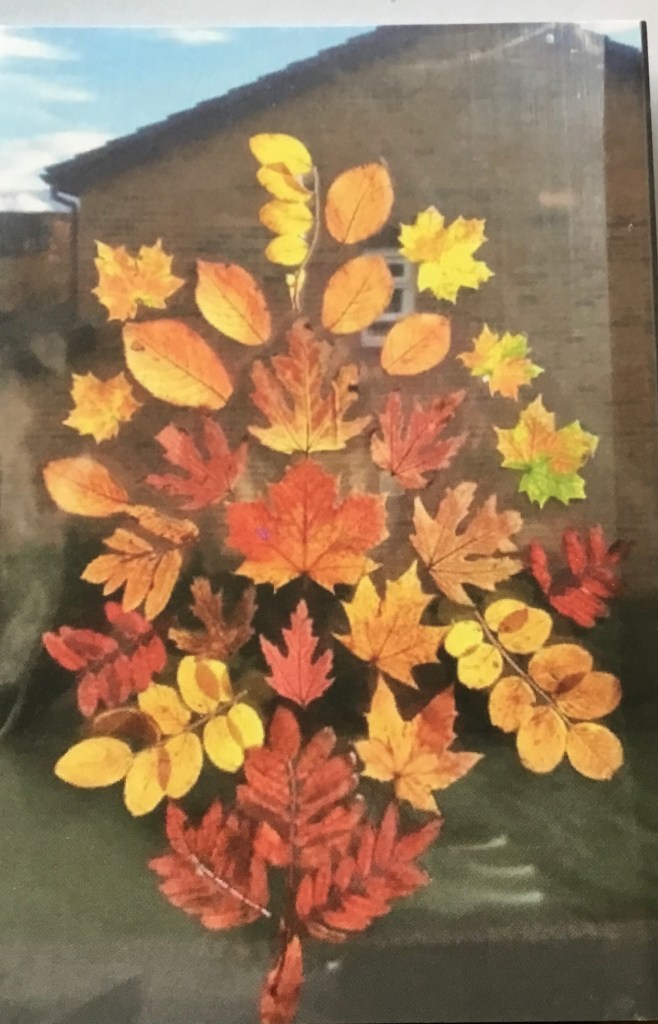
Autumn & Me

Poetry by Michael Burch

An Illusion

The sky was as hushed as the breath of a bee
and the world was bathed in shades of palest gold
when I awoke.

She came to me with the sound of falling leaves
and the scent of new-mown grass;
I held out my arms to her and she passed

into oblivion ...


Leaf Fall

Whatever winds encountered soon resolved
to swirling fragments, till chaotic heaps
of leaves lay pulsing by the backyard wall.
In lieu of rakes, our fingers sorted each
dry leaf into its place and built a high,
soft bastion against earth’s gravitron—
a patchwork quilt, a trampoline, a bright
impediment to fling ourselves upon.

And nothing in our laughter as we fell
into those leaves was like the autumn’s cry
of also falling. Nothing meant to die
could be so bright as we, so colourful—
clad in our plaids, oblivious to pain
we’d feel today, should we leaf-fall again.


Childhood's End

How well I remember
those fiery Septembers:
dry leaves, dying embers of summers aflame
lay trampled before me
and fluttered, imploring
the bright, dancing rain to descend once again.

Now often I’ve thought on
the meaning of autumn,
how pale moons eerie mornings enchanted dark clouds
while robins repeated
gay songs sagely heeded
so wisely when winters before they’d flown south ...

And still, in remembrance,
I’ve conjured a semblance
of childhood and how the world seemed to me then;
but early this morning,
when, rising and yawning,
I found a grey hair ... it was all beyond my ken. 


A Vain Word

Oleanders at dawn preen extravagant whorls
as I read in leaves’ Sanskrit brief moments remaining
till sunset implodes, till the moon strands grey pearls
under moss-stubbled oaks, full of whispers, complaining
to the darkening autumn, how swiftly life goes—
as I fled before love ...
                                     Now, through leaves trodden black,
shivering, I wander as winter’s first throes
of cool listless snow drench my cheeks, back and neck.

I discerned in one season all eternities of grief,
the spectre of death sprawled out under the rose,
the last consequence of faith in the flight of one leaf,
the incontinence of age, as life’s bright torrent slows.

O, where are you now?—I was timid, absurd.
I would find comfort again in a vain word.

Michael R. Burch has over 6,000 publications, including poems that have gone viral. His poems have been translated into fourteen languages and set to music by eleven composers. He also edits The HyperTexts (online at www.thehypertexts.com).

.

PLEASE NOTE: ARTICLES CAN ONLY BE REPRODUCED IN OTHER SITES WITH DUE ACKNOWLEDGEMENT TO BORDERLESS JOURNAL.

Categories
Essay

Renewal

By Jayat Joshi

“…most lawns within
the limits of the municipality
are to be grown
on billiard tables—
fertilized by the organic matter
that is commonly
trapped in pinball machines
when the marbles
sit on their commodes.”
-- Marjorie Hawksworth, Urban Renewal

When my home grew old, its windows started chattering in the wind like teeth. My younger siblings would remember it only as they would a distant grandparent near twilight years. They would remember the impressions of dusted off termite nests looking like brown, dried-up river routes on a map. I was impatient with such memories. I liked to reminisce the angsty drawings I painted at whim in my teenage years on the walls, or scribbles made by my sister when she was five, both of which had gotten layered over with whitewash. In memories younger than mine, home was a description of what it would turn into.

Even neighbours who came to live in houses vacated by older neighbours from my childhood had relatively young memories. There was a real estate dealer who remembered everyone’s homes in terms of what they would fetch when the nearby flyover to the highway was constructed. When he saw someone strolling in the street, he would hint the value he put on their plot with the width of his smile. There were also other people concerned with this make-believe flyover. Some folks whose ancestors had missed out on the land grab of the early years in the city and who had now been compelled to build up from benami land as a collective, and who had now declared this place a small ‘village’ with its own municipal councilor, were preparing to lobby shifting the flyover by a few yards, so it just missed stomping out someone’s house. The optimal outcome was to make the construction cut through a nearby square plot which made everyone suspicious. This patch had a boundary circumscribing it with names of four different owners in white chalk on each side. Benami: under no one’s name. Here, under more than one name.

Most real estate projects in the city had an underbelly that lay bare like a demo surgery for medical freshers, but concealed in plain sight. The underbelly of our home, the surrounding apartments, the real estate broker’s house, and the old and new neighbours’ homes was the settlement along the bottom edges of the area of migrant labourers from faraway states, dragged here on the same wind that entices investment in real estate.

Successive winds had made these populations denser, trickling their living spaces down precarious slopes where land descended into ravines of seasonal rivers. These rivers overflowed with mud and plastic in the monsoon, taking with it a limb or two of these makeshift settlements, like the sea dilutes the durability of a sand castle with every wave. From them, our homes sourced domestic helpers and those who wanted to build more homes sourced their workers. They were the gears of going-on-ness. A well-intentioned administrative servant had, before retiring, laced the margins of the enclave with bamboo plantations. Bamboo roots kept soil steadfast. Bamboo was a mute saviour for informal settlements. Below the bamboo shoots, iron rods jutted into the ground to lay foundations of large infrastructure, like a bed of a thousand arrows from the Mahabharata. The imposing character of Bheeshma breathed his last on a similar bed amid the battlefield. He had the boon of dying only when he willed. 

When my home grew old, the sight outside its windows became weak. The eye could not wander far without colliding into a concrete block, manifestly an apartment structure called either ‘Mountain View’ or ‘Mount View’. Most of the flats in these apartments came in the way of each other’s view. For a couple or more square kilometres, residential complexes grew competing for the remaining thin sliver of sight of the nearby hillock.

Higher-end, dissatisfied customers then began shifting closer to the mountains to catch a better glimpse. Younger memories are not tempered with the punitive side of things. Between widening smiles of brokers and narrowing views of mountains, the remembrance of harrowing disasters is dissolved. In fact, the dissolution is all the more profitable. The aftermath of a natural disaster is a levelled playing field for real estate and repair to begin its game anew. Its anticipation marks the desire for a smarter city, a renewed city, a resilient city, a city that has gone on record trying to be the best version of itself.

Old houses in this city are nails in the imagination of the future. The people who own them refuse to ‘develop’ them—adding a floor, remaking the shape, clubbing two plots, encroaching extra space through a fence, rejigging the drainage, and so on. The view, finally, can be of state-of-the-art high-risers as good as the mountains themselves, often a cause of envy for them because they house more greens, lawns and gardens.

Bamboo, and many species of trees growing on sloping land have a packed network of rhizomes in the soil. These roots ought to tell us something; when the land yawns and shifts, all these interconnected rhizomes cling and stay. For narrow rods that penetrate deep, like flimsy taproots, the slightest tremor will send up magnified vibrations that reinforced concrete may be too rigid to bear. It could move when shaken. Or stand still and fall.

The city bureaucracy is like Mahabharata’s Bheeshma—of lofty character, having trained in the academy not far from here, and unwavering in commitment to the law, the Dharma, the golden rule of do unto others. The Dharma calls for moulding a supercity out of this virgin land, this plot-sized town at the scale of the nation. Uproot these cobweb-like rhizomes from the soil, make some fancy wood-furnished cafés from the barks, provide them with a natural aesthetic, and carpet the remains with rubble and concrete. Chase away the birds and install some ambience music, pigeons can stay, and someone will need to be employed to clean their droppings from the massive glass windows. Someone not from here, preferably — who share no votes here. The visionary gentle people who gave us ‘Mount View’ can give us our own sequestered enclave, replete with trees so our domain is secure at least.

Land title is presumptive in India. No one knows if you do own a plot, if you do, you may have some papers, these may be real or fake. The public record registers a few transfer transactions. The rest is too hard, too long, too complex, too silly. There is no land to give and take. Everything is already transacted. Unless the government seeks to flatten another forest. Land is assembled by real estate, by law, by settlement, by business, by the bureaucrat, minister, broker, resident, worker, shopkeeper, caretaker, priest and peddler. No one knows if someone else owns a plot, yet everyone continues to own more. When my home grew old, many people started pouring in to see if in fact they were the ones who owned it all along. Or if they could. Or if they couldn’t but wanted to. When my home grew old it became a thing to be cross-checked with our older memories, to see if it had been there at all. The second-guessing might prove too much for us.

Jayat Joshi is a researcher of urbanisation, especially the politics of land in India. He is pursuing a Master’s in Development Studies from the Indian Institute of Technology Madras.

.

PLEASE NOTE: ARTICLES CAN ONLY BE REPRODUCED IN OTHER SITES WITH DUE ACKNOWLEDGEMENT TO BORDERLESS JOURNAL
Disclaimer: The opinions expressed are solely that of the author and not of Borderless Journal.

Categories
Poetry

Autumnal Dirge

By Sutputra Radheye

Courtesy: Creative Commons
30 October 2008


there were

only black clouds

around ganeshguri


a sound

of high frequency 

distorted the crowd


they were

running in madness

all around


the motors

were burning

black


so were

the tiny pieces

of flesh scattered


minutes after

the bomb blasted

the city stopped


people were

glued to the televisions

and the radio


now after years

we have moved on

or have we?

This poem centres around 30th October, 2008, where a series of bomb blasts killed many in the Indian state of Assam.

Sutputra Radheye is a young poet from India. He has published two poetry collections — Worshipping Bodies(Notion Press) and Inqalaab on the Walls (Delhi Poetry Slam). His works are reflective of the society he lives in and tries to capture the marginalized side of the story.

.

PLEASE NOTE: ARTICLES CAN ONLY BE REPRODUCED IN OTHER SITES WITH DUE ACKNOWLEDGEMENT TO BORDERLESS JOURNAL.