Categories
Poetry

Winter’s Score

By Jenny Middleton

WINTER’S  SCORE

It’s easy to admire
the skater’s bladed boot resting on her partner’s thigh,
his hands firm on her waist hoisting
her above the rink into glitzy, gaping lights
carving the ice together with the arced geometry of dance

few think of
scientists, at the poles, drilling metal cylinders
in to glaciers collecting the traces fallen things --
pollen’s sweat, snow compressed by mammoths
a deluge of poisoned rain – racked with signs

of change and how this shifts particles
flaying memories like the swan – trapped that winter
in ice and fishing nets
its feathers beating sound from still air
in flightless desperation

or how a body aches long after
the surgeon’s slice through skin
blurring its dead, rutted scar
amongst live veins

no – it is easier to love what doesn’t scream -- 
a world that winks sequins and whispers
soft, snowy songs to a tired audience
sitting in the arena’s dark. 

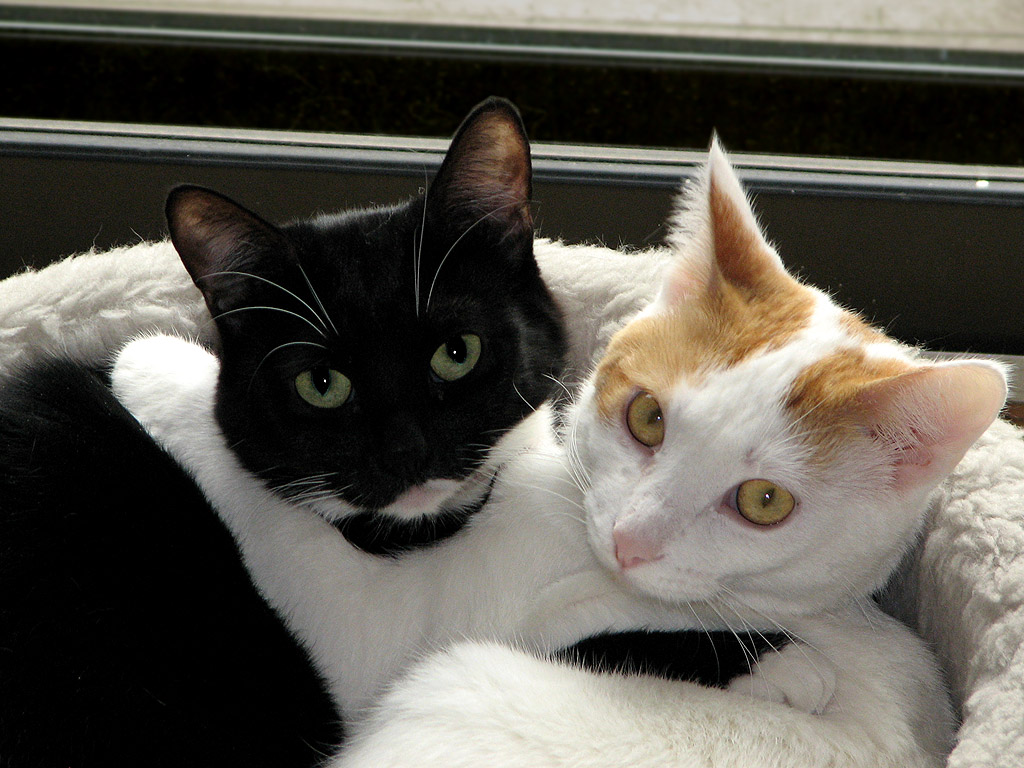
Jenny Middleton has written poetry throughout her life. Some of this is published in printed anthologies or on online poetry sites. Jenny is a working mum and writes whenever she can amid the fun and chaos of family life. She lives in London with her husband, two children and two very lovely, crazy cats.  You can read more of her poems at her website  https://www.jmiddletonpoems.com  

.

PLEASE NOTE: ARTICLES CAN ONLY BE REPRODUCED IN OTHER SITES WITH DUE ACKNOWLEDGEMENT TO BORDERLESS JOURNAL

Categories
Tagore Translations

The Welcome: A Skit by Rabindranath

Translated from Bengali by Somdatta Mandal, this satirical skit[1]was part of Hasyakoutuk (1914) or Humour by Tagore


Courtesy: Creative Commons

Scene One

A village road

Chaturbhuj Babu has come to his village after passing his M.A. exams. He had expected the entire village to be exuberant. He has a stout Kabul cat with him.

Enter Nilratan

Nilratan: So here is Chatubabu. When did you come?

Chaturbhuj: After appearing for my M.A. examination in college –

Nilratan: Oh! This cat is very exquisite.

Chaturbhuj: The examination this time was –

Nilratan: Sir, where did you get this cat?

Chaturbhuj: Bought it. The subject I had elected this year –

Nilratan: How much did you pay for it, sir?

Chaturbhuj: Can’t remember. Nilratanbabu, has anyone graduated from our village?

Nilratan: Plenty. But there is no such cat in the vicinity.

Chaturbhuj: (to himself) Oh God! He only speaks about cats. He does not talk about my success in the exams.

Enter the Zamindar

Zamindar: Oh, here is Chaturbhuj! What did you do all this while in Kolkata, son?

Chaturbhuj: Sir, just came after my M.A. exams.

Zamindar: What did you say? Meye[2]? Given a girl to somebody? To whom have you given?

Chaturbhuj: No, not that. After B.A.—

Zamindar: You have got your daughter married? Her biye[3]? But we did not get to know about it.

Chaturbhuj: Not marriage, but B.A. –

Zamindar: Oh, it’s the same thing. In the city you call it B.A., in our village we call it biye. Ok. Let that be. This cat is very beautiful.

Chaturbhuj: You are mistaken. My –

Zamindar: What mistake? Go and find a similar cat in this whole district.

Chaturbhuj: No, sir. I am not talking about cats –

Zamindar: Yes, we are talking about cats. I am saying that we can’t get such cats.

Chaturbhuj: (to himself) Goodness gracious!

Zamindar: Come with your cat to our locality in the afternoon. The children will be very happy to see it.

Chaturbhuj: Yes, they will surely be happy. They haven’t seen me for a long time.

Zamindar: Yes, that’s true. But I am saying that if you cannot come, then send it through Beni. I want to show it to the children.

[Exit]


Uncle Satu enters

Uncle Satu: Here you are. Seeing you after a long time.

Chaturbhuj: Won’t it take long? So many examinations –

Uncle Satu: This cat –

Chaturbhuj: (annoyed) I am going home.

[About to leave]

Uncle Satu: Here, listen to me. This cat –

Chaturbhuj: No sir, I have work at home.

Uncle Satu: Here, at least answer one question. This cat –

[Chaturbhuj does not reply but walks out hurriedly]

Uncle Satu: Oh God! These children have become very clever after being educated. They have many attributes but too much pride.

[Exit]

Scene Two

The inner domain of Chaturbhuj’s house

Maid: Mistress. Dada has come home very angry.

Mother: Why?

Maid: How do I know?

Enter Chaturbhuj

Small boy: Brother, I want this cat –

Chaturbhuj: (slapping him) Day in and day out only cat, cat, cat!

Mother: Poor son. Is he annoyed for nothing? He has come home after such a long time and the children are pestering him too much. Go! All of you go from here. [To Chaturbhuj] Give it to me, son. I have kept rice and milk for it. I’ll go feed your cat.

Chaturbhuj: (angrily) Take it, mother. All of you only feed the cat. I will not have food. I’m leaving.

Mother: (earnestly) What sort of statement is that? Son, your meal is ready. Just go and take your bath.

Chaturbhuj:    I am leaving. In your country only cats are admired. There is no place for geniuses. (He kicks the cat)

Aunt: Oh, don’t beat it. It has done no harm.

Chaturbhuj: All your affection is for the cat. You don’t have any pity for the human being. (Exit)

Small girl: (pointing offstage) Uncle Hari, come and see. Its tail is so thick and bushy.

Hari: Who’s tail?

Girl: There, his.

Hari: Is it Chaturbhuj’s?

Girl: No, the cat’s.

Scene Three

The road. Chaturbhuj with a bag in hand. No cat with him.

Sadhucharan: Sir, where is your cat?

Chaturbhuj: It’s dead.

Sadhucharan: Oh! How did it die?

Chaturbhuj: (Disgusted) I don’t know, sir.

Enter Paranbabu.

Paran: Sir, what happened to your cat?

Chaturbhuj: It is dead.

Paran: Really? How did it die?

Chaturbhuj: Just as you all will die. With a rope around your neck.

Paran: Oh my god, He is too angry.

A group of boys follow Chaturbhuj. Clapping themselves they tease him shouting

“Kabuli Cat,” “Kabuli Cat.”


[1] [Translated from “Abhyarthana” (Bhadra 1292 B.S.) by Somdatta Mandal]

[2] Daughter in Bengali

[3] Wedding in Bengali

Somdatta Mandal is a former Professor of English and ex-Chairperson, Department of English, Visva-Bharati, Santiniketan, India. A recipient of several prestigious fellowships like the Fulbright Research and Teaching Fellowships, British Council Charles Wallace Trust Fellowship, Rockefeller Residency at Bellagio, Italy, Salzburg Seminar and Shastri Indo-Canadian Faculty Enrichment Fellowship, she has been published widely both nationally and internationally. She has also an award from Sahitya Akademi for the All India Indian Literature Golden Jubilee (1957-2007) Literary Translation Competition in the Fiction category for translating short stories series ‘Lalu’ by Sarat Chandra Chattopadhyaya.

.

PLEASE NOTE: ARTICLES CAN ONLY BE REPRODUCED IN OTHER SITES WITH DUE ACKNOWLEDGEMENT TO BORDERLESS JOURNAL

Categories
Stories

A Cat Story

By Sohana Manzoor

Courtesy: Creative Commons

“O my poor Putli, why did I let you go out? O Allah, why did you take my Putli away?” Rupa heard Kohinur’s ma wailing as soon as she entered home. She sighed. Everyone in the house had been down since Putli disappeared about ten days earlier. Then three days ago, one of the guards of their apartment complex brought the news that he had seen Putli’s remains near the Niketan bazaar. Of course, nobody could be completely sure that it was Putli because the body had been lying there for some days and had partially decomposed. All they were certain of was that a black and white cat that looked like Putli had been killed. Rupa wanted to go herself but, in the end, could not bear the thought of seeing the rotten corpse of their cuddly family member. But since then their old maid, who took care of the cat, had been absolutely inconsolable.

Today Rupa could not take it any longer. She felt it was high time to find another cat, preferably a kitten; their house felt empty and desolate. Putli was an adorably frisky cat, about two years old. It was really fun to observe him jumping and playing with imaginary friends, raising his tail erect, or clawing at his own image glaring back from the mirror. Only recently he had started going out and was courting a cute white cat that Rupa had often seen reclining on the corrugated tin roof top of a nearby garage. He even had a fight with a street cat over his sweetheart. He had disappeared once before, but had come back after three days. This time probably he had ventured too far away from home and met his end.

It was summer; the schools were closed and Rupa’s two younger siblings were sulking in the house all day. Rupa studied at a private university and soon the semester would be over, and she resented the thought of residing in a house without any feline presence. There was always a cat in their home as far as she could remember. Even their father, who was a businessman and was busy all the time, seemed to have noticed Putli’s absence. Only yesterday Rupa had heard him saying, “That sofa by the window was Putli’s favorite spot; I can’t believe he’s gone.”

Rupa’s younger brother Yen had been trying to allure a neighborhood cat. Rupa did not like the looks of the cat he was inviting in though — looked more like a hobgoblin, greedy and sneaky with shrewd yellow eyes. She had occasionally seen it lurking in the back alley. It took the half-eaten drumstick that Yen had placed on the pavement, and ran behind a small pile of rubble. Rupa was certain that it would cause nothing but trouble. Besides, Kohinur’s ma hated any human or animal sneaking into her domain—the kitchen. She would surely wrinkle her nose and comment, “Couldn’t you get anything better than that susa bilai?[1]” But then nor could Rupa approve of the white fluffy cat Lira was nagging about the other day. She had seen one in the movie Stuart Little, and wanted a cat like Snowbell. Now that was a Persian cat and Rupa certainly did not want their entire family rolling in a bed of hair. She would rather have a deshi[2] regular cat than one of those overrated foreign ones.

The ornate clock in the dining room chimed 3 in the afternoon. If she started right away, she might get to Katabon and even return before evening. She was not very sure what kinds of kittens were available at the pet shops there, but it would not hurt to take a look. She grabbed a quick snack, filled her water-bottle and got out of the house. Her mother was taking a midday nap, and hence Rupa did not disturb her. But she knew her ma would not mind even if she brought in an entire brood of fluff balls. They were a family of cat lovers. Sifat, her best friend, often joked that they were surely Egyptians in some other life.

Rupa looked at the elevator which seemed to be stuck at the 6th floor. So, she took the stairs. On her way down, she saw the helping-hand from the fourth floor. The boy stared at her and as always Rupa found his look disconcerting. She had often wondered if the boy was mentally sound. She had never heard him speak, and on several occasions heard him wailing incomprehensibly in the stairwell until someone dragged him home. She noticed that he had a shopping bag in hand from where greens and the top of a gourd were peeping out. Obviously, he spoke, reasoned Rupa, otherwise how could he buy those?

Rupa’s way to the Katabon was uneventful other than occasional stops at the traffic lights. After paying the fare she started walking past the pet shops. The first one had birds and fish and aquariums of different sizes. After three shops she found one sporting caged dogs. But there were no cats.

At the next shop, the shopkeeper and his assistant showed her three black kittens claiming that they were Siamese cats. Rupa could not be sure if they were Siamese, but she was willing to bet that they were previously owned by some evil witch. They glared at Rupa with open hostility, their bright eyes burning like green fire. Rupa shook her head negatively and walked toward the next shop.

A boy of around 12 or 13 years of age beckoned her to a box like cage where she saw the kitten. It was small, surely not more than a few weeks old. The orange tabby looked up at Rupa with its large brown eyes and sneezed. She looked inside the box and saw another kitten, a black and white one, whimpering. She continued meowing piteously as Rupa turned to look at the tabby and took it from the boy. Dirty and malnourished, the tabby yet seemed absolutely adorable to Rupa.

“How much?” she asked.

“One thousand taka, apa[3]. It’s pure breed.”

“Sure,” Rupa grimaced. “It’s just a regular deshi cat, mixed breed at best.” The other kitten was still crying for its friend. Rupa calculated something quickly, and said, “Okay, I will accept your price, but I want that other kitten for free.”

The shop keepers started arguing, “But you won’t get two cats for only 1000! And they are first rate kittens.”

“Then I am not taking any,” she placed the tabby in the cage and turned away, even though her heart cried out for the poor kitten. She had not taken two steps when she heard the elder guy, “Okay, okay, they’re yours.”

Rupa took out two five-hundred-taka notes and asked, “Do you have any box I can carry them in?

“No boxes. But we’ll wrap them up for you.”

Wrap up living cats? Rupa waited to see what kind of wrapping they provided.

After about 5 minutes she was staring dumbfounded at the boy holding out the kittens in two brown paper bags. How he got them inside the paper bags so quickly, and without any tearing was a mystery to Rupa.

“Are you mad?” she spluttered. “I am going home in an auto-rickshaw. Those two will tear out of the bags in minutes. Get me at least a net bag or something.”

The boy put the paper bags of cats in a large fluorescent green net bag. Rupa took the bag cursing herself as well as the shopkeepers and hopped on a CNG auto-rickshaw for a hundred taka extra.

Surprisingly, the kittens were quiet in spite of the loud noise emitting from the auto-rickshaw and the vehicles in the surrounding streets. Rupa suspected that they were just too weak to protest. After about 10 minutes, however, Rupa heard a rustling sound, and she saw a small orange muzzle tearing from a brown bag. “Baghu,” thought Rupa. “I’ll call him Baghu.” It was a male cat, she had already noted, whereas the black and white one was female. She could be Nishi. Nishi made no sound at all, but Baghu kept on rustling and clawing at the paper bag until half of his body came out. “He does have spirit, after all,” thought Rupa. But she certainly did not want him out of his bag right now. So, she put the bags and cats all on her lap holding on to them tightly, praying all the while that they didn’t pee on her.

“What do you have in there, apa?” a child’s voice asked, and Rupa realized that the CNG had stopped at a traffic signal. Several curious street urchins with flowers, lemons, water bottles and other knickknacks were peering inside her auto-rickshaw. By now Nishi had also started pushing forward and mewing piteously. And the hawkers were obviously drawn by the sounds made by the kittens, and the commotion in the bags.

Rupa sighed and replied, “Don’t bother. Just go your way.”

But their numbers increased. “O my, you’ve got cats!” observed a flower girl with a merry laugh.

“No, no, those are kittens,“ said one boy of about seven or eight. He was selling mineral water. Two of his front teeth were missing. “How many do you have?”

“Two,” Rupa tried to maintain her gravity. “Now, GO!” her voice rose two octaves.

The children moved back a few steps only to get closer again. They were all grinning. “Look, look, there’s a red kitty.” “And a black and white one too!” “That one looks like Harun’s kitten!” Rupa could hear all kinds of comments.

Another CNG driver who had stopped right next to Rupa’s auto rickshaw, looked at her driver and asked, “What’s going on?”

“Young girl—taking two friends home. Only they have fur, tails, and they meow,” replied the CNG driver with a straight face.

Rupa went beet red. As the red signal turned green, she heaved a sigh of relief. As soon as the CNG started moving both Baghu and Nishi quieted down. Baghu started to nuzzle her, while Nishi looked up at her with dark hazel eyes. Her coloring reminded Rupa of Putli, her main reason for getting her. Nishi seemed much more docile though. Rupa suddenly felt very protective of the two kittens, and at the same time she could not help wondering why she did not feel the same way about human children. Why was it she had this urge to take home every kitten she saw in the streets? Then she amended that not every kitten perhaps but the cute ones surely. But those street children could be cute too. She remembered the ones that were commenting over her cats, particularly, the boy with the missing front teeth and another little girl with pig tails. How come she never felt like taking them home, wondered Rupa uneasily. She wondered about the boy who lived upstairs, the one she suspected was mentally disabled. Would her parents be equally welcoming to these children as they were to the cats?

Apa, which road?” Rupa realised they had reached Niketan. She directed the driver to road no 10. Their apartment was on the second floor. The old caretaker, Abu bhai[4] looked at the bundle in her hand, two small heads, one orange, and one black and white peeping out. He grinned, “You’ve got kittens, apa. That’s so wonderful.”

Rupa nodded and smiled.

And then Abu bhai said, “Something unfortunate has happened, apa. The crazy boy from the fourth floor fell down the stairs.”

“What crazy boy?” gasped Rupa. “Not that servant-boy they call Khokon, or Rokon?”

“Rokon. That very one,” replied Abu bhai.

Abu bhai said, “A maid from another flat had gone out to buy her paan[5]. And then when she came back, the boy was lying sprawled and motionless on one of the landings. Apparently, he fell down, and he has been taken to the hospital.”

Rupa remembered the greens and the gourd peeping out from the bag in the boy’s hand.

“Pets are replaceable, human beings are not,” she mused as she got on the elevator. She wondered if Rokon had parents. What parents could send such a boy work for other people?

“Where’s everybody?” Rupa shouted. “We have cats in the house!”

Yen came running, followed by Lira. Kohinur’s ma, who had opened the door, stood by with a smile on her face.

“They’re so small… and dirty!” commented Yen.

“But they’re cute!” cooed Lira.

“They need a shower and food,” observed their mother who had also joined them. “Kohinur’s ma, why don’t you take them to the kitchen and feed something? Give them a thorough bath tomorrow morning. They probably have lice on them.”

Rupa turned to her mother and asked, “Amma, did you hear about the servant-boy who fell down the stairs?”

Her mother looked surprised, “No. There was some commotion in the stairwell, but I didn’t realise that’s what happened.”

A few hours later the two newly acquired members of their family were playing on the living room carpet. They had licked themselves clean. Nishi was a bit shy and was sitting demurely on her haunches, but Baghu had already started scampering around. He was also a little bigger and probably older than Nishi. Everybody had approved of the names. Lira clapped her hands and laughed gleefully as Baghu did a summersault. Baghu looked up at Lira and did it again, and everybody laughed.

“He’s clever, isn’t he?” Kohinur’s ma observed.

“He actually understood that I liked his summersault!” Lira’s eyes went round. “Wow! Baghu, you’re amazing!” She picked the tabby up and kissed the top of his head and Baghu clung to her with all his four paws. Her mother shrieked, “Eeks! Don’t kiss them just yet! Let them have a shower tomorrow morning and you can do what you want.”

“But they are clean,” protested Lira.

“Not yet,“ Rupa shook her head. “And don’t carry them to bed with you tonight,” she warned. “You can snuggle with them after they have visited the vet’s office.”

At night Kohinur’s ma produced an old basket with rags of clothes for the two kittens to sleep in. Rupa recognised the basket that had belonged to Sisu, another cat they had lost years ago. She smiled as she said, “Something tells me that in a few days they will be sharing beds with Lira and Yen.”

Lira whooped and nodded vigorously while Yen displayed a huge toothless grin. Rupa again remembered the boy from the fourth floor. And the boy she had seen on the street, with his missing front teeth.

She brushed her teeth, changed into a loose T-shirt and pyjamas and went to bed. She dreamt of a gorgeous green meadow where children played and laughed, and they were all naked as the first day they were born. Rupa saw Yen and Lira and the street urchins along with Rokon. They all looked the same: clean and happy. Rupa heaved a sigh of contentment. Dreamland was perhaps the only place where her siblings could play with the likes of Rokon and the street-children without raising eyebrows and derision from any quarter.

Sohana Manzoor is an Associate Professor at the Department of English and Humanities at ULAB. Currently, she is also a Deputy Editor of The Daily Star, a leading newspaper in Bangladesh.


[1] Gluttonous kitty

[2] Local

[3] Elder sister

[4] Brother – a polite way of addressing helpers

[5] Betel leaf

.

PLEASE NOTE: ARTICLES CAN ONLY BE REPRODUCED IN OTHER SITES WITH DUE ACKNOWLEDGEMENT TO BORDERLESS JOURNAL
Categories
Poetry

What stories might Mother Elephant tell…

By Devangshu Dutta

Courtesy: Creative Commons
WEAVING THE LONG NOW TOGETHER

What stories might Mother Elephant tell
    to guide her herd through the dark eclipse?

What songs might the whales exchange
   of bygone currents and plenty krill?

Do gods send sighs over centuries,
   as we waste seconds and breath,
   barely seeing what is with us still?

Devangshu Dutta is a student of life.

.

PLEASE NOTE: ARTICLES CAN ONLY BE REPRODUCED IN OTHER SITES WITH DUE ACKNOWLEDGEMENT TO BORDERLESS JOURNAL

Categories
Review

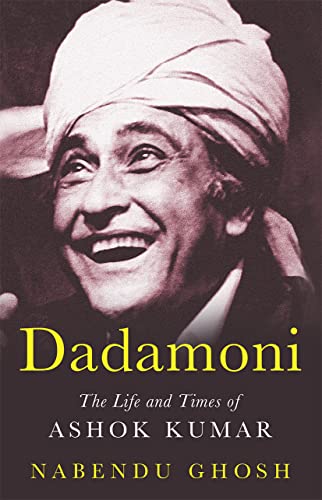
The Life and Times of Ashok Kumar by Nabendu Ghosh

Reviewed by Indrasish Banerjee

Title: Dadamoni: The Life and Times of Ashok Kumar

Author: Nabendu Ghosh

Publisher: Speaking Tiger Books

Dadamoni: The Life and Times of Ashok Kumar by Nabendu Ghosh (1917-2007) is a reflection on the Hindi film industry as much as it’s a biography of the legendary actor.  An eminent scriptwriter in Bollywood and director, Ghosh was an award-winning Bengali writer whose oeuvre of work includes thirty novels and fifteen collections of short stories. As a script writer, he wrote the scripts in Hindi for iconic films like Devdas, Bandini, Sujata, Parineeta and many more.

Ashok Kumar (1911-2001) was a part of both the small and the big screen in India while he lived. Was Ashok Kumar a star? What was his position in the Hindi film industry? When did he become a character actor? Was he a good actor? These questions are very easy to answer about others but when it comes to ‘Dadamoni’, as he was fondly called, the answers become nebulous.

Ashok Kumar started his career in the early 1930s which makes him senior to stars like Raj Kapoor, Dilip Kumar and Dev Anand who made their debuts and attained stardom when Ashok Kumar was already a reigning star. Ghosh knew Ashok Kumar personally for many years. And the personal touch comes through in many places – through anecdotes and because of the regard that shines through the narrative. The jokes that Ashok Kumar cracked from time to time, the things the thespian told the author, all find place in the book. There is also a visible attempt to protect Dadamoni’s reputation against any allegation of vices generally attributed to stars. Ghosh, who had gone to Bombay as part of Bimal Roy’s team, constantly tries to establish Dadamoni as a gentle, thoughtful and educated person.

But this gentle, thoughtful and educated person didn’t have it easy in the world of films. Ashok Kumar had a shaky start. A shy and retiring person, he had gone to Bombay while studying to become a lawyer in Calcutta — to become a director. The ambition was idealistically driven – films, a new medium then, could be a means of educating people. But fate intervened. The person supposed to play the hero’s role in Achhut Kanya (Untouchable Maiden, 1936) had gone missing and the search for a replacement was on.

One day, Ashok Kumar, an employee of Bombay Talkies then, discovered the owner of the studio, Himanshu Rai, quizzically looking at him. Rai had found the replacement for the hero of Achhut Kanya. But for the hero, it was beyond belief that he could act in a movie. The most endearing part of the book is how this diffident hero finds his footing in the industry becoming its earliest and biggest star. And the most poignant part is the gradual decline and death of the studio system even as its product – Ashok Kumar – rose to new heights.

As the narrative draws to a close, one is left wondering what is Ashok Kumar’s position in the legion of Bollywood stars? This has been answered exhaustively in the ‘Afterword’ by Ratnottama Sengupta, eminent film critic and Ghosh’s daughter, who brings in not only personal lore but also her own experience. She tells us Ashok Kumar served “as a textbook for actors wanting to perfect characterisations, voice control, timing, gestures postures” and that he transformed “the acting style in Indian cinema from theatrical to naturalistic – which is still the cinema language worldwide.”

Naming him the “Elder brother of the industry”, Sengupta asserts, “I’d say he is the one personality who symbolises Indian cinema’s journey from Bombay Talkies to Bollywood.” She brings in his stories of interactions with film stars, his hits and directorial ventures, his launching of major actors and his deep links with them, including his acclaimed brother, Kishore Kumar, with more anecdotes from multiple eminent actors like Shammi Kapoor, Moushumi Chatterjee, David Lean and his associates and family ties that stretch to embrace actors from different religion and race. Bharti Jaffrey, Ashok Kumar’s daughter, who has written a heartfelt forward for this edition, is married to actor Saeed Jaffrey’s elder brother.

What makes this book unique is that Ghosh wrote this book in English himself and it has been republished posthumously[1] with the addition of a forward and an exhaustive afterword by the well-known daughters of the two film icons. It also has classic photographs of Ashok Kumar. Both the emotionally charged forward by award-winning actress Bharti Jaffrey, and the afterword by Sengupta, a national film award-winning journalist, explore further the enigma that was Ashok Kumar. By the end of the ‘Afterword’, one realises how deeply tied and organic are the Bollywood families and how much they do to try and create bridges and close gaps – the Ashok Kumar Foundation being one such effort. The whole package – the forward, the narrative, the photographs and the afterword — leaves one spellbound.  

CLICK HERE TO READ THE BOOK EXCERPT


[1] First published in 1995 by Harper Collins – mentioned in the ‘Preface’ written by Ghosh in 1995 and reproduced in this edition published by Speaking Tiger Books.

.

Indrasish Banerjee has been writing and publishing his works for quite some time. He has published in Indian dailies like Hindustan Times and Pioneer, and Café Dissensus, a literary magazine. Indrasish is also a book reviewer with Readsy Discovery. Indrasish stays and works in Bangalore, India. 

.

PLEASE NOTE: ARTICLES CAN ONLY BE REPRODUCED IN OTHER SITES WITH DUE ACKNOWLEDGEMENT TO BORDERLESS JOURNAL
Categories
Excerpt

Wordsmith Sarat Chandra and Tell-tale Ashok Kumar

Title: Dadamoni: The Life and Times of Ashok Kumar

Author: Nabendu Ghosh

Publisher: Speaking Tiger Books

Wordsmith Sarat and Tell-tale Ashok 

The child Ashok Kumar was highly imaginative and could tell stories to his maternal grandfather, Raja Shib Chandra.

‘Come on boy, tell me a new story,’ the Raja would demand with a smile.

The five-year-old great grandson would gravely start, ‘You see great grandpa, yesterday I was walking through the jungle –‘

The Raja narrowed his eyes, ‘At what time?’ he interrupted.

The boy did not lose his nerve. ‘Yesterday, when you were having a nap after your lunch,’ he kept up the grave tone.

‘And where was the jungle?’ the Raja quipped. 

The boy smiled, ‘On the bank of the Ganga.’

‘Carry on,’ said the Raja.

‘As I walked through the jungle,’ little Ashok went on, ‘there were birds chirping and peacocks dancing. I was feeling fine when suddenly I heard a tiger roar. I stopped. The birds stopped chirping, the peacocks flew fast and in panic. I turned around. And there it was standing, the tiger. It was a huge tiger, snarling at me and thrashing its tail on the ground…

‘Trembling in fear, I broke into a run. The tiger roared and sprang at me. I ran and ran hard. The tiger chased me. It almost reached me, it would soon fall upon me, grab me, swallow me. What shall I do? Oh, how shall I save myself? I prayed for wings and they sprang out of my two shoulders and I flew upward through the trees and escaped in the air. The tiger roared and roared and roared on…’

Little Ashok looked at the Raja for a due appreciation.

But the Raja looked at him with disbelief in his eyes and asked, ‘So you can grow wings out of your shoulders?’

The boy stared at him and nodded, ‘Yes, I can.’

‘Show me,’ the Raja demanded.

Undaunted, the boy said, ‘You become a tiger and I will show you my wings.’

The Raja roared with laughter. ‘Bravo my little one, bravo!’ he conceded. 

Two servants peeped in at this moment on hearing the Raja’s laughter. The Raja beckoned one of them in.

‘Jagai, go to Upen Ganguly’s house and house and call that dark chap – you know –‘ Raja Shib Chandra ordered.

‘Yes, master.’

Soon a young man came there. He was dark but attractive, with handsome features and exceptionally bright, penetrating eyes.

The Raja welcomed him, ‘Come here, my lad. Do you know my great grandson, Ashok?’

‘No sir – but now I will know him,’ the dark young man smiled at little Ashok and added, ‘Ashok is the name of an Emperor.’

The little boy smiled back at the compliment.

Shib Chandra said to the young man, ‘Look here, my great grandson is no less than you — he can also tell stories. Tell him a story Ashok.’

Before starting to narrate a story Ashok looked at the young man and asked, ‘Have you ever eaten silver rice and fried silver parval?’

‘I will eat them when I find them.’

Many many years later when the cinema houses displayed a ‘House Full’ board everytime an Ashok Kumar film was released, New Theatres of Calcutta invited the actor to join the concern. It had earned the reputation of producing quality films — and to this day the name remains nonpareil in the history of Indian cinema.

Ashok Kumar agreed to meet them to discuss the matter. When he met Birendra Nath Sircar, the managing director, in his office there were some other directors and a dark man with silvery hair and sharp burning eyes.

Mr Sircar introduced the gentleman in dhoti-kurta by saying, ‘Mr Ganguly, he is our pride — Shri Sarat Chandra Chatterjee, the great novelist.’

Startled, Ashok Kumar turned towards the legend and bowed low.

Sarat Chandra smilingly asked, ‘Do you remember me?’

Ashok shook his head, ‘No sir — sorry.’

Sarat Chandra laughed and said, ‘Try and you will remember that you used to narrate stories to me — of silver made rice and fried silver parval.’

And the scene came back to Ashok Kumar. So, he used to narrate to this great magician — story writer Sarat Chandra!

Every one had a hearty laugh when Sarat Chandra narrated the story from the past. In his tum Ashok Kumar narrated how Sarat Chandra’s uncle, the writer Upen Ganguly, would regretfully say, ‘This chap, my nephew Sarat, does nothing! I am worried about him.’ This unleashed another round of laughter.

Ashok Kumar finally acted in only one film, Samar. He did not join New Theatres. It was Bombay Talkies that had groomed him and made him what he was. He would never leave Bombay Talkies.

(But, in 1953, after Bombay Talkies closed its shutter for good, he bought the rights to Parineeta. It was the first film of Ashok Kumar Productions.) 

(Excerpted from Dadamoni: The Life and Times of Ashok Kumar, Speaking Tiger Books 2022)

 About the Book:

Ashok Kumar (1911–2001), fondly known as Dadamoni, is one of the great icons of Hindi cinema. This warm, intimate biography traces his remarkable journey, from reluctant actor to Bollywood’s first superstar and, in his later years, a much-loved presence on national television.

Born in Bhagalpur (then in the Bengal Presidency), Ashok Kumar was enthralled by the ‘bioscope’ as a child. In his twenties, he quit his law studies and came to Bombay to become a film director. But life—rather, Himanshu Rai, the founder of Bombay Talkies—had different plans for him. Despite the director’s reservations, he was cast in the lead role opposite Devika Rani in the 1936 film Jeevan Naiyya when the original hero went missing. The same year, Ashok Kumar was paired with Devika Rani again in Achhut Kanya, which was a blockbuster. The transformation of the accidental hero into a charismatic star-actor had begun. Over the next six decades, he proved himself to be a master of the craft, playing cop and thief; genial grandfather and sly matchmaker; villain and hero; heartbroken lover and suave rake with equal ease in numerous films, including Kismet, Mahal, Parineeta, Kanoon, Gumrah, Chalti Ka Naam Gaadi, Aashirwad, Mamta, Jewel Thief, Khoobsurat and Khatta Meetha. But as Nabendu Ghosh writes, Ashok Kumar’s world was much larger—he was also a charming conversationalist, mentor, homeopath, astrologer, painter, linguist, limericist and, above all, loyal friend and devoted husband and father. This book is also a mini-history of the early decades of Bombay’s Hindustani cinema, and its pages are rich with little anecdotes featuring legends like—besides Devika Rani—Saadat Hasan Manto, Sashadhar Mukherjee, Leela Chitnis, Dilip Kumar, Dev Anand, Meena Kumari and B.R. Chopra. Sarojini Naidu and Jawaharlal Nehru make brief appearances too, as does Morarji Desai.

For anyone interested in the Hindi cinema of yesteryears—in its cosmopolitanism, camaraderie and charm—this thoroughly engaging book is a must-read.

About the Author:

 Nabendu Ghosh (1917–2007) was a dancer, novelist, short-story writer, film director, actor and screenwriter. His oeuvre of work includes thirty novels and fifteen collections of short stories, including That Bird Called Happiness: Stories and Mistress of Melodies, edited by Ratnottama Sengupta. As scriptwriter, he penned cinematic classics such as Devdas, Bandini, Sujata, Parineeta, Majhli Didi and Abhimaan.

Click here to read the review

PLEASE NOTE: ARTICLES CAN ONLY BE REPRODUCED IN OTHER SITES WITH DUE ACKNOWLEDGEMENT TO BORDERLESS JOURNAL
Categories
Poetry

Hunger

By Raja Chakraborty

Courtesy: Creative Commons
a caged dove waits--
fluttering wings in captivity, 
waiting for another war 
to end
 
so it can fly to freedom 
 
cold, lonely, scared -- it pecks
the last grain, saved 
for uneasy days like these
 
peace is a crafty word--
it thinks, silently 
 
head hung low, in a sad
prayer, it longs for the blueness 
of an autumn sky
 
do birds cry? I don’t know
do they cry tears? I don’t know 
 
but what I know now is
war’s a game adults play
and peace, its abused cousin
 
there is a liquid fire
in the dove’s soft eyes speaking 
of a revolution that
only hunger can ignite

Raja Chakraborty is a bilingual poet, writing in English and Bengali. He has penned four books in English: The Soup Bowl and Other Poems, Whispers in the Wind, Broken Lines and Rainbows and About Maya and Other Poems. He is also a regular contributor to magazines and anthologies.

.

PLEASE NOTE: ARTICLES CAN ONLY BE REPRODUCED IN OTHER SITES WITH DUE ACKNOWLEDGEMENT TO BORDERLESS JOURNAL
Categories
Stories

My Christmas Eve “Alone”

 By Erwin Coombs

Courtesy: Creative Commons

Years before I became a teacher, I found myself in the sad position of having a four-year BA and being in the middle of a recession. The recession was the economy. On a personal level, I had a pretty good depression going. Not being able to get into a Faculty of Education and not being able to find a decent job, this newly married fellow was forced to take the only job he could find as a security guard.

Now I don’t mean to disparage security guards. They have a nasty job with a nastier pay. But you’ve seen these people. They are usually on the cusp of what we might term the unemployable. When I say cusp, I mean they are leading the parade of that group. And it’s not their fault. Many are new immigrants whose education credentials have not been recognised. Or they are retired men who cannot stand to watch their lives fritter away at home so come to malls and office lobbies to wear a uniform and do the same. And then there are young people, as I was, who are caught in hard times and have no other choice.

After a couple of humiliating jobs waiting tables in chain restaurants where I would remarkably come home with less money than what I would take to my shift, I jumped at the offering of a job as a security guard. The next time you’re in a chain restaurant, I want you to look kindly on those employees too. They are usually bright and assigned the all-important tasks of making sure the salad bar is inviting. And while you’re in there take a closer look at the salad bar. It is old and crusty and sprayed with oil to make it look shiny. But we had to make it look less toxic. Any idea how few employees eat that salad? Lots and lots.

Okay, when I say jumped at the job, that might be an overstatement. One doesn’t jump at that sort of employment. One stumbles, slithers or falls into it. But here I was offered a job at $5.75 an hour!! It was an olive branch. That very phrase has a biblical origin, apparently. But there was nothing biblical or God giving in a job like that for those wages. Don’t get me wrong. I was raised in a white trash upbringing where one didn’t expect anything necessarily good. Instead, one only hoped very hard that nothing too bad would happen that day that might lead to a poor night’s sleep — such as the arrest of a family member, an eviction from your apartment, or the like. As a survivor of this sort of upbringing, the prospect of a job didn’t seem that bad. What, after all, was I going to do with a specialization in English Lit. and a major in history? Apparently, I was going to guard office buildings in the wee small hours of the morning.

But while that might seem a sad conclusion to years of study, there were some perks. Imagine, for example, the sheer utility of having to wear a tie that clips on! Think of the minutes, and in the totality of a year, the hours saved not having to struggle with said tie. Pop it on and you’re ready to do whatever it is that fellows with clip on ties do. Oh yeah, that would be security work. The assumption being giving workers like me, those ties in the event of an altercation, you wouldn’t be choked with that tie.

When you are making $5.75 an hour, and you are brandishing what has appeared to be a useless university degree over your head, what’s going to happen if an altercation does occur? Let me tell you, you are going to, to put it politely, not intervene. There was no chance of my tie ever being touched by anyone except my sad, trembling hands before a sad, trembling shift at wherever they put me.

And for my second shift of what was to be my “permanent placement” I was assigned to a tall office tower in downtown Toronto. It was a plumb job, high end lawyers, businesses that made obscene amounts of money doing God knows what God knows where. And they had entrusted me to keep it safe throughout the long dark winter nights. Was I honoured? No, I wasn’t honoured. I only felt deflated. And to make matters worse, my first shift was on Christmas Eve, the graveyard shift, from nine p.m. to nine a.m. Christmas morning. Envisage if you will a bleaker prospect. Here I am, a young man, head full of ideas (granted, not his own) and lines of poetry and hope for the futures of his world and the world in general, newly married and, yes, making minimum wage, working on Christmas Eve. Gradually the poetry and the hope faded.

But to be fair it wasn’t entirely without a bright side. My wife had gone to visit her family outside of Toronto for Christmas. Had I not had a shift to cover, I would have gone with her. Her family were a small-scale variation of a war zone. Nobody got along and there was never a peaceful moment, instead there was only a lull between battles. There were tears and accusations and more tension than one might find in a tightly strung tennis racket. When I told her that I was expected to perform my duties as a poor imitation of a cop for this special night, and that she would have to go enjoy the majesty of her family without me, I was not as sad as one might think. In fact, I had a novel to read, a thermos of tea and the prospect of 12 hours of not watching a family engage in a bench clearing brawl over two days.

But fate had other plans for me. Other plans of a Christmas Carol variety.

I showed up early to get the very precise instructions of how to get through the night. My boss, a veteran of many years, who commanded all the respect one might command when sporting a polyester jacket uniform, was very specific.

“There’s no one in this building tonight. Except you. There is a fellow on the second level parking garage, but he never leaves his cubicle. And, uh, between me and you, that should make you feel safer.”

“Safer. Why?’

I started having visions of a madman on some kind of a parole programme given parking duty having committed the most heinous offences.

“Well,” my boss continued…” he’s one of them.”

He let that comment hang in the air for me to absorb and be shocked at. Of course, I knew what he meant. This was 1987, and the world was still in the throes of homophobia and misogyny and racism and all the other features of Neanderthal thinking that was, thankfully, about to be knocked on the head by people with fully developed brains. But I wanted to have a bit of fun with this monkey boss.

“You mean, he cheers for the Montreal Canadians?” I tried to sound both outraged and frightened that such a man would be my workmate through this long night.

Bob, the Neanderthal boss, was a little shocked that I hadn’t picked up on his primitive subtlety.

“NO… he’s a fag!”

I pretended that it would take me a while for that to sink in and put on a shocked face.

“You mean, he….?”

“That’s what I mean.” He said, almost in triumph of having gotten his point across. “But don’t worry, as I said, he never leaves his cubicle, thank God.”

Within ten minutes, Mr. Meathead had left the building and I was alone. Except, of course, for the serial homosexual rapist that I had been warned about. I went right down to see him two floors below to introduce myself. And there he was, sitting in a tiny cubicle with classical music playing and reading what looked to be a fairly serious book.

“Hi, I’m Erwin, tonight’s security guard. It’s my first shift so if there are any problems please don’t call, I’ll likely be napping on an office couch somewhere.”

He laughed and we joked about Bob the Ape man and how if were both in this job one year from now we would have a mutual murder/suicide pact. I left him alone and went upstairs to begin my action-packed shift of watching. And watching. And, if there was time later, watching.

Now as this was my first shift, I thought I should probably do some of what was expected of me. We were told to go on perimeter patrols. These were walks around the out and inside of the building looking for narcotics dealers and nuclear terrorists and generally the sort of high-end criminals who intrude into empty offices in the night. And we were to record in our little make belief police notebooks where we had patrolled and at what time and what we had discovered. After a couple of weeks, it dawned on me that the patrols were not necessary. But I was dedicated enough to still record the patrols in my book. Had I been a little more honest I would have recorded the following:

10:15 p.m. went to office lounge and took delicious 15-minute nap

11:00 p.m. found cookies in staff lounge… ate same

12:30 a.m. finished latest novel…surprise ending quite good

2:00 a.m. considered the merits of suicide as I peered over 15th floor balcony onto atrium…. otherwise, no unusual activity

4:00 a.m. wondered why my cat sleeps so damn much

But as I said, this was my first shift, so I dutifully walked about and scribbled down my report. All had been very quiet until I got to the first level of parking. There were literally no cars in either lot, everyone with lives being at home while I celebrated Christmas Eve in their empty building. But it was not as empty as I thought it was. There, across the lot, I spotted what was obviously a homeless old man who had broken in no doubt to escape the frigid outside. My several hours of rigorous training had taught me what to do in this situation, so I called out the lines I had learned that might save my life one day.

“Hey! You!! You shouldn’t be here!!” I yelled in my deepest, most authoritative voice. The old man, who was shuffling more than walking turned his head to look at me and gave the most peaceful smile. And then he hid behind a concrete column in the middle of the lot.

I have read enough detective novels to know what my next step should be. I must go to the other side of the column to find him. That’s the kind of skill set one acquires from reading. I did, but the shuffling old fellow was a bit faster than I imagined, for he had run around the column to avoid me. I followed. He ran, I followed. Before long I was running around the column chasing no one, and the image of the dog chasing its’ own tail came to my mind. There was no way he could have escaped my most professional pursuit, but he had. I stood there, out of breath and dumbfounded. There was an intruder in the building, and I had let him, somehow, get away. And now I had to report it.

I jogged down to the serial rapist one floor below. He was surprised to see me, perhaps because I was not the same calm looking fellow who couldn’t give a flying damn about this job. I looked worried. Mostly because I was.

“Listen, Mark, not to alarm you, but you should know, there’s an intruder in the building.”

“An intruder?” he looked concerned enough to put down his book.

“Yes, I think it’s a homeless fellow. I’ve got to call it in to headquarters and then notify the police.”

This all sounded very by the book and what ought to be done. Naturally, I was making it all up. I had no idea what procedure was, and I had never read “the book”. And as far as headquarters went, I knew it was staffed by the same South African lunatic who had trained me, if he was even awake. And as for the police, I supposed that made sense as this guy was, strictly speaking, a break in sort of fellow. I was hoping for some guidance from Mark who looked, sadly, like this wouldn’t be his last year at this cubicle. He must have had a lot of great books he wanted to read.

His attitude became casual.

“So, what did this guy look like?”

“Well, he was old, with a gray beard…”

Here is where he cut me off.

“Long gray coat, shuffled when he walked, pleasant smile, fairly short…?”

“Christ, you saw him too! Did he come up to you?’

“No, he never does. He just walks and smiles and disappears.”

Now at the idea that Mark allowed this guy to walk about at his leisure my security guard instincts (never very sharp) kicked in.

“Did you report it??” I asked accusingly.

“Oh, Erwin, you can’t report a ghost. Well, you can, but why bother?”

I looked at him in a predictably stunned way.

“A ghost?”

“Oh yeah…I see him every so often and he just comes and goes and just goes. He has disappeared before my eyes more often than first dates I’ve had. But unlike my first dates, he always comes back with a smile. Don’t worry, he’s harmless.”

Now here’s something else to imagine. You are alone in a big building, you’ve seen a ghost, you have the prospect of many more hours alone and you are told you’ve seen a ghost and that you might see him again but not to worry as he’s harmless. I don’t doubt that ghosts exist and never have. I also believe that they are harmless.

Does this mean that I want to be with one overnight in a building alone? Nope.

I can also tell you that security guards do several things most people aren’t aware of. They pilfer little things, like pens, staplers, cookies (as I hinted at earlier) and they sleep. Sitting alone for a long time and trying to stay awake, it’s tough. Sure, you can play a radio, you can read, you can make plans for an escape from this life that you couldn’t have had nightmares about when you were younger. But ultimately sleep stampedes towards you and you nestle your red eyes into your polyester shirt sleeve laid out on the desk and sleep. But not when you expect the old ghost of Parking Level Two to come by for a Christmas visit. That was the only night I stayed awake for a whole shift. And it was purely from fear, not dedication to my profession. The paltry pay was compensated for with this experience, so I have no regrets about having taken this job. Who knows what adventures lie in the most seemingly bland corridors we travel through!

Erwin Coombs is a retired teacher of philosophy, history and literature who has rejected all forms of retirement. He is an avid writer, reader, and observer of life. When not observing and reading and living, he is writing. Erwin has lived in Egypt, Jamaica, England and travelled a great deal but, in his mind, not enough. His writing is a celebration of people and opportunity, both of which life gives in abundance. These stories are from his, as yet unpublished book, Dusty the Cat: Her Part in My Downfall.

.

PLEASE NOTE: ARTICLES CAN ONLY BE REPRODUCED IN OTHER SITES WITH DUE ACKNOWLEDGEMENT TO BORDERLESS JOURNAL
Categories
Poetry

Utopia

By Supatra Sen

Courtesy: Creative Commons
UTOPIA

Fire…smoke…death…horror
Lurking fear
Gruesome reality

Yet
The sunflowers bloom
 
In the throes of death
Shadows of dread
Trace the path of light
Undying
Bright…glorious…eternal
 
That sparkling flame
Must survive 
A dark tunnel
Flooded with loss…
 
Till
One day
The strife ends

A flock of white doves
Will soar the cloudless blue heights
Fearless
Millions of sunflowers
Will bloom in perpetual spring

Dr. Supatra Sen, Associate Professor, with over a hundred academic publications in Botany and Environment, is also the founder and Chief Editor of an ISSN peer-reviewed multi-disciplinary journal ‘Harvest’ since 2016. Her tryst with poetry writing and publishing began in 2020 during the global pandemic and in October 2021 her poetry anthology My Autumn Sonata was published.

.

PLEASE NOTE: ARTICLES CAN ONLY BE REPRODUCED IN OTHER SITES WITH DUE ACKNOWLEDGEMENT TO BORDERLESS JOURNAL

Categories
pandies' corner

Children of Nithari: Lockdown

Written by Jishan in Hindustani, translated by Grace M Sukanya

Jishan is a 23-year-old final year student of B.A Political Science, working as a receptionist at a dental clinic to support himself and his family. A curious person, he likes travelling, and football. He is a fan of the Liverpool Football Club. He has been associated with pandies’ for 12 years. Having participated in Nithari productions, he seeks pandies’ to further train himself as an actor and a facilitator of workshop theatre.

Lockdown

I was a 24-year-old happy-go-lucky guy, always searching for the silver lining. Because of the poor financial condition of my family and admittedly, also a lack of interest, I could not finish school. A lot of people from my village were working in the city. I decided to join them and try my luck. One of my uncles found me a job in an export factory.

Everyone at the factory was quite friendly, so I did not miss my family too much. The salary was okay too; I was able to rent a small room, and even after spending on food, I managed to save a little money to send home. My daily routine was fixed: I woke up early, made rotis to pack for lunch, and then got ready quickly to reach the factory on time.

That day, the sun felt a bit harsh in the sky. It was Holi[1] a few days ago and people say the weather does get a little warmer after that.

I packed my lunch, got ready and left for work as usual. Many people had started wearing masks. There are some masked people in the bus too. Apparently, there is some new disease called ‘corona’ and this mask helped defend us from it.

When I reached work, everyone was talking about corona. I didn’t know much about it, so I asked my friend Rohit, “Brother, what is this corona everyone keeps talking about?”

“Haven’t you seen the news on your phone? In China, people walking down the street are suddenly just dropping dead from it. It’s very dangerous, and now they are saying that it may have entered our country too,” he told me.

“You know I only use my phone to listen to songs and watch films, I don’t use it to keep up with the news,” I responded. 

“Okay but be careful from now on. To protect yourself from this disease, don’t go to crowded places, wash your hands frequently and well, and generally keep yourself and your surroundings clean,” he said.

I found this disconcerting, but I got back to my work quietly.

*

Talk about the disease had been increasing daily.

I had never before been as scared as I was by the thought of this new disease.

One evening, while still at work, I found out that the government could announce a lockdown to deal with this illness. Rohit said that in case of lockdown, we would not be able to leave our houses or even come to work.

The company informed us that since it would have to close and work would get stalled, our salaries would also be reduced.

I told myself it would soon be fine. It would only last a few days, and everything would go back to normal. And I would have enough money saved to afford food for a few days without work.

After work that day, I returned home and quickly went to the grocery to get rations. I didn’t know if the shops would be open during lockdown in case it happened. While making dinner that night, I started thinking: “If the lockdown happens, how will I survive alone in this tiny room all by myself, for 8 – 10 days?”

That night, the government ordered a complete lockdown for three weeks.

It’s the first morning of the lockdown. I woke up late because I don’t have to go work. The weather was pleasant – not too hot, not too cold. But everything felt deserted and empty. There was no one to be seen outside, none of the usual sounds.

I had tea and biscuits for breakfast, washed my clothes and did some chores around the house.

It had been 7-8 days since the lockdown was announced, but they were saying in the news that the number of infections were still increasing. I heard that even the lockdown may be extended by a few more days.

On top of that, my landlord and neighbours thought I was part of a religious sect that was being held responsible for the spread of the disease. My landlord told me the other day, “It’s because of people like you that this disease has taken root in our country. Clear out of this room as soon as you can and leave!”

My neighbours also looked at me with suspicion. But I had never been a part of any religious sect. If this lockdown went on for a few more days, where would I stay, how would I eat?

The ration I had would last only another 3-4 days. The government said they would be providing ration for everyone but when I went to the government run ration shop, they asked for my ration card, which I didn’t have.

I was feeling very alone. I want to return home. But how would I go? Train, bus — all transportation had shut down.

Some people had started off for their villages on foot. But my village was so far, how would I walk to it? And I saw on the news that many people who were walking couldn’t even make it to their homes – they died of hunger on the way or were crushed to death by the overloaded trucks.

I could not walk back home.

*

I had spoken to a few people from my village on the phone. They too were in the city. They said they were planning to cycle back home, and I could accompany them. But I didn’t have a cycle.

There was a tailor who lived nearby, I used to go to his place quite often. He was a kind person. Maybe I could ask if I could borrow his cycle…

The tailor gave me his cycle for half its price, and I told him I wold pay him the other half when I returned.

Now that I had figured out how to go home, I bought snacks for the road, and gave my leftover ration to someone else. I had only three or four hundred rupees left and a couple days of ration. I might or might not have died of this disease, but I would definitely have died of hunger if I had to stay on in this city. 

I was leaving with Ali, one of the other men from my village who worked in the city. He told me to be ready by 7 pm.

It was almost evening. My bags were packed. I was feeling much better now that I knew I was going back to my village and would soon be meeting my parents.

At 7 pm, all of us had gathered at the meeting point on the main road. Including Ali and me, there were four of us leaving together, and each had his own cycle. Night was looming, and all the roads looked abandoned as we started off.

We had been riding for some 20-25 km, slowly going towards the highway, when a police car approached us and asked us to stop.

We show them our IDs. They too started accusing us of being part of the religious sect that everyone was blaming for the spread of the disease.

You know the reputation of the police in India; you give a little money and they let you off… So, we said to him, “Brother, tell us what we can do for you, and let us go?”

He said, “No way, brother, I don’t want any part of your corona.”

We plead with him to let us go, because we had no more ration left to survive in the city but he said, “If I let you go, you will spread corona in your villages too. You’re going there to spread this disease only, no? Hunger may or may not kill you, but we definitely will.”

*

You can imagine what else happened to that poor boy. This was not my story — this was the story of all of us from challenged backgrounds who suffered during the lockdown.

Thank you.

Grace M Sukanya is a 28-year-old filmmaker based in Delhi, India. She is interested in creating arts-based educational interventions for children that respond to socio-political issues. She has been associated with pandies’ theatre since 2020. This is her second translation in the series.


[1] Indian festival of colours

.

PLEASE NOTE: ARTICLES CAN ONLY BE REPRODUCED IN OTHER SITES WITH DUE ACKNOWLEDGEMENT TO BORDERLESS JOURNAL