
Categories
Stories

The Wave of Exile

By Paul Mirabile

Mr Richards, employed by the British Council, had been teaching English at a posh, private preparatory school in Thailand for more than four years in the Province of Prachuap Khira Khan in a coastal town named Mawdaung. His first and sixth form pupils enjoyed his humour much more than his tedious grammatical explanations, and Mr Richards had no qualms about this.

Mr Richards taught twelve hours a week which offered him ample time to learn Thai, travel extensively throughout the country, especially up North in the dusk-filled jungles and along the Mekong River shores exploring villages and temples.

The one-storey school, perched high up on the brow of a hill, overlooked the turquoise-tainted Indian Ocean. The large windows of his class afforded pupil and professor much visual pleasure when grammar became too much of a bore, and Mr Richards too weary or hot to break the boredom.

“Now, instead of casting cursory glances out of the windows,” shouted a nettled Mr Richards, one very grey, windy day, “who can tell me what function the word ‘chewing’ plays in the composed word ‘chewing-gum’ ?” All the smiling faces and darting eyes happily translated their perfect ignorance of the answer. However, a minute later, a very pretty girl, one of the brightest in his class, excitedly cried out, “A verb, sir !” Mr Richards gave her a benign smile and shook his head.

“No, no. It is not because it ends in -ing that it is a verb,” he lectured in a paternal tone, so overtly exercised by Mr Richards, and so perfunctorily accepted by the pupils. He scanned the eager heads of the others ; alas none had the desire to crack the enigma. He checked his watch : “Oh well, I’ll let them out ten minutes or so before the bell rings. I have to catch that bus to Bangkok,” he sighed, still waiting for an answer that never came.

“No bother. Tonight think about it and tomorrow morning let me know, right ?” He stood up. “Go on now … down the hill … off to the beach, I’ll give you a treat this afternoon.”

Before he had even finished the word ‘afternoon’ the whole class, besides two girls, grabbed their books and scrambled for the door. Out they stormed, racing downhill towards the shingled beach of the crescent-shaped bay. Mr Richards observed them from the large windows. Their delightful screams made him a bit queasy: he had been told never to allow the pupils out before the bell. He, nevertheless, had done so on several occasions. He shrugged his shoulders, picked up his books and papers from the wooden desk and was about to make for the door when a terrible thundering or roaring sound froze him in his footfalls. He swivelled on his heels and gasped in horror as rolls and rolls of water smashed against the plate glass of the window panes. The violence of the impact threw the two girls to the floor screaming, but besides a few chinks through which spouts of water gushed in, the windows had miraculously withstood the brunt of the tidal wave. For a tidal wave it was, and a tremendous one! The two girls remained lying on the floor, crying but unhurt.

Mr Richards ran to the windows. The waves had receded, but what he espied below on the crescent-shaped seascape, or what had been a crescent-shaped seascape, caused him to fall back and scream involuntarily : “Dear God! There’s nothing left!” Indeed nothing remained: no palm trees, no vendors’ shacks along the shore, no boulders. No shore ! Only a vast ocean that lay several metres below the school, now churning a glaucous thickness under grey, sultry skies, upon which floated a myriad bobbing flotsam: uprooted palm-trees, lifeless cows and dogs, shoals of bloated fish, roofs of straw, pots and pans, planks, bright coloured robes with or without their proprietors’ bodies inside them !

“Bodies !” he cried covering his mouth. “My pupils … Have they all …” He dared not finish his sentence. The two girls stared at him, mouths agape, eyes deorbited. “The boys and girls floating in the water … Dear God they’ve all drowned !” He wept and wailed, stamping his feet, grabbing at his hair. The girls too began to weep and wail.

In an instant he came to himself. “Their deaths are my fault,” he mused. “I let them out too soon … against all school regulations. Blast ! Why did I do that … just today ?” He soon realised that the headmaster would be on to him soon enough; he feared his starched character. And the parents ? They would accuse him of manslaughter.  He would be arrested and put in prison, even hanged for involuntary homicide ! He had every call to be frightened …

Taking hold of himself, Mr Richards knew he had to flee very quickly from Thailand before the headmaster and the parents learned about his unpardonable blunder. And they would learn about it soon enough when the panic and hysteria had died down.

He leapt over the still supine girls and rushed out the door. Once outside he noted that the town near the school had hardly been damaged. But below, he caught glimpses of undulating corpses being poled out of the waters by villagers and policemen in pirogues, rowboats or catamarans. The tidal wave had been gigantic. He turned his attention away from the catastrophe and fled home …

He jogged up to his bungalow further up the grassy hill at the edge of town. Speedily he gathered what he could, for the alert would be out for him at any moment … Or, so he believed. A change of clothes, one or two books and his official documents he stuffed into a small backpack, and without locking his door quickly made a bee-line for the bus station, where luckily he managed to jump on a bus for Bangkok. Apparently no one recognised him, nor followed him. He paid the fare, settled into one of the many empty seats and stared stony-eyed out of the window. His red, puffy eyes filled with tears. What a blithering fool he had been ! And now, what had he become ? A fugitive … no, worse, a murderer ! “Dead ! All dead !” rose a ghastly whisper in his ear.  He had to get away as far as possible as the scenes of the bloated pupils danced before his bloodshot eyes.

Once in Bangkok he wasted no time. Further North he travelled by bus into the Province of Chiang Rai. There, in a village whose name he hardly recalled, he spent two nights pondering his dilemma, assuaging his jaded nerves, chary of leaving any sign or evidence of his frantic intinerary, thinking only of a plan to save his neck. He couldn’t possibly stay in Thailand, the police surely were now on his trail, or would be very soon. Neither could he return to England: the bobbies would be waiting for him at the airport, ready to handcuff the murderer of over a dozen innocent children !

Then in the middle of a hot, sleepless night it suddenly occurred to him: he would shave his head and eyebrows, don a monk’s robe, change his expensive Russell and Bramley shoes for sandals and set out for Laos. He had travelled widely in Laos and could even speak a smattering of Kra-dai. He had taught in Luang Prabang for three years and had many friends amongst his former pupils, two of whom had entered monkhood in Pak Beng at the Wat or temple Jin Jong Jaeng. “I shall escape naked from the shipwreck of mundane life,” he  murmured, smiling inwardly at his little metaphor which he recollected from his childhood upbringing. But would he ?.. Mr Richards sunk into his lumpy bed: the figure of an outlaw, a pariah, a self-exile stood before him like a shadow … a double of himself: -swollen little bodies drift like flotsam in waters, darkly … that fey voice droned above a tumult of incongruous thoughts.

Mr Richards shook his head and said aloud, “To Pak Beng. There I’ll join the sangha[1] of the Theravada monks. There I shall seek spiritual solace, rid my mind and spirit of those drifting bodies of cheerful boys and girls, swept away from the joys of life because I had a bus to catch!” So he hoped.

Yet the obstacles of reaching the temple caused him concern. The Laotian government frowned upon Western spiritual-seekers cluttering their monasteries and temples. He needed a visa. Where would he find a consulate in the North of Thailand ? And would they issue one to a ‘Western monk’ ?

He jumped up from the bed, and as he did his mind cleared of all that tumultuous tossing. He had befriended many of his pupils’ parents whilst working in Luang Prabang, and he knew, by correspondence, and his frequent voyages to Laos, that one of them, Mr Inthavong, had been appointed consul in one of the North Thailand consulates. He rushed down to the reception and asked at the desk where the nearest Laotian consulate could be found.

“You must travel by bus to Wiang Kaen near the Mekong River, sir.”

“Are there any other consulates ?”

“Not that I know of, sir.”

Mr Richards heart skipped a beat; Mr Inthavong must be working there. He had to take the chance.

The next morning the ‘Western monk’ got on a bus for Wiang Kaen, carrying only a small bag for his passport, photos and a bit of lunch. All along the tedious journey to the North-Eastern town Mr Richards prayed that Mr Inthavong would be there; it was his only chance to obtain a visa for Laos.

He reached Wiang Kaen by nightfall, found accommodations at a temple guest house and spent a horribly sleepless night, tormented now by the thought of the failure of his plan, now by the screeching rats and buzzing mosquitoes.

At nine o’clock sharp he was at the front gate of the bright new consulate, a lovely two-storey bungalow-like edifice enshrined by lush gardens carpeted with the most perfume-scented fruit trees and flowers. He rang. The security guard strolled out and sized him up. Mr Richards politely mentioned his friend’s name. The unshaven security guard raised two quizzical eyebrows, but took his passport and photo and left him to ruminate the events that were about to unfold behind that iron barrier, inside the lovely bungalow. It all seemed hours to him as that voice repeated  “irresponsible murderer !” Suddenly the security guard stood before him, together with a small, portly man dressed in a suit and tie.

“Can that be you Mr Richards? A bonze? A monk? What have you done? Where is all your beautiful black hair ?” All this was said in imperious tones much to the delight of the monk who sighed in relief: his pupil’s father had recognised him! He wiped the perspiration off his furrowed brow. “Step in, please … out of the heat,” the consul pleaded. So they both strolled into the air-conditioned consulate, Mr Inthavong wearing Russell and Bramley shoes, recently polished, Mr Richards, a pair of worn-out sandals.

Inside the monk was served tea and a bowl of rice in Mr Inthavong’s office, he himself abstaining from joining him since he had already breakfasted. “I’m so happy to see you Mr Richards,” began the enthusiastic consul. “What brings you here, and dressed like that ? Are you really a monk now ?” Mr Richards broke into a tapestry of lies that, as time went by, he himself began to believe: Living so long in Asia had infused his soul with the compassionate virtues of Buddhism, and in Laos, he hoped to pursue his path deeper in the compassionate depths of Buddhahood in order to glean its treasures. The consul smiled like a child does when listening to his or her favourite nursery rhyme.

Mr Richards then got down to business: his visa ! Mr Inthavong nodded, examining his passport and two photos. “You shall have it in three days. Meanwhile, you are to be my guest here, upstairs with my wife and two children.”

And so the first snag had been circumvented. For those three days, Mr Richards, plied with food, drink and homely conversation, had all but forgotten the wave, the floating bodies and merciless whisper … the abominable figure of a self-exiled …

On the morning of the fourth day, armed with a three-month visa, the Western monk set out to cross the Mekong River to Ban Houei Sai on a Nam Ou boat with six other passengers. It had been so long since he had been on the Mother of all Rivers. He inhaled the tropical river air in silent jubilation. As they navigated slowly downstream, his thoughts interlaced with the flecks of foam, wandered back to his days spent on the Mekong at Guan Lei on the Chinese border, where having been temporarily stranded, he finally was welcomed aboard a small six-cabin dai, a Chinese boat, heading for Thailand.

What a voyage! They had anchored by the soundless jungles at night, machetted through them in the evenings in search of mangoes, navigated by bathing rosy water buffalows and by tiny golden stupa-tipped isles. What an adventure! The crew had left him off in a small Laotian village where he made his way to Luang Prabang on one of those blue, wooden box-boats, gliding by stilt-home villages under whose piles lounged or snorted huge black pigs, scenes so reminiscent of Alix Aymé’s paintings[2] housed at the Luang Prabang Royal Palace. Then the real adventure began, upstream on the Nam Ou in a frail six-seater river boat, slowly weaving between treacherous snags and swift cross-currents. He passed the Park Ou caves, Nong Khiaw and Muang Khwa, sleeping in bungalows and eating rice with thick pieces of pork in the pristine territories of the Hmong tribal peoples. Alas, his grand voyage to Hatsa ended in Sop Pong near the Vietnamese border, the authorities refusing him an entry visa to cross Vietnam then back into Laos where he wished to continue on his river voyage to Chao Dan Tra at the Chinese border.

Ah yes, those were the days of freedom … of existential sovereignty. And now ? A fugitive … a prisoner to his own wretched egoism, Mr Richards suddenly felt overwhelmed by a deep loneliness. His mixed recollections were suddenly interrupted by shouts from the shore : they had reached Ban Houei Sai.

Once the formalities were completed, Mr Richards managed to hop on a collective taxi which sped him towards Pak Beng on a smooth road. He reached the town before nightfall, and to his joy he spotted his two former pupils seated on the temple steps. Were they waiting for him ? Indeed they were, thanks to a letter sent by Mr Inthavong who had explained in great detail to the Satu or Venerable Father of the temple-sangha Mr Richards’ religious fervour and enthusiastic intentions to enter monkhood. The consul had added that nothing should be said to the police or to other state authorities of his entry into Buddhahood.

His former pupils, who had grown into full manhood, heads shaven and bare foot, happily led him to meet the Satu Father. To tell the truth, Mr Richards hardly recognised them. But that made no difference. As expected, he deposited a large donation (all the cash he had on him which amounted to some six hundred pounds), then was given three bright new ochre-coloured robes of pure cotton, shown to his splayed window cell, through which he had a slight view of the inner temple gardens, and was told the daily procedures of his initiation as a pha or a novice: collective prayers in the Prayer Hall, breakfast, Sutra readings until lunch, discussion, rest period, an hour or two of manual labour such as gardening, restoring frescoes or termite-riddled woodwork, personal perpetual moving meditations, yoga exercises, then a light meal before the final collective prayer and sleep until the sound of the gong at four o’clock in the morning.

When the two monks had left him, Mr Richards lay back on the straw mat on the earthen floor that served as a bed. He had been given immaculately clean sheets and a pillow. A mosquito net had been nailed to the splayed window. The walls bore no images nor any other colour than a light beige. Putting his hands behind his head he followed the slowly turning ceiling fan with his eyes: yes, his plan had succeeded. No one would ever find him here. Yet he had no reason to rejoice. He would never again see his aging parents seated at the hearth reading or conversing in low voices, his trusty Irish Setter … his friends at the pub. A sharp pain of remorse, or better put, compunction stabbed at his chest. “Dead! Drowned ! All dead !” the whispers hammered at his temple. Would that relentless voice ever grant him respite ? Would anyone ever forgive him ? Only penance. Only the fires of tribulation could scrape away the rust of vice that had corroded his being. A life of contrition would be the most appropriate path for him, the most responsible. Tears again began to well up in his eyes. He fell asleep and awakened to the cascading sound of two or three vibrating gongs.

So began Mr Richards’ initiation into Therevada monkhood. He had to learn the akkara alphabet in order to read the sutras, the Buddhist acriptures. His practice of many languages enabled him to accomplish this in two months. What he enjoyed most was the tham nong or the musical rhythm method which empowers the monks to memorise the hundreds of sutras of the Sacred Books ; it formed part of the didactic games that the bonzes played every morning and afternoon. These didactic games also included dancing and chanting sessions. The ‘western bonze’ adapted quite rapidly to his new lifestyle … his new home … No doubt his last …

As time passed, the rigours of the monastic code, the kindness of all the monks towards him, his slow but steady immersion into the Kra-Dai language and the marvels of the modality of Buddhist life attenuated, to a certain extent, the mortifying effects his spirit and body had suffered since that horrendous wave. Images of the drowned bodies did wake him up in the middle of certain nights, heaving and panting in one sweaty mass of anguish. However, the whispered voice had long since been silenced. His prayers and ruminations served as a watershed for those waves of guilt, an oceanic ointment for his slowly healing wounds. He was so glad to do service at the temple, run errands for the personnel who worked in the kitchen, wash and hang to dry the three robes of all twenty or so monks.

Gradually he succumbed to the beauties of Buddhahood, of attaining inner peace, his mind having all but vacated that remorseful past. His wide struggles between jubilation and despondency, gaiety and sorrow, ecstasy and debasement dwindled to a few chinks of dread. In short, he enjoyed his laborious leisure …

It was his seventh year at the temple. In spite of his three-month visa having expired, the Satu Father allowed him to take up his begging bowl and go into town to beg for donations, and even have a bite to eat at one of the roadside stands if he so desired. Mr Richards beamed with joy. In all those seven years he had hardly stepped out of the temple. He knew nothing of Pak Bent besides several photos that had been left behind by some tourists on the bench of the veranda of the main Prayer Hall.

He strolled about the crowded streets of the main arteries admiring the colourful markets and smelling the cooked food that had once given him pleasure, especially the pork and prawns. He went from shop to shop, his bowl filling with dented coins and frazzled bills. He was about to order himself a vegetarian meal in one of the market eateries when a group of well-dressed men addressed him in broken English. He shrugged his shoulders, prudently. They then spoke in Thai which he feigned to understand a bit. They appeared to be part of a large tourist group. One man placed a five-dollar bill in the monk’s bowl. They spoke very politely to him, and even invited the good monk to their hotel for a bite to eat … vegetarian of course ! The monk hesitated at first, but finally agreed. Who knows, perhaps these good men, quite wealthy-looking, would donate a fine sum to the temple-sangha.

They hailed two taxis and soon stood outside the palacial Le Grand Pakbeng, a sumptious five-star hotel. The finest in Pak Beng. In the lift that shot them up to the Presidentielle Suite, he looked at himself in the lift mirror ; he hadn’t seen his face for over seven years (the temple-sangha had no mirrors) and noted that the corners of his eyes had shrivelled into crow’s eyes. He winced.

ThePresidentielle Suite was fabulously fitted out with an outdoor spa and living area. The majestic terrace looked out upon the rolling Mekong which snaked through the rich greens of the mountainous forests.

The door was slammed shut and locked behind him … 

And that was the last time anyone ever saw the monk from the Wat Jin Jong Jaeng, alias Mr Richards.

An investigating detective, sent by the Richards’ family, after a year or two of intense enquiry, believed that their son had been abducted by the group of Thai tourists who had checked into Le Grand Pakbeng. The detective, once learning their names, discovered that three or four of them were the parents of the pupils who had drowned in the terrible tidal wave that struck southern Thailand some nine or ten years back. Alas nothing could be proven against them. What proved very odd was the fact that Mr Richards’ parents had no idea their son had been the cause of the drowned children in Thailand, and even ignored his entry into monkhood, having received no letter from him for over seven years ! The detective had nothing to say about this silence. Nor did he wish to say anything.

The detective concluded in his report to the grief-stricken parents, rather sententiously, that no human being has ever disappeared completely, however altered his or her appearance. This trite remark hardly brought a ray of solace to them.

.

[1]        A monastery or convent of Buddhist monks.

[2]        (1894-1989) French painter. She discovered the use of lacquer in her landscape paintings of Southeast Asia.

.

Paul Mirabile is a retired professor of philology now living in France. He has published mostly academic works centred on philology, history, pedagogy and religion. He has also published stories of his travels throughout Asia, where he spent thirty years.

.

PLEASE NOTE: ARTICLES CAN ONLY BE REPRODUCED IN OTHER SITES WITH DUE ACKNOWLEDGEMENT TO BORDERLESS JOURNAL

Click here to access the Borderless anthology, Monalisa No Longer Smiles

Click here to access Monalisa No Longer Smiles on Kindle Amazon International

Categories
Poetry

Barnes and Nobles

Poetry by Quazi Johirul Islam, translated from Bengali by Fakrul Alam

Courtesy: Creative Commons
Going up from East River to all heated up 46 Street,
Crossing quite a few avenues one after another,
Just where 5th Avenue comes into view jarringly,
One comes across America’s biggest bookstore, Barnes and Nobles,
Poised at this point of the city like an ancient philosopher.
And when I say “biggest”, I mean one store of a really big bookshop chain.
There may perhaps be a bigger shop than this one somewhere else,
Or perhaps there may be none comparable in size!

On weekdays I stand there for some time around ten
Perhaps because of its proximity to Diamond District,
The morning sunlight here—an amalgam of diamond and gold—
Streams onto the 5th Avenue pavement.

Perhaps to pick them up,
Causal and loosely clad, white-skinned women flood the street.
Usually, I buy a glass of smoothie from the Mohican youth
Making energy drinks on his machine,
Savouring afterwards a glass of the diamond-gold drink.

I can take many roads to come to F train station,
But I always use this particular crossing point.
On evenings, while returning from the UN building,
Unthinkingly, I enter Barnes and Noble’s cavernous stomach
Two concrete monsters cover the orange-coloured cloud.
What can a man possibly need in a bookshop?
It is quite one thing if it is a bar or a meat shop!
Of course, Americans crowd vegan shops nowadays,
Who knows if one day vegans will alter the American language?

From some aisle of the shop, on any given day, I’ll pick up any one.
The other day it was that old man from the Vermont Hills, Frost.
As soon as I picked him up, he wanted to make me wise in my ways.
“Try and fathom out the music of verse—that is it essence!”
What rubbish! The guy is still stuck in the 1960s! 
The world of poetry has marched forward a lot,
And has been crossing all sorts of holes and pits nowadays,
And prose’s highs and lows.
The old man is such an ignoramus! 
 
Holding a milk-honey concoction on her lap sat the Punjabi girl, Rupi Kaur.
Seeing me, she sprang into my lap.
India seemed to tremble as fingers touched soft dark skin.
Though someone who was still in her teens only yesterday,
She couldn’t resist dishing out advice. She said:
“Forge a knife on your own dear poet; hold the weapon in your hand,
The time has come to slice things with one stroke after another!”

The day I banged against Rae Armantrout, was the day I learnt about her verse,
About how in their silences became representative of language movement poetry. 

I saw many others in their welcoming aisle as well! 

I saw Ezra Pound trying to suppress a smile when I entered,
For sure I did not dare go near him out of fear
But let me whisper this into your ears:
I sure did mangle his poetry in trying to translate it!

I saw Amiri Baraka’s unruly beard fly in the air conditioner’s wind.
Nude Ginsberg was walking up the stairs leading to the second floor,
Shouting as he did so, “They don’t understand people’s sufferings
So obsessed are they with “development”!
John Ashberry was looking at the Hudson with one eye,
His tears stonily registering some hidden pain there
The other eye was all ablaze
All of a sudden, like a scene in some animation film,
The man’s eye’s fire made Manhattan burn.

I fled the fire that was burning so
Thinking as I did then—
How could Barnes and Nobles accommodate such hostile pronouncements,
                                                                                              such wrath!

				Holliswood, New York
				24 June, 2022

Quazi Johirul Islam has been writing for over 3 decades. He has published more than 90 books, 39 of them are collections of poetry. His travelogues are very popular. He has been with United Nations, has traveled all over the world, worked in conflict zones, his bag is full of colourful experiences. In 2023, Quazi was awarded Peace Run Torch Bearer Award by Sri Chinmoy Centre, New York. He has also received many awards and honours in Bangladesh, India and abroad.

Fakrul Alam is an academic, translator and writer from Bangladesh. He has translated works of Jibonananda Das and Rabindranath Tagore into English and is the recipient of Bangla Academy Literary Award (2012) for translation and SAARC Literary Award (2012).

PLEASE NOTE: ARTICLES CAN ONLY BE REPRODUCED IN OTHER SITES WITH DUE ACKNOWLEDGEMENT TO BORDERLESS JOURNAL

Click here to access the Borderless anthology, Monalisa No Longer Smiles

Click here to access Monalisa No Longer Smiles on Kindle Amazon International
Categories
Essay

A City for Kings

Narratives and photographs by P Ravi Shankar*1

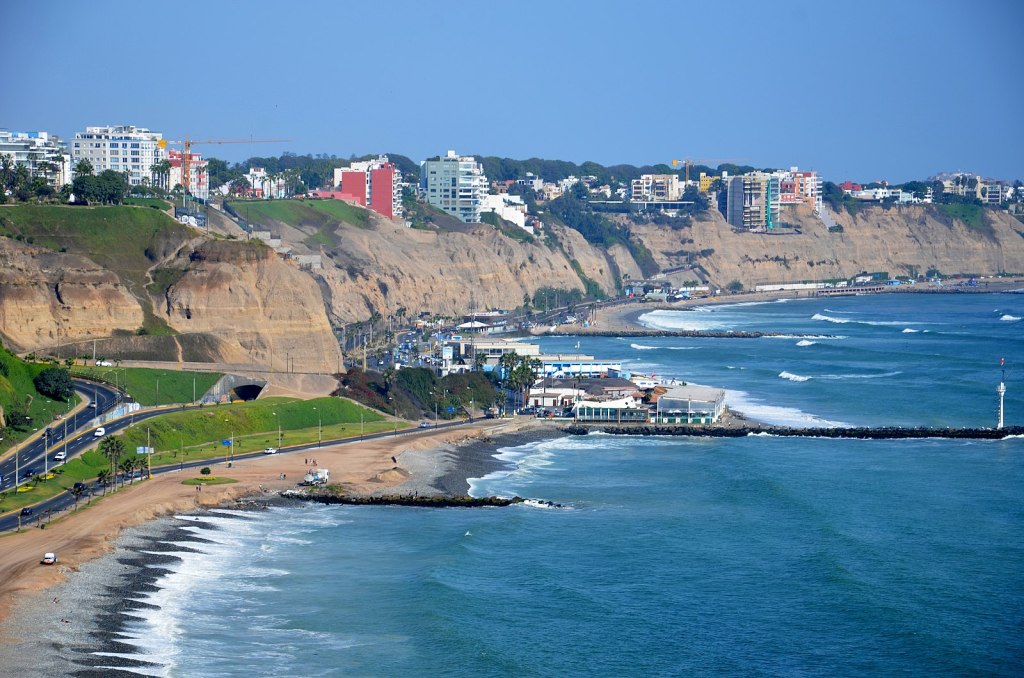
Lima. Courtesy: Creative Commons

The rich golden-brown skin peeled off easily to expose the pink flesh underneath. The ‘frita’ was a perfect symphony of flavours with every note being in the right place. I enjoyed the entire fish including the bones and the head. I was having a ‘trucha frita’ (fried trout) at a restaurant in Magdalena del Mar, Lima, Peru. The fish was large and had been fried without much oil. Peru is known for its food, and I enjoyed my lunch (almuerzo) throughout my visit. Lunch is the major Peruvian meal. There were special lunch menus and for around 8 nuevo soles (around 2 US dollars and fifty cents). I got an entrada (usually a soup or a salad) and a segundo (seconds with a big variety of dishes) with a drink and often a dessert.

I landed at Lima’s Jorge Chavez International Airport late at night late in September. The airport is not very large by international standards but functions quite well. Taxi fares from the airport are on the higher side. I had taxi-hailing apps on my phone, but they did not seem to work at the airport. Lima is a city of around 11 to 12 million people. About a third of Peru’s population lives in the capital. There has been a recent influx of Venezuelan refugees to the city. The city is crowded but most of it is well-planned with squares, roundabouts, parks, and sidewalks.

I liked Lima. For a large city, it is not very polluted though some areas are dusty. The city is usually covered by haze or fog till late in the morning. The weather is usually cloudy though it rarely rains. About 40% of Peru’s population lives in the arid coastal region (la Costa). You see a lot of cambios or shops where you can change money. You also see a lot of restaurants. Lima is the third largest city in Latin America and recently has gained a reputation for its food. Peru has a lot of Japanese and Chinese immigrants (most of whom arrived at the end of the nineteenth and beginning of the twentieth century) and may be the most ‘Asian’ country in Latin America. Many Chinese run Peruvian Chinese restaurants called ‘chifas’.

Lima gained in importance during the Spanish rule and was the capital of the viceroyalty of Peru which included parts of modern-day Ecuador, Colombia, Bolivia, Chile, and Argentina. The city became very wealthy. During my different visits, I stayed in three different parts of the city — Pueblo Libre (Free town), Magdalena del Mar, and Jesus Maria. Lima is divided into several municipalities.

In Pueblo Libre, I stayed near the Plaza de la Bandera (Plaza of the Flag), a huge roundabout. The archeological ruins of Mateo Salado were nearby. Peruvians take great pride in their rich heritage. Following the Spanish conquest, the pre-Hispanic religions and cultures were violently suppressed by the Spaniards. They do continue to influence modern Peru in several ways but there is a stark discontinuity.

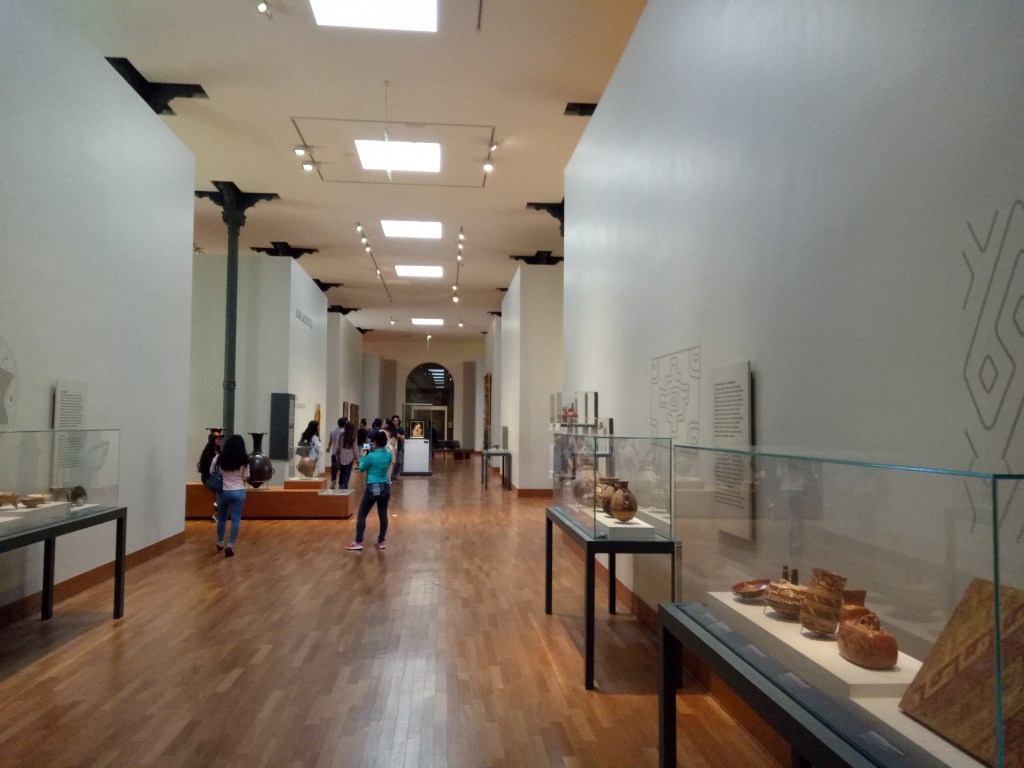
The Larco Museum is one of the many fine museums in the city. The museum has a rich collection of pre-Columbian art, is well-maintained, and is very appealing to the senses. Many civilisations took root on the arid coast. The Paracas and Nazca civilisations were prominent. The population had to learn to harness and use water from underground sources. The Anthropology Museum was under renovation, and I could only see the section commemorating the life of the liberator, Simon Bolivar. Bolivar is very popular in South America with several streets and buildings named after him. There is even a detergent named after him.

The Parque de la Leyendas (Park of Legends) is the zoo. The zoo is huge and is structured according to the three regions of Peru, the coast (costa), the mountains (sierra), and the jungle (selva). The Amazon rainforest constitutes the largest part of the country by land area. The largest city, Iquitos, can be reached only by boat or by air. The zoo also has a huge garden with plants from all over the world and a huge archeological site.

Plaza de Armas

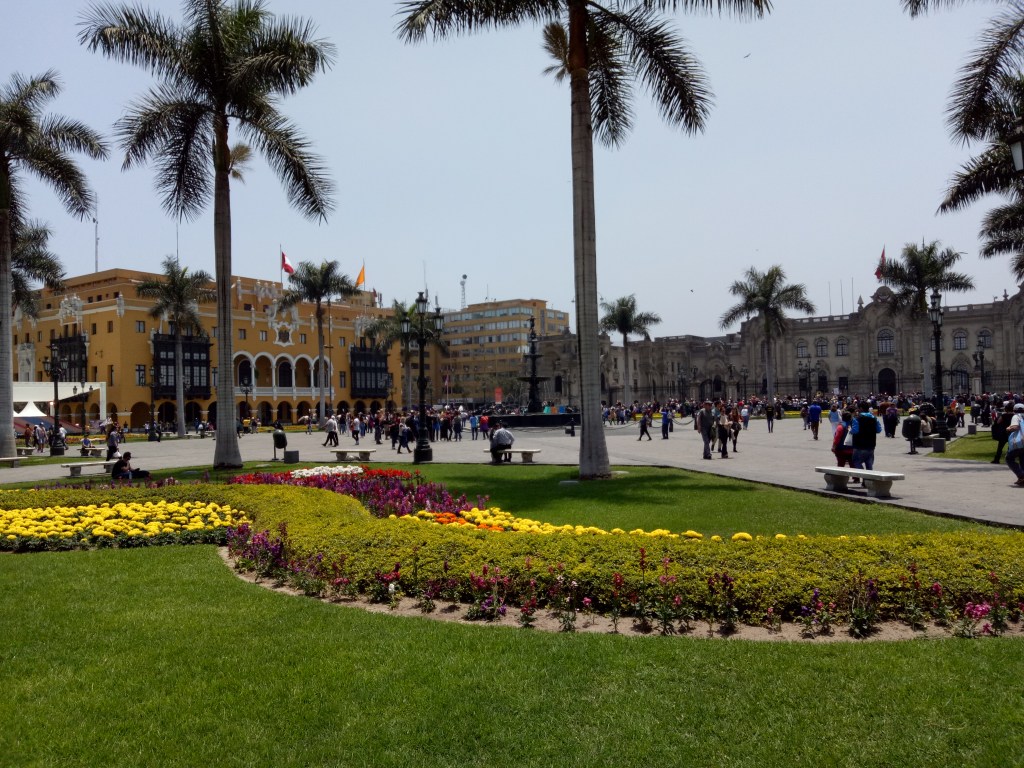
Plaza de Armas de Lima (Plaza Mayor lof Lima) is the main square of the city surrounded by fine Spanish colonial buildings. Every town in Peru has a Plaza de Armas. Town planning is mostly good with numbered sectors and streets within the city. I was fortunate to see the changing of the guard at the Presidential palace which takes place around noon. What a show of pomp, colour, and pageantry on horseback! The synchronisation was perfect. The cathedral of Lima, the municipal palace, and the palace of the Union are major historical buildings.

Changing of Guards

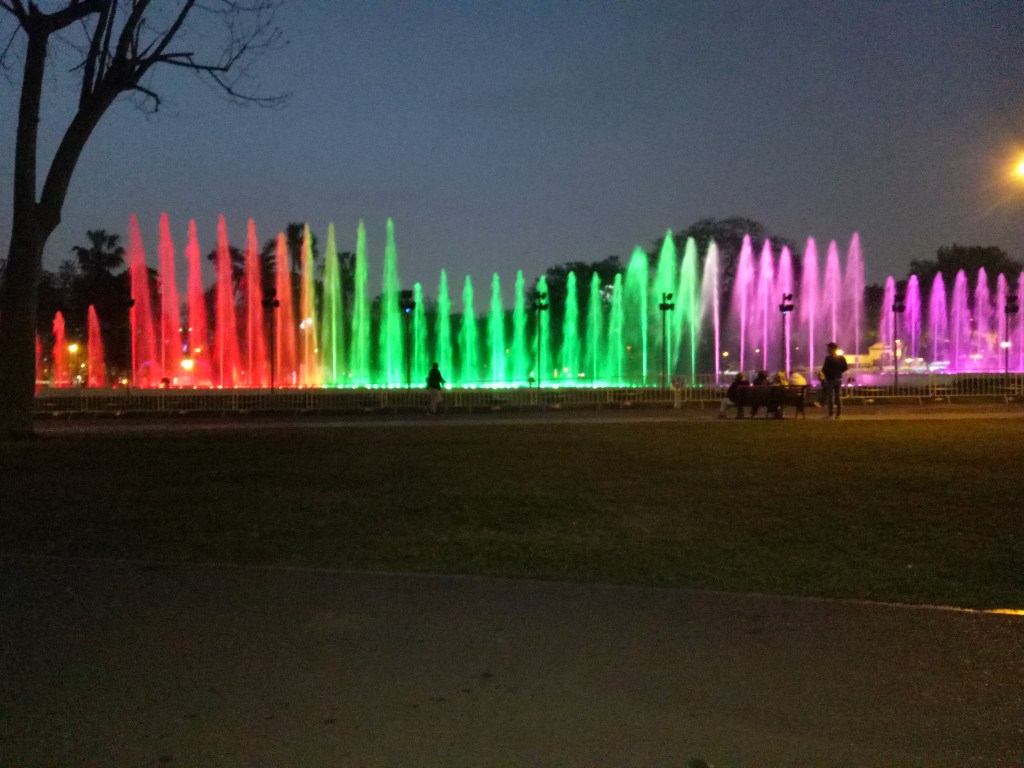
I had heard and read a lot about one of the more recent attractions of Lima – the magical water fountain. The Circuito Magico de Agua creates magic with water. I reached the place mainly known for the spectacular fountains around 5 p.m. You can walk underneath a tunnel of water. As the sun began to set the lights were turned on. The lights at the main fountain could reproduce an extravagant palette of colors and different scenes were created in tune with the music. There was a light show at 7.15 pm. Crowds began to gather around the main fountain. The light and sound show using lasers and lights was spectacular and provided a brief introduction to the rich tapestry of Peru.     

Magical Fountains

Chicha morada is a drink from the Andes region and is made from purple corn. Rich in antioxidants, the drink is refreshing and healthy. Chicha morada is smooth and beautifully complements various Peruvian dishes. The alcoholic variety plays an important role in different religious and other ceremonies from ancient times to the present day. There is a legend about the corn (mama jora, mother corn) plant from which these drinks are derived.

The legend about the chicha[1] is especially popular in Cuzco, the ancient capital of the Inca empire, and also in other cities in Peru. In ancient times the God Viracocha (the creator) saw people working hard. He wanted to help them, so he came down from Hanaq Pacha (the world above) to place in a single plant the powers he wanted to give humans.  He chose a weak plant that struggled to grow amidst spiny weeds. To give his power to this plant, Viracocha took from his bag a sliver of huaranguay wood, a puma hair, a condor feather, and the fox’s brain.  He put them together and placed them on the small plant.

The city that treats visitors like kings with its sumptuous meals and friendliness, creates mystery with magical legends, like the one about Viracocha. Perhaps, that is why a sense of lingering longing and gratitude fills my being as I think of the colourful capital of that distant country on the other side of the globe.

Acknowledgment: Senor Fernando needs to be thanked for his hospitality and help during my visit — Dr P Ravi Shankar

[1] The legend is mentioned in a blog article by WC Morveli titled ‘Drink chicha to become wiser than a fox’ (https://cuzcoeats.com/drink-chicha-wiser-fox/)

  1. Unless otherwise stated ↩︎

Dr. P Ravi Shankar is a faculty member at the IMU Centre for Education (ICE), International Medical University, Kuala Lumpur, Malaysia. He enjoys traveling and is a creative writer and photographer.

.

PLEASE NOTE: ARTICLES CAN ONLY BE REPRODUCED IN OTHER SITES WITH DUE ACKNOWLEDGEMENT TO BORDERLESS JOURNAL

Click here to access the Borderless anthology, Monalisa No Longer Smiles

Click here to access Monalisa No Longer Smiles on Kindle Amazon International
Categories
Poetry

Nature Poems by George Freek

NIGHT AT WONDER LAKE 

Clouds like pillows
smother the moonlight,
as waves beat the shore,
as if it were a door
they’re unable to open.
Like a moving circus
the cosmos passes over my head,
and I still have no idea,
who I am,
or why I’m even here.


EVENING AT WEST LAKE 

The years pile up
like snow on the roof.
The moon looks trapped
like an insect
in the branches of a tree.
A dove beckons
to his unheeding mate.
I think he’s too late. 
In frustration the dove
abandons his tree,
as life moves on.
What will be, will be.

George Freek’s poetry has recently appeared in The Ottawa Arts Review, Acumen, The Lake, The Whimsical Poet, Triggerfish and Torrid Literature.

PLEASE NOTE: ARTICLES CAN ONLY BE REPRODUCED IN OTHER SITES WITH DUE ACKNOWLEDGEMENT TO BORDERLESS JOURNAL

Click here to access the Borderless anthology, Monalisa No Longer Smiles

Click here to access Monalisa No Longer Smiles on Kindle Amazon International

Categories
Stories

Glimpses of Light

By Neera Kashyap

It took me a long time to understand that before each ‘episode’, Ma would have her mood. I was eleven on the first occasion. It was a Sunday and already noon, but Ma hadn’t bathed nor started preparing lunch. Still in her faded printed nightgown, she sat staring at the opposite wall, her small thin face drooped in confusion. Suddenly her expression turned stony, her right hand twitched as she waved it about, shooing something away. She got up hastily, asked for my earphones and plugged them in to music on her phone. Still her hand twitched. Her grey eyes narrowed in a strange mix of fear and hate, mostly fear. Her kinky uncombed hair felt alive with electricity. She muttered that her limbs hurt, her head felt on fire and that the voices wouldn’t go. By evening, she sat armed with a rolling pin and once threw it wildly across the room, bringing a copper jug crashing. Then she turned towards me, the rolling pin still poised in her hand. My fear was like electricity throbbing down my spine. But she only broke down and wept. Often, she felt that a snake had coiled around her — alive and poisonous. I would miss my father terribly. He would know what to do, for he was gentle and caring, but worked as a geologist far, far away in Saudi Arabia.

Before my father came and visits to the psychiatrist began, I spoke on the phone about Ma to Nani, my maternal grandmother. A widow, she lived in a distant town with her son’s family. Her voice crackled with concern, not so much for Ma as for me:

“Sushma has been possessed by a spirit. If only I could take her to the village. We would call a jagariya[1] to get rid of this…this evil thing. We don’t know when these spirits can come, take possession. Sometimes after 10, 20, 40 years. You be careful, Meenu. Just pray to Goddess Gaura Devi. She will protect you. She knew what it was to suffer, to be poor and hungry. Will you be alright, Meenu? Will you be brave? Talk to me often, theek[2]?”

“Evil spirit”? I gulped. My heart thudded like a big drum, its dull boom echoing through my body. My eyes filled with tears. Could Ma’s trouble be infectious? Would I also hear voices? Would I need ear plugs to shoo them off?

Ma began to sleep less and less during the nights. She would wander about and switch on lights wherever she went. Yet she was particular that she woke up on time to prepare my school tiffin. For this she used two phone alarms, each going off with different musical tones that rang without cheer. She cared less and less about how she looked as she walked me to the bus stop. Hunched in her night clothes, her hair all frizzy, her gaze faraway, her face unsmiling, she stopped joining other parents who chatted with each other. From my bus window, I would watch her slump away alone. More than discomfort, I would be embarrassed by what others thought of her, scared they would know that there was something wrong.

Baba[3]’s trips from Saudi Arabia became more frequent, though they continued brief. First there was a long tussle between him and Ma on the need for a psychiatrist. She said she was fine, except for this constant sadness, the same thoughts repeating themselves like objects stuck in a groove, in voices that seemed real. One evening she announced: “I have royal blood, the blood of the Panwar kings. We ruled for many centuries. The Nepalis came, they tried to destroy us, occupy our land. But we are rulers of Dev Bhumi – the land of the gods. We drove them out. Nobody can destroy the Panwars. Nobody.”

“Yes,” said Baba after a long silence. “Nobody could destroy the Panwars. They were righteous kings. The British helped them drive out the Nepali invaders. The Panwar Kings paid the British their military dues, but gave up their kingdom when we won our Independence from them.” After a thoughtful pause, he continued: “But we are not Panwars, nor royal, Sushma. We are landowners, simple landowners. Every year, our land holdings get smaller and smaller. As our families split up, so does our land. Without consolidated land we have no income from it. We are not royal Panwars, just small landowners.”

I could see Ma’s agitation mounting. Her hands trembled as she picked up the copper jug and stood up menacingly. Baba remained calm, not returning her gaze, just looking down at his hands clasped tight. Ma collapsed on the sofa in a heap, her breath ragged, tears streaming down her cheeks. Only when her breath calmed did Baba reach out to take her in his arms. It was then that visits began to the psychiatrists and Baba carefully monitored her medication cycle, long distance.

Baba would have been Ma’s best psychiatrist, but he was hardly around. It was when he was absent that I missed him most as a father and a friend. For he was fully absorbed in supporting Ma’s role as a housekeeper, in maintaining household expenses, in managing her episodes and most of all in motivating her to stick to her doctor’s appointments and to the medicines prescribed. By the time I was twelve, I would have heard his advice to me a thousand times: “You have to be strong. You have to be there for Ma. You must study hard and do well. Yes?”

“Yes? No…” I had flashed back once, in suffocation. “How can I be strong when I don’t know what will happen next? Whether she will fly into a rage or plaster me with kisses? I…I can’t talk to anyone except to Nani. I don’t want people to know. When she doesn’t sleep at night, I also can’t. How can I study and do well… all the time do well…do well?”

Baba had looked sad, but I was surprised that Ma had looked confused but stricken. For tears had run down my cheeks. Neither reached out physically, but some terrible gloom broke. My classmates had avoided me at school, calling me ‘sad girl’ behind my back, laughing their silly laughs with their silly normal lives. It was my old friend Rabiya who remained at my side. But then her home life was not normal either. Her father was an alcoholic. My mother had a mental illness that even Baba would not name. Rabiya and I couldn’t share much. We were frozen in our individual situations, but bound to each other by this sense that we both suffered.

Sometimes I thought about my own sadness and wondered if it was what they called depression. Some mornings Ma never woke up in time to make my school tiffin. Even though I would tell myself it was her medication, I would feel a terrible sadness as I buttered bread to take with me to school. The ‘sad girl’ remarks would ring in my ears. I would sleep more, study less, feel listless and sad, as if invisible chains were holding me down. Baba must have sensed this for, after one visit to the psychiatrist, he said: “Meenu, your fourteenth birthday is coming soon. Why don’t you plan something with your friends, take them out for lunch to some place where they also have games and things? Ma can take you. The doctor feels she is more stable now. Maybe some of your friends’ mothers would also join.”

“I don’t feel like it, Baba. I…I don’t have many friends…very few. These years….nobody has come home. Nobody, and I haven’t gone over either. Ma….it won’t work. If I could just focus on studying, that would be enough.” For the first time I saw my father slump in helplessness, twist his hands in his lap. But before he left for Saudi, he gave me a beautiful spiral bound notebook with the title, “In Peace”, and suggested gently that I keep a journal.

My first entry was an untitled poem:

Entry 1:
She is just like anyone else 
Cooking Phaanu  in the kitchen
Humming, tasting, smiling
She lets go of the ladle
Stands listening, asks if I 
Hear a baby cry.
I don’t answer,
Just switch off the gas
Search the fridge for 
Leftovers.
She is not like anyone else
I don’t know why.

*

Entry 16: I dread her rudeness for I never know what it will lead to. She broadcasts her thoughts, talks against members of the family, my father – how he has abandoned her, left her to cope alone in this cruel world. She calls me a lousy daughter – lousy at housework, lousy at caring for her, lousy at studies. Today, it all led to an episode. She stared at me, her grey eyes minced, her hair alive like snakes in the air and said, “You are not my daughter. You are someone else. Get out.” I felt my intestines twist in protest. My words came out in a flash: “You are not my mother either. Does a mother behave like this? Hot cold, hot cold. Only you count. Only your troubles count. I count for nothing. My sadness….I feel so helpless.” She reached up for a suitcase, opened my cupboard and started throwing my clothes in it. Halfway through, she stared at me, her eyes minced. Abruptly, she left the room. The half-full suitcase lay on the floor like the open mouth of a shark. I hated her. Yet, I found myself fully alert to the sounds in her room. She was talking to Nani. She would be alright.

*

It was a few nights later that she came into my room. It must have been around midnight. She had not put on any lights in the house. She walked in like a ghost and sat crouched in a chair near my bed. I don’t know if she was aware that I was awake but she must have been, for her voice flow was normal:

“I know I have not been a good mother, Meenu. But I really want to be. Nani tells me all the time to pray to goddess Gaura devi. I do. All the time, so I can be normal for myself, for you, for Baba. I don’t know what happens. It is as if I become someone else. Someone terrible – full of anger and hate. I say things, do things over which I have no control. There is no Gaura Devi then, no you, no Baba. Just this other….person. Sometimes I want to take all my medicines in one shot, so I either die or get well. But Baba is very strict, tells me to keep these thoughts out. He gets angry, begs, pleads. When I feel normal, there is still worry for you which makes me ask myself, will I ever be free of worry? Free.” After a pause, she said, “Can you forgive me, Meenu?”

I nodded in the dark. Ma must have sensed this for she stretched out her small body in the chair, clasping her hands as if in prayer. I didn’t know this goddess Gaura Devi. But I thought if I imagined her like Nani – plump and smiling, creased face and rosy cheeks with the snowy Nanda Devi peak as her backdrop – I could also pray to her. Ma left quietly and I began to visualise Gaura Devi as a kind lady, like my Nani.

Entry 36: Today on the net I read a mental condition that matched Ma’s exactly. Something called S. I can’t remember the name. It said it could be controlled but was generally incurable. Incurable? How can Ma’s state be incurable? Will I have to live with this forever? This is not possible, simply not possible. What if I could help cure it? Like Baba tries -- all the time. By being gentle and patient. By reasoning with her when she is calm. But I am not gentle nor patient. But I could do stuff that I can. Like take her for a walk. Or put on YouTube music that she likes. Like old film songs. Sit with her as she listens. Or maybe get her to mother me. Ask her to make me a chocolate mousse cake. No, no. That would agitate her if she can’t. A plain cake will be fine. Maybe I can get Rabiya to talk to her sometimes. Normal things like school things, projects. Anything.

Incurable?

Ma did come to me to say 
That sometimes she was two people
Not one
Maybe if I can see Ma as Ma
And the other person also as Ma
Then maybe, maybe I will see the two
As my one Ma.
She sees me weep sometimes
When I don’t let my rage follow hers.
That’s when she minces her eyes, 
Tries to see
She is not two people
Just one
My Ma.

*

At school, it was time for career counseling when each one in our class was scheduled individual sessions with a career counselor. Rabiya and I were no longer a twosome. We sat excitedly in groups trying to figure out our subject streams. Rabiya was consulted a lot for she was excellent in Maths, almost as good as a tutor. Classmates who were clear they would take up the commerce stream but unsure of their competence in Maths, asked her if they should substitute Maths with Business Studies or Computer Sciences. Rabiya never gave sweeping advice. One of her answers struck me as pretty wise. She said to Anjul, a short fat girl with a nervous tic: “See, if you feel Maths is a challenge, then take it up. If you rise to its challenge, it will not trouble you again, whatever course you take up. But if it depresses you and feels like a burden, then don’t!”

The career counselor had been allotted a room near the gymnasium – a large and well-lit room with many windows. Her face was like that too – large and well-lit. Though I knew my choice for a stream, I was tense. Miss Sridhar smiled as she studied my report card, then turned to her laptop to look at her comments against my name.

“Meenakshi Nautiyal”, she said. “You have a definite slant towards the humanities. Is that right?” She added laughingly, “Mind you, you could certainly improve your overall grades.”

I nodded. She asked what I liked about the humanities.

“Literature and history”, I said.

“What do you like about literature?”

“Poetry, I write poetry…”

“How wonderful. And what sort of poems do you write?”

“I write about my mother. She…she..she..”

It was as if a dam had been released. I couldn’t hold the waters back. They rushed out all stormy and sad and self-pitying, begging to know why Ma had to be like this. Not once did Miss Sridhar close her window-face. Not once did she say this was not her subject. Her handkerchief was large when she passed it to me. At the end, when the storm waters became a trickle, she said: “Yes, you will do very well with literature. Keep that journal going. Write your poems. Someday when your poems are not only about your mother, you will be able to read them to her. She will feel happy. She wants very much to be your mother, to be proud of you.”

It was not till my fifteenth birthday that I was able to approach my parents on a subject that had been churning within me. I wanted to celebrate my birthday. Ma was half asleep on the living room sofa, slumped towards Baba as he watched the evening news on television. I shook her awake. She looked up confused. My words came out in a rush:

“Ma, I have these friends I wanted to take to the mall for my birthday. This is their mothers’ list of names and phone numbers. My friends say many mothers join these get-togethers, so they get to know one another. Will you call to invite them once we decide on the venue?”

Ma suddenly looked alive and awake. Her hand trembled as she took the paper from me. Baba looked up at me, relief flowing from his face into his body, like a stream rippling through.

.

[1] A priest from the hilly region of Uttarakhand who uses drums and music to perform the elaborate ritual of Jagar. The ritual aims to invoke gods and a specific local deity to rid the possessed of the evil spirit by awakening divine justice that balances out some wrong committed in the ancestry.

[2] Alright?

[3] Father

[4] A soupy Garhwali dish made of a mix of lentils soaked overnight and cooked with spices

Neera Kashyap has published a book of short stories for young adults, Daring to Dream (Rupa & Co.) As a writer of poetry, short fiction, book reviews and essays, her work has appeared in several national and international literary journals and poetry anthologies.

.

PLEASE NOTE: ARTICLES CAN ONLY BE REPRODUCED IN OTHER SITES WITH DUE ACKNOWLEDGEMENT TO BORDERLESS JOURNAL

Click here to access the Borderless anthology, Monalisa No Longer Smiles

Click here to access Monalisa No Longer Smiles on Kindle Amazon International
Categories
Excerpt

The Coffee Rubaiyat

Title: The Coffee Rubaiyat

Author: Rhys Hughes

Publisher: Alien Buddha Press

Introduction

The famous old poem called The Rubaiyat of Omar Khayyam is known to many through the translation Edward FitzGerald published in 1859. His first edition, a selection of 75 quatrains, is considered the best. He revised the quatrains several times, losing poetic force each time he did so.

His translations are regarded as highly inaccurate anyway, but they are musical, evocative and wistful, and I like them very much. They are among my favourite poems and I once resolved to learn them all by heart.

As it happens, I failed in that attempt, mainly through laziness, which is appropriate really, for FitzGerald himself was an especially lazy man, who wrote and did very little in his life.

The quatrains are all about the joys of wine. At any time of the day or night wine is good to drink. That is the essential message.

I have heard it said that Omar Khayyam’s wine is actually a metaphor, perhaps for God or enlightenment, but personally I find the idea unconvincing. Or rather, I lack the scholarly insight to feel the truth of that interpretation.

The verses seem to be about real wine, the kind that can get you drunk, though I am willing to entertain the notion that I am missing the point. At the very least they can be plausibly quoted in connection with real wine, and I have used them to justify drinking an extra glass, for yes, Omar is keen to insist that more is better than less, indulgence superior to restraint.

But although I am fond of wine, I am fonder of coffee by far. I can easily live without wine, but only with difficulty live without coffee.

Thus, I decided to write a Coffee Rubaiyat, matching FitzGerald’s first edition quatrain for quatrain but making mine all about coffee.

I daydream that copies of my slim collection will one day be found in the coffee shops of the world. If the cappuccino fits, wear it. So say I.

And now it is time for a coffee break and I shall say no more.

Rhys Hughes, June 2023

The Coffee Rubaiyat


I.

Awake! for the alarm clock next to the bed
Is ringing the bells that can wake the dead:
And Lo! The ruby rays of the rising sun
colour the espresso machine a pinkish red.

II.

Dreaming when Dawn’s Left Hand was in the Sky
I turned to Dawn with a very deep sigh,
“Crikey, dear, that’s a massive hand you’ve got.
Why not get out of bed and bring me coffee—a lot?”

III.

And, as the Cock crew, those who stood before
The coffee shop shouted—“Open then the door.
We all rather fancy a round of cappuccinos
Before grappling with our foes upon the floor.”


IV.

Now the New Year reviving caffeine desires,
The thoughtful soul to the kitchen retires,
Where the white froth on the large cappuccino
Flows out, and steam from the kettle perspires.

V.

Biscuits indeed are gone with all their crumbs,
And Sinbad is reduced to sucking his thumbs;
But still the coffee bush her lovely beans yields,
And still the waiter with our beverages comes.

VI.

And Dawn’s lips are coffee smeared; but in divine
Extra-strong roast, sighing, “The coffee’s all mine!
Cream but no sugar!”—the fox cries to the toad
But those dregs have gone cold and that’s not fine.


VII.

Come, fill the mug, and into the boiling kettle
Pour more pure water to cool the red-hot metal.
Strange folks prefer fashionable herbal teas
To sip—and Heck! They include leaves of nettle.

VIII.

And smells—a thousand aromas within one year
Wafted—and a thousand had no aroma to revere:
And this first breakfast time that brings burnt toast
Shall smear Sinbad’s ear on the sheer frontier.

IX.

Come with Coffee Khayyam and leave the lot
of juice bars and water bottles forgot:
Let gym instructors rant about overconsumption
Or doctors cry Enough—heed them not.


X.

With me at the quiet table of a terrace café
That divides the indolent from those gone astray,
Where one may slurp and dribble in peace
And pity the pedestrians who hurry on their way.

About the Book:

Settle into the enchanting rhythm of this coffee-themed adaptation of the classic Rubaiyat of Omar Khayyam, as each stanza awakens the senses with witty, humorous, and thought-provoking reflections on the joys and quirks of coffee culture.

The Coffee Rubaiyat embraces the essence of morning awakenings, midday pick-me-ups, and contemplative sips, all while exploring the comical and heart-warming encounters that revolve around this beloved brew.

This collection celebrates the endless nuances and pleasures that coffee brings. Coffee lovers, literature enthusiasts, and anyone with a penchant for the art of the bean will relish in the fusion of two worlds – the timeless verses of Omar Khayyam and the contemporary charm of Rhys Hughes.

A delightful literary adventure that will leave you yearning for another sip.

About the Author

Rhys Hughes is a writer of Fantastika and Speculative Fiction.

His earliest surviving short story dates from 1989, and since that time he has embarked on an ambitious project of writing a story cycle consisting of exactly 1000 linked tales. Recently, he decided to give this cycle the overall name of PANDORA’S BLUFF. The reference is to the box of troubles in the old myth. Each tale is a trouble, but hope can be found within them all.

His favourite fiction writers are Italo Calvino, Stanislaw Lem, Boris Vian, Flann O’Brien, Alasdair Gray and Donald Barthelme, all of whom have a well-developed sense of irony and a powerful imagination. He particularly enjoys literature that combines humour with seriousness, and that fuses the emotional with the intellectual, the profound with the light-hearted, the spontaneous with the precise.

His first book was published in 1995 and sold slowly but it seemed to strike a chord with some people. His subsequent books sold more strongly as my reputation gradually increased. He is regarded as a “cult author” by some and though pleased with that description, he obviously wants to reach out to a wider audience!

PLEASE NOTE: ARTICLES CAN ONLY BE REPRODUCED IN OTHER SITES WITH DUE ACKNOWLEDGEMENT TO BORDERLESS JOURNAL

Click here to access the Borderless anthology, Monalisa No Longer Smiles

Click here to access Monalisa No Longer Smiles on Kindle Amazon International

Categories
Slices from Life

Belongingness and the Space In-Between

By Disha Dahiya

Humans are in a perpetual state of motion — be it intercity, interstate, or inter-country — and the relentless quest to assimilate commences. Embracing a new culture, blending seamlessly with the locals, and adopting regional slangs and accents become daily endeavours. In this race without a finish line, a persistent anxiety takes hold. “What if I don’t quite fit in?” “Will people forever perceive me as an outsider?” “Could I lose touch with my roots?” Trust me, this apprehension intensifies when one immigrates to a foreign land.

The inner conflict of belonging experienced in transcultural migrations casts light on the concept of cultural dysphoria. When I first encountered this term, it piqued my interest in how individuals navigate their daily lives while carrying this weight. Cultural dysphoria, a recent term, is an extension of the concept of dysphoria. EverydayFeminism defines cultural dysphoria as: “…the dissonance between the societal expectations for an individual’s broad cultural performance or identity and their desired embodiment of that culture, or uncertainty about where they fit into cultural categories.”

In simpler terms, someone experiencing cultural dysphoria feels like an alien in a new culture. They grapple with the space between two distinct cultures. While their mind urges them to embrace the tenets of the new cultural paradigm, their heart insists on preserving their native cultural heritage.

It was only recently that I comprehended how the concept of cultural dysphoria applied to both me and my family. This understanding took nearly two decades to crystallise, but as the adage goes, “better late than never.” Such realisation would not have dawned upon me without the pursuit of my Ph.D. thesis. Over time, I delved into novels penned by first-generation South Asian American writers such as Chitra Banerjee Divakaruni, Amulya Malladi, Naomi Munaveera, and Bapsi Sidhwa. These authors were born in South Asian countries and subsequently migrated to America. Their literary works often delve into the challenges faced by immigrant families in a foreign land. Reading allows us to explore the world, but essays and books also furnish a window through which we can empathise with someone’s narrative. Nevertheless, one’s own story offers a distinct and nuanced perspective. Indeed, first-hand experiences yield unique vantage points.

I was a mere eight-years-old when my father obtained Canada’s Permanent Residency Card, and our journey towards establishing roots in a foreign land began. As a second grader, comprehending that you’re about to traverse over 7,000 miles is no small feat. At times, the gravity of such a situation eluded me. On other occasions, I found excitement in the impending turbulence. It was exhilarating, even though questions like ‘why are we relocating?’ and ‘why must I leave my school?’ continually lingered in my mind, spanning the distance from Delhi to our future home in Calgary.

This is the nature of belongingness – it doesn’t instantaneously manifest if you’ve have never before contemplated the possibility of residing in a country far removed from your homeland. The initial step in transcultural migration involves recognition, transcendence, and integration. One must acknowledge the reality of transcending boundaries, leaving behind their original cultural heritage, and stepping foot in a foreign land with its own distinct cultural tapestry. I refer to this stage as ‘Acceptance’, as it encompasses a multitude of thoughts regarding one’s capacity to accept and be accepted within this new environment.

For my family, the journey of assimilation began the moment we exited YYC Calgary International Airport in November 2006. A friend of my maternal uncle’s son welcomed us—a network woven through connections—a common phenomenon in Indian culture. Connecting with familiar faces, who then introduce you to others, and this chain keeps expanding, is deeply ingrained in our cultural fabric. From being surrounded by individuals of a different ethnicity to grappling with the nuances of time zones, my family sought to adapt to our new Canadian milieu. Isn’t it peculiar how one day you’re in the tranquility of your home, and the very next day, you soaring through the skies, crossing international borders?

Recalling the sequence of events surrounding our immigration, nearly two decades later, is no simple task. Much has evolved, particularly my perspective on life. What once seemed normal has shifted, no longer aligning with my current perceptions. This is the natural progression of personal growth – forgetting, reminiscing, comprehending, and de-constructing. Each emotion makes sense in hindsight, guided by wisdom acquired over time.

At times, we relegate certain emotions to the shadows of our heart. We normalise the experience of residing in the in-between and the accompanying sense of non-belongingness, presuming it to be an idiosyncrasy. However, South Asian diaspora members share these particular sentiments of the in-between. We accept our role as outsiders among the locals, convinced that this is the way it should be, right?

Navigating the new environment while endeavouring to retain a strong connection to one’s roots becomes paramount when relocating to a foreign country. A part of me yearned to return to India to celebrate the Festival of Lights with those left behind, while another part was eager to explore innovative ways of preserving our culture and traditions amidst the bustling streets of a land predominantly inhabited by individuals of a different ethnicity.

During those years, Canada had not yet become the Mecca for Indian students pursuing higher education, as it is today. The immigrant community consisted mainly of those who had relocated in the ’70s or ’80s in pursuit of a brighter future for their children. Consequently, the Indian community was relatively smaller.

The question of belongingness emerged from as early as my first day at school. Where does one truly belong in a classroom of over twenty students with varied ethnicity? Among these students, four were of Indian descent, two hailed from Pakistan, one each from Australia and France, while the remainder were Canadian natives. Yet none of these students were unequivocally ‘Indian.’

The logical assumption might be that I belonged with the group of four Indian-origin students. However, this was not the case because, fundamentally, I was Indian. A subtle distinction lies between being Indian and being of Indian origin. It wasn’t a matter of passports; it ran deeper. I was too Indian to seamlessly integrate with non-Indians and just slightly more Indian than those of Indian origin. I existed as an ‘other’ amidst the ‘others,’ with the four Indian-origin students occasionally amused by my Indian accent. Emerging from a decent background, having received education in a convent school, initiating casual conversations with a simple ‘hey, what’s up?’ was effortless. Yet, adopting a foreign accent was not within my purview. My peers of the same age knew precisely when and how to employ phrases like ‘screw it,’ ‘for God’s sake’, I’m not interested,’ and ‘nahhhh…’ The only phrase that came to mind whenever I wished to express my lack of interest was ‘it doesn’t matter’. As a non-native English speaker, it was the most apt phrase I could muster. Apparently, seamless alignment in terms of accent, language, and communication is pivotal to establishing friendships in a foreign land. Failure to do so results in being cast aside as an outsider.

The nagging thought that permeated my family’s collective consciousness during those early days in Canada was this: Do we belong here among people who do not perceive us as one of themselves? We had successfully traversed the initial stage of transcultural migration. Consequently, the second stage — which I’ve labelled ‘Non-belongingness’ — became a pivotal moment, shedding light on our lack of alignment with both people of Indian origin and non-Indians. Our cultural identity remained a poignant question mark, casting a shadow over our Canadian experience.

For my father, commuting to work entailed a daily two-hour journey to and from his workplace. Occasional weekend outings, mostly for groceries, marked the extent of our excursions. Indian suits were my mother’s customary attire, but how long would that persist? After a few months, she transitioned to wearing jeans and long shirts. While Indian suits exude grace and elegance, she lamented the difficulty of blending in. “Passing by a row of foreigners while wearing a salwar kameez is a daunting task; one becomes the subject of unwarranted stares,” she confided. Her eyes betrayed a longing for the life she left behind in India, where she could choose her favourite salwar kameez and embellish it with the most exquisite dupatta in her wardrobe without attracting undue attention. I sensed her yearning for India, particularly when my maternal grandfather — whom I affectionately called Nanu — phoned. Each call filled her with joy, and her countenance radiated even more than usual. Perhaps Nanu sensed her yearning to return, which manifested as glistening tears on my mother’s cheeks.

Life in Canada was a far cry from what it used to be in India. As Diwali approached, I eagerly anticipated the deluge of sweets and gifts that would typically inundate our home in India. However, that year, those customary tokens of celebration were conspicuously absent, a stark reminder that we had yet to establish a substantial social network in Canada. Everything had changed. People in Canada appeared disinterested in the Festival of Lights. It was just another day for them. Some were engrossed in preparations for Christmas, while others seemed oblivious to the existence of Diwali, India’s most eagerly awaited festival. With no candles adorning our home, no gifts to fuel our excitement, and nothing resembling the grandeur of an Indian Diwali, our spirits plummeted upon realising that we had yet to sever our emotional ties to our culture. It was a perplexing sensation. While I yearned to embrace the festivities of Christmas, the absence of enthusiasm for Diwali contrasted starkly with my Canadian expectations. I believe my parents experienced a similar sentiment because on that day, an uncharacteristic sombreness shrouded our smiles. We smiled for each other, but the glint in our eyes bespoke our longing for our true home, India.

In this narrative, where did we truly belong? Some may argue that we belonged where we resided at that moment, while others might reflect on their immigrant experiences and ponder their sense of belonging. This is where the bitter realisation of cultural dysphoria takes root. The inability to fully integrate into a foreign land, the feeling of being an outsider, and the disconnect between cultural expectations and reality culminate in a dysphoric sensation, marking the onset of the third stage in an individual’s transcultural migration journey. At this juncture, it becomes imperative to recognise that while certain aspects of one’s former culture must be relinquished, others must be preserved. I refer to this third stage as the ‘In-Between.’

The third stage of the transcultural migration experience delineates the unique space an individual occupies, betwixt and between two cultures. As immigrants, we embraced certain facets of the new culture while shedding some of our own, and vice versa, to carve out a niche that could accommodate and harmonise both cultures. Within this ‘In-Between,’ a new persona emerged. We remained too Indian for the world outside, yet our hearts affirmed it was for the best.

That year in Canada unfolded with a plethora of surprises. And then, we returned to India. But that’s a story for another essay!

The feeling of cultural dysphoria is far from uncommon. A majority of migrants grapple with the turmoil of cultural conflicts when transitioning to a new country. While this narrative offers a glimpse into how transcultural migrations can affect an individual, there exist countless other stories waiting to be shared with the world. In the area of transcultural migration, each thread tells a unique story, and my narrative is but one strand in this rich fabric of human experience. As my family and I navigated the in-between of two cultures, I am reminded that our journey is a testament to resilience, adaptability, and the enduring power of cultural identity. While the road may be fraught with challenges, the experience has imbued us with a profound appreciation for new cultures. Cultural dysphoria may cast its shadow, but it also offers a canvas for personal growth and understanding. It is my hope that by sharing our story, we illuminate the path for others embarking on similar journeys and foster a deeper understanding of the intricate web of the transcultural in-between.

Disha Dahiya is a PhD Research Scholar in English Literature. She has a keen interest in exploring the South Asian narrative across borders and boundaries while focusing on the cultural aspect of transcultural migrations.

.

PLEASE NOTE: ARTICLES CAN ONLY BE REPRODUCED IN OTHER SITES WITH DUE ACKNOWLEDGEMENT TO BORDERLESS JOURNAL

Click here to access the Borderless anthology, Monalisa No Longer Smiles

Click here to access Monalisa No Longer Smiles on Kindle Amazon International
Categories
Poetry

A Wave in the Ocean

By Avantika Vijay Singh

A wave in the ocean...
Here today, gone tomorrow,
Merged with the universe
Absorbed from whence it came.
Such is our life --
Here today, gone tomorrow
To merge with the Universe
Within the blink of a cosmic eye.

Our purpose,
Like the wave,
To create a stir
In the cauldron of the human ocean,
To add to humaneness
And the quality of our community.
That done --
It is time to merge the physical self
with the Universe.

The wave becomes a part of the ocean,
Its energy merging with that of others.
Its presence now a part of the ocean,
Manifesting in each drop left behind.
Each drop energised by the presence that was
Charged and changed deeply
By the manifestation deep within
Beyond the physical self.

Avantika Vijay Singh is the author of Flowing…in the river of Life and Dancing Motes of Starlight.

PLEASE NOTE: ARTICLES CAN ONLY BE REPRODUCED IN OTHER SITES WITH DUE ACKNOWLEDGEMENT TO BORDERLESS JOURNAL

Click here to access the Borderless anthology, Monalisa No Longer Smiles

Click here to access Monalisa No Longer Smiles on Kindle Amazon International

Categories
Review

Writing South Asia in the American South

Book Review by Gemini Wahaaj

Title: South to South: Writing South Asia in the American South

Editor: Khem K. Aryal

Publisher: Texas Review Press

Taken together, the stories and essays in the new anthology edited by Khem K. Aryal South to South, Writing South Asia in the American South, offer an intimate, richly articulated expression of what it means to live in the American South as a South Asian immigrant. Several stories construct the enduring feeling of loss, both for new immigrants and old. Sixteen authors have been featured. Some have dealt with the issue through fiction and some, through non-fiction.

In “The Immigrant”, a short story by Chaitali Sen, a young immigrant man Dhruv tries to compose a letter to his parents describing his new life in America but fails to find the language. While dining next to the hotel where he is staying during  a work trip, Dhruv is upset by the disappearance of a small boy and the fruitless search of the distraught parents, which reminds him of his own state in America, where he seems to have lost his way. In “Pine” by Hasantika Sirisena, a young Sri Lankan mother of two small children tries to hold on to her customs from home. Her husband walks out on her in a bid to make a new, successful life in America, unburdened by the trappings of culture and religion. She seems in danger of losing her two children also, who are more interested in Christmas trees than the rituals she wants to share with them. In a startling turn of events, she comes to terms with her own uprooting with touching courage.

Several stories remind us of the remarkable flexibility of South Asian immigrants, who transform themselves and become new people after putting down roots in a new place. One such story is Aruni Kashyap’s “Nafisa Ali’s Life, Love, and Friendships Before and After the Travel Ban”, about a young married woman from the war-torn region of Assam, whose mother and husband in India constantly worry about her safety. Nafisa lives next door to a couple as different from her as possible; they do not work, they drink and they have public sex – yet, Nafisa feels drawn to them as she embraces her new relationships and identity in America to escape her traumatic past. In “Nature Exchange”, Sindhya Bhanoo tells the story of a South Asian woman married to a white man whose relationship with her husband comes to an end when their son dies in an all too typical American phenomenon, a school shooting.

Repeatedly, we see immigrant women in a state of extreme desolation and isolation, left to their own devices to find meaning afresh in a foreign land. Whether they feel their children moving away from them or they literally lose a child, children seem to act as an anchor for the immigrant mother, but in each story, this most intimate of relationships only proves transitory. There are also contradictions. Whereas Sirisena’s story shows a man more willing to assimilate and adapt to America, in Kashyap’s story, the husband, sitting in India, draws easy conclusions about America (denouncing drinking, dancing, and their anti-immigration status), whereas the wife in America, tired of the stresses of living in a war-torn country, finds respite from her homeland’s history of trauma by partying with her office mates and Southern neighbors.

Parallel themes run through the entries. Both stories and essays articulate the craving for tea, one aspect of their identity that South Asians have carried overseas. Also poignant are tales of the early days of migration and the transformation people undergo over the years. Jaya Wagle writes of having an arranged marriage and making the long journey by plane with the man she marries to another country. The whole experience of her new marriage seems as unknown, fragmented, and mysterious as the new country to which they have come. The essay is poignant for the specificity of haunting details, and the transformation of an immigrant evident over the years.

But what makes these South Asian immigrant experiences uniquely southern? One pattern apparent through all the stories is the lack of public transport and public space. The new immigrants in these essays and stories are in cars and Ubers, tucked away in suburban houses or secluded apartments in small towns, the lack of public community accentuating their isolation. Added to this physical landscape is the South Asian immigrant’s alienation from the politics of the region.

The essays, compared to the stories, seem more concerned about identity and more strident about equating immigrant identity with patriotism and allegiance to the Democratic Party. In “Gettysburg”, Kirtan Nautiyal writes about playing the game Sid Meier’s Gettysburg based on the battle of Gettysburg, admiring Union army heroes, imbibing American history in school, and watching the film Gettysburg, wanting to prove himself an American. Throughout the essay, he seems to correlate being an immigrant with proving one’s patriotism towards his adopted country. He stretches it to a point where he would be willing die in a battle – a price, it seems, immigrants must be willing to pay to show their love for America. The essay, predictably, ends with the story of Captain Humayun Khan, who was killed in the Iraq war, told at the 2016 Democratic Convention. Anjali Erenjati writes about taking a fun car trip with her new immigrant friends who do not share her trauma of growing up in the deep South, where she faced a racist incident as a young teenager.

Essays, also, seem more directly to address the question of identity, specifically, being questioned about one’s identity. In Tarfia Faizullah’s humorous essay “Necessary Failure”, she is asked repeatedly where she is from, as her answer, “I grew up in Midland, Texas,” fails to satisfy her co-worker in a theater festival box office in Alabama. On Jaya Wagle’s first night in America, two policemen accost her husband in Texan English when she mistakenly calls 911. Later, the old women she meets at her library writing workshop ask her how long it took her to learn English, a language she has spoken all her life.

The editor Khem K. Aryal is an associate professor of English at Arkansas State University. He is a writer, editor, and translator from Nepal. His short-story collection, The In-Betweeners, is forthcoming from Braddock Avenue Books.

.

Gemini Wahhaj is the author of the forthcoming novel The Children of This Madness (7.13 Books, December 2023) and the forthcoming short-story collection Katy Family (Jackleg Press, Spring 2025). Her fiction is in or forthcoming in Granta, Third Coast, Chicago Quarterly Review, and other magazines.

PLEASE NOTE: ARTICLES CAN ONLY BE REPRODUCED IN OTHER SITES WITH DUE ACKNOWLEDGEMENT TO BORDERLESS JOURNAL

Click here to access the Borderless anthology, Monalisa No Longer Smiles

Click here to access Monalisa No Longer Smiles on Kindle Amazon International
Categories
Poetry

Poems for Halloween

By Michael Burch

A statue of Lorelei on the Rhine. Courtesy: Creative Commons
SIREN SONG	

The Lorelei’s
soft cries
entreat mariners to save her ...

How can they resist
her seductive voice through the mist?

Soon she will savour
the flavour
of sweet human flesh.


GHOST

White in the shadows
I see your face,
unbidden. Go, tell	
Love it is commonplace;

Tell Regret it is not so rare.			

Our love is not here
though you smile,
full of sedulous grace.

Lost in darkness, I fear
the past is our resting place.

(Published by Carnelian)

BELFRY

There are things we surrender
to the attic gloom:
they haunt us at night
with shrill, querulous voices.

There are choices we made
yet did not pursue,
behind windows we shuttered
then failed to remember.

There are canisters sealed
that we cannot reopen,
and others long broken
that nothing can heal.

There are things we conceal
that our anger dismembered,
gray leathery faces
the rafters reveal.


SOMETIMES THE DEAD 

Sometimes we catch them out of the corners of our eyes—
     the pale dead.
          After they have fled
the gourds of their bodies, like escaping fragrances they rise.

Once they have become a cloud’s mist, sometimes like the rain
     they descend;
	they appear, sometimes silver like laughter,
to gladden the hearts of men.

Sometimes like a pale grey fog, they drift
     unencumbered, yet lumbrously,
          as if over the sea
there was the lightest vapour even Atlas could not lift.

Sometimes they haunt our dreams like forgotten melodies
     only half-remembered.
          Though they lie dismembered
in black catacombs, sepulchres and dismal graves; although they have committed felonies,

yet they are us. Someday soon we will meet them in the graveyard dust
     blood-engorged, but never sated
          since Cain slew Abel.
But until we become them, let us steadfastly forget them, even as we know our children must ...
Courtesy: Creative Commons

Michael R. Burch’s poems have been published by hundreds of literary journals, taught in high schools and colleges, translated into fourteen languages, incorporated into three plays and two operas, and set to music by seventeen composers.

PLEASE NOTE: ARTICLES CAN ONLY BE REPRODUCED IN OTHER SITES WITH DUE ACKNOWLEDGEMENT TO BORDERLESS JOURNAL

Click here to access the Borderless anthology, Monalisa No Longer Smiles

Click here to access Monalisa No Longer Smiles on Kindle Amazon International