Categories
Musings

Ghosts, Witches and My New Homeland

By Tulip Chowdhury

Around the early ’70s, in my village home in Bangladesh, we kept ourselves far away from anything spelled “ghost or jinn.” I grew up hearing my Grandma saying, “Shh. Don’t even utter the word ‘bhut (ghosts) or jinn’ because words have power, and they might feel the vibe as an invite.” However, every Halloween is a culture shock for me after coming to Massachusetts, USA, when the celebrations of haunted houses, witches, ghosts, and spirits occur. My late Grandma might turn in her final resting place if I could message her, “Ghosts and witches are subjects of colorful celebrations, Grandma.”

Thoughts rewind to life with the villagers in Bongaon, when the fan-palm trees — taal gach — were supposed to be favourite places for ghosts and jinn. Myths held that ghosts and spirits lived as invisible souls among visible humans but liked to live on the trees. The trees they wanted to inhabit were trees standing beautiful and tall. Yet the beautiful sight was pregnant with danger. The long fonds looked like fingers beckoning passersby. The fan palm had delicious fruits called taal. The trees sent alarming vibes to the villagers. But getting the fruits from the tree was challenging and had to be done during broad daylight when ghosts were supposed to be non-active. The fan palm was not the only tree that welcomed them. The tamarind tree was also avoided, especially after sunset. Not just the trees, but their shadows spelled trouble too, and people avoided stepping in the shadows. The advice to weary souls was, “Don’t let the bhut get on your shoulders.” It seemed that the chosen place was the shoulder. It was different for the ghosts; they didn’t get into the victim’s head like other spooks.

Whenever I passed near our tamarind tree, I imagined a possessive spirit jumping down from the tree and landing on my shoulder. I would run for life faster than a deer when I passed one of them. Ghosts were known to haunt their victims for the rest of their lives if they got a chance to get on the shoulder. I ran home; I did not want to be possessed for the rest of my life.

According to the people in Bongaon, nighttime was the favourite time for ghosts and evil spirits. Starting from the late evening to the descent of darkness, no one walked without a flaming torch made from kerosene-drenched cloth on a thick stick. Much as darkness spelled fear and mystery, fire was the force to power the evil over to burn and destroy—similar to fantasy stories of modern times. In life, it seems we are connected like a spider’s web. A person suspected to be possessed by a spirit sought help from special prayers and charms. Some of the healers had harsh methods and had the victims smell burning dried chilli — supposed to clear the mind. And others sprinkled holy water around the person and the house.

Theories on haunting spilled beyond the trees and dipped below the waters surrounding my village. The water lilies in the rainy season bloomed in abundance in the swamps — haor, ponds, and the water-clogged areas around the town. The seeds and stems of the water were gastronomical delicacies for us. The stems cooked as curries and the grains got toasted over the fire. However, evil spirits and jinns were said to roam around swamps at night, and no one tried to pick these up in the dark. Growing up, I wondered if the whole thing around the evil supernatural was to keep people safe because plenty of water snakes coiled around the lily stems, and people were likely to get bitten. Often, people invented ghost stories when logical explanations failed or, perhaps, to safeguard without having to give lengthy answers.

The sweet shops and their connections to supernatural beings baffled me then and to this day. Few charming shops sold traditional deserts, like rosogolla, cholchom and kalojam; the display trays were usually well stocked. It was well known among people that if you entered the shops after the Muslim evening prayer, the Maghrib, the sweets would be gone from the trays. The good jinn were supposed to like the sweets and, on their way back from the mosque, feasted on them. Our village did not have electricity, and there was no refrigerators to preserve these. So, when fresh sweets were replaced on trays the next day, there was no explanation given for the disappearing trayful until the maghrib prayer. No customers came because they wanted to avoid jinn altogether since they could change from good to bad ones. The disappearance of the sweets at a particular time remains a mystery added to many others in my lifetime.

The people in Bongaon believed there were two kinds of jinn: good and evil. Good jinn were with the steady and truthful people who prayed regularly. If the good people, especially women, happened to walk with loose hair in the evening or night, they were exposed to danger of being possessed by the evil jinn. There were dos and don’ts, right and left, for women to keep themselves safe from evil jinn and ghosts. As far as I remember, men were almost excluded from the “wanted list” of the feared beings. How was that possible? The male-dominated society of the early 70s seemed to set boundaries for the ghosts and jinns. In the modern digital world, men and women have found some common ground, and even spirits no longer come only for female humans. Now that we have electricity, in the village scenario, women are smarter with computer skills; in reality, male dominance gets veiled. I am pretty sure the tamarind or the fan palm trees have their versions of the surreal world. However, the deep-rooted world of the spirit world still chains many, especially around the nighttime.

Nighttime and darkness seem to hold endless mysteries, and most are shrouded with danger in many cultures as they did in Bangladesh society. But was the dark so scary? Sleep at night came with dreams and nightmares. To be fair to the darkness, I would often sit on the porch and take in the night sky with its unique, moving life. The sky was never the same, moonlit or with the new moon. Clouds played hide and seek over the moon on rainy days. And the stars, their endless games of winking at me made me as happy as a child every time I looked up at them.Some nights, an owl would greet me with the “Twoo, twoo,” and I would whisper my hello back. I was sure the night bird heard me loud and clear; if it could see at night, why not hear at night, too? Whenever the owl called, thoughts winded to village childhood days, days when village myths held beliefs captive. Whenever we listened to owls’ hoot, we were urged to say, “good”, because if there were something ominous, the power of our words would take that away.

Halloween in Massachusetts digs into memories of my childhood’s haunted and ghost-ridden world in a Bangladeshi village. I was scared then, but now it’s more about exploring life. Life balances fears and hopes, sorrow and joy; between it all, ghosts, jinns, fairies, and angels hold me spellbound in real life. I relish every magical moment of it. I am not scared of witches, black cats, or ghosts that roam around my hometown during Halloween. The ghosts on the tamarind tree and the fan palm were kind to me, and I guess the evil spirits here will also be.

 In my present, the black cat on the shop window, the witch on the broom, or the masked stranger are said to spell danger. There are clubs and social groups that share experiences and do not avoid them like we did back home in Bangladesh. I stand in between cultures, wondering at the reality that connects the spooks I grew up with and the ones I grew into in my adopted world.

.

Tulip Chowdhury is a long-time educator and writer. She has authored multiple books, including Visible, Invisible and Beyond, Soul Inside Out, and a collection of poetries titled Red, Blue, and Purple. The books are available on Amazon, Kindle, and Barnes and Noble. Tulip currently resides in Massachusetts, USA.

.

PLEASE NOTE: ARTICLES CAN ONLY BE REPRODUCED IN OTHER SITES WITH DUE ACKNOWLEDGEMENT TO BORDERLESS JOURNAL

Click here to access the Borderless anthology, Monalisa No Longer Smiles

Click here to access Monalisa No Longer Smiles on Kindle Amazon International

Categories
Poetry

A Poem About Mysore

By Rhys Hughes

I decided to go to Mysore
because it seemed quite rude
not to pay it a visit
while I was in the mood.

Ate too much food.
Mysore tum!

Sat on a porcupine.
Mysore bum!

Walked for many hours.
Mysore feet!

Sat on a porcupine again.
Mysore seat!

Climbed one of the trees.
Mysore knees!

Then I was very tired
and booked a hotel room
to lie down on a bed.
Mysore head!

And while I slept I dreamed
of a problem philosophical,
namely who has the
twitchiest whiskers.
Mysore cats?

And that, my friends, was that.

Rhys Hughes has lived in many countries. He graduated as an engineer but currently works as a tutor of mathematics. Since his first book was published in 1995 he has had fifty other books published and his work has been translated into ten languages.

.

PLEASE NOTE: ARTICLES CAN ONLY BE REPRODUCED IN OTHER SITES WITH DUE ACKNOWLEDGEMENT TO BORDERLESS JOURNAL

Click here to access the Borderless anthology, Monalisa No Longer Smiles

Click here to access Monalisa No Longer Smiles on Kindle Amazon International

Categories
Musings of a Copywriter

Red Carpet Welcome

By Devraj Singh Kalsi

Even if it has nothing to do with Cannes or any other star-studded celebrity jamboree or political protocol, walking the red carpet is a dream come true for those attending marriage receptions. The red carpet is laid out right from the entrance gate to the podium where the newlywed couple remain ensconced in plush royal chairs to receive guests trudging with gifts and bouquets. The kick one gets when one walks on it is indescribable, as real-life experiences of such episodes remain fresh and permanently etched on my memory. It is the closest to what ordinary mortals can ever experience of celebrity status.

Have you ever wondered about the source of confidence in those who are sure of getting a red-carpet welcome in life? Perhaps it is faith in destiny or God or contacts or their talent. But for those who have none of the above factors skewed in their favour, it is the art of making the commonplace look uncommon and turning the massy into something of a bit classy that makes them celebrate ordinariness through elevation and derive pleasure in some measure to satiate their hunger of being dubbed as important folks that have walked on this planet. Even if there are no worthy guests on the list, the red carpet makes them all special in a democratic fashion. 

Ever since the realisation dawned that the surest way to downgrade the value of the red carpet is to make it so obvious or ubiquitous that there is no iota of status attached to those walking on it wearing anything from sandals to stilettos, I have contributed my fair bit by walking on the carpet wearing flip-flops and shorts. That was considered nothing less than a sacrilege.

Although a little hesitant about socialising, the idea of walking the red carpet without the tuxedo has never set my mind ablaze like a forest fire. I am more than cool to walk the red carpet wearing a sherwani[1] from the local tailoring unit or a pair of straight jeans from the retailer next door. I have relished the sight of those wearing dhotis[2] and walking the red carpet with a sense of pride over our remarkable strength to localise it. The white chappals with socks raised high to cover the varicose veins make it camera worthy. Visitors who do not feel intimidated by the veneer of superiority of the red carpet are the truly evolved ones who have successfully turned the special welcome into something quite mundane.

Women decked up in salwar kameez and posing for cameras to click their grand entry is a delectable sight. When their expectations are razed to the ground as the cameras show scant interest in the red carpet and focus more on those gorging on delicacies and gobbling up like gluttons, their family members freeze the moment of reckoning as well as their glam look while strutting the red carpet for social media posts only to be pushed aside by another jostling, impatient couple usurping the space for shutterbugs to randomly click them for their profile feeds before their makeup begins to melt under the harsh glare. With all the guests having staged their presence on the red carpet, there is a sense of contentment that they have finally done what their idol celebrities do with panache.    

The burgeoning middle class, thanks to marriage halls, has used the red carpet as a mandatory sign of affluence to pose as arriviste, making it a democratic exercise like the right to vote for all those who often feel they are going to miss the red carpet welcome in life due to their non-achiever status. Though the aspirational value of the red carpet welcome has, perhaps, waned a bit in recent times.

While the majority celebrates the red carpet becoming a reality for all, there are some who still detest at the idea of loss of exclusivity. Many families spread a red carpet in their homes and give an enthusing welcome to their guests every day. Even though they have done nothing to deserve it, they are happy with the fulfilment of luxury in a smart affordable manner. The trend of using the red carpet to flaunt status and deliver status to other people has become an everyday practice.

Imagine an entire family walking the red carpet with hands on the waist, posing for cameras even if the pictures do not appear in tabloids. Their social media handles garner likes, and the sharing of images makes them feel like a celebrity in their limited circle. Even after attending several such events and walking the red carpet multiple times, taming of desire remains a challenge. While it is easier to be rich and more difficult to earn fame, celebrity status redefines itself to widen the circle of pseudo-celebrities getting high after walking the red carpet as an antidote to assuage their bloated sentiments of undiminished narcissism.

.

[1] Long coat worn for formal occasions in South Asia

[2] A garment worn in lieu of trousers

.

Devraj Singh Kalsi works as a senior copywriter in Kolkata. His short stories and essays have been published in Deccan Herald, Tehelka, Kitaab, Earthen Lamp Journal, Assam Tribune, and The Statesman. Pal Motors is his first novel.  


PLEASE NOTE: ARTICLES CAN ONLY BE REPRODUCED IN OTHER SITES WITH DUE ACKNOWLEDGEMENT TO BORDERLESS JOURNAL

Click here to access the Borderless anthology, Monalisa No Longer Smiles

Click here to access Monalisa No Longer Smiles on Kindle Amazon International

Categories
Poetry

Darkening Light

By Debanga Das

DARKENING LIGHT

Blackened Hand,
              Muddled grief,
In the search for light
              that never exists,
For the cocoon is wrapped
              in the process of Being.
When it breaks through,
             colour splashes spring.
Light, drowns light.
            Breaking free to sprout new life,
Spreading Beauty,
Haunting Uncertainty!

Debangana Das is an enthusiastic explorer of ideas, music, poems and enjoys the rhetoricity of words. She likes falling on the lap of art and nature.

.

PLEASE NOTE: ARTICLES CAN ONLY BE REPRODUCED IN OTHER SITES WITH DUE ACKNOWLEDGEMENT TO BORDERLESS JOURNAL

Click here to access the Borderless anthology, Monalisa No Longer Smiles

Click here to access Monalisa No Longer Smiles on Kindle Amazon International

Categories
Review

Autobiography of an Invisible Chief Minister

Book Review by Bhaskar Parichha 

Title: One Among You: The Autobiography of M.K. Stalin

Translator: A S Panneerselvan 

Publisher: Penguin Viking 

Muthuvel Karunanidhi, or MK Stalin, is a prominent politician in India. A member of the Dravida Munnetra Kazhagam (DMK) party, he is the son of former Chief Minister of Tamil Nadu, M. Karunanidhi. In Tamil Nadu’s political landscape, Stalin has emerged as a key figure in politics for several decades. In 1966, M.K. Stalin began his political innings by launching the Gopalapuram Youth Dravida Munnetra Kazhagam. Over the next five decades, his political career would see him rise to become Mayor of Chennai in 1996. Stalin began his political career in the 1980s when he was elected to the Tamil Nadu Legislative Assembly. He has held various positions within the DMK party over the years, including Treasurer and Deputy General Secretary. He was appointed Minister for Rural Development and Local Administration in Tamil Nadu in 2011. He would also become the President of the Dravida Munnetra Kazhagam (DMK) in 2018 and the Chief Minister of Tamil Nadu in 2021.

DMK has seen significant growth and success in Tamil Nadu under Stalin’s leadership. His efforts have contributed to the implementation of various welfare schemes and development projects aimed at improving the quality of life for the people of the state. With his emphasis on social justice, inclusive growth, and empowering marginalized communities, he has gained a wide following and support among the general public.

Stalin’s leadership style is characterised by his ability to reach out to the people and address their concerns. His communication skills and ability to mobilise party members are well-known. The DMK’s success in state elections has been attributed to his strategic decision-making and political acumen. Aside from his political career, Stalin has also been recognised for his commitment to public service. Throughout his career, he has been actively involved in a number of social initiatives, including education, healthcare, and environmental conservation. Recognition and appreciation have been given for his efforts to improve education and healthcare facilities in Tamil Nadu.


One Among You, a translation of Stalin’s Tamil autobiography, Ungalil Oruvan, is the story of the first twenty-three years of his life, from 1953 to 1976. These formative years witnessed Stalin’s school and college days, his early involvement with the DMK and his integral role in the party publication, Murasoli. But Stalin’s journey extends beyond politics. He also had a profound connection to the world of theatre and cinema, where his passion for art intersected with his pursuit of social change.

Translator A.S. Panneerselvan is head of the Centre for Study in the Public Sphere at Roja Muthiah Research Library, Chennai. For nearly a decade, he was The Hindu‘s Readers’ Editor (an independent internal news ombudsman). Panneerselvan is also an adjunct faculty member at the Asian College of Journalism, Chennai. His book, Karunanidhi: A Life, was published by Penguin Random House in 2021.

The first volume of this book describes some of the pivotal events in Stalin’s initial twenty-three years of life, events that have significantly contributed to his current role as Chief Minister of Tamil Nadu, a topic to be explored in later volumes of the autobiography.

The autobiography begins with a declaration, ‘I was born as a son of a leader’, underscoring his father’s profound influence in his life. M. Karunanidhi popularly known as ‘Kalaignar’ (great scholar) served as CM for almost two decades, making him a major source of inspiration for Stalin. His name ‘Stalin,’ meaning ‘man of steel,’ was bestowed upon him by his father. His father drew inspiration from Joseph Stalin’s influential leadership in shaping the Soviet Union. Further, the book delves into the impactful role played by his grandmother, mother, former Chief Ministers C. N. Annadurai and MGR, and others.

Central to the book is the assertion that politics was Stalin’s destiny, his calling to leadership from the outset. Even in his early years, he actively participated in party activities, immersing himself in every facet. He contributed significantly to his father’s publication, Murasoli, engaged in theatrical performances at party gatherings, organised fundraising efforts, and even faced imprisonment, all while steadfastly pursuing his studies. In his own words, “I had fully surrendered myself as a flame to the party,” a testament to his deep-seated dedication to politics.

The title — One Among You — reflects Stalin’s relatability and ordinary life. He championed his state and party, always connected to the people. He stood as a fellow citizen, demonstrating he was no different from others.

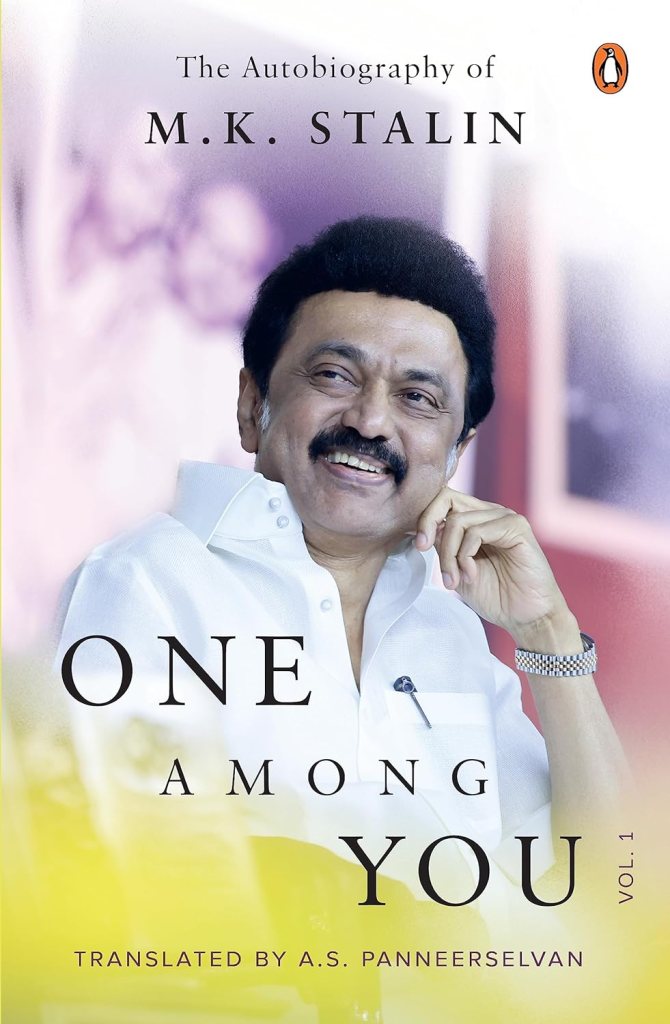
Stalin’s life is meticulously examined in this book, which explains how he became a leader by highlighting the essential facets of his life. It provides a comprehensive overview of his life’s journey. Throughout the narrative, the author maintains a consistent tone and uses clear language. A number of characters who contributed to the shaping of Stalin’s trajectory are depicted in these pages. Portraits, both of Stalin and those intertwined with his narrative; provide further evidence of that era’s atmosphere.

An interesting read.

.

Bhaskar Parichha is a journalist and author of UnbiasedNo Strings Attached: Writings on Odisha and Biju Patnaik – A Political Biography. He lives in Bhubaneswar and writes bilingually. Besides writing for newspapers, he also reviews books on various media platforms.

.

PLEASE NOTE: ARTICLES CAN ONLY BE REPRODUCED IN OTHER SITES WITH DUE ACKNOWLEDGEMENT TO BORDERLESS JOURNAL

Click here to access the Borderless anthology, Monalisa No Longer Smiles

Click here to access Monalisa No Longer Smiles on Kindle Amazon International
Categories
Poetry

These Politicians!

By Hawla Riza


THESE POLITICIANS!

We divide and unite,
while they conquer all sides.
We scream hail,
while they spew deceit.

Look at us standing,
offering flowers and worship.
Their talks of hope,
chide bare minimum!

Look at us standing,
on fish-soaked poverty.
We chew crumbs,
while they devour flocks!

Only shards of broken dreams,
lacerate down our throat,
burning as we bow down.

Hawla Riza is a former HR Professional and now a Trainer and Lecturer by profession. She found solace in writing as she healed through a period of grief in her life and now immerses herself fully in the cathartic experience of writing.

.

.

PLEASE NOTE: ARTICLES CAN ONLY BE REPRODUCED IN OTHER SITES WITH DUE ACKNOWLEDGEMENT TO BORDERLESS JOURNAL

Click here to access the Borderless anthology, Monalisa No Longer Smiles

Click here to access Monalisa No Longer Smiles on Kindle Amazon International
Categories
Stories

The Woman Next Door

By Jahnavi Bandaru

I am not sure what propelled me to take my cup of coffee out into the backyard and gaze longingly at the rose plants my wife nurtured with so much care. Though my object of concentration wasn’t the roses themselves. It was a perfect morning. I wasn’t yet bombarded by office calls. The kids hadn’t woken up and Kusuma was preparing a batch of pooris[1]and aloo[2] curry with the aroma wafting through the entire house.

I was within the moment, cocooned in a momentary sense of serendipity that only the morning could offer. It was when I was trailing the path of a butterfly that I caught my neighbour’s wife in the backyard, her back turned to me, watering her plants. At first, I thought it was their maid, but there was always something different about the wife’s frame, bent as if she was prepared to spring into action- like a lion hunting for its prey or worse, about to be hunted.

She also appeared to be at peace, watering her plant.

I didn’t want to intrude or disturb. So, I tried to quietly move back into the house when my mug caught a branch and shattered to the floor.

Kusuma came running out and began yelling at me. The commotion caused the wife to turn around and catch my eye. A small smile passed between us as if we were sharing a joke.

*

In the following weeks, my mind was tainted with the wife’s smile. There was something appealing about it that I couldn’t wrap my head around. Was I cheating while another woman’s smile played on my mind?

A part of me felt rebellious but mostly guilt flooded my heart. My marriage wasn’t failing, it was however stagnant. I was occupied by work, and my wife with all the household work, we fulfilled our duties as parents and raised our children. Our marriage had fallen into a routine where romance wasn’t important, just occasional tenderness was. We were as happy as a married couple could be. But that evening, I took Kusuma out for a movie, telling myself that it had been a while and it was not actually because of the embarrassment I was feeling.

*

And yet my neighbour’s wife haunted my thoughts. I didn’t go out in the morning for two days straight, hoping that the feelings would eventually dissipate. On the third day, I was confident that I was perfectly fine and was prepared to go outside to test the theory, but my office called, and I had to leave early.

I saw her beautiful smile again only the next Monday.

What happened in the forthcoming weeks wasn’t intentional. But we ended up meeting up every morning. We never spoke. I paced around, savouring the bitterness of coffee while she went on watering her garden. We just shared our silences. I even went out to buy coffee bags because I was drinking so much every day.

*

I noticed that there were bruises on her face and arms, but she always managed to cover it. I never asked for fear that she might not answer or worse might stop coming outside.

But it was on a particular day, weeks after we had started meeting up, that there was a large red welt on her forehead. I didn’t question it and she worked in a hurry to go back into the house.

Was the husband hitting her? Why would he ever lay hands upon her? Should I report it to the police? Did this constitute abuse? What evidence did I have to back me up? These thoughts intruded on me all through my office hours.

When she didn’t come out the next day, I instantly knew something was terribly wrong.

I went to Kusuma, hesitant at first, and explained to her the situation.

” I think our neighbour is hitting his wife. We need to report to the police. Now,” I demanded.

I was worried that I wouldn’t be able to see her kohl-rimmed eyes, her face so iridescent in the morning sunshine, her red lips, her smile.

” What neighbours?”

” What do you mean what neighbours? The ones who live next door. Don’t be stupid,” I snapped, irritated.

” You’re the one being stupid. We don’t have neighbours. They left almost a year ago.”

“Then who’s the woman who waters the plants every day?”

“Again, what women are you talking about? That garden is as dry as a desert. No one’s been watering it since they left. What is going on?”

“Nothing. I just….” I tried to piece together what my hand had conjured up for me but it just left me with more tangible memories of her.

Who was it that I saw? She was real, wasn’t she?

.

[1] Deep fried bread

[2] Potato

.

Jahnavi Bandaru is currently pursuing her bachelor’s degree in computer science. But her heart lies in writing. She is a complete book nerd and enjoys writing short stories with a good cup of coffee.

PLEASE NOTE: ARTICLES CAN ONLY BE REPRODUCED IN OTHER SITES WITH DUE ACKNOWLEDGEMENT TO BORDERLESS JOURNAL

Click here to access the Borderless anthology, Monalisa No Longer Smiles

Click here to access Monalisa No Longer Smiles on Kindle Amazon International

Categories
Poetry

         Spot Assessment     

By John Zedolik

These skeleton keys hail from Portugal,
states the hand-drawn phrase on gray
 
cardboard, which provenance unlocks
my thinking as to what is so special
 
about these thin fingers of old iron and brass
that to my lay-eyes do not appear any different
 
from the domestic variety that might sell
for far less, especially as used item and even
 
worse lacking the complementary locks,
necessary for utility securing some equally lost
 
door or chest, but in which some expert
in Iberian antiques might find money
 
and historical value. I cannot rid
 
      thus, my doubt of the sign’s worth
 
and the wares, better left to the keener sight
and mind that can unlock the mystery
 
safe, pendant and plain before a blind view.

John Zedolik has published hundreds of poems in many journals around the world. Earlier this year, he published Mother Mourning (Wipf & Stock), his third collection, which is available on Amazon.

PLEASE NOTE: ARTICLES CAN ONLY BE REPRODUCED IN OTHER SITES WITH DUE ACKNOWLEDGEMENT TO BORDERLESS JOURNAL

Click here to access the Borderless anthology, Monalisa No Longer Smiles

Click here to access Monalisa No Longer Smiles on Kindle Amazon International
Categories
Slices from Life

Onsen and Hot Springs

Meredith Stephens explores Japanese and Californian hot springs with her camera and narrative.

One of the pleasures of living in Japan is taking a dip in the hot springs, otherwise known as onsen. Although I lived in Japan for more than twenty years, it was ten years before I could bring myself to regularly visit an onsen. This is because I could not bring myself to accept the notion of communal (albeit segregated) nude bathing, which would be taboo in the West. My long-term expat English friend in Japan continued to entreat me to visit the onsen, and so I eventually capitulated. Would everyone in the onsen be slim, and would they look down on a curvy westerner? Would I attract glances because of my physical difference? I visited one of the many onsen in Matsuyama with my two daughters. Nobody appeared to look at me. The onsen was not full of young slim women. There were many elderly and infirm in the onsen. Maybe the young were already healthy, and they did not need to visit an onsen.

There was a wide range of pools at the onsen. One had a walking pool, in which you walked anti-clockwise. Another had pools with jets that could be turned on to massage your back, a carbonated pool, and stone beds to lie on while watching a television screen placed on the wall which faced you. Another had an outdoor area, with separate bathtubs, a communal pool, a communal cold pool, and a pool inside a cave. There was also a sauna. Inside was a bucket of salt. You could scoop some salt out of the bucket and throw it over your shoulders. There was a clock in the sauna. I could not bear to stay in as long as the other patrons and would sometimes let myself in the door and then walk straight back out again.

I made up for the ten years of not visiting the onsen by becoming a regular patron, usually visiting at least once a week. I returned to Australia at the beginning of the pandemic, and one of the many things I missed about Japan was visits to the onsen. The next time I was able to visit an onsen was over three years later, on a visit to California.

My companion Alex and I drove from Shaver Lake to Mono Hot Springs Resort, both in the Sierra Nevada. We wound up the mountains through the site of the Big Creek Fire. On each side of the road were charred tree trunks.

Huntingdon Lake, California

As we drew closer to the resort, we turned onto a narrow road with large granite boulders on each side. Dump trucks charged towards us, and we took shelter in the many turn-outs.

After this hair-raising drive we arrived at our destination at 4 pm. We collected the key to our hut from the office and made our way there. I remembered an experience from an onsen resort in Japan, where patrons boasted how many times they had bathed in the various pools, and decided I would do the same at this Californian hot spring. We consulted the map and decided to visit the bath house. We had purchased swimsuits for this purpose. In Japan being clothed in an onsen is taboo, but in America it is quite the contrary. The first thing I noticed outside the bath house was the sign saying, ‘No Dogs Allowed’.

Why would you bring a dog into a bath house? In Japan, I had seen a sign saying, ‘No-one with tatoos can enter’, but never — ‘No dogs’.

I entered the bath house expecting to see large communal pools as in Japan, but instead discovered individual showers and baths in separate rooms with doors that could be locked. Apparently, the water was piped into the bath house from the source across the valley. Next, we decided to cross the valley to take a dip in one of the outdoor springs. In order to cross, you had to wade through a river gripping on to a rope, and tread across river rocks.

Alex went ahead of me, and I slipped into the icy cold water onto the river rocks. I tried to grasp the rope, but it eluded me. After several attempts, I managed to grasp it.

“Alex! Help!” I shouted.

I was aware of the glance of onlookers on the rocks witnessing my panic. Alex climbed onto the rock on the other side, extended a hand, and pulled me to the other side. The onlookers offered words of encouragement. We walked across the granite rocks and up the grassy hill, to find El Padro baths. Other bathers kindly and unnecessarily stepped out of the bath to offer us a place. Unlike Japanese baths it was muddy underfoot. We bathed there for twenty minutes, then continued up the grassy hill to the Iodine Bath.

This was similar to El Padro. We bathed here for another twenty minutes and chatted to a fellow bather. Then we headed back to our hut, this time walking a considerable distance out of our way in order to cross the bridge rather than wade through the river again.

The next morning, we decided to return to the baths before breakfast, in the hope of having them to ourselves. We went back across the bridge and headed up the grassy hill to the mud bath. The mud bath was shallow, just deep enough to sit in. The base of the pool at one end felt like grains of granite, and at the other end soft slimy mud. We could feel the heat pulsing from the edge of the pool. We spread mud over our neck, shoulders and legs, soiling our new swimsuits. We lay in the pool for twenty minutes enjoying the sensation of the warm mud on our bodies. Then we stepped out and washed the mud off in a metal bath.

We returned to our hut to wash off the rest of the mud, and rest, before visiting another pool called Li’l Eden. We trudged up the road in the sunshine for about thirty minutes, before spotting a downhill path leading to the pool. The path turned into a steep granite decline. A rope had been placed there to assist in ab-sailing. I had never ab-sailed before, but I followed Alex’ example, placing the rope in between my legs, clutching it, while carefully placing my feet in suitable footholds. I descended safely, albeit with muddy sleeves and sodden shoes. We spotted Li’l Eden and entered. It was a large muddy pool. If I sat on the mud at the bottom of the pool, I could feel the heat pulsating through the mud. After luxuriating in the mud, we hopped out and decided to return to the hut via the path and cross the river, rather than the bridge. We trod through the long muddy grass back down the hill. This time, instead of wading through the river across the river rocks to get to the other side, we decided to walk along a log which had been placed there for this purpose. What if I fell into the cold waters below? At least the log was a shorter distance than wading through the river holding the rope, so I decided to try. I quickly placed one foot in front of the other and a few seconds later I was safely on the other side.

We had two lengthy conversations with fellow visitors, and what struck me was that both of them said that this was their favourite place in the world. One said he had come here over one hundred times and preferred it to more famous destinations such as Yosemite and Kings Canyon. The other said she loved it so much that she spent her entire summers here. (In winter the road is closed because of the snow.)

I’m glad I had the chance to visit Californian hot springs after having spent so many years visiting Japanese ones. The latter are much more manicured. Each bath has a unique quality, and clothed attendants come in regularly to test the water quality. The Californian hot springs were more rustic. Other than the bath house, they required physical effort to get to each one, and the floor of each springwas unsealed. Many bathers had tattoos, but this was unremarkable. Both the Japanese onsen and the Californian hot springs are charming in their own ways. Yet, it was only because I had succumbed to the encouragement of my friends in Japan to indulge in frequenting onsen that I had braved the almost inaccessible roads to reach Mono Hot Springs in California.

Meredith Stephens is an applied linguist from South Australia. Her work has appeared in Transnational Literature, The Muse, The Font – A Literary Journal for Language Teachers, The Journal of Literature in Language Teaching, The Writers’ and Readers’ Magazine, Reading in a Foreign Language, and in chapters in anthologies published by Demeter Press, Canada.

PLEASE NOTE: ARTICLES CAN ONLY BE REPRODUCED IN OTHER SITES WITH DUE ACKNOWLEDGEMENT TO BORDERLESS JOURNAL

Click here to access the Borderless anthology, Monalisa No Longer Smiles

Click here to access Monalisa No Longer Smiles on Kindle Amazon International

Categories
Poetry

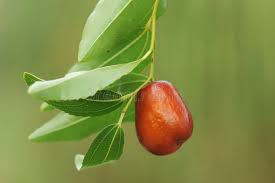
One Jujube

Poetry and translation from Korean by Ihlwha Choi


Beside the front gate,
a single jujube,

Grown ripe and red throughout the summer,
Even the cat passes it by without a second glance,
And the magpie, coming down from the tree in haste
To devour the food left by the cat
Passes by the jujube without looking at it all.

The wind, carrying fallen leaves, gracefully changes its course,
But for the past three days, this lone jujube has remained in solitude.

That jujube, high up on the jujube tree,
Among the branches and amidst the leaves,
Alongside rain, wind, starlight, and the song of crickets,
Has thrived through the summer, becoming crimson,

Concealing a single sturdy seed within.
Beside the road where fallen leaves roll,
At the crossroads where seasons pass by,
Still, like a small hut, a long journey ahead,
One jujube is dreaming silently beside the front gate.

Ihlwha Choi is a South Korean poet. He has published multiple poetry collections, such as Until the Time When Our Love will Flourish, The Color of Time, His Song and The Last Rehearsal.

.

PLEASE NOTE: ARTICLES CAN ONLY BE REPRODUCED IN OTHER SITES WITH DUE ACKNOWLEDGEMENT TO BORDERLESS JOURNAL. 

Click here to access the Borderless anthology, Monalisa No Longer Smiles

Click here to access Monalisa No Longer Smiles on Kindle Amazon International