DARKENING LIGHT

Blackened Hand,
              Muddled grief,
In the search for light
              that never exists,
For the cocoon is wrapped
              in the process of Being.
When it breaks through,
             colour splashes spring.
Light, drowns light.
            Breaking free to sprout new life,
Spreading Beauty,
Haunting Uncertainty!
Debangana Das is an enthusiastic explorer of ideas, music, poems and enjoys the rhetoricity of words. She likes falling on the lap of art and nature.
.
PLEASE NOTE: ARTICLES CAN ONLY BE REPRODUCED IN OTHER SITES WITH DUE ACKNOWLEDGEMENT TO BORDERLESS JOURNAL
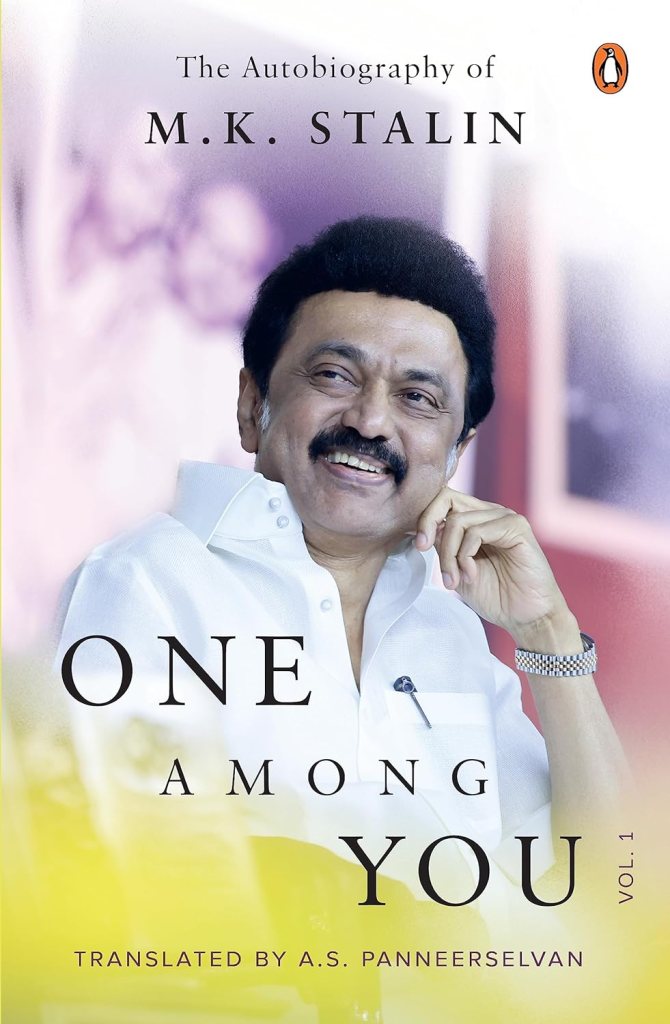
Title: One Among You: The Autobiography of M.K. Stalin
Translator: A S Panneerselvan
Publisher: Penguin Viking
Muthuvel Karunanidhi, or MK Stalin, is a prominent politician in India. A member of the Dravida Munnetra Kazhagam (DMK) party, he is the son of former Chief Minister of Tamil Nadu, M. Karunanidhi. In Tamil Nadu’s political landscape, Stalin has emerged as a key figure in politics for several decades. In 1966, M.K. Stalin began his political innings by launching the Gopalapuram Youth Dravida Munnetra Kazhagam. Over the next five decades, his political career would see him rise to become Mayor of Chennai in 1996. Stalin began his political career in the 1980s when he was elected to the Tamil Nadu Legislative Assembly. He has held various positions within the DMK party over the years, including Treasurer and Deputy General Secretary. He was appointed Minister for Rural Development and Local Administration in Tamil Nadu in 2011. He would also become the President of the Dravida Munnetra Kazhagam (DMK) in 2018 and the Chief Minister of Tamil Nadu in 2021.
DMK has seen significant growth and success in Tamil Nadu under Stalin’s leadership. His efforts have contributed to the implementation of various welfare schemes and development projects aimed at improving the quality of life for the people of the state. With his emphasis on social justice, inclusive growth, and empowering marginalized communities, he has gained a wide following and support among the general public.
Stalin’s leadership style is characterised by his ability to reach out to the people and address their concerns. His communication skills and ability to mobilise party members are well-known. The DMK’s success in state elections has been attributed to his strategic decision-making and political acumen. Aside from his political career, Stalin has also been recognised for his commitment to public service. Throughout his career, he has been actively involved in a number of social initiatives, including education, healthcare, and environmental conservation. Recognition and appreciation have been given for his efforts to improve education and healthcare facilities in Tamil Nadu.
One Among You, a translation of Stalin’s Tamil autobiography, Ungalil Oruvan, is the story of the first twenty-three years of his life, from 1953 to 1976. These formative years witnessed Stalin’s school and college days, his early involvement with the DMK and his integral role in the party publication, Murasoli. But Stalin’s journey extends beyond politics. He also had a profound connection to the world of theatre and cinema, where his passion for art intersected with his pursuit of social change.
Translator A.S. Panneerselvan is head of the Centre for Study in the Public Sphere at Roja Muthiah Research Library, Chennai. For nearly a decade, he was The Hindu‘s Readers’ Editor (an independent internal news ombudsman). Panneerselvan is also an adjunct faculty member at the Asian College of Journalism, Chennai. His book, Karunanidhi: A Life, was published by Penguin Random House in 2021.
The first volume of this book describes some of the pivotal events in Stalin’s initial twenty-three years of life, events that have significantly contributed to his current role as Chief Minister of Tamil Nadu, a topic to be explored in later volumes of the autobiography.
The autobiography begins with a declaration, ‘I was born as a son of a leader’, underscoring his father’s profound influence in his life. M. Karunanidhi popularly known as ‘Kalaignar’ (great scholar) served as CM for almost two decades, making him a major source of inspiration for Stalin. His name ‘Stalin,’ meaning ‘man of steel,’ was bestowed upon him by his father. His father drew inspiration from Joseph Stalin’s influential leadership in shaping the Soviet Union. Further, the book delves into the impactful role played by his grandmother, mother, former Chief Ministers C. N. Annadurai and MGR, and others.
Central to the book is the assertion that politics was Stalin’s destiny, his calling to leadership from the outset. Even in his early years, he actively participated in party activities, immersing himself in every facet. He contributed significantly to his father’s publication, Murasoli, engaged in theatrical performances at party gatherings, organised fundraising efforts, and even faced imprisonment, all while steadfastly pursuing his studies. In his own words, “I had fully surrendered myself as a flame to the party,” a testament to his deep-seated dedication to politics.
The title — One Among You — reflects Stalin’s relatability and ordinary life. He championed his state and party, always connected to the people. He stood as a fellow citizen, demonstrating he was no different from others.
Stalin’s life is meticulously examined in this book, which explains how he became a leader by highlighting the essential facets of his life. It provides a comprehensive overview of his life’s journey. Throughout the narrative, the author maintains a consistent tone and uses clear language. A number of characters who contributed to the shaping of Stalin’s trajectory are depicted in these pages. Portraits, both of Stalin and those intertwined with his narrative; provide further evidence of that era’s atmosphere.
An interesting read.
.
Bhaskar Parichha is a journalist and author of Unbiased, No Strings Attached: Writings on Odisha and Biju Patnaik – A Political Biography. He lives in Bhubaneswar and writes bilingually. Besides writing for newspapers, he also reviews books on various media platforms.
.
PLEASE NOTE: ARTICLES CAN ONLY BE REPRODUCED IN OTHER SITES WITH DUE ACKNOWLEDGEMENT TO BORDERLESS JOURNAL
THESE POLITICIANS!

We divide and unite,
while they conquer all sides.
We scream hail,
while they spew deceit.

Look at us standing,
offering flowers and worship.
Their talks of hope,
chide bare minimum!

Look at us standing,
on fish-soaked poverty.
We chew crumbs,
while they devour flocks!

Only shards of broken dreams,
lacerate down our throat,
burning as we bow down.
Hawla Riza is a former HR Professional and now a Trainer and Lecturer by profession. She found solace in writing as she healed through a period of grief in her life and now immerses herself fully in the cathartic experience of writing.
.
.
PLEASE NOTE: ARTICLES CAN ONLY BE REPRODUCED IN OTHER SITES WITH DUE ACKNOWLEDGEMENT TO BORDERLESS JOURNAL
I am not sure what propelled me to take my cup of coffee out into the backyard and gaze longingly at the rose plants my wife nurtured with so much care. Though my object of concentration wasn’t the roses themselves. It was a perfect morning. I wasn’t yet bombarded by office calls. The kids hadn’t woken up and Kusuma was preparing a batch of pooris[1]and aloo[2] curry with the aroma wafting through the entire house.
I was within the moment, cocooned in a momentary sense of serendipity that only the morning could offer. It was when I was trailing the path of a butterfly that I caught my neighbour’s wife in the backyard, her back turned to me, watering her plants. At first, I thought it was their maid, but there was always something different about the wife’s frame, bent as if she was prepared to spring into action- like a lion hunting for its prey or worse, about to be hunted.
She also appeared to be at peace, watering her plant.
I didn’t want to intrude or disturb. So, I tried to quietly move back into the house when my mug caught a branch and shattered to the floor.
Kusuma came running out and began yelling at me. The commotion caused the wife to turn around and catch my eye. A small smile passed between us as if we were sharing a joke.
*
In the following weeks, my mind was tainted with the wife’s smile. There was something appealing about it that I couldn’t wrap my head around. Was I cheating while another woman’s smile played on my mind?
A part of me felt rebellious but mostly guilt flooded my heart. My marriage wasn’t failing, it was however stagnant. I was occupied by work, and my wife with all the household work, we fulfilled our duties as parents and raised our children. Our marriage had fallen into a routine where romance wasn’t important, just occasional tenderness was. We were as happy as a married couple could be. But that evening, I took Kusuma out for a movie, telling myself that it had been a while and it was not actually because of the embarrassment I was feeling.
*
And yet my neighbour’s wife haunted my thoughts. I didn’t go out in the morning for two days straight, hoping that the feelings would eventually dissipate. On the third day, I was confident that I was perfectly fine and was prepared to go outside to test the theory, but my office called, and I had to leave early.
I saw her beautiful smile again only the next Monday.
What happened in the forthcoming weeks wasn’t intentional. But we ended up meeting up every morning. We never spoke. I paced around, savouring the bitterness of coffee while she went on watering her garden. We just shared our silences. I even went out to buy coffee bags because I was drinking so much every day.
*
I noticed that there were bruises on her face and arms, but she always managed to cover it. I never asked for fear that she might not answer or worse might stop coming outside.
But it was on a particular day, weeks after we had started meeting up, that there was a large red welt on her forehead. I didn’t question it and she worked in a hurry to go back into the house.
Was the husband hitting her? Why would he ever lay hands upon her? Should I report it to the police? Did this constitute abuse? What evidence did I have to back me up? These thoughts intruded on me all through my office hours.
When she didn’t come out the next day, I instantly knew something was terribly wrong.
I went to Kusuma, hesitant at first, and explained to her the situation.
” I think our neighbour is hitting his wife. We need to report to the police. Now,” I demanded.
I was worried that I wouldn’t be able to see her kohl-rimmed eyes, her face so iridescent in the morning sunshine, her red lips, her smile.
” What neighbours?”
” What do you mean what neighbours? The ones who live next door. Don’t be stupid,” I snapped, irritated.
” You’re the one being stupid. We don’t have neighbours. They left almost a year ago.”
“Then who’s the woman who waters the plants every day?”
“Again, what women are you talking about? That garden is as dry as a desert. No one’s been watering it since they left. What is going on?”
“Nothing. I just….” I tried to piece together what my hand had conjured up for me but it just left me with more tangible memories of her.
JahnaviBandaru is currently pursuing her bachelor’s degree in computer science. But her heart lies in writing. She is a complete book nerd and enjoys writing short stories with a good cup of coffee.
PLEASE NOTE: ARTICLES CAN ONLY BE REPRODUCED IN OTHER SITES WITH DUE ACKNOWLEDGEMENT TO BORDERLESS JOURNAL
These skeleton keys hail from Portugal,
states the hand-drawn phrase on gray

cardboard, which provenance unlocks
my thinking as to what is so special

about these thin fingers of old iron and brass
that to my lay-eyes do not appear any different

from the domestic variety that might sell
for far less, especially as used item and even

worse lacking the complementary locks,
necessary for utility securing some equally lost

door or chest, but in which some expert
in Iberian antiques might find money

and historical value. I cannot rid

      thus, my doubt of the sign’s worth

and the wares, better left to the keener sight
and mind that can unlock the mystery

safe, pendant and plain before a blind view.
John Zedolik has published hundreds of poems in many journals around the world. Earlier this year, he published Mother Mourning (Wipf & Stock), his third collection, which is available on Amazon.
PLEASE NOTE: ARTICLES CAN ONLY BE REPRODUCED IN OTHER SITES WITH DUE ACKNOWLEDGEMENT TO BORDERLESS JOURNAL
Meredith Stephens explores Japanese and Californian hot springs with her camera and narrative.
One of the pleasures of living in Japan is taking a dip in the hot springs, otherwise known as onsen. Although I lived in Japan for more than twenty years, it was ten years before I could bring myself to regularly visit an onsen. This is because I could not bring myself to accept the notion of communal (albeit segregated) nude bathing, which would be taboo in the West. My long-term expat English friend in Japan continued to entreat me to visit the onsen, and so I eventually capitulated. Would everyone in the onsen be slim, and would they look down on a curvy westerner? Would I attract glances because of my physical difference? I visited one of the many onsen in Matsuyama with my two daughters. Nobody appeared to look at me. The onsen was not full of young slim women. There were many elderly and infirm in the onsen. Maybe the young were already healthy, and they did not need to visit an onsen.
There was a wide range of pools at the onsen. One had a walking pool, in which you walked anti-clockwise. Another had pools with jets that could be turned on to massage your back, a carbonated pool, and stone beds to lie on while watching a television screen placed on the wall which faced you. Another had an outdoor area, with separate bathtubs, a communal pool, a communal cold pool, and a pool inside a cave. There was also a sauna. Inside was a bucket of salt. You could scoop some salt out of the bucket and throw it over your shoulders. There was a clock in the sauna. I could not bear to stay in as long as the other patrons and would sometimes let myself in the door and then walk straight back out again.
I made up for the ten years of not visiting the onsen by becoming a regular patron, usually visiting at least once a week. I returned to Australia at the beginning of the pandemic, and one of the many things I missed about Japan was visits to the onsen. The next time I was able to visit an onsen was over three years later, on a visit to California.
My companion Alex and I drove from Shaver Lake to Mono Hot Springs Resort, both in the Sierra Nevada. We wound up the mountains through the site of the Big Creek Fire. On each side of the road were charred tree trunks.
Huntingdon Lake, California
As we drew closer to the resort, we turned onto a narrow road with large granite boulders on each side. Dump trucks charged towards us, and we took shelter in the many turn-outs.
After this hair-raising drive we arrived at our destination at 4 pm. We collected the key to our hut from the office and made our way there. I remembered an experience from an onsen resort in Japan, where patrons boasted how many times they had bathed in the various pools, and decided I would do the same at this Californian hot spring. We consulted the map and decided to visit the bath house. We had purchased swimsuits for this purpose. In Japan being clothed in an onsen is taboo, but in America it is quite the contrary. The first thing I noticed outside the bath house was the sign saying, ‘No Dogs Allowed’.
Why would you bring a dog into a bath house? In Japan, I had seen a sign saying, ‘No-one with tatoos can enter’, but never — ‘No dogs’.
I entered the bath house expecting to see large communal pools as in Japan, but instead discovered individual showers and baths in separate rooms with doors that could be locked. Apparently, the water was piped into the bath house from the source across the valley. Next, we decided to cross the valley to take a dip in one of the outdoor springs. In order to cross, you had to wade through a river gripping on to a rope, and tread across river rocks.
Alex went ahead of me, and I slipped into the icy cold water onto the river rocks. I tried to grasp the rope, but it eluded me. After several attempts, I managed to grasp it.
“Alex! Help!” I shouted.
I was aware of the glance of onlookers on the rocks witnessing my panic. Alex climbed onto the rock on the other side, extended a hand, and pulled me to the other side. The onlookers offered words of encouragement. We walked across the granite rocks and up the grassy hill, to find El Padro baths. Other bathers kindly and unnecessarily stepped out of the bath to offer us a place. Unlike Japanese baths it was muddy underfoot. We bathed there for twenty minutes, then continued up the grassy hill to the Iodine Bath.
This was similar to El Padro. We bathed here for another twenty minutes and chatted to a fellow bather. Then we headed back to our hut, this time walking a considerable distance out of our way in order to cross the bridge rather than wade through the river again.
The next morning, we decided to return to the baths before breakfast, in the hope of having them to ourselves. We went back across the bridge and headed up the grassy hill to the mud bath. The mud bath was shallow, just deep enough to sit in. The base of the pool at one end felt like grains of granite, and at the other end soft slimy mud. We could feel the heat pulsing from the edge of the pool. We spread mud over our neck, shoulders and legs, soiling our new swimsuits. We lay in the pool for twenty minutes enjoying the sensation of the warm mud on our bodies. Then we stepped out and washed the mud off in a metal bath.
We returned to our hut to wash off the rest of the mud, and rest, before visiting another pool called Li’l Eden. We trudged up the road in the sunshine for about thirty minutes, before spotting a downhill path leading to the pool. The path turned into a steep granite decline. A rope had been placed there to assist in ab-sailing. I had never ab-sailed before, but I followed Alex’ example, placing the rope in between my legs, clutching it, while carefully placing my feet in suitable footholds. I descended safely, albeit with muddy sleeves and sodden shoes. We spotted Li’l Eden and entered. It was a large muddy pool. If I sat on the mud at the bottom of the pool, I could feel the heat pulsating through the mud. After luxuriating in the mud, we hopped out and decided to return to the hut via the path and cross the river, rather than the bridge. We trod through the long muddy grass back down the hill. This time, instead of wading through the river across the river rocks to get to the other side, we decided to walk along a log which had been placed there for this purpose. What if I fell into the cold waters below? At least the log was a shorter distance than wading through the river holding the rope, so I decided to try. I quickly placed one foot in front of the other and a few seconds later I was safely on the other side.
We had two lengthy conversations with fellow visitors, and what struck me was that both of them said that this was their favourite place in the world. One said he had come here over one hundred times and preferred it to more famous destinations such as Yosemite and Kings Canyon. The other said she loved it so much that she spent her entire summers here. (In winter the road is closed because of the snow.)
I’m glad I had the chance to visit Californian hot springs after having spent so many years visiting Japanese ones. The latter are much more manicured. Each bath has a unique quality, and clothed attendants come in regularly to test the water quality. The Californian hot springs were more rustic. Other than the bath house, they required physical effort to get to each one, and the floor of each springwas unsealed. Many bathers had tattoos, but this was unremarkable. Both the Japanese onsen and the Californian hot springs are charming in their own ways. Yet, it was only because I had succumbed to the encouragement of my friends in Japan to indulge in frequenting onsen that I had braved the almost inaccessible roads to reach Mono Hot Springs in California.
Meredith Stephens is an applied linguist from South Australia. Her work has appeared in Transnational Literature, The Muse, The Font – A Literary Journal for Language Teachers, The Journal of Literature in Language Teaching, The Writers’ and Readers’ Magazine, Reading in a Foreign Language, and in chapters in anthologies published by Demeter Press, Canada.
PLEASE NOTE: ARTICLES CAN ONLY BE REPRODUCED IN OTHER SITES WITH DUE ACKNOWLEDGEMENT TO BORDERLESS JOURNAL
Beside the front gate,
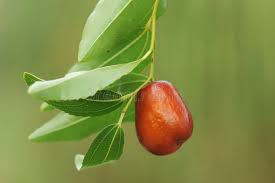
a single jujube,

Grown ripe and red throughout the summer,
Even the cat passes it by without a second glance,
And the magpie, coming down from the tree in haste
To devour the food left by the cat
Passes by the jujube without looking at it all.

The wind, carrying fallen leaves, gracefully changes its course,
But for the past three days, this lone jujube has remained in solitude.

That jujube, high up on the jujube tree,
Among the branches and amidst the leaves,
Alongside rain, wind, starlight, and the song of crickets,
Has thrived through the summer, becoming crimson,

Concealing a single sturdy seed within.
Beside the road where fallen leaves roll,
At the crossroads where seasons pass by,
Still, like a small hut, a long journey ahead,
One jujube is dreaming silently beside the front gate.
Ihlwha Choi is a South Korean poet. He has published multiple poetry collections, such as Until the Time When Our Love will Flourish, The Color of Time, His Song and The Last Rehearsal.
.
PLEASE NOTE: ARTICLES CAN ONLY BE REPRODUCED IN OTHER SITES WITH DUE ACKNOWLEDGEMENT TO BORDERLESS JOURNAL.
When I first came to Japan from America to teach English on the Japan Exchange and Teaching (JET) Program, I had no idea how popular baseball was in this country. I quickly found out, however. I was assigned to a high school in Tokushima, on the island of Shikoku to be an assistant English teacher. It was summer, and I was immediately informed that the school’s baseball team had won the regional baseball tournament. They had gone on to the National High School Baseball Summer Tournament at Koshien stadium near Osaka.
This event is on par with the Super Bowl in the United States. The games are televised, and the entire country is riveted for the duration of the tournament. Many star players go on to play professional baseball in Japan, and later maybe even in the Major League in America. Ichiro Suzuki, Yu Darvish, and Shohei Otani are just a few players who first claimed the spotlight at Koshien.
Once classes started in September, I discovered that the baseball players were immediately recognisable by their shaved heads. I often saw them practicing on the baseball diamond very early in the morning, sometimes dragging tires yoked to their shoulders as they ran. I noticed that they were respected by the teachers. Even if they fell asleep in class, the teachers didn’t try to wake them up. When they were awake, the baseball players were very polite. They had been trained to greet their elders in a loud voice, and to bow and doff their caps.
Another thing that I quickly found out was that in Japan, baseball season is basically year-round, at least up through high school. Japanese students can choose only one sport. While in the United States, coaches often cut weaker players from their teams, in Japan anyone who wants to join a team is welcome. The team becomes a community for players of different abilities. The bonds that Japanese kids form with their teammates tend to be very strong, since they spend so much time together.
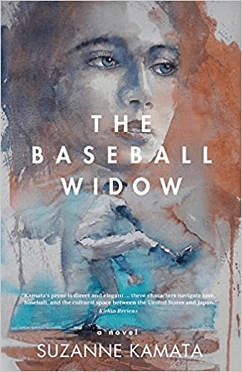
My second year in Japan, I met the man who became my husband. He was a teacher, and a baseball coach. Through him, I became even more aware of what a big deal baseball was in Japan. I also acquired a lot of insider information. I started to write a novel about an American woman married to a Japanese high school baseball coach, which I called The Baseball Widow. I asked my husband many questions while I was writing the book.
We later had twins – a daughter, who is disabled, and a son, who began to play baseball in elementary school. He devoted himself to the sport throughout high school, sometimes waking up at five o’clock in the morning on weekends for out-of-town games. He never once complained. At one point, he asked me to write a baseball story. I did. I wrote the text for a children’s picture book, Playing for Papa, which was published in Spain and is now sadly out of print. I also wrote a middle grade novel, Pop Flies, Robo-pets and Other Disasters, featuring a boy in junior high school. I read the entire novel to my son, and made some changes following his advice.
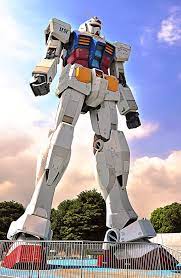
In addition to baseball, Japan is famous for its robots. Gundam is a well-known robot character, who first appeared in Japanese anime in 1979. Although many science fiction stories feature robots, they are increasingly becoming a part of daily life in Japan. This is partly because Japan’s population is decreasing. There are fewer and fewer young people to do necessary work, so machines are called upon to take up the slack.
Recently, the Japanese have developed robots which can help elderly people and others in many different ways. For example, there are robots which can help farmers pick fruit, as well as humanoid robots that can chat with people and ward off loneliness. Robot pets, like Paro (which became Mon-chan in The Baseball Widow), are also used to keep elderly people and children in hospitals company. There are special cafes staffed entirely by robots, including at least one at which the robots are controlled by people with disabilities. A nearby art museum has a robot guide which takes visitors on tours of exhibits. Robots in Japan have performed weddings and funerals. During the COVID-19 epidemic, one small university even used robots as avatars in a graduation ceremony.
I am fascinated by robots. They are not always what people expect. Sometimes they are soft and fuzzy. As soon as I learned of the robo-seal, I wanted to put it into a story. However, I sometimes feel uneasy about the replacement of humans by robots. Fortunately, at the moment, family bonds remain strong in Japan, with multiple generations living together and helping each other. Like the family in my book, we were three generations, living in the same house. We don’t have a robo-seal yet, but we do have a robotic vacuum cleaner.
.
Suzanne Kamatawas born and raised in Grand Haven, Michigan. She now lives in Japan with her husband and two children. Her short stories, essays, articles and book reviews have appeared in over 100 publications. Her work has been nominated for the Pushcart Prize five times, and received a Special Mention in 2006. She is also a two-time winner of the All Nippon Airways/Wingspan Fiction Contest, winner of the Paris Book Festival, and winner of a SCBWI Magazine Merit Award.
PLEASE NOTE: ARTICLES CAN ONLY BE REPRODUCED IN OTHER SITES WITH DUE ACKNOWLEDGEMENT TO BORDERLESS JOURNAL
A Homage to Yuan Zhen’s Grief of Separation*

Shall I compare an ocean's vastness to
the width of the greatest river? The
evening sky pales to the azure of the summit.

The time I wandered through a familiar flower field --
I can’t be bothered to look back, partly due
to Fate’s weaving hands, partly due to you.

Smoking under the
bleak wintery overcast
memories of your
bright summery laugh dissipates
into a fleeting mist.

Forlorn, I’m a shadow by the hills
of a spire-filled dream.
And with a gentle flick, I cast
the hanging memories of your sojourn
into the wind.

*The first two paras are a liberal translation of Yuan Zhen's "Grief of Separation".
Yuan Zhen was a Tang dynasty poet, lived from 779 to 831 in Luoyang, China
Rex Tan is a journalist by trade and a poet at heart. As a Malaysian, he is fluent in English, Mandarin, and Malay, yet he calls none his first language.
PLEASE NOTE: ARTICLES CAN ONLY BE REPRODUCED IN OTHER SITES WITH DUE ACKNOWLEDGEMENT TO BORDERLESS JOURNAL
Makoto Shinkai is a giant in the world of anime. His animated movie Kimi no Nawa (Your Name) garnered worldwide critical acclaim and commercial success. He is often hailed as the ‘next Miyazaki’ in the world of animation. His first work as a director was a five-minute long monochrome Japanese animation movie titled Kanojo to Kanojo no Neko (She and her cat) released in 1999 which won grand prize the DoGA CG Animation Contest in 2000. In 2013, Shinkai along with Nagakawa wrote a novel under the same name, whose English translation, She and Her Cat, was released in 2022.
The novel narrates four interwoven sub-plots involving four females and their feline companions. Shinkai weaves a rich tapestry which plays out like a movie capturing a wide spectrum of colours, sounds and emotions. The cats appear more caring and observant about their humans, while the latter often seem indifferent or distant. Nevertheless, they give each other support and much needed warmth of life.
The novels starts on a rainy day in spring, when Miyu happens to find an orphaned kitten in a carton. A chance encounter or a fated one, either way, they discover each other on a depressing spring day with dripping skies. Notwithstanding the crestfallen hearts and morose weather, the blossom of a soulful bond springs to life.
There is a cryptic hint of shared melancholy as the kitten remarks “… her hair and my fur were heavy from the rain.” It’s like one sad heart recognising the other and finding inexplicable comfort and sense of belonging as it feels, “I was now her cat.”
Miyu names him Chobi. The novels voices alternately between felines and humans, as we get to see their respective worlds in the narration.
Chobi is a restless fur ball as he skips about in animated action to catch Miyu’s attention; and watches her all day long as she cooks, sings, washes laundry, wears makeup, and so on. He is happy in a warm, cozy world where he is cared for. He thinks of Miyu as his ‘grown-up girlfriend’. In contrast, the owner doesn’t think of it as any life changing experience. But subconsciously, she begins to change, without a trace of conscious awareness.
While Chobi goes around the neighbourhood, he makes friends with other animals. He shares an endearing relationship with an old dog named Jon. Jon has the demeanour of a stately guardian. His encouragement uplifts Chobi’s spirit making him feel a part of the world. He has interesting tales to shares about life, cosmos and philosophy. Chobi opens his heart to Jon wishing to ‘fill the gap’ in Miyu’s heart.
Chobi also befriends a white chirpy cat. She discovers an ‘awesome’ human named Reina who doesn’t shoo her away as a stray cat. Instead, she feeds her and names her Mimi. Reina studies art at the technical college where Miyu is an administrative officer. Mimi notices how passionate Reina is about painting and sketching and how ‘weird’ she smells –- of paints, spices, alcohol, perfume and tobacco. Despite being talented she is struggling to find her footing in the world of growp-ups.
Mimi brings back memories of the cat she owned during high school. While the adults around the adolescent Reina were critical of her talent, her feline companion gazed at her paintings with fascination. The cat’s innocent gesture had the warmth of sunshine in the winter of her troubles. Reina has a resilient personality. As Mimi was an abandoned frail kitten, she finds strength in Reina’s optimism, independence and self-confidence. There is a mutual bond that serves to fill the vacuum inside them.
The story saunters along the neighbourhood detailing various encounters between humans and animals.
Cookie, Mimi’s kitten gets adopted by Aoi’s family. Aoi is a chronically sad girl because she carries an emotional scar in her heart. Cookie notices that permanent sadness around her and wants her to get better. As they live together, the little feral companion, thaws the frigidness inside her.
The non-human characters often give deep insights into the human world… “no human is always strong, but then no human is weak forever, either.”
Kuro, a fat old cat isn’t scared of his own death, but worried that his owner Shino would have a tough time after he departs, as he says, “humans are really frightened of death…not just of their won deaths, but of those of us dogs and cats too.” While Jon, the dog, claims he’d become eternal when he dies.
The book begins with on a wet spring and winds its way through the sound of summer cicadas and the winter snow, through life and death, to reach a bright scenery of cheerful cherry blossoms.
Shinkai paints a multi-layered world through the eyes of humans, cats and dogs, which comes alive in Takemori’s lucid translation. It is a heartwarming and uplifting read that moves like a ‘slice-of-life’ anime and reminds you of reasons to be grateful for this life as Chobi concludes, “I love this world…with absolute clarity”.
.
Aditi Yadav is a public servant from India. She is also a South Asia Speaks fellow (2023). Her works have appeared in Rain Taxi Review of books, Mint Lounge Magazine, EKL review, Usawa Literary Review, Gulmohur Quarterly, Narrow Road Journal, Borderless Journal and the Remnant Archive.
PLEASE NOTE: ARTICLES CAN ONLY BE REPRODUCED IN OTHER SITES WITH DUE ACKNOWLEDGEMENT TO BORDERLESS JOURNAL





 Borderless