envelopes never arrive, the inbox isn’t loaded with emails
it’s time to live with the lonely shadows.
.
The archipelago of hospitals empties sad memories,
patients fighting for life with short breaths
trip letters in social distancing,
no flowers, no relatives or friends
a virus attacks inside in a different trajectory.
.
The first layer of darkness hides the melody of stars
in alleys, in streets, in subways,
rewind the scene of weaning the ventilators.
many dead mothers have left their smiles over the corridor
on the margins of the white washed wall.
.
Form the undulations of courage and fear
eyes stare at the distant light,
the whispers are carrying alphabets of the dead planets
lying beneath the disposable trough.
there will be another universe to live for.
.
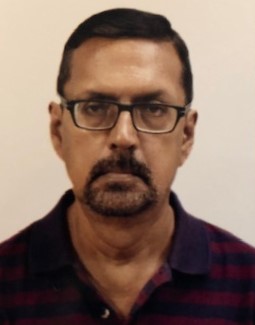
Gopal Lahiri is a Kolkata- based bilingual poet, critic, editor, writer and translator with 20 books published 13 in English and 7 in Bengali, including three joint books. His poetry is also published in various anthologies and in eminent journals of India and abroad. His poems have been published in 12 countries and translated in 10 languages. He has been invited in several poetry festivals across India.
When Shefa Nanu died, I was about fourteen years old. It was an awkward age to be honest. I was neither a woman, nor a girl. When people said, “O my, isn’t she all grown up,” I felt awfully conscious of myself. Sometimes I wished to be invisible, and half the times I didn’t want to go visiting. But Shefa Nanu’s death was an unavoidable occasion and I had to tag along with my mother and grandmother.
Shefa Nanu was my maternal grandmother’s first cousin. She was also the widow of a well-respected lawyer and the mother of an important political figure. I had been to their large house in Elephant Road many times. Even though she was the mistress of a very busy household, she always had time for my Nanu. They were not merely cousins but bosom friends as well. I used to play with their two cats, Abby and Minnie while the two grandmothers chatted away like teen-age girls. Shefa Nanu was the only person alive who could call my Nanu by her first name. I would feel guilt-ridden if I did not go. So, I braced myself for the inevitable.
You can only guess that my Nanu had cried her heart out by the time we reached the two storied house near Mallika Cinema Hall at Elephant Road. Shefa Nanu had died in the middle of the night and it was around 9:30 in the morning when we reached the house of the dead as they call it. The entire house was full of people and I could not spot one face that looked familiar.
This is one reason I hate visiting the dead. There are always too many people; all the forgotten and half-forgotten relatives and friends turn up when someone dies. Suddenly, a woman in shabby brown threw her arms around my mother and cried, “O Runu Apa, you’ve come at last! What will happen now that Amma is gone?” At her wailing I realised it was Shefa Nanu’s daughter-in-law, Naina Auntie. I gaped at her in surprise because she was all covered up. A well-endowed lady, she had always shown too much skin. Shefa Nanu was forever criticising Naina Auntie’s ways, while Auntie too was always complaining against her mother-in-law. But why was she crying like this? Didn’t she want to go away from this hell-house and live elsewhere?
Then I saw Lubaba and Shababa, her two daughters. Shababa was about eight years old and Lubaba was slightly older than me. Both of them were attired in old, wrinkled clothes and I was even more surprised because Naina Auntie always made a point to keep them spotless and well-dressed in company. What had happened to them?
I was about to ask something when Lubaba motioned us all to go inside. We learnt that the body was in the freezer and not inside the house. They would bring her in as soon as Shefa Nanu’s eldest daughter and youngest son arrived. I remembered Shefa Nanu’s youngest son Tushar Mama quite well. He went abroad to pursue higher studies and among his six siblings he was the only one not yet married. So, he was flying in from the US and Samina Auntie from Australia. Both were supposed to be coming in by mid-noon. They had boarded the planes as soon as they had heard about Shefa Nanu’s hospitalisation.
Lubaba whispered to us that Tonuka Auntie wouldn’t make it as she was in an advanced stage of pregnancy. Her husband would not allow her to travel all the way from New York. I saw Tuhin Mama and his wife greeting the guests. They seemed composed even though I could see that both of them had been crying.
As we occupied three chairs in the room adjacent to the drawing room where the men were seated, my eyes fell on a tall woman dressed fashionably in a black lace saree. She had sharp features and a complexion too white. Did she put on make-up? I had never seen anyone wearing make-up when they attend funeral or visit a house where someone has died. I could not help staring at her when I heard a most interesting thread of conversation.
A fat lady in pale green shalwar-kameez started to prattle, “I don’t know why Shakil is still missing and why Naina is putting up all that show of grieving. She must be awfully relieved that her mother-in-law is gone.” Then she lowered her voice and asked another lady sitting right beside her, “Did you hear, by the way, about Shakil’s affair with that other woman? … the young widow of Pintu Shikder? Now that his mother is not there anymore, I wonder ….”
“Shush,” replied the other lady, “Don’t talk about these things now.” She paused and said rather philosophically, “But what will happen, will happen.” Then she too lowered her voice and whispered loud enough for me to hear, “I doubt Naina has anything to fear right away. The elections are near, and he won’t get nomination if he divorces his wife now.”
My mother and Nanu were too stricken to pay attention to any of these. But I was gobbling up the bits of gossip round-eyed and wondered how much truth they contained. My still young heart could not fathom why Shefa Auntie would stop her son from getting married to another woman when his current wife was a wicked one. Suddenly, we heard some male voice wailing in the next room, “O Bubu, my sweet Bubu, why did you leave me like this? I am a useless creature—who will feed me now? (Sound of sobbing) My children and I will perish in the streets… O Bubu…”
I sat astounded. Now, who was that? Then I remembered that Shefa Nanu had a younger brother called Shamsul, who was the black-sheep of his family. He had gambled away his share of the property inherited from his father. Shefa Nanu provided his family a regular allowance to save them from destitution. He even lived in the apartment Nanu had got as her share in her father’s property. What a scumbag!
At this point, several ladies entered the room where we were sitting. They had prayer beads in their hands, and they were asking people how many times they had recited the Darud Sharif. The women stopped whispering and started nudging each other and speaking in more audible tones. A young woman with downcast eyes was writing down the figures. When she left the room with another woman, my mother asked, “Who’s she? I don’t think I’ve seen her before.”
“Oh that?” A lady in hijaab replied, “That’s Tultul’s wife.”
“Tultul’s wife?” echoed both my mother and Nanu. “And who’s Tultul?”
Suddenly, people around us looked confused. Nobody seemed to know who Tultul was. Someone muttered, “Well, she introduced herself as Tultul’s wife. And since nobody objected, I assumed everybody knows Tultul.”
An old lady in white said, “Probably, he is one of the distant cousins. What does it matter? She is very helpful.”
Then we heard fresh commotion outside. Someone screamed, “Samina has arrived. Ah, Sami — your ma is no more. You’re all orphans now…” A fresh bout of wailing started and in the middle of all the hubbub, the lady in black asked, “Is there a landline somewhere? I need to call my husband in Chittagong. My cell-phone charge is gone.”
The way she moved and spoke, out of the blue I was reminded of a snake. This woman could easily be dubbed as Rupashi Nagin (beautiful snake woman). Then suddenly, my eyes fell on her wrist: a tattoo of a green snake in the shape of a bangle entwined one of her wrists, and on the other was a fat red frog. This time, my jaw dropped, and I could not take my eyes off her tattoos.
Then someone showed her a land phone hanging on the wall in the far-end of the room. There she continued to talk oblivious to her surroundings.
I frantically wished I could go home. I never liked being in the house of the dead, but it is one of those responsibilities one cannot avoid. I wondered miserably the point of attending such a farce where most people were actually acting crazy. Around 2:30 we were all ushered in a large room near the kitchen and had lunch that consisted of khichuri (porridge of dal and rice) beef, salad and fried eggplants. Someone was sniffing, “Khala (aunt) loved fried egg-plants. She just loved to eat and she had to be diabetic too! She suffered so much!’
A wave of hysteria was bubbling inside me when someone cried, “Tushar is home. Ah, Tushar, your mother missed you so much….” I wondered if I was going crazy too like the rest.
So, everybody that was expected to arrive, had come. I felt tired and down. I could not understand why people acted so strange under these circumstances. Someone announced that the dead body was brought in and my Nanu and mother went to see her for one last time. I shook my head and went to stand in the veranda. I was feeling really sick.
As I watched the crowd, as I saw the ridiculous way people acted, I did not know how to react. I felt awkward and out of place. But as I kept on looking, suddenly, a strange idea came to my mind.
I thought I could discern how death was one phenomenon nobody really knew how to deal with. I felt awkward and out of place. We were so afraid of death, of the unknown, we just acted strange. Our regular thoughts went awry, and we did weird stuff. We talked of scandals, weddings, regular activities that we engage in everyday. Those regular everyday things seen from perspective of the death, verged on the border of ridiculous. The normalcy disappeared. And yet, wasn’t everyday life bubbling around the corner?
I spotted my grandmother standing on one side of the yard, crying silently, holding on to my mother. I felt like hugging her, but I was rooted to the spot with the knowledge that someday in near future, I will lose her too. The world became hazy and I, too, started crying.
Sohana Manzoor teaches English at the University of Liberal Arts Bangladesh.
Vandana Kumar is a bon vivant who loves travelling, working with young minds and exploring possibilities beyond the ordinary. She contributes poems regularly to online publications like ‘Narrow Roads’ and ‘Our Poetry Archive’. Her poems have featured in the ‘Emerald Hues’ and ‘GloMag’ anthologies. She has also been published in international journals like Toronto based ‘Scarlet Leaf Review’ and Philadelphia based “North of Oxford”. In addition she has been published in poetry websites like New York City based ‘Spillwords Press’ and UK based ‘Destiny Poets’. One of her poems was shortlisted and published by the “All India Poetry Society” as a part of the All India 2017 poetry competition.
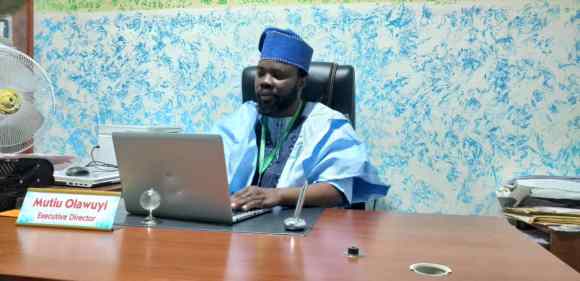
Mutiu Olawuyi in conversation with Mitali Chakravarty
He is a maker of dreams for writers – a man who believes in dreams that are woven in words and multimedia across the world. He connects writing with multimedia, not just by writing and YouTube screenings but also by putting upcoming writers on his television show to battle out challenging questions about how literary development affects the world. He looks for writers with a sense of social responsibility and awareness. The extent of his work is huge. Meet this personality extraordinaire — Mutiu Olawuyi (popularly called the Jungle Poet) an international award-winning poet (2013 World Poetry Empowered Poet Awardee, Canada); Honorary Professor of International Art Academy, Volos Greece; World Poetry Cultural Ambassador (2014, Vancouver – Canada); and Master of Literary Innovation (2019 – World Poetry Conference, Bathinda Punjab, India).
He is the producer and host of ArtFlakes on CBA TV, the Voice of East Africa and he is also the Editor-in-Chief of Parkchester Times and MCR newspapers (Print and Online) based in Bronx, New York, USA.
He has authored numerous books of poetry (Among them are American Literary Legends and Other Poems [2010], Thoughts from the Jungle [2012], 9/11 Poetry [2012], and The Journey to the Archangels [2013]) and has edited numerous international anthologies, journals and magazines.
Mutiu is a teacher, English language and literature curriculum developer, freelance writer/editor, literary critic, inventor of a new form of poetry called 9eleven (a poem of 9 lines written with 11 syllables) and the first writer of a story without verb – The Blotted Pawpaw (published 2013 by Bharat College in India). He is also an editor for The Criterion International Journal in English based in India.
Mutiu has some of his poems, short stories and research papers published in online and offline journals and magazines in India, Ireland, England, Canada, Greece, Nigeria and USA. Finally, some of his works have been translated to Arabic, French, Esperantos, Malayalam, Telugu and Hungarian. In this exclusive Mutiu takes us on a journey through his creative world.
Mitali: Why and when did you start ArtFlakes? What is the intent of this program?
Mutiu:ArtFlakes is a TV Show initiated primarily to give voice to creative writers around the globe. It was established to project literary works of art on the screen. I am pleased to say it is the only TV show on earth where global issues are explored through creative and literary lenses of writers across every corner of the world. Moreover, I believe creative works like poetry and prose shouldn’t be restricted to papers and pens alone. Those inkers shouldn’t always be placed behind the camera; they deserve to be projected on the screen too.
Mitali: How did you come up with the idea?
Mutiu: The idea came up when I was brainstorming with the managers of CBA TV on the best way to make the station unique among all its competitors, especially in the Horn of Africa. And it was actually Ridwan Adelaja, a creative member of the media team at the studio, who came up with the name, after hearing the concept.
Mitali: How many writers have you interviewed in Artflakes? What do you see as its future?
Mutiu: The show actually kicked off on air on January 25, 2019 with a review of the literary works of Mohamed Ibrahim Warsame, popularly known as Hadraawi, a renowned Somali colonial and neo-colonial literary activist, who used his poetic prowess to eliminate Siyad Barre from power, and thereafter lyrically called for reconciliation and unity among the Somalis in the region after the civil war that ousted President Barre out of power.
This was co-explored with Abubakar Isiaka Ubaji (aka Eazy), a vibrant unsung Nigerian literary critic and poet. Thereafter, we started using our literary binoculars to explore critical issues in African societies. So we ended up exploring the world of people in Kenya, Ethiopia, Uganda, Djibouti, Republic of Sudan, South Sudan, Malawi, Rwanda, Tanzania, Zambia, Nigeria, Ghana, Senegal, South Africa and Bostwana through the review of works of African writers like Ngugi Wa Thiong’o, Sembene Ousman, Ama Atah Aidoo, Helon Habila, Ifrah Monsour, Gaariye, Nadifa Mohamed, Cristina Ali Farah, Tayeb Salih, Bessie Amelia Head, and many others.
By the end of 2019, I decided to move beyond Africa and change the style of anchoring the show by contacting the creative writers directly, instead of just reviewing their works on the screen with my regular guest, Eazy. So I started with the Greek literary world via an interview with a Greek poet and physicist, Professor Chryssa Velissariou. And so far I have covered the literary world of the United States/New World, India, Philippines, China, Yugoslavia, Indo-Singapore, Sweden, Liberia, and Pak-America by voyaging through the world of authors like Elizabeth Castillo, Bengt O Björklund, Wang Ping, Catherine Zickgraf Christopher Merill, Dustin Pickering, Ibrahim Honjo, Sonnet Mondal, Jernail Singh Anand, Patricia Jabbeh Wesley and of course, Mitali Chakravarty, the borderless Asian poet and literary activist.
Mitali: Don’t embarrass me Mutiu – do not see myself as an activist really. But let us get back to you. You teach. You write. You do television shows twice a week. Where do you find your time and energy?
Mutiu: Everything in life is all about passion. I am an edupreneur, creative writer and freelance journalist/editor – I own a college, serve as a consultant for universities in the areas of curriculum review for ESL (English as Second language) and Journalism, edit two newspapers in New York and teach ESP (English for Specific Purpose) courses at my institute and a postgraduate school of a university in the Horn of Africa. And don’t forget I also manage my college and the two media outlets in the United States, and even support the top management team of the TV station in key managerial decision making. But if you keenly look at all these responsibilities, you’ll notice that they all revolve around my passions – pedagogy, creative writing and modern media. So I always find time from no time to accomplish my missions in these key areas. My creative writings flow spontaneously, by the way.
Mitali: You call yourself a ‘Jungle Poet’. Why?
Mutiu: This is an interesting question. I first answered this question in a book I published in 2011 titled – Thoughts from the Jungle, a poetic presentation of African proverbs. If you interpret Jungle Poet denotatively, you’ll definitely get it wrong. Anyway, here is my connotative interpretation:
…The world was initially a jungle (i.e. a piece of land [of freedom] without borders) and it will finally end up becoming a jungle. Findings have shown that people who live in the jungle preciously preserve their cultural norms and values, and consequently live a better harmonious and healthy live – compared to people of the urban areas, where manipulation of nature is the order of the day. Connotatively, jungle therefore means “universal”, “aesthetic”, “naturalist” or borderless.
I guess, with this, you can now decode the reason for calling myself Jungle Poet (JP)…
Mitali: You have written on many issues that affect mankind in general, even about violence against women in India. What about women in Africa? Do they face any violence any abuse? How do you see their condition in context of women in other parts of the world?
Mutiu: Yes, I have led several global literary advocacies against gender inequities and violence, and have published several international poetry anthologies on universal peace and love, plus protest against rape and domestic violence. But note that violence of all sorts is a universal issue. It’s not limited to India alone. Rape and other forms of domestic violence are also common in Africa, as they’re common in other Asian world, Mideast, Europe, Australia and America.
It’s true that some women have chosen to die in silence; they bury within themselves the wounds inflicted on them by their male counterparts. However, this abuse has been extensively curtailed in Africa these days, especially with the influence of politically strong African women activists and other activists against gender violence. Most women nowadays are “in-charge”. I mean they are “FULLY in charge”.
In fact, the case is becoming vice versa – some men these days are becoming victims of domestic violence, especially in Nigeria. This is why I personally believe that advocacy for gender equality is like a fairytale, because it’s an impossible dream. True activists fight for gender equity; not gender equality!
Mitali: Africa is where mankind started its journey. Yet we know very less about Africa, the different cultures it houses and your own culture. Educate us a bit about this.
Mutiu: You’re right. Anthropologists will tell you categorically that the journey of mankind started in Africa. It’s a continent with abundant natural resources and diverse cultural norms and values, with numerous socio-linguistic settings. Nigeria alone, for instance, has got over two hundred languages, and of course over two hundred socio-cultural groups, with a population of over two hundred million.
Apart from Ethiopia and Liberia, two countries that didn’t experience colonialism, African cultures started losing their values when they came in contact with the western colonialists, particularly the Britons, French, Portuguese and Italians. Influence of Arab colonialists couldn’t go beyond the Abyssinian territories in the Horn of Africa, whose leaders were major suppliers of slaves to the Arab world.
The assimilation and indirect rule system put in place in West Africa by respective French and British colonialists, who initially disguised with the three B’s (Business, Bible and Bullet) to cajole and conquer African kings, swiftly aided the establishment of the colonialists’ socio-political and economic dominance. And they diplomatically sealed their presence even after the abolition of slave trade and colonialism in the continent. They handed over power to their puppets when leaving Africa and since then, they’ve been major determinants of the socio-economic and political systems in the continent. Our key resources are managed by out imperialists, safeguarded for them by their boot-lickers, our so-called power-drunk leaders.
This long-term dominance has therefore dramatically affected African cultural heritage. It’s pathetically diminishing. Even some African traditional rulers, nowadays, invest heavily in the West, surprisingly with resources gathered indirectly from their subjects. You can see there a serious problem – what do you expect the younger generation to do after seeing their elders still licking the foot of the West? It’s sad to disclose to the borderless literary world that African cultures are dying day by day. Most Africans nowadays now live either an Arab or a Western lifestyle. Most of the youth have proudly lost the understanding of the core aspects of their local languages to foreign tongues. It’s really, really pathetic!
Mitali: You have a huge repertoire of works. Tell us how and when your journey as a writer and creative person started?
Mutiu: I actually started with visual art, because I guess it’s hereditary. No one taught me how to draw, but one thing I knew was that my father was once a visual artist before he became an engineer and university instructor. So I picked up my inbuilt creativity from him since I was 6, and got more into creative writing when I got to high school. And the rest of my formal education pursuits have been in the area of creative writing, media and language pedagogy.
More importantly, my early childhood experience made me a poet, if you understand what I mean. You know, poetry is medicinal; it heals wounds within; wounds that pharmaceutical products can’t cure. But to be candid, I can vividly say I started serious creative writing about 24 years ago, when I realized I couldn’t find other way out to solve my personal domestic challenges… So I resorted to offloading my heavy thoughts poetically on papers.
I have had numerous poetry publications to my credit especially on socio-cultural, political and economic issues like gender violence, socio-economic disparities, culture, peace, love and unity among human race. I have also collaborated with several great and passionate creative minds within Africa and beyond Africa, especially from countries India, England, the United States, Greece, Romania, France, Cyprus and more.
I have co-edited global literary anthologies with passionate creative writing giants and pedagogues like Denise Dee Sweet and Kirsten Hemmy (both from USA), late Madan Yayati Gandhi (India), Chryssa Velissariou (Greece), Sunil Sharma and Jernail Singh Anand (both from India), Stephen Billy Olajide (Nigeria), Kathy Figueroa (Canada), Mario Melendez (Italy), Lucette Bailliet (Australia) and the likes.
Essentially, as an explorer and true creative mind, particularly in the world of English language and literature, I got to a stage in my literary journey where I was no longer satisfied with myself just a poet or short story writer alone; I was tired of following the rules established by so-called renowned writers in the past, so I decided to try my hand in unique literary innovations.
This led to creating in 2011 a new form of poetry called 9eleven (a poem of nine lines written with eleven monosyllabic words), and likewise writing a story without a verb in 2013 called The Blotted Pawpaw, which was first published in the same year in an academic journal in India. I actually initiated the latter to debunk syntacticians like Noam Chomsky and McHalliday who believe that a sentence is incomplete without a verb. Now with my story, we can obviously change the conventional rule of sentence structure from Sentence = (Subject) + Verb + (Object) + (Adjunct/Complement) to Sentence = (Subject) + (Verb) + (Object) + (Adjunct/Complement). Mission accomplished, right? Hahaha…
Note also that I later joined the media fraternity mainly because I was tired of the mainstream media operators, who are paid to report and show to the rest of the world nothing good in my continent Africa and Asia.
I was tired of being misrepresented in paper and on screen. So I realized that my universal peace advocacy will be fruitless without changing the narratives through the media. I found out that everything good is reported about the West in the Western media with global presence, but the reverse is the case when dealing with media reports from Asia and Africa.
Where then is the objectivity in the global ethics of journalism? Who is deceiving who? And you know the worst and most unfortunate part of this is that the key figures in charge of the media in these two continents have been brainwashed to believe that media market is lucrative only when you focus heavily on negative happenings in the society.
The finance report that shows extreme poverty in Congo or Rwanda or health issues and war in Liberia or Seirra Leon, but no finance to cover homelessness and abject poverty in Mississippi, and the Bronx in the United States or even the “mighty” London. This is nonsense! This narrative has to change…
Our people in the media must know the truth – we must fairly project every situation in our society – positive and negative, and be given the chance to see the other side of the so-called developed countries. I am the voice and the true descriptor of myself and I cannot allow anyone to define me. Never! Enough of using media for creative racial, religious, and socio-cultural divisions among human race! We should also know that the same media can be used for creating peace, unity in diversity, and projecting socio-economic realities…
Mitali: What was it like growing up in Nigeria and how far do you think you have journeyed? Where do you see yourself, your show and your writing in the future?
Mutiu: Nigeria is a great nation; a nation of hardworking and entrepreneurial people. I was actually raised in a metropolitan city of Ilorin and spent almost a half of my life there, before relocating to other cities in the south east and south west. In 2009, I became a foreigner in my homeland because I jetted out of the country, and since then, I only returned thrice as a stranger who spent only maximum of three months in his fatherland.
Everything I left had changed completely – both human and materials. The most shocking part of these changes was seeing our young men and women becoming so inferior that they no longer cherished their natural skin – they had opted for body bleaching creams and soaps, all in the name of being “white”. It’s sad, right? So so sad… This is what you get when your school syllabi are designed to suit only “Western” standard; and not indigenous standard. On the other hand, infrastructural development had taken over most cities in Nigeria, except for few places unfortunately handled by greedy politicians.
Anyway, as an ambitious person, I believe in the next couple of years I would have been able to set up independent platforms for unsung creative minds around the world through digital/electronic media. This, I believe, is one of the best ways to speak directly to those in power and the masses. Fair share should be given to creativity as it is given to politics, science and technology through news, shows and documentaries. With my borderless mind, I can easily get it done by collaborating with like-minds in other parts of the globe.
Mitali: How diverse are the cultures in different parts of Africa, within the country and without? Has this influenced your writing?
Mutiu: Africa is a home of cultural diversity with over 1.3 billion people. Research, in fact, shows that the continent has more than 3000 different ethnic groups speaking more than 2000 unrelated languages. Likewise, most Africans practice a multiplicity of religions, including Islam, Christianity, Judaism, Hinduism, and numerous traditional religions attached to individual ethnic group.
This multilingual and multicultural nature of African continent has greatly influenced my writing. For instance as a writer, who has lived in different socio-linguistic settings within the continent, apart from Yoruba, Arabic and English, which are languages I acquired formally, I can proudly say, at least, I have basic understanding of five other African languages, which I use a lot in my poems and short stories. As a borderless writer too, I’m still learning languages like Chinese, Dutch and French for global intelligibility.
Mitali: You have written poetry on Apartheid. Is apartheid still an issue in Africa?
Mutiu: Not really. Apartheid has significantly faded away from Africa. Its remains could only be seen in the areas of gender, and caste/tribe. And they too are fading away gradually. I actually wrote the poem on apartheid to remind our younger generations about past happenings in Africa and its painful effects. This would make them comprehend it as an abomination.
Mitali: In some of the developing countries, we see a yawning gap between the rich and poor. Is that true of Africa too? Does literature in Africa take up these issues?
Mutiu: Every capitalistic society generally has one thing in common – the wide gap between the rich and the poor; the rich becoming richer and the poor becoming poorer. And it’s important to note here that the influence of American and Chinese politico-economic systems in Africa has made this a reality in the continent.
Does literature in Africa take up these issues?I’d say: Of course yes, it does. Some African creative writers like Wole Soyinka, Ngugi Wa Thiong’o, Olu Obafemi, John Pepper Clark, Ama Attah Aidoo, Sembene Ousman, Fatou Juka Jabang, Nana Grey Johnson and the likes are really trying to expose this in their writings. These are leading African literary figure who are tirelessly promoting the preservation of African culture through literature.
Young unsung African poets, playwrights and novelists too like Abubakar Isiaka Ubaji, Abullahi Jatta (The Kunta Kinte), Abubakar Ibrahim, Seun Sokoya, Ridwan Adelaja, Lekpele Nyamalon, Taofeeq Ogunperi, Nii-Ayi Solomon, Robert Ebi, Kinsley Nwadishi, Ndaba Sibanda, Darlignton Njobuewu, Kibrom Habtu, Muizat Kehinde Hameed, Alex O. Edevwie, Timileyin Olajuwon and the likes mostly pour their feelings on socio-economic and political decadence in the continent – perhaps because that’s the reality in their modern individual world.
But as far as I am concerned, I strongly believe in juxtaposition of socio-cultural revitalization and politico-economic revelation in creative writing. Our ideas shouldn’t be caged in one world alone. Creative writers are borderless. We should be able to link the past with the present in order to accurately and creatively capture and proffer solutions to future societal challenges.
Mitali: Is there a large body of African writers writing in English? What are the themes they like to address?
Mutiu: There are several country-based established associations of creative writers in Africa. Some of these are managed by people of academia, so voices of young or old less academic Africans are not really heard there. However, there are also numerous platforms available online (especially social media literary groups) that connect African writers together – regardless of age, academic or socio-economic background. Most African writers nowadays focus their works on socio-political and economic issues like relationship, deception, corruption, poverty and fraud.
Mitali: Have you travelled to all the countries your work has travelled to? Has your travel affected your writing?
Mutiu: As a proud borderless writer with keen interest in universal peace and love, I can only say boldly that I have, of course, travelled physically and digitally to a lot of countries within Africa and beyond. This is why I could write about socio-cultural and economic issues in India, Greece, Canada, the US, the UK, China, Middle East and of course various countries in Africa.
I had never felt the need to move out of the city. Let me correct myself here. I had never felt the urge to move out of the city. All my friends were determined to leave the city after completing their studies. They had convinced themselves that there were no opportunities here. A better future, a dream career was only possible elsewhere. I did not buy this sentiment. I was not swept by the tide of majoritarian thinking. I was a loner marooned on the tiny island of my hardcore beliefs that withstood the winds of change.
I had always felt that a writer does not necessarily need to move out except for commercial compulsions. If he moves out, it does take him away from his roots and the intimate world he belongs to. He writes wistfully of the lost world and tries to draw a connection.
If I wish to write well, I have to read well. This can happen in the small town as well. Why should I leave the city I had grown up in? This was the kind of idealism that restrained me. I was convinced to hear this reassuring voice urging me to lock myself down where I was and just read and write. I listened to it and stayed back. For almost two decades.
While they moved at a frenzied pace made more furious by their ambition within, I was the one who remained out of this race, to enjoy the simple pleasures of life, finding bliss in buying vegetables from farmers, plucking guavas and mangoes, having long walks to breathe in the fresh air, and listening to birds and their different voices. Something must be terribly lacking in such a person who opts for things nobody cares about. Must be a nervous chap afraid of failing who refuses to participate.
Relatives and family members came down heavily, suspecting the lack of the seeds of ambition. Inspirational stories of success abroad were narrated. When these did not push me hard to go out and compete, they realised the futility of it and dismissed my cowardice and lethargy as a tell-tale sign of impending doom. A person who lives to commit professional blunder. Such abuse came my way. I brushed it all aside. Nothing went deep inside to stir me, to jolt me, to make me feel insulted, to feel challenged, to come out and fight the usual survival wars of middle-class existence.
Most of the friends became journalists and editors and rose to the eminence of the kind they had visualised. I was still reading and writing and undergoing the angst of creative puberty, waiting for the first novel to burst out of me. When they heard of my long, endless struggle, they advised me to become flexible and practical, move to a cosmopolitan city and build contacts.
I knew from my college days I had chosen a path less travelled. Okay, I was late in meeting them at the thoroughfare of success. But does it mean I have to change my chosen path now? Their words did not persuade me. I still believed in what I had chosen long ago. I was ready to face the consequences. My experiences of failure kept me grounded. I never thought I was desperate to meet success, never pleading for the gates of success to let me in.
The hectic pace of life never made me change my languid pace. I followed my speed, never rushing into anything. I had the time to stand and absorb the beauty of flowers blooming all around, I had the time to sit by the riverside and watch its languid flow. I had the time to sit under the shady tree and distance myself from the world around me. I had the time to observe hordes of people in the market.
While I did work in advertising as a copywriter for my bread and butter, I stayed away from the stressful world and chose to work from home. It gave me a flexible routine, offered extra time to think and write for myself. I felt I was going to lose this fine balance if I went elsewhere. The ideal state of composure would be lost forever.
A compromise would scuttle my romance with nature. I was convinced even if I had to write for any other medium, I would still do it from my hometown. If the creative output was impressive, the terms and conditions would be made flexible. I was not going to relocate for career gains.
The world is full of stories of people leaving homes for jobs. In the creative world, such stories of migration and struggle are also common. I was perhaps the uncommon kind who was convinced of the lack of the need to go anywhere else. Perhaps, it was true that the urge to make pots of money was not there. Or maybe I always believed big money was going to come if I wrote big stuff. Location was immaterial. Nobody really cares to know where the writer wrote the story so long as his work was good. When I read about respected authors who were grocers, postal clerks, and ration-shop owners, the entire perspective changed.
If I make it, I will be proved right. Perhaps I am wrong to think so. Sometimes, I wonder why I have this stubborn streak.
Is it because I love the city? Or I am afraid of finding myself fighting the same predictable battles as others do? Is it that I hate to come out of my comfort zone? Hurl any such reasoning. I am unruffled.
This makes me think hard again. Is it the love of people and places? Why don’t I try once to leave and see how it pans out? As I tell myself to change, something tells me not to get distracted. Stay on the path I have been following. Do not think like others, say no to herd mentality. But when others question my present life, they do not think I chose it. They think I could not secure a better one. It is a defeat when I have nothing to tell them, to show them, to silence them.
The world I live in is relatively small, but it is nurturing my system well. While the city-based people have also suffered a lot, their success hides everything else. My failures strip me of the barest cover to defend myself.
Take the counterpoint now. If life is so good here, why is your creativity not blooming and booming in the small town? Those city-based ones are writing best-sellers and you make tall claims of being a good writer. When it does not show in terms of success, isn’t it a wasted life?
More important to find out is whether the writer in me feels exhausted or wasted. I have a word with the writer within every morning. He says he is still connected and happy to be here, not regretting the choice I made long ago.
Agreed, creativity did not blossom here for me, but what is the guarantee it would have flourished elsewhere? They argue the chaos of survival, the urge to prove would have brought out my creativity. This slow life did not let it happen. They mean creativity comes out under stress. Well, it is an opinion and a possibility. But for me, I never like to write a single sentence under pressure.
At this stage in life, with nothing worth to showcase as a fancy badge of success, I have no regret for not moving out, of being content with whatever creativity I could muster to tell a few stories. Did I wait too long for creativity to bloom instead of trying to force it? So long as I can create something decent even if it is not conventionally successful, I am happy for myself. Nothing else matters – not even the harshest criticism of my choices.
The creativity I see around is non-competitive and complete in itself. Only humans want their creativity to become competitive, get acknowledged and recognised. I am happy to blossom the way my world wants me to bloom. Even if I do not, absolutely no regrets. Many creative folks have already gone down this path. I am not the first one to disappear without leaving behind a substantial body of work.
But the belief that brilliant stuff does not always have to come out of a metro-centric environment remains firm. All creative folks are not bound to create great art during their lifetime. Much of their existence is dedicated to the admiration of creative beauty in various forms. Forget the charm and trappings of success. Write in the way you love to write. This harmony is more important for the seeker within.
Devraj Singh Kalsi works as a senior copywriter in Kolkata. His short fiction and essays have been published in Kitaab, The Bombay Review, Deccan Herald, The Assam Tribune, The Sunday Statesman, Earthen Lamp Journal, and Readomania. Pal Motors is his first novel.
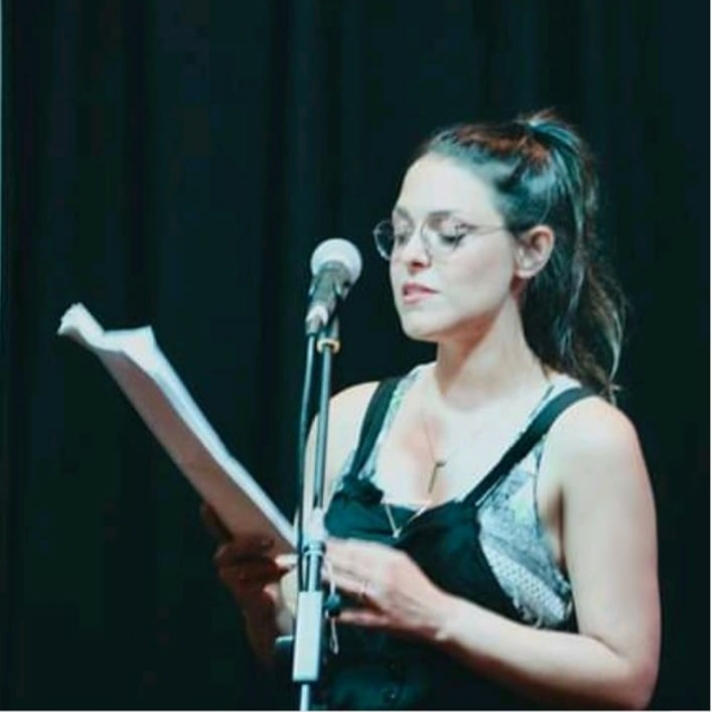
Sarra Culleno is London born and Manchester based poet, mother and English teacher who performs at poetry events across the UK. She writes about children’s rights, motherhood, identity, gender, age, technology, the environment, politics, modern monogamy and education. Sarra is widely published. She features in many podcasts and radio shows, and was longlisted for the Cinnamon Press Pamphlet Prize. Sarra co-hosts Write Out Loud at Waterside Arts, and has performed as guest poet at numerous literary festivals.
Some of my best friends on Facebook aren’t my friends anymore
It was the post on Facebook, in the early days, before, you know, before it got really serious. “Does anyone know of anyone actually getting this virus?” The question behind the question was something like ‘this is all fake news, all made up, this is not real’. In the comments section, her FB friends and followers were quick to respond. No. No. Don’t know. No. No. Don’t know anyone. As if to confirm suspicions. So, the poster followed up. Wasn’t it interesting that no one of her hundreds, perhaps thousands of friends, had themselves or knew of anyone with the virus?
When I checked later that week, the denial and dismissal hit some bumps. People, from around the globe, added comments to the list. Yes, they knew of someone who had it. Yes, one of their friends got COVID. Yes, I have it.
So that conspiracy theory in the making was quashed. I selected first unfollow, then unfriend. And thought about blocking or reporting.
But like the arcade game Whac-A-Mole, more so-called Friends were re-posting ‘alternative news’, or penning their own takes on the virus. Sure, we are in a democracy. Sure, information is distributed. Sure, we can be critical of official sources. But when a friend posts, all in upper case, “THIS IS ALL CRAP” I am tempted to turn off the shouting. Because this is a sign that someone has been contaminated, just like in the horror-comedy Shaun of the Dead. Ironically, it is their shouting about all the unnecessary fear and overblown panic that suggests that they themselves are afraid and panicking and have chosen to find comfort in the thin veneer of insight that comes with conspiracy theories. Just that you can’t call them conspiracy theories. Non-mainstream views sounds nicer. Alternative news perhaps.
I’m told not to believe public health officials, political leaders, epidemiologists or scientists. Because, somehow, without educational qualifications, just with a little time using Google and YouTube, my friend is now privy to the real truth, and I am just a mere witless sheep, so naive, so unable to see that this virus hoax is actually a black swan event being used by the powerful elites and clandestine organisations to bring about compulsory micro-chipping, GPS tracking and vaccinations. Or is it really a white swan event, and we could have seen it coming?
So, who will achieve world domination through the pandemic and the recession to follow? The coronavirus itself, isn’t that its goal, aided and abetted by human carriers? All of this is a tad confusing. There’s an invisible virus which is wreaking havoc, it has almost closed down many nations and brought a halt to human activity. We can hear the birds singing, the water is clearer, the air is breathable again, and filled with smells and fragrances. It is an unexpected benefit of lockdown. In such a short amount of time, the Earth has started to heal. We’ve seen how a new world might look, with the kindness of neighbours, a sense of community, time to pause, linger, reflect.
There’s a psychological test, where you imagine yourself in a white room, with no way out. What do you do? Your answer is supposed to indicate your attitude towards death, specifically your own death. In a way, the lockdown has been like a mini-psychology test, to see how we do behave. Are we productive and organised, with full routines and self-care and connecting with others? Or instead, do we mope around, eat too much, binge on Netflix or entertainment as a means of escape, rather than use this time to sort out some things in our lives? Funny how a few months ago many of us were complaining we don’t have enough time with our families or that we are putting off doing things because we are too busy. Yet when the opportunity to spend quality time together or the freedom to do that home decorating task finally arrives, instead we find ourselves wanting to kill those we live with, lamenting over our lack of progress on those rainy day errands, or getting into a cycle of avoidance, regret, and guilt.
In these turbulent times, many things have been put on hold. Not just haircuts, or holidays. But many things have carried on too, though in ways that are not so familiar to us.
The first of my friends to get COVID-19 was in Canada, though she wasn’t able to be tested to confirm her case. One of my best friend’s mother died at the start of the lockdown, not from the virus, but from the kind of natural causes that sees you go out in your late nineties. Travel restrictions and prohibitions on gatherings meant a small service was held via video link.
A comedian and actor from my childhood, Tim Brooke-Taylor, died from COVID-19, on the other side of the world, but because he’d been in the living room when I was young, it seemed like it was close. Then, just a few days ago, a friend calls from China, bearing sad news. One of my friends, a Tibetan in her sixties who founded orphanages and schools across Tibet, had died in Switzerland. The cause of death, I check and re-check the translation on the article in the newspaper: the virus. Tendol was the kindest, big-hearted, loving person I have ever met. She was literally mother to over 300, having welcomed street children, abandoned waifs and orphans into her homes.
As the COVID-19 pandemic spreads, it seems to have separated out those countries that have acted quickly from those who haven’t, or those lacking resources. The daily updates of confirmed cases, patients in hospital, and deaths seems to be too much like the Olympic medal table. We check on how we are doing, how others are doing, how we are doing in relation to our rivals. Self-proclaimed experts ponder exponential curves and possible projections, politicians casually dismiss that it might hurt tens of thousands of people, but they are standing in the way of economic growth.
I would like to go on Facebook and tell others about my friend Tendol, who more than once told me she was ‘the happiest person on Earth’. I would like to let others know that this pandemic is human, not mathematical. I would like others to know people matter more than money, that you can re-start an economy but you can’t bring someone back to life, that if you let go of selfishness and greed you may find your love extends beyond yourself, your family, even your country.
I would like to say this to all my Facebook friends, though the ones I’d really like to reach are now quarantined, unfollowed, unfriended.
Keith Lyons (keithlyons.net) is an award-winning writer, author and creative writing mentor, with a background in psychology and social sciences. He has been published in newspapers, magazines, websites and journals around the world, and his work was nominated for the Pushcart prize. Keith was featured as one of the top 10 travel journalists in Roy Stevenson’s ‘Rock Star Travel Writers’ (2018). He has undertaken writer residencies in Antarctica and on an isolated Australian island, and in 2020 plans to finally work out how to add posts to his site Wandering in the World (http://wanderingintheworld.com).
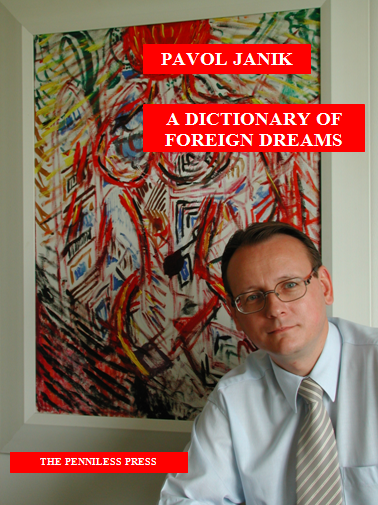
Book Review of A Dictionary Of Foreign Dreams by Slovakian Poet Pavol Janikby Sarita Jenamani
Fall of Berlin Wall thirty years ago had marked the end of an era in the European history: the division between capitalist West and the satellite states of Russia, that is, the East Europe. The cold war and the iron curtain had pushed the entire East Europe into obscurity. On both sides of this divided world narratives of East vs West were quite black and white, however, still a number of writers from East Europe like Milan Kundera, Bruno Schulz, Bohumil Hrabal, Danilo Kiš, Ismail Kadaré, Nobel Lauret Herta Müller, Ágota Kristóf, László Krasznahorkai, Czesław Miłosz, Zbigniew Herbert had secured their place in the world literature, but unfortunately voices of many poets and their work still remain hidden from Anglophone readership.
Apart from its marvelous creative innovations, literature of this period is significant also because it provides a parallel and more insightful perspective on the politico-cultural landscape of the twentieth-century Europe. This part of the world, the so-called East-European region, is, however, more of a psycho-geographical concept and an imagined construct of the cold war. It represents a peculiar constellation of micro-regions, an amazing amalgamation of cultures, languages and tradition that are highly different from each other.
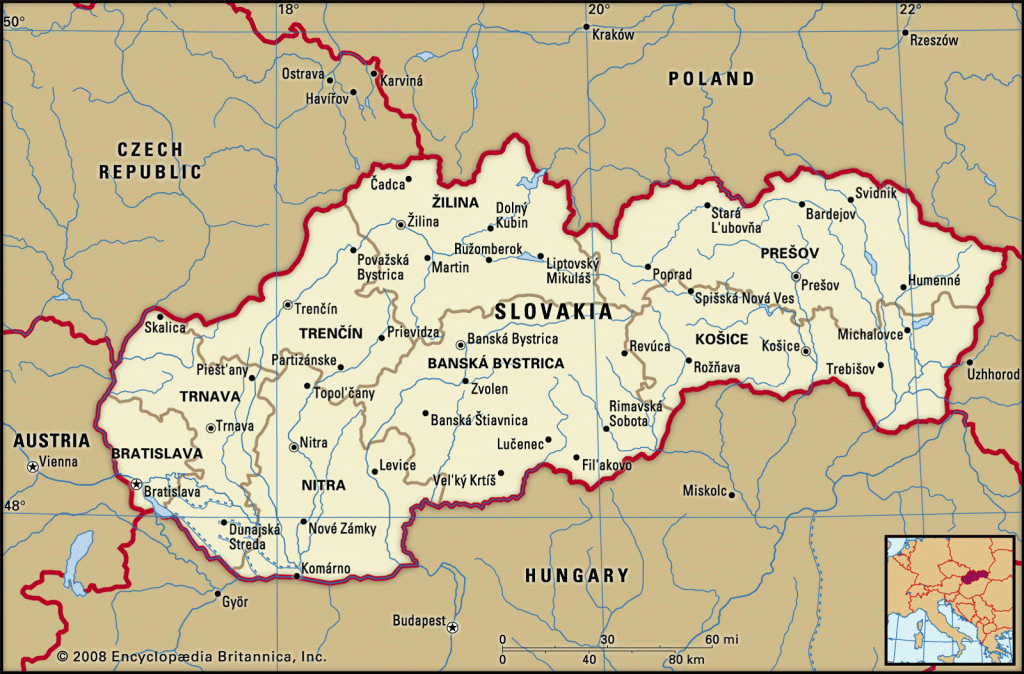
Slovakia, among the West Slavic group of nations, is the least-known country and this holds also true of its poetry. The reasons are mainly historical. The Slovak nation dates its establishment to the ninth-century Moravian Empire that included the territory of the former Czechoslovakia, southern Poland, parts of Austria, and parts of Hungary. In tenth century, the Moravian Empire was defeated by the Magyars (the Hungarians), and Slovakia became a part of the Kingdom of Hungary, afterwards it was a part of the Austrian Empire and in the wake of the Second World War it went under the influence of USSR.
The Modern Period of Slovakian literature has been shaped on one hand by the increasing influence of foreign literary trends, well as by the ideological influence of the former Soviet Union. However, you can find here, as in many parts of the East Europe, a place of unexpected cosmopolitanism that lies buried away from the view of Anglophone readership.
Slovakian poet, dramatist, prose writer, translator, publicist Pavol Janik is a typical example of this phenomenon, a wonderful voice from the little country Slovakia who seems to find its place beyond its border.
His book The Dictionary of Foreign Dreams is a collection of his poems in English translation. This poetry speaks of ordinary and mundane with an extraordinary poetic twist. It has a strong sense of regionalism yet at the same time it appeals to the readers who are not familiar to it. The opening poem of the book: ‘I am carrying you, morning’ written in 1975 paints a perfect landscape of desperation and hope.
Behind the horizon the light is spraying.
The sky trembles like a tear.
The winged summer wilts.
Through the algae’s lonesome dew slides.
.
Trees hold empty nests in their hands.
I quietly sing birds psalms.
In the empty night, empty star is falling.
Empty gaze of water is still cloudy.
.
I read an exclamation of silence
and drink the morning blood stream aloud.
The morning is taking deep breaths.
The peculiar phenomenon of the East European confusion of identities that somehow binds these countries is also reflected in the lines of his poem, ‘The report from the end of the cold war’.
How much is the Czechoslovak crown worth here
in the capital of the ugliest women in the world
where the only chance for survivor
is your photograph?
.
An English poet,
who thinks that Bratislava is in Yugoslavia,
but knows that Dubcek lives there,
is only interested if Havel is free.
His rhymes, inspired by London and by other such European cities written about the size and dimensions of his desk could as well stayed on his noble table. He seems to be a poet who is gifted with the talent of or propensity to getting extraordinary poetic experience from ordinary things. Putting in other words, his is poetry concerned with enlivening the ordinary. Existential notions of nothingness and authenticity are explored here as they pertain to a poetics of the mundane. His poem ‘Bad Habit’ provides a telling proof of this tendency.
Every day
I go to work
for my wife, Olga,
so she has enough for shopping.
.
I must make an effort.
The weekend approaches
and the children would like to eat on Sunday.
We still have not succeeded
in breaking this bad habit.
.
The poem ‘At the table’ portrays this phenomenon in a different way.
.
An infirmary of flowers of the field
in a vase.
So many of the white
that the blood inside our veins stiffens.
.
Thus we wither together
torn away from
life.
Some of Pavol’s poems are written with the acumen and approach of a cinematographer. Pavol, a dramatist, a keen observer, purposefully juxtaposes images and here a combination of theater language and specialized reading experience is made accessible in an adroit fashion that takes his poetry to new level of specificity and concentration; the subject fades away, allowing the poetic record to speak on its behalf. As the poem “summer” shows us:
The sun smashes our windows.
An urgent song reaches us from the street.
.
On the cellophane sky
steam condenses.
Unconfirmed reports are reproduced
about the wind.
.
The trees are the first to begin to talk
about the two of us.
At times the poet appears to be offering life in a way that is combined with humor and the self-irony: humorously, his poetry asks questions about the dark unspoken conditions that rule our world – a world where we knowingly or unknowingly follow the set rules without asking their relevance and this is a juncture where a writer should make his/her readers aware of this uncanny game. In his poem “New York” he writes:
Where does the empire of glass and marble reach?
Where do the slim rackets of the skyscrapers aim?
.
God buys a hot dog
at the bottom of a sixty-storey street.
.
God is a black
and loves the grey colour of concrete.
.
His son was born from himself
in a paper box
from the newest sort of slave.
Pavol Janik is a widely published poet whose literary works have been published not only in home country, Slovakia, but also in a number of other countries, and it is indeed solacing to know that such powerful voices are not getting lost behind an imagined iron curtain but finding their due space in global literary field.
The poem that gives the books its title ‘A Dictionary Of Foreign Dreams’opens up with a dream as well as with a little sense of confusion over the vastness of this globe.
At the beginning it was like a dream.
She said:
“Have at least one dream with me.
You’ll see – it’ll be a dream
which you’ve never dreamt about before.”
.
Descend deeper with me,
dream from the back,
dream retrospectively
in a labyrinth of mirrors
which leads nowhere.
A Dictionary Of Foreign Dreams is a wonderful poetry collection that not only provides you a sneek peek of Pavol Janik’s poetry in particular and Slovakian poetry in general but also leaves you craving for more such poetry.
Sarita Jenamani is a poet of Indian origin based in Austria, a literary translator, anthologist, and editor of a bilingual magazine for migrant literature – Words & Worlds – a human rights activist, a feminist and general secretary of PEN International’s Austrian chapter. She has three collections of poetry. She writes in English, Odia and translates to and from German. Sarita translated Rose Ausländer, a leading Austrian poet, and an anthology of contemporary Austrian Poetry from German into Hindi and Odia. Shehas received many literary fellowships in Germany and in Austria including those of the prestigious organizations of ‘Heinrich Böll Foundation’ and ‘Künstlerdorf Schöppingen’. She studied Economics and Management Studies in India and Austria where she works as a marketing manager.
A fresh morning with a generous sun awaited me on the balcony outside. It was flooded with birdsongs — the caws of the crows, the chirps of the sparrows and the continual trills of a magpie. As my south-facing balcony door opened on a pond and a meadow that stretched up to the street lining it, leaving at least 90 feet to 100 feet in between, I had no dearth of morning breeze or late afternoon gusts of wind in summer. The time of this corona-scare was quiet and soundless. All these birdsongs, whoosh of a car-engine on the road 70-100 feet off my balcony were soothing to my ears.
As I stay alone, there is no one to talk to me. Sometimes, just to feel companionable, I talk to my nephew, imagining his presence beside me, mostly the ‘little nephew’ who was my constant company almost 10 years ago, when he was just 4-5 years-old, a wisp of a boy. You may regard this as a sign of being an inmate in bedlam, but this conversation refreshes me, keeps me healthy and going. This does not however mean that I crave company. On the contrary, when after my usual hours in the college, I come back to my apartment, I love to enjoy my own company, clicking away on my laptop — a story, a poem, a personal piece or just scholarly writing.
I do not even have the need to call anyone up and while away my private hours by talking my heart out. That I hardly do. I sit with a mug of coffee by my writing desk, a wheeled one, which I love to drag to the balcony, especially on peaceful Sundays. It overlooks the greenery of the open space, facing it and whiffs in the pleasant presence of the feathered beings with whom I have already struck friendship since the last four years. In fact, I chose to buy this home, only because of this south-facing balcony and this open space. A few of my friends objected to my buying this flat, as I would be staying alone and this serenity, they felt, could compromise my security[!] and again, this tranquility would give a fillip to my solitariness. I could not make them understand that I am a private person and I love to commune with the calm nature outside my balcony. My solitariness is not ‘so-called loneliness’ but my aloneness, which I love madly and would never compromise with anything, however precious that may be.
I am just trying to say that this imposed isolation, during lockdown, is something I love. I feel cocooned in the warmth of my home. In the afternoon, I gave in to an occasional siesta. In the evening, I get up fresh, have a cup of tea and go into meditation for some few minutes.
The glow of the evening outside is really alluring, and hence, I to stand in the balcony for some time. One day as I returned to my bedroom, adjacent to the balcony, I found a gecko-like lizard, hanging from the wooden beam on the balcony door. I was so terrified to see its enormous size that I rushed into my bathroom and came armored with my mosquito-repellent spray. I sprayed it and to my utter surprise, found the creature giving in to its poison. In an hour, it writhed on the floor and breathed its last. I felt so guilty! However, I had a skimpy supper and went to my desk to read a few pages from Literary Occasions by V.S. Naipaul.
Lockdown is really a blessing in disguise to me! I am getting to read so many books, which I kept aside for reading but could not read as my regular schedule on a work day with all the commuting left me fatigued. I was really disturbed to find Naipaul’s take on R.K. Narayan, one of my favourite authors. I love his narration, his way of describing things, his making inroads into the hearts of his characters. I love him blindly. In my class too, I praise Narayan to the skies. Even some years ago, I taught The English Teacher by him! But times have changed, old three-year-graduation structure has been replaced by semester system. And, UGC (University Grants Commission) is keeping an eye on the ‘quantity’ rather than quality of teaching. Everything said and done, I cannot downplay ‘quality’ of my teaching. Hence, be it Narayan or Lewis Carroll, I try to put forward my best. Anyway, let me stop the digression and give you Naipaul’s observation on Narayan is something I will share with you.
To Naipaul, he (R.K. Narayan) ‘appeared to be writing from within his culture…He truly possessed his world. It was complete and always there, waiting for him.’ But that world proved on closer examination to be static. Narayan’s characters seemed to Naipaul ‘oddly insulated from history’– a history of defeat and subjection that was so oppressively present in India that Narayan’s fictional world could only reveal itself as ‘not, after all, as rooted and complete as it appears.’ As Naipaul saw it, the novel in India, and specifically Narayan, could ‘deal well with the external of things’ but often ‘miss their terrible essence’.
What do you think?
Ketaki Datta is an Associate Professor of English at Bidhannagar Government College, Kolkata, India. She did her Ph.D. on Tennessee Williams’s late plays and later it was published, titled, “ Black and Non-Black Shades of Tennessee Williams”. She has quite a few academic publications along with two novels, two books of poems and quite a few translations. She had been interviewed by Prof. Elisabetta Marino, University of Rome, archived by Flinders University, Australia. She won grants for working at American Studies Research Centre[1993,1995], Hyderabad, India. She presented academic papers at IFTR Conference[Lisbon], University of Oxford and University of California, Santa Barbara. Her debut collection of poems, Across the Blue Horizon, had been published from U.K. with the aid of Arts Council, England. Her latest poetry-book, Urban Reflections: A Dialogue Between Photography and Poetry has been published by KIPU, University of Bielefeld, Germany, with Professor/Photographer Wilfried Raussert [photographs of Street Art of Americas]. She has interviewed American novelist, Prof. Sybil Baker, recently for Compulsive Reader. She is a regular reviewer of poetry volumes with Compulsive Reader, USA. She interviewed poet Lucha Corpi of San Francisco, in 2018. She is the Regional Editor, India, of thetheatertimes.com, headed by Prof. Magda Romanska, Emerson College, Boston, U.S.A.
And what a lovely and magical life it is despite the COVID 19 — which I am sure we will battle, even if the path seems long. Meanwhile, we remain connected in this virtual world of friendship, harmony and giving!
We completed another month! And what a month it has been — the two greatest bards celebrated their birthdays — Shakespeare and Tagore. We carried an essay on one and a discussion between two greats of modern Indian literature on the other! Other than that, more essays, stories, musings, translations and poetry took our readers globe-trotting. We are doing our best to seamlessly create a world of ideas in which we can drift effortlessly and find a whole new world where we can all meet to have exchanges beyond borders drawn by the exigencies of history, politics, economics, greed and more.
Writers are doing such a wonderful job of connecting us with similar concerns worldwide. Our experiences with COVID 19 and quarantine actually unite us in a large way as humans. One of our story writers has plucked the heart strings of readers across oceans on distant lands and received many encomiums for it. We all seem to be getting more linked by the pandemic caused by the corona virus, giving all of us time to pause and reflect on the commonality of human sufferings, as shown by the narratives from different parts of the world in the journal.
We continue to be fortunate to find many of our pieces a second home in Countercurrents.org. I am also happy to announce we have been listed again as one of the top places for submissions in an Indian site this time.
We have more happening here with all the action from our dynamic editorial board. Dustin Pickering, the editor-in-chief of Harbinger Asylum, on our editorial board, has suggested a promotion for us in his quarterly this July. So, some of our authors will be republished in hard copy from USA in the summer edition of Harbinger Asylum.
We are also starting a young persons’ section from the end of this month. This will be organised by Bookosmia, a children’s publisher. The founder of this popular children’s publishing concern, Nidhi Mishra, also on our editorial board, will be giving us the best from her blog for youngsters and we will exhibit it in our new section called Sara’s Selection.
We want this to be a family friendly journal and to nurture young talents along with established writers. You can check our submissions if you want to publish in the young person’s section, which will cater to aspiring writers under eighteen. We have an email — sara@bookosmia.com – which will take you straight to Bookosmia and the submission of the under-eighteen’s section of both BookOsmia and ours. We will be publishing only a few selected pieces from their blog and others could just be featured in Bookosmia, the blog run by the publisher.
We welcome children from all over the world to write in to Sara. The tie has been announced by Bookosmia in The Hindu, a well-known and established newspaper in India. I am attaching a link to the news below*.
We are overwhelmed with support from all of you and are looking into the periodicity of the Borderless Journal and will be announcing more changes next month on June 14th.
As we move forward in the spirit of Ubuntu or “oneness to humanity”, towards a world filled with love and kindness, where vibrancy and positivity can wash away darkness and hatred, where the freedom of speech does not descend to narrow abuse and anger, marginalisation and boundaries, I welcome you all to write in to me if you feel we need to expand our horizons further.
As I bid you adieu for another month, I hope you will keep reading our journal and writing for us.







 Borderless