Juan Pablo Mobili was born in Buenos Aires, Argentina, and adopted by New York, a long time ago. His poems have appeared in First Literary Review-East, The Poetry Distillery, Anti-Heroin Chic, Red Planet Magazine; or are forthcoming from Spirit Fire Review, Mason Street, The Red Wheelbarrow Review, and The Journal of American Poetry. In addition, he co-wrote a chapbook of poems in collaboration with Madalasa Mobili, “Three Unknown Poets,” published by Seranam Press.
Covid-19 seems far away from the district I live in. But deprivation has already set in. On my way home with a bag full of grocery items from the nearby kirana store (minimart), I was stopped by two masked women outside the park. One of them flashed a weak smile that disappeared as soon as she measured from my bag and body language that I was not the person she was waiting for. She asked me whether the distribution of food grains was scheduled in the park – whether they should queue up and wait. Being absolutely clueless regarding any such distribution plan and feeling a sense of remorse for carrying something these women were eagerly waiting for, I chose to suggest the adjacent house for reliable information in this regard.
I replayed her question in my head to assess her plight. Her voice did not quake with any sentiment of doom. But her face did carry a disproportionate mix of hope and worry. From her readiness to wait, it appeared she was expecting recovery and normalcy to return soon. Just like her, the entire nation was pregnant with hope of a turnaround. Except the corporate world that had already aborted it.
Despite chanting mantras of positive mindset and chewing the motivational gum year after year, there seems to be a well-orchestrated unanimity in the prediction of business slump. Salary cut sounds a pretty neat term – quite like a bearded guy choosing to become clean-shaven and still looking dapper. Nobody seems to grudge pay cuts and there is a smile on every face if you mention it, as if it is an increment or Diwali bonus.
Weighed against the other alternative of job loss, this seems like a life-saver. While we are still a long away from finding the vaccine, it seems we have already found the cure that keeps us immune from lay-offs. Thousands of employees and workers are going to serve with renewed motivation because they have families to feed and regular debts to service. The vicious cycle continues.
It is barely a month of lockdown in India and companies are feeling the heat. They have to pay salaries when there is no cash flow. It pinches them hard. This comes as an ideal opportunity to downsize the workforce. Instead of waiting for two months to see how the situation evolves, companies have already started communicating their new human resource policies through email and phone. Seems there is no contingency fund to tide over the crisis and emergency credit lines will not meet their requirement.
Before the Covid-19 crisis set in, I met my employers for a raise and the first draft of their script was ready. Every single line suggested they were waiting for the pandemic to blow up before they unfolded their mega plans in front of employees. It was a clear indicator that they were going to release a voluntary retrenchment scheme, or they would come up with a revised plan of salary packages.
After the 21-day lockdown ended and the extension happened, the advertising agency began its trial run on me. To be honest, I had an inkling that this exercise would begin with me. The owners communicated their decision to flatten my salary curve – slash 50% of it from next month. It was cold, insensitive, and brutal. The email exuded the same indifference. Since I was not ready to accept the new offer, I communicated my decision to quit my job in the next three months and served them my notice period.
Some friends called me to know about my job status. Did you get hit? The urban workforce hides its collective shame in this clever expression that helps salvage pride and dignity by playing the victim card — as if it was an enemy bullet that hit us while we were serving our corporate dukes in the battlefield.
During Covid-19 times, the chutzpah to leave a job is certainly not what any employer would expect. A meek, timid acceptance would have warmed the cockles of their hearts. What I delivered was a bitter pill of gross insubordination and rebellion. I knew all their domestic clients were on board, and several of them were government clients. This was a temporary setback and the clients would resume operations after the lockdown. What was the tearing hurry then?
Imagine what happens to hordes of employees in the private sector in the coming months. People are going to suffer heart attacks, strokes and even contemplate suicide. And the organisations have no humanitarian approach or policy to address such a major problem. If they do not wish to utilise the resources acquired over the years of operations for the benefit of employees, it shows their rank opportunism and insensitive disposition in such trying times.
Most of the companies operating in India have not existed since 1971. The corporate boom is a fairly recent phenomenon that arrived after liberalization was introduced in 1991. They have not seen wars or famines during their lifetime. All they are busy doing is axe, axe, and axe. As if jobs are like overgrown branches that need to be pruned from time to time.
Corporates have a fairly typical mindset: expand hiring processes when business grows and contract when business shrinks. Remember the faces of those animals that perceive the slightest danger and curl up for protection – corporates are like that. Unreliable, fair-weather friends you can go on a date with provided you carry an umbrella or a raincoat of your own. When it starts pouring suddenly, do not expect them to take you under their umbrella.
Covid-19 crisis is yet another eye-opener that reveals the real predatory nature of corporate entities. Sadly, this realisation will soon be forgotten as the corporate juggernaut resumes its roll.
Devraj Singh Kalsi works as a senior copywriter in Kolkata. His short stories and essays have been published in Deccan Herald, Tehelka, Kitaab, Earthen Lamp Journal, Assam Tribune, and The Statesman. Pal Motors is his first novel.
The media, the Indian as well as the international, have covered the continuing plight of the inter-state migrants resulting from the nation-wide lock-down announced with a calculated abruptness, not uncharacteristic of the Government of India (GOI) judging from the disastrous demonetization and the hurried and thoughtless implementation of GST.
Yet, none in the media has given a proper explanation for the failure of the GOI to anticipate the plight of the millions of inter-state migrants. It has been pointed out that these poor citizens come to the attention of the government only when there is an election. However, there is another explanation which the mainstream media, more or less intimidated by the establishment, do not dare to say: Any such major decision should have been taken based on a cabinet paper as the Rules of Business of GOI mandate. Such a cabinet paper would have been prepared by the relevant Department/Ministry and submitted by its Secretary to the Cabinet Secretary who would have circulated it to the departments concerned, and even consulted with the states, as they have to implement the decision. That paper would have argued the pros and cons, listed out the actions to be taken before the announcement, and thereafter. It would have listed the anticipable problems such as the plight of inter-state migrants, the supply chain management and more. It certainly would not have recommended an announcement at 8P.M. to be effective at midnight.
Therefore, we conclude that the lock-down decision is not an instance of good governance. The lock-down was necessary. But in government even a good and necessary decision has to be taken and implemented in the right way. Government procedures are there for a reason. Unless there are extenuating circumstances, the procedure should be respected.
The Finance Minister said that she barely got 36 hours to come out with a financial package. Looking at the half-baked package, her complaint is legitimate.
Let us now look at the strategy of GOI to address the Covid-19 pandemic. The sad truth is that there was no strategy because no attention was paid to the looming disaster though we have a National Disaster Management Act enacted in 2005. On 30th January 2020 the first case in India was detected in the State of Kerala. The patient had returned from Wuhan where she was a student. By 3rd February, two more students who had returned from Wuhan tested positive.
Let us look at the response of the Government of Kerala (GOK) and GOI. Five days before the first case, the State Health Minister K.K. Shailaja, set up a high-level committee. On 4th February, GOK declared a ‘state disaster’.
The GOI did not take note of what was happening in Kerala. Is there a system of a state government sending an urgent report on such matters to the GOI? Whether it is there or not, the media covered the cases in Kerala, and nothing should have prevented the GOI from asking for an urgent report. Whether such a report was asked for or not, sent or not, the Union Ministry of Health issued an advisory on travel to China only on 17th January. It said that Indians going to China should take care in view of the contagion. On 25th January, a second advisory said that travel to China should be for ‘essential’ purposes only. There was no advisory in February. The third advisory was on 5th March, advising against travel to China.
Question: Why was there such delay? Our Embassy in China would have reported about the raging contagion. Taiwan took prompt action by medically screening arriving passengers from Wuhan, initially informally, and formally after China informed the W.H.O. of the contagion on 31st December. What is even more important is that Taiwan started making testing kits as a precaution. Surely, our trade office in Taiwan would have reported all this. By 20th January, the W.H.O. published the action under way in Thailand, Japan, and South Korea. Our missions in the three countries would have reported on all this. Our Permanent Mission in Geneva would have reported on all this though the web site of the organization was giving the information.
We conclude that the GOI was not alert. President Trump and P.M. had a five-hour long session on 25th February. Trump had disallowed flights from China in early February. Did they discuss this contagion?
A related question: Why did Trump come at all, if he had made up his mind to indefinitely postpone a trade deal? Was the sole purpose to get an over-choreographed reception in Ahmedabad to a large gathering who might not have understood what he said as there was no interpretation? What was the raison d’etre of this Wagneraian opera at some cost to the people of India? To show GOI’s support for the candidate Trump? If so, is it wise to pick a side in the election in another country? Good diplomacy advises against such action.
Another instance of the deficit of good governance is that the resourceful military has not been mobilized to assist with the supply chain and the manufacturing of testing kits, PPE (Personal Protection Equipment) and much more.
There is a basic confusion in the mind of the GOI. Lock-down is required only to the extent it produces the conditions necessary for social distancing. Lock-down per se is not desirable. The imaginary cabinet paper would have had three lists of economic activities:
1) Activities compatible with social distancing with minor modifications.
2) Activities that need more modification to be made compatible with social distancing.
3) Activities not compatible with social distancing.
Talks with the sectors of the economy and its representative bodies would have started on day one of the lock-down if not prior to it. We see that the corporate sector is finding it difficult to accommodate the workers inside the plant or even to arrange for their transport. Democracy implies dialogue between the government and the rest of the society the initiative for which should be taken by the former. India has an excellent, or potentially excellent bureaucracy and sadly it has not contributed as much as it can into decision-making and implementation. Why is it so?
Above all, we need a scientific temper to successfully deal with such crises. Such temper seems to be absent among a section of the Delhi elite as seen from a WhatsApp message that went around:
The candle flames have temperatures in the range of 400° to 500° Celsius. When so so so many candles will light for 9 minutes, imagine the impact on the environment and the heat so generated will decimate the virus. Why 9 mins, 9 P M and 5th Apr (5+4)?9 in the numerology is an adamant digit, which cannot be destroyed.
It was Jawaharlal Nehru who coined the phrase ‘ the scientific temper’ that he defined in 1946 in The Discovery of India as follows:
“What is needed] is the scientific approach, the adventurous and yet critical temper of science, the search for truth and new knowledge, the refusal to accept anything without testing and trial, the capacity to change previous conclusions in the face of new evidence, the reliance on observed fact and not on pre-conceived theory, the hard discipline of the mind—all this is necessary, not merely for the application of science but for life itself and the solution of its many problems.”
It will be most useful if the P.M. in one of his addresses to the nation draws attention to article 51 of the Constitution which requires the citizens to cultivate such a temper.
This is not the time to find fault for the sake of finding fault. But unity of action in a democracy comes only when the government is self-confident enough to listen to criticism and benefit therefrom.
Let us work unitedly under the leadership of the P.M and C.M.s. India is too large a country to be micro-governed from the capital.
It was shadowy in the forest. No sounds at all. Only some living creatures were crawling in the undergrowth, producing inaudible sounds. An inquisitive young man entered the forest with a smile on his face. He fancied that there might be some hidden treasures in the forest after browsing through a recent book on treasure hunting.
That evening he went to the edge of the forest out of curiosity. He did not know what dangers would confront him. He went in unprepared with bare-hands and curiosity. He also liked to gaze at trees, big and small. He wondered if the forest housed exotic and colourful birds as shown in the documentaries on television.
He was free of ancient fears and dogmas because he believed in science. He thought that a forest was only of trees and animals and there could not be any harmful or playful spirits lurking in the deepest, darkest corners.
He needed to tread carefully in the forest, he discovered, otherwise, he could stumble and fall on the protrusions made by the obtrusive roots of the big banyan trees. He suddenly started humming the lyrics of the Guns and Roses’ song called ‘Welcome to the Jungle’ in his mind.
After walking about thirty minutes in the forest, he thought that his throat was dry. He was thirsty. He looked for a stream to drink cold and clean water. He listened carefully to the gurgling sounds of a stream somewhere. Suddenly, he saw a butterfly flapping its wings gently in front of him. It aroused his sense of curiosity and wonder. The butterfly led him to the stream.
He was very happy when he found the stream. When he looked for the butterfly, it had disappeared. He thanked the butterfly in his mind from the bottom of his heart. He squatted at the edge of the stream and bent down to long mouthfuls of water. It completely quenched his thirst.
After drinking the water, he washed his sweaty face to refresh himself. Then, he felt a bit hungry and remembered he had not had enough lunch that afternoon. He thought that he would look for some fruits. Then, he found some wild, peachy fruits growing on a big tree near the stream.
He pondered whether to climb the tree to pluck them or hurl stones to bring them down? He found some pebbles in the stream and gathered them. He hurled those pebbles at the fruits. Some stones hit the fruits and they fell off the tree.
Happily, he picked up one big fruit and bit into it. It was tasty and so he bit it again and again. After having three or four fruits, he found his belly was full. He lay down on his back and instantly he fell asleep.
His sleep was punctuated by a strange dream. He found a gnarled and crooked-nosed, red, bulgy-eyed woman trying to talk to him. She had a long and curly nail which she tried to insert into him. It seemed that she was the guardian spirit of the tree.
Petrified, he yelled out aloud. But no one heard him. He was completely alone in the forest. He could not move his body a single inch. Gradually, the guardian spirit came nearer to him and tried to say something to him. He apologized to her for not asking for permission to eat fruits of the tree. But, she took another step towards him.
‘‘Arrrrrrr’’ – the sound was so loud, even the owls resting on the trees were startled and flew away. He knew that it was the end of his life. He tightly closed his eyes. He saw his feet start to turn into a flap of a bat. Soon, he was going to be a bat and sleep upside down. The guardian spirit would rear him as her pet.
He did not want that. But he did not have strength to fight back. Instead he had to yield to her because he felt that he was paralyzed. He noticed that his hands were changed into wings which had started to flap slowly. He could not resist the strength of the spell. Within a minute, he completely changed into a bat. It was a metamorphosis.
The forest seemed to have spelled its curse on him.
He tried to speak out. Comprehensible human language was replaced by the sounds of a bat. He understood that his life was gone, completely gone. He did not know how he would regain his human form. He blamed his own foolish fate because no one warned him against going into the cursed forest.
He knew that he should not have indulge his whim.
***
Daytime brought the young man back to his village in his own form as a human. He related the story to his fellow villagers who did not believe him and assumed that he was an exhibitionist buffoon trying to draw attention to himself. He insisted that he had really turned into a bat the night before because of the spell cast by the guardian of the tree. People laughed at his story and they thought that he had made it all up to gain importance and sympathy.
As darkness gathered the village into its folds, the villagers started to go back to their homes. Suddenly, someone noticed that the young man was missing, they could not see him. They called out to him. But there was no response.
Only, a bat persisted in flying towards them, hovering up and down over their heads. It almost flapped on the scurrying villagers’ heads. There was chaos.
San Lin Tun is a freelance writer of essays, poetry, short stories and novels from Myanmar and English. Sometimes, he draws cartoons for fun. His writings has appeared in Asia Literary Review, Kitaab, Mad in Asia Pacific, Mekong Review, NAW, PIX, Ponder Savant, South East of Now, Strukturriss and several others. He has authored ten books including ‘‘An English Writer’’. He lives in Yangon, Myanmar.
Today my daughter came to me and said – ‘its evening, lets make tea’. A common statement but uncommon because it did not have a time stamp – as in ‘Its 5:30 pm, lets make tea’.
It set me thinking what a luxury it has been to be free of the ever-ticking time bomb.
For the past many years my life has been a series of time stamps – get up at 5:30 am, wake daughter up by 6:00 am, make sure she’s at the bus stop by 7:00 am, get ready by 7:30 am and reach destination by 9:00 am ( before the traffic builds up) etc etc…ending in – switch off the lights by 10:30 pm so that the same routine can start again.
Its as if my entire 24 hours have been mortgaged to some force and I get them back in bits and pieces. I have forgotten that the day has many hours that can be morning, afternoon, evening or better sounding dawn, dusk etc. The time is all mine and not all these hours have to be productively used – some can be used doing nothing or just relaxing or doing some activity which does not have an end time.
Now that the time bomb is relaxed (albeit temporarily and for the larger good hopefully temporarily) I am just revelling in the luxury of time. The clock is immaterial – just another accessory. The sunrise and sunset are indicators enough and no two days are alike in time schedule. No amount of money can buy this state of mind. As a child I learnt that ‘time is money’ and after all these years I really understood the meaning.
Sapna Agarwal is a management professional and has worked in the corporate and education sectors for long years. She writes short poems and articles mostly on current issues. She is a keen observer of human nature and how they react in good times and bad. She lives in Bangalore with her eleven-year-old daughter.
Note:These five-line poems are excerpts from the manuscript, “I am a Woman”
Covid-19: An Intruder
stillness
like a deep forest…
invisible invaders
axe everyone, like trees
falling silently into sleep
**** **** ****
all around
beyond the border
a tremor of panic
swollen eyes turn
into craters of stormy rain
**** **** ****
since sunrise
he has been breathing hard
a stone even feels
the pain of suffering
as he strides towards his last evening
**** **** ****
his last word
mingles with void…
we scream aloud
as the storm blows away
all the petals of our hope
**** **** ****
aliens, if any,
might be wondering
about the planet
deep shadow of silence
eclipses under the trembling fear
**** **** ****
dawn to dust
a long walk to the cemetery…
the last line
in the book of condolence
reads curse of the cruel Covid-19
**** **** ****
seed of hope
lies under the soil
to sprout
wish for mankind to witness
the garden of flower and fragrance
Pravat Kumar Padhy has obtained his Masters of Science and Technology and a Ph.D from Indian Institute of Technology, ISM Dhanbad. His literary work is cited in Interviews with Indian Writing in English, Spectrum History of Indian Literature in English, Alienation in Contemporary Indian English Poetry, History of Contemporary Indian English Poetry etc. His poems received many awards and commendations including the Editors’ Choice Award at Writers Guild of India, Asian American Poetry, Poetbay, Vancouver Cherry Blossom Festival, UNESCO International Year Award of Water Co-operation and others. His tanka, ‘I mingle’ is featured in the “Kudo Resource Guide”, University of California, Berkeley. His poem, “How Beautiful” is included in the Undergraduate English Curriculum at the university level.
Poetry is the language of the soul. As the world battles with a global pandemic which has no end in sight, poetry is perhaps the only respite we have to help us stay sane and survive during these trying times.
TheSpeaking Stone by Pravat Kumar Padhy is a poetry collection that makes you ponder and reanalyse everything around us including all that we have taken for granted till now – the environment, nature, our planet Earth and most importantly our lives. Spread across forty-two poems, Padhy manages to string together various emotions and brings forth the magic of the enigma called life, beautifully.
Pravat Kumar Padhy is an award-winning poet whose work has been showcased across the world. With seven collections of verses to his credit, he also holds a place of honour in World’s Who’s Who.
Flipping through these poems, you realise the deep value Padhy has for art and literature. His writings reflect the strong urge to redefine life and its magnanimity. The title The Speaking Stone seems to have taken inspiration from the old adage — “What if the stones/ rocks could speak?” Taking this saying further, Padhy has penned down the plethora of answers possible, if the stones could speak. What would they tell us and why — is the gist of the whole collection.
The poems featured in this collection range widely from human life to nature, from love to survival instinct, from greed to necessity and from merely existing to living. Some of his poems recount how one should cease to exist within the narrow boundaries of the society and explore life beyond those predefined boundaries. Others question the very existence of a man.
“In the string of evolution
We all are living particles of vibration
Musing the time to an infinite point
As time has neither a beginning nor an end.”
After reading some of the works of Padhy, one cannot help but wonder at the materialistic hunger which consumes a human being to an extent that it threatens to lead to self-destruction and yet refuses to die. What is that pushes a man to keep chasing goals? How much is enough? Is money the ultimate power which makes a man truly invincible or is it power? Are some of the questions that haunt you long after the book is over.
Life has different meaning for different individuals and still, at the core it remains an enigma for all of us. Moving beyond the parameters of religion and philosophy, Padhy tries to indulge in a genuine conversation with the reader which is both, stimulating and evocative.
“The sun never differentiates
Whether it is north or south
East or west.
It blazes itself to enlighten the world.”
Amidst all of this, he doesn’t fail to remind us, how in the eyes of the Almighty creator we are one. Beyond the barriers of caste, creed, religion and colour, lies one thing that binds us all – a heart full of love and hope.
“The sense of belonging
Is rusted under his skull
In the crowd of diversities,
We are busy nailing
Nameplates of rich and poor,
Forgetting oneness
Of the entire human being.”
At a time, when we stand divided into fragments by our own thoughts, this collection is an imperative read. It urges us to look deeper within ourselves and explore the larger definition of life. Padhy motivates us to move beyond the ordinary and look for that extra, which can make our lives extra-ordinary. His powerful verses remind us the biggest religion above all is that of humanity. And his words denote the power of kindness and empathy, the much-needed elements for survival in today’s scenario. To conclude, it is a read that shakes you, moves you and leaves you convinced that love alone, shall triumph at the end of it all.
Namrata is a lost wanderer who loves travelling the length and breadth of the world. She lives amidst sepia toned walls, fuchsia curtains, fairy lights and shelves full of books. When not buried between the pages of a book, she loves blowing soap bubbles. A published author she enjoys capturing the magic of life in her words and is always in pursuit of a new country and a new story. She can be reached at privytrifles@gmail.com.
Adelaide is half an hour ahead of Japan, and today while in lockdown in Adelaide I keep an eye on the clock so I can join a meeting over 7000 kilometres away in Japan. Ten years ago this would have been a scene in a science fiction novel (at least for me), but now I just have to click a link and I can participate in meeting in a distant place and in a different language. Until now my worlds of Australia and Japan have been hermetically sealed. It has been impossible to be simultaneously present in both, but this crisis has brought them together for the first time. I can sit in front of the screen and attend a meeting in Japan, with the comforting presence of my ageing Labrador snoozing at my feet in Adelaide.
Until now my worlds have been separated by distance, language, culture, friends, acquaintances, food, pets, seasons, flora and fauna. Despite these innumerable differences we share one important commonality — the time zone. Adelaide shares its longitude with Japan and is only thirty minutes ahead in the Australian winter, and ninety minutes ahead in the Australian summer. Few have shared my two worlds other than family, a few friends, and a few students. When I go to check in at the airport in Adelaide the ground staff have never heard of the Japanese city where I live. I am the sole person regularly making this particular commute. I rarely tire of having parallel lives in locations which don’t intersect. My work is in Japan, and when I am there, I commute to the workplace, visit the shops and go to the doctor by bicycle. In spring I can enjoy plum blossoms, cherry blossoms, azaleas, irises and hydrangeas. What’s more, nothing rivals the stark beauty and symbolism of Japanese gardens.
I have Japanese friends, so I can enjoy daily conversations in their beautiful language. I can exchange emails in a language which is flexible enough that it can be written both horizontally or vertically. I also have English-speaking friends, mainly Americans and Canadians. It’s very exciting to make North American friends from such distant places as Arkansas, South Carolina, Philadelphia, New York and Spokane in the US, and Quebec, Ontario and Vancouver in Canada. I could never hope to meet such friends in Adelaide, which is in the southern hemisphere and faces the Southern Ocean. So my world has expanded not just because I am in Japan but also because of my ex-patriate friends.
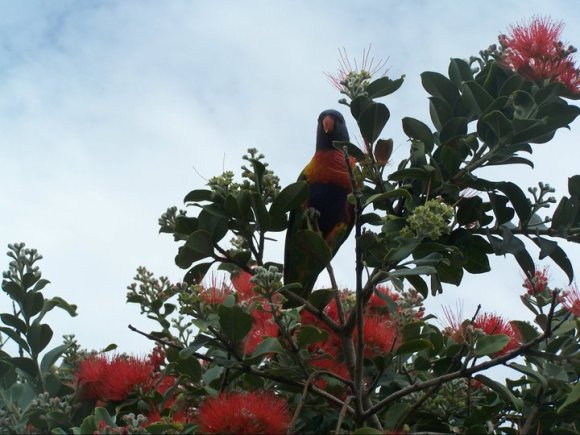
In Adelaide my world is characterized by immediate and extended family, my doggie, and native birds with distinctive birdsong that you will not hear anywhere else. It is always a great pleasure to arrive in Adelaide back from Japan and be woken early in the morning to a family of cackling kookaburras, magpies, and lorikeets.
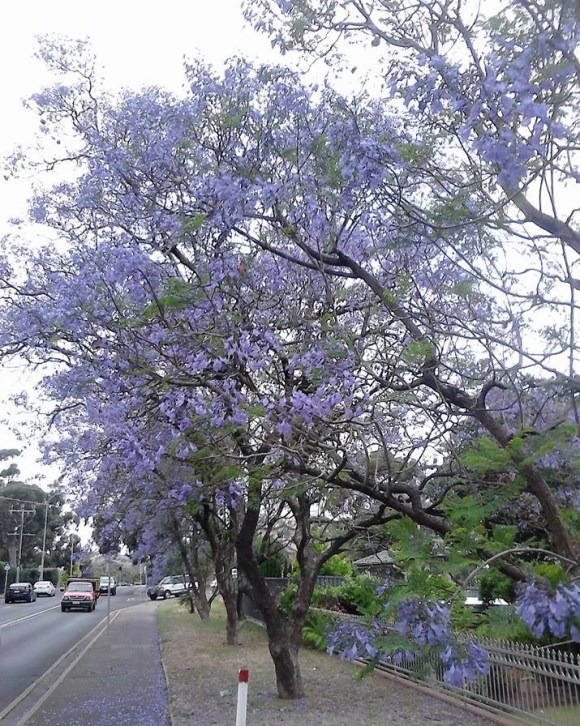
In the older suburbs, the spaces between houses are wide enough that you can forget that you have neighbours and imagine you are living in the country. Japan has taught me to be alert to seasonal change, and has enhanced my enjoyment of the Australian spring, when I can enjoy golden wattle, bottle brushes, eucalyptus flowers, jacaranda and roses.
It’s gratifying to participate in two different cultures and landscapes as I commute between Japan and Australia. However, each side is pulling my allegiance in a different direction. My colleagues in Japan think that I take off to Australia too often, and my family in Australia tell me it is time to come home. Each side seems to be unaware of how important the other side is to me. I feel guilty that I cannot please both parties, but I can give up neither. I hope the decision will be taken out of my hands. There is a word in Japanese to indicate the struggle between two children when they fight for a toy and neither will let go- toriai – and I feel like that toy which is being pulled in two directions.
It has taken a global pandemic for these two worlds to converge. Protecting people’s health has led to Australia’s international and state borders being closed. International flights have been cancelled. My lifestyle of commuting to Japan has come to an abrupt halt. Social distancing has been imposed. Shops, other than supermarkets and pharmacies, are closed. Most medical appointments are now by telehealth. Meanwhile my employer has entreated me to return to Japan and I feel guilty for refusing, but I am frightened of both the trip and being marooned in a country where I have no family.
A hurried solution to this has been online participation in meetings. This has been facilitated because of sharing a common time zone. If I were in America or Europe I might find myself participating in meetings during the night. My hitherto mutually irreconcilable worlds are finally converging. I have been able to click on a link and hear the familiar voices of Japanese-speaking colleagues from the comfort of my Adelaide sofa, with my faithful doggie at my feet. Never has participation in a meeting been so pleasurable. I can listen to my sweet Labrador’s regular deep breathing, progressing to gentle snoring as she rests, oblivious to this international communication. When I rest my eyes on the computer screen during the meeting I see the familiar Japanese writing, and watch the movement of the mouse as the moderator indicates the progression of the agenda. Meanwhile the intense Australian sunshine forces its way through the slats in the blinds. For the first time I might be able to hear kookaburras competing for my attention during a meeting which is being held in Japan. The hermetic seal between these two worlds over 7000 kilometres apart has been punctured, and I feel a sense of relief that the familiar voices of Japanese colleagues can reach me not only in the southern hemisphere, but also on the southern coast of this Antipodean continent.
Meredith Stephens is an applied linguist in Japan. Her work has appeared in Transnational Literature, The Blue Nib, The Font – A Literary Journal for Language Teachers, The Journal of Literature in Language Teaching, The Writers’ and Readers’ Magazine, Reading in a Foreign Language, and in chapters in anthologies entitled What’s Cooking Mom? Narratives about Food and Family, The Migrant Maternal: “Birthing” New Lives Abroad, and Twenty-First Century Friendship, all published by Demeter Press, Canada.
It was a summer day. The sun was up in the sky. Early in the morning he left for the sea and sat on the shore. There was still a touch of coldness of the last night left in the sands. He cast a look at the tides generated by the wind that blew over the othernight.
The water was shallow and under the mud flat sea insects had dug their burrows. And if someone unmindfully stepped on the mud flat, he would sink knee-deep beneath the ground. Some sixty yards from the sea there stood a few trees, some date palms and a big neem tree. In the morning sun it would cast its shadow as far as to the sea-brink. But as the day began to unfold the friendship between its shadow and the sea would start to fade.
He came and sat by the very shadow. Later when he looked around he found the shadow had long left him. Beyond the neem tree there was a pyramid of sands. From one angle its top looked like the peak of a volcano. Like a dyke, it enclosed some date palms in its depth. Once a beautiful garden, now it lay in utter ruins. There was even no trace of the fence left there. It had become a sort of hideout from the surrounding world.
On the left, a narrow trail passed through the sand. As people continuously treaded on the sand, some of the grains attained cohesiveness and the others flew drifted in the wind. Thus it took the shape of a trail which appeared like the parting of a woman’s golden hair. On the left side of that trail there was a well where people would come to fill their empty pitchers and pots.
All of a sudden a whisper seized his attention. He lifted his eyes up and caught sight of a blind man emerging from the right side of the pyramid. He was led by a girl who held one end of his walking stick. He shifted his concentration to the blind man rather than to the girl. The girl led the blind man to the sea and an hour later they were back on their way home.
He too got up and made his way home behind them. Midway through he exchanged greetings with the duo. At last he was out of the sands. He found it quite difficult to move forward because the trail was littered with grains of sands.
When he walked past the well, his heart skipped a beat. It was the second old stone-walled well located at the farthest end or you can say at the beginning of the sands. He recalled something but soon jerked his head to cast that old memory off his mind but it refused to budge. He felt burning sensation in his head and eyes.He touched his body to determine if he had fever. He was not sick at all. He quickened his steps so that he could reach his destination at the earliest. Suddenly, he whispered to himself:
“It is nice that you go home but nobody lives there. You will be all alone there as well.”
He was right. Nobody lived at his house save himself. He had a good friend but he spent the whole day working outside. At night he would come and they talked together but he too couldn’t give him company for a longer time because he had to look after his family. Again he said to himself: “Loneliness is beautiful but only when one needs it. Likewise it is nice to have someone’s company when one grows sick of loneliness. Today I feel as if I’ve grown sick of my loneliness. I think I should feel such weariness only after the sunset but today it has happened otherwise. My mind has been stormed in the morning.”
He kept moving ahead, wondering. Midway through, an acquaintance ran into him and greeted him. He couldn’t recognise him. He moved fast as if someone had been waiting him for quite some time and any sort of delay would lead to a huge loss.
He slowed his pace and even halted for a while but soon resumed to move forward with quick steps. He was some hundred steps away from his house when his eyes caught someone standing at the corner of the boundary wall that enclosed his house. He bowed his head and began to move with rather slow steps. As he drew nearer, he raised his head and found a woman was looking for something by the wall. He recognised her. Every day she would walk past that way to fetch water. He thought she might have lost her nose pin or ring. He asked her:
“What are you looking for?” “A rupee.” “A note?” “No, a coin.” “So what?” “I’ve lost it.”
He also began to look for it. A moment later he raised his head up and found instead of searching for her lost coin she was gazing at him. He ran his hand into his pocket but couldn’t found any coin there. He turned to her: “I’ve no coin on me. Wait I’ll get you one from my house.” He opened the gate and she followed her in. He searched his coat pocket. She said: “Is there any water at your house?” “What do you mean by water?” “I mean drinking water.” “Yes, there is.” He picked up the glass to fetch her water, but she took it from his hand and said: “I’ll get it myself.” She filled the glass, came back, stood right before him and said: “Please drink.” “I haven’t taken any fatty food in the morning. So, I do not have the urge to drink water.” “It is summer. And in summer days it feels refreshing to drink water. By the way what did you take in the morning?” “A cup of tea.” “What else?” “Nothing else.” “Alright. I’ll bring you some eggs.” “When?” “Tomorrow.” He was about to drink water when she said: “Don’t stand and drink.” He sat on the edge of the cot and said, “But you are standing yourself.” “I’ll sit down.” “May I know your name?” “Mahal.” “Mahal?” “Actually my name is Mahatoon but out of affection my mother used to call me Mahal.” “Are you married?” “Yes.” “Any children?” “I’ve three children but it has been the fifth year since my husband went on a journey.” “Is he angry with you?” “No he is not. But once left he never turned back. Occasionally he sends us money but…” “But what?” “Nothing.” “You didn’t ask me my name.”
“I know you since the day you came to live in our neighbourhood. I also noticed your friend who visited you and you kept talking to each other till the midnight. After midnight, you would go out. I wondered where you went at those late hours of the night and when you would return home.”
“But I think you don’t have to do anything with my routines.”
“One night I kept waiting for you and saw you come back at dawn.”
“So, you have been keeping a watch over me!”
“Do you enjoy being alone?” “Why?” “Just asking.” “What do you think?” After a brief silent she said: “You are not alone anymore.” “Yes not at least at this very moment.” One and half hour later she got up to leave. He said: “You didn’t even drink water.” “You drank and I got my thirst slaked.” She was about to strolled out of the door when he turned to her: “But you didn’t take your coin.” “Which coin?” “The one I said to give you in recompense.” “Oh you mean that lost coin?” “Yes.” “I got it.” She scurried forward and at the door she turned back and said: “I’ll bring you some eggs at sunset.” After she left he was amazed. He began to ponder and whispered to himself: “She found the coin? When? Where? In this house?” A while later something struck to his mind and he smiled and spoke loudly: “Hmm! The lost coin!”
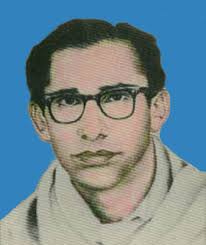
Syad Zahoor Shah Hashmi (1926-78) is known as the pioneer of modern Balochi literature. He was simultaneously a poet, fiction writer, critic, linguist and a lexicographer par excellence. Though he left undeniable marks on various genres of Balochi literature, poetry remained his mainstay. With his enormous imagination and profound insight he laid the foundation of a new school of Balochi poetry especially Balochi ghazal which mainly emphasises on the purity of language and simplicity of poetic thoughts. This school of poetry subsequently attracted a wide range of poets to its fold. He also authored the first ever Balochi novel ‘Nazuk’ and compiled the first comprehensive Balochi-to-Balochi dictionary containing over twenty thousand words and hundreds of pictorial illustrations.
Fazal Baloch is a Balochi writer and translator. He has translated several Balochi poems and short stories into English. His translations have been featured in Pakistani Literature published by Pakistan Academy of Letters in 2017 and Silence Between the Notes — the first ever anthology of Partition Poetry published by Dhauli Books India in 2018. His upcoming works of translation include Why Does the Moon Look So Beautiful? (Selected Balochi Short Stories by Naguman) and God and the Blind Man (Selected Balochi Short Stories by Minir Ahmed Badini).
in the flesh and the temptation of the wood coffin.
4
He who comes digging for forefathers and lost
cities shall tremble at our conquest and return to
house of darkness, referred hereafter as hell.
5
Punish them with your touch. Tease them
with your shadow. Crawl in their nightmares.
Appear as rarely as God among sinners.
6
And when you take an avatar, infest his cup-
board and attic with the thousand children you
beget. Fear shall have no face.
7
The army of your lineage shall be the
messenger of colour. Fire, soil, and life beneath
shall have your shade.
8
Eat the sleep of men and women from whose
country, the messenger never returns.
9
Bore holes in their books and clothes. Plough their
notions until they turn into roads that lead nowhere.
Aditya Shankar is a Pushcart and Best of the Net nominated Indian poet, flash fiction author, and translator. His work has appeared in international journals and anthologies of repute and translated into Malayalam and Arabic. Books: After Seeing (2006), Party Poopers (2014), and XXL (Dhauli Books, 2018). He lives in Bangalore, India.









 Borderless