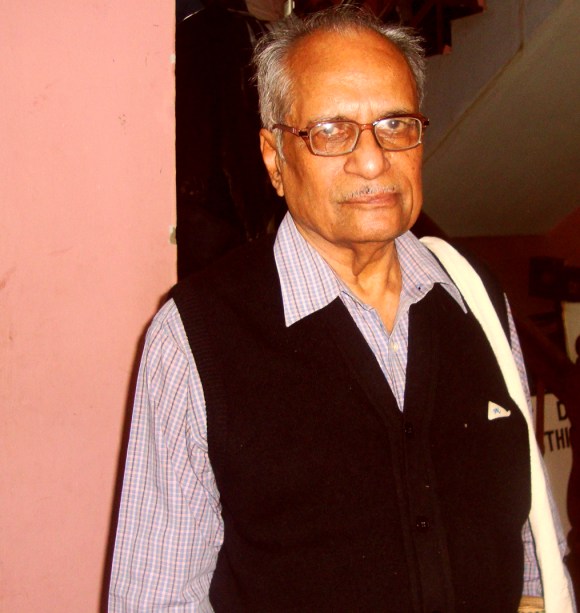
Bibhuti Patnaik (born: 1937). Photo provided by Bhaskar Parichha
Bibhuti Patnaik’s literary career unfolds like a long river—steady, persistent, and quietly transformative—running through the landscape of Odia literature for more than six decades. From the late 1950s onward, he wrote with a rare combination of emotional honesty and narrative discipline, giving voice to the evolving inner lives of middle-class Odias.
His writing emerged at a time when Odia literature was searching for a new expression after Independence, trying to reconcile classical traditions with modern psychological sensibilities. Into this space stepped a young writer who was not concerned with ideology or grand social systems, but with the stirrings of the human heart.
A defining feature of Pattanaik’s oeuvre is his meticulous representation of the Odia middle class. His novels, whether Aswamedhara Ghoda (Horse of Aswamedha), Sesha Basanta (Last Spring), or Prathama Sakala (First Dawn), foreground the ethical tensions, emotional fragilities, and moral negotiations embedded in quotidian life.
What distinguished Patnaik from many of his contemporaries was his unwavering commitment to emotional realism—a faith that the complexities of human relationships, especially love and desire, could carry as much literary weight as any political or social theme.
In his earliest works, Patnaik revealed a sensitivity to the fragile moral dilemmas that shape everyday life. His characters were not heroic figures or tragic archetypes; they were ordinary men and women negotiating expectations, impulses, and the confines of middle-class respectability. His prose, clean and unadorned, immediately established a new relationship with the reader—intimate, direct, and unpretentious.
For Odia readers of the 1960s, accustomed to more stylized narrative forms, this was refreshing. Young readers in particular embraced his novels, drawn to a writer who articulated emotional experiences with clarity and sincerity. Even at this early stage, Patnaik showed a remarkable ability to create female characters with depth and interiority, granting them agency in a literary culture that often placed women on symbolic pedestals rather than treating them as independent subjects.
As Patnaik moved into the 1970s and 1980s, his literary world expanded. The emotional tensions that shaped his early novels did not disappear, but they began to encounter new social realities. Odisha was changing—economically, culturally, and morally—and Patnaik’s novels became sensitive mirrors to these shifts. Urbanisation, job insecurity, the erosion of joint families, and the anxieties of modern aspiration found their way into his fiction.
He continued to write about intimate relationships, but these relationships were now embedded in broader pressures: generational conflict, economic burdens, and shifting gender dynamics. His characters struggled not only with their feelings but also with the demands of a changing society. Through this evolution, Patnaik maintained a narrative clarity that made his writing accessible to a wide audience, allowing him to be both widely read and critically noticed.
The 1990s marked a turning point in his career. While he continued to produce fiction, Patnaik increasingly turned his attention toward literary criticism and self-reflection. His essays—fearlessly honest, sometimes provocative—revealed a writer deeply engaged with the ethical health of the literary world. He wrote about the politics of awards, the failures of institutions, the erosion of literary standards, and the compromises that authors often make.
These writings unsettled the comfortable spaces of Odia literary culture but also enriched the discourse by demanding accountability and sincerity. At a time when many writers preferred diplomatic silence, Patnaik chose frankness. This choice, while controversial, made him an indispensable voice in understanding the dynamics of Odia letters in the late twentieth century.
His memoirs and autobiographical writings in the 2000s and 2010s further broadened his contribution. They are not mere recollections of a long literary life but important historical documents that offer insight into the personalities, politics, and conflicts of Odisha’s literary circles. The candour with which he narrates his experiences—sometimes tender, sometimes critical—makes these works stand apart in Odia autobiographical literature.
They reveal a writer who, despite being celebrated, never hesitated to critique himself or the milieu in which he worked. The tone of these later writings is marked by a late-style simplicity: calm, distilled, and enriched by decades of observation. Unlike many of his generation who grew stylistically heavier with age, Patnaik’s prose became lighter, clearer, and emotionally more resonant.
One of the most enduring features of his work is his representation of women. Throughout his career, Patnaik returned again and again to the complexities of female experience—women torn between personal desire and social expectation, women who resist, women who compromise, and women who assert themselves. His empathy for his female characters is evident not in idealisation but in the dignity he grants to their doubts, choices, and vulnerabilities. In a literary tradition long dominated by male narratives, this alignment with women’s emotional truth marked a significant departure and set a model for subsequent writers.
What ties Patnaik’s diverse phases together—novels, essays, memoirs—is an ethical thread. At the heart of his writing lies an insistence on sincerity: sincerity in feeling, sincerity in storytelling, sincerity in literary practice. His criticism emerges from the same commitment that shaped his fiction—the belief that literature must remain close to life, uncorrupted by pretension or institutional manipulation. Even when he critiques, he does so with the conviction that honesty is necessary for a healthy literary culture.
Today, looking back at his multi-decade journey, it becomes clear that Bibhuti Patnaik’s importance extends far beyond his widespread readership. He shaped the emotional vocabulary of several generations of Odia readers. He penned some of the most psychologically astute portrayals of love and moral conflict in Odia fiction.
He exposed the fissures in literary institutions through his bold essays. And he preserved the history of Odia literary life through his memoirs. His evolution—from a young chronicler of quiet emotions to a mature critic of cultural politics—mirrors the transformations of post-Independence Odisha itself.
Bibhuti Patnaik’s legacy is defined by this continuity of purpose. Whether writing a tender love story or a sharp critical essay, he remained committed to the integrity of human experience. His work endures because it speaks, with remarkable clarity, to the fears, hopes, and contradictions that shape ordinary lives.
In doing so, he carved a place for himself as one of the most authentic voices in modern Odia literature—unshakeable in sincerity, unafraid of truth, and unforgettable in the emotional clarity of his storytelling.
.
Bhaskar Parichha is a journalist and author of Cyclones in Odisha: Landfall, Wreckage and Resilience, Unbiased, No Strings Attached: Writings on Odisha and Biju Patnaik – A Political Biography. He lives in Bhubaneswar and writes bilingually. Besides writing for newspapers, he also reviews books on various media platforms.
PLEASE NOTE: ARTICLES CAN ONLY BE REPRODUCED IN OTHER SITES WITH DUE ACKNOWLEDGEMENT TO BORDERLESS JOURNAL
On the sidewalk of his existence,
he signs a lease for his coming days.
He earns a license of freedom
that puts him above the king of kings.

He’s a drifter waiting for the tide to turn
but happy if it never does
cause what he feels is the envy of people,
what he does not have is their fear.
On the surface, they pity him.
In the depths of their soul, they envy him.

Their expectation leads to disappointment.
Their defeat sounds like confinement.
His truth smells like liberation
and his liberation provides him with freedom.

Fortunate are those who have very little,
for they may not know that they own the world.
Poor are those who have a lot,
for they may not know that they own nothing.

He sits on the sidewalk
lays back on his blanket,
his pillow is deeper than the ocean.
He watches the stars,
wishes the kings could share his view,
and wonders if the tide will ever turn.
Ramzi Albert Rihani is a Lebanese-American poet who resides in Maryland, USA. His poems have been published in the US, Canada, UK, and Ireland. He received the 2024 Polk Street Review first-place poetry award.
PLEASE NOTE: ARTICLES CAN ONLY BE REPRODUCED IN OTHER SITES WITH DUE ACKNOWLEDGEMENT TO BORDERLESS JOURNAL
Nun chai, traditional pink tea from Kashmir. From Public Domain
The father sat across from me in a small tea shop in Srinagar, stirring his cup of nun chai. His face was lined with worry. His daughter had just enrolled in a well-known coaching centre, aiming to crack the NEET exam[1]. “The fees are high,” he said quietly. “We’ve had to dip into our savings. But what choice do we have?”
In Kashmir, the pursuit of higher education has led to a boom in private coaching centres. These institutions promise success in competitive exams, which have become almost essential for aspirants to institutions of higher learning. But this trend has brought significant financial and emotional burdens to families and students alike.
Over the past decade, Kashmir has seen a rapid increase in private coaching centres, especially in Srinagar. The cost of enrolling in these coaching centres is substantial. Fees can range from Rs50,000 to Rs150,000 per year, depending on the course and the institution’s reputation. For many families in the region, this represents a significant portion of their annual income. The financial strain is even greater when multiple children in a family seek such coaching, leading to difficult choices and sacrifices.
In theory, competitive exams are merit-based. But in reality, access to quality coaching has become a deciding factor. This has led to concerns that the system unfairly favours the wealthy. Children from less privileged backgrounds are often unable to afford the coaching necessary to compete, widening the educational divide.
The intense pressure to succeed in these exams takes a toll on students’ mental health. The relentless pursuit of high scores, coupled with the fear of failure, has led to increased anxiety and stress among students. In extreme cases, this pressure has resulted in self-harm or suicidal tendencies, highlighting the tragic dimensions of this educational race.
Another casualty of the coaching culture is the traditional schooling system. Many students attend school just for attendance and exams. The ‘real studying’ is perceived to take place in coaching classes. Some students even drop out of regular schools entirely, enrolling in “dummy” schools that allow them to focus solely on coaching. This shift undermines the holistic development that traditional schooling aims to provide.
Coaching institutes have turned into lucrative businesses. They hire aggressive marketing teams, use toppers’ faces on billboards, and charge extra for “elite” batches. Some teachers in these institutes earn significantly more than professors in universities. The focus has shifted from education to profit, raising concerns about the commercialisation of learning.
The rapid growth of private coaching centres has posed challenges for regulators. Concerns have been raised over the lack of a proper mechanism to regulate fee structures and ensure basic facilities for students. The absence of effective oversight has allowed some centres to prioritize profit over quality education, further exacerbating the issues faced by students and parents.
Addressing these challenges requires a multifaceted approach:
1. Strengthening Public Education: Improving the quality of education in public schools can reduce the dependency on private coaching. This includes enhancing infrastructure, updating curricula, and providing continuous teacher training.
2. Affordable Alternatives: Promoting online educational platforms that offer affordable or free resources can provide students with additional learning support without the hefty price tag associated with traditional coaching centres.
3. Mental Health Support: Integrating counselling services within schools and coaching centres can help students manage stress and build resilience, ensuring their well-being alongside academic pursuits.
4. Community Awareness: Educating parents and students about diverse career paths and the importance of holistic development can shift the focus from a narrow definition of success to a more inclusive one.
For now, parents will keep paying. Students will keep pushing. Coaching centres will keep expanding. And the question will remain—are we cracking an exam, or emptying our bank account?
The burgeoning private coaching industry in Kashmir reflects the aspirations and anxieties of a society striving for educational excellence. Balancing these ambitions with financial realities and mental well-being is crucial. As the region moves forward, a collective effort from educators, policymakers, parents, and students is essential to create an equitable and supportive educational environment.
.
[1] The NEET (National Eligibility cum Entrance Test) is a national entrance examination in India for admission to undergraduate medical programs.
Gowher Bhat is a published author of both fiction and non-fiction, a columnist, freelance journalist, and educator from Kashmir. He writes about memory, place, and the quiet weight of the things we carry, often exploring themes of longing, belonging, silence, and expression. A senior columnist in several local newspapers across the Kashmir Valley, he is also an avid reader and book reviewer. He believes the smallest moments can carry the deepest truths.
.
PLEASE NOTE: ARTICLES CAN ONLY BE REPRODUCED IN OTHER SITES WITH DUE ACKNOWLEDGEMENT TO BORDERLESS JOURNAL
Not Ptolemy’s Kasperia, nay, not Kashyap Mar – Kasheer is the abode of irrevocable loss. Homes razed to ground by centuries of betrayal: we stand as mute specters – the ruins and I.
Kalhana, your word is lost! Spiritual defeat has finally come to pass. The era of pit dwellers and sun worshippers is gone, And now the faithless grave worshippers abound.
“In time past, we were; in time future, we shall be; Throughout the ages, we have been,” quoth Laila Arifa. I shove back the diggers, frantic to cover the long-lost city buried in my mind.
Kasheer might have forgotten the monster Jalodbhava, Were it not for the wine bottles dangling from barbed wires. I had happily lost my memory of you, until It was revived by the fish bones on mountain tops.
The mythical, the legendary -- that Kasheer is non-existent. The snow endures longer than the memory of the dead. It’s getting way too dark. Tell me a new story– of Kasheer – the land reclaimed from the sea of sighs.
From Public Domain
Glossary
Kasperiais the ancient Greek name of Kashmir as mentioned by Ptolemy
Kashyap Mar is he abode of Kashyap, Kashmir, in Kashmiri
Kasheer is Kashmir in Kashmiri
Kalhan wrote Ratnagiri, an account of the history of Kashmir
Laila Arifa is a 14th century poetess who wrote in Kashmiri
Jalodbhava or Waterborn was a mythical demon who tormented the inhabitants of Lake Satisar in Kashmir. He was destroyed by the joint efforts of the sage Kashyap, Parvati and Vishnu. His destruction destroyed the lake and led to the formation of Srinagar, the current capital of Kashmir.
.
Saba Zahoor, an engineer from Kashmir and self-styled peasant poet, views poetry as a portal to alternate realities and has been published in several literary outlets.
.
PLEASE NOTE: ARTICLES CAN ONLY BE REPRODUCED IN OTHER SITES WITH DUE ACKNOWLEDGEMENT TO BORDERLESS JOURNAL.
Do people who come here ask you about the jinn?’ My question lingered in the air for a bit. I was in the courtyard of a medieval mosque. At nightfall, this monument is entrancing, with its white marble dazzling against the red sandstone and the medallions on the spandrels of its pishtaq (arched entrance) appearing as glaring white eyes.
‘That’s all they mostly ask…’ said the guard as he began to dig through his pockets, looking for a key upon my request. ‘But I have my guru’s blessings, nobody has harmed me! And see this, that very guru allows me to find everything.’ He triumphantly raised his hands and dangled the keys which would open the perpetually locked gate of the graveyard that hosts the supposedly ‘haunted’ tomb adjacent to the mosque.
I remember how strong the scent of the devil’s tree, Saptaparni, was that evening. This is the fragrance of October in Delhi, playing its part as the harbinger of winter. The intensity of the aroma was unsurprising since I was surrounded by trees as I made my way through the Mehrauli Archaeological Park. The moon was aglow, and so was the Qutb Minar, (Fig. 23) India’s tallest minaret that oversees this part of the city like a powerful ancestral force.
There have been times aplenty when I have been warned to not come to this park after sunset, not only because of its forested environs but also for the unseeable forces who are believed to inhabit it. ‘At least tie your hair…’ I am told by the flower-sellers who sit in rows across the narrow road outside one of the entrances to the park. My hair, if left untied, is an invitation for the menacing jinn to follow me, and not only that, they would also leave an imprint across my cheeks: ‘Beware…they will slap you!’
Jinn are ‘intermediary’ and complex beings who are made of smokeless fire, unlike humans, who are made of clay. In Islam, both humans and jinn are subject to the Revealed Law and will be held accountable for their actions on the Day of Judgement. Like humans, jinn are considered ‘responsible beings’ as they possess the freedom to choose how they lead their lives. However, they also have unique characteristics: shape-shifters, invisible entities, and magical trickery. While the jinn do possess these abilities, their power serves as a test, and they will face consequences if they misuse it to terrorise people.
But it is not that these jinn float and reside in the many niches that this historical park is dotted with. There is a particular place where they have found refuge, at the tomb and mosque of Jamali Kamboh—a Sufi, courtier, poet, emissary, and globe-trotter. But if you ever find yourself in Mehrauli and ask anyone about him, you would never hear his name being taken alone. It is always in companionship with Kamali, the identity that local lore has given to the mystery man that Jamali is buried next to.
Together, Jamali-Kamali are found in a single-storied mausoleum as magnificent as the meaning behind Jamali’s name: the one who inspires beauty. Resembling a gem-box, it is even protected like one since special permission is required to see it from the inside, though legends will also have you believe that it must also be kept that way so as to not provoke the wrath of the jinn. The monument that is always accessible in this complex is the mosque, also built by Jamali, and to its north is where his tomb lies, in a cemetery surrounded by other open-air graves.
But on that October evening, my request to be let inside had been granted. As the guard reached the graveyard’s gate, the locks clinked and clanked, and I wondered how I would make a rather frustrating character in a horror movie, much like those who are aware of the consequences and yet become responsible for incurring the curse of the Mummy. But I didn’t have to dwell on this thought for too long for by then, the gate had been opened, and I marched purposefully towards Jamali-Kamali.
A chained wooden door shields this square tomb. To get a glimpse of the interiors, one has to walk to its northern and eastern sides which boast beautiful sandstone jalis (latticed window screens). To its north I went, lured by the devil tree’s scent marrying the aroma of the incense sticks that had been lined right under the screen. The guard told me that somebody had come earlier to the tomb to pray and had lit those sticks. ‘But even when there are no agarbattis here, I still always get a whiff of them,’ he said.
I peeked in through the screen and there they were in their shiny graves, right next to one another—Jamali and Kamali. They rest under a domed ceiling that gleams with magnificent motifs and its edges sing the verses of Jamali. It appears as if these two spend their afterlife at peace under an ornate galaxy of red, white, and blue.
Having beheld its magic, it was puzzling. How does something so precious come to attain the reputation as one of the city’s most haunted sites? But there were more questions. About its uniqueness: how does such a pioneering sixteenth-century tomb, spanning the period between the decline and rise of two dynastic epochs, find itself in Delhi’s first city? About its multiple identities: how can this monument be a place of horrors and simultaneously a haven of sanctity and an oasis for lost histories? And inevitably, about its enigma, not only due to the jinn, but also because of Kamali: who really was this man, sometimes seen as Jamali’s pupil, at other times his friend, and often, his lover?
It is through the untangling of these various threads which tie Jamali-Kamali together that we may reach closer to understanding what makes this place so astonishing. And thus, the story can only begin at one place…
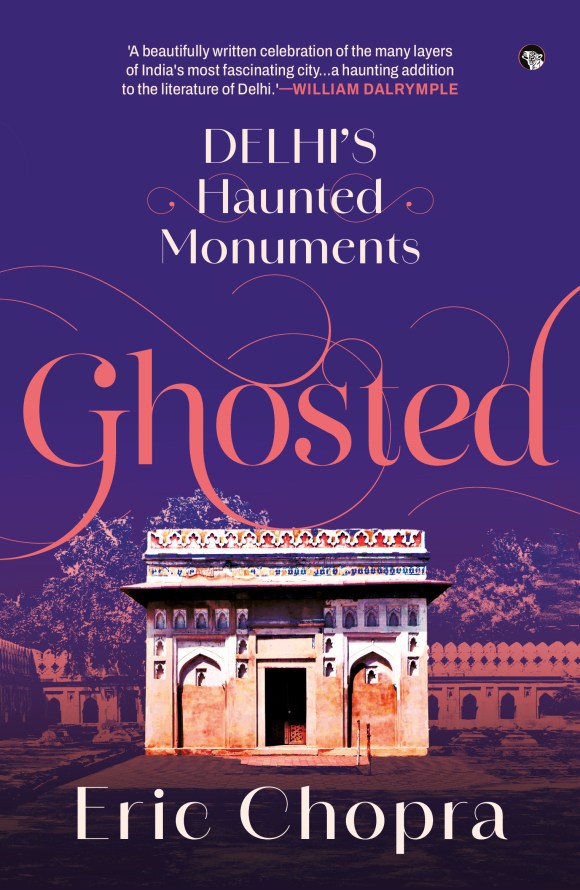
(Extracted from Ghosted: Delhi’s Haunted Monuments by Eric Chopra. Published by Speaking Tiger Books, 2025)
About the Book
Delhi is haunted—by its ghosts, its ruins, and its unending capacity for rebirth. In the shadow of medieval mosques and Mughal tombs, the past refuses to stay buried. Saints, Sultans, poets, and lovers—all linger in the city’s imagination, their stories shaping how we remember what once was.
In Ghosted, historian and storyteller Eric Chopra journeys through the capital’s most beguiling sites—Jamali-Kamali, Firoz Shah Kotla, Khooni Darwaza, the Mutiny Memorial, and Malcha Mahal—to unearth a Delhi that exists between worlds: a palimpsest where Sufis bless kings, jinn listen to grievances, and begums occupy dilapidated hunting lodges. What begins as a search for Delhi’s haunted monuments becomes a meditation on why we are drawn to the dead and how ghost stories become vessels of collective memory.
Blending archival research with folklore, myth, and reflection, Chopra paints an intimate portrait of a city forever in dialogue with its former selves. Through invasions and rebirths, he reveals that Delhi’s spirit resides not just in its monuments but in the unseen presences that linger among them.
Ghosted is a lyrical, haunting journey through the city’s spectral landscape— an invitation to listen to what its echoes tell us about memory and identity.
About the Author
Eric Chopra is a public historian, writer, media creator, podcaster, and the founder of Itihāsology, an inclusive platform dedicated to Indian history and art. He leads a range of heritage experiences at museums and monuments and designs history-musicals in which he performs as a storyteller. Chopra is the co-host of the For Old Times’ Sake podcast and Jaipur Literature Festival’s Jaipur Bytes podcast. He also writes and curates for numerous festivals and events focused on history, literature, and the performing arts.
.
PLEASE NOTE: ARTICLES CAN ONLY BE REPRODUCED IN OTHER SITES WITH DUE ACKNOWLEDGEMENT TO BORDERLESS JOURNAL
A river bridge in Minneapolis, the ragged sky all cloaked in river mist.
The only man to make the Furies weep plaintively sings; he can no longer sleep.
In verdant meadows high above Rhodope, shades cling to cypresses with little hope.
A backward glance in Avernus’s valley left us these songs and ruined Eurydice.
Twice dead is dead; though hyacinths still bloom, the rooks will leave their shadows on the moon.
EARLY AUTUMN
A northern flicker kicking up small clouds
of dust and needle duff beneath the blue spruce
in the yard. Some sparrows flit away from the lone
land-foraging woodpecker. I’ve seen the bird before,
I’d like to say, but it’s probably not the one
that drummed the soffit of our roof so many
mornings in a row a couple springs ago.
ANOTHER AUTUMN
That saw-whet owl in the boxwood along the banks of Ecorse Creek.
Woodland sunflowers yellow above the mud, their green leaves glistening
with water. October rain has turned to October sun.
A culvert sings with run-off. I wonder if the built world will reclaim me.
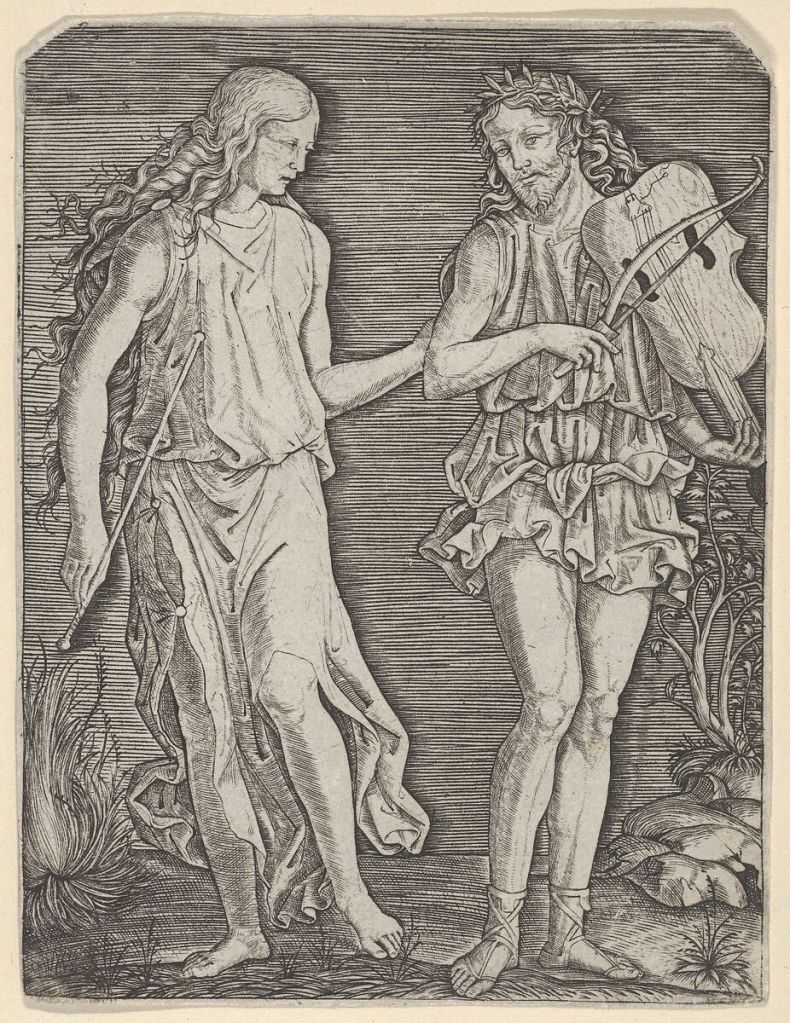
Greek Mythology: Haemus and Rhodope turning into Mountains as they were punished by Zeus for calling themselves Zeus and Hera. Greek Mythology: Eurydice dies of snakebite as she was about to be wed to her beloved Orpheus. From Public Domain
Cal Freeman is the author of the books Fight Songs, Poolside at the Dearborn Inn, and The Weather of Our Names. He lives in Dearborn, MI, and teaches at Oakland University.
.
PLEASE NOTE: ARTICLES CAN ONLY BE REPRODUCED IN OTHER SITES WITH DUE ACKNOWLEDGEMENT TO BORDERLESS JOURNAL
“Everyone should believe in ghosts at Christmas. It’s a tradition. Just think of A Christmas Carol, for instance.”
“I don’t care. I still don’t believe in them.”
“So you don’t believe in yourself?”
“Don’t be silly,” said the phantom, “a spook isn’t the same thing as a ghost. Not the same thing at all…”
“I was a ghost once,” sighed the vampire.
“What happened?” cried the ghoul.
“Well, it was like this…” began the vampire, and he proceeded to tell a garbled account of how he was once a poor traveller in an earlier century who was attacked by bandits in the forest, then his spirit rose out of his body and proceeded to haunt the bandit chieftain, making the rogue’s life a misery by possessing him and forcing him to act against his will.
The skeleton rapidly tapped an impatient foot.
“Shh!” hissed the ghoul, “you sound like a xylophone, and I am trying to listen to the vampire’s narrative.”
“Yes, but he’s drawing it out a bit, isn’t he?”
“That’s his privilege, of course.”
“How come he gets your respect and I don’t?”
“He’s a Count, but what are you? Without a shred of flesh on you, I’d say you were merely a subtraction.”
“That’s a really bad play on words,” sniffed the skeleton.
“So what? It’s a good insult…”
“Stop bickering!” growled the werewolf.
The vampire was oblivious to all this fuss. He was explaining how his ghost possessed the bandit chieftain by entering into his brain through his nose, then he would force the miscreant to dance and sing in a very silly manner and do all sorts of humiliating things. The other bandits soon abandoned their leader in dismay and went elsewhere.
“Unfortunately,” continued the vampire, his fangs gleaming in the pale moonlight, “I got trapped inside his brain. I lost my way among the tangle of synapses and couldn’t get back out!”
“That sounds scary!” remarked the phantom.
The vampire nodded and his cape swished in the night breeze. “It was absolutely terrifying, I can assure you. I rushed hither and thither, trying to escape my prison, but I was stuck for good. So, I decided to accept my fate and things got easier. I settled in and was gradually absorbed by the host body, until I became the bandit. Once this happened, I ventured forth and returned to my old ways, robbing travellers in the forest. I was satisfied. But one dark night I chanced on the wrong victim.”
“Who was it?” asked the spook.
“A werewolf! And he attacked and bit me!”
The werewolf looked sheepish. “Don’t swivel your heads at me, I had nothing to do with it, honestly.”
“No, it wasn’t you,” said the vampire.
“Maybe one of my cousins?”
“I have no idea who it was, but I only just managed to escape his teeth and claws before he devoured me, yet I was now infected, and so I turned into a werewolf myself every full moon. I guess it was fun, in a way, but finally I was tracked down by a monster hunter.”
“Did he shoot you with a silver bullet?”
The vampire nodded. “Yes, he did. But when a werewolf dies it turns into a vampire, a fact that humans keep forgetting, and I soon got revenge on him! And that’s who you see before you now: a vampire who was once a werewolf who was once a bandit chief who was once a ghost who was once a poor traveller…”
There was a long pause. The spook cleared his throat.
“So, you believe in ghosts then?”
The vampire clucked his tongue. “Of course!”
“I still don’t,” said the spook.
“You don’t believe what happens to be true?”
“No, I don’t. Why should I?”
The spook and vampire glared at each other. Before they started to bicker seriously, the phantom laughed to lighten the mood and said, “I knew a man who was the opposite of that.”
“The opposite of what?” prompted the ghoul.
The phantom adjusted his ectoplasm.
“Opposite in attitude, I mean. He had no evidence about the existence of ghosts, but he was a firm believer in them. His friends were sceptics and mocked him and so he needed to obtain proof to silence them. But in fact, he required that proof for himself even more. His name was Mr Gaston Gullible, and he did everything possible to meet a ghost. He slept in old churchyards, went for midnight walks in lonely forests, used Ouija boards in the hope of contacting the departed.”
“All without success?” asked the werewolf.
The phantom rolled his insubstantial eyes in his wispy sockets, nodded and sighed. “Nothing ever worked.”
“That’s a shame,” remarked the skeleton.
“One night, it was Christmas Eve in fact, he was sleeping in his bed when the curtains began swishing. The window wasn’t open, there was no breath of wind in his room. The rustling woke him and he sat up and blinked in the gloom and when his eyes had adjusted he saw that the curtains had bunched themselves into the shape of a person, the shape of a woman, and she raised a fabric arm and pointed directly at him.”
“What did he do?” cried the werewolf.
“He died of fright and slumped back onto the bed. Then the ghostly woman approached him and said, ‘I have waited centuries to meet the right man. You will be my husband in the next world,’ and his ghost rose from his body. She was ready to embrace him, but he shook his head and brushed past her. ‘Sorry,’ he said, ‘but I have stopped believing in ghosts. I believed in them all my life without evidence and I’ve finally come to the conclusion that I was wasting my time. I am now a sceptic, and I don’t believe in you,’ and he passed through the wall and was never seen again.”
“That story had a twist ending,” said the ghoul.
“Yes, it did,” agreed the phantom.
The spook said, “I’ve got a twist ending too.”
“I don’t understand—”
“Would you all like to see it?”
The vampire, werewolf, ghoul, phantom and skeleton exchanged glances. Then they said together, “Why not? Go ahead.”
The spook took a deep breath, extended his thin multi-jointed arms and started spinning. He spun faster and faster, became a blur, a spiral of force, a miniature tornado. Then he whirled away through the trees, laughing and crackling with blue thunderbolts.
“Merry Christmas!” he cried as he vanished.
The others shook their heads. The skeleton shook his head so vigorously that it fell off and he had to bend down to pick it up.
“I didn’t anticipate that,” admitted the phantom.
Rhys Hughes has lived in many countries. He graduated as an engineer but currently works as a tutor of mathematics. Since his first book was published in 1995 he has had fifty other books published and his work has been translated into ten languages.
.
PLEASE NOTE: ARTICLES CAN ONLY BE REPRODUCED IN OTHER SITES WITH DUE ACKNOWLEDGEMENT TO BORDERLESS JOURNAL
Some mornings, the air feels rehearsed. The sun rises on cue. Even my breath sounds like someone else’s prayer.
I want something less tidy — a god with a scar, a truth with bad grammar.
What is this ache that won’t name itself? It hums under the skin, a small rebellion against stillness.
I’ve tried silence. It behaves well until it starts to echo. I’ve tried love. It arrives barefoot, then asks for shoes.
Still, something in me keeps choosing the risk of aliveness — the heartbreak, the astonishment, the tremor in the voice that says nothing, but means everything.
Maybe that’s enough — this pulse that refuses to explain why it’s still pulsing.
Annwesa Abhipsa Pani is a poet, a Senior Manager in Organisation and People development and a student of English Literature based in Pune. Her work explores silence, belonging, and the delicate negotiations between inner and outer worlds. Her poems often linger at the intersections of tenderness and restraint, drawing from everyday moments to uncover quiet revelations.
.
PLEASE NOTE: ARTICLES CAN ONLY BE REPRODUCED IN OTHER SITES WITH DUE ACKNOWLEDGEMENT TO BORDERLESS JOURNAL
My spouse was chopping vegetables in the open kitchen, preparing for an evening soup. I was in a hurry to have a quick shower in the meantime. Picking up a fresh towel from the clothesline, I rushed to the bathroom. When I tried to open the door, I found it shut. Through a small gap I peeped in just like that. The sound of water gushing forth reached my ears – along with a faintly audible humming strain of a popular Hindi film song. I pushed it hard, then harder, and finally I realised it was bolted. The sound of music and water stopped ringing in my ears. All I heard was a distinct click of the door lock and it opened on its own. Nothing moved. Nobody emerged. Nothing appeared in sight. But the creaking sound of the flush door created an aura of suspense. I stepped inside and looked around carefully like a cop chasing a killer. The exhaust fan was whirring. The ventilator was half-open. The geyser light was glowing. The floor was wet and the shower was still drizzling. Who was having a shower in the bathroom when there were just the two of us inside the apartment at that time?
I alerted my wife about what had just happened and asked her to examine the spot. She confirmed the presence of a ghost lurking inside the bathroom without moving out of her domain, without a trace of seriousness in her voice. I struggled to maintain my balance on the slippery floor and came out quickly in the fear of getting trapped inside the bathroom with an unfamiliar ghost after another sudden click of the door. When I reached the kitchen, I clutched her hand and sought to know why she had not informed me about the scary entity. Now it was her turn to feel alarmed as she gathered that I was not joking with her all this while. The threat was real and right inside our house.
Clutching my shoulder for physical and emotional support, she held the kitchen knife in one hand and showed the willingness to follow me to the bathroom, fully confident of slaying the ghost by launching a full-frontal attack. I calmed her down and offered a glass of water, to help her regain clarity and focus required to understand the paranormal experience I had just been through. With both of us looking disillusioned after an hour of intense discussion regarding the infiltration of an unidentified entity in our private space, we came to the hasty, premature conclusion that we must vacate this haunted residence or else such encounters would multiply and impact our restful sleep and peace of mind.
This was not the time to argue about permanent solutions. At the earliest, we needed to ferret out the truth and the first brave step in this direction was mine.
We tiptoed to the bathroom. I sang the same lilting song to attract the attention of the invisible bathroom singer. Nothing seemed odd, nothing felt out of place. The door was open. The floor was dry. There was nothing scary. The possibility of a singing spirit residing in this house seemed remote. There were no other residents here and there was no case of murder or suicide recorded in the past. We checked online resources for relevant information about spirits and ghosts – along with their bathing schedules. They were most likely to freshen up in the middle of the night – when the world was yet to wake up from deep slumber.
We tried to remember the names of guests who had visited us in the recent past. But jogging the memory revealed no prime suspects. My wife sprang up with a sudden flashback. She remembered her mother talking about spirits being sent through air during her last phone call with her, almost a month ago. So, this could possibly be a despatch case from my in-laws who wanted to scare me before my wedding anniversary with a Halloween gift.
The most likely reason for this sinister move was unknown and my wife did not provide any inputs. We settled down to our chores. She returned to her soup preparation while I sat down to write something. While I was typing out a new chapter, I heard the sound of anklets. My wife had not worn anklets for years. I tried to concentrate again but the sound became clearer. I was distracted by it so that I trudged to the kitchen and asked my wife if her anklets had been stolen or gifted to any person. But she stated it was kept in the bank locker.
The sound of anklets and the singing inside the bathroom suggested these were attributes of the same spirit and it was definitely female. Was the spirit sent to distract me from writing? I chose to study the pattern and within a few days I found that the spirit was indeed distracting me in multiple ways whenever I was writing while it did no harm to my spouse. I was the sole target of the spirit.
One morning I was typing on my computer and there was a tap on my left shoulder. I turned around expecting to see my wife but she was not there. And later I remembered she did not have the habit of tapping to draw my attention. Her shrill call would suffice. I went inside the bedroom and found her asleep. So, who tapped me?
The phone rang and my mother-in-law sprang up on the phone screen. I woke my wife up and gave the buzzing phone to her, asking her to find out what disturbed her mother so early in the morning. What was the bad news she was keen to deliver? What was the bad news she was eager to hear — whether the spirit she sent was doing a fabulous job or not? My wife decided to call up later. This made me anxious.
An hour later, she came to me and reported that her mother was worried about my writing life. She wanted to talk to me. During the entire chat, the old lady was focused on me rather than her daughter. There must be a strong reason for this odd behaviour. Even though there were many generic possibilities to consider, we were not aware of those negative ones yet. Getting to know that I was doing fine and the writing gig was progressing well, frustrated my mother-in-law and the enthusiasm in her thunderous voice waned all of a sudden. “Has he completed the new novel?” was her main query that went without an answer.
My wife was speechless, clueless. She reiterated she had not revealed it to relatives yet and wondered how her mother knew. I had not revealed to my wife that only two chapters were done. Besides, how did her mother get to know I was working on a novel, certainly more specific than manuscript? Oh, it must have been conveyed by the spirit tapping my shoulder – the medium of transfer. It must be a powerful one indeed, hired with the specific motive of receiving updates on my writing career.
Pensioners spending a hefty amount on purchasing this entity from a black magic expert was not without an ulterior motive. My wife said she had never discussed the details of my upcoming book as she herself did not know much about it. Even I was stunned to know the specific information from her mother.
I could go mad thinking my wife was an accomplice of my in-laws and ruin my mental peace. The spirit knew not just the chapters but also other details of my book. I asked my wife to wait for some days and see the kind of questions her mother raised. My gut feeling was right. When she called up next, she was curious to know about the plot and the characters – the genre of the book. I had advised her to misinform that I was a writing a horror novel. Though my mother-in-law did not know I had no prowess in this genre, I knew she would not be convinced as the spirit would have revealed the actual content. I deleted the working title of the novel from my computer and gave it a different name to hide the truth. The spirit had to be a well-read fiction-lover to offer the details of my ongoing literary exercise.
My wife read a few online tips on how to control the presence of spirits and shoo them away like a pigeon from the parapet. She lit fragrant candles and burnt incense sticks to cleanse the aura. The smell slowed me down and made me drowsy and less energetic at times even though it was supposed to drive away all forms of negative energy from the surroundings. She placed a peacock feather on my writing desk to attract positive vibes even though it distracted me.
My wife said she would offer protection and companionship whenever I sat down to write but I preferred to write in solitude. Using a fake file name, I kept my content safely hidden as the fear the hovering spirit deleting it weighed heavy on my mind. I used a pen drive to save the document as an option. A week of zero disturbance meant the spirit was gone after completing its assigned task. I felt I could breathe free now. I sought the opinion of my wife and she urged me not to jump to any conclusion. Perhaps the spirit had changed its strategy. There was wisdom in her words I could not disregard.
One fine morning, my father-in-law called me up, which was quite a surprise, and wanted to know authoritatively what I was doing these days. That I was contemplating quitting advertising to pursue full-time writing was never disclosed to any person so it must have been the spirit deployed to read my mind: “Have you written a humorous novel?” How did he know I was writing a comic novel of sorts with some bit of romance thrown in? This shocker confirmed we were still under the surveillance of a paranormal kind. We were being monitored. I needed to know why the entire family was so obsessed with my writing career.
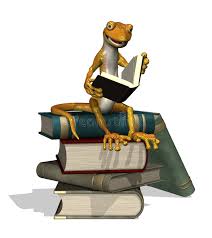
Was my device hacked or something like that? Was I being tracked? I did not find any suspicious object attached to my computer but the lizard on the bookshelf staring at me whenever I wrote came under suspicion. It was a regular, routine development and its presence made me fearful. It rarely moved out of that space, making me wonder why it remained so still. To observe my pursuits, to see what I was doing? How could a lizard tell them what I was writing? It was crazy. I decided to trap the lizard one day in a basket, and it went flying into the garden through the open window. It fell on the grass and moved swiftly. Reached for the cemented bench in the garden and sat on top of it, possibly planning how to get inside the house once again.
The phone rang as if in reaction to the violent expulsion. My sister-in-law was on the other side, urging me to stop writing romances since I did not have much idea about the shades of love. The grey shades she meant perhaps. For a man who had not been very supportive of her choices, I was expecting opposition in a big way. She accused me of being anti-love, anti-modern and whatever anti she could add, calling me an outdated, traditional, frivolous, backward thinking loony who faked to be liberal in expressing thoughts but was not practicing anything like that in real life.
If writers started following all that they wrote, all the crime and horror writers would then be behind bars. As a reader, she thought she was in step with the present trends. She knew which books were easy to digest whereas I was difficult to read. She said I talked big and wrote fanciful things that held no significance in life. The toxic outburst silenced me and the connection snapped. I told my wife that her sister had called me to warn me about my poor writing skills. But my wife said she was not interested in wasting precious time on her. If she was unruffled, I decided I should emulate her and let it go.
I looked out of the window to look for the lizard on the bench but it was not there. I opened the door and went out to check the garden area. When I came back to my study room after a futile search, I found it was relaxing on the same shelf, in the same perch. Perhaps the opening of the door gave it the chance to slip in. The smart lizard knew the right moves. The lizard looked at the wall, as if regretted staring at me all day. That it was back meant the lizard would do the same stuff again.
I lost interest in the lizard for the time being as hunger, thirst and new ideas developed all together. I took a break and enjoyed a smoothie first. My wife came to tell me that the lizard was definitely the culprit and the spirit was trapped inside the lizard – something I had suspected from the very beginning. She added this was the lizard bathing and singing songs. Maybe the lizard and the spirit were both inside the bathroom and the spirit came out of the body to have a quick shower? And during such special breaks, it wore anklets and satisfied its urge to practice some classical dance form, a long–suppressed desire the spirit could not fulfil in her past life. I found this construct quite imaginative and gripping.
“After the shower, it went back into the lizard’s body. Lizards are cold-blooded you know,” she added. I was getting derailed from writing my novel and trekking along a different territory. If distraction was their goal, then they were successful. At this critical stage my wife revealed a long-buried secret she had forgotten over the years: her family had urged her long ago to make me end my writing career right after marriage, calling it self-indulgence and unprofitable.
I made it clear to her that I couldn’t leave writing. The lizard looked up when I said so with total confidence. As if shocked to hear this declaration hundreds of miles away, my brother-in-law called me after a decade and complained I was not listening to my better half, always arguing with her. The truth was that my decision to continue writing was communicated by the spirit and they were heavily disappointed they could do nothing to make me obey. The entire family had contacted us in less than a month. It was nothing less than a miracle.
Now was my turn to act smart. I laid a condition to trap him – by saying I would contemplate stalling my writing project if he could explain how they got to know the minute details so fast. I wanted the proof of disclosure from them. Excited, he spilled the beans instantly. He said there was a spirit trapped inside a lizard that tells them everything – including what we eat and drink every day. A singing spirit, a bathing spirit, those anklets and every other disturbance created in the house was deliberate. I was furious to be fooled in such a big way.
He further disclosed that the events were preplanned to trap me. The story of a planted spirit to monitor my moves and curtail growth and everything else came as a real shocker. He said that a professional black magic expert was hired to conduct this mean task, and the motive was to block my literary growth and close all doors. The best literary efforts should fail and vanish without a trace.
His response was weird: nothing fair in love and war. I was clueless who was in love and who was at war with me.
I was curious to know how these things worked in the dark world. He said though it was not meant to be revealed, he would do me a favour: the book cover image and title, the author’s name and the publisher’s name would be the basic details required to ruin the fate of the book. I was still clueless and laughed it off. He said the book cover with a devil spirit attached to it was enough. The potential reader who picked up the book would be eager to drop it right there due to the black energy radiating from the cover even if it was white. This sounded scary and it meant the words and thoughts contained inside the book did not matter at all in boosting the sales potential of a book.
I was curious to know why the entire family was desperate to stop me from writing. Then my wife pitched in with another sensation – the disclosure that her grandfather was a writer who divorced his wife after he found success with his first book. That meant they fear I would do something similar? She said a slow-churn ‘yes’ and it explained why they blocked my journey as a writer: to keep me married.
Isn’t it too much of an injustice? I think the entire family had a lot to explain. They placed the complimentary copy of my debut book inside a grave to bury it forever right after it was born. They conducted devilish rituals, just to ensure it was never resurrected, never found home.
I shared my grief with my wife and the loss of hope. I felt I couldn’t write successfully. She came up with a quirky plan that included a condition that I would end the marriage if I did not click as an author. Would this not scare them that failure, instead of success, would deliver the same outcome they feared?
The monitoring spirit went and updated them about our plan before my wife communicated anything to them. The withdrawal of the malevolent spirit meant that the house was safe now and they had caved in to our threat. Now there was no spooky feeling inside, no heaviness or lethargy. I was full of energy to write fast.
Yes, the novel my readers are about to hold in their hands is an outcome of that labour. Assured that the marital bond is safe, my in-laws called up to find out if everything was fine. I told my wife to scare them by saying there’s a new girl in my life, but she should tell her parents it’s one-sided, unreciprocated love. If they send a spirit to find out the truth again, I am sure the truth wouldn’t be different from her version.
When success arrives late in life, then the chances of temptations and distractions are also limited. My wise wife thinks I am well past my age to stray now. And I am of the view that the person who stays with you in your days of struggle – and shares your dreams – surely deserves to be with you in your good times as well. If there is a monitoring spirit sent again, it should go back and report to my in-laws that the bond is strong enough to last forever.
Perhaps they have learnt their lesson in a big way. Perhaps they have not. But now the bathroom door does not get locked from inside. I do not hear the sound of anklets and there is no tapping on my shoulder. However, when I look at the wooden bookshelf, I miss the presence of the lizard. The spirit that deterred has disappeared but the spirit to write remains very much in place.
From Public Domain
Devraj Singh Kalsiworks as a senior copywriter in Kolkata. His short stories and essays have been published in Deccan Herald, Tehelka, Kitaab, Earthen Lamp Journal, Assam Tribune, and The Statesman. Pal Motors is his first novel.
PLEASE NOTE: ARTICLES CAN ONLY BE REPRODUCED IN OTHER SITES WITH DUE ACKNOWLEDGEMENT TO BORDERLESS JOURNAL
“I don’t know,” his mother says, fiddling with the radio.
Outside the window, a cemetery rolls by.
ii
“What happens when you die?” the boy asks.
“The worms eat you,” his mother says.
His father joins in, singing: “The worms crawl in, the worms crawl out…”
Inside the boy’s chest blooms a fear that wasn’t there before.
DOWNTOWN, FUNERAL HOME, 6PM
There’s a wake tonight. About now the few mourners will be dusting off the black dresses and navy suits they save for these occasions, wondering how quickly they’ll be able to leave without being rude. Meanwhile, I’m digging through a shoe box looking for a photo to prop on the easel by the coffin.
Nothing jumps out.
He had no Golden 50th, no Viking Cruise, no banquet with veal parm and chardonnay. So I’ll stand around with my hands in my pockets and watch the headlights of the passing cars pierce the lace curtains, unsure whether to smile or look sad while the guests mingle in drab clusters trying not to glance toward the front of the room as they edge their way to the door and out into the night where they’ll sigh with relief, order pizzas, and drive home to binge Netflix.
CAVERNOUS GLOOM
water echoes— quiet corridors of cavernous gloom
EARLY BIRD
I used to stay up late looking for grit, for neon, for blood until you brought me to the hour when the water is at its bluest, taught me the difference between the flicker and the woodpecker, showed me how the leaves are greenest on a cloudy day, and now I look for the light as it leaches into a lifeless sky, taking your hand and welcoming the lessons of the day.
AFTER THE PARTY
For me, the real party starts after everyone has gone, after we’ve washed down the pizza and sheet cake with cheap decaf and hauled out the black bag of paper plates, hats, and napkins into the February night and finally settled in the quiet dark of your room to listen to Johnny Cash and admire the blinking lights of Boston in the distance and promise each other to visit a lighthouse once the spring sun melts the icy crust of Maine, a promise that keeps me warm as you charge into your third year with blind joy and wisdom far greater than mine.
Daniel Gene Barlekamp writes poetry, fiction, and audio drama for adults and young readers. He lives with his wife and son in Massachusetts, where he practices immigration law. Website: https://dgbarlekamp.com/.
.
PLEASE NOTE: ARTICLES CAN ONLY BE REPRODUCED IN OTHER SITES WITH DUE ACKNOWLEDGEMENT TO BORDERLESS JOURNAL







 Borderless