Categories
Stories

Half-Sisters

By Sohana Manzoor

Nara

She was as beautiful as a fairy-child. Her face was angelic as was her nature. She did not know jealousy and during the days of my childhood in that large palatial house of my stepfather, she was my only friend. She shared all that she had with me. Or, rather, she tried to share. Her mother, actually I should say our mother, tried to keep her away from me. After all, I was only her half-sister. I was a creature of wildernesses. My skin was darker, and I climbed the trees like a monkey. In return for her niceties, I shared with her all the fruits of the trees I had rampaged. We were both very young then. She was five and I, ten. Our mother often caught us in the garden rolling in the mud, stained with the color of blackberries or devouring green mangoes. Of course, I was the one who always got punished. She was the darling of her father’s eyes. Who would dare to touch her?

I often wonder if I loved Priya back then. I do not know. Do children love one another? Looking back on those years, I believe I treated her as a doll that was denied to me. I wanted to please her so that she would come to me behind our mother’s back. I knew as early as then that mother didn’t love me. My own father was twenty years older than her, and I was born to her when she was barely eighteen. But he had died in an accident before I was born, and she caught the eye of an extremely rich man, and they were wedded in no time. I was born six months after my mother’s marriage to her second husband. And mother made it very clear that the man she had married was not mine to claim even if he was my father in papers.

I can still recall that particular day I was leaning out of the living room door to watch the family tableau of father-mother-daughter and wishing I was part of it too. Suddenly, mother turned back and saw me. She hissed, “Get inside. What are you doing here?”

Then Priya and her father turned too. Priya waved and laughed, “Come, Apu[1]. Can’t she come too, Abbu[2]?” Her upturned face was radiant with expectation as she looked at her father who also smiled back. “Yes, of course. Come along, Nara.”

Mother glowered, but at Priya’s insistence she agreed to let me join them all on the terrace. Of course, I did not sit with them at the tea-table, but I did hang around them. I watched them contentedly as I had received more than I ever expected.

That was, however, only the beginning.

Up till this moment I only wished that he was my father too. But ma always made sure that I remembered my place. I was always the other sister, the other daughter, the other girl in the family. From this moment onward, I walked behind Priya as her shadow, taking care of her needs, and she depended on me as if I was a second mother. I believe, she loved me too because she knew that nobody else loved her as I did.

I remember the wedding ceremony of Atushi. Atushi was Priya’s cousin, the only daughter of Farzand Fuppi[3]. Priya was of course, as lovely as a rose. She wore a pink coloured lehenga[4] embroidered with seed pearls. It was outrageously expensive as her parents made sure that she had the best of things. But she was still a young girl of thirteen and it was I, the eighteen-year-old Nara, who caused a stir that evening. I was dressed in a peacock blue lehenga that my stepfather almost bullied my mom into getting for me.

“I won’t have one daughter wearing the most expensive thing and another dressed like a pauper,” he had bellowed.

Mother protested, “Nara’s not your daughter.”

He roared, “She’s mine as much as Priya. Don’t you ever say she’s not my daughter.”

Mother cringed and went as pale as a waif. She tried to say something but could not form a single syllable.

Some young male cousins of Priya wowed at our entrance and a female relative sneered, “Goodness gracious! Look at Nara! She just sailed in! Fayaz Uncle will have a Draupadi in his hands in no time.” At some innermost corner of my heart, I reveled. As I turned to look at my mother and Priya, I saw contrasting emotions. Priya was beaming with pure blithe, my darling sweet sister. But in mother’s eyes, I saw panic. She appeared like a terrified deer and clung to Priya. I could not understand why she was so afraid of her very own daughter. But I was naïve, and I did not know the world as she did. Nor did I know the darkest secret she held in her heart.

Priya

They called me a princess. From my childhood I was pampered like one and my mother guarded over me with utmost jealousy. I was an only child and the doctors had said that my mother could not bear another. But then I also had Nara Apu even though everybody called her my half-sister. Technically, she was my half-sister as we had different fathers. Mother always made it clear that she did not care for her at all. And she disliked her even more because I loved her to distraction. In that palace-like prison, she was the only person who cared for me truly. Love shone in her eyes like a beacon, and I cannot help wondering how Nara Apu, who got so little love herself, could love me with such abundance.

She had dark complexion, but that made her all the more beautiful. Her eyes were like pools of black water, the only feature she had inherited from our mother. My eyes are of greenish hue, the eyes that came from my father’s side of the family. When we were children, father was kind of indifferent toward Nara Apu. But Apu had such an unselfish nature that it was difficult to remain unresponsive towards her. And even though my father was a busy man, he did not miss how much she cared for me. Slowly, his attitude toward her changed.

And there was that one time when she practically saved my life. I jumped into the lake after being goaded by some of my cousins even though I did not know how to swim. I realised how stupid the move was as I gulped water and I saw my two dumb cousins standing by the shore gaping at me in horror. I heard a piercing cry, and I sensed it was my mother and then there were several splashes. Then someone got me by the hand, “Don’t grab me,” it said. “Just hold on to my hands.” I flailed and splashed and cried. Then two stronger hands got hold of me.

As I was lying in bed later with mother crying beside me, I learnt that I had two saviours—Nara Apu and Shahnewaz Uncle. It was Nara Apu who had reached me first, and Shahnewaz Uncle reached a few seconds later and grabbed us both and brought me ashore. From that day, everybody knew that Nara and Priya belong together.

By the time she was fifteen, Abbu made sure that mother was not mistreating her daughter from her first marriage. I heard him once telling her, “Salma, do you consider me such a petty creature that I would be jealous of that slip of a girl? You don’t have to treat her so bad, you know, to prove that you love Priya more.”

Mother wept and I could see she was disturbed. But she never really loved her. It is one mystery I never understood until years later.

I also formed a close bonding with Shahnewaz Uncle. Of course, he lived in the same house, but he was always busy with painting. He was Abbu’s younger brother, but they did not have a very close relationship. But he did take notice of me and sometimes patted me on the head. After this particular incident, he started taking interest in both me and Nara. He brought for us licorice of different shapes and tastes and other delicacies. My favourite was orange, while Apu liked peppermint. He laughed at her, “What an old woman you are!” Nara Apu made faces at him and grinned impishly.

During these times, I also started to note that Mother was actually afraid of Nara Apu. It did not make sense to me at all. But whenever Apu was around either Abbu or Shahnewaz Uncle, she would fidget uncomfortably and say nasty things. Once I heard her grumbling to herself that Nara Apu was out to grab men. Poor Apu was only sixteen years old at that time. Then on her nineteenth birthday Mother suggested that she could be married off to Rabbi, a poor relation who worked in our country estate. When Abbu realised that she was serious, he suddenly went very still. Then he said in a very low voice, “If you ever utter such nonsense, or if I ever hear that you’ve initiated something like that, I will have you drowned. Daughters of my family don’t marry servants…. And, from today, she is mine. Forget that you ever gave birth to her, you wretched woman.”

I don’t know what come over her, but mother just fainted away.

Nara

Mother was always a troublemaker. In those days, I could never understand why she hated me so. Our father (I had started calling him Baba[5] at some point; I did not call him Abbu though) was away on a business-trip. And that is when I discovered a terrible secret. I never knew the whole story, but I can still recall the strange conversation that night when Priya was raving in fever and Baba was away. I had fallen asleep in the sofa in Priya’s room and the words streamed into my consciousness:

“All these years, I’ve waited. I’ve waited for him to die. Is there nothing you can do? Priya will always be known as someone else’s daughter.” I heard the sound of muffled weeping of a woman. She whimpered as she said, “And I have to remember all the time that the child that is legitimate is actually the result of rape. I… I … can never love Nara… I was young and I didn’t want her… I hated that man… why couldn’t she die at birth…Why didn’t you let her die?”

Even in my sleep I went numb with pain. Until that moment I had resented that my mother never loved me. There in that nightmarish darkness, in a half-conscious state I learnt the nature of the relationship that existed between my mother and father. I knew, of course, that he was way older than she was. But I never knew that she was married off to him because he had raped her.

Then I heard the voice of a man. The voice was sad but steady, “He’s the rightful son of my father, Salma. I cannot do anything. Even if he dies, I won’t inherit the family property. My mother was only my father’s mistress, you know. Fayaz bhaiya[6] has been generous enough to let me live here. If his mother was alive, he would never be able to do so. You already know that. And Priya has to be recognised as his daughter, otherwise she will get nothing either.”

I was so shocked that a sound escaped my mouth, and my mother was at my side within a moment. In that semi-darkened room, I saw her dark eyes glazed with sheer terror. And I knew that a woman in her predicament would not allow anything or anyone to get between herself and her object of desire. I pretended that I had had a bad dream about Priya. Then we both ran toward Priya’s bed.

A week later, before Priya had completely recovered, mother fell from the stairs and was killed. But a lot of things started to fall in place. Since she could not have any more children, she was protective about Priya and so possessive too. She had no choice but to pass her off as the daughter of her husband. She also wanted to remain the wife of the man who was as rich as a king. She had nowhere to go either. The man she loved, she could not have. And the other daughter, that is me, was a child she never wanted. My father, she never loved. Poor woman! What a life!

It was a strange house after that—two brothers grieving for the woman they both loved. Shahnewaz Uncle suddenly seemed to have grown old. He reminded me of Tithonus bereft of his Dawn. And our stepfather seemed distant and gloomy like a thunderstorm. Yes, that’s how I started thinking. He was Priya’s father only as much as mine. Somehow, the running of the household fell into my hands and Priya became my shadow. She grew to be afraid of the dark. She saw mother’s shadow in the darkness, and I started sleeping in her room. We grew closer than ever. That’s the time when I learnt to love her truly, like my very own sister, without the slightest trace of jealousy.

Priya

I saw the woman in shroud for the first time about two weeks after Mother died. She was sitting in the veranda in the evening. I called out without thinking and when she looked back, I shuddered because she had no face. Yet I knew she was a woman. I heard a piercing scream and when two arms gathered around me, I realised that it was Nara Apu and that I had screamed. I think I fainted and when I woke up, I was in my bed and Apu was sitting by my bed, her eyes clouded with worry.

“I saw her, Apu,” I whispered. “I think I saw Ma.”

Apu’s face paled, but she shushed, “You saw nothing, darling. It was just a shadow. And don’t worry, I’m here. I’ll take care of everything.”

But I saw the woman again a few days later. She was watering the plants on the rooftop at the wake of dawn. I saw her from my window, and I knew it was her. Why was she haunting me? And why did nobody else see her?

Nara Apu made sure after that I was always surrounded by people, esp. in the evening. At night, she slept in my room. Initially, she slept in a cot, but later at my insistence, she slept in the same bed with me. During those days, Nara Apu was strong. She walked with grim determination; she protected me like a warrior-princess. I felt safe when she was around. During daytime, things were normal, but as soon as the darkness crept in, a fearful feeling rose in my heart. I was afraid of shadows. I realised I had to bring Nara Apu in. But how to tell her? I could not give away my secrets; hence I told her only what I could.

That night when we were getting ready for bed, I caught her hand and whispered, “Apu, I have to tell you something. Have you seen Shahnewaz Uncle’s mother?”

Nara Apu gaped at me in incomprehension.

“I saw her picture in his closet. He said it was the picture of his mother.”

Very slowly Apu got up and sat again. And then she said even more slowly, “She… was… drowned… in a… pond, they say. I wonder…”

I stuttered, “Nara Apu, she… looks … exactly… like me.”

Nara Apu did not say anything, but just looked at me. And I realised with a jolt that she knew. When did she come to know that? And she still protected me like anything? When did she learn about it?

I burst into tears, and she held me close like she always did. “Shush, shush, my pretty. You’re safe with me. None can harm you when I’m here. Shush…” What if she knew the truth? Could she bear it? Could I bear if she did not?

Nara

I had to be strong and brave for the sake of Priya. I could not tell her what Baba had told me. Sometimes I wonder how was it that my own mother never loved me, but I got so much love from a complete stranger. No, I am not talking about Priya, I mean Baba. That rainy afternoon when he called me to his study, haunts me still.

He was standing by the window watching the rain. When I entered, he bade me sit. He did not turn to look at me but spoke:

“Sit, Nara. I have some things to tell you.”

I waited patiently.

“We’re in a strange situation here, are we not? Your mother has died, and you are stuck within the walls of a strange house with people whose ties to each other are stranger.” I shuffled uneasily. What was he saying? What was he referring to?

“This is a big house. Do you know that walls have ears?” he ploughed on. “There are many secrets this house holds and even I do not know them all.” Here he turned to look at me. He had smoky eyes, eyes he inherited from his mother. He was a very handsome man even though he was in his mid- fifties. He sighed and said, “I know who Priya is.”

I bolted from my chair, and I knew my face had lost its colour.

He shook his head. “I have known it for quite some time now. Priya looks a lot like Shahnewaz’s mother. I had not realised when she was younger, but as she is growing up, I’ve been detecting the resemblances.”

I sat trembling. Was he planning to punish us? Why was he telling me all these?

“Sit, Nara. I am not going to hurt you or Priya for something your mother did.”

A terrible suspicion started to creep in my mind. And I had thought… “Did… you… you did not kill her, right?” the words tumbled out of my mouth.

He looked at me sadly. “I did not kill her.” He paused and searched my face. “But why do you say that, Nara? Your mother died in an accident, did she not?”

I remained silent.

“Nara, I want you to know that I have drawn documents with my lawyers and have divided my property equally between you and Priya. Both of you are my daughters, mind you. I do not care who the natural fathers are, I recognise you as my children. And I want you to take care of Priya, no matter what.” He paused again and asked, “Do you understand?”

I nodded mutely. Then I asked, “But why? I mean, are you going somewhere?”

He seemed lost in thought. But then he raised himself out of his reverie and smiled, “I guess, you can say that.” He paused and then added, “You can trust Shahnewaz. Like me, he loves both of you. I believe that he loves you even more because you are not his child. He has no hold over you and yet he owes you for saving his daughter’s life.” At that moment I realised how much he loved us both. I felt a wrenching pain for this man who was more than a father to us, and yet he was not our father.

As I was walking out of the room he called me back, “You’re strong, Nara. Far stronger than any of us. You’ll survive.”

Nara and Priya

There was total chaos in the family after Fayaz Chowdhury’s disappearance. The bulk of the property was left to Nara and Priya with Shahnewaz Chowdhury as the legal guardian. Neither Nara, nor Priya could claim their share until their 25th birthday. If either of them died before that, their share would pass on to Shahnewaz. Fayaz Chowdhury’s sisters could not make head or tail of their brother’s wishes. Why did he leave half of his property to Nara? Even though adopted, she virtually was no blood relation to him. Naturally, not any of them could accept that she had suddenly been elevated to the status of a princess.

Priya’s problem at this point was she still saw the shadow of a woman periodically. But by now they both had accepted that Priya would keep on seeing her. She became more and more dependent on Nara.

On that particular afternoon, Nara was making tea on the veranda. Priya was sitting on the small sofa when she just could not take it any more. “Apu, do you know that you are the most beautiful girl that ever lived?” she asked with an unnatural fervency.

Nara raised her dark eyes and laughed. “What got into you, sweetie? If I’m the most beautiful one, what are you?”

Priya smiled in spite of herself. “Apu, will you go away when you get married?”

“I’ll never get married,” Nara suddenly went somber.

“Why not?”

“I don’t trust men,” came the simple reply. She paused and then proceeded to say, “Our poor mother! I just feel so sorry for her.”

“Why do you feel sorry for her? She was a selfish bitch!” There, it was out in the open, thought Priya. It still bothered her that the wretched woman never learnt to love her elder daughter.

Nara shook her head. “No, Priya, she was just a miserable woman. She could not have the man she loved and had to deal with two other men.”

Priya’s eyes stung as the words tumbled out, “You loved her?”

“She was my mother,” said Nara matter-of-factly. “What she did was done out of her own miserable state of mind. I cannot help loving her.”

Priya’s face went as white as chalk. “Apu, I killed her.” The whispering confession was as soft as the first snow. Nara went still. When she turned to look at her sister, she said with a sadness that only tremendous love for a child can produce, “I know. Baba knew too, I believe.”

Priya cried with an abundance that knew no limit. “She hated you. That wretched woman! She wanted to kill you when you were born. Did you know that? Shahnewaz Uncle did not let her. Those two men—they have had so much love in them for that wicked woman. And you love her too? How can you love her? … Sh she was… a witch… an evil witch… I can never… forgive her… never…. Do you know she planned on killing you again? She… she had come to … sus… suspect that you knew the secret of… my birth. I p-pushed her d-down the stairs. I would n-never let anyone harm you… never…” by this point Priya had become hysterical.

Priya was still screaming when they took her away. Her mind had gone completely berserk. She certainly was not a criminal. No wonder the pressure she had retained through the two years after her mother’s death overwhelmed her completely. Nara pulled through the time, and she dragged her Shahnewaz uncle through it too. When Fayaz Chowdhury finally returned home, it was once again a strange household—two fathers held together by a daughter who belonged to neither. And yet, she was the daughter of the woman they both had loved. It is strange that Nara’s mother never loved the child begotten through rape and abuse, and yet Nara had so much to give. That made all the difference.


[1] Elder sister

[2] Father

[3] Father’s sister

[4] Long full skirt

[5] Father

[6] Elder brother

Sohana Manzoor is Associate Professor, Department of English & Humanities at ULAB. Her short stories and translations have been published in many journals and anthologies in South and South-East Asia. Currently, she is also the Literary Editor of The Daily Star, Bangladesh. This story was first published in Six Seasons’ Review.

.

PLEASE NOTE: ARTICLES CAN ONLY BE REPRODUCED IN OTHER SITES WITH DUE ACKNOWLEDGEMENT TO BORDERLESS JOURNAL
Categories
Review

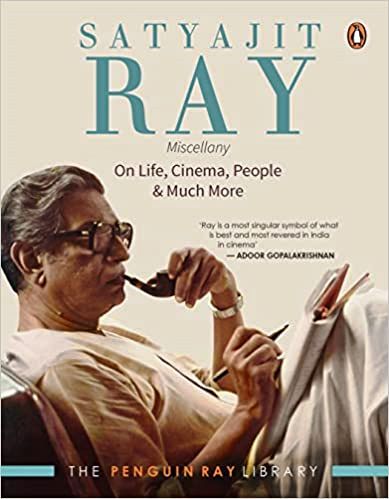
Satyajit Ray Miscellany

Book review by Bhaskar Parichha

Title: Satyajit Ray Miscellany: On Life, Cinema, People & Much More

Author: Satyajit Ray

Publisher: Penguin Randomhouse

There could be any number of books on Satyajit Ray. Even after thirty years after his death, he continues to be written about. The present book Satyajit Ray Miscellany: On Life, Cinema, People & Much More, as the title suggests, is everything that the veteran filmmaker India had put in black and white.

As part of the Penguin Ray Library, the book has more than seventy rarest essays on filmmaking, screenplay writing, autobiographical pieces, and rare photographs and manuscripts.

“Ray is a singular symbol of what is best and most revered in Indian cinema” as the film director and scriptwriter, Adoor Gopalakrishnan, has put it and the actor, Ben Kingsley, complimented him: “Satyajit Ray, I salute you. The greatest of our poets of the cinema.”

One of the doyens of world cinema, Ray gave a “unique aesthetic expression to Indian cinema, music, art, and literature. His writings, especially, autobiographical works, thoughts on filmmaking, screenplay writing, and eminent personalities from art, literature, and music, among others, are considered treasure troves, which largely remained unseen and therefore less known till date.” Ray was a writer of repute – his short stories, novellas, poems, and articles, written in Bengali and translated into English, have been immensely popular. Author of the famous Feluda stories, Ray’s Bengali books have long been bestsellers. 

Ray was awarded the Oscar for Lifetime Achievement by the Academy of Motion Picture Arts and Sciences in 1992 – the year he was also awarded India’s highest civilian honour the Bharat Ratna, and also when he breathed his last.  

Writes Sandip Ray in the ‘Foreword’ to the book: “Since his schooldays, my father was a cinema addict in the true sense of the term – lapping up Hollywood movies of Billy Wilder, William Wyler, Frank Capra, and others as well as the timeless comedies of Chaplin and Keaton. The hobby gradually turned into a serious interest. The formation of the Calcutta Film Society in 1947 with a few like-minded friends opened to him the diverse range of European cinema, and in a sense, acting as a catalyst to his writings on cinema. In his first two articles, he heavily criticized the make-believe stereotypes of erstwhile Bengali cinema and called for soul-searching among the filmmakers. The result as he himself remarked later amusingly – ‘Nothing of that sort happened. The piece was simply shrugged off by the people of the trade as yet another piece of tomfoolery by some arrogant upstart who saw only foreign films and knew nothing of local needs and local conditions.’”

The book has been enchantingly divided into: ‘Satyajit Ray – A Self-Portrait’, ‘A Director’s Perspective’, ‘Personal Notes’, ‘Reminiscences’, ‘Festival greetings LP Sleeve Notes’, and ‘Miscellaneous Writings’. There is also a chapter on the ‘Preservation of Satyajit Ray Archives’. Together, these writings bring to the fore fascinating anecdotes of Ray’s eventful life.    

About the art of Rabindranath Tagore, Ray wrote: “Tagore took to painting at a later stage in his life. Some manuscripts dating back to his youth show doodles in the margin which suggest a natural flair for drawing. After that, there is nothing to show that he had any interest in visual expression until, when he was well over sixty; fantastic forms began to appear in his manuscripts. Where one would normally cross out a word or a sentence, Rabindranath turned them into grotesque creatures. These emendations were stung together until the whole page took on the appearance of a tapestry of words and images. In time, paintings and calligraphic drawings began to appear as independent efforts, unrelated to manuscripts. Blue-black ink gave way to transparent colors, and the subjects became more and more varied. The output clearly suggests that Rabindranath was absorbed in his new pursuit and enjoying the experience. The lack of formal training was compensated by an instinctive feel for rhythm, texture, and spacing. There was also the calligraphic virtuosity when he used the pen. (His unique and beautiful Bengali handwriting– which came to be known as the “Rabindrik” script has been widely imitated.) But the brush, too, was frequently used. Some of the efforts were purely abstract while others dealt with subjects which covered a wide field.’

Ray considered scriptwriting to be an integral part of direction. Initially, he refused to make a film in any language other than Bengali. In his two non-Bengali feature films, he wrote the script in English; translators adapted it into Hindustani under Ray’s supervision. Such was the purist in Ray!

In the section ‘The Outlook for Bengali Films’ Ray was fairly real-world: “It is generally conceded that the film industry in Bengali is facing a big crisis. Some have gone so far as to predict a total annihilation of the Bengali film as such, and the sprouting up in its place of a product not dissimilar to the well-known type created by Bombay. This may be the height of pessimism, but there is no denying some alarming symptoms. Firstly, the area of exploitation of the Bengali film has been considerably reduced by the Partition; secondly, for reasons we shall presently examine, the exhibitors in Bengal have grown increasingly distrustful of the home product preferring the unpretentious, brassy, and frankly escapist products of Bombay and more recently, Madras.”

Nemai Ghosh was Satyajit Ray’s only cinematographer who did almost all his films. Ray wrote: “We founded the Calcutta Film Society in 1947 with the help of a few friends and associates. Nemai Ghosh was one of them. Like me, he was also enamoured by the cinema; so we got along very well. I was a mere cineaste then but he was already a practitioner as a cameraman. However, he harboured the desire to direct films himself at the back of his mind. The chance came his way during the late forties when he made Chhinnamul (The Uprooted, 1952) on the theme of Partition. It was the first instance of realism in Bengali cinema. But thereafter he was compelled to head for Madras for want of work in Calcutta and had to spend the rest of his life there. Being a leftist to the core, he did a lot for the cinema workers in Madras. We exchanged correspondence only occasionally. But whenever we met, the old warmth of friendship was revived. Today I am feeling his absence intensely and I am sure the cine workers of Madras are also feeling likewise.”

Satyajit Ray Miscellany, the second book in the Penguin Ray Library series, brings to light some of the rarest essays and illustrations by Ray that opens a window to the myriad thought-process of this creative genius. With more than seventy gripping write-ups and rare photographs and manuscripts, this 275-page book is undoubtedly a collector’s item. 

.

Bhaskar Parichha is a journalist and author of UnbiasedNo Strings Attached: Writings on Odisha and Biju Patnaik – A Political Biography. He lives in Bhubaneswar and writes bilingually. Besides writing for newspapers, he also reviews books on various media platforms.

.

PLEASE NOTE: ARTICLES CAN ONLY BE REPRODUCED IN OTHER SITES WITH DUE ACKNOWLEDGEMENT TO BORDERLESS JOURNAL

Categories
Poetry

It’s Halloween!

By Michael R Burch

Courtesy: Creative Commons
IT’S HALLOWEEN

If evening falls
on graveyard walls
far softer than a sigh;
if shadows fly
moon-sickled skies,
while children toss their heads
uneasy in their beds,
beware the witch's eye. . .

If goblins loom
within the gloom
till playful pups grow terse;
if birds give up their verse
to comfort chicks they nurse,
while children dream weird dreams
of ugly, wiggly things,
beware the serpent's curse. . .

If spirits scream
in haunted dreams
while ancient sibyls rise
to plague nightmarish skies
one night without disguise,
as children toss about
uneasy, full of doubt,
beware the Devil's lies . . .

it's Halloween!

THIN KIN

Skeleton!
Tell us what you lack ...
the ability to love,
your flesh so slack?

Will we frighten you,
grown as pale & unsound ...
when we also haunt
the unhallowed ground?

THE WITCH

her fingers draw into claws
she cackles through rotting teeth ...
u ask “are there witches?” 
                                     pshaw! 
(yet she has my belief)


THE WILD HUNT


Few legends have inspired more poetry than those of King Arthur and the Knights of the Round Table. These legends have their roots in a far older Celtic mythology than many realise. Here the names are ancient and compelling. Arthur becomes Artur or Artos, “the bear.” Bedivere becomes Bedwyr. Lancelot is Llenlleawc, Llwch Lleminiawg or Lluch Llauynnauc. Merlin is Myrddin. And there is an curious intermingling of Welsh and Irish names within these legends, indicating that some tales (and the names of the heroes and villains) were in all probability “borrowed” by one Celtic tribe from another. For instance, in the Welsh poem “Pa gur,” the Welsh Manawydan son of Llyr is clearly equivalent to the Irish Mannanan mac Lir.

Near Devon, the hunters appear in the sky
with Artur and Bedwyr sounding the call;
and the others, laughing, go dashing by.
They only appear when the moon is full:

Valerin, the King of the Tangled Wood,
and Valynt, the goodly King of Wales,
Gawain and Owain and the hearty men
who live on in many minstrels’ tales.

They seek the white stag on a moonlit moor,
or Torc Triath, the fabled boar,
or Ysgithyrwyn, or Twrch Trwyth,
the other mighty boars of myth.

They appear, sometimes, on Halloween
to chase the moon across the green,
then fade into the shadowed hills
where memory alone prevails.

('The Wild Hunt' was first published by Boston Poetry) 

Michael R. Burch’s poems have been published by hundreds of literary journals, taught in high schools and colleges, translated into fourteen languages, incorporated into three plays and two operas, and set to music by seventeen composers.

.

PLEASE NOTE: ARTICLES CAN ONLY BE REPRODUCED IN OTHER SITES WITH DUE ACKNOWLEDGEMENT TO BORDERLESS JOURNAL

Categories
Review

Of Ghosts and Tantriks

Book review by Basudhara Roy

Title: Taranath Tantrik and Other Tales from the Supernatural

Author: Bibhutibhushan

Translator: Devalina Mookerjee

Publisher: Speaking Tiger Books

The book decides to arrive on a crisp Friday morning, its sunshine so keen and abundant that any thoughts of the supernatural can only be merrily chuckled over. The cover, however, is strangely disconcerting. It takes me time to mark that the brilliant art on it actually depicts skulls. Not ordinary enough to be dismissed as mere biological specimens, the skulls seem to represent, in their complexity, vibrancy and the silhouette of birds that haunt them on every side, a text that is both hauntingly familiar and eerily not so. Bibhutibhushon’s short stories exploring the supernatural and tantra, a practice associated with dark forces and the Goddess Kali, translated by Devalina Mookerjee from Bengali — could not, perhaps, have been showcased better.

Bibhutibhushan (1894-1950) was an eminent Bengali writer whose best known works are his novels, Pather Panchali (Song of the Road) and Aparajito – both immortalised into films by Satyajit Ray,  Chander Pahar (Moon Mountain) Aranyak (Of the Forest). Some of these books can be found in translation.To one even remotely acquainted with Bibhutibhushan’s oeuvre, his stories offer a definite assurance of being in good company. In reading , Taranath Tantrik and Other Tales from the Supernatural, however, what the reader might fail to bargain for is the almost complete obliteration of the physical world by the world of the book, and by the time the journey through the nine translated stories therein has been made, one is no longer sure where one world ends and the other begins.

It takes time to step out of the frame and to express admiration for the conduit that has led to this extraordinary experience in fiction – the translator. To transcend spatiality and temporality and conjure these tales again for an entirely different readership in an entirely different language is likely to have been a project fraught with its own pointed challenges. Mookerjee, however, seems to have successfully met them all, so much so that in the context of the English language, these spooky, unsettling tales offer not the slightest semblance of foreignness, even when they deal thematically with something as acutely local and specialised as tantra. The language is sparklingly contemporary and in its inflections, energy and dreaminess to allow these nine narratives to carve their own particular niches. The pace of the collection stays heady throughout and the atmosphere is completely overpowering.

Of special significance is Mookerjee’s nuanced and insightful twenty-seven paged ‘Introduction’ to the collection that calls upon the reader to visualise concrete connections between social justice and the genre of the supernatural. Mookerjee writes: “Seen against the background of what people are capable of doing to each other, stories of ghost may be seen as corrective mechanisms in the scales of justice. A person who has been wronged returns to tell their story, perhaps to wreak havoc on their tormentors. A disbeliever sits in a séance for which the medium is clearly not prepared, and chaos ensues. We have a word for this already. We call it karma.”

The ‘Introduction’ serves, also, as a brave attempt to place Bibhutibhushan’s writing in current socio-cultural perspective, and to bridge the disparate worlds of rural Bengal that birthed these stories and that of the contemporary English reader of these tales who could belong to almost any geographical space on the global map.

The first two stories of the collection are centred around the protagonist after who the book has been named, a dabbler in the dark arts, Taranath Tantrik. The remaining seven stories are each unique in their own ways as they chart their individual journeys into the terrain of the invisible and the occult with remarkable skill and clarity. “Human beings have historically shown very little need of support from the otherworld to behave in perfectly horrible ways with other people. This is the point at which the darkness of the uncanny and the darkness of people converge,” avers Mookerjee, pointing out how the surreal is often only another dimension of the real revealed in a disjointed spatial-temporality.

Not all of the nine stories strike with equal power. If ‘The Ghosts of Spices’ appears quite facile and juvenile in its description of a march-past of spice sacks on the deserted nocturnal streets, ‘A Small Statue’ appears rather simplistically cinematic in its  dream presentation of the tableau of the monk, Dipankar’s life. In the most evocative stories of the collection like ‘Maya’, ‘The House of His Foremothers’, ‘Arrack’ and ‘The Curse’, however, the quiet, intricate weaving of setting, psychology and idea dazzles in its brilliance, leaving behind a sense of both fracture and healing.

Bibhutibhushan’s poignancy is at its unsurpassable best in his delineation of place and in his exploration of links between physical place and human placed-ness. His most unforgettable stories are those in which people and places interact with each other organically and without inhibitions, creating a documented identity of both being-in-place and place-in-being. In ‘Maya’ for instance, the house acquires an identity of its own as its past inhabitants gently draw its present dweller/s into the folds of its mystery and inexplicable self-sufficiency. In ‘The House of His Foremothers’ similarly, the ghost-girl Lokkhi mourns for the bereft house more than her lost family and consistently haunts its silences in the hope of resurrection for the house which, unlike her, still lives across the family’s generational lifetimes.

To allow one’s imagination to be overpowered by these stories is to experience a strange welding of the probable and the improbable into the arc of the possible — to be awakened to a new dimension of being in which while vision remains at par, the other senses experience a heightened participation with what is positively undefinable but utterly undeniable.

Taranath Tantrik and Other Tales from the Supernatural, by thus placing the reality in the larger context of a world that still evades the cartography of reason, becomes a portal to a widened, heightened and more enlightened worldview. It helps remind of the intersections between our own human finitude and the infinite world with its geo-historical consciousness incapable of forgetting and thoroughly unable to forgive.

.

Basudhara Roy teaches English at Karim City College affiliated to Kolhan University, Chaibasa. Drawn to gender and ecological studies, her four published books include a monograph and three poetry collections. Her recent works are available at Outlook India, The Dhaka Tribune, EPW, Madras Courier and Live Wire among others.

.

Click here to read the book excerpt from Taranath Tantrik

PLEASE NOTE: ARTICLES CAN ONLY BE REPRODUCED IN OTHER SITES WITH DUE ACKNOWLEDGEMENT TO BORDERLESS JOURNAL

Categories
Excerpt

Tarnath Tantrik by Bibhutibhushan

Title: Taranath Tantrik: And Other Tales from the Supernatural

Author: Bibhutibhushan

Translator: Devalina Mookerjee

Publisher: Speaking Tiger Books

Since I was deep in meditation, it took a few seconds for the smell of musk to register on my consciousness.

It was with a smile that my mind turned towards the smell. What a wonderful fragrance, I thought, nature is truly magnificent in her bounty! Immediately after this my senses sharpened because it felt as if someone was standing behind me, on the other side of the trunk of the tree. It is true that I could not see the person, but that made me no less sure of her presence. Sometimes instinct serves better than eyes. My entire being was suddenly, completely awake and alert. The air went still. Then, I felt as if my body was on fire, burning embers scorching my insides and exploding outward. The excruciating pain was growing. Was I about to faint again? Just at that moment, the pain disappeared, and there was a woman standing in front of me. I was absolutely certain that she had not been anywhere near that spot even a heartbeat ago. The suddenness echoed exactly that night when I occupied the tantrik’s seat. But this time I knew that she had come for me. This time, I would not slide into unconsciousness. I looked at her. She seemed to be frowning in disapproval—’

***

‘Are you sure you saw this woman yourself, with your own eyes?’ The question slipped out of my mouth before I could stop it. Taranath heard my disbelief, and his tone became agitated and defensive—‘Did I see her with my own eyes? Of course I saw her with my own eyes!

There she was, large as life, standing in front of me! Look, you can believe me or not, that’s up to you. But you can’t say that I’m lying to you, because I’m not.’

‘What did she look like?’ I asked, hoping to appease him somewhat.

‘If I said she was beautiful, that would be less than a proper description. She was exactly as the incantation to call her says, a loveliness beyond words, beyond compare, beyond this world. I realised that the incantations of power I had been pronouncing for months were not simply words made up to call this being, they were descriptions of her power and beauty.’

‘Did you talk to her?’ I was hanging on to his words.

‘Talk to her?’ he scoffed. ‘I was just barely hanging onto consciousness, and you want to know if I talked to her! This was not a normal woman, you understand?

Not from any point of view was she ordinary. Her power radiated from her like the sun. And those eyes!

The incantation to call her mentions her eyes, I had thought those were just words to propitiate the goddess and compel her to respond to the call. My god, you should have seen those eyes—worlds could be conquered and burn in the fiery steel of those exquisite eyes.’

I became impatient. ‘Never mind the long descriptions! What happened? What did you talk with her about?’

He became circumspect. ‘What we talked about is private, between her and me. Such things are not for others to know.’

***

‘What happened is that Madhusundari Devi started to visit me every night. In that desolate place by the river, I had called her as a lover. But you must have guessed that already. After all, who could possibly be dull enough to listen to overcautious warnings from an old tantrik?

It was a mild winter. The waters of the Barakar river were gentle, and low in the bed. The lilies in the shallow water near the banks had become dry and yellow, revealing rock-minerals in the sand that sparkled in the light of the moon. The forests on both sides of the river were shedding leaves into the breeze. The skies were clear and blue in the day, and the moon shone in a cloudless sky at night. From that time on, for three months, she visited me every night. I felt completely alive in those three months, never before, or since, have I felt like that. It’s painful to talk about feeling like that now.

You cannot imagine the pain of it, the grief of loss over a self capable of that kind of joy. I reached a pinnacle of happiness and stayed there for three whole months. She was a goddess indeed. No ordinary human woman would be able to grant such experiences of love, such deep, perfect friendship. Being with her was heavenly, not of this earth. I can’t explain it to you. What words would I use? And you would disbelieve me anyway. You’d call me a liar, or say I’m mad. Perhaps you’re thinking those things right now, as I gabble on.

It’s not just you, even my wife does not believe me. She says the tantrik had used his black magic skills to shut my brains down.

That kind of happiness is intoxicating, like being drunk on very strong wine. But being drunk on strong wine also creates an ennui of its own. I would be listless all day, nothing in this real world held my interest. The daylight hours would go in longing for the evening.

When would dusk darken to twilight under the trees, in the forest by the river? When would she appear, my beautiful actress, perfect heroine to my new-found role as hero? The nights would pass like a dream, time slipping through my fingers like dry sand, each night deeply intoxicated and glittering with joy. My consciousness would expand outwards, grow unfettered, till the sky, the planets, the gods and goddesses were all part of my being, each night, under the stars by the river.

Then, something happened.

A young woman who lived in the nearby village used to come to the river to get water. Since she came every day, I saw her quite regularly.

Excerpted from Taranath Tantrik: And Other Tales from the Supernatural by Bibhutibhushan, translated by Devalina Mookerjee. Published by Speaking Tiger Books, 2022.

ABOUT THE BOOK

Ghosts are everywhere. Most are ghosts of ideas, feelings, memories. These are our personal ghosts, and they follow us alone. But there are other ghosts, in which we share a common fear. Thickening shadows pooling at the corner of the room, unexplained breathing in the dark, the child who steps out of an old photo—the shiver of supernatural frisson, a thin crooked finger of ice tracing its way down your spine. This fear, and thrill, is rightfully the domain of the kind of ghost you will meet in this book.

In Taranath Tantrik, Devalina Mookerjee translates nine stories of the uncanny and occult by legendary Bengali storyteller, Bibhutibhushan. Seven are short stories of séance, curses, return for revenge, and the desire for things that have no place in human lives. Two are about tantra, of necromancy, spiritual power, goddesses, and ghosts.

The borders of reality are porous in this world.

ABOUT THE AUTHOR

Bibhutibhushan Bandyopadhyay (1894–1950) is regarded as one of the greatest Bengali writers. His best known works are the autobiographical novel, Pather Panchali (The Song of the Road), which was made into a film by Satyajit Ray, Chander Pahar, and Aranyak.

ABOUT THE TRANSLATOR

Devalina Mookerjee is a translator and publisher. She is also a researcher in health and education. Her interest in ghosts is based on two decades of social science research. She learned to play bass over the lockdown, mostly jazz, blues and folk, and finds that the sound of the bass goes beautifully with stories of ghosts. She lives in New Delhi with her partner and five dogs.

.

Click here to read the review of the book

PLEASE NOTE: ARTICLES CAN ONLY BE REPRODUCED IN OTHER SITES WITH DUE ACKNOWLEDGEMENT TO BORDERLESS JOURNAL

Categories
Poetry

Horrific Humour!

Poetry by Rhys Hughes

KARMA IS A BOOMERANG

Karma is a boomerang,
Kismet is a net.
The vampire jumped out of the dark
and bit me in the neck.
I picked him up and shook him down
and flung him far away
and that was that, or so I thought,
the end of a dismal day.
But I was wrong, just like this song
he wasn’t finished yet.
Into a bat he turned and flapped
and to my dismay in every way
raced back and slapped my face.
How rude it is to stab with fangs
a person you have just met.
Karma is a boomerang,
Kismet is a net.


    A CEILING FAN

         I am
       what I am.
    I am a ceiling fan.

   Round and round I go
      but why I never
           know.

I have a feeling that I can
be either fast or slow
but the sounds
that I make
are sure to break
the patience of any man
who is no
fan of fans, for I am never
motionless.

And
while I twirl
to cool boys and girls
on torrid summer evenings,
the drunken fools
see the room revolve
and assume I’m still at rest.

Is this the best
       I can expect?
 

IN THE FACE

I laugh in the face of danger
but not at the legs, arms or body of danger.
Only an insane stranger would do that.
Occasionally I suppose
I might nervously chuckle or even chortle
at the buckle on the belt
that holds up the trousers of peril
because it is shaped
like an awful portal to the immortal world.

Rhys Hughes has lived in many countries. He graduated as an engineer but currently works as a tutor of mathematics. Since his first book was published in 1995 he has had fifty other books published and his work has been translated into ten languages.

.

PLEASE NOTE: ARTICLES CAN ONLY BE REPRODUCED IN OTHER SITES WITH DUE ACKNOWLEDGEMENT TO BORDERLESS JOURNAL

Categories
Musings of a Copywriter

Drill, Fill, Just Chill

By Devraj Singh Kalsi

I have been one of those unlucky fellows who occupy the dentist’s chair, with mouth wide open for harsh light to illuminate every corner and crevice, waiting for the dentist to tap and spot cavities. My habit of going to bed with a toffee in my mouth almost every night since teenage years was the prime reason behind this early dental crisis, much before wisdom teeth could stage an appearance.    

When the first molar turned 70% darker than the chocolate I ate, I rushed to the dentist recommended by my tutor who was happy with his tooth extraction skills. I plonked on his leather seat and mentioned my tutor. He heard it all but continued unaffected, perhaps unable to recall the patient I was referring to. After he examined my troublesome tooth, he gave a smile and wrote a reference note suggesting a senior dentist he considered fit for performing root canal therapy.  

Root and canal generated separate images in my mind. I was unable to link how these two came together inside my mouth. Anyway, I paid his consultation fee and walked out to buy the pain killers he had prescribed in case the damaged tooth turned troublesome at night. It was a relief that he did not uproot it but asked me to undergo the treatment to restore the crown once he was convinced looking at my branded watch that I could afford the treatment but could not afford to lose the tooth. When people the world over are losing their crown, I was thrilled to get one for myself. With fond hope, I traced the senior doctor (in pre-GPRS[1] days) who had his chamber located in a somewhat dilapidated house with branches of a banyan tree providing shade to the crumbling façade. 

The senior doctor looked younger in age to the bald dentist who suggested his name. He read the prescription and checked the tooth x-ray report. He gave me an appointment and his assistant shared the total cost of the dental surgery, assuring me that the tooth would not give me any trouble for at least fifteen years. I divided the total amount by the number of years and found the annual maintenance cost was economical. I proposed to pay through my credit card to convert it into easy EMIs[2] but his staff declined saying no machine was installed to swipe any card.

I was nervous when I went the second time to undergo what he fondly called operation. I felt the need for a moral booster shot to ease my anxiety. With a small prayer on my chapped lips, I surrendered my mouth to his shining tools. The atmosphere was conducive as I found him jovial this time, chatting animatedly with his two burly assistants who looked like they were bouncers in a night club before applying for apprenticeship under him.  

As the process began, I noticed good coordination among them. The first sitting provided an idea of what dental surgeons love to talk about. It was a session where they discussed film releases and star scandals.

One acolyte suggested abandoning this ramshackle unit at the earliest. It was a middle-class locality where people mostly preferred cheaper tooth extractions instead of costly cosmetic dental surgery and restoration options. It was obvious the dentist was interested in minting money, and he identified the areas in the city where such lucrative dentistry could be carried out successfully. Since he was young and ambitious, he had everything right to rake in the moolah.  

It was a relief when gave me another date for the second sitting. I went again after a few days and sat through the operation while the trio discussed opening a swanky clinic in a posh area and the property rates in several upscale neighbourhoods. It appeared the dentist paid more attention to their plans and proposals instead of me. But when he said it was all done and fixed, I was surprised with his multi-tasking prowess. He said he was confident this job would keep me pain-free for twenty years.

Precisely twenty years later, I felt I should consult him once. When I went there, I was told the dentist had stopped coming to this place many years ago. So, I went to the dentist who had suggested his name, but he could not provide his current address as he had shifted to another city. My praise for the dentist who gave me a long-lasting crown stoked his jealousy and he said he was well-equipped now to perform critical dental surgeries. After checking my mouth, he did not comment negatively on the restored tooth but offered the breaking news that another tooth in the upper row would soon require surgical intervention. It was like a forecast that an elected government would soon get toppled.

I gave him the go-ahead to do the needful and he started to drill. But I did not feel any sensation. After a while he stopped drilling and asked me if I was feeling any pain. When I said there was no pain at all, he looked carefully and then apologised to me for drilling the wrong tooth. How could this happen? I looked at him carefully for the first time and noticed some defect in his right eye, something like squint. After the metal filling job was performed on the painful tooth, his assistant said the doctor suffered a car accident last year and his vision was affected. Since he had already apologised for the error and assured not much damage had been caused to the good tooth. I did not sue him, but I felt I should consult a dentist with the vision of a pilot for a second opinion.  

This new dentist was a marketing genius of another kind. He made me sit with a big, fat album first.  I thought it was some good stuff on nature, travel, and leisure. As I flipped through the pages, I found photographs of men and women of all age groups with mouth wide open. 

It was an album loaded with photos of happy patients he had treated successfully. There were names, addresses, and contact numbers – these albums were used as testimonials from patients.

I had the freedom to contact any person and seek their feedback. I found a couple of beautiful girls who underwent dental treatment here and noted down their phone numbers. When I dialled those numbers, there was no response.

I was sure he would take my picture and add it to the album. What surprised me further was the fact that he was an inter-city dentist. He sat in his Mumbai clinic twice a week and three days in Kolkata. I told him I am travelling to Mumbai soon and would like him to operate on me there. He gave me the visiting card but looked doubtful when I said I would travel to Mumbai to get myself treated. Picking up one of the tools from the dirty box, I said your Mumbai chamber will have a much cleaner set.  

I did not visit his chamber again and prayed to God to save my remaining teeth so that I can chew at least chapattis for the rest of my life without undergoing the harrowing experience of dental trips and flips. The sweet tooth craze still remains child-like although the habit of stuffing a toffee has been replaced by having an ice cream every night – just to test whether any tooth gives a tingling sensation or not.


[1] General Packet Radio Service

[2] Equated monthly installment

Devraj Singh Kalsi works as a senior copywriter in Kolkata. His short stories and essays have been published in Deccan Herald, Tehelka, Kitaab, Earthen Lamp Journal, Assam Tribune, and The Statesman. Pal Motors is his first novel.  


PLEASE NOTE: ARTICLES CAN ONLY BE REPRODUCED IN OTHER SITES WITH DUE ACKNOWLEDGEMENT TO BORDERLESS JOURNAL. 

Categories
Poetry

I am Forgetting you

By Vandana Kumar

I AM FORGETTING YOU

I am forgetting you 
Not immediately
It’s not like a quick crossing of the road
When the traffic signal is a pedestrian green 

I haven’t crossed over as yet
The process has started
Perhaps the traffic is distracting me


I am driving 
Without visions of you in the rear view mirror
The chances of an accident
Are visibly less

I am listening to new songs
Experimenting with form
There aren’t new scratches 
On my ancient vinyl grooves 

You are being erased
Like a country’s past
For a new generation
I don’t wish the forgetting 
It’s happening, all the same
I am reading new History books

Day is becoming night 
A little more every time

These days 
I address the white flowers of the season
By their botanical name
Their blossoming no longer synonymous
With your smile 

Vandana Kumar is a French teacher, recruitment consultant and poet in New Delhi, India. Her poems have been published in several national and international websites, anthologies and journals of repute.

.

PLEASE NOTE: ARTICLES CAN ONLY BE REPRODUCED IN OTHER SITES WITH DUE ACKNOWLEDGEMENT TO BORDERLESS JOURNAL

Categories
Notes from Japan

A Ramble on Bizan

By Suzanne Kamata

        “The mountain in Awa rises in the sky like a nicely curved eyebrow
            Seeing it above the horizon, a boat is heading toward it
                     Where will it stay tonight?”
                  -from the Manyoshu, 8th century

In his 1919 essay, “Impressions of a Walk,” the Portuguese expatriate Wenceslau de Moraes [1]wrote of hiking up Bizan during koharu, “the small spring” – “a delightful and rapid transition from the suffocating heat of summer to the cool breeze of the winter.” After sailing around the world, Moraes settled in Tokushima for the last sixteen years of his life. He purportedly hiked up Bizan, the prefecture’s most emblematic mountain, every day.

I have lived in Tokushima Prefecture for over twenty years now, but it’s been a while since I’ve been on the mountain. A recent popular movie, “Bizan,” was filmed on its slopes as well as at the hospital where my children were born, and the university where I teach part time. Some of my students appear as extras in the festival dance scene toward the end. It is this movie that has spurred my own outing.

My excursion to the top of Bizan begins on a day between seasons as well.  A week or so ago, I was scraping ice from my windshield.  Now I am getting ready to set out without a jacket under a clear blue sky.  My plan is to drop my daughter off at school, and then walk to the ropeway station at the base of the mountain.  Caught up in the usual frenzy of morning preparations, I cannot seem to locate my backpack.   I stuff a field guide, my notebook, a photocopy of Moraes’ essay from his book Oyone and Koharu: Essays of a Portuguese Recluse in Japan, a novel, and sunglasses into a cavernous Louis Vuitton handbag my mother-in-law had given me as a gift. Then I load my daughter and her stuff into my car, and off we go.

Bizan, or “Eyebrow Mountain,” is visible from almost any point in Tokushima City. I see it every morning, off to the right, as I drive along the Yoshino River. It’s there, glimpsed through tall buildings, as I wait at a traffic light in the city. And it looms at the end of the main road stretching in front of the train station. Jackucho Setouchi, a Buddhist nun, and the most famous and prolific Tokushima-born writer, concurred in her book of autobiographical fiction Places, writing, “If I was playing by myself on the Nakazu wharf, or in the open field where once a year a circus came and set up tents, I could turn around and there was Mt. Bizan. I would look up to it in mild wonder.”

As mountains go, it’s not all that spectacular. Moraes referred to it as a hill. It is actually part of the Shikoku Mountain Range that stretches into southern Tokushima and is separated from the Sanuki Mountain Range by a river valley. There are taller peaks in the prefecture – Tsurugi-san, at 1955 meters, is the highest, but Bizan (294 meters), with its gentle slopes and more or less flat top, is perhaps the most distinctive. And the mountain is rich in culture and history.

After I drop my daughter off, I walk through Tokushima Park, then through a flurry of cars, blinking neon, and traffic signals chirping for the blind. I pass the shopping arcade, the headquarters of the religious cult Kofuku no Kagaku, and the red gates of a Shinto shrine to arrive at the Awa Odori Kaikan, which houses the ropeway station. From the base, the mountain appears easily surmountable – less than an hour to the top. But I’m not in the best of shape, and I have this heavy handbag, so I decide to take the gondola as planned.

The ride lasts about fifteen minutes. Up at the top there is a profusion of vending machines and small buildings – a café, a cell-phone transmission tower, and a white pagoda in the Burmese style. I recognise the pagoda from a scene from the movie. There is also a small museum devoted to Wenceslau de Moraes, perhaps Tokushima’s most famous expatriate. I make this my first stop.

Hiraoka-san, a small, genial grey-haired man in a jean jacket, gives me the grand tour in English.  The exhibit includes some of the many books written by Moraes – both the original Portuguese versions and Japanese translations – as well as photos, his writing desk, smoking implements and bowler hat.

On the wall there are scenes from the puppet play based on the life of Moraes. The script was written by Setouchi[2]. Under glass, I see a pamphlet from a Japanese movie inspired by the bushy-bearded European sailor.

Hiraoka-san shows me the letters of appointment Moraes received from three Japanese Emperors – those of the Meiji, Taisho and Showa eras – for the position of Portuguese consul in Kobe. Moraes met with Emperor Meiji three times. There is also a model of the ship Moraes sailed on which Hiraoka-san says, “is like the one in Pirates of the Caribbean with Johnny Depp.”

Moraes first came to Japan as a member of the Portuguese navy. He’d been to other places – Mozambique, where, according to his translator Kazuo Okamoto, he’d fallen “violently and foolishly in love” with Arrussi, a woman referred to as “Miss Africa”; and Macao, where he’d bought and married Atchan, the mixed race daughter of an English father and a Chinese mother, with whom he’d had two sons and then deserted– before he took on the position of Portuguese consul in Kobe in 1899. Moraes married 25-year-old Oyone, in 1900, when he was 45 years old. She died at the age of 38, and her ashes were entombed at Chonji Temple in Tokushima, where Moraes took up residence in 1913. He visited her tomb daily, but her relatives denied his request to have his own ashes buried with hers. He later lived with Oyone’s cousin, Koharu, who became his common law wife. She, too, died young.

Moraes lived in a house at the base of Bizan, where he enjoyed gardening and, presumably, writing. He published two collections of essays about Tokushima in his native language – Oyone and Koharu and Bon Odori in Tokushima: Essays of a Portuguese Hermit in Japan.  With his long white beard and kimono dyed with the locally grown indigo, he must have caused quite a stir among the locals. His first impression of Tokushima was “that along the way to the modest domicile which had been destined for me was a dominating and agreeable impression of – green. Green plunging into my aesthetic eyes! Green that rushed into my nose. Green, nothing more – an impression so strong, so all-inclusive that I could scarcely pay attention to the details of the scene spread in front of me.”

And yet he did manage to write in great detail and with much feeling of everything he observed around him. From the mountain, he saw “the houses thickly clustered together – small houses, and of wood of course — extend over a vast plain of silt on the complex waterways of the river Yoshino, from the coast to the foot of the hill ranges which bound it: a population of nearly seventy thousand, including four or five Europeans of whom I am one, but this, of course, is not mentioned in the books.”

From the top of Bizan, one can still see an expanse of greenery, the harbour adrift with boats, and ships in the Kii Channel. On a clear day, Awaji Island is visible. Down below, while wooden houses remain, white concrete apartments, schools, and office buildings tend to dominate. Shikoku is still the smallest and least populated of Japan’s four main islands, but Tokushima Prefecture now has a population of approximately 810,000, of about 6,000 whom are foreigners.

I am one of them, a woman from the United States. Like Moraes, I seek to convey the atmosphere and culture of Tokushima to the people of my native country, most of whom have never heard of this place, through my writing. Like Moraes, I have settled here with a spouse.  But of course, I am not nearly so conspicuous as he was. In twenty-first century Tokushima, my blond hair blends with the dyed hair of the youth of the city. And I’m not a hermit, not hiding from the world.

Thinking to fortify myself before heading off on one of the designated walking trails, I duck into the Bizan café just outside the gondola station.  I stand before a vending machine offering tickets for the usual fare – curry rice, pilaf and udon – but a woman bustles out from a back room and makes an “X” with her fingers.  The shop isn’t open for business yet.

I meander down to a weathered wooden bench shaded by walnut and bayberry trees.  Off in the distance, I can hear a train rumbling over the tracks; closer by, birds twitter and chirp and the brush rustles with life. I’m told that there are rabbits and monkeys on this mountain, as well as a fair share of stray cats and dogs. Here and there, signs warn of mamushi, a reddish brown snake with leopard spots whose bite can be fatal. In the early 1900s, residents sought to ward off the snakes with exorcisms written on paper. Moraes himself wrote, “My humble house is completely defended with these pieces of paper.”

I wander until I come across a white gazebo, complete with weathervane. According to a plaque, this structure was a gift from Saginaw, Tokushima’s sister city. It reminds me of a bandstand in Michigan where I grew up, of sitting on a blanket with my grandparents in summer, listening to a small orchestra. In a few months, it will offer a retreat from the blazing sun. Now, I stand under its roof and gaze out at the ribbon of river. Straight ahead, on the opposite bank, I can see the school where my son is learning to write Chinese characters.

I walk a bit more, past the statue of Moraes and his dog, past the rhododendron bushes with their first intimations of spring, a hint of red, and down the hill to – what’s this, an apartment building? No, it’s a government-sponsored hotel – the Bizan Kanpo. My daughter’s kindergarten once had a sleepover at this place.  I remember now that we walked up this hill for a night-time festival. The parents and teachers supervised while the children played ring toss games by lantern light. In the morning we performed “radio exercises” in the park.

Now I see a few people picnicking on benches, and I’m sorry that I didn’t bring my own lunch.  I’m famished by this time, so I make my way back to the café, which is now open. I order a bowl of noodles and settle at a table covered with tie-dyed indigo cloth. There are only a couple of other customers – a pilgrim dressed all in white, his peaked straw hat resting on the counter as he takes a break between temples – and a man who works on the mountain. As I eat, I look out upon Shiroyama, a hill hunched at the center of the city, the site of the ancient shogun’s castle, and the town hall where the record of my marriage is stored.

Although I purchased a round-trip ticket on the ropeway, I decide to hike down.  How hard could it be? I find the shortest route on the map, one that I think will take me to my starting point, but almost immediately I wonder at the wisdom of this decision. All morning I have been tramping up and down concrete steps and sidewalks, but this is an actual hiking trail.  The steep, narrow path is strewn with dry leaves, which may be slippery. I don’t have a walking stick, and instead of a backpack, I’ve got this handbag hooked over my arm. There is also the question of snakes.

Nevertheless, I begin to pick my way down the incline, imagining Moraes nearly a century ago in these same woods in his kimono. I grab onto tree trunks and seek purchase on protruding roots and rocks. My thighs burn with the effort.

The forest is so dense that I can’t see the city beyond. No one is on the trail behind or ahead of me. No one knows where I am. It’s an odd feeling, here in this densely populated country where I am so seldom truly alone. All I can hear is the wind in the trees, and what I take to be birds rustling the leaves as they forage for food.

Although I’m tempted to pull out my field guide and try to identify some flora or fauna – were those grey-tailed birds that just flew past starlings or brown-eared bulbuls? – there are no stumps for sitting, no spots for rifling through my bag.  I keep going until I spot a paved road through the trees. The trail seems to suddenly drop off to this road.

It’s a couple of meters to the ground below. I start looking for a sturdy branch that I might be able to use to vault myself down, and then I see a businessman strolling up the road. Maybe he’s out for his daily constitutional. Crouched here on the side of the mountain with my Louis Vuitton bag, I suddenly feel ridiculous. I hold myself very still and hope that he doesn’t notice me. When he’s out of sight, I manage to scoot down without scraping myself on the rocks.

Through the trees I can now see some familiar landmarks, and I know that no matter where I end up, I’ll be able to find my way back. And then I come to a set of stone stairs, and I remember climbing these very steps fifteen or sixteen or maybe seventeen years ago to drink with friends beneath the cherry blossoms.

I see that paper lanterns printed with “Asahi Beer” have already been strung across the path in anticipation of this year’s flower viewing. Soon, it will be time for the azalea festival in the Sako neighbourhood where my husband grew up.

Almost a hundred years ago, Moraes was enraptured by the pink and purple blossoms.  In May of 1915 he wrote, “How beautiful the mountains are! The azaleas, above all, are most delicious, and the charm of this rosy colour, the profusion of blooms, transforms the entire mountain into a garden. I contemplate the spectacle, resting on an old piece of tumulus stone; the mountain where I am is a cemetery, as is almost every slope of this land. And in sight of the graves I want to shout, ‘Get up, you who are sleeping, come and enjoy with me the rapture of these flowers! You cannot be dead when all of nature is awaking!”

I think of these words when I see the jizo along the path. These are stone statues tied with red bibs, which represent the spirits of dead infants, especially aborted or stillborn babies.  Brooms made from twigs have been left beside the shrines for caretaking. Moraes, who lost both his first Japanese wife, and his second common-law wife, Koharu, was often preoccupied with death. Though he wrote of the burgeoning nature on Bizan, he also wrote of the jizo, funeral processions, the tending of the butsudan, posthumous names, and the crematorium on the mountain.

At last, I come out in front of the red-gated shrine next to the gondola station. I pass the stone shishi – guardian lion-dogs – and a statue of a figure performing radio exercises, and then I’m on flat ground.

After I pick up my daughter from school, I drive along the Yoshino River and look to the left, to Bizan. I can pick out the hotel and the cell phone transmission tower, and the slope where I’d made my way down.  This mountain has been here for centuries —   it is the burial site of feudal lords, an inspiration to poets and novelists, a home to small animals, and a film location. 

In a hundred years it will still be there.  I wonder what other expatriates and Japanese will write about Eyebrow Mountain a century from now. Who will Bizan next inspire?

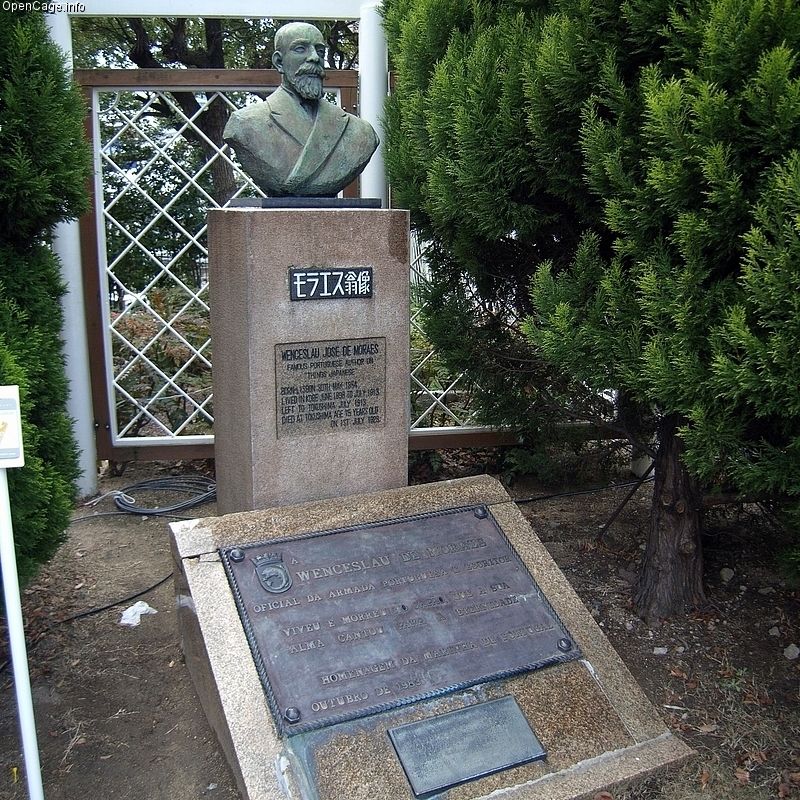
The grave of Wenceslau de Moraes. Courtesy: Creative Commons

[1] Portuguese writer (1854-1929)

[2] Jackucho Setuchi, Japanese nun and writer (1922-2021)

Suzanne Kamata was born and raised in Grand Haven, Michigan. She now lives in Japan with her husband and two children. Her short stories, essays, articles and book reviews have appeared in over 100 publications. Her work has been nominated for the Pushcart Prize five times, and received a Special Mention in 2006. She is also a two-time winner of the All Nippon Airways/Wingspan Fiction Contest, winner of the Paris Book Festival, and winner of a SCBWI Magazine Merit Award.

PLEASE NOTE: ARTICLES CAN ONLY BE REPRODUCED IN OTHER SITES WITH DUE ACKNOWLEDGEMENT TO BORDERLESS JOURNAL

Categories
Poetry

The Stars and the Clouds

By George Freek

THE STARS AND THE CLOUDS 
(After Du Fu, Tang Dynasty poet)

Like an unthinking machine,
I stare at the moon.
I can’t count the stars,
unimaginably far away.
It doesn’t matter.
They have nothing to say.
Like a clock ticking the hours,
ice drips from my eaves.
Clouds as large as mountains,
appear majestic,
but they’re merely illusions.
Life is like this bleak night,
in which we’re blind.
It can’t be understood.
It’s simply confusion.

George Freek’s poetry has recently appeared in The Ottawa Arts Review, Acumen, The Lake, The Whimsical Poet, Triggerfish and Torrid Literature.

.

PLEASE NOTE: ARTICLES CAN ONLY BE REPRODUCED IN OTHER SITES WITH DUE ACKNOWLEDGEMENT TO BORDERLESS JOURNAL