Categories
Poetry

Two Poems by Phil Wood

From Public Domain
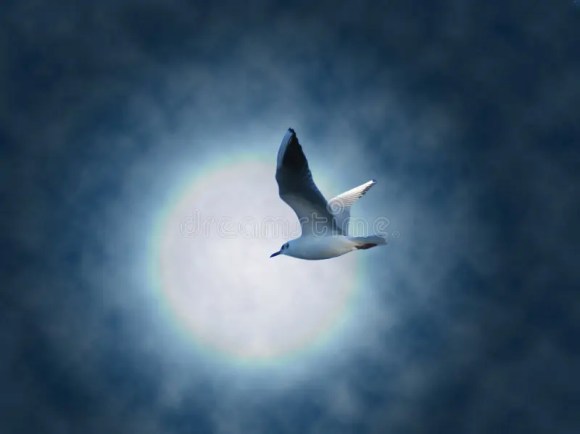
A GULL IN THE MOONLIGHT 

I have longed to leave and be not afraid
Take these wings beyond the listless land
Let the sea erase that bight of sand

I have come to soar and sightless to fear
Let me hush the clinging shores of here
Take these wings and crave this night

I have longed to be lost and be not afraid
I have come so far and to be so near
These wings will brave the flight of light


THROUGH THE KITCHEN WINDOW

The damp and slump of weathered branches
made light with a sudden breeze, and leaves
no longer sullen, uplifted to scatter...
time to believe in matters of chance?

The souls of spices arise from the pan,
my wooden spoon a turmeric moon,
and our pandemonium of kids and you
chasing leaves. I can see them.

Phil Wood was born in Wales. He enjoys painting and learning German. His writing can be found in:  The Fig Tree Coal Mining Anthology, The Shot Glass Journal, London Grip.

PLEASE NOTE: ARTICLES CAN ONLY BE REPRODUCED IN OTHER SITES WITH DUE ACKNOWLEDGEMENT TO BORDERLESS JOURNAL

Click here to access the Borderless anthology, Monalisa No Longer Smiles

Click here to access Monalisa No Longer Smiles on Kindle Amazon International
Categories
Review

Colonisation in the Global Frame

Book Review by Bhaskar Parichha

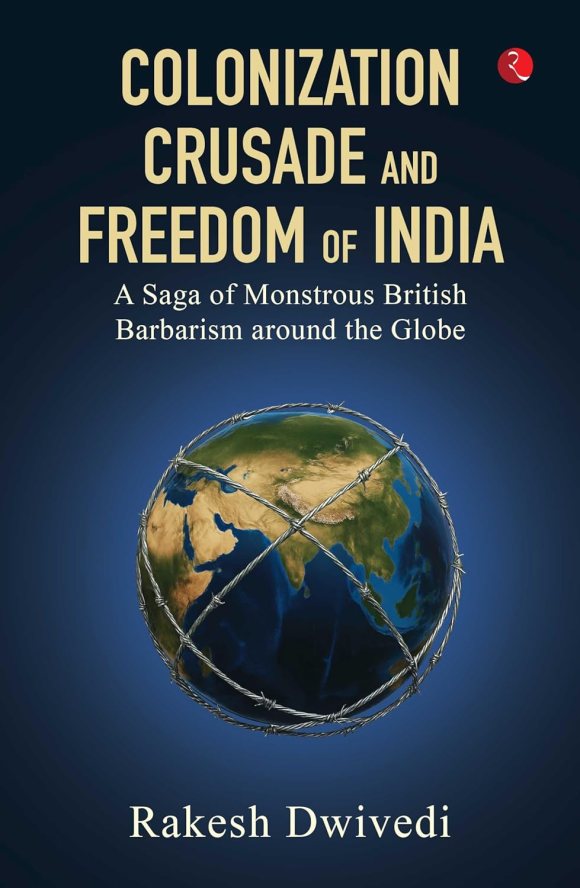
Title: Colonization Crusade and Freedom of India: A Saga of Monstrous British Barbarianism around the Globe

Author: Rakesh Dwivedi

Publisher: Rupa Publications

Rakesh Dwivedi’s Colonization Crusade and Freedom of India is an unflinching indictment of British imperialism and a forceful challenge to the long-standing narrative of colonialism as a “civilizing mission”. Written with the precision of a seasoned constitutional lawyer and the moral urgency of a historian disturbed by selective memory, the book seeks to dismantle the myths surrounding the British Empire while situating India’s freedom struggle within a wider global context of colonial violence.

At its core, the book argues that British rule in India was not an aberration of excesses but a carefully structured system of exploitation sustained by economic plunder, engineered famines, racial hierarchies, and institutionalised violence. Dwivedi rejects euphemisms such as “benevolent administration” or “rule of law,” insisting instead on naming colonialism for what it was: a barbaric enterprise masked by moral rhetoric. In doing so, he aligns himself with a growing body of postcolonial scholarship that seeks to recover suppressed histories of suffering and resistance.

One of the book’s notable strengths is its global frame. Dwivedi does not treat India in isolation but links the subcontinent’s experience to British imperial conduct in America, Africa, the Middle East, and Asia. By drawing parallels between policies of extraction, demographic manipulation, and divide-and-rule strategies across continents, he underscores the systemic nature of empire. This comparative approach lends weight to his claim that colonial brutality was not incidental but intrinsic to imperial governance.

The chapters dealing with famines, wartime exploitation, and economic drain are particularly compelling. Using archival material, parliamentary debates, and secret British records, Dwivedi exposes how starvation and deprivation were often outcomes of deliberate policy choices rather than natural calamities. His discussion of India’s role during the World Wars—both as a resource base and as expendable manpower—adds a crucial geopolitical dimension to the freedom struggle, reminding readers that independence was shaped as much by global power shifts as by internal resistance.

Dwivedi’s legal background is evident in his methodical narrative. He builds his case like a prosecution brief—marshalling evidence, anticipating counter-arguments, and dismantling colonial apologetics with forensic rigor. This gives the book a distinctive voice, though at times the prosecutorial tone may feel relentless. Readers looking for narrative subtlety or emotional restraint may find the language uncompromising, even polemical. Yet this stylistic choice appears deliberate: the book is less concerned with balance than with moral clarity.

The treatment of Partition is another significant aspect. Dwivedi views it not merely as a tragic inevitability but as a consequence of imperial betrayal and strategic manipulation. His critique of British exit policies challenges sanitized accounts of decolonisation and raises uncomfortable questions about responsibility, culpability, and historical accountability.

That said, the book’s sweeping scope occasionally works against it. The ambition to cover centuries of imperial history across multiple regions can lead to dense passages that demand close attention. Some readers may also wish for greater engagement with alternative historiographical perspectives. However, these limitations do not diminish the book’s central achievement: forcing a re-examination of colonial history stripped of nostalgia and imperial self-congratulation.

Colonization Crusade and Freedom of India is not a neutral history—it is a corrective one. It speaks directly to contemporary debates about historical memory, reparations, and the politics of remembrance. In an age when empire is often romanticised in popular culture and public discourse, Dwivedi’s work serves as a necessary provocation.

This book will resonate most with readers interested in colonial studies, Indian history, geopolitics, and the ethics of empire. Whether one agrees with all of Dwivedi’s conclusions or not, his argument compels engagement. It stands as a powerful reminder that freedom was not gifted to India—it was wrested from an empire whose legacy must be confronted, not softened.

.

Bhaskar Parichha is a journalist and author of Cyclones in Odisha: Landfall, Wreckage and ResilienceUnbiasedNo Strings Attached: Writings on Odisha and Biju Patnaik – A Political Biography. He lives in Bhubaneswar and writes bilingually. Besides writing for newspapers, he also reviews books on various media platforms.

PLEASE NOTE: ARTICLES CAN ONLY BE REPRODUCED IN OTHER SITES WITH DUE ACKNOWLEDGEMENT TO BORDERLESS JOURNAL

Click here to access the Borderless anthology, Monalisa No Longer Smiles

Click here to access Monalisa No Longer Smiles on Amazon International

Categories
Poetry

Poems by Michael Lauchlan

Michael Lauchlan
CLOUDBURST 

I want to be a small god, even
a dusty household deity puffing
fiery magic into rooms where sharp

clothes and people inside them
chortle and think they think

and then decide our fate. I’ve
no gift for moving the movers

and only rank as a person
on good days. I shadow the shadows
of plovers as they skitter over mud,

and watch a bored malamute
nose a shrub and find a tick.

We’re rivulets coursing puddle
to pool, bearing last fall’s leaves
and the day’s whirling seeds

toward obscure ends. At our best,
we shine in runoff, joining what

turns in rivers that mean the world
to their gleaming trout. Power
gathers in ashen clouds.

WHAT YOU KNOW

You know the smell of grass.
Sky hunger. The way it feels
being airborne. The shape

of thrush flight, one tree
to the next, a curving path
restarted halfway. That
having just enough isn’t.

Smell of your lover’s sweat.
You don’t know you know this
anymore, but you do.

How we come from parents,
teachers, from one bold friend--
and belong to children
who’ll know us as stories told
for the cadence of the telling.

And you know the metallic sound
of a huckster’s voice.

We speak more slowly now,
assembling thoughts. Once,
in the Dark Sky Park west
of Mackinaw, we spent dusk
watching for hawks,

then trained binoculars on the ecliptic,
finding Jupiter and its four
visible moons, almost

as though we didn’t know.
We knew. Just to see.

Michael Lauchlan has contributed to many publications, including New England Review, Virginia Quarterly Review, The North American Review, Louisville Review, Poet Lore, and Lake Effect. His most recent collection is Trumbull Ave., from WSU Press. Running Lights is forthcoming in 2026 from Cornerstone Press.

.

PLEASE NOTE: ARTICLES CAN ONLY BE REPRODUCED IN OTHER SITES WITH DUE ACKNOWLEDGEMENT TO BORDERLESS JOURNAL. 

Click here to access the Borderless anthology, Monalisa No Longer Smiles

Click here to access Monalisa No Longer Smiles on Kindle Amazon International
Categories
Stories

Old Harry’s Game

By Ross Salvage

It’s twelve o’clock on one of those autumnal spring days. The clouds hang expectantly, waiting to pour their copious contents on unsuspecting recipients; gone are the mare’s tails of the morning’s optimistic outlook. Unaware of the drama above, small children are playing in the enclosed space marked for the younger generations and their mums, one moment laughing, the next moment mopping skinned knees and bumped heads where the children’s end of the world cries are calmed not by nuclear disarmament but a well-placed wet wipe.

It’s twelve o’clock and Harry turns up for work. His metal grey dank and weary coat covers a series of layers of varying shades of dirty brown garments, thankfully mostly hidden from view. His wild and far-flung white hair frames a moth-eaten face, pockmarked and gnarled like tree bark. The hair at the crown of his head has long gone and is replaced by a scarred and spotted pate which it seems has witnessed much violence.

It’s a seasonal thing for me and Harry. Spring rekindles the relationship we’ve never had. I’ve noticed over the past three years that he is fading. The walk has become a shuffle, and every movement is considered carefully.

A few passers-by acknowledge his existence, but most avoid his gaze and he mindlessly watches them hurry past. A busy, well-turned-out lady stops and gives Harry a sandwich. He acknowledges the gift and pushes the contents of the cardboard container into his mouth in one go. The lady’s face is hidden from view, but I imagine there is a look of scorn aimed Harry’s way.

Cheek’s bulging, Harry moves between bins. Not much there yet, he’ll wait until the hour’s up and people with eyes bigger than their bellies will be ditching excess produce. He comes my way and slowly stops in front of me. I take out the extra tuna sandwiches I bought and offer them in his direction. He takes them and nods. He repeats the process of putting a whole sandwich into his mouth at once. The other he pockets for now.

“Any change?” He splutters as pieces of half chewed bread sprinkle the floor.

“No Harry, I don’t do money, you know that.”

He’ll get tired soon and rest. He won’t have any trouble getting a seat. If the benches are full, he merely stops in front of one and stares intently at an individual. This is Old Harry’s Game. It’s not long before they remove themselves. Then within a minute, he will have the bench to himself. If this fails, he just conspicuously starts scratching his crotch. Sure enough, in a wink of an eye Harry is laid out flat on the bench and the former occupants scattered around the park. However, today, he lands on my bench, with a thump.

“You can scratch your balls all you like Harry, I’m not moving.”

Harry reaches down and lifts his left trouser leg to reveal a large patch of red and yellow skin. He looks up at me and his face breaks from the usual inscrutable pose to one of pain and panic.

“I think it’s infected.” And just like that, Harry is no longer the surly tramp that inhabits my lunch spot, but someone in need.

“Do you want my help?” Harry nods.

Fifty minutes later myself and Harry are ensconced in the back of an ambulance. The ambulanceman asked Harry a few questions and I find out more in thirty seconds than I have in the last three years about Harry the tramp. He’s Harry Denton and he’s been on the street for ten years. He’s sixty-two, has one son somewhere, but he hadn’t seen him for a long time.

Thankfully St Andrew’s hospital was quiet for a change on that Tuesday morning. Doctor Sukhra got Harry to lie down. She was diminutive and ordered, and Harry didn’t argue. She seemed immune to the smell that emanated from her patient and I’m guessing he wasn’t an isolated case of ‘Homeless man turns up at Accident and Emergency’.

“Are you a relation?”

“I’m Gareth, A friend…sort of.”

“Now Mr Denton tell me all about this wound.”

It turns out he’d had it for weeks, cut it getting through some wire fencing. She attempted to cut the trousers, but Harry wouldn’t have it, so he rolled the leg up.

“Well, that’s one of the best examples of advanced gangrenous infection I’ve seen. I’m going to call Mr Archer down to look at it. He may be able to save that leg by treating the infection with antibiotics. You’ve left things late sir.”

The next few days I visited Harry. We didn’t talk really, there was no bonding as such, and I mostly ended up playing on my phone. Eventually, Mr Archer came around and broke the news that I’m pretty sure Harry didn’t want to hear.

“Right, Mr Denton. Unfortunately treating that leg hasn’t worked and if you don’t want to die from that infection, we are going to have to amputate that leg just below the knee. You’re damned lucky the infection hasn’t spread further.”

I think my lasting memory from that moment was Harry’s silence. There was a sigh and the shake of a head, but otherwise nothing. The operation would take place on Tuesday, at one o’clock.

“I’ll be back on Tuesday evening,” I assured Harry. It seemed not to register, and I left the hospital once again not sure if I had visited anybody. It was a fraught couple of days, and I was annoyed that my neat and tidy life had been taken over by a tramp.

Monday finally crawled into Tuesday, and at five o’clock I left my desk and headed to St Andrew’s. I picked up some Lucozade from the hospital shop, which somehow seemed little compensation to someone who had just had his leg cut off. I stood outside the ward for a bit, taking longer than usual to apply the hand gel and eventually with a conscious deep breath I went in. I got to Harry’s bed and stood there quizzically. There was a stranger lying in it. I checked I’d come to the right cubicle as they pretty much all look the same, and sure enough this was the correct one. I turned to the nursing station. Perhaps they had moved Harry to another ward following the operation. I was then escorted to an empty private room. The nurse closed the door behind us.

“You’re Harry Denton’s friend, aren’t you?”

“Yes,” I clutched my Lucozade bottle a little tighter.

“I’m afraid Mr Denton didn’t make it. He suffered a heart attack whilst in surgery and never regained consciousness. I’m sorry. We have his belonging here, which aren’t many. We incinerated the clothes he came in.”

I was presented with a small parcel. Enclosed were a few coins, a small knife, tin opener and two sealed envelopes. I looked at the nurse.

 “Do you know any of his relatives?” I shook my head.

“I’m sorry he didn’t pull through. Would you mind leaving your details at the desk, as you’re the only contact we have for him.” I did so, and left the hospital stunned.  At home, I examined the two unopened envelopes. One addressed to me, the other to his son. What struck me was the quality of the handwriting. Neat, cursive and rather elegant. I opened my envelope.

Dear Gareth,

       Thank you for taking the time to look after me. I lost my wife several years ago, and myself and my son became estranged. We didn’t get on without her. Could you send the other envelope to him? It’s the last address I had. The money is for my funeral. Keep any that is left over. Thank you for the sandwiches.

         Harry

Also in the envelope was a cheque for four thousand pounds. So, I made the arrangements. God knows where he got the money from. I sent notification of the time and date of the funeral to Harry’s son, but no acknowledgement came back.

So, on a cold, wet April day, the vicar and I stood over Harry’s grave. The rain drove under my umbrella and my only black suit began to get damp at the knees. The Reverend Allison read the ‘Lord’s my Shepherd’, and we both cast some dirt onto the coffin. The vicar’s umbrella holder signalled to the grave diggers and Harry left the world, buried by an old stone wall in St Michael’s churchyard overlooked by a yew tree. A good spot I thought. Stephen Denton unfortunately didn’t appear, so it was just left to the three of us to say goodbye.

I don’t know if there is a heaven, but if there is I hope it has benches just like the ones in the park, where my tramp friend can play Old Harry’s game to his heart’s content and outrage old ladies on a regular basis. I think it made him happy.

Ross Salvage is a retired teacher who came late to writing. He has written comedy sketches for two review shows (Newsrevue-London and The Treason Show-Brighton). Three monologues can be found on YouTube (Spaghetti Bolognese for One/ Being Greta Thunberg/ Keeping Mum) and he has had two plays performed at the Dolman Theatre, Newport UK. The last one (Drawing the Line) was a winner in their one act play competition. Tea at Five, his first play, has been performed on stage and radio. Ross is currently seeking publication of his children’s novel, Octavius Blood and the Blood Oath.

.

PLEASE NOTE: ARTICLES CAN ONLY BE REPRODUCED IN OTHER SITES WITH DUE ACKNOWLEDGEMENT TO BORDERLESS JOURNAL

Click here to access the Borderless anthology, Monalisa No Longer Smiles

Click here to access Monalisa No Longer Smiles on Kindle Amazon International

Categories
Poetry

Fragments by Sayad Hashumi

Selected and translated from Balochi by Fazal Baloch

From Public Domain
THE ECLIPSE

The naïve claim, the moon lay veiled in shade.
But ask of me, for I beheld that night
My beloved stand, her flowing hair arrayed,
Each stroke of her comb eclipsing silver light.

THE HEALING CARESS

With the very hands that rend my wounds,
She tends and heals them ever so gently.
My heart’s blood she cradles within her palms,
And eases two burdens at once from me.

EMANCIPATION

And grief ground me to kohl beneath its weight,
Till a fleeting glance from deer-eyed beauty came.
Were it not her partridge-walk, her measured gait,
Moonlit nights would rain on me fire and flame.

DREAM-ILLUSION

In the first watch of night, she’d grace my abode
Sayad, so in a dream spoke Hanul, the beloved dear,
Whom do you still wait for so long?
The night has yielded; the day is already here.

SCARLET REMEMBRANCE


I know not by whose grace I yet draw breath.
Twice has my cup almost brimmed over, I recall.
Can memory ever betray you? From my blood-red tears,
Once you dyed your bridal shawl.

CURLS OF ILLUSION

I’m beguiled—they are curls of smoke
Rising from my sighs to the air,
Each time my beloved dear
Runs the golden comb through her hair.

Sayad Zahoor Shah Hashumi (1926-78) is known as the pioneer of modern Balochi literature. He was simultaneously a poet, fiction writer, critic, linguist and a lexicographer par excellence. Though he left undeniable marks on various genres of Balochi literature, poetry remained his mainstay. With his enormous imagination and profound insight he laid the foundation of a new school of Balochi poetry especially Balochi ghazal which mainly emphasises on the purity of language and simplicity of poetic thoughts. This school of poetry subsequently attracted a wide range of poets to its fold. He also authored the first ever Balochi novel ‘Nazuk’ and compiled the first comprehensive Balochi-to-Balochi dictionary containing over twenty thousand words and hundreds of pictorial illustrations.

Fazal Baloch is a Balochi writer and translator. He has translated many Balochi poems and short stories into English. His translations have been featured in Pakistani Literature published by Pakistan Academy of Letters and in the form of books and anthologies. 

.

PLEASE NOTE: ARTICLES CAN ONLY BE REPRODUCED IN OTHER SITES WITH DUE ACKNOWLEDGEMENT TO BORDERLESS JOURNAL

Click here to access the Borderless anthology, Monalisa No Longer Smiles

Click here to access Monalisa No Longer Smiles on Kindle Amazon International

Categories
Essay

The Last of the Barbers: How the Saloon Became the Salon (and Where the Gossip Went)

By Charudutta Panigrahi

If language were a haircut, “saloon” got a buzz cut and a blow-dry and came out as “salon.” That change in spelling is the visible tip of a larger style transformation: one rough, male-only ritual space has been trimmed, straightened, scented and repackaged into a gleaming, multi-service, mostly woman-centred retail experience. Along the way, the loud, fragrant, argument-heavy mini-parliaments of small-town India — the saloons — have been politely ushered into warranties, playlists and polite small talk.

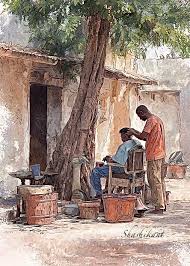
Barbers in India are almost as old as conversation itself. The profession of the barber — the nai or hajam — is embedded in pre-colonial life: scalp massage (champi), shaves, tonsure at rites of passage, and quick fixes between chores. These services were usually delivered in open-fronted shops or under trees, with tools that were portable and livelihoods that were local.

The “saloon” as a distinctive, Western-flavoured, male gathering place began to consolidate during the 19th and early 20th centuries. Port cities and colonial cantonments — Bombay (Mumbai), Calcutta (Kolkata), Madras (Chennai) — saw the rise of dedicated shops selling not only shaves and haircuts but also imported tonics, straight razors and a distinctly public atmosphere shaped by newspaper reading, debate and gossip. Over time, that form blended with older local practices and spread inland. By the mid-20th century, the saloon — a recognisable, chair-lined, mirror-fronted social stage — existed in towns from Kashmir to Kanyakumari and from Gujarat’s chawls to Assam’s market roads.

So ancient barbering traditions fed into a colonial-era intensification of the barbershop as public forum; by the 1950s–70s, the saloon as we remember it was firmly a part of India’s social furniture. The precise start date is a quilt of custom and commerce rather than a single founding ceremony — and that is part of the saloon’s charm.

Walk into a saloon in Nagpur, Nellore, Shillong or Surat and you’ll notice an uncanny resemblance. The reasons are simple and human:

  • Low price point: Saloons survive on quick volumes and walk-ins. That encourages many chairs, fast turnover, and layouts that invite waiting men to talk rather than sit quietly.
  • Ritual services: Shave, cut, champi. These are short encounters that thread customers through the same communal space repeatedly — ideal for gossip to collect and ferment.
  • Social role: The barber doubles as ear, counsellor, news-disseminator and crossword referee. That role is culturally consistent across regions: a saloon’s psychic geography is the same whether the tea is masala or lemon.

The result is that a saloon in Kutch and a saloon in Kerala will differ in language, politics and local jokes — but both will produce that same satisfying racket of opinion, repartee and advice. They are India’s unofficial, peripatetic fora for public life.

Enter the salon: padded seats, curated playlists, appointment-booking and a menu so long it reads like a restaurant wine list (colour, rebonding, keratin, facials, pedicures, threading, and sometimes a minor festival of LED lights). A couple of business realities did most of the heavy lifting:

  • Women’s services earn more and recur more often. Regular facials, hair treatments and beauty routines translate into steadier, higher bills. The money follows the customer, and the space follows the money.
  • Franchising and professional training created standardized staff who follow brand scripts — which tighten conversation and reduce the barber-confessor vibe.
  • Unisex salons consolidated footfall, but that consolidation shrank male-only territory. Men who once had a semi-public living room now sit in chic, quieter spaces that discourage loud, extended debate.

The practical upshot: the saloon’s boisterous mini-parliaments were replaced by stylists with laminated menus, muted background music and an etiquette that favours privacy over political salvoes.

What we miss (and what we gained)

We miss the moralisers, the wisecracks, the boisterous consultancy of unpaid experts who knew which councillor was friendly with which shopkeeper and which wedding was scandalous; the loud education in rhetoric and local affairs; the bench-seat apprenticeship in how to perform masculinity in public.

We gain in expanded choices for women, more professional hygiene and techniques, new livelihoods for trained stylists (especially women), and spaces where people can pursue personalised care without the social cost that used to attend public rituals.

It’s not a zero-sum game — but it does reorder who feels proprietorial about public grooming spaces. The new economics say: she who pays more — and pays more often — gets the say.

Not all saloons are extinct. In smaller towns they still hum. In cities, they’ve evolved into hybrid forms:

  • Old-school saloons persist where price sensitivity and cultural habit remain strong: walk-ins, communal benches, loud conversation and a barber who’ll recommend both a haircut and the correct candidate for local office.
  • Nostalgic barbershops in urban pockets lean into the past with “vintage” decor, whiskey-bar vibes and sports on TV — except now they charge a premium and call the barber a “grooming specialist.”
  • Some entrepreneurs stage “men’s nights” or open-mic gossip hours in neighbourhood shops, trying to recapture the civic pulse while keeping the modern business model.

If you want the old saloon spark, look for places without appointment apps, with too many phones in sight but none in use, and with a tea flask on the counter.

What’s lost isn’t only a loud, male-only gossip pit; it’s a training ground for public argument and a place where local memory was kept live and messy. The saloon taught people how to spar without a referee; the salon teaches how to look good while being politely neutral. If you mourn for the saloon’s barbed banter, you can grieve — but also take action: host a “Salon for Men” in your local café, revive a community noticeboard at the barber, or convince your neighbourhood salon to schedule a weekly “open-chair” hour for community talk (and maybe offer tea).

And until then, if you miss the salty, pungent chorus of small-town democracy, go to any saloon that still has a kettle on the stove and a barber who knows the mayor’s schedule by heart. Sit down, get a shave, and watch a mini-parliament assemble around you. You’ll leave clean-faced, better informed, and maybe a little animated — exactly how democracy used to feel.

From Public Domain

.

Charudutta Panigrahi is a writer. He can be contacted at Charudutta403@gmail.com.

.

PLEASE NOTE: ARTICLES CAN ONLY BE REPRODUCED IN OTHER SITES WITH DUE ACKNOWLEDGEMENT TO BORDERLESS JOURNAL

Click here to access the Borderless anthology, Monalisa No Longer Smiles

Click here to access Monalisa No Longer Smiles on Kindle Amazon International
Categories
Poetry

A Prose Poem by Andrew Leggett

Andrew Leggett
ANGELTURTLE COAXES THE SOUL   

Come now, little frightened one. That twinge is all you’ll feel as death tears you from the desiccated husk that lingers in your carapace. Then it’s done and all is light. You are floating now above your shell. You seem surprised I hover, spreading protection of bright wings as you stare down at your remnant. There is nothing you should fear as I reach to catch you, shielding you from Valkyries and other predatory fowl circling in hope that you will stray into the bardo space where you become their choice reptilian feast of sorrow. Come closer now and let me wrap my webbed, clawed feet around you as I bear you up to where you swim, with myriad freshwater turtle souls, in the river of light. Some you may recognise: your mother, who passed over soon after she laid your clutch. Several of her hatchlings swim in this bright stream in which the golden minnows jump: Leonardo, Donatello, Michelangelo. Here it’s always summertime. You will remember me as Raphael, the Terrapin of Seraphim. You may hear Ella Fitzturtle ‘rise up singing’ to Gershwin’s melody ‘as I spread my wings and take to the sky.’

Andrew Leggett is an Australian author of fiction, poetry, interdisciplinary academic papers, reviews and songs. His latest collection of poetry Losing Touch was published by Ginninderra Press in 2022. His fiction collection In Dreams and Other Stories will be published by Ginninderra Press in 2026.

.

PLEASE NOTE: ARTICLES CAN ONLY BE REPRODUCED IN OTHER SITES WITH DUE ACKNOWLEDGEMENT TO BORDERLESS JOURNAL. 

Click here to access the Borderless anthology, Monalisa No Longer Smiles

Click here to access Monalisa No Longer Smiles on Kindle Amazon International

Categories
Poets, Poetry & Rhys Hughes

What is a Prose Poem?

What exactly is a prose poem? It seems to be a very short story, but not quite. It isn’t a flash fiction. I mean, it almost is, but it isn’t. I realised that I don’t really know what a prose poem is, but I do know that I like them.

From Public Domain

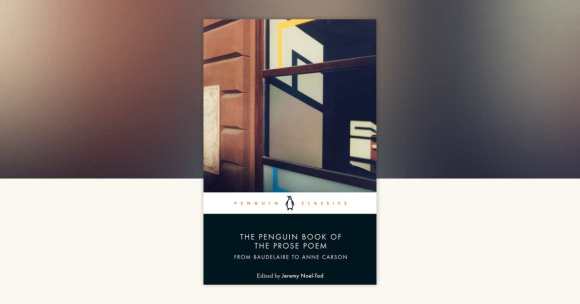
A few years ago, I read The Penguin Book of the Prose Poem. I picked it from a library shelf without any great expectations. I don’t mean that the library shelf didn’t have Great Expectations. I am sure it had that book and plenty of other volumes by Dickens. No, I mean that I wasn’t anticipating much. And let’s be clear: not every piece in that Penguin anthology was excellent or even good. Far from it! There was a lot of pretentious nonsense and word salad gibberish, and some of the best-known writers represented in the pages were responsible for some of the worst contributions. But there was enough brilliance to elevate the entire collection, and in fact I even came to the conclusion that the gems were set off to better effect because of the presence of the duds.

According to the chronology of the contents of that anthology, the prose poem first became a viable mode of artistic expression in the 1840s. I have no idea how true this is. I can only be sure of my own prose poems. Maybe ‘sure’ is too strong a word. I still wonder if they are true prose poems and not flash fictions that are simply more condensed and intense than most flash fictions. All I can do is offer a small sample of my own, four of them from various stages of my 35 year-long writing career. And let me say that I can envisage a day when I stop writing short stories, novels, plays, articles and poems, but still write prose poems (if that’s what these are) because I love the form so much.

            The Landscape Player

At first he played music on his instruments, reaching his audience through the purest melodies. His music washed over them, elevating them, burning their eyelids with tears or else trembling their lips with a dozen different kinds of smile. And when the vast wall of sound he had created had died away, there would be a silence more moving than any applause.
In time, he noticed that listeners were describing his music in terms of feelings. They spoke not of harmony and rhythm but of sadness and joy. They spoke not of keys and modes, but of elation and despair. The music was merely an interface. Accordingly, he started making instruments that played emotions instead of notes.
His scheme worked well; the critics were enraptured. His harps were threaded with heartstrings and plucked with plectrums made from the fingernails of dead lovers. His Miserychords and Tromgroans explored the outer limits of tragedy, a lugubrious drone agitated by the pounding Kettle Glums. While on a different level, the Mirthophone, Memory Gongs and rasp of the Double Bliss provided a counterpoint of cautious hope and nostalgia.
The reviews were extremely favourable. People came from all over the land to hear him. But once again, they took refuge in metaphor. Now they spoke not of sadness and joy, elation and despair, but of a sea of tears dotted with misty islands, of evil vales of shadow and rosy mountains bathed in light, of dank, gnarled forests webbed on mossy floors by a thousand cheerful babbling brooks. They explained their emotions in terms of landscape.
Deeply troubled and filled with rage, he took apart his instruments and reassembled them into something new. Now he could play landscapes. In seven minutes, he could play out his own Creation there on the stage, before them all. With his fingers on middle-sea and various salt flats, he stood them ankle-deep in puddles where an angry sun had dried up a prehistoric ocean. Salt on their shoes, they kicked sand in a purple cloud, sliding across the desert toward a ruined amphitheatre.
On and on they travelled, over the craggy sharps of unknown ranges that lacerated the sky. His brazen scales swung them in the balance; they ascended the crackling walls of icebergs and toppled over the other side. His miner chords took them deep beneath the Earth, under the drifting continents through a molten sea. And then, emerging from the depths of a volcano, they wove through a jungle of semi-quavers, trampled a tundra of tones.
The crashing crescendo became an enormous tidal wave bearing down on their heads, sweeping them onto the rolling steppes of the Coda. They suddenly realised that they were witnessing every sight that had ever existed and others that never would exist. They were exhausted, they were jaded. This was his revenge.
And yet, he had overlooked one detail. As he played the final chord, ready to storm off the stage, the final landscape shimmered into view. It was the landscape of the Concert Hall itself, complete with musician and instruments. He saw himself begin the piece afresh, from the overture. He guessed that he had condemned himself to an endless cycle of craters, sand dunes and rivers.
The audience grew restless. They yawned and fanned themselves. When he came around to the Jurassic again, most of them stood up and left. By the end of the Ice Age, the auditorium was empty. He had tried too hard to connect directly with other people. He had forgotten that only in the act of love can the gap between desire and outcome be truly bridged.
Some say that he is still there, multiplying himself forever, squeezing himself into the mouth of eternity like a snake that swallows its own tail, or like a raconteur who swallows his own tale. Others maintain that he has already reached infinity and has been set free to play a penny whistle on street corners. Either way, it is generally agreed that, in the world of music, he managed to create something of a scene.


Rumpledoodle Dandy

I went to the loan shark but they were out of hammerheads. I don’t know how I am going to drive my nails back onto my fingers. I guess I don’t have to drive them, they can always walk or cycle. They can even cycle back afterwards, but that counts as recycling and all the counts are at an aristocrats’ meeting at the moment. How many counts are there? I didn’t keep note. The best kept note is G#, the others tend to go off faster. They positively fly. Fly? Those flies were thick on the ground. When they took off, they were cleverer. They took off their smocks and berets. Why they wore fruit on their heads is anyone’s guess. Straw berets rot rapidly in the rain, that’s true. But the reign is over. Over where? Over there! Where Rumpledoodle Dandy sits on a throne and wears a crown that is the talk of the town. Strange king! He has fitted wheels to his palace and now he’s the torque of the town too.


A Man on Stilts

There was a man on stilts and his stilts kept growing taller. He might have been an acrobat or fool, a visionary or scoundrel, nobody knew. At first, he just stood on stilts that were as high as telegraph poles, and he strode about the city with a perspiring face. But under the sheen of his sweat, he was smiling. The following day his stilts had already doubled in height. And now he stepped over trams and trains with an ease that bordered on the obscene, as if the traffic was beneath his notice, as if those vehicles were discarded toys or slices of dropped cake. Within a week his stilts were so high he could step over any building in any city of the nation or indeed of any other country.
What can be said to such a man? How can anyone communicate with him? No crane could reach him, no ladder. A helicopter was sent up to negotiate, but the clatter of the rotors drowned out the conversation. An aeronaut in a balloon managed to float beside him for several hours. They discussed many topics but whether the exchange was cordial or heated is uncertain. A gust of wind puffed the aeronaut away over the ocean and he vanished. Long after we had given up hope of speaking with him, of learning his name and intentions, a sheet of paper floated gently down to street level. It was a letter he had written to us. When we read it, we were compelled to grimace.
His handwriting was clear and his message unambiguous. His stilts would keep growing longer forever, he said. There was nothing we could do about the situation. There was nothing he could do. His destiny was an elevated one. Why fret about his altitude? Why worry about the ethics of his movements, the purity of his motives? Higher and higher he would go, his ersatz legs lengthening each day by a significant percentage. Soon enough, he would be able to stride from continent to continent. Then he would circumnavigate the globe in two or three quick steps. Finally he would be able to bridge the gap between this planet and the moon or even stand on other worlds.
We accepted this, some of us. Others argued for the cutting down of those monstrous stilts, for the burning of them, for the introduction of woodworm or woodpeckers. Anything to bring him back, to stop him striding about like the god of storks. We waited in vain for more letters to float down. At last it seems he rose up through the atmosphere until his head protruded beyond the bubble of air that permits life. His face was in space and he suffocated there. His body toppled and fell and burned up like a meteor. But a rumour began that he is still falling and this rumour has turned into a modern myth. People wait to be struck by his cadaver, to be grotesquely blessed.
The stilts themselves did not fall. They have grown so heavy that they are driving themselves slowly into the ground. They will push through the crust of our planet and ignite in the magma far below. In the meantime, we harness their sliding motion, connecting both stilts to a series of cogs and crankshafts, and we congratulate ourselves on our ingenuity. We might even find a practical use one day for the rotating toothed wheels. The letter from the sky has been obtained by the museum and it can be viewed in a glass case in one of the rooms, I have no idea which one. I never visit the museum. My grandmother is there, pickled in a jar, and I prefer to avoid gazing at her.


Ocean of Words

They were separated by a vast body of water, the ocean, and they longed to press their own bodies together, but it was not possible. When would it be permitted? Only when distance was abolished. They wrote letters to express their love and yearning and these letters passed back and forth between them. So many words did they write that they had to continually dip the nibs of their pens into the inkwell. When each letter was ready to be sent there was a lurching sensation inside them. What could this mean? They each stood on the shore and gazed over the black waters but the horizon prevented visual contact. Only the letters could pass that taut line, sliding under it the same way a postman can push an envelope under a door. But the more letters they wrote, the closer the horizon seemed. Was this an illusion? No, the landmasses on which they lived had broken free and were floating like ships, moving to a point in the middle of the ocean. How strange and marvellous! They wrote letters to express their feelings on this subject. Then one morning they both understood what had happened. The ocean was made of ink. They had dipped their pens into it so many times that now it was dry. They were grounded. And so, they jumped lightly down onto the seabed and ran the few remaining steps into each other’s arms.

Rhys Hughes has lived in many countries. He graduated as an engineer but currently works as a tutor of mathematics. Since his first book was published in 1995 he has had fifty other books published and his work has been translated into ten languages.

.

PLEASE NOTE: ARTICLES CAN ONLY BE REPRODUCED IN OTHER SITES WITH DUE ACKNOWLEDGEMENT TO BORDERLESS JOURNAL

Click here to access the Borderless anthology, Monalisa No Longer Smiles

Click here to access Monalisa No Longer Smiles on Kindle Amazon International
Categories
Poetry

Be Good to me on Sunday

By Stephen Druce

From Public Domain
BE GOOD TO ME ON SUNDAY


I don't need your devotion --
your attention -- or to listen,
connect with my emotions --
or to tell me I'm forgiven,

I don't need your affection
or to feel your tender touch,
I don't need your protection --
your support -- to be my crutch,

I don't need adoration --
all your compliments and thanking,
your true appreciation --
all your patience -- understanding,

I don't need all the accolades --
your gratitude -- respect,
your sympathy -- your serenades --
your charming intellect,

I don't need all your lavish gifts
and all your good advice,
don't save me in a snowdrift -
I don't need your sacrifice,

I don't need your agreement
or to see my point of view,
just be good to me on Sunday --
and be good to me on Monday too.

Stephen Philip Druce is a poet and surrealist from Shrewsbury in the UK. He is published in the USA, Hungary, India, Canada, Ireland, the UK and South Africa. Stephen has also written for London theatre plays and BBC Radio 4 extra.

PLEASE NOTE: ARTICLES CAN ONLY BE REPRODUCED IN OTHER SITES WITH DUE ACKNOWLEDGEMENT TO BORDERLESS JOURNAL

Click here to access the Borderless anthology, Monalisa No Longer Smiles

Click here to access Monalisa No Longer Smiles on Kindle Amazon International

Categories
Review

Geetika Mehendiratta Comes of Age!

Book Review by Meenakshi Malhotra

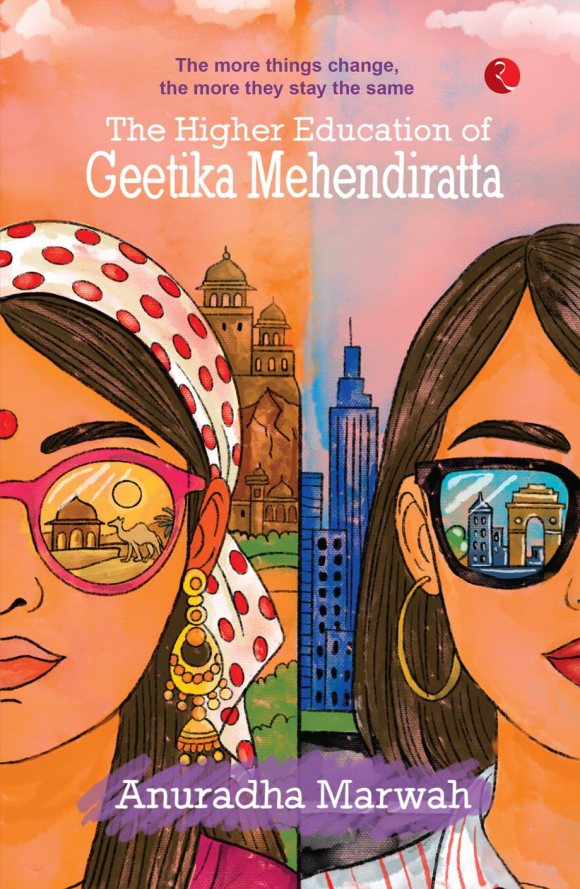
Title: The Higher Education of Geetika Mehendiratta

Author: Anuradha Marwah

Publisher: Rupa Publications

Anuradha Marwah’s debut novel, The Higher Education of Geetika Mehendiratta, republished by more than thirty years after its original publication, is a delightful read. It is a trailblazer and a pioneer in more ways than one-an Indian campus novel before the campus novel became identified as a genre; and a frank exploration of female sexuality without the usual  humbug  and euphemisms associated with the treatment of sex in many 20th century novels.

It scores in other respects as well-its recreation of small-town ennui before the internet took over our lives, in the middle of a hot summer is a feeling  we recognise well. Time moved slowly, people still read books and families still conversed with each other, albeit in the most cliched terms. However, the novel’s tone is not nostalgic, and does not “invite readers into a sepia-tinted past.” (Authors Note)

When the novel opens, we see Geetika whose outlook and  family context is quite at variance with the majority of people around her. We cannot imagine her settling into middle-class bourgeois domesticity with her ‘boyfriend’  or otherwise. The slow pace of life and limited options available in Desertwadi make it a claustrophobic trap for someone like Geetika, who is ready to embark on her adventures, both intellectual and sexual. Her experiments in both directions is a sort of liminal phase before she embarks upon the next stage of her life.

The author has hit the right mixture of irony, tongue-in-cheek humour and social satire. Her social satire pierces particularly deep, albeit at the risk of occasionally falling back on stereotypes. This is strongest in the case of the typical small-town aunty, Andy’s mother. Andy, her son, who is attempting to court Geetika, can barely get anything said (or done!) without  his mother butting into the conversation or walking into his room. Dalpat Singh is another such character, a corrupt small town sports official who has considerable clout and fully exploits his position in whatever way possible. Geetika realises that “Dalpatji was a reality I could not accept. He did not care if the Indian team won or lost; he only cared about the requisite number of scotch bottles that had to be presented to a journalist in order to get good coverage in the papers.”

Drawing on an undertow of real events like the mega sports hosted by India, ASIAD in 1982, the novel stays moored to recognisable places and times. Sometimes, it almost seems like a ‘roman a clef,’ a novel where real events and people appear with fictitious and invented names. The author has explored the nooks and crannies of the two cities, Delhi (Lutyenabad) and Ajmer (Desertwadi) in intimate detail, the claustrophobia of small town existence and the fraught ‘freedoms’ of the big city which breeds its own threats and insecurities. Double standards of morality and the double binds of gender are both in evidence in the novel. Geeti’s friend, Vinita, gets married to a NRI who while being sexually experienced himself, wants  a ‘pure’ Indian wife. Vinita is comfortable with her new husband’s sexual exploits before marriage: she did not mind as it was “all before marriage and men will be men-if girls were game, one couldn’t expect them to be saints.” The double bind of gender is evident in Geetika’s careworn mother. A working woman who is also engaged in social work, Geetika also observes how she has to do the heavy lifting when the domestic help is on leave.  

Many aspects this coming of age story seems particularly prescient for a novel that  was first published in 1993. Its primary concerns —  the stifling and limited choices of life particularly for girls in small-town India, its frank and unabashed exploration of sexuality, narrated in a sassy and unapologetic way make it seem like a fitting story of twenty-first century India.   The book accurately captures the inner conflicts of a young woman caught between a society where even progressive parents are limited by the paucity of available options and the narrowness of societal expectations.   Geetika inhabits a society that veers between conservatism and a kind  of  progressive  hypocrisy. On a quest to expand the contours of her world, she learns that there are no easy choices and the seemingly viable options of settling into bourgeois domesticity, albeit self-chosen, would clip her wings and disable her from self-realisation. This realisation hits her when she is already into the relationship. Some of the fault lines in the relationship between Geetika and her boyfriend, Ratish, are evident from the beginning. From his conservative perspective, feminism is a problematic term. On being asked about his mother, he declares that she is not a hysterical feminist. For him, a woman’s primary duty is to make herself available and agreeable and  be a good mother and wife, and any other aspiration is dismissed as a feminist excess.  

 Geetika realises that her curiosity and quest for freedom have led her up a slippery slope and this book is about the incremental costs of chasing one’s dreams.  The book ends on a somewhat sombre notes with Geetika giving up on dreams of middle class marriage  which would severely limit  her choices. The unconventional and difficult choices she makes also demonstrate the influence of feminist staff rooms where many  women– colleagues and associates — have made difficult and  unconventional choices.  In their company, Geetika realises that she has let herself drift into a relationship which would negate any exercise of agency on her part. It is in part, her recovery of her intellectual freedom to think and write authentically that constitutes her higher education.

The novel also offers us a social satire of ‘higher education’ in the premier institutions of Lutyenabad, replete with references to Capital University and Jana University. This is an insider joke with barely veiled references to actual universities in Delhi. Further, the academic pretensions of many academics who unleash fancy theories, which they have barely grasp themselves, on their hapless research students,  are called out. Literary references pepper the text where Roland Barthes’s   essay “Striptease”, a masterpiece of structuralist criticism, actually refers to a stripping of Geetika’s professor of her pretensions of having been at Sorbonne .   

The Higher Education of Geetika Mehendiratta is a sharp, accurate, searing and witty coming of age story, a bildungsroman, which is unabashed in its honesty about an ambitious  young woman’s journey to self-realisation. To quote from the Author’s Note, “Geetika, my outspoken protagonist, questioned and challenged, and the issues she grappled with are by no means resolved till date.” She continues, “Young people continue to face similar dilemmas: career or family, feminism or femininity, love or rebellion.” Geetika’s story is still relevant and contemporaneous,  ”adding the heft of history to present-day conversations on marriage and partnership.” It’s a coming of age story that resonates far and wide into the twenty-first century.  

Click here to read an excerpt of the novel.

Meenakshi Malhotra is Professor of English Literature at Hansraj College, University of Delhi, and has been involved in teaching and curriculum development in several universities. She has edited two books on Women and Lifewriting, Representing the Self and Claiming the I, in addition  to numerous published articles on gender, literature and feminist theory.  Her most recent publication is The Gendered Body: Negotiation, Resistance, Struggle.

.

PLEASE NOTE: ARTICLES CAN ONLY BE REPRODUCED IN OTHER SITES WITH DUE ACKNOWLEDGEMENT TO BORDERLESS JOURNAL

Click here to access the Borderless anthology, Monalisa No Longer Smiles

Click here to access Monalisa No Longer Smiles on Amazon International