I once believed that writing poetry was the expression of noble emotions, the realisation of profound thoughts. But I've come to understand with age that this isn't the case.
I once thought that love was as urgent as matters of life and death, residing in a special, noble realm. But now, in my later years, I realise that this was a mistake born of blind faith.
Looking back from the downstream of life, I see that poetry and love resemble the mundane things of daily life, mixed with the noise and dust of the marketplace.
They emerge like sprouts in the midst of weariness, in anxious toil, during sleepless nights of deep contemplation, and on the exhausting commute to home after work, welling up like a hidden spring
Ihlwha Choi is a South Korean poet. He has published multiple poetry collections, such as Until the Time When Our Love will Flourish, The Color of Time, His Song and The Last Rehearsal.
.
PLEASE NOTE: ARTICLES CAN ONLY BE REPRODUCED IN OTHER SITES WITH DUE ACKNOWLEDGEMENT TO BORDERLESS JOURNAL.
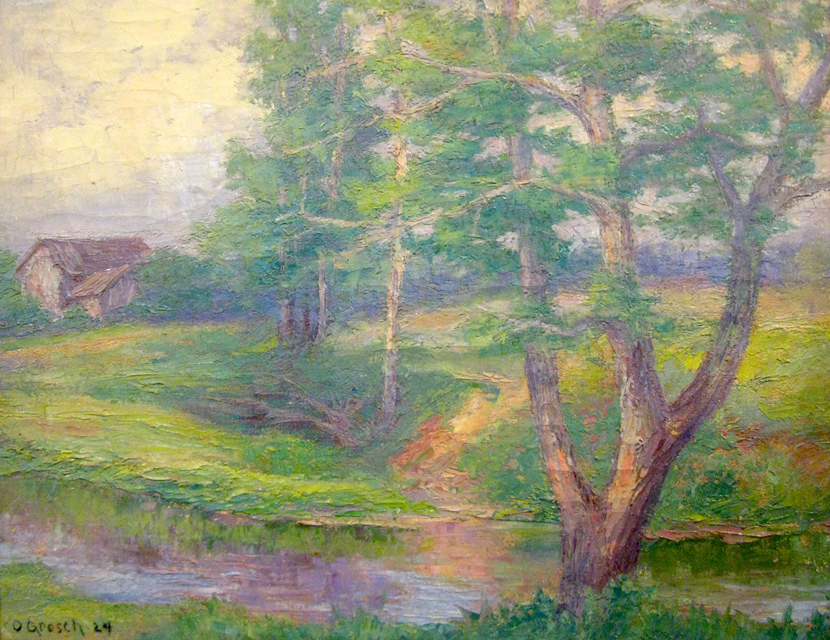
Pond near Springfield by Oscar Grosch (1863–1928). From Public Domain.
Like a breeze, I walk lightly. Sitting in the spring sun, Gazing at the green valley, Life is truly a lonely thing.
Even with yesterday's memories and tomorrow's hopes, Even with friends coming and going and daily business, Living is truly a lonely thing.
All day today, I've been thinking of you. Is my life lonely because I miss you? Is this spring day lonely because you're there?
Like a breeze, I walk aimlessly. Sitting on the grassy field, gazing at the waves in the lake, Even this blossoming season feels lonely
Ihlwha Choi is a South Korean poet. He has published multiple poetry collections, such as Until the Time When Our Love will Flourish, The Color of Time, His Song and The Last Rehearsal.
.
PLEASE NOTE: ARTICLES CAN ONLY BE REPRODUCED IN OTHER SITES WITH DUE ACKNOWLEDGEMENT TO BORDERLESS JOURNAL.
Translated from Bengali by Debali Mookerjea-Leonard
Nirendranath Chakraborty (1924 – 2018) was born in united Bengal. A poet, translator and novelist, he was awarded the Sahitya Akademi Award for his poem based on the Emperor’s New Clothes in 1974, voicing the need to reacquaint with the innocence of childhood. The same year he was also awarded the Ananda Puraskar. Nirendranth Chakraborty translated Hergé’s comics into Bengali. Calcutta University bestowed on him an honorary Doctor of Literature degree. Amalkanti is one of his well-known poems, again critiquing societal trends.
AMALKANTI*
Amalkanti is my friend, We had been at school together. He came late to class every day, lessons unprepared. When asked verb-declensions, He gazed at the window in such amazement, That we felt sorry for him.
Some of us aspired to be teachers, some, doctors, others, lawyers. Amalkanti didn’t want any of that. He aspired to be sunshine. The blushing sunshine after the rains, in the late-afternoon of cawing crows, Sunshine that lingers on the leaves of the rose-apple and bell fruit Like a momentary smile.
Some of us became teachers, some, doctors, others, lawyers. Amalkanti couldn’t become sunshine. Today, he works in a dark printing press. And he visits me from time to time; Drinks a cup of tea, chats a little, then he says, “I’ll be off.” I see him to the door.
The one among us who is a teacher today, Could easily have been a doctor, The one who aspired to be a doctor, Would have also done well as a lawyer. Somehow, we all got our wishes, all except Amalkanti. Amalkanti couldn’t become sunshine. Musing and musing, musing and musing Upon the sun’s unflawed radiance, He had once aspired to become sunshine.
*(lit. “unflawed radiance”; also used as a name)
A Bengali recitation of Amalakanti by Shamshuzzoha, a poem by Nirendranth Chakraborty.
Debali Mookerjea-Leonard is the Roop Distinguished Professor of English at James Madison University. Together with research and teaching, she also translates Bengali poetry and fiction. Debali has the permission to publish this translation.
.
PLEASE NOTE: ARTICLES CAN ONLY BE REPRODUCED IN OTHER SITES WITH DUE ACKNOWLEDGEMENT TO BORDERLESS JOURNAL
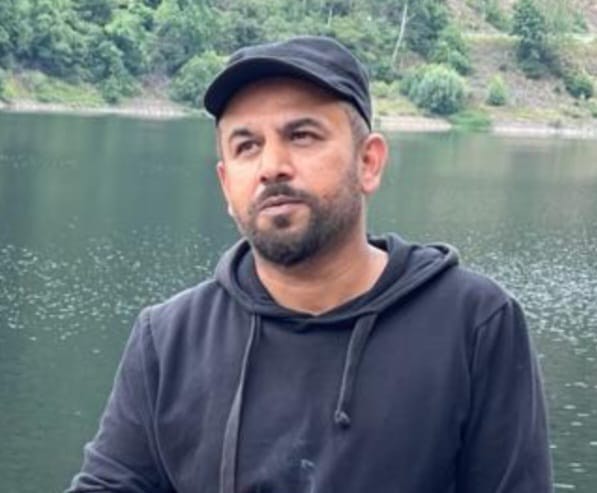
Hafeez Rauf belongs to the generation of the poets who emerged on the literary landscape in the early 2000s. Homelessness, exile, uprootedness and related agony are the recurrent themes of his poetry.
How far will the last sigh of the smoke stretch, Rising from the tires Burning in the distance?
The road lies closed -- No longer offers a passage. Women and children, Youths and elders -- All surrounded by an ever-rising wall of helplessness.
How far can their hands, their voices reach?
Meanwhile, A crumbling wall, In the wall, a decayed door, And the door gazes at the occasional passerby, Stretching its sight as far as it can see.
It watches the deserted roads With the frantic eyes of a man Who, after losing something, searches his pockets in despair.
Where will this caravan of smoke lead? The door just gazes.
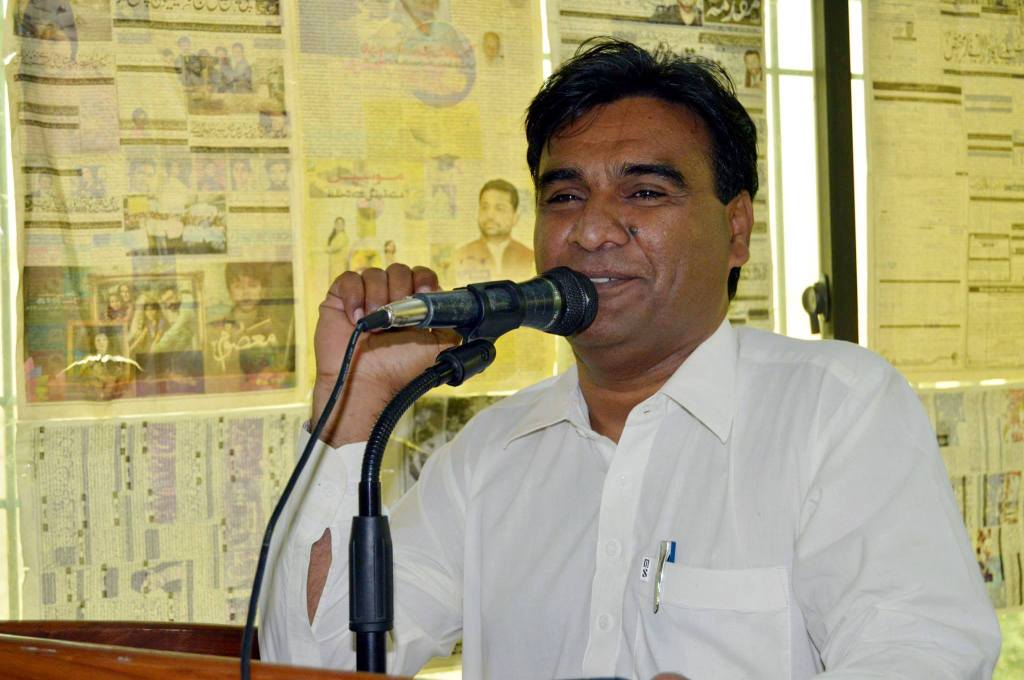
From Public Domain
Fazal Baloch is a Balochi writer and translator. He has translated many Balochi poems and short stories into English. His translations have been featured in Pakistani Literature published by Pakistan Academy of Letters and in the form of books and anthologies. Fazal Baloch has the translation rights.
PLEASE NOTE: ARTICLES CAN ONLY BE REPRODUCED IN OTHER SITES WITH DUE ACKNOWLEDGEMENT TO BORDERLESS JOURNAL

In the city, Those who know me, Look at me through two different perspectives:
"You're peerless, So pure, We need souls like yours To grace our world, May your shadow endure forever."
"If more souls like yours, Doomed and dark, Taint our land, Our trees will wither, You're a stain, a blight On the fabric of our world, May you end up in shadows unseen."
Yet as I weigh my deeds And ponder deeply, A voice echoes deep within me, Unfurling the truth: “I am a human, A fragment of my heart is housed by God And the devil seeks to take over the rest.”
In this city, Those who know me Look at me through two different perspectives. For if I am truly a human, How can I be stripped of my share From either?
Manzur Bismil is a prominent Balochi poet. He emerged on the literary scene in the early 1990s and soon rose to fame, creating a niche for himself in the pantheon of the Balochi poets. He is widely known for his neo-classic style, especially in his verses. So far he has published eight anthologies of his poetry. This poem is taken from the second edition of “Hoshken Kaaneeg” published in 2017.
Fazal Baloch is a Balochi writer and translator. He has translated many Balochi poems and short stories into English. His translations have been featured in Pakistani Literature published by Pakistan Academy of Letters and in the form of books and anthologies. Fazal Baloch has the translation rights of of this poem from the poet.
PLEASE NOTE: ARTICLES CAN ONLY BE REPRODUCED IN OTHER SITES WITH DUE ACKNOWLEDGEMENT TO BORDERLESS JOURNAL
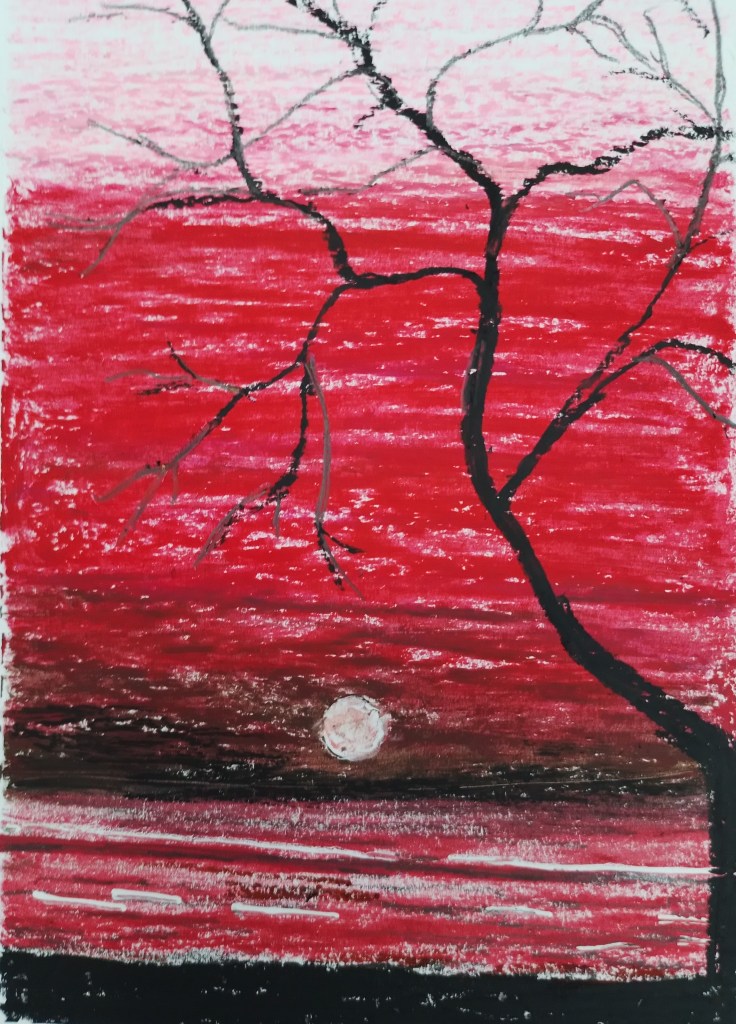
Bitan Chakraborty’s TheBlight and Seven Short Stories, translated by Malati Mukherjee from Bengali, heralds the arrival of a major talent in the sphere of short fiction, characterised as it is by an evolved narrative technique that raises the art of storytelling to a new pitch of intensity and subtlety.
The image of blight in the first and titular story is a metaphor that pervades the entire collection. Blight, as one knows, is an agricultural phenomenon, a term for a type of disease that affects crops and ruins harvests. In Bitan Chakraborty’s superb collection of stories, it symbolises the rot that has set in everywhere, the moral corruption that is eating away at the innards of society.
Characters such as Asesh, Neeladri, Karmakar and others are shown to have no conscience or scruples. They have little faith in the system and, therefore, have taken the law into their own hands, forging unholy alliances, negotiating shortcuts and demonstrating scant respect for traditional decencies. They are men in a hurry, eager to get rich quickly. Part of the local land-grabbing mafia and real estate “syndicate”, they are members of what Partha Chatterjee has described in his writings as a “political society.”
An evocative use of symbol and irony imparts a rhetorical depth to the conflicts enumerated. In the titular story, ‘The Blight’, for instance, the all-devouring, predatory and carnivorous instincts of Asesh are set against his father Moni’s ethics of integrity. Moni’s investigative methods intensify in the course of the story as he compulsively enquires about the prices of potato and potato products in a bid to assess the extent of Asesh’s deceitful dealings, his acts eventually spiralling into the surreal tableau at the end when father and son are locked in a physical struggle. Asesh’s relishing of his mutton just prior to this incident is an analogical and allegorical master stroke pointing to his material gluttony, insatiable appetite and ruthless self-gratification.
In the story. ‘The Site’, Neeladri, the son and Nalinaksh, the father are counterparts of Asesh and Moni, undergoing the same conflicts and revealing similar differences of opinion and values. Nalinaksh, however, is not untainted like Moni, neither is he impervious to the good life. It’s just that he cannot brook the scale of corruption indulged in by Neeladri. Is his end foreshadowed and pre-planned as seems to be suggested by the funeral card dropped surreptitiously in Hari’s bag?
In the short story ‘Reflection’, Ahan the Bengali protagonist, who is a vocal protester against habitual acts of indiscipline and injustice on trains, unwittingly indulges in the same, displaying disproportionate anger at an errant co-passenger for a minor infringement. The figure he is confronted by at the end of the story points to the ambiguity of his very being. Is this figure a self-reflection, an alter ego, or a doppelganger?
In ‘A Day’s Work’ and ‘The Mask’, it is Mahadeb, the debt-ridden and exploited daily wager, and Puntu, the suburban mask-seller who are manipulated by Karmakar, the jeweller-turned-moneylender and Shubho, the stage manager turned middleman respectively. In the latter story, the mask becomes a potent symbol of disguise used by perpetrators to conceal their wrongdoings. Shubho hides his questionable dealings in props as a theatre manager even as Neel conceals his affair with his office secretary.
In the story ‘Landmark’, Tapan goes to Delhi for work and decides to visit his friend Jashar in Ghaziabad. He sets out on the journey but fails to reach his destination because the landmark known to him has disappeared. His aborted journey becomes a symbol of the frustrated quest of modern man who fails to progress despite registering movement. One is reminded of the hapless souls trapped in the different circles of hell in Dante’s Inferno, even as shades of Joyce’s Dubliners are evident in the circling of Lenehan within the city of Dublin in the short story ‘Two Gallants’.
The landmark in question, namely two adjacent butcher’s shops at the mouth of a lane, had fallen prey to fundamentalist ire over the meat-eating habits of certain communities. The story has not so much a climax as an anticlimax in the revelation of the convenience store owner who enlightened Tapan about the fate of the owners of all such establishments in the area — they had been chopped into mincemeat and fed to unsuspecting patty consumers. This is gallows humour of the most effective kind and is directed at Tapan whose mouth is filled with the particular savoury at that moment.
In ‘Spectacles’, Siddharth has been wearing the wrong pair of spectacles and consequently not seeing things clearly. The trope of a skewed perspective is evident in his youthful misjudgment of Sameerda to have been a man of ideals. In ‘The Site’, Nalinaksh cannot understand what the beggar down below on the street is telling him so urgently just moments before his fall from the balcony and subsequent death, symbolizing a lack of communication.
Historically, ‘blight’ was a sociological term applied to urban decay in the first half of the twentieth century. Usually associated with overcrowded, dilapidated and ill-maintained areas affecting built structures and civic spaces, the term has this palpable air of dereliction which, translates into a pall of moral disrepair that dooms the situations in the mentioned stories with an inevitability, reinforcing the significance of the title in its varied connotations.
In an epical sense, the conflict in the stories is between the forces of good and evil. It is also between social classes, and Moni comes across as the tired torchbearer of a jaded idealism whose dedication to his cause is regarded by some as whimsicality, so ingrained and ubiquitous is the sense of blight. The moral protesters in Moni, Nalinaksh, Ahan, Subal and others, for all their integrity, are shown to be largely ineffectual in their opposition to venality. Nevertheless, they are entirely credible within the ambit of their operations.
Immoral and illegal activities, found in almost every story in the collection, yield a cumulative effect in the final story, ‘Land’, where an entire village, having fallen prey to unscrupulous land appropriation, lies desolate and ghostly. The poignant reality of dispossession is brought home most vividly in the isolation of the young bride-turned-widow, Manasa, who, by the end of the story, spends her days gazing at her husband’s burial site from her window.
Real estate is not only a veritable canker but almost a narrative device in its variations and applications in this clairvoyant cluster of stories. It is one’s native soil and eventual resting place (‘Land’); dream or fantasy (Mukto’s in ‘The Blight’); make-believe space of the theatre in ‘The Mask’ and the rough and tumble of property dealings in ‘The Site’, ‘Spectacles’ and of course, the titular story.
The modernistic slant of the collection is expressed with objectivity without authorial interventions and, consequently, the lack of any judgemental attitude. Yet, Chakraborty successfully suggests there is no law and order, justice or tolerance in contemporary society, only a wide chasm between the haves and the have-nots which is aggravated with every passing day as he repeatedly portrays ordinary people as having no rights, voice or means to fight the corrupt.
He does this with postmodern techniques of flux, erasure and revision. Nothing is permanent, and the provisional truth of the moment is glimpsed through opposites, overlaps, continuities and breaks. A case in point would be the friction between different kinds of betrayal as in ‘Spectacles’ — Sameer-da’s wife had discovered an indifferent and unhelpful side to Siddharth’s nature even as the latter believed Sameer-da to have been what he was actually not.
In ‘The Blight’, the space between the contesting narratives of deliverance and deviance, the first pertaining to Monì and the second to Asesh holds the developing interest of the story within its escalating spiral. Between realism and surrealism, in the same story lies the flitting apprehension of the truth of Asesh’s character as he tears into the flesh of an animal while enjoying his Sunday lunch of mutton and rice.
The meanings of Chakraborty’s stories cohere in the consequences of both commission and omission. In ‘Land’, for instance, momentous developments such as the death of Subal are scarcely mentioned, modernistically enacting the crisis through structure and style. The piece seems to be caught in a curious aesthetic apathy in which gaps and ellipses in the mode of narration express the emptiness at the heart of Manasa’s life and those of others like her.
The translation helps through the fluid grace with which it transliterates, transcribes and transcreates the stories from one language to another, all the while trying to retain the nuances of the root culture. This same culture is sought to be portrayed through two languages with very different socio-cultural associations, the first being the original Bengali in which it was composed and the second a colonial legacy notably indigenised. Malati Mukherjee has a keen ear for voice, accent and dialect, which aids her in effecting an authentic idiomatic equivalence, at once elucidating and engaging.
Two passages stand out for the haunting beauty of their description. One is the spectacular reference to the world’s oceans and forests contained in the aquarium and the balcony garden in ‘The Blight’, and the other is the luminous lambency of the moon in ‘Land’ as it broods over the melancholy landscape. Bitan Chakraborty’s stories in this collection are rare blooms depicting a moral topography in torpor where character, setting and style intersect to create points of extraordinary insight.
Dr Ajanta Paul is a poet, short story writer and literary critic. She is currently the Principal at Women’s Christian College, Kolkata. Her publications include a book of poetic plays — The Journey Eternal; a collection of short stories — The Elixir Maker and Other Stories; a book of literary criticism — American Poetry: Colonial to Contemporary; three books of poems — From the Singing Bowl of the Soul: Fifty Poems, Beached Driftwood and Earth Elegies.
.
PLEASE NOTE: ARTICLES CAN ONLY BE REPRODUCED IN OTHER SITES WITH DUE ACKNOWLEDGEMENT TO BORDERLESS JOURNAL

In conversation with Radha Chakravarty about her debut poetry collection, Subliminal, published by Hawakal Publishers
Radha Chakravarty
Words cross porous walls In the house of translation— Leaf cells breathe new air.
We all know of her as a translator par excellence. But did you know that Radha Chakravarty has another aspect to her creative self? She writes poetry. Chakravarty’s poetry delves into the minute, the small objects of life and integrates them into a larger whole for she writes introspectively. She writes of the kantha — a coverlet made for a baby out of soft old sarees, of her grandmother’s saree, a box to store betel leaves… Her poetry translates the culture with which she grew up to weave in the smaller things into the larger framework of life:
Fleet fingers, fashioning silent fables, designed to swaddle innocent infant dreams, shielding silk-soft folds of newborn skin from reality’s needle-pricks, abrasive touch of life in the raw.
--'Designs in Kantha’
She has poignant poems about what she observes her in daily life:
At the traffic light she appears holding jasmine garlands selling at your car window for the price of bare survival, the promise of a love she never had, her eyes emptied of the fragrance of a spring that, for her, never came.
--‘Flower Seller’
Some of her strongest poems focus on women from Indian mythology. She invokes the persona of Sita and Ahalya — and even the ancient legendary Bengali woman astrologer and poet, Khona. It is a collection which while exploring the poet’s own inner being, the subliminal mind, takes us into a traditional Bengali household to create a feeling of Bengaliness in English. At no point should one assume this Bengaliness is provincial — it is the same flavour that explores Bosphorus and Mount Everest from a universal perspective and comments independently on the riots that reft Delhi in 2020… where she concludes on the aftermath— “after love left us and hate filled the air.”
The poems talk to each other to create a loose structure that gives a glimpse into the mind of the poetic persona — all the thoughts that populate the unseen crevices of her being.
In Subliminal, her debut poetry book, Radha Chakravarty has brought to us glimpses of her times and travels from her own perspective where the deep set tones of heritage weave a nostalgic beam of poetic cadences. Chakravarty’s poems also appear in numerous journals and anthologies. She has published over 20 books, including translations of major Bengali writers such as Rabindranath Tagore, Bankim Chandra Chatterjee, Mahasweta Devi and Kazi Nazrul Islam, anthologies of South Asian writing, and several critical monographs. She has co-edited The Essential Tagore (Harvard and Visva-Bharati), named ‘Book of the Year’ 2011 by Martha Nussbaum.
In this conversation, Radha Chakravarty delves deeper into her poetry and her debut poetry book, Subliminal.
Your titular poem ‘Subliminal’ is around advertisements on TV. Tell us why you opted to name your collection after this poem.
Most of the poems in Subliminal are independent compositions, not planned for a pre-conceived anthology. But when I drew them together for this book, the title of the poem about TV advertisements appeared just right for the whole collection, because my poetry actually delves beneath surfaces to tease out the hidden stories and submerged realities that drive our lives. And very often, those concealed truths are startlingly different from outward appearances. I think much of my poetry derives its energy from the tensions between our illusory outer lives and the realities that lurk within. In ‘Memories of Loss’, for example, I speak of beautiful things that conceal painful stories:
In a seashell held to the ear the murmur of a distant ocean
In the veins of a fallen leaf the hint of a lost green spring
In the hiss of logs in the fire, the sighing of wind in vanished trees
In the butterfly’s bold, bright wings, The trace of silken cocoon dreams
So, when and why did you start writing poetry?
I can’t remember when I started. I think I was always scribbling lines and fragments of verse, without taking them seriously. Poetry for me was the mode for saying the unsayable, expressing what one was not officially expected to put down in words. In a way, I was talking to myself, or to an invisible audience. Years later, going public with my poems demanded an act of courage. The confidence to actually publish my poems came at the urging of friends who were poets. Somehow, they assumed, or seemed to know from reading my published work in other forms, that I wrote poetry too.
Did being a translator of great writers have an impact on your poetry? How?
Yes, definitely. In particular, translating Tagore’s Shesher Kabita(as Farewell Song), his verses for children, the lush, lyrical prose of Bankimchandra Chatterjee (Kapalkundala) and the stylistic experiments of contemporary Bengali writers from India and Bangladesh (in my books Crossings: Stories from India and Bangladesh, Writing Feminism: South Asian Voices, Writing Freedom: South Asian Voices and Vermillion Clouds) sensitised me to the way poetic language works, and how the idiom, rhythm and resonances change when you translate from one language to another. Translating poetry has its challenges, but it also refined my own work as a poet. Let me share a few lines of poetry from Farewell Song, my translation of Tagore’s novel Shesher Kabita:
Sometime, when you are at ease, When from the shores of the past, The night-wind sighs, in the spring breeze, The sky steeped in tears of fallen bakul flowers, Seek me then, in the corners of your heart, For traces left behind. In the twilight of forgetting, Perhaps a glimmer of light will be seen, The nameless image of a dream. And yet it is no dream, For my love, to me, is the truest thing …
What writers, artists or musicians have impacted your poetry?
For me, writing is closely associated with the love for reading. Intimacy with beloved texts, and interactions with poets from diverse cultures during my extensive travels, has proved inspirational.
Poetry is also about the art of listening. As a child I loved the sound, rhythm and vivacity of Bengali children’s rhymes in the voice of my great-grandmother Renuka Chakrabarti. She has always been a figure of inspiration for me, a literary foremother who dared to aspire to the world of words at a time when women of her circle were not allowed to read and write. A child bride married into a family of erudite men, and consumed by curiosity about the forbidden act of reading, she took to hiding under her father-in-law’s four-poster bed and trying to decipher the alphabet from newspapers. One day he caught her in the act. Terrified, she crept out from her hiding place, and confessed to the ‘crime’ of trying to read. Things could have gone badly for her, but her father-in-law was an enlightened individual. He understood her craving to learn, and promised that he would teach her to read and write. Under his tutelage, and through her own passion for learning, she became an erudite woman, equally proficient in English and Bengali, an accomplished but unpublished poet whose legacy I feel I have inherited. Subliminal is dedicated to her.
As a child I absorbed both Bengali and English poetry through my pores because in our home, poetry, and music were all around me. I was inspired by Tagore and Nazrul, but also by modern Bengali poets such as Jibanananda Das, Sankho Ghosh and Shamsur Rahman. In my college days, as a student of English Literature, I loved the poetry of Shakespeare, Donne, Yeats, T. S. Eliot and the Romantics.
Later, I discovered the power of women’s poetry: Emily Dickinson, Sylvia Plath and Adrienne Rich, to name a few. I am fascinated by the figure of Chandrabati, the medieval Bengali woman poet who composed her own powerful version of the Ramayana. Art and music provide a wellspring of inspiration too, for poetry can have strong visual and aural dimensions.
You translate from Bengali into English. How is the process of writing poetry different from the process of translation, especially as some of your poetry is steeped in Bengaliness, almost as if you are translating your experiences for all of us?
Translation involves interpreting and communicating another author’s words for readers in another language. Writing poetry is about communicating my own thoughts, emotions and intuitions in my own words. Translation requires adherence to a pre-existing source text. When writing poetry, there is no prior text to respond to, only the text that emerges from one’s own act of imagination. That brings greater freedom, but also a different kind of challenge. Both literary translation and the composition of poetry are creative processes, though. Mere linguistic proficiency is not enough to bring a literary work or a translated text to life.
English is not our mother tongue. And yet you write in it. Can you explain why?
Having grown up outside Bengal, I have no formal training in Bengali. I was taught advanced Bengali at home by my grandfather and acquired my deep love for the language through my wide exposure to books, music, and performances in Bengali, from a very early age. I was educated in an English medium school. At University too, I studied English Literature. Hence, like many others who have grown up in Indian cities, I am habituated to writing in English. I translate from Bengali, but write and publish in English, the language of my education and professional experience. Bengali belongs more to my personal, more intimate domain, less to my field of public interactions.
Both Bengali and English are integral to my consciousness, and I guess this bilingual sensibility often surfaces in my poetry. In many poems, such as ‘The Casket of Secret Stories,’ ‘The Homecoming’ or ‘In Search of Shantiniketan’, Bengali words come in naturally because of the cultural matrix in which such poems are embedded. ‘The Casket of Secret Stories’ is inspired by vivid childhood memories of my great-grandmother’s daily ritual of rolling paan, betel leaves stuffed with fragrant spices, and arranging them in the metal box, her paaner bata[1]. When she took her afternoon nap, my cousins and I would steal and eat the forbidden paan from the box, and pretend innocence when she woke up and found all her paan gone. Of course, from our red-stained teeth and lips, she understood very well who the culprits were. But she never let on that she knew. It was only later, after I grew up, that I realised what the paan ritual signified for the housebound women of her time:
In the delicious telling, bright red juice trickling from the mouth, staining tongue and teeth, savouring the covert knowledge of what life felt like in dark corners of the home’s secluded inner quarters, what the world on the outside looked like from behind veils, screens, barred windows and closed courtyards where women’s days began and ended, leaving for posterity this precious closed kaansha* casket, redolent with the aroma of lost stories
*Bronze
But I don’t agree that all my poetry is steeped in Bengali. In fact, in most of my poems, Bengali expressions don’t feature at all, because the subjects have a much wider range of reference. As a globe trotter, I have written about different places and journeys between places.
Take ‘Still’, which is about Mount Everest seen from Nagarkot in Nepal. Or ‘Continental Drift’, about the Bosphorus ferry that connects Asia with Europe. Such poems reflect a global sensibility. My poems on the Pandemic are not coloured by specific Bengali experiences. They have a universal resonance. I contributed to Pandemic: A Worldwide Community Poem (Muse Pie Press, USA), a collaborative effort to which poets from many different countries contributed their lines. It was a unique composition that connected my personal experience of the Pandemic with the diverse experiences of poets from other parts of the world. The poem was nominated for the Pushcart Prize. I guess my poems explore the tensions between rootedness and a global consciousness.
What are the themes and issues that move you?
I tend to write about things that carry a strong personal charge, but also connect with general human experience. My poems are driven by basic human emotions, memory, desire, associations, relationships, and also by social themes and issues. Specific events, private or public, often trigger poems that widen out to ask bigger questions arising from the immediate situation.
Sometimes, poetry can also become for me what T. S. Eliot calls an “escape from personality,” where one adopts a voice that is not one’s own and assume a different identity. ‘The Wishing Tree’ and the sequence titled ‘Seductions’ work as “mask” poems, using voices other than my own. This offers immense creative potential, similar to creating imaginary characters in works of fiction.
There are a lot of women-centred poems in Subliminal. Consider, for example, ‘Designs in Kantha’, ‘Alien’, ‘River/Woman’, ‘That Girl’, ‘The Severed Tongue’ and ‘Walking Through the Flames’. These poems deal with questions of voice and freedom, the body and desire, and the legacy of our foremothers. Some of them are drawn from myth and legend, highlighting the way women tend to be represented in patriarchal discourses.
The natural world and our endangered planet form another thematic strand. I am fascinated by the hidden layers of the psyche, and the unexpected things we discover when we probe beneath the surface veneer of our exterior selves. My poems are also driven by a longing for greater connectivity across the borders that separate us, distress at the growing hatred and violence in our world, and an awareness of the powerful role that words can play in the way we relate to the universe. ‘Peace Process’, ‘After the Riot’ and ‘Borderlines’ express this angst.
How do you use the craft of poetry to address these themes?
Poetry is the art of compression, of saying a lot in very few words. Central to poetry is the image. A single image can carry a welter of associations and resonances, creating layers of meaning that would require many words of explanation in prose. Poems are not about elaborations and explanations. They compel the reader to participate actively in the process of constructing meaning. Reading poetry can become a creative activity too. Poems are also about sound, rhythm and form. I often write “in form” because the challenge of working within the contours of a poetic genre or form actually stretches one’s creative resources. In Subliminal, I have experimented with some difficult short forms, such as the Fibonacci poem, the Skinny, and the sonnet. Take, for instance, the Skinny poem called ‘Jasmine’:
Remember the scent of jasmine in the breeze? Awakening tender memories bittersweet, awakening buried dormant desires, awakening, in the breeze, the forgotten promise of first love. Remember?
The last two lines of the poem use the same words as the beginning, but to tell a different story. The form demands great economy.
I pay attention to the sound, and even when writing free verse, I care about the rhythm. Endings are important. Many of my poems carry a twist in the final lines. I mix languages. Bengali words keep cropping up in my English poems.
Are your poems spontaneous or pre-meditated?
The first attempt is usually spontaneous, but then comes the process of rewriting and polishing, which can be very demanding. Some poems come fully formed and require no revision, but generally, I tend to let the first draft hibernate for some time, before looking at it afresh with a critical eye. Often, the final product is unrecognisable.
Which is your favourite poem in this collection and why? Tell us the story around it.
It is hard to choose just one poem. But let us consider ‘Designs in Kantha’, one of my favourites. Maybe the poem is important to me because of the old, old associations of the embroidered kantha with childhood memories of the affection of all the motherly women who enveloped us with their loving care and tenderness. Then came the gradual realisation, as I grew into a woman, of all the intense emotions, the hidden lives that lay concealed between those seemingly innocent layers of fabric. The kantha is a traditional cultural object, but it can also be considered a fabrication, a product of the creative imagination, a story that hides the real, untold story of women’s lives in those times. Behind the dainty stitches lie the secret tales of these women from a bygone era. My poem tries to bring those buried emotions to life.
As a critic, how would you rate your own work?
I think I must be my own harshest critic. Given my academic training, it is very hard to silence that little voice in your head that is constantly analysing your creative work even as you write. To publish one’s poetry is an act of courage. For once your words enter the public domain, they are out of your hands. The final verdict rests with the readers.
Are you planning to bring out more books of poems/ translations? What can we expect from you next?
More poems, I guess. And more translations. Perhaps some poems in translation. My journey has taken so many unpredictable twists and turns, I can never be quite sure of what lies ahead. That is the fascinating thing about writing.
You've lived your life not knowing That you carry an unpolished gem within. Only after you're gone do we realise That your façade was indeed of a rough stone, Leaving behind the task of gouging the gem. You departed this world as a single, rough stone, Departing to the afterlife, leaving behind rough stones. The world is filled with them. Some are polished to shine bright, Only to become rough stones again. Now is the time to polish that stone, To shape it with hammer and chisel, And seat you in your rightful place. You must quickly extract the gem within For only then will this rough stone Transform into a vibrant spirit in life. How many sleepless nights must be endured, How many days of hardship overcome, To polish the stone you left behind, To complete the unfinished You. Extracting the shining gem within that stone Is the resurrection of Yourself.
Ihlwha Choi is a South Korean poet. He has published multiple poetry collections, such as Until the Time When Our Love will Flourish, The Color of Time, His Song and The Last Rehearsal.
.
PLEASE NOTE: ARTICLES CAN ONLY BE REPRODUCED IN OTHER SITES WITH DUE ACKNOWLEDGEMENT TO BORDERLESS JOURNAL.
Narrative by Debendranath Tagore, translated from Bengali by Somdatta Mandal
Note from the Translator
Debendranath, Father of Rabindranath Tagore
Born to Dwarkanath Tagore in Shelaidah, Debendranath Tagore (15 May 1817 – 19 January 1905) was a Hindu philosopher and religious reformer. One of the founders of the Brahmo religion in 1848, his journey in the role of ‘Maharshi’, the great ascetic, was an attempt to spread the Brahmo faith and he travelled extensively to various places, especially in different parts of the Himalayas like Mussourie, Shimla, Kashmir, and Dalhousie. He even constructed a house in Bakrota called ‘The Snow Dawn’ where he used to reside for months. Although Debendranath was deeply spiritual, he managed to continue to maintain his worldly affairs — he did not renounce his material possessions, as some Hindu traditions prescribed, but instead continued to enjoy them in a spirit of detachment. His considerable material property included estates spread over several districts in Bengal. Debendranath was a master of the Upanishads and played no small role in the education and cultivation of the faculties of his sons.
In his memoir, Jeevan Smriti [Memories of Life], Rabindranath also narrates in detail about his trip with his father in the Himalayas when he was just eleven years old. Debendranth founded the Tattwabodhini Patrika (1843) as a mouthpiece of the Brahmo Samaj and apart from his autobiography, wrote several other prose pieces which also reveal his wanderlust.
Among the two entries included here, we have ‘Moulmein Bhraman’ which is an interesting travel piece narrating his sojourn in Burma in September/October 1850. In the Chaitra 1817 Saka issue of Tattwabodhini Patrika, a travelogue ‘Mori Bhraman’ narrating Debendranath’s trip to Mori was published. Interestingly, as a prologue to this piece Sri Chintamani Chattopadhyay tells us that he was so enamoured after listening to Debendranath’s oral narration of the trip undertaken 28 years earlier, that he decided to transcribe it for the satisfaction of the readers.
Moulmein Bhraman (Travel to Moulmein)
After a year, the splendour of autumn revealed once again and the desire to travel blossomed in my mind. I could not make up my mind where to go for a trip this time. I thought I would make a trip on the river and so went to the bank of the Ganges to look for a suitable boat. I saw that several khalasis — dockyard workers – of a huge steamer were busy at their work. It seemed that this steamer would soon set sail.
“When would this steamer go to Allahabad?” I asked them.
In reply they said, “Within two or three days this will venture into the sea.”
On hearing that this steamer would go to the sea, I thought that this was the easiest way my desire for a sea journey could be fulfilled. I went to the captain instantly and rented a cabin and in due time boarded that steamer to begin my sea journey.
I had never seen the blue colour of the sea water before. I kept on watching the beautiful sights by day and night amid the continuous bright blue waves and remained immersed in the glory of the eternal spirit. After entering the sea and swaying with the waves for one night, the ship dropped anchor at three o’clock the next afternoon. In front of us, I saw a stretch of white sand and something that looked like human habitation. So, I took a boat and went to see it. As I was wandering about the place, I saw a few Bengali men from Chittagong with charms around their necks coming towards me. I asked them, “How come you are here? What do you do?”
“We do business here. We have procured the idol of Goddess Durga in this month of Ashwin[1],” they replied.
I was really surprised to hear that they celebrate Durga puja here in Khaekfu town of Burma. Durga puja was celebrated even here!
From there, I came back to the ship and started towards Moulmein. When the ship left the sea and entered the Moulmein River, I remembered the scene of leaving Gangasagar Island and going into the Ganges River. But this river did not offer any such good scenery. The water was muddy and full of crocodiles; no one bathed in it. The ship came and dropped anchor at Moulmein. Here a Madrasi resident called Mudeliar came and greeted me[2]. He came on his own and introduced himself. He was a high-level government official and a true gentleman. He took me to his house, and I remained a guest there and accepted his hospitality for the few days I stayed at Moulmein. I stayed very comfortably in his house.
The streets in the city of Moulmein were wide and clean. The shops that lined both sides of the street selling different kinds of things were all manned by women. I bought a box, and some very fine silk clothes from them. Going around the marketplace I went to the fish market at one time. I saw big fish for sale displayed on huge tables.
“What are these big fish called?”
They replied, “Crocodiles.” So, the Burmese ate crocodiles; they spoke verbally about ahimsa and the Buddhist religion, but their stomachs were filled with crocodiles!
One evening when I was wandering on the wide streets of Moulmein, I saw a man walking towards me. When he came close, I understood that he was a Bengali. I was quite surprised to see a Bengali there. From where did this Bengali arrive across the ocean? It seemed there were no places where Bengalis did not go. I asked him, “From where have you come?”
“I was in trouble and so came here,” he replied.
Instantly I understood his trouble[3]. I asked him further, “How many years of trouble?”
“Seven years,” he replied again.
“What did you do?”
“Nothing much. I just duplicated some papers of a company. Now my term is over, but I cannot go home because I do not have the money.”
I offered to give him the passage money. But how will he go home? He had set up a business, had got married, and was living quite comfortably. Would he ever go back to our country to show his shameful black face there?
Mudeliar told me that there was a mountain cave here which people went to visit[4]. If I wished he would accompany me there. I agreed. On the first moon night[5], he brought a long boat during the high tide. There was a wooden cabin in the centre of that boat. That night, Mudeliar, I, the captain of the ship and seven or eight other people boarded the boat and it left at two o’clock at night. We sat up for the whole night in that boat. The foreigners kept on singing English songs and requested me to sing Bengali songs. So, I kept on singing Brahma-sangeet occasionally. No one understood anything. They did not like them and went on laughing. We travelled for about twenty-seven miles that night and reached our destination at four o’clock in the morning.
Our boat reached the shore. Everything was still dark. On the shore I saw a cottage full of trees and creepers from which light was coming out. I got curious and ventured alone to that unknown place in the darkness. On reaching there I found it was a tiny cottage. Inside several bald-headed priests in yellow ochre robes were placing candles in different parts of the room. I was quite surprised to see people resembling the priests of Kashi[6] here. How did they come here? Later I came to know that they were the leaders of the Buddhist monks and known as Phungis. I hid myself and observed them playing with the lamps but suddenly one of them saw me and took me inside. They gave me a mat to sit on and water to wash my feet. I had come to their house, so this was their way of entertaining guests. According to the Buddhists, serving guests was a sacred act.
I returned to the boat at early dawn. The sun rose. Mudeliar and the other invited guests came and joined us. This made us fifty in number. Mudeliar fed all of us there. He had arranged for several elephants; about two or four people got on each elephant and proceeded towards the dense jungle. There were small hills all around and in between was that dense forest. There was no other way of travelling here except on elephant back. We reached the entrance of the cave in the mountain around three o’clock in the afternoon.
We descended from the back of the elephants and started to walk in the jungle where the undergrowth was waist high. The entrance to the cave was small; we had to crawl in. After crawling in a little we could stand up straight. It was very slippery inside and we kept on slipping and falling. So, we started walking very cautiously. It was pitch dark inside. Though it was three in the afternoon it seemed like three at night. I was scared that if we lost our way in the tunnel, we would not be able to come out. We would then have to wander inside the cave for the whole day. So, wherever I went, I kept an eye on the faint light at the entrance of the cave. All the fifty of us spread ourselves in various parts of the cave and everyone had sulfur powder in their hands. Then each person put a little sulfur powder in the little holes in the cave next to where he was standing.
After everyone’s place was defined, the captain lit his share of the sulfur powder. Instantly each one of us lit matches and ignited our portion. Now the cave was lit simultaneously at fifty different places like fireworks, and we could see the inside clearly. What a huge cave it was! On looking up to the ceiling our vision could not gauge its height. We saw the different natural formations that had been caused by rainwater seepage inside and were really surprised.
Later, we came out and had a picnic in the forest and then came back to Moulmein. On our way back we heard different musical instruments being played together. Locating that sound, we went forward and saw a few Burmese people dancing with all kinds of gestures of their bodies. Our captain and the foreigners also joined them and started to dance in a similar manner. They found great pleasure. A Burmese lady was standing at the entrance of her house. She watched the mimicry of the foreigners and went and whispered something in the men’s ears. They stopped their singing and dancing immediately, and all of them suddenly left the scene and disappeared somewhere. The captain went on entreating them to resume their dance, but they did not listen. It was amazing to see how much hold the Burmese women had over their men.
We came back to Moulmein. I went to meet a high-level Burmese official at his house. He received me very politely. There was a huge room and in its four corners sat four young women stitching something.
One of the girls instantly came and handed me a round box full of betel leaves. On opening it I found it to contain different condiments. This was the local Buddhist custom of receiving guests. He then gifted me some excellent saplings resembling the Ashok flower. I had brought them home and planted them in my garden, but they did not survive despite great care. The fruit of this tree is very popular with the Burmese. If someone had sixteen rupees then he would spend the entire amount to buy that fruit. We disliked their favourite fruit because of its smell[8].
Mori Bhraman (Travel to Murree)
On the 10th of Pous, 1789 Saka[9], I abandoned all work and ventured in full earnest to go for a tour in the west. I did not decide where I would go. Just as a confined river feels overjoyed when released, I too left home with equal enthusiasm. Two servants accompanied me. One was a Punjabi Sikh called Gour Singh, the other was Kashi Singh, an Odiya Kshatri. At that time the train went only up to Delhi.
Upon arriving at Delhi, I found out that there was no other way to go except by mail coach. So, I booked a seat on it. My destination was Punjab. The horses of the coach in which I travelled up to a place near Sutlej were not steady. Because of them the coach swayed on both sides. I feared that it might topple, and it did tilt on one side and fell down on the ground.
I got out of the coach through its panel and shouted at the driver in the topmost voice – “You made me fall down, the body is hurt in many places and the nose is bleeding.” The driver had assumed that I had already died under the pressure of the carriage. Feeling assured after hearing my voice he replied, “Baancha to – at least you are alive.” My servant brought some water from a nearby well. I washed my nose. It was almost evening by then. Seeing a rest house nearby, I spent the night there.
Early next morning, I boarded the mail carriage again. It crossed the huge bridge upon the river Sutlej. Upon looking down I saw that the water had a tremendous current. I had never seen such a large bridge before. The wind was blowing fiercely. The strange sound of the waves hitting one another created great pleasure in my mind.
After that I reached an inn near the Beas River. Having our lunch there, I boarded the coach again at four in the afternoon. It was almost evening; we hadn’t progressed far when all of a sudden, a heavy storm rose. The road was just along the river. Sand started blowing to form clouds and cover the surroundings. Nothing was visible in front of us. Sand filled our nostrils and the coach could hardly move. I couldn’t decide where to go and take shelter. We found a settlement a little further ahead. Seeing a two-storied house I got off the coach and spent the night there. The storm continued unabated till three o’clock at night. As soon as it stopped, I boarded the coach again.
In this manner, travelling from one inn to another, I ultimately reached Amritsar. Earlier when I had gone to Shimla, I had spent a few days with great pleasure in Amritsar in an old, dilapidated house located next to a narrow sewer line. Immediately upon reaching Amritsar, I went looking for that beloved house.
I came next to the sewage line but saw that the house did not exist anymore. There wasn’t even a sign of it anywhere. This was an example that nothing was permanent in our lives.
I came back from there in a depressed mood. I rented a small single storied hut next to the road. As a traveller on the road, I stayed there amid the dust in that small room quite stoically but with great excitement. I cannot express in words how much I enjoyed living in such seclusion. The room wasn’t much taller than the road. Unknown travellers would stop by and speak to me in a manner as if we had been acquainted before. I was also happy to interact with them. One of them was a devotee of Hafiz and I too became an admirer. He did not want to leave me and became an earnest friend of mine.
Days went by in this manner. One day a Brahmo gentleman called Shibchandra babu came from the Brahmo Samaj at Lahore. He said that he had been sent by the Brahmos there once they heard that I was here, and I had to go to Lahore. Seeing his eagerness I started for Lahore. Babu Nabinchandra Roy had arranged for my accommodation beforehand in a house located next to a wide road at Anarkali. Once I reached there, the Brahmos came and surrounded me with devotion. During my stay in Lahore, I even had to deliver a lecture in Hindi.
From there the Brahmos arranged for my stay inside a garden. Surrounded by lime trees, the dwelling house was in the middle. With only two servants accompanying me, who was going to cook for me? I developed diarrhoea after eating the hard rotis that were served. Soon, I was also attacked by malaria. The Brahmos informed a Muslim doctor, and he came and saw me. I did not take the medicines prescribed by him. My own medicine was powdered Myrobalan and I took that. The next day there was a lot of emission of blood. I became weak; wanting fresh air I went up to the first floor. There I felt the tremendous heat of the sun and my head started reeling. The very next moment I fainted. Upon hearing this news, two Brahmos came and started feeding me sugar cane and I regained my consciousness after their nursing.
The body was in a miserable condition. The next day I sat wondering where I could go in such a state and that too without a cook. How could I return home in the heat of summer? As I was feeling tense thinking about it and could not decide what to do, my heart suddenly said, “Go to Murree.”
Thinking this to be a god-sent instruction I started preparing to go to Murree. The local Brahmos came to meet me at around two in the afternoon. My body was still very weak, and I didn’t have the energy to even talk much. They asked me what I wanted to do now, and I told them that I had decided to go to Murree and would begin my journey that day itself. After they left, Nabin babu and a few other Brahmos came.
I told them, “I want to go to Murree today so please arrange for a coach.”
They sent Gour Singh and arranged a mail carriage for me. Nabin babu asked me what I would eat on the way. He then gave me two bottles of pomegranate juice. After the coach arrived, I had the two big trunks loaded on its roof and got inside with the two bottles of juice as sustenance. Two servants sat on the roof of the coach. Despite my objection, the Brahmos dismantled the horses and started pulling the coach by themselves. I had to persuade them to stop. The coachmen attached the horses again and started moving.
After travelling a little I realised that the coach was swaying too much, and it was also not strong enough. The Sikh Gour Singh who was sitting on top was very strong, and there were two heavy trunks; if the roof collapsed on my head, there would be nothing I could do. I started feeling scared. Travelling in this manner, I reached a dak bungalow. It was a great relief and I felt that my life was saved. After eating there, I boarded the coach again. Gradually I came to the Jhelum. Gour Singh’s house was located there. He stopped the coach and was pleased to call his relatives and introduce me to them.
In this manner I arrived at Rawalpindi, which was situated in the Murree valley. From this point the road went up and down. Many broken wheels lay scattered here and there as proof of this dangerous road. I became scared on seeing them and kept wondering what would happen to me if the wheels of this unstable coach also broke. But by God’s grace, we overcame all these various hurdles and safely reached another dak bungalow[10]. As soon as I arrived there, the local Bengali gentlemen came to meet me. The pain in my body and the strain of travel made it difficult for me to speak. A gentleman called Dwarik babu started taking special care of me. He went here and there looking for a house, and at last went and requested a Parsi gentleman to allow me to stay in his garden.
I stayed in that garden and a Punjabi doctor came to see me. I told him that milk was my only food, but I could not digest that milk very well. I asked him for some medicines that would help me to digest that milk and was slightly relieved with what he gave me. I had become very weak. At night when I went to bed, I felt that I would not be able to get up the next day.
When Dwarik babu came the following day, I told him that I wanted to go to Murree. He told me that there were still no shops and markets at Murree, and I would find it difficult to stay there. But I went on pestering him. So having no other way he arranged for two basket carriages called dulis that would take me to Murree. I went in one duli and my luggage was put in the other one, while the servants went walking. I reached Murree after three days and a lot of hardship.
It was situated at a height of 7,500 feet. The bearers asked me where I wanted to go, and I told them to take me to the place where the sahibs usually landed. They took me to a huge house which was totally deserted and not a single human being was around.
I told them, “Why did you bring me here? Take me to a bungalow where people are staying.”
So, they took me to another bungalow. But the people there told me that it was a club house and not a place for travellers to stay. So, I could not put up there. I told the bearers to take me back to that same uninhabited house where they had taken me at first. They got annoyed and went back there and said that they would not go anywhere else. They placed my duli under a tree in front of that house. Looking up I saw the sky overcast with clouds. Here in the hills, it doesn’t take long for clouds to gather and rain. I was worried and wondered where to go now. I asked the bearers to take me inside and they carried the duli up to the verandah. I got down and inspected the house. There was no one anywhere. I selected a room and again asked the bearers to bring all by bedding from the carriage and spread it out near the wall so that I could sit up and take some rest. They did that and the very next moment quickly disappeared with their dulis.
A little later it started raining. The servants had not reached till then. Through the windowpanes, I could see that a heavy storm was raging outside. The leafless branches of all the big trees were fiercely swaying and big hailstones started hitting the windowpanes as if they would break them, but nothing happened. I kept on thinking that if I arrived here a little late then I would surely have died inside the duli in this severe hailstorm.
After a while the two servants came shivering. With the cold, the rain, and the hailstorm, they were in very bad shape. After wringing their clothes, they came near me. I told Gour Singh to look for a bearer or the caretaker of this hotel and bring him to me.
So he went and got the chowkidar. I asked him to fetch the furniture for the room, but he said he couldn’t do that till he received orders from the master. I threatened him that if he did not bring the furniture out under my orders and if his owner got to know about it, then he would be instantly dismissed from his job. The man got scared and then brought out a charpoi. I spread out my bedding on that cot and lay down. That night Gour Singh brought me a roti and some water. I could neither eat that hard roti nor drink the ice-cold water of Murree. So, I spent the night without any food. In the morning, I sent Gour Singh to fetch some milk and kept on counting the hours until his return.
It was eight o’clock and still there was no sign of Gour Singh. Those eight hours seemed like eight days. At last, he came back at 9 am with some buffalo milk. Upon drinking it, I found it to be diluted with water and tasteless. I could not digest that milk, and nothing remained in my stomach. The milk just passed out as it was. I covered myself with layers of blankets and shawls and went to sleep in the charpoi in that tremendously cold weather.
While I was lying down, I saw a shivering sahib entering my room. I realised how extremely cold it was outside when I found his teeth were chattering. He lit a fire in the next room and because of that I felt a bit comfortable.
The next day Gour Singh brought such diluted buffalo milk once again. I drank it but again the milk went out of my body as it is. Having starved for three nights I felt almost half-dead on the third night. I laid down quite comfortably on the charpoi with all the warm clothes layered upon my body and did not feel any pain. I felt as if someone like my mother was sitting near my head. I was breathing and along with that breath I saw my friend, Sajuja, also looking at me. Breathing in and out in that manner I spent the whole night doing easy yoga and cannot describe how happy I felt.
Soon the night was over, and it was morning. Once again Gour Singh brought that kind of diluted buffalo milk. I drank it. How strange! I digested the milk that day. Since pure milk was unavailable here, I told Gour Singh that it would be nice if he went looking for a cow. So, he went to Rawalpindi and bought a small cow for thirty rupees. He said that she gave ten seers of milk per day. Now milk has become my staple diet.
After drinking that milk my body became a little stronger. I had been staying in Bekereya Hotel from the beginning but now I decided that it was not feasible to continue staying there any longer. So, I went to look for a rented house. I went up the hill in that extremely weak condition and found an empty house. But it was so cold there that I did not find it suitable. A little lower from that point I found another house and liked it. I rented it for nine hundred rupees and started staying there. The next day the postal peon brought me a letter from my nephew Gnanendranath. I opened it with excitement, and he had included a Brahma-sangeet which read thus:
Gao rey tahar naam Rochito jaar visvadhaam. Dayar jaar nahi biram Jharey abitito dhaarey.
[Sing His name/He who has created this world/Whose blessings endless/Falls continuously on earth]
I had already received His blessings to get back my life from the verge of death; the same blessings that were referred to in this song made me feel excited and my heart leaped with joy. This sort of a letter, and at such a time! How strange! How strange!
In this new house I managed to get a cook. He prepared green moong dal for me, and I liked its taste. It was sufficient for my lunch. After a long time, I felt satiated after an afternoon meal. As my health started improving, I gradually began to increase the quantity of my milk consumption. Early in the morning after the upasana was over, they brought the cow in front of me, and I would immediately send a bowl for the cow to be milked before my eyes. The bowl of milk was brought to me; I drank it and sent the bowl back. The cow would then be milked again, and I would once again drink from the bowl. This procedure was repeated several times and after drinking four or five bowls of milk, I would go for a walk in the mountains. Walking in the fresh cool breeze and under the direct rays of the morning sun, I wandered here and there and then came home. Instantly I would have tea, chocolate, and milk. During lunch I would drink milk again, and in the evening, and before going to bed. In this manner, I would drink about ten seers of milk each day and whatever was left over was made into butter to be consumed with rotis the next morning.
Within seven days, I regained my strength and, feeling exuberated started travelling in the mountains. I started singing songs praising the grace of our creator and there was no end to those songs. For a long time, I had been cherishing dreams of visiting Kashmir and it seemed that our creator would now fulfill it. So, I started enquiring about how to go to Kashmir. By the beginning of May, Murree became full of people and the place took a new look with the red uniform of the British soldiers and the fanciful clothes of the other British men and women. Deserting its shabby look, even nature filled up the place with varieties of flowers. After staying in Murree for three months, I heartily began my journey to Kashmir on the 4th of September.
[ Excerpted from Wanderlust: Travels of the Tagore Family. Translated and Edited by Somdatta Mandal. Kolkata: Visva-Bharati, 2014]
[2] Sri Murugesam Mudeliar was the then Commissariat contractor of the military outpost at Moulmein.
[3] The fact was that the man had been banished here. Usually, political prisoners were interned in Moulmein prior to 1848. But after 1848 Port Blair in the Andaman Islands was made the new place for banishment and imprisonment. This narrative is dated 1850.
[4] The local name of this famous cave was Kha-yon-gu, and Farm Cave in English. It was situated in the northeast part of Moulmein town and was approachable through the Ataran River.
By Haneef Sharif, translated from Balochi by Fazal Baloch
He had only two dreams in his life: first, to plant a yellow flower in the courtyard, and second, to die before the flower could bloom.
He wandered aimlessly through the streets. Just as he was about to turn the corner near the supermarket, he spotted a short-statured man with a bald head, wearing mismatched shoes, and carrying a briefcase. Memories of Mr. Hunchback flooded his mind, and he was nearly hit by a bus as he stood in the road absentmindedly. The driver slammed on the brakes abruptly, jolting all the passengers from their seats. Thus, he was saved. For weeks, he avoided going back, overwhelmed by fear. He dreaded the thought of venturing to the corner of the supermarket, fearing that he might meet with an accident and eventually die, unable to fulfill his desire of planting a yellow flower in the courtyard.
One day, however, he found himself wandering through those streets again. Whether it was a stroke of fate or a design of God, he spotted the same short-statured man who resembled Mr. Hunchback. The man was carrying the same briefcase he would take to the classroom. All the curious children wished that someone would open the briefcase so they could see its contents, but the fear of Mr. Hunchback kept them from getting close to him. Thus, nobody could ever discovered the secret hidden within the briefcase.
Out of the blue, he was startled by a loud honking horn. He faltered and almost fell down. A bus had stopped just before him. It seemed like divine intervention that he wasn’t run over. The driver looked at him with what appeared to be pity. He wondered why he wanted to die; what made him attempt suicide because the moment the bus took a turn he leapt in its path. If it was not for the bend in the road, causing the bus to slow down, he would have not narrowly escaped a second brush with death.
He moved away from the path of the bus, concealing his fear of death, holding his heartbeat, and resumed walking. As he distanced himself, his gaze fell upon a young girl standing on the balcony of her apartment. Her head was bowed, engrossed in something on her mobile screen. She wore blue jeans and a grey shirt, standing with one foot gracefully placed over the other.
He stood there for a while, captivated by the sight of the girl, who remained oblivious to his presence. Moments later, a young man of her age came in and wrapped his arm around her waist, startling her for a moment. Soon after, she leaned her head on his shoulder and their lips met for a fleeting moment him before they disappeared into the apartment.
He lingered there, waiting for someone to appear, but no one did. He remained fixated on the balcony, indifferent to the passing buses and pedestrians carrying briefcases. His attention was drawn to a vase on the balcony with a yellow flower. Yellow was a colour he associated with death. Whenever he spotted the colour, he would pressume someone must have died or was about to die somewhere. He avoided yellow taxis or buses and refrained from downloading anything of that hue. He was puzzled by those who chose to paint their houses yellow.
On that particular day, the balcony he had been observing was painted entirely in yellow, including the door and the entire building. He couldn’t explain why he hadn’t noticed this before, even the girl had worn yellow earrings. Despite regularly visiting the street after his initial encounter with the girl, she never appeared on the balcony again. He began to suspect that the girl had died, but he couldn’t fathom how it had happened. Then, that day, as he gazed at the balcony, contemplating death, the door suddenly swung open, revealing the very girl he had been musing about for several days. She stood there, surveying the street below.
“Did she see me or not?” He wondered without any reason.
As she glanced downward, a bus sped by, stirring in him a disdain for buses. He quickly redirected his attention to the girl, who then approached the yellow flower, gazing at it with sorrowful eyes. As she began to caress its petals, her eyes welled up with tears. And as she sobbed, her tears fell onto the yellow petals. In that moment, he thought someday, he would plant a yellow flower and before the flower could bloom, he would commit suicide.
(An Excerpt from Hanif Sharif’s recent novel “Afsanah” brought out be Adab Publisher in Balochi, translated by Fazal Baloch)
Dr. Haneef Shareef, a trained medical professional, is one of the most cherished contemporary Balochi fiction writers and film directors. So far, he has published two collections of short stories and one novel. His peculiar mode of narration has rendered him a distinguished place among the Balochi fiction writers. He has also directed four Balochi movies.
Fazal Baloch is a Balochi writer and translator. He has translated many Balochi poems and short stories into English. His translations have been featured in Pakistani Literature published by Pakistan Academy of Letters and in the form of books and anthologies. He has the translation rights to Haneef Shareef’s works.
.
PLEASE NOTE: ARTICLES CAN ONLY BE REPRODUCED IN OTHER SITES WITH DUE ACKNOWLEDGEMENT TO BORDERLESS JOURNAL