Categories
Interview

 Magical Journey of Worlds and Words with Lya Badgley

Keith Lyons in conversation with Lya Badgley
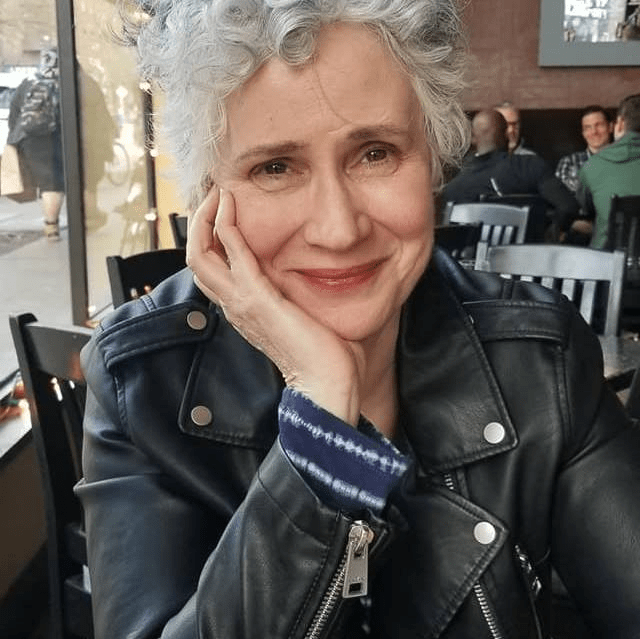
Lya Badgley

Lya Badgley’s life reads like an exotic adventure book you can’t put down, but she writes plot-driven suspense about women overcoming life-changing odds, against a backdrop of global conflict. In this interview, she shares her views about creativity, courage, persistence and resilience.

Youve had an interesting life – how often do people say that to you? How do you tell the story of your life in a short elevator pitch?

I’ve been very lucky to have had choices – many do not. That said, being born in Myanmar to Montana parents, was a good start. From Seattle’s arts scene to documenting war crimes in Cambodia and opening a restaurant in Yangon, my life experiences fuel my creativity. I’ve been a mother, a former city council member, and an environmental activist and now write novels drawing deeply from my lived experiences.

So, you were born in Yangon, Myanmar. How did your parents from the Rocky Mountains come to be in Burma? What are your first memories from there?

My parents discovered the wider world when my father was stationed in northern Japan during the Korean War. They fell in love with Asia, and he went on to dedicate his life to academia, earning a doctorate in political science. They first arrived in Burma (Myanmar) in the late 1950s. One of my earliest memories is coming home from kindergarten in up-country Burma and telling my mother that all the children spoke English in class. Astonished, she accompanied me to school the next day, only to find that the children were speaking Burmese. I had simply assumed it was English. To this day, I love languages.

What kind of environment did your parents create which encouraged your creativity?

My mother was a true artist, always encouraging me to find beauty in everything around me. My father sparked a deep curiosity about the world, especially about the lives of everyday people. Our dinner table conversations were always lively, full of challenges and excitement, fueling my imagination and intellect. I was never allowed to leave the table without sharing something interesting and eating all my vegetables.

In 1987 what changed your life? How does Multiple Sclerosis affect you today?

In 1987, I developed a persistent headache that wouldn’t go away. Within two weeks, I lost vision in one eye. The diagnosis of Multiple Sclerosis came swiftly. I’ll never forget the mix of terror and wonder as I looked at the pointillistic MRI image of my brain, and the doctor casually said, “Yep, see those spots? That’s definitely MS,” as if he were ordering lunch. Strangely, that diagnosis liberated me—after all, what’s the worst that could happen? Now, as I age, the disease may slow my body, but it hasn’t dimmed my spark.

In what ways has being a musician/poet/writer/artist been a struggle and challenge? Do you think that is part of process and it in turn fosters innovation?

The struggles of being an artist—whether overcoming rejection, creative blocks, or balancing art with daily life—are definitely part of the journey. But there’s also magic in that process. There’s something almost alchemical about wrestling with a challenge and, through that tension, creating something entirely new. It’s in those moments of uncertainty that the most unexpected ideas emerge, as if they’re waiting for the right spark. The struggle doesn’t just foster creativity—it transforms it, turning obstacles into opportunities. And the joy comes from watching that magic unfold, as your vision takes on a life of its own.

When did you return to Southeast Asia, and how did you come to work as a videographer on a clandestine expedition interviewing Burmese insurgents, and later helping document the genocide cases in Cambodia?

The short answer is — a boyfriend! In the early ’90s, I returned to Southeast Asia, driven by a deep connection to the region and feeling uncertain about what to do next after a failed marriage. Through a friend I met during Burmese language studies, I stumbled upon an unexpected opportunity to work as a videographer on a covert mission, documenting interviews with Burmese insurgents. That intense experience then led to my role in Cambodia, where I worked with Cornell University’s Archival Project. There, I helped microfilm documents from the Tuol Sleng Museum of Genocide, preserving crucial evidence that would later hold war criminals accountable. Both experiences were life-changing and cemented my passion for telling these vital stories.

You were among the few foreigners to open businesses in Burma in the 1990s. What hurdles were there to opening the 50th Street Bar & Grill Restaurant in Yangon, Myanmar? How was Burma at that time?

Opening the 50th Street Bar & Grill in Yangon in the mid ’90s was a real adventure, and I take great pride in being part of the first foreign-owned project of its kind at that time. Myanmar was just emerging from decades of isolation, with very few foreigners and even fewer foreign businesses. Navigating the bureaucracy was incredibly challenging — layers of red tape, and we often had to rely on outdated laws from the British colonial era just to get things moving. It took persistence, creative problem-solving, and a lot of patience. I had the advantage of understanding the culture and speaking a bit of the language, and I never worked through a proxy. I handled even the most mundane tasks myself—like sitting for hours in a stifling hot bank, waiting to meet the manager, who was hiding in the bathroom to avoid me!

Basic infrastructure issues like inconsistent electricity and unreliable suppliers were ongoing challenges. But despite all the hurdles, Yangon had a special energy then. The people were incredibly warm and resilient, and there was a palpable sense that the country was on the cusp of major change, even though it remained under military rule. Looking back, I’m proud to have been part of something so groundbreaking during such a unique moment in Myanmar’s history. It’s heartbreaking to see the return of darker times.

When did you first start writing and what has kept you writing? 

In the ’80s, I began writing song lyrics for my music, which eventually evolved into poetry. It turned out I had more to say, and my word count steadily grew from there. I write because I have no choice; it’s an essential part of who I am.

Your first novel, The Foreigners Confession, out in 2022, in the middle of the Covid-19 pandemic, weaves together one persons story and a countrys painful history. How do you integrate in the legacy of the past, a personal journey, a war-torn country and the themes of loss and regret?
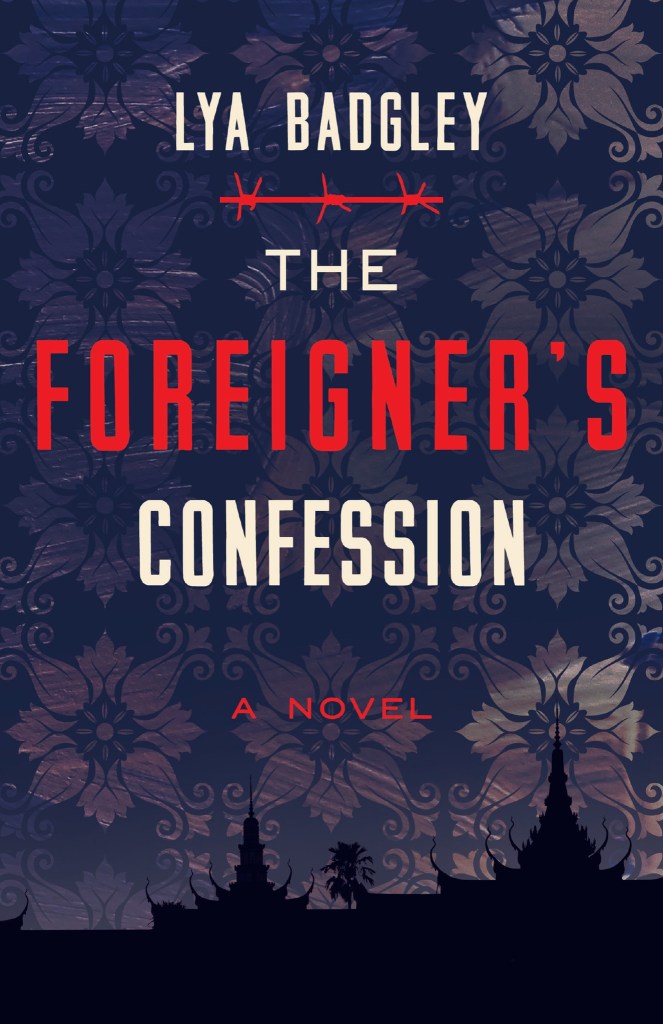
In The Foreigners Confession, I explore the interconnectedness of personal stories and a nation’s history. I like using conflict zones as backdrops for my protagonist’s inner turmoil. These settings highlight the psychological landscape shaped by war and trauma, reflecting the chaos within the character. I’m fascinated by the notion that evil exists in each of us, and under the right circumstances, we’re all capable of bad things. This theme resonates throughout the narrative, as the characters grapple with their moral choices amidst the turmoil surrounding them. As Tom Waits[1] beautifully puts it, “I like beautiful melodies telling me terrible things” — that juxtaposition is central to my writing, illustrating how beauty and darkness can coexist and inform our understanding of the human experience.

When it comes to writing are you a planner or a pantser? Whats your process for writing, particularly when you want to bring in the setting, the history of a place, and authenticity?

I’m a pantser all the way! Just saying the word “spreadsheet” makes me break into a sweat. I wish I could create meticulous diagrams and beautiful whiteboards filled with colorful, fluttering sticky notes, but that just isn’t my style. For me, the story unfolds as I write. I refer to myself as a discovery writer. It’s a slow and sometimes tedious process but discovering what I didn’t know was going to happen is truly amazing. I draw from my personal experiences to provide authenticity.

Does writing suspense/mystery help make a novel more compelling because it has to be well-crafted and cleverly constructed?

I write the story buzzing in my brain and then try to determine the genre.

What do you think about the power and potential of a novel to reach readers in a different way, for example as a vehicle to give insight into the situation in Cambodia or Myanmar, the wider/deeper issues (like geopolitics/colonialism), and the present reflecting a troubled past?

Yes, yes, yes! Novels have the potential to foster empathy and understanding, challenging readers to confront uncomfortable truths. Can we humans please stop being so stupid? It’s doubtful, but we can only hope.
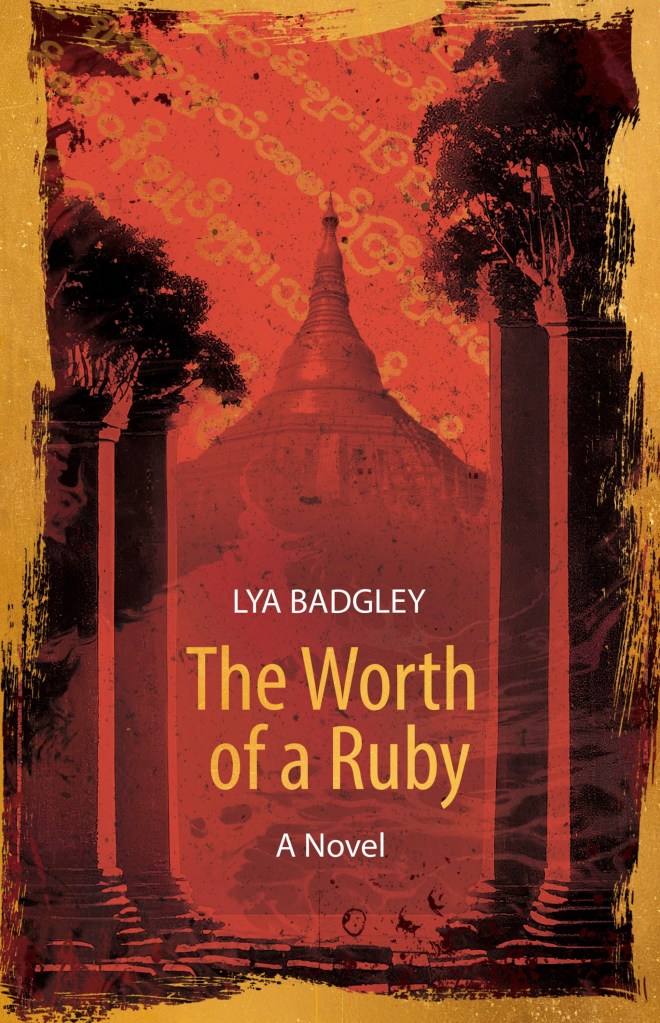
Last year your second novel, The Worth of a Ruby, was launched, and youve recently been in Myanmar. Whats been your impression of the place in 2024, still suffering under the coup and with not such good prospects as in the 2010s? Could you ever go back there to live?

Sitting in the Inya Lake Hotel in Yangon as I write this, I can see that the people here carry a veil over their eyes that I don’t recall from my previous visits. Nevertheless, the cyclical nature of oppression has persisted here for a long time. My husband and I would move back in a heartbeat if there were opportunities and adequate healthcare for my situation. This country remains a part of my identity, and I dream of a future where I can return to help contribute to its recovery.

Your current/recent visit to SE Asia has taken you to what places? What have been the most memorable experiences?

I’m in Yangon until mid-October and will then spend a few days in Singapore, slogging my books to the shops there. As always, the most memorable experiences are renewing the deep connections with the people I care about.

Both your books feature people/countries having to confront their past/dark side. How do you think a novel can help navigate through the complexities and nuances of situations, or at least show that nothing is as black and white as first thought?

That’s a complex question, and any answer can only touch the surface. Both of my novels explore people and countries grappling with their pasts and confronting their darker sides, but the truth is, no single story can fully capture the complexity of these situations. What a novel can do, however, is open a window into the nuances and shades of gray that exist beneath the surface. By diving into characters’ personal struggles and the layered histories of their countries, readers can begin to see that nothing is as black and white as it might seem. A novel helps illuminate the hidden motivations, moral ambiguities, and emotional complexities that are often overlooked, offering a more profound understanding of the tangled web of human experience.

Your work-in-progress novel is set in Bosnia. What themes will that explore?

The themes in my work-in-progress novel set in Bosnia will continue to explore the complexities of personal and national histories, much like my previous work. However, this time I’m weaving in elements of magic realism, drawing inspiration from the Sarajevo Haggadah and Balkan folktales. These mystical elements will add a new layer to the narrative, deepening the exploration of identity, memory, and the ways in which the past haunts the present. The use of folklore will allow me to delve into the region’s rich cultural traditions while keeping the focus on the enduring human themes of loss, resilience, and transformation.

Where is homefor you now? How do you think living in other countries has influenced your outlook and personality?

I am wildly curious, and home is the room I’m sitting in. Though we pay a mortgage on our condo in Snohomish, home has always been more about where I am in the moment than a fixed place. Living in different countries has profoundly shaped my outlook and personality. It’s given me a deep appreciation for diverse perspectives and a sense of adaptability. I’ve learned that people’s values and struggles can be both uniquely local and universally human. Experiencing different cultures has also sparked my curiosity and influenced the way I approach storytelling, allowing me to blend personal and global themes into my work.

What do you think are your points of difference/advantages that you bring to your writing?

One of the key differences I bring to my writing is my unique upbringing. Growing up in Myanmar with parents who encouraged both critical thinking and creativity gave me an early appreciation for the complexities of the world. I’ve lived in many countries and experienced firsthand the way cultures can both clash and blend, and that depth of perspective is something I try to infuse into my stories. Navigating a chronic disease like multiple sclerosis has also shaped my writing. It’s taught me resilience, patience, and how to find beauty in challenging situations. I think these experiences allow me to write characters and narratives that explore the shades of gray in life—the areas where pain, perseverance, and hope intersect.

Why do you think that a high proportion of expats/students/backpackers/digital nomads are from the Pacific Northwest and find themselves living and working in Southeast Asia? (I know three people from Snohomish who live in Asia).

It’s an interesting phenomenon, and I think the Pacific Northwest has some unique qualities that make it a breeding ground for wanderers. Growing up on the edge of the continent, facing west, there’s always been a sense of curiosity about what’s beyond the horizon. The region’s creative spirit—fueled by its music scene, constant rain, endless coffee, and a long history of innovation with computers and tech—fosters a mindset that’s open to exploration and new ideas. People from the PNW are used to thinking outside the box, and there’s a certain resilience that comes from enduring gray skies. This drive for adventure and discovery seems to naturally extend to places like Southeast Asia, where expats, students, backpackers, and digital nomads can experience a different pace of life while still tapping into their creative or entrepreneurial sides. Though, it blows my mind that you know three people from my little town of Snohomish living in Asia!

For aspiring writers and creatives, and for readers of Borderless, whats your advice?

My advice for aspiring writers, creatives, and readers of Borderless is simple: always take the step, go through the door you don’t know. The unknown is where growth, creativity, and discovery happen. Don’t be afraid to embrace uncertainty and take risks in your work and life. Whether it’s starting a new project, exploring a different idea, or venturing into unfamiliar territory, those leaps often lead to the most rewarding experiences. Stay curious, keep pushing boundaries, and trust that the act of creating—no matter how daunting—will always teach you something new.

Where can readers find you?

Email: lyabadgley@comcast.net

Mobile: 360 348 7059

110 Cedar Ave, Unit 302, Snohomish WA 98290

www.lyabadgley.com

www.facebook.com/lyabadgleyauthor

www.instagram.com/lyabadgleyauthor

Youtube: www.youtube.com/@lyabadgleyauthor 

.

[1] American musician

Keith Lyons (keithlyons.net) is an award-winning writer and creative writing mentor originally from New Zealand who has spent a quarter of his existence living and working in Asia including southwest China, Myanmar and Bali. His Venn diagram of happiness features the aroma of freshly-roasted coffee, the negative ions of the natural world including moving water, and connecting with others in meaningful ways. A Contributing Editor on Borderless journal’s Editorial Board, his work has appeared in Borderless since its early days, and his writing featured in the anthology Monalisa No Longer Smiles.

.

PLEASE NOTE: ARTICLES CAN ONLY BE REPRODUCED IN OTHER SITES WITH DUE ACKNOWLEDGEMENT TO BORDERLESS JOURNAL. 

Click here to access the Borderless anthology, Monalisa No Longer Smiles

Click here to access Monalisa No Longer Smiles on Kindle Amazon International

Categories
Interview

 When a Hobo in a Fedora Hat Breathes Tolkien…

In Conversation with Strider Marcus Jones

Strider Marcus Jones
i'm come home again
in your Lothlorien

Strider Marcus Jones wrote these lines about an idyllic utopia that was named Lothlorien by JRR Tolkien in Lord of the Rings. Jones writes beautiful poetry that touches the heart with its music and lyricality and recreates a world that hums with peace, beauty, acceptance and tolerance – values that have become more precious than gems in the current world of war, strife and distress. He has created his own Lothlorien in the form of a journal which he has named after the elfin utopia of Tolkien. An avid reader and connoisseur of arts, for him all his appreciation congeals in the form of poetry which draws from music, art and he says, perhaps even his legal training! Let us stride into his poetic universe to uncover more about a man who seems to be reclusive and shy about facing fame and says he learns from not just greats but every poet he publishes.

What started you out as a writer? What got your muse going and when?

In my childhood, I sought ways to escape the poverty of the slums in Salford. My escape, while gathering floorboards from condemned houses every winter and carrying them through back entries in crunching snow to our flat, above two shops for my dad to chop up and burn on the fire was to live in my imagination. I was an explorer and archaeologist discovering lost civilisations and portals to new dimensions our mind’s had lost the ability to see and travel between since the time of the druids. Indoors I devoured books on ancient history, artists, and poetry from the library. I was fascinated by the works of Picasso, Gauguin, Bruegel and many others and sketched some of their paintings. Then one day, my pencil stopped sketching and started to compose words into lines that became “raw” poems.  My first mentor was Anne Ryan, who taught me English Literature at High School when I was fourteen. Before this, I had never told anyone I was writing poetry. My parents, siblings and friends only found out when I was in my twenties and comfortable in myself with being a ranger, a maverick in reality and imagination.

When I read your poetry, I am left wondering… Do you see yourself in the tradition of a gypsy/mendicant singing verses or more as a courtly troubadour or something else?

I don’t have the legs to be a courtly troubadour in tights and my voice sounds like a blacksmith pounding a lump of metal on his anvil.

I feel and relate to being gypsy and am proud of my Celtic roots passed down to me from my Irish Gypsy grandmother on my Father’s side who read the tea leaves, keys, rings, and other items telling people’s fortunes for years with scary accuracy. I seem to have inherited some of her seer abilities for premonition.

Like my evening single malt whiskey, age has matured the idealism of my youth and hardened my resolve to give something back to the world and society for giving me this longevity in it. The knocks from the rough and tumble of life have hardened my edges, but my inner core still glows like Aragorn’s calm courage and determination in the quest to bring about a more just and fairer world that protects its innocent people and polluted environment. Since Woody Guthrie, Tom Waits and Bukowski are influences I identify with deeply, I suppose I am a mendicant in some of my poetry but a romantic and revolutionary too, influenced by Neruda, Rumi, Byron, and Shelley shielded by The Tree of Life in Tolkien’s Lothlorien:

THE HEAD IN HIS FEDORA HAT

a lonely man,
cigarette,
rain
and music
in a strange wind blowing

moving,
not knowing,
a gypsy caravan
whose journey doesn't expect
to go back
and explain
why everyone's ruts have the same
blood and vein.

the head in his fedora hat
bows to no one's grip
brim tilted inwards
concealing his vineyards
of lyrical prose
in a chaos composed
to be exposed,
go, git
awed
and jawed
perfect and flawed,
songs from the borderless
plain
where no one has domain
and his outlaw wit
must confess
to remain

a storyteller
that hobo fella

a listening barfly
for a while,
the word-winged butterfly
whose style
they can't close the shutters on
or stop talking about
when he walks out
and is gone.

whiskey and tequila
with a woman who can feel ya
inside her, and know she's not Ophelia
as ya move as one,
to a closer and simplistic,
unmaterialistic
tribal Babylon,

becomes so,
when she stands, spread
all arms and legs
in her Eskimo
Galadriel glow,
sharing mithril breath,
no more suburban settlements
and tortured tenements
of death,
just a fenceless forest
and mountain quests
with a place to rest
on her suckled breasts,
hanging high, swinging slow.

war clouds HARP
through stripped leaves and bark,
where bodies sleeping in houseboat bones
reflect and creak in cobbled stones:
smokey sparks from smoked cigars
drop like meteorites from streetlight stars,
as cordons crush civil rights
under Faust's fascist Fahrenheit’s.
 
one more whiskey for the road.
another story lived and told

under that
fedora hat
inhaling smoke
as he sang and spoke
stranger fella
storyteller.

You seem to have a fascination for JRR Tolkien. You have a poem and a journal by the name of Lothlorien. Why this fascination? Do you think that JRR Tolkien is relevant in the current context? We are after all, reverting to a situation similar to a hundred years ago.

Yes, on all counts. Tolkien and his Lord of The Rings trilogy have been part of my life since I first read one summer when I was twelve years old.  My young mind, starved of adventure and elevenses in Salford’s slums, willingly absorbed the myths and magic, lore’s and legends beguiling me to enter the ‘Age of Man’. This living in a time of relative peace alongside other, more ancient races with musical-poetic languages reflected part of my own reality in living through the Cold War decades under the impending doom of nuclear annihilation where daily life often felt the shadows cast by the Cuban Missile Crisis, war in Vietnam, Pol Pot’s Cambodia, and famine in Biafra.

Sauron’s evil eye and invading armies echo an outgoing President Eisenhower’s ominous warning to curtail the influence and corruption of the banking-military-industrial-complex. Instead, Martin Luther King and President John F Kennedy were assassinated and a surveillance state and gilded slavery ideology is being imposed globally using artificial intelligence. Ancient civilisations in Iraq and Libya have been destroyed for control of oil and to maintain global Petro dollar power. Tolkien and The Lord of the Rings is just as relevant today in Ukraine, Yemen, and Syria and as it was through the slaughters of Verdun, the Somme and Flanders Fields. It is a warning that good must prevail over evil and this burden is borne by those with courage and conviction who cannot be corrupted.  

What is your Lothlorien? What does poetry mean to you and your existence?

My Lothlorien is a more peaceful world, with more tolerance of other individuals and cultures. Not perfect by any stretch but a place where people laugh, have their neighbours back and work with each other. A place of social justice and equality, music, poetry and art. It is no place for racism, sexism, ageism, corruption, or war. A kind of homestead with birdsong, forest, mountains and rivers, preferably in the French Pyrenees or Alaskan Bush. A place of words composed into poems and stories read and spoken, passed down and added to by each inspired generation in the Native American tradition. Poetry is all about communication and community in my existence. We are caretakers of our words and the world.

You have used Orwell, Gaugin and many more references in your poetry. Which are the writers and artists that influence you the most? What do you find fascinating about them?

Individuality of expression through fiction, poetry, art and music fascinates me. Now, at 62 years of age so many have influenced my poetry with or without me knowing or realising it. These include:

From the past – Chaucer, Tennyson, Shelley, Keats, Blake, W.B. Yeats, Auden, Langston Hughes, Hart Crane, Sexton, Plath, Kerouac, Heaney, Lorca, Orwell, Dickens, Dylan Thomas, Tolkien, Steinbeck, Heller, Donaldson, P.D. James, Ian Rankin, Vonnegut, Dostoyevsky, Rilke, Rumi, E.E.Cummings, Neruda, Leadbelly, Robert Johnson, Miles Davis, Thelonious  Monk, John Coltrane, Dylan, Tom Waits. So many.

From now – They know who they are. I have published their work in Lothlorien Poetry Journal.

You play instruments — saxophone and clarinet? Does that impact your poetry?

Saying I play instruments is a huge stretch of the imagination. I get strange notes out of my saxophone and clarinet that must sound like a hurricane blowing in anyone’s ears. My black Labrador, Mysty, covers her ears with her paws but I enjoy trying to play. I love jazz music, anything from the 1920s to early 70s, but Miles Davis, Monk, Coltrane, Mingus, and Ornette Coleman took jazz music to a level that transcends mortality.

Jazz music continues to be a profound influence in my poetry. I will explain how.     

Does any kind of music impact your writing?

In some way, unbeknown to me, jazz music, particularly that of Davis, Monk and Coltrane runs parallel to and interweaves with the rhythms of how I think when I write poetry. It closes my mind to the distractions of the outside world. The sound of those perfect and imperfect notes opens a door in my mind, I close my eyes, float into this dark room and my senses fill with images and words, which hover in the air like musical notes where I conduct them into rhythms and phrases bonded to a theme. Some become poems, others disintegrate into specks of dust, the moment gone. Sometimes, the idea and train of thought sleeps in my subconscious for years. This happened with my poems “Visigoth Rover” and “Life is Flamenco” which come from   my sojourns randomly wandering through Spain but were born years later listening to Paco playing Spanish guitar and Flamenco music which is another key influence in my poetry.

VISIGOTH ROVER

i went on the bus to Cordoba,
and tried to find the Moor's
left over
in their excavated floors
and mosaic courtyards,
with hanging flowers brightly chameleon
against whitewashed walls
carrying calls
behind gated iron bars-
but they were gone
leaving mosque arches
and carved stories
to God's doors.

in those ancient streets
where everybody meets-
i saw the old successful men
with their younger women again,
sat in chrome slat chairs,
drinking coffee to cover
their vain love affairs-
and every breast,
was like the crest
of a soft ridge
as i peeped over
the castle wall and Roman bridge
like a Visigoth rover.

soft hand tapping on shoulder,
heavy hair
and beauty older,
the gypsy lady gave her clover
to borrowed breath, 
embroidering it for death,
adding more to less
like the colours fading in her dress.
time and tune are too planned
to understand
her Trevi fountain of prediction,
or the dirty Bernini hand
shaping its description.

LIFE IS FLAMENCO

why can't i walk as far
and smoke more tobacco,
or play my Spanish guitar
like Paco,
putting rhythms and feelings
without old ceilings
you've never heard
before in a word.

life is flamenco,
to come and go
high and low
fast and slow-

she loves him,
he loves her
and their shades within
caress and spur
in a ride and dance
of tempestuous romance.

outback, in Andalucian ease,
i embrace you, like melted breeze
amongst ripe olive trees-
dark and different,
all manly scent
and mind unkempt.

like i do,
Picasso knew
everything about you
when he drew
your elongated arms and legs
around me, in this perpetual bed
of emotion
and motion
for these soft geometric angles
in my finger strokes
and exhaled smokes 
of rhythmic bangles
to circle colour your Celtic skin
with primitive phthalo blue
pigment in wiccan tattoo
before entering
vibrating wings
through thrumming strings
of wild lucid moments
in eternal components.

i can walk as far
and smoke more tobacco,
and play my Spanish guitar
like Paco.

Tell us about how music and language weaves into your poetry — “i’m come home again” — there is no effort at punctuation — and yet the poem is clear and lyrical. I really love this poem – Lothlorien. Can you tell me how you handle the basic tool of words and grammar in your poetry?

In my mind, music is poetry through sound instead of words. Like words, the combinations of notes and pauses have intricate rhythms and phrases. In many of my poems like “Lothlorien” and those above, I weave the rhythms and phrases of jazz music or Spanish guitar and words together with run on lines so there is no need for punctuation. This gives these poems, and many others a spontaneity and energy which feels more natural and real and has a potent, more immediate impact on the senses and emotions when combined with images and happenings. This whole process feels natural to me. It began in my early twenties, when I was listening to old Blues and the likes of Leadbelly and Robert Johnson alongside Dylan, Led Zeppelin, Tom Waits and Neil Young. These are the raw underbelly notes of my pain and anger at the world. Jazz is the mellow top notes. I hope this makes sense. It is hard to explain something that is natural to and part of who I am, so forgive any lack of clarity.

Sometimes, I just like to add a moment of mischievous fun to a serious poem as in these two:

REJECTING OVID

the fabulous beauty of your face-
so esoteric,
not always in this place-
beguiles me.

it's late, mesmeric
smile is but a base,
a film to interface
with the movements of the mind behind it.

my smile, me-
like Thomas O'Malley
the alley
cat reclining on a tin bin lid
with fishy whiskers-

turns the ink in the valley
of your quills
into script,
while i sit
and sip

your syllables
with fresh red sepals of hibiscus,
rejecting Ovid
and his Amores
for your stories.


OLD CAFE

a rest, from swinging bar
and animals in the abattoir-
to smoke in mental thinks
spoken holding cooling drinks.

counting out old coppers to be fed
in the set squares of blue and red
plastic tablecloth-
just enough to break up bread in thick barley broth.

Jesus is late
after saying he was coming
back to share the wealth and real estate
of capitalist cunning.

maybe. just maybe.
put another song on the jukebox baby:
no more heroes anymore.
what are we fighting for --

he's hiding in hymns and chants,
in those Monty Python underpants,
from this coalition of new McCarthy's
and it's institutions of Moriarty's.

some shepherds’ sheep will do this dance
in hypothermic trance,
for one pound an hour
like a shamed flower,

watched by sinister sentinels-
while scratched tubular bells,
summon all to Sunday service
where invisible myths exist-

to a shamed flower
with supernatural power
come the hour.  

How do you compose a poem? Is it spontaneous or is it something you do? Do you hear the lines or voices or is it in some other way?

Most poems come from life’s experiences and observations of people, places, nature, and events. These can be from the past, or present and sometimes premonitions of the future which often overlap depending on the theme/s and where I want it to go.

When it comes to composing a poem, I am not robotic, and neither is my Muse. I have no set time and never write for the sake of writing something each day which I find disrupts my subconscious process. A poem can begin at any time of day or night, but my preferred time to think and write is mid-evening going through to witching hour and beyond. I put some music on low, pour myself a slow whiskey and sit down in my favourite chair with pen and folded paper. I never try to force a poem. The urge to write just occurs. I don’t know how, or why. It just happens. My subconscious finds the thread, thinks it through and the poem begins to unravel on the page. I care about the poems since they care about the world and the people in it. So, I often agonise for days and in some cases years, over lines and words and structure, crossing out words and whole lines until they feel right. Editing, and redrafting is a crucial part of the writing process and requires courage and discipline. Butchering your own work feels barbaric in the moment but enhances your poetic voice and strengthens the impact of a poem on the reader.

You are a lawyer and in the Civil Service in UK. How does law blend with poetry?

I am a law graduate and retired legal adviser to the magistrates’ courts/civil servant who retired early. I have never practiced as a lawyer.

I never think about law when I write, but I am sure the discipline brings organisation to the orderly chaos of Spinoza’s universe that resembles the space inside my head.

Tell us about your journal. When and how did you start it?

I started Lothlorien Poetry Journal in January 2021. I publish the online rolling blog of poetry and fiction and printed book volumes — currently standing at eight issues featuring established and emerging poets and fiction writers published on the LPJ blog.

We are a friendly literary journal featuring free verse/rhyming/experimental poetry, short stories, flash fiction, and occasional interviews with poets.

We love poems about enchantment, fantasy, fairy tale, folklore, dreams, dystopian, flora and fauna, magical realism, romance, and anything hiding deep in-between the cracks.

I publish Lothlorien Poetry Journal periodically, 4-6 issues every year. Contributors to each issue (selected from the best work published on the Journal’s Blog) are notified prior to publication and receive a free PDF copy of the issue that features their work.

We nominate for the Pushcart Prize and Best of the Net.

 What do you look for in a poet as a publisher?

I look for a poet or writer’s distinct voice, that spark of originality in their theme/s, the rhythm and musicality in their language and phrasing.  I have no boundaries as to style, form, or subject – prose, rhyming, free verse, sonnets, haiku, experimental or mavericks who break the rules and write about the darker underbelly of society – if it is good and not offensive, racist or sexist Lothlorien Poetry Journal could be the natural home for your work. The best way to find out is to come to Lothlorien, have a read, and decide to submit.

LOTHLORIEN

i'm come home again
in your Lothlorien
to marinate my mind
in your words,
and stand behind
good tribes grown blind,
trapped in old absurd
regressive reasons
and selfish treasons.

in this cast of strife
the Tree of Life
embraces innocent ghosts,
slain by Sauron's hosts-
and their falling cries
make us wise
enough to rise
up in a fellowship of friends
to oppose Mordor's ends
and smote this evil stronger
and longer
for each one of us that dies.

i'm come home again
in your Lothlorien,
persuading
yellow snapdragons
to take wing
and un-fang serpent krakens-
while i bring
all the races
to resume
their bloom
as equals in equal spaces
by removing
and muting
the chorus of crickets
who cheat them from chambered thickets,
hiding corruptions older than long grass
that still fag for favours asked.

i'm come home again
in your Lothlorien
where corporate warfare
and workfare
on health
and welfare
infests our tribal bodies
and separate self
in political lobbies
so conscience can't care
or share
worth and wealth-

to rally drones
of walking bones,
too tired
and uninspired
to think things through
and the powerless who see it true.
red unites, blue divides,
which one are you
and what will you do
when reason decides.


IN THE TALK OF MY TOBACCO SMOKE

i have disconnected self
from the wire of the world
retreated to this unmade croft
of wild grass and savage stone
moored mountains
set in sea
blue black green grey
dyed all the colours of my mood
and liquid language-
to climb rocks
instead of rungs
living with them
moving around their settlements
of revolutionary random place
for simple solitary glory.
i am reduced again
to elements and matter
that barter her body for food
teasing and turning
her flesh to take words and plough.
rapid rain
slaps the skin
on honest hands
strongly gentle
while sowing seeds
the way i touch my lover
in the talk of my tobacco smoke:
now she knows
she tastes
like all the drops
of my dreams
falling on the forest
of our Lothlorien.

Thanks for your lovely poetry and time.

(This is an online interview conducted by Mitali Chakravarty.)

PLEASE NOTE: ARTICLES CAN ONLY BE REPRODUCED IN OTHER SITES WITH DUE ACKNOWLEDGEMENT TO BORDERLESS JOURNAL