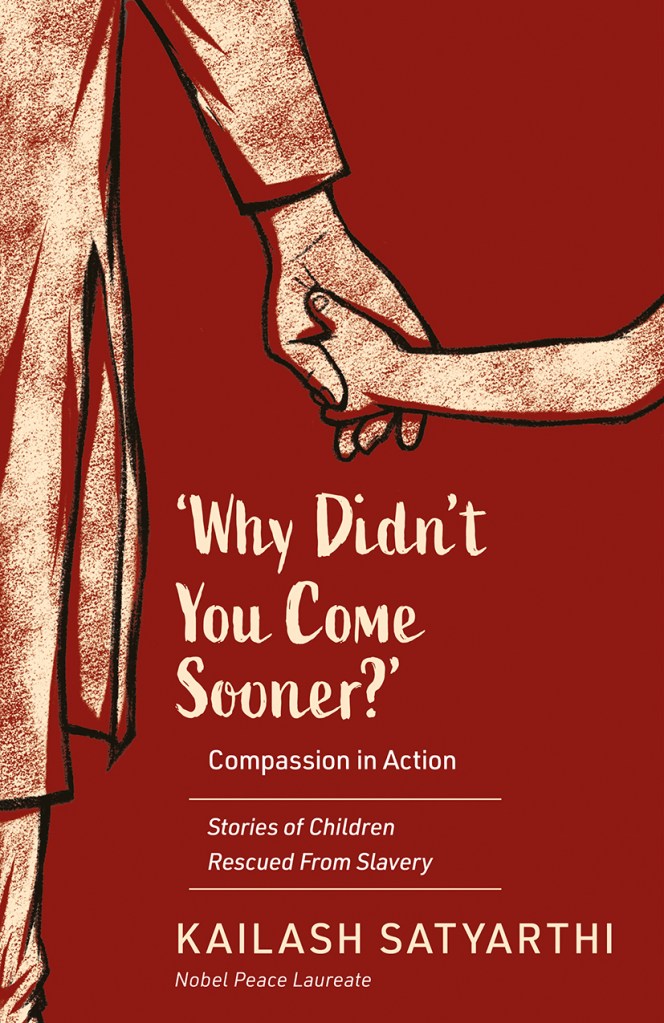
Title: Why Didn’t You Come Sooner? Compassion In Action— Stories of Children Rescued From Slavery
Author: Kailash Satyarthi
Publisher: Speaking Tiger Books
I seated a few of the children in my car, and drove away as fast as I could. The truck with the men and women followed me. The clothes of the children who sat with me in the car were tattered and torn. The wounds on their flesh could be seen through the holes in their clothes. Every such wound is a blot on human civilization. The frightened little girls were trying to hide their bellies and chests by hugging their knees. They simply could not make sense of all that had happened since morning. I made tentative attempts to talk to them. I tried explaining to them that they were now free from bonded labour and were being taken to a secure place. But they had never known freedom, or safety. How could they understand what I was trying to tell them? Maybe they assumed I was their new owner.
Just then, I remembered that there were some bananas lying in the back of the car. I asked the children on the back seat to distribute them among themselves. I thought they must be hungry, and might feel better after eating something. But no one picked up the bananas.
‘Go on, child. Pick up that bunch of bananas and pass it on,’ I gently repeated myself.
One of the children gave it to the child sitting in front. An emaciated girl and a little boy were seated next to me. I told them to pass on the fruit to everyone in the back and keep one each for themselves. The girl looked curiously at the bunch as she turned it around in her hands. Then she looked at the other children.
‘I’ve never seen an onion like this one,’ she said.
Her little companion also touched the fruit gingerly and innocently added, ‘Yes, this is not even a potato.’
I was speechless to say the least. These children had never seen anything apart from onions and potatoes. They had definitely never chanced upon bananas before. Upon further cajoling, some of them started chewing on the bananas. But they were trying to eat the fruit without peeling it. Some tried to swallow it while others were trying to hide it in their palms after having spat it out. My imprudence had for a moment pushed me back a few thousand years. The difference between an unpeeled banana and a peeled one was the distance between slavery and freedom. I quickly tried to rectify my error and taught them how to peel a banana and consume it. Most of them tasted the sweetness of the fruit and probably relished it too.
They began sharing this new experience among themselves in their dialect. I was feeling their joy too. Just then, the little girl sitting next to me tapped me on the shoulder and almost screamed.
‘Why didn’t you come sooner?’
I instantly turned to face her. Her innocent, tear-filled eyes and pained voice laced with anger pierced my heart. I could tell that these words had risen from the depths of her heart, where they lay suffocating for years.
Her younger brother had passed away for lack of availability of medicine. Once, the quarry owners had beaten up her father and uncle and branded them with burning cigarettes. They had raised their voice against the sexual exploitation of the women and tried to escape. Even the tiny hands of the children, when wounded, were never tended. They couldn’t even manage to get bits of cloth to tie around their wounds. This little girl had survived the entirety of hell in the eight years of her life. This was probably the first time that she could bring herself to trust someone enough to mouth the words, ‘Why didn’t you come sooner?’
That challenging question deepened the restlessness and anger that the issue of child slavery aroused in me. The child who posed this question was none other than Devli. She had put it to me, but it is one that needs to be answered by every person who speaks of faith, law, the Constitution, human rights, freedom, childhood, humanity, equality and justice. That question is as pertinent today as it was on that day all those years ago.
According to an estimate, there are around five million labourers employed in stone quarries in India. Hundreds of thousands among them are child labourers. Contractors and their agents pay tiny advances to impoverished families in backward areas and get them to come to the quarries on some false pretext or another. This is the organized crime of human trafficking that is often dressed up as migration or displacement. Usually, there is no record of workers in the quarries. In other words, children like Devli and her parents do not exist anywhere in legal terms.
To break up the stone, deep holes are drilled in it with powerful machines by skilled or semi-skilled workers which are then detonated with the use of gunpowder. The large rocks that are exposed after the explosion are broken down into smaller stones by adult men and women as well as children. The smaller children are engaged in removing the soil before the detonation takes place as well as removing the small stone chips after. Death is far from uncommon among these unskilled labourers who often get buried under the rocks thrown up by the explosions or when a quarry, unsteady from the shock, caves in.
(Excerpted from Why Didn’t You Come Sooner?: Compassion In Action—Stories of Children Rescued From Slavery by Kailash Satyarthi. Published by Speaking Tiger Books, 2023)
About the Book:
The work of rescuing children from slavery is not for the faint of heart, as the twelve gut-wrenching accounts in this book will show. Harder still is to give them their life back, after they’ve been kidnapped, trafficked, sold, abused and made to work in horrific conditions, often for as long as they can remember. Pradeep was offered up for human sacrifice by his family, thought to be a bad omen; Devli was a third-generation slave in a stone quarry in Haryana, who had never seen a banana before her rescue; Ashraf, a domestic child labourer at a senior civil servant’s house, was starved and scalded as punishment; Sahiba was trafficked from Assam to be someone’s wife against her will; Kalu was abducted and made to weave carpets all day long, his injuries cauterized with phosphorus scraped off matchsticks; Bhavna was trapped in a circus, sexually abused for years by her owners; Rakesh was worked in the fields all year round like cattle, and spent the nights locked up with them in the stable; Sabo was born to labourers at a brick kiln, and never knew life outside it; and Manan lived his childhood mining mica in the forests of Jharkhand, barely given time to even mourn his friend who got buried when the mine caved in. Kailash Satyarthi’s own life and mission were entwined with the journeys of these children. Having lived through unspeakable trauma, they had lost faith in humanity. But behind their reticence, behind their scraggy limbs and calloused hands and feet, hope still endured. This book tells the story of their shared struggle for justice and dignity—from the raid and rescue operations of Satyarthi’s Bachpan Bachao Andolan, to international campaigns for child rights. It is a testament both to the courage of the human spirit and to the power of compassion.
About the Author:
Kailash Satyarthi (b. 11 January 1954) is one of the most well-known child rights activists in the world. He has led many national and international campaigns to protect child rights and promote their education over four decades and rescued countless children from slavery. He is a recipient of the Nobel Peace Prize, among many other human rights awards.
.
PLEASE NOTE: ARTICLES CAN ONLY BE REPRODUCED IN OTHER SITES WITH DUE ACKNOWLEDGEMENT TO BORDERLESS JOURNAL
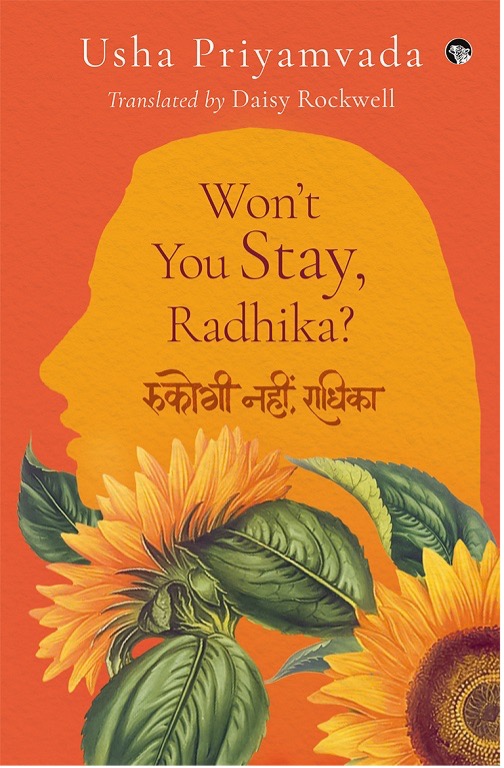
In an essay written several years ago, the India-born Canadian author Uma Parameswaran had defined the plight of diasporic people by using the mythic metaphor of ‘Trishanku’ borrowed from the Ramayana where this character wanted to go to heaven alive but denied entry there, he was sent back and since then resided neither on earth nor in heaven but was suspended forever in an illusory middle space in-between. The state of diasporic individuals is somewhat similar; they are neither here nor there, and the present novel under review, published way back in 1967, brings out the angst of one such individual who, like the author Usha Priyamvada, herself went for higher studies to the United States and became the usual victim of culture shock. The only difference is that in real life Priyamvada stayed back in America and spent her long teaching career in universities there, whereas the protagonist of her novel Won’t You Stay, Radhika? went there only for a couple of years.
The storyline of the novel, originally written in Hindi, is rather simple. After her widowed father marries a younger woman called Vidya, Radhika’s world falls apart. She feels betrayed—the emotional and intellectual bond that she had forged with her father since the early death of her mother breaks with that sudden marriage. This is because their bond was not just emotional, but intellectual, as Radhika helped her father with his art history writing. To escape the unbearable situation at home—the growing rift between her and her father—Radhika fought for her personal freedom. Finding a simple way to avenge her father, she moved to Chicago along with an American teacher called Dan to pursue her master’s in fine arts. By leaving her father and going to live with Dan, Radhika had acquired several years of experience and matured quickly. But her living with Dan had only been a means to an end.
She returned to India two years later, burdened by a sense of alienation and homesickness, only to realise that while nothing had changed in her country, everything had. A growing sense of despair engulfed her. She started wondering whether she had a home anywhere. The family that she had longed to be reunited with barely acknowledged her arrival. The sense of belonging was missing, leaving her in ‘an emotional state of in-between-ness, of universal unbelonging’. As days pass, Radhika is paralysed with ennui, which is not just boredom. She avoids people, romance, family, as she lies still, or wanders listlessly through her neighbourhood. This sense of unbelonging tinges all her relationships—romantic or filial. So, she lies listlessly on her takht[1], bored, immobile, and uninspired.
This is not to say that Radhika is without love interests in the novel; after all there are three men in her life. She does not always feel detached from these men; there are many situations in the novel when we as readers feel that she has overcome her ambivalence or boredom or ennui, that she will start living a more meaningful life, but nothing positive takes place in the end. She seems to jell well with Akshay for a while and thinks probably she might marry him as there is no room in her life for a playboy. She wants a partner, someone steady, generous, someone who will accept her with all her flaws. But though she has great respect for him, she finally decides not to fall into the traditional trap of marriage. Akshay, like a traditional Indian male, also cannot subconsciously stop thinking about Radhika’s past. He feels confused as the more he wants to steer clear of Radhika, the more he feels she looms over his life. He also keeps on thinking about her past affairs with other men.
The other gentleman with whom Radhika had developed a relationship was Manish, who was diametrically opposite in nature to Akshay. They knew each other for a long time in many different contexts. Manish had also desired her, but Radhika had kept him at a distance. After several indecisive moments, she openly turned down his marriage proposal too, stating that she didn’t want to get involved again. Though she felt warmed by Manish’s touch, she did not turn to look at him. But Manish decided to wait till such time she changed her mind and voluntarily went to him. This ambivalence continues till the end of the novel, which Priyamvada leaves rather open-ended.
Though the title of the novel refers to a particular scene in the end when Radhika goes to meet her father once again and he wants his daughter to stay with him like before, that question mark hovers over the entire work: What will you do Radhika? Will you get up off the takht? Will this ennui ever come to an end? She was surprised at how her emotions had become so dull that she felt very little at all.
An extraordinary chronicler of the inner lives of the urban Indian woman, Usha Priyamvada is a pioneering figure in modern Hindi literature. Won’t You Stay, Radhika? written so many years ago, expertly explores the stifling and narrow-minded social ideals that continue to trap so many Indian women in the complex web of individual freedom, and social and familial obligation. A sense of alienation is also famous not only as a hallmark of Hindi literature of the 1960s, where it is usually traced to urbanization and the breakdown of traditional family structures, but also finds representation in Indian English novels too. Here one is reminded of Anita Desai’s famous novel Cry, the Peacock, published in 1963, that also delves deep into human emotion by focusing on topics like existential depression, psychological discontent, and the fragility of sanity as expressed through the female protagonist Maya. Though the theme of incompatibility and lack of understanding in marital life is one of the main themes of Desai’s novel, one notices a similarity of dealing with trapped feminine psyche in both the novels. Of course, reading the story of Priyamvada so many decades later, it seems nothing has changed in the Indian context and the situation in which the characters find themselves is equally true even today.
Before concluding, one must specifically put in a word of appreciation for the translation as well as the translator. On the first impression one is surely bound to think whether an American writer is the appropriate choice for translating a novel in Hindi. Apart from holding a PhD in South Asian literature from the University of Chicago and writing her doctoral dissertation on the Hindi author Upendranath Ashk, Daisy Rockwell has over the years to her credit translations of several Hindi authors including Usha Priyamvada’s debut novel Fifty-five Pillars, Red Walls (2021). But what brought her into limelight was her translation of Geetanjali Shree’s Tomb of Sand (2018) which became the first novel translated from an Indian language to win the International Booker Prize in 2022. Thus, apart from bringing this poignant Hindi novel to a new set of readers fifty-five years later, Rockwell’s expertise in translation makes one feel that this is not translated text at all. Though not a mystery thriller, her narrative skill makes the novel a definite page-turner and one will surely be tempted to finish reading it as fast as possible.
Title:The Wizard of Festival Lighting – The Incredible Story of Srid
Author: Samragngi Roy
Publisher: Speaking Tiger Books
There are two things that make this book interesting. Firstly, it is the story of a man who decorated lights during festivals and got worldwide fame for what he did. Secondly, the author of the biography is a young writer. The Wizard of Festival Lighting: The Incredible Story of Srid is written by the protagonist’s granddaughter, Samragngi Roy, who published her debut novel, a young adult fiction in 2017.
Nevertheless, what makes this book stand out most is its unconventional theme. History is presented innovatively in this 352-page book, and folklore is at the center. Just like Durga puja can’t be mentioned without Kolkata, Jagatdhatri puja can’t be mentioned without lighting. This isn’t just West Bengal’s festival history, but India’s. Here’s how one man conquered the world through his vision. Documents like this are historical.
The blurb reads: “Eleven year old Sridhar was fascinated by light. Growing up among a dozen siblings in a mud cottage in Chandannagar in West Bengal, he longed to create something beautiful. A school dropout who never studied beyond Class Eight, he taught himself about lights and electricity by doing odd jobs at an electrician’s shop—an act that earned him a severe beating from his father. In spite of his family’s opposition, he grew up to become a celebrated light artist and inventor, setting new standards for festival lighting and pioneering new techniques.”
Recalls Sridhar “In 1968, when I was hired by the Bidyalankar Puja Committee for the purpose of providing street lighting, I had volunteered to additionally decorate the banks of our old pond too for three primary reasons. Number one, I had grown up next to it. Number two, it had been the source of some of our most sumptuous meals in childhood. And number three, it had been the setting for several of my childish shenanigans.
“However, when the lights glowed around the pond after sundown, the space enclosed by the banks of the pond looked extremely empty. But of course, I couldn’t have done anything about it because the enclosed space contained nothing but neck-deep water. That’s when I first contemplated the possibility of making lights glow under water and laughed at myself for being so impractical.”
The narrative continues: “So, I closed my eyes, muttered a quick prayer and used my stick to smash a glowing lamp. Then I waited for the impact. There was none that I could feel. My muscles, which had been tense and stiff all along, slowly relaxed. Parashuram and I looked at each other, and my gentle nod was met with a happy little jig that he performed on the steps of the ghat, bursting with excitement. But then the idea stuck with me for a while and what had seemed impossible in the evening had started to seem like an idea worth giving a shot by the night. I wasn’t even sure if the idea was feasible since it was unprecedented.”
Sridhar Das’s work received great acclaim throughout the world. His work has been exhibited in the Festival of India in Russia, Ireland, Los Angeles and Malaysia. The cover of the book is based on his exhibit in the Thames Festival in London — his famous illuminated peacock boat in three dimensions.
As a result of his fame and commitment to work, Sridhar, along with those closest to him, suffered from a variety of issues. His wife had to combat illness and loneliness to care for the family, leaving her husband free to forge his own path. His daughter grew up with her famous father largely absent. The telling encapsulates the true story of his meteoric rise, as well as his family with an unflinching exploration of what his meteoric rise cost him.
The story, poignantly related by his granddaughter, is both a subtle portrait of a complex individual and an affectionate tribute to a grandfather loved by his grandchildren. It takes readers back to vanished times, and introduces them to a man who pursued his dreams and created his own field through sheer determination.
.
Bhaskar Parichha is a journalist and author of Unbiased, No Strings Attached: Writings on Odisha and Biju Patnaik – A Political Biography. He lives in Bhubaneswar and writes bilingually. Besides writing for newspapers, he also reviews books on various media platforms.
.
PLEASE NOTE: ARTICLES CAN ONLY BE REPRODUCED IN OTHER SITES WITH DUE ACKNOWLEDGEMENT TO BORDERLESS JOURNAL
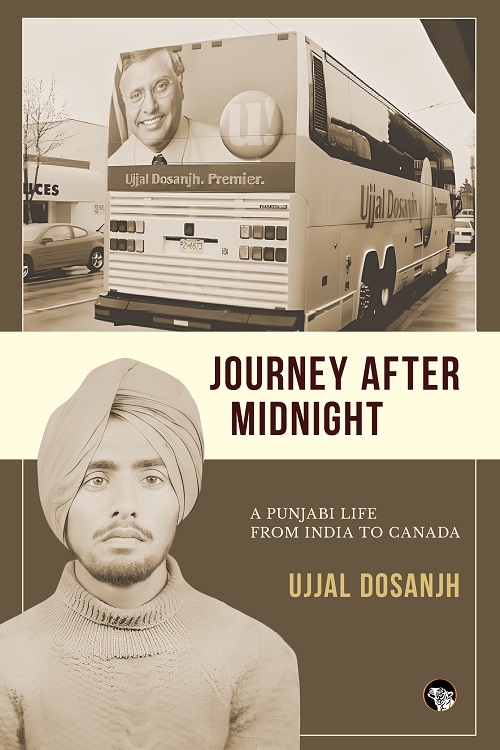
Title:Journey After Midnight: A Punjabi Life from Canada to India
Author: Ujjal Dosanjh
Publisher: Speaking Tiger Books
50
A variation on the common Indian expression “Mullan de daur maseet taeen,” which roughly translates as “An imam’s ultimate refuge is the mosque,” sums up my relationship with the world: India is my maseet. I have lived as a global citizen, but India has been my mandir, my masjid, and my girja: my temple, my mosque, and my church. It has been, too, my gurdwara, my synagogue, and my pagoda. Canada has helped shape me; India is in my soul. Canada has been my abode, providing me with physical comforts and the arena for being an active citizen. India has been my spiritual refuge and my sanctuary. Physically, and in the incessant wanderings of the mind, I have returned to it time and again.
Most immigrants do not admit to living this divided experience. Our lack of candour about our schizophrenic souls is rooted in our fear of being branded disloyal to our adopted lands. I believe Canada, however, is mature enough to withstand the acknowledgement of the duality of immigrant lives. It can only make for a healthier democracy.
Several decades ago, I adopted Gandhi’s creed of achieving change through non-violence as my own. As I ponder the journey ahead, far from India’s partition and the midnight of my birth, there is no avoiding that the world is full of violence. In many parts of the globe, people are being butchered in the name of religion, nationalism and ethnic differences. Whole populations are migrating to Europe for economic reasons or to save themselves from being shot, beheaded or raped in the numerous conflicts in the Middle East and Africa. The reception in Europe for those fleeing mayhem and murder is at times ugly, as is the brutal discrimination faced by the world’s Roma populations. The U.S. faces a similar crisis with migrants from Mexico and other parts of South America fleeing poverty and violence, in some cases that of the drug cartels. Parents and children take the huge risk of being killed en route to their dreamed destinations because they know the deathly dangers of staying. Building walls around rich and peaceful countries won’t keep desperate people away. The only lasting solution is to build a peaceful world.
Human beings are naturally protective of the peace and prosperity within their own countries. A very small number of immigrants and refugees, or their sons and daughters, sometimes threaten the peace of their “host” societies. But regardless of whether the affluent societies of western Europe, Australia, New Zealand and North America like it or not, the pressure to accept the millions of people on the move will only mount as the bloody conflicts continue. Refugees will rightly argue that if the West becomes involved to the extent of bombing groups like ISIS, it must also do much more on the humanitarian front by helping to resettle those forced to flee, be they poverty-driven or refugees under the Geneva Convention. With the pressures of population, poverty and violence compounded by looming environmental catastrophes, the traditional borders of nation states are bound to crumble. If humanity isn’t going to drown in the chaos of its own creation, the leading nations of the world will have to create a new world order, which may involve fewer international boundaries.
In my birthplace, the land of the Mahatma, the forces of the religious right are ascendant, wreaking havoc on the foundational secularism of India’s independence movement. I have never professed religion to be my business except when it invades secular spaces established for the benefit of all. Extremists the world over—the enemies of freedom—would like to erase both the modern and the secular from our lives. Born and bred in secular India, and having lived in secular Britain and Canada, I cherish everyone’s freedom to be what they want to be and to believe what they choose to believe.
I have always been concerned about the ubiquitous financial, moral and ethical corruption in India, and my concern has often landed me in trouble with the rulers there. Corruption’s almost complete stranglehold threatens the future of the country while the ruling elite remain in deep slumber, pretending that the trickle of economic development that escapes corruption’s clutches will make the country great. It will not.
Just as more education in India has not meant less corruption, more economic development won’t result in greater honesty and integrity unless India experiences a cultural revolution of values and ethics. The inequalities of caste, poverty and gender also continue to bedevil India. Two books published in 1990, V.S. Naipaul’s India: A Million Mutinies Now and Arthur Bonner’s Averting the Apocalypse, sum up the ongoing turmoil. A million mutinies, both noble and evil, are boiling in India’s bosom. Unless corruption is confronted, evil tamed, and the yearning for good liberated, an apocalypse will be impossible to avert. It will destroy India and its soul.
On the international level, the world today is missing big aspirational pushes and inspiring leaders. Perhaps I have been spoiled. During my childhood, I witnessed giants like Dr. Saifuddin Kitchlew of the Indian freedom movement take their place in history and even met some of them. As a teenager, I was mesmerized by the likes of Nehru and John F. Kennedy. I closely followed Martin Luther King and Robert Kennedy as they wrestled with difficult issues and transformative ideas. I landed in Canada during the time of Pierre Trudeau, one of our great prime ministers. Great leaders with great ideas are now sadly absent from the world stage.
The last few years have allowed me time for reflection. Writing this autobiography has served as a bridge between the life gone by and what lies ahead. Now that the often mundane demands of elected life no longer claim my energies, I am free to follow my heart. And in my continuing ambition that equality and social justice be realized, it is toward India, the land of my ancestors, that my heart leads me.
Extracted from the revised paperback edition of Journey After Midnight: A Punjabi Life from Canada to India by Ujjal Dosanjh. Published by Speaking Tiger Books, 2023.
About the Book: Born in rural Punjab just months before Indian independence, Ujjal Dosanjh emigrated to the UK, alone, when he was eighteen and spent four years making crayons and shunting trains while he attended night school. Four years later, he moved to Canada, where he worked in a sawmill, eventually earning a law degree, and committed himself to justice for immigrant women and men, farm workers and religious and racial minorities. In 2000, he became the first person of Indian origin to lead a government in the western world when he was elected Premier of British Columbia. Later, he was elected to the Canadian parliament.
Journey After Midnight is the compelling story of a life of rich and varied experience and rare conviction. With fascinating insight, Ujjal Dosanjh writes about life in rural Punjab in the 1950s and early ’60s; the Indian immigrant experience—from the late 19th century to the present day—in the UK and Canada; post-Independence politics in Punjab and the Punjabi diaspora— including the period of Sikh militancy—and the inner workings of the democratic process in Canada, one of the world’s more egalitarian nations.
He also writes with unusual candour about his dual identity as a first-generation immigrant. And he describes how he has felt compelled to campaign against discriminatory policies of his adopted country, even as he has opposed regressive and extremist tendencies within the Punjabi community. His outspoken views against the Khalistan movement in the 1980s led to death threats and a vicious physical assault, and he narrowly escaped becoming a victim of the bombing of Air India Flight 182 in 1985. Yet he has remained steadfast in his defence of democracy, human rights and good governance in the two countries that he calls home—Canada and India. His autobiography is an inspiring book for our times.
About the Author: Ujjal Dosanjh was born in the Jalandhar district of Punjab in 1946. He emigrated to the UK in 1964 and from there to Canada in 1968. He was Premier of British Columbia from 2000 to 2001 and a Liberal Party of Canada Member of Parliament from 2004 to 2011. In 2003 he was awarded the Pravasi Bharatiya Samman, the highest honour conferred by the Government of India on overseas Indians.
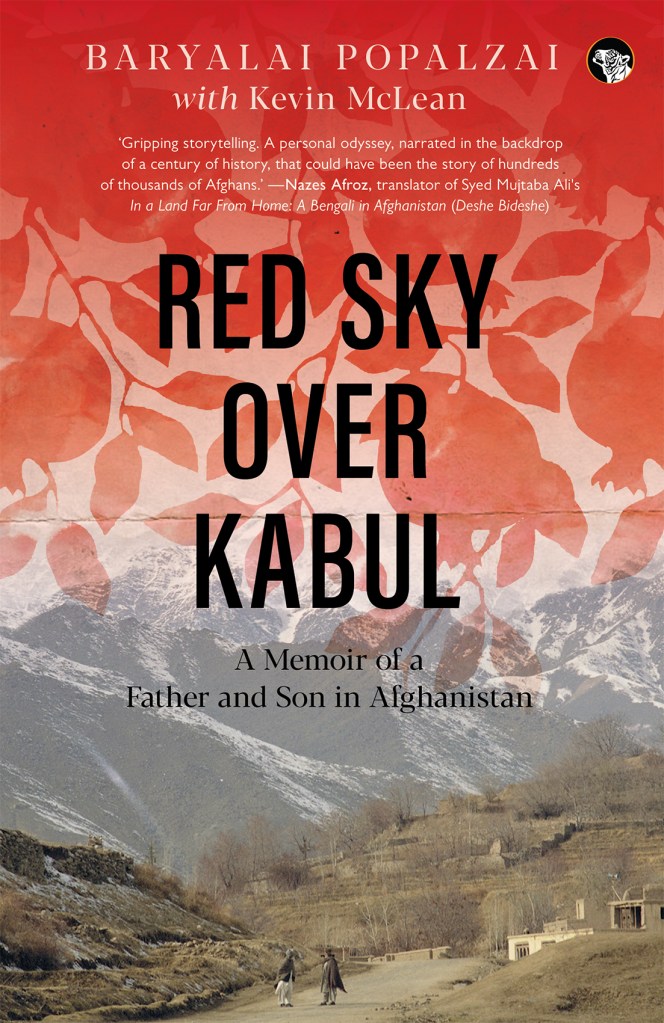
Title: Red Sky Over Kabul: A Memoir of a Father and Son in Afghanistan
Authors: Baryalai Popalzai and Kevin McLean
Publisher: Speaking Tiger Books
One
Kabul, Afghanistan, 4 October 1980
On a breezy October day, a kite-flying day, my cousin Kader surprised me with a visit. He looked much older than I remembered, his hair thinner, his once smooth face now lined with worry. He was a well-known political writer who had worked for the Ministry of Education before the Spring Revolution. He was also known for his short stories.
For generations, his family had been one of the most important families in Kabul. Kader looked at me with his deep-set black eyes and spoke in a frantic voice, ‘Bar, you must leave immediately. The National Security and Russian soldiers are now searching house to house. They’ve already searched half of your neighbourhood and they won’t stop. You must come to my house immediately. It’s the only place that will be safe for you now.’
I did not know what to think. Things were so bad now, I wondered if I could trust my own cousin. He could have given in to the Communists; or he could be telling me this because they were holding someone in his family hostage.
I hated the Russians for making me doubt him, and I hated myself for doubting him.
‘Tashakor (Thank you). I’ll be okay,’ I assured him. ‘I have a hiding place that the National Security will never find.’
But he was adamant. ‘You must come to my house. It’s the only place that will be safe for you now.’
‘I need time to think,’ I said, deflecting his request.
‘There’s no time!’ he said.
I told him, ‘I have to think of my wife and children, my father and mother. I’m the only one who can take care of them.’
‘You won’t be much use to them dead,’ he said.
‘That is true, Kader. But before I leave my family and go to your house, I must speak with my father.’
Kader just sighed. ‘God be with you.’
That night I lay on the floor, unable to sleep. I could hear the National Security guards in the street outside my house shouting at people, ‘What is the password for tonight?’ If there was no response, there would be the sound of gunfire and I would flinch as if the bullet had ripped through me.
As soon as the sun appeared, I went up to my father’s bedroom where he spent most of his time since losing his leg years before. I told him about Kader’s visit. ‘Things have changed,’ I said. ‘Every house is being searched now. They will even search the general’s house. I can no longer hide from these crazy people.’
‘So, you think you should go stay with Kader?’ Baba asked.
‘We don’t know who’s honest anymore,’ I replied. Then the words I had dreaded saying for so long escaped my lips.
‘The time has come for me to leave.’
Baba didn’t say anything at first. This unsettled me because my father was never at a loss for words. When he finally did speak, his voice was weak. ‘I was afraid it might come to this,’ he said. ‘I’ve spoken with Abbas. He agreed that when the time comes, he would go with you. I will get word to him. You can leave tomorrow at first light.’
When I told my mother, who I called Babu, her body shuddered, but her lips were silent. My mother had a habit of never sitting still when she was nervous. First, she paced back and forth in the room. Then she walked from one room to the other. Then from one house in our compound to another.
She returned to our living room and continued pacing back and forth until I could take it no longer.
‘Sit!’ I told her. But she never sat. My wife Afsana was asleep in another room with our two children. I couldn’t find the tongue to tell her. But I knew I must.
‘Afsana?’ I called, waking her.
‘Baleh? (Yes?)’
‘It’s not safe for me here anymore…I must leave tomorrow.’
‘What do you mean?’ she asked, panic rising in her voice.
‘Kader came to see me. Things have become too dangerous now. Abbas is coming for me in the morning. He’ll make sure I get out safely. I’ll send for you and the children as soon as I can.’
A painful silence followed. Afsana started to speak, but stopped. She knew there was nothing she could say or do now. We both lay awake all night.
As dawn approached, I went to say goodbye to my father.
He was sitting up in bed staring at nothing, his books and newspaper lying next to him, unread.
‘Ah, the time has come,’ he said. He seemed to be searching for something else to say; some last words of wisdom, some final advice from father to son. When he finally spoke, he spoke slowly, the words sticking in his throat, ‘Take care of yourself.’
I could not do this. ‘I won’t leave without taking you and Babu. I can’t leave without Afsana and the children,’ I said.
‘We’ll all go together!’
He was silent for a moment, his eyes never leaving my face. ‘Nay, you know that’s not possible,’ he said.
‘I can get friends to help us. They can take all your things. We’ll go to Jalalabad. Everything will be all right.’
‘Nay, Bar. It is not practical. I’m too old and weak to be moved. The Russians won’t bother Babu, or Afsana, or the children. We’ll be safe here. If we try to leave, none of us will survive. Things are very bad, but I still have my house and my writings. But it is true, you are no longer safe here, so you must leave to save yourself. Let’s pray that in a few months, things will change.’
‘If that is your wish,’ I gave in.
‘Say goodbye to me now,’ Baba said. ‘I’m afraid you won’t see me again.’
‘How can you say that?’ I protested, feeling the pain of those words as though he were already dead.
Extracted from Red Sky Over Kabul: A Memoir of a Father and Son in Afghanistan by Baryalai Popalzai and Kevin McLean. Published by Speaking Tiger Books, 2023.
ABOUT THE BOOK
Red Sky Over Kabul is the deeply personal, moving and dramatic story of a royal Pashtun family—the Popalzais—intimately connected with Afghanistan’s history from the 1800s. After the Soviet invasion in 1980, the narrator, Baryalai—Bar—is forced to leave his beloved country as National Security guards carry out a house-to-house search for young men who refuse to fight for the Russians against their fellow Afghans. He flees to Pakistan, where he is imprisoned as a spy, eventually making his way to the US, to make a new life for himself. He returns twenty years later, to reclaim his family homes in Kabul and Jalalabad, only to find them occupied by drug dealers and warlords.
This memoir is as much a story of Bar as it is a story of Afghanistan: Bar’s father, Rahman, was tutor to Zahir Shah, who would become the last king of the country after the assassination of his father in 1933; Rahman Popalzai continued to serve Zahir as his advisor and confidant for 40 years. At the heart of this book is the relationship between a father and son—Rahman and Bar— who share a fierce love for their homeland, but whose paths diverge.
Red Sky Over Kabul is also a vivid portrait of a vanished Afghanistan—a world of kite flying, duck hunting and sitar lessons; a world lost to unending, horrific violence. But even in loss and tragedy, the human spirit finds hope and resilience—which is Afghanistan’s triumph, as it is Bar’s.
ABOUT THE AUTHORS
Baryalai Popalzai was born in Kabul, Afghanistan in 1952. After the Russian invasion in 1980, he fled the country and eventually settled in San Diego. When the Taliban were ousted in 2002, Bar returned to Kabul for the first time in twenty years and has been returning a few times every year since then.
Kevin McLean received his JD from Boston University School of Law and practised law for many years in Boston and San Diego. He is the author of Crossing the River Kabul (2017).
PLEASE NOTE: ARTICLES CAN ONLY BE REPRODUCED IN OTHER SITES WITH DUE ACKNOWLEDGEMENT TO BORDERLESS JOURNAL
Title: Burning Pyres, Mass Graves and A State That Failed Its People : India’s Covid Tragedy
Author: Harsh Mander
Publisher: Speaking Tiger Books
Many parts of India were in a state of frenzy as a result of the pandemic. The official figures of sickness and mortality have been widely disputed, and most agree that they have been significantly underestimated.
Burning Pyres, Mass Graves and A State That Failed Its People: India’s Covid Tragedy by Harsh Mander is a comprehensive account of the humanitarian crisis and the appalling state response. Human rights campaigner Harsh Mander is one of India’s most trusted and courageous activists. He is also the author of several acclaimed books on contemporary India, among them, Looking Away: Inequality, Prejudice and Indifference in New India;Ash in the Belly: India’s Unfinished Battle Against Hunger; Fatal Accidents of Birth: Stories of Suffering, Oppression and Resistance; and This Land Is Mine, I Am Not of This Land: CAA–NRC and the Manufacture of Statelessness.
The book examines the events around the year 2020, that led to food shortages for the urban poor and pushed them to the brink of starvation due to food scarcity. There is a compelling argument to be made that the timing of the lockdown was directly related to public policy choices, specifically the decision to impose the lockdown with only four hours’ notice to the media. As Mander recounts in his book, things got even worse in the following year, as everything from hospital beds to medical oxygen to essential medicines ran short of supplies to function properly. Mander chronicles the disaster in an in-depth manner by combining ground reports with hard data from the scene.
According to the book’s blurb: “The summer of 2021 saw a massive rise in the number of infections and deaths from Covid-19 in India. Even by conservative estimates, at least 1.5 million people had lost their lives by June; several times the official figure. As in the first wave of the pandemic, this time, too, the chaos and suffering was in large measure, as Harsh Mander shows, due to mismanagement by an uncaring and cynical state.”
This book contains two parts. The first part, titled ‘Locking Down the Poor’, describes how the urban poor were being driven to the brink of starvation due to the severe humanitarian crisis that was sweeping across the globe in 2020. According to the study, this was a direct consequence of the policy decisions that the government made. It led to the imposition of the world’s longest and most stringent lockdown, along with the smallest relief packages, as a direct result of the government’s public policy choices.
As the story unfolds, we hear the voices of out-of-work daily-wage and informal workers, the homeless and the destitute, all of whom overwhelmed by hunger, humiliation, and a sense of dread. There are over 3 crore migrant workers in India whose livelihoods have been destroyed and they had been forced to walk hundreds of kilometres back to their villages as they had no means of surviving in the cities and no way to get home other than by foot. He brings us stories of those migrant workers from the highways and overcrowded quarantine centres.
The second part of the book, entitled ‘Burning Pyres, Mass Graves,’ is the account of what took place the following year, when everything from hospital beds to oxygen and essential medicines were still in short supply. The underlying cause of these shortages, according to Mander, is the criminal neglect of public health care in India, a situation which worsened under the Narendra Modi government, resulting in the extortion of a beleaguered population by everyone from oxygen suppliers to pharmaceutical billionaires. The author holds the state culpable for indulging in pageantry – with the PM advertising himself as a messiah – when the country needed to brace for the impact of the second wave of terrorism.
Using an invaluable combination of ground reports, hard data, and firsthand experiences to describe the worst humanitarian catastrophe India has experienced in a century, and which will have a lasting impact on the country for decades to come, Mander provides a detailed account of this cataclysmic phase. It is a powerful book and sometimes it is even shattering. In a way, the narrative is a live remembrance of a national tragedy that too many of us wish to forget when we should, instead, etch it in our minds so that we can prevent another national tragedy like this one from recurring in the future.
.
Bhaskar Parichha is a journalist and author of Unbiased, No Strings Attached: Writings on Odisha and Biju Patnaik – A Political Biography. He lives in Bhubaneswar and writes bilingually. Besides writing for newspapers, he also reviews books on various media platforms.
.
PLEASE NOTE: ARTICLES CAN ONLY BE REPRODUCED IN OTHER SITES WITH DUE ACKNOWLEDGEMENT TO BORDERLESS JOURNAL
In Conversation with Mitra Phukanabout her latest novel, What Will People Say?A Novel , published by Speaking Tiger Books, March 2023
Mitra Phukan. Courtesy: Speaking Tiger Books
What will people Say? A Novel by Mitra Phukan, a well-known writer from Assam, plays out like a sonata with fugues introducing complexities into the narrative. It concludes in a crescendo of hope with an acceptance of love. At the end, Phukan writes: “It was love. A love great enough to conquer all the ‘What Will People Says’.”
What is remarkable about the novel is the light touch with which it deals with major issues like communal tensions, acceptance of love across divisive human constructs and questioning of social norms. She elucidates: “I have written What Will People Say in a conversational, everyday style, sprinkled liberally with humour, even though the themes are very serious.”
Phukan’s novel moves towards a more accepting world where social norms adapt to changing needs — perhaps an attitude we would all do well to emulate, given the need for a change in mindsets to broach not only divisive societal practices but the advancing climate crises which calls for unconventional, untried steps to create cohesive bonds among humanity.
The story is set in a small town in Assam called Tinigaon. Where the protagonist, Mihika, a widow and a professor, upends accepted social norms with her budding romance to a Muslim expat, a friend of her deceased husband. She has strong supporters among her family and friends but faces devastating social criticism and even some ostracisation. This makes her think of giving up the relationship that drew her out of the darkness of widowhood.
Suffering during widowhood is a topic that has been broached by many Indian writers ranging from Tagore, Sunil Gangopadhyay to many more. Before the advent of these writers, in 1856, the Hindu Widows’ Remarriage Act was brought into play by the efforts of Ishwar Chandra Vidyasagar, who had also written on the issue. But despite the law, has it as yet been accepted by conventional society? And how would such a society which bases its perceptions on rituals and traditions respond further to a relationship that discards marriage as a norm? These are questions that Phukan deals with not only in her novel but in the conversation that follows.
The plot showcases an interesting interplay of different perspectives. In certain senses, it has the delightful touch of a Jane Austen novel, except it is set in India in the twenty first century, where relationships are impacted by even social media. Phukan, herself, sees “ageism” and female bonding and friendship” as major issues addressed in the novel. She says that women’s bonding is a theme that “has not been focused on enough, at least in Assamese writing”, even though, it is a fact that this has been the focus in other literature like, Jane Austen’s novels written in the nineteenth century and in subsequent modern-day take-offs on her novels, like the The Jane Austen Book Club by Karen Joy Fowler, published in 2004. In the sub-continent, Begum Rokeya described a full woman’s utopia in Sultana’s Dream(1905), though Rokeya’s story is essentially a feminist sci-fi. Unlike Rokeya’s book, Phukan’s is not an intense feminist novel. The protagonist, Mihika, has men well-wishers and men friends-cum-colleagues too. The tone is lighter and makes for a fabulous read, like Austen’s novels.
As if rising in a fugue to Mihika’s romance are two more relationships of a similar nature. One is between her daughter and a young boy from a traditional, respected, conventional home. The other, which I found more interesting, and I wish Phukan had explored a bit more, is a relationship between Mihika’s Bihari beautician, Sita, and a tribal boy. While the girl is from a traditional vegetarian strictly Hindu family, the boy is an orphan, a tribal. It is a romance that is outside the conventional affluent, middle-class circle. And is used as a contrast to Mihika’s and her daughter’s experiences. Sita’s narrative highlights how the conventional finally accept the unconventionality of a romance that in the past might have been completely rejected.
The novel rises above victimhood by looking for resolutions outside the accepted norms subtly. The plot weaves the triangular interplay of relationships with notes of harmony. The story, devoid of gender biases and darker shades of drama, delves into serious themes with a feathery touch.
The structuring of the novel arrests the reader with its seeming simplicity but each is fitted into the composition to create a fiction that touches your heart and leaves you pining for a bit more… like the strains of a composition that has the deftness and neatness of a Jane Austen novel, written in the context of twenty first century Assam.
Phukan herself is a trained vocalist in Indian classical, a columnist, a translator and a writer. In this conversation, she reveals more about the making and intent of her novel and her journey as a writer.
You wear a number of hats — that of an Indian classical vocalist, a columnist, a children’s writer, a translator and so much more. How does this impact your work as a novelist?
I feel everything is related; everything flows seamlessly into the other aspects. Yes, I am a trained Shastriya Sangeet[1]vocalist, though I have retired from performances now. But at one time that was my life…even now, I write extensively about music through essays and reviews. And I’m always listening to music, of many genres.
I began writing, hesitantly comparatively late, though I always enjoyed it, getting prizes in school and college. Later, I began to write stories, etc, for magazines such as Femina, Eve’s Weekly. Mainly though it was the paper The Sentinel and its editor D N Bezboruah which gave me a platform through middles, short fiction, essays and other genres. My children were very young at the time, and somehow the children’s stories came to me at that point. Now that they are grown up, those stories don’t come any more…and I regret that.
Translation happened because two stalwarts of Assamese literature, Jnanpith awardee Dr Indira Goswami and Sahitya Akdami awardee poet Dr Nirmal Prova Bordoloi encouraged me to try my hand at it by translating their work. I found I enjoyed it …and the journey continues!
Writing fiction, especially novels, needs the writer to have a wide view of life, I feel. I love storytelling. I write from observation, but also, I learn a lot about the literature of the place I come from, Assam, through the works of the greats in Assamese.
Do your other passions, especially music, impact your writing?
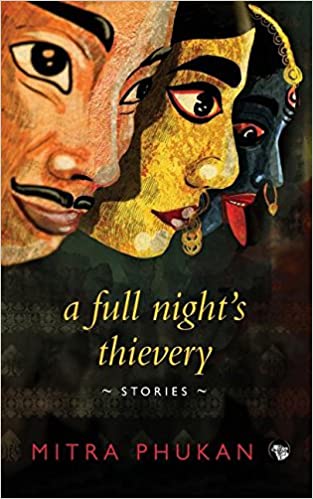
Music, definitely. In What Will People Say, for instance, there are so many references to songs and music, to concerts and musicians. There is an entire chapter devoted to songs in Hindi and Assamese where the theme is music. Besides, my novel A Monsoon of Music is about the lives of four practicing musicians. Many of my short stories from A Full Night’s Thievery have music as a theme …’The Tabla Player’, ‘The Choice’, ‘Spring Song’, and so on.
Also, musical metaphors seem to creep in, unbidden, to my writing…
Among the other passions that are reflected to a greater or lesser degree in my writing are gardening, and of course food!
What led you to write What Will People Say?
My stories, whether long or short, are always triggered by events, people, that I see around me. Sometimes it could even be a sentence I overhear while waiting at an airport, or maybe an expression on somebody’s face. They are based on reality, though they are fictionalised as they pass through the prism of my mind, my imagination.
What Will People Say was triggered by the fact that I see so many older women who have lost their spouses spend their lives in loneliness and sometimes despondency. Yes, their children may be caring, they may have women friends, a profession, but that is not enough. Love, finding a romantic partner, even companionship, is very unusual as a senior. There are so many unwritten codes, so many taboos and restrictions, especially in the small, peri-urban places.
And yet I find that change is coming. After all, people are exposed to other cultures, where going in for a second relationship is not seen as a betrayal of the dead husband, as it tends to be here.
The need for social change and a questioning of norms is part of the journey you take your readers through in your novel. Were these consciously woven into the story or did the story just happen? Please tell us about the journey of the novel.
This was the theme I have had in my mind for a while now. It was a conscious decision, and not always an easy one to implement, because of the binaries involved.
The place where I live, the larger society, prides itself on being “liberal”. And it is, compared to some other places on the planet, or in the country. But in the twenty first century, we are aware that there is much more that needs to be done, a much longer path to be traversed. The theme came first. After which I began to think of the storyline, the characters, the incidents that would make the theme come alive, all in a fictional way, of course.
What Will People Say, the line, is a kind of whip used to keep “straying” members of society, usually young people, within the fold. But here I have inverted it …it is the older members, those who are supposed to uphold the status quo, who are doing what, for many, would be the unthinkable.
Do you still see widow remarriage as an issue? Is it still an issue in Northeast India as your book shows?
Assam is a multi-ethnic, multi-lingual, multi-cultural and multi-religious society.
The community I am describing is what is known as the “caste Hindu” society, in which, traditionally, widow remarriage is not “allowed”. Even now, even in urban Assamese society, it is uncommon. There are unspoken taboos, unwritten codes of conduct. The extreme strictness of the past has lessened no doubt, but also a lot depends on the economic and social status of the woman. I never, for instance, saw my grandmother, a staunch Brahmin, wear anything but stark white after she was widowed. Her vegetarian kitchen was separate from the main kitchen …leave aside meat or fish, even onions, garlic were not allowed there. My mother wanted to follow the same route after my father passed away, but her doctor forbade her from doing that, while her children insisted, she wear colour. Today, my generation of women wear colour and eat non-vegetarian after the demise of their husbands, so things are slowly changing. But a second marriage, or a romantic relationship, in middle age is still very rare indeed.
Your book describes middle class liberals, conservatives as well as immigrants and tribals. What kind of impact have tribals and immigrants had in Assam over time?
There have been many waves of migration into this fertile valley of the Brahmaputra. As a result, it is a rich cultural and linguistic mosaic. Different influences are at play all the time, communities that live in proximity to each other are definitely influenced. But it is a slow process, naturally. And usually takes place over generations.
You have hinted that tribals are more liberal and out of the framework of Hindu rituals. Is that a fact?
Many tribes are, in general, indeed more liberal when it comes to widow remarriage, as are the large Muslim and also the Christian communities. It is the “caste Hindus”, especially those from the “top” of the caste pyramid, who mostly have these taboos. The original inhabitants of these valleys were different ethnic groups, which, because of the riverine, heavily forested aspects of the region, tended to remain in isolation from each other. As a result, cultural practices were unique to each one. Different waves of immigrants from both the East of the region, from Southeast Asia and beyond, and from the rest of India in the west brought in different influences, which were absorbed slowly. We see this in the food practices, the music, the weaves and clothes that we traditionally wear, and religious and social practices, among other things.
How do your characters evolve? Out of fact or are they just a figment of your imagination?
All are creations of my mind, my imagination. But I try to keep them as real as possible. It is all fiction. I love adding layers to them as I go along, till they have their own individuality, their own body language, their own ways of thinking, speaking, their food preferences, everything. By the end, they are “real” to me, though they actually exist only within the pages of a book.
What writers/ musicians/art impact you as a writer? Is there any writer who you feel impacts you more than others?
My music gurus have impacted me in many ways, beyond music. Guru Birendra Kumar Phukan, especially, taught me …through his music …what it means to be steeped in spirituality, and how to aspire higher through Shastriya music, which, to him, and sometimes to me, too, was and is prayer.
As for writers, there are so many I admire deeply. Among the Assamese writers are the scholar and creative writer of the 15th-16th Century, the Saint Srimanta Sankardev, Jnanpith awardees Birendra Kumar Bhattacharyya and Indira Goswami. I am always deeply moved by their humanity. Their works, their characters, are drenched in it.
Among writers that I have read in English are the obvious ones, so many of them …but for style and humour, I think nobody can beat P G Wodehouse, and for irony, Jane Austen. And my Go To book during the pandemic was Three Men in a Boat by Jerome K Jerome, for an instant lifting of spirits.
You have written a lot of children’s stories and written columns. Have these impacted you as a novelist? How is writing a novel different from doing a fantasy-based children’s story or writing a column?
I have written biographies, short stories and essays too. Basically, I see myself as a storyteller, though I write non-fiction too. The children’s stories came from my observations of the child’s world at one time, the way they thought and reacted. My columns are commentaries on society, couched in different “rasas”, including the humorous, but are sometimes a narration in the form of a story. The practice of writing, whatever the genre, and the habit of observation, have all helped me in the marathon task of writing novels!
What can we look forward to from you next? Are you working on a new novel?
Yes. I do have a novel in the pipeline, am giving it some final touches now. But what is due to be published next is a biography of Dr Bhupen Hazarika, a monograph really. He is a musical icon and so much else for us. It is being published by Sahitya Akademi. And then there is a translation of a novella by Sahitya Akademi Awardee Dr Dhrubjyoti Borah, to be published later this year by Om Books. And then of course there are the columns which I really enjoy doing, since the paper that I write for, The Assam Tribune, reaches the deepest areas of rural Assam. Many of the readers of this column, ‘All Things Considered’ are first generation literates, and that makes me really happy.
Title: Journey After Midnight – A Punjabi Life: From India to Canada
Author: Ujjal Dosanjh
Publisher: Speaking Tiger Books
The Punjabi Diaspora is a global phenomenon that has grown in size and complexity in recent years. It is estimated that there are around 20 million Punjabis living outside the Punjab region in India and Pakistan. This is stretching across multiple continents and countries. Punjabis have migrated to different parts of the world since the British Raj. However, this diaspora has become more visible in recent decades due to technology and global connectivity.
Highly diverse and dynamic, with different groups of Punjabis living in different places around the world. In North America, Punjabis are concentrated in the United States and Canada. In Europe they are mainly settled in the United Kingdom, Germany, Italy, and France. In the Middle East, they are found in the United Arab Emirates, Qatar, Kuwait, and Saudi Arabia. In South East Asia, they are mainly settled in Malaysia, Singapore, and Indonesia.
Punjabis have had a significant impact on the culture and economy of the countries where they have settled. Their positive contributions were felt in multiple industries, from agriculture to tech. They have been key to spurring economic growth in the areas where they have settled. They have also had a major influence on the culture and cuisine of these countries, with Punjabi food being a popular choice in many areas.
Journey After Midnight – A Punjabi Life : From India to Canada by Ujjal Dosanjh speaks about the Punjabi diaspora in all its splendor. Dosanjh was born in the Jalandhar district of Punjab in 1946. He emigrated to the UK in 1964 and from there to Canada in 1968. He was Premier of British Columbia from 2000 to 2001 and a Liberal Party of Canada Member of Parliament from 2004 to 2011, including a period as Minister of Health and Minister Responsible for Multiculturalism, Human Rights and Immigration. In 2003 he was awarded the Pravasi Bharatiya Samman, the highest honour conferred by the Government of India on overseas Indians.
The blurb contends: “Journey After Midnight is the compelling story of a life of rich and varied experience and rare conviction. With fascinating insight, Ujjal Dosanjh writes about life in rural Punjab in the 1950s and early ’60s; the Indian immigrant experience—from the late 19th century to the present day—in the UK and Canada; post-Independence politics in Punjab and the Punjabi diaspora— including the period of Sikh militancy—and the inner workings of the democratic process in Canada, one of the world’s more egalitarian nations.”
Dosanj states candidly: “Today’s world has few leaders brimming with great ideas. The paucity of great leaders afflicts India as well. There are no inspiring giants on the national stage tall enough to lead India out of the ethical and moral quagmire. Asked whether he was working to create a new India along with seeking its independence from Britain, Mahatma Gandhi had declared that he was trying to create a new Indian–an honest, fair and just Indian for a proud, progressive, prosperous and caring India. Since the Mahatma’s time the moral and ethical values of India have decayed. In Indian politics, civil service and public life, there is little evidence of the ideals he lived and died for.”
He continues: “A substantial portion of the Indian economy is underground; all due to the sadly enduring disease of corruption. The albatross of financial, ethical and moral corruption is strangulating and shortchanging the country. Those who say economic progress will by itself free India from corruption are just as wrong as those who in the 1950s maintained that education by itself would reduce corruption. It obviously hasn’t, and India finds itself counted among the most corrupt countries on earth. Corruption shatters human dreams and stunts ingenuity. It constrains personal and political liberties. It severely limits opportunities. The main hindrance in the path of social, political, economic and cultural progress is the disconnect between knowing what is right and doing the right thing; most know what is the right and the ethical thing to do, but they continue to do the wrong and the unethical thing; hence the ubiquitous corruption.”
Calling upon the Indians for a moral revolution Dosanj writes: “The sculpting of Gandhi’s Indians, and the building of the India of the dreams of its founding fathers and mothers, requires a moral and ethical revolution-a revolution of values that are of Indians, by Indians and for Indians. No matter how bleak the political and ethical scene today, I’m certain there are great minds fearless, humane and brave among the billion plus residents of India. We may not see them, but they exist. We may not know them, but they are among us. They must heed India’s call. They must come forward and lead. India’s destiny demands it.”
In the ‘Afterword’ he laments about the state of affairs of Punjab in recent times: “Punjab is staring at the prospect of turmoil, radicalization and violent fundamentalism, and yet many in the government and otherwise seem obsessed with presenting and treating the likes of the late singer Moosewala as modern Punjab’s heroes. That the young singer’s life was cut short by gangsters’ guns was horrible and must be condemned. Beyond that the AAP and others must be careful not to glorify violence. Unfortunately, almost the whole of Punjab seems taken with Moosewala; the young man was a talented singer but much of his poetry and music was about guns and aggressive machismo. Is that what Punjab needs and must idolize?”
Dosanjh writes candidly about his dual identity as a first-generation immigrant. And he describes how he has felt compelled to campaign against the discriminatory policies of his adopted country. He opposes regressive and extremist tendencies within the Punjabi community. His outspoken views against the Khalistan movement in the 1980s led to death threats and vicious physical assaults, and he narrowly escaped the bombing of Air India Flight 182 in 1985. Yet he has remained steadfast in his defence of democracy, human rights and effective governance in the two countries he calls home—Canada and India.
The writing style is fluid and languid. This is not a book that can be judged on the basis of its literary merit. It isn’t just a simple memoir, but rather a record of a turbulent period in India’s history. It is a book that represents a lifetime journey, crossing oceans and cultures. As a memoir, Ujjal Dosanjh’s book is at once personal and political, but most importantly, it is inspiring.
.
Bhaskar Parichha is a journalist and author of Unbiased, No Strings Attached: Writings on Odisha and Biju Patnaik – A Political Biography. He lives in Bhubaneswar and writes bilingually. Besides writing for newspapers, he also reviews books on various media platforms.
.
PLEASE NOTE: ARTICLES CAN ONLY BE REPRODUCED IN OTHER SITES WITH DUE ACKNOWLEDGEMENT TO BORDERLESS JOURNAL
Title: Japanese Management, Indian Resistance: The Struggles of the Maruti Suzuki Workers
Author: Anjali Deshpande / Nandita Haksar
Publisher: Speaking Tiger Books
A fire broke out around 7 pm on 18 July 2012 at Maruti Suzuki India’s manufacturing plant in Manesar (Haryana). It claimed a manager’s life. The workers have been in the public eye since. Basically, worker-management tension snowballed into a major fracas that day — a fire broke out in the plant. The manager, Awanish Dev, was suffocated to death. Workers were held responsible.
Within days, over two thousand temporary workers and 546 permanent workers were dismissed by the company. Thirteen of them— including the entire workers’ union leadership-were later charged for murder, ending yet another independent body for collective bargaining.
Japanese Management, Indian Resistance: The Struggles of the Maruti Suzuki Workersby Anjali Deshpande and Nandita Haksar tells the story of the biggest car manufacturer in India through the voices of the workers, interviewed over three years. They give us an understanding that the Maruti Suzuki revolution wasn’t the unmitigated success it was touted to be when they tell us about their resistance to being turned into robots by uncompromising management. It becomes abundantly clear that the Maruti Suzuki revolution was not what was expected. It is a fascinating account of what happened behind the scenes, particularly what happened both in the beginning and during the ensuing years. A closer look at the facts would cast doubt on the anti-worker judgment.
Anjali Deshpande is a journalist and activist. She has participated in many campaigns and movements including the women’s movement and the Bhopal gas tragedy survivors’ struggle for justice. She is also a novelist and writes in Hindi. Nandita Haksar is a human rights lawyer, teacher and campaigner. She represents contract workers and trade unions in the Supreme Court. She writes extensively and has published several books, including on the trade union movement in Kashmir and migrant workers from the Northeast.
Says the blurb: “Unions are the last, and often only, line of defence workers have in modern industries, especially when the management isn’t averse to undermining their rights, dignity and health in pursuit of higher profits. This was true of Maruti Suzuki. Workers would get a seven-and-a-half-minute break from physically demanding work—precise to the hundredth of a second—to run to the toilet half a kilometre away and force a samosa and piping hot tea down their throats. But they were denied two minutes of silence in the memory of a deceased colleague’s mother.”
The sabotage of their unionising efforts, generally in collusion with the Haryana state government, came as no surprise to the workers. Yet they struggled through and managed to form successive representative bodies at both the Gurgaon plant, and the one set up in Manesar in 2007. But not only were they crushed, some were never officially registered. The often misrepresented events of July 2012 were far from an isolated incident. But few today, as then, are willing to see the matter from workers’ perspective.
This book was the culmination of months of work by the authors, including locating and interviewing many workers and trade union leaders, including former life convicts out on parole. In the book, oral history narratives are interwoven with detailed analyses of legal processes as they are framed against the backdrop of widespread labour unrest, which makes for a book that has been meticulously researched. The context of a welfare state transforming into a corporate state, in which profits trump citizens’ rights, and Japanese-style management policies ruthlessly trample on workers’ rights, is clearly delineated, as is the sustained resistance of workers against this development.
As the factory got privatised, while Suzuki made more profits, workers experienced a steady deterioration in their work conditions. The level of automation increased, the number of robots grew and so did the dehumanisation of working conditions. The Japanese have a word for a phenomenon that distinguishes modern Japanese work culture: `karoshi’, meaning `death from overwork’. This culture was imported onto Indian soil.
Several changes were instituted after Suzuki tightened its grip on the Indian production units. Among these were some pseudo-spiritual measures: vastu expert, Daivajna K S Somaiyaji, conducted rituals over two or three weeks to rid the Manesar plant of `negative energy’ which he said was due to its once being a burial ground, and because three temples were razed to set up the plant. Brahmakumaris also taught yoga and meditation to workers, specifically to keep their emotions in check!
It is a must-read book for anyone who is interested in organisational behaviour, labour relations, social work, industrial psychology, law, or political science. Aside from the clarity of the writing, the vivid descriptions bring alive the lives of the people who participated in one of the most widely known but least understood conflicts in management-worker relation.
Bhaskar Parichha is a journalist and author of Unbiased, No Strings Attached: Writings on Odisha and Biju Patnaik – A Political Biography. He lives in Bhubaneswar and writes bilingually. Besides writing for newspapers, he also reviews books on various media platforms.
PLEASE NOTE: ARTICLES CAN ONLY BE REPRODUCED IN OTHER SITES WITH DUE ACKNOWLEDGEMENT TO BORDERLESS JOURNAL
Title: Song of the Golden Sparrow – A Novel History of Free India
Author: Nilanjan P. Choudhary
Publisher: Speaking Tiger Books
Song of the Golden Sparrow by Nilanjan P.Choudhary is a defiant and gripping novel set in independent India, of its many successes and failures, and of its spirit – often battered by its own people. Choudhury is a new voice from the Northeast. His most recent book, Shillong Times, has been widely acclaimed. His debut novel, a mythological thriller entitled Bali and the Ocean of Milk, was a best-seller.
Placed within the period 1947 to 2022, the Song of the Golden Sparrow sets out to chronicle the history of India as witnessed by a sparrow named Prem Chandra Guha, who is actually a yaksha banished from the kingdom of Alaka by Lord Kubera and punished with the task of writing the history of India. The yaksha, a shape-shifter, finds it convenient to take the form a sparrow, a little bird for the task. Exactly when India enters its tryst with destiny, this sparrow reaches the small town of Netrahat near the forests of Chhota Nagpur and meets Manhoos and Mary. As the fates of Manhoos and Mary take them to various places across India, the sparrow follows too, covering in its wake the important events from their lives; events intertwined with the fate of independent India itself.
Manhoos is an illiterate and orphaned boy, working at a garage. Mary is a spirited tribal girl from a nearby Santhal village. Both are good friends and almost meet every day until they are separated by circumstances. Taken in by a Prince, Manhoos, later Manu, moves to the city of Calcutta from Netrahat, where he learns to read and write and takes on enterprises with the motive to earn money. Mary’s village, on the other hand, is destroyed by the government to make way for land mines. Time brings them together again and they make efforts to stay together. Their lives, however, knotted by various events taking place in the country, diverge to different paths.
The yakhsha or sparrow, who is their constant companion, observes the turns in their lives brought about and affected by larger events like industrialisation, liberation of Bangladesh, rise of Naxal movement[1], imposition of emergency, birth of Jana Sangh, chipko andolan[2], fall of a mosque, liberalisation of economy, IT boom, development of Silicon Valley of India, 2002 Gujrat, upheaval of 2014 and pandemic of 2020.
Choudhary employs the tools of magical realism to blend the historical facts with mythology and satire, creating a narrative that not only lets us imagine the lives of ordinary people, carving their own way after independence but also to visualise the many complexities and contradictions which were not only inherited but also turned inevitable as India marched on to the path of progress after attaining freedom from colonial rule.
Figuratively, Manu and Mary represent two distinct facets of independent India which has co-existed amid the incongruities brought about by the political and economic events and has largely shaped the realities of everyday life of common people. Whereas Manu symbolises the progressive, liberal and democratic spirit of the country which desires to advance, to progress and become wealthier by taking every opportunity that arises, Mary is the voice of oppressed people. Manu belongs to the India which made advancement through industrialisation, IT or real estate and cashed on the economic boom brought about by liberalisation of economy. Mary belongs to the India which keeps fighting the system that continues exploiting them whether by displacing them from their homes, their forests, their lands or by not giving them due share in the profits of development whose wheels are turned by them. Their final separation signifies the divide which overtime became even more difficult to address and heal.
The progressive Manu becomes disenchanted with wealth after his wife Sayoni is brutally killed during 2002 Gujrat riots. He returns to his roots and tries to make a meaningful life by devoting himself to the preservation of forests of his homeland. He adopts Ismail, an orphan like him, who is a brilliant young boy and has dreams of pursuing higher education. In 2016, Ismail is heckled to death on the suspicions of cow smuggling. This leaves Manu shattered. And he dies soon afterward.
Through the portrayal of disenchantment and despair of Manu, the author sketches the gloom which has shrouded the country in the last decade. Towards the end, the yaksha sparrow also experience anguish on having to observe and chronicle events which have bloodied the land and the spirit of the country over and over again. As a historian, despite all this, his task is far from over. For he has to keep recording all the incidents for the posterity. It is a tale that asks to be read.
[2] The Chipko andolan was a non-violent social and ecological movement by villagers, particularly women, in India in the 1970s, to protect trees and forests slated for government-backed logging.
.
Rakhi Dalal is an educator by profession. When not working, she can usually be found reading books or writing about reading them. She writes at https://rakhidalal.blogspot.com/ .
.
PLEASE NOTE: ARTICLES CAN ONLY BE REPRODUCED IN OTHER SITES WITH DUE ACKNOWLEDGEMENT TO BORDERLESS JOURNAL.