Poetry and translations from Malay by Isa Kamari
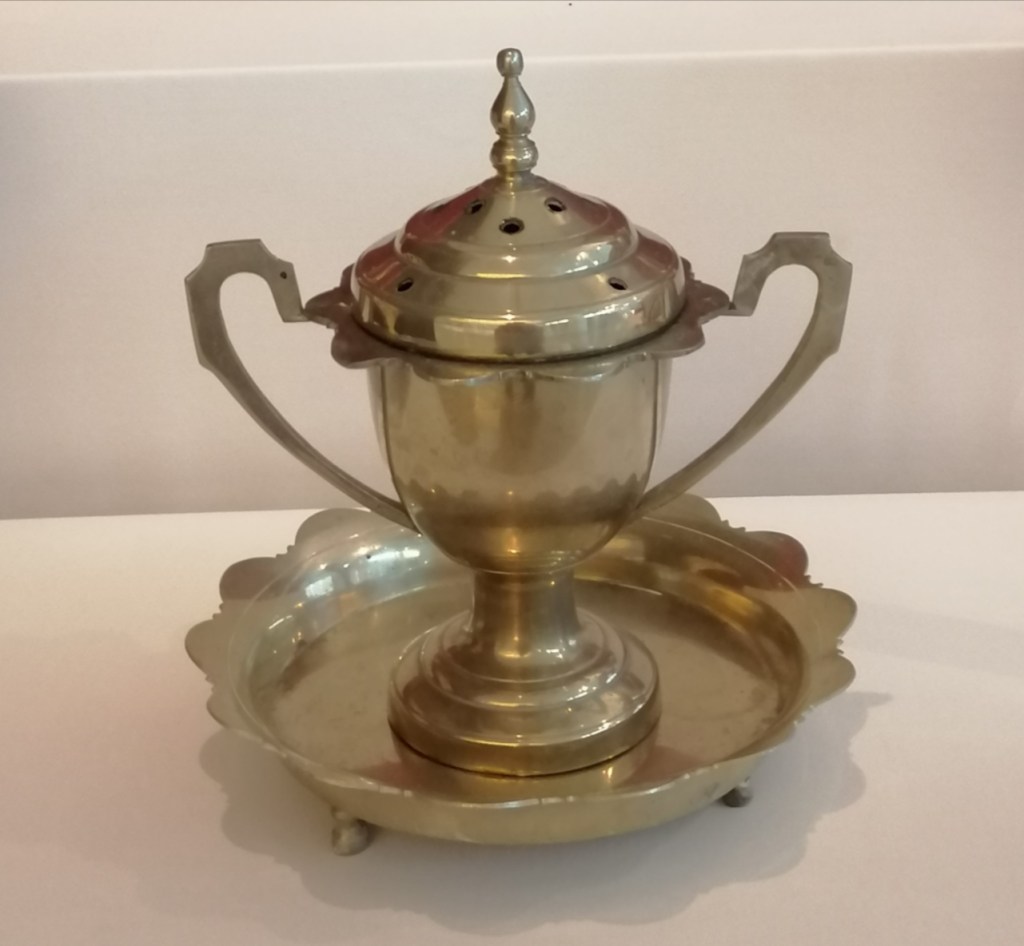
INCENSE BURNER

O, incense from rock and root!
In the name of God and salutations to the Prophet,
I sprinkle you onto the charcoal ember
in the incense burner inherited from Elders.
Ssseesshh! Ssseesshh! Ssseesshh!
Billow across the span of humanity.
Sharpen our senses, elevate our spirits,
as an adornment of prayers for peace,
as an accompaniment of the dead.
Send blessings to the world of jinns and humans.
The doors of servitude open,
the purpose both are created.
You are the balm for tormented souls.
You welcome the mind into the realm of remembrance.
Focus the soul on complete devotion
to the One, the only One.
Those with vague knowledge
only see smoke of superstition,
stupefied as rose water is sprinkled.

Ssseesshh! Ssseesshh! Ssseesshh!

O, this servitude is indeed fragrant!
O, this worship is indeed mystical and intimate
to the One, the Only One.
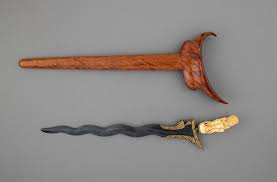
When the kris blade is smouldered by smoke,
after washed with lime juice,
in the name of God and salutations to the Prophet,
the blade is dried and withstands rust,
preserving inheritance and the calling.
Culture and religion are intertwined,
knowledge and understanding of the sacred realm
that bless the worlds of jinns and humans.
The doors of servitude open,
creatures of the One,
servants of the only One.
O, this servitude is indeed fragrant!
O, this worship is indeed mystical and intimate!
Ssseesshh! Ssseesshh! Ssseesshh!
Allah! Allah! Allah! My Lord!

DEBT

Hey, bestower of pleasure!
Hey, the saving hand!
I think I have been to hell:
My soul is charred by sins,
My mind is bombarded by doubt.
I have rebelled against Me
for fulfilling my desire.
I think I have been to heaven:
My soul is at peace with gratitude.
My mind is still in acceptance.
Everything has its place.
Everything is measured.
I am accepted by Me,
mutual and pure.
But return my will,
return my future,
return my entire me to the world and reality,
from mere illusion, from every expectation.
I want to live.
I want to live.
I want to live in a bit of doubt,
in a pinch of rebellion,
to learn by myself,
to be in place and measured.
Hey, bestower of pleasure!
Hey, the saving hand!
Let me pay my debt in feelings unsatiated.

THE MOUNTAIN
God, smash the mountain
in my soul.
Obliterate the entire me
with your Grace and Love.
I could no longer bear
the sufferings of alienation.

FIRASAT
(Spiritual Intuition)

People nowadays do not know firasat.
People nowadays do not use firasat.
Purity brought down from Elders—
the first intuition without veil,
the stirrings and effects of unity of experience:
Nature, knowledge, and actions unified,
moved by the eye of the soul,
nurtured by the discipline of the mind,
based on strings of reiterative knowledge,
demonstrated by signs from layers of Nature,
validated by proofs in actions and breaths.
The mind, soul, and spirit
moulded in the self and surroundings.
Ever since it is compartmentalised by thoughts
that distinguish object from subject,
dissecting issues to the atom,
limiting conclusions and acceptance,
denying possibilities and visions,
veiling light by separation of knowledge.
Is not this world a mirror?
Is not this universe a sign?
Is not this life a labyrinth?
Is not a problem interlinked?
Science, philosophy, psychology, history, and religion
are only points of view
that need to be reunified,
that need to be rejuvenated as a whole
with stirrings and effects of firasat
that will pierce layers of existence,
that will open secret doors of
the manifest, symbolic, transcendent, and immanent worlds.
Are not all that fall from the sky,
grow on the surface of the earth,
and return to the sky a belief in the unity of everything?
So, the dust that floats in the air
remembers the moment of attesting of the spirit
that is gently blown at the boundaries of seven worlds.
"Am I not your Lord?"
The Malay testifies in firasat:
"Yes, we affirm!"
Isa Kamari has written 12 novels, 3 collections of poetry, a collection of short stories, a book of essays on Singapore Malay poetry, a collection of theatre scripts and lyrics of 3 music albums, all in Malay. His novels have been translated into English, Turkish, Urdu, Arabic, Indonesian, Jawi, Russian, French, Spanish, Korean, Azerbaijan and Mandarin. Several of his essays and selected poems have been translated into English. Isa was conferred the S.E.A Write Award from Thailand (2006), the Singapore Cultural Medallion (2007), the Anugerah Tun Seri Lanang (2009) from the Singapore Malay Language Council, and the Mastera Literary Award (2018) from Brunei Darussalam.
He obtained a BArch (Hons) from the National University of Singapore in 1989, an MPhil (Malay Letters) from Universiti Kebangsaan Malaysia in 2008 and is currently pursuing a PhD programme at the Academy of Islamic Studies, Univeristi Malaya. His area of research is on the problem of alienation and the practice of firasat (spiritual intuition) in selected Singapore Malay novels.
The Lost Mantras is a collection that blends spirituality, Malay cultural heritage, and universal human experience. First published as part of Menyap Cinta (Love Greetings, 2022, Nuha Books KL), these poems are like a bridge between mysticism and everyday life, where traditional images (betel, jasmine, kris[1], oil lamps, setanjak[2]) are woven with Qur’anic echoes, prayers, and existential questioning. The collection carries a Sufi resonance—always circling back to longing, humility, surrender, and beauty as signs of God. The poems are not only lyrical but also function as cultural memory: they preserve Malay traditions, communal practices, and village life, while situating them in a cosmic framework of faith, sin, and redemption. The use of Malay customs, rituals, and objects is powerful: it asserts that spirituality is not abstract but embedded in heritage. This makes the collection uniquely Southeast Asian despite its universal in appeal.
[1]A dagger
[2] Malay headgear
PLEASE NOTE: ARTICLES CAN ONLY BE REPRODUCED IN OTHER SITES WITH DUE ACKNOWLEDGEMENT TO BORDERLESS JOURNAL
Click here to access the Borderless anthology, Monalisa No Longer Smiles
Click here to access Monalisa No Longer Smiles on Kindle Amazon International



 Borderless