Categories
Stories

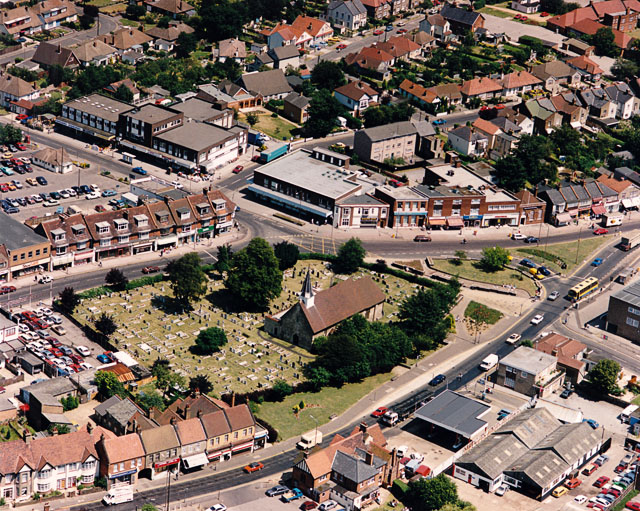
Jonathan’s Missing Wife

By Paul Mirabile

Courtesy: Creative Commons

The alarm-clock rang at seven as usual. Jonathan, puffy-eyed, yawned and slammed down the catch violently. He then rolled over towards Heather, his wife, who always needed a firm nudge to get her up in the morning. Alarms had absolutely no effect on her eardrums. Roll he did but the left side of the bed was empty! Odd, Jonathan, a light sleeper, had not heard the creaking of the bed. Besides, he had always been the first to rise in the mornings.

He threw off the blankets, blurry-eyed, and shuffled to the loo. Throwing a bathrobe over his pyjamas, Jonathan glided barefoot into the kitchen. No one! Into the sitting-room. Empty! He opened the door to their son’s now unslept in room and took a peep. Nothing! He shrank back when he saw the large map of Southeast Asia scotched to the wall over his son’s desk, and two books laid out open: André Malraux’s La Voie Royale[1] and Somerset Maugham’s The Gentleman in the Parlour: A record of a journey from Rangoon to Haiphong. He closed the door quietly with a religious deference.

A bit ruffled by this unaccustomed morning void in the house, Jonathan quickly washed, dressed, drank a cup of coffee and decided to investigate the strange absence of his wife. First he telephoned her bridge-club mates, Molly, Susan and Julie. Not one had seen or heard from her since their last get-together last week. Nonplussed, Jonathan dialled Heather’s sister’s number, Hazel at Luton. She had no great love for him but …

Hazel answered the phone, yawning, vague and aloof. No, she hadn’t spoken to Heather since Tuesday. It was Friday. “Maybe she’s out buying a mink stole,” she scoffed with unaffectionate irony. And she slammed the receiver down. Jonathan winced, poising his phone over its hook. He let it drop with a dull thud …

He fell back into a wicker chair chaffed by Hazel’s customary curtness. From the large bay window of his Town Council flat he gazed musingly out at the dwarfed pine trees that separated the pavement from his tiny front garden. The autumn leaves, sad, spiralled up and down against the grey sky, tumbling about the yellowing grass. He rocked back and forth meditatively. Wherever could she be? This was not like her, he repeated over and over again. He suddenly thought of the detective’s report…No, it had nothing to do with that. He was sure of it.

Jonathan shot out of the wicker chair and stepped out the front door. He would make a few rounds of Stevenage before doing anything too hastily. He got into his brand new 1975 Ford Cortina and roared off to their favourite pub, The Duck or Grouse. Why she should ever go there at this time of the morning seemed absurd. But one never knows … Heather worked there in her younger days as a barmaid, perhaps she popped in for a chat before shopping.

The inside of the pub was cloaked by the darkness of early morning emptiness. The owner, Lawrence, a squinty-eyed bloke, was busy juggling bottles of liquor and whistling some ridiculous television series tune. His huge, round, pink, hairless face lit up in surprise at the sight of Jonathan. The pub-owner stopped juggling, staring at him out of his squinty, shabby eyes.

“A bit early for a pint, mate!” he boomed in that portentous fatuous voice of his. “Where’s your better half ?” And he gave Jonathan a conspicuous wink. Jonathan, in no mood for Lawrence’s boring humour, came to the point :

“Heather has gone off, or I think she’s gone off.”

“With who ?” came the other’s equivocal repartee.

“Don’t mess about, Lawrence. Just tell me whether she’s been in or not.” Lawrence rubbed his hairless chin thoughtfully and shook his head. He turned towards the kitchen in the rear and cried out, “Have you seen Heather about, love?” A faint voice between splashes and the clanging of kitchenware answered in the negative. The pub-owner shrugged his burly shoulders. Jonathan pursed his lips, turned his back to him and strode dejectedly to the door. As he reached the low door Lawrence shouted out huskily: “Cheerio old boy ; give my regards to the misses … when you find her … Mind the head, duck or grouse!” Jonathan bit his lip, disregarded the caustic remarks and stalked into the streets.

Back in the car he weighed up the situation, fuming over Lawrence’s uncalled for insinuations. Heather was over sixty ! He frowned. The cheeky sod believed the whole thing to be a joke. Gone off with who?

Perhaps she’s at the pictures. No, at this time of day? What’s on? Oh, that stupid action film. She’d never go in for that.

His eyes lit up — the grocer’s, yes, of course, she went out to the grocer’s shop just across from the Cromwell Hotel. Jonathan headed towards the Cromwell in downtown Stevenage Old Town without a second thought.

The dumpy, red-cheeked Mrs Whitby was all smiles when she caught sight of Jonathan stumbling into her empty shop, although the redness of his face and his bloodshot eyes startled her — that is, piqued her curiosity. 

“All right, Jonathan ? You’re not looking very jaunty this morning,” she began in her hoarse, cocky voice.

“Yes, yes, I’m fine,” he lied. “But listen, has my wife been in this morning?”

“Can’t say that I’ve seen her. Why? Has the misses been playing hide and seek with her mate?” She gave him a sly wink. Jonathan stiffened. He never liked Mrs Whitby and this feeling was manifestly reciprocal. Nor did Heather for that matter. She thought her vulgar. Alas, this was the closest grocery shop to their flat.

“You must take this seriously, Mrs Whitby,” responded Jonathan sharply. “She’s nowhere to be found, and I don’t know what to do.”

“Go to the bobbies,” she suggested tersely. “It’s their job to find missing people, right ? Be quick about it though, she might have been abducted by some romantic stranger stirring about Stevenage.” Mrs Whitby chortled, rolling her crossed eyes in a grotesque manner. Jonathan pulled a dour face.

“Oh don’t talk nonsense. There are no romantic strangers stalking about Stevenage, and if there were, they would never have chatted up a sixty-five year old woman.”

“Well, well, well. How do you know that a woman at sixty-five couldn’t seduce a man?” Mrs Whitby riposted dryly as if she herself, in her sixties, had ensnared a few ‘romantic strangers’. “You should know, sir, that old birds do catch the worm.” Jonathan was shocked by the vulgarity of the metaphor. Then she added lightly, “Go to the police station or call Scotland Yard. You know, Scotland Yard always finds missing people. Mind you, most times they’re dead, but they find a few alive.”

Jonathan stared at the ungainly woman in disbelief; the words stabbed at his chest with poignant thrusts. She noticed Jonathan’s ghastly mien and wanted to retract her statement but it was too late. She quickly said, “But sometimes they find them alive, they do. Don’t worry about Heather; she can take care of herself good and proper.”

He left the grocery shop as if in a drunken stupor, staggering into the cold, wind-swept streets. Melancholic leaves twirled about, descending in crispy clusters to the pavement. Above they dangled precariously from naked boughs, then down they plummeted from the high arching tree-tops, floating like fairy lights, bouncing to the pavement and street listlessly, their silken colours obscured by the mud. Jonathan followed intensely their errant adventure; the spiralling leaves drew him ever closer to their Fate. Suddenly, he drew back from the scene lest he become emotionally devoured by it. The morning events grew more and more estranged to him, like a bad dream or a doctor notifying you that your cancer was incurable. Plucking up courage he took a deep breath, dashed for his car and raced off to the police station in Stevenage New Town.

Jonathan stopped the car abruptly. There, tottering along the pavement was his neighbour Andy. He had no overcoat and sported a stained starched white shirt. His long, wavy hair had visibly not been combed. Andy was certainly drunk! Jonathan pulled up beside him and called out, “Andy! Do you have a minute?”

Andy, indeed drunk, stopped short in his footfalls. When he realised it was Jonathan, he danced over to the Ford flapping his arms like a bird. Andy was in a delightful mood.

“Blimey, Jonathan old fellow, fancy meeting you here.” Andy skipped back and forth, jovially tapping Jonathan’s car window with his tobacco-stained fingers.

“Stop dancing for heaven’s sake,” an exasperated Jonathan yelled out. “Have you seen Heather about ?”

Andy froze in his side-stepping and posed as if to have his photo taken. He turned his beetle-like eyes on his neighbour, “Have I seen Heather ? Well … “ He put a finger to his temple. “Yes, I might have dreamt of her last night or the night before … lambent eyes sparking like wine, teeth, milky white.”

“Stop mucking about and just tell me whether you’ve seen her or not,” the wife-seeker lashed out, beside himself. Andy had always been the ingratiating neighbour, ‘stepping in’ uninvited for tea at four, or more often, for a few shots of Jonathan’s expensive Armagnac at seven!

“I can’t say that I have, Johnny.”

“Stop calling me Johnny! Are you sure? You look absolutely sloshed.”

“Yes I’ve had a few, but I am able to peer through the fumes of Glenfiddich[2] and grasp the dire urgency of the situation. Now let me see,” and he rolled his eyes about in their orbits. “Sorry mate, I haven’t seen your wife since ‘mi own troubles and strife’[3] buggered off with the manager of the Cromwell.”

“What are you insinuating ?” Jonathan eyed him coldly.

“Nothing old boy ; no need to make a row over a flown bird. You know what they say, when the cage is left open birds will fly out.”

“Drunken fool !” Jonathan rolled up the window and sped off to the police station. It soon dawned on him that he had no time to lose. All these ridiculous enquiries led him nowhere. No one took either him or the affair with any seriousness. But was it all that serious? What would the police do? Would they snicker at him, cast amusing glances at one another as he narrated his morning’s ordeals? Would they twitch their moustaches whilst rubbing their clean-shaven chins? Before he had any answers to these questions, he had parked across from the local police station.

Unexpectedly there were no twitching of moustaches or amused glances for the simple reason that behind the desk, congested with sheaves of documents and notes, sat one very clean-shaven police officer, his corrugated, oval face beaming with absolute boredom. As Jonathan staggered forward, the police officer peered at him out of steel, blue eyes. The frosty peering of those eyes examined him from head to toe. Jonathan suddenly felt very self-conscious, like when one forgets to put on underwear on an outing, or trying on shoes at the shop with holes in your socks. In a state of exhausted excitement, he reported everything he had experienced since the alarm-clock woke him up at seven sharp. He even had a photo of Heather in his wallet. The officer obediently jotted down every word in a very professional manner. This show of professionalism put Jonathan somewhat at ease, although he did feel his energy flagging, his verbosity aimless.

The officer held the photo in front of him, studying it carefully. After a few minutes, he turned his attention to Jonathan whom he studied for a minute or two. Those steel, blue eyes bore into his. Jonathan felt terribly awkward.

“I shall have Scotland Yard check all English citizens having left the country on flights to Southeast Asia,” the officer finally stated, beating his brows. These words were spoken as if they brooked no questioning. Jonathan, however, was in no mood to be brow-beaten by a young police officer whose cryptic words left him more in a muddle than when he arrived. This being said, he did express a tinge of anxiety as if the officer were keeping him in the dark by withholding a piece of information that concerned him personally.

“Why Southeast Asia ?” he stuttered.

“Why not Shangri-La for that matter?” The other, amused by Jonathan’s caustic humour, leaned over the desk with an enigmatic smile.

“Are you not Jonathan Richards, father of the teacher who went missing in Thailand some six or seven months ago ?” Jonathan, abashed, fell back.

“Yes I am. But I fail …”

“To see the motive of your wife’s disappearance in connection with your son’s? In that case, allow me, sir, to put you in the picture. Instead of contacting us or Sotland Yard, you went about hiring a private detective whose reputation, as far as our files show is a far cry from Sherlock Holmes’.” He chortled at his own comparison.

Jonathan remained stoic, unamused by such a preposterous assumption. Was this officer making fun of him ?

“My son’s disappearance has nothing to do with my wife’s!” he managed to retort tartly.

“Does it not?” came the other’s terse rejoinder. Jonathan unzipped his vest and unbuttoned his collar. The air had become sultry, laden with danger, unexpectedness.

“I shall not be misled or abused,” he objected without conviction.

“Misled ? Abused ? Dear sir, here you are whimpering about your missing wife after having whimpered about your missing son. What have you done for both ? You sent an incompetent fool to Thailand for an extravagant fee, when in fact, if I am not mistaken, your wife urged you to go contact the police or Scotland Yard.”

Jonathan, aghast, went pale, jarred by the officer’s personal details. He was at the edge of despair, but at the same time was beginning to understand …

“How dare you pry into my family affairs ? Did my wife come to you in secret ? Are you in league with her … hand and glove ?”

“Secret ? Hand and glove ?” he chuckled. “I should think not Mr Richards. It seems that all this is a secret only to you!”

At that blow Jonathan took hold of the officer’s untidy desk. He immediately straightened up, “Am I then responsible for both their disappearances?”

“Now, now, let us not get all rattled over an incident that has been in our files for months. Yes, your wife, Heather, I believe, informed us of your son’s misfortune after Sherlock Holmes had given her his trashy report. You know that the police keep abreast of these foreign matters.”

“That means you urged her to leave then…?” Jonathan shouted, his peevish, bloodshot eyes blurry from anger and insult.

“Not exactly.” The officer replied coolly, twiddling a pen about his thumb. “The police do not urge, as you put it; we merely suggested that since the detective in question happened to be a crank, or charlatan if you wish, other means of locating your son would have to be adopted.”

“Such as?” Jonathan’s voice rose a pitch.

“Such as you yourself going to fetch him, old chap! And since you haven’t made a move for over six months, well, it appears that the misses has taken it upon herself to do what you should have done.”

The accusation addressed so pointedly at him drove him to a frenzy.

“Are you accusing me of parental misguidance ? How dare you …” he shouted, flushing red in the face.

“Let us not get nasty now, Mr Richards. Would you prefer that I send you packing with trite remarks or stencilled phrases like ‘oh, not to worry, it can happen to the best of us. Keep a stiff upper lip’?”

“Rubbish! Anyway, how can you be so sure about all this? Has she left you a note?”

“Police intuition, my good man. Intuition,” snorted the officer all smiles, his cold blue eyes gleaming with rakish roguery.

“Intuition ! What nonsense !” Jonathan exploded.

The officer resumed in a mollifying tone, “Just go home and wait for a letter or a phone call. We, too, shall do our own investigation. No need to put yourself out.” The aloof nonchalance of the police officer’s reaction and comportment infuriated Jonathan even more. He turned on his heels and scuttled out of the station as if having been tutored by some old nanny.

The late morning sun lay hidden behind layers of thick, grey clouds. He felt a sudden chill. A sudden urge to scream at passers-by that eyed him with either indifference or overt suspicion. A scream that would bring back his Heather … his son !

“We can go find him together, Heather … please …,” he lamented to himself. A few drops of rain fell on his feverish forehead. He let the drops drip down into his parched mouth. He needed a drink. The whole sky was engulfing him in a white cloak of despondency. The chills grew longer, succeeded quicker.

“No, impossible ! She couldn’t have gone on her own. She knows nothing of travelling nor of taking care of herself. I’ll call Heathrow to confirm it.”

That officer’s smirk burned his insides. “How dare he tell me more about my wife than …” Jonathan’s train of thought came to an abrupt halt, “A conspiracy! Yes, everyone is ganging up on me; that blasted sister of hers, Andy, Mrs Whitby, Lawrence … even the Stevenage police ! The whole lot of them are in on it. How dare that officer address me as an old chap ! Heather planned this behind my back in connivance with a pack of deceiving scourges …”

In a savage rage he kicked at the water-logged leaves that clung to the pavement. He struck at them violently whilst the pitter-patter of rain fell heavier and heavier. Several leaves rebuffed his vicious assaults, clinging all the more securely to the now drenched pavement. He flew into a tantrum beating the rebellious leaves, “I’ll show you!” he cried aloud, wrenching them out of their refractory state, tearing them to pieces with his boot.

Several women passing by stopped to observe this unusual spectacle. Jonathan, suddenly conscious of their regard, ceased his petulant outburst. There he stood, cutting a gloomy, lonesome figure in the now pouring rain. He felt like a helpless child. He moved swiftly to his car, flung open the door and sped off home, thoroughly disgusted with the police, his neighbours, Stevenage … with Humanity as a whole …

Once at home, wet as a rat, he immediately threw himself down on the sofa in the sitting-room. He wanted to cry but could not. He thought of Heathrow. As he reached for the receiver, his bloodshot eyes fell on a folded piece of paper stuck between the blue china bought in Amsterdam, the artificial wax orchids and two family picture frames on the mantelshelf of the hearth. Why had he not seen that this morning? He stood and looked at it carefully. Heather’s handwriting had scribbled his name on the fold of the paper. With a trembling hand he unfolded it. A sudden sadness overwhelmed him…

Dearest Jonathan,

Off to Southeast Asia to find our Francis. I’m sure you understand my decision given the fact that for six months you have made no move yourself. I had no other choice love, believe me. You’ll be on your own for some time, but you’ll get on just fine without me. I’m sorry I said nothing of this to you, but woman’s intuition told me what you would have been very cross with me if I had. Now that I am gone pray for my safe return with our dear Francis securely at my side.

Love, your Heather.

P.S. I shan’t tell Francis that his poor Patty died. It would break his heart. I’ll let you handle that on our arrival.   

Resignedly Jonathan let the note drop to the carpeted floor. He returned to the sofa and lay back exhausted, brooding over his wife’s leaving … her lack of affection … of honesty towards him. “A conspiracy!” he whimpered, planned by the police and Heather. “And strike me dead if Hazel wasn’t involved in the whole thing ! That brazen hussy probably put her up to it …”

His face dropped into his hands and he began to cry softly. He dried his tears and fixed his attention on the picture of sixteen-year-old Francis on the mantel shelf with his dog Patty, at that time just a puppy. The reality of the situation creeped into the empty house. His whole existence seemed suddenly forfeited. What had prompted his conduct? He had only himself to blame for the whole mess. It was true, they were right. He had done little for his only child. Hiring a detective had been his idea, a way of compensating for his apathy, indifference … even his obtuse disregard of the whole affair as if Francis had been a victim of his own puerile doings, and would just have to find a way out of the mishap himself. Alas, at that time he had no means of weighing the consequences of his indolence in his wife’s eyes. She surely despised him! Jonathan, jaded by these unwelcoming but candid thoughts, stretched out on the sofa and dozed off into a troubled sleep.

A very troubled sleep during which he dreamt that his death had awakened him to life. Little did Jonathan Richards know his wife would never return …

.

[1]          The Royal Road

[2]        A Sottish malt whiskey

[3]        ‘my wife’ in Cockney rhyme

.

Paul Mirabile is a retired professor of philology now living in France. He has published mostly academic works centred on philology, history, pedagogy and religion. He has also published stories of his travels throughout Asia, where he spent thirty years.

.

PLEASE NOTE: ARTICLES CAN ONLY BE REPRODUCED IN OTHER SITES WITH DUE ACKNOWLEDGEMENT TO BORDERLESS JOURNAL

Click here to access the Borderless anthology, Monalisa No Longer Smiles

Click here to access Monalisa No Longer Smiles on Kindle Amazon International

Categories
Interview

In Conversation with Adam Aitken

Poet, creative writer and teacher Adam Aitken talks about cross-cultural identity, and the challenges of travel, writing, and belonging with Keith Lyons.

Adam Aitken

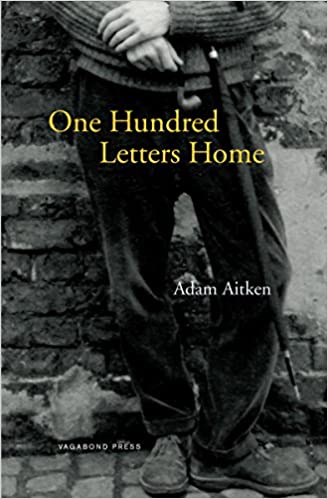
Adam Aitken is a London-born teacher and writer with a PhD in creative writing. He migrated to Sydney after spending his early childhood in Thailand and Malaysia. His poetry and prose have been widely anthologized. He has published poetry, chapbooks, essays on Asian Australian literature, book reviews, and was co-editor of Contemporary Asian Australian Poets. The story of his mixed heritage is featured in his creative non-fiction work One Hundred Letters Home. In this exclusive, he shares about the challenges of writing, identity and place.

You were born in the UK and have spent most of your adult life in Australia but tell us about your early childhood in Thailand and Malaysia.

It was a very happy childhood, and I was spoilt by everyone, except my mother, who was chronically anxious every time my father appeared. I was unaware of it at the time, but they were not happy together. I remember my fourth birthday in Birkenhead Liverpool. Then we moved to Southeast Asia. In Thailand, my father was almost always absent. I had good schooling in Kuala Lumpur, at a Catholic pre-school run by the Good Shepherd order. I remember my first day, I was illiterate in prayers and scared of the large carving of Jesus crucified and bleeding from his crown of thorns. Around seven, I went to an international school in Bangkok, which was great except for the bullying I received from an American kid. After he hit me on the head with his sneaker, I reported him, and he was publicly shamed. There are few worse things you can do than insult someone with your shoe, especially by touching the head.

What was your experience like moving to Australia when you were still young? How did your sense of identity or homedevelop?

Worse, the racism in Perth was total, violent, totalitarian. Teachers were complicit. Nothing was done about it. My brother and I were once howled out of the school as we went home. I am afraid that when I talk about the worst aspects of ‘Whiteness’, I remember that time. My father was again absent, unable to get a job he liked and implicated in a civil adultery case involving another couple. We left for Sydney after a year. My poem ‘The Far East’, is an attempt to record that kind of trauma.

When did you first discover that you liked writing creatively, and in particular, writing poetry?

About aged 14, after six years living in Sydney, I started to enjoy my English classes. I had a fabulous teacher Rick Lunn, who I think became a successful sci-fi writer. I will never forget the magic of listening to ‘The Rime of the Ancient Mariner‘. After that I had access to David Malouf’s library in Sydney, when we stayed at his flat for a few months. I discovered the alternative reality that books provide. I bought a typewriter and enjoyed the process of typing on paper. A few years later I attended a poetry reading at Exiles Bookshop in Sydney and was enchanted by the strange glamour and seriousness of the writers. Martin Johnson, John Forbes, Gig Ryan, John Tranter were all there.

What early recognition or encouragement meant you saw being a writer as a career option?

At my primary school, I wrote a poem about a forest walk we did, and on seeing a sea eagle, and that was read to the whole class. At high school in Sydney, a poem or two made it into the school magazine. I think the English Master also recognised me and encouraged me. I was lucky to grow up in a time when creative writing was still valued but not necessarily seen as a vocation for which tertiary qualifications were essential, but at Sydney University, I enjoyed lunchtime poetry workshops when there were no creative writing courses to do at all. I met practising writers in a very informal atmosphere and so ‘being a poet’ seemed a comfortable choice. My mentors were real writers but there was no pressure of assessment. The goal was to get poems into magazines. This happened when I was in 3rd year. I had great lecturers who loved poetry. I was published in Southerly. I featured in an issue of Chris Mansell’s Compass. It was a thrill to have a few pages in a well printed and produced ‘zine. I also read at what was then the largest reading in Sydney, The Harold Park Hotel. Probably Sydney’s most dynamic place at the time, and since.

How did you develop your mastery of the craft, own voice and style?

I baulk at this question as I am not sure how I can define my voice or style. Certainly, early imitation of other poets, practice and attention to poetic technique (metaphor, simile etc.) helped me develop the craft. Listening to poetry out loud helps. Revising and trying out new versions. It’s like writing music. I also have a very good ear for languages so pick up stylistic and prosodic patterns quite quickly. I listened to early advice about metrics and line endings and spent a lot of time reading traditional verse and learning the metres and forms (ie. sonnets), even though I don’t apply them much these days. Writing ‘in the style of’ is an enjoyable exercise and imitating others is fun, even though it can be unoriginal. I tend to allow a line or sentence to suggest its own metrics, then use that to write a draft. I am very much more into allowing content to dictate form.

What do you think is unique about your work, that makes it distinctly yours?

In terms of the questions of form and craft, I don’t think there are many Asian Australian poets who had a traditional training in English Lit, augmented by Modern American literary influences (like the Imagists, Ezra Pound, and the New York School). I was there in the early days of postmodern theory. I was starting out during the ‘Poetry Wars’ in the ‘seventies. I also studied linguistics and became an English language teacher. I was there in the heady days of the Sydney early ’80s. I think this gives me a kind of technical awareness of language and grammar, form and genre.  I am probably one of most well know of migrant poets for having been recognised since then. I was fortunate to not have to work so much and so I had plenty of time to develop my craft. On a personal level I don’t know many other Australian poets who have had my parents who were literary enthusiasts, and both culturally eclectic. Of course, Thai heritage has given me a lot. Few Asian Australian writers have had a childhood like mine, or possibly the eclectic experience of reading as I have had. I don’t know of any Asian Australian writer who has explored their cross-cultural heritage as I exhaustively as I have in both poetry and memoir.

How do you communicate through poetry something very personal, to an audience that is on the outside?

I received a ‘New Critical’ dogma about the poem being an impersonal object, but it did not stop me reading Sylvia Plath or Frank O’Hara. I begin by thinking about how the personal could be interesting to someone I don’t know. Attend to the particulars and details of the personal, and to avoid sentimentality.   Be as brave as possible as to the trauma of an experience and celebrate the positive. My own preference is to avoid histrionic outbursts, something a learned writing my memoir. Again, the particulars and exactitude of description work better than bare statements. I do still hold to the dictum of showing, not telling.

One of the characteristics of your work is attention to detail. Does that start with being observant and taking notes? How do you then find the most poignant moments or parts?

I often know I have a poignant subject, but often writing leads you to it. The previous answer is relevant here also. I don’t do a lot of notes, but I do a lot of drafts that grow into larger structures. What seems poignant early may pale into insignificance later, so I do a lot of revisiting of old notes and drafts. I often take note of dreams and reflect on what they might mean. I have always been interested in painting, photography, and films, (which I studied at Uni) so I do spend a lot of time thinking about what is ‘in the scene’, what the detail is, how close ups and panning work, what a montage is. As a child I liked to look through microscopes at insects. As far as grammar in concerned, I am fascinated by how grammars work in other languages, and in the etymology of words.

How do you go about writing a poem?

Again, often I start with a fragment, a line, a phrase, and go from there. Sometimes, I set out trying to describe a scene, a photo, a painting, an experience of looking, whether that be looking at a film or a view. Interior monologue or talking to myself and putting thought onto a page helps. I occasionally address a theme, most often at the instigation of a journal issue callout. I also have a long running series of satiric poems written in the character of an avatar, though I sometimes doubt that these amount to anything lasting.

Is poetry about finding meaning and making sense, or looking at something from different perspectives?

The Cubist method has a lot going for it, and I don’t really make the distinction between making sense and the various means we use to perceive of something. I do struggle with the fragmented poem that does not seem to find meaning, that I can’t find the sense in, or that lacks context, a heritage, a precedent in a more powerful text. But that is part of the job, to struggle towards meaning, using what is at hand.

How different is it writing an essay or review, does it use a different part of your brain or a different process?

Well, audience and purpose are more important in an essay, though not as important as I often thought.  A review should help a reader decide whether to go and read the text, and I am pragmatic about this. I find writing essays almost impossible now, because I don’t have the patience and attention span needed. Essays and reviews (arguably) have strong generic patterns to follow, whereas I write poetry without constraining myself too strictly to generic considerations. Long forms are exhausting, and my eyesight is deteriorating and so long sessions at the computer are unpleasant.

If the financial rewards from writing arent great, does being a writer mean you have to hold a day job’ or other income streams (teaching) to enable you to write?

I have always earned most of my income from teaching English as a Foreign Language, but since COVID, I live on savings. In the space of my career, grants and prizes have only amounted to about a year or two of an average income salary. I admire my peers who are full time creative writing academics but still manage to produce books in between the admin and marking. I’ll be taking up a Visiting Writer job in Singapore in 2024, and I am very much looking forward to that.

How useful have awards, being shortlisted for prizes, and residencies been to your progression as a writer? What specific things have been springboards into new worlds?

Apart from allowing me to take time off from the day job, residencies and grants have helped me to keep going and to believe in myself and has added some motivation for many in the community of like-minded poets where I live now. It is interesting to follow up on what writers have written after a stint in Rome for example.

Residencies help you reside for a longer time than average in places that you can explore. The most difficult residency I have had was probably the Paris Studio, even though I found writing time. I was overwhelmed by ‘Paris’ as a grand subject and theme and had to learn to look for the personal relevance and the original detail again. My stint as Visiting Writer in Hawai’i was powerful, as I had to rethink my use of English and my relationship with the local scene. Working with creative writing students there taught me a lot and brought me into a new way of writing that was alive to vernacular American and local patois.

Certainly, winning a postgraduate award to do a doctorate in creative writing cemented my self-belief while giving me four years of income and time to write my memoir and a thesis on hybridity and cross-cultural desire as a theme in Australian writing. My most productive period was funded by an Australia Council grant that allowed me to live and write for a year in Cambodia. While time and freedom to read and write is unarguably valuable, it allows writers to defamiliarise their surroundings.  I was challenged to really question my own privilege as a w\Westerner, and as a relatively wealthy Asian Australian living in a poor country. I was already familiar with the history of the region, but the time there allowed me to have encounters with the real actors (and their descendants) in that history.

How has travel in Asia reinforced/challenged your sense of self and personal/national identity? Do you feel like an Australian, or more of a global citizen?

Travel always brings up questions of where you come from, and where you are headed, but most importantly you begin to situate your identity across a range of places. I am talking about Thailand and France, which have personal family ties. I have spent a lot of time learning French and Thai, in order to be able to feel more at home with people in these places. I feel more intimate with these regions, but not at all with places like the UK, where I was born. Obviously, Sydney is my home, and Sydney is not Cairns or Melbourne, places with which I have a lot less intimacy. I think Sydney was once more of a community, but almost none of my closest university friends live here, and a lot of writers I know have moved elsewhere.

I don’t believe that I personally can embody the concept of a Global Citizen, which is a fiction unless you are rich enough to be able to go where-ever you like and whenever you like and can afford to live anywhere.

I recently flew back from Bali, and the crowd at Denpasar airport were for the most part Australians — somewhat diverse, but also unfamiliar to me, people who would probably not want to hang out with me!

In your memoir One Hundred Letters Home what did you learn about your parents and yourself?

I learned that having intended to explore my mother as the leading agent in our lives, I became drawn into my relationship with my father. He took over the book as a subject, and I learned how complex he was. I learned also that there was a whole stretch of his life that were off limits to me, and I didn’t know enough to write about them. I learned that writing about parents can be a frustrating way to get to learn about yourself. I did learn a lot about my own attempts at identity transformation, I mean the attempt to ‘become a Thai man’. The book is self-analysis, though I did not intend it to be limited by that theme. I think I learned more about intergenerational trauma that is specific to Australian men who were born last century, and of course, more about ways of writing about the father-son relationship that move beyond Freud.

I also learned a lot about my father’s ancestry, that he was descended from an Army family, even though he had been an anti-Vietnam war Moratorium activist. I learned how his branch of the family had been rich, but that a lot of the wealth had never come done to him. I learned that I am the descendant of the founder of Victoria Brewery, or VB. I also learned that my great-grandfather was a survivor of Gallipoli and the Western Front. My father never told me any of this. I also learned that my maternal great-grandfather had been a Protestant Minister of the Australian church, and that he was a pacifist and a teetotaller.

How does writing challenge the status quo/ colonialism/ stereotypes? Was your first poetry collection seeking to challenge Marco Polo’s narrative?

Writing should, in some aesthetic way ‘contaminate’ the status quo, while calling out the conditions of oppression. Naming the invader, and resisting is the intention. Methods can vary from diction and descriptions of outright violence to underhand subversion. Poison the invader’s food, dress as them, but turn it to your advantage. My first book Letter to Marco Polo was a way of putting together poems about foreign travel, as I had spent a year in Thailand and the title of the book seemed obvious after I had written the poem that goes by that title. I liked the casual postcard style of address, – ‘Dear such-and-such the natives do this and that…’  Then it was easy to parody the renaissance ‘travel’ genre (which is a fantasy genre for sure), and it felt like a duty to write my own questions of travel, and to add ‘reality’ to the encounter by re-casting the traveller’s gaze as that of a lost son returning to his ancestral home. My encounters with my mother’s family were life-changing and Letter to Marco Polo was a snapshot into that encounter.

John Kinsella has commented on how my recent poems enact the colonial voice in order to undermine it, which seems paradoxical. He refers to these lines in Revenants (2022):

I read my father’s letter on Hong Kong,

how he loved it:

the heat, the beer in bottles, the tailoring, the freedom.

I imagine him reading Somerset Maugham

with the temperature at 105.
Waited on by one silent Chinese boy (sic)

who lights his cigarettes.

Eastern food, and chopsticks.
If you cant use them you cant eat!

Dense traffic and ceaseless din.

John Kinsella saw me draw attention to colonialism through citing Maugham, and quoting his and my father’s language, only to undermine it, which is a form of irony. John explains it better than I can:

“He contests the language of bigotry (always seeking to ‘centralise’ itself) through the ‘borrowed’ or ‘quoted’ language, as he does through the evocation of a bigoted colonialist and lauded British writer such as Maugham. A colonial positioning takes place and then is undone. The aligning of ‘tailoring’ and ‘freedom’, and the lighting of the cigarettes in the arrangement of master and mastered is painful and unaugmented. It is what it is. The chopsticks line is configured against the Western cliché of density and noise. This weaving of the marginal into the central dialogue of colonial behaviour and colonial imposition is polysituated into the fact of inheriting the array of experiences and impositions, and acting and enacting out of conflicting experiences. Aitken’s poems de-centre racist discourse. They break the binaries. That is not to say that Aitken is aligning his voices as either ‘subaltern’ or ‘master’, but rather attempting to deconstruct the language of such experience without owning that experience.”

It makes some sense to think of this approach as a tactic of mimicry and soft parody, I suppose, rather than a didactic approach.

Whats your process for bringing together work created in different places — such as in Revenants —  to create something that is linked and unified?

I had originally intended to put together poems only situated in France, but then I found I wanted the poems situated in other places.  Early drafts did not achieve much linking and unification, but Giramondo’s editor Lisa Gorton and I worked through drafts to find something more or less unified. What were unifying tropes were linked to how my father’s travel and my own were comparable: we had both travelled to Asia. We were both foreigners in alien territory and I wanted the book to work on one level as an elegiac dialogue with my father who died in 2017. Memory and the return and siting/sightings of the spirit, of the revenant, were emplaced, embodied and situated, and every place in Revenants has some allusion to the idea of a return of the past. In a way I am mining a post-romantic pantheism. Or perhaps, it’s the spirit, or mana, or the Dreaming (though I am wary of appropriation here!)One can return to a place and feel the past come back through that place, just as one can read a poem and it evokes their presence by quite simply addressing the dead. I speak to the tombstones; I tell my monsters to go away; I speak to my father as if he were listening etc. Of course, in the end the book is tonally and stylistically consistent despite the intertextuality. The unity has to do with editing, the order of the poems, and compression of the lines themselves. I use quoted material economically, but there is quite clearly a ‘lyrical’ pulse to the whole collection.

What are you working on next?

There are the dramatic monologues I have collected over the last 11 years, but also more poems that did not fit into Revenants, but still seem to have legs.  I have just returned from three months travel in Thailand, Malaysia and Bali, and I haven’t really written anything related to that yet. I spent time in around 35 hotels, so this suggests a framing device and maybe a new title.

For aspiring writers, whats your advice?

I have often felt like giving up, but I remind myself that not writing is like death. Persistence but also having a supportive network, especially if you are putting together a book. It’s very important to have trusted readers who are also critical. I don’t react so much to unhelpful reviews these days, though I asked ChatGPT what adverse criticism my poetry has generated and it listed ‘overly experimental’, obscure’ and ‘difficult’. I have always fretted about not connecting with readers, but there are readers for all kinds of poetry these days. My advice is read a lot.

There’s more information on Adam at https://adamaitken.wordpress.com/

.

Keith Lyons (keithlyons.net) is an award-winning writer, author and creative writing mentor, who gave up learning to play bagpipes in a Scottish pipe band to focus on after-dark tabs of dark chocolate, early morning slow-lane swimming, and the perfect cup of masala chai tea. Find him@KeithLyonsNZ or blogging at Wandering in the World (http://wanderingintheworld.com).

.

PLEASE NOTE: ARTICLES CAN ONLY BE REPRODUCED IN OTHER SITES WITH DUE ACKNOWLEDGEMENT TO BORDERLESS JOURNAL. 

Click here to access the Borderless anthology, Monalisa No Longer Smiles

Click here to access Monalisa No Longer Smiles on Kindle Amazon International
Categories
Interview

Carr is Driven to Write Fast

Short-story writer, publisher and writing advocate, Steve Carr, has helped many writers around the globe get published for the first time. The author speaks to Keith Lyons about his prolific output and the best way to conquer writer’s block by being abundantly productive and creative.

Steve Carr is on the quest to write the perfect short story. But perfectionism isn’t putting him off the challenge. Since his first short story was published half a dozen years ago, he’s had over 600 short stories published internationally.

The native of Cincinnati, Ohio has travelled extensively outside the United States, serving as a military journalist in the Army and Navy before switching to fiction. As well as his work appearing in print and online in magazines, literary journals, and anthologies, eight collections of his short stories have been published, including ‘A Map of Humanity’ in 2022. He’s even released a paranormal/horror novel ‘Redbird’.

He was editor of literary magazine ‘Short Story Town’ and is the founder and publisher of Sweetycat Press whose goal is to support emerging writers by providing opportunities to getting published, primarily in anthologies.

When did you first discover your talent for writing?

From the earliest grades in school, I excelled in writing and English. By the time I reached high school the word had gotten around with the English Composition teachers that I had talent as a writer. In my senior year I had an English teacher, Mrs. Katz, who went out of her way and far beyond the curriculum to challenge my writing abilities. She encouraged me to pursue a writing career after I completed high school. Thanks to her support, and my own curiosity about what was happening in Vietnam (during the war), instead of going to college I enlisted in the Army to become a military journalist.

What encouraged you along the way to express yourself through writing?

My teachers in school and I took to writing the way fish take to water.

Tell us about your career as a military journalist? What did that involve? What kind of writing did you do in the army and navy?

I attended the prestigious joint military school, The Defense Information School, where I learned journalism and photojournalism. My intention was to go to Vietnam to see and report first-hand on what was happening over there. Fate intervened, and I was sent to the District Recruiting Command in Jacksonville, Florida as an Information Specialist, which involved me travelling around Florida and Georgia writing articles about the war about the war, as conveyed to me by military channels and returning soldiers, for local newspapers. I spent three years in that position and decided to end my enlistment to begin my college education in Cincinnati, where I’m from. Being the restless sort, I got bored after my Freshman year and enlisted in the Navy, and following the path of my favourite writer, W. Somerset Maugham, who had trained as a doctor, I enrolled in the Hospital Corps School, to become a Navy medic (a Hospital Corpsman). Because I did well during that training, I was offered the opportunity to attend the Neuropsychiatric Technician Program in San Antonio, Texas. Completing that, I was sent to the Portsmouth Virginia Naval Hospital where I quickly advanced to the position of the only enlisted instructor for the Psychiatric Technician School, Phase II, and for the next three years I worked with psychiatric patients while also teaching. During that time my writing was entirely medical/ psychiatric-based. That proved as beneficial to my writing as the skills I learned in the Army as a journalist.

Where in the world did your early career take you?

It took me first to the Army and then to the Navy. I traveled to a number of states and saw things and experienced life in ways I never thought possible or imaginable as I grew up.

How did you get into fiction writing?

My path as a writer, leading me to writing fiction, zigzags all over the place. If writing plays can be considered writing fiction (which it is), it wasn’t until after college where I double-majored in English and Theater, completed after my enlistment in the Navy, that I turned to writing plays, resulting in a few of them being produced in several states. During the next few years while writing plays I also wrote grants for non-profit health care providers, another unexpected benefit to my eventual path to writing fiction, which didn’t begin in earnest until years later, after I retired from owning my own theatrical production company. Writing fiction didn’t happen until I was mentoring a college student interested in learning to write fiction, and wanting to show him how it was done, I wrote a short story and then submitted it to a publication that quickly accepted and published it. Thinking that was really easy, the same thing happened with my second story. That was where my fiction writing career began.

What’s one of your first success stories in getting published? How did you feel seeing your name in print?

In June, 2016, the online publication, Literally Stories, accepted my first story “Eleanor” about the life of a modern-day reclusive woman who lived on the edge of the South Dakota Badlands. To tell you the truth, I don’t recall how I felt, other than being surprised that getting my first fiction story was so easy. I must have also felt encouraged because I quickly followed that with a second story. 600-plus stories – new and reprints – published since then tells me that from the beginning I must have liked the experience of being published because as evident, I haven’t stopped.

What’s your motivation for writing, given that rewards are scarce in a monetary sense?

I’ve been asked that question a lot, and honestly, I have no idea what motivates me to write. I don’t need the money, so that wasn’t a motivator from the very beginning. Maybe what motivates me is the challenge of writing good fiction. Now, I’m on the conquest to write the perfect short story. Someone told me that I may have already done that and don’t realise it. I have my doubts about that, so I continue to write short story fiction.

Does writing fiction involve a different part of your brain or different process than non-fiction writing such as journalism? If so, how?

The process of journalistic writing and writing fiction is somewhat similar. The best in both forms of writing involves making the individuals (characters) in the work, engaging, compelling and relatable, and bringing the events in the piece to life. For me, writing begins with observation and intellectual curiosity. Both journalistic writing and fiction almost demands that. I have no idea which parts of my brain I’m using, but I think I was wired to observe and give thought to the world and people around me from a very early age.

If writing is a creative process, how does the aspiring writer manage the creative side with the more mundane, organised side, such as having a schedule for writing and submitting, and meeting deadlines?

That’s a hard question to answer since every individual has their own methods and abilities to be organized in anything they do. I have a guidebook, Getting Your Short Stories Published, published by Clarendon House Publications, that is available on Amazon, that provides the method I use for organising my writing and submissions. Even in that I caution the reader that it is my method, and it may not work for everyone. If I can be conceited about the guidebook, it has some very useful information in it, including the importance of knowing grammar and punctuation, why reading the submission guidelines is essential, and understanding how editors evaluate submissions.

How do you get motivated to write?

Motivation has never been a problem for me. What helps is that I set goals and quotas: how many stories do I want to write in a given month? How many words do I want to write on any given day? Am I on track for my yearly quota of published stories?

Where do you get your ideas, and how do they form into a story?

I begin with a title that has popped into my head, not always inspired by anything in particular, but sometimes a result of reading a news article or seeing something happening while outside. I’ve also been fortunate enough to travel, to meet lots of interesting people, and I have a very fertile imagination born of a love of art, music and movies, so those things are always stirring around in my head. Once a title has been formed, I then think about how the story will begin and end. In that way I am a “plotter,” (someone that plots out the entire story). I fill in the middle as I write. In that way I am also a “pantser.”(someone who flies by the seat of their pants all the way through their pants).

What’s your actual writing process – and is it fuelled by anything?

I don’t really have a process. I tend to write in shifts throughout the day or night, mostly when I feel like it. I have goals, as I said, but I don’t allow myself to become stressed if I lag behind or don’t meet them. I enjoy the process of writing, of seeing the words, sentences and paragraphs appear on the blank page.

How do you find out about opportunities for submissions, for example for literary journals and anthologies?

I have a subscription to Duotrope which is a publication search site. Their fee for use is either $5.00 per month or $50.00 per year. The great thing about them that is unlike any other search site is that they send out a weekly email that lists publications looking for submissions. I get about 80-90% of my submission opportunities from Duotrope. They can be found at https://duotrope.com/search/catalog.aspx. I also subscribe to Authors Publish https://authorspublish.com/ and to a number of publications that send out monthly newsletters and calls for submissions. I also find opportunities for submissions on social media, both in the large number of Facebook writing groups I belong to, and on Twitter. There are a number of editors who like my work and ask for stories from me.

What do you attribute to your incredible success in having over 600 short stories published?

This is going to sound like bragging, but I’m a good writer. I have a thorough understanding of short story structure and I write stories that have a broad appeal. I was told by another editor that I’m a “commercial writer,” meaning I write what readers want. I also write stories based on what publications are looking for. I found out early it was a waste of time and energy to write a story and then try to find a home for it. I use what the publications are seeking as prompts, and then I write a story from the prompt. I also write a lot of stories, so it’s a simple law of averages that the more stories I submit, the more of them get accepted – of course if only they are well-written. I also write in every genre which is extremely helpful in being able to adjust my themes, plots and characters to match a genre. 

Tell us about your efforts to support emerging writers through Short Story Town and publishing anthologies with Sweetycat Press?

Short Story Town is a Sweetycat Press online literary magazine that paid emerging for their stories and narrative poems. It will be closing down on June 1 after a year of operations to allow me to focus on the anthologies. Under the Sweetycat Press publishing imprint over 1,000 prose writers and poets worldwide have had their works published. The anthologies are varied and each one has a theme. So far Sweetycat Press has published an episodic crime anthology titled The Whole Wide World, an anthology titled Landscapes & Cityscapes, followed by A Love Letter (Or Poem) To . . ., Stories and Poems in the Song of Life, Beautiful: In the Eye of the Beholder, and Movement: Our Bodies in Action. On July, I will be giving out $900 in combined cash awards in the Jewels in the Queen’s Crown contest to 20 writers poets who have had a prose work or poem published in one of the anthologies judged by a small panel to be the best of the best.

What’s your advice for aspiring writers?

Never take advice about writing from anyone who has less experience with writing than you do. Readers are important but being told what a reader likes or dislikes about what they read is a lot different than being told how to write. Also, don’t get freaked out about a rejection. Everyone gets them. Shrug it off and move on. A rejection will never cause you physical harm.

And your next projects?

An anthology will be published from the Jewels in the Queen’s Crown contest and then two anthologies are planned for later in the year. Anyone interested in writing a story or poem for inclusion in an anthology should check in regularly with the Sweetycat Press website https://www.sweetycatpress.com/ Unfortunately, I don’t pay the writers/poets whose works are accepted, but the anthologies do provide platforms for showcasing a writer or poet’s talent and skill.

Steve Carr’s Twitter is @carrsteven960. His website is https://www.stevecarr960.com/ He is on Facebook:https://www.facebook.com/steven.carr.35977

Keith Lyons (keithlyons.net) is an award-winning writer, author and creative writing mentor, who gave up learning to play bagpipes in a Scottish pipe band to focus on after-dark tabs of dark chocolate, early morning slow-lane swimming, and the perfect cup of masala chai tea. Find him@KeithLyonsNZ or blogging at Wandering in the World (http://wanderingintheworld.com).

PLEASE NOTE: ARTICLES CAN ONLY BE REPRODUCED IN OTHER SITES WITH DUE ACKNOWLEDGEMENT TO BORDERLESS JOURNAL