Categories
Essay

Travels of Debendranath Tagore

Narrative by Debendranath Tagore, translated from Bengali by Somdatta Mandal

Note from the Translator

Debendranath, Father of Rabindranath Tagore

Born to Dwarkanath Tagore in Shelaidah, Debendranath Tagore (15 May 1817 – 19 January 1905) was a Hindu philosopher and religious reformer. One of the founders of the Brahmo religion in 1848, his journey in the role of ‘Maharshi’, the great ascetic, was an attempt to spread the Brahmo faith and he travelled extensively to various places, especially in different parts of the Himalayas like Mussourie, Shimla, Kashmir, and Dalhousie.  He even constructed a house in Bakrota called ‘The Snow Dawn’ where he used to reside for months. Although Debendranath was deeply spiritual, he managed to continue to maintain his worldly affairs — he did not renounce his material possessions, as some Hindu traditions prescribed, but instead continued to enjoy them in a spirit of detachment. His considerable material property included estates spread over several districts in Bengal. Debendranath was a master of the Upanishads and played no small role in the education and cultivation of the faculties of his sons.

In his memoir, Jeevan Smriti [Memories of Life], Rabindranath also narrates in detail about his trip with his father in the Himalayas when he was just eleven years old. Debendranth founded the Tattwabodhini Patrika (1843) as a mouthpiece of the Brahmo Samaj and apart from his autobiography, wrote several other prose pieces which also reveal his wanderlust.

Among the two entries included here, we have ‘Moulmein Bhraman’ which is an interesting travel piece narrating his sojourn in Burma in September/October 1850. In the Chaitra 1817 Saka issue of Tattwabodhini Patrika, a travelogue ‘Mori Bhraman’ narrating Debendranath’s trip to Mori was published. Interestingly, as a prologue to this piece Sri Chintamani Chattopadhyay tells us that he was so enamoured after listening to Debendranath’s oral narration of the trip undertaken 28 years earlier, that he decided to transcribe it for the satisfaction of the readers.

Moulmein Bhraman (Travel to Moulmein)

After a year, the splendour of autumn revealed once again and the desire to travel blossomed in my mind. I could not make up my mind where to go for a trip this time. I thought I would make a trip on the river and so went to the bank of the Ganges to look for a suitable boat. I saw that several khalasis — dockyard workers – of a huge steamer were busy at their work. It seemed that this steamer would soon set sail.

“When would this steamer go to Allahabad?” I asked them.

In reply they said, “Within two or three days this will venture into the sea.”

On hearing that this steamer would go to the sea, I thought that this was the easiest way my desire for a sea journey could be fulfilled. I went to the captain instantly and rented a cabin and in due time boarded that steamer to begin my sea journey.

I had never seen the blue colour of the sea water before. I kept on watching the beautiful sights by day and night amid the continuous bright blue waves and remained immersed in the glory of the eternal spirit. After entering the sea and swaying with the waves for one night, the ship dropped anchor at three o’clock the next afternoon. In front of us, I saw a stretch of white sand and something that looked like human habitation. So, I took a boat and went to see it. As I was wandering about the place, I saw a few Bengali men from Chittagong with charms around their necks coming towards me. I asked them, “How come you are here? What do you do?”

“We do business here. We have procured the idol of Goddess Durga in this month of Ashwin[1],” they replied.

I was really surprised to hear that they celebrate Durga puja here in Khaekfu town of Burma. Durga puja was celebrated even here!

From there, I came back to the ship and started towards Moulmein. When the ship left the sea and entered the Moulmein River, I remembered the scene of leaving Gangasagar Island and going into the Ganges River. But this river did not offer any such good scenery. The water was muddy and full of crocodiles; no one bathed in it. The ship came and dropped anchor at Moulmein. Here a Madrasi resident called Mudeliar came and greeted me[2]. He came on his own and introduced himself. He was a high-level government official and a true gentleman. He took me to his house, and I remained a guest there and accepted his hospitality for the few days I stayed at Moulmein. I stayed very comfortably in his house.

The streets in the city of Moulmein were wide and clean. The shops that lined both sides of the street selling different kinds of things were all manned by women. I bought a box, and some very fine silk clothes from them. Going around the marketplace I went to the fish market at one time. I saw big fish for sale displayed on huge tables.

 “What are these big fish called?”

They replied, “Crocodiles.” So, the Burmese ate crocodiles; they spoke verbally about ahimsa and the Buddhist religion, but their stomachs were filled with crocodiles!

One evening when I was wandering on the wide streets of Moulmein, I saw a man walking towards me. When he came close, I understood that he was a Bengali. I was quite surprised to see a Bengali there. From where did this Bengali arrive across the ocean? It seemed there were no places where Bengalis did not go. I asked him, “From where have you come?”

“I was in trouble and so came here,” he replied.

Instantly I understood his trouble[3]. I asked him further, “How many years of trouble?”

“Seven years,” he replied again.

“What did you do?”

“Nothing much. I just duplicated some papers of a company. Now my term is over, but I cannot go home because I do not have the money.”

I offered to give him the passage money. But how will he go home? He had set up a business, had got married, and was living quite comfortably. Would he ever go back to our country to show his shameful black face there?

Mudeliar told me that there was a mountain cave here which people went to visit[4]. If I wished he would accompany me there. I agreed. On the first moon night[5], he brought a long boat during the high tide. There was a wooden cabin in the centre of that boat. That night, Mudeliar, I, the captain of the ship and seven or eight other people boarded the boat and it left at two o’clock at night. We sat up for the whole night in that boat. The foreigners kept on singing English songs and requested me to sing Bengali songs. So, I kept on singing Brahma-sangeet occasionally. No one understood anything. They did not like them and went on laughing. We travelled for about twenty-seven miles that night and reached our destination at four o’clock in the morning.

Our boat reached the shore. Everything was still dark. On the shore I saw a cottage full of trees and creepers from which light was coming out. I got curious and ventured alone to that unknown place in the darkness. On reaching there I found it was a tiny cottage. Inside several bald-headed priests in yellow ochre robes were placing candles in different parts of the room. I was quite surprised to see people resembling the priests of Kashi[6] here. How did they come here? Later I came to know that they were the leaders of the Buddhist monks and known as Phungis. I hid myself and observed them playing with the lamps but suddenly one of them saw me and took me inside. They gave me a mat to sit on and water to wash my feet. I had come to their house, so this was their way of entertaining guests. According to the Buddhists, serving guests was a sacred act.

I returned to the boat at early dawn. The sun rose. Mudeliar and the other invited guests came and joined us. This made us fifty in number. Mudeliar fed all of us there. He had arranged for several elephants; about two or four people got on each elephant and proceeded towards the dense jungle. There were small hills all around and in between was that dense forest. There was no other way of travelling here except on elephant back. We reached the entrance of the cave in the mountain around three o’clock in the afternoon.

We descended from the back of the elephants and started to walk in the jungle where the undergrowth was waist high. The entrance to the cave was small; we had to crawl in. After crawling in a little we could stand up straight. It was very slippery inside and we kept on slipping and falling. So, we started walking very cautiously. It was pitch dark inside. Though it was three in the afternoon it seemed like three at night. I was scared that if we lost our way in the tunnel, we would not be able to come out. We would then have to wander inside the cave for the whole day. So, wherever I went, I kept an eye on the faint light at the entrance of the cave. All the fifty of us spread ourselves in various parts of the cave and everyone had sulfur powder in their hands. Then each person put a little sulfur powder in the little holes in the cave next to where he was standing.

After everyone’s place was defined, the captain lit his share of the sulfur powder. Instantly each one of us lit matches and ignited our portion. Now the cave was lit simultaneously at fifty different places like fireworks, and we could see the inside clearly. What a huge cave it was! On looking up to the ceiling our vision could not gauge its height. We saw the different natural formations that had been caused by rainwater seepage inside and were really surprised.

Later, we came out and had a picnic in the forest and then came back to Moulmein. On our way back we heard different musical instruments being played together. Locating that sound, we went forward and saw a few Burmese people dancing with all kinds of gestures of their bodies. Our captain and the foreigners also joined them and started to dance in a similar manner. They found great pleasure. A Burmese lady was standing at the entrance of her house. She watched the mimicry of the foreigners and went and whispered something in the men’s ears.  They stopped their singing and dancing immediately, and all of them suddenly left the scene and disappeared somewhere.  The captain went on entreating them to resume their dance, but they did not listen. It was amazing to see how much hold the Burmese women had over their men.

We came back to Moulmein. I went to meet a high-level Burmese official at his house. He received me very politely. There was a huge room and in its four corners sat four young women stitching something.

When I sat down, he said “Ada[7].”

One of the girls instantly came and handed me a round box full of betel leaves. On opening it I found it to contain different condiments. This was the local Buddhist custom of receiving guests. He then gifted me some excellent saplings resembling the Ashok flower. I had brought them home and planted them in my garden, but they did not survive despite great care. The fruit of this tree is very popular with the Burmese. If someone had sixteen rupees then he would spend the entire amount to buy that fruit. We disliked their favourite fruit because of its smell[8].

Mori Bhraman (Travel to Murree)

On the 10th of Pous, 1789 Saka[9], I abandoned all work and ventured in full earnest to go for a tour in the west. I did not decide where I would go. Just as a confined river feels overjoyed when released, I too left home with equal enthusiasm. Two servants accompanied me. One was a Punjabi Sikh called Gour Singh, the other was Kashi Singh, an Odiya Kshatri. At that time the train went only up to Delhi.

Upon arriving at Delhi, I found out that there was no other way to go except by mail coach. So, I booked a seat on it. My destination was Punjab. The horses of the coach in which I travelled up to a place near Sutlej were not steady. Because of them the coach swayed on both sides. I feared that it might topple, and it did tilt on one side and fell down on the ground.

I got out of the coach through its panel and shouted at the driver in the topmost voice – “You made me fall down, the body is hurt in many places and the nose is bleeding.” The driver had assumed that I had already died under the pressure of the carriage. Feeling assured after hearing my voice he replied, “Baancha to – at least you are alive.” My servant brought some water from a nearby well. I washed my nose. It was almost evening by then. Seeing a rest house nearby, I spent the night there.

Early next morning, I boarded the mail carriage again. It crossed the huge bridge upon the river Sutlej. Upon looking down I saw that the water had a tremendous current. I had never seen such a large bridge before. The wind was blowing fiercely. The strange sound of the waves hitting one another created great pleasure in my mind.

After that I reached an inn near the Beas River. Having our lunch there, I boarded the coach again at four in the afternoon. It was almost evening; we hadn’t progressed far when all of a sudden, a heavy storm rose. The road was just along the river. Sand started blowing to form clouds and cover the surroundings. Nothing was visible in front of us. Sand filled our nostrils and the coach could hardly move. I couldn’t decide where to go and take shelter. We found a settlement a little further ahead. Seeing a two-storied house I got off the coach and spent the night there. The storm continued unabated till three o’clock at night. As soon as it stopped, I boarded the coach again.

In this manner, travelling from one inn to another, I ultimately reached Amritsar. Earlier when I had gone to Shimla, I had spent a few days with great pleasure in Amritsar in an old, dilapidated house located next to a narrow sewer line. Immediately upon reaching Amritsar, I went looking for that beloved house.

I came next to the sewage line but saw that the house did not exist anymore. There wasn’t even a sign of it anywhere. This was an example that nothing was permanent in our lives.

I came back from there in a depressed mood. I rented a small single storied hut next to the road. As a traveller on the road, I stayed there amid the dust in that small room quite stoically but with great excitement. I cannot express in words how much I enjoyed living in such seclusion. The room wasn’t much taller than the road. Unknown travellers would stop by and speak to me in a manner as if we had been acquainted before. I was also happy to interact with them. One of them was a devotee of Hafiz and I too became an admirer. He did not want to leave me and became an earnest friend of mine.

Days went by in this manner. One day a Brahmo gentleman called Shibchandra babu came from the Brahmo Samaj at Lahore. He said that he had been sent by the Brahmos there once they heard that I was here, and I had to go to Lahore. Seeing his eagerness I started for Lahore. Babu Nabinchandra Roy had arranged for my accommodation beforehand in a house located next to a wide road at Anarkali. Once I reached there, the Brahmos came and surrounded me with devotion. During my stay in Lahore, I even had to deliver a lecture in Hindi.

From there the Brahmos arranged for my stay inside a garden. Surrounded by lime trees, the dwelling house was in the middle. With only two servants accompanying me, who was going to cook for me? I developed diarrhoea after eating the hard rotis that were served. Soon, I was also attacked by malaria. The Brahmos informed a Muslim doctor, and he came and saw me. I did not take the medicines prescribed by him. My own medicine was powdered Myrobalan and I took that. The next day there was a lot of emission of blood. I became weak; wanting fresh air I went up to the first floor. There I felt the tremendous heat of the sun and my head started reeling. The very next moment I fainted. Upon hearing this news, two Brahmos came and started feeding me sugar cane and I regained my consciousness after their nursing.

The body was in a miserable condition. The next day I sat wondering where I could go in such a state and that too without a cook. How could I return home in the heat of summer? As I was feeling tense thinking about it and could not decide what to do, my heart suddenly said, “Go to Murree.”

Thinking this to be a god-sent instruction I started preparing to go to Murree. The local Brahmos came to meet me at around two in the afternoon. My body was still very weak, and I didn’t have the energy to even talk much. They asked me what I wanted to do now, and I told them that I had decided to go to Murree and would begin my journey that day itself. After they left, Nabin babu and a few other Brahmos came.

I told them, “I want to go to Murree today so please arrange for a coach.”

They sent Gour Singh and arranged a mail carriage for me. Nabin babu asked me what I would eat on the way. He then gave me two bottles of pomegranate juice. After the coach arrived, I had the two big trunks loaded on its roof and got inside with the two bottles of juice as sustenance. Two servants sat on the roof of the coach. Despite my objection, the Brahmos dismantled the horses and started pulling the coach by themselves. I had to persuade them to stop. The coachmen attached the horses again and started moving.

After travelling a little I realised that the coach was swaying too much, and it was also not strong enough. The Sikh Gour Singh who was sitting on top was very strong, and there were two heavy trunks; if the roof collapsed on my head, there would be nothing I could do. I started feeling scared. Travelling in this manner, I reached a dak bungalow. It was a great relief and I felt that my life was saved. After eating there, I boarded the coach again. Gradually I came to the Jhelum. Gour Singh’s house was located there. He stopped the coach and was pleased to call his relatives and introduce me to them.

In this manner I arrived at Rawalpindi, which was situated in the Murree valley. From this point the road went up and down. Many broken wheels lay scattered here and there as proof of this dangerous road. I became scared on seeing them and kept wondering what would happen to me if the wheels of this unstable coach also broke. But by God’s grace, we overcame all these various hurdles and safely reached another dak bungalow[10]. As soon as I arrived there, the local Bengali gentlemen came to meet me. The pain in my body and the strain of travel made it difficult for me to speak. A gentleman called Dwarik babu started taking special care of me. He went here and there looking for a house, and at last went and requested a Parsi gentleman to allow me to stay in his garden.

I stayed in that garden and a Punjabi doctor came to see me. I told him that milk was my only food, but I could not digest that milk very well. I asked him for some medicines that would help me to digest that milk and was slightly relieved with what he gave me. I had become very weak. At night when I went to bed, I felt that I would not be able to get up the next day.

When Dwarik babu came the following day, I told him that I wanted to go to Murree. He told me that there were still no shops and markets at Murree, and I would find it difficult to stay there. But I went on pestering him. So having no other way he arranged for two basket carriages called dulis that would take me to Murree. I went in one duli and my luggage was put in the other one, while the servants went walking. I reached Murree after three days and a lot of hardship.

It was situated at a height of 7,500 feet. The bearers asked me where I wanted to go, and I told them to take me to the place where the sahibs usually landed. They took me to a huge house which was totally deserted and not a single human being was around.

I told them, “Why did you bring me here? Take me to a bungalow where people are staying.”

So, they took me to another bungalow. But the people there told me that it was a club house and not a place for travellers to stay. So, I could not put up there. I told the bearers to take me back to that same uninhabited house where they had taken me at first. They got annoyed and went back there and said that they would not go anywhere else. They placed my duli under a tree in front of that house. Looking up I saw the sky overcast with clouds. Here in the hills, it doesn’t take long for clouds to gather and rain. I was worried and wondered where to go now. I asked the bearers to take me inside and they carried the duli up to the verandah. I got down and inspected the house. There was no one anywhere. I selected a room and again asked the bearers to bring all by bedding from the carriage and spread it out near the wall so that I could sit up and take some rest. They did that and the very next moment quickly disappeared with their dulis.

A little later it started raining. The servants had not reached till then. Through the windowpanes, I could see that a heavy storm was raging outside. The leafless branches of all the big trees were fiercely swaying and big hailstones started hitting the windowpanes as if they would break them, but nothing happened. I kept on thinking that if I arrived here a little late then I would surely have died inside the duli in this severe hailstorm.

After a while the two servants came shivering. With the cold, the rain, and the hailstorm, they were in very bad shape. After wringing their clothes, they came near me. I told Gour Singh to look for a bearer or the caretaker of this hotel and bring him to me.

So he went and got the chowkidar. I asked him to fetch the furniture for the room, but he said he couldn’t do that till he received orders from the master. I threatened him that if he did not bring the furniture out under my orders and if his owner got to know about it, then he would be instantly dismissed from his job. The man got scared and then brought out a charpoi. I spread out my bedding on that cot and lay down. That night Gour Singh brought me a roti and some water. I could neither eat that hard roti nor drink the ice-cold water of Murree. So, I spent the night without any food. In the morning, I sent Gour Singh to fetch some milk and kept on counting the hours until his return.

It was eight o’clock and still there was no sign of Gour Singh. Those eight hours seemed like eight days. At last, he came back at 9 am with some buffalo milk. Upon drinking it, I found it to be diluted with water and tasteless. I could not digest that milk, and nothing remained in my stomach. The milk just passed out as it was. I covered myself with layers of blankets and shawls and went to sleep in the charpoi in that tremendously cold weather.

While I was lying down, I saw a shivering sahib entering my room. I realised how extremely cold it was outside when I found his teeth were chattering. He lit a fire in the next room and because of that I felt a bit comfortable.

The next day Gour Singh brought such diluted buffalo milk once again. I drank it but again the milk went out of my body as it is. Having starved for three nights I felt almost half-dead on the third night. I laid down quite comfortably on the charpoi with all the warm clothes layered upon my body and did not feel any pain. I felt as if someone like my mother was sitting near my head. I was breathing and along with that breath I saw my friend, Sajuja, also looking at me.  Breathing in and out in that manner I spent the whole night doing easy yoga and cannot describe how happy I felt.

Soon the night was over, and it was morning. Once again Gour Singh brought that kind of diluted buffalo milk. I drank it. How strange! I digested the milk that day. Since pure milk was unavailable here, I told Gour Singh that it would be nice if he went looking for a cow.  So, he went to Rawalpindi and bought a small cow for thirty rupees. He said that she gave ten seers of milk per day. Now milk has become my staple diet.

After drinking that milk my body became a little stronger. I had been staying in Bekereya Hotel from the beginning but now I decided that it was not feasible to continue staying there any longer. So, I went to look for a rented house. I went up the hill in that extremely weak condition and found an empty house. But it was so cold there that I did not find it suitable. A little lower from that point I found another house and liked it. I rented it for nine hundred rupees and started staying there. The next day the postal peon brought me a letter from my nephew Gnanendranath. I opened it with excitement, and he had included a Brahma-sangeet which read thus:

Gao rey tahar naam
Rochito jaar visvadhaam.
Dayar jaar nahi biram
Jharey abitito dhaarey.

[Sing His name/He who has created this world/Whose blessings endless/Falls continuously on earth]

I had already received His blessings to get back my life from the verge of death; the same blessings that were referred to in this song made me feel excited and my heart leaped with joy. This sort of a letter, and at such a time! How strange! How strange!

In this new house I managed to get a cook. He prepared green moong dal for me, and I liked its taste. It was sufficient for my lunch. After a long time, I felt satiated after an afternoon meal. As my health started improving, I gradually began to increase the quantity of my milk consumption. Early in the morning after the upasana was over, they brought the cow in front of me, and I would immediately send a bowl for the cow to be milked before my eyes. The bowl of milk was brought to me; I drank it and sent the bowl back. The cow would then be milked again, and I would once again drink from the bowl. This procedure was repeated several times and after drinking four or five bowls of milk, I would go for a walk in the mountains. Walking in the fresh cool breeze and under the direct rays of the morning sun, I wandered here and there and then came home. Instantly I would have tea, chocolate, and milk. During lunch I would drink milk again, and in the evening, and before going to bed. In this manner, I would drink about ten seers of milk each day and whatever was left over was made into butter to be consumed with rotis the next morning.

Within seven days, I regained my strength and, feeling exuberated started travelling in the mountains. I started singing songs praising the grace of our creator and there was no end to those songs. For a long time, I had been cherishing dreams of visiting Kashmir and it seemed that our creator would now fulfill it. So, I started enquiring about how to go to Kashmir. By the beginning of May, Murree became full of people and the place took a new look with the red uniform of the British soldiers and the fanciful clothes of the other British men and women. Deserting its shabby look, even nature filled up the place with varieties of flowers. After staying in Murree for three months, I heartily began my journey to Kashmir on the 4th of September.

 [ Excerpted from Wanderlust: Travels of the Tagore Family. Translated and Edited by Somdatta Mandal. Kolkata: Visva-Bharati, 2014]

[1] Septemmber-October

[2] Sri Murugesam Mudeliar was the then Commissariat contractor of the military outpost at Moulmein.

[3] The fact was that the man had been banished here. Usually, political prisoners were interned in Moulmein prior to 1848.  But after 1848 Port Blair in the Andaman Islands was made the new place for banishment and imprisonment. This narrative is dated 1850.

[4] The local name of this famous cave was Kha-yon-gu, and Farm Cave in English. It was situated in the northeast part of Moulmein town and was approachable through the Ataran River.

[5] This was on the 4th of November, 1850.

[6] Varanasi

[7] In the Burmese language a guest was called ai the(y), which was pronounced like ‘aah’ and which when suddenly heard sounded like ‘ada’.

[8] The Durian looks somewhat like a jackfruit but is leaner and smaller in size.

[9] This would be 1867 CE.

[10] A dak bungalow was a circuit house along the postal route for the administrative officials to spend nights.

Somdatta Mandal, critic and translator, is a former Professor of English from Visva-Bharati University, Santiniketan, India.

.

PLEASE NOTE: ARTICLES CAN ONLY BE REPRODUCED IN OTHER SITES WITH DUE ACKNOWLEDGEMENT TO BORDERLESS JOURNAL

Click here to access the Borderless anthology, Monalisa No Longer Smiles

Click here to access Monalisa No Longer Smiles on Kindle Amazon International

Categories
Essay

A Foray into Andaman

Narrative and photographs by Mohul Bhowmick

The swaying palms at Corbyn’s Cove, Port Blair

The palms sway as if they are reminded of a time long ago when they did not know that tectonic shifts would eventually edge them closer to the peninsular sequestration of mainland India. I bristle with the unimpeded curiosity of a man who knows that there is little to be seen apart from the reality of the here and the now. Corbyn’s Cove remains deliciously impaired by the downhill stretch of road that sees at least a hundred motor mishaps a year; I cannot help but grimace as the palms continue their little dance in immaculate rhythm with the late evening breeze.

Corbyn’s Cove seems to be a delightful aperitif before the hinging actuality imposed upon us by that of the most symbolic images of the island: the Cellular Jail. The garden near the gate of Cellular Jail boasts of petunias imported from England; I give them as much of a passing glance as the after-effects of the audio-visual show permit me.

Savarkar, hailed as a hero by the modern dispensation of our country, was perhaps the most well-known inmate of this gaol. As a reward for the valour he displayed while submitting at least three mercy petitions to the British for clemency after being sentenced here, the airport in Port Blair was named after him. On being granted that, Savarkar virtually stopped all criticism of the British Raj, as a result of which he enjoys a considerable legacy in present-day India as a freedom fighter. The museum here offers no facts about the said freedom or fighting. A young schoolboy asks questions to which his parents have no answer.

*

The convoy through which our car moves in giddying fashion on the Andaman Trunk Road leads us, after a fleeting glimpse of the indigenous people of the island — the Jarawas, to Baratang, where limestone caves await. An old, almost run-down ferry transports us to the mangrove creeks over the Middle Strait and heaves with painful aggravation before vomiting us out of its hull. The mud volcanoes watch with distaste and emit a sigh of antipathy. While the limestone caves remain apathetic to our incursions, I pay no heed to their unvoiced contempt.

Wading through the mangrove forests of Baratang Island

But unlike many of my forays in the past, I have felt less at home in Andaman than I have anywhere else. On leaving Port Blair, it seems as if I am circumnavigating an alternate planet, where the corruption that greed unfailingly encourages is let down by the unbridled probity of the officialdom, many of whom hail from the mainland. There is little of culture to speak of, save that which is showcased by settlers from the mainland. As is usually the case when emigres outnumber natives by their sheer magnitude, the indigenous peoples of Andaman have been forced to the margins of a history that they could not claim to have created.

Repeated written requests to visit the island of Nicobar get turned down. Resigned to an expedition that matches the itinerary of other visitors from the mainland, it is not hard to find solace in Aberdeen Bazaar in downtown Port Blair when the sun goes down. The limestone caves of Baratang had been exceptionally kind during the day, decrypting my confusion between stalagmites and stalactites with ease. Listening to my questions with the uninhibited sagacity of a sixty-year-old, the caves showcased how indifference does not necessarily have to portray weakness. 

*

Havelock is perhaps the best-known illustration of a one-horse or one-road-town. The ferry from Haddo twists and tumbles in the unfamiliar Bay of Bengal, infamous for its stomach-churning capabilities; it is not before the reassuring Naseeruddin Shah makes an appearance on the in-house television that I finally close my eyes. I wake to the turquoise-clear waters of the same tormentor (the Bay, not Shah) before descending into the waiting taxi, grateful for another chance at life. 

The sun sets without leaving a trace of itself at Radhanagar, and the Bengali migrants who serve up a delightful Mughlai parantha[1] talk endlessly of the overflow of tourists. Their Tamil neighbours, who sell seashells and illegal necklaces made from corals, seem happy enough to welcome the said disturbance, without whom their livelihoods would have been at stake.

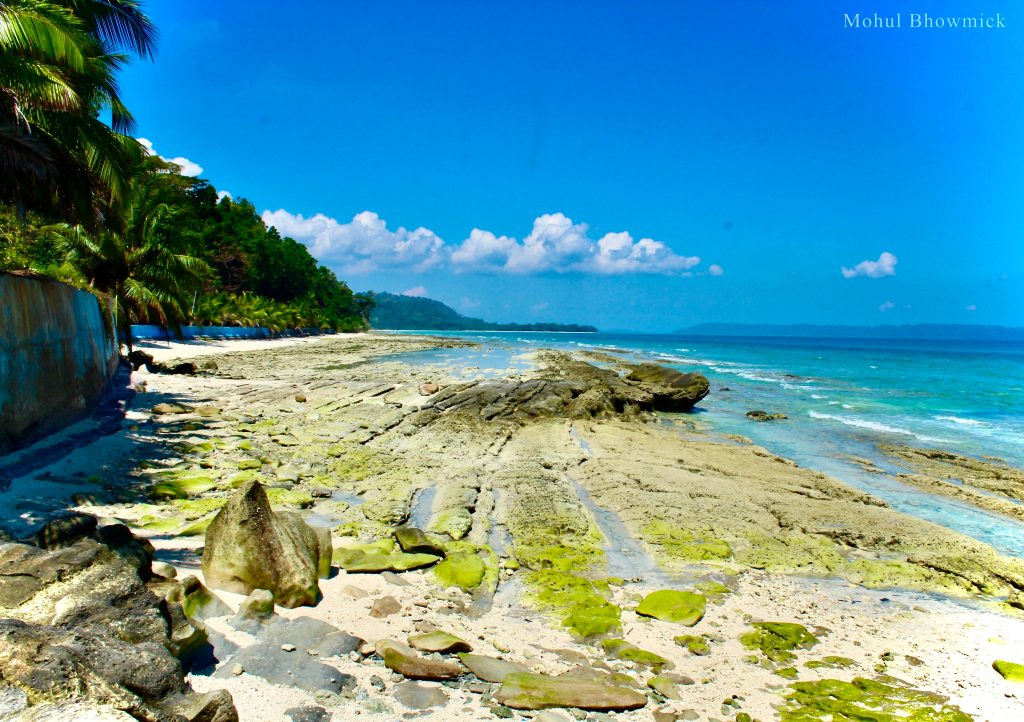
The next day, the Kala Patthar beach seems astral at high noon as the sun beats gently down on the golden sand. I sit sipping on tender coconut juice and remind myself that it is too easy to seek the idea of Shangri-la in such locales, and not in the grim reality that the here and the now present. The harsh sun that burns my bare forearms to embers brings with it the missive that utopia, after all, is a state of mind. 

The bright sun parches you on the Kala Patthar beach, Havelock Island.

“All the way to heaven is heaven,” Saint Catherine had decreed in the fourteenth century. I found little to argue with the apostle when heading into Neil Island, recently renamed Shaheed Dweep by the central government. Bharatpur merits no mention at all, or about as much as a slap the genteel administrator at the tourist information centre would deserve for including it in one’s itinerary. Laxmanpur 1 and 2, strangely enough, overwhelm me enough to want as little to do with them as possible; it is often the untested and untried that draw a weary traveller’s mind.

Going against the tide? Almost sunset at the Laxmanpur -2 beach on Neil Island.

*

Return to Port Blair. The droll afternoon spent at Ross takes one back a century or two, but the cacophony that the resultant evening provides is worthy enough of a Tarantino chef-d’oeuvre. At dinner, two raucous Punjabi gentlemen argue over the viscosity of the dal makhni on offer; I take second helpings of the rabri[2] keeping an ear out for the chatter. They involve the floor staff as well, who are helpless, and have no option but to get a new batch of dal tadka served. The gentlemen say that they remember having asked for dal fry… I wonder what Rasheed, our driver during the sojourn, feels when he drops his guests at the airport for their flights back home to the mainland. He has never stepped out of Port Blair and continues to seem distant from the release (or is it escape?) that the terminal offers. I imagine him looking towards me misty-eyed, hopeful for a future in which his reality mirrors that which Andaman often proffers to travellers. But he turns the car around and rushes past the incoming traffic even before we have entered the concours

[1] Mughlai Parantha is flatbread stuffed with minced meat and coated with eggs

[2] Dessert

Mohul Bhowmick is a national-level cricketer, poet, sports journalist, essayist and travel writer from Hyderabad, India. He has published four collections of poems and one travelogue so far. More of his work can be discovered on his website: www.mohulbhowmick.com.

PLEASE NOTE: ARTICLES CAN ONLY BE REPRODUCED IN OTHER SITES WITH DUE ACKNOWLEDGEMENT TO BORDERLESS JOURNAL. 

Click here to access the Borderless anthology, Monalisa No Longer Smiles

Click here to access Monalisa No Longer Smiles on Kindle Amazon International

Categories
Musings

Tsunami 2004: After 18 years

Sarpreet Kaur revisits the past with the hope of a better future

A vivid memory

A smile escaped my lips looking at the familiar newspaper, still just four pages of content. I can remember all those birthday listings, retirement announcements and situation vacant columns that formed part of this paper — coloured from the front-back and the time-tested black and white print in the inside. A balcony, a cosy chair, a newspaper and a cup of tea– what could be more perfect!

Suddenly a gloom overshadowed the day– it was 26 December 2022. The paper was filled with a long list of ‘Remembrances’ by families for their loved ones who lost their lives on that dreadful day. I could see a glint of sun here and a wrinkled grey of clouds somewhere on the canvas of azure water but my mind was not contemplating the beauty of this sea, it has already flown 18 years back — the cries of women, the heart-wrenching silence of kids, hopeful eyes in search of families, those shrieks to get as less as a glass of water, the echoing wails…

That day I discovered how fickle human life was, how harsh nature was, how devious some humans are and how godly some of our human mates were, all this was demonstrated in mere few hours. Who did this?

This very sea. This very sea did it. I am sure the sea must have had valid reasons. I can still feel the same shiver running down my spine. On that fateful day of 26th December 2004, this sea was furious, not serene as now. It was fuming with anger, ferociously.

Now, the houses on Andaman and Nicobar Islands are all decked up with big stars and shimmering lights, the faraway humming of carols have started accompanying the sea breeze. The winds are not humid anymore. It’s a calm breeze, the thunderous clouds have said goodbye and given way to the clear starry nights. There is an air of general merriment all around but still, there is something– no actually, that one thing which will always bring in the dark shadows no matter how many bright stars are hung over the doors.

That fateful night of the day after Christmas was followed by a heart-wrenching Tsunami. It drilled a big hole in every home on these islands. Someone lost a mother, someone a father, many lost everything and for a few their whole generations got wiped out by the sea. This year on the 18th dreadful anniversary of the Tsunami which we wish had never occurred, we will rewind the horrors. Now one might wonder at the need to do so. Why are we doing it? What’s done is done. However, we must recall because remembering our past is the only way to learn to have a better future.

Revisiting what happened

The first tremors were felt early in the morning. My whole family leapt out of the bed and went straight to the road and then the nearby playground. I could see dozens of people coming out of their houses, all with blank expressions about what was happening. Then after a few minutes of heart-tightening tremors, they stopped and we all smiled our relief to each other.  Then the news started pouring in. How a newly constructed house on a pillar gave up and crumbled like a house of cards. Another one said how the old building in Haddo wharf collapsed to the ground and one could hear the wails of people stuck inside it.

The ships were being sent to the sea to avoid damage. The ropes from the bollards were being ferociously untied. One merchant vessel, in all the clamour and chaos, cast off with one of its ropes still tied to the bollard. This bollard via the rope pulled it back and under the fast swell of the sea it rotated 180 degrees to one side, everyone shouted from the jetty as it was about to crush the smaller wooden ship with people on it. But God does exist because, by the miracle of God, the miracle of brakes or wind or something unknown, the ship stopped and drifted forward just a few inches away from the tumbling boat. The sheer force of the water had moved a Maruti 800 upright with one side towards the trunk; some people hastily tied it to the trunk itself with a rope to stop it from going into the sea. Dinghy boats were floating in the middle of the roads, a few others were already upside down and you could only make out the flat surface. One could see remorseful faces all around. They were not sad; they were looking terrified. Some were curious about what was happening. The Islands had never seen or felt such a thing ever. The Chatham bridge was underwater, the ships were floating to the level of a jetty, and the cars, autos, scooters everything one could see was floating. There was only chaos and chaos around.

Every second everyone was inching closer to the grave and it was said that when we witness something as crude as a Tsunami, humans tend to come together and show their humanity. But the Tsunami proved that it was not true. We, humans, are the worst kind of animals because on that fateful day, just when the Tsunami hit the Islands, a few shopkeepers doubled the rates of paan, tea etc. Some of the elected local representatives went into their burrows and the people who chose them were left off to fend for their own. The next few days saw no electricity, no water and no food.

People cried over the shortages.

Wards were filled with casualties, and the parking lot of GB Pant hospital had turned into a waiting room. These were the condition of the people around Port Blair. We have not yet touched on the other islands. What was happening in Katchal, Nancowry, Champin, Great Nicobar, Campbell Bay and many other small islands in the south was something no one could ever imagine. Whole villages were being swept away, the bodies were being gulped down. The terror of the sea had been unleashed.

In Nicobar, the devastation was unimaginable. Half of the trees had been uprooted. Trinket island was torn in half; Champin island was lost beyond communication and Kamorta was thirsty and hungry. The view was filled with battered houses, hanging roofs, crying infants, stranded grounds, tumbled life and floating bodies. No words or adjectives could ever do justice to what the people of the islands witnessed and suffered because of Tsunami.

We witnessed the humaneness of humankind too. The crew members of MV Sentinel were saviours who brought hope to the people of Nicobar that yet there were some who cared for them. The crew worked tirelessly saving precious lives, dinghy after dinghy was unloaded by the crew, the children and women were the first to come, they boarded and were fed on the ship.

Amidst this full chaos when the administration locked horns with humanism, these very people of MV Sentinel without worrying about their jobs and their own families, negated their orders and continued helping their people. On these islands, many influential people fled first on the crafts of money. However, some leaders outright rejected the ghastly idea of leaving the people behind to go on safer grounds. Till the end, they stayed.

Air force helicopters, coast guards, naval ships, army troops in conjunction with the administration worked together in those trying hours carrying out relief, search and rescue operations to their maximum capacity.  However it must be remembered that this was the first time the local people, administration and the armed forces were witnessing a disaster of such proportions. Many accusations were made on the duties of many in the position of power at that time without understanding the due pressure under which each and every one was. That made it much more pertinent to remember those days so that due precautions and arrangements could be made to revert future tragedies.

Without getting into too much of technical wordplay, we need to look at the reality of Tsunami which was all about behind the scenes. It is a well-known fact that the TV showed only selected pictures, trimmed numbers and blurred ideas to people out there. The tragedy of the Tsunami is imprinted on the heart of that lady who was shouting from the dinghy down below — “Mujhe mera bacha vapis de do. Return my child to me, when her child was taken away by the rescue ship onboard but suddenly the Captain refused to board any more passengers. The real horror is known by that bunch of humans who were waiting in the dinghy in the middle of the sea waiting for their turn. Real heroism was portrayed when the crew members of MV Sentinel said they would ot leave without leaving a single person behind. How slowly time went by when that girl waiting in GB Pant hospital for her parents to arrive. The real shock was sensed by the people on a stranded island listening to the radio: “Rescue teams have reached and all our people have been fed” while those mentioned were in a stranded island peeling the last coconut they had in their tattered bag.

At that time in that place and in that condition, people were looking out towards the shore with keen eyes, not for food, not for clothes, not for water — they were looking for hope, some sign of hope that yes someone was looking out for them, hoping that their existence mattered. Hope was all that they wanted.

Many years later, one could wonder how the sea which is a treasure for the fisherman, a mate for the sailor and home to the maximum of our living organisms could be so cruel. Then the other picture slides over showing the battered down forests, deforestation over acres, those oil spills, poachers, floating garbage, plastic entangled dugongs and almost extinct species. We leave no stone unturned and give plenty of reasons to the sea to be angry with us and once in a while nature understandably loses its cool.

We sure have come a long way since the first Tsunami, we have all the sensors, ships, rules and a detailed mechanism to handle such a situation and everything, but still, ARE WE READY TO BEAR THE NEXT HIT? Have we prepared enough to take head on the sea as the opponent? NO! no matter how technologically advanced we get we will never be ready to take on nature. The only thing that we can do is be respectful towards it. Yes! Development has to go side by side and change is the only constant law of nature but our greed could lead us to dig our own graves. Let the development be sustainable in its true measure not just on paper. This earth is not ours, we are mere tenants. Let us mend our ways before the owner loses his cool again.

(Special thanks to Denis Giles)

Sarpreet Kaur is a teacher, a Ruskin Bond fan and an aspiring writer. Her articles and stories have previously appeared in The Hindu, New Delhi Times, Cafe Dissensus, Muse India and many other magazines. This adapted from an earlier version in Andaman Chronicle.

.

PLEASE NOTE: ARTICLES CAN ONLY BE REPRODUCED IN OTHER SITES WITH DUE ACKNOWLEDGEMENT TO BORDERLESS JOURNAL

Click here to access the Borderless anthology, Monalisa No Longer Smiles

Categories
Interview

In Conversation with Anvita Abbi

Unfolding a linguist’s tryst with the Great Andamanese tribe and lost languages

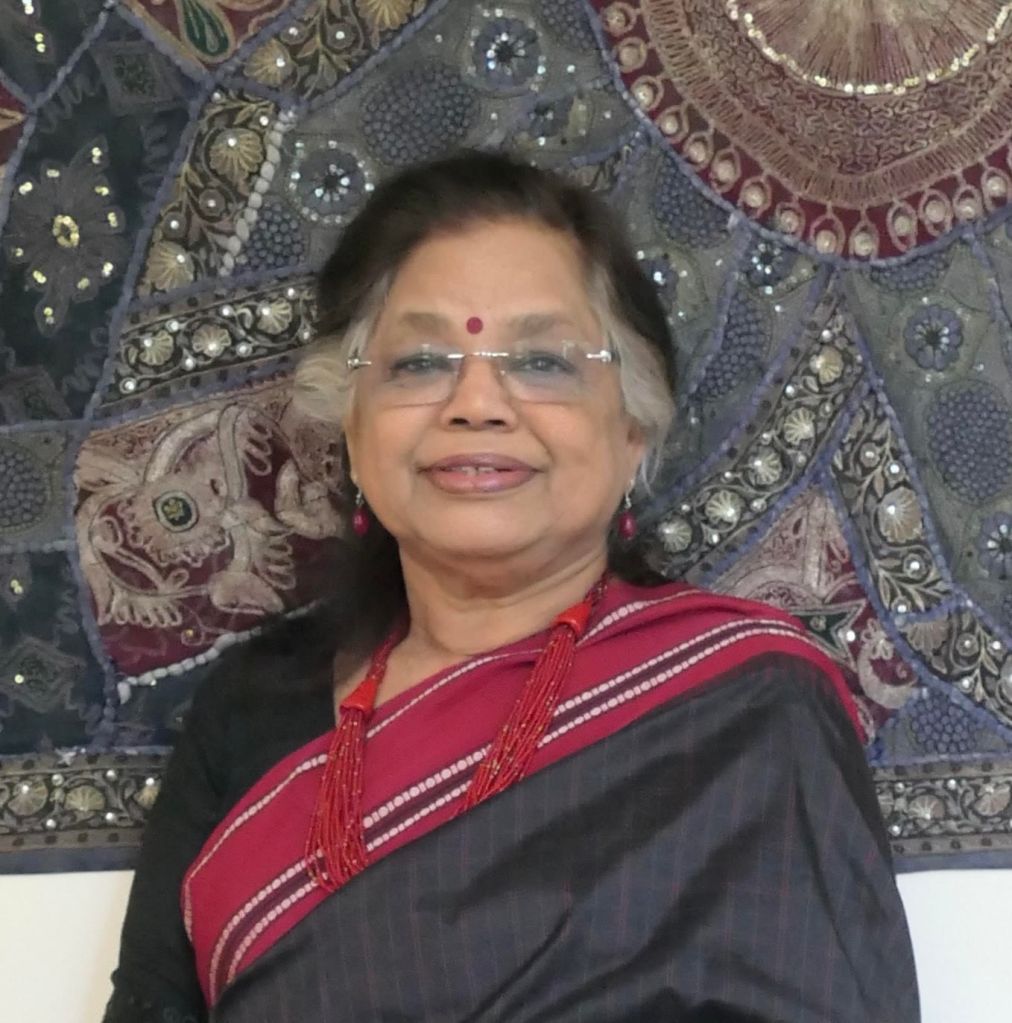
Anvita Abbi

Time moves fast and we move with it, partly carrying the past with us and partly shedding it. Languages evolve. Sometimes, they get left behind. People forget them and with that where they came from. Why would familiarity with our roots or a moribund language be so important? Perhaps, Professor Anvita Abbi, a Padma Shri from India who has done amazing work with the Andamanese uncovering their fast ebbing language and culture, has some answers. She is a linguist who stretches beyond universities to uncover the roots from which mankind evolved and to exhibit to us the need to be in touch with what our ancestors knew. She urges us to accept the varied colours of mankind for a more humane and tolerant outlook.

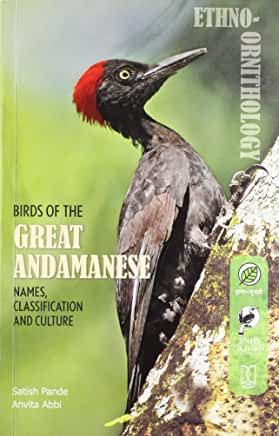
Abbi has written a number of books on her experiences in Andaman. Reading Voices from the Lost Horizon (2021, Niyogi Books), her recent publication with videos embedded in both the hardcopy and softcopy versions, has been an adventure that transports one back to a civilisation that has its roots in Neolithic times. Unique in form and content, her book not only talks of her trips to Andaman and meeting the indigenous people but also shows how the lores of this culture can teach the civilised a number of things including, basic survival skills. She has summed this up in a recent interview, “When the tsunami came on December 26, 2004, tribes of the Andaman, Jarawa, Onge and Great Andamanese saved themselves as their knowledge about the tsunami was intact in their language. They interpreted the patterns of waves and sea churning and ran to a safe place.” Shuttling between different continents and time zones, Abbi is as unconventional as is her book. She unfolds her journey towards integrating the past into the present.  

You are from a literary family. What made you opt to become a linguist? Did your environment impact you in some way? What kindled your interest in ancient and moribund languages?

Yes, my background exposed me to different writers of my time, and I started writing short stories in Hindi and earned a name for myself very early. My first book of collection of short stories Muthhi Bhar Pahachan (Hindi, A Handful of Recognition) was published on my 20th birthday.  I was pursuing my interest in literature along with my first love for Economics. However, my father, the famous poet of Hindi, Shri Bharat Bhushan Agrawal, thought that I was pursuing a wrong profession and forced me (yes, absolutely against my wishes) to join Linguistics at Delhi University at the cost of quitting Delhi School of Economics. Once I started studying Linguistics, I realised I was made for this subject and never looked back. Subsequently, after receiving Ph.D from Cornell University, USA I started teaching Linguistics at the Kansas State University, Manhattan. While there, I realised that a large number of Indian languages especially those spoken by the marginalised communities are under-researched. The question ‘how different or similar are these languages to the known languages of the country’ motivated me to take the major decision of quitting the regular job at the KSU and move to India. I joined the Jawaharlal Nehru University in 1976 and was instrumental in designing and developing the course of Field Methods that took me and my students to remotest corners of India from the Himalayas to the Andaman and Nicobar. My experience in India has been very enriching as I have worked on more than 95 languages of India so far and experienced India at the grass roots. At present, I am working on two languages of the Nicobar Islands.

How long have you been researching on Andaman?

Since late 2000. I wish I was there earlier!

Tell us why you chose Andaman as your arena rather than any other?

There were several reasons that drew me towards working on this language intensively. The topography of the area, the unexplored terrain, its people, and their antiquity and above all scant availability of published material on their language coupled with the fact that my observation in 2003 after conducting a pilot survey of the languages of the Great and Little Andaman that this language seemed to be a class apart from the other two languages of the region — Onge and Jarawa. Unlike Jarawa and Onge, Great Andamanese is a moribund language and breathing its last. I was encouraged by my linguist friends at the Max Planck Institute of Evolutionary Anthropology, Leipzig, Germany to study and document the language widely, to unearth the vast knowledge base buried in the linguistic structure of Great Andamanese before it is lost to the world. Not only were my results of 2003 later corroborated by geneticists in 2005, but it also gave me assurance and proof beyond doubt that this group of languages forms the sixth language family of India.  I was moved by the speedy process of erosion of scientific and cultural treasure that this ancient world had embedded into its language. I had to plunge myself into its structure come what may!

You said that this group of languages was almost pre-Neolithic in age — “a moribund language of the only surviving pre-Neolithic tribe, the remnants of the first migration out of Africa 70,000 years ago.” Does it have any similarity to the clipping Khosian languages spoken in Africa or any other African languages?

Not that I know of. We must understand that any similarity, if it existed, would have completely evaporated in so many years especially in a contactless situation. Anyway, we know very little of what human language sounded like 70,000 years ago.

Now a new language has evolved — Great Andamanese — from four languages (Jeru, Khora, Bo, and Sare). How long has Great Andamanese been in use? How did all these languages merge into one?

It is named Great Andamanese because it is spoken in the Great Andaman Island. The original name of the island in the heritage language is marakele and was habited by ten different tribes speaking ten distinct but mutually intelligible languages. I named this language Present-day Great Andamanese (PGA) so as not to empower any one of the four North Great Andadamanese languages of which it is a mixture. Present form of the language has been in use since all the four different tribes, Jeru, Khora, Sare and Bo were moved from the north and rehabited in the Strait Island, 56 nautical miles away from the capital city of Port Blair since early seventies by the government of India. However, the language is closest to Jeru in its grammatical structure.

Do people use Great Andamanese or Hindi? Which languages are commonly used by the local people and why? Is there a historic reason?

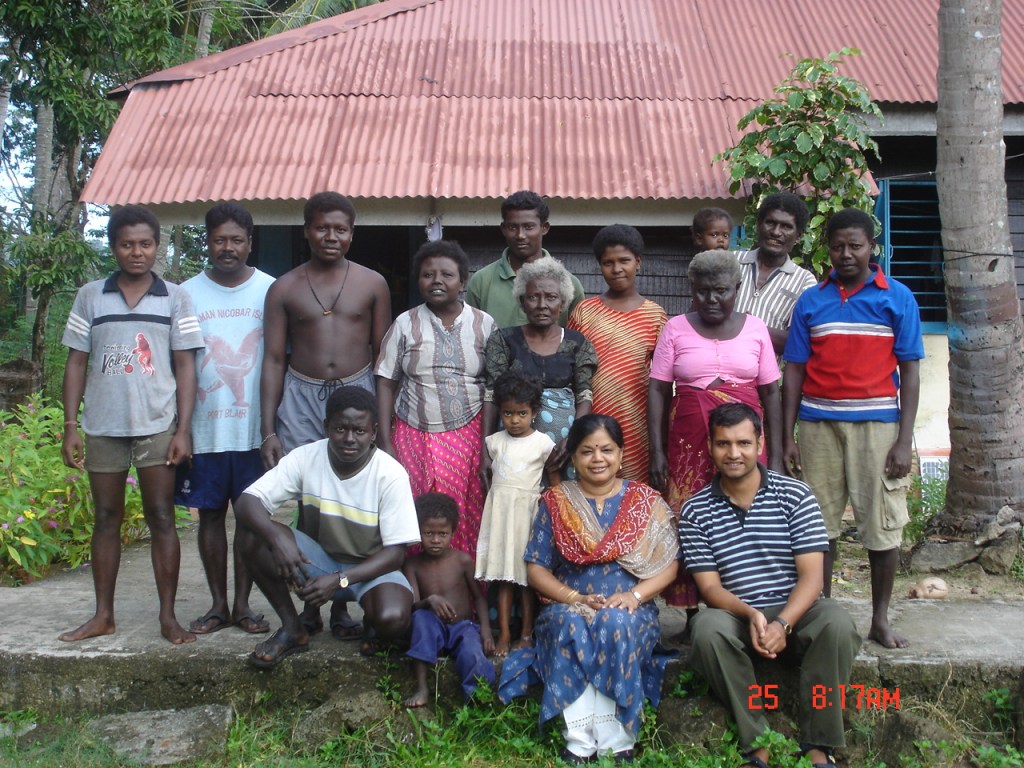
Most of them have forgotten their heritage language and speak only Andamanese Hindi. Some of them have a passive knowledge of Bangla. When I reached the island there were ten speakers of the PGA but now only three remain who can speak PGA but prefer not to. Colonisation by mainland Indians exposed the tribe to babu Hindi as well as to the lingua franca Andamanese Hindi existing in the Island. As of today, a few of them are hired by the government in Port Blair and some children go the local schools so that exposure to local Hindi is intensive. 

One of the interesting things I noticed in your book was there was a lot of use of ‘potato’ in the stories. Potato was brought into India by the Portuguese. So, how old could these stories be? Or have the colonial invasions altered their myths?

Potatoes that we eat were perhaps imported by Portuguese, but roots of yam and potatoes always grew in our land as all Adivasis have been using their indigenous varieties of potatoes called by different names. Great Andamanese also have more than five varieties of potatoes that they have been consuming since their establishment in the island. These potatoes appear and taste very different from ours. English word ‘potato’ may be considered a generic name for the tuber like products in the current work and bear no resemblance to the modern word ‘potato’.

The Andamanese sing: “O, God, Bilikhu! / We pray to you.” They have burial customs where they burn, bury, feed to the vultures, and throw into the sea. It is like an amalgamation of multiple religious customs. What is the religion the Andamanese actually follow?

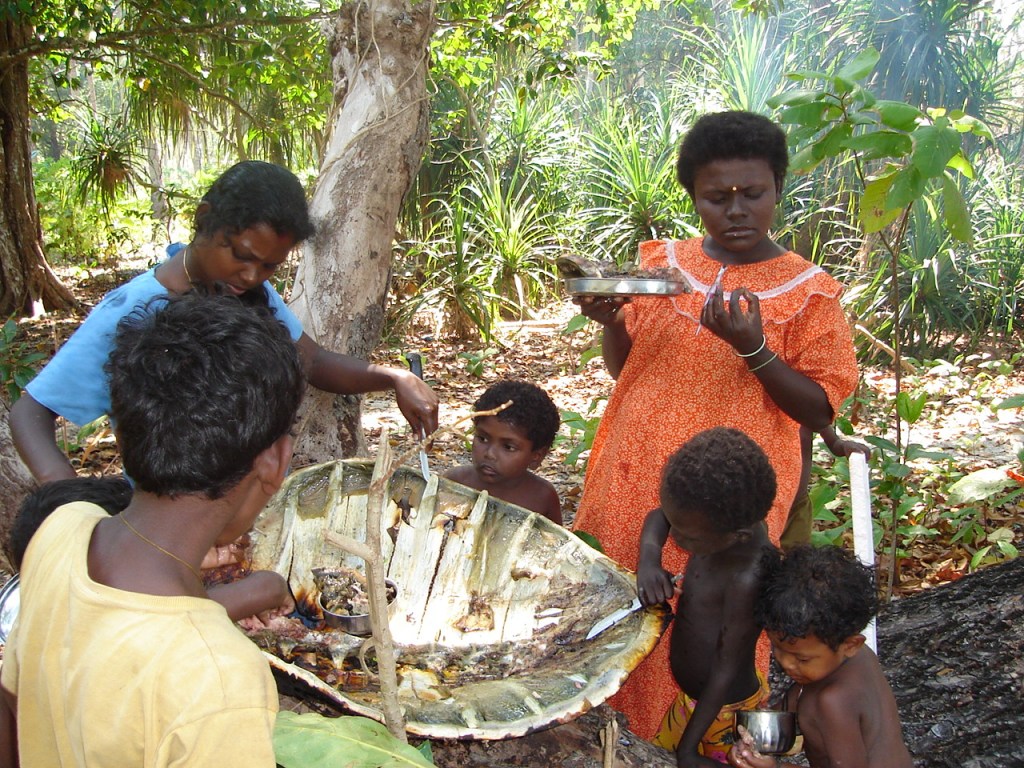
This prayer that you quote seems to be a modern version created copying Hindu religious practices that the Andamanese see all around them. ‘Bilikhu’ means spider also and is considered sacred but not equivalent to our concept of ‘God’. They remember Bilikhu before going into the sea for any sea escapade like hunting for big animal such as turtle and dugong.  Andamanese do not follow any religion. They believe in their protectors jurwachom who protect them in the sea and in the jungle. They give respect to and remember their ancestors believing that the ancestor’s spirits surround them all the time. What more, the tales in the book convey an intimate relationship between people and birds as a ‘family’. One story, ‘Jiro Mithe’, depicts the origin of birds from the Andamanese people.

As far as the cremation of the dead bodies is concerned, you may have read that I have explained how one of the stories ‘The Tale of Juro the Head Hunter’ informed me that there were four different ways of cremation depending upon the way a person dies. Quoting from the book, these were:

“1. When a person dies of a natural death or in illness, s/he is buried in the earth (‘boa-phong’ meaning ‘hole in the earth’).

“2. When a person dies while hunting/killing, then s/he is put on a platform made on a tree (‘machaan’ in Hindi) and burnt.

“3. When a person dies because of choking on a fishbone, their body is taken to a particular place near Mayabandar in the northern part of the Andaman Islands and left for a month on a tree for vultures to eat. The bones are collected after a month.

“4. When children pass away, they are not buried initially; they are left untouched for a few days, then they are cremated.”

Often the villains and the demons depicted in their stories are cannibalistic. Was cannibalism an aberration for them? Was cannibalism ever accepted by them?

They are not villains or demons. They are people with supernatural powers. The practice of cannibalism existed — so it seems through these stories. However, it was always deplored as being against the survival of humanity. The story mentioned above depicts it very clearly. Nao Jr the key narrator of these stories compared Juro with Hindu goddess Kali saying that both were involved in similar activities. The story and my elicitation process involved in it explains the whole phenomenon of cannibalism that existed in the Great Andamanese community.

How did the colonials and the independence of India impact these people, their culture and language?

The history of present Great Andamanese is a tale of many tales. Outsider-contact has brought diseases, subjugation, sexual assault, and ultimately decimation of the tribal culture, tribal life, and tribal language. It is not new to witness as voice of the most powerful of the land…colonizers, makers of empires, and policy makers silence the voices of the vanquished and marginalized whether by annihilation or assimilation.

For years, Jarawas maintained the isolation and now they regret the interaction with us.

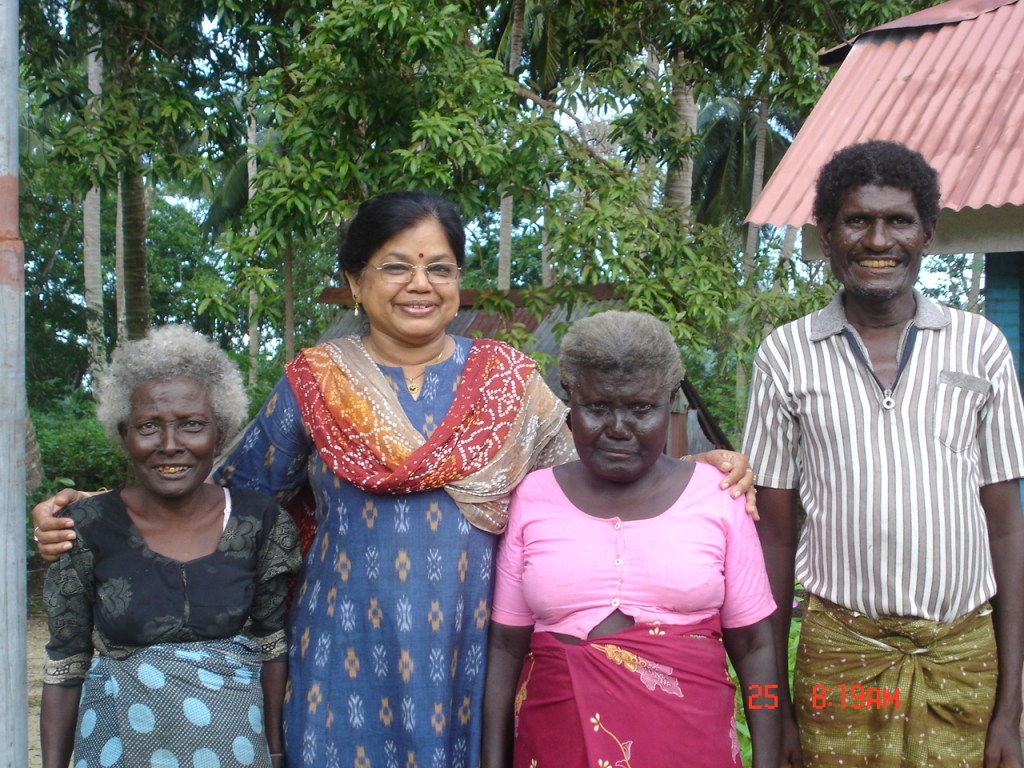
These tribes are neither poor, nor uneducated (their knowledge of environment comprising birds, fishes, medicinal plants and their uses, sea life, weather predictions, and the Earth they walk on is amazing), nor cowardly, nor violent (they safeguard their folks both women and children from outside intervention) nor fools. They have known the wonders of isolation and that is what they want to maintain. However, we have lost Great Andamanese culture, language and worldview as the process of mainstreaming them started with colonisation first by Britishers and later by Indians. With the result they are nowhere now, neither connected to their roots nor connected to the world that the government offers. Cultural amnesia and loss of their heritage language has affected their cognitive and perceptive powers adversely. The modern generation neither feels connected to the forest and sea life nor to the city life. It’s a lost civilisation bewildered of their present. In this scenario stories and songs of this book may serve as the only priceless heritage of an ancient civilisation of India.

Tell us of about some of your more unique experiences in Andaman.

There are plenty. You have to read the ‘Introduction’ of this book and log on to www.andamanese.net where I describe my experiences and many aspects of Great Andamanese culture. Great Andamanese is a culture that believes in sharing of everything that one has in life yet gives individual freedom to choose. We have misunderstood that this trait of theirs as ‘begging’ since they always demanded to share whatever we eat. Gender equality is worth admiration starting from the prenatal stage as the name of a child is assigned before birth, and both boys and girls are trained in hunting.

While it was sad to read that very few speak the language of the past now and yet a few more cultures are getting eroded, it is also a movement towards integration with the mainstream. What would be the ideal way for this integration so that the languages and cultures do not get eroded and yet they blend with the mainstream? What would be the best way of balancing languages and cultures so that we do not lose our past while embracing the present and moving to the future?

The idea of mainstreaming and merging these tribes into our civilisation is nothing but usurping their rights to their land, forest, water, and way of life. “Development” may kill these tribes. These tribes have amalgamated their life with nature so well that they are aware of secrets of life.  Any kind of interference will disturb this harmony. As I always say that Jarawa live a life of opulence where the supplies are in abundance in their forests — much more their demands. However, it is too late now in the context of the Great Andamanese. As I said earlier, they are a lost generation.

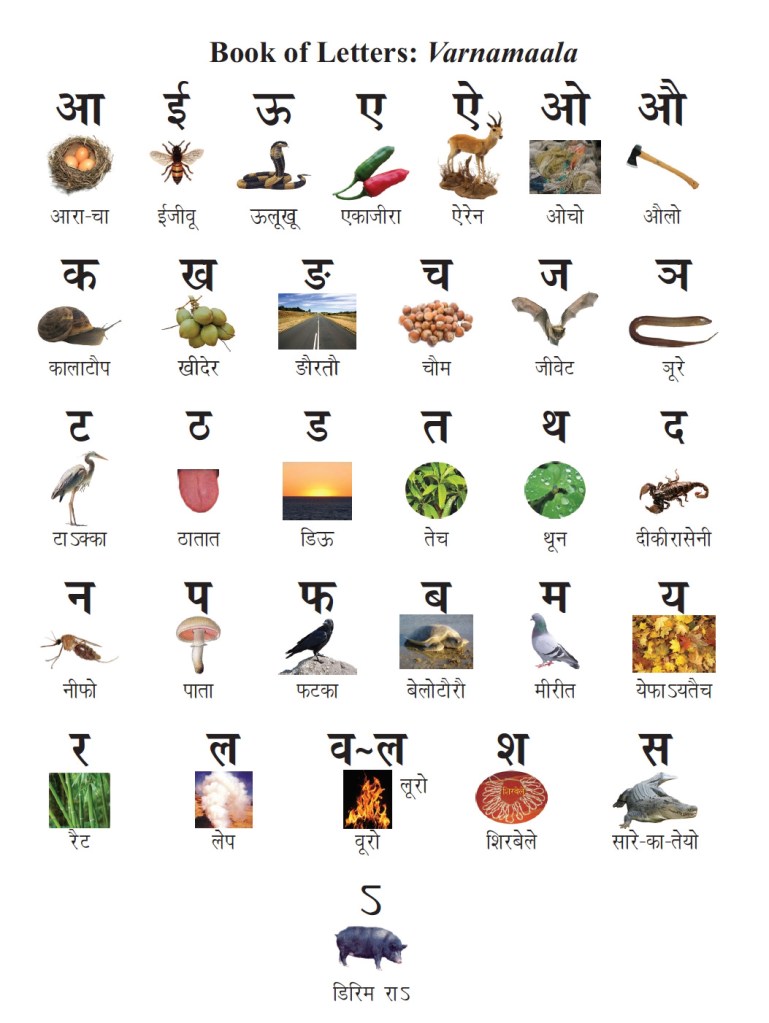
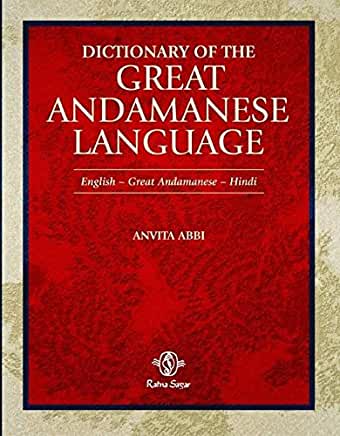
The best course to save their language and culture would be to introduce it in the primary schools in Port Blair so that the community feels motivated to retain this. Since the language has already been scripted by our team, reading and writing Great Andamanese is no problem. I have already produced the Grammar and the interactive pictorial talking Dictionary of the language that may make this task simple. One of the members of the tribe by the name of Noe who still remembers the language should be used as a resource before it is too late. Introducing these languages in the school will bring dignity and honour to our heritage language and will help the societies to overcome their inferiority complex.

(This is an online interview conducted by Mitali Chakravarty)

.

Click here to read the review of Voices from the Lost Horizon brought out by Niyogi Books, June 2021.

PLEASE NOTE: ARTICLES CAN ONLY BE REPRODUCED IN OTHER SITES WITH DUE ACKNOWLEDGEMENT TO BORDERLESS JOURNAL