Categories
Review

Ebrahim Alkazi: Holding Time Captive

Book Review by Satya Narayan Mishra

Title: Ebrahim Alkazi: Holding Time Captive

Author: Amal Allana

Publisher: Vintage Books, Penguin

During an extensive interview, Pankaj Kapur, the highly acclaimed actor, director and writer, nostalgically remembered his days in NSD[1] as a student in the 70s and of Ebrahim Alkazi who was the guiding light of the school as the Director from 1962-77. Mandi House was the vibrant cultural hub where the quartet of NSD, Triveni Kala Sangam, Sriram Art Centre and Kamani Auditorium breathed cadences of art, music, dance and theatre. As the presiding deity of NSD, Alkazi’s prodigious talent in all aspects of theatre except costume (where his wife was the moving spirit) brought his dynamic genius into the quest for intercultural and interdisciplinary thinking in artistic expressions that was both transformative and liberative for his myriad students like Sai Paranjpye, Nasir, Om Puri, Surekha Sikri, Uttara Baokar and Pankaj Kapur[2], who later on lit the stage and celluloid  though their exceptional talents and skill. He would have been a hundred this month. Amal Allana, his daughter has authored a biography of her father, Ebrahim Alkazi: Holding Time Captive. The book  makes an absorbing read.

She brings out Alkazi’s early encounters and reception by the Hindi Theatrewallas of Delhi in the early 60s. It is the story of a western educated Bombayite who was presumptuous enough to think he could teach Delhi theatre buffs a thing or two. As a second-year student, Sai Paranjpye recalls Ebrahim as a storm under whom a metamorphosis took place in the NSD overnight. Walking in to the den of Hindiwallah writers’ camp, Alkazi caught them unawares by picking up the works of the most cerebral and experimental of the Hindi new wave movement; Mohan Rakesh’s Aashadh Ka Ek Din[3]and Dharmavir Bharat’s Andha Yug[4]Aashadh ka Ek Din, a play with a rural background, was the story of the Indian villager, whose lifestyle, pace and values were succumbing to the inevitable onslaught of urbanisation. The basic theme was autobiographical to Mohan Rakesh himself, where he identified himself with a classical playwright like Kalidas. This mix of history and the present entwined in to a single entity, was a modernist strategy that Alkazi too had attempted while contemporising myths. He exquisitely crafted the mise en scene[5]that sparkled with delicate, nuanced performances from young student actors such as Sudha Sharma as Mallika and Om Shiv Puri as Kalidas.

 India had lost a war with China in 1962.  Alkazi had chosen Andha Yug, set during the last days of the Kurukshetra war, when Aswasthama stood in rage, prepared to use the ultimate weapon to annihilate the mankind. It was just not the play’s topicality, its anti-war thrust that drew Alkazi to it. Alkazi tried to shrug off the baggage of European modernism he was carrying, embarking now on a foundational journey towards a deeper ‘discovery of India.’ Through Andha Yug, Alkazi came closer to learning about India’s value system and philosophy as explored in the Mahabharata, while Aashad gave him an appreciation of the artistic sensibility of the great Sankrit poet-dramatist Kalidas, India’s veritable Shakespeare. From now on, he would engage with the idea of India between the two polarities: India as a myth and India as a kind of documented reality. Alkazi was introducing the idea that theatre was a performance art, not literature performed on stage. He was creating a language of performance that was distinct from the language of words.

The making of Tughlaq and its staging in Purana Qila is a watershed event in the theatre landscape of Delhi. Alkazi was greatly drawn to Girish Karnad’s play Tughlaq. Karnad had confided in him how Tughlaq was the most idealistic, the most intelligent king ever to come on the throne of Delhi and one of the greatest failures also. And how in the early sixties India had also come very far in the same direction. Alkazi felt that this play effectively reflected the trials and opposition a visionary leader faced, while trying to function within a corrupt political scenario. The cast of Tughlaq had some of the most brilliant actors, each painstakingly trained by Alkazi himself. There was Manohar Singh who was playing Tughlaq, Surekha Sikri and Uttara Baokar were doubled as Sauteli Ma, Nasiruddin Shah as the Machiavellian Aziz, Rajesh Vivek as Najeeb. The young reporter members included Pankaj Kapur, KK Raina, Raghuvir Yadav, a veritable who is who of latter-day cinema. Tughlaq was staged in 1972 at the Purana Qila (Old Fort) in Delhi, utilising the historical ruins as a backdrop for the dramatic spectacle. This production is considered a landmark event in Indian theatre, combining history, politics and performance to create a commentary on the reign of Tuqhlaq[6] and politics of the 60s.

Nehru’s dream of reconstructing the nation needed a powerful and unitary concept of ‘nationalism’ to recognise all productive forces in the country. Culture was very much a part of the reconstructive process that needed to be systematised and brought under one umbrella and for this purpose, three national academies had been set up: the Sangeet Natak Academy, the Lalit Kala Academy and the Sahitya Akademi. The desire to modernise Indian theatre was part of the same reconstructive cultural policy. And Alkazi was the mascot of the theatre movement and Mandi House, the epicentre of cultural conflation and crescendo.

The Purana Qila festival in 1972, with Tughlaq, Sultan Razia and Andha Yug became the most talked about cultural event of the decade He wanted to offer both the hoi polloi and the cognoscenti, including burqa clad women, high quality theatre that did not conform to ‘popular taste’; theatre that had a social relevance, that both instructed and entertained. This was Alkazi’s ideal of what constituted national theatre.

There have many stars in firmament of Indian theatre. Ebrahim revitalised Indian theatre. Habib Tanvir, blended folk traditions with modern drama. Badal Sirkar revolutionised Bengali theatre by challenging conventional norms. They are like the great troika of Indian Cinema, Satyajit Ray, Ritwick Ghatak and Mrinal Sen.

Alkazi left NSD as it was denied autonomy by scheming bureaucrats. Allana brings out how Alkazi passionately believed that an artist belongs to no political party, and has no religious ideology. An artist has to distance himself from each one of these in order to see each one of these objectively. “And finally, he has to distance himself from himself.” He wrote: “ It is our duty and moral responsibility to study history dispassionately, but with a passion for the truth, with humility and with a profound sense of responsibility and to ask ourselves seriously: What is the legacy that we shall leave behind?

[1] National School of Drama

[2] Well known Indian actors

[3] A Day in Aashadh (June-July) was a Hindi play that debuted in 1958

[4] Blind Age was a verse-play in Hindi written in 1953

[5] Placed on stage

[6] A 1964 Kannada play by Girish Kannad, translated to Urdu in 1966 in NSD and most famously performed for in Purana Qila, New Delhi, in 1972

Satya Narayan Misra is a Professor Emeritus and author of seven books. The latest, Against the Binary, was published in December 2024. He is a regular columnist and reviewer of books for several leading newspapers in Odisha and digital platforms likeScroll.in and The Wire. He was associated with the NSD in the 70s.

.

PLEASE NOTE: ARTICLES CAN ONLY BE REPRODUCED IN OTHER SITES WITH DUE ACKNOWLEDGEMENT TO BORDERLESS JOURNAL

Click here to access the Borderless anthology, Monalisa No Longer Smiles

Click here to access Monalisa No Longer Smiles on Kindle Amazon International
Categories
Poetry

Nobody by Snehaprava Das

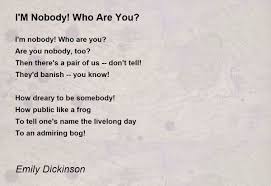
"I'm nobody! Who are you?
Are you a nobody, too?"
(Emily Dickinson)

NOBODY

It is not easy to tell the tale of nobody.
A nobody's tale is without a
beginning or an end,
Like jumbled up letters on a mussy page,
Obscure sketches from a hand untrained.

A nobody's anonymous world
Battered by the day, and
Bruised by the night,
Spins and shatters in a gyrating vortex
Of liquid darkness and light.

A nobody lives and dies and again lives
And breathes a dream in between,
Desperate to see just one come true, and
For a glimpse of green in a bald ruin.

The crimson dawn in a nobody's sky
Burns hopes to ash.
A moon flings shards of silver
At nobody’s world, aiming a cruel slash.

The fog settles forever thick and grey
Outside a nobody's window.
In a nobody's land, seasons don't change.
There settles permanent a season of snow.

Songs painted black by storm clouds
Croak beyond a nobody's door.
The wind mourns in the hollow orchards
Roses bleed on a cracked floor;

It is hard to tell a nobody's tale
That has neither a beginning, nor an end.
It's the story of a doomed soul,
That neither has a foe, nor a friend!!

Snehaprava Das is an academic, translator and writer. She has multiple translations, three collections of stories and five anthologies of poetry to her credit. She has been published in Indian Literature, Oxford University Press, Speaking Tiger, Penguin and Black Eagle Books.

.

PLEASE NOTE: ARTICLES CAN ONLY BE REPRODUCED IN OTHER SITES WITH DUE ACKNOWLEDGEMENT TO BORDERLESS JOURNAL. 

Click here to access the Borderless anthology, Monalisa No Longer Smiles

Click here to access Monalisa No Longer Smiles on Kindle Amazon International
Categories
Poetry

Poetry by Snehaprava Das

NIGHT OF THE ECLIPSE

That night a shadow spread over the
Moon's face.
The moon, heavy in its
Pain of loss became red
And shed scarlet tears
On the nocturnal earth caught in a
Warm vaporous net.

The shadow lengthened down to
A morning full of rain and river
And the waves screaming a vow
To drag the fields into
Coffins of sand even while
They still breathed in green.

The morning after,
No sun peeped through the clouds of east.
No music dropped from the wind
Or the drowsy trees.

The green lay inert in its grave
And rotted.
Dreams rotted too, eaten away
By worms swarming in grey abandon.

The shadow swallowed everything
Like a desert, like an ocean,
Like the endlessly expanding time.

Everything, like the moon
went inside the dark, crippling net.
The sparkle in a thousand pairs of eyes
sank in the shadow of the river
In a permanent eclipse.

From Public Domain

Snehaprava Das is an academic, translator and writer. She has multiple translations, three collections of stories and five anthologies of poetry to her credit. She has been published in Indian Literature, Oxford University Press, Speaking Tiger, Penguin and Black Eagle Books.

.

PLEASE NOTE: ARTICLES CAN ONLY BE REPRODUCED IN OTHER SITES WITH DUE ACKNOWLEDGEMENT TO BORDERLESS JOURNAL. 

Click here to access the Borderless anthology, Monalisa No Longer Smiles

Click here to access Monalisa No Longer Smiles on Kindle Amazon International

Categories
Poetry

History by Snehaprava Das

From Public Domain
HISTORY

Stuck in an absurd divide,
Between truth and half-truth,
I am a mirror capturing the contours
Of the days that were then.
Faces shift on the page of glass,
Blurry, painted and plain.

Overlapping faces of
Civilisations rise and fall
To their broken glory.
Cities, fortresses, landscapes
Along the meandering length of time,
Crawl to meet the end of a story.

Faces wearing triumphs of battles won
On bloody fields, that were once
Sprawls of flowing green, smile
Under a starry fragrance.

Faces crumpled at war-cries,
At sirens screaming,
At loud laments ripping apart
The ecstatic valleys of spring,
Faces baffled at the uncanny chants in
The ruins, caves and dens,
And the whispers of yesterdays' ghosts
Echo in silence.

Cradling a bundle of unborn days
And untold tales inside,
I sit like a stoic saint waiting to see,
The other faces that will float into
My page of glass.

What is that incorrigible legacy
Time will pass to me?
I wait to discover my digital face
Muraled on the rocks of another planet
Smiling at me happily.

Snehaprava Das is an academic, translator and writer. She has multiple translations, three collections of stories and five anthologies of poetry to her credit. She has been published in Indian Literature, Oxford University Press, Speaking Tiger Books, Penguin and Black Eagle Books.

.

PLEASE NOTE: ARTICLES CAN ONLY BE REPRODUCED IN OTHER SITES WITH DUE ACKNOWLEDGEMENT TO BORDERLESS JOURNAL

Click here to access the Borderless anthology, Monalisa No Longer Smiles

Click here to access Monalisa No Longer Smiles on Kindle Amazon International

.

Categories
Stories

A Penguin’s Story

By Sreelekha Chatterjee

Along with a colony of huddling youngsters—at the threshold of adolescence—I gather at the edge of a giant ice cliff, from where the sea below appears like a distant dream. A prolonged weakening, retreat of the ice shelf has suddenly realised into the shape of water, as if its very existence has vanished into thin air. The occasional sprawling of luxuriant colonisation—a bulk of freshness in shades of jade—seems out of place in the otherwise stark white carpet all around. As always, a frontbencher, I station myself at the farthest point on the extremity. Behind me, the onlookers crane their necks to get a better glimpse of the liquesced pale-blue water.

As I am always draped in black and white, I notice the blue-grey hue near my throat when I eat. My siblings have additional golden-yellow ear patches. The wandering, winged creatures in the sky generate an indomitable desire in me. I wish I could fly. I galumph, leaning towards one side, a waddling gait with a lazy swag. My perspectives immobilise in the turbulent, sweeping wind chills.

Stranded on this towering cliff together with fellow earthlings, I gaze at the sky and contemplate the changes. Smitten by uneasy, unprecedented anxiety, without the comfort of the abundance of krill[1], till I decide it’s now or never. Unless we proceed, we will forever remain dependent on our parents. Though I am very close to my parents, I do not wish to be a continued burden to them.

Turning around, I look at my fellow beings for the last time. Their ocean eyes are like static travellers, their noses filled with unrelenting salty tears.

I take the colossal leap of faith, plummeting down like forever, holding my breath, and splashing straight into the icy water below. The biting, piercing hostile water smacks hard at my face in its embrace, as I feel its bitter presence in my shuddering bones. I resurface almost instantly, my heaving chest breathing in the tranquil air—my mind suddenly resorts to flight.

I swim with short strokes, flapping my preternatural wings, traversing the wild sea in style like a fish in known territory. The tiny spectators above remain quiet, admiring the victory ahead of the giant trepidation. A momentary eloquent sound of silence, followed by jubilant cheer. The celebration begins as one by one my mates plunge into the sea unhindered. Initial discomfort, followed by floating in the alien water—our very first step towards filling our bellies with krill, fresh fish and squid. The accomplishment that once bordered insuperability now rests parallel with peace.   

From Public Domain

[1] Krill is growing scarce due to climate change. https://www.cbc.ca/news/canada/saskatchewan/penguin-diets-climate-change-1.5383720

Sreelekha Chatterjee lives in New Delhi. Her short stories have been widely published in various national, international magazines, journals, and have been included in numerous print and online anthologies.

George Freek’s poetry has recently appeared in The Ottawa Arts Review, Acumen, The Lake, The Whimsical Poet, Triggerfish and Torrid Literature.

PLEASE NOTE: ARTICLES CAN ONLY BE REPRODUCED IN OTHER SITES WITH DUE ACKNOWLEDGEMENT TO BORDERLESS JOURNAL

Click here to access the Borderless anthology, Monalisa No Longer Smiles

Click here to access Monalisa No Longer Smiles on Amazon International

Categories
Essay

How Do You Live?

By Aditi Yadav

Hayao Miyazaki and the poster of The Boy and the Heron in Japanese

In January 2024, The Boy and the Heron became the first Japanese movie to win the Golden Globe Award for the Best Animated Feature Film. However, when the original movie was released by Studio Ghibli in the summer of 2023 in Japan, it was marketed with ‘no marketing at all’-without any trailers, TV commercials or newspaper advertisements. A minimalist movie poster carrying the sketch of a heron and the Japanese title Kimitachi wa Dō Ikiru ka, was all it took the movie to record the biggest box office opening in Studio Ghibli’s history.

Hayao Miyazaki, the godfather of Japanese animation who celebrated his 83rd birthday in January, 2024, broke a decade long hiatus to give his directorial swansong to the world. The movie is inspired by Miyazaki’s favourite book Kimitachi wa Dō Ikiru ka, written by Genzaburo Yoshino in 1937. This coming-of-age Japanese classic had been tenderly translated into English under the title How Do You Live? by Bruno Navasky and brought out by Penguin in 2021 with a foreword by a writer no less than Neil Gaiman.   

The protagonist of the story is Honda Junichi, a fifteen-year-old boy nicknamed ‘Copper’ after Copernicus, by his uncle.  He has a diminutive frame, but his intelligence, bright personality and athletic skills, make him a popular kid at school. As Copper has been raised by a single mother, his uncle, who is a fresh law graduate, is the only male guardian around him. Their bond is an interesting one: not only do they share a warm friendship, but also discuss about the world at large, its history, philosophy, human relationships, so on and so forth. 

 The book chronicles Copper’s world, his thoughts and day-to-day incidents, in a format that alternates between a third person narrative and notes from the diary Copper’s uncle. Copper’s everyday experiences are similar to those of any other school going child — peers bullying, fighting, discovering class differences, bonding over games, pranking one another, and so on. The book delves into the mind of the adolescent boy, trying to make sense of the world to understand how he’d transition to an adult. He approaches the world with an innocent curiosity, musing how people are ‘a little like water molecules’ in the vast ocean of human society.

His uncle deeply moved by these observations and expressions, begins to pen down about these interesting episodes in his notebook. He also adds facts and references associated with them, that encompass wide range of topics including art, science, economics, history, politics, philosophy and language. He probably thinks that when Copper reads the notebook later on, it would help him see the world better alongside his personal mental and moral evolution. These notebook entries bear sagacious titles like- ‘on ways of looking at things’, ‘on human troubles, mistakes and greatness’, ‘on human relationships’, ‘on poverty and humanity’, etc. However, the words do not intend to preach. They brim with warmth of empathy, and capture the strengths and vulnerabilities of being human: “If it means anything at all to live in this world, it’s that you must live your life like a true human being and feel just what you feel. This is not something that anyone can teach from the sidelines, no matter how great a person becomes.”

Yoshino wrote the book as a part of the “Nihon Shoukokumin Bunko” (Library of books for the Younger Generation) that aimed at disseminating progressive knowledge and ideas to Japanese young adults. The work is a precious one – a classic example of how thoughtful adults can help young children to have a healthy mind and human heart.

Published in 1937, this masterpiece itself is an act of resistance against all regressive beliefs and authoritarianism, as Navasky pens in his Translator’s note, the book is “…particularly valuable to us now, when violence against citizens is on the rise, and independent thinkers are being attacked by their governments”. The book itself was censured several times, before it could be printed in its originally intended form. It’s important to mention here that from 1911 to 1945, Tokubetsu Kōtō Keisatsu (or Tokko), the Special Higher Police, heavily monitored political groups and ideologies that posed a threat to the Empire of Japan.  The Peace Preservation Law passed in 1925, expanded the powers of Tokko to suppress all socialist and communist idea in Japan. The heavy-handed ‘thought policing, only ended in 1945 with Japan’s surrender in World War II.

How we live, invariably depends on how we think. The universality of the book lies in how it links thought processes across borders — individual and collective — will have decisive roles in the ideals we follow and the society we construct. Our journey from the primitive caves to modern skyscrapers has been a long and tumultuous one. The prowess of human mind and the resilience of human spirit has brought of this far, but a peaceful society demands empathy and honesty of the human heart. Copper is sensitive enough to realise this, when he jots down–

“I think there has to come a time when everyone-one in the world treats each other as if they were good friends. Since humanity has come so far, I think now we will definitely be able to make it to such a place.

So, I think I want to become a person who can help that happen.”

Charting the ups and downs in the life of young Copper, the book closes on a sunny fulfilling note where our protagonist sees the world with an open heart as his extended family. And so, this timeless classic that touches the heart ends with a deep question for all of us – “How will you live?”

.

Aditi Yadav is a public servant from India. As and when time permits she engages in creative pursuits and catches up her never-ending to-read list. Her works appear in Rain Taxi Review of books, EKL review, Usawa Literary Review, Gulmohur Quarterly, Narrow Road Journal and the Remnant Archive.

PLEASE NOTE: ARTICLES CAN ONLY BE REPRODUCED IN OTHER SITES WITH DUE ACKNOWLEDGEMENT TO BORDERLESS JOURNAL

Click here to access the Borderless anthology, Monalisa No Longer Smiles

Click here to access Monalisa No Longer Smiles on Amazon International

Categories
Discussion

Shantanu Ray Chaudhuri Converses with Prerna Gill

A discussion on Prerna Gill’s new book of poems, Meanwhile, published by HarperCollins India

In a social media world teeming with every banality that goes for poetry, Prerna Gill’s is a refreshing voice that does not pander to easy rhetoric and comprehension. If good poetry is all about the silences between words, the spaces between the lines, Meanwhile is a collection that lives up to the test. Shantanu Ray Chaudhuri spoke to the poet on her first collection of poems. 

Your author’s note starts off almost defensive about ‘putting the book out’. It also provides a glimpse of what poetry means to you: ‘…when the guests leave … room is far too still’. Why do you call it narcissistic, and why poetry? Does it help cope with whatever it is that you seek?

Writing is a way through which I examine how I may still be compromised – by fears, by a stillness that some may call the blues, others ennui or even laziness. I think this form of introspection also helps me see how and where I have healed from issues I struggle with, like anxiety. It is therapeutic, almost, and points to how I may show myself grace and where I have some work to do. When poetry does so much for me it almost feels selfish, as though I put the reader second – which is, of course, not by design. I write what I know, but even this indulgence in examining my own psyche through wordcraft does seem terribly narcissistic, like I can’t stop staring into my own shadow. Not all of my poems are about this, but enough of them to make me a little uncomfortable when I do think about it.

When was it that you first realised the urge to write … and was it poetry or the dark mythology which I know is another passion? Do you remember your first attempt at a poem?

The first poem I wrote was in middle school and was about a bat. Animals are so fascinating, but there was always something about bats. I think they are adorable, really, and in no way deserving of their terrible reputation. As for the darker things that crept in later beginning with gothic novels, I loved the atmosphere, and how it was never too cheerful – this made me comfortable because, at the time I got into it, I was not in the sunniest of places in terms of my own headspace. Even now, when I feel much better and more balanced, it is my favourite genre along with horror and dark fantasy. It is quite an obsession, and has led to a supernatural-themed doll collection and a library of cherished horror computer games. At work, this manifests as a publishing list with many horror novels. I want to publish all the ghost stories and books on dark folklore and myths that I can get away with. It’s going quite well.

Do you read a lot of poetry? Are there any particular favourites who inspire you, or influence your poetry?

I read quite a bit, but probably still not as much as I should. I enjoy Anne Carson’s work, also Ella Frears. Currently I am reading Orexia: Poems by Lisa Russ Spaar. Of the older poets, my favourite is Sylvia Plath for how eloquently she captures small moments of violence. Also her free verse – which I enjoy because, in my opinion, it puts the words first and everything follows – like red chasing the scalpel.

Can you talk about the process – the birth of a poem. And whether you rework/rewrite or come upon the poem in one draft, ready… You can talk about, say, (i) ‘come teatime she will inherit the ice’ (On Not Drowning) … how does that line form, where does it begin, and (ii) ‘we will loosen our consonants’ (No Strings) … where does that line originate, and become a part of the poem?

A poem can begin with a name, a random word or thought. I can dwell on a poem for months and then delete the whole damned thing. Other times, I can return to a piece of verse and tinker it into a new animal. The rule I set for myself is to put all my finished poems in one folder and return to them in a different season, a different mood, and see if they still say something – even if it isn’t what I wanted them to. So many are erased, but the ones I like I keep in a new folder, ready to submit wherever I think they may have a chance.

About the line to do with inheriting ice: This is from a ‘Persona’ poem with bits of my own experiences with dissociating in difficult times – something that will eventually be harmful, in that you avoid confronting it. At the same time, the best way to look at something in the dark may be to look beside it – not at it. I am not a psychiatrist, but it is a poem about a coping mechanism, one I was once too familiar with. That said, I wanted to look at the hereditary nature of things like anxiety. I have, in my later teenage years, struggled with moments where I felt I could not move or feel. Like I was numbed by ice. I do not know where that came from, but the persona from the poem does know. Her mother and sister are mentioned at the end of the poem, pulling her out of the underwater world she creates as she drowns. Or rather, doesn’t. The choice of ‘teatime’ was to anchor this moment to a very domestic space with a certain pressure to be social and civil – a difficult moment in which to find yourself frozen in a way handed down by those sipping at their cups around you. I could only imagine what that is like and then it became this poem.

The second line you mention is from a poem that goes in the opposite direction, exploring a moment of fleeting intimacy. It is a line where caution slackens, and where sewing and strings and threads form a lot of the imagery … this lets language come into the picture of a quick moment. We have more consonants than vowels. They form so much of what we say, a lot of which may be sharper and faster moving, not rounded gently by ‘an’ like the apple it may precede. They are brisque, taut strings played more often. To me, they represent the more common things we discuss. Small talk. When looking into this moment in the poem, a one-night stand, the loosening is framed as a deliberate act to serve a purpose. It is affection implemented with steely resolve.

You have six poems on colours – and the author’s note also says ‘there’s no looking past the greys…’ What is it about colour that it plays through your poems.

The grey in the introduction was mostly to highlight the everyday moments compared to the more dramatic milestones. With the poems, I get to explore colour in a slightly different way.

Red: ‘and plain on every face … some of us are grey by twenty-five years’. Red is the first colour to fade from view under water, and that struck me as quite poetic all by itself. The deeper some of us get in our lives, in terms of time and age, or the deeper we sink into our troubles, I find we are at a greater risk of losing what red comes to mean. In terms of my own mental health, I saw red as the opposite end of a spectrum from the odd forms of silence that I would be overcome by: a silence of regular, reasonable thought that would normally counter exaggerated fears. There were also silences of action and movement with a very strange inability to will myself to get up from wherever I had perched at times during the difficult phases. In those times, I would think of red having gone from me. Once I got better, I could put those images into words.

‘Red loses the deeper it goes
And here the kelp and pale coral
        Here silence’

Green (Was struck by the contrast … mother’s rage, green, closing day green): ‘The colour of a closing day …The colour of one mother’s rage’. I do see the connection it has with nature. I also see how nature and a certain vicious protectiveness, especially that which is expressed in a paranoid postpartum state, are inseparable. Motherhood is natural, it is dangerous. The image of the snake on her nest and the way ‘her heart spreads its hood’ comes from a very personal encounter with that sort of anger –which one can do nothing about because it is locked and loaded in case of danger to one’s child. It is a primordial thing. I was very prepared for postpartum depression, so a state of constant, protective anger took me by surprise. It never fully slithered away though. Or rather, it hasn’t yet.

Blue: ‘seas no longer churning wine-dark … Spring draped flat over March … above all memory of the womb’. For ‘Blue’ I could not look past its role in culture, specifically gender. Also, how its symbolism has changed. Some cultures may never have categorised it as a colour and that is so fascinating as an example of how words have such power even over what we see so much of. When Homer described the sea as ‘wine dark’ it was understood to mean blue. It did confuse people for quite some time, that description. This is one of the theories, of course, but it stayed with me: that blue became part of certain languages much later. The poem then explores the link between blue and boyhood. Once, pink was a masculine colour. I suppose people saw that rosy shade as too visceral for young boys then, perhaps too close to the violence that comes just before the guests flood in to coo at a newborn. When you think of the sky and the open ocean it may be easier to forget the nature of birth and blood. Such a stark contrast to life and life-giving. To womanhood.

Yellow: ‘we live between forests … cage small birds in our mouths…’ The poem ‘Yellow’ started out with a different placeholder name: Canary. That’s why the mention of the bird for safety as we go digging deep into the rock for what our predecessors set in stone. The past comes with dangerous problems just waiting to be inherited. The image of having canaries in our mouths was to lay emphasis on how our words, our voices may be all that we have to signal danger when we find ourselves so deep in problems created by evils of the past.

Black: ‘…to a world so tepid green, the fireflies sail white … nothing is as still as you…’ The poem ‘Black’ on the other hand has more to do with very current problems, such as psychological ones, but also others – I wanted that part open to interpretation. What is does specify though is struggle. The way one might gather blood of skin of an assailant one struggles against is reflected in the opening line: ‘You, with nights under your fingernails.’ The rest of the poem moves from a shower stall, where the person, ‘you’, is drained far beneath what they know, to a place that is alien and unfamiliar. Haunting with a strange light, and places you beneath everything you know and remember: like a mute spectator. Unable to move. It ends back in the shower where:

In fogged-mirror silence
Nothing 
  Is as still as you

Here is that stillness, that silence. This poem lets me confront it, like a pair of gloves keeping me safe as I study something I know to be tricky. Sometimes frightening.

White: ‘mogra … fragrant in their grief, we wear white in yearning … and like this we are sky’. With ‘White’ on the other hand the meaning is rather clear. We do wear white for mourning. Or ‘yearning’ as I see it. There is a softness I wanted to keep, given the subject here – death. I am an atheist, but I do believe in a peace that nothingness can bring. This is why I never write about spirituality – I would not know what to say. The beauty to me lies in the difference between nothingness and emptiness. In death you perceive the world in a way that is no different from how the mogra does. Or the smoke. Or the air.

Do you follow the contemporary poetry scene in India? How tough was it to publish a volume? Did it help being a part of a publishing house? Do you think that there is a lot of puerile wordsmithery that gets passed off as poetry on social media and self-publishing platforms … or do you see that as a boon?

I enjoy most contemporary poetry published in India. So many poems by Indian poets in India read like magic. I will say that social media poetry, though, is not for me. But it is working for many. Most of us don’t really have time to sit and chat about how we feel these days, and on social media all you get is quick and easy content to consume. I can see how the poems on certain platforms help people slow down as they scroll. I cannot say what is and isn’t art, but I know these works, often presented in a way that is easy to read and understand, are serving people. They would not be so popular otherwise. That said, I am still waiting for other forms of poetry to appear on mainstream accounts.

About publishing the book: I had a huge advantage. As a writer and editor, I need to show all my work that I intend to publish, to my publisher. I am extremely fortunate that Udayan Mitra liked the poems. I wouldn’t want to publish anywhere else in India because I know that we at HarperCollins India put authors first. Why go anywhere else?

Not many people know of your connection to Dharmendra ji. Since many of us are aware of his skills as a poet in Urdu, have you read his work, and more importantly what does he think of your poetry? Can we hope for the grandfather’s poetry translated by the granddaughter?

I think my Instagram account has made the connection clear to anyone who might look for me on the Internet. He was also kind enough to endorse the book and support it on social media and for that I am so grateful. I do not have any of his talent, but I am confident that I will always have his blessings. The same is true about my uncles. Many of their admirers and followers bought books, or at least wrote to say they would – that is one of the best ways of supporting poetry, which is always hard to sell. As for my grandfather’s poetry – with great sadness I must admit I know very little Urdu. I cannot read the script at all. If I could, I would love to translate his work, because I know he puts so much of his heart into every verse, just like he puts his soul into every character he plays on screen. I do want to publish his poetry – if only he would let me!

.

(Published in multiple sites)

.

Shantanu Ray Chaudhuri is a film buff, editor, publisher, film critic and writer. Books commissioned and edited by him have won the National Award for Best Book on Cinema twice and the inaugural MAMI (Mumbai Academy of Moving Images) Award for Best Writing on Cinema. In 2017, he was named Editor of the Year by the apex publishing body, Publishing Next. He has contributed to a number of magazines and websites like The Daily Eye, Cinemaazi, Film Companion, The Wire, Outlook, The Taj, and others. He is the author of two books: Whims – A Book of Poems(published by Writers Workshop) and Icons from Bollywood (published by Penguin/Puffin).

.

PLEASE NOTE: ARTICLES CAN ONLY BE REPRODUCED IN OTHER SITES WITH DUE ACKNOWLEDGEMENT TO BORDERLESS JOURNAL

Click here to access the Borderless anthology, Monalisa No Longer Smiles

Click here to access Monalisa No Longer Smiles on Kindle Amazon International
Categories
A Special Tribute Essay

Gandhi in Cinema by Shantanu Ray Chaudhuri

An innovative rap contest between Gandhi and Martin Luther King, Gandhi as a stand-up comedian, his life as a musical, and at least seventeen actors portraying him across numerous films. No other political and spiritual leader has influenced our cultural discourse as much as M.K. Gandhi. This despite Gandhi’s deep-rooted aversion to cinema and theatre. Shantanu Ray Chaudhuri looks at the legacy of Gandhi in films, plays, songs and TV shows.

“Slim be a combination of an actual kamikaze and Gandhi.” This is Eminem, seventy years after the Mahatma was assassinated, in a song from his 2018 album Kamikaze, that also became the theme song of the Marvel film Venom. It is interesting to conjecture what the bhajan-loving apostle of peace and non-violence would have to say about being referenced by the hip-hop rapper in a song whose very next lines talk of killing and use the F-word.

Probably no other political leader anywhere in the world has been part of popular culture – films, songs, music videos, animation shows, graphic novels – as much as Mohandas Karamchand Gandhi. Newsreels on him run into hundreds of hours. A China-based journalist, A.K. Chattier, put together one of the first celluloid versions of the Mahatma’s life and times from archival material available, sourcing rare footage. Unfortunately, both the print and the negative have been lost.

Beginning with the American feature documentary Mahatma Gandhi: Twentieth-century Prophet in 1953, to The Gandhi Murder, a conspiracy theory film on the assassination, in 2019, he has been part of at least thirty films. Even the Marvel film Age of Ultron has his footage. As many as seventeen actors have played him onscreen: J.S. Casshyap, Ben Kingsley, Sam Dastor, Jay Levey, Yashwant Satvik, Annu Kapur, Rajit Kapur, Mohan Gokhale, Naseeruddin Shah, Surendra Rajan, Mohan Jhangiani (voiced by Zul Vilani), Dilip Prabhavalkar, Dr Shikaripura Krishnamurthy, Avijit Datta, S. Kanagaraj, Neeraj Kabi and Jesus Sans.

Of these, Sam Dastor featured as the Mahatma in Lord Mountbatten: The Last Viceroy (1986) and Jinnah (1998), while Surendra Rajan has donned Gandhi’s garb as many as six times, in Veer Savarkar (2001), The Legend of Bhagat Singh (2002), Netaji Subhash Chandra Bose: The Forgotten Hero (2005), the TV movie The Last Days of the Raj (2007), the short film Gandhi: The Silent Gun (2012) and Srijit Mukherji’s Gumnaami (2019).

Gandhi and Early Indian Cinema

It was common in the 1930s and 1940s for film hoardings to have life-size pictures of Gandhi over the photographs of the stars. The protagonist of Kanjibhai Rathod’s mythological Bhakta Vidura (1921), the first film to be banned in India, resembled Gandhi, cap and all. Ajanta Cinetone’s Mazdoor (1934), written by Munshi Premchand, too was banned, and promoted as ‘the banned film’, as it dealt with Gandhian principles. Produced by Imperial Film Company and directed by R.S. Chaudhary, Wrath (1931) had a character called Garibdas who fights untouchability. The censors cut out many of its scenes and renamed it Khuda Ki Shaan. Vinayak Damodar Karnataki’s Brandy Ki Botal (1939) took up Bapu’s campaign against liquor and referred to Gandhi as ‘azadi ka devta’.

The Feature Biopics

The most well-known of these is Richard Attenborough’s 1982 film. In the making for over twenty years, it remains, warts and all, the definitive film on Gandhi. And though Attenborough made the cardinal error of falling prey to what Nehru had warned him against at the outset when the director had met him with the proposal in 1963 – “Whatever you do, do not deify him … that is what we have done in India … and he was too great a man to be deified” – there is no doubt that this is an epic labour of love that delivers a series of spectacular set-pieces of great emotional heft.

As the filmmaker himself observed, “It took me 20 years to get the money to get that movie made. I remember my pitch to 20th Century Fox. The guy said: ‘Dickie, it’s sweet of you to come here. You’re obviously obsessed. But who the f***ing hell will be interested in a little brown man wrapped in a sheet carrying a beanpole?’” As it turned out, the whole world was, as was the Oscar committee. And Ben Kingsley set a benchmark for the onscreen Gandhi that has been impossible to top over forty years later. So complete was the identification that a few years later a popular Hindi film, Peechha Karro (d: Pankaj Parashar, 1986), had a character swear by Ben Kingsley instead of Gandhi.

Ben Kingsley

Surprisingly, despite the many incarnations of the Mahatma on cinema, Gandhi is only one of two full-length feature films to deal with his life. The other one being Shyam Benegal’s The Making of the Mahatma (with Rajit Kapoor essaying the role), which as its Hindi title, Gandhi Se Mahatma Tak, suggests, deals primarily with his experiences as a barrister and in South Africa. Several biopics on national leaders of the freedom movement feature Gandhi in important cameos. These include Sardar (d: Ketan Mehta, 1993, Annu Kapoor as Gandhi) and Jabbar Patel’s Dr B.R. Ambedkar (2000, with Mohan Gokhale as Gandhi), probably the first time the Mahatma was shown in a negative light. There was also the 2011 film Dear Friend Hitler, based on his correspondences with Adolf Hitler (played by Raghubir Yadav).

These biographical films include Gandhi, My Father, which deals with his tortured and tumultuous relationship with his son, Harilal Gandhi. Based on the latter’s biography Harilal Gandhi: A Life by Chandulal Bhagubhai Dalal, the film was directed by Feroz Abbas Khan, who had earlier helmed a stage version, Mahatma Vs Gandhi (based on Dinkar Joshi’s Gujarati novel Prakashno Padchhayo), starring Naseeruddin Shah and Kay Kay Menon as Gandhi and Hiralal respectively. The film version starred Darshan Jariwala and Akshaye Khanna as father and son respectively.

The Adversarial Gaze

Existing with the eulogies are a handful of films that portray the world of his adversaries – people like Nathuram Godse and Veer Savarkar, in particular. Unfortunately, none of these have the rigour of the works of Richard Attenborough and Shyam Benegal and have been rightly dismissed as sensationalist. Ashok Tyagi’s 2017 short film Why I Killed Gandhi, which released in early 2022, became controversial for allegedly showing Godse as a hero, forcing its lead actor to apologise for playing the role of Godse. In the same vein is Ved Rahi’s Veer Savarkar (2001). Kamal Haasan’s Hey Ram (2000), a fictional tale of the moral dilemmas facing a would-be assassin of Gandhi, is in comparison a more nuanced take, though Naseeruddin Shah is probably the healthiest Gandhi onscreen ever.

Naseeruddin Shah as Gandhi

But by far the more interesting fiction came close to sixty years ago. In 1963, around the time that Attenborough was talking to Pandit Nehru about his film on Gandhi, Nine Hours to Rama created quite a flutter for its purportedly ‘sympathetic’ take on Nathuram Godse. Narrating the last nine hours of the life of Gandhi’s assassin, this one is a strange beast. Dismissed by academic Ravinder Singh as “a heady concoction of a little history and too much fiction”, the film shows Godse involved in an affair with a married woman and even an encounter with a prostitute. Godse tries to lure the former into sharing a room with him, describing the sexual encounter likely to follow as ‘dessert’ after a meal. No wonder, the film, as well as the novel of the same name by Stanley Wolpert on which it was based, faced protests from both Congress and Godse’s supporters, and an eventual ban.

A laughable enterprise in all respects – the only thing it probably gets right are the three bullets, and even that scene is followed by a ridiculous one where Gandhi forgives Godse who is shown as repenting his act immediately afterwards – what is surprising about it are the credentials of the people involved with the project. The director Mark Robson is well known for Hollywood blockbusters like The Bridges of Toko Ri, The Harder They Hall, Peyton Place and Von Ryan’s Express. The screenwriter Nelson Gidding scripted critically acclaimed ones like The Haunting and Andromeda Strain. And among the cast, we have respected actors such as Jose Ferrer (who essayed the definitive Cyrano de Bergerac on stage and screen) and Robert Morley. 

What makes this somewhat of a curio are the smattering of Indian actors in cameos, including David as a policeman, Achala Sachdeva (as Godse’s mother) and P. Jairaj as G.D. Birla. By far the most interesting and innovative aspect of the film is its credit titles – comprising the ticking of an old-fashioned pocket watch – designed by Saul Bass, which is deserving of a full-length article.

The Shadow of Gandhi: Gandhigiri

Gandhi’s life and philosophy have cast long shadows, particularly in Hindi cinema. Almost all films that show a police station invariably have his photograph up there on the wall as part of the background décor. However, it is in the subtle messaging of Hindi cinema that his influence is most strongly felt, particularly the way our films have for the longest time made a virtue of being poor, equating money with all evil.

Possibly the one film that epitomises the enduring legacy of the Mahatma and was instrumental in reintroducing him in popular discourse is Raju Hirani’s Lage Raho Munna Bhai (2006). In a stroke of genius, the filmmakers have a goonda hallucinating about the Mahatma, who inspires him to ‘Gandhigiri’ (the term caught on in a big way, leading to a 2016 film starring Om Puri titled Gandhigiri) instead of gundagiri as a tool to get your way

Munnabhai and Gandhi

Though not as influential as the Munna Bhai film, Jahnu Barua’s Maine Gandhi Ko Nahin Mara (2005) is as important. The film, about a retired professor whose dementia-wasted mind begins to believe that he was accused of killing Gandhi, is a metaphoric exposition of what Gandhi and the values he espoused mean today, how he has been reduced to a statute, a road and a stamp. If Munna Bhai has the two goondas recalling Gandhi only from his photo on currency notes and on account of 2 October being a dry day, Barua’s film highlights how we remember the man only on two days – 2 October and 30 January

Gandhi’s influence on the national psyche has been part of many other films tangentially. The 2009 film Road to Sangam is the story of a Muslim mechanic entrusted the job of repairing an old V8 ford engine, little knowing that the car had once carried Gandhi’s ashes to the sangam for immersion. While Shah Rukh Khan’s character in Swades is named Mohan, and the film, according to Mahatma Gandhi’s grandson Tushar Gandhi, “epitomises Gandhi’s values”, A. Balakrishnan’s Welcome Back Gandhi (2012) imagines the leader returning to contemporary India and dealing with a country he barely recognises.

Girish Kasaravalli’s Koormavatara (2011) tells the story of a government employee who is selected to portray Gandhi in a TV series, owing to his strong resemblance to the leader. Having never acted before and not a believer in Gandhian principles, he resists before reluctantly taking up the assignment. Reading on Gandhi and his philosophies transforms his life as people start flocking to him and he must negotiate the tricky terrain of being regarded as a modern-day Gandhi.

Different Strokes

Imagine Gandhi and and civil rights champion Martin Luther King Jr engaged in a battle of rap! That is exactly what Keegan Michael Key and Jordan Peele did in the popular web series Key and Peele, which has Gandhi and King going the hip-hop way to decide who is the better pacifist.

While the inspiration behind the name of the Canadian punk rock band, Propagandhi, is not hard to ascertain, the animated TV series Clone High, made by Phil Lord, Christopher Miller and Bill Lawrence, imagined teenage versions of legends, among them Gandhi, who is shown as a ‘fun-loving, hyperactive teenage slacker’. An episode in the popular TV show Seinfeld has a character claiming to have met Gandhi and having an affair with him. In the TV series Family Guy, Gandhi shows up as a stand-up comedian while South Park has a character meeting Gandhi in hell. 

Following in the footsteps of Mahatma Vs Gandhi and Lillete Dubey’s Sammy, from Pratap Sharma’s play (the title derived from the word ‘swami’ which was used by South African whites as a demeaning term for Indian workers), Danesh Khambata went the Broadway-style musical way with his theatrical production, Gandhi: The Musical. The play covers the leader’s life through sixteen songs, a dozen dances, featuring a cast of over forty dancers, incredibly introducing song-and-dance routines into the Mahatma’s life.

The impact that playing Gandhi has on an actor and the process that it involves also need to be explored at greater length as it provides insights on how influential he continues to be. Joy Sengupta, who portrayed Gandhi in Sammy, says, “It changed my perspective in life. I was all revolutionary and fashionably loathing Gandhi. I had even directed a play on Bhagat Singh, taking pot-shots at Gandhi. Sohail Hashmi told me not to do that, as Gandhi was the only and the most powerful secular symbol surviving in India. That kind of opened a few clogs in my head regarding what secularism is, whether it could coexist with spiritualism, etc. Ten years later, Sammy happened. I gave up all mainstream work for four months to focus on the play. I went to every Gandhi institution I could, pored over every photograph to imbibe the body language. Every films division reel to get his body rhythm. Recording of his speeches gave me his intonation and pitch. I switched to a Gandhian diet and lost 12 kg. I travelled by local transport. I took in all the hardships and drew strength from the Gandhian perspective of using your negatives by turning them into your strengths. This is something I had read when I was a kid in a school textbook, and it had remained with me. Now it became my full-blown philosophy – hardships and punishment can go on to make you a better man. I did not go for any complicated process – Gandhi believed in simplicity and executed everything in its simple organic form (something the intellectual Nehru found difficult to understand). It was simple. Be transparent, rely on truth, accept faults and do penance, forgive others, do it yourself, and always look at the poorest and most vulnerable as a consequence of your actions. Most importantly, listen to your inner voice for guidance. If you really mix all that, you get a simple childlike man who was always busy doing simple things to improve his inner being. I aimed for his essence, focussing on catching his spirit on stage and not mimicking him.”

Songs eulogising Gandhi are dime a dozen in India, of course. These include the reverential non-film ‘Suno-suno ae duniya waalon Bapu ki ye amar kahani’(Mohammad Rafi) and ‘Gundham hamare Gandhiji’ (S.D Burman).

While the celebrated ‘De di hamme azadi bina khadag bina dhal, Sabarmati ke sant tune kar diya kamal’ (Jagriti, 1953) spoke of Gandhi as someone to look up to, to emulate, Lage Raho Munna Bhai’s sensational ‘Bande mein tha dum’ made Gandhi cool, a buddy you can count on when in trouble, giving us a Gandhi for Generation Z.

For someone who has been such an integral part of popular culture, and for someone almost deified for his pacifism, Gandhi’s views on cinema are stridently illiberal. In fact, some of his pronouncements almost echo those of the bigoted ‘right’ that keeps calling for bans and boycotts. Describing cinema as a ‘sinful technology’ and a ‘corrupting influence [as bad as] a drinking bout, he said, “If I was made prime minister, I would close all the cinemas and theatres…” and “if I had my way, I would see to it that all cinemas and theatres in this country were converted into spinning halls”.

He watched just two films in his life, and hated both. The first one was Mission to Moscow (1943), which Miraben insisted he watch. The film, based on the memoirs of Joseph Davies, the US ambassador to Russia, featured scantily clad women in a few dancing scene. Horrified, Gandhi admonished the people there ‘for showing such nude dances’ to him. Soon after, he happened to watch Vijay Bhatt’s production Ram Rajya, at the insistence of the film’s art director, Kanti Desai. Extremely reluctant, Gandhi agreed only because, as he said, “I will have to see an Indian film as I have made the mistake of watching an English one.” And contrary to popular opinion, as industrialist Shanti Kumar Morarje mentioned, he disliked it ‘especially because of the shouting and uproar in the film’.

Such was his abhorrence for cinema – “The cinema, the stage, the race-course, the drink-booth and the opium-den – all these [are] enemies of society …” – that industry stalwarts like Khwaja Ahmad Abbas and Baburao Patel wrote open letters and editorials to Gandhi, articulating “the positive contribution of cinema to entertainment and its utility as a tool to further the cause of Indian freedom movement.” Patel wrote: “Let this champion of Daridra Narayan come down and meet us and we shall try to convince him, or be convinced. Surely as workers in the film field, we are not worse than the poor untouchables for whom the old Mahatma’s heart so often bleeds. And if he thinks we are, the more reason why he should come to our rescue.”

But to no avail. Gandhi remained unmoved. As he said, “I refuse to be enthused about [cinema] and waste God-given time [on it] … in Ahmedabad children get headaches, lose power of thinking, get fever and die … The disease is caused by going to cinemas.”

The dislike defied all logic and was so deep-rooted that it probably needs a psychiatric assessment. Or better still, a film that addresses the great man’s aversion to cinema.

(Parts of this essay was first published in The Telegraph)

Shantanu Ray Chaudhuri is a film buff, editor, publisher, film critic and writer. Books commissioned and edited by him have won the National Award for Best Book on Cinema twice and the inaugural MAMI (Mumbai Academy of Moving Images) Award for Best Writing on Cinema. In 2017, he was named Editor of the Year by the apex publishing body, Publishing Next. He has contributed to a number of magazines and websites like The Daily Eye, Cinemaazi, Film Companion, The Wire, Outlook, The Taj, and others. He is the author of two books: Whims – A Book of Poems(published by Writers Workshop) and Icons from Bollywood (published by Penguin/Puffin).

PLEASE NOTE: ARTICLES CAN ONLY BE REPRODUCED IN OTHER SITES WITH DUE ACKNOWLEDGEMENT TO BORDERLESS JOURNAL

Click here to access the Borderless anthology, Monalisa No Longer Smiles

Categories
Excerpt

Farewell Song

Title: Farewell Song

Author: Rabindranath Tagore

Translator: Radha Chakravarty

Publisher: Penguin, Hesperus Press

‘I may go away from Shillong, but the month of Agrahayan can’t suddenly slip away from the almanac! Do you know what I shall do in Calcutta?’

‘What will you do?’

‘While Mashima makes arrangements for the wedding, I must prepare for the days that are to follow. People forget that conjugal life is an art, to be created anew each day. Do you remember, Banya, how King Aja had described Indumati in Raghuvamsha?’

‘‘‘My favourite pupil has artistry in her blood,’ quoted Labanya.

‘Such artistry of the blood belongs to conjugal life,’ declared Amit. ‘Barbarians generally imagine the wedding ceremony to be the real moment of union, which is why the idea of union is often so utterly neglected afterwards.’

‘Please explain the art of union as you imagine it in your heart. If you want me to be your disciple, then let today be the first lesson.’

‘Very well, then, listen. The poet creates rhythm out of deliberately placed obstructions. Union, too, should be rendered beautiful by means of deliberately placed obstacles. To cheapen a precious thing so that it is to be had for the asking is to cheat your own self. For the pleasure of paying a high price is by no means negligible.’

‘Let’s hear how the price is to be calculated.’

‘Wait! Let me describe what my heart has visualized. Beside the Ganga, there will be a garden-estate on the other side of Diamond Harbour. A small steam-launch would take us to Calcutta and back, within a couple of hours.’

‘But why the need to travel to Calcutta?’

‘Now there is no need to, please be assured. I do visit the bar- library, not to engage in trade but to play chess.The attorneys have realized that I have no need for work and, therefore, no interest in it. When a case comes up, concerning some mutual dispute, they hand me the brief but nothing more than that. But right after marriage, I’ll show you what it means to set to work, not in search of a livelihood but in search of life. At the heart of the mango lies the seed, neither sweet, nor soft, nor edible; yet the entire mango depends on it, takes shape from it. You understand, don’t you, why the stony seed of Calcutta is necessary? To keep something hard at the core of all the sweetness of our love.’

‘I understand. In that case, I need it, too. I must also visit Calcutta, from ten to five.’

‘What’s wrong with that? But it should be for work, and not in order to explore the neighbourhood.’

‘What work can I take up, tell me? Without any wages?’

‘No, no, a job without wages is neither work nor play: it’s mostly all about shirking. If you wish, you can easily become a professor in a women’s college.’

‘Very well, that shall be my wish.What then?’

‘I can visualize it clearly: the shore of the Ganga. From the lowest level of the paved bathing area rises an ancient banyan tree, laden with aerial roots. While cruising down the Ganga to Ceylon, Dhanpati may have tethered his boat to this same banyan tree and cooked his dinner under its shade. To the south is the moss-encrusted paved bathing ghat, the stone cracked in many places, eroded in patches. At that ghat is tethered our slim, elegant boat, painted green and white. On its blue flag, inscribed in white lettering, is the name of the boat. Please tell me what the name should be.’

‘Should I? Let it be named Mitali, for friendship.’

‘Just the right name: Mitali. I had thought of Sagari, in fact I was rather proud of having thought up such a name. But you have defeated me, I must admit.Through the garden flows a narrow channel, bearing the pulsebeat of the Ganga. You live on one side of the channel, and I live just across, on the other side.’

‘Would you swim across every evening, and must I await you at my window, with a lighted lamp?’

‘I’ll swim across in my imagination, crossing a narrow wooden footbridge. Your house is named Manasi, the desired one; and you must give a name to my house.’

‘Deepak—the lamp.’

‘Just the right name. Atop my house, I shall place a lamp to suit the name. A red light will burn there on the evenings when we meet, and a blue one on nights of separation. When I return from Calcutta, I shall daily expect a letter from you. It should sometimes reach me, sometimes not. If I don’t receive it by eight in the evening, I shall curse my ill-fortune and try to read Bertrand Russell’s textbook on logic. It will be our rule, that I must never visit you uninvited.’

‘And can I visit you?’

‘Ideally, both of us should follow the same rule, but if you occasionally break it, I shall not find it intolerable.’

‘If the rule is not to be observed in the breaking, what would be the condition of your house! Perhaps I should visit you in a burkha.’

‘That’s all very well, but I want my letter of invitation. The letter need contain nothing but a few lines of verse, taken from some poem.’

‘And will there be no invitations for me?Am I to be discriminated against?’

‘You are invited once a month, on the night when the moon is at its full, after fourteen days of fragmented existence.’

‘Now offer your favourite pupil an example of the kind of letter to be written.’

‘Very well.’ He produced a notebook from his pocket and wrote, first in English, then in Bengali:

Blow gently over my garden 
Wind of the southern sea
In the hour my love cometh 
And calleth me

Labanya did not return the piece of paper to him.

‘Now for an example of the kind of letter you would write. Let’s see how much you have gained from your lessons.’

Labanya was about to write on a piece of paper. ‘No,’ insistedAmit, ‘you must write in this notebook of mine.’

Labanya wrote, in Sanskrit, and then in English:

Mita, twamasi mama jivanam, twamasi mama bhushanam, 
Twamasi mama bhavajaladhiratnam.
Mita, you are my life, my adornment, 
The jewel in the ocean of my world.

‘The amazing thing is, I have written the words of a woman, and you the words of a man,’ remarked Amit, putting the notebook in his pocket. ‘There is nothing incongruous about it. Whether the wood comes from a red silk cotton tree or from a bakul tree, when set alight, the fire looks the same.’

About the Book

Rabindranath Tagore reinvented the Bengali novel with Farewell Song, blurring the lines between prose and poetry and creating an effervescent blend of romance and satire. Through Amit and Labanya and a brilliantly etched social milieu, the novel addresses contemporary debates about ‘good’ and ‘bad’ writing, the nature of love and conjugality and the influence of Western culture on Bengali society. Set against the idyllic backdrop of Shillong and the mannered world of elite Calcutta society, this sparkling novel expresses the complex vision and the mastery of style that characterised Tagore’s later works.

About the Author

Rabindranath Tagore (1861-1941), the Renaissance man, reshaped Bengal’s literature and music, and became the first non-European to win the Nobel Prize in Literature in 1913. He introduced new prose and verse forms and the use of colloquial language into Bengali literature, thereby freeing it from traditional models based on classical Sanskrit. He was highly influential in introducing the best of Indian culture to the West and vice versa, and was a living institution for India, especially for Bengal.

About the Translator:

Radha Chakravarty is a writer, critic and translator based in New Delhi, India. She has co-edited The Essential Tagore and translated Rabindranath Tagore’s major works including Chokher Bali, Gora, Farewell Song, Four Chapters, The Land of Cards: Stories, Poems and Plays for Children and Boyhood Days. She has also translated other Bengali writers from India and Bangladesh, such as Bankimchandra Chatterjee, Kazi Nazrul Islam, Sunil Gangopadhyay, Nabaneeta Dev Sen, Mahasweta Devi, Anita Agnihotri, Selina Hossain, Hasan Azizul Haq and Syed Shamsul Huq. She is the author of Feminism and Contemporary Women Writers and Novelist Tagore. Her latest books in translation are Our Santiniketan by Mahasweta Devi and Four Chapters by Tagore. Nominated for the Crossword Translation Award, she also is also a widely published poet. She taught Comparative Literature & Translation at Dr B R Ambedkar University Delhi.

Categories
Review

The Life and Times of George Fernandes

Book review by Bhaskar Parichha

Title: The Life and Times of George Fernandes

Author: Rahul Ramagundam

Publisher: Penguin /Allen Lane

“Always for the people and never with the establishment”- that sums up the persona of George Fernandes. One of India’s firebrand leaders, Fernandes (1930-2019) lived his life fully and with resolve. He was a multifaceted personality: a trade union leader, a socialist, and a powerful orator. No other politician in India had risen to such heights of popularity as Fernandes was. A down–to–earth politician, he has left behind him an unparalleled legacy.

The Life and Times of George Fernandes by Rahul Ramagundam is one of its kind biographies – well-researched, colossal, and one which tells the story of a leader in minute detail. It is hard to find a biographer so immersed in the subject that it becomes a monumental work.

Reads the blurb: “George Fernandes is popularly known for leading the All India Railwaymen’s Federation (AIRF) in 1974 and calling upon its approximately 1.7 million employees to strike, which brought India to a halt for twenty days. Often described as a rebel, he pursued every cause he took up with passionate devotion, heedless of the many ups and downs in his life. From the early years of fighting for the rights of the dock and municipal workers of Bombay through the Emergency, which he resisted by going underground, to his last private decade as a bed-ridden Alzheimer’s patient, his fights were always persistent and single-handed. It chronicles the story of George, who rose from the streets of Bombay to stride the corridors of power.”  

If Fernandes was known for trade union militancy, politically he was dauntless. A rebel political leader, he was an anti-capitalist dreamer. George could call Bombay to shut down and rose from its streets to become India’s Defense Minister.

In this amazing biography, Ramagundam records George’s political evolution and traces the course of the Socialist Party in India — from its inception in the 1930s to its dissolution into the Janata Party in the late nineteen-seventies. In the process, the book explores the trajectory of India’s Opposition parties that worked to dislodge the long-ruling Congress Party from its preeminent position in the thick of the emergency. 

Ramagundam received his doctoral degree in modern Indian History at Jawaharlal Nehru University. He was associated with a grassroots movement in the united Madhya Pradesh for many years. Presently, he teaches at a Delhi-based university and also is the author of Gandhi’s Khadi and Socially Excluded.

In the prologue, Ramagundam writes: “The book tells the story of India s tortuous post-Independence building and the role of George Fernandes in it. In some ways, the book presents a contemporary history of India through the lens of George’s life and his political work. The story has George’s political emergence at its center but does not emanate merely from his perspective.” 

Explaining the basic objective of the book, the author says, “This is not a narrative of events – however defining they might have been. A biography is a chronicle of an evolutionary process and not a conglomeration of self-standing events in the subject’s life. Events shall feature here, as they are bound to be in a book dealing with a political personality. But more than the events, the book is a delineation of processes that define Indian politics. It delves deep into the evolution of India where George lived and worked tor. He also attempts to enter the political mind and probe the political choices George made.” If the book tries to present an insider’s account it also strives to construct those processes with documentary evidence and oral testimonies.

Divided into a dozen chapters with acronyms, a chronology of events, dramatis personae, and a guide to sources, there is nothing that the author has not covered about George’s action-packed life.

From his Christian beginning to the revolutionary road, George’s Bombay days, the sobriquet that George earned — More Dangerous than the Communists– the most hunted man, George’s underground days, how he was chained and confined, the gritty years — the book has all that Fernandes was made of. But it is in the last chapter (‘They Hate My Guts’) that Ramagundam exposes the double-speak of leaders who were close to Fernandes. 

Says the book: “The pedigreed hated him. The plebeians felt jealous at his powerful expression of their predicament with a perspective they lacked. Left with Bihar alone, the English-speaking socialist imports (J.B Kripalani, Asoka Mehta, Madhu Limaye, and George) won there because of their national and wider outlook to the disadvantage of the homegrown socialists. Sooner or later, to survive in Bihar politics, when caste-parochialism was raising its monstrous head all over, it was inevitable that George would have to depend on the accruing local elements and accord them primacy.”

This particular incident was one of the saddest ones in George’s life and was played out in full glare then. Ramagundam recollects the episode in the book: “In the 2004 general elections, Nitish Kumar made his return to Muzaffarpur, where he won, but in 2009, when he again desired to stand for election from the same constituency, his party headed now by Sharad Yadav, a front of Nitish Kumar, denied him a nomination. As a consequence, a fumbling George, Alzheimer’s disease already having taken some visible grip over him, was made to fight the election as an independent and he lost his deposit, denying him a graceful exit. The unsavoriness of George contesting the election against his party was opposed by his family members, who blamed Jaya Jaitly for it. Michael Fernandes wrote to Jaya about it and asked her not to make a mockery of him. And, after the election, in which he not just lost his deposit but showed up as decrepit his inability to campaign exposed to the world, Leila Fernandes put out a public statement expressing her displeasure at the goings-on in his life and politics.”

Concludes Ramagundam: “George Fernandes lived a life driven by a commitment that was experientially born, he had ideologies to believe in, and for most of his life these ideologies seemed to be personified in his endeavors and struggles, but beyond that, he lived a life of experiences, up close and personal, that is left for future generations to sort out and sift through, and learn from.” 

Comprehensive, evocative, and unputdownable, this definitive biography of George Fernandes is a tour de force. It is not only the biography of George Fernandes but also an account of the times gone by in contemporary India.

.

Bhaskar Parichha is a journalist and author of UnbiasedNo Strings Attached: Writings on Odisha and Biju Patnaik – A Political Biography. He lives in Bhubaneswar and writes bilingually. Besides writing for newspapers, he also reviews books on various media platforms.

.

PLEASE NOTE: ARTICLES CAN ONLY BE REPRODUCED IN OTHER SITES WITH DUE ACKNOWLEDGEMENT TO BORDERLESS JOURNAL