Categories
Contents

Borderless, February 2024

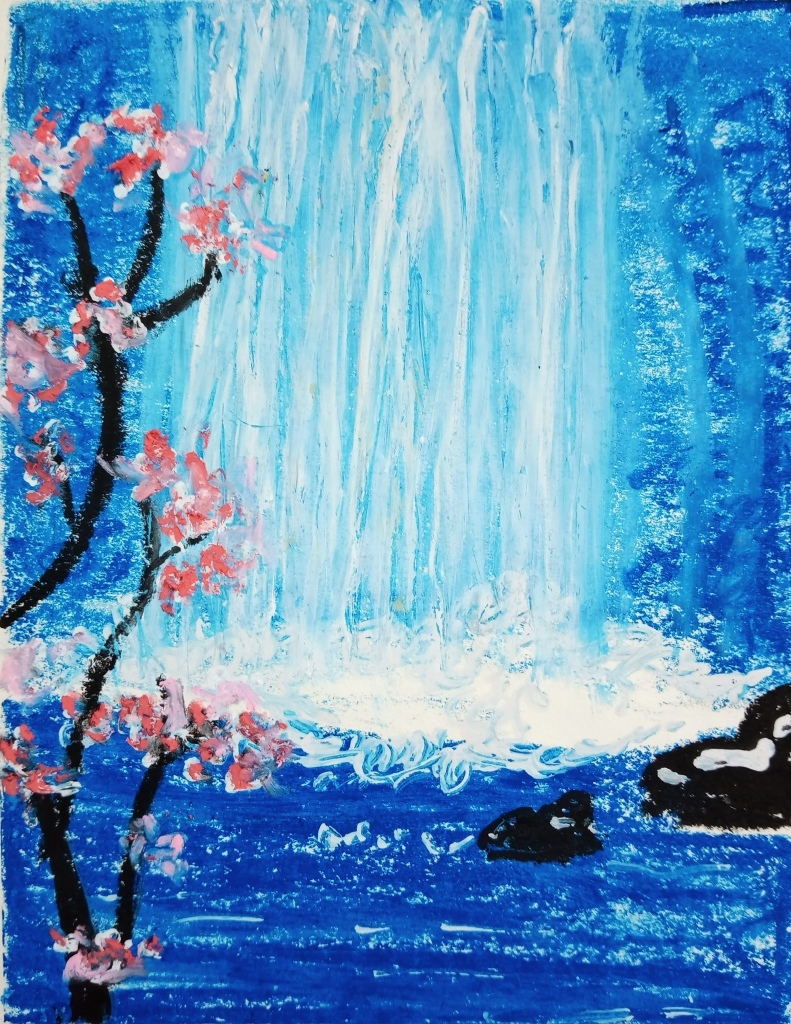
Art by Sohana Manzoor

Editorial

Finding Godot?… Click here to read.

Conversations

Ratnottama Sengupta talks to Ruchira Gupta, activist for global fight against human trafficking, about her work and introduces her novel, I Kick and I Fly. Click here to read.

A conversation with Ratna Magotra, a doctor who took cardiac care to the underprivileged and an introduction to her autobiography, Whispers of the Heart: Not Just a Surgeon. Click here to read.

Translations

Two poems by Nazrul have been translated from Bengali by Niaz Zaman. Click here to read.

Masud Khan’s poetry has been translated by Fakrul Alam. Click here to read.

The White Lady by Atta Shad has been translated from Balochi by Fazal Baloch. Click here to read.

Sparrows by Ihlwha Choi has been translated from Korean by the poet himself. Click here to read.

Tagore’s Dhoola Mandir or Temple of Dust has been translated from Bengali by Mitali Chakravarty. Click here to read.

Pandies Corner

Songs of Freedom: What are the Options? is an autobiographical narrative by Jyoti Kaur, translated from Hindustani by Lourdes M Supriya. These narrations highlight the ongoing struggle against debilitating rigid boundaries drawn by societal norms, with the support from organisations like Shaktishalini and pandies’. Click here to read.

Poetry

Click on the names to read the poems

Rhys Hughes, Maithreyi Karnoor, Luis Cuauhtémoc Berriozábal, Sivakami Velliangiri, Wendy Jean MacLean, Pramod Rastogi, Stuart McFarlean, Afrida Lubaba Khan, George Freek, Saranyan BV, Ryan Quinn Flanagan, Sanjay C Kuttan, Peter Magliocco, Sushant Thapa, Michael R Burch

Poets, Poetry & Rhys Hughes

In City Life: Samples, Rhys Hughes takes on the voice of cities. Click here to read.

Musings/Slices from Life

Ratnottama Sengupta Reminisces on Filmmaker Mrinal Sen

Ratnottama Sengupta travels back to her childhood wonderland where she witnessed what we regard as Indian film history being created. Click here to read.

Suga Didi

Snigdha Agrawal gives us a slice of nostalgia. Click here to read.

Healing Intellectual Disabilities

Meenakshi Pawha browses on a book that deals with lived experiences of dealing with intellectual disabilities. Click here to read.

Musings of a Copywriter

In Hobbies of Choice, Devraj Singh Kalsi explores a variety of extra curriculums. Click here to read.

Notes from Japan

In Becoming a Swiftie in my Fifties, Suzanne Kamata takes us to a Taylor Swift concert in Tokyo. Click here to read.

Essays

Walking about London Town

Sohana Manzoor takes us around the historic town. Click here to read.

How Do You Live?

Aditi Yadav explores the universal appeal of the translation of a 1937 Japanese novel that recently came to limelight as it’s rendition on the screen won the Golden Globe Best Animated Feature Film award (2024). Click here to read.

The Magic Dragon: Cycling for Peace

Keith Lyons writes of a man who cycled for peace in a conflict ridden world. Click here to read.

Stories

A Night at the Circus

Paul Mirabile tells a strange tale set in Montana. Click here to read.

Echoes in the Digital Expanse

Apurba Biswas explores a futuristic scenario. Click here to read.

Two Countries

Ravi Shankar gives a story about immigrants. Click here to read.

Chadar

Ravi Prakash writes about life in an Indo-Nepal border village. Click here to read.

Just Another Day

Neeman Sobhan gives a story exploring the impact of the politics of national language on common people. Click here to read.

Book Excerpts

An excerpt from Nabendu Ghosh’s Journey of a Lonesome Boat( Eka Naukar Jatri), translated from Bengali by Ratnottama Sengupta. Click here to read.

An excerpt from Upamanyu Chatterjee’s Lorenzo Searches for the Meaning of Life. Click here to read.

Book Reviews

Somdatta Mandal reviews The History Teacher of Lahore: A Novel by Tahira Naqvi. Click here to review.

Basudhara Roy reviews Srijato’s A House of Rain and Snow, translated from Bengali by Maharghya Chakraborty. Click here to read.

Bhaskar Parichha reviews Toby Walsh’s Faking It : Artificial Intelligence In a Human World. Click here to read.

.

Click here to access the Borderless anthology, Monalisa No Longer Smiles

Click here to access Monalisa No Longer Smiles on Amazon International
Categories
Slices from Life

Healing Intellectual Disabilities

By Meenakshi Pawha

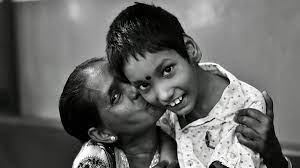
Disability is an inevitable condition that affects nearly everyone at some stage, and its duration can vary from brief to prolonged. It is an inherent aspect of human beings. Recently, I read An Unplanned Journey: Stories of Empathy from the Frontiers of Intellectual and Developmental Disabilities by Naval Pant which offers a tapestry of poignant and compelling accounts of real-life experiences of individuals with developmental and intellectual disabilities that comprise both children and adults with special needs.

Naval Pant, the author, has discovered an invigorating perspective on the complex subject of disability. Spanning a wide range of disabilities, such as autism, language and speech impairments, Down syndrome, cerebral palsy, and Intellectual and Developmental Disabilities (IDD), the author offers a nuanced, in-depth knowledge of the characteristics of these challenges, as well as specific strategies for assisting children in maximising their cognitive and emotional capabilities.

He obtained a degree in Mathematical Statistics but transitioned to Educational Philosophy for his postgraduate studies and PhD. In 2005, he established an organisation dedicated to providing high-quality services for individuals with intellectual and developmental disabilities (IDDs). He strongly advocates for their comprehensive development, rehabilitation, and vocational training within an inclusive setting. His book contains a collection of fourteen stories straight from the heart. This book is unique. The book’s unconventional subject matter, crafted by a perceptive author, compelled me to hold the book in my hand and examine its plush velvet cover, awestruck by its captivating title.

I commenced reading swiftly flipping through the pages with eager speed. The author employs a distinctive storytelling style and smoothly transitions the readers from one story to another. In the introductory chapter, Naval Pant declares that “This narrative is thus at once an autobiographical account, a memoir of the institution we built, a chronicle of the heroic struggles of young children and some of my learnings from serving in the field of special needs education.”

The first story is the only fictionalised account in the collection. The rest emanate from deep lived experiences of Naval Pant and his team of dedicated teachers. “Until you have a kid with special needs, you have no idea of the depth of your own strength, tenacity, and resourcefulness” is the quote which begins the second chapter, “An Unplanned Journey”. It sets the tone of the book as well. It tells us, “There is no roadmap on this island…You don’t know its topography…your situation is unique…Gradually, you learn to accept your situation.”

The concluding chapter delves into the various services extended by his institution, its fundamental tenets and educational philosophy, and the difficulties encountered in a post-pandemic society. It adequately reiterates the organisation’s spiritual drivers that result in the forging relationships between the teachers and the students free from dominance or authority and encourages communication between them. He shows how it is beneficial to prioritise a culture of engagement in educational institutions not rooted in hierarchy. What stood out most prominently for me was the language and tone of the book. The text is highly readable, resembling a casual dialogue between intimate acquaintances. It employs common words, concepts, and ideas, rendering it remarkably engaging and riveting. The book lacks is a narrative that fleshes out the myriad challenges and barriers that caregivers and their children are confront with in society on a daily basis. While it alludes to the topic, it does not extensively investigate or analyse it.

The strength of the book resides in its consistent provision of solutions for every topic it addresses. Naval Pant’s book offers valuable motivation for individuals with impairments and parents and educators who must confront daunting challenges. These stories serve as sources of inspiration, promoting good change in students’ lives and fostering hope, peace, and potential for transformation. Although the book extensively explores the topic of disabilities and its related difficulties, the main message that resonates is the admirable quality of a courageous and tenacious individual who perseveres and harnesses his experiences to foster personal growth rather than succumbing to bitterness. The author does not experience the sorrow that accompanies the task of raising a child with disability. The book illustrates the significant endeavour required to effect substantial transformations worldwide.

The book will be of enormous interest to parents, special educators, disability experts and non-profit organisations interacting with these stakeholders. Unquestionably, engaging with this book will undoubtedly stimulate contemplation over the future of education in Disability Studies for both theorists and practitioners.

Meenakshi Pawha is a retired professor from the University of Lucknow.

.

PLEASE NOTE: ARTICLES CAN ONLY BE REPRODUCED IN OTHER SITES WITH DUE ACKNOWLEDGEMENT TO BORDERLESS JOURNAL

Click here to access the Borderless anthology, Monalisa No Longer Smiles

Click here to access Monalisa No Longer Smiles on Kindle Amazon International