Categories
Excerpt

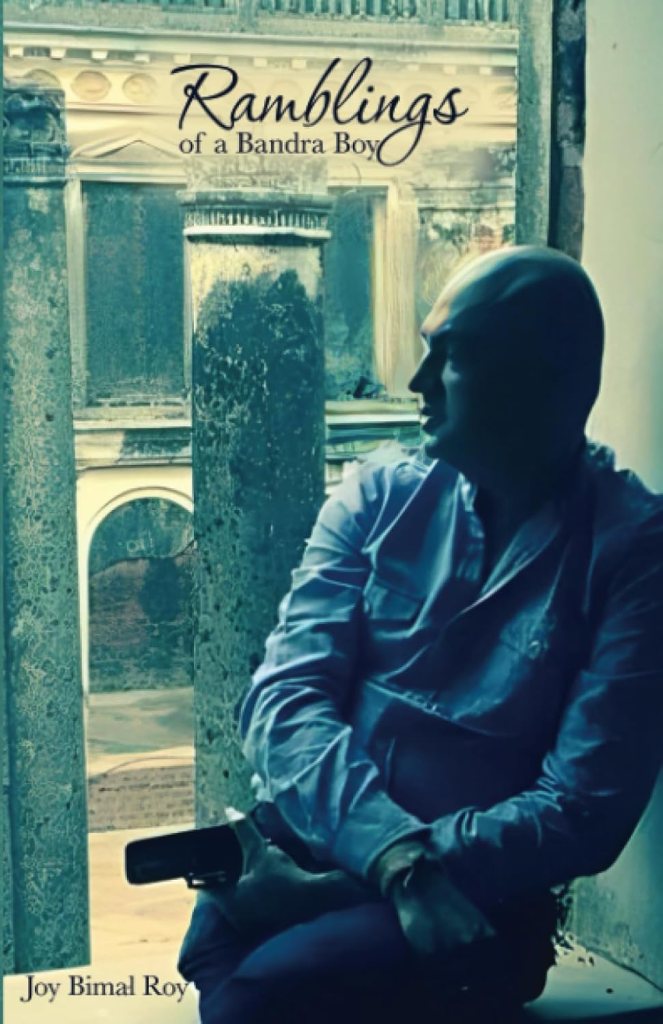
Ramblings of a Bandra Boy

Title: Ramblings of a Bandra Boy

Author: Joy Bimal Roy

(Excerpted from Ramblings of a Bandra Boy by Ratnottama Sengupta)

Joy Bimal Roy looks back at the many 21 Januarys, his birthday, that have dotted 70 calendars

On 6th February 1950 Baba and Nabendu Kaku arrived together in Bombay to work on Bombay Talkies’ Maa. I wasn’t born then, so I can only wonder if either of them, or their illustrious fellow travellers Hrishikesh Mukherjee and Asit Sen even imagined what a life changing experience that journey would be for each of them and, ultimately, for Indian Cinema.

This small but immensely talented and visionary team — Baba as director, Nabendu Kaku as screenplay writer and Hrishi Kaku as editor — created some of the best loved and most remembered classics of the golden ’50s and early ’60s: Do Bigha Zamin, Devdas, Madhumati, Sujata and Bandini.

When I was born on 21st January 1955, this team was already well established and feted in Bombay film industry. Co-incidentally (or perhaps not, because is there any such thing as coincidence?) six days after my birth, a daughter Ratnottama — Uttama to me — was born to Nabendu Kaku and Kanak Kakima in the same, Mandakini Nursing Home in Bandra. Uttama and I instinctively formed a bond which continues till today and seems to strengthen over the years. For me this became the link between our two families.

*

Some silly astrologer told my parents that they should not celebrate my first seven birthdays — else, ill-luck would befall me. So I grew up going to birthday parties of other children and wondering why I never had one.

That could explain why to date I hate my birthdays. It is a day of introspection and soul searching, assessing the past year of my life for gains and losses. No wonder I am more depressed than usual by the end of the day.

All that changed on my 40th birthday thanks to Sriram, my college classmate, and my sister, Aparajita, who was in Mumbai from Kolkata at that time. Together they conspired to have a small celebration at home. Sriram, ever generous, brought the champagne and glasses as well because he was not sure we had any.

Paradoxically it was possibly the worst time in our lives. We had lost the eviction suit our landlords had filed against us in the Small Causes Court, and had been given four months to vacate the premises, of which two months were already up. My birthday was on 21st January and three weeks after that, on 14th February, we were supposed to vacate our home of 46 years — unless we got a Writ Petition admitted in the High Court.

Plonk in the middle of this mess, the thought of celebrating my birthday had not even crossed my mind. But when Sriram entered holding the champagne bottle aloft like a trophy, along with his petite and demure wife Enakshi, and my classmates Divyakant and Ajay, their love and concern were so palpable that suddenly my spirit soared and I felt free as a bird. If I was blessed to have friends like them, Life couldn’t be so bad after all. 

It’s not that I celebrated every year after that but I was no longer traumatized on my birthdays.

*

The first birthday we celebrated after moving into our cottage was my 50th birthday. It doubled as a housewarming party, so it was a riotous affair. Everyone got high thanks to the ministrations of a bartender called Greenville and danced to blaring music like whirling dervishes. Our neighbours complained and the cops turned up. 

Not bad for someone who started out in life with no birthday celebrations at all, eh?

*

When my 60th birthday dawned I was not feeling particularly celebratory. But my sister was coming down, this time from Hyderabad, my niece from Dubai and my nephew from England, and I didn’t want to disappoint them.

Our home at that time was overrun with cats and the garden was a mess, so I looked for a more welcoming venue. The only place I could think of was Kekee Manzil, home to our old family friend Kekoo Gandhy, founder of Chemould, India’s first commercial Art Gallery — and his daughters Rashna, Behroz and Shireen. I asked hesitantly but they agreed enthusiastically and I will always be grateful for that.

Kekee Manzil is an elegant and gracious villa, a heritage structure overlooking the Arabian Sea at Bandstand. At one point of time the Gandhy family also owned the adjacent property which once went by the name of Ville Vienna and housed Baba’s mentor Nitin Bose — and now is famous as Mannat, owned by Shah Rukh Khan.

The venue was the hero on that evening filled with friends, food and fun, not me. Because I was feeling singularly ill at ease about my appearance.

I hadn’t had the time or the bandwidth to figure out what to wear for this milestone birthday, so I had to settle for the only new kurta I had. Unfortunately it looked like tent on me. To make matters worse I had burgeoned to 95 kilos, so I felt like a beached whale.

I made a mental resolution. I HAD to lose weight that year. But as they say, the way to hell is paved with good intentions. So my resolution remained just that — until months had gone by…

*

But before the year dovetailed into my 61st birthday, by sheer synchronicity I stumbled into the right dietician for me — and in eight months I lost 16 kg. Cereno, a trendy batch mate, told me about Zara and gave me a style tip for my hair. He said I would look much better if I had a very short haircut, like a crew cut. I didn’t like the idea of a crew cut but I realised I needed a makeover to go with my new clothes.

At the end of it all my reflection in the mirror was unrecognisable. A strange bald man looked back at me. My sister shrieked when she saw me but she was mollified by the favourable reaction of Cereno and other classmates.

The coup de grace was when a poker-faced Cereno borrowed my phone, fiddled with it, and handed it back to me saying he had put my profile on a dating app. “Just wait for five minutes,” he said, “and you’ll get your first hit.” Sure enough, after five minutes my phone went beep!

So in my 60th year I reinvented myself. Better late than never?

About the Book

Ramblings of a Bandra Boy is a compilation of Joy Bimal Roy’s posts on social media between 2017 and 2020. These slices of life “served without any extra seasoning or fancy garnish” as he puts it, have been described by Rachel Dwyer, professor of Indian Cultures and Cinema at SOAS, London, as jottings in kheror khata, the traditional cloth bound notebook that Satyajit Ray — and his father Sukumar Ray before him — used to pen down thoughts and visuals that are world’s treasure. It covers life in the glitzy Bandra where most of the Bollywood crowd resides… giving glimpses of real life of the giants peopling the cinema screens. 

About the Author

Joy Bimal Roy is the son of legendary Indian filmmaker, Bimal Roy, and one of India’s pioneer woman photographers, Manobina Roy. He started his filmmaking stint as an assistant director to Shyam Benegal.

.

Read the author’s interview by clickling on this link

PLEASE NOTE: ARTICLES CAN ONLY BE REPRODUCED IN OTHER SITES WITH DUE ACKNOWLEDGEMENT TO BORDERLESS JOURNAL. 

Click here to access the Borderless anthology, Monalisa No Longer Smiles

Click here to access Monalisa No Longer Smiles on Kindle Amazon International

Categories
Poetry

The Tyne is Still

Poetry by Stuart McFarlane

River Tyne at Newcastle. From Public Domain
                       I                         

The Tyne is still, the water's calm,
a restful, reassuring balm.
In Newcastle our train has stopped.
From here it seems the perfect spot.
Where the iconic bridges span,
where, once, a different river ran;
well, different water, anyway,
flowing on into yesterday.
An errant cloud floats in the sky,
as if it's only passing by.
Nimble fingers unpick its seams;
on water sunlight softly gleams.
Transporting good to buy and sell;
the stories this river could tell!
Riverside harbours, wharfs and docks,
today replaced by concrete blocks.
Where there was muck once there was brass;
now buildings of shimmering glass,
high-tech hubs, computer centres;
the past flees; the future enters.
Newcastle, grimy, built on coal;
Have you now sold your northern soul?
Those hardy people of the past?
How long will their memory last?

II

Will the march of modernism harm
that fabled humour, Geordie charm?
Will your essential being change,
or will it just remain the same?
We're too busy with our smartphones
to dwell on our ancestors' bones.
To get on YouTube; that's our goal;
we are not used to heaving coal.
Those people, they belong to then;
yet the people now come from them.
Through generations runs a thread;
They are by shared history wed.
Yet, perhaps, they who once were here,
who, too, enjoyed a pint of beer,
are still with us; at least in thought,
their lives unfinished; dreams still sought.
Will our hopes, too, be unfulfilled,
our vision struck, our voices stilled?
We share with them. husband and wife,
the fickle randomness of life.
Now the train jolts into motion
and dispels my idle notions.
One final glance, one final time.
The Tyne is still; and still the Tyne.

Stuart McFarlane is now semi-retired. He taught English for many years to asylum seekers in London. He has had poems published in a few online journals.                                                                                                                    

.

PLEASE NOTE: ARTICLES CAN ONLY BE REPRODUCED IN OTHER SITES WITH DUE ACKNOWLEDGEMENT TO BORDERLESS JOURNAL

Click here to access the Borderless anthology, Monalisa No Longer Smiles

Click here to access Monalisa No Longer Smiles on Kindle Amazon International
Categories
Poetry

You’ve Already Made It

By Stephen Philip Druce

YOU'VE ALREADY MADE IT

Don't you strive for the fame
or pursue its fortune --
play a roulette game
like a business tycoon,
climb a high status ladder?
don't even start,

you've already made it,
you've got a good heart,

don't boast your conquests -
your qualifications,
the talent contests --
the expectations,
don't conquer the mountains
or top the charts --

you've already made it,
you've got a good heart,

don't be frightened to lose,
or to take a rejection,
wear an ego bruise
for your imperfection,
your legacy is sleeping -
you've got a head start,

you've already made it,
you've got a good heart,

don't stack on your power,
don't you mass on appeal,
build the tallest tower
or sign a record deal,
bin your trophies -
certificates -
rip them apart,

you've already made it,
you've got a good heart.

Stephen Philip Druce is based in Shrewsbury UK. He is published in the USA, India, the UK and Canada. He’s written for theatre plays in London and BBC 4 Extra. 

Contact: Instagram – @StephenPhilipDruce

.

PLEASE NOTE: ARTICLES CAN ONLY BE REPRODUCED IN OTHER SITES WITH DUE ACKNOWLEDGEMENT TO BORDERLESS JOURNAL

Click here to access the Borderless anthology, Monalisa No Longer Smiles

Click here to access Monalisa No Longer Smiles on Amazon International

Categories
Poetry

The Music of Someone Else’s Noise

By Jenny Middleton

From Public Domain
waiting in darkness   
the man
at the bus stop
shifts his weight from foot
to foot

watching from inside
the shelter
I can hear the music
of cold air
sliding beneath his feet

all the while the city trees
are exchanging
their damp leaves
for the road’s fumes

eating the white noise
of the traffic
into the closeness of their
bark

until I can’t see him
leaving anymore
but see him returning
to the red seat
of the bus stop, glowing
in its florescence.

Jenny Middleton is a working mum and writes whenever she can amid the fun and chaos of family life. Her poetry is published in several printed anthologies, magazines and online poetry sites.  Jenny lives in London with her husband, two children and two very lovely, crazy cats.  You can read more of her poems at her website  https://www.jmiddletonpoems.com.

.

PLEASE NOTE: ARTICLES CAN ONLY BE REPRODUCED IN OTHER SITES WITH DUE ACKNOWLEDGEMENT TO BORDERLESS JOURNAL

Click here to access the Borderless anthology, Monalisa No Longer Smiles

Click here to access Monalisa No Longer Smiles on Kindle Amazon International

Categories
Review

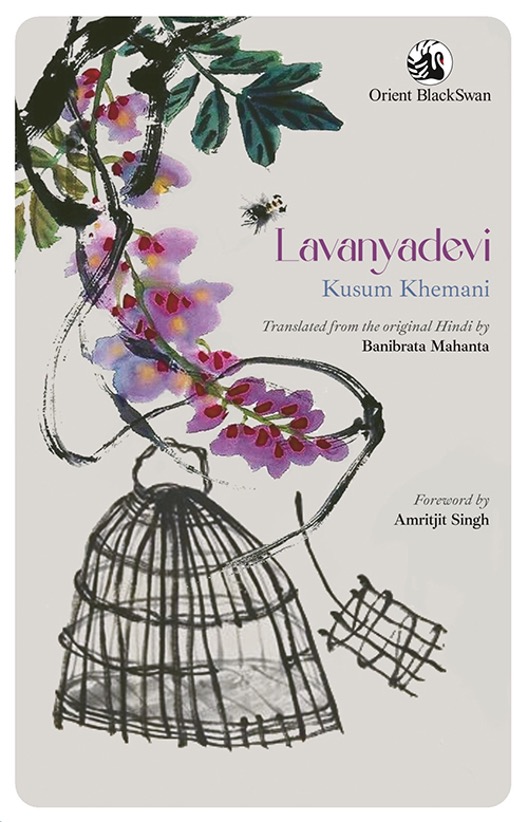
Lavanyadevi: An Epitome of Perfection?

Book Review by Somdatta Mandal

Title: Lavanyadevi

Author: Kusum Khemani (Translated from Hindi by Banibrata Mahanta)

Publisher: Orient BlackSwan Private Limited

Lavanyadevi is an award-winning 2013 novel by Kusum Khemani written in Hindi that chronicles five generations of a traditional aristocratic Bengali zamindar family as it transitions into modernity from British India to the present with the eponymous protagonist as its principal focus. Lavanyadevi—a compelling woman of perfection, extraordinary vision, qualities, and grace—remains real and credible because she is self-aware, self-critical, open to others, and to change. As a Marwari (people originally belonging to Marwar in Rajasthan) living in Kolkata, in Khemani’s fiction the schisms between ‘Bengali’ and ‘Marwari’ blur to reveal a delightfully plural, composite, and distinctively Indian ethos. Lavanyadevi is a story about women and their search for self, about shared laughter and friendships that endure across generations, beliefs and cultures—between mother and daughter, grandmother and granddaughter, and Marwari and Bengali women. Khemani’s women protagonists are strong, clear-sighted, both worldly and sublime, embodying a larger-than-life idealism while being grounded firmly in the everyday.

In his introduction to his novel Kanthapura (1938), Raja Rao had defined it as a sthala-purana[1], which he defined as a “legendary history” in which the old lady narrator in the village took recourse to the traditional Indian narrative technique, digressed at will to bring forth her point. Somehow the way Kusum Khemani takes recourse to multiple narrative techniques in Lavanyadevi and binds the different digressive stories and incidents into one contiguous whole when she tells us about the history of five generations of the Bengali zamindar family, reminds one of Raja Rao’s theory. She uses diverse narrative strategies like flashbacks, diaries, letters and emails, history, memory and the third person narrator to enrich its telling, lending it depth and range. A large part of the narrative revolves around telling us about past history when Lavanyadevi manages to lay her hands on her mother Jyotirmoyidevi’s diaries and finds great pleasure and thrill of reading one’s own family history. Not only do they offer a wonderful eye-witness account of the private and public sphere of Kolkata of those times, but they also make her easy transition into reading about her mother’s youth, her elaborate description of her magnificent wedding and the rituals that spread over almost a month.

The diary as metanarrative and the protagonist as reader/narrator are particularly effective, offering a telescopic perspective. Though at times it rambles a bit, the polyphonic structure of the novel engages Lavanyadevi the granddaughter, the daughter, the wife, the mother and the grandmother in conversations with her preceding and her succeeding generations. One must sometimes go back to the family tree and chart provided at the beginning of the novel to place people in proper perspective.

From the very beginning of the novel, Khemani portrays the character of Lavanyadevi in superlatives and this continues in different phases of her life till the end when she decides to remain incognito in the mountain ashram and yet control the lives of her descendants, well-wishers and others. From a child who always stood first in school and remained wholly ignorant of the real world, to her unusual marriage to a gentleman who moved over to Rangoon and then to London where she acquired many more degrees, till she came back to Kolkata, to rear her three children successfully, she seemed to excel in everything. This is how she is described at one place:

“Lavanyadevi was indefatigable. She administered the work of several institutions, her college and her home efficiently and with ease. She was never seen to panic. She was like Goddess Durga with her many hands – untiring in her zeal, handling all her duties unfailingly, responsibly and meticulously. No one could ever complain of being ignored by her. She loved all and treated everyone with the same degree of love and warmth. Scrupulous and hardworking, always upholding truth, Lavanyadevi was the unmatched standard of excellence in all aspects of life, her words worth their weight in gold.”

After judiciously assigning different welfare projects in the city as well as in far-flung places like Dhaka and the hills in Uttarkashi from the immense money she inherited from the family, and after her husband’s demise, Lavanyadevi decided it was time for her to leave the family premises and go and live in an ashram in the hills. There she did not stay in hibernation but her travels for work grew even more frenetic.

From the very beginning her rootedness and belief in the philosophical framework of Hinduism formed the core of her being. They propelled her to seek answers to questions of satya (truth) and mukti (liberation) that confronted her in the latter half of her life. She decided to transcend immediate personal concerns and address larger universal issues. Her transition from grihastha (householder) to sanyasa (renunciate) harkens back to the Hindu ideal of human life divided into four phases. However, contrary to the conception of life in isolation, Lavanyadevi, free of any kind of worldly considerations in this final phase of life, marshaled material and human resources to create a strong network of seva (social service) across the country and even beyond its borders. The list of her welfare schemes is too long to mention in the purview of this review, but ranged from renovating brothels in Kolkata’s red-light areas, creating self-help centres for rural women in Dhaka, de-addiction centres, eco-friendly schools in the hills, organic farming in South India, etc.

In the latter half of the novel, we find Lavanyadevi successfully transmitting her values and ideals to her children and grandchildren who are called the “Saptarshi Mandal friends” and who carry her legacy forward and emphasise that progress does not always mean breaking from the past. Here the novelist becomes too idealistic and brings in too many issues that seem a bit far-fetched. Issues of inter-caste and inter-religious relationships apart, the list of social welfare missions seems endless. Her “soul-children” unobtrusively usher in change and create space for diversity in relationships and ways of living. Harmonious cohabitation with nature became the foundational principle of all the education centres she built in the hills but the way she invisibly controls the activities of all her soldiers through emails and emphasises the middle path of life makes the advocacy of humanitarian concerns a bit overemphasised. She becomes larger than life for ideas and wish-fulfilment.

A Hindi novel about a Bengali family by a Marwari woman from Kolkata became significant when it was commissioned for translation into English. Winner of the PEN/Heim Translation Grant 2021, the jury called Lavanyadevi an ‘ambitious, far-reaching’ novel, lauding Khemani’s ‘energetic prose, deadpan sense of humor, and exquisite control’, and Banibrata Mahanta’s translation that ‘stretches and manipulates language to produce a vivid text’ and a must-read for lovers of Indian literature. Here one needs to mention the seriousness with which Mahanta gives us the ‘Translator’s Introduction’ at the beginning of the text and again ‘Translator’s Note’ at the end. This reviewer feels that both these could have been combined into one general essay highlighting the significance of the evolution of the Marwaris in Bengal, how Khemani’s novel is a hybrid artefact born out of multiple linguistic and cultural encounters, how the characters in the novel speak in languages other than Hindi produces dialogues in Bangla, Marwari, Haryanvi or Punjabi; and how between a breezy translation and a linguistically nuanced one, wherever possible the translator has eschewed the former and gone for the latter. As he rightly admits, translating this complex narrative into global or even a pan-Indian English is always risky, but Mahanta should be given due credit for overcoming all obstacles and bringing this immensely readable novel to a wide readership.

.

[1] Ancillory texts to Puranic literature

Somdatta Mandal, critic, academic and translator, is a former Professor of English at Visva-Bharati University, Santiniketan, India.

PLEASE NOTE: ARTICLES CAN ONLY BE REPRODUCED IN OTHER SITES WITH DUE ACKNOWLEDGEMENT TO BORDERLESS JOURNAL

Click here to access the Borderless anthology, Monalisa No Longer Smiles

Click here to access Monalisa No Longer Smiles on Amazon International

Categories
Poetry

Poetry by Stuart McFarlane

MOMENTS

A million stars are out tonight,
a million more burn out of sight.
Our world is bathed in radiant light;
and we are all witness to its might.

What, then, is Time? Who of us can say?
No-one knows, at the end of the day.
One by one we will surely decay;
our lives, like seconds, just tick away.

A thousand years, they will come and go,
yet, still, none of us shall ever know
why some seeds perish, while others grow;
we can only accept it is so.

Who can tell what days may become,
cold as the moon or hot as the sun?
What you do now, it soon will be done;
moments, like sparks, flash bright - then are gone.


IF I HAD A HORSE

If I had a horse
I'd set out at dawn,
when sunlight sifts
the morning grey,
and by the time
the sky was bright,
the light was sure,
I'd be galloping hard and free.
And there, the mountains.
Beyond, the sea!
Somewhere, out of view,
a distant feel of blue.
For a thousand miles or more
we'd thunder over the land,
embrace our green tomorrows,
leave yesterday behind.
And, always, the sun would shine,
a bright shower in the morning;
in evening a golden gleam.
And, deep in the night, I'd taste
the sweet taste of the earth
and feel the tang of cold air.
In starlight I would know
what it means just to breathe;
beneath a silver halo I'd know
just what it means to be free.
If I had a horse.

Stuart McFarlane is now semi-retired. He taught English for many years to asylum seekers in London. He has had poems published in a few online journals.                                                                                                                    

.

PLEASE NOTE: ARTICLES CAN ONLY BE REPRODUCED IN OTHER SITES WITH DUE ACKNOWLEDGEMENT TO BORDERLESS JOURNAL

Click here to access the Borderless anthology, Monalisa No Longer Smiles

Click here to access Monalisa No Longer Smiles on Kindle Amazon International

Categories
Poetry

I Remember Remembering That…

Poetry by Stuart McFarlane

From Public Domain
I REMEMBER

Seven, maybe eight,
I remembered a windy day long ago;
blue sea stretching forever to the sky.
Seagulls wheeling, buckets and spades;
and all our running in the sand.
I remember remembering that.

Thirteen, maybe fourteen,
I remembered when I heard
the 'Beatles' 'Help'*, or maybe, nine or ten,
for, I believe, the very first time.
And how it sounded different then;
How it sounds darker now.

Twenty-nine, maybe thirty,
I remembered how life once
seemed like an empty journal;
all the pages still unwritten.
Now it is full of words,
scrawled in indelible ink.

Yesterday, it was,
I remembered things I'd said
and wished I hadn't;
things I'd thought forgotten;
quite a litany of regrets.
I remember remembering that.


MY PAST LIFE

Having arrived at Heaven's gate
I found a queue, so had to wait;
a curious angel there enquired
about my past life, not long expired.
'Had I enjoyed this life of mine?'
'It helped', said I, 'to pass the time'.

Beatles singing ‘Help’. The song was released in 1965

Stuart McFarlane is now semi-retired. He taught English for many years to asylum seekers in London. He has had poems published in a few online journals.                                                                                                                    

.

PLEASE NOTE: ARTICLES CAN ONLY BE REPRODUCED IN OTHER SITES WITH DUE ACKNOWLEDGEMENT TO BORDERLESS JOURNAL

Click here to access the Borderless anthology, Monalisa No Longer Smiles

Click here to access Monalisa No Longer Smiles on Kindle Amazon International

Categories
Poetry

Apertures by Jenny Middleton

From Public Domain
a brick wall 
broken by ivy
sky shimmies

spilled grass seed
grows on garage shelves
escapees

drum and bass
echo in the breeze
cold glass throbs

a fern roots
near a rose’s mulch
sharing keys

sheltering
from wintery rain
pulse rates sync

Jenny Middleton is a working mum and writes whenever she can amid the fun and chaos of family life. Her poetry is published in several printed anthologies, magazines and online poetry sites.  Jenny lives in London with her husband, two children and two very lovely, crazy cats.  You can read more of her poems at her website  https://www.jmiddletonpoems.com.

.

PLEASE NOTE: ARTICLES CAN ONLY BE REPRODUCED IN OTHER SITES WITH DUE ACKNOWLEDGEMENT TO BORDERLESS JOURNAL

Click here to access the Borderless anthology, Monalisa No Longer Smiles

Click here to access Monalisa No Longer Smiles on Kindle Amazon International
Categories
Stories

The Return

By Paul Mirabile

Jonathan Harper was startled out of sleep by an impatient ringing at the door bell. He rolled out of bed, tip-toed to the sitting-room and peeked through the curtains covering the bay windows. In the dim, moonlit night he perceived a slender, young man dressed in some sort of long robe. He was completely bald. Again the bell rang and rang under the young man’s relentless ringing. Jonathan hastened to the hearth, picked up the poker out of its andiron then quietly moved towards the door. With a quick jerk he unlocked it so as to take the knocker by surprise. The knocker looked stonily at Jonathan’s sleepy, pale face and at the poker.

“Whatever are you doing with that mighty weapon, father?” was that knocker’s first remark. Jonathan stared in astonishment, mouth agape. “Yes, father it’s me, your son Francis. Have you forgotten me ?”

And that was how Francis Harper, the fugitive Buddhist monk, and his father Jonathan, completely thunderstruck, were reunited …

“Quick, come in … come in … At this hour of the night, Francis. And look at you, dressed like a beggar monk. So thin. I hardly recognised you.” Jonathan was in a state of great excitement. Francis sailed in, closed the door and settled on the familiar canopy. He scanned the sitting-room: Nothing had changed.

“You gave me a scare, Francis,” Jonathan resumed, still standing.

“Well, who would be ringing at this hour of the night?” Francis returned in a flat voice. His father hadn’t quite understood the question. He seemed half asleep. “Where’s mum?”

“Who?”

“Mummy … your beloved wife?” Francis pressed ironically. Jonathan stared emptily at him. “Well, is she here, or has she gone to see her boring sister Hazel ? Perhaps she’s out with her lover?” Jonathan winced.

“Don’t be vulgar, Francis, please.”

“Come on, I’m only having you on. Where is she?”

Jonathan stepped forward: “I thought she was with you! She went to find you in Laos a year ago, and I’ve never had any word from her since.”

Francis looked blankly at this father then jumped up. “She’s mad ! Why did you let her go, damn it?”

“I didn’t let her go, Francis; she woke up one morning and off she went leaving me a note.”

“What note? Do you still have it?”

“The note … Yes …” Jonathan shuffled to his bedroom to procure Heather’s note that she had left for him on the chimney-mantle. He handed it to his son. It seemed that it had been wrinkled up into a ball then roughly flattened out.

“Bloody hell! Why did she do that?” Francis gritted his teeth. “It’s such a dangerous place to be for mummy. She has no clue of the dangers : the jungles are infested with disease and wild animals. Food and water are dodgy. It’s another world.”

The son glared at his father then threw himself down onto the canopy, burying his face in his hands.

“I’ve put the police on to it but nothing has come up,” Jonathan defended himself, yet in a contrite tone of voice. “She believed that only she could bring you back to us. But … how did you come back here?”

The question struck Francis oddly. He looked at his father who still stood: “Do put down that poker, you cut such a ridiculous figure.” Indeed, Jonathan hadn’t noticed that he still clenched the poker tightly. He tossed it into the cold hearth. Francis sighed: “Me ? Do you really want to know, father?”

“Of course I want to know, then we can both set out to find mother.”

“No we cannot just set out to find mother. I am a wanted criminal in Thailand and in England. Have you forgotten?”

“Rubbish! How then did you manage to get home if you are wanted by the police?” Jonathan persisted, trotting back and forth from the sitting-room to the kitchen to make coffee and toast muffins.

“That’s a long story,” Francis lamented, crumbling up the letter and dropping it to the carpeted floor.

“Well, we have the whole night, so please, I must know the truth. It’s been a nightmare for me in this house all alone. You know that Andy pops in almost every day to rub salt into my wounds, drinking my brandy and wheeling that mordant wit of his.”

“You mean that you’ve been pissing it up with that halfwit?” Francis snapped.

“No … no, of course not. But he invites himself over and never knows when to leave. How many times have I put up with his drunken effrontery.”

“Well, if I ever see him here …”

“No ! He must not see you; if he does all Stevenage will know and that means the police, too. No. We must find a way to hide you, to keep you safe from the law until this rotty mess is straightened out.”

“Straightened out?” Francis sneered. He eyed his father coldly. ‘Forced’ solitude had wrinkled the old man’s ashen face, had given him the appearance of Gandalf straight out of The Hobbit, all he needed was a grey cloak, staff and floppy hat to complete the portrait instead of his thirty-year old pyjamas. The flesh on his neck had gone flabby and his eyes, colourless, like his thinning, flaky hair. Jonathan finished his coffee: “Please tell me how you left Laos and managed to reach England,” he said in a weak voice, practically beseeching his son.

Francis took a gulp of coffee, he made a wry face: “I haven’t drunk coffee for over twelve years.” Setting the cup down on the settee, he began his tale. And as Francis fumbled to find his words Jonathan observed the metamorphosis of his appearance.

Francis’ face, laboured by years of privations, illness and fasts, had the appearance of rough, sandy stone. His eyes were set deep in their orbits whilst the furrows of his crow’s eyes twitched at every slight movement or sound in the sitting-room. The callousness of his face darkened all its former freshness of youth – that youth he had abandoned in southeast Asia. He swayed slightly in the canopy, nibbling at his muffin, apathetically. Jonathan made some more coffee and toasted more muffins for his enfeebled son. He opened slightly the bay window curtains then finally settled down in his wicker chair.

Francis began lethargically, rubbing his hairless head: “I had been living from monastery to monastery in northern Laos, constantly ill because of the food and water until one day I decided that I had no future in those remote places of worship. Mind you, the religious services captivated me as did the jungle and the snaking, mystical Mekong. The monks were jovial chaps, very respectful and reserved. They offered a soothing solace to my inner and outer sufferings. But I had to leave and return to England. My mind and body ached for familiarity… for mother and for the English language …”

“And your father?” interposed Jonathan, biting his quavering lower lip. Francis looked sadly at his aging father. “I know I haven’t been the best of fathers to you, Francis,” Jonathan conceded, his cheeks flushing red with shame. “But you will acknowledge that I did encourage you to travel to Asia to earn your livelihood. You know, I did not choose my solitude. It was imposed on me.”

“Did we then impose it, me and mummy?” came Francis’ laconic retort.

Jonathan looked dismal, a bit jarred by the remark. He stared at his son through sleepy, spent eyes. Francis laughed: “Of course I’ve returned for you too!” He pursued: “Thanks to my Lao passport procured for me by the Venerable Father, I travelled to visa-free countries. First, I boated it down to Vientiane, then took a cheap flight to Moscow. From there to Cairo, where I renewed my British passport at the embassy wihout any questions asked, although it had expired over six years. Anyway, with my British passport I entered Italy by boat, and from there on used my British passport since European border officials hardly looked at it. To avoid the usual big entries into England I hitched up to the Hook of Holland and took the ferry to Harwich.”

“But hadn’t the border officials suspected anything … your dress?” 

“I changed dress in Italy but wore my robe when crossing into England.”

“But your photo?”

“My face has undergone a drastic change, father — haven’t you noticed?” Jonathan had but said nothing. “Anyway, what could they say to a tonsured-headed Englishman who had become a Buddhist?” Jonathan paused, as if reflecting.

“And the money to pay for all these flights, boats and trains?”

“I had my Cook’s travellers’ cheques safely in my money belt.”

Jonathan sighed. “Look Francis, we must not dilly-dally, Interpol may be on your trail at this very moment. No dawdling about, I have to find a place to hide you.”

“Don’t exaggerate, father, please.”

Jonathan sized up his gaunt, emaciated son: “I hope you’re not thinking of turning yourself over to the police.” Jonathan wrung his hands fearfully.

“No, no, I’ve paid for my selfishness and stupidity. Every day and night for twelve years that horrible scene still floods my mind.”

Here it seemed to Jonathan that Francis began to weep quietly. What to do ? What to do ? Comfort him with a fatherly hand on the shoulder ? A paternal embrace ? Or simply a kind, appeasing word ? Jonathan, whilst he observed his son, realised that he had never been a fatherly towards his son. Heather had been right — he thought as he looked on helplessly at his son’s bony, trembling shoulders.

The grandfather clock struck six.

“My God, it’s morning!” Jonathan cried, going to the bay window. “People will be milling about.”

“So what, people always mill about in the morning,” came Francis’ sardonic reply.

“Someone may see you.”

“Through the window? Who will see me father if I stay in the house?”

“Right you are, Francis.”

“And mother?” Francis retorted, a glare of reproach in his cloudy eyes.

“Mother? Why hasn’t she ever written to me? Did you not have any news of her in Laos?”

“Some monks did speak about an old lady with grey hair seen in different boats on the Mekong. That’s about all. It could have been anyone … “

“Anyone? An old, grey-haired lady traipsing up and down the Mekong,” Jonathan cut in savagely. He fell back into his wicker chair. “I have to get you out of England before I tend to your mother. I will act quickly and decisively for you and her.”

Francis stared at his wizen-faced father, and for the first time in his life the young man felt a pang of pride towards him. Yes, a pang of pride because Francis had always believed his father to be a moral coward, a skulker who purposely disavowed, even mocked all his childhood projects, which had gradually raised an emotional tension between them. The clock struck half-past six. The first rosy rays of the sun trickled into the sitting-room with the warm, gay light. At that stroke of the clock Francis truly felt that their generational tension had been somehow lightened.

Francis stood. Jonathan stood. They gazed at each other and an instant later broke out into howls of laughter, laughing like two little boys. They laughed and laughed as they had never laughed before.

Jonathan strode over to Francis and slapped him paternally on the back: “Let’s have a real British breakfast.” Which they did — bacon and eggs, kipper and fresh orange juice which Jonathan squeezed himself.

The doorbell rang. Jonathan jumped out of his chair. Francis hastened to the bay window. It was Andy. “Blast! Into your room Francis and don’t make a sound. I’ll send that bugger packing. How dare he  come bothering me at this hour of the morning.”

As Jonathan shuffled to the door, Francis made a bee-line for his bedroom. Jonathan threw it open.

“Well old man, up bright and early, hey?” began Andy in his usual strident, exasperating tone. “How about a little excursion to St Albans this morning ? They have an excellent pub where the food is the best in Hertfordshire.” Andy struck his customary ill-bred pose.

“No thanks, not today Andy, I’m terribly busy …”

“You, busy, Johnny old boy? Come on, mate, we’ll take your car.”

“That goes without saying since you haven’t one,” Jonathan rejoined peevishly. “No, today I must finish some work. You go and tell me how the food is. We’ll see about tomorrow.” He corrected himself. “No … next week ; I shall be popping over to visit my cousin-in-law.”

Andy sensed that Jonathan was lying.

“I see,” and a grotesque smile stretched over his red-spotted, pasty face. “What’s good for the goose is good for the gander, hey?”

“What are you insinuating?”

“Oh nothing … nothing, old boy. Have a good time and let me know how things work out.” He gave Jonathan an equivocal wink. Jonathan slammed the door in his face.

“Bloody idiot!” he growled. Jonathan stopped in his tracks. “My cousin-in-law … that’s it ! I’ll send Francis to Mary in Ireland. No one will ever think of searching for him in Ireland.”

Jonathan was all agog. He had found a solution to Francis’ dilemma thanks to Andy’s unexpected visit. He called to Francis who opened the door of his room carefully.

“No bother, the blighter’s gone, and I have a smashing idea, Francis. I have half a mind to drive you to Ireland where the British police will never hunt you down. My cousin-in-law, Mary O’Casey,  lives in Waterville. Once we’re there and you’ve met her, I’ll drive back to England, get a flight to Laos and bring mother back home.”

Francis had never seen his father so animated. His shrivelled features seemed to rejuvenate, new blood infuse that puffy, pasty, unshaven Gandalf face. Francis, however, stood at the door of his room, a strange, alien gleam in his eyes. He turned to his father: “You’ve left everything as it was,” he pronounced softly. “Malraux’s La Voie Royale, Maugham’s The Gentleman in the Parlour. My desk … Everything as it was … exactly … “

“Yes, your mother wished it so. Nothing has been touched. The room has been waiting for your return. Unfortunately the circumstances require desperate action that I would never have imagined. We must buckle up, my boy.”

“Ireland?” wondered Francis sceptically.

“Ireland,” Jonathan echoed. “I shall get you there tonight and we’ll be on the Birkenhead ferry for Dublin tomorrow morning. Dress like an average Englishman and use your British passport.”

“What do you mean by an average Englishman, father?” Francis enquired.

“Well … Put a cap on your bald head and dress in English clothes. You’re not thinking of getting into Ireland with your monk’s robe, are you?”

Francis chuckled: “Don’t worry, my days of impersonating a Buddhist monk are over.”

“Were you then not sincere about your conversion?” his father asked rather puzzled.

Francis shrugged his shoulders: “I don’t know. I don’t know who I really am. I seem to have lost all identity of myself by impersonating or embracing so many identities. Now I’m off to Ireland. Will I become an Irishman?” A melancholic smile stretched his bloodless lips.

“Whatever you become Francis you will always be my son.” Francis nodded, albeit the resigned gesture seemed to embarrass his father who eyed his son with genuine sympathy.

“Mary will have you working in the gardens, and you know she has lodgers there all year round. You could help her out in her home. She lost her husband many years ago. A fine woman, she is.”

Francis nodded again and stepped back into his room. He closed the door silently and lay on his bed, his blood-shot eyes fixed on all his books nicely arranged on the shelves. He smiled. Then those sleepless eyes fell on a photo of his beloved Irish setter, Patty. He closed them and thought of nothing … nothing at all. He began to murmur a prayer of contrition in the name of the Enlightened One …

Meanwhile in the sitting-room Jonathan set to work without delay. He had already contacted his cousin-in-law by phone, explaining Francis’ predicament. He related everything to her without any feelings of guilt or mawkish sentimentality. Mary despised sentimentality. She would welcome Francis like her own child — a child she had never herself had.

Francis had fallen asleep. His father woke him at five in the afternoon. They had a large dinner, after which, under the cover of darkness, Jonathan packed Francis’ belongings in the boot — two shirts and trousers, a pair of walking boots and woollen socks, and his favourite books, Malraux’s La Voie Royale, Maugham’s Collected Short Stories, three of Richard Burton’s travel books and T.E. Lawrence’s Seven Pillars of Wisdom.

They reached Birkenhead in the morning two hours before the first ferry to Ireland. The bored border official hardly looked at their passports. An hour and a half later they were in Dublin. There the Irish waved them through after having taken a cursory glance at their passports. Two hours later they arrived at Mary O’Casey’s homestead near Hog’s Head. They were both exhausted but relieved to have accomplished their mission.

Mary welcomed them with a hearty lunch. She hadn’t seen Jonathan for over twenty-five years. As to Francis, she had seen him once at the age of five or six. Jonathan stayed on several nights. Mary had no lodgers at that time so she was happy to sit at the welcoming hearth, drink her evening brandy and chat with her distant family-in-law. She read about Heather in the tabloids and wished Jonathan all the luck to bring her back home. If the British bobbies couldn’t do it, well, Jonathan would! He nodded, weakly. Francis remained silent.

Three days later Jonathan bid farewell to Mary and his son. It was time to put into action his plan to retrieve Heather from the jungles of Laos. He would obtain his visa for Laos in London, then buy his flight ticket. He promised to keep Francis informed of any developments.

“Good or bad!” said Francis, with a serious face. Jonathan’s cheeks reddened. He didn’t answer, casting a covert glance at Mary. Instead he strode over to his son, kissed him on both cheeks, something he had not done since he was a baby, kissed Mary on the forehead and hastened out to the car. He was gone in a few minutes.

“I hope you’ll tell me some good stories of your travels, Francis,” Mary chirped cheerfully, taking Francis by the arm. “You know, I like a good story round the hearth. I’ll have you know that you’re in the land of leprechauns, banshees and sidhes.” Her greenish eyes twinkled with impishness.

“What are banshees and sidhes?” Francis asked sheepishly.

“Ah! The spirits of the dead, lad. The unquiet dead. But you needn’t bother about them, I chase minions away with my broom.”  And Mary broke into peels of good-natured laughter.

Francis worked daily in Mary’s lovely flower and vegetable gardens, and when lodgers arrived he cooked them breakfast and dinner whenever she was at Waterville on an errand. Oftentimes, he accompanied the guests on the loop road where he could again and again admire the blanket bogs. Mary warned him on several occasions, waving a minatory finger at him, never to step foot in the lime-covered homestead. He never did, not because he was afraid of ghosts — his upriver experiences in Laos had hardened him on all fear of supernatural beings — but because he hadn’t the heart to disobey his father’s cousin-in-law, a cousin-in-law, by the way, that he never quite came to comprehend the genealogical connexion. No matter. He felt at home with this charming woman and with her lively lodgers.

Four quiet months elapsed. One late misty Autumn morning Mary handed Francis a letter from his father. It was posted from Luang Prabang, Laos. Francis quickly opened it. As he scanned the almost unreadable scribble of his father’s handwriting his now bearded face contracted and hardened into a stony expression of restrained grief.

“What is it, my lad?” Mary strolled over to him, frightened.

The young man set the letter down gently on the table: “Mummy’s dead, Mary. She died of illness in northern Laos six months ago. Father is bringing her back home for burial.” Mary placed a motherly hand on Francis’ shoulder and spoke a few words of real warmth. Francis stared vacantly through the open front door into the greyish autumn sky.

The first lodger of the morning thumped slowly down the wooden stairway for breakfast.  

From Public Domain

.

Paul Mirabile is a retired professor of philology now living in France. He has published mostly academic works centred on philology, history, pedagogy and religion. He has also published stories of his travels throughout Asia, where he spent thirty years.

.

PLEASE NOTE: ARTICLES CAN ONLY BE REPRODUCED IN OTHER SITES WITH DUE ACKNOWLEDGEMENT TO BORDERLESS JOURNAL

Click here to access the Borderless anthology, Monalisa No Longer Smiles

Click here to access Monalisa No Longer Smiles on Kindle Amazon International

Categories
Review

Weaving Strands of the Past to Create an Imagined Place

Book Review by Somdatta Mandal

Title: A Person Is a Prayer

Author: Ammar Kalia

Publisher: Penguin Books

“This novel became a way to collect the strands of the past, to pull these disparate lives together and to give me an imagined place to stand upon.”  Ammar Kalia

Debut novels have a unique quality – the author takes extra care to deliver his best, whether in the form of storyline, or setting or stylistic devices. And though either subconsciously or deliberately borrowing from family history, he always tries to justify that the novel is not autobiographical, but a piece of fiction. A similar thing takes place with Ammar Kalia, the author of this novel under review, who is a writer, musician and journalist living in London. Beginning and ending his narration in March 1955, he tells us the story of the Bedis, a Punjabi family who went through multiple migrations from India to Kenya and then to England. Like all diasporic Indians in search of their roots and still longing for somewhere they can call home, and find ‘something to belong to’, Kalia got the idea to develop this novel when he came to India in 2019, especially to Haridwar, to spread his grandmother’s ashes in the Ganges. As he stood in the dust near the river, several questions popped up in his mind – where did my grandparents grow up? How did they meet? Why did they move multiple continents in a lifetime (from Asia to Africa to Europe)? What were their dreams? Why did I never ask them anything important?

With all these questions lurking in his mind, Kalia opens Part I of the novel in March 1955 with a detailed description of how his grandfather Bedi’s marriage was arranged with a girl called Sushma through a middleman. Coming from far off Nairobi where he was the son of an engine driver and had seven other siblings, he came all the way to India, but Bedi was a tourist and not a prodigal son. We are given the details of the bride-viewing, the discussions of both parties on what they want and what to expect, and finally give the green signal to marry.

Part II of the book jumps straight ahead to February 1994, and it is located in London and Bournemouth where Bedi was spending his time trying to erase the past and not to be engaged in his three grown kids’ lives anymore, wanting to be left alone, to be respected from a distance, to ultimately be ignored. The story of his life in England is like all immigrants who had to make that a new home and go on living with the hope that maybe one day they would be able to go back. After mentioning the generation gap and how the children would not be stuck between continents, there is a sudden catastrophe in the family when Sushma goes out for a last-minute shopping trip for the family get-together and dies after meeting with a street accident. Everything goes haywire in their lives.

The story then moves ahead to September 2019 with three long sections comprising Part III of the novel and is narrated by the three siblings – Selena, Rohan and Tara – who come to India along with their family members on a ‘dreaded pilgrimage’ to scatter their father’s ashes in the Ganges at Haridwar. The heat knocked them out of their daze, and they could feel the looks of the surrounding men bearing down on them. They realsed they didn’t belong here but needed to be here as this was the only place they were meant to say goodbye. It was also a chance to reconnect with their ‘roots.’ By far the most powerful section in the entire novel, we are told how pilgrimage sites in India were dens of corrupt individuals, who tried to fleece the tourist or visitor at every step. After suffering from the heat and dust and a futile attempt to trace their father’s genealogical chart from the family records maintained by different pandits in the long family scrolls, they ultimately decide to scatter the ashes at the end of the day with the help of a new pandit and complete the ceremony for which they had travelled all the way from England.

Tara narrates:“We began to sprinkle him into the bubbling water and after each round we would watch as he dissolved like dropped candy floss in a puddle. … And now all of Dad is in the water and Sel and Rohan bow their heads for a moment of silence amid the strange harmonies of splashing, calling and praying. And I see myself, as if in a painting, unhook from their chain and step into the water, as if in my dreams, and I can feel its cold needles between my toes.”

Divided into several sub-sections and narrated in the first person, we get the detailed background and fill-up of the personal lives and family relationships of each of the three narrators. Kalia does a remarkable job here. We are told how each sibling follows a different profession, gets embroiled in different relationships, and how they ultimately behave with their own children. Incidentally, one is reminded of William Faulkner’s novel As I Lay Dying (1930), which narrates the story of the death of a matriarch in a family and keeping to her last wish, the family members carry her coffin for forty miles to the town of Jefferson to bury her next to her own kith and kin. While they are travelling, Faulkner devotes each chapter to a different family member who narrates the same incident in the first person and from a different point of view. Thus, it gives us his or her background along with the reason for travelling to Jefferson.

In the ‘Author’s Note’ at the end of the novel, Kalia categorically states: “I like to call it an act of remembrance, but it’s all fiction. It’s bringing people back to life – with those we can no longer reach. This is a story of a family like mine, but that isn’t mine; it is a novel about people hoping for a better future, longing for an idealized past and striving to survive in the present. It is about so many families.”

This personalisation and universalisation of the narration at the same time is what makes this novel a unique reading experience. Kalia’s narrative style is appreciable, and one can go through these 284 pages without feeling bored or mired into unnecessary details for long. The observant eye of a foreigner blends subjectivity and objectivity in balanced proportion and so the book is recommended for all classes of readers – serious and casual alike.

Somdatta Mandal, critic and translator, is a former Professor of English at Visva-Bharati University, Santiniketan, India.

PLEASE NOTE: ARTICLES CAN ONLY BE REPRODUCED IN OTHER SITES WITH DUE ACKNOWLEDGEMENT TO BORDERLESS JOURNAL

Click here to access the Borderless anthology, Monalisa No Longer Smiles

Click here to access Monalisa No Longer Smiles on Amazon International