Categories
Stories

The Untold Story

By Neeman Sobhan

She is wondering how to enter the story, if she were to write it. The story she has been circumambulating in the last few days, ever since the encounter at the Bar in her piazza.

Was it possible to enter any story directly, as if through a front door? It occurs to Naureen that there might be as many doors and windows to a tale, as there actually were in any house. Her own, for example, here in a suburb of Rome, as also in all those houses she had inhabited in her childhood and growing years, all over undivided Pakistan before 1971.

In West Pakistan, there was the red brick colonial house in Multan of the late fifties, the modern bungalow in Nazimabad colony in Karachi of the early sixties, or in East Pakistan, the pink and grey two-storey house next to a boys’ school in Dhaka Cantonment, when the city was still written as Dacca, and the school was owned by the powerful Adamjees of West Pakistan and not a college yet, and the momentous seventies had not started. East Pakistan was not Bangladesh yet, and still yoked to its bullying Western half.

Naureen brushes off her thoughts about the past and returns to the story nagging her, which was not about houses. But wasn’t every story like a house? The house of an amnesiac who enters it as if it were an unfamiliar space, till certain things made him realise that this might be a place he knew well: a piece of furniture, a smell, a view, adding up to a sensation of déjà vu.

Or it could be an oddly familiar face. Or a voice, husky and wounded, whispering, even laughing, hiding its unspeakable pain.

*

A week ago, Naureen adjusted her mask and entered the Bar in the piazza near her house.

Un caffè Americano, a tavolo.” She ordered her coffee at the counter and went outside to sit under the striped awning. The August heat, like clockwork, had turned after the middle of the month and it was cool in the shade. She opened her laptop but her eyes scanned the streets of her neighbourhood. Things were almost normal now, more people were out and about, wearing masks. Since the lockdown in Rome in March, her university had shut physically, but till June, Naureen had taught on-line her classes of English and Bengali to her Italian students. Now, finally, she was free.

A writer friend in Dhaka, editing an anthology dedicated to the fiftieth anniversary of Bangladesh’s independence had requested her to translate into English a Bengali story submission, and Naureen had been happy to return to the world of fiction.

The story, based on facts, the editor friend mentioned in his email, concerned the experience during the war of liberation in 1971 of a teenage girl abducted from a high school in a district town by collaborators and brought to a military camp. A rape camp. A harrowing, yet ultimately redeeming story. How could such a cruel fate end in redemption? Naureen started to read.

She had barely finished reading the first page of the story when she heard a voice across the street from the Bar.

Apu[1]!” Naureen turned around. On the pavement, under the Nespole fruit tree stood Sadia with a pram. She looked plump since the birth of her baby. The last time she had seen her young compatriot was the year before, when Sadia had regretfully announced that due to her pregnancy, she could not continue the lessons of Italian and English that she loved taking with Naureen. Those two hours once a week were something even Nareen had enjoyed. Then came Covid. So, they had not seen each other for a long time, even though they lived in the same zone, different neighbourhoods.

Standing beside Sadia was another Bengali woman, in shalwar-kameez. Despite the mask, and her head loosely covered in a scarf, Naureen could see she was an older person, Naureen’s age, or a bit more. Possibly in her late sixties. Sadia waved with genuine delight at Naureen and whispered to her companion, who took off her mask and nodded in Naureen’s direction.

The woman looked strangely familiar. Where had she seen her? Naureen knit her brows, before she produced a polite smile. Meanwhile, Sadia left the pram with the other lady and crossed over. She walked up to Naureen’s table and beamed.

Apu, how have you been? You never came to see my baby.”

“I know, Sadia. But with this Corona virus situation…” Naureen rose saying, “But let me see the baby now.”

“Oh! Stay where you are, Apu. Let them walk over. I’ll introduce you to my mother.” She signalled and the mother ambled over pushing the pram. Naureen cooed appropriately and forced a fifty euro note into Sadia’s reluctant hands.

“It’s for the baby,” Naureen said.

“Your blessings would have been enough, Apu,” Sadia protested.

The lady kept a smiling but dignified distance. They exchanged formalities, and the mother said: “My daughter has mentioned you often. How special you are, your home…”

Naureen kept looking at her, not listening to her words but absorbing that husky, bruised voice. “When did you come from Dhaka? Didn’t you have problems with the visa, and with quarantine?” Naureen asked.

“Oh! I don’t live in Bangladesh. I live in London. I have a small tailoring shop there in a Bengali neighbourhood. Brick Lane. I came to Rome early this year, before the corona problem started. I am now stuck here. But happily, of course, with the baby….”

Naureen was only half listening.

Somewhere, through a cloudy window she peeked into another era. Dacca, 1972, the year after Bangladesh’s tumultuous birth. Naureen and her young aunt Fahmida, a doctor and social activist, had gone to the Dhanmandi Rehabilitation Centre to interview some of the rescued rape victims….

The baby was getting cranky. Sadia was saying “Apu, you have to come over to my flat and have tea with us one day.”

“I will,” Naureen said, then turned slowly to the mother. “Is your name by any chance, Shopna?”

Sadia laughed, “No, her name is Shamima Akhtar Begum, Shumi.”

The lady turned placid eyes to Naureen, a glint of recognition surfacing. They locked eyes for a second. She said, “Sadia, you can’t just ask your teacher to drop by. Invite her for a meal.”

Sadia joined her effusively. Naureen said, “You should bring your mother to my place, too. But I will come over for tea very soon.”

After they left, Naureen sat over her coffee, her laptop, and the world of stories waiting to be uncovered. She was thinking, after fifty years, everything becomes fiction: our past, our lives, our dreams, our struggles and pains, our joys and triumphs. It all transforms into story.

Story. History. His-story. Her-story. Everyone’s story. All we could do was to preserve it by narrating and transmitting it to each other.

*

Why the hell was she talking so much? The bitch. Spawn of bloody Hindus, or sister of some ‘Mukti’ for sure. Traitors! Bastards all

“Shut the hell up!” He didn’t want to hear her voice, especially her pleading, broken Urdu. Nor look at those limpid, fraught eyes. Already it was diluting his rage, his fire.

No. He had been told while being posted to Jessore, these Bengalis needed to be a taught a lesson. . .  His slap knocked her down, her head hitting the floor.

“Oof! Allah!” She cried out, and instead of terror she looked up at him with wild, angry eyes, as if she would jump up to his throat, kick and slap him back. Just the way his younger sister, Laali, would as a kid. Lalarukh, far away in Quetta.

Instinctively, he was on his knee. “Oh! God, I’m sorry.”

In a flash the expression in the girl’s eyes changed from anger back to fear. Her cracked lips trembled and so did her hand as it lifted to wipe a trickle of blood from her forehead.

But before he could pull her up, they froze on the floor listening to heavy footsteps coming up the corridor outside. The boots stopped at the door next to their room. The door handle rattled as voices jeered.

‘Oye yaar! Let us in. Why is the door locked?”

“How many do you have there? Come on, give us a share.” There were thuds, sounds of laughter interjected with the sharp notes of women’s screams and wails.

He pulled her up. She was shaking and clung to him. He held her for an instant then moved her away and said, “Listen, see that door at the back. It leads out. Just go.”

She looked at him blankly.

He repeated, “Go!”

“Go where?”

He shrugged, “Kaheen bhi. . . wherever. Just leave. Now.”

She turned her face away. “Yes, and have a whole battalion of grizzly animals descend on me. I’d rather be protected by someone decent like you.”

“I can’t protect you and I am not decent. In war, we are all barbarians.” He sat down on a chair, face in hand. She stood before him her shoulders sagging, her dupatta pooled at her feet. 

*

“And then? What happened?” Seventeen-year-old Naureen asked.

Shopna gazed unseeing outside the windows of the Dhanmondi Rehab Centre and let out a shuddering sigh.

Fahmida said. “It’s okay. Shopna, you don’t have to tell us more, if you don’t want to.”

“It’s not that.” The dark eyes were strained but tearless. Her voice was low and scratchy. “It’s just that this is not a ‘story’ but things that actually happened to me, so in my mind it’s all jumbled up. Some parts are erased, others sharp as a knife. What we saw and endured…no language has words to describe these. . .”  

Shopna started to sway from side to side. “We were a dozen women, all herded like cattle in that room…. One woman was fortunate and died after being assaulted repeatedly. Her body was hauled away like a sack of rice . . .” Her voice was thin and low as a keening.

Fahmida stroked Shopna’s head. “It’s okay, dear. We don’t want you to dig into anything you don’t want to. Unless it helps you.”

Naureen wiped her eyes and whispered to her aunt, “Khala, I just can’t process what she went through! Imagine, her husband brought her, a newlywed bride, to be safe with her parents in Dacca and went to join the guerrillas, and a neighbour betrayed her!”

Shopna raised stony eyes to them and muttered, “Yes. I will never forget that morning. It started as any morning. How was I to know what destiny had in store for me by day’s end?”

*

Yet the girl knew how lucky she was not to have been herded into the other crowded rooms where they took the rest of the girls brought in military trucks. She was deemed more educated and pretty, so reserved for officers. Thus, she was in a separate room. 

And she survived to narrate her story.

Early the next morning, it was still dark when the officer opened the back door and smuggled her out to the compound outside. She hid behind a drum while he went and got a jeep. He backed to where she was. She scrambled in and lay low at the back. There was only one sentry at the check post at that hour, who saluted and then they were out.

She stayed hidden till he stopped the jeep. It was near a road edged with paddy fields. This was the road going out of the cantonment. He asked her to sit up. She peeked out and saw in the distance two figures: old men, farmers, watching them from the field. Nearer to them, across the road and beside a ditch stood a little boy.

O Ma! Military!” She heard him say as he ran into the grove of thatched houses. She hid her face in her hands. He observed her reaction and understood. It would not be safe for either of them. He drove further off to a more isolated spot, took his jeep down the earth track and stopped under a tree. He let her out. She barely had time to utter her gratitude before he turned the jeep sharply around, said, “‘Forgive me.” and drove off.

*

Teenaged Naureen let out her breath. She felt she had aged since she entered the Rehab Centre that morning.

Fahmida whispered, “I wonder what happened to him.”

Shopna was far away, silent. And within the silence, each moved further into the untold story.

*

A month later the girl was in her uncle’s village home. It was a safe zone, far away from Jessore, near a Mukti Bahini training camp. Some freedom fighters including her brother and cousins had come to stash arms. She was in the kitchen boiling rice and dal for a quick khichuri for the men when she heard shouts. Then grunts, groans and sounds of jostling and kicking came from the courtyard. Her brother and his group of freedom fighters had captured a Pakistani soldier.

They dragged him to the inner courtyard and were beating him with the butt of a rifle. One of the men held up his head by his forelock. She glimpsed his terrorized, bewildered eyes in his bloodied face. In an instant, she ran outside leaving the pot simmering on the fire.

“Stop. Oh! Please stop.” She screamed and dashed between the attackers and the prone body. “Let him go.” She shouted, beating at the others.

“What?” Her brother motioned the others to stop.

“Don’t touch him. Please! He… saved my life. A month ago, in Jessore. . . before I came here.” She sank to her knees and started to weep. The soldier’s left eye was puffed, a side of his face bloated and bruised. He looked at her blankly.

The beating had stopped. “What the hell do you mean?” her brother shouted.

The girl wiped her tears and said, “Bhaiyya[2]. You have not been in touch with our mother, and when I came here, I only told you that I was with my friend Mubina at her aunt’s house outside Jessore and had come here directly to be safe. That’s true, and I told Uncle to tell Amma that also. But there was one day and night, earlier in Jessore town, when Amma was desperately searching for me since I did not return from school.” Her lips trembled. “Bhaiyya! I was abducted and taken to a military camp by someone. . .”

Her brother yelled, “Which haramjada bastard did this…? I’ll rip out his. . .”

“Bhaiyya! Listen. Nothing happened to me. It was the new chowkidar of the school. He said that Amma was seriously ill and had asked me to come home quickly. He whisked me away in a three-wheeler. With his beard and prayer cap, I trusted him Bhaiyya!” Instead of tears, her eyes are aflame with loathing.

She continued steadily, “Luckily, I was spared, because this soldier saved my honour. He helped me escape. I recognised him.” The brother, still breathing heavily kept his rifle pointed at the soldier but told the others they needed to discuss. The others turned away, all shouting and gesticulating, and motioned the brother to follow. “Lies!” One of them spat on the soldier’s boots before he left. They stood not too far away, keeping an eye on the soldier. When they came back, they told the girl that they had decided to tie his hands and feet, blindfold him and set him adrift on a boat.

“He will die,” she cried.

“Oh! Don’t you worry. Every village, every riverbank is crawling with collaborators. Some bloody razakar[3] will find him and help him get back to his camp. It’s only important that we obliterate our tracks.”               

While the freedom fighters discussed the proceedings among themselves, the Pakistani soldier turned to whisper to the girl in Urdu. ‘I don’t know why you saved my life. I can never repay you for your humanity.”

She put a warning finger to her lips and muttered. “This is what I owe someone.”

He looked at her baffled. “You said I saved your life. I don’t understand. But God bless you, my sister.”

The men came back with a bundle of rope and a thin, chequered gamchha[4]. Before they dragged him away, he turned to the girl and said, “Khuda hafez[5].”

“You too. God be with you. . . and with him,” she whispered.

*

Naureen opened the windows of her study room wide to get some air to dispel the August heat and sat down at her desk computer to look at her translation so far. The rawness, the immediacy in the Bengali narrative was not coming through in English. It was sounding trite. The fault was hers. She could not improve it, because another story was fidgeting within her. She wished she could write that: Shopna’s untold story that Naureen could not even begin to imagine.

Still, she was wondering how she could enter that tale, if she were to write the story. Not through doors or windows, but possibly by burrowing through like animals, tunnelling underground, and re-imagining the trench of captivity. The grave-like penumbra, the women not knowing if it was night or day, summer or winter. A dozen half-naked ravaged females with unseeing eyes lying like corpses, wishing they were properly dead and buried, and not awaiting the shame of light, of discovery, the world outside.

Naureen got up. She needed to talk to Sadia’s mother. Not to Shamima Akhter Begum, Shumi, but to Shopna.

*       

Naureen calls Sadia for directions. Her flat is near the Viale dei Caduti per la Resistenza — “The Street of Those Who Fell during the Resistance.” — the Italian struggle against the enemies during the Second World War. Naureen finds these long street names both musical and moving. How painful must have been the path of those who fell during any struggle, whether men or women. But in Italy, the “Fallen” had been elevated and preserved in public memory, and they had shady avenues dedicated to them, lined with pine trees and flowering oleander bushes.

In 1971, the struggle for freedom was fought not just by men; countless women had made sacrifices. Remembering and honouring them was of fundamental importance. Naureen feels excited that today, this peaceful street named for the spirit of resistance was leading her to Shopna. For her Italian students of Bengali, she could translate that name as “she who dreams.” But how would she tell the story of dreams mutating into nightmares?

*

Sadia’s flat is on the third floor of a well-maintained, middle-class apartment block between a supermercato[6] and a shady children’s park. 

Naureen is welcomed by Sadia and ushered directly into the main bedroom.

Apu, the room at the front, we have rented to two Bengali bachelors who work in a restaurant nearby. We hardly see them.”

The bedroom Naureen enters is well lit and airy. Next to the neatly made-up bed is a two-seater sofa facing a TV on a laminated bureau. Once Naureen is settled on the sofa, Sadia goes to the kitchen to make tea. Naureen watches Sadia’s mother put the baby in her cot in another room.

“I keep the baby in my room,” she says coming back to sit on the bed.

Without preliminaries, Naureen says, “So, Shopna, tell me your story since we last met.”

Shopna’s head is uncovered today. She takes time to knot her loose hair into a bun. There are some grey strands. “Sister, I am no longer the person you met with your aunt that day in Dhaka, fifty years ago. That Shopna died in 1971 and was reborn since then. A cruel rebirth. Still, here I am, sitting before you, smiling.” She looks out at the view of the distant hills.

Sadia returns with a mug of milky tea. It’s sweet. Naureen only drinks black sugarless tea. But she sips it to not make a fuss.

“Have you taken your mother to the hills?”

“What’s there to see, Apu?”

“You have never been there?”

“Well, my husband is so busy all week working at the petrol station that on Sundays our only outing is to go shopping.” Sadia laughs.

“Those hills that you see in the horizon, that’s where the Pope’s summer palace is. You know, the Pope? The Vatican? Anyway, in summer he lives there, overlooking a volcanic lake . . .”

Sadia is listening gravely, trying to absorb all the information.

Naureen rushes on. “Anyway, it’s a scenic place. Go there sometime.” Naureen ends, feeling slightly foolish.

Sadia says eagerly, “Apu, please write down the name of the place. I will ask my husband to take us next week. I always learn so much from you.”

Shopna smiles. “Actually, even in London, I hardly go anywhere. Once a nephew took me on the bus and showed me the Queen’s palace. Otherwise, I only know Wembley and my area.”

They are quiet for a while. Sadia goes to check on her baby, saying, “Apu, it’s her feeding time. I hope you don’t mind. It takes a while. You two chat.”

After Sadia leaves, Shopna says, “Sadia’s father, my present husband, was a widower when I met him. He married me after my first husband abandoned me. Another day, I will tell you about my life. I had thought, the ordeal I went through with the army animals during 1971 was hell. But another fiery dozakh[7]awaited me when my husband came to see me at the Rehabilitation Centre. He and his family could not accept me. To be fair, they tried at first, but could not when they found out I was pregnant. I, too, wanted to die, but failed. I recovered from the abortion. And the day after your aunt and you came to the Rehabilitation Centre, I joined a sewing course and decided to live in a women’s hostel. I started to work as a seamstress. One day, I met Sadia’s father. He had a small business in London…”

Shopna pauses and looks towards the open window. “Some might consider Sadia’s father to be an ugly man. But I only saw a beautiful heart. He came like a fereshta, an angel who took me away. I was granted a new life.”

Naureen follows Shopna’s gaze, directed, she realizes now, not at the lofty faraway hills. Shopna, a smile like a tremor on her lips, is looking nearby, at a shard of sunlight on the open windowpanes, one of them reflecting a tiny balcony with baby clothes drying on a stand.

*

That long ago February winter morning in Dacca was not as chilly as Shopna’s eyes were, as she recounted her ordeal, in bits and pieces. The room at the back of the Dhanmandi Rehabilitation Centre was quiet at this time.

Fahmida put her hand on Shopna’s head and said, “You must allow the tears to come.”

Shopna let out a hysterical laugh. “I watched my parents being shot dead in front of me, my mother’s blood and father’s brain splattered on the verandah by the military. I was dragged away to the hellhole of the army camp. For months we women underwent torture. All my tears dried up. Forever. Even on the day we heard ‘Joy Bangla’ shouted all around us and we were released and rescued by some Bengali brothers and kind Indian officers who wrapped us in blankets, I had no tears of joy. And the day my husband sent me the message to not return home, I had no tears of sorrow.”

Suddenly Shopna burst into tears. Wild tears. She howled in fury. Her eyes were molten lava: “If only one day I could find that razakar, the neighbour who betrayed my family, led the military to our house as the family of freedom fighters, thrust me into hell fire…. and if I could avenge myself, that day I would find peace.”

“Do you know his name, where he lives?”

Shopna sighed. “Yes. But he’s not there. He escaped.”

Naureen blinked back tears and let out her breath.

Fahmida said, “I wonder what happened to him…and to other devils like him….”

Shopna was silent. And each of them burrowed into the silence of untold, unspeakable stories.

[1] Elder sister

[2] Brother

[3] Vernacular, mercenary soldiers

[4] A lightweight cotton towel

[5] Vernacular, goodbye. Persian word for ‘May God be your Guardian’

[6] Supermarket, Italian

[7] Hell

Neeman Sobhan, Italy based Bangladeshi writer, poet, columnist and translator. Till recently she taught Bengali and English at the University of Rome Publications: an anthology of columns, An Abiding City: Ruminations from Rome; fiction collection: Piazza Bangladesh; Poetry: Calligraphy of Wet Leaves. Armando Curcio Editore is publishing her stories in Italian. This short story was first published in When the Mango Tree Blossomed, edited by Niaz Zaman, for the 50th anniversary of Bangladesh.

.

PLEASE NOTE: ARTICLES CAN ONLY BE REPRODUCED IN OTHER SITES WITH DUE ACKNOWLEDGEMENT TO BORDERLESS JOURNAL

Click here to access the Borderless anthology, Monalisa No Longer Smiles

Click here to access Monalisa No Longer Smiles on Kindle Amazon International
Categories
Stories

The Mysterious Murder of Adamov Plut

By Paul Mirabile


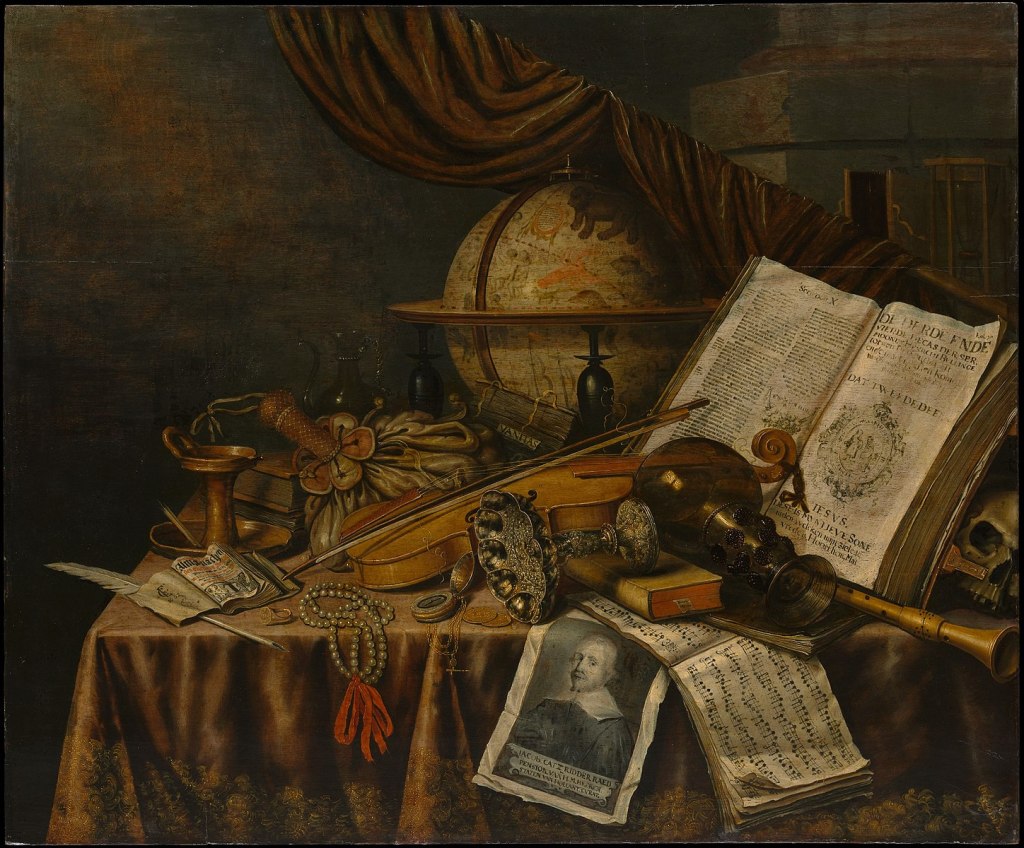
Vanitas Still Life, painting by Evert Collier(1640 –1708). Courtesy: Creative Commons

Back home in Madrid, having abandoned Adamov Plut to his posthumous fate, I was a bit surprised that neither the New York Times nor the Washington Post reported anything about the murder, not even a paragraph, or as the French so imagitively put it, an entre-filet ! I soon realised, due to this journalistic silence, that the time had come for me to give a full account of my relation to Mr Plut ; that the time had come for me to expose, publicly, by way of this revelation, his ‘mysterious murder’.

My information is of the surest sources for the simple reason that it was I who had Mr Plut murdered ! Yes, I ! And for reasons that shall be shortly disclosed. A mysterious man he might have been; however, his methods of acquiring priceless books and other inestimable valuables can hardly be called mysterious: Mr Plut was a vulgar thief, a scoundrel, an ingenious trickster whose singular flair caused much grief to many individuals, enraged those whose trust had been flouted.

It was in Istanbul, where I was invited to sojourn with an Armenian merchant, that I witnessed Mr Plut’s dupery. And if my naive friend fell for his crooked smile, I certainly didn’t swallow his high tale of returning to pay him for the two illuminated manuscripts my friend had graciously offered the blighter on condition that he be held accountable for them. His thick, coarse lips translated a smile that held contempt and disdain towards those who trusted him. So infuriated and insulted did I feel on behalf of my friend that that I reacted on a lightning urge and decided to follow him. I said nothing of this to my disbelieving companion, but left immediately in pursuit of my game — and game it was — for I, to tell the truth, had nothing more substantial to do at the moment and felt disposed for a good hunt.

I said that Mr Plut was a genius. Yes, in his own way. However, genius has its limitations. His arrogance and haughtiness knew no bounds, although he knew that his foul doings had attracted the attention of police and Interpol. Some may surmise that a certain paranoia drove him to invent individuals tracking him down like a wild boar or moose. No, no one was tracking him down except me, and that as subtlety as possible. In Uzbekistan, I actually chatted with him over a cup of coffee on two occasions disguised as a professor of Slavic philology, dressed in a quilted chapan robe and silk embroidered tubeteyka cap. There we sat in Samarkand, sipping our thick beverages in the vaulted bazaar at one of the storied cafés that dot the town. He was all smiles, obsequious and gold-toothed. I had the impression that I was dealing with a child or a mentally-dwarfed man whose sense of reality lacked all discernment or sagacity. I concluded that he had come into quite a bit of money, and never having had to work for a livelihood, traipsed about the world at his leisure, buying or stealing books, cheating people out of their invaluable collections. So self-indulgent and confident was he that he never saw through my masquerade as we conversed in broken Russian.

It was at that café where I learned about his fabulous treasure, as he called his book hoard. Only an idiot would have divulged this information to a perfect stranger, but as I said, Mr Plut’s contemptible demeanour caused him to fall into the most infantile traps. Traps that I began laying out for him, and that would lead to his downfall. For I had begun to design my own plan to relieve the rogue of his fabulous possessions, all the more so since he also let slip that his parents had passed away, and he had inherited the house. How I would make his treasure mine and ‘disinherit’ the  owner  still remained vague in my mind.

We departed as ‘friends’, as two strangers seeking an answer to the mystery of their existence. Or so I made him believe. Mr Plut appeared to me a dying species, a worldly aesthete, in spite of his extreme vulgarity and ponderous gait, whose debonair demeanour masked a loathing for his victims, a bent for the lowest duplicity, a gratification in spinning the most treacherous stratagems in order to allay his desire to prevail.

Mr Plut slipped out of Uzbekistan without my knowing it. He probably used his Russian passport, one of the four of five in his possession. I felt a twinge of misgiving. Had the fat fellow got on to me? After many enquiries, I finally discovered that he had crossed into China at the Xinjiang border, and was hastening towards the Yunnan. Why ? I hadn’t the faintest idea …

His brief sojourn in the town of Lijiang enabled me to catch up with him. My Chinese was fluent enough not only to query his whereabouts in that lovely town, but more important still, to learn of his new ‘purchases’, once I had questioned the director of the Dongba Museum of Culture. Mr Plut had planned to gone there to acquire several Naxi pictographic sacred books, which he did from a rather corrupt priest with whom he had been corresponding for some time, using a special code so as not to be unmasked by the Chinese authorities of the Centre. The director only learned of this a week after the unlawful negotiations had occurred, and three or four very valuable Dongba liturgical books had been stolen. It goes without saying that the rapacious priest was severely punished.

I immediately left Lijiang much to my displeasure for it was indeed a quiet, pleasant place, and set out in hot pursuit of the marauder. I followed his all too familiar scent through Nepal into North-western India to the Zanskar region where he put up for a while at the Phuktal Gompa[1], a strange spot to make a halt. But a perfect hideout to gain time in order for planning his next move, whilst at the same time inveigling in the most repulsive manner his generous hosts.

The monastery is nestled in the most remotest of valleys, ensconced within a cliff of tuft of fairy chimneys, crags and honey-combed spires which bulge black and red against the background of sandy, dazzling ash and cinerous tones of hemp. I had trekked there from Lamayuru in twenty days, and as I was to learn, Mr Plut had arrived there three days ahead of me, but by way of Padum. To gain the main entrance of the gompa, the pilgrim had to climb a steep path, keeping his or her right shoulder to the seventeen chortens[2] that mark the steep climb towards the vaulted entrance. I had shaved my head, grown a long beard and donned a woollen chuba tightened around my waist with a long colourful sash. It kept me warm, for in spite of it being Summer, the nights were very cold, and my cell had only a small wood-burning stove to keep me warm.

I spent three weeks at the monastery, sleeping on a ratten matting, eating skieu, tsampa and chappatti, drinking steaming salt-buttered tea off a chopsey — a low, small table — reading or gazing out of the little window that offered me a full view of the dusty, treeless courtyard below, where monks would mutter their mantras, and beyond into soundless nights whose stars were generally veiled.

Without Mr Plut’s slightest suspicions, I assisted at all the ceremonies, mornings and evenings, even vigils, while in the afternoon, I would venture out into the monastic complex, twisting and turning in the warren of lanes, under the low archways and high ladders, at times pursuing my promenades upon the rather precipitous mountain paths. As to Mr Plut, he hardly left his cell, and when we did cross paths, he most probably took me for a Buddhist pilgrim. Once or twice I sat near him in the prayer hall in the meditation grotto, but he never attempted to communicate with me, albeit he did not seem very deep in prayer or contemplation. He was probably scheming his next miserable move. His face had become terribly pale and flabby. His darting, black eyes seemed to have sunk deeper into their sockets. Unable to sit cross-legged on the low benches at the back of the prayer hall, he sat ‘western style’, staring off into the clusters of chanting monks, tilting his huge, bobbing head every so often to the banging drums, blowing ox-horns and tinkling triangles. Observing him from afar, I sought to sound his soul, to wring out his innermost thoughts, to extract from his evident lassitude and apathy his flight from both his victims and himself. But Mr Plut was a sphinx. Would he rise out of his own ashes when his hour came ?

I left the good monks three days after his departure, a hasty one indeed. And they were furious! The scoundrel had stolen several pustuks[3] and thangkas, and failed to pay for the prayer masks that he ‘purchased’. They implored me to find the culprit, inform the police and recover their stolen property. It was perhaps the beseeching words of the infuriated monks, after having received such incomparable hospitality from them, that my plans to have the thief killed began to germinate ! The theft was not only gratuitous, it exposed the very ugliness of the man’s heart, blackened by greed, cynicism and remorselessness. It would only be a matter of time before he tasted a soupçon of his own medicine.

Meanwhile the cat would play with the mouse, a rather fat mouse at that ! I boarded the cargo ship that took the fugitive from Karachi to Oakland via Japan. On the long, monotonous voyage across the Pacific, my ominous shadow crossed his at the most unsuspecting moments. Attired as a Pashtun merchant, bearded, long-haired and turbaned, Mr Plut sensed an onerous presence whenever he laboriously carried his huge body across the decks. How many times had my eyes penetrated his anguish, his torment, his pangs, not of compunction, but of incomprehension. He scented a sleepless menace pressing him. Fear inflamed his dark, beady, mirthless eyes like the burning incision of the trenchant knife.

Oakland … Sacramento … Reno … Tombstone … Boulder … Santa Fe … Saint Louis … Chicago … New Orleans … Birmingham … Miami … Atlanta and finally New York. Yes, New York, where the curtains would finally fall on this tragic fat figure. Where upon the stage of 8 million walk-ons, and against the backdrop of the grottiest of hotels, the last act of Mr Plut’s abominable performance would be played out.

His infatuation with Louis Wolfson amused me, as well as his grandiose project to write twelve stories in twelve different languages signed by twelve different authors. I found all this quite pompous and pathetic. A real exercise in self-indulgence to say the least. All this information I culled when I ‘accidentally’ met him in the ill-lit corridor of that hotel on Water street in downtown Manhattan. In New York, I played the role of a French researcher in mediaeval literature, a field that he completely ignored, in spite of possessing several manuscripts of Anglo-Norman stamp, apparently purchased (so he said ?) from a London book-seller. I pretended to be interested, taking the opportunity to study him closely. Besides, he was such an inveterate liar how could one believe anything he said ? He lied to curry favour and win confidence, only to swindle and steal from the naive and simple-hearted. Better to observe his eyes, his gestures, his bouncing from one tongue to another. These were all genuine signs of his distorted psychological make-up. To play my part well, I sported an immaculate white suit, orange tie, a pair of silver-rimmed glasses and spanking new alligator shoes. I had shaved my beard and moustache and had my hair cut very short, leaving a few gossamer wisps which touched the tips of my ears and fell bouncily on my forehead.

Every day I followed his Humpty Dumpty gait as he waddled to and from the public library, in and out of Central Park. And it was there, in Central Park, that I noted two blond-haired rough fellows slouching on a bench, eating the remains of fried chips or chicken sandwiches, cursing and making gross signs at the passers-by, drinking beer and spitting. They were seated at the same bench daily — the bench that Mr Plut walked by every day. They seemed to know him because they would hoot at him, call him names and ask for money. Fatso passed by without even a glance at them.

One Saturday, I decided to approach the two ruffians. They sized me up with obvious contempt, and made it perfectly clear that I was intruding on their ‘territory’. I sat down none the less, and exposed my scheme to be rid of Mr Plut once and for all, explaining how the culprit had cheated and robbed so many people. The two burly blokes, former marines in the Green Beret (or so they vaunted!) listened attentively as I unfolded my plan: Three thousand dollars for each if they would simply walk up to his room in the early morning hours, the night porter always being asleep, knock at his door and kill him, however, without any blood shed or theft of his belongings. It must be a murder without reason, without any sign of bestial violence. One of them suggested strangulation. Yes, excellent idea. It would thus be a ‘clean’ murder.

And so it was, very professional at that I must say. They were paid off, as agreed. And I left New York two days later, as planned, a very satisfied man indeed …

This all happened five years ago. Now … well, here is where my account ends and my confession begins. For you see, Mr Plut was never really murdered ! Those two ‘ruffians’ were in fact F.B.I. agents who had been trailing me since disembarking in California. To tell the truth, Interpol and local police had been following me since the Istanbul affair. How and why they began doing so I cannot say. During my trial neither the judge nor the prosecuting attorney afforded any information as how the F.B.I. learnt of my scheme, nor why they had decided, at one point in time, to cooperate with Plut. What was I convicted of ? What was my indictment ? As to my appointed lawyer, a young short-sighted clerk more than a seasoned lawyer, who could be easily cajoled by the ‘evidence’ against me, pliantly manipulated by the prosecutor, after he had taken the floor and had made an absolute fool of himself. He let out a sigh of relief when the judge pronounced a sentence of fifteen years instead of twenty-five! The wigged judge, a grotesque figure studded with huge warts, yawned throughout my lawyer’s deplorable speech for the defense, as well as during my feeble plea. There was no jury either to lament or to applaud his verdict. It was a trial held at ‘huis clos’[4], military style. I buried my face in my hands. As expected, my lawyer made no effort to appeal.

Had Plut sensed my innermost aversion towards him ? Or seen through my many disguises ? He was a clever man, and probably had hired detectives to learn why I was following him. The hotel room murder was staged. Plut lay recumbent on the floor, waiting for me to steal his papers so that I would be indicted for premeditated murder (although there was no murder!), of paying off hoodlums to commit this murder (although they were F.B.I. agents!) and the theft, which indeed it was (but fifteen years for that?) of his household papers, keys, and other official documents concerning his inheritance … and that vile short story of his.

So here I sit in my rancid smelling cell in Madrid, having been arrested at the aeroport on my arrival some five years ago, writing out this confession. I do not to repent mind you, I have no intention of atoning for my doings, nor avowing my sins. These words wrenched from my pen seek to vent the animosity and hatred I harbour towards that fat impostor who had the cheek to write me a letter from the Seychelles revealing how he had got on to me since Uzbekistan, and how our little cat and mouse game had amused him greatly : “You thought me a fool, deary, but I saw through your pusillanimous scheme in Samarkand ; that was some outfit, but you forgot the galoshes ! Not to mention your pilgrim weeds at Phuktal which truly charmed me, and your blazing orange tie in New York. Come, come, what French professor would ever sport an orange tie with a badly tailored, cheap white suit ?” The vicious irony underlining these sentences, along with a soupçon of cynicism caused me to gag. The blighter added in a post-script that he had sold all his books for a fabulous sum of money, and had retired from the world’s wearisome fair. In the envelope I found a photo of him sipping coconut juice, lying on the golden sands of a crescent-shaped beach under groves of swaying palm trees and an indigo blue sky. I laughed bitterly, and yet, in spite of my nettled nerves, pinned up the blasted photo in my lonely cell, a sort of souvenir of our enshrouded relationship …

One day at the prison library, browsing idly through a dull, detective story, I thought of Plut’s or Hilarius Eremita’s story The Enchanted Garden, which I had taken and read to amuse myself on the aeroplane to Buenos Aires. Had anyone ever published such ridiculous trash? To my horror, the answer came three days later whilst I rummaged through a new batch of literary magazines, some of which contained short stories in English, French and German. And there it was — The Enchanted Garden, by Hilarius Eremita, Plut’s pen name. I couldn’t believe my eyes — someone had published that rubbish ! Plut indeed had the last laugh, adding insult to injury, salt to my festering wounds.

I savagely tore out the pages of his story from the magazine, went to the toilet, ripped them into tiny pieces and flushed the filth down the bowl. So much for hiss ‘first of the twelve’ ! I shan’t be punished for it, no inmate in this prison reads any language besides Spanish, and that with a dictionary … I’m sure it was Plut who sent me that magazine to drive the knife deeper into my wounded pride. The miserable rat !

So here I sit at my iron table, staring at Plut’s photo as he sips his coconut drink under the blue skies and swaying palm trees whilst I sip my wretched thin noodle soup with strips of hard, nervy beef under a cracked, peeling, dirty grey prison ceiling …

.

[1]          Monastery in Tibet

[2]          The Tibetan word for stûpa, a Buddist shrine which initially housed the relics of the Buddha.

[3]          Books used for Buddhist ceremonies written in Tibetan.

[4]          Behind closed door without any public participation or observers. It is a French legal term.

Paul Mirabile is a retired professor of philology now living in France. He has published mostly academic works centred on philology, history, pedagogy and religion. He has also published stories of his travels throughout Asia, where he spent thirty years.

.

PLEASE NOTE: ARTICLES CAN ONLY BE REPRODUCED IN OTHER SITES WITH DUE ACKNOWLEDGEMENT TO BORDERLESS JOURNAL

Click here to access the Borderless anthology, Monalisa No Longer Smiles

Click here to access Monalisa No Longer Smiles on Kindle Amazon International

Categories
Poetry

Bringing along their homeland

Poetry by Abdul Jamil Urfi

Delhi in the 1960’s:
Nostalgia about Lahore was high.
Partition displaced refugees spoke of 
misery, mayhem, murder. Deda Ji regretted 
that, at the time of leaving, a pillowcase of house jewels
was misplaced. Bhabhi Ji had similar regrets--
leaving priceless possessions behind in Lahore
and friends.
 
But what struck us-- newcomers to the grand city
were the names of shops.
So many of them were
named after places in Western Punjab,
or those now in Pakistan. For instance, 
A popular eatery called ‘Lahorian di Hatti’
‘Quetta DAV School’.
Small eateries served dishes called ‘Pindi ke Chholey Bhatoorey’. 
A shop with the name ‘New Lyallpur Cloth House’. 
There were ‘Lahorian Jewellers’, ‘Sindh Wood & Ply’, 
Karachi Sweet Shop, Karachi Stationery Mart, Quetta Store, 
Peshawar Sweet Bhandar, Lahore Watch Co., Sialkot Jewellers 
and also ‘Abbott Drycleaner’s’, whose shop, it turned out, 
had not been named after some monastery’s abbot 
but after ‘Abbottabad’ --a town in Pakistan 
(made famous by the capture of Osama Bin Laden by US Navy Seals)
Thus, many places in erstwhile undivided India, 
but no more in India now.
Lahore, Quetta, Rawalpindi, Lyallpur, Sindh, 
Abbottabad, Karachi, Peshawar, Sialkot 
made their presence felt in a walk in any area of Delhi. 
The Partition displaced people had suffered immense tragedies and losses
And had also brought a little bit of their homeland with them.

Abdul Jamil Urfi published ‘Memoirs of the bygone century, Beeswin Sadi- Growing up in Delhi during the 1960’s and 70’s’, which was extracted and reviewed in The Friday Times (Lahore)FirstpostIndia of the PastCaleidescopeNew Asian WritingScroll.in and The Quint. He works in Delhi as a university teacher. His poems have appeared in ‘Skylark’,  NAW and Vayavya.

.

PLEASE NOTE: ARTICLES CAN ONLY BE REPRODUCED IN OTHER SITES WITH DUE ACKNOWLEDGEMENT TO BORDERLESS JOURNAL

Click here to access the Borderless anthology, Monalisa No Longer Smiles

Click here to access Monalisa No Longer Smiles on Kindle Amazon International

Categories
Interview

At Home Across Continents

In Conversation with Neeman Sobhan

Neeman Sobhan is an expat who shuttles between Italy and Bangladesh and writes. She has a knack of making herself at home in all cultures and all spheres. Having grown up partly in Pakistan (prior to the Liberation War in 1971), Bangladesh and completed her studies in United States, she has good words about time spent in all places. Her background has been and continues to be one of privilege as are that of many Anglophone writers across Asia. Her stories have been part of collections brought out to celebrate the fiftieth anniversary of Bangladesh.

One of her most memorable stories from her short story collection Piazza Bangladesh, located around the 1971 war takes on an unusual angle, where the personal seems to sweep the reader away from the historic amplitude of the event into the heart-rending cries of women at having lost their loved ones in a way that it transcends all borders of politics, anger and hate. The emotional trajectory finds home in a real-world event in the current war. The fate of innocent youngsters dying while not being entrenched in the hatred and violence wrings hearts as reports of such events do even now. I find parallels in the situation with the young Russian soldier whose mother did not know he was in Ukraine and who was killed while WhatsApping his mother his own distress at being there. And yet her stories stay within certain echelons which, as she tells us in the interview, are the spheres that move her muse.

When and how did you pick up a pen to write?

I have always written. The written word has always held a powerful fascination for me, which has not dimmed at all. From my childhood through my teens, I was a voracious and precociously advanced reader, as well as a passionate writer of poetry, and a keeper of a daily journal. My poetry was regularly published in The Pakistan Observer’s Junior page.  I don’t dare look at them now to even assess whether they were embarrassingly bad or surprisingly good enough to be salvaged and resurrected now! I preserved them as the earliest evidence of my continuing evolution as a writer and a poet today.

During those early days, I also won the first prize in a national essay writing competition sponsored by the newspaper. The Pear’s Encyclopedia I won still holds a precious place on my bookshelf.

English was my favourite subject in school and college, and I knew I would study English literature at university. I started out at Dhaka University in 1972 but by some perverse logic, I actually enrolled in the newly opened International Relations department and not the English Department (in which I had applied and been accepted). The reason, I now recall is because the English department was over-flowing with students, while the International Relations department was something exclusive and admitted a handful of students. However, after a few months I realised I had made a disastrous choice.

Meantime, my marriage was arranged, and I was whisked away to Marlyland, U.S. My husband, Iqbal, an ex-CSP officer (the Civil Service of Pakistan) was a Ph.d student of Economics at the University of Maryland, and in no time I enrolled as an undergraduate student and blissfully went on to study English and Comparative Literature, graduating eventually with a Masters in English Literature.

That I was going to be a writer was for me, even as a teenager, like a pre-ordained and much desired fate. I never wanted to pursue any other vocation.

What gets your muse going? 

Anything, and everything.  A view, a scent, an overheard conversation, a line of poetry, a memory……If I’m angry and seething, I write; if I’m sad or grieving, I write; if I’m joyous or ecstatic, I write; if I feel aa surge of spiritual bliss, I write; if I’m confused, I write. What form that writing takes is unpredictable. It could become a poem, or a paragraph in my notebook, which later could be part of my fiction, or a column. I wrote a regular column for the Daily Star of Bangladesh.

Writing is my food and nourishment, my therapy, my best friend, my passion. The writer-Me is the twin that lives inside me. It’s my muse and guide that defines my essential self. I am a contented wife of almost 50 years of marriage, a mother of two sons, and a grandmother of four grandsons (aged 5-4-3 & 2). These gratifying roles nourish my spirit, give me joy and inspiration, teach me lessons that help me grow as a human being. But my writer-self exists in its own orbit, proceeding on its solitary journey of self-actualisation, following its inner muse.

You have written of Italy, US and Bangladesh. How many countries have you lived in? 

Yes, I have lived in Italy, US and Bangladesh, which makes 3 countries. But, in fact, I have lived in 4 countries.

Remember that I was born not just in the undivided Pakistan of pre-71, when present day Bangladesh was East Pakistan, but I was actually born in West Pakistan, present day Pakistan, in the cantonment town of Bannu, near the borders of the Khyber Pass and Afghanistan, (formerly, the NWFP or NorthWest Frontier Province, presently KPK or Khyber Pakhtun-Khwa). Although my parents were Bengalis from Dhaka, my father’s government job (not in the army but under the Defence department, ‘Military Lands and Cantonments Services’) meant being posted in both wings of the then Pakistan. So, during my childhood and girlhood, I grew up in Karachi (Sindh), Multan and Kharian (Punjab) and Quetta (Balochistan). As a family of five siblings and our adventurous mother, we always accompanied our father on his official tours, by car or train, over the length and breadth of that country.

In the English medium school I was enrolled in, I had to choose Urdu as the vernacular subject, since Bengali was not taught in West Pakistani schools, though the opposite was not true! Anyway, I have no regrets. I am proficient in both Urdu and my mother tongue Bangla/Bengali, which I learnt at home from my mother, who in Quetta actually set up a small Bengali learning school for Bengali Army officers’ children. I am proud of the fact that I carried my mother’s tradition when I taught Bengali to Italians at the University of Rome, many decades later!   

What is it like being an immigrant writer? Which part of the world makes you feel most at home? Why? 

To start with, and to be honest, I do not really consider myself a true immigrant — someone who bravely and definitively leaves his familiar world and migrates  to another land because he has no other options nor the chance or means to return; rather, I feel lucky to be an ex-patriate — someone who chooses to make a foreign country her home, with the luxury of being able to revisit her original land, and, perhaps, move back one day. In fact, I have dual nationality, and am both an Italian citizen, and continue to hold a Bangladeshi passport. I might be considered to be an Italian-Bangladeshi writer. I consider myself a writer without borders.

I feel equally at home in Italy and in Bangladesh. Before the pandemic, my husband and I would make an annual trip to Dhaka for two months from December to February end, since my classes started in early March. Presently, I am back in Dhaka, after two almost apocalyptic years.

Despite the continuing hurdles of mastering the Italian language and trying to improve it constantly, we love our Roman home as much as our Dhaka home. Still, living away from ones’ original land, whether as an expatriate or an immigrant, is never easy, beset by nostalgia for what was left behind and the struggle to create a new identity of cultural fusion within the dominant and pervasive culture of a foreign land. But in this global age, it’s quite usual to live in a mix of cultures and live in a borderless world where ones national or cultural identity is not so clear cut. (I have a daughter-in-law who is Chinese, and another who is half-English, half-Thai! And my grandchildren are the heirs to a cornucopia of cultures and are true global citizens). Nevertheless, in the four and a half decades of my living away from Bangladesh, the eternal quest for that illusory place called home has shaped the sensibility that nourishes my creativity and compels me to write. Often, it’s the pervasive and underlying theme in my columns, stories and poetry. There is a poem of mine, “False Homecoming” which underlines the poignant sense of displacement a person can feel, not in a foreign land but in ones’ own motherland, or the version from the past. After all, many people who live away, exist in a time-warp.So, no matter which part of the world you feel at home in, it’s temporary. For me, as a writer between countries and homes, it is an external and internal odyssey.

It is the endless journey of a writer in constant evolution.

Tell us a bit about your journey. 

I realised early on that our real world being increasingly borderless, it’s not a tract of land that makes me feel at home. It’s my writing. The Mexican poet Octavio Paz once said, “Words became my dwelling place.” This has always resonated deeply with me, because for me, too, language and literature have been my sanctuary and true homeland. I have lived in that comfort zone at the heart of my creativity, imagination and writing: my dwelling place of words.

Of course, there are as many shapes to the sheltering place of language as there are literary forms. My nest of words was also feathered by my particular exigencies, followed a particular route and journey.

Though I speak various languages, my mother tongue is Poetry. For as far back as I can remember I have always written poetry, like writing in a journal, considering it to be the shorthand of my heart, a secret language. I am a reticent person, and there are writers like me who are content to use writing, whether poetry or prose, as a tool for self-exploration, self-knowledge, self-definition, with no thought of being published. At least, not my personal poems.

Yet with poetic irony, despite being a private person, my career as a writer started when I was jettisoned into that most public form of literary expression: the world of weekly column writing. At the urging of a friend, the editor of the Bangladeshi national daily The Daily Star, I turned into a public chronicler of the minutiae of my world, my life and times. Now I discovered my professional language, my father tongue if you will, the language of prose and my journey as a writer started.

When one reads your writing, it is steeped in a number of cultures. Which culture is most comfortable for you while writing and which one for living? 

There’s no place as beautiful and pleasurable to live in as Italy. Except for two or three months of winter, the climate during the rest of the year is perfect; the natural beauty and historical and artistic richness are unsurpassable, the food is delectable whether it’s based on nature’s bounty or the simple elegance of its distinctive cuisine. But for a writer who is also a housewife, the most comfortable country to write in, for me, is Bangladesh. With the culture of household helps abounding, I often get more writing done in two months of living in my Dhaka apartment than a whole year in Rome. My domestic staff are like family to us, and valued parts of our life. They sustain us and we sustain them, helping them educate their children to stand on their own feet. I miss this support network in Italy.

What are your favourite themes and your favourite genre? Expand on that a bit. 

My favourite genre to both read and write is the short story, poetry, humorous essays, travel writing and insightful book reviews. I read fewer novels now, and I have been writing and struggling to finish my first novel for years. I suspect, this is because I am temperamentally more attuned to the short sprint dash of producing a discrete work of imagination than the long-distance run of a lengthy work. But I am determined to conclude this opus before it becomes an unfinished relic.

I never approach fiction-writing through themes. But in non-fiction prose writings, like essays and articles for columns, I love to write about certain topics, or about books, places, and people, from all walks of life. I also love to write about nature, food, history and traditions, about how to improve our world, our lives and our relationships; and the happy, hopeful moments of life. As far as reading goes, I love reading about travel, love and friendship, human compassion, and anything with a happy ending.

You seem to have centred much of your work on people who are affluent. What about the rest — especially the huge population who serve the affluent? Have you written on them? Tell us why or why not.

That is an incomplete picture, and a wrong perception of my writing. To start with, as a writer I am more interested in the richness of the inner lives of human beings, and less so in the outward, economic and class differences. To me, no one is merely affluent or poor, but human and worthy of a compassionate gaze. The diversity and motivations of characters, whichever strata of society they belong to moves my imagination. I do not write to either preach or disseminate ideas of social justice or to right wrongs, but to explore and present the world we live in, in all its complexities and subtleties, the joys and ugliness, the small dreams and grand passions, the disappointments and triumphs of individuals and generations. I like to delve into the psychological or political motivations of human behaviour, especially within the domestic sphere, the family, an ethnic community.

I have many stories about those who serve or are not from privileged classes. My story ‘A Sprig of Jasmine’ is about a sweeper woman at a school in Bangladesh. Then there is the story ‘The Farewell Party’ about a temporary domestic help in a Bangladeshi home in Rome, suspected of stealing. I also have a sequel to that which explores the life of the same Bengali help now working as a nurse-companion to an old Italian woman.  These and many more are awaiting to be published soon in another collection.

But I never consciously choose a subject or set out specifically to tell the story of an under-privileged, oppressed, or marginalised person. It can happen that the story turns out to be about them, but for me a story reveals itself randomly, through an image or scent or a view or an overheard conversation, once I witnessed a slap being delivered, etc, and I follow its trail till it leads me to an interesting bend where it starts to shape into a story. I never know how a story will start or end. It grows in organic but unpredictable way. That is the challenge, and adventure of writing a story.

For example, one of my most newest stories, titled ‘The Untold Story’, (published in a recent anthology for Bangladesh’s 50th anniversary, When the Mango Tree Blossomed, edited by Niaz Zaman), is two parallel tales of two Birangonas (‘war heroines’ or raped victims during the Bangladesh liberation war ), but it came to me more as a way to explore the craft of storytelling, which is something that always engages me: how a story is narrated, as much as what the narrative is about.

By and large, I like to write stories about the world I know, and the people in my own milieu because no one writes about the expat society of Europe. I like to write about my world in all its details and extrapolate from its larger truths about humanity in general.

Jane Austen wrote about the landed gentry and her corner of England, but the stories ultimately reach our hearts not merely as stories of the affluent but of human foibles. John Updike wrote about his American suburban world. Annie Proulx writes about Wyoming. Alice Munro about the middle-class world of her neck of the Canadian world. Henry James focused on American aristocrats. But what is human and vulnerable, or worthy or unworthy, transcends class barriers. People are interesting, subtle, unpredictable, noble or wicked, no matter whether they are affluent or of straitened means. Tagore’s tales of women trapped in their roles in rich households are just as moving as those among the poor and underprivileged.

There are plenty of writers with a sociologist’s background who can chronicle the lives of the downtrodden whom they meet. I applaud them. My younger son works with the Rohingyas; my brother-in-law, a doctor worked for years with children of addicts. They have their stories to tell. I have mine. I’m interested in humanity, wherever I find them.

In the little I have read of your stories, Bangladesh is depicted in a darker light in your narratives — that it is backward in values, in lifestyles etc. Why? 

I don’t know which particular story or stories you have in mind where you felt that this impression was consciously created. Unless the story was indeed about a backward area, like the dingy alleys and neighbourhoods of old Dhaka in the 60’s and 70’s. Or, the murky values resulting from the explosion of wealth and the rise of corruption, undermining civic and ethical values in the rampantly urbanised zones.

In which case, it’s an unavoidable fact and not a depiction.

However, since I write more in a nostalgic light about Dhaka past rather than the reality of the present, I actually have not really written about the darker sides of the country; and which country or society does not have its seamy side. A good question would have been why I have not depicted Bangladesh in a darker light as contemporary writers of Bengali fiction do, dealing courageously with sinister aspects of politics and corrupt moral values at every level of society.

There is much in the Bangladeshi culture that we are proud of, beautiful traditions, and so much beauty in our natural world. I like to weave these into my narrative. So, I’m surprised that you found my stories to be dark.

 What are your future plans?

One of my most urgent projects is to get my novel-in-progress published.

I’m also planning to come out with another collection of stories, and a collection of my columns on travel, and an Italian and Bengali translation of my fiction.

So far, my three published books, and all the stories that have appeared in various anthologies are just a few milestones but do not define my journey as a writer. Daily I grapple with the insecurities of a writer, and daily I learn new things that help me grow towards being the writer I aspire to be. It’s still a long way to a full flowering, but each passing day I dabble in words, I feel the creative petals unfolding, slowly but surely.

Thank you for your time.

(This is an online interview conducted by Mitali Chakravarty.)

PLEASE NOTE: ARTICLES CAN ONLY BE REPRODUCED IN OTHER SITES WITH DUE ACKNOWLEDGEMENT TO BORDERLESS JOURNAL

Categories
Slices from Life

Canada: A Live Canvas

By Sunil Sharma

Can a patch of foreign sky and Earth speak to you in the manner it earlier did to the lost tribes guided by the bright stars, suns and moons?

The way it spoke to the early Greeks or the Vedic-era folks — among other pre-industrial cultures — that created marvelous odes, arts and regions that still appeal to a new-millennial audience hooked to gadgets as their reality?

A Homer that continues to inspire!

Possible?

The trance where natural elements convey profound truths; enabling the viewer to recover a lost innocence and old mode of perception.

Could such a luminous past be re-lived?

Could it recur?

Yes.

Here is the how of this communion.

.

In Canada, escaping colours is impossible.

In Mumbai, finding colours, impossible.

The contrast shocks. Toronto is dressed up in multi-splendoured gown.

 You are participating in a romantic landscape.  

.

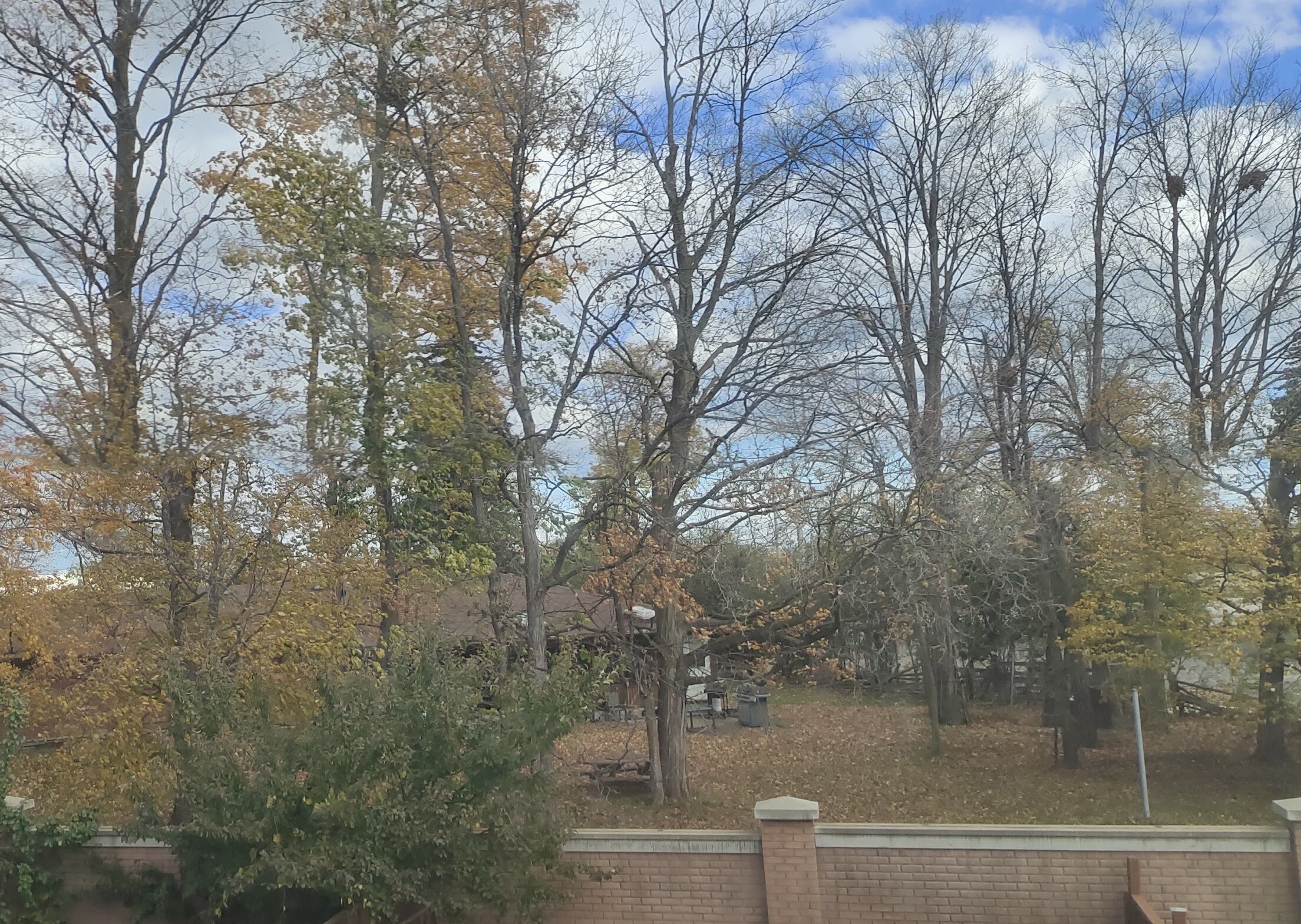
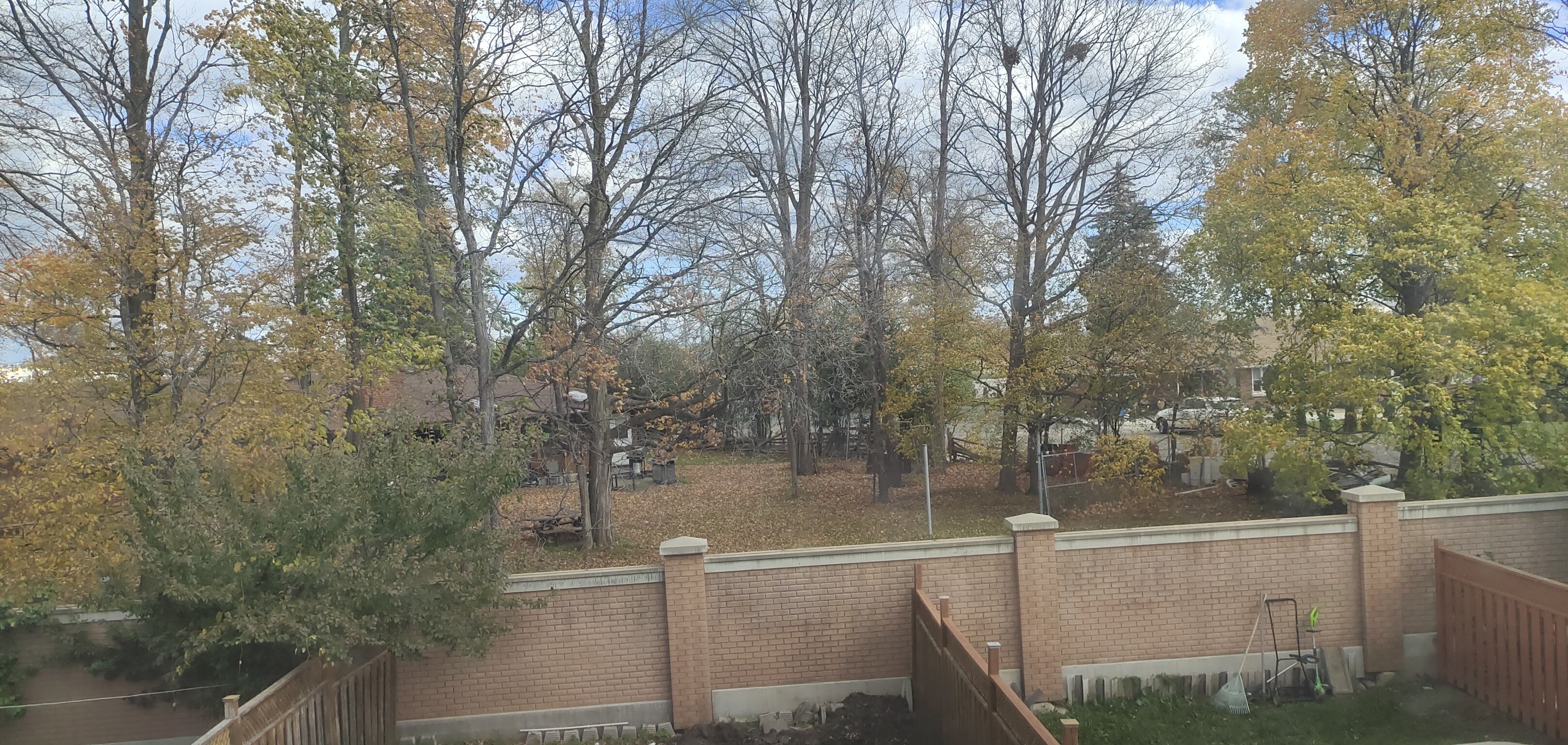
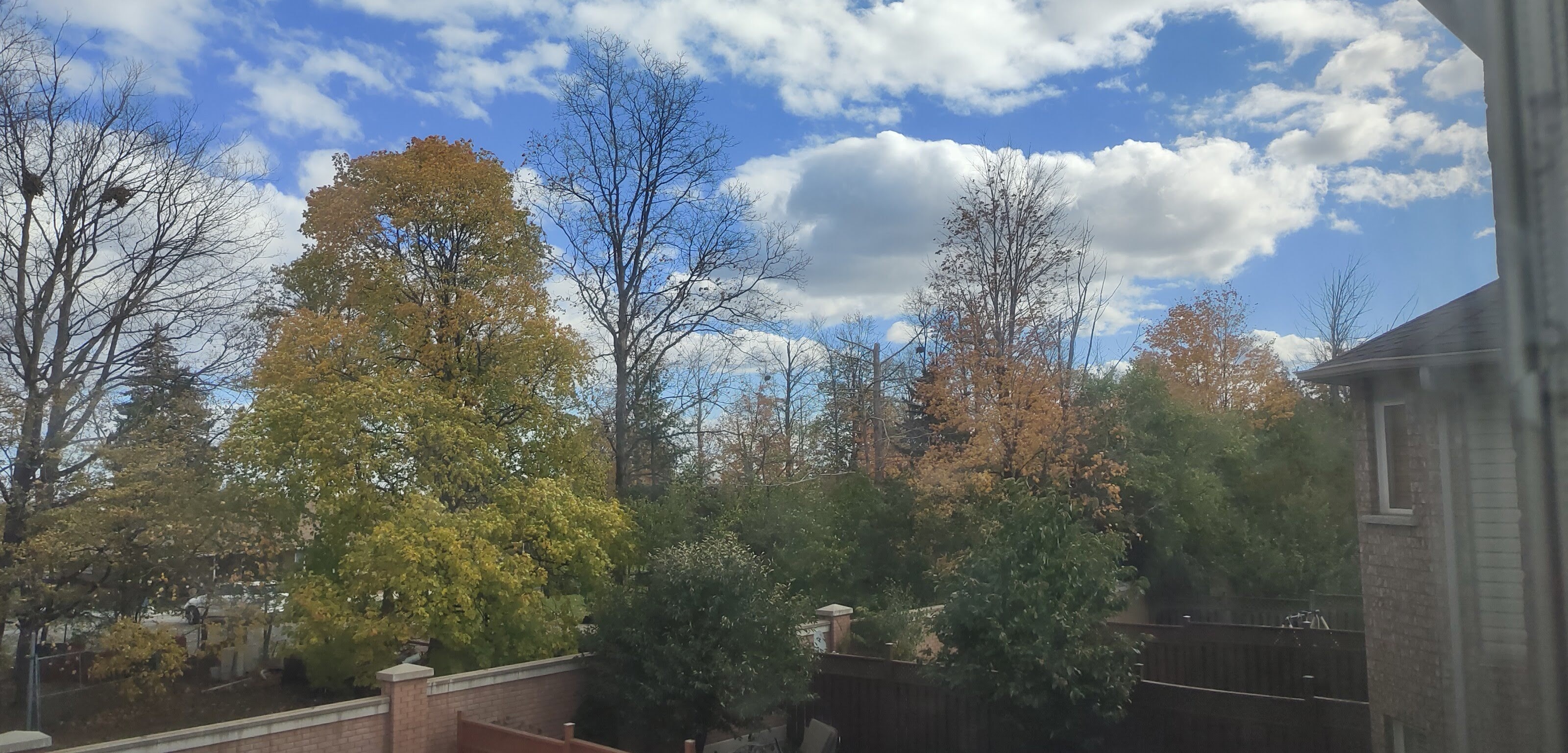
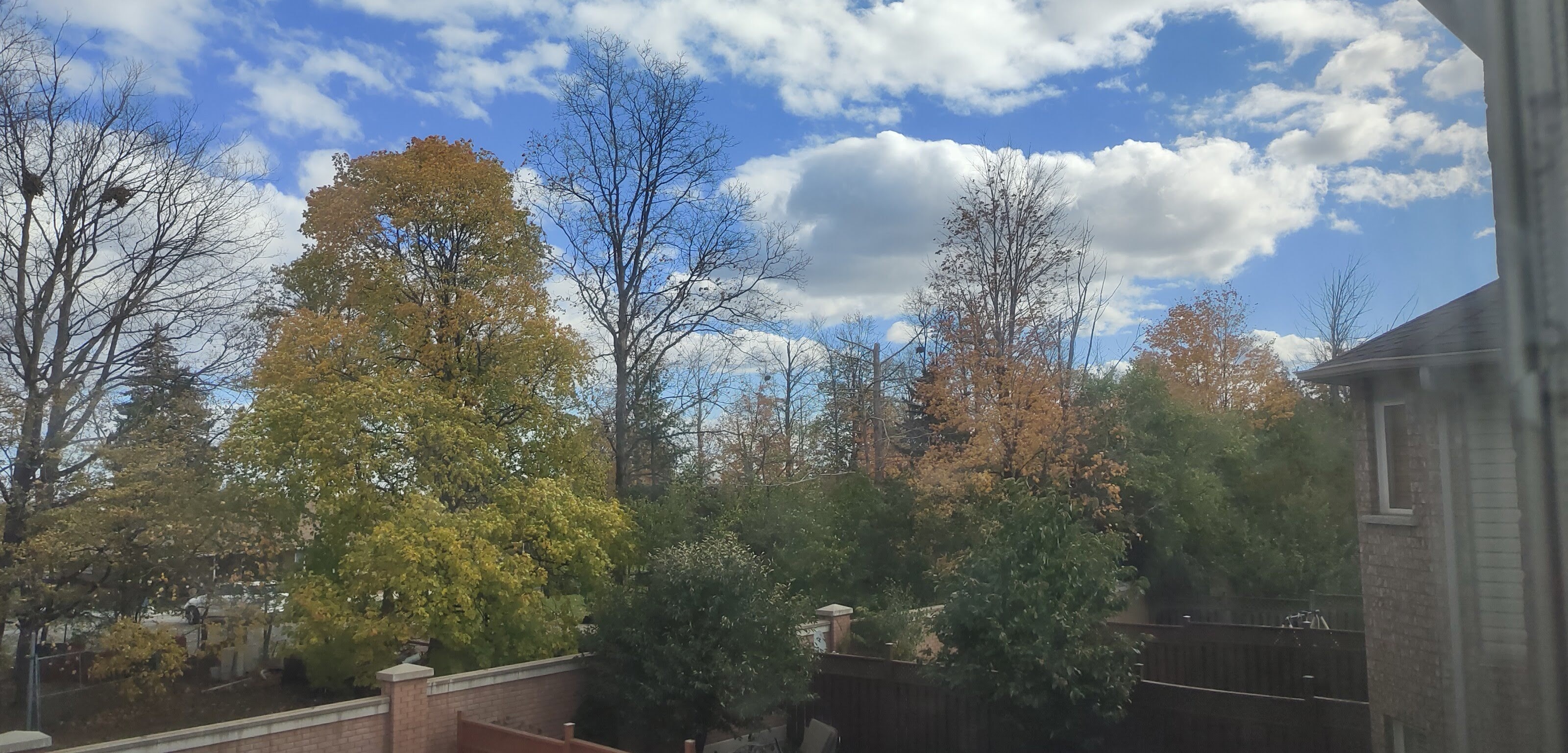
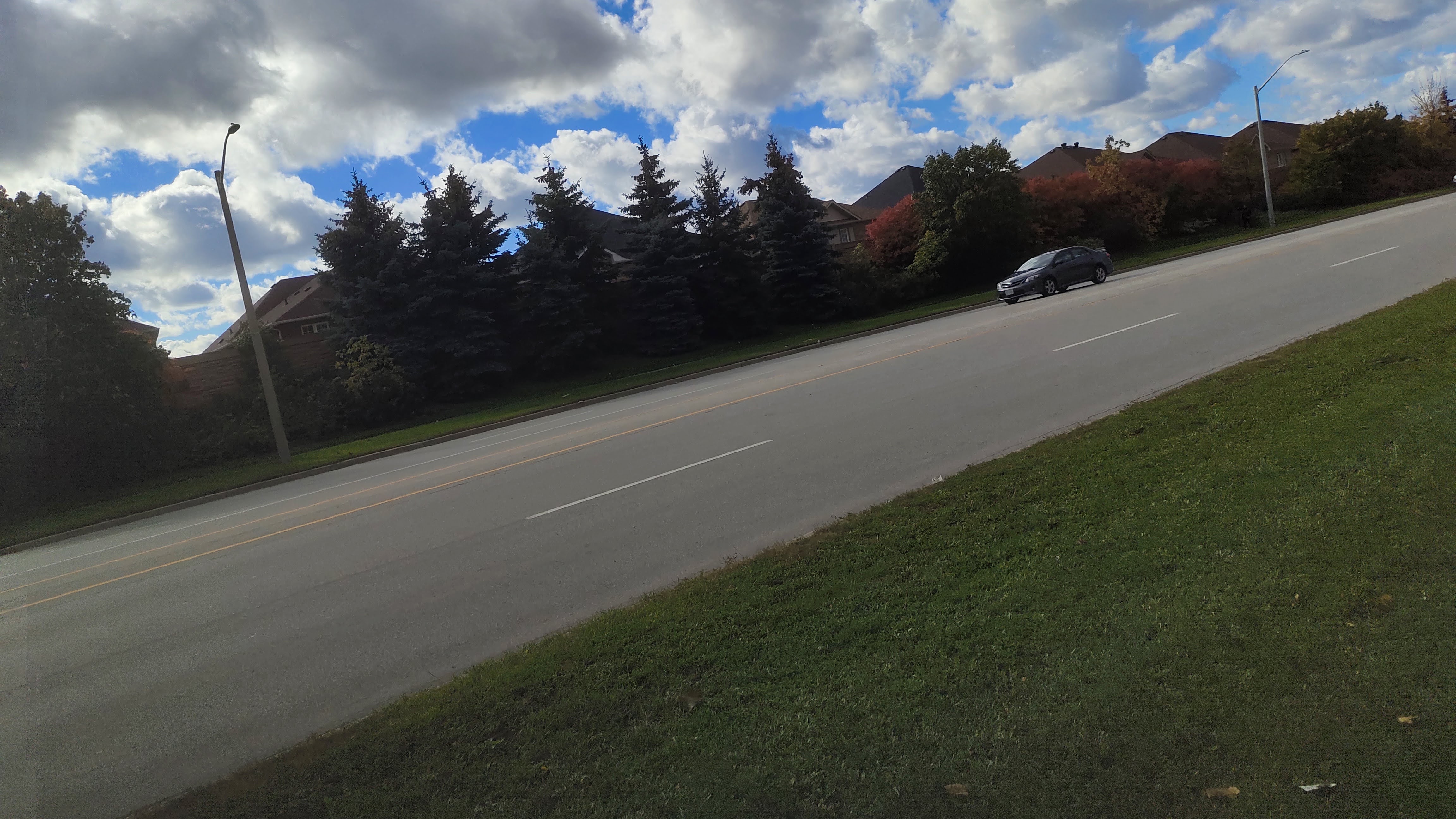
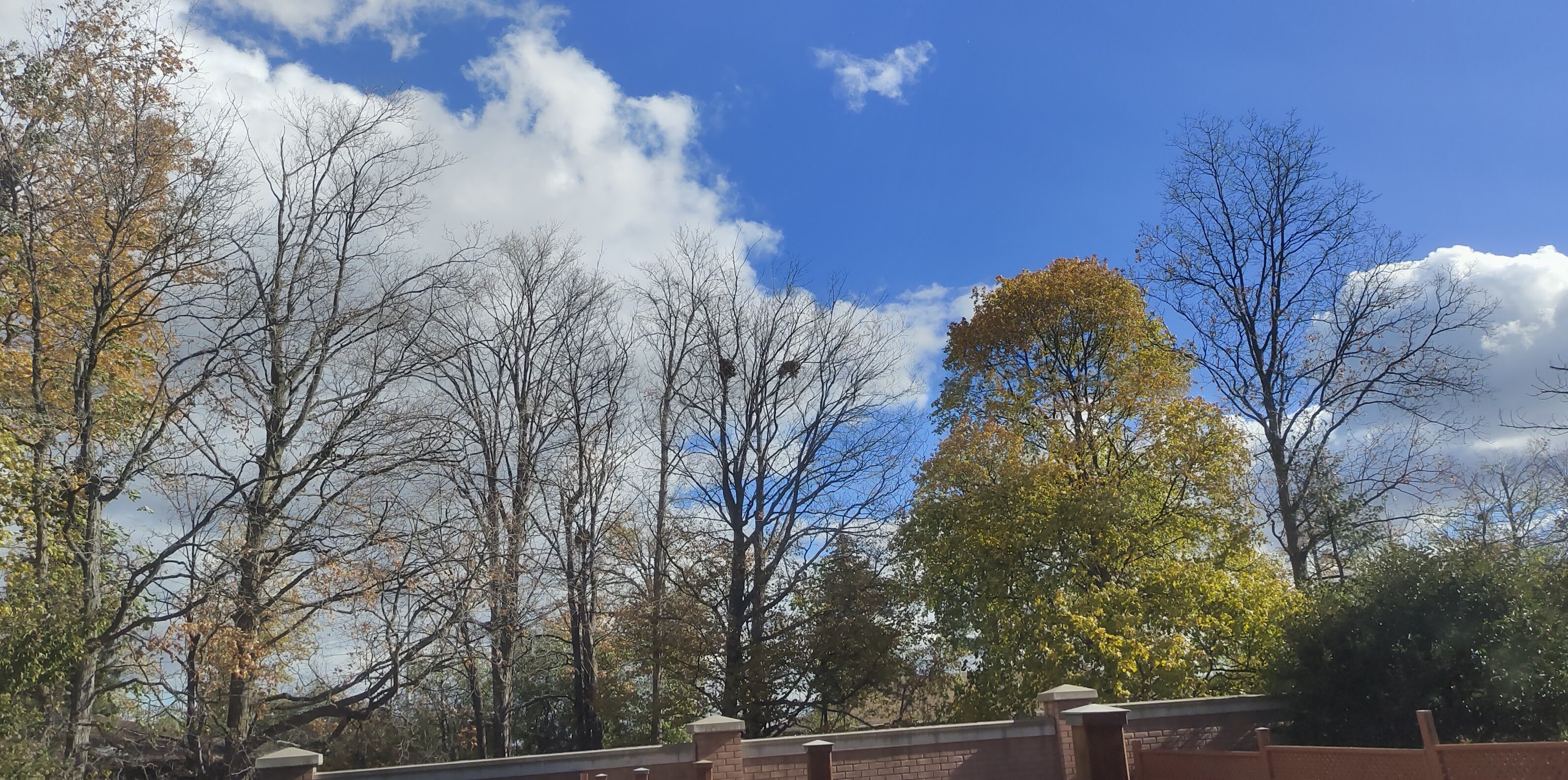
October morning. We walk down along a trail in the heart of a busy neighbourhood.

The sky is dotted with daubs of grey and white against the brilliant blue— reminiscent of a Monet.

In countries like Canada, to a large extent, you enjoy the sensory wealth and free interaction with the dales and meadows and lakes…and trails that make you discover surprises after a sudden bend, a leafless tree; ducks in a pond; the luxuriant trees and shrubs, and, a protean sky; journeys that make you negotiate  not only the turns and twists of solitary pathways, the physics of the urban planning but also, the metaphysics of space by diving into the inner self; the internal landscape, on clear, crisp mornings or even dim nights, getting luminous, transmitting silent codes to an awakened self — glued into an ancient map.

Nature is your new interlocutor, releasing routes, inner and outer, with a switch of a button.

It is Maud Lewis out there in full glory.

Nature in Canada makes a compact with the sensitive seeker; it changes the viewer into an artist, a co-creator of the aesthetics of colours, spaces and patterns!

The dialectics of nature and praxis operates — a walker stops and takes selfies against a tree in bloom or against a pond full of ducks, as mementos.

Such moments of serenity are rarely found in Mumbai or Karachi or any other stifling mass city.

Oddly I hear Wordsworth humming in a glen off the Highway 50.

It is a collage curated by an invisible force. The air is pure. The solitude borders on the spiritual.

The background is fascinating: Electric scarlets. Grays. Oranges. Reds. Yellows. The trail takes you deep inside self. The internal calmness is matched by an external silence.

Uplifting!

The magnificence induces a reverie.

The elements merge seamlessly into a heightened consciousness, an extraordinarily lived experience.

A Joycean epiphany! All staged within a moment.

A hungry mind absorbs the altering spectrum. The sky transmits a message that folks like Paul Coelho decode for a mind craving for another dimension of a drab one-dimensional existence.

It is a strikingly different reality.

Nature — enabling philosophy.

You are aware of its presence.

In developing nations, it is the absence that is hardly missed. You are stuck in a development-dystopia there. In such locations, citizens have to fight against the degradation of nature through liberal media, courts and advocacy groups, on the broad themes of having the right to breath easy, clean air and inhabit liveable cities. Yet walls of indifference keep on rising and cases of mangroves being destroyed, hills plundered, trees hacked, in the name of urban development and growth, under the patronage of corrupt bureaucracy and political class, go unreported, thus leaving honest taxpayers only layers of smog, pollution and bronchial diseases that reduce productivity…and creativity. Trapped inside a dull and deadening grind of a daily routine of long commutes in overcrowded public transport and hours hunched over small screens in airless cubicles, the professionals are reduced to nothing but robots, androids, cut-off from their scorched Earth and a dark sky, self-enclosed atoms, unaware of the romance of a full moon in a wintery sky or the power of a red rising sun, giving hope to the millions of  workers…

.

Back in the trail, thoughts rush out and form into whole units of novel poetics, symbols and artistic meanings.

A kind of radicalisation has been executed by a natural scene carefully preserved by the civilly conscious fathers of a huge land worked on by immigrants and other settlers.

In the sky, I see messages and patterns that take me back to the happier times of the concord between humans and nature, now disrupted.

The colours of fall are staggering in range, impact and variety.

You have become a part of a dynamic natural landscape—and feel elevated!

And feel privileged to be a witness to the preserved bounty of Mother Nature here in Canada, much better than in India.

You breathe easy.

Oxygen hits the lungs directly — not the smog that produces cough and cold.

No noise — refreshing from the mad cacophony of the noisy overcrowded unplanned ungovernable cities of Asia.

People are distant but polite. Fellow nature enthusiasts. The pagans of the post-industrial society, trying to reclaim a bit of humanism and nature, for forging a newer human being full of empathy in a peaceful country.

“Hi!” I say to the passerby.

“Hi! How are you?” answers the tall man.

“Fine! Thanks.” I answer…and move on.

A significant human exchange unfolds, gets executed by a cultural consensus — and the colours of white and brown intermingle in that common gesture of politeness and affirmation, thus confirming the redness of bloodstream of the diverse species of a planet threatened by climate change, ethnic strife, racism and alt-right forces that immediately do the “othering” of the groups not found matching their own.

As we walk away, composed and tranquil, enjoying the cool sun and fragrance in the air, few steps away from the neat bungalows on winding streets, the epiphany strikes, like a gentle rain in the moorland:

No land is bad. Or its hard-working honest lawful people. What is bad is the corrupt and cynical ruling elite that places it above the people. If they do not pay heed, refuse to listen to the rumble on the ground, popular change will follow soon.

Headed home, I realise home is a mobile space, a social unit of a shared collective of similar aspirations and dreams. You keep on searching for an ideal place where dreams and realities coexist as realizable values and make you evolve into a dignified, creative citizen — the main goal of a full and functional democracy anywhere.

Perhaps, that is the main drive for migration, internal or external, for welcoming areas and countries, globally.

Returning, I find I am at home, in Canada, at last. A place where colours of the Earth and sky meet, fuse together to produce newer styles of wholesome aesthetics of meaningful, integrated living, in cosmopolitan setting, with shared systems of beliefs.

The colours of Canada do speak to a harmonious mind.

Canada is a live canvas for sentient beings. You are an element of a dynamic complex of co-existing patterns, producing wholesome meanings!

Thus, you become real and alive, in an animated environment, organic but not yet fully and cynically degraded, unlike in other more commercialised nations.

.

Sunil Sharma, is a Toronto-based academic, critic, literary editor and author with 23 published books. His poems were published in the prestigious UN project: Happiness: The Delight-Tree: An Anthology of Contemporary International Poetry, in the year 2015. Sunil edits the English section of the monthly bilingual journal Setu published from Pittsburgh, USA:
— https://www.setumag.com/p/setu-home.html  
 For more details, please visit the link:— http://www.drsunilsharma.blogspot.in/

.

PLEASE NOTE: ARTICLES CAN ONLY BE REPRODUCED IN OTHER SITES WITH DUE ACKNOWLEDGEMENT TO BORDERLESS JOURNAL.