Nazrul’s Shoore O Baneer Mala Diye (With a Garland of Tunes and Lyrics) has been translated from Bengali by Professor Fakrul Alam.
From Public Domain
With a garland of tunes and lyrics, you caressed me.
To my body and mind, you gave buds of affection.
Why, then, didn’t you instill love in my heart?
Having played the flute, where was it that you hid?
The flower that you had helped bloom is drying
And losing something dear. My soul cries out, alas!
If you wanted something so, why didn’t you take it?
Having hugged me tight, why did you leave me?
Tell me, what upset you? Why doesn’t joy stir me now?
Where is the sweetness and delight I once felt in my soul?
I must have misunderstood you completely
For surely you had come to make my love bloom.
Dearest, why didn’t you speak out at that time?
Why, why didn’t you hurt and correct me then?
You can listen to the Bengali rendition of this song by contemporary eminent singer, Ajoy Chakraborty, by clicking on this link.
Born in united Bengal, long before the Partition, Kazi Nazrul Islam(1899-1976) was known as the Bidrohi Kobi, or “rebel poet”. Nazrul is now regarded as the national poet of Bangladesh though he continues a revered name in the Indian subcontinent. In addition to his prose and poetry, Nazrul wrote about 4000 songs.
Nazrul’s Shukno Patar Nupur Paye(with ankle bells of dried leaves) has been translated from Bengali by Professor Fakrul Alam
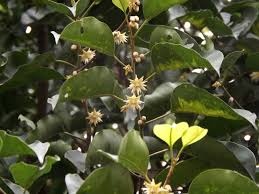
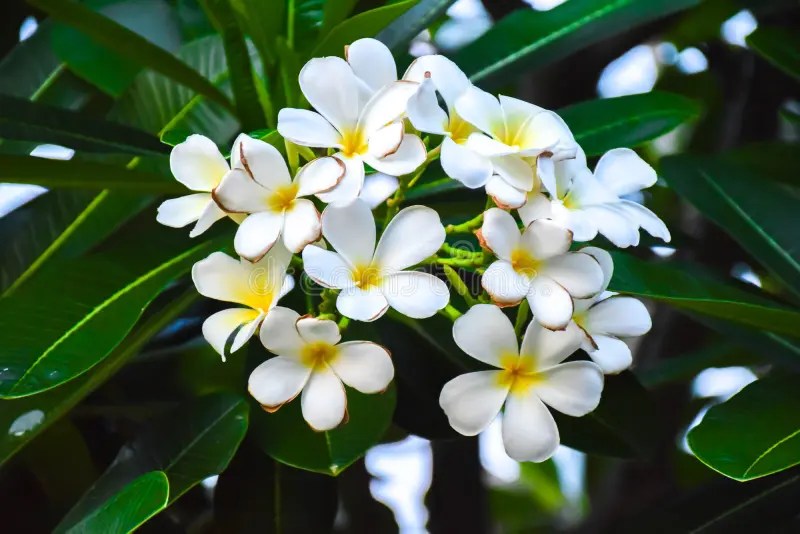
Bokul or MedlarChapa or Champaka flowersFrom Public Domain
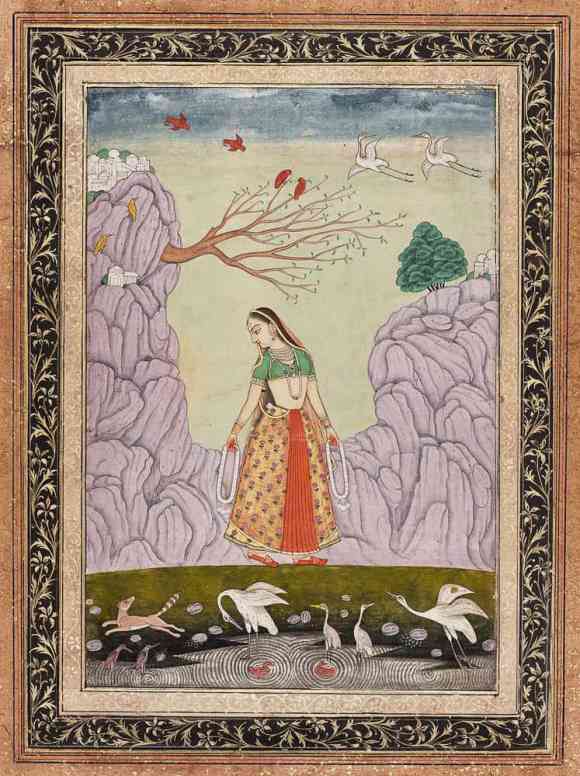
With ankle bells of dried leaves
The wild wind dances away.
Making waves sparkle and sway,
The wild wind goes on its way.
At the pond’s heart, lotus flowers collect.
Bokul and Chapa buds lie strewn.
Restless waterfalls stream and sparkle.
As she darts across the field,
Taking off her wildflower ornaments
And unfurling her unruly hair at the sky
The crazy dust-covered woman keeps dancing.
Like an Iranian child in a frontier world
Treading desert spaces, she enthrals all
Fair-complexioned, sand-coloured ornaments
Draping her body, she comes darting!
Nazrul’s song performed in Bengali by legendary singer, Feroza Begum (1930-2014)
Nazrul’s lyrics transcreated by Professor Fakrul Alam
Roomu Jhoomu Roomu Jhoomu

Roomo Jhoomo Roomo Jhoomo—anklet bells sound.
Addicted to dancing, bangles jingle jangle to that beat.
The dresses’ borders keep swaying in the restless wind.
Who could be moving with such wantonly dancing feet?
Stranger though she is and so close to the riverbank
I think I know this dancer on the move. Her movements
Fill this heart of mine. Her swan or peacock-like steps
Cast a spell, like a mirage in a desert will. With her smile
She even enchants the forest deer. Her big eyes dance,
Making the sea waves lilt. Forests in the high hills sway,
Sway away to the beat and music of her dancing feet.
Born in united Bengal, long before the Partition, Kazi Nazrul Islam(1899-1976) was known as the Bidrohi Kobi, or “rebel poet”. Nazrul is now regarded as the national poet of Bangladesh though he continues a revered name in the Indian subcontinent. In addition to his prose and poetry, Nazrul wrote about 4000 songs.
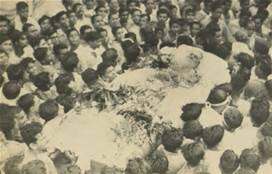
Ghumaite Dao Shranto Robi Re (Let Robi Sleep in Peace) was written by Nazrul in 1941 for Tagore, when he died. It has been translated from Bengali by Professor Fakrul Alam …
Tagore takes his leave on August 7, 1941. Photo from Public Domain
Let the spent Robi sleep on.
Please, please don’t try to wake him up.
Let not the one who spread light all his life
Be awakened; don’t disturb his sleep.
Let the one who gave light and delighted thousands,
And has now collapsed at mother earth’s bosom,
Be ritually smeared with sandal paste on his forehead;
Don’t redden his face by weeping incessantly!
Even at the risk of straining yourself, stretch out your palms
To accept the power and the strength he has given you.
The departed Sun and Supreme One will enable us to succeed
Let the poet sleep on!
The departed Sun’s glow will still light up our interiors.
So, from within yourself pay him homage every day.
Don’t make him weep by shedding continuous tears!
A recording of the first performance of Nazrul’s lyrics in Bengali
Born in united Bengal, long before the Partition, Kazi Nazrul Islam(1899-1976) was known as the Bidrohi Kobi, or “rebel poet”. Nazrul is now regarded as the national poet of Bangladesh though he continues a revered name in the Indian subcontinent. In addition to his prose and poetry, Nazrul wrote about 4000 songs.
Nur Jahan, Nur Jahan,
Floating down a river you came
To a land full of clouds
A land of gardens—Iran!
You had your plate filled
With Nargis flowers, poppies and roses
And had brought them all along.
You brought as well legends
Of Shirin and Farhad and Shiraz.
With your graceful and slim self came
Bulbuli, Dilruba and Rabab’s songs.
Your love healed even Emperor Salim’s lunacy!
You daubed sandalwood paste on yourself
And bore the stigma in front of everyone --
A stigma the moon bears in the blue sky
Smilingly. It’s what is written in lovers’ tales.
I’ll ensure that it ambles along pathways
Forever, questing for love’s pleasures,
Despite any infamy linked to the affair.
Jahangir(Prince Salim) and his beloved empress, Nur Jahan
Nazrul’s Nur Jahan sun by the legendary Feroza Begum
Born in united Bengal, long before the Partition, Kazi Nazrul Islam(1899-1976) was known as the Bidrohi Kobi, or “rebel poet”. Nazrul is now regarded as the national poet of Bangladesh though he continues a revered name in the Indian subcontinent. In addition to his prose and poetry, Nazrul wrote about 4000 songs.
Projapoti or Butterfly by Nazrul, translated by Professor Fakrul Alam
Projapoti! Projapoti!

Butterfly, dear butterfly,
From where did you get such colourful wings?
Wings flaming red and blue,
Such sparkling, wavy wings!
I see you getting drunk sipping the honey of wildflowers.
Be my friend; share some of the liquor with me.
Lend me your pollen-tinted golden-silvery wings as well.
My mind doesn’t like the idea of going to school anymore.
Butterfly, dear butterfly—please, please take me along
As your companion. You dance in the wind as you go…
This day, why not share your delight with me too?
I don’t want to wear the dress I have on anymore.
Let me wear your flaming, sparkling dress from now on!
A rendition of the song in Bengali by a legendary singer, Feroza Begum (1930-2014)
Born in united Bengal, long before the Partition, Kazi Nazrul Islam(1899-1976) was known as the Bidrohi Kobi, or “rebel poet”. Nazrul is now regarded as the national poet of Bangladesh though he continues a revered name in the Indian subcontinent. In addition to his prose and poetry, Nazrul wrote about 4000 songs.
Apnake jana amar phurabe na/Ei Janare shongo tomai chena/

There will be no end to my discovery of myself/And this discovery keeps coming with my discovery of you
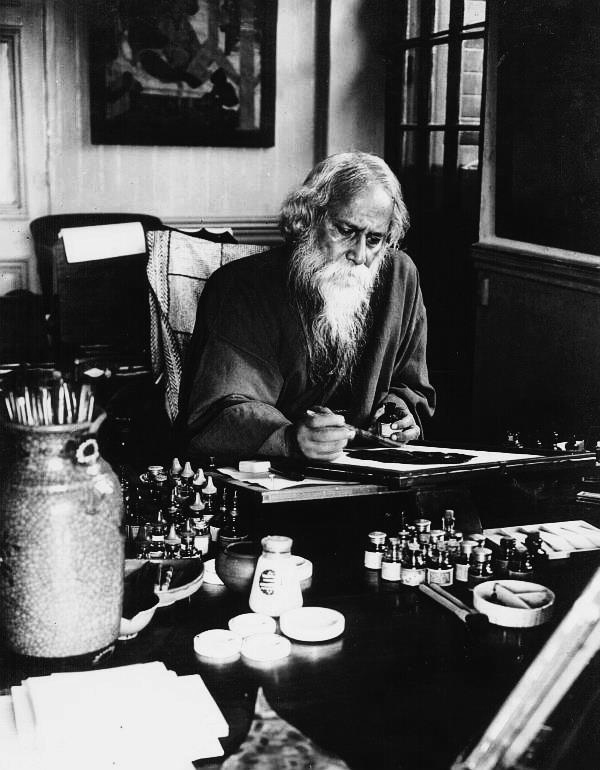
On the one hand, Rabindranath Tagore [1861-1941] has been with me almost all my life. On the other, I only began to discover that I had Rabindranath so centrally in me relatively late in my life. In fact, I have now realised that the process of discovering the way he has been embedded in me is part of the process of discovering my own self in the course of the life that I have been leading till now. Indeed, at this stage of my life, it seems to me that there will be no end to my discovery of the way Rabindranath has become part of my consciousness since I feel that there will be no end to discovering myself till I lose consciousness once and for all. The one thing I can say with certainty, using his words but in my translation is “There will be no end to my discovery of myself.” For sure, this process of discovering myself endlessly keeps happening with my continuing discovery of Rabindranath.
Surely, the process through which Rabindranath had become embedded in me began in childhood. However, I did not encounter his work in my (English medium) textbooks since I did not learn Bengali in school for a while. How then did I come to remember poems such as “Tal gach ek paye dariye/shob gach chareea/ Uki mare akaashe” (Palmrya tree, Standing on one foot/Exceeding all other trees/Winking at the sky”) or “Amader Choto Nadi chole bnake bnake” (“Our little river keeps winding its way”). How do I remember these opening lines even now? And why do I still associate such palm trees and winding little rivers with these lines even now whenever I am in the Bangladeshi countryside? Surely, it must have been my mother who planted Rabindranath in me in my seed time so that he would become embedded in my unconscious, only to surface in my consciousness decades later. It is surely no coincidence that she taught me Bengali and made me learn Rabindranath’s poems indirectly.
As a boy growing up at a time when the radio was the main source of entertainment in middle-class Bengali houses, my siblings and I were made to listen to Rabindra Sangeet in our house by my father, who felt that he had to share his favourite songs and singers in the musical genre with us, whether we wanted to listen to them or not. Of course, at that age I would have much rather not listen to those solemn-sounding, soulful songs, and whenever I could put my hands on the radio dials, I would listen to English popular music on Radio Ceylon. My favourite singers were Pat Boone, Elvis Presley, Cliff Richards and—a little later—the Beatles. In school, when we were not playing or talking about sports or girls, we boys would be discussing the pop music we heard on Radio Ceylon. By the end of the 60s, we would be talking about the English thrillers and comedies we saw on Dhaka television. What place could Rabindranath have in one’s life then? If Rabindranath had been placed in my innermost self by my mother through her reading of his poems to us children or my father through his addiction to Rabindra Sangeet, for the moment he was getting occluded deep inside me and, it would now seem, all but forgotten!
But from the middle of the 1960s, our lives in Dhaka began to change as the claims of Pakistan on us East Pakistanis started to loosen, little by little. It was a time when in neighbourhoods and on streets, processions would come out singing gonosangeet—literally songs of the people, but in effect music of protest and patriotism. First, the Six Points Movement and then the Agartala Conspriacy case were on everyone’s lips and East Pakistanis everywhere were becoming activists in one way or the other. There was no escaping songs like “Shonar Bangla” (“Golden Bengal”) or “Banglar mati, banglar jol, banglar baiuo, banglar phol/Punno houk”” ( “Let the land, the waters, the air and fruits of Bengal be blessed…) and “Bartho Praner Aborjona Purea Phele Agun Jalo” (“Burn the frustrated soul’s detritus and light up a flame”). In my school where we boys now studied “Advanced English” and “Easy Bengali”. There was no way we could have learned enough Bengali to read Rabindranath or Nazrul in the original in any sustained attempt, but how could we escape the call from such songs and poems like Nazrul’s “Bidrohi” (“The Rebel”) or the call from the streets to protest and even burn for our emancipation? At home, three of my four sisters would be practicing Rabindra Sangeet regularly, since this was what my parents wanted them to do, and so there would be no evading Rabindranath’s songs at home for this reason as well, but I was more interested in friends and sports than staying home and so I would hear the songs only in snatches at this time.
By the end of the decade though, Rabindranath was everywhere in our lives since becoming Bengali became first and being a Pakistani only came later. Even on Dhaka Television, Rabindranath’s songs and dance numbers were being aired fairly regularly then. Outside, one could get to see his plays and dance dramas being performed every now and then in functions and cultural events all over the city. He would soon become an important part of Pohela Boisakh, which itself would become instantly popular amongst us all almost as soon as Chhayanaut[1] organised the first event in Balda Garden as the decade came to a close. But while Rabindranath was everywhere around me all of a sudden, I was still not reading him at all, preferring English thrillers and westerns initially, and later, when I became a “serious” reader from college onwards, contemporary classics of English and European literature available in English editions.
In the early seventies, however, you could not be in Bangladesh without imbibing Rabindranath at least a little, for there was a process of osmosis at work at this time. Glued as we were to Swadhin Bangla Betar Kendro[2] during our Liberation War[3], we kept listening to his patriotic songs on our radios; the promise of Shonar Bangla seemed alive and possible then. The years after liberation, my generation was exposed to Rabindranath in new ways; we would get to hear and view singers like Kanika, Debobroto and Suchitra Mitra on stage in Dhaka; their songs became freely available in tapes in our shops; and Satyajit Ray’s film version of Rabindranath’s fiction and Ray’s documentary on him became staples of Dhaka’s film societies. I was finally growing up intellectually and was hungry for culture, and so how could I have escaped the poet’s works totally at this time?
But the Rabindranath that I was imbibing thus was almost entirely coming to me aurally and visually. Because he was becoming embedded in my consciousness through songs and the silver screen as well as television, he still inhabited the surface of my consciousness. And I was certainly not making any conscious bid to savor him. The seventies and the eighties were, in fact, decades when I was becoming an even more “serious” student of English literature than before and getting “advanced” degrees in my subject and acquiring expertise for my teaching career; where would I get the time to read Rabindranath then? As an expatriate student for six years in Canada and as a visiting faculty member for two years in the USA, I would be getting small doses of Rabindranath in those countries through the songs I kept hearing in the cassettes I had brought along of my favorite singers and in the occasional film versions of his work that I would get to see because of campus film societies, and I suppose nostalgia played a part in my yearning for him then, but I had no time to spare for him and not enough exposure to his works to let his ideas and his achievement resonate in me in any way.
To sum up my encounters with Rabindranath till then, I was discovering Rabindranath in small doses all the time and experiencing him directly here and there, but my knowledge was all very superficial and my understanding of him too limited. And nothing much had happened that would allow me to tap into the unconscious where all the memories of poems and songs by him I had first come across through my parents’ enthusiasm for his works were hidden.
“Dekha hoi nai chokkhu melia/Ghor hoite shudhu dui pa felia”/

“I haven’t seen with my eyes wide open/what was there only a stride or two away from my house”
In the 1980s, I became smitten by theory, especially the works of Edward Said, and suddenly questions of postcoloniality, ideology, power and location became all-important for my understanding of literature. I was coming around to the belief that I could not be a good and truly advanced student of English literature in Bangladesh, let alone a good teacher of the subject here, unless I sensitised myself to my roots and look at the world around me. And now I remembered some lines I had been hearing since childhood without realising their relevance for me and everyone else around us then: “Dekha hoi nai chokkhu melia/Ghor hoite shudhu dui pa felia” (“I haven’t seen with my eyes wide open/What was there only a stride or two away from my house”). Rabindranath had been all around me and yet I had not opened my eyes wide enough to learn from him. I had not read his works with any kind of sensitised attention at all and I had not been able to arrive at any kind of appreciation of his achievements except the smug sense of self-satisfaction at the thought that this Bengali had once won the Nobel Prize.
Towards the end of the 1990s, for the first time really, I plunged into Rabindranath and found—to quote Dryden on Chaucer— “here was God’s plenty”. Having opened my eyes to him I realized that there was so much to him than one could take in at any one time. He had once said in a song about the infinite contained in the finite and I now thought, “How appropriate of him!” He had said in one of his most famous poems, “Balaka[4]” about how one must not succumb to stasis and how the essence of life is motion and I thought, “how inspirational!” He had written in a song about viewing the Ultimate Truth through music and I thought “Exactly!” He had looked on in amazement in a starry night at how humans have a place in the cosmos (Akaash Bhora Surjo Tara[5]) and I thrilled at the idea now. He made me see the monsoonal kadam flower that I had passed every year without blinking an eye as immensely lovely. Every poem that I read enlightened me, every song lent my soul harmony, every short story or novel took me to eternal truths about human relationships. Who would not learn from a man who had been given some of the highest honors the world has offered any human being, when he says with such unambiguous humility, “Mornam ei bole khati houk/Aami tomaderi lok…” Let this be my claim to fame/I am all yours/This is how I would like to be introduced.” And so I kept reading him in between teaching and writing, finding him an endless source of inspiration, creativity and wisdom. I strove to learn about nature, the universe, people, relationships, beauty and the dark side of humans through his works. And soon I felt compelled to translate some of them.
Rabindranath, then, opened my eyes not only to the world I lived in but also helped me discover my own self as a product of forces that had taken our nation past 1947 to true liberation. He helped root me in Bengali and Bangladesh as never before, making me discover myself not merely as a Bengali but as a citizen of the world, a product of a certain history but also of the history of mankind. My discovery of him and my place in the world was furthered by the work I did in co-authoring The Essential Tagore and authoring a collection of essays on diverse aspects of his work.
But Rabindranath truly contains multitudes. What I now realise is that it is impossible to discover him fully in one life, especially when one embarks on the process of discovery so late in life. By now, therefore, I have despaired of knowing the whole man and feel I will get to know only parts of him. But I also know whatever I read of him will enlighten me and make me know myself better in every way than before. And so I’ll keep reading him and translating him, if only to know him and myself better in the days left for me!
[1] Centre for promotion of Bengali Culture established in 1961
Nazrul’s lyrics translated by Professor Fakrul Alam
Painting by Jamini Ray (1887-1972)
DO LOVE MY SONGS

Dearest, even if you won’t love me,
Do love my songs.
Who remembers forest birds
When they cease singing and fly out of sight?
Whoever wants the moon by itself?
Everyone enthuses only about moonlight!
No one ever notices how wicks get burnt
When lamps emit their light!
Cut stems drip tear drops
But in time blossom as flowers.
But when plucking flowers and taking them away,
Do you ever think of helping the plant in any way?
All quench their thirsts with river water
But the act parches the riverbed so!
Seek, seek the river’s water in an ocean of sorrow…
But dearest, even if you won’t love me
Do love my songs!
A rendition of the original song in Bengali by the legendary singer, Feroza Begum(1930-2014)
Born in united Bengal, long before the Partition, Kazi Nazrul Islam(1899-1976) was known as the Bidrohi Kobi, or “rebel poet”. Nazrul is now regarded as the national poet of Bangladesh though he continues a revered name in the Indian subcontinent. In addition to his prose and poetry, Nazrul wrote about 4000 songs.
Poetry by Masud Khan, translation from Bengali by Professor Fakrul Alam
MOTHER


In the dust smeared evening

Far away, almost at the margins of the horizon,

The one who is resting all by herself


In a bed laid out under the open sky

Is my mother.

Her bed smells of grass and the antiseptic Dettol.

A tube in her nose supplies her with oxygen,

A saline bottle is attached to her arm,

And she is tied to a catheter too—

It is as if she is getting entangled inextricably

In a jungle of plastic and polythene reeds.


A smoky surreal unreal canopy encircles her bed.


Seemingly after ages, dusk descends on the world,

A few birds and insects form a chorus,

Wailing throatily obscure and dissonant tunes

In amateurish over-excited zeal,

Seeking refuge timorously in that plastic hedge,

At the margin of the horizon,

In the shadow of primeval motherhood.


A FRAGRANT TALE


The world is full of misleading, minus signs and foul smells.


At times, the world feels as heavy and unbearable

As the weight of a son’s dead body on his dad’s shoulder,

Or as stressful as playing the role of a dead soldier,

Or as formidable as a physically challenged person’s ascent up a mountain

Or as painful as caring for a precocious, traumatised child...


Nevertheless, occasionally such stress-laden memories will blur,

And suddenly, wafting on the wind’s sudden mood swing,

A fragrant moment comes one’s way!
Masud Khan (b. 1959) is a Bengali poet and writer. He has, authored nine volumes of poetry and three volumes of prose and fiction. His poems and fictions (in translation) have appeared in journals including Asiatic, Contemporary Literary Horizon, Six Seasons Review, Kaurab, 3c World Fiction, Ragazine.cc, Nebo: A literary Journal, Last Bench, Urhalpul, Tower Journal, Muse Poetry, Word Machine, and anthologies including Language for a New Century: Contemporary Poetry from the Middle East, Asia, and Beyond (W.W. Norton & Co., NY/London); Contemporary Literary Horizon Anthology,Bucharest; Intercontinental Anthology of Poetry on Universal Peace (Global Fraternity of Poets); and Padma Meghna Jamuna: Modern Poetry from Bangladesh(Foundation of SAARC Writers and Literature, New Delhi). Two volumes of his poems have been published as translations, Poems of Masud Khan (English), Antivirus Publications, UK, and Carnival Time and Other Poems (English and Spanish), Bibliotheca Universalis, Romania. Born and brought up in Bangladesh, Masud Khan lives in Canada and teaches at a college in Toronto.
Rabindranath Tagore (1861-1941) Kazi Nazrul Islam (1899-1976)
1400 SAAL OR The YEAR 1993

A hundred years ago
O poet, you had thought of us
              With such immense affection,
A hundred years ago!

Mystical one; child of mystery,
Taking off the cloak covering your eyes,
When did you arrive from some far-off haven?
Heading from the south and opening a window of our house,
          O secret stroller into our dreams,
                 You came with the fragrance wafted by the spring breeze,
To where a hundred years later I was reading your poem
                                                At nighttime.
An absent-minded butterfly, you saw us with pain-brightened and moist eyes—
With silent wings,
Fluttering casually, you went languidly away.
And we, a hundred years later,
Keep reading your poem, dyed in the tenderness of youth,
                             With rapt attention, affectionately.
In a reverie, and sleepy, with eyes drooping,
My beloved listens to your prophetic song
                             With tear-moistened eyes.

Alas, to this day,
              The shut southern window
                      Opens again and again.
The restless spring breeze cries out in pent up pain.
          In minds and forests and in murmuring blossoms,
Moist flowers shed from their braided beds,
                             Again and again.

The dark eyelids of the blossoms keep fluttering softly.
The female bee snatches honey from the beak of her mate.

      The dark-eyed buds flutter in the gentle breeze.
Drenched in pollen, bees drink honey-sweetness fully.
      The she-dove loses herself at the warbling of her mate.
The forest bride has decked herself in crimson robes of youthfulness.
		Every now and then earth’s heart gasps
		At the breeze’s passionate outbursts.

Immersed in the depth of your being, a hundred years later,
Oh sun-suffused one, I have been reading your poem,
	With immense adoration.
At your gesture I wake up to your music,
O artful one, I’ve grasped your artfulness!
			Stealthily you tiptoe
		To our far away youthful beings,
		In poetry, songs and in lush tones and colourful dreams.
		All flowers that have bloomed today—all birdsongs,
					All crimson hues,
		Caressed by you, O ever-youthful poet,
					Have become livelier!
			In the morning hours of this spring festival,
		You’ve become the song in our youthful festivities.
		 	Once a darling child and now immortal in a bower
		All of us youthful men and women await your nuptial hour.
			Sing O dear one, sing again and again
The songs you would sing amidst blooming flowers,
Songs my beloved and I sing on our own or together,
Songs at whose end I slide into sleep, only to hear
	In a dream appearing in a midnight hour,
	My beloved weep, “Dearest poet, friend and wise one—“
	Till my dream ends suddenly
	And I view my beloved’s eyes moisten
			Until tears trickle down her eyes.

	I remember now, how a hundred years ago
     You had stirred—and others too had awakened
In some far away cloistered state.
At your gesture a sad tune had spread its wings and flown.
	Glancing back from the window momentarily,
		It had caressed the tears lining your eyelids.
		It had bent the curling tresses of flower buds.
	And then vanished—leaving you sitting silently.
Moistened by the dewdrop of your eyes,
Your messages blossomed; some bloomed,
	Some even resonated instantly,
And then were tucked away inside our dreams.

		All of a sudden a door opened
In the spring morning your greeting came through.
The envoy of spring you’d sent a hundred years ago
Filled us youthful ones with intense yearnings.

O Emperor of all poets, though we haven’t seen you,
			The Taj Mahal you created,
Sparkling like sandalwood on the forehead of time
		Entrances us and we behold it breathlessly.
We curse our youth— “Why did it have to be a hundred years later?”
				Alas, in this day and age,
We’ve never been able to glimpse Mumtaz and behold the Taj!

A thousand years later—O emperor of poets,
New poets keep coming to sing your praise
		From sunrise to sunset songs celebrate your feats
			And the tune that wandered away from you
Fill groves and forest shades with your message anew.

				And in our time
A hundred tunes keep sounding from veenas in our homes
	And yet the heart remains unfulfilled and the soul keeps yearning
Traversing a hundred years your song drifts into our dreams
			Then it occurs to me our poet
You have settled in our horizon to light it up forever—
			Our very own and eternal sun!

A hundred years ago,
You had greeted us -- young ones -- warmly,
			Vibrantly and affectionately.
The same greeting is being sent to you this day
		As a floral wreath to decorate your feet.

O perfect poet, it seems you’ve appeared in imperfect guise
				Amidst us, softly, silently!
And with a trembling voice imperfect being that I am,
I sing your spring song in your spring bower
And send it to you a hundred years later!

(First published in Kazi Nazrul Islam: Selections 1, edited by Niaz Zaman, Dhaka: writers.ink, 2020)
Clickhere to read Tagore’s 1400 Saal, the poem that inspired this beautiful response from one of the greatest poetic voices of all times.
A rendition of Nazrul’s poem in response to Tagore’s 1400 Saal in Bengali
Born in united Bengal, long before the Partition, Kazi Nazrul Islam(1899-1976) was known as the Bidrohi Kobi, or “rebel poet”. Nazrul is now regarded as the national poet of Bangladesh though he continues a revered name in the Indian subcontinent. In addition to his prose and poetry, Nazrul wrote about 4000 songs.





 Borderless