Categories
Nazrul Translations

With a Garland of Tunes and Lyrics…

Nazrul’s Shoore O Baneer Mala Diye (With a Garland of Tunes and Lyrics) has been translated from Bengali by Professor Fakrul Alam.

From Public Domain
With a garland of tunes and lyrics, you caressed me.
To my body and mind, you gave buds of affection.
Why, then, didn’t you instill love in my heart?
Having played the flute, where was it that you hid?
The flower that you had helped bloom is drying
And losing something dear. My soul cries out, alas!
If you wanted something so, why didn’t you take it?
Having hugged me tight, why did you leave me?
Tell me, what upset you? Why doesn’t joy stir me now?
Where is the sweetness and delight I once felt in my soul?
I must have misunderstood you completely
For surely you had come to make my love bloom.
Dearest, why didn’t you speak out at that time?
Why, why didn’t you hurt and correct me then?

You can listen to the Bengali rendition of this song by contemporary eminent singer, Ajoy Chakraborty, by clicking on this link.

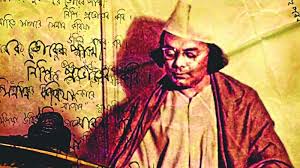
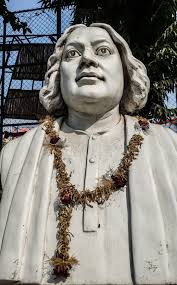
Born in united Bengal, long before the Partition, Kazi Nazrul Islam (1899-1976) was known as the  Bidrohi Kobi, or “rebel poet”. Nazrul is now regarded as the national poet of Bangladesh though he continues a revered name in the Indian subcontinent. In addition to his prose and poetry, Nazrul wrote about 4000 songs

Fakrul Alam is an academic, translator and writer from Bangladesh. He has translated works of Jibonananda Das and Rabindranath Tagore into English and is the recipient of Bangla Academy Literary Award (2012) for translation and SAARC Literary Award (2012).

PLEASE NOTE: ARTICLES CAN ONLY BE REPRODUCED IN OTHER SITES WITH DUE ACKNOWLEDGEMENT TO BORDERLESS JOURNAL

Click here to access the Borderless anthology, Monalisa No Longer Smiles

Click here to access Monalisa No Longer Smiles on Amazon International

Categories
Nazrul Translations

O Wayfarer, Wipe Your Tears by Nazrul

Nazrul’s Musafir, Mochh re Aankhi Jol (O wayfarer, wipe your tears) has been translated from Bengali by Professor Fakrul Alam.

Art by Sohana Manzoor
O wayfarer! Wipe your tears,
Return only with yourself.
The flower blooming on its own
Shed all by itself.
O foolish one! So hapless is your state,
Will you now build your nest in water?
Thirsts are not quenched here
For this is no lake to allay thirsts.
Will the bokul that didn’t bloom in monsoon
Blossom when it’s winter?
On this path forever, errors shed
Covering the grove of frustration.
Oh poet! You’ve illuminated many lamps
With your own light
But your own revered Krishna hasn’t come
To light up the darkness pervading your world.

A rendition of the lyrics by Feroza Begum (1930-2014) in original Bengali

Born in united Bengal, long before the Partition, Kazi Nazrul Islam (1899-1976) was known as the  Bidrohi Kobi, or “rebel poet”. Nazrul is now regarded as the national poet of Bangladesh though he continues a revered name in the Indian subcontinent. In addition to his prose and poetry, Nazrul wrote about 4000 songs

Fakrul Alam is an academic, translator and writer from Bangladesh. He has translated works of Jibonananda Das and Rabindranath Tagore into English and is the recipient of Bangla Academy Literary Award (2012) for translation and SAARC Literary Award (2012).

PLEASE NOTE: ARTICLES CAN ONLY BE REPRODUCED IN OTHER SITES WITH DUE ACKNOWLEDGEMENT TO BORDERLESS JOURNAL

Click here to access the Borderless anthology, Monalisa No Longer Smiles

Click here to access Monalisa No Longer Smiles on Amazon International

Categories
Nazrul Translations

A Love Song by Nazrul

Jani Jani Priyo, Ea Jebone  (I know my dear one, in this life) by Nazrul has been translated from Bengali by Professor Fakrul Alam

Art by Sohana Manzoor
I know, know very well my dear one,
No desire of mine will ever be fulfilled
In my lifetime. Like a water-lily, I’ll shed
In a watery grave. Moon-like, from above
You’ll shed tears. Between us, my bride,
Forever will blow a wind of parting. Forever,
You’ll be heaving deep sighs. I won’t get to hold
Or grip you close to the heart. And yet,
The moon keeps slandering the lotus. Far away
That you are, how does honey still gush from you?
Stay within my reach, dear night moon of mine,
Though so out of my grip and so untouchable!
My empty heart cries out with desert-thirst.
Everyone says I’m the one you love. And yet,
By your providing balm to that shameful act
My anguish at parting has become sweet tasting!
A rendition of Nazrul’s love song by Feroza Begum (1930-2014) in original Bengali

Born in united Bengal, long before the Partition, Kazi Nazrul Islam (1899-1976) was known as the  Bidrohi Kobi, or “rebel poet”. Nazrul is now regarded as the national poet of Bangladesh though he continues a revered name in the Indian subcontinent. In addition to his prose and poetry, Nazrul wrote about 4000 songs

Fakrul Alam is an academic, translator and writer from Bangladesh. He has translated works of Jibonananda Das and Rabindranath Tagore into English and is the recipient of Bangla Academy Literary Award (2012) for translation and SAARC Literary Award (2012).

PLEASE NOTE: ARTICLES CAN ONLY BE REPRODUCED IN OTHER SITES WITH DUE ACKNOWLEDGEMENT TO BORDERLESS JOURNAL

Click here to access the Borderless anthology, Monalisa No Longer Smiles

Click here to access Monalisa No Longer Smiles on Amazon International
Categories
Nazrul Translations

Break All Shackles: Nazrul

Professor Fakrul Alam transcreates powerful lyrics by Kazi Nazrul Islam

From Public Domain

Smash the iron shackles of prisons.
Make them all disappear.
Free yourself from the shackle of worship.
Young ones—do what befits you best
Sounding horns signifying demolition,
Break through all Eastern ramparts.
Play music for the Supreme One.
Who’ll Lord over you? Dare to act kingly
Or threaten to punish you?
Who is truly free and really sovereign?
Ha, ha, ha! I feel like laughing.
Will God Himself wear a noose? Destroyer!
Who tipped the flame with such awful news?
Oh crazy, forgetful one, storm and rock prison bars.
Yank them with sudden force.
Pull, pull them with gale force.
Bear on your shoulder a kettle drum,
Beating it rhythmically, summon Death.
Let drumbeats bring it back to life!
Let’s see you shake the base of all forbidding prisons.
Kick them hard; break, break their locks.
Burn, burn all prisons and do away with them!
A rendition of the song in Bengali from Coke Studio, Bangladesh

Born in united Bengal, long before the Partition, Kazi Nazrul Islam (1899-1976) was known as the  Bidrohi Kobi, or “rebel poet”. Nazrul is now regarded as the national poet of Bangladesh though he continues a revered name in the Indian subcontinent. In addition to his prose and poetry, Nazrul wrote about 4000 songs

Fakrul Alam is an academic, translator and writer from Bangladesh. He has translated works of Jibonananda Das and Rabindranath Tagore into English and is the recipient of Bangla Academy Literary Award (2012) for translation and SAARC Literary Award (2012).

PLEASE NOTE: ARTICLES CAN ONLY BE REPRODUCED IN OTHER SITES WITH DUE ACKNOWLEDGEMENT TO BORDERLESS JOURNAL

Click here to access the Borderless anthology, Monalisa No Longer Smiles

Click here to access Monalisa No Longer Smiles on Amazon International

Categories
Nazrul Translations

The Path of Hope by Nazrul

Nazrul’s Lyrics translated from Bengali by Professor Fakrul Alam

Born in united Bengal, long before the Partition, Kazi Nazrul Islam (1899-1976) was known as the  Bidrohi Kobi, or “rebel poet”. Nazrul is now regarded as the national poet of Bangladesh though he continues a revered name in the Indian subcontinent. In addition to his prose and poetry, Nazrul wrote about 4000 songs
Pictures from Public Domain

Generations after generations I’ve trod the path of hope.
Yet, O desert wayfarer, there seems to be no border in sight.
Year after year have come and gone for someone like me.
When I tried quenching my thirst even as my eyes watered
Lighting up hope’s lamp futilely, mirages crowded my vision.
Hundreds of songs seemed to sing out of desert groves
Which once upon a time must have been part of the ocean.
Desert wayfarer that I am, I see its watery expanse in dreams
And think of the ocean’s bottom, where my craft had sunk—
A craft I was in with my mate whom I keep looking for now!

A Bengali rendition of the song by Feroza Begum (1930-2014)

Fakrul Alam is an academic, translator and writer from Bangladesh. He has translated works of Jibonananda Das and Rabindranath Tagore into English and is the recipient of Bangla Academy Literary Award (2012) for translation and SAARC Literary Award (2012).

PLEASE NOTE: ARTICLES CAN ONLY BE REPRODUCED IN OTHER SITES WITH DUE ACKNOWLEDGEMENT TO BORDERLESS JOURNAL

Click here to access the Borderless anthology, Monalisa No Longer Smiles

Click here to access Monalisa No Longer Smiles on Amazon International
Categories
Poetry

Therefore: A Poem by Sukanta Bhattacharya

Translated from Bengali by Kiriti Sengupta

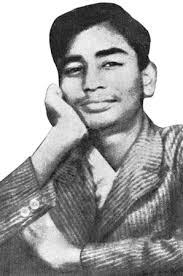
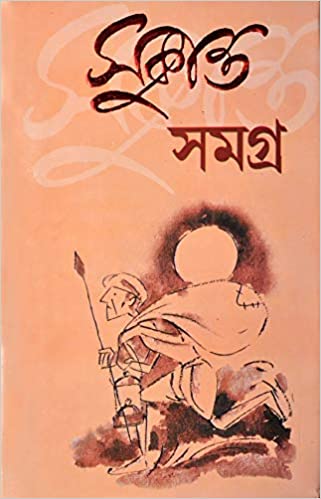
Sukanta Bhattacharya (15th August 1926-31st May 1947):  Called “Young Nazrul” and Kishore Bidrohi Kobi[1], Sukanta Bhattacharya died at the tender age of twenty of tuberculosis. He, like Nazrul, wrote poetry to protest the colonial atrocities. His poems describe the suffering of common people and looked forward to a world free of exploitation. His writings were anthologised in Sukanta Samagra (Complete Works of Sukanta, 1967), published posthumously, simultaneously in East Pakistan and West Bengal.

The once-paved paths 
are now vitiated.
How can I endure
the trauma without
divine intervention?

Death, death, everywhere...

Life's earnings
must be renounced.
When the means
become futile,
they are best discarded like tattered rags

[1] Youthful Rebel Poet: Nazrul was called the rebel poet of Bengal. He wrote a poem called Bidrohi or Rebel and his poetry had been that of rebellion like Sukanta Bhattacharya’s.

Kiriti Sengupta, awarded the 2018 Rabindranath Tagore Literary Prize and the 2024 Nilim Kumar National Honour, has had his poetry featured in various publications, including The Common, The Florida Review Online, Headway Quarterly, The Lake, Amethyst Review, Dreich, Otoliths, Outlook, and Madras Courier. He has authored fourteen books of poetry and prose, published two translation volumes, and edited nine anthologies. Sengupta serves as the chief editor of Ethos Literary Journal and leads the English division at Hawakal Publishers Private Limited, one of the top independent presses established by Bitan Chakraborty. He resides in New Delhi. Further information is available at www.kiritisengupta.com.

.

PLEASE NOTE: ARTICLES CAN ONLY BE REPRODUCED IN OTHER SITES WITH DUE ACKNOWLEDGEMENT TO BORDERLESS JOURNAL

Click here to access the Borderless anthology, Monalisa No Longer Smiles

Click here to access Monalisa No Longer Smiles on Kindle Amazon International

Categories
Nazrul Translations

Nazrul Lyrics Translated by Fakrul Alam

Professor Fakrul Alam translates two songs by Nazrul on social isssues from Bengali

Born in united Bengal, long before the Partition, Kazi Nazrul Islam (1899-1976) was known as the  Bidrohi Kobi, or “rebel poet”. Nazrul is now regarded as the national poet of Bangladesh though he continues a revered name in the Indian subcontinent. In addition to his prose and poetry, Nazrul wrote about 4000 songs.

Arise O Woman

Arise, o woman, arise flaming!
Arise, daubing your forehead blood-red,
Everywhere unfold your flaming tongue.
Dance wildly—excited, inspired.
Arise, hapless, maligned snake,
Awake, kindling the world aflame!
Burn briskly, o fume-filled smoky one,
Arise, mothers, daughters, brides, wives, nieces.
Arise prostitutes, cast out, exiled ones
With the tidal force of the Ganges, arise,
Down-trodden ones. Streaking clouds with lightning
Arise, aroused by Durga, the ever-triumphant one.
‘Arise O Woman’ performed in Bengali
Two Flowers on One Leafstalk 

Hindu and Muslim -- two flowers on one leafstalk --
Muslim its jewelled eyes, Hindu its heart and soul!
In the lap of their mother, the same sky is reflected,
Where sunlight and moonlight alternately sway.
Within their bosoms the same blood courses
While the same navel string binds the twain.
We breathe the same earth mother’s air
And drink the same earth mother’s water.
In her bosom, the same fruits and flowers grow.
In the soil of the land are burial sites quite akin --
Doesn’t matter if one is called Gore -- the other Shoshan!
We call out to our mothers in the same language.
We sing for them songs strung in similar tunes!
‘Two Flowers on one Stalk’ performed in Bengali

Fakrul Alam is an academic, translator and writer from Bangladesh. He has translated works of Jibonananda Das and Rabindranath Tagore into English and is the recipient of Bangla Academy Literary Award (2012) for translation and SAARC Literary Award (2012).

PLEASE NOTE: ARTICLES CAN ONLY BE REPRODUCED IN OTHER SITES WITH DUE ACKNOWLEDGEMENT TO BORDERLESS JOURNAL

Click here to access the Borderless anthology, Monalisa No Longer Smiles

Click here to access Monalisa No Longer Smiles on Amazon International
Categories
Nazrul Translations

Nazrul’s Lines for Tagore

Ghumaite Dao Shranto Robi Re (Let Robi Sleep in Peace) was written by Nazrul in 1941 for Tagore, when he died. It has been translated from Bengali by Professor Fakrul Alam

Tagore takes his leave on August 7, 1941. Photo from Public Domain
Let the spent Robi sleep on.
Please, please don’t try to wake him up.
Let not the one who spread light all his life
Be awakened; don’t disturb his sleep.
Let the one who gave light and delighted thousands,
And has now collapsed at mother earth’s bosom,
Be ritually smeared with sandal paste on his forehead;
Don’t redden his face by weeping incessantly!
Even at the risk of straining yourself, stretch out your palms
To accept the power and the strength he has given you.
The departed Sun and Supreme One will enable us to succeed
Let the poet sleep on!
The departed Sun’s glow will still light up our interiors.
So, from within yourself pay him homage every day.
Don’t make him weep by shedding continuous tears!

A recording of the first performance of Nazrul’s lyrics in Bengali

Born in united Bengal, long before the Partition, Kazi Nazrul Islam (1899-1976) was known as the  Bidrohi Kobi, or “rebel poet”. Nazrul is now regarded as the national poet of Bangladesh though he continues a revered name in the Indian subcontinent. In addition to his prose and poetry, Nazrul wrote about 4000 songs.

.

Fakrul Alam is an academic, translator and writer from Bangladesh. He has translated works of Jibonananda Das and Rabindranath Tagore into English and is the recipient of Bangla Academy Literary Award (2012) for translation and SAARC Literary Award (2012).

.

PLEASE NOTE: ARTICLES CAN ONLY BE REPRODUCED IN OTHER SITES WITH DUE ACKNOWLEDGEMENT TO BORDERLESS JOURNAL

Click here to access the Borderless anthology, Monalisa No Longer Smiles

Click here to access Monalisa No Longer Smiles on Amazon International

Categories
Celebration

Welcome to Nazrul’s World

I’m a cyclone, a whirlwind,
I pommel all that lie in my path,
I am a dance-driven swing,
I dance to my own beat, I’m a free spirit, high on life...

-- Kazi Nazrul Islam, Rebel or Bidrohi, translated by Prof Fakrul Alam.
Young Nazrul

Nazrul’s writing has the power of whirlwind or a tornado — it can break with its force and make with love. His songs are a law unto themselves and called Nazrul geeti. And all this remains popular and still relevant more than a century after he was born.

Kazi Nazrul Islam (1899-1976) was born in Burdwan, a part of the Bengal Presidency that stretched from Bengal to Singapore during colonial times. Nazrul lived through the colonial rule, the independence of the subcontinent, the Partition and the creation of Bangladesh. He was multifaceted — he had tried his hand at soldiering and then settled for being a poet, writer, journalist, and musician. He is now regarded as the national poet of Bangladesh, the Bidrohi Kobi or the rebel poet. 

Nazrul teaching Nazrul Geeti

Here, we have tried to gather flavours of his writing and life. We start with the translation of his lyrics (a Nazrul geeti) on butterflies, translated by Fakrul Alam performed by the legendary Feroza Begum, move on to his response to Tagore’s poetry — they had a vibrant relationship as Somdatta Mandal has reflected in her discussion on Radha Chakravarty’s recent translation of his Selected Essays. It’s followed by more translations of three of his poems by Niaz Zaman, who has also written about Nazrul’s support for women. A searing essay on religious divides and socio economic gaps, translated by Sohana Manzoor, also brings to focus the plight of a beggar woman torn by poverty. A short story , showcasing him as a fiction writer, is borne of his experiences as a soldier. Last but not the least, we have a fiery speech by Nazrul from Chakravarty’s translation.

On Nazrul’s 125th birth anniversary, we welcome you to muse on him and his world…

Poetry

Projapoti (Butterfly) by Nazrul has been translated by Fakrul Alam from Bengali. Click here to read.

Nazrul’s rejoinder to Tagore’s 1400 Saal has been translated by Professor Fakrul Alam. Click here to read.

Three poems by Nazrul have been translated by Niaz Zaman. Click here to read.

Prose

 Deposition of a Political Prisoner: A Speech by Nazrul

A fiery speech by Nazrul from the Selected Essays: Kazi Nazrul Islam, translated by Radha Chakravarty from Bengali. Click here to read.

Temples and Mosques

Kazi Nazrul Islam’s fiery essay translated by Sohana Manzoor. Click here to read.

Hena

A story that grew out of Nazrul’s experiences as a soldier translated by Sohana Manzoor. Click here to read. 

Discussions

Nazrul and His World View

Somdatta Mandal writes about Radha Chakravarty’s translation of Selected Essays: Kazi Nazrul Islam and in the process explores his life and times. Click here to read.

When the Feminist and the Revolutionary Met

Niaz Zaman writes of the feminist leanings of Nazrul’s poetry in context of Madam Roquiah, a contemporary of the poet. Click here to read.

Categories
Nazrul Translations

Poems of Kazi Nazrul Islam

Translation by Niaz Zaman

Forgive Us, O Prophet 
[Kshama Koro Hazrat]


We have not accepted your message. Forgive us, O Prophet.
We have forgotten your ideals, the path you showed.
Forgive us, O Prophet.

Lord, you spurned luxury and riches under your feet;
You did not want us to be kings and nawabs.
All the wealth and treasures of this earth
Are for all to share in equal measure.
You said all human beings are equal on earth.
Forgive us, O Prophet.

Your religion does not reject those of other faiths;
You have cared for them, sheltered them in your home.
Their temples of worship
You did not command to be broken,
O brave one.
But today we cannot tolerate those of other beliefs.
Forgive us, O Prophet.

You did not want shameful wars in the name of religion;
You did not put swords in our hands, but your immortal message.
We have forgotten your magnanimity;
We have embraced blind intolerance.
That is why blessings no longer shower upon us from heaven.
Forgive us, O Prophet.


These Lovely Flowers, This Luscious Fruit
[Ei Shundar Phul Ei Shundar Phal]

Thank you for all these bounties, Lord,
For these lovely flowers, this luscious fruit,
The sweet water of this river.
Thank you for all these bounties, Lord,
For these fertile fields of green and grain.
You have bestowed precious gems on us,
Brothers, companions, sons.
You give us sustenance when we are hungry
Without our asking.
Lord, I disobey your command every day
Still you bestow air and light on this worthless being.
You gave me the greatest prophet
To save me on Judgment Day.
That I might not forget the true path
You sent the message of the Holy Quran.


To the Poets of the Future
[Na-Asha-Diner Kabir Proti]

O poets of the future, may you arise
Like the morning sun,
Bright and red like hibiscus blossoms.
In the golden dawn for which we long
May you wake up like countless flocks of birds.
I sing in the hope that you will come
To soar in the blue sky that I create.
I leave behind the memory of my greetings to you:
Play on my veena the song of the new day.

Born in united Bengal, long before the Partition, Kazi Nazrul Islam (1899-1976) was known as the  Bidrohi Kobi, or “rebel poet”. Nazrul is now regarded as the national poet of Bangladesh though he continues a revered name in the Indian subcontinent. In addition to his prose and poetry, Nazrul wrote about 4000 songs.

Niaz Zaman is an academic, writer and translator from Bangladesh. She has published a selection of Kazi Nazrul Islam’s work in the two-volume Kazi Nazrul Islam: Selections. In 2016, she received the Bangla Academy Award for Translation. “Forgive Us, O Prophet” and “To the Poets of the Future” were first published in Kazi Nazrul Islam: Selections 1, edited by Niaz Zaman (writers.ink, 2020).

.

PLEASE NOTE: ARTICLES CAN ONLY BE REPRODUCED IN OTHER SITES WITH DUE ACKNOWLEDGEMENT TO BORDERLESS JOURNAL

Click here to access the Borderless anthology, Monalisa No Longer Smiles

Click here to access Monalisa No Longer Smiles on Kindle Amazon International