Categories
Essay

From Bombay to Kolkata — the Dhaaks of Durga 

Ratnottama Sengupta travels through time and space to explore a UNESCO-declared ‘Intangible Cultural Heritage of Humanity‘, a festival called, Durga Puja

Dhaakis (Drummers) playing dhaaks (drums) at Durga Puja. From Public Domain

It was Saptami, the second day of the five-day Durga Puja that had been inaugurated the previous day. I had new dresses lined up for all five days. But the dawn of Saptami brought us news of disaster. A short circuit had razed the entire pavilion along with the clay icons of Durga, her brood comprising Ganesh, Kartik, Lakshmi, Saraswati and their vahanas — the lion, owl, swan peacock and mouse. Gone was the chaalchitra, the halo-like backdrop presided over by Lord Shiva and depicting the story of the goddess who fought the demons Chanda Munda, Shumbha, Nishumbha, Madhu Kaitav, Raktabeej Mahishasur…

We were mourning all through the Pujas that particular year. No new dresses worn, no new shoes on our feet, no ‘Dussehra Greetings’ nor any sweets on ‘Bijoya’. We felt sad not because of  the effort my father, Nabendu Ghosh, had put in as the President of the Puja conducted by the Udayan Club, but because of the belief that “Durga comes home to her parents during this period.”

*

My father’s ancestral home was in East Bengal. My grandfather, Nabadwip Chandra Ghosh, was an Advocate who relocated to Patna in 1920. Every autumn after that the family would travel back to Dhaka for a month. Because the Durga Puja in their family home was the lone puja of Kalatiya, the village which is now a suburb of Dhaka. Everyone there would flock to ‘Ukil Babur Bari’[1]for the puja and prasad in the afternoon and the cultural programmes in the evening. Jatra, theatre, Pala Gaan, Naam Sankirtan — the itinerant groups of performers comprised of singers, actors, the narrator or the sutradhar, and the adhikari or the manager. It was at one such performance that Baba[2], then all of seven, fell in love with a ‘lady’ who had played Draupadi. Imagine his disappointment when the departing ‘lady’ turned out to be a clean shaven youth!

The next year at that very Puja Mukul [3]— the pet name of Nabendu Bhushan — first ‘acted’ as a Sakhi[4]! At eight his ‘manhood was offended at the thought of playing a handmaiden. But when he stood on the stage with three other boys, all dressed in finery and wigs, all praying ‘Madhav rakho charaney[5]!’ he was transported to Lord Krisha’s court in ancient Dwarka. That was his first experience of Rasa[6] — and unaware even to himself he had set on a lifetime’s journey with the arts.

When life took him to Bombay in 1951, there were few Pujas and no possibility of publishing anything in Bengali. Pragati Club of Andheri started a Puja in Mohan Studios that had Bimal Roy as the President and Nabendu Ghosh as the Secretary. That Puja continues to this day — and to this day these two names figure in the brochure the club publishes annually. Pragati[7] used to bring out a handwritten magazine back then. PraBas — meaning, migrant life, was an acronym for Prabasi Bangla Samaj.[8] Edited by Nabendu Ghosh, it boasted hand-painted covers by renowned artist Chitto Prasad.

Pragati, Kallol, Udayan, Natun Palli, Shivaji Park, Chembur — all the major Pujas of Mumbai continue to publish a brochure for the Pujas as a souvenir of the festival and also  to raise funds through ads by the sponsors.

*

All through my school life, which I spent travelling to the Bengali Education Society’s English High School at Dadar, I would necessarily spend one evening rolling into late night at the Shivaji Park puja pandal. Long in advance I would plan which dress to wear. The latest Bengali movie would be screened. The Puja Specials would have already come home — in the pavilion we would pick up some new publication of Sunil Gangopadhyay or Shirshendu Mukherjee. The Puja songs would keep playing while we, a bunch of batch-mates from all over Mumbai, would endlessly snack on fancy food and chat.

My university years saw a shift of ‘allegiance’ to Notunpalli, the Puja started by Shakti Samanta at Bandra in 1972 as did all the major Bengali biggies of Bollywood, from Salil Chowdhury, Basu Chatterjee, RD Burman to Jaya Bhaduri and Amitabh Bachchan, who would earlier visit the Puja at Ramakrishna Mission at Khar. Now I would flock to the stalls of handloom saris, salwar suits, fashion dresses — some of which were set up by my cousins or friends. Rupa, Aloka-Tulika-Lipika, Mina Kakima and Latika Kakima — wives of actor Tarun Bose and playback artiste Talat Mehmood, sons and daughters of Dhruv Chatterjee and Asit Sen, seasoned CEOs and young bankers — the stimulating adda[9] here ranged from cinema to career choices, economics to politics.

*

Talking of Ramakrishna Mission, I am reminded of Manobina Roy, wife of Bimal Roy. Jethima[10] and my mother Kanaklata would set up a stall where they would sell papad and vadi, narkel and til naru, muri moa and kucho nimki[11]. These sesame, coconut or lentil balls were all made at home by Didimas[12], Kakimas and Mashimas[13]who lived in Rana Cottage near our house in Malad. If the Kumari Pujo[14]and Sandhi Puja[15]rituals were special for these seniors, Bijoya was super special for me and my friends. This post-immersion round of socialising to greet friends spelt many visits, to Bandra and Khar, Santa Cruz and Andheri, Goregaon and Borivali. And visiting the family of our parents’ friends meant not only naru-nimki, it could also mean chops, cutlets, cakes, sandwiches — goodies that were not so common in Bengali households 65 years ago, when sandesh and rosogolla, sweets made from cottage cheese, were also sold door-to-door, by men who brought them to our houses in aluminium trays tied in cloth!

*

That’s a faraway reality from what obtained in Kolkata where I spent some Puja holidays at my aunt’s (Ranjita Mashi’s) place on Motilal Nehru Road. It was opposite Deshpriya Park, where we children would report every morning of the five days, to help distribute the floral offering for pushpanjali and the prasad[16] in sal leaf bowls. Pandal hopping was a must, primarily on foot, as the pavilions designed with cloth themselves were works to admire. And on Dashami[17] evening, Haabu, Dipu, Reena, Minu and I would stand near the Rash Behari post office opposite Priya Cinema and watch the idols, sculpted with the signature of traditional idolmakers of Chitpore, being taken for immersion in the Ganga. What joy it was as we could watch all the Goddesses we’d heard of but not visited — even from Krishna Glass or Teish Palli! A much glamourised and glorified version is now held on Red Road, the main artery of the city, with the Chief Minister presiding over the Carnival of Immersion.

Twenty years ago when I returned to make my home in Kolkata, Deshpriya Park was still home to a Sarbojanin Durgotsav[18]. But it hit the headlines in October 2015 when mayhem broke loose crushing surging crowds who had assembled to view the 88-foot “Biggest Durga Ever.” Effectively the community celebration had become a cause for corporate branding and competition. Sponsors, in some cases, outnumbered the – neighbourhood — ‘parar‘ — volunteers. Reason? Perhaps because television was trying to grab eyeballs in every home. Even Kumari Pujo at Ramakrishna Mission was being watched on screens across the oceans. And as the Arts Editor of The Times of India, I was planning celebrity visits and artistic trophies for our Pujo Barir Shera Pujo [19]competition in high rise buildings and gated communities.

*

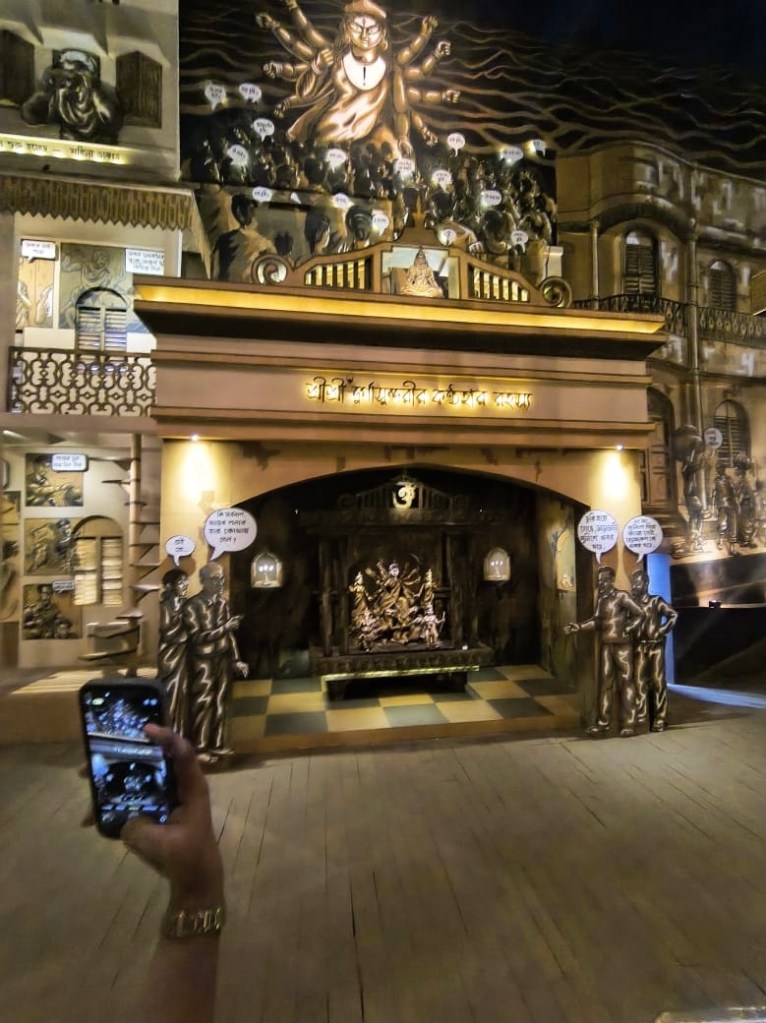
But what was the biggest change in observing Sarbojanin Durgotsav in Bengal? These public worship grounds had transformed into vast galleries where artists were staging the icons as installation art. These concept-driven pujas took leaves out of mythology but interpreted the goddess in the light of contemporary and universal concerns. Some were highlighting Her as a feminist force. Some as an embodiment of Nature. For some, She denotes the cosmic universe. Elsewhere crafts and looms got prominence. Family bonding was not forgotten. From the icons to the pavilions, from the chaalchitra to the fairy-light decoration — there was a unity of thought and execution. In the process, knowledge about practices in distant corners of our country, or of lifestyles several countries away from ours became accessible to the average person on the street. 
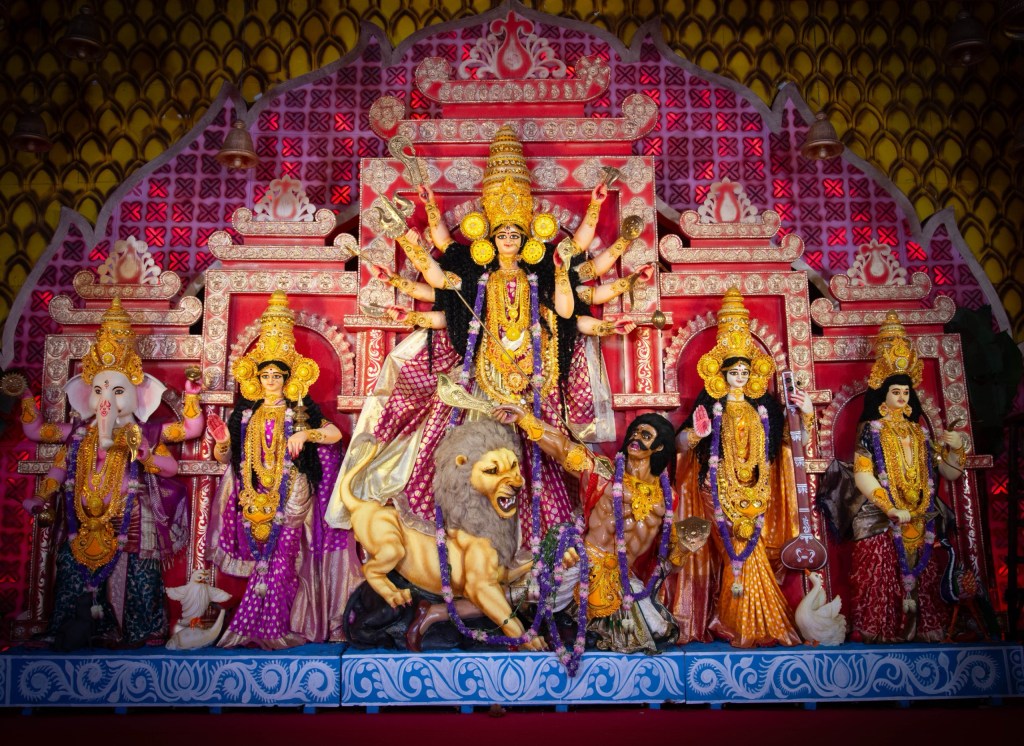
There has been another interesting development. For years, the divas of Indian screen, from Bengal to Bombay, have inspired the Pals[20] of Chitpore. Sometimes she resembled Hema Malini, sometimes Madhuri Dixit. The demon too has been modelled after the politicians who are seen as foes.

At Arjunpur near Dumdum airport, the Third Eye of Durga is the nib of a fountain pen – as is the pointed middle of the three-pronged trident, trishul: “The pen represents wisdom and thought, and it is also the contemporary weapon to protest and fight,” explained Shampa Bhattacharjee. The artist from Delhi had designed the icon while her husband, physicist, created the atmosphere with rotating lights and floating balls – al in luminous steel.

*

Durga as a feminist force is perhaps the most natural interpretation of the goddess who was construed as a Goddess because evil demons had sought immunity against all other forms of power save a woman. Durga was conceived as Durgati Nashini — Destroyer of Misfortunes. The mace, the trident, the circular Sudarshan, the bow and arrow, the sword – every single weapon that empowered her was gifted by a God, be it Vishnu, Brahma, Shiva or Agni, Vayu, Varun, or even Yama. Read, the masculine forces. Perhaps that is why, the jagirdars and zamindars, under the nawabs and the British Raj worshipped Shakti, the icon of empowerment. The Raj families of the City of Palaces, the Debs of Shovabazar, the Chowdhurys of Behala, the Roys and Duttas of Kalutola and Nimtala, the Mullicks of Marble Palace or Rais of Andul – they still pay their obeisance to the Image of Shakti. And the celebration in the ancestral homes of these bonedi – once aristocratic – families are a tourist attraction.

Ironic that, during the struggle for Independence from the imperialists, She became the embodiment of motherland. Abanindranath Tagore’s iconic painting of her as the embodiment of sacrifice stays etched in our hearts and our souls to this day. 

And when I stand before any invocation, in any form, in any corner of the subcontinent, these words of my father ring in my ears. “Imagine the map of India as you stand before Maa Durga. To her right are Lakshmi and Ganesha — the two realisations of Prosperity and Success — who are worshipped in Rajasthan, Gujarat, Maharashtra, Karnataka. On her left are Saraswati and Kartik — representing Learning and Wisdom and Craft — worshipped in Assam, Bengal, Orissa, and the Deccan. At her feet is the Mahishasur, also depicted in our epic as the Dusht Ravan who ruled Lanka. And above her, reigning from the chaalchitra is Mahadev Shiva, identified with the Himalayas. Asamudra Himachal, from the mountain to the ocean, it is our motherland — Bharat Tirtha[21].”

*

The crux of it? Durga Puja is not merely the worshipping of a Hindu god. What started as a religious phenomenon in the households of the rich or powerful is no longer merely ritualistic. In this millennium, it is a vibrant celebration involving, at every step, the Indian thought and creativity, mind and heart, economy and management. It knits the masses in more ways than one. The castes and classes, the highs and lows of society — no one is left out of the festivity. It is a sociocultural happening. Year after year after year it is, in the truest sense of the term, Sarbojanin.

Small wonder the largest public art festival of the subcontinent has been recognised by UNESCO as an Intangible Cultural Heritage!

[1] Lawyer’s house

[2] Father

[3] Bud

[4] A woman actor

[5] Krishna, give us a place at your feet

[6] Flavour or essence

[7] Publisher, name means progress

[8] Bengali Immigrant Society

[9] Chit chat

[10] Paternal aunt

[11] Sweet and savoury snacks

[12] Grandmothers

[13] Paternal and maternal aunts

[14] Worship of girl child

[15] Evening prayers

[16] Snacks given out as blessings

[17] Last day of Durga Puja

[18] Community Durga Puja

[19] The Best Durga Puja Display

[20] The statue makers

[21] Pilgrimage of India

Ratnottama Sengupta, formerly Arts Editor of  The Times of India, teaches mass communication and film appreciation, curates film festivals and art exhibitions, and translates and writes books. She has been a member of CBFC, served on the National Film Awards jury and has herself won a National Award. 

.

PLEASE NOTE: ARTICLES CAN ONLY BE REPRODUCED IN OTHER SITES WITH DUE ACKNOWLEDGEMENT TO BORDERLESS JOURNAL

Click here to access the Borderless anthology, Monalisa No Longer Smiles

Click here to access Monalisa No Longer Smiles on Amazon International
Categories
Essay

‘Rajnigandha’: A Celebration of the Middle-of-the-Road

By Tamara Raza

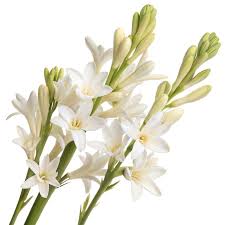
Tuberose, a perennial species of the asparagus family and a native of Mexico has somehow found a home in India too. It blooms at night, which makes sense as in Hindi, it’s a compound of two words – ‘Rajni’ means night, and ‘gandh’ is the smell. It exudes the intense smell of the night, and the long, slender stems supporting the white waxy flowers at the top reinforces its nocturnal beauty. In the world of perfumery, tuberose is a prime source of scent production.

shaam kī ḳhāmosh rah par
vo koī asrār pahne chal rahī hai
rajnī-gandhā kī mahak bikhrī huī hai
duur peḌoñ meñ chhupī dargāh tak


(In the silence of the evening
She is wearing a mystery
The aroma of rajnigandha is scattered
As far as the hidden shrine among the distant trees)


-- Dhoop Ka Libaas (The Robes of the Sun) by Yameen( 1286-1368)

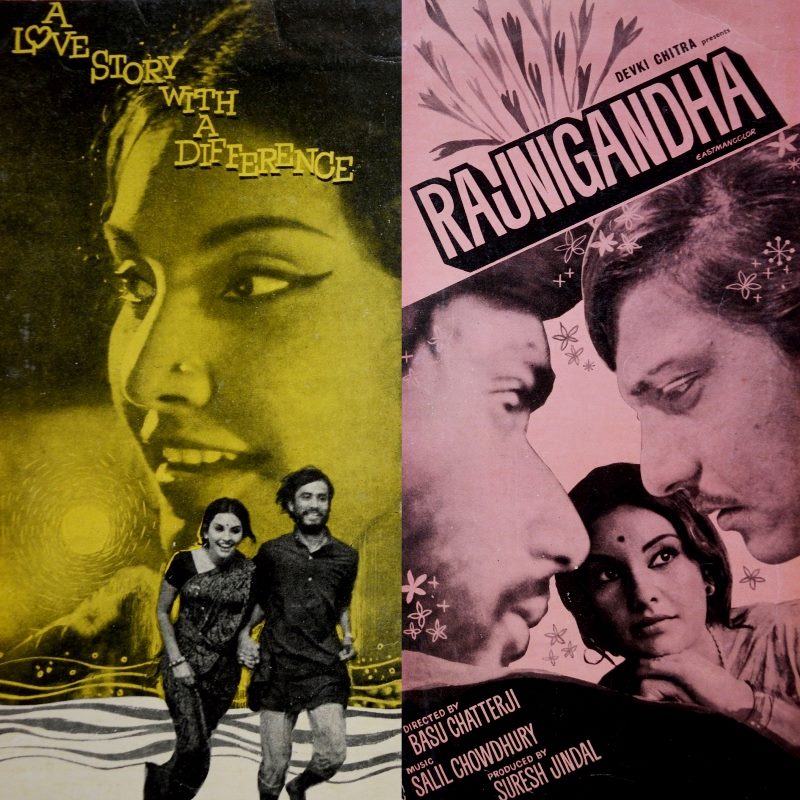
Like the aforementioned nazm, the perfume of tuberoses seem emanate from Basu Chatterji[2]’s 1974 film Rajnigandha too, a movie based on Mannu Bhandari’s story Yahi Sach Hai (This is the Truth). Deepa, played by Vidya Sinha, is the protagonist of the film who struts across the road, waits at a bus stop, with her saree pallu[3] resting on her right shoulder, and is annoyed at Sanjay’s constant tardiness. Sanjay, portrayed by Amol Palekar, is a freewheeling man with a chronic urge to converse excessively and forgets almost everything he was supposed to do. But when she looks at the bunch of Rajnigandha he brings for her, she forgets all her qualms about him. Rajnigandha phool tumhare yunhi mahke jeevan mein (May the fragrance of your tuberose keep blossoming in life), the verse from the film’s song, likewise, is Deepa’s prayer for life.

Deepa, a headstrong woman living in the Delhi of the 1970s, is in the final stages of writing her PhD thesis and is on a job hunt. Sanjay, on the other hand is a more laid back fellow with “just a BA” working in a firm, and fortunately does not suffer from a fragile male ego which feels threatened by a more qualified female partner. A job interview entails Deepa traveling to Mumbai where she meets her former flame, Navin (played by Dinesh Thakur). Seeing him again rekindles her feelings for him. Navin is a go-getter living the fast life of Mumbai, whose advertising job made his way into the party life of the city. Navin’s personality symbolises thrill and adventure, whereas Sanjay on the other hand perhaps defines stability, if not standstill, in life. Deepa is thrown into the dilemma of who should she choose, Navin or Sanjay, much like the film’s song, Kai Baar Yunhi Dekha Hai (Often, I have Seen), which essentially is the musical expression of Deepa’s situation, that says “Kisko Preet Banau? Kiski Preet Bhulau?” (‘whose love shall I accept, whose love shall I forget?’). While Navin does notice Deepa’s appearance, manages to be on time, he is also the one who broke her heart in college. Sanjay, on the other hand, who is hardly on time, forgets the film tickets he was supposed to bring, fails to notice what saree Deepa was wearing, and annoys her to the core, would probably never go as far as breaking her heart.

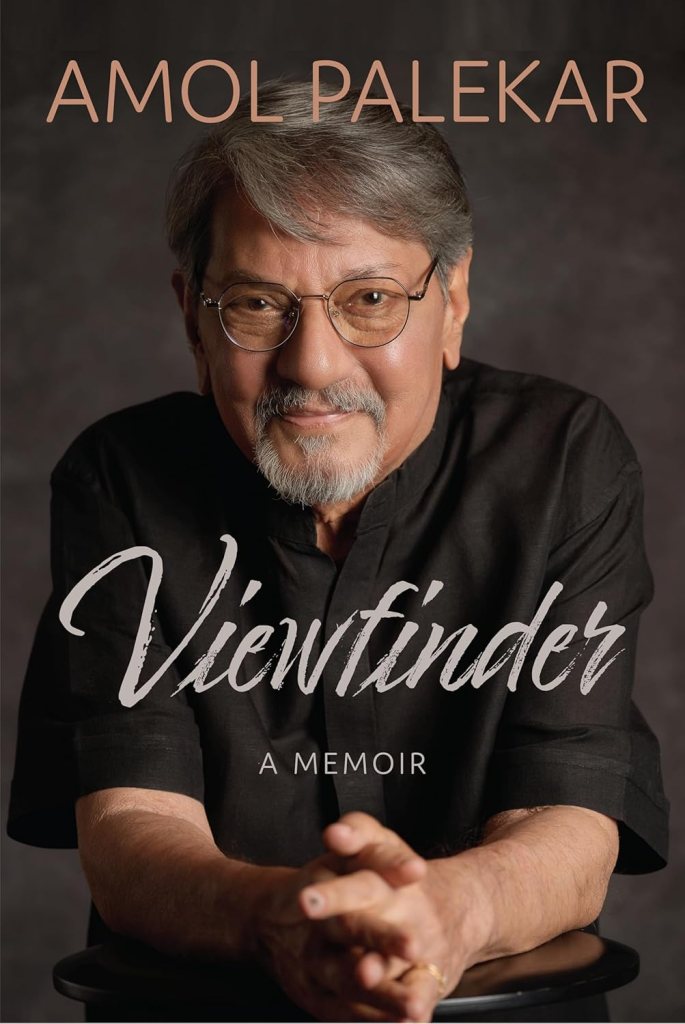
“Crafting Sanjay—a loquacious character who never explicitly expresses love but conveys it through his eyes—without making him seem selfish, was a challenge,” writes Amol Palekar in his memoir, Viewfinder. Both men however, had one similarity – the zeal for protesting, for unionising against injustice in their respective positions, a virtue that presumably was not surprising for the people belonging to the first generation of young independent Indians. The Deepa that Mannu Bhandari writes about appears firmer and bolder in her stances than the one Basu Chatterji crafted on screen, who is more shy, more reticent and even more confused.

While India did get its first and only woman Prime Minister by the 1970s, in Bollywood, it was the era of the ‘Angry Young Men’ that defined the careers of actors like Dharmendra, Amitabh Bachchan, and Rajesh Khanna, who embodied the larger-than-life character of the ‘hero’ in Hindi cinema and received a cult following as well. On a parallel but divergent plane, there emerged a different kind of male protagonist: he was the guy next door, a middle-class, urban, white collar office goer, who travelled in public transport and spoke no flashy dialogues. A point to be noted here is, that the said definition of the character also included that they were primarily English-educated and from a comparatively well-off background — compounding to the ‘middle-class’ phenomenon in urban India. This was the characterisation that Amol Palekar adopted with films like Rajnigandha, Chhoti Si Baat (A small Matter, 1975) and Baaton Baaton Mein (Between Conversations, 1979). Basu Chatterji’s films underscored this portrayal of the ordinary, urban middle class milieu which was often absent from the mainstream commercial Bollywood films from that time.

With no surprises, the men in these films, like Sanjay in Rajnigandha, are not perfect feminist characters. From a snapshot in the film, Sanjay tells Deepa to keep her money to herself after marriage because the household shall be run with “his” money. Ideally, in an equal household, if both partners have a source of income, the expenses should be shared by both of them, which defines the ‘partnership’ in a relationship in the most literal sense of the term. Considering the time and space of when the film was made, it appears that while Chatterji, consciously or not, did try to incorporate modern ideas of women’s financial independence, he also at the same time, could not completely erase how a conventional ‘man’ from a patriarchal ethos would react — by still upholding the status quo of hierarchy between the two sexes.

Despite these few shortcomings in the film, Deepa’s character contains a multitude of complexities, unlike many films of the seventies where female characters are often reduced to archetypes as that of the demure, submissive wife, the sacrificing mother or the unattainable love interest. She is not an overtly assertive individual but is also neither a passive receiver of love nor a woman who blindly conforms to patriarchal conventions; rather, she is someone who constantly engages with her emotions, doubts, and desires. Her emotional conflict—to choose between thrill and stability, novelty and convention—reflects the larger question of female autonomy in a culture where women were often expected to follow predetermined roles. Although Deepa’s predicament is not a radical departure from typical romance plots, her internal journey is far more introspective and self-aware than the majority of female characters in the films belonging to that era. She is not a mere object of male desire or a meek heroine waiting to be ‘saved’ by a male hero. She is an individual in her own right, capable of making difficult choices that reflect the evolving understanding of herself.

Deepa’s decision-making isn’t straightforward or even particularly idealistic, but not once does she lose her individual agency to feel for herself and the emotional depth in her character offers a fresh perspective on the representation of women in Hindi cinema, portraying them as individuals with competing needs and aspirations, rather than as mere props for male narratives. Maeve Wiley, the protagonist from the Netflix show, Sex Education, calls “complex female characters” her “thing.” Well, this author’s proposition would be to include Rajnigandha’s Deepa as well into this list.

In its subtle critique of the pressure on women to conform to the traditional idea of womanhood, this film however does not provide any revolutionary discourse to the existing social and cultural norms surrounding women’s roles. It still runs on the same old conventional path that expects a woman’s happiness and worth to be defined by her relationship with a man. But it nevertheless has been able to depict a self-reliant woman whose existence itself is an act of revolution in male dominating spaces such as that of earning a doctorate in the 1970s.

Basu Chatterji, known for his ‘middle-of-the-road’ cinema was part of the Film Society Movement. According to historian Rochona Majumdar, the Film Society activists grappled with the definition of a “good” film. Was it’s primary goal to improve the lives of the Indian people, a goal that mainstream (profit-driven) “commercial” cinema had failed to accomplish? Or was it just to “mirror the aspirations of common people” through cinema, as one early film society activist put it? In line with the same thought, this film with no dramatic plot twist or a visible antagonist per se, stands out as a celebration of the ordinary, an ordinary man, an ordinary woman, travelling in public transport, with ordinary aspirations. Not to mention, this ‘ordinariness’ had a certain class and religious position as well.

The tuberoses could also perhaps be taken as an allegory of the ordinary. While conventionally, a rose is sought to be the flower connoted with love and romance, with countless romantic poems mentioning it, the tuberose in comparison appears to mundane. When one buys a bouquet, two-three tuberose stems are often seen given the geographical and seasonal context, but just as a supplement to the more prominent flowers wrapped in it. So, does this flower in the film symbolise a sense of yearning or through it, is it an attempt to tell an ‘ordinary’ love story?

The film’s title Rajnigandha does not just symbolise love or longing but aptly reflects the emotional tone of the film. Just as the flower blooms at night, Deepa’s journey towards self-realisation and emotional clarity unfolds in the quiet, introspective passages in the story, rather than in conspicuous expressions of passion or drama. Her feelings and relations are complex, layered, and occasionally challenging to describe, much like the flower’s euphoric yet elusive nature.

It won the Filmfare Critics Award for Best Movie, with two songs penned by the Hindi lyricist Yogesh, bagging Mukesh[4] the National Award for Best Male Playback Singer, and no distributor willing to buy the film initially, Rajnigandha also passes the Bechdel Test which examines how women are represented in films with distinction. This to me is its greatest triumph. Its delicate yet profound meditation on love, choices, and identity, is a masterwork of Indian cinema that contemplates on the silent, unpronounced qualms of daily life by fusing realism with emotional profundity. An honest depiction of human emotions, tastefully rendered in a small, intimate canvas, is what all works of Basu Chatterji (not just the film in question) deliver as a welcome diversion in an age of exaggerated melodrama and action. And Rajnigandha is a film that reminds people to value the nuances of human relationships and the elegance of slow, quiet cinema, making it a timeless classic.

[1] Perfume

[2] Basu Chatterjee, film director and screen writer (1927-2020)

[3] Loose end of a saree

[4] Mukesh Chand Mathur (1923-1976), playback singer in films

Bibliography:

  • MAJUMDAR, ROCHONA. “Debating Radical Cinema: A History of the Film Society Movement in India.” Modern Asian Studies 46, no. 3 (2012): 731–67. http://www.jstor.org/stable/41478328.
  • Read full Nazm by Yameen, Rekhta.
  • Sansad TV, Guftagoo with Amol Palekar, YouTube, 2015, October 21.

Tamara Raza is an undergraduate student at Indraprastha College for Women, University of Delhi.

.

PLEASE NOTE: ARTICLES CAN ONLY BE REPRODUCED IN OTHER SITES WITH DUE ACKNOWLEDGEMENT TO BORDERLESS JOURNAL

Click here to access the Borderless anthology, Monalisa No Longer Smiles

Click here to access Monalisa No Longer Smiles on Amazon International
Categories
Discussion

How Gajra Kottary Weaponises Words

In a medium that is known for its regressive content, Gajra Kottary, novelist and short-story writer, has time and again gone against the tide and broken taboos. Shantanu Ray Chaudhuri looks at five shows she has written that went against the grain and emerged triumphant…

Growing up in the 1980s, one of the many pleasures of a less cluttered and leisurely time was the birth of the TV series. Many people I know would swear by the fact that the first of these represented the best of Indian television. Even close to forty years later, I can still rattle off the days on which each was telecast: Karamchand on Mondays; Hum Log[1]and then Buniyaad[2] on Tuesdays and Saturdays; Khandan[3] on Wednesdays; Ados Pados[4]on Thursdays; Yeh Jo Hain Zindagi[5]on Fridays. You had stalwarts like Satyajit Ray, Mrinal Sen, Shyam Benegal and Basu Chatterjee make fine works for the television.

Sometime by the end of the decade kitsch entered in the shape of Ramayan and Mahabharat. I moved on and lost touch. A resurgence of sorts happened with the coming of cable television, and we had path-breaking shows like Shanti and Tara. And then it became increasingly difficult to keep track of TV shows. The shows changed beyond recognition. Led by the likes of Kyunki Saas Bhi Kabhi Bahu Thi,[6] they became more and more ridiculous in the worlds they represented. One word came to be bandied about regularly with respect to soap operas: regressive.

However, like all generalised judgements, a blanket application of the word is unfair to a number of serials that tried to, and often succeeded in breaking taboos, while operating within the limitations dictated by the medium and the grammar of its narrative. And the one writer who has time and again bucked the trend, gone against the tide, is Gajra Kottary, the creator of historic shows like Astitva: Ek Prem Kahani[7]and Balika Vadhu.[8]

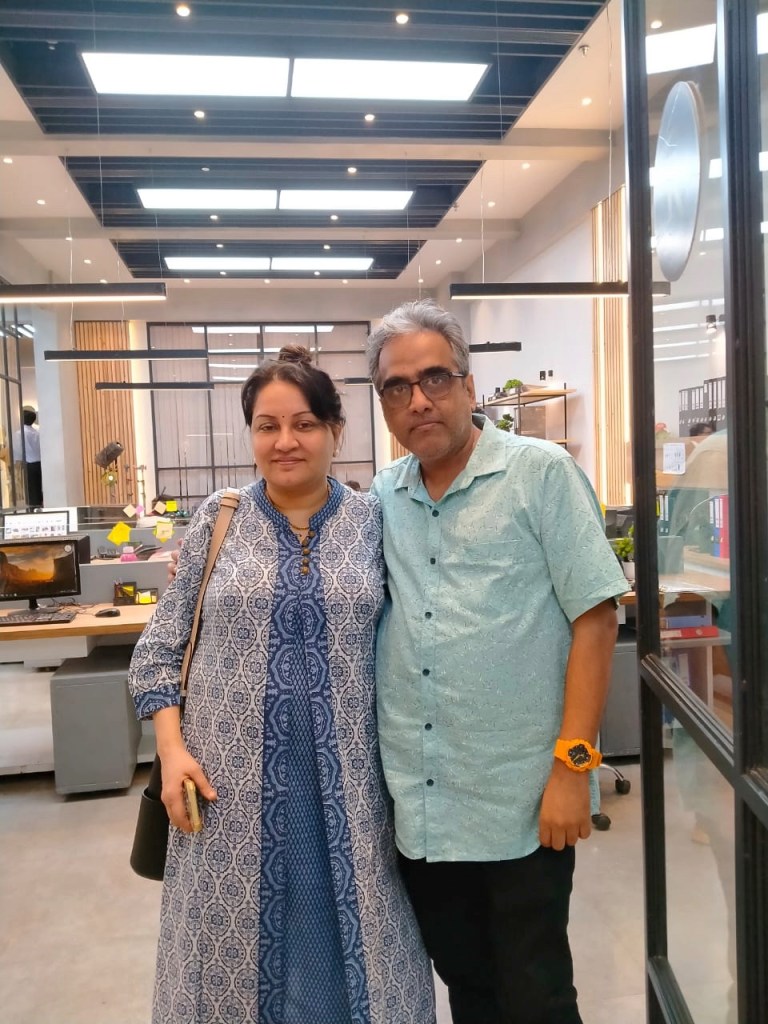
Gajra Kottary with Shantanu Ray Chaudhuri. Photo provided by Shantanu Ray Chaudhuri

Journalism and Fiction Writing

One of the reasons Gajra manages to break new ground in her television narratives might have something to do with her training as a journalist. “IIMC [Indian Institute of Mass Communication] was a tough course to get into and we had a few fresh graduates like me, and a whole lot of older and established professional journalists from other non-aligned countries studying with us, a great mix,” she says. It provided her with a grounding in fact-based narratives while polishing her skills as a writer, of which she had provided glimpses in college, when two stories she wrote got published in Eve’s Weekly, along with two fiction-style middles in The Times of India. “The IIMC stint helped because as I have observed over the years, I have more respect for the sanctity of facts even while taking my flights of fancy than others in the business. I take fewer creative liberties than others. I have done more realistic shows on television which helped forge a distinct identity for my writing.” But it also left her confused since political and economic writing held no interest for her and Delhi offered avenues only for those.

Destiny intervened in the form of Cupid. Falling in love with Sailesh Kottary, a “hotshot and hardcore journalist”, she moved to Bombay. It was here, as a “stay-at-home mom”, that she gave wings to her imagination and honed her writing skills. Watching serials like Saans[9] and The Bold and the Beautiful might also have helped imbibe certain aspects of writing for a visual medium. Her first work of fiction, Fragile Victories, a collection of stories, led to her first assignment in television. She had sent a copy of the book to Mahesh Bhatt, who passed it on to Soni Razdan. Impressed by the collection, the latter signed Gajra up for the story and screenplay of her first TV production, Hamare Tumhare[10](2000), which marked her TV debut, before Astitva made everyone sit up and take notice.

If IIMC shaped her in some ways, another skill-set that has held her in good stead probably came from her experiments in writing fiction. Fragile Victories was followed by another collection of stories, The Last Laugh, and the novels Broken Melodies, Once Upon a Star, Girls Don’t Cry and Not Woman Enough. These helped her to keep to a discipline that could go missing in the never-ending juggernaut that is the TV soap opera. They also are testimony to her willingness to push the envelope when it comes to narratives and characters. Not many know that much before Indian writers, particularly women, began addressing issues of sexual identity and same-sex relationships, Gajra had written about these in her fiction. As she puts it, these themes “continued to ‘consume’ me”. Not Woman Enough may have been published as an e-book only recently, but it evolved from a story that she had published way back in 2003. “I felt that I hadn’t done justice to the theme in the short format, so I wrote a full-length novel titled Not Woman Enough and felt finally relieved of my obsession.” Another story, ‘Two Gold Guineas’, evolved to her third novel Girls Don’t Cry, a pun on the expression ‘boys don’t cry’ and “an ode to the bravery of women and the friendship between a grandmother, mother and daughter”.

What is startling about these works of fiction is her ability to address taboos. Not Woman Enough not only deals with a same-sex relationship, but Gajra has the audacity to set it in rural Rajasthan as opposed to an urban setting, where it would have probably been just another story. She has the perspicacity to understand that the stakes are so much higher for first-generation characters experiencing the forces of social liberation while battling age-old customs. It is the same acuity that she brings to bear upon her iconic TV shows, which have time and again shown what is possible in a medium that allows little leeway for out-of-the-box thinking. 

Astitva: Ek Prem Kahani (2002-2006, Zee TV)

Running 668 episodes, over a period of three-and-a-half years, this is the series that launched Gajra into the big league. Today, twenty years after the first episode was aired, an older woman-younger man relationship might appear staid. But back then it was bold, and Indian television had not seen anything like it. It made an icon of its lead, Niki Taneja, who plays a doctor who falls in love with a man ten years younger. What stood out is the maturity with which the series unfolds, largely devoid of the excesses that came to mark television in later years. “The first TV show maker I decided to call upon was Ajai Sinha, who had directed shows like Hasratein [11]and Justajoo[12]. He had been planning a show called Astitva with a bold theme and my timing was bang-on. It spoilt me enough to believe that television too was conducive to the kind of work I felt happy doing.” That this show managed to hold its own against a raging Kyonki[13], speaks volumes of the writer.

Balika Vadhu (2008-2016, Colors TV)

2167 episodes! Yes, you read that right. One of the longest-running shows on Indian television, this cemented Gajra’s reputation as a writer. Here again, Gajra was going out on a limb addressing a much-abused tradition prevalent in large parts of India. And sure enough, the press wasn’t flattering. It is one show that divided opinion like few others. “Yes, we received some negative press, because Anandi was this irrepressible kid, a happy child who kept bouncing back despite dealing with the dark consequences of child marriages of the past playing out in the present. It was a calculated approach as child marriage is a dark and gloomy issue. It was a conscious decision here as we needed to keep the cheer, but critics felt that we were glorifying child marriage. I think they were missing the woods for the trees.”

One possibly needs to understand the medium and its viewership to get a sense of what Gajra means. Unless the packaging is glossy enough – colourful clothes and jewellery – audiences might have been put off entirely by what is a repulsive subject. “And that would mean we would not be able to get across the underlying message of the show. These tactics are important due to the challenge of the medium of television, and the terror of the remote control. It was a classic case of the sugarcoated pill doing its work.”

Apart from the writing, the series was also recognised for its iconic performances and comments on several social issues that ail Indian society, which were woven in organically without being preachy. It also had an authentically rustic feel thanks to Purnendu Shekhar, whose concept it was. Those decrying the glossy packaging forget that the issues the series addressed included girl child education; peer, sibling and parental pressure to do the best; child labour; the begging racket; forced prostitution behind a legal façade; quacks and medical malpractices; date rape; adoption; alcoholism; divorcee and widow remarriage; trafficking in women; surrogacy; juvenile delinquency and teenage crimes, among others. From the comfort of our air-conditioned condos and offices, far removed from these realities, it was easy for the elitist press to criticise the series.

One standout episode dealt with the protagonist’s first experience of menstruation. This is a subject still, despite Padman and the increased conversation around it, spoken of in hushed tones. It is fascinating to hear Gajra’s take on this: “I remember how we involved Avika’s [the child actor who played Anandi] mother to explain to the child privately about menstruation before we shot the scene showing a young girl’s trauma when it happens to her as a bahu in a conservative household. Lots of people wrote to us about delaying the marriages of their girl children after watching Balika Vadhu. There was a girl who was emboldened enough to annul her marriage that had happened as a child when she turned eighteen. We received mails even from parents of city girls who were now reversing their decisions to get their girls married by the time they were sixteen.”

There was of course the flipside of popularity, when the writer received a death threat on Twitter if she dared to kill off the character of Shiv (played by Siddharth Shukla). “Those were the early days of social media, so real people started to write in with their reactions which were usually very intense and sometimes downright ridiculous.”

Buddha (2013-2014, Zee TV, DD[14] National)

This series, spanning 55 one-hour episodes, was a huge challenge, involving as it did a historical figure, and one of the most important religious figures of the world. But trust Gajra to approach the subject from a refreshing point a view: as she points out, in school textbooks we go straight from the story of Gautama leaving home to being under the Bodhi tree and achieving enlightenment. But his experiments to arrive at the truth had many stages to it. As she says, “What it did was to dispel my own myths about the Buddha’s life. I had always felt disturbed about his abandonment of his wife and child for his own spiritual search.”

It helped that the show came to her at a point in life when the strong opinions and idealism of youth, both professionally and personally, had given way to the realisation that nothing is or can be ‘perfect’. By the time the show was done she too had evolved to accept that the Buddha had to be true to his heart’s calling. “I understood the ‘larger purpose’ of his life. I came to terms with the ‘abandonment’, though my heart still bleeds for Yashodhara and Rahul. What also helped was learning about Yashodhara’s evolution, albeit painfully, to want to join his sangha voluntarily, and him helping her find her ‘larger purpose’.” The series focuses on aspects of his life after the Enlightenment that many are not aware of. It is this larger view that shapes the series, making it a departure from the dime-a-dozen ‘mythological/religious’ shows with ‘special effects’ that blight our senses.

Silsila Badalte Rishton Ka[15] (2018-2019, Colors TV)

Extramarital affairs are the oxygen to the beast that is the TV serial. Offhand, I can think of not one serial that does not have a million and more permutations and combinations of the theme. So, it takes a really perceptive writer to give this tired trope a new perspective, and Gajra manages that in Silsila, upending the traditional way that extramarital affairs are portrayed. “Is the ‘other’ woman necessarily a femme fatale, a super-cool career woman, and the wife a boring domestic goddess or could it be the other way round also?” she asks.

The series provides further proof of her ability to give a new spin to a theme that’s been done to death. As she says, “I am emotional about this show as it was inspired by what happened with some close friends and associates. I needed a relief from all the social stuff in Balika Vadhu. Also, I believe that an author’s voice in terms of standing for the right thing can and should reflect in any kind of story, even if it’s not apparently one on a social issue. The classic extramarital affair with the eternal conundrum is a fascinating aspect of human relationship … does a third person enter the picture because a marriage is already collapsing or does the entry of a third person lead to the collapse of a marriage. Is it the cause or effect?”

Molkki (2020-2022, Colors TV)

After Silsila, it was back to a classic social issue for Gajra. At the heart of this show is the tradition of bride-buying in Haryana, which in turn has its roots in the scarcity of brides due to female feticide/infanticide. As Gajra says, “Molkki was a Covid baby, my second project with Ekta Kapoor and it was made keeping in mind all commercial considerations.”

Female infanticide is a recurrent theme in several of her stories. She writes about it in her novel, Girls Don’t Cry, while Not Woman Enough, published as an e-book by Juggernaut, has this as a strong strand, being part of the protagonist’s backstory impacting her psyche. Again, what needs to be noted here is the writer’s willingness to explore issues that contemporary television is not known for, even if the execution falters given the demands of the medium. 

Addressing the Regressive Nature of Television

But Gajra does agree that on the whole, television is regressive. Though it is described as a writer’s medium, there’s only so much that writers can do in terms of trying to infuse new ideas and nuanced storytelling in the face of TRPs[16] and other market considerations and entrenched beliefs that ‘bas yahi chalta hai’[17]. So, writers take the easy way out, churning out what the studio executives want. “For the handful of people prepared to take the risk and at least try to do things differently, there are scores of others who would like to use every gimmick in their book and keep regurgitating bad content.”

In terms of audience profiling too, what’s happening with television is that most of the intelligentsia has shifted to web shows. The television viewership class has gone lower down in the social scale. So when content is being made and consumed by a non-thinking class, it also starts reflecting in the TRP studies. The classic chicken-and-egg syndrome.

Looking Ahead

Gajra is currently basking in the success of her latest show, Na Umr Ki Seema Ho,[18] which recently celebrated its hundredth episode. The show is being hailed as ‘different’ by many. As she says, “The most heartening comment that I often get to hear is that ‘it’s the first TV show I have started watching after many years’, from people who had switched full time to watching web shows.”

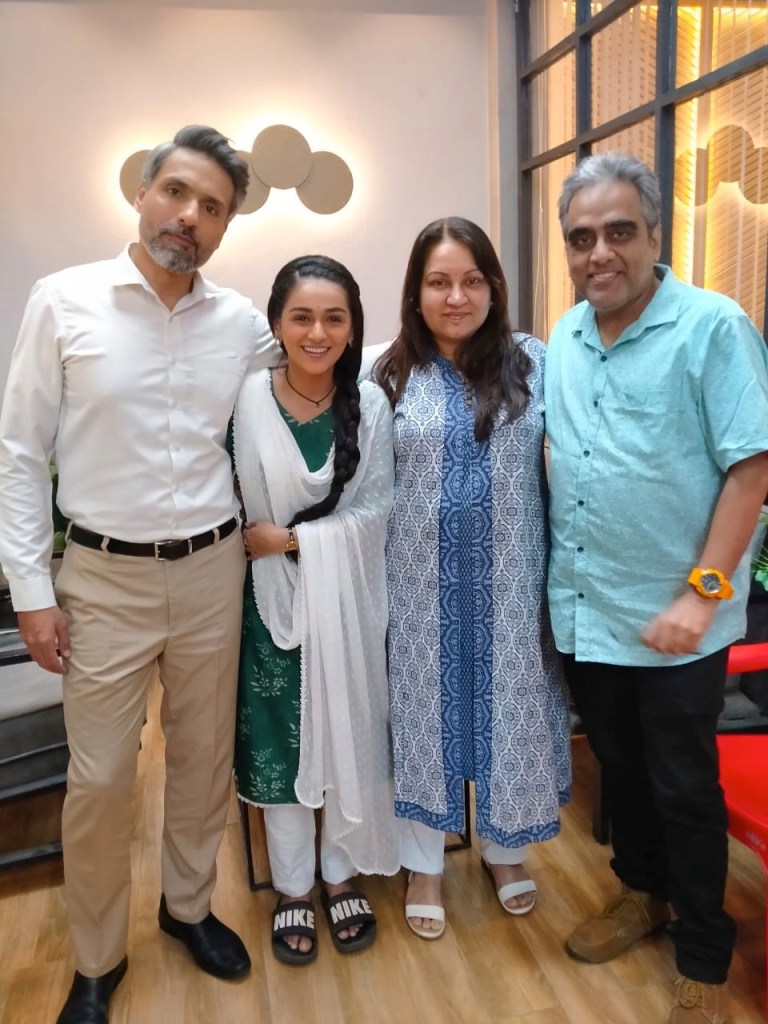
Shantanu and Gajra with the lead actors of Na Umr Ki Seema Ho. Photo provided by Shantanu Ray Chaudhuri

Any grand obsession, a show she would like to write? “As far as TV goes, I have always dreamed of doing a version of one of my all-time favourite films, Abhimaan[19], with or without the music background. The subject becomes more and more relevant every decade. Frankly, no channel wants to touch it. Though the people one speaks to share my admiration for the story, the ‘system’, they say, is not conducive to making it. I also want to adapt my first novel, Broken Melodies, as a web show or film. It’s the story of a girl growing up in the seventies, torn between the values and stifling world that her classical musician father [an autobiographical element given that Gajra is the daughter of the classical maestro Pandit Amarnath] represents and the liberation that the English education sponsored by her mother affords her.”

One can only say, more power to writers like her, and the breaking of glass ceilings and taboos.

(Originally published in The Telegraph, Kolkata)

Addendum

Shantanu: You grew up in Delhi in the 1980s. That was the birth of the TV era with Hum Log, Buniyad, and all those glorious serials. Did any of these influence you?

Gajra: You’re so right, Shantanu, they hugely did, except that there was no plan that I had then, to actually use that impact to write something similar. I loved both these shows purely as a viewer. Hum Log did tackle social issues, for example, dowry, but why I liked it was that it showed the clash of values within a family with different generations, and through that, it entertained and made one feel and think – the sensitization process as its termed. Later, I learned that Hum Log was inspired by the Sabido method (originating in Mexico) where TV is used as a medium to bring about positive social change by making viewers ‘feel and think’ rather than preaching to them.

I loved Buniyaad for a purely sentimental reason. My parents were from Lahore and Multan respectively and had come as refugees to Delhi, so we had grown up hearing stories of Partition and here was a show that brought that era alive for me in an extremely moving and entertaining way. So maybe subconsciously both these shows did impact my psyche – as in it was possible to talk emotions that were universal, even while having a responsible author’s voice.

Shantanu: What do you attribute the change in the style and content in TV soaps, first with Tara and Shanti, and then Kyunki Saas Bhi

Gajra: Tara and Shanti were the first movers, coming in like a breath of fresh air after the DD days which were associated with somewhat stodgy storytelling, Buniyaad etc., being the shining exceptions. Tara and Shanti were great in terms of revolving around thinking and evolved women, but perhaps were ahead of their times…they still are, given where TV storytelling has gone.

By the time Kyunki Saas came to TV screens, middle- and lower-middle-class homes could afford a TV set, so there was a genuine need for TV to go more middle class in its appeal. So, we had a plethora of shows with joint families and generations under one roof, which truly was the reality of such homes, and which therefore connected with the masses easily. Ekta Kapoor also upped the drama quotient hugely, so there was no way it wasn’t going to work with the masses.

Unfortunately, however, everyone went about copying the formula and there was the overdose factor. So, TV honchos were afraid of trying different subjects and worlds and that for a very long time became the bane of TV writers.

Shantanu: On Buddha: ‘dispel your own myths, you say …’ What apart from his abandonment of his wife and child haunted you. Do you reconcile with the abandonment once you had done the writing for this? Did it make sense now?

Gajra: Buddha, the show, came to me at a point in life when the strong opinions and idealism of youth – both in professional and family life – had given way to some acceptance and the realisation that actually nothing is or can be ‘perfect’. And certainly not any decisions of life that we might make. So, we might as well make the decision, and accept and live with the consequences as positively as one can. I know that that’s so ‘anti’ the way today’s youngsters think!

So yes, from his wife and family’s point of view his decision seemed ‘selfish’ but he had to be true to his heart’s calling and that so-called ‘selfishness’ of his is what made him give so much to the world to make it a better one. I understood the ‘larger purpose’ part of the Buddha’s life after I started researching more and more while writing the story for the show. I came to terms with the ‘abandonment’, though my heart still bleeds for Yashodhara and Rahul, when I think about them. What also helped was me learning the historical truths about how Yashodhara evolved, albeit painfully, to want to join his sangha voluntarily at some point, and him helping her find her ‘larger purpose’. 

Also, what I realised is that in school textbooks we go straight from the story of Buddha leaving home to being under the Bodhi tree and achieving enlightenment and uplifting the world. This had been my myth too. But, in reality, the Buddha’s many experiments to arrive at the truth had many stages to it. He went through extreme deprivation, abnegation, self-loathing and much else, before he arrived at the eight-fold path – the most practical and fair way to lead life in any time and space.

And he certainly did not advocate renunciation for all or even the perception of Buddhism as a religion. His was the ultimate live-and-let- live approach to life – just that his methods helped his followers lead a life of peace and equanimity within their chosen path. Through writing the show I realised that there could be no other way of life that was so compatible with the modern way of thinking and doing. So I am not a ‘Buddhist’ but I still try to recall the eight-fold path at various difficult points in my life and it really helps me.

Shantanu Ray Chaudhuri is a film buff, editor, publisher, film critic and writer. Books commissioned and edited by him have won the National Award for Best Book on Cinema twice and the inaugural MAMI (Mumbai Academy of Moving Images) Award for Best Writing on Cinema. In 2017, he was named Editor of the Year by the apex publishing body, Publishing Next. He has contributed to a number of magazines and websites like The Daily Eye, Cinemaazi, Film Companion, The Wire, Outlook, The Taj, and others. He is the author of two books: Whims – A Book of Poems(published by Writers Workshop) and Icons from Bollywood (published by Penguin/Puffin).

.

[1] TV series, translates to ‘We – the People’

[2] TV series, translates to ‘Foundation’

[3] TV series, translates to ‘Dynasty’

[4]   TV series, translates to ‘Neighbours’

[5] Comedy TV series, translates to ‘This is life’

[6] TV Series, translates to ‘Because the Mother-in-law was a bride too’

[7] TV Series, translates to ‘Identity: A Love Story’

[8] TV Series, translates to ‘Child Bride’

[9] TV Series, translates to ‘Breath’

[10] TV Series, translates to ‘Ours & Yours’

[11] TV Series, translates to ‘Desires’

[12] TV Series, translates to ‘Search’

[13] TV Series, translates to ‘Because’

[14] Doordarshan or DD, Indian public service broadcaster founded by the government of India

[15] Translates to ‘Changing Relationships’

[16] Target Rating Points

[17] Hindi phrase: ‘This is what works…’

[18] ‘Age is just a number’, literal translation ‘Age has no boundary”

[19] Translates to ‘Ego’, 1973 Bollywood film

PLEASE NOTE: ARTICLES CAN ONLY BE REPRODUCED IN OTHER SITES WITH DUE ACKNOWLEDGEMENT TO BORDERLESS JOURNAL

Click here to access the Borderless anthology, Monalisa No Longer Smiles