Categories
A Special Tribute

Will Peace Come Dropping by?

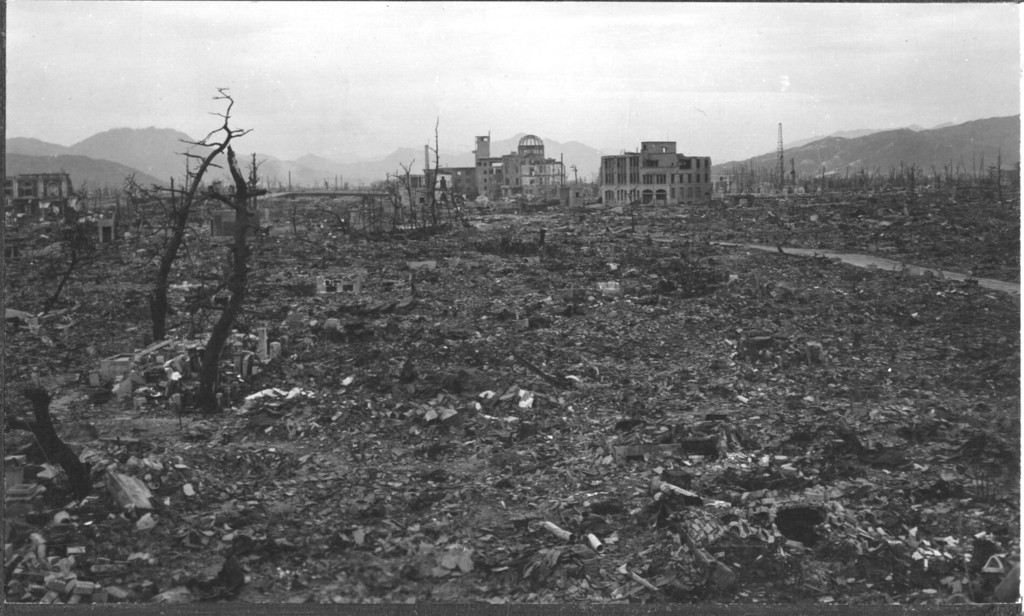
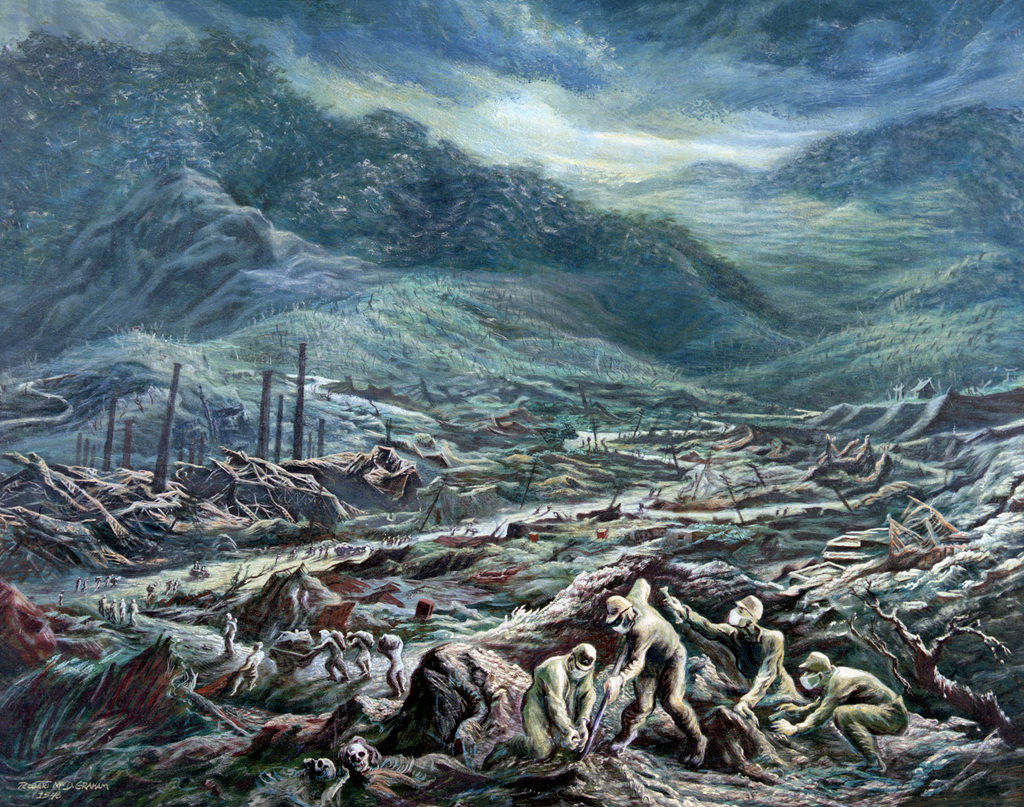
When in 1945, the Allied forces dropped atom bombs on August 6th in Hiroshima and on August 9th in Nagasaki, the Second World War drew Japanese aggression to a halt. But what was the impact on the lives of those innocents whose home, family and future changed forever? Their lives were wrecked — within a few seconds for no fault of their own. The impact clearly continues to ravage the second generation, as can be seen from the narrative of a hibakusha’s daughter who shares her travails while expressing her candid views on the recent movie, Oppenheimer, and the sale of ‘Boppenheimer’ products. She writes: “I live with it1 now having a chronic progressive nerve pain disease. My damaged immune system is attributed to my mother’s exposure to radiation from the atomic bombing.”

Are we forgetting that past, where two whole towns were decimated by atomic bombings with uncountable numbers of deaths and suffering handed down generations? Will we repeat the horrific story again to resolve issues as conflicts continue to ravage the planet with weapons, without considering their impact on the already felt climate crises? Will there be a replay of the bombing of 1945 to annihilate a people, their way of life and create suffering among all humanity? We may not be around to comment on the outcome!

Way back in 2017,  climate experts contended that in case of another such bomb blast, “The effect would be similar to that of the giant meteor believed to be responsible for the extinction of the dinosaurs. This time, we would be the dinosaurs.” 

With that in mind, we hope for a world without wars. In this special edition, writings look for peace by creating awareness and suggesting alternatives. Kathleen Burkinshaw writes about the 1945 bombings and her perspectives on media packaging of mushroom clouds. We have a story from a soldier’s perspective during the First World War by the eminent Bengali poet, Nazrul, who fought in it as a soldier for the British army. Current conflicts show up in the writing of Ramy-Al-Asheq, who was born in a refugee camp in the Middle East. They move to Ukraine with voices of Lesya Bakun, a refugee on the run, and Ron Pickett, a US army veteran. Poetry on Myanmar in the past by Sister Lou Ella Hickman and a story of the Rohingya’s plight by Shaheen Akhtar brings the focus into civil wars within Asia. More poems by Don Webb and Michael Burch urge for peace through poetry. Awareness about conflicts that nonetheless impact an interconnected world are brought in with interviews with journalists who were in Afghanistan (Andrew Quilty) and Myanmar (Jessica Muddit) when the takeovers by the current regimes started. We conclude with a discussion for alternatives towards a better future with Anthony Sattin.

Non-Fiction

Mushroom Clouds and Movies: Response from a Hibakusha’s Daughter: Kathleen Burkinshaw, a second generation victim who suffers nerve disorders from the atom bomb dropped on Hiroshima, where her mother watched her own father perish, responds to the recent media packaging of the event. Click here to read.

The Refugee and the Other, an excerpt from Ever Since I Did Not Die by  Ramy Al-Asheq, translated by  Isis Nusair. Click here to read.

Poetry 

I am Ukraine by Lesya Bakun, a refugee from Ukraine. Click here to read.

Wars and Rumours of War, a response on the war in Ukraine by Ron Picket, a a retired naval aviator with over 250 combat missions and 500 carrier landings. Click here to read.

My Visit to Myanmar in 1997, a poem about peace in the land where Buddha flourished by Sister Lou Ella Hickman. Click here to read.

Philosophical Fragments by Don Webb, an anti-war poem. Click here to read.

Poetry for Peace by Michael Burch. Click here to read 

Fiction 

Hena is a short story by Nazrul from the perspective of a soldier during the first world war, translated from Bengali by Sohana Manzoor.  Click here to read.

The Magic Staff is a poignant short story about a Rohingya child seeking refuge by Shaheen Akhtar, translated from Bengali by Arifa Ghani Rahman. Click here to read.

Interviews 

A discussion about Afghanistan, with journalist Quilty who went back to Kabul as Taliban entered the city. Click here to read.

Keith Lyons talks to Jessica Mudditt, who watched from within the country as the Myanmar Junta took over. Click here to read.

Could there be a way out of this world wide unrest? A discussion with Anthony Sattin as he explores concept of brotherhood unique to earlier times, when borders were not this well defined. Click here to read.

*
  1. the impact of the atomic bomb ↩︎
Categories
Editorial

Reach for the Stars

Courtesy: Creative Commons
“Nothing can be unconditional: consequently, nothing can be free.”


“Liberty means responsibility. That is why most men dread it.” 

-- George Bernard Shaw,  Maxims for Revolutionists, Man & Superman (1903) 

George Bernard Shaw (1856-1950), a great writer and playwright, used these epigrammatic lines to bring focus on what people thought was liberty or freedom from oppression, from regimes that were dictatorial. While discussing concepts of freedom, one does wonder if political freedom solves all humane issues, occasions we celebrate with great aplomb, like the birth of a nation.

This month started with the observance of July 4th, the date of the American Revolution in 1776 and the publication date of Whitman’s Leaves of Grass in 1855. In between these two years, in 1789, ten days down the line, on July 14th, another significant occurrence has been handed down by history to be celebrated as the Bastille Day— the day prisoners were freed from Bastille, a major event that led to the overthrow of the insensitive monarchy in France, a symbolic resurgence of the common, exploited man that has often been seen as an inspiration for later uprisings to reinforce the concept of democracy or liberté, égalité, fraternité.

As we move forward in time, towards August, one wonders if liberty attained by these means was good for all fellow humans? France was part of the Allied Forces that with America taking the lead dropped not one but two atom bombs on Hiroshima and Nagasaki on August 6th and 9th, 1945, to end the Second World War. Did the ends justify the means? Reflecting the cry and suffering of these victims, we have poetry from Suzanne Kamata, a well-known writer from Japan. Michael Burch on the other hand has shared poetry with us which shows how the nuclear programme continued unrepentant despite the devastation it caused. One must give kudos to the descendants of the victims of the nuclear blast that they have forgiven the perpetrators, admitted their own hand in the Second World War and moved ahead. In that spirit, we have an essay on peace by Candice Louisa Daquin, who joins the Borderless team as a writer-in-residence.

We have much happening in poetry this time with an interview of American poet Jared Carter, a recipient of number of awards and fellowships, including the Walt Whitman Award and the Guggenheim fellowship. He walks us through how he created the poem ‘Yeti’ (first published in the May edition of Borderless) and talks of the impact of artifacts from China and India on his own thought processes, the impact of Du Fu (712-770) and much more. We have a poem in Du Fu’s style this time by George Freek and an interesting poem with a Chinese title by Carter, a title that can have multiple connotations and yet each seems to fit the poem perfectly.

Rhys Hughes has brought humour into our pages with both his poetry and essay on William Mcgonagall, who bore the sobriquet of the worst writer in the world through his life and had things thrown at him when he read his poetry in Dundee. Yet, his work survived the beatings, and he lives on known as the ‘Scottish Homer’.

More poetry by Singaporean poet Marc Nair gives us a glimpse of the little island as viewed by someone who has grown up on it. Poetry is always multi-hued, and we have Lorraine Caputo transport us to a Garífuna village in Honduras. Penny Wilkes takes us ‘Down the Path of Nostalgia’ with a mix of old and new photography, prose and poetry on how almost a decade after the end of the Second World War, she started her love affair with photography and nature. It hovers between poetry and musings, and this time we have a rare musing by Jared Carter too. Devraj Singh Kalsi continues cogitating with wry humour while arranging bookshelves. We also have the backpacking granny visiting Indonesia. Post sharing this trip, our granny — Sybil Pretious — plans a little break from publishing to complete her memoirs.

A riveting flash fiction by Kaiyi Tan celebrates the spirit of conquest in these dark times, weaving into the pandemic lore the quest for personal freedom. Stories this time carry a real life one by Jean Kortum on adoption — her own struggle. But then, stories can be real or unreal – draw a bit from both to reflect bigger truths or create alternates that sink into the human mind as a perceived reality and leave an imprint deep inside the heart, like that of Niles Reddick. My conviction is that some lived experiences of writers seep into each story, whether it is from Bangladesh or India or by our literary fictionist, Sunil Sharma. His narrative continues infused by suspense.

We have a complete translated story of Tagore by Radha Chakravarty as our book excerpt this time. ‘The Parrot’s Tale’, ostensibly part of a children’s collection, reflects Tagore’s response to conventional schooling — a reason for him to start Shanti Niketan perhaps. She has also shared two of her translations of Rabindranath’s songs from Bhanusingher Padabali (1884, Bhanusingh’s verses). Chakravarty generously consented to an interview and has given us a glimpse of her journey as a translator and critic.  We also have translated a long poem by Tagore on our pages, a poem that inspires hope, though it was named Dushomoy (1897, Bad Times) finally. The original name had been Swarga Patthe (On the Path to Heaven) as can be seen from a page in his diary. We have been fortunate in finding a recording of his voice reciting the poem in Bengali and the print of a sample page of the manuscript bearing his signature.

We continue with Akbar Barakzai’s poetry translated by Fazal Baloch from Balochi – this time addressed to his daughter reminding for some reason of Nehru’s Letters from a Father to his Daughter — a book I read as a child.  In addition, we have translations from Korea and Bosnia & Herzegovina, from where the young poet, Maid Corbic, has taken up the concept of freedom of the self and of the nation, both together.

Keith Lyons from New Zealand in his very brief essay has quoted American novelist William Faulkner, “We must be free not because we claim freedom, but because we practice it.” And perhaps we need to remember this if for no other reason, then, just to maintain our own sanity in these strange, almost unreal times as we attempt to unite as humankind to free ourselves from an unknown and unfathomable virus.

In a more sombre note, last week, untroubled by the virus, a victim of cancer, Bollywood legend Dileep Kumar, aged 98, breathed his last. Ratnottama Sengupta adds an unusual colour to the Borderless Journal with her tribute to this hugely acclaimed actor. In the process, she unfolds for us a brief history of the Indian cinema, and a glimpse of a world that transcends all man made constructs in quest of perfection.

We have an interesting set of reviews this July. Rakhi Dalal has reviewed Anuradha Kumar’s riveting short story collection, A Sense of Time. A murder mystery for young readers, Murder at Daisy Apartments by Shabnam Minwalla, has been reviewed by Gracy Samjetsabam. The Third Eye of Governance–Rise of Populism, Decline in Social Research by Dr N Bhaskara Rao, reviewed by Bhaskar Parichha, seems to be a non-fiction that looks forward to bridging gaps between academia and the real world, a truly felt need. Parichha has also given us an essay on a man who inspired Ian Fleming, the creator of James Bond, to make him a part of his lore, a journalist who moved around all of Asia with equal aplomb and a sense of humour – a truly global citizen called Richard Hughes.

I want to thank all our wonderful contributors for making this edition a reality. And readers, we leave you to explore the unknown… like that place we call outer space. A huge thank you again to not only all our wonderful contributors, our faithful readers but also to the fabulous Borderless team scattered across the world.  

Before I wind up, a little bird trills a song of hope in my ear. Business tycoons have started stepping into the mysterious void of space to eventually – let us hope — create affordable travel for common man, though it has started off as an expensive proposition. Will this be an industry that will generate more jobs on and off Earth and find new places for man to inhabit? After all, when George Bernard Shaw wrote his plays and essays, we had yet to cross the frontiers beyond Earth, had never even thought of flying across the world in budget airlines or mining moons!

Will we have a new world, a new outlook and a new set of hopes and aspirations as we stretch the frontiers of our home planet?

Wish you all a wonderful month of reading and thinking.

Best wishes,

Mitali Chakravarty