
By Satyarth Pandita
In her seminal work, Illness as Metaphor, Susan Sontag delves into the intricate realm of disease metaphors and presents evidence from the literary field that has employed metaphors for human illness, especially tuberculosis and cancer. Sontag draws on a rich literary history, referencing the works of Stendhal, Karl Menninger, Thomas Mann, Charles Dickens, Thomas Wolfe, Franz Kafka and others, to illustrate how metaphors for diseases have been ingrained in our cultural psyche. The two diseases, TB and cancer, discussed at length in the essay, are viewed from innumerable literary points of view. Fictional and real-life views of people surrounding these diseases have been put forward, which betray a cacophony of contrasting and similar ideas.
Sontag astutely dissects the contrasting metaphors associated with tuberculosis and cancer. Tuberculosis, she argues, has been romanticised and considered more socially acceptable and often viewed as a glamorous affliction. “Having TB was imagined to be an aphrodisiac and to confer extraordinary power of seduction. Cancer is considered to be de-sexualizing.” Sontag describes the tumour as “a foetus with its own will”. She further states that TB is a disease of poverty and deprivation, whereas cancer is a disease of middle-class life. She adds that cancer is associated with affluence, with excess. The metaphors associated with the diseases, she contends, not only affect the body but also shape societal perceptions and cultural narratives. The metaphorical attributions of TB and cancer in literature and society echo broader societal perceptions of class and status.
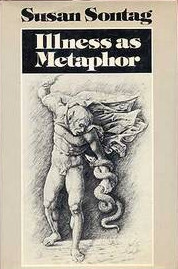

There is an aphorism by Heraclitus that men have devised gods in their own images, and as Sontag states, the nomenclature of ‘cancer’ is derived from the Greek- karkinos and the Latin- cancer, both of which mean crab. She clarifies by quoting Galen that since the external tumour’s swollen veins resembled a crab’s legs, that is how it got its name. This tendency to associate unfamiliar things with familiar ones is common; people often perceive shapes in clouds, drawing comparisons to known objects. Similarly, diseases are often viewed through familiar frameworks. Since diseases afflict and weaken us, they are often seen as adversaries. Thus, labelling the experience of battling cancer as a fight imbues individuals with a sense of hope, suggesting the possibility of victory amidst adversity.
Sontag, betraying the nature of cancer as a slowly progressing disease that suddenly manifests without any warning, presents the earliest evidence where it was first used metaphorically by Wyclif in 1382. “The word of hem crepith as a kankir”.She assembles the different metaphors associated with Cancer, which are as diverse as the number of human illnesses. For her, Cancer is a source for topological metaphors: “spreads”, “proliferates”, “diffused”, and “excised”.
The essay examines the mythologies and superstitions associated with these diseases and how metaphors sometimes wear the cloak of superstition, too. But metaphors make the understanding of the disease more manageable. Metaphors are a means of understanding the meaning of things. That which cannot be explained as such can be explained by metaphors. In his books, The Doors of Perception and Heaven and Hell, Aldous Huxley states: “It is difficult, it is all but impossible, to speak of mental events except in similes drawn from the more familiar universe of material things. If I have made use of geographical and zoological metaphors, it is not wantonly out of a mere addiction to picturesque language. It is because such metaphors express very forcibly the essential otherness of the mind’s far continents, the complete autonomy and self-sufficiency of their inhabitants.” The metaphors will exist, and educating the masses is the only way to stop them from becoming a stigma or superstition against that disease.


Quite possibly, the doctors refraining from revealing the true nature of disease inherently to the patient might reflect the notion of fear of death. The diseased person might perhaps think that death will come to everyone but him. Revealing his cancer to him might imply the idea of the inevitable approaching death. Thus, employing the metaphor of ‘battling’ with cancer provides a sense of relief to the patient of emerging victorious in the battle. A diseased man on the bed is akin to a newborn baby, with the only difference being that in one, the river of life has begun to flow, whereas, in the other, it is on the verge of drying. An afflicted man is as helpless as a baby. He craves for care. In this vulnerable state, directly discussing the illness may be too distressing, necessitating the use of metaphors to convey the situation. The patient’s understanding is limited. The only truth he has made a pact with is the slipping of time and the approach of death.
Regardless of how one has lived, everyone desires a death with dignity. Yet, why is it that some illnesses seem to afford this dignity while others do not? What criteria determine whether an illness is seen as favourable? Is it pain or time? The dilemma is akin to choosing between jumping into a well or off a cliff―Death awaits at both ends. As Susan Sontag herself ‘battled’ breast cancer, one cannot help but wonder whether the book would have been different had her affliction been tuberculosis instead. The essay appears biased, elevating tuberculosis and its sufferers while diminishing the dignity of cancer patients. It only examines these diseases from a personal perspective. TB has been presented as a glorified disease, whereas cancer is something that rots the body. Only briefly does the essay touch on the societal perceptions that label tuberculosis as a disease of poverty and cancer as a disease of affluence.
It is not only cancer and TB that have attracted metaphors or have been known to be identified with them. In fact, every other disease and illness is accompanied by metaphors, like an object and its shadow. And it must be noted that some diseases, apart from being associated with metaphors, are linked with gods and deities.
I recall a passage from the book The Monkey Grammarian in which the author, Octavio Paz, describes a scene inside the ‘Temple of Galta’ which is also known as ‘The Monkey Temple’ in Rajasthan: “The children leap about and point to the stone, shouting ‘Hanuman, Hanuman!’ On hearing them shouting, a beggar suddenly emerges from the rocks to show me his hands eaten away by leprosy. The next moment, another mendicant appears, and then another and another.”

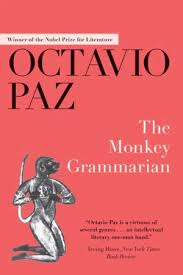
When I first read this passage, I was immediately reminded of the story ‘The Mark of The Beast’ by Rudyard Kipling and a paper that I had read related to the story titled ‘Recognizing the Leper: Hindu Myth, British Medicine, and the Crisis of Realism in Rudyard Kipling’s The Mark of the Beast’. The author of the paper had woven the interconnectedness and drawn parallels between the story, the leprosy affected character and Hanuman-lila. In ‘The Mark of The Beast’, an Englishman named Fleete, in the company of his two friends, desecrates a statue of Hanuman inside a temple with his cigar and declares it as ‘the mark of the beast’ but is soon embraced by a “mewing” leper who emerges from behind the statue following which, Fleete begins to develop skin discolourations and starts exhibiting animal-like behaviour. In the paper, the author establishes a connection between Hanuman and leprosy to justify why the Hindu monkey god is often called ‘sankat-mochan’ or ‘liberator from distress’. Drawing reference from the study of Hanuman lore by Philip Lutgendorf, the author argues how Kipling’s story resonates with a specific Hanuman-lila that relates his manifestation as a leper before the 16th-century saint Tulsidas.
“Instead, he [the tree ghost] told Tulsidas to seek the grace of Hanuman and revealed that the latter came every evening to a certain ghat in the form of an old leper to listen to the narration of Rama's story; he sat at the back of the crowd and was always the last to leave. That night, Tulsidas surreptitiously followed the leper, who led him deep into the forest before the poet finally fell at his feet, hailing him as the Son of the Wind. As the ghost had predicted, the leper "denied a thousand times" that he was anything other than a sick old man, but Tulsidas persisted in his entreaties. Eventually, Hanuman manifested his glorious form. Raising one hand over his shoulder to point southwest, he said, "Go to Chitrakut," and placing the other hand over his heart, added, "I promise you will see Rama.”
Illness as Metaphor should not be considered a caution about metaphors in their relation to illness but rather a critique of their misapplication, where these metaphors can morph into stigmas that persist in people’s consciousness. “Illness is the night-side of life, a more onerous citizenship. Everyone who is born holds dual citizenship in the kingdom of the well and in the kingdom of the sick. Although we all prefer to use only the good passport, sooner or later, each of us is obliged, at least for a spell, to identify ourselves as citizens of that other place,” Sontag states in the opening lines of her book-length essay. But, unless one is born in the mythical Shangri-La, and as long as humanity exists, illnesses and their accompanying metaphors will persist, evolving with each new malady that emerges. Today, it is cancer, just as yesterday, it was tuberculosis and COVID-19. Tomorrow will inevitably bring new illnesses, accompanied by a fresh set of metaphors that shape our collective understanding of the ever-present shadow of illness in the human experience.
Satyarth Pandita is a Junior Research Fellow at the National Institute of Mental Health and Neurosciences, Bengaluru. He completed his dual degree of Bachelor of Science and Master of Science in Biological Sciences (major) and Humanities and Social Sciences (minor) from the Indian Institute of Science Education and Research Bhopal (IISERB).
Links to Satyarth’s published works, email address and social media handles can be found here.
.
PLEASE NOTE: ARTICLES CAN ONLY BE REPRODUCED IN OTHER SITES WITH DUE ACKNOWLEDGEMENT TO BORDERLESS JOURNAL
Click here to access the Borderless anthology, Monalisa No Longer Smiles
Click here to access Monalisa No Longer Smiles on Amazon International












 Borderless