When we were younger, we were always told to sleep in the afternoon so we would grow taller. I had always been a small child. I was 9 nine back then. I was already in third grade, but I was 119 centimeters tall and weighed only 19 kilograms.
My grandparents spoiled me. We usually ate boiled okra that my grandmother counted and tied up in bundles with colourful rubber bands from early morning until noon, while they fried one of the chickens, they had raised underneath the hut my grandfather built.
My grandfather worked in the rice field and returned home at 12:30 pm, carrying a huge watermelon. He went straight to the kitchen while my grandmother and I waited in the sala where we also slept, laughing with the host of the only noontime shows we could watch on TV since all the other channels were either static or blurry.
“It’s already ripe,” he said, putting the plate of thickly sliced red watermelon on the round table. I mindlessly took a piece, dipping it in white sugar while he sat beside me on the worn-out sofa upholstered in a brown striped fabric with its springs protruding like the bones under his wrinkled skin.
He bit into the watery pulp of the watermelon and swallowed the black seeds. Without taking his eyes off the screen, he held out his hand and let me spit the seeds into them.
“It’s time to sleep,” my grandmother said, rising from the sofa and then turning off the TV. She laid the old, torn, white blanket on the cold wooden slats while I held a flattened, hard pillow.
In the afternoon, I lay on the floor between my grandparents listening to the soft bamboo trees outside creaking. There was a momentary silence. I waited for the wind to blow and the bamboo barks to squeak again. The sand and dust outside made everything gray, and the bamboo trees swayed. It had always been cold and dreary, and it never failed to lull me.
By three in the afternoon, I was deep asleep, left alone dreaming about a herd of headless brown horses galloping freely but vigorously, aimlessly. They did not neigh, because they did not have mouths. The only sounds they made were their hooves hitting the ground.
It was not gore. It wasn’t out of the ordinary. It was just like they never had heads to begin with. Everything else in those dreams quickly dissipated as soon as I woke up. Everything else in my childhood was forgotten. I just knew once it existed. Deep in my heart, I knew it did even if I pretended it didn’t. On that afternoon, I was awakened by my grandfather deeply kissing me.
I never told anyone. I was just nine back then. I didn’t know much about the world. I pretended it didn’t happen. I was certain I was dreaming of headless horses. I turned and twisted, pretending I was still asleep.
These emotions weren’t fleeting. It felt like my heart drop to my stomach. I was sickened. I was confused. I was scared. I was angry. I listened to the bamboo trees creaking. It’s the sound of the bedroom door quietly opening. My grandmother used to sneak in and check if I was sleeping. “It’s colder outside,” she said and never let me sleep in the bedroom again.
I was awake for hours, but the dream wouldn’t fade. The dream wouldn’t disappear. I never slept in the afternoon again. Still, I grew taller.
.
Anna Moon was born in a small historic town in the Philippines. Growing up, she was fascinated with languages, traditions, and cultures. She loves to travel.
.
PLEASE NOTE: ARTICLES CAN ONLY BE REPRODUCED IN OTHER SITES WITH DUE ACKNOWLEDGEMENT TO BORDERLESS JOURNAL
Jonathan Harper was startled out of sleep by an impatient ringing at the door bell. He rolled out of bed, tip-toed to the sitting-room and peeked through the curtains covering the bay windows. In the dim, moonlit night he perceived a slender, young man dressed in some sort of long robe. He was completely bald. Again the bell rang and rang under the young man’s relentless ringing. Jonathan hastened to the hearth, picked up the poker out of its andiron then quietly moved towards the door. With a quick jerk he unlocked it so as to take the knocker by surprise. The knocker looked stonily at Jonathan’s sleepy, pale face and at the poker.
“Whatever are you doing with that mighty weapon, father?” was that knocker’s first remark. Jonathan stared in astonishment, mouth agape. “Yes, father it’s me, your son Francis. Have you forgotten me ?”
And that was how Francis Harper, the fugitive Buddhist monk, and his father Jonathan, completely thunderstruck, were reunited …
“Quick, come in … come in … At this hour of the night, Francis. And look at you, dressed like a beggar monk. So thin. I hardly recognised you.” Jonathan was in a state of great excitement. Francis sailed in, closed the door and settled on the familiar canopy. He scanned the sitting-room: Nothing had changed.
“You gave me a scare, Francis,” Jonathan resumed, still standing.
“Well, who would be ringing at this hour of the night?” Francis returned in a flat voice. His father hadn’t quite understood the question. He seemed half asleep. “Where’s mum?”
“Who?”
“Mummy … your beloved wife?” Francis pressed ironically. Jonathan stared emptily at him. “Well, is she here, or has she gone to see her boring sister Hazel ? Perhaps she’s out with her lover?” Jonathan winced.
“Don’t be vulgar, Francis, please.”
“Come on, I’m only having you on. Where is she?”
Jonathan stepped forward: “I thought she was with you! She went to find you in Laos a year ago, and I’ve never had any word from her since.”
Francis looked blankly at this father then jumped up. “She’s mad ! Why did you let her go, damn it?”
“I didn’t let her go, Francis; she woke up one morning and off she went leaving me a note.”
“What note? Do you still have it?”
“The note … Yes …” Jonathan shuffled to his bedroom to procure Heather’s note that she had left for him on the chimney-mantle. He handed it to his son. It seemed that it had been wrinkled up into a ball then roughly flattened out.
“Bloody hell! Why did she do that?” Francis gritted his teeth. “It’s such a dangerous place to be for mummy. She has no clue of the dangers : the jungles are infested with disease and wild animals. Food and water are dodgy. It’s another world.”
The son glared at his father then threw himself down onto the canopy, burying his face in his hands.
“I’ve put the police on to it but nothing has come up,” Jonathan defended himself, yet in a contrite tone of voice. “She believed that only she could bring you back to us. But … how did you come back here?”
The question struck Francis oddly. He looked at his father who still stood: “Do put down that poker, you cut such a ridiculous figure.” Indeed, Jonathan hadn’t noticed that he still clenched the poker tightly. He tossed it into the cold hearth. Francis sighed: “Me ? Do you really want to know, father?”
“Of course I want to know, then we can both set out to find mother.”
“No we cannot just set out to find mother. I am a wanted criminal in Thailand and in England. Have you forgotten?”
“Rubbish! How then did you manage to get home if you are wanted by the police?” Jonathan persisted, trotting back and forth from the sitting-room to the kitchen to make coffee and toast muffins.
“That’s a long story,” Francis lamented, crumbling up the letter and dropping it to the carpeted floor.
“Well, we have the whole night, so please, I must know the truth. It’s been a nightmare for me in this house all alone. You know that Andy pops in almost every day to rub salt into my wounds, drinking my brandy and wheeling that mordant wit of his.”
“You mean that you’ve been pissing it up with that halfwit?” Francis snapped.
“No … no, of course not. But he invites himself over and never knows when to leave. How many times have I put up with his drunken effrontery.”
“Well, if I ever see him here …”
“No ! He must not see you; if he does all Stevenage will know and that means the police, too. No. We must find a way to hide you, to keep you safe from the law until this rotty mess is straightened out.”
“Straightened out?” Francis sneered. He eyed his father coldly. ‘Forced’ solitude had wrinkled the old man’s ashen face, had given him the appearance of Gandalf straight out of TheHobbit, all he needed was a grey cloak, staff and floppy hat to complete the portrait instead of his thirty-year old pyjamas. The flesh on his neck had gone flabby and his eyes, colourless, like his thinning, flaky hair. Jonathan finished his coffee: “Please tell me how you left Laos and managed to reach England,” he said in a weak voice, practically beseeching his son.
Francis took a gulp of coffee, he made a wry face: “I haven’t drunk coffee for over twelve years.” Setting the cup down on the settee, he began his tale. And as Francis fumbled to find his words Jonathan observed the metamorphosis of his appearance.
Francis’ face, laboured by years of privations, illness and fasts, had the appearance of rough, sandy stone. His eyes were set deep in their orbits whilst the furrows of his crow’s eyes twitched at every slight movement or sound in the sitting-room. The callousness of his face darkened all its former freshness of youth – that youth he had abandoned in southeast Asia. He swayed slightly in the canopy, nibbling at his muffin, apathetically. Jonathan made some more coffee and toasted more muffins for his enfeebled son. He opened slightly the bay window curtains then finally settled down in his wicker chair.
Francis began lethargically, rubbing his hairless head: “I had been living from monastery to monastery in northern Laos, constantly ill because of the food and water until one day I decided that I had no future in those remote places of worship. Mind you, the religious services captivated me as did the jungle and the snaking, mystical Mekong. The monks were jovial chaps, very respectful and reserved. They offered a soothing solace to my inner and outer sufferings. But I had to leave and return to England. My mind and body ached for familiarity… for mother and for the English language …”
“And your father?” interposed Jonathan, biting his quavering lower lip. Francis looked sadly at his aging father. “I know I haven’t been the best of fathers to you, Francis,” Jonathan conceded, his cheeks flushing red with shame. “But you will acknowledge that I did encourage you to travel to Asia to earn your livelihood. You know, I did not choose my solitude. It was imposed on me.”
“Did we then impose it, me and mummy?” came Francis’ laconic retort.
Jonathan looked dismal, a bit jarred by the remark. He stared at his son through sleepy, spent eyes. Francis laughed: “Of course I’ve returned for you too!” He pursued: “Thanks to my Lao passport procured for me by the Venerable Father, I travelled to visa-free countries. First, I boated it down to Vientiane, then took a cheap flight to Moscow. From there to Cairo, where I renewed my British passport at the embassy wihout any questions asked, although it had expired over six years. Anyway, with my British passport I entered Italy by boat, and from there on used my British passport since European border officials hardly looked at it. To avoid the usual big entries into England I hitched up to the Hook of Holland and took the ferry to Harwich.”
“But hadn’t the border officials suspected anything … your dress?”
“I changed dress in Italy but wore my robe when crossing into England.”
“But your photo?”
“My face has undergone a drastic change, father — haven’t you noticed?” Jonathan had but said nothing. “Anyway, what could they say to a tonsured-headed Englishman who had become a Buddhist?” Jonathan paused, as if reflecting.
“And the money to pay for all these flights, boats and trains?”
“I had my Cook’s travellers’ cheques safely in my money belt.”
Jonathan sighed. “Look Francis, we must not dilly-dally, Interpol may be on your trail at this very moment. No dawdling about, I have to find a place to hide you.”
“Don’t exaggerate, father, please.”
Jonathan sized up his gaunt, emaciated son: “I hope you’re not thinking of turning yourself over to the police.” Jonathan wrung his hands fearfully.
“No, no, I’ve paid for my selfishness and stupidity. Every day and night for twelve years that horrible scene still floods my mind.”
Here it seemed to Jonathan that Francis began to weep quietly. What to do ? What to do ? Comfort him with a fatherly hand on the shoulder ? A paternal embrace ? Or simply a kind, appeasing word ? Jonathan, whilst he observed his son, realised that he had never been a fatherly towards his son. Heather had been right — he thought as he looked on helplessly at his son’s bony, trembling shoulders.
The grandfather clock struck six.
“My God, it’s morning!” Jonathan cried, going to the bay window. “People will be milling about.”
“So what, people always mill about in the morning,” came Francis’ sardonic reply.
“Someone may see you.”
“Through the window? Who will see me father if I stay in the house?”
“Right you are, Francis.”
“And mother?” Francis retorted, a glare of reproach in his cloudy eyes.
“Mother? Why hasn’t she ever written to me? Did you not have any news of her in Laos?”
“Some monks did speak about an old lady with grey hair seen in different boats on the Mekong. That’s about all. It could have been anyone … “
“Anyone? An old, grey-haired lady traipsing up and down the Mekong,” Jonathan cut in savagely. He fell back into his wicker chair. “I have to get you out of England before I tend to your mother. I will act quickly and decisively for you and her.”
Francis stared at his wizen-faced father, and for the first time in his life the young man felt a pang of pride towards him. Yes, a pang of pride because Francis had always believed his father to be a moral coward, a skulker who purposely disavowed, even mocked all his childhood projects, which had gradually raised an emotional tension between them. The clock struck half-past six. The first rosy rays of the sun trickled into the sitting-room with the warm, gay light. At that stroke of the clock Francis truly felt that their generational tension had been somehow lightened.
Francis stood. Jonathan stood. They gazed at each other and an instant later broke out into howls of laughter, laughing like two little boys. They laughed and laughed as they had never laughed before.
Jonathan strode over to Francis and slapped him paternally on the back: “Let’s have a real British breakfast.” Which they did — bacon and eggs, kipper and fresh orange juice which Jonathan squeezed himself.
The doorbell rang. Jonathan jumped out of his chair. Francis hastened to the bay window. It was Andy. “Blast! Into your room Francis and don’t make a sound. I’ll send that bugger packing. How dare he come bothering me at this hour of the morning.”
As Jonathan shuffled to the door, Francis made a bee-line for his bedroom. Jonathan threw it open.
“Well old man, up bright and early, hey?” began Andy in his usual strident, exasperating tone. “How about a little excursion to St Albans this morning ? They have an excellent pub where the food is the best in Hertfordshire.” Andy struck his customary ill-bred pose.
“No thanks, not today Andy, I’m terribly busy …”
“You, busy, Johnny old boy? Come on, mate, we’ll take your car.”
“That goes without saying since you haven’t one,” Jonathan rejoined peevishly. “No, today I must finish some work. You go and tell me how the food is. We’ll see about tomorrow.” He corrected himself. “No … next week ; I shall be popping over to visit my cousin-in-law.”
Andy sensed that Jonathan was lying.
“I see,” and a grotesque smile stretched over his red-spotted, pasty face. “What’s good for the goose is good for the gander, hey?”
“What are you insinuating?”
“Oh nothing … nothing, old boy. Have a good time and let me know how things work out.” He gave Jonathan an equivocal wink. Jonathan slammed the door in his face.
“Bloody idiot!” he growled. Jonathan stopped in his tracks. “My cousin-in-law … that’s it ! I’ll send Francis to Mary in Ireland. No one will ever think of searching for him in Ireland.”
Jonathan was all agog. He had found a solution to Francis’ dilemma thanks to Andy’s unexpected visit. He called to Francis who opened the door of his room carefully.
“No bother, the blighter’s gone, and I have a smashing idea, Francis. I have half a mind to drive you to Ireland where the British police will never hunt you down. My cousin-in-law, Mary O’Casey, lives in Waterville. Once we’re there and you’ve met her, I’ll drive back to England, get a flight to Laos and bring mother back home.”
Francis had never seen his father so animated. His shrivelled features seemed to rejuvenate, new blood infuse that puffy, pasty, unshaven Gandalf face. Francis, however, stood at the door of his room, a strange, alien gleam in his eyes. He turned to his father: “You’ve left everything as it was,” he pronounced softly. “Malraux’s La Voie Royale, Maugham’s TheGentleman in the Parlour. My desk … Everything as it was … exactly … “
“Yes, your mother wished it so. Nothing has been touched. The room has been waiting for your return. Unfortunately the circumstances require desperate action that I would never have imagined. We must buckle up, my boy.”
“Ireland?” wondered Francis sceptically.
“Ireland,” Jonathan echoed. “I shall get you there tonight and we’ll be on the Birkenhead ferry for Dublin tomorrow morning. Dress like an average Englishman and use your British passport.”
“What do you mean by an average Englishman, father?” Francis enquired.
“Well … Put a cap on your bald head and dress in English clothes. You’re not thinking of getting into Ireland with your monk’s robe, are you?”
Francis chuckled: “Don’t worry, my days of impersonating a Buddhist monk are over.”
“Were you then not sincere about your conversion?” his father asked rather puzzled.
Francis shrugged his shoulders: “I don’t know. I don’t know who I really am. I seem to have lost all identity of myself by impersonating or embracing so many identities. Now I’m off to Ireland. Will I become an Irishman?” A melancholic smile stretched his bloodless lips.
“Whatever you become Francis you will always be my son.” Francis nodded, albeit the resigned gesture seemed to embarrass his father who eyed his son with genuine sympathy.
“Mary will have you working in the gardens, and you know she has lodgers there all year round. You could help her out in her home. She lost her husband many years ago. A fine woman, she is.”
Francis nodded again and stepped back into his room. He closed the door silently and lay on his bed, his blood-shot eyes fixed on all his books nicely arranged on the shelves. He smiled. Then those sleepless eyes fell on a photo of his beloved Irish setter, Patty. He closed them and thought of nothing … nothing at all. He began to murmur a prayer of contrition in the name of the Enlightened One …
Meanwhile in the sitting-room Jonathan set to work without delay. He had already contacted his cousin-in-law by phone, explaining Francis’ predicament. He related everything to her without any feelings of guilt or mawkish sentimentality. Mary despised sentimentality. She would welcome Francis like her own child — a child she had never herself had.
Francis had fallen asleep. His father woke him at five in the afternoon. They had a large dinner, after which, under the cover of darkness, Jonathan packed Francis’ belongings in the boot — two shirts and trousers, a pair of walking boots and woollen socks, and his favourite books, Malraux’s La VoieRoyale, Maugham’s Collected Short Stories, three of Richard Burton’s travel books and T.E. Lawrence’s Seven Pillars of Wisdom.
They reached Birkenhead in the morning two hours before the first ferry to Ireland. The bored border official hardly looked at their passports. An hour and a half later they were in Dublin. There the Irish waved them through after having taken a cursory glance at their passports. Two hours later they arrived at Mary O’Casey’s homestead near Hog’s Head. They were both exhausted but relieved to have accomplished their mission.
Mary welcomed them with a hearty lunch. She hadn’t seen Jonathan for over twenty-five years. As to Francis, she had seen him once at the age of five or six. Jonathan stayed on several nights. Mary had no lodgers at that time so she was happy to sit at the welcoming hearth, drink her evening brandy and chat with her distant family-in-law. She read about Heather in the tabloids and wished Jonathan all the luck to bring her back home. If the British bobbies couldn’t do it, well, Jonathan would! He nodded, weakly. Francis remained silent.
Three days later Jonathan bid farewell to Mary and his son. It was time to put into action his plan to retrieve Heather from the jungles of Laos. He would obtain his visa for Laos in London, then buy his flight ticket. He promised to keep Francis informed of any developments.
“Good or bad!” said Francis, with a serious face. Jonathan’s cheeks reddened. He didn’t answer, casting a covert glance at Mary. Instead he strode over to his son, kissed him on both cheeks, something he had not done since he was a baby, kissed Mary on the forehead and hastened out to the car. He was gone in a few minutes.
“I hope you’ll tell me some good stories of your travels, Francis,” Mary chirped cheerfully, taking Francis by the arm. “You know, I like a good story round the hearth. I’ll have you know that you’re in the land of leprechauns, banshees and sidhes.” Her greenish eyes twinkled with impishness.
“What are banshees and sidhes?” Francis asked sheepishly.
“Ah! The spirits of the dead, lad. The unquiet dead. But you needn’t bother about them, I chase minions away with my broom.” And Mary broke into peels of good-natured laughter.
Francis worked daily in Mary’s lovely flower and vegetable gardens, and when lodgers arrived he cooked them breakfast and dinner whenever she was at Waterville on an errand. Oftentimes, he accompanied the guests on the loop road where he could again and again admire the blanket bogs. Mary warned him on several occasions, waving a minatory finger at him, never to step foot in the lime-covered homestead. He never did, not because he was afraid of ghosts — his upriver experiences in Laos had hardened him on all fear of supernatural beings — but because he hadn’t the heart to disobey his father’s cousin-in-law, a cousin-in-law, by the way, that he never quite came to comprehend the genealogical connexion. No matter. He felt at home with this charming woman and with her lively lodgers.
Four quiet months elapsed. One late misty Autumn morning Mary handed Francis a letter from his father. It was posted from Luang Prabang, Laos. Francis quickly opened it. As he scanned the almost unreadable scribble of his father’s handwriting his now bearded face contracted and hardened into a stony expression of restrained grief.
“What is it, my lad?” Mary strolled over to him, frightened.
The young man set the letter down gently on the table: “Mummy’s dead, Mary. She died of illness in northern Laos six months ago. Father is bringing her back home for burial.” Mary placed a motherly hand on Francis’ shoulder and spoke a few words of real warmth. Francis stared vacantly through the open front door into the greyish autumn sky.
The first lodger of the morning thumped slowly down the wooden stairway for breakfast.
From Public Domain
.
Paul Mirabile is a retired professor of philology now living in France. He has published mostly academic works centred on philology, history, pedagogy and religion. He has also published stories of his travels throughout Asia, where he spent thirty years.
.
PLEASE NOTE: ARTICLES CAN ONLY BE REPRODUCED IN OTHER SITES WITH DUE ACKNOWLEDGEMENT TO BORDERLESS JOURNAL
April came with an unfamiliar quiet, a hollow in the air. This was the first Vishu [1] without my grandfather.
He was a tall, quiet man, his words few but carefully chosen. His once fair skin had grown shrivelled and cracked with age, weathered by the years. I can still picture him, absently scratching his arms, his brows furrowed in meek annoyance as he would ask, “Why does it itch so much, even after all the oils I’ve used?”
I used to tease him playfully, “No amount of oil can save that skin, it’s gotten too old!” . . . He would chuckle softly, his laugh a low, comforting rumble.
It was customary for us to gather at our ancestral home to celebrate Vishu, the Malayali[2] New Year. My grandfather meticulously decorated the house. Even as his body grew frail and his movements slowed, he insisted on preparing the Vishu Kani [3]—a sacred arrangement of flowers, fruits, and other items as symbols of prosperity.
After we had all gone to sleep, he would go about his task, moving through the dimly lit house. I can still see him in the flicker of my mind’s eye, carefully arranging the Kani in the little pooja[4] room, his hands steady despite the years that had worn him down. In the centre, he would place a small idol of Lord Krishna, draped in a yellow cloth. Around Krishna’s neck, a garland of jasmine flowers, freshly picked, would hang delicately, its fragrance nourishing the air.
A Vishu Kani. From Public domain
He would arrange kanikkonna[5] flowers —the golden confetti of the Gods—on a golden plate. He always plucked them himself from the tree in our courtyard—no matter how tired his bones were, he would collect them with care. Then came the fruits and vegetables—bananas, jackfruit, cucumber—all laid out. In another plate, he would place pulses, grains, and a few coins. He would carefully add gold jewellery and cash, all arranged just so, a display of hope for the year to come. An ornate brass hand mirror was the final touch.
For him, this was more than tradition—an act of piety, a warm tenderness that was passed onto us. Once everything was set, he would go to bed, only to rise before the break of dawn. I can still hear his voice, gentle but insistent, as he would wake me, whispering, “Come, get up, my little one… it’s time”.
And so, we would begin Vishu every year with that first glimpse of the Kani. It wasn’t just a sight; it was a feeling, like stepping into something timeless, something sacred. My grandfather was the heart of all of it. His presence, his careful hands, his simple joys—they were woven into the very essence of those mornings.
I couldn’t bring myself to celebrate Vishu without my grandfather. I decided to drive to down my ancestral home. . .
When I arrived at my destination, it felt as if time itself had slowed, as though the house had grown old with my grandfather. The courtyard, once brimmed with the lively hum of family gatherings, now lay quiet, strewn with dry leaves from the kanikkonna[6]tree. The golden flowers that once sparkled in the sunlight were now dulled, forgotten on the ground.
Stepping inside, I was greeted by a heavy stillness. The air felt thick, holding the scent of old wood and memories that had lurked too long in the shadows. The floors, once neat under my grandfather’s care, were now covered with a film of dust, untouched. The once vibrant home felt like a forgotten relic. The warmth that had always enveloped me now replaced by an eerie quiet. It was as though the house was mourning too. I grabbed a broom and began to clean. With every bit of dust I cleared, I found fragments of the home I remembered —the laughter, the smell of spices from the kitchen, the soft murmur of voices late into the night…everything circled around me.
That night, sleep evaded me. I lay awake, staring at the ceiling. Turning my head to the left, I peered out the window into the faint glow of the streetlight. My gaze planted on the place where his earthly form had been transformed into ashes. The memories surged back—his final farewell…
A sense of loss washed over me, mingled with an uncanny chill. Suddenly, a noise broke the silence— like someone shuffling through the halls. My heart leapt. I sat up, straining to listen. The sound came again from the direction of the pooja room.
I moved slowly, my feet silent on the wooden floor. The air felt suffocated, like it was holding its breath. As I approached, a familiar scent reached me—the sweet fragrance of jasmine, fresh and unmistakable. My pulse quickened. I pushed open the door.
There, standing in the glow of the moonlight filtering through the window, was my grandfather.
He was just as I remembered—his hands steady, arranging the Vishu Kani with the same care he had every year. The kanikkonna blossoms, the jasmine garland, the mirror—everything was in its place.
I stood frozen; my breath caught in my throat. My mind raced to make sense of what I was seeing, but I couldn’t move. I couldn’t speak. I could only watch as he worked in silence. Then, as quickly as it had appeared, the vision faded. I was left standing alone in the doorway, the scent of jasmine lingering in the air, heavy and real.
In a panic, I ran. My feet barely touched the ground as I rushed into the kitchen. I fumbled with the light switch, my hands shaking. I turned on the lights, as if plunging the house into light would erase what I had seen.
The night was unbearable after that—every creak of the house made me flinch, every gust of wind felt like it carried whispers from another world. I barely slept, my mind replaying the sight of him again and again.
The next morning, I drove back home and sat with my family at the breakfast table, the words pressing at my throat, desperate to escape. I had to tell them.
“I saw him,” I blurted out, my voice trembling.
“Last night, in the pooja room.”
“Grandfather… he was there. . .”
“He was preparing the kani like he used to. I saw him. I swear.”
The room fell quiet. My mother was the first to respond. She reached across the table and placed her hand on mine, her face soft with concern. “Dear, you must’ve been dreaming. It’s been a hard year for all of us. Sometimes, grief can make us see things that aren’t there.”
“No, Amma[7], I wasn’t dreaming. The kani— when I woke up this morning, it was perfect. . . the flowers were fresh! The jasmine… the kanikkonna… everything was just like how he used to arrange it.”
My uncle shook his head, giving me a sad smile. “You were alone in the house. Your mind probably hallucinated. It’s common, especially around Vishu when we are more nostalgic. We want to feel his presence so badly that our mind creates it for us.”
“But the flowers—” I started, but my mother shushed gently.
“Dear,” she said, “grief does strange things to us. You might’ve arranged the kani yourself, without realising it, lost in memory. And the scent of jasmine… it’s everywhere this time of year.”
I looked at my younger cousin, hoping for some sign of belief, but she just shrugged. “It happens, chechi,” [8] she said “When Achachan[9] passed, I thought I heard him talking to me once. But it was just a dream.”
No one believed me.
I sat back in my chair, my chest tightening.
“But the kani,” I whispered again, almost to myself. “It was real.”
“Dear,” my mother said, “he’s with us, always. Maybe that’s what you felt. His love, his presence… but it’s time to let him rest.”
I nodded, unable to argue anymore. What was the point?
I sat there, their voices becoming distant, I could still smell the trace of jasmine clinging to my clothes, like a secret only I could sense.
Kanikkona Tree, known as Amaltaz in Northern India. From Public Domain
Vishu: The Malayali New Year festival celebrated in Kerala, marked by the preparation of the Vishu Kani, fireworks, and family gatherings. It signifies the start of the new harvest year.
Malayali: A person from Kerala, an Indian state on the southwestern coast, known for its rich culture, history, and traditions
Vishu Kani: A traditional arrangement of items placed in the pooja room at dawn on Vishu. It typically includes fruits, vegetables, flowers, and an idol of Lord Krishna, signifying abundance and good fortune for the coming year.
Pooja Room: A family prayer room
Kanikkonna: A flowering tree, known as Cassia fistula, which blooms during the Vishu festival. Its vibrant yellow flowers symbolise prosperity.
Amma: The Malayalam word for ‘mother.’
Chechi: A term used to refer to an older sister or female cousin in Malayalam, often used to show affection and camaraderie among siblings or relatives.
Achachan: A term used to refer to a grandfather in Malayalam, conveying respect and affection.
.
Tanika Rajeswari V. is a Ph.D. student at the University of Sheffield specialising in Modernist Poetry.
PLEASE NOTE: ARTICLES CAN ONLY BE REPRODUCED IN OTHER SITES WITH DUE ACKNOWLEDGEMENT TO BORDERLESS JOURNAL
Story by Veena Verma, translated from Punjabi by C. Christine Fair
In the darkest of night, a black car was winding its way along the black, wide, and desolate roads of Germany like a snake. Only the sound of the wind broke the all-pervasive silence. The wind and the car seemed to be competing to outpace each other. Far away in the distance, a glimmer of light briefly appeared and then vanished like a firefly. The silence and darkness returned once more. The electricity poles on the side of the road appeared to be standing with their heads bowed in exhaustion, yawning forth a light so dim that Manjit couldn’t even make out the time on her watch.
But Manjit didn’t even bother looking at her watch. She didn’t know the date, the day, much less the time. She didn’t know whether this country’s time zone was ahead of or behind that of India. She only knew that she had left her home on the 25th of October. She didn’t even have a calendar to look at the dates. But nature had given women one way to know the passing of a month. But that clock gifted from nature had become broken along the way. Manjit seemed to bleed every third day.
Sitting in the car, with eyes half open, she looked at her fellow travelers. There was the Gujarati driver and a white man in the passenger seat. Manjit was in the back with her son, Dipu, who rested his head in her lap. Dipu was the only one she knew. Manjit didn’t know who the others were, where they were taking her, or which routes they were driving. She only knew that she would soon meet her husband, Harjit.
Harjit, to whom she had been married six years ago. After spending only two weeks together, Harjit returned to Germany after promising to take her to Germany soon. The two weeks spent with Harjit felt like two minutes. It was like a beautiful dream which disappeared once she opened her eyes. Harjit promised her that within two months at the most, she would be with him in Germany. But years had passed, and Harjit still hadn’t sent the paperwork to call Manjit to Germany. He only wrote once to say that up to now, he had not yet divorced his German wife. Manjit and her family remained silent.
The Bride by Amrita Shergil (1913-1941). From Public Domain.
In this silence, there was also regret. Why did they marry this tall, slender, beautiful Manjit at the tender age of 20 to Harjit, who was already married? Manjit was faultless. No one ever said anything bad about her character. After finishing the tenth grade in the village, her father arranged for her to do her BA in a hostel in Ludhiana. Pragat Singh lived for his daughter whose mother died while she was a child. She was only five years old and her brother was only one year old when their mother passed away from pneumonia. Pragat Singh brought his young children, wailing like birds, under his wing and accepted God’s will. His relatives tried very hard to get him a second wife, but Pragat Singh was not ready to hear this.
“I will not allow a stepmother to come into this home…My children will not be neglected. What happened has happened. If I had had any luck at all, why did my first wife die? My God will take care of me. My children will grow up. Manjit will leave my home. When Kulbir turns 16, I will get him married. Happiness will return to the house. I’ve lived my life. All of you should pray for my children’s well-being.” Whenever Pragit Singh spoke with sorrow in his voice, the entire family wept.
Manjit remembered everything. Even though she was only five years old at the time, she remembered her mother’s passing very well. Throughout her childhood, she carried this loss in her gut. Without a mother, Manjit had to grow up early. She had to care for her little brother. She had to cook food for her father. All of the household responsibilities fell on her. Even though she ostensibly had a large family, they did nothing to help her other than expressing their sympathies.
Passing the tenth grade was a major milestone for Manjit. She had passed with distinction. Pragat Singh was very excited.
“Who says that daughters are less than sons? My daughter is my son. I will make her a lawyer…” Pragat Singh said with pride.
“Excessive education spoils girls…Moreover, because of her education, finding a suitable boy for her will be difficult. It’s hard to marry off well-educated girls. If the girl becomes a lawyer, you’ll have to find a judge,” the relatives caviled.
“So according to your logic, I should dump my daughter on some run-of-the-mill boy? I am going to send her to America or Canada. There, my daughter will enjoy her life. What is there for her here? Here, she’ll just toil away her life.” Pragat Singh had such lofty dreams for his daughter. He wanted to do everything he could to make up for the fact that the children had no mother. He wanted to give them all manner of comforts.
He enrolled Manjit in a girls’ college in Ludhiana where she stayed in a hostel. Sorrow tempered her father’s nature. With Kulbir, her relationship was more like that of a friend. Both siblings shared their secrets freely with each other. Kulbir paid less attention to his studies. She advised him to focus more on his studies, but he would just shrug his shoulders in response.
One day Manjit grabbed his ear and asked, “What do you mean to say by this shoulder shrugging?”
“Sister…If you leave after completing your studies and if I become a government officer, then Father will be left alone. If we both leave, then people will steal our land.” Manjit was incredulous hearing such a profound thing from Kulbir’s tiny mouth.
“I don’t understand, Biri…” She called her brother Biri from childhood.
“Father is alone, sister…All night he is exhausted…He needs someone to help him…Even though he doesn’t say anything, how long can this go on? Moreover, sons are supposed to take over the responsibilities of the family. Daughters become the assets of another family. You have studied a lot. You’ve studied enough for both of us. I am going to stay with Father. I have no plans for further study.” Manjit sighed upon hearing her brother speak as if he were an old man. It seemed to her as if neither she nor her brother ever got to be children. Both had to become responsible as soon as they were born. Both siblings sat there for some time, sharing their sorrows.
From that point onwards, Manjit didn’t pressure Kulbir to study. Moreover, she was very happy when she got called home right before the holidays to go meet a girl for Kulbir.
Kulbir was married even though he hadn’t even passed the tenth grade. The sadness was lifted. Happiness returned to Pragat Singh’s house. The family had a new member and liveliness returned. Relatives visited the house more often. The empty place of a woman had been filled.
Manjit had completed her BA and preparations were underway to marry her off. But no boy met Pragat Singh’s expectations. The prospective grooms came and went, but each time he found some fault with them. The search stretched out. Finally, Pragat Singh’s brother-in-law, Baldev Singh, said that a boy had come to Ludhiana from Germany. He’s an engineer there. To live in Germany permanently, he married a white woman in a “paper marriage” but they lived separately, and they would get divorced. The boy came from so far to marry a special Punjabi girl. He’s a boy from a very good family. He’s an educated, good-looking, strapping young man. He had no shortage of prospects. But because Baldev was Manjit’s uncle he could persuade them not to see these other girls right away. If they were to take out a matrimonial advertisement in the newspaper, there would be a huge line of girls, and it wouldn’t take long for there to be a bidding war.
Pragat Singh began to think about the boy’s second marriage.
Pragat Singh asked, “My daughter is not lacking anything. Why would I marry her off to a boy who is already married?”
Baldev Singh explained, “Look, it’s different in other countries…No one is virtuous there. People get married to settle there permanently. These white women do not find our sons suitable nor do they suit our sons. My friend’s son did exactly this. He went to England and married a white woman. Then after paying her off, he left her. White women agree easily. They never stay with one man for long. Now that boy is very wealthy, and he has taken a bride from Kapurthala back with him. The girl did a double BA!”
“But what will people say?” Pragat Singh was not convinced.
“How can you convince them? You don’t need to tell anyone…The boy knows and you know…Do what suits you. Don’t make a big deal about it. Fulfil your responsibility while you are still alive. In the future, we don’t know what your son and daughter-in-law will do.” Baldev Singh instilled in him the fear of an unknown future.
“No! My son would never betray his sister…” Pragat Singh was hurt by his suggestion.
“You married off your boy. He’s no longer yours to control. For now, you are the boss of your household. Whether you spend five rupees or fifty. It’s your call. No one would dare question you. Moreover, finding a boy from this kind of family is very difficult. The boy is a gem. A total gem. He is beyond reproach. He even takes care to iron his underwear. For the sake of my dead sister, I don’t want my niece to get caught up in the ruses of a mother-in-law or a sister-in-law. In a foreign country, there won’t be such family fights. Both the husband and wife are educated. They can enjoy life. Here, even the best government employee doesn’t make in a month what this boy makes in a week. And this is not temporary work. He has houses and cars. What difference does it make if he married a white woman to live there permanently? If a jatt [1]has land and vigour, then he can marry twice in one year, during the March and July harvests. These days, no one is a saint like you.” Baldev Singh’s flattery brought a smile to Pragat Singh’s sad face which flickered for a moment then disappeared much like a lightning bolt flashing ever so briefly in a dark cloud.
“Okay. I’ll consider your suggestion. You should do as you like. You are family. My daughter is your daughter…But I am asking Manjit’s preference.” Pragat Singh laid down this condition.
“You talk to Manjit. And also get Kulbir’s views. Even though he’s younger, his opinion still matters. By the grace of God, Kulbir is happily married.” Baldev Singh said his peace and got up.
Even though Manjit never argued with her father, Pragat Singh still wanted to have her consent before taking such a big step. When he raised the issue of Harjit with her, she became very bashful.
“If your mother were still alive, I wouldn’t have to ask you about this or discuss this with you. She would have done this herself.” Today he remembered his wife for the first time in years and his eyes welled up in front of his children.
Bride’s Toilette, Painting by Amrita Shergil. From Public Domain
“Do whatever you want father.” Manjit, crying, hugged her father tightly.
They cried for a long time in each other’s embrace.
The next week, he brought Manjit to a friend of Baldev Singh’s to meet Harjit. Manjit kept her eyes lowered and didn’t look at Harjit. Harjit took a liking to the fair-complected, serious, and shy girl. Five days later, she was married to Harjit. Harjit, lacking vacation time, returned to Germany two weeks later. It didn’t seem like two weeks had passed. Manjit dropped Harjit off at the Delhi airport. She felt as if she had seen off her own soul. Only her body was returning. Harjit’s loving touch awoke her virginal body and aroused a thirst in her. Like the hot earth which, upon experiencing a sudden momentary burst of rain, becomes ever thirstier.
Manjit no longer felt at home in her village. What game is Mother Nature playing that she feels like a stranger in her own home?
“It’s a matter of a little time. Harjit will send the papers…Then this separation will be over.” She was trying to console herself and care for the keepsakes of Harjit’s love. But Harjit had left her a hidden gift that she would realise much later – Harjits’s child. This was the real token of his love. Upon learning of this, a wave of happiness swept over the entire family. Manjit went to Ludhiana for the sole purpose of informing Harjit of the good news via phone. Harjit was very happy to hear this news.
Manjit forthrightly told him “Call me soon as I don’t want to remain alone.”
“I also want this…but I am helpless…That bitch is obstinate. She says that she will leave me and have me deported. She isn’t divorcing me. Just be patient for a while. I will do something,” Harjit assured her.
It was like this every time. She would stay up until the middle of the night writing him letters. She told him about her anxieties, she wrote about their love, and their child. She asked him about a name for the child, told him about the village gossip questioning why she hadn’t gone to her in-law’s family, and the growing burden on her father. But every question got the same response, “I am helpless…The issues are still being sorted….”
Some time had passed. Manjit’s son Dipu, began to crawl. But the paperwork from Harjit still had not come. The hopes and aspirations with which Pragat Singh had married off his daughter failed to materialise. After four years of having his daughter sitting at his home, he began to feel fits of panic. On several occasions, he wrote to Harjit to say that even though there was no shortage of wealth in the house, it still didn’t look good to have his daughter at her parent’s home. But Harjit repeated the same story that he wanted to do something but couldn’t.
In the meantime, Kulbir had two daughters. His wife, who had been an adolescent girl, grew into a woman and she began to rule the house indirectly. That very sister-in-law who out-danced everyone in the village at her wedding now did not speak with her politely. Leave aside not having conversations, she found a way to taunt her even in basic matters. She wasn’t half as smart or attractive as Manjit. But a woman whose husband loves her is the queen. The world will bow down to a woman—howsoever ugly or moronic she may be–if her husband values her. But even the most useless man will consider a woman who is beautiful and intelligent to be irrelevant if her husband is not with her. In our society, a man is like a woman’s identity card without which she cannot be identified.
Manjit was an intelligent girl. She very well understood her husband’s compulsions and her father’s responsibilities. So, she made a compromise with time and quietly waited for the papers to be sent from Harjit. She could tolerate all of this. But she couldn’t tolerate Kulbir’s avoidance and silence. Kulbir’s nature had completely changed in the last two years. Her little brother had been a friend. They spent their childhood laughing and playing together. They supported each other in times of sorrow. Now, he didn’t speak to her. He never spoke to her son Dipu nicely– as if he were some illegitimate child. And he didn’t speak that much with Father either. He usually spent his time away and the rest of the time with his wife.
Harjit occasionally sent a bit of money. But Pragit Singh forbade her from spending that money on expenses and told her to save it. Harjit sent clothes for Dipu a few times but Kulbir’s wife burned with jealousy. When her eldest daughter insisted upon wearing new clothes, she would drag her and punch her.
“Your father did not go to Germany…We are villagers…We have to make do with the little we have. I am not going to pamper my girls. I won’t let them become lawyers….” The sister-in-law let out her frustration that had been festering for several days.
“Sister-in-law, why do you beat your daughter? It makes no difference to me whether she or Dipu wear the clothes. Both are the same.” Manjit took her sister-in-law’s hand.
“How can they be the same? He has a rich father…His father seems to be some bigshot and her father toils all day in the soil. This will spoil the girls. There’s no question of me pampering my girls. I’m going to keep them on the straight and narrow otherwise they’ll make my life hell. We are already screwed because we haven’t sorted out the previous problem and we can’t bear more difficulties. My husband can’t sleep at all at night…” The sister-in-law, having made a mountain out of a molehill, went inside.
It seemed to Manjit that her sister-in-law wasn’t taunting her but simply speaking the truth. She hadn’t realised that Kulbir wasn’t her little brother anymore; rather, he was now the father of two daughters. The burden of Manjit wasn’t just born by her father or Kuldip but by the entire family. And not just by the family, but the entire village. And maybe by the entire country, whose culture views women as a burden or the wealth of another family. Perhaps, Harjit had forgotten his culture having settled in Germany. This was perhaps why he had become irresponsible.
Several such incidents made Manjit feel uneasy. Silence spread across the house. It was as if everyone was sulking at each other. Dipu began going to school. He went along with Kulbir’s daughters. Manjit never dropped him off at school. She had stopped leaving the house because people would pepper her with questions.
One asked, “Girl! Do you have any clue about your husband?”
Another said, “We know about those who live abroad…They do what suits them. We heard that he keeps a white woman. What was the need for your father to make this mess by marrying you off to someone so far away? Were there no boys in the Punjab?”
Because Manjit didn’t have the courage to leave the house, she remained inside. She kept her face hidden like a thief. Pragat Singh began to fall ill. His body was not robust to begin with. But the sorrow of his daughter devastated him. He was bedridden. Manjit’s heart sank when she saw him.
One day, Pragat Singh and Kulbir were engrossed in an argument about something. Just two days before, Manjit had gone to her friend’s home in Ludhiana to call Harjit. Upon her return, no one spoke to her.
“Have you done anything for Manjit or not, father?” This was perhaps the first time that Kulbir spoke to their father in a loud voice.
“What should I do, son? The boy turned out to be a duffer. We took a risk with this second marriage…” Pragat Singh took a deep sigh.
“The boy turned out to be a good-for-nothing. Are there no other boys in the world? Marry her off somewhere…” Kulbir’s patience had run out.
“How can we marry her off? What will people say?” Pragat Singh understood his son’s predicament.
“What are people already saying? You are always inside the house. I’m the one who has to interact with them. It’s going to be six years of her living here. In the future, I’ll have to marry off my daughters.” Kulbir was worried about his daughters’ futures.
“It’s not a big deal. Six years have passed by. So will another four. If he doesn’t call her, then he’ll return. Where will a woman with a child get a second husband?” Pragat Singh began coughing.
“So, you keep her for four more years. I can’t care for her. She frequently goes to Ludhiana. People are talking shit about us. So how long can you keep her here? Until her hair goes grey? Then you’ll marry her off? Right now, you should find someone who has been married twice or even thrice. But you won’t like any of them. You said, ‘My daughter will be a magistrate.’ Has the women’s revolution come? Yet, you gave her more education. Even though our relatives objected to more education, you did what you wanted. Even now if I say something, you are unwilling to listen. You, like mom, are going to die. But I’m the one who has to deal with the problems. If in the future she does something that disgraces us, who will we blame?” Kulbir seemed to be trying to find a solution.
Pragat Singh sat there thinking quietly.
“I am going to call your uncle. You don’t worry. First, we’ll hear what advice he has. He was the middleman.” Pragat Singh wanted to calm the situation.
“Forget this useless uncle. This is his mess. This son-of-a-bitch has never even visited. After getting us wrapped up in this bad marriage, he has stepped aside.” Kulbir abused his uncle profusely.
“It’s not a big deal. Don’t worry. Tomorrow, I am going to send someone to Tutian Ali village to call Baldev Singh,” Pragat Singh said calmly.
“Why will you send someone? I am going to Tutian Ali myself to get that bastard.” Kulbir got up.
And the next day, at the break of dawn, he brought Baldev Singh on his motorcycle.
The three men went on arguing for some time. After considerable discussion, Baldev promised to do something quickly and then left.
Even though Manjit didn’t hear everything, she sensed that something important would happen. She was like a bird in the forest who seeing the direction of the wind can predict a storm.
A few days later, Baldev returned and explained that an agent who lived in Jalandhar would illegally deliver Manjit to Germany for Rs 5 lakhs. Once she reached Germany, she could apply for political asylum just as others did. She could live there till Harjit got his divorce and they could live together.
At first, Pragat Singh was not amenable to this. But, seeing no other way, he relented. When Kulbir and his wife learned about the amount of 5 lakhs, they made it clear that they were not going to pay for it. From that point onward, neither spoke to the father or the uncle. Upon hearing this, Manjit felt as if finally, there was a glimmer of hope in her dark world.
When they discussed this with Harjit, he refused.
Harjit explained, “Coming here through an agent is very dangerous. Women are raped by them. How can a woman come like this? Moreover, she has a child with her.”
“The legendary lovers of the Punjab, Sassi and Sohni, took even greater risk to cross rivers to meet their lovers. I will be coming by plane. Don’t worry. It’s become very difficult for me to live here now. I can’t explain everything on the phone. With great difficulty, God has given us this opportunity.” Manjit choked up as she made her appeal. Harjit relented.
“It’s fine. Do as you wish. I won’t stop you.” Harjit gave the green signal.
Pragat Singh immediately agreed without seeking the advice of the pandit. After speaking with his brother-in-law, Baldev, Pragat Singh sold some land and arranged the 5 Lakhs to give to the agent. He didn’t ask Kulbir. However, he did inform him that by selling Manjit’s share of the land, he had fulfilled his obligation. Hearing Kulbir use such hurtful words for his sister, Pragat Singh felt aggrieved, and he wanted to do anything to bring back happiness to his depressed and hapless daughter.
“Why should this poor girl be punished for our mistakes? I feel like I have had two daughters. I spent five lakhs for the marriage of my second daughter. Parents will do anything to settle a daughter in her own home.” God knows how Pragat Singh managed to summon such confidence despite being ill and frail.
Manjit knew that her brother and sister-in-law would be angry when they heard about selling the land. But there were no other options available. She hesitated to speak to her brother. But a woman could understand a woman’s pain. So, she tried to explain everything clearly to her sister-in-law.
“Sister-in-law, I don’t know why I am so unfortunate that my father had to sell ancestral land to reunite me with my husband. But all of these things are on my mind. This is a loan to me and to Harjit. When I reach, I will return every cent.” Manjit felt like a criminal.
“Sister-in-law, go to your in-laws even if you have to take the earrings off my ears to do it. It’s not a loan. Educated girls take their equal share. Had Harjit intended to send money, he would have done it a long time before. Why does he need to do this? Harjit has artfully extracted his share of the land. Fine. It’s finished. We’ll make do. Father must also be very happy that he gave his daughter her share. But he never even spoke with us politely about this.” Manjit lost her courage to discuss things further when her sister-in-law spoke rudely, nostrils flaring.
She didn’t want there to be a conflict in the house because of her. Whatever relationship that she still had with her brother would also be lost. With a heavy heart, she swallowed her tears so that her father wouldn’t know what she was suffering.
Kesar Singh, the agent, was given Rs 4 lakhs. The remaining one lakh was promised to be handed over once Manjit reached Germany. Dipu, who from childhood had picked up on the idea of flying, would see a plane flying in the sky and say “Daddy’s plane has come! I am going to see Daddy!” With her child in her lap, Manjit said her final goodbyes to her village. In the middle of the night, she left her beloved village, like a thief.
“Father, we will come back soon.” She placed her head upon her father’s chest as he lay upon the bed.
Pragat Singh began to wail. He took $500 and some jaggery from underneath his pillow and gave it to his daughter and grandson as a blessing.
“Child, if your mother were alive…” His pillow was soaked with tears.
“Father, my sister-in-law and mother are the same. Don’t you worry about me. Both Kulbir and my sister-in-law have taken very good care of me.” Manjit paid her respects to her brother and sister-in-law who were standing nearby.
Pragat Singh took a deep sigh. Manjit picked up Dipu and left the house.
She had no idea when she left her house how long her journey would be or even how she would know when she reached her destination. The agent, Kesar Singh, had her passport delivered with a visa for Moscow. Kesar Singh’s man would take her from here. At the Moscow airport, she hid herself among the other passengers and came outside. Standing outside the airport she was looking everywhere frantically. For some 15 minutes or so, she stood there waiting for the agent’s man but no one came. She didn’t have a lot of luggage. She had only three suits for herself and three for Dipu in a handbag. The agent explained that she shouldn’t take a lot of luggage because she would have to walk along the way.
Just as she was thoroughly exhausted and thinking about sitting upon the ground, a South Asian man passed by her.
“You are Manjit, right?,” the man asked discretely.
Upon hearing her name, Manjit was startled. But she quickly got a hold of herself and nodded her head affirmatively.
He instructed, “Follow behind me slowly. Don’t arouse suspicion.” He then slipped in front of her.
Manjit put Dipu down to walk, and they began to slowly follow the man. Outside the airport, a white car was waiting, driven by a white man. When the South Asian man went and sat in the car, she picked up Dipu and walked briskly to the car. She climbed inside and sat Dipu on her lap. The car started with a jerk and took off slowly like a bullock cart.
Manjit looked outside the window. people with strange faces and clothes roamed about. Store sign boards were written in Russian, which she didn’t understand. She prayed to God and sat quietly with her son in her lap.
They arrived at some desolate place and stopped in front of a building. When the old, rusty door opened, a foul odor filled the air. Manjit was seated in a room on the second floor. In the room, there was only one bed, a desk, and a chair. Manjit laid the sleeping Dipu on the bed and began looking for water to wash her hands and face.
The South Asian man explained, “There’s a shared kitchen here, Madam…Boys in your situation are staying in the adjoining rooms. I mean those with illegal papers.”
Confused, Manjit responded, “Illegal? But Uncle Kesar arranged my papers…These are genuine…”
“In our profession, no one has an uncle. Agents and goldsmiths don’t even spare their own fathers…. How did you get this wrong impression?” The man gave a lecherous laugh, his black, filthy teeth glimmered like watermelon seeds.
Manjit was in disbelief. “This is fraud,” she said in English.
“Don’t speak English. You will get caught…And if you get caught, four other men will suffer along with you…Sit here quietly. The kitchen and the bathroom are below. You go and wash your face and hands, and I will bring you something to eat.” And as he was leaving, Manjit handed him Dipu’s empty milk bottle.
“Oh. I forgot to tell you my name…People call me Tony…But this is my fake name, just like your passport.” As soon as Tony said this, Manjit’s whole body began to tremble.
After Tony left, she locked the door to the room. Not only did she not go downstairs to wash her hands and face, but she didn’t even as much as turn on the lights in her room. She shivered as she sat in the darkness.
About an hour later, Tony returned with things to eat and drink.
He was worried. “Something terrible has happened.”
“What happened…?” She also became concerned.
“Because your visa is fake your name is not showing up in the computer at the embassy here. The embassy people told me to bring the woman because they are starting a case.” Tony sat down with his head in his hands.
Fearfully, she stood up from the bed. “Now what will happen?”
“Who knows what will happen…We have a man working in the embassy. I have just returned from meeting him. He is on his way here. Look, maybe this will get sorted out…The man is very useful…If he uploads your name in the computer somehow…Otherwise….” Concerned, Tony shook his head.
“Otherwise, what will happen?” Manjit went and stood next to him.
Tony laid out the possible punishments. “The police will capture you. Jail is also possible. They may send you back to India…and you may spend seven years in jail here. They’ll send your kid to an orphanage…”
“No…No…This cannot happen.” Manjit let out a shriek.
“Shut up, you crazy bitch! You’re going to get caught and you’re going to get me caught.” Tony got up and put his hand over her mouth to muffle her sounds and he put the other hand on her back.
“This can’t happen.” Manjit shook her head in disbelief.
“Why can’t it happen? Everything is possible. In the underworld, everything is possible.” Tony removed his hand from her mouth but not from her back.
An idea came to Manjit’s mind. “Can I call my husband or the uncle in India?”
“I thought you’re an intelligent and educated women. But you seem like a complete moron. Where are you going to find a phone here? What if the police record your voice on the phone? You will bring this trouble upon yourself.” Tony expressed sympathy.
Manjit, out of options, asked him, “So…what should I do?”
“Look. I’m not nuts. I am worried about you. This guy is coming, Peter. He can do a lot of things. If he manages to understand the problem, then he will sort it out. Guaranteed.” Tony grabbed her and sat her down on the bed.
Manjit asked, “How should he understand?”
“Bas[2]. Just watch what is going on…” As Tony elaborated, there was a knock on the door.
“Look, he’s here.” Tony ran to open the door.
A short, obese man entered. It was hard to tell from his colour whether he was white or South Asian. He sat down as he blew smoke from his cigar. He stared at Manjit and then at Dipu, who suddenly got up from his sleep. Seeing the situation, Tony picked up Dipu and carried him outside.
Manjit was stunned. Peter got up from the chair and sat her on the bed. Manjit was terrified and tried to get up, but he had pinned down her arms.
“Sit up. Don’t worry.” When Peter spoke Punjabi, Manjit sighed relief.
“I…I…I…am very tired…I want to relax.” She began to sense some looming danger.
“Don’t make such a fuss. There is no shortage of women in Russia. I have come here only to help you because you are an Indian girl. I have an obligation to help out my own people because no one over here is going to look after us.” When Peter spoke, Manjit could smell the alcohol on his breath.
“I don’t need any help.” Manjit pushed him and she ran towards the door.
“Don’t be so stupid, girl. You entered this country illegally. It’s very rare to come across Indian girls here. If anyone gets suspicious, you’ll get caught. You need a visa for Germany, and you need papers.” Peter pulled back her dupatta.
“I don’t need anything…” Manjit tried to open the door, but it was locked from the outside.
Manjit threatened, “I am going to scream and call the others for help.”
“Screaming happens every day here. No one will bother. Everyone here is a thief. Illegal immigrants like you. They value their lives.” Rather than kowtowing to her threat, he scared the shit out of her.
Manjit felt as if she were imprisoned. She banged her head on the door with all her might then she began to wail.
“Don’t be foolish. In life, nothing happens exactly as a person wants. You have to give something to get something. I am with you…I’m going to help you cross over…” Peter forcefully took her into his embrace and turned off the light in the room.
Helpless and in tears, Manjit sat on the floor with her head in her knees. Peter did not force her onto the bed. He satisfied his lust on the foul-smelling carpet on the floor. Leaving Manjit lying on the floor, he took a key from his pocket and opened the door then put on his coat and went outside.
Injured, Manjit stood up and began looking everywhere for something with which she could take her life. Amidst the things on the table, she glimpsed a long knife. She had just picked up the knife when the door opened, and Dipu came in alone.
“Mommy…” Dipu yelled. The knife fell from Manjit’s hand.
“Mommy. Uncle has given me so many toys…” Dipu showed her a large packet which he held in his small hands.
“My son…If you hadn’t been born, I would have killed myself. How can I go to your father being disgraced like this?” Manjit hugged her son and began to sob.
“Mother, who beat you?” It was very difficult for little Dipu to understand his mother’s suffering.
“No one, son.” Manjit collected her wits.
While feeding Dipu, she thought that some way or another, she would hand over Dipu to Harjit to whom he belonged. After this, nothing else would matter. What had she done with her life? She was living only for Dipu. Otherwise, given all that happened after her marriage, she would have killed herself somehow to remove the burden from her father’s mind. She tried to move on from the rape that had happened. Then she wiped her eyes and began to put Dipu to sleep.
That night, Tony did not return. She spent the entire night awake. The next morning, Tony returned with fresh milk and bread. Manjit wanted to smash Tony’s head with a brick. Tony understanding her mental condition went downstairs with eyes glancing downward to make tea. After some time, he came upstairs. He had a smile on his face.
“Your situation will be sorted out, Madam.” Tony said in a conciliatory tone of voice.
But Manjit did not respond. She looked in Tony’s direction with fury in her eyes. With that same, old lustful smirk, he began to pour the tea into the cups.
“Whatever was meant to happen, has happened…Take this tea. Wash your face and hands and change your clothes…Take a look at how ugly you look.
“Your man lives in a country of white women… Where women stand beneath streetlights and call men with a gesture of their hand. How did your husband pick you, such low-grade stuff?” When Tony exceeded all limits of indecency, Manjit could no longer control herself.
“What do you know about my husband, you bastard? When I tell him of your misdeeds, he will eat you alive.” Abuses shot from Manjit’s mouth like bullets.
“You are going to tell your husband? About my misdeeds? From where has this brave man come who will eat me alive? If he had any feelings for you, why didn’t he come and get you himself? Why are you going through an agent?” Tony laughed sarcastically.
“He had to…” Manjit began to say something but quickly stopped herself.
“Compulsion is just an excuse. Here, men sleep around with dozens of women. What do you know about your husband? What will you get by telling him? Your honour is in your hands. Moreover, no man in this world would keep a woman in his house who has slept with strange men. You’ll just create problems for yourself. You’ll pay the price.” Tony’s words silenced Manjit.
For some time, she went on thinking in silence.
“You don’t worry. You are a married woman. Here, we don’t abandon unmarried girls. What will come of you? So, has anyone compromised your virginity? After all, you have a kid…Who will ever know? Your sacrifice will not go wasted. Take a look. I bought your papers from Peter. You’ll be allowed to travel onwards.” Tony withdrew the paperwork from his pocket.
A sparkle returned to Manjit’s sad eyes. Having forgotten all of her pain and sorrow, she began to eat a biscuit with her tea.
“What else is going to happen to me?” Manjit made herself get up to go to the bathroom to wash her face and hands.
Looking at herself in the mirror, she saw that what Tony said was true. Her face looked haggard. Looking at herself carefully after so many months, she sobbed. Her face was gaunt. Her eyes were sunken with dark circles appearing all around them.
Her face had become skeletal. The veins in her long neck were clearly visible. Her body was emaciated. The darkness of her sorrows snatched her rosy glow and left her face sallow. Her one-expressive face had become a portrait of despair. Her youth had faded.
“Sorrow and anguish consume a person…,” she said to her reflection in the mirror then she washed her hands and face.
Deep inside a person, no matter how despondent and defeated by life they may feel, there is still some glimmer of life that illuminates a path out of this darkness. This is where Manjit was. Somehow, her heart told her that there would be an end to her misery. She, like an ordinary woman, would reach her husband’s house and forget all of her hardships. Holding this thought, she spent the whole day playing with Dipu. Just like a person, who after sustaining an injury is weak but healed by nature and rebounds twice as strong to face down challenges, Manjit too resolved to ford this difficult path.
“What was to happen, has happened. What was my fault?” Holding this thought, she began trying to forget the incident of that night.
She was asleep at midnight when she felt something moving on her chest. Fear seized her breath. When she opened her eyes and looked, she saw Tony stretched out next to her, his right hand exploring her body.
“Bastard.” Manjit grabbed his hand and twisted it.
“Don’t speak loudly, Madam. People outside will hear,” Tony whispered.
“Let them hear, you prick. Get out of my room.” Manjit, with all of her strength, kicked him in the legs.
“Stop it…Stop it. It’s not good to get so angry. Am I any worse than Peter? If Peter could enjoy himself, what’s your problem with me taking a turn?” Tony didn’t mind her kicks of rage and smiled, revealing those black teeth.
“That happened once,” Manjit clarified.
“If it happened once, then what’s the problem with it happening again and again?” Tony now began to show his manliness. He tore Manjit’s clothes. Manjit was helpless and looking all around. Tony spread a blanket out on the floor and put Dipu to sleep. Manjit was grateful that at least her child was not watching him violate her.
But Manjit’s wish would not remain fulfilled for long. On the third day, Tony came with two other men, Pala and Narman.
“These are our men, and they will take you across the border with Russia…” Tony introduced them to her.
Upon seeing these men, Manjit didn’t like them. One could see the debauchery in their eyes. Then Manjit began to shake with some unknown fear. A woman, no matter how simple she may be, is an expert in reading the eyes of men. And Manjit set out on that path where there was no dignity or honour. She put Dipu to sleep then she took a blanket and tried to sleep. The loud drunken laughter coming from the other room kept her awake.
A while later, Pala came into her room and dragged her out from underneath the blanket. He was the rape champion. He didn’t let Manjit put up the slightest resistance and, like Peter, gave evidence of manliness on the floor of the room. When Pala had exhausted himself, Narman came. He couldn’t speak a word of Punjabi, but every torturer understands the language of cruelty and how to use it. Narman was not unfamiliar with this language. This happened repeatedly throughout the night. As if both men had decided their turns. Inside, Manjit had lost her will to say anything. She was not prepared for these sudden assaults.
The next day, Tony stayed with her the entire day. Because of the incident the night before, whatever hesitation he had was now gone. Now he violated Manjit in front of Dipu. If Dipu cried, he threatened to turn him over to the police. Several days passed like this. So, when Tony finally handed over the paperwork to travel onwards, Manjit could not believe it. Tony took four hundred dollars from her, claiming that it was for purchasing things and bribing onward agents.
“Take these jeans and top and put it on. You’ll get caught in Indian clothes.” And then he told her to change her clothes.
The next day, Pala and Narman put her on the train going to Budapest. The long trip took two days and nights and was exhausting. But at all times, on the train, there were checkers and other passengers. Because of this, she was not afraid of those two sadists. At the border with Hungary, the railway employees gathered the passports which, upon reaching Budapest, were returned.
Once they reached Budapest, Pala and Narman dropped her off at a flat and returned.
“So be it. I escaped that hell,” Manjit consoled herself.
According to what Paul said, two men going by the names of Ali and Makhan would facilitate her border crossing into Austria that evening. Manjit stretched out on the sofa and began waiting for these two strange men.
It was now quite dark but the two men had not come. Manjit felt restless. She didn’t know where she was, their ages or even what they looked like. But it turns out that she didn’t have to wait much longer. Around nine o’clock at night, the door to the flat opened and the two young men came in together. One was dark complexioned and the other was wheatish.
Manjit sat up on the sofa.
“It’s okay. Be comfortable. You can stay where you were,” the dark-complexioned man said.
The two men looked at each other and made secretive gestures. Manjit saw everything and ignored it. She had become used to tolerating such filthy gazes and rapacious behavior. The two of them went into the kitchen and began warming something. Then they took out a bottle of booze and put it on the table. The dark one, Ali, filled two glasses with alcohol and offered some to Manjit.
“No.” Manjit answered with hatred.
“Makhna. You take this,” Ali yelled at Makhan who was standing in the kitchen.
“No. I am not drinking,” Makhan answered from the kitchen.
“Drink it, bastard! If you drink, you’ll have the courage to act.” Ali picked up the glass and went to give it to him in the kitchen.
Ali returned and put Manjit’s neck in his right arm and kissed her for a long time. Manjit did not resist. It was as if she had lost the power to fight back. Dipu got up and began to play with the brass statues on the shelf. He had become accustomed to seeing everything.
“You do not have a visa for Austria. The police are very strict here…,” Ali began to strike fear in Manjit’s heart.
“I know. I do not have a visa. I know how strict the police are. However strict they are, compared to animals like you, they will be gentle…” Manjit suddenly boiled with rage.
Ali and Makhan looked in her direction in bewilderment.
“What do you want to say, girl?” Ali asked in an annoyed voice.
“Why are all of you dogs all alike?” Manjit’s voice was also piqued.
“From which jackal and wolf-infested jungle have you come? You should be grateful that they didn’t chew on your bones or your kid’s.” Ali’s eyes had the sparkle of a butcher, and he grabbed Manjit by her braid and yanked it hard. Manjit let out a cry and even Dipu began to cry out of fear. Ali slapped Manjit on the face two or three times and grabbing her braid dragged her into the other room.
Ali said “We have become bored with white meat. These days, we rarely get any Indian women.” He then rendered Manjit helpless and threw her on the bed.
“Makhan’s turn came after Ali’s. Then came Ali’s turn, then Makhan’s. Both of them repeatedly did their duty.
After abusing her like this for some time, Ali demanded one hundred dollars from her so that he could give it to the agent who would take her onward. Manjit withdrew the last one hundred dollars from her bag and handed it to him. In the evening, Ali put her in a car and took her to the snow-covered mountains ahead. Before getting out of the car, he gave some instructions to Manjit.
“The next station after this will be your husband’s house. Once you’ve reached there, you should not talk about us. Even we have a reputation. You also will be disgraced. For this reason, you should forget everything that has happened during your journey.” Then he handed her over to Jack, the driver of the Sky Train, and left.
Jack took her to a guest house. He then said something in an unknown language to the older white woman sitting at the reception and they both laughed. Manjit could neither understand anything nor did she want to.
At night, Jack came to make use of his manliness. Manjit laid quietly on the bed like a corpse.
The next evening, Jack took her on foot along the twisting mountainous route. Ahead there was a dense forest and the darkness of night. But Jack wanted to make her cross the border at midnight, when the soldiers on guard would change shifts at midnight. They spent several hours walking along the uneven path. Both were ready to drop due to the cold and exhaustion. Both took turns carrying Dipu, who was asleep.
“Look! There is Germany…” Jack signaled towards the wire fencing ahead.
Manjit looked ahead with wide eyes as if she were searching for her lost destination in the darkness.
“We must crawl under this wire. There is a current running through it twenty-four hours a day. If it is touched by you ever so slightly, you will be caught.” Jack warned her of the dangers.
She hesitated for a moment.
Jack warned her, “Do it quickly. Otherwise, I will leave you here and go back.” Then she gathered her courage and laid herself out in the crevice that had been excavated beneath the wire. She squeezed herself through to the other side on her back. Jack handed her Dipu in the same way, then ran towards the dark forest.
Manjit, without wasting a single minute, turned towards the left following Jack’s instruction. Around five hundred feet ahead, there was a black car waiting for her in the darkness. Without giving it much thought or consideration, she got into the car. The Gujarati driver started the car without even turning around to look.
As the car sped up, Manjit’s memories came flooding back just as rapidly. She remembered each and every moment of her life like some story. Only she knew what had happened to her, what she had suffered, and what she endured in silence. She could tell no one. She was contemplating the deep extent of a woman’s suffering. She worships like a God the very one who destroys her. She wasn’t even considered worthy of explaining the reality of these so-called gentlemen who have been appointed the caretakers of society. If she were to say the slightest thing in protest of their cruelties, she would be punished. Society would boycott her. She would be exiled from the homes of her father and husband, and the mark of the stigma would always be a target on her forehead. Perhaps fearing this, she would tolerate all of the abuse quietly and would not share her agony.
Up to this point, she had endured in silence. Her heart had already been crushed in her own country, where people and her relatives taunted her and ruined her life. Without any other option, she had to set upon this dangerous path. Otherwise, somehow or the other, she would have remained waiting for Harjit her entire life. She had no objection. But in this way, she was kicked out of her village.
Physically, she had been eviscerated by the monsters of this unknown land. Monsters who roamed around everywhere in the guise of men, whose hunger could only be sated by the flesh of women. They didn’t leave any meat on her body. Ali was correct when he said that if they could, they would chew on her bones. There was no part of her body that did not have the marks of the teeth and nails of those monstrous beasts. Even now, she felt their rough hands probing her body as if they wanted to tear away her flesh. Who knew which hand belonged to whom? There were so many hands, and they all felt the same. It was as if they weren’t fingers on her entire body, but lizards slithering. Filthy lizards, under whose stench, the fragrance of the beautiful moments spent with Harjit were vitiated.
She was thinking about Harjit when she recalled with great intensity all of those incidents that happened to her.
“Should I tell Harjit about this?” she asked herself.
“No. You’ll just cause problems for yourself.” Tony’s words were ringing in her ears.
“How can one keep such an enormous truth away from the man with whom one will spend her entire life?” she asked of the darkness.
“In the entire world, there has never been a man born who will let a woman who has been with another man in his house.” Ali’s eyes glimmered in the dark.
“Then what should I do?” Worried, she clutched her bag.
She found a packet of hard cane sugar, which her father had given her for good luck. She felt as if her hands had frozen.
“When your father comes to know your story, he will kill himself by eating poison. Harjit won’t keep you…How will you go — having left Dipu alone in this cruel world? You have seen the savagery and reality of this world. For this reason, you will remain quiet. Leave the decision in the hand of God…Women tolerate anything to preserve the honour of the family.” The packet grabbed her hand.
“So be it…If this ever gets out, then I will explain to Harjit that I destroyed myself for his son. If it hadn’t been for Dipu, she would have ended her story by leaping into a well in the village. Maybe Harjit will forgive me. He is so educated and gentle. If he cannot understand my pain, then curse this life.” Thinking about this, she began her journey quietly like a train that would stop at several stations, and travelers would get on and off continuing forward towards its final destination.
“In just ten minutes, we will deliver you to your husband.” The Gujarati driver said in Hindi, breaking the silence.
Manjit’s heart began to pound hard and her hands and feet began to tremble. Her mouth was dry. She ran her hands over her hair and fixed her chunni[3].
“Have I really reached my husband’s country? What will be the first words I say to him?” But Harjit wouldn’t let her say anything. He would run to her and bring her into his arms in front of everyone…Maybe he’d even forget Dipu…But she would stop him herself to say, “Take care of your child. With great difficulty, I cared for him these last five years. Now it’s your turn.” All of this seemed to be a dream.
Suddenly the car stopped with a jerk beneath an electricity poll. Manjit looked outside from the window. Some man was standing there with his hands inside the pockets of a leather jacket. Manjit watched with great attention. This was indeed Harjit. He got a little heavier and perhaps this was why she didn’t recognise him.
The driver got out of the car and was talking with Harjit for some time. Manjit began to feel anxious. Why was Harjit taking so long? Why hasn’t he come over to open the door and embrace her? When Manjit could no longer control herself, she slowly opened the door and came outside. Outside there was a frigid wind blowing and her chunni flew off, but Manjit didn’t realise this. Taking soft steps, she approached Harjit and the Gujarati man.
“Who is this,” Harjit asked in surprise.
“This is your wife…,” the Gujarati said happily.
“My wife? Dude, you have brought me the wrong woman. This is not my wife…” Harjit said worriedly.
“Believe me, sir… This is your wife. Look carefully.” The Gujrati was very distressed.
“Do you think that I am looking at my wife for the first time? She is very beautiful. Here. Look at her picture…” Harjit took his wallet from his pocket.
Manjit saw that Harjit was showing the photo of her when she was a maiden with two braids in which she is standing holding a book to her chest…a young girl.
Manjit wanted to say something, but the words would not come out.
“You certainly should be able to recognise your child?” The driver wanted to give more proof.
“When the wife isn’t mine, how can the kid be mine? Go. Go make an idiot of someone else…,” Harjit said in a stern voice and quickly went and sat in his car parked on the other side of the road.
“You…You. Please listen to me.” The driver ran behind him.
But Harjit, with a jolt, turned his car around and disappeared in a plume of smoke.
Just as Harjit’s car turned around, Manjit’s mind began to spin… She felt dizzy, and everything around her seemed to be spinning. It was as if the entire universe was spinning…Manjit lost her footing. Before the driver could do anything, she fell to the ground.
[1] Jat here refers to a person from the farming community. It also could be the caste of the boy
Veena Verma is a Punjabi short story writer based in UK. She has brought out three anthologies of short stories.
C. Christine Fair, the translator, is a professor in Georgetown University’s Security Studies Program. Her books include In Their Own Words: Understanding the Lashkar-e-Tayyaba (OUP 2019); Fighting to the End: The Pakistan Army’s Way of War (OUP, 2014); and Cuisines of the Axis of Evil and Other Irritating States (Globe Pequot, 2008). Her translations of Hindi, Urdu and Punjabi stories have appeared in the Bombay Literary Magazine, Bombay Review, Muse India, Kitaab, The Punch Magazine, and Borderless Journal. She reads, writes and speaks Punjabi, Hindi, and Urdu.
.
PLEASE NOTE: ARTICLES CAN ONLY BE REPRODUCED IN OTHER SITES WITH DUE ACKNOWLEDGEMENT TO BORDERLESS JOURNAL
Ricky was a boy known for his mischievous nature. Though he was in the eighth grade, he had the sharpness and boldness of someone older. Ricky rarely attended school, preferring instead to roam around the fields beside the road, cutting sugarcane and plucking groundnuts, causing damage to the crops.
In his class, there was a bright and studious boy named Anand. Ricky thought it would be advantageous to befriend Anand to get his notes. The next day, Ricky brought some guavas he had stolen and offered them to Anand, saying, “These are from our orchard. They’re very sweet; take them.” Although Anand initially refused, Ricky insisted and placed the fruits in his hands, and Anand, not wanting to seem rude, reluctantly accepted them.
Over the following days, Ricky brought sugarcane and groundnuts, further solidifying their friendship. Ricky began inviting Anand to accompany him when he went out, and Anand, hesitant to refuse, would often join him. Their classmates noticed this and warned Anand, saying, “Don’t hang out with him. Being with him could get you into trouble.”
But Anand dismissed their concerns, thinking, “I’m a good person, so nothing bad will happen to me. Maybe Ricky will change for the better.”
One day after school, as they were walking home, Ricky suggested they enter a mango orchard along the way. Anand hesitated, knowing it was wrong, but Ricky was persistent. Ignoring Anand’s reluctance, Ricky said, “If you’re so scared, stay here. I’ll go in alone.” Ricky then climbed over the fence, entered the orchard and began plucking ripe mangoes, stuffing them into his school bag.
What Ricky didn’t know was that the orchard’s caretaker had been keeping a close watch. He was already angry about frequent thefts and was determined to catch the thief red-handed. Seeing Ricky pluck the mangoes, the caretaker approached the tree with a stick in hand and shouted, “Hey, you little thief! Come down! I’ll teach you a lesson!”
Ricky, momentarily startled, quickly regained his composure. He was used to such situations. “What can you do?” Ricky challenged, “You’re all alone, and there are two of us. We could easily overpower you, and no one would know.”
The caretaker, growing more furious, demanded, “Where’s the other one?”
Ricky pointed towards Anand, who was outside the fence, and said, “He’s waiting over there, keeping an eye out for me.” The caretaker, not seeing clearly, took a couple of steps to get a better view and thought he spotted someone. But when he turned back to the tree, Ricky had already jumped down and escaped.
The caretaker, enraged, thought, “Not only does this kid steal, but he also dares to threaten me?” He chased after Ricky but couldn’t catch him. Frustrated, he decided to catch the other boy instead, thinking it would lead him to Ricky later.
Ricky saw the caretaker running towards Anand but chose not to warn him.
Anand, seeing the caretaker approaching, remained calm, thinking, “Why should I be afraid? I haven’t done anything wrong.”
But as soon as the caretaker reached him, he grabbed Anand’s hair and began hitting him on the back. “Why are you hitting me? What have I done? I didn’t even enter your orchard,” Anand cried.
The caretaker slapped him twice and said, “You dare ask what you did? No shame? You came here to steal, sent your friend inside, and stayed outside to keep watch? Come with me, I’ll tie you to the tree. You two have been stealing my mangoes every day. I won’t release you until my boss arrives,” he said, dragging Anand inside the orchard.
Despite Anand’s protests and pleas of innocence, the caretaker refused to listen and tied him to a tree.
Passersby noticed Anand tied to the tree and, shocked by the sight, informed his parents. They came and freed him, explaining the situation to the villagers. Anand insisted that he hadn’t done anything wrong.
The villagers scolded him, saying, “Your mistake was befriending a bad boy. What else did you expect?”
Regretful, Anand lamented, “Despite my friends’ warnings, I knowingly continued my friendship with Ricky. I’ve learned my lesson. I won’t make this mistake again.”
Naramsetti Umamaheswararao has written more than a thousand stories, songs, and novels for children over 42 years. he has published 32 books. His novel, Anandalokam, received the Central Sahitya Akademi Award for children’s literature. He has received numerous awards and honours, including the Andhra Pradesh Government’s Distinguished Telugu Language Award and the Pratibha Award from Potti Sreeramulu Telugu University. He established the Naramshetty Children’s Literature Foundation and has been actively promoting children’s literature as its president.
.
PLEASE NOTE: ARTICLES CAN ONLY BE REPRODUCED IN OTHER SITES WITH DUE ACKNOWLEDGEMENT TO BORDERLESS JOURNAL
Raj leisurely sipped his tea as he sat side-by-side with his wife on the balcony of their seventh floor flat facing the Arabian Sea. As a retired couple, this was their favourite time of day, enjoying the view of the setting sun with the great orange orb gradually diminishing in size before dipping completed out of view into the sea. The mellow serenity of the moment filled Raj with a nostalgic tenderness. He reached out to touch his wife’s hand and his outstretched fingers grazed a certain hard object, its brilliance undiminished through the passage of years.
Raj had first met his wife through the good offices of a family connection who also happened to be the community matchmaker. This venerable matriarch had insisted on accompanying them to her own trusted family jeweller for the purchase of the engagement ring. Not wanting to disrespect or offend her, he had grudgingly agreed. After much unsolicited advice from their elderly companion, a beautiful solitaire diamond had been selected and Raj had proceeded to pay with his credit card.
To his utter embarrassment, the card had been rejected, casting an uncalled for shadow on the financial viability of the groom-to-be. Visions of wagging tongues and whispered warnings had floated before Raj’s eyes. Red faced, he had rushed to explain that the cause of this contretemps had been his having forgetten to upscale the payment limit on his credit card. The old lady had looked at him with a knowing smile, obviously relishing his discomfiture. Ignoring her and trusting Raj’s good faith, his wife had quickly pulled out her own credit card and paid for the ring herself. The matchmaker had let out a horrified gasp at this breach of convention. Raj had shrugged his shoulders and the couple had walked out of the shop arm-in-arm, leaving the lady open-mouthed with disbelief.
Still smiling at the memory, Raj squeezed his wife’s hand and drew his chair closer. They had been married for 50 years and his practical-minded wife had saved the day more than once.
.
Saeed Ibrahim is the author of two books – Twin Tales from Kutcch, a family saga set in colonial India, and a short story collection entitled The MissingTile and Other Stories.
.
PLEASE NOTE: ARTICLES CAN ONLY BE REPRODUCED IN OTHER SITES WITH DUE ACKNOWLEDGEMENT TO BORDERLESS JOURNAL
Story by Sharaf Shad, translated from Balochi by Fazal Baloch
The moment he stepped into his home, he sensed that something was wrong. A strange desolation and silence crept down the walls and doors. His wife, upon seeing him, stood up. Her voice trembled overwhelmed with anxiety. She whispered: “The snow is melting.”
“What?” At the mention of snow, his eyes flared with alarm. He rushed to the room where the snow statue was kept. As usual, it stood there like an impregnable mountain. But now, a tiny teardrop was trickling down its right cheek. The line of the rolling tear seemed to slice the statue into two, like the slash of a sword. He knew that if the melting continued, the statue wouldn’t last much longer. The mere thought of this brought tears to his eyes.
A few years ago, the sea had gifted him that very statue. In those days, he used to visit the sea every evening. He adored the sea and its rising tides, drawn to the depths and the vastness that made him feel immortal. It was that very sense of immortality that pulled him to the shore night after night. Despite the violence of the waves rising and crashing, he continued captivated by them.
One day, as he was lost in watching the rise and fall of tides, he noticed the statue gleaming amidst the water, like a giant pearl. He picked it up, marveling at nature’s artistry. He wondered how such a beautiful statue could exist in the midst of such chaos. Then, a voice echoed from the tides, addressing him: “It’s a gift for you, from me. Every evening you came here and shared my grief. Take this statue home. It will bring you peace, health, and prosperity.”
The wind, tracing lines upon the surface of the ocean, was impressed by the sea’s generosity. It told him that, to help preserve the statue, it would maintain constant climate. When everything becomes kind to someone, time will surely follow suit. Thus, time assured him that it would never bring decay or harm to the statue.
He took the statue and placed it in the finest spot in his home. As the sea and the wind had promised, the statue became a symbol of prosperity and success. Under its shade, his life flourished. But that day, the snow had started to melt!
He knew that this was a sign that his life would soon be stormed with worries and torments. He quickly stepped out of the room. The wind was swirling dust in the courtyard. Like a man who finds comfort in a familiar face during a calamity, he tearfully told the wind that his snow statue was melting.
“Everything perishes in its due time,” the wind replied indifferently.
“But you promised to protect the statue and keep the climate unchanged.”
“I still stand by what I said. It is man who claims the climate is changing. Everything—the sky, the earth, the sea, the wind, the stars, and the moon—remains as it always has. It is only man who changes.”
“I don’t understand what you mean,” he blurted out in frustration. “Just tell me how to escape this curse!”
“Everyone must find their own way forward,” the wind replied.
“All roads seem closed to me,” he lamented.
“When all roads appear closed, that’s where a new one opens,” the wind whispered as it blew away, filling the lanes with dust.
To remind time of its promise, he turned to it for answers. The time listened patiently, as if it already knew the situation. After a brief silence, it gently spoke, “In this world, everything changes its shape sooner or later. Even things that seem unchanged eventually undergo some transformation. Your statue has fulfilled its purpose, and this is the law of nature. Everything new will turn old, and when it does, it changes. Your statue may have taken on a new form—one that may not be as appealing to you as it once was—but it will never truly decay.”
“My life now depends on this statue,” he said desperately. “By its virtue, my family has lived in prosperity. Since it arrived in our home, worries and sorrows of life have forgotten our door. Who knows what curse might fall upon us once it’s gone? Its new shape could bring harm and loss to me.”
“Who knows?” the time replied indifferently.
“If this statue continues to melt, my entire house will be ruined. That’s why I don’t want it to change its form.”
“It cannot be stopped from changing now,” the time said firmly.
Feeling disheartened by the time’s response, he wandered, lost in thought, searching for a way out of his dilemma. While he wandered absent mindedly, he felt a hand on his shoulder. Startled, he turned to find a tall man dressed in white, standing beside him.
“Hey man, I’ve seen you wandering these lanes for a while now. Is everything okay?”
Like a drowning man catching at a straw, he poured out the entire story. After listening, the tall man said, “You’ve pleaded with the wind and the time, and now you’ve told me, a mere wayfarer, your troubles. But you never approached the one who gifted you the snow statue.”
Startled by the realisation, he sprang to his feet, as if pulled up by ten men, and hurried away without thanking the tall man.
He rushed to the sea and bowed before it, pleading, “My snow statue is melting— please, do something to help me.”
“I cannot do anything,” the sea replied indifferently. “Your statue has run its course. Everything has its lifespan and eventually decays. It is an illness without a cure.”
“The fate of my house depends on this statue. There must be a way to escape this curse!” he cried, his voice filled with frustration and despair.
“The sea doesn’t find a way out for anyone,” the sea responded, its voice now filled with arrogance.
“Then no one should find a way for the sea either,” a voice echoed behind him. He turned and saw the same tall man standing there. The sea seemed embarrassed, lowering its head in shame. After a brief silence, its lips trembled as it muttered: “Go home. The blessing of snow will shower upon everything in your house.”
Overjoyed by these words, he grasped the tall man’s hand gratefully, thanking him. The fire that had been consuming his soul was suddenly soothed by the sea’s promise. He hurried home and rushed straight to the room where the statue stood. The teardrop that had once fallen from the statue had dried. Relieved, he smiled, content that the statue had been spared from decay.
Eager to share the joyful news, he went to find his wife and children. But as he stepped into each room, a strange, eerie air of grief and sorrow greeted him. Everything in his house had turned to snow—the windows, the doors, the curtains, and even his wife and children had transformed into frozen statues of snow. The sea’s words echoed hauntingly in his mind: “Go home. The blessing of snow will shower upon everything in your house.”
His heart shattered. Madness and despair took hold of him as he raced back to the sea. But when he arrived, his worst fears were realised. The sea was gone. In its place stretched a vast, dark desert.
He turned back and wandered through the streets, searching every lane and alley for the man in white. He needed to tell him how the sea had deceived and betrayed him. But after scouring every corner of the city, he found no trace of the man. Overcome with disappointment, he returned to the road leading to the sea, holding on to a faint hope that it might have returned.
When he arrived, there was no sea—only the endless desert stretched out in its place. His body, weak and exhausted, could go no further. He stood there, frozen, like a lifeless piece of wood.
He remained in that spot for years, unmoving. The changing seasons, the winds, and the harsh climates left their marks on him. Over time, his form withered into a blackened log, lying forgotten by the roadside. His body had turned dark — black as a stone, disconnected from the people, the sea, and the snow.
Sharaf Shad
Sharaf Shad is simultaneously a short story writer, poet, translator, and critic. The richness of narrative is one of the defining features of his short stories. Death and identity crises are recurring themes in his works. A collection of his short stories, titled “Safara Dambortagen Rahan” (Journeying Down the Weary Roads), was published by the Institute of Balochistan, Gwadar, in 2020. The story presented here is taken from that collection and is being published with the author’s permission.
Fazal Baloch is a Balochi writer and translator. He has translated many Balochi poems and short stories into English. His translations have been featured in Pakistani Literature published by Pakistan Academy of Letters and in the form of books and anthologies.
PLEASE NOTE: ARTICLES CAN ONLY BE REPRODUCED IN OTHER SITES WITH DUE ACKNOWLEDGEMENT TO BORDERLESS JOURNAL
No one knew his name nor wished to know it. Only his face attracted those who came into contact with him. So it was said. A face whose huge, glowing eyes were turned both inwards and outwards, simultaneously. A face whose florid complexion, cheery and unfurrowed, bespoke a life of leisure, albeit not one of procrastination; a life of ease, but not sloth. In short, a life of early, unfought for independence.
I met my nameless stranger one fine autumn day in the Andalucian town of Granada, Spain, where he had been residing for several months, visiting the Alhambra Palace every day during those months. We had met in a small, non-distinct eatery, and he was very willing to converse with anyone who had leisure to tete a tete. We fell into lively conversation. Taken aback by his daily visits to the remarkable Palace, I enquired why he spent so many hours there.
“The Palace was built as a sign of religious, political and cultural power,” he began, munching energetically on his paella of rabbit. “But since 1492, that sign has been condemned to utter uselessness, reduced to a mere tourist attraction, however noteworthy. It has become completely useless since its mediaeval abandonment because it’s been drained of its original value.” Here he paused, I imagine, for me to intercede. I didn’t …
“You see, this is what attracts me most to the Alhambra; its utter uselessness for our world today. I do not consider mass tourism as an instrument of usefulness.” I kept silent to goad him on, for the turn of conversation piqued my curiosity. “The Alhambra epitomises all that I have spent my own life experiencing, consciously: the pleasures of uselessness.”
“Is uselessness a pleasure?” I nettled with a sunny smile.
“That depends upon whom it has been bestowed, sir. That depends for whom it has benefitted. The circumstances of my life and will to understand and decipher them, have conspired to draw me now into and outside of myself. My own self has become as useless as the objects that I set my eyes on each and every day as I saunter through the streets, gardens or palaces of wherever I happen to be. I have realised that such an absorption into social uselessness, and thus distance from social use, has constituted my raison d’être. And there lies the pleasure: this mode of existence is a project of life; a pure project of pleasurable uselessness to society and to myself.” His face, alit with integrity, bent low to attack the chorizos cooked in white wine sauce.
“When did you begin experimenting your project?” I asked, sipping my sangria.
“I would formulate it differently: When did uselessness experiment me!” he mumbled, his mouth full of chorizo. “It all began in Africa some thirty or forty years back, during my youthful days wandering through the Sahara desert en route to Timbucktoo. The Blue Men of the Sahara appeared absolutely useless to anyone or anything that we Europeans would call useful.”
“Such as?”
“Well, a roof over one’s head, a shower every hour, a steady, well-paid job, a car and such things … what we Europeans would term as useful, conditioned to adhere to the philosophy of infinite progress; to infinite social and political usefulness. All the Blue Men seemed to require were a few hours of sleep, food, water and the desire to procreate. Needs that all mankind need so as to account for our very presence on Earth. I lived in the desert for over a year, and little by little discovered that this lifestyle suited a possibility of existence, a life not of a desert-nomad mind you, but one of a useless idler, which as time went by, proved possible, be it in the cities of Europe and Asia or in their countryside towns and villages.”
“As I understand it, social success has no meaning for you at all?”
“Not at all. Success only invites humiliation or cruel jealousy, and the pursuit of wealth is a path marked by ruthlessness. I earn my living simply to eat, to dress according to the climate, to have a roof over my head when needed.”
“But a roof over one’s head could be expensive…” I intervened.
“I spend most of my nights out under the stars when the weather is warm. With the coming of winter, I seek refuge in Catholic missions, poor men’s shelters or in the numerous Salvation Army shelters. Any asylum that will not turn me down. As far as any permanent residence, I have taken up lodgings in the homes of generous people for a meagre fee, or have laboured on farms for my food and bed. Do not confuse uselessness with doing nothing. I’m no couch potato; I have done many things, but they do not fit into our social machine of imposed well-being. My life may appear negative to those who hold me in contempt, but my usefulness is as useful to mankind as it is to myself. Don’t forget what one Belgium writer once wrote: ‘It is thanks to a certain number of men who seem useless that there will always be a certain number of useful men.’”
“Who wrote that?”
“I forgot. But what difference does it make?” He wiped his mouth delicately, smacking his lips. He proceeded: “I imagine you probably believe me to be a social parasite or a social zero as Balzac once wrote, useless even as a human being. But read Friedrich Nietzsche on this point,” and he quoted: “’Thevalue of a human being does not lie in his usefulnes; for it would continue to exist even if there were nobody to whom he could be useful.’”
“Quite an imposing thought,” I acknowledged, sitting back. “But you must admit that you have been useful to the kind people who hire you on or who lodge you, even for a small fee.”
He snorted: “Perhaps. But I cannot speak on their behalf, only mine.” I noted that he wiggled out of that one quite ingeniously. His face shone with a strange light. An aura of mystery gradually covered it like a gossamer veil. The light suddenly went out.
“I’m sure your effort to separate yourself from the social body must be a terrible struggle,” I pursued without irony. “I believe that to be estranged from the social body is commensurate with being estranged from one’s own self. Am I right in assuming this?”
“Perhaps, but not from the individuals of those societies. I am not a misantrope. This being said, solitude, fasts and meditation have prepared me for outer trials and tribulations, which I believe, without vanity, to have overcome.” He began picking his teeth with a very long fingernail.
“And God?” I rebounded, eyeing him steadily. His lips broke into an artful grin.
“He has been my only Friend since the beginning, sir. And why is that? Because we have been useless to each other since our initial communion.” He stood, evidently undesirous to develop this rather paradoxical statement. I let it drop …
We slipped outside and my nameless companion suggested that we have a quick jaunt through the ‘Arab Market’ in Zacaten. Indeed, the weather was warm, that Autumn weather which I have always found so stimulating in Granada; Granada, perched high in her mountainous refuge like an eagle in her lofty nest. My strolling companion strolled into my reverie.
“Look at the sky, a bluish turquoise which reminds me so much of the domes of the mosques in Bukhara, Uzbekistan. That turquoise which solicits silence and contemplation.”
“So you’ve visited Uzbekistan?”
“More than visited, my friend. I lived there for five years studying under the spiritual guidance of the Nakishbendi Brotherhood, a Sunna movement founded by the Shah Nakishbend, and which has survived the anti-religious crusade of the Soviet Union. With those kind and learned monks I learnt the virtues and powers of silence, contemplation, discipline, simplicity and periodical talks.”
“In what language did you speak to them?” I ventured, a bit intrigued by this singular experience.
“In Uzbek, of course!” he responded dryly. “I also learned to read Arabic.”
“But are silence and talks not contradictory?”
“Not at all, sir. Clusters of roses certainly grow silently, but good soil, air and pure water are needed for their basic growth. If accompanied by a soft, melodious voice, they grow better. Roses heed to that voice as silence heeds to constructive talks. It was during the alternating passages of silence and talks that our spiritual guides opened our eyes and senses to the uselessness of worldly matters, and since then, this uselessness has become my second nature, even my first! Mind you, this discovery has nothing to do either with self-love or atomistic individualism. As I said, I have relations with people, albeit brief; and although I keep aloof from community aggregation and national gatherings, I have never spend my life gloating in an ivory tower. No sir, I live for wanderlust not social or individual hubris! The lust for wandering … And when one wanders one cannot but converge with people, learn from them. This does not necessarily mean that I derive an extraordinary pleasure from communicating with them. To tell the truth, I prefer my own company, if I may say so …”
“But you surely feel a responsibility towards others?” I pursued, more and more fascinated by this nameless chap, who by now had led me into a marvellous little garden out of whose spouting fountain splashed tinkling sprays here and there.
“Responsibility?” he chortled, as we sat down enjoying the perfumed scents of honeysuckles and roses. “Responsibility is only towards oneself. My words or gestures will be felt by others. Would you harm or humiliate your fellow man? Uselessness does not mean selfishness or egoism. In fact, it disciplines you to an awareness of others, an awareness those who whole-heartedly believe in social relevance will never come to understand for they must belong to a community, club or ideology in order to give pride and reason to their usefulness. They discredit the experience of uselessness. Don’t get me wrong, I do not live in a fantasy world like those who tout infinite progress or community spirit. These are abstract schemas for me. My Way is to strive to overcome anger, hate and jealousy within my own sphere of existence. This entails peeling away the veils that dim the lucidity of reality; my reality of being useless to the devastating machine of the useful well-being of mankind.”
“I would then conclude that your manner of living may be called cynical or indifferent?”
He was mortified by my question. “Cynical? A cynic questions then condemns derisively the circumstances that emerge before him or her; I neither question nor condemn. I simply carry on from place to place, experimenting novel circumstances, accepting them as if they had always been mine. Indifference? Well, if you mean stepping back and out of the world’s commerce, and not to take either that commerce or oneself seriously, then I am indifferent. The crisis of many individuals today is that they take themselves much too seriously, much more seriously than the seriousness of their work or vocations. And when this self-seriousness is struck down or dethroned a dreadful sense of uselessness seizes them, causing depression, or worse, suicide. My uselessness to myself and to others is more serious than myself. I am in the world but not of it!”
As we sat in silence, I gradually felt myself transported to another dimension of time and space. Scenes of my own life flashed before my eyes, lively colourful scenes and gloomy ones. I could not resolve whether this nameless fellow fascinated or revolted me. My own life had been ensnared in a web of social irresponsibility and imposed representations. I had become one of the many cogs in the slow and steady vast social wheel that turns and churns, and I sensed that mine had become worn-out and useless. I had so yearned to be of some use to society … But now? Yes, now? How could I restore my previous enthusiasm that had long been abandoned? I had to admit, though, that this man’s experiments heightened my ardour to … to do what? Was he sent to me like some mentor? He suddenly stood and bid me a good day with a whimsical smile, as though he had been reading my thoughts.
Before leaving, however, he said: “Tomorrow I shall have a walk in the gardens of the Alhambra. Please join me, I’m sure we have much to discuss. Meanwhile, let silence be your companion until that walk.” And he disappeared into the milling crowd.
Waking early the next morning, I resolved to meet my new and somewhat eccentric companion at the beginning of the long avenue that leads to the Gate of Justice. An avenue lined with sentinels of cypress and other trees, within whose morning freshness ran a warren of narrow paths.
We met at precisely eight o’clock. With a sort of fraternal benevolence, he took my arm and we strolled upwards past the Gate of Justice, the pompous palace of King Carlos the Fifth, paid our tickets and entered the palace proper, almost religiously, under the storied vaulted corridors, by the pencilled ornaments and tiled walls of arabesque blue, over the smooth, shiny marbled floors.
“Have you read Washington Irving?” he asked in a quavering voice, as if not to disturb the mediaeval palace denizens.
“Yes, a marvellous story-teller and keen observer,” I replied softly.
“You know he led a life of ridiculous usefulness until sojourning within the walls of this soporific fairyland. Gradually Irving fell under the pleasant and industrious spell of uselessness.”
I stopped walking.
“How so? That’s contradictory!”
“Is it?” he beamed, smiling that wide, wicked, whimsical smile. “Yet so it was. He learnt through daily experience that this whole palace of enchantment lies under the layers of absolute uselessness. Layers and layers of poetry, conversation, lyrical jousts and insignificant gestures which disappeared as quickly as they were conceived. Nothing! Nothing remains of that imagined uselessness. And that is precisely why he wrote his Tales of the Alhambra[1] ; it was out of the need to express his useless life within these lyrical stones.”
My sauntering companion fell silent. Only our footfalls could be heard weaving in and out of the slender colonnades, intermingling with the chanting fountains. The blue ceramic shone on the walls like a mirror reflecting the azure …
“I see your point, I think. Before dusk, at times I watch the sun glide from East to West over the Palace walls, the dark greys slipping into ochre reds, soon to be daubed, as the sun sets, by the overglow tones of chestnut, roan and dun.”
“Yes!” he whispered excitedly. “That is perfect uselessness. It serves absolutely no purpose to anyone … even to yourself. For, unlike Irving, who snapped his experiment in uselessness, succumbing to the desire of writing it down for all and sundry to share, I presume that in your case you have no urgency to express any posthumous glory?”
I shook my head thoughtfully, then asked: “You don’t feel the desire to keep a diary?”
“Write? A diary? What for — to satisfy my blotted ego seeking a useful outlet? These are vain insinuations, my good friend. No, it is quite enough to feast my sovereign eyes, to feed my independent emotions on this marvellous honeycomb frostwork and these fine, mullioned windows[2]. These artifices are as useless as the ephemeral poetry and conversations that rang euphoniously within the hallowed halls and courts. And indeed, why should we, mere strangers to this mediaeval marvel, impose an artificial usefulness to it all? Why should we break into lyrical extravagances of the budding rose or the flight of the owl? Into flights of phantasy poeticising upon the Towers above us where verses of love spilled forth their honied fragrances into a void of mute forgetfulness? None of that for me, sir. Within these courts and gardens I have come to the inevitable conclusion that my Destiny lies in perfect uselessness; namely, in my refusal to reanimate the beauty or the ugliness that has crossed my path for the past fifty years in Asia, Europe, the Americas and Africa. I decline to spoil the uselessness of beauty and ugliness, to encumber my spirit and soul by searching for a ‘proper use’ for such human emotions and achievements.”
We had walked through the remarkable Court of Lions and were now entering the gardens of Lindaraxa, Sultan Boadil’s[3] wife. We sat down inhaling the gay scents of roses, oranges and lemons.
He sniffed the air, then murmured: ”A vague of indescribable awe was creeping over me,” here hepaused, lifting his eyes upwards: ”Everything began to be affected by the working of my mind, the whispers of the wind among the citron-trees beneath my window had something sinister…” My companion had chanted this broken sentence in a sort of drawn-out litany. “Yes, something sinister, indeed,” he ruminated to himself. “That point of inspiration led Irving from absolute uselessness to the search for putting uselessness to use. I enjoy reading Irving, but will never convert a ‘something sinister’ to a million-copy, world-wide read book.”
The sun rose higher and higher coating the pink tongues of dawn with a purplish blue. I turned to him: “Still, I cannot see how we as humans can escape from being useful Beings!” He looked at me, his facial features had suddenly hardened, or perhaps it was due to the effects of the shadows off the sun-lit fruit trees.
“Does my speaking to you now fulfil an emotional need? Was our conversation a psychological issue to such a profound hoarding of uselessness?” I asked.
He laughed so loud that a few puffy-eyed guards turned their heads in our direction. “Dear fellow, you have hardly understood our morning jaunt. We are simply idling our time away as uselessly as possible, as useless as a leaf dropping from that citron-tree, as a person who labours all his life to survive, a hermit in his remote cave, a desert-dweller, a traveller without name or record. How many of those intrepid souls took refuge in monasteries of the East and there left no trace of their earthly footfalls? They experienced true uselessness …”
“Even to God towards whom they must have addressed their prayers?” I enquired. He raised a quizzical eyebrow.
“That is neither for you nor me to answer, my friend.” He stood, shook my hand and left the gardens back through the Palace halls.
I felt a bit put out by his prompt and unexpected departure. It were as if he had abandoned me to unravel that last enigmatic thought of his. A silly feeling of course, but one that clung to me like the scents of the roses, oranges and lemons. My mind slowly became dull, my body numb. Had the nameless wanderer put me under a magical spell? The redolence and balminess of the gardens added to my discomfiture. At the same time, however, I understood that idleness is not a state or a condition which I could bear or champion as he does. I rose, heavily. Enough of this palatial beguiling and futile jaunting. That man, whoever he is, taught me a sound lesson: a person is born into our world to accomplish a particular use, one that is his or hers alone. There is no doubt in my mind about this.
I dragged myself from the gardens back to my hotel in the Old Market at Zacatin, an effort that enlisted all my emotional and physical strength.
I must confess that during the following days, in spite of my firm resolution towards usefulness, I idled my time away seeking out that nameless idler, tramping from street to street, garden to garden, restaurant to restaurant. Every morning I rose early and scoured the halls, courts and gardens of the Alhambra.
He had vanished into thin air, as the saying goes …
*
A few years later back in Amsterdam, my eye caught sight of a book entitled The Denizen of theUnderworld : The Art of Uselessness. I bought it out of some urgent curiosity that I could and still not explain rationally. The first sentences read : ”I am without shame, without guilt, without bad conscious. I truly prefer my cave swimming with mermaids, dwarves labouring at the furnaces, fairies hunting out medicinal plants. Here I breathe the air of pure uselessness, shielded against the charm and seduction of use.”
The author of the book had an odd name — Vigilius de Silentio — a name that might have fitted the face of my nameless companion whom I had met so many years ago in Granada. On second thoughts, though, that name could have fitted any face.
To tell the truth, the book bored me to death …
.
[1] Washington Irving, edition Edilux, Granada, Spain.
[2] A vertical element made of wood or stone that divides a window in two. It is applied in Islamic and Armenian architecture.
[3] The last Sultan of Muslim Spain, exiled to North Africa.
Paul Mirabile is a retired professor of philology now living in France. He has published mostly academic works centred on philology, history, pedagogy and religion. He has also published stories of his travels throughout Asia, where he spent thirty years.
.
PLEASE NOTE: ARTICLES CAN ONLY BE REPRODUCED IN OTHER SITES WITH DUE ACKNOWLEDGEMENT TO BORDERLESS JOURNAL
In a tiny shop located within a narrow lane packed with people, sat Rakesh, in his late seventies, though he couldn’t say exactly. They didn’t keep proper records of birthdays back then. He sat staring outside as people pushed past one another, and over their heads, thick black electric cables coiled around one another and around long poles, forming a black canopy. He remained motionless, with glazed eyes.
Someone entered the shop, looked at him, and said something.
“What?” Rakesh muttered, coming out of his thoughts.
It was Nitesh, who had been running a food stall across the street for the past five months. It was called “Nitesh Snacks”.
“I came to have this watch repaired. It fell yesterday while I was going back home, and the glass broke.”
He put a watch on the counter. Rakesh picked it up and glanced thoughtfully at it. Then he nodded to himself and put it aside.
“I will give it to you tomorrow.”
Nitesh stood there hesitantly for a while, then said, “Arun ji was a very nice man. It’s a pity that he…died.”
Rakesh nodded again and said nothing. His shoulders seemed to weigh him down. His head was covered with thick grey hair, dyed bright orange with henna. He wore an oversized faded blue shirt that hung over his thin frame, and it was clear that he had forgotten to shave that morning. Nitesh looked worriedly at him. Things weren’t going well, and now that Arun ji was dead, they would likely worsen.
*
Rakesh walked into his single-floor house, which was a short distance from his watch repair shop. He remembered how he had started that shop. He had painted it himself, had the shutters fitted, and then began repairing watches. It had cost him plenty to buy that tiny room on the main street, but it paid well. People came frequently, and soon he could start selling clocks and watches. The shop was named after his late father, “Narayan Watch Repairing”. He remembered covering every shred of the wall with clocks- all colours and shapes.
He went right towards the back of the house, down a long narrow corridor, to a room that was visibly separated from all the other rooms. He sat down on the bed, thinking about when it had all started—when he became like this. It was probably when Arun died…no, that happened two days ago…it was when his wife died. Or around that time, or perhaps even before. He couldn’t think straight. He sat motionless, with a deep feverish glow in his eyes.
Someone looked into the room. It was his son with a big smile on his face. “How was work?”
Rakesh said nothing, and there was a pause. “You must miss your friend.”
Again, nothing.
“We all have to go sometime.”
This time, Rakesh just looked at him thoughtfully. His son nodded to himself and then said, “Sold any clocks today?”
When there was no reply, he added, “Well, that business is no longer as good. A few clocks, that’s all we can sell nowadays. Everyone has clocks on their smartphones. Who needs them now? That’s why we decided to shut it down. You do remember that we have only got a month left? I hope you have started wrapping everything up.”
His son had an easy smile on his face ever since he had entered the room. He looked at him for a moment before adding, “If you need any help at all while closing down, you can always call me.”
Rakesh nodded but said nothing. His son kept talking and then left after a while. Yes, he remembered now. He remembered how it had all started. It had started soon after his son got married. They began quarrelling frequently, especially Rakesh’s wife and their son. It felt like they were always in their son’s way, like they were always doing things to disrupt his life. He remembered his wife crying all night because of their son. He didn’t say anything much until she died. He did not like quarrelling. Many things displeased him, but he learned to remain quiet or use very few words. It had still not been as bad. At least, he still had some respect around the house.
Then one day, his son had seemed to turn over a new leaf. He was always there for him suddenly. He took an interest in the shop. He sat and chatted with him in the evenings over a cup of tea. Rakesh liked this change. Over several months, he came to trust his son, feeling a sense of satisfaction when he looked at him. There were disagreements, of course, but his son invariably seemed to come to his senses and apologised.
Rakesh couldn’t remember how long this harmony continued, but he did remember when it came to an end. It was a short time after he signed the documents that transferred all his property to his son. After that, things began to change. His son no longer took an interest in the shop. They barely spoke anymore. Rakesh’s health also started to deteriorate. Instead of taking more care of him, his son had a room built at the far end of the house. This room was bare except for an old wooden bed and an attached bathroom. It was in this room that Rakesh spent most of his time while he was in the house. His food was sent to the room. It always looked like leftover food from yesterday. Whenever they quarrelled, his son would always end the argument by giving the example of their old neighbour, who was sent to live in a temple by his children because he became ‘too much of a burden.’
He had lived like that for about a year now, missing his wife terribly. No one spoke to him in the house. His only solace was his shop. He eagerly spoke to the customers, absorbing himself in his work. His closest friend, Arun, was a barber whose small salon was right next to the watch repair shop. They had known each other for forty years. Every day, after closing up, they sat and chatted for about an hour. Arun was the one person he could always talk to, the one person who always shared his sorrow, and now Arun was dead. He had no one. At night, he would lie in bed, hearing laughter drift from the house. There was no outlet for his sorrow. It was bottled up inside him, and he felt that it was slowly poisoning him. His feet felt heavy, his breathing was often laborious, and he sometimes heard his wife calling out to him in the middle of the night. Was he going mad? Perhaps he was, and this month, his son’s news had been the final nail in his coffin.
His son had come bustling into the dingy room with a smile and told him that he urgently needed some money, then he had abruptly began talking about the watch shop—how it was not doing well, how people no longer cared about watches anyway, and how Rakesh was getting old and needed some rest. Then he explained that these things had prompted him to sell the shop, and they were required to clear out within two months.
There had been heated arguments between them. Rakesh had refused to speak to him for several days until one day, his son had assumed that his silence meant that the matter was settled. That there was no longer any need to discuss the issue anymore. Rakesh had become quieter than ever before. All he did was nod, as though if he was careful enough to maintain his stubborn silence, then perhaps someone out there would miss his words. Would miss them enough to make things right again. He would have a function in this world—a purpose. He would not be a burden on anyone. His son would miss speaking to him. They would once again sit in the evenings with a cup of tea and chat, not because he wanted his property, but for Rakesh’s sake. Because Rakesh would never be a burden. No one could make that happen to him.
*
Rakesh woke up and stared at the ceiling for several minutes before he realised that someone was in the room. Someone was speaking to him. He sat up and looked thoughtfully at his son. He was still too disoriented to hear him.
“You still haven’t done a thing…I can’t believe…we only have ten days left…do you realise how less time that is?” his son said.
Rakesh thought that he might be in a dream, but then he remembered that he hadn’t had a dream for years. He closed his eyes tightly and opened them again. It became clearer.
“You had two months to clear the shop. That’s more time than necessary in the first place, and today I went there in the morning to have a look, but not a thing has changed! I thought I could trust you with a simple task like this. How can I handle everything on my own? Haven’t I always taken proper care of you? But okay now, tomorrow I am coming down myself to start clearing things up. This has gone on for long enough. I know you have been handing over all the earnings from the shop to Arun’s old widow. I know that Arun was very poor, but we can’t really afford to be so generous if we are poor ourselves, can we? I tolerated all that, but you couldn’t even handle one small thing.”
Rakesh didn’t know how long his son had been speaking, but he understood what was being said. He did not reply at all and waited until his son stormed off.
He got his shirt off the hook and put it on. He stood in the middle of the room for a moment and then left the house. He walked for a long time to nowhere in particular. He had not eaten anything since the morning, but he didn’t feel hungry anyway.
He knew his son was lying. The shop had been doing just fine. His son just wanted to sell it off and get his hands on the money. Worst of all, Rakesh was powerless. Tomorrow, his son would come to start clearing up the shop, and after ten days, it would belong to someone else. He would probably spend the remainder of his days in the little cell his son had built as far away from their lives as possible, waiting for death. Waiting for time to pass.
He looked around and realised that he was near his shop. It was dusk now. In the deep orange sky, some birds were on their way home in a v-formation. How long had he walked? He felt drained, and his heart was fluttering slightly. He stared at the shop front for a while, waiting for his breathing to become normal again, but it didn’t. He then began to open the shutter, but it felt heavier than usual. By the time it was done, he was sweating profusely. Once inside, he collapsed into his chair behind the counter after locking the door from inside.
His mind was blank for a while. He was only aware of how tired his body was. Then he stared thoughtfully at each and every corner of the shop. He would leave this little space after ten days, and it would continue to exist without him. It might stand there for a hundred more years. He sometimes wished he could be a building. At least they were not a burden on anyone. They got to fulfil a certain function. He might leave, but this shop would continue to be a room. It might not be a watch repair shop, but it would still have a function. No one thought buildings were a burden. In fact, people fought with one another to get ownership. Wasn’t that what had happened to him? His son had lied and cheated to get his property, and it wasn’t even much at that.
He had thought that he would feel better after sitting down, but instead, his head had started spinning slightly. He looked at the walls. Each of them were covered with clocks from top to bottom. Normally, they would please him, the culmination of lifelong hard work. Now, looking at them, they all reminded him that time was passing. That the next day, he would have to pack each one of them. That ten days would pass soon, and after that all he would ever do would be to wait for time to pass. He could not bear the thought of packing the clocks up.
He realised that these were the last few moments of his old life, and they were passing really fast. Placing his palms on the counter, he hoisted himself out of the chair and stood for a moment, breathing hard. Then he walked over to the first clock on the wall—a bright yellow square-shaped one—and took it down from the hook. He stared at the minute hand for a while and then smashed it violently on the floor. Then he began moving faster, even though he still felt weak, but his eyes gleamed with determination. He went around smashing every clock. They all reminded him that time was flying by, leaving him behind, and for once, he wanted it to stop at the threshold of his shop. For once, he wanted to be free from the burden of the next day.
The Persistence of Memory by Salvador Dali (1904-1989). From Public Domain
Maliha Iqbal is a student and writer from Aligarh, India. Many of her short stories, write-ups, letters and poems have been published on platforms Live Wire (The Wire), Cerebration, Kitaab, Countercurrents, Freedom Review, ArmChair Journal, Counterview, Writers’ Cafeteria, Café Dissensus, Borderless Journal and Indian Periodical. She can be reached at malihaiqbal327@gmail.com.
.
PLEASE NOTE: ARTICLES CAN ONLY BE REPRODUCED IN OTHER SITES WITH DUE ACKNOWLEDGEMENT TO BORDERLESS JOURNAL
“Limitless and immortal, the waters are the beginning and end of all things on earth.” -- Heinrich Zimmer, German Indologist and linguist
Little Varshita has an inborn affinity for proximity to water bodies. A June-born Cancerian, she eagerly looks forward to short walks along the Marina Beach in Chennai – the second-largest urban beach in the world. Five-and-a-half years old now, she is a prodigy eagerly looking forward to starting school next year. Whether her genius owes itself to nature or nurture or both, is difficult to say. It can be mentioned here that both her parents are teachers. She also possesses a very high emotional intelligence for her age. Perhaps there is a connection here to the aforementioned affinity for proximity to water bodies. Perhaps not.
“We were there two days ago, Varshita. Can we go tomorrow instead?” Her father Ramesh who wants to watch a cricket match on television at home, smilingly attempts to dissuade her.
“Okay, no problem, Appa. Can I watch Animal Planet then this evening? If they show fish and crabs and whales and sharks and dolphins and orcas and octopuses and squids and seals and penguins….and….my-aunties?”
“Your aunties? Are Periyamma[2] and Aththai[3] going to be seen swimming, on Animal Planet?” Ramesh asks with a wink and a smile, eagerly expecting a response from Varshita.
“Noooo…M.A.N.A.T.E.E.S…” She hurls a pillow playfully at Ramesh, realising that he is pulling her leg.
“Ah, I see! Those creatures which are also called sea-cows.”
“Are they also called sea-cows, Appa? I did not know that. Now I do. But I knew sea-lions.” Ramesh is happy that he has invested in his daughter’s knowledge bank. Perhaps, his sister and sister-in-law are not going to be very happy if Varshita decides to share the joke with them. His sister especially does not have a sense of humour.
“Do not share this joke with your aunties, Varshita.”
“I promise, but in return you have to take me to the beach three times next week,” she says matter-of-factly.
“Done! Good girl!”
Varshita looks at Ramesh and knows that she has somehow gotten her way, tactfully. Little girls wiser than men; cleverer too, thinks Ramesh, recalling the Leo Tolstoy story about Akulya and Malasha[4], he had read in school in the ninth grade.
.
The waters of the Bay of Bengal are calm. Waves, longing for contact with the littoral sands, swoosh against the shore. Even though there are many people there on the beach, they seem to be observing silence in deference to the Sea-God. Varshita tends to speak less when out on these walks. She watches Mother Nature intently, listens carefully to Her sounds, and once in a while her curiosity leads her to ask a carefully-thought-out question. Ramesh does his best to reply, and whenever he is not able to find an answer instantly, he makes it a point to put the question on the back-burner, give it serious thought, and get back to Varshita with the answer. At times, that is even a day or two later. Once in a while, there are unanswerable questions hurled at him. Being a senior lecturer at the Indian Institute of Technology, he is used to this practice. After all, his daughter is also his student – a special one at that.
“Appa, is it okay to throw a chocolate wrapper into the water?”
“No, Varshita. It is not. One must not pollute the environment.”
“But then why are there so many things lying around here? That is bad, right?”
“Yes, it is. Very much so. But maybe, people will learn not to do so, and when you are an adult, you will see that the beach is perfectly clean.”
She looks up, nods and smiles.
“Appa, when the waves come and take all these things into the sea, what happens to them?”
“ A good question, Varshita. Many things which you see lying here are harmful to the animals which live in the water. All the animals you like seeing in the Animal Planet.”
“I will not throw anything, Appa, when I come here with you to walk.”
Ramesh and Varshita do a high-five, and Ramesh tells her that he is very proud of her.
The blue sky starts turning grey and some clouds float in. Precisely at that moment, Varshita sees a little girl with a sack on her back, and a stick in her hand, bending down and picking up a plastic bottle.
“Appa, what is she doing?”
“She is doing a very good thing. People throw things, and this little girl is collecting them, so that they do not get dragged into the sea to cause harm to the animals living in it. There are many people like her in our city. They are poor, yes. But we have to be thankful to them for what they do for us.”
It starts drizzling, and Ramesh tells Varshita that they have to head home. She keeps looking sideways at the little girl with the sack, as they walk away from the sea. Unanswered questions, for sure, start piling up in that four-and-a-half-year-old brain of hers.
.
Rains reign in Chennai for the next three days. Varshita knows that she cannot compel Ramesh to take her out to the beach for a walk. Ramesh however remembers the promise, and keeps checking the weather forecast every day. On Thursday, he tells Varshita that it is going to be sunny for four days at a stretch.
“So, can we go the beach tomorrow, the day after and the day after the day after?”
He chuckles, realising that his daughter remembers the promise in letter and spirit.
“Why are you laughing?”
“Because I am happy to go to the beach three evenings in a row with you. We must also ask Amma[5]to come along.” He winks, and they do a high-five.
“Yes, that will be fun. But Amma is afraid of the waves.”
“We will help her to get over her fear. But you must convince her to come with us.”
“Yes! I take on that challenge,” she says.
Ramesh’s wife Megha works as a school-teacher. She picks up Varshita daily from the kindergarten on her way back home from school. “Amma, are you interested in coming to the beach tomorrow evening with me and Appa?’
Megha looks at Varshita and studies the expression on her face. She realises that the last time she was out with Ramesh and her for a walk on Marina Beach, was over a month ago. She agrees.
“You do not seem really interested,” says Varshita.
Megha is taken aback. “How can you say that?”
“It is written all over your face,” Varshita says.
Megha bursts out laughing. “Well, whatever is written on my face, I will join you both tomorrow. That is a promise.”
“Yes!” Varshita does a V-sign this time.
.
Friday evening happens to be just the perfect time to be out on Marina Beach. Yes, there are some stray clouds, but they do not seem to be in a mood to discharge their content in Chennai. Some other place is destined to receive rainfall from them.
Megha, Ramesh and Varshita buy three ice-creams, and walk down closer to the shore. Megha spreads a large plastic sheet, and they sit down on it. Varshita remembers the little girl with the sack on her back she had seen on the previous weekend and starts looking around. Call it intuition or what you will, she spots her about 50 metres away. The girl spots a big plastic bottle floating on the water, but is a bit wary of the waves advancing to the shore.
“Appa, can I go and help her to retrieve that plastic bottle? I like getting my feet wet in the water.”
Megha glares at Ramesh and nods her head from left to right, signalling to him that he must not give in to Varshita’s request. Ramesh winks at Megha. “I will go with her. Do not worry.”
The father-daughter duo walks towards the girl, and Ramesh tells Varshita to go and talk to her. She is as tall as Varshita is, and may perhaps be a little older than her. Not more than six years old, for sure.
“You want to get that bottle?”
“Yes, but I am afraid of the waves.”
“I will get it for you. Wait here.”
Varshita looks at Ramesh, who gives her the thumbs-up sign. The little girl notices that and smiles.
Varshita takes off her slippers, and leaves them beside her father. “Take care of them, Captain, till I come back.”
Courtesy: G Venkatesh
Laughing aloud, she wades two metres into the sea when the nearest incoming wave is still a few metres away. She retrieves the bottle, turns and walks up to the girl, and says, “Here. I managed to get it for you. It was easy. My name is Varshita. What is your name?”
The girl smiles gratefully, accepts the bottle, and drops it into her sack. “My name is Mary. You are not afraid of the waves, Varshita?”
“I used to be.” She points to Ramesh and continues, “Appa told me not to be. He said that we must be careful, not afraid. But you know what, Amma is still afraid.”
“You visit the beach daily, Varshita?”
“Appa and I like to walk here sometimes. I love the sea. How about you?”
Mary looks into the distance. “I do not know if I love the sea or not. I just come here to look for things like these.”
“What do you do with them? Appa says that we must be thankful to all of you who clean up the beaches. He says that you help to stop damage being done to the fish.”
Mary smiles weakly. “You see my Amma there,” she points to a woman with a bigger sack hunting for treasures, about 100 metres away. “I will give these to Amma. Then my Amma and Appa will sell these and get money. Then we buy food and eat.”
Varshita listens intently, as she always does. “You like ice-cream, Mary?”
“Yes, I ate an ice-cream long ago. On Christmas Day.”
“Wait here,” says Varshita. She runs to where Ramesh is guarding her slippers, puts them on, and runs to her mother. “Amma, can I give my ice-cream to Mary over there? I just helped her to get that plastic bottle.”
“I saw you doing that, dear. I am so proud of you. Yes, you can give her your ice-cream. It is melting away slowly. Ask her to eat it quickly.”
Varshita grabs the ice-cream cone and runs towards Mary with a cherubic smile of her face. “Here, Mary. Your second ice-cream.”
“Have you eaten?”
“I will eat Amma’s. She usually does not eat her ice-cream and ends up giving it to me.”
“Will you be coming tomorrow, Varshita?”
“Yes, that is the plan. And the day after tomorrow also.”
“At this time?”
“Yes, and you?”
“I am not sure. I go with Amma wherever she goes. If she chooses to come here, it will be at this time.”
“What is that you are wearing around your neck?” Varshita asks, pointing to the little crucifix.
“Oh, this one. This is Jesus. Our God. I got this on the same day I ate my first ice-cream.”
Mary’s mother is calling out to her from a distance. “I am so happy that you got me the bottle and then gave me your ice-cream. You are a good person. Can we be friends?”
Varshita smiles cutely, and extends her hand for a handshake. Mary reciprocates, puts her little sack on her right shoulder, holds the stick in the right hand and the ice-cream in the left, and hurriedly walks towards her mother.
“Eat the ice-cream quickly. It will melt away,” shouts Varshita.
“Yes, I will,” Mary shouts back.
.
The next day, Mary’s mother decides to take her to a stretch of the beach further away. The day after that, Varshita feels a little unwell and the trip to the beach is called off. The two girls never meet each other again in Chennai.
But as we already know, God’s ways are mysterious. Many years pass, before they meet again in Bengaluru in a public school. One in her capacity as the mother of a girl named Sarah, and the other in her capacity as Sarah’s science teacher.



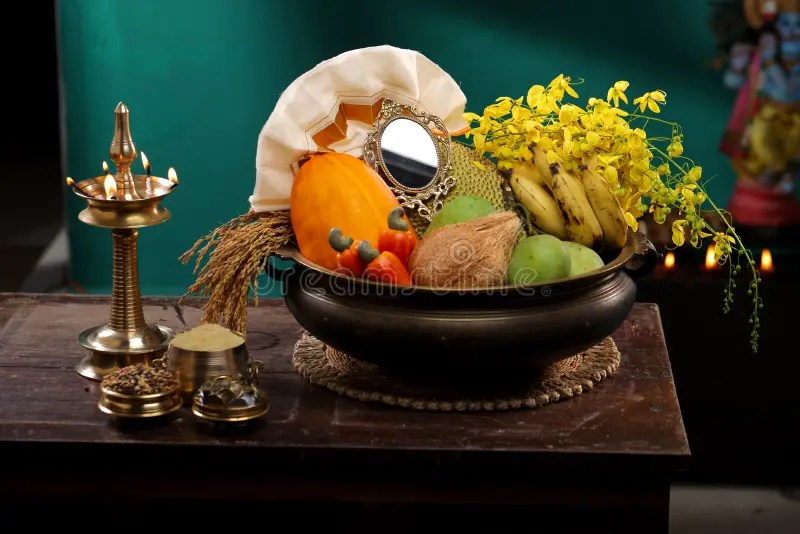

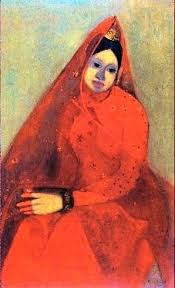
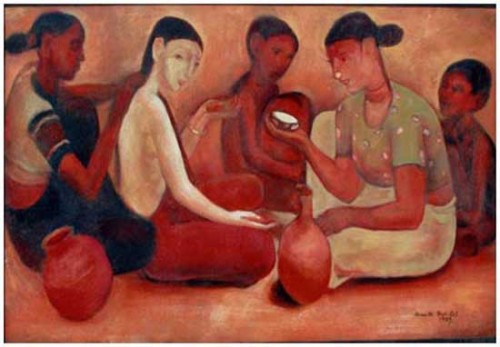





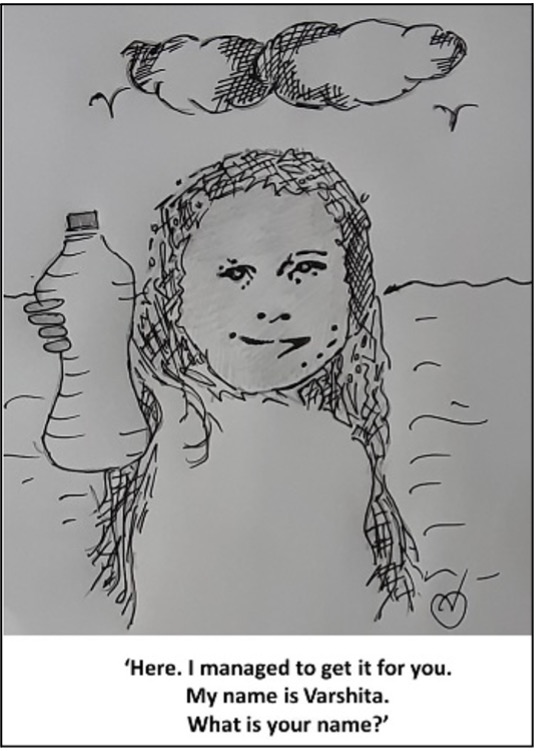
 Borderless