Raj leisurely sipped his tea as he sat side-by-side with his wife on the balcony of their seventh floor flat facing the Arabian Sea. As a retired couple, this was their favourite time of day, enjoying the view of the setting sun with the great orange orb gradually diminishing in size before dipping completed out of view into the sea. The mellow serenity of the moment filled Raj with a nostalgic tenderness. He reached out to touch his wife’s hand and his outstretched fingers grazed a certain hard object, its brilliance undiminished through the passage of years.
Raj had first met his wife through the good offices of a family connection who also happened to be the community matchmaker. This venerable matriarch had insisted on accompanying them to her own trusted family jeweller for the purchase of the engagement ring. Not wanting to disrespect or offend her, he had grudgingly agreed. After much unsolicited advice from their elderly companion, a beautiful solitaire diamond had been selected and Raj had proceeded to pay with his credit card.
To his utter embarrassment, the card had been rejected, casting an uncalled for shadow on the financial viability of the groom-to-be. Visions of wagging tongues and whispered warnings had floated before Raj’s eyes. Red faced, he had rushed to explain that the cause of this contretemps had been his having forgetten to upscale the payment limit on his credit card. The old lady had looked at him with a knowing smile, obviously relishing his discomfiture. Ignoring her and trusting Raj’s good faith, his wife had quickly pulled out her own credit card and paid for the ring herself. The matchmaker had let out a horrified gasp at this breach of convention. Raj had shrugged his shoulders and the couple had walked out of the shop arm-in-arm, leaving the lady open-mouthed with disbelief.
Still smiling at the memory, Raj squeezed his wife’s hand and drew his chair closer. They had been married for 50 years and his practical-minded wife had saved the day more than once.
.
Saeed Ibrahim is the author of two books – Twin Tales from Kutcch, a family saga set in colonial India, and a short story collection entitled The MissingTile and Other Stories.
.
PLEASE NOTE: ARTICLES CAN ONLY BE REPRODUCED IN OTHER SITES WITH DUE ACKNOWLEDGEMENT TO BORDERLESS JOURNAL
Story by Sharaf Shad, translated from Balochi by Fazal Baloch
The moment he stepped into his home, he sensed that something was wrong. A strange desolation and silence crept down the walls and doors. His wife, upon seeing him, stood up. Her voice trembled overwhelmed with anxiety. She whispered: “The snow is melting.”
“What?” At the mention of snow, his eyes flared with alarm. He rushed to the room where the snow statue was kept. As usual, it stood there like an impregnable mountain. But now, a tiny teardrop was trickling down its right cheek. The line of the rolling tear seemed to slice the statue into two, like the slash of a sword. He knew that if the melting continued, the statue wouldn’t last much longer. The mere thought of this brought tears to his eyes.
A few years ago, the sea had gifted him that very statue. In those days, he used to visit the sea every evening. He adored the sea and its rising tides, drawn to the depths and the vastness that made him feel immortal. It was that very sense of immortality that pulled him to the shore night after night. Despite the violence of the waves rising and crashing, he continued captivated by them.
One day, as he was lost in watching the rise and fall of tides, he noticed the statue gleaming amidst the water, like a giant pearl. He picked it up, marveling at nature’s artistry. He wondered how such a beautiful statue could exist in the midst of such chaos. Then, a voice echoed from the tides, addressing him: “It’s a gift for you, from me. Every evening you came here and shared my grief. Take this statue home. It will bring you peace, health, and prosperity.”
The wind, tracing lines upon the surface of the ocean, was impressed by the sea’s generosity. It told him that, to help preserve the statue, it would maintain constant climate. When everything becomes kind to someone, time will surely follow suit. Thus, time assured him that it would never bring decay or harm to the statue.
He took the statue and placed it in the finest spot in his home. As the sea and the wind had promised, the statue became a symbol of prosperity and success. Under its shade, his life flourished. But that day, the snow had started to melt!
He knew that this was a sign that his life would soon be stormed with worries and torments. He quickly stepped out of the room. The wind was swirling dust in the courtyard. Like a man who finds comfort in a familiar face during a calamity, he tearfully told the wind that his snow statue was melting.
“Everything perishes in its due time,” the wind replied indifferently.
“But you promised to protect the statue and keep the climate unchanged.”
“I still stand by what I said. It is man who claims the climate is changing. Everything—the sky, the earth, the sea, the wind, the stars, and the moon—remains as it always has. It is only man who changes.”
“I don’t understand what you mean,” he blurted out in frustration. “Just tell me how to escape this curse!”
“Everyone must find their own way forward,” the wind replied.
“All roads seem closed to me,” he lamented.
“When all roads appear closed, that’s where a new one opens,” the wind whispered as it blew away, filling the lanes with dust.
To remind time of its promise, he turned to it for answers. The time listened patiently, as if it already knew the situation. After a brief silence, it gently spoke, “In this world, everything changes its shape sooner or later. Even things that seem unchanged eventually undergo some transformation. Your statue has fulfilled its purpose, and this is the law of nature. Everything new will turn old, and when it does, it changes. Your statue may have taken on a new form—one that may not be as appealing to you as it once was—but it will never truly decay.”
“My life now depends on this statue,” he said desperately. “By its virtue, my family has lived in prosperity. Since it arrived in our home, worries and sorrows of life have forgotten our door. Who knows what curse might fall upon us once it’s gone? Its new shape could bring harm and loss to me.”
“Who knows?” the time replied indifferently.
“If this statue continues to melt, my entire house will be ruined. That’s why I don’t want it to change its form.”
“It cannot be stopped from changing now,” the time said firmly.
Feeling disheartened by the time’s response, he wandered, lost in thought, searching for a way out of his dilemma. While he wandered absent mindedly, he felt a hand on his shoulder. Startled, he turned to find a tall man dressed in white, standing beside him.
“Hey man, I’ve seen you wandering these lanes for a while now. Is everything okay?”
Like a drowning man catching at a straw, he poured out the entire story. After listening, the tall man said, “You’ve pleaded with the wind and the time, and now you’ve told me, a mere wayfarer, your troubles. But you never approached the one who gifted you the snow statue.”
Startled by the realisation, he sprang to his feet, as if pulled up by ten men, and hurried away without thanking the tall man.
He rushed to the sea and bowed before it, pleading, “My snow statue is melting— please, do something to help me.”
“I cannot do anything,” the sea replied indifferently. “Your statue has run its course. Everything has its lifespan and eventually decays. It is an illness without a cure.”
“The fate of my house depends on this statue. There must be a way to escape this curse!” he cried, his voice filled with frustration and despair.
“The sea doesn’t find a way out for anyone,” the sea responded, its voice now filled with arrogance.
“Then no one should find a way for the sea either,” a voice echoed behind him. He turned and saw the same tall man standing there. The sea seemed embarrassed, lowering its head in shame. After a brief silence, its lips trembled as it muttered: “Go home. The blessing of snow will shower upon everything in your house.”
Overjoyed by these words, he grasped the tall man’s hand gratefully, thanking him. The fire that had been consuming his soul was suddenly soothed by the sea’s promise. He hurried home and rushed straight to the room where the statue stood. The teardrop that had once fallen from the statue had dried. Relieved, he smiled, content that the statue had been spared from decay.
Eager to share the joyful news, he went to find his wife and children. But as he stepped into each room, a strange, eerie air of grief and sorrow greeted him. Everything in his house had turned to snow—the windows, the doors, the curtains, and even his wife and children had transformed into frozen statues of snow. The sea’s words echoed hauntingly in his mind: “Go home. The blessing of snow will shower upon everything in your house.”
His heart shattered. Madness and despair took hold of him as he raced back to the sea. But when he arrived, his worst fears were realised. The sea was gone. In its place stretched a vast, dark desert.
He turned back and wandered through the streets, searching every lane and alley for the man in white. He needed to tell him how the sea had deceived and betrayed him. But after scouring every corner of the city, he found no trace of the man. Overcome with disappointment, he returned to the road leading to the sea, holding on to a faint hope that it might have returned.
When he arrived, there was no sea—only the endless desert stretched out in its place. His body, weak and exhausted, could go no further. He stood there, frozen, like a lifeless piece of wood.
He remained in that spot for years, unmoving. The changing seasons, the winds, and the harsh climates left their marks on him. Over time, his form withered into a blackened log, lying forgotten by the roadside. His body had turned dark — black as a stone, disconnected from the people, the sea, and the snow.
Sharaf Shad
Sharaf Shad is simultaneously a short story writer, poet, translator, and critic. The richness of narrative is one of the defining features of his short stories. Death and identity crises are recurring themes in his works. A collection of his short stories, titled “Safara Dambortagen Rahan” (Journeying Down the Weary Roads), was published by the Institute of Balochistan, Gwadar, in 2020. The story presented here is taken from that collection and is being published with the author’s permission.
Fazal Baloch is a Balochi writer and translator. He has translated many Balochi poems and short stories into English. His translations have been featured in Pakistani Literature published by Pakistan Academy of Letters and in the form of books and anthologies.
PLEASE NOTE: ARTICLES CAN ONLY BE REPRODUCED IN OTHER SITES WITH DUE ACKNOWLEDGEMENT TO BORDERLESS JOURNAL
No one knew his name nor wished to know it. Only his face attracted those who came into contact with him. So it was said. A face whose huge, glowing eyes were turned both inwards and outwards, simultaneously. A face whose florid complexion, cheery and unfurrowed, bespoke a life of leisure, albeit not one of procrastination; a life of ease, but not sloth. In short, a life of early, unfought for independence.
I met my nameless stranger one fine autumn day in the Andalucian town of Granada, Spain, where he had been residing for several months, visiting the Alhambra Palace every day during those months. We had met in a small, non-distinct eatery, and he was very willing to converse with anyone who had leisure to tete a tete. We fell into lively conversation. Taken aback by his daily visits to the remarkable Palace, I enquired why he spent so many hours there.
“The Palace was built as a sign of religious, political and cultural power,” he began, munching energetically on his paella of rabbit. “But since 1492, that sign has been condemned to utter uselessness, reduced to a mere tourist attraction, however noteworthy. It has become completely useless since its mediaeval abandonment because it’s been drained of its original value.” Here he paused, I imagine, for me to intercede. I didn’t …
“You see, this is what attracts me most to the Alhambra; its utter uselessness for our world today. I do not consider mass tourism as an instrument of usefulness.” I kept silent to goad him on, for the turn of conversation piqued my curiosity. “The Alhambra epitomises all that I have spent my own life experiencing, consciously: the pleasures of uselessness.”
“Is uselessness a pleasure?” I nettled with a sunny smile.
“That depends upon whom it has been bestowed, sir. That depends for whom it has benefitted. The circumstances of my life and will to understand and decipher them, have conspired to draw me now into and outside of myself. My own self has become as useless as the objects that I set my eyes on each and every day as I saunter through the streets, gardens or palaces of wherever I happen to be. I have realised that such an absorption into social uselessness, and thus distance from social use, has constituted my raison d’être. And there lies the pleasure: this mode of existence is a project of life; a pure project of pleasurable uselessness to society and to myself.” His face, alit with integrity, bent low to attack the chorizos cooked in white wine sauce.
“When did you begin experimenting your project?” I asked, sipping my sangria.
“I would formulate it differently: When did uselessness experiment me!” he mumbled, his mouth full of chorizo. “It all began in Africa some thirty or forty years back, during my youthful days wandering through the Sahara desert en route to Timbucktoo. The Blue Men of the Sahara appeared absolutely useless to anyone or anything that we Europeans would call useful.”
“Such as?”
“Well, a roof over one’s head, a shower every hour, a steady, well-paid job, a car and such things … what we Europeans would term as useful, conditioned to adhere to the philosophy of infinite progress; to infinite social and political usefulness. All the Blue Men seemed to require were a few hours of sleep, food, water and the desire to procreate. Needs that all mankind need so as to account for our very presence on Earth. I lived in the desert for over a year, and little by little discovered that this lifestyle suited a possibility of existence, a life not of a desert-nomad mind you, but one of a useless idler, which as time went by, proved possible, be it in the cities of Europe and Asia or in their countryside towns and villages.”
“As I understand it, social success has no meaning for you at all?”
“Not at all. Success only invites humiliation or cruel jealousy, and the pursuit of wealth is a path marked by ruthlessness. I earn my living simply to eat, to dress according to the climate, to have a roof over my head when needed.”
“But a roof over one’s head could be expensive…” I intervened.
“I spend most of my nights out under the stars when the weather is warm. With the coming of winter, I seek refuge in Catholic missions, poor men’s shelters or in the numerous Salvation Army shelters. Any asylum that will not turn me down. As far as any permanent residence, I have taken up lodgings in the homes of generous people for a meagre fee, or have laboured on farms for my food and bed. Do not confuse uselessness with doing nothing. I’m no couch potato; I have done many things, but they do not fit into our social machine of imposed well-being. My life may appear negative to those who hold me in contempt, but my usefulness is as useful to mankind as it is to myself. Don’t forget what one Belgium writer once wrote: ‘It is thanks to a certain number of men who seem useless that there will always be a certain number of useful men.’”
“Who wrote that?”
“I forgot. But what difference does it make?” He wiped his mouth delicately, smacking his lips. He proceeded: “I imagine you probably believe me to be a social parasite or a social zero as Balzac once wrote, useless even as a human being. But read Friedrich Nietzsche on this point,” and he quoted: “’Thevalue of a human being does not lie in his usefulnes; for it would continue to exist even if there were nobody to whom he could be useful.’”
“Quite an imposing thought,” I acknowledged, sitting back. “But you must admit that you have been useful to the kind people who hire you on or who lodge you, even for a small fee.”
He snorted: “Perhaps. But I cannot speak on their behalf, only mine.” I noted that he wiggled out of that one quite ingeniously. His face shone with a strange light. An aura of mystery gradually covered it like a gossamer veil. The light suddenly went out.
“I’m sure your effort to separate yourself from the social body must be a terrible struggle,” I pursued without irony. “I believe that to be estranged from the social body is commensurate with being estranged from one’s own self. Am I right in assuming this?”
“Perhaps, but not from the individuals of those societies. I am not a misantrope. This being said, solitude, fasts and meditation have prepared me for outer trials and tribulations, which I believe, without vanity, to have overcome.” He began picking his teeth with a very long fingernail.
“And God?” I rebounded, eyeing him steadily. His lips broke into an artful grin.
“He has been my only Friend since the beginning, sir. And why is that? Because we have been useless to each other since our initial communion.” He stood, evidently undesirous to develop this rather paradoxical statement. I let it drop …
We slipped outside and my nameless companion suggested that we have a quick jaunt through the ‘Arab Market’ in Zacaten. Indeed, the weather was warm, that Autumn weather which I have always found so stimulating in Granada; Granada, perched high in her mountainous refuge like an eagle in her lofty nest. My strolling companion strolled into my reverie.
“Look at the sky, a bluish turquoise which reminds me so much of the domes of the mosques in Bukhara, Uzbekistan. That turquoise which solicits silence and contemplation.”
“So you’ve visited Uzbekistan?”
“More than visited, my friend. I lived there for five years studying under the spiritual guidance of the Nakishbendi Brotherhood, a Sunna movement founded by the Shah Nakishbend, and which has survived the anti-religious crusade of the Soviet Union. With those kind and learned monks I learnt the virtues and powers of silence, contemplation, discipline, simplicity and periodical talks.”
“In what language did you speak to them?” I ventured, a bit intrigued by this singular experience.
“In Uzbek, of course!” he responded dryly. “I also learned to read Arabic.”
“But are silence and talks not contradictory?”
“Not at all, sir. Clusters of roses certainly grow silently, but good soil, air and pure water are needed for their basic growth. If accompanied by a soft, melodious voice, they grow better. Roses heed to that voice as silence heeds to constructive talks. It was during the alternating passages of silence and talks that our spiritual guides opened our eyes and senses to the uselessness of worldly matters, and since then, this uselessness has become my second nature, even my first! Mind you, this discovery has nothing to do either with self-love or atomistic individualism. As I said, I have relations with people, albeit brief; and although I keep aloof from community aggregation and national gatherings, I have never spend my life gloating in an ivory tower. No sir, I live for wanderlust not social or individual hubris! The lust for wandering … And when one wanders one cannot but converge with people, learn from them. This does not necessarily mean that I derive an extraordinary pleasure from communicating with them. To tell the truth, I prefer my own company, if I may say so …”
“But you surely feel a responsibility towards others?” I pursued, more and more fascinated by this nameless chap, who by now had led me into a marvellous little garden out of whose spouting fountain splashed tinkling sprays here and there.
“Responsibility?” he chortled, as we sat down enjoying the perfumed scents of honeysuckles and roses. “Responsibility is only towards oneself. My words or gestures will be felt by others. Would you harm or humiliate your fellow man? Uselessness does not mean selfishness or egoism. In fact, it disciplines you to an awareness of others, an awareness those who whole-heartedly believe in social relevance will never come to understand for they must belong to a community, club or ideology in order to give pride and reason to their usefulness. They discredit the experience of uselessness. Don’t get me wrong, I do not live in a fantasy world like those who tout infinite progress or community spirit. These are abstract schemas for me. My Way is to strive to overcome anger, hate and jealousy within my own sphere of existence. This entails peeling away the veils that dim the lucidity of reality; my reality of being useless to the devastating machine of the useful well-being of mankind.”
“I would then conclude that your manner of living may be called cynical or indifferent?”
He was mortified by my question. “Cynical? A cynic questions then condemns derisively the circumstances that emerge before him or her; I neither question nor condemn. I simply carry on from place to place, experimenting novel circumstances, accepting them as if they had always been mine. Indifference? Well, if you mean stepping back and out of the world’s commerce, and not to take either that commerce or oneself seriously, then I am indifferent. The crisis of many individuals today is that they take themselves much too seriously, much more seriously than the seriousness of their work or vocations. And when this self-seriousness is struck down or dethroned a dreadful sense of uselessness seizes them, causing depression, or worse, suicide. My uselessness to myself and to others is more serious than myself. I am in the world but not of it!”
As we sat in silence, I gradually felt myself transported to another dimension of time and space. Scenes of my own life flashed before my eyes, lively colourful scenes and gloomy ones. I could not resolve whether this nameless fellow fascinated or revolted me. My own life had been ensnared in a web of social irresponsibility and imposed representations. I had become one of the many cogs in the slow and steady vast social wheel that turns and churns, and I sensed that mine had become worn-out and useless. I had so yearned to be of some use to society … But now? Yes, now? How could I restore my previous enthusiasm that had long been abandoned? I had to admit, though, that this man’s experiments heightened my ardour to … to do what? Was he sent to me like some mentor? He suddenly stood and bid me a good day with a whimsical smile, as though he had been reading my thoughts.
Before leaving, however, he said: “Tomorrow I shall have a walk in the gardens of the Alhambra. Please join me, I’m sure we have much to discuss. Meanwhile, let silence be your companion until that walk.” And he disappeared into the milling crowd.
Waking early the next morning, I resolved to meet my new and somewhat eccentric companion at the beginning of the long avenue that leads to the Gate of Justice. An avenue lined with sentinels of cypress and other trees, within whose morning freshness ran a warren of narrow paths.
We met at precisely eight o’clock. With a sort of fraternal benevolence, he took my arm and we strolled upwards past the Gate of Justice, the pompous palace of King Carlos the Fifth, paid our tickets and entered the palace proper, almost religiously, under the storied vaulted corridors, by the pencilled ornaments and tiled walls of arabesque blue, over the smooth, shiny marbled floors.
“Have you read Washington Irving?” he asked in a quavering voice, as if not to disturb the mediaeval palace denizens.
“Yes, a marvellous story-teller and keen observer,” I replied softly.
“You know he led a life of ridiculous usefulness until sojourning within the walls of this soporific fairyland. Gradually Irving fell under the pleasant and industrious spell of uselessness.”
I stopped walking.
“How so? That’s contradictory!”
“Is it?” he beamed, smiling that wide, wicked, whimsical smile. “Yet so it was. He learnt through daily experience that this whole palace of enchantment lies under the layers of absolute uselessness. Layers and layers of poetry, conversation, lyrical jousts and insignificant gestures which disappeared as quickly as they were conceived. Nothing! Nothing remains of that imagined uselessness. And that is precisely why he wrote his Tales of the Alhambra[1] ; it was out of the need to express his useless life within these lyrical stones.”
My sauntering companion fell silent. Only our footfalls could be heard weaving in and out of the slender colonnades, intermingling with the chanting fountains. The blue ceramic shone on the walls like a mirror reflecting the azure …
“I see your point, I think. Before dusk, at times I watch the sun glide from East to West over the Palace walls, the dark greys slipping into ochre reds, soon to be daubed, as the sun sets, by the overglow tones of chestnut, roan and dun.”
“Yes!” he whispered excitedly. “That is perfect uselessness. It serves absolutely no purpose to anyone … even to yourself. For, unlike Irving, who snapped his experiment in uselessness, succumbing to the desire of writing it down for all and sundry to share, I presume that in your case you have no urgency to express any posthumous glory?”
I shook my head thoughtfully, then asked: “You don’t feel the desire to keep a diary?”
“Write? A diary? What for — to satisfy my blotted ego seeking a useful outlet? These are vain insinuations, my good friend. No, it is quite enough to feast my sovereign eyes, to feed my independent emotions on this marvellous honeycomb frostwork and these fine, mullioned windows[2]. These artifices are as useless as the ephemeral poetry and conversations that rang euphoniously within the hallowed halls and courts. And indeed, why should we, mere strangers to this mediaeval marvel, impose an artificial usefulness to it all? Why should we break into lyrical extravagances of the budding rose or the flight of the owl? Into flights of phantasy poeticising upon the Towers above us where verses of love spilled forth their honied fragrances into a void of mute forgetfulness? None of that for me, sir. Within these courts and gardens I have come to the inevitable conclusion that my Destiny lies in perfect uselessness; namely, in my refusal to reanimate the beauty or the ugliness that has crossed my path for the past fifty years in Asia, Europe, the Americas and Africa. I decline to spoil the uselessness of beauty and ugliness, to encumber my spirit and soul by searching for a ‘proper use’ for such human emotions and achievements.”
We had walked through the remarkable Court of Lions and were now entering the gardens of Lindaraxa, Sultan Boadil’s[3] wife. We sat down inhaling the gay scents of roses, oranges and lemons.
He sniffed the air, then murmured: ”A vague of indescribable awe was creeping over me,” here hepaused, lifting his eyes upwards: ”Everything began to be affected by the working of my mind, the whispers of the wind among the citron-trees beneath my window had something sinister…” My companion had chanted this broken sentence in a sort of drawn-out litany. “Yes, something sinister, indeed,” he ruminated to himself. “That point of inspiration led Irving from absolute uselessness to the search for putting uselessness to use. I enjoy reading Irving, but will never convert a ‘something sinister’ to a million-copy, world-wide read book.”
The sun rose higher and higher coating the pink tongues of dawn with a purplish blue. I turned to him: “Still, I cannot see how we as humans can escape from being useful Beings!” He looked at me, his facial features had suddenly hardened, or perhaps it was due to the effects of the shadows off the sun-lit fruit trees.
“Does my speaking to you now fulfil an emotional need? Was our conversation a psychological issue to such a profound hoarding of uselessness?” I asked.
He laughed so loud that a few puffy-eyed guards turned their heads in our direction. “Dear fellow, you have hardly understood our morning jaunt. We are simply idling our time away as uselessly as possible, as useless as a leaf dropping from that citron-tree, as a person who labours all his life to survive, a hermit in his remote cave, a desert-dweller, a traveller without name or record. How many of those intrepid souls took refuge in monasteries of the East and there left no trace of their earthly footfalls? They experienced true uselessness …”
“Even to God towards whom they must have addressed their prayers?” I enquired. He raised a quizzical eyebrow.
“That is neither for you nor me to answer, my friend.” He stood, shook my hand and left the gardens back through the Palace halls.
I felt a bit put out by his prompt and unexpected departure. It were as if he had abandoned me to unravel that last enigmatic thought of his. A silly feeling of course, but one that clung to me like the scents of the roses, oranges and lemons. My mind slowly became dull, my body numb. Had the nameless wanderer put me under a magical spell? The redolence and balminess of the gardens added to my discomfiture. At the same time, however, I understood that idleness is not a state or a condition which I could bear or champion as he does. I rose, heavily. Enough of this palatial beguiling and futile jaunting. That man, whoever he is, taught me a sound lesson: a person is born into our world to accomplish a particular use, one that is his or hers alone. There is no doubt in my mind about this.
I dragged myself from the gardens back to my hotel in the Old Market at Zacatin, an effort that enlisted all my emotional and physical strength.
I must confess that during the following days, in spite of my firm resolution towards usefulness, I idled my time away seeking out that nameless idler, tramping from street to street, garden to garden, restaurant to restaurant. Every morning I rose early and scoured the halls, courts and gardens of the Alhambra.
He had vanished into thin air, as the saying goes …
*
A few years later back in Amsterdam, my eye caught sight of a book entitled The Denizen of theUnderworld : The Art of Uselessness. I bought it out of some urgent curiosity that I could and still not explain rationally. The first sentences read : ”I am without shame, without guilt, without bad conscious. I truly prefer my cave swimming with mermaids, dwarves labouring at the furnaces, fairies hunting out medicinal plants. Here I breathe the air of pure uselessness, shielded against the charm and seduction of use.”
The author of the book had an odd name — Vigilius de Silentio — a name that might have fitted the face of my nameless companion whom I had met so many years ago in Granada. On second thoughts, though, that name could have fitted any face.
To tell the truth, the book bored me to death …
.
[1] Washington Irving, edition Edilux, Granada, Spain.
[2] A vertical element made of wood or stone that divides a window in two. It is applied in Islamic and Armenian architecture.
[3] The last Sultan of Muslim Spain, exiled to North Africa.
Paul Mirabile is a retired professor of philology now living in France. He has published mostly academic works centred on philology, history, pedagogy and religion. He has also published stories of his travels throughout Asia, where he spent thirty years.
.
PLEASE NOTE: ARTICLES CAN ONLY BE REPRODUCED IN OTHER SITES WITH DUE ACKNOWLEDGEMENT TO BORDERLESS JOURNAL
In a tiny shop located within a narrow lane packed with people, sat Rakesh, in his late seventies, though he couldn’t say exactly. They didn’t keep proper records of birthdays back then. He sat staring outside as people pushed past one another, and over their heads, thick black electric cables coiled around one another and around long poles, forming a black canopy. He remained motionless, with glazed eyes.
Someone entered the shop, looked at him, and said something.
“What?” Rakesh muttered, coming out of his thoughts.
It was Nitesh, who had been running a food stall across the street for the past five months. It was called “Nitesh Snacks”.
“I came to have this watch repaired. It fell yesterday while I was going back home, and the glass broke.”
He put a watch on the counter. Rakesh picked it up and glanced thoughtfully at it. Then he nodded to himself and put it aside.
“I will give it to you tomorrow.”
Nitesh stood there hesitantly for a while, then said, “Arun ji was a very nice man. It’s a pity that he…died.”
Rakesh nodded again and said nothing. His shoulders seemed to weigh him down. His head was covered with thick grey hair, dyed bright orange with henna. He wore an oversized faded blue shirt that hung over his thin frame, and it was clear that he had forgotten to shave that morning. Nitesh looked worriedly at him. Things weren’t going well, and now that Arun ji was dead, they would likely worsen.
*
Rakesh walked into his single-floor house, which was a short distance from his watch repair shop. He remembered how he had started that shop. He had painted it himself, had the shutters fitted, and then began repairing watches. It had cost him plenty to buy that tiny room on the main street, but it paid well. People came frequently, and soon he could start selling clocks and watches. The shop was named after his late father, “Narayan Watch Repairing”. He remembered covering every shred of the wall with clocks- all colours and shapes.
He went right towards the back of the house, down a long narrow corridor, to a room that was visibly separated from all the other rooms. He sat down on the bed, thinking about when it had all started—when he became like this. It was probably when Arun died…no, that happened two days ago…it was when his wife died. Or around that time, or perhaps even before. He couldn’t think straight. He sat motionless, with a deep feverish glow in his eyes.
Someone looked into the room. It was his son with a big smile on his face. “How was work?”
Rakesh said nothing, and there was a pause. “You must miss your friend.”
Again, nothing.
“We all have to go sometime.”
This time, Rakesh just looked at him thoughtfully. His son nodded to himself and then said, “Sold any clocks today?”
When there was no reply, he added, “Well, that business is no longer as good. A few clocks, that’s all we can sell nowadays. Everyone has clocks on their smartphones. Who needs them now? That’s why we decided to shut it down. You do remember that we have only got a month left? I hope you have started wrapping everything up.”
His son had an easy smile on his face ever since he had entered the room. He looked at him for a moment before adding, “If you need any help at all while closing down, you can always call me.”
Rakesh nodded but said nothing. His son kept talking and then left after a while. Yes, he remembered now. He remembered how it had all started. It had started soon after his son got married. They began quarrelling frequently, especially Rakesh’s wife and their son. It felt like they were always in their son’s way, like they were always doing things to disrupt his life. He remembered his wife crying all night because of their son. He didn’t say anything much until she died. He did not like quarrelling. Many things displeased him, but he learned to remain quiet or use very few words. It had still not been as bad. At least, he still had some respect around the house.
Then one day, his son had seemed to turn over a new leaf. He was always there for him suddenly. He took an interest in the shop. He sat and chatted with him in the evenings over a cup of tea. Rakesh liked this change. Over several months, he came to trust his son, feeling a sense of satisfaction when he looked at him. There were disagreements, of course, but his son invariably seemed to come to his senses and apologised.
Rakesh couldn’t remember how long this harmony continued, but he did remember when it came to an end. It was a short time after he signed the documents that transferred all his property to his son. After that, things began to change. His son no longer took an interest in the shop. They barely spoke anymore. Rakesh’s health also started to deteriorate. Instead of taking more care of him, his son had a room built at the far end of the house. This room was bare except for an old wooden bed and an attached bathroom. It was in this room that Rakesh spent most of his time while he was in the house. His food was sent to the room. It always looked like leftover food from yesterday. Whenever they quarrelled, his son would always end the argument by giving the example of their old neighbour, who was sent to live in a temple by his children because he became ‘too much of a burden.’
He had lived like that for about a year now, missing his wife terribly. No one spoke to him in the house. His only solace was his shop. He eagerly spoke to the customers, absorbing himself in his work. His closest friend, Arun, was a barber whose small salon was right next to the watch repair shop. They had known each other for forty years. Every day, after closing up, they sat and chatted for about an hour. Arun was the one person he could always talk to, the one person who always shared his sorrow, and now Arun was dead. He had no one. At night, he would lie in bed, hearing laughter drift from the house. There was no outlet for his sorrow. It was bottled up inside him, and he felt that it was slowly poisoning him. His feet felt heavy, his breathing was often laborious, and he sometimes heard his wife calling out to him in the middle of the night. Was he going mad? Perhaps he was, and this month, his son’s news had been the final nail in his coffin.
His son had come bustling into the dingy room with a smile and told him that he urgently needed some money, then he had abruptly began talking about the watch shop—how it was not doing well, how people no longer cared about watches anyway, and how Rakesh was getting old and needed some rest. Then he explained that these things had prompted him to sell the shop, and they were required to clear out within two months.
There had been heated arguments between them. Rakesh had refused to speak to him for several days until one day, his son had assumed that his silence meant that the matter was settled. That there was no longer any need to discuss the issue anymore. Rakesh had become quieter than ever before. All he did was nod, as though if he was careful enough to maintain his stubborn silence, then perhaps someone out there would miss his words. Would miss them enough to make things right again. He would have a function in this world—a purpose. He would not be a burden on anyone. His son would miss speaking to him. They would once again sit in the evenings with a cup of tea and chat, not because he wanted his property, but for Rakesh’s sake. Because Rakesh would never be a burden. No one could make that happen to him.
*
Rakesh woke up and stared at the ceiling for several minutes before he realised that someone was in the room. Someone was speaking to him. He sat up and looked thoughtfully at his son. He was still too disoriented to hear him.
“You still haven’t done a thing…I can’t believe…we only have ten days left…do you realise how less time that is?” his son said.
Rakesh thought that he might be in a dream, but then he remembered that he hadn’t had a dream for years. He closed his eyes tightly and opened them again. It became clearer.
“You had two months to clear the shop. That’s more time than necessary in the first place, and today I went there in the morning to have a look, but not a thing has changed! I thought I could trust you with a simple task like this. How can I handle everything on my own? Haven’t I always taken proper care of you? But okay now, tomorrow I am coming down myself to start clearing things up. This has gone on for long enough. I know you have been handing over all the earnings from the shop to Arun’s old widow. I know that Arun was very poor, but we can’t really afford to be so generous if we are poor ourselves, can we? I tolerated all that, but you couldn’t even handle one small thing.”
Rakesh didn’t know how long his son had been speaking, but he understood what was being said. He did not reply at all and waited until his son stormed off.
He got his shirt off the hook and put it on. He stood in the middle of the room for a moment and then left the house. He walked for a long time to nowhere in particular. He had not eaten anything since the morning, but he didn’t feel hungry anyway.
He knew his son was lying. The shop had been doing just fine. His son just wanted to sell it off and get his hands on the money. Worst of all, Rakesh was powerless. Tomorrow, his son would come to start clearing up the shop, and after ten days, it would belong to someone else. He would probably spend the remainder of his days in the little cell his son had built as far away from their lives as possible, waiting for death. Waiting for time to pass.
He looked around and realised that he was near his shop. It was dusk now. In the deep orange sky, some birds were on their way home in a v-formation. How long had he walked? He felt drained, and his heart was fluttering slightly. He stared at the shop front for a while, waiting for his breathing to become normal again, but it didn’t. He then began to open the shutter, but it felt heavier than usual. By the time it was done, he was sweating profusely. Once inside, he collapsed into his chair behind the counter after locking the door from inside.
His mind was blank for a while. He was only aware of how tired his body was. Then he stared thoughtfully at each and every corner of the shop. He would leave this little space after ten days, and it would continue to exist without him. It might stand there for a hundred more years. He sometimes wished he could be a building. At least they were not a burden on anyone. They got to fulfil a certain function. He might leave, but this shop would continue to be a room. It might not be a watch repair shop, but it would still have a function. No one thought buildings were a burden. In fact, people fought with one another to get ownership. Wasn’t that what had happened to him? His son had lied and cheated to get his property, and it wasn’t even much at that.
He had thought that he would feel better after sitting down, but instead, his head had started spinning slightly. He looked at the walls. Each of them were covered with clocks from top to bottom. Normally, they would please him, the culmination of lifelong hard work. Now, looking at them, they all reminded him that time was passing. That the next day, he would have to pack each one of them. That ten days would pass soon, and after that all he would ever do would be to wait for time to pass. He could not bear the thought of packing the clocks up.
He realised that these were the last few moments of his old life, and they were passing really fast. Placing his palms on the counter, he hoisted himself out of the chair and stood for a moment, breathing hard. Then he walked over to the first clock on the wall—a bright yellow square-shaped one—and took it down from the hook. He stared at the minute hand for a while and then smashed it violently on the floor. Then he began moving faster, even though he still felt weak, but his eyes gleamed with determination. He went around smashing every clock. They all reminded him that time was flying by, leaving him behind, and for once, he wanted it to stop at the threshold of his shop. For once, he wanted to be free from the burden of the next day.
The Persistence of Memory by Salvador Dali (1904-1989). From Public Domain
Maliha Iqbal is a student and writer from Aligarh, India. Many of her short stories, write-ups, letters and poems have been published on platforms Live Wire (The Wire), Cerebration, Kitaab, Countercurrents, Freedom Review, ArmChair Journal, Counterview, Writers’ Cafeteria, Café Dissensus, Borderless Journal and Indian Periodical. She can be reached at malihaiqbal327@gmail.com.
.
PLEASE NOTE: ARTICLES CAN ONLY BE REPRODUCED IN OTHER SITES WITH DUE ACKNOWLEDGEMENT TO BORDERLESS JOURNAL
“Limitless and immortal, the waters are the beginning and end of all things on earth.” -- Heinrich Zimmer, German Indologist and linguist
Little Varshita has an inborn affinity for proximity to water bodies. A June-born Cancerian, she eagerly looks forward to short walks along the Marina Beach in Chennai – the second-largest urban beach in the world. Five-and-a-half years old now, she is a prodigy eagerly looking forward to starting school next year. Whether her genius owes itself to nature or nurture or both, is difficult to say. It can be mentioned here that both her parents are teachers. She also possesses a very high emotional intelligence for her age. Perhaps there is a connection here to the aforementioned affinity for proximity to water bodies. Perhaps not.
“We were there two days ago, Varshita. Can we go tomorrow instead?” Her father Ramesh who wants to watch a cricket match on television at home, smilingly attempts to dissuade her.
“Okay, no problem, Appa. Can I watch Animal Planet then this evening? If they show fish and crabs and whales and sharks and dolphins and orcas and octopuses and squids and seals and penguins….and….my-aunties?”
“Your aunties? Are Periyamma[2] and Aththai[3] going to be seen swimming, on Animal Planet?” Ramesh asks with a wink and a smile, eagerly expecting a response from Varshita.
“Noooo…M.A.N.A.T.E.E.S…” She hurls a pillow playfully at Ramesh, realising that he is pulling her leg.
“Ah, I see! Those creatures which are also called sea-cows.”
“Are they also called sea-cows, Appa? I did not know that. Now I do. But I knew sea-lions.” Ramesh is happy that he has invested in his daughter’s knowledge bank. Perhaps, his sister and sister-in-law are not going to be very happy if Varshita decides to share the joke with them. His sister especially does not have a sense of humour.
“Do not share this joke with your aunties, Varshita.”
“I promise, but in return you have to take me to the beach three times next week,” she says matter-of-factly.
“Done! Good girl!”
Varshita looks at Ramesh and knows that she has somehow gotten her way, tactfully. Little girls wiser than men; cleverer too, thinks Ramesh, recalling the Leo Tolstoy story about Akulya and Malasha[4], he had read in school in the ninth grade.
.
The waters of the Bay of Bengal are calm. Waves, longing for contact with the littoral sands, swoosh against the shore. Even though there are many people there on the beach, they seem to be observing silence in deference to the Sea-God. Varshita tends to speak less when out on these walks. She watches Mother Nature intently, listens carefully to Her sounds, and once in a while her curiosity leads her to ask a carefully-thought-out question. Ramesh does his best to reply, and whenever he is not able to find an answer instantly, he makes it a point to put the question on the back-burner, give it serious thought, and get back to Varshita with the answer. At times, that is even a day or two later. Once in a while, there are unanswerable questions hurled at him. Being a senior lecturer at the Indian Institute of Technology, he is used to this practice. After all, his daughter is also his student – a special one at that.
“Appa, is it okay to throw a chocolate wrapper into the water?”
“No, Varshita. It is not. One must not pollute the environment.”
“But then why are there so many things lying around here? That is bad, right?”
“Yes, it is. Very much so. But maybe, people will learn not to do so, and when you are an adult, you will see that the beach is perfectly clean.”
She looks up, nods and smiles.
“Appa, when the waves come and take all these things into the sea, what happens to them?”
“ A good question, Varshita. Many things which you see lying here are harmful to the animals which live in the water. All the animals you like seeing in the Animal Planet.”
“I will not throw anything, Appa, when I come here with you to walk.”
Ramesh and Varshita do a high-five, and Ramesh tells her that he is very proud of her.
The blue sky starts turning grey and some clouds float in. Precisely at that moment, Varshita sees a little girl with a sack on her back, and a stick in her hand, bending down and picking up a plastic bottle.
“Appa, what is she doing?”
“She is doing a very good thing. People throw things, and this little girl is collecting them, so that they do not get dragged into the sea to cause harm to the animals living in it. There are many people like her in our city. They are poor, yes. But we have to be thankful to them for what they do for us.”
It starts drizzling, and Ramesh tells Varshita that they have to head home. She keeps looking sideways at the little girl with the sack, as they walk away from the sea. Unanswered questions, for sure, start piling up in that four-and-a-half-year-old brain of hers.
.
Rains reign in Chennai for the next three days. Varshita knows that she cannot compel Ramesh to take her out to the beach for a walk. Ramesh however remembers the promise, and keeps checking the weather forecast every day. On Thursday, he tells Varshita that it is going to be sunny for four days at a stretch.
“So, can we go the beach tomorrow, the day after and the day after the day after?”
He chuckles, realising that his daughter remembers the promise in letter and spirit.
“Why are you laughing?”
“Because I am happy to go to the beach three evenings in a row with you. We must also ask Amma[5]to come along.” He winks, and they do a high-five.
“Yes, that will be fun. But Amma is afraid of the waves.”
“We will help her to get over her fear. But you must convince her to come with us.”
“Yes! I take on that challenge,” she says.
Ramesh’s wife Megha works as a school-teacher. She picks up Varshita daily from the kindergarten on her way back home from school. “Amma, are you interested in coming to the beach tomorrow evening with me and Appa?’
Megha looks at Varshita and studies the expression on her face. She realises that the last time she was out with Ramesh and her for a walk on Marina Beach, was over a month ago. She agrees.
“You do not seem really interested,” says Varshita.
Megha is taken aback. “How can you say that?”
“It is written all over your face,” Varshita says.
Megha bursts out laughing. “Well, whatever is written on my face, I will join you both tomorrow. That is a promise.”
“Yes!” Varshita does a V-sign this time.
.
Friday evening happens to be just the perfect time to be out on Marina Beach. Yes, there are some stray clouds, but they do not seem to be in a mood to discharge their content in Chennai. Some other place is destined to receive rainfall from them.
Megha, Ramesh and Varshita buy three ice-creams, and walk down closer to the shore. Megha spreads a large plastic sheet, and they sit down on it. Varshita remembers the little girl with the sack on her back she had seen on the previous weekend and starts looking around. Call it intuition or what you will, she spots her about 50 metres away. The girl spots a big plastic bottle floating on the water, but is a bit wary of the waves advancing to the shore.
“Appa, can I go and help her to retrieve that plastic bottle? I like getting my feet wet in the water.”
Megha glares at Ramesh and nods her head from left to right, signalling to him that he must not give in to Varshita’s request. Ramesh winks at Megha. “I will go with her. Do not worry.”
The father-daughter duo walks towards the girl, and Ramesh tells Varshita to go and talk to her. She is as tall as Varshita is, and may perhaps be a little older than her. Not more than six years old, for sure.
“You want to get that bottle?”
“Yes, but I am afraid of the waves.”
“I will get it for you. Wait here.”
Varshita looks at Ramesh, who gives her the thumbs-up sign. The little girl notices that and smiles.
Varshita takes off her slippers, and leaves them beside her father. “Take care of them, Captain, till I come back.”
Courtesy: G Venkatesh
Laughing aloud, she wades two metres into the sea when the nearest incoming wave is still a few metres away. She retrieves the bottle, turns and walks up to the girl, and says, “Here. I managed to get it for you. It was easy. My name is Varshita. What is your name?”
The girl smiles gratefully, accepts the bottle, and drops it into her sack. “My name is Mary. You are not afraid of the waves, Varshita?”
“I used to be.” She points to Ramesh and continues, “Appa told me not to be. He said that we must be careful, not afraid. But you know what, Amma is still afraid.”
“You visit the beach daily, Varshita?”
“Appa and I like to walk here sometimes. I love the sea. How about you?”
Mary looks into the distance. “I do not know if I love the sea or not. I just come here to look for things like these.”
“What do you do with them? Appa says that we must be thankful to all of you who clean up the beaches. He says that you help to stop damage being done to the fish.”
Mary smiles weakly. “You see my Amma there,” she points to a woman with a bigger sack hunting for treasures, about 100 metres away. “I will give these to Amma. Then my Amma and Appa will sell these and get money. Then we buy food and eat.”
Varshita listens intently, as she always does. “You like ice-cream, Mary?”
“Yes, I ate an ice-cream long ago. On Christmas Day.”
“Wait here,” says Varshita. She runs to where Ramesh is guarding her slippers, puts them on, and runs to her mother. “Amma, can I give my ice-cream to Mary over there? I just helped her to get that plastic bottle.”
“I saw you doing that, dear. I am so proud of you. Yes, you can give her your ice-cream. It is melting away slowly. Ask her to eat it quickly.”
Varshita grabs the ice-cream cone and runs towards Mary with a cherubic smile of her face. “Here, Mary. Your second ice-cream.”
“Have you eaten?”
“I will eat Amma’s. She usually does not eat her ice-cream and ends up giving it to me.”
“Will you be coming tomorrow, Varshita?”
“Yes, that is the plan. And the day after tomorrow also.”
“At this time?”
“Yes, and you?”
“I am not sure. I go with Amma wherever she goes. If she chooses to come here, it will be at this time.”
“What is that you are wearing around your neck?” Varshita asks, pointing to the little crucifix.
“Oh, this one. This is Jesus. Our God. I got this on the same day I ate my first ice-cream.”
Mary’s mother is calling out to her from a distance. “I am so happy that you got me the bottle and then gave me your ice-cream. You are a good person. Can we be friends?”
Varshita smiles cutely, and extends her hand for a handshake. Mary reciprocates, puts her little sack on her right shoulder, holds the stick in the right hand and the ice-cream in the left, and hurriedly walks towards her mother.
“Eat the ice-cream quickly. It will melt away,” shouts Varshita.
“Yes, I will,” Mary shouts back.
.
The next day, Mary’s mother decides to take her to a stretch of the beach further away. The day after that, Varshita feels a little unwell and the trip to the beach is called off. The two girls never meet each other again in Chennai.
But as we already know, God’s ways are mysterious. Many years pass, before they meet again in Bengaluru in a public school. One in her capacity as the mother of a girl named Sarah, and the other in her capacity as Sarah’s science teacher.
“Mom, if you stick this on your head, your splitting head will heal. Here, take it and stick it on,” said four-year-old Ravi, handing over a roll of round plaster.
“Who told you to stick this for a headache?” Rajani asked in surprise, not quite understanding what he meant.
“Earlier, you told the neighbour aunty that your head was splitting. That’s why I brought it. Whenever something in the house tears, Dad sticks it with this. You should stick it on your head so it doesn’t split,” Ravi replied innocently.
Rajani laughed at her son’s sweet words. As a festival was on in the village, Rajani had invited her parents, siblings, and their families to her home. With everyone staying at her house, her daily chores had increased. Even though she woke up at dawn to start working, she couldn’t finish everything. Just then, the neighbour had come asking for a loan of some sesame oil.
“No matter how much I do, the work never ends. My hands are hurting, and my head is splitting,” Rajani had told the neighbour.
Ravi heard these words, and to help his mom, he brought the plaster his dad used to stick his brother’s torn books. He told his mother to stick it on her head to ease her headache. Now, Rajani understood the situation and laughed at her son’s cleverness.
“Why are you laughing? Won’t the headache go away if you stick this?” Ravi asked innocently again.
“You don’t stick plaster for a splitting head. A splitting head means I have a headache. If I apply Amrutanjan[1], it will go away,” Rajani explained in a way he could understand.
Rajani shared the incident with the rest of the family, and they all had a good laugh.
.
That afternoon, the family sat down for lunch. Rajani served a curry made with chicken eggs to everyone.
“What is this?” Ravi asked. Rajani replied that it was a chicken egg.
“I want a donkey egg,” he said.
At first, Rajani didn’t understand what he meant. Everyone else also looked at Ravi with interest.
“There’s no such thing as a donkey egg. There are chicken eggs and duck eggs,” his grandmother tried to explain to Ravi.
“No, there is. I want that one,” Ravi insisted, starting to cry. No matter how much they tried to explain, he didn’t stop crying.
Ravi’s father suspected that someone must have mentioned it, as kids don’t come up with these things on their own. He took Ravi close and gently asked, “Who told you about a donkey egg? Tell me, and I’ll ask them to bring it for you.”
Hearing this, Ravi’s face lit up, and he pointed to his grandfather.
Everyone’s attention turned to the grandfather. “Did you tell him about it? Is there such a thing as a donkey egg?” everyone questioned him.
“Hold on! Why would I tell him that? Give me a moment to think,” the grandfather replied, trying to recall the incident. After some thinking, he remembered something.
That morning, one of the workers had done a job incorrectly, and in anger, the grandfather had said, “Is this how you do it? This is not a donkey egg!” Ravi, who was sitting on his grandfather’s lap at that time, heard these words. He had asked what a donkey egg was, but his grandfather, in his irritation, didn’t respond.
After learning the real story from the grandfather, the rest of the family laughed. Ravi’s father lovingly explained to Ravi that there’s no such thing as a donkey egg and that it was just an expression his grandfather used. It took some convincing, but eventually, Ravi understood.
.
Ravi also had an elder brother named Ramu, who was eight years old. Whenever Ramu came home from school, he and Ravi would fight over something or the other.
One day, as soon as they returned from school, they fought over the TV remote, leaving Rajani, already exhausted from housework, feeling more frustrated.
“I told you to change out of your school uniforms and wash your hands and feet when you come home. I’ve kept snacks on the table. Instead of eating, why are you fighting? Behave, or I’ll smack you with a hot spatula,” Rajani said.
“Mom, I want that. Don’t give it to my brother. Spank me now,” Ravi cried, running to his mom.
“What did you understand? Do you know what a spank is?” Rajani asked, calming down.
“Oh, I know. It’s a hot pancake. I’m hungry. Please spank me quickly,” Ravi said innocently. Hearing his sweet words, Rajani’s frustration disappeared, and she laughed wholeheartedly.
She kissed Ravi on his cheek and said, “Wait. I’ll get you the snacks,” and ran to the kitchen.
Rajani realised, “We shouldn’t use such words in front of children. They can misunderstand and repeat them in front of others, causing embarrassment.” From that day on, she learned to be cautious with her words around Ravi.
Naramsetti Umamaheswararao has written more than a thousand stories, songs, and novels for children over 42 years. he has published 32 books. His novel, Anandalokam, received the Central Sahitya Akademi Award for children’s literature. He has received numerous awards and honours, including the Andhra Pradesh Government’s Distinguished Telugu Language Award and the Pratibha Award from Potti Sreeramulu Telugu University. He established the Naramshetty Children’s Literature Foundation and has been actively promoting children’s literature as its president.
.
PLEASE NOTE: ARTICLES CAN ONLY BE REPRODUCED IN OTHER SITES WITH DUE ACKNOWLEDGEMENT TO BORDERLESS JOURNAL
The grand images of a historic event flashed before her eyes, as 11-year-old Jui, flanked by her sisters, sat still in the dark hall of Gulistan Cinema Hall. There was a great buzz about the new Technicolor documentary on the coronation.
The week before she had heard her elder sisters, Ruby and Shelly trying to convince their mother to let them watch it at Gulistan. For an affluent wealthy Muslim family, allowing girls to watch movies outside was unheard of. But the matriarch of the family, Zubeida, was groomed in a different manner. Born of a renowned family in Munshiganj, she was educated at the Sakhawat Memorial Girl’s High School in the 1920s. Inspired by the values of the Bengali feminist writer and the founder of her school– Begum Rokeya Sakhawat Hossein, Zubeida was an avid reader and extremely aware of the social issues of her times. When she was married at the age of 14, her husband, a renowned physician, encouraged her to read at home.
Zubeida’s sons and daughters grew up reading the latest literary journals and novels written by legendary Bengali writers. Being the third daughter and the fourth among all the siblings, Jui was surrounded by casual conversations of the latest plays in town or the scintillating songs from the All India Radio. Her immediate elder sister Shelly was a huge fan of Dilip Kumar’s songs and was often seen pressing her right ear to the battery driven radio, swaying to the mellifluous melodies of S.D. Burman. But life was not all play in Zubeida’s home.
In the evenings, as soon as everyone completed their Maghrib prayers, the children had to study. Seven children had several different techniques of playing truant during this special time. The eldest son being an avid football player, would often stay away from home playing in tournaments for the Mohammedan team. The next child Ruby looked at life in a more serious manner. She sat on her table with the hurricane lamp illuminating her social studies book. But sometimes, Jui would often see books by Kamini Roy, or Ashutosh Mukherjee or Tagore hidden within the centrefold of the schoolbooks!
Once, their father had just returned from his medical chamber to catch Shelly pressing her right ear to the small battery driven radio intently listening to the latest Dilip Kumar song.
“Ruby’s Maa!” he exclaimed, “These girls will all get married to rickshawallas! All they do, every day, is to waste time. How will they ever pass their exams?”
While the veteran patriarch was fuming in rage, Ruby’s Maa, Zubeida, appeared to be totally undisturbed by his lamentations. She never worried about the future. With her deep faith in God, she took life one day at a time,
Ruby and Shelly were intently looking at the screen transporting themselves to Westminster Hall amid all the grandeur of the Coronation. The sultry voice of Laurence Olivier wafted through the Cinema Hall of Gulistan as images of a sparkling crown being placed on the elegantly styled head of Queen Elizabeth II mesmerized the audience.
Zubeida, in her usual quiet persuasive way, had convinced her husband to give them permission to watch the famed documentary on the coronation of the new Queen — Elizabeth II. Abu Chacha– their darowan1 went to great lengths to get 5 rickshaws for the journey from Naya Paltan to Gulistan.
The ladies adorned themselves in their best attires. The older daughters gave special care to apply their homemade surma2 on their eyes. The younger ones were just too excited to have a day out with the ladies of the household. Zubeida wore a beautiful cream coloured saree with a black border, the dark kohl accentuating her dreamy eyes, and she had mouthful of paan that made her lips ruby red. With a splash of attar, the ladies wearing saris got on the rickshaws– all veiled meticulously — so that passersby would not see their faces.
Abu Chacha was relegated with the noble duty of guarding the ladies–perched on a sixth rickshaw keeping track of the ladies at the front. As soon as Zubeida and her daughters reached Gulistan Cinema Hall, Abu Chacha stood on guard at the front of the Hall. He was not interested in the coronation of a foreigner. His life was not affected by the wonders of the colonial rulers. His only loyalty was for Doctor Sahib — who saved his mother from her deathbed. He would dedicate his life to the service of Doctor Sahib’s family.
Jui was silent– perhaps a little overwhelmed by the discipline and formality of the whole affair. She wondered if she would ever break away from the confines of her home and see the world outside. She was always the quiet one. Since she was not as robust as her sisters, she was considered to be docile and shy. But the 11-year-old girl had a deep-rooted desire for breaking boundaries. The ornate gilded halls of Buckingham Palace flashed throughout the screen. Huge paintings framed in gold and the elegant procession of the Royal Guards clad in red and gold transported the audience to the glamour of the crowning of the new Queen of the United Kingdom. Jui, with her innate curiosity, watched the red canopy covering the Queen as she was anointed with holy oil. She had no idea about the significance of these actions. All she noticed was the splendour of a distant world – where women did not have to travel in covered rickshaws.
Queen Elizabeth’s calm but firm look seemed to send a message to this little girl thousands of miles away. As she sat on the cushioned seats of Gulistan Cinema, surrounded by her protective sisters, Jui suddenly felt her resolve strengthening. She wanted to know more and see more of the world. She dreamed of visiting the land of the Queen one day. She dreamed of breaking out of the confines of her home one day.
Two days after learning her husband is sleeping with another woman, Elena crashes her son’s moped. Later, she will remark it was fortunate the only vehicle in the garage at the time was the moped, and not something that could’ve gone a great deal faster.
It’s a Tuesday. Afternoon. All the husbands are at their offices downtown, taking two-hour lunches with clients and customers; their wives hiding indoors from the heat, impatiently awaiting September, the start of school and the cooler temperatures that accompany autumn in the Midwest. When Elena frees the moped from its tarpaulin and stomps the kickstart, she isn’t sure whether it’s her or the bike that’s vibrating like a plane about to sprint down the runway. All she has to do is release it.
She leaves the helmet she insisted Nathan wear on the sawhorse. She squeezes the throttle down as far as it will go and the moped responds in earnest, shooting out from under her so fast, she almost falls off the back like a cowboy from his reluctant mount. Never mind that Nathan’s friends christened it “The Orange Blimp”, after Elena and her husband told him he couldn’t have a motorcycle, that they were a death wish. Within a block, she is traveling fast enough that the wind lifts her hair off her shoulders, her green house dress flapping against the rear spokes. The whrrrrrr of the bike—somewhere between the throaty growl of a motorcycle and high whine of a lawn mower—erases all thought. She ignores the stop sign and pushes the bike faster, giving it all the gas the little bike has.
The odometer wobbles around 40 m.p.h. on the little glass dial. It’s hard to tell because everything is bouncing and rattling like San Francisco during a quake. The thought occurs to her like lightning out of a clear blue sky: She doesn’t know where the brakes are. No one ever showed her and she didn’t think to ask. Panic races down her arms, into her fingertips. Her mind goes blank as a classroom with the lights off. She releases the throttle, but the bike seems to have a mind of its own. Thirty-eight…thirty-five… She isn’t losing speed nearly fast enough.
The cul-de-sac at the end of Pine Street rises to greet her. In a split second, she decides to bail rather than crash headlong into the Georgesons’ above-ground swimming pool. Her shoulder smacks the pavement first, and she rolls four or five times before coming to a stop. The Orange Blimp hits the curb like a missile, careening into the Georgesons’ metal trash cans with a terrific bang that shatters the afternoon, momentarily interrupting the pressure-cooker hiss of the cicadas.
It takes Elena a long, stunned moment to recover herself and appreciate that she is, more or less, all right—minus the continuous scrape down the left side of her body and the throbbing bruise where her stubborn heart continues to beat. At least she didn’t hit her head, thank God.
The Georgesons’ youngest boy gallops from the house, his freckled, nine-year-old face caught somewhere between terror and excitement. The bike’s rear wheel is still spinning.
“Mrs. Jaeger!” the boy shouts. “Gosh! Are you all right?” He is wearing a cowboy hat, the string cinched beneath his chin, a pair of twin holsters riding on his hips.
Perhaps, it is the result of the tremendous spill she has just suffered, or maybe the fact that her quiet, comfortable life has just been pulled from beneath her unsuspecting feet. Either way, the first thing she thinks to ask is:
“Did anyone else see?”
“No, I don’t think so. Just me. But that was cool!”
The Gottliebs’ blinds twitch, she’s sure of it, and she thinks she sees a shadow in the MacKenzies’ front room.
Christopher and James used to play with the MacKenzies’ oldest, she remembers. Baseball in the spring; football in August. Patrick was it? Or Paul? She hasn’t seen Loretta since the news. It hits her somewhere in the middle of her chest: She will have to sell the house, of course. She knows this, has known it all along, though she hasn’t admitted it to herself until now. Already Loretta and the others are treating her like a deceased relative, the cold corpse of their friendship whisked from its bed before dawn, delivered to the undertaker’s back door.
“Nobody else’s mom would have done that!” The Georgesons’ boy is still there, still watching her. Perhaps he’s worried about her. She would be.
The clamor of the cicadas has returned, the air vibrating with their insect whine.
“Yes, well,” she says, teetering to her feet, “none of the other moms’ husbands are leaving them.”
Elena corrals The Orange Blimp and, with a defiant jut of her chin, marches it past her neighbours’ darkened windows, back to her silent, waiting house.
,
Joseph Pfister’s fiction has appeared in Oyster River Pages, PANK, Juked, and X-R-A-Y, among others. He is a graduate of the MFA Writing program at Sarah Lawrence College and teaches fiction at Brooklyn Brainery.
.
PLEASE NOTE: ARTICLES CAN ONLY BE REPRODUCED IN OTHER SITES WITH DUE ACKNOWLEDGEMENT TO BORDERLESS JOURNAL
Christopher Columbus (1451-1506)From Public Domain
I, Roberto Mendoza, in this year 1550, ship’s boy on Christopher Columbus’ first and second voyages to the West Indies before my promotion to sailor on his third and fourth voyages, testify to the veracity of the eye witness events that I record for posterity. And in spite of their devastating raw truth, it is my troubled conscious that has conducted my hand, goaded my intelligence to write down these sorrowful facts. For facts they are, regardless of the prestige and boons that Columbus received from his protectors and admirers.
Where shall I begin? How do I burrow through the layers of unquestionable fame that has marked that name to reverberate with the clanking of the slave chains, the death rattles in the gold and silver mines, the gnashing of teeth, the hangings and dismemberments … the insensible apathy of the subjugation or submission of the Indian masses?
It has always appeared to my young eyes that Columbus’ achievements were enveloped in an aura of mystery or incomprehension. I may even add an aura of fantastic falsifications, mainly initiated and authorised by Columbus himself and his unquestioning gallants.
I knew him well, too well to be duped by those seductive charms of his, that subtle cunning, a mask donned whenever a fruitful occasion arose, yet under which lay a brutal, tyrannical individual bent on attaining his greatest ambition: wealth and glory, and this at any price. What was the little ditty that some fool invented for innocent children and naive adults to recite: “In fourteen ninety-two Columbus sailed the ocean blue?” A ridiculous rime to recall that wretched year. Yes, I say that wretched year for it celebrated the Genoan hero’s glorious voyage.
During that fatal year of 1492, two other major events occurred in Spain which I believe to be in relation to Columbus’ conniving his way into Isabella’s confidence: the expulsion of the Jews to North Africa, Italy and Constantinople, and the capitulation of Granada, the last stronghold of the Muslims in Spain, to the Christian kings. Henceforth, Spain rid herself of those ‘impure’, centuries-laden ‘foreign’ plunderers. Did not Columbus write in his logbook (if we are to believe Bartolomé de Las Casas’s transcribed copy of it) that he was overjoyed by those two events: ”thus you (the Monarchs) have turned out all the Jews from your kingdoms and lordships”, and ”the royal banners have been placed on the towers of Alhambra”[1].
This being said, because of the expulsion and the reconquest, Columbus’ true birthplace had to be concealed, for any negotiation with Isabella or Ferdinand. This hero was not born in the city of spaghetti and banks, Genova, as commonly known. The darling of the Spanish monarchy was born in the land of the corsairs, in Calvi, a lovely port town in Northern Corsica, indeed conquered by the Genovans and governed by them during five centuries, but none the less born and bred far from the banks of Italy. Corsica, where for centuries Vandals, Ostrogoths, Greeks and Lombards, and ill-bred Aragonese and Genovans vied for domination, intermingling, integrating and assimilating.
Why would Columbus lie about his place of birth? Was it out of fear of a possible ‘corsair descent’? One that connoted piratry, pillage and other misdeeds [2]? Be that as it may, the rogue managed to cajole Queen Isabella into giving him enough maravedis[3]to undertake a voyage that would heighten the glory of the conquering Spanish Monarchy and the new-founded kingdom.
And that was how Admiral Don Christopher Columbus frayed his way to fame and fortune!
With the Queen’s glittering maravedis he commissioned three caravels : the Nina, the Pinta and the Santa Maria, the third of which he navigated himself, the other two by the Pinzón brothers. How I happened to be aboard the Santa Maria is a long story with which I shall not bore my readers.
So there he stood at the prow, mantled in a vaporous circle of pride and arrogance whilst we, his sea-faring companions, sweated away on deck or in the hold, were fed rotten food, furled and unfurled the sails without respite, hunted out the innumerable rats that ran amok below, withered under the insufferable heat of September. I myself almost fainted under the long, long hours of tedious work, boredom and especially fear; fear that we and our tiny caravel, surrounded by thousands of leagues of far from blue waters, would be food for the horrible undersea monsters that had swallowed many a brave crew and their vessels with yawning jaws and leathery tentacles. All of us were terrified, and the five weeks we spent crossing a swelling ocean towards the East, or so we all thought, triggered a feeling of panic, alienness and remorse. The admiral described the ocean like a river; I myself felt like a cork in a rainswept pond, jostled and jolted, no land in sight, our water and meat, taken aboard at the Canary Islands, foul-tasting, half-eaten by the enormous black rats.
Did the great Admiral not consult the stars? Eastward? There was nothing — only rolls and rolls of higher and higher walls of water battering the fragile sides of our vessels. And I, so young, asked myself time and time again, how did an incompetent sea-faring fellow like Columbus ever win the confidence of Isabella and Ferdinand ? Oh how I recall his bulky figure at the prow, oftentimes behind the helm, screaming orders or simply staring out into the watery vastitude, dreaming no doubt of gold … gold … and more gold … He had written the word ‘gold’ seventy-five times in his logbook during the first two weeks of our crossing!
How many of our poor sailors had been beaten for insubordination, had suffered the excruciating trial of keelhauling[4], one or two even hanged for attempting mutiny, so fearful were they of being devoured by sea monsters, dying of thirst or hunger or being bitten by the furry rats that thrived below in our beds of straw?
At long last I heard the cry “Land ahoy!” coming from the crow’s nest. Yes, we finally reached a cluster of islands that would be named Guanahani[5], Cuba, Haiti and the Dominican Republic on the maps of future cartographers. It was on these islands that my first glimpses of a barbaric and despotic Columbus would not only be corroborated, but magnified to the heights of psychopathic insanity. For it became more and more evident to me that the Admiral, whom I considered in my youthful age as a hero, had no intentions of treating the indigenous peoples of these islands either as equals or with a soupçon of humane sympathy. He indeed judged them somewhat higher than animals, yet whose only human value was how much they would bring him as slaves sold in Spain, or how much gold and silver they would extract for him from the mines and rivers. All he saw in these peaceful peoples was the glitter of gold fastened to their noses and the rings of equal glitter hanging off their ears and arms. He saw gold everywhere, even gold stones shining in the rivers! He wrote in his logbook that gold grew in clusters and could be plucked off trees like fruit!
The way in which he ferreted information out of the Indians about gold deposits turned my stomach. His obsession with gold drove him into periodical frenzies during which time he would beat, even torture the poor indigenous man or woman who failed to locate the deposits. He spent his sweltering nights tossing and turning in bed, totally possessed by this maniacal craving.
But his brutality was not limited in this direction: The Spaniards or other Europeans who disobeyed him or sought to outmanoeuvre him in the pursuit of power or riches were tracked down and hanged, accused of criminal acts. His barbarity knew no bounds, nor his slave-selling which began to enrich him immensely.
On our second and third voyages, which led us to the islands of Granada and Tobago, the abundance of gold extracted was tantamount to the number of Indians he enslaved for his own ‘household’ purposes, and those he sold into a slavery which by then had become a thriving, lucrative business. We navigated from island to island sowing the seeds of destruction as the stoic Admiral described their beauty, the exotic animals and birds, and especially the immense, awaiting riches buried under that beauty. How many of the indigenous he had killed when several tribes revolted against him, and how many committed suicide cannot be accurately tallied. I would learn much later that Las Casas put that tally at 1,500 Taion Arawaks.
Indeed, as time went by Columbus’ wrath found merciless outlets against Indians and Europeans alike as the settlements grew in economic and political importance. Indians who failed to extract enough gold from the mines had one of their arms cut off[6]. On many occasions he had rebellious Spaniards dismembered in public much to the outrage of the governors appointed to the settlements by the Spanish Monarchy.
The governors of these settlements began sending reports to the King and Queen relating the horrendous behaviour of Columbus, his obsession for power and riches, his masquerading as a ruling god-like figure over the ignorant natives. Testimonies piled higher and higher on the Queen’s pearl-inlaid writing-table, relating cases of rape, murder and mutilation.
On his return trip to Spain she immediately had him seized, chained and thrown into prison. She also expropriated all his extorted possessions, be they gold or land. There he rotted away for six weeks, so enraged was the Queen, betrayed by this ‘foreigner’. However, his brother Bartholomew, on his knees, pleaded tearfully in favour of his brother’s heart of gold, his innocence in all matters of governance, having been slandered by the governors and their lackeys who wrote defamatory reports to wreak vengeance upon a man whose glory and greatness surpassed theirs. The Queen hesitated. It was King Ferdinand who decided to have him released.
His release from prison had puffed up his ego, unlocked his megalomania.
Columbus’ fourth and last voyage, between 1502 and 1504 with four caravels, took us to Martinique, Honduras, Jamaica, Costa Rica and Nicaragua. I had been appointed a full-fledged sailor by then and relished the idea of accompanying the Admiral, jotting down all his actions, prudently of course, so that I would not to be arrested for bearing witness to his ruthlessness, perhaps even hanged as a traitor. The ‘civilising’ process undertaken by him included plundering, murdering, enslaving and mutilation. Amidst the unbridled violence and sadism, he posed as an evangelist, a disinterested zealot deeply desirous to convert the ‘savages’ into God-fearing Christians, into ‘civilised’ beings like himself.
Columbus returned to Spain a hero of piety, magnanimity, sanctity. The impostor even wrote two books : the Book of Privileges[7] in 1502, an indecent mass of statistics which enumerate all his accumulated rewards wrested from the Crown under which lay the beaten and mutilated bodies of the indigenous, and the Book of Prophecies[8] in 1505, a shameful scream of smut comprising hundreds of citations from the Bible, all of which spell out in his vapid style his Christian ‘mission’ in the New World, ever so charitable and lenient towards the ignorant, child-like ‘natives’ ; a mission, indeed, pure in spirit, rightful in act.
With Columbus’ death the unwarrantable fervour that he had kindled slowly shrivelled into ashes. I retired from sea-life and found work in the Custom’s Bureau, a most comfortable employment. Besides, I was disgusted by all the tales told about him by the sailors, especially their bawdy narratives about the native women in the New World. I wished to leave my sea-legs behind and tread more earthy paths. Furthermore, my new tasks gave me ample time to read the posthumous reports about Columbus[9], many of which belied the benignant deeds and bountiful achievements of the monarchial and New World idol. It was after these important readings that I decided to begin my memoirs …
The rogue’s Book of Prophecies created quite a stir amongst the aristocratic castes : Columbus’ fantasies of promoting Isabella and Ferdinand as heads of a new crusade to the Holy Lands to defeat the Muslims, and there spread Christianity kindled many a nostalgic and gun-ho heart. The monarchs, wary of the old Admiral’s apocalyptic inaccuracies and religious bigotry, never took him seriously. I wonder if they had even read his book …
None the less, Columbus certainly provided an excellent example for other freebooters to follow in the wake of his doughty adventures. The slave trade between the Old and the New World thrived as well as the gold and silver that flooded the Spanish markets. It is no mere metaphor that this period in Spain was called as El Siglo de Oro (The Golden Century).
.
[1] Bartolome de Las Casas (1484-1566) a Dominicain priest who spent forty years in Hispaniola (Haiti and the Domican Republic) transcribed an abstract of Columbus’ lost logbook. How accurate or truthful is this copy is difficult to assess. Journal of the First Voyage of Christopher Columbus (1492-1493), translated by Clements R. Markhma : London, Hakluyt Society, 1893, pp. 15-93
[2] Corsica : Columbus’ Isle, Joseph Chiari, edition Barrie and Rockcliff, 1960.
[3] Gold coins used in mediaeval Spain during the 11th and 14th centuries.
[4] A maritime punishment by which the sailor is ‘hauled’ under the ‘keel’ of the ship with ropes.
[5] As called by the Indians. Columbus called this island San Salvador. Today it is called Watling.
[6] On this point see Howard Zinn, Christopher Columbus and Western Civilization, Open Magazine Pamphlet Series, 1992.
[7]El Libro de Privilegios. The English edition : Book of Privileges, The Claiming of the New World, John W. Hessler, 2014.
[8]El Libro de Profesías. The English edition : Book of Prophecies, Repertorium Columbianum, Blair Sullivan, 2004.
[9] Columbus and Las Casas : Two Readings on the Legacy of Columbus(1542 (The Devastation of the Indians. A brief Account) and 1550 (In Defense of the Indians).
Paul Mirabile is a retired professor of philology now living in France. He has published mostly academic works centred on philology, history, pedagogy and religion. He has also published stories of his travels throughout Asia, where he spent thirty years.
PLEASE NOTE: ARTICLES CAN ONLY BE REPRODUCED IN OTHER SITES WITH DUE ACKNOWLEDGEMENT TO BORDERLESS JOURNAL
A Self-Portrait with Seven Fingers by Marc Chagall (1887-1985). From Public Domain
Tommy ordered a second pint of beer at the counter. The bar buzzed with the usual crowd, and a few groups of tourists, mostly from northern Europe, were beering it up as they did at home. Tommy had had a long day preparing breakfast and clearing the rooms at the Hotel Van Acker, Jan Willem Brouwersstraat, 14. Afterwards, he accompanied three Spanish tourists to the ‘high’ spots of Amsterdam: Anne Frank’s house, Vondel Park, the Rijks and Stedelijk museums, Rembrandthuis, Madame Tussauds, completing his tour at the ‘hot’ spot for all such tourists — the red light district. There he left the Spaniards, tired of having dragged them about the town while straining to understand their Spanish.
How long had he been at it ? Four … five years ? Who knows. Something in his mind had snapped. Oftentimes he suffered from bouts of amnesia or blackouts, a succession of synapse that triggered in him extreme panic, even paranoia. He felt an elbow nudge him lightly in the ribs: “ All right, mate?” asked a middle-aged man with long, blond, silken hair and ultramarine blue eyes.
Tommy eyed the man suspiciously. He had managed to squeeze himself in at the counter as imperceptibly as a ghost. “Yes, I’m all right. Why?”
“Oh, I just saw you staring into space as if you were in great thought or pain.” Tommy smiled leerily.
“No pain, just thinking small thoughts.” The other smiled. His teeth were very white. He reached over, took a few pinches of tobacco from a drinker’s pouch with unabashed effrontery and rolled himself a cigarette.
“Do you do that often?” Tommy enquired lamely.
“What?” the other asked puffing away dreamily.
“Pinch tobacco from people’s pouches.”
“Of course I do, it’s been my custom for ages,” answered the tobacco pincher with a whimsical gleam in his eyes. “What are you doing in Amsterdam, working I suppose?”
Tommy straightened up. “I work at the Hotel Van Acker doing odd jobs for the owner.”
“Ah, yes, Van Acker … Where they found that murdered dwarf.”
“He wasn’t murdered. He died of a heart attack.”
“The police never found the key to his room. That is strange. To die of a heart attack in a hotel room without the key.”
“So what?”
“Sounds a bit shadowy to me. But that’s all in the past. And who cares anyway, right ? What’s your name?”
“Tommy.”
“From?”
Tommy hesitated: “From Luton.”
“Luton?”
“It’s in Bedsfordshire.”
The pincher of tobacco nodded, rolling himself another cigarette. “I’ve seen you handing out leaflets or pamphlets in the streets.”
“That’s possible.”
“How’s the salary at Van Acker’s?”
“I get on. Van Acker gives me my meals and I sleep in the cellar room under the stairway.”
There was a very long silence — a silence so long that Tommy began to grow nervous. Finally, the man said: “Listen, I might have a job for you Tommy that will earn you enough money to live like a prince anywhere in the world for the rest of your life. One night ! Only one night, and you’ll become as rich as Crassus.”
“Who’s Crassus?” asked Tommy mistrustfully. The other laughed.
“The richest man in the Roman Empire. You see, my proposition deals with paintings; I’m an art collector.”
“Pictures? I like pictures. I take all my hotel tourists to the art museums.”
“Perfect. Here’s my address. Come by any time after eight at night. By the way, my name is Gustav.”
“Gustav … Gustav what?”
“Gustav Beekhot. I hope to see you soon, Tommy. Tot ziens[1]!” Gustav slapped Tommy on the shoulder and left the crowded bar, weaving through the mass of throbbing, bulky bodies like a shadow amidst a darkening, nameless stretch of land …
Five days later, after having wrestled with his thoughts, Tommy leaned his bicycle at the gate of a plank which led to Gustav’s house-boat on the Ruysdaelkade Canal. It was quite an impressive barge. He knocked at the door. Gustav, eyes a watery blue, opened the door and wished his visitor a hearty welcome ‘aboard’. “Just in time for dinner,” he said flippantly. When Tommy stepped in he couldn’t believe his eyes: they swept over a long ‘hold’ full of paintings of all sizes and colours, some hanging off the walls, others on easels, and still others scattered on the uncarpeted ‘bottom deck’, unfinished.
“You might open a museum here,” he suggested, strolling from painting to painting. “I like to look at pictures. When I accompany people to the Rijks or to the Rembrandthuis I always take my time to examine the pictures. The tourists just look at the title and at the name of the painter.”
“Yes, very few people really examine a painting.” Gustav placed two bowls of rice, shredded carrots and two pints of Heineken beer on a hackney table. “I for one prefer to paint them, buy or sell them, although I do often go to the museums for inspiration.”
“You sell your own pictures, then?” Gustav chuckled.
He gave Tommy a conspiratorial wink: “No, who would ever buy a Gustav Beekhot ? To tell you the truth I sell the ones I steal or have stolen from museums or from private collectors.” Tommy, who had sat down at the table dropped his fork. He stared at Gustav in disbelief. All that had been said with absolute aplomb. “Yes, Tommy my lad, sometimes I do buy them from contemporary Scandinavian painters living in poverty, but I prefer to steal them … It’s cheaper!”
“But … but how can you steal a picture from a museum?” questioned Tommy in alarm.
“It’s quite simple. It’s a question of know-how. Thievery is an art, my dear lad. And if you are willing, you will learn this art easily, and by doing so, earn a half a million dollars!”
Tommy jumped up. “No, please, let us eat, and I shall spell out all the niceties to you. There’s really nothing to it: a wiry, loose-limbed body like yours, will-power and the common sense to keep your mouth shut. And I do believe you possess all those aforesaid qualities. Am I correct?” Tommy remained voiceless. “Of course you possess them. But you doubt my word. Others too doubted, and today are living like kings in Tahiti, the Seychelles or in some Central American country.”
“A half a million dollars?” Tommy managed to stammer, sitting down slowly as Gustav glided between his paintings in a breezy, phantasmal gait to procure a bottle of Jenever in his kitchenette at the ‘prow’.
“Yes, Tommy. One night. One night only.” Tommy peered out the ‘porthole’, it had begun to drizzle. He watched as the drops gently fell upon the unruffled canal waters; they fell gently, rocking his host’s barge dreamily. He suddenly felt a seizure coming on. He strained to control it, the house-boat rocking … rocking so gently, like the drops of drizzle. Something snapped in his head; he shook it out. Gustav ate his rice and carrots as if he noticed nothing of the crisis that his visitor, and future accomplice, was suffering. He was smiling that engaging smile.
“What do I have to do?” came Tommy’s belated reply in spite of himself. He had asked that without being fully conscious of actually asking it.
Gustav stopped eating, sized him up, then thrust his taunt face forward. It had a ghostly white appearance to it: “Crawl through a very very narrow tunnel about two hundred metres long behind the Zadelhoff Café to the storage room of the Stedelijk museum. In that storage room you will find a painting by Marc Chagall, A Self-Portrait with Seven Fingers, which will be waiting for you to cut out of its frame with a razor blade. The nightwatchman has already put the painting exactly where you will pop up from the storage room hole.”
Gustav stood, went to a broken, plastic shelf over his wash-basin and picked up a razor-blade. “Look, this is how it should be done.” And the art dealer began to cut out a painting from its frame. Tommy gasped. The other laughed. “Don’t worry, it’s one of my worst chefs-d’oeuvre …” Gustave then rolled up the canvas and placed it into a plastic cylinder. “There you have it my boy,” he beamed. “Sling the cylinder over your shoulder, drop down into the hole and crawl back through the tunnel where I shall be waiting for you.”
“But this tunnel … I can’t see …” Gustav put up a hand.
“The tunnel was dug during the second world war and used either to store ammunition by the local militia or as an escape route for Jews and communists.”
“How do you know all this?” Tommy asked incredulously.
“I studied history, and have many friends who deal in these particular matters.” There was a shrewd, impish twinkle in his host’s eyes.
Tommy seemed a bit sceptical about the whole operation. Gustav’s eyes were all alit, the glow of which stabbed at his distrustful heart. Gustav noted his guest’s wavering emotions. “My buyer will be in Amsterdam in five days,” he proceeded in a haunting undertone. “He’s arriving from Tampa, Florida and will be paying me one million three hundred thousand dollars for the painting. You will receive five-hundred thousand.”
He went to a drawer. “Here, this bank card will permit you to withdraw your share of the profits in any bank machine in the world. It’s a Swiss Banker’s card. But under no circumstances must you withdraw more than two thousand a day; bank administrators may become suspicious.”
“Where’s my bank?”
“That I cannot tell you,” Gustav answered sharply. “I suspect that you are mistrustful of me?” he chaffed.
“No, I’m not, but still …”
“No buts. The card is perfectly valid once the money has been deposited. And it will be after your mission has been completed. But I warn you Tommy, you must leave Amsterdam immediately before the museum authorities realise that the Chagall has been stolen. My buyer will leave on a morning flight back to Florida.”
At that moment Gustav poured out two glasses of Jenever, raised his and cried — ‘Godverdomme’ [2]! And with that coarse shout they both gulped down the divine nectar. Tommy felt a mounting tension in his chest, throat and jaw. Had he made a pact with a man whom he hardly knew ? He left at midnight, benumbed, as if he were a bit tight.
For two days Tommy struggled to control his taut emotions. To weigh the consequences of this incredible proposition. He could become immensely rich after a few hours of mental and physical toil, yet something irked him. It all seemed so unreal! He walked the streets of Amsterdam in the late afternoons, flicking matches into the air one after the other, watching the lit sticks glide gently to the street where the last lingering sparks sizzled out. He repeated aloud, “Tahiti, the Seychelles … I wonder where they are?” over and over again. He would take out the bank card and study it carefully. “It looks real to me,” he assured himself, albeit nervously.
On the fourth afternoon they met for tea at the Zadelhoff Café, after which Gustav took Tommy behind the café and showed him the sewer lid which led to the tunnel. Then they strolled over to the Stedelijk Museum, and whilst promenading through the halls of paintings Gustave cautiously pointed out the storage room where the Chagall had been stored for a future exhibition at another museum. All that day Tommy had admired the art collector’s professionalism and precision in elucidating the details of this very risky, but lucrative operation.
“Will-power, nerve and stamina, my lad,” Gustav kept repeating until he told Tommy to meet him that very night behind the Zadelhoff Café at one o’clock sharp. The buyer had booked a morning flight back to Florida. “One night ! Only one night, my friend. Don’t let us down … “ Tommy clenched his fists. He suddenly felt a surge of unwonted force, a force he had experienced many years ago before his unexpected arrival in Amsterdam. Gustav slapped him on the shoulder and glided away like a phantom in the reddening twilight …
A far away church-tower bell struck the hour of one. And so it happened, happened like a dream …
Gustav cut a spectral figure outlined against an ill-lit, moonless night as he waited impatiently for his accomplice. At that moment Tommy arrived, a trifle late. They both set immediately to work to open the heavy sewer lid. Once pried open, Tommy climbed down the rusty rungs, a torch in hand, the plastic cylinder slung over his shoulder. “The rats! The rats!” he called, looking up, his lithe body trembling.
“Rats ? The rats will scramble away when you train your torch-light on them,” Gustav shouted down in a weird, stilted voice. “Don’t talk nonsense ; just move on …”
And he slid the sewer lid over the hole. Tommy stopped. Darkness engulfed him. The boy panicked. — All alone! All alone! — he lisped to himself in fear. He nevertheless carried on down into the damp darkness training the light along the broken stone walls dripping with age. There, the opening of the tunnel! It was true. There was the tunnel … But so narrow … so terribly narrow …
Poor Tommy was hardly able to push himself into the opening. He began to cry. He felt he had been buried alive in a toolless coffin. All alone! All alone! “Mummy!” escaped from his dry, chapped lips. Yet Tommy crawled on and on. The thought of a half million dollars flooded his inflamed brain. The brave boy elbowed a painstaking trail over root and rock, his torch-light cutting out a thin stream of blissful light that disappeared into a dark Nothingness. A Nothingness that frightened him, reminded him of vague scenes in some other life that he had once led, a former life of battling and crying out in a moonless, raging darkness …
His head struck stone. Yes, it was stone! The gallant Tommy had reached the museum storage hole. He straightened up with difficulty, touched the cold walls; a ladder had been provided for the Second World War escapees.
“The rest will be child’s play,” he whispered in an echoless vacuum. Up he clambered excitedly. The hole seemed endlessly deep. Was that possible ? Ah, the floor tile … Finally. He pushed it open as easy as that. “Child’s play,” he sniggered as if speaking to Gustav.
Tommy pulled himself out into a deep, deep darkness. A darkness he had never experienced before. He searched for the razor-blade in his trouser pocket, trained his torch …
A merciless neon light suddenly blinded him, absorbing all the darkness, save that which still lay heavy and hauntingly in his head. Four policemen stood pointing at him, laughing and laughing. A very stoutish, well-dressed man stepped out from the policemen and grabbed the boy by the scruff of the neck. “So this is the little twit that has been hiding out like a rat!” the man chidded in broken English. “Hiding in the storage pit, hey? Think you’d slip away from us? What on earth are you doing in here you scamp, playing hide and seek?” Tommy said nothing. Baffled, he had lost all contact with reality. “Deaf and dumb, hey? Let’s see.” One of the police officers struck the boy across the face.
“Please don’t,” he whimpered.
“There you are, he can speak after all, and with a British accent, too,” pursued the well-dressed man who happened to be the museum director. “So, why are you hiding here ? What are you doing in that pit? Look at the mess you’ve made.” Indeed, the storage hole was filled with empty cracker and potato chip bags that Tommy had been eating. “Were you drinking water from the lavatory tap ? Look at this floor, there’s water all over it.” He poked Tommy in the chest.
“I was sent to steal a picture … Marc Chagall …”
“Steal a painting ? A Marc Chagall ? How were you to get it out of the museum ? Are you masquerading as Honest Jack[3] ?” This was asked with biting irony.
“Through the tunnel back to the Zadelhoff café.”
“Oh, I see … a tunnel to the Zadelhoff café.” He turned to the policemen: “Is there a tunnel to the Zadelhoff café.” All the policemen laughed and laughed, pointing at the sulking boy whose filthy, ill-smelling clothes struck a grotesque contrast with the museum director’s well-tailored suit.
“And with a razor-blade cut it out of its frame,” Tommy hurriedly added.
“Where’s the razor-blade?” one of the policemen demanded, taking him by the arm. “Give it to me.” Tommy searched his pockets. He held out a safety-pin.
“No tunnel, no razor-blade,” broke in the museum director. “You’re either a liar or a raving lunatic.”
“But I crawled through it. Gustav Beekhof showed me the tunnel and told me to steal the picture when he invited me to his house-boat,” Tommy pleaded, tears flowing over the dark shadows of his wild, tired eyes.
“There is no tunnel you little liar!” screamed a policeman. “And who is this Gustav Beekhot? Where is his house-boat?”
Tommy racked his brains: “I don’t know the exact address but I can take you there.”
He was hustled out of the museum into the moonless night, bundled into a police van and off they sped through, along and over streets, canals and bridges … until …
“There, on the Ruysdaelkade Canal,” the boy shouted in triumph. “His house-boat is the second …” Tommy stared in horror: there was no house-boat ! A police officer pulled him out of the van and dragged him to the slip where the house-boat should have been docked. Tommy rubbed his red, stinging eyes : “But it was there … I …”
“Shut-up you impudent little runt!” the officer barked. “I’ll check.” He returned to the van.
A few minutes later, he returned. “There’s no house-boat registered in that slip, and we have no record of a Gustav Beekhof,” he stated stiffly, looking hard at Tommy. “You’re raving mad.” A bewildered Tommy stepped back, his thoughts running riot.
“No house-boat. No Gustav Beekhof,” fumed the police officer. “A little scamp of a thief, that’s what you are.” And he twisted Tommy’s ear until it turned beet-red. “What’s your name, boy?”
“My name ? My name is Outis,” he lisped, holding his smarting ear.
“And your papers?”
“Papers ? I have no papers … I’m …”
“Shut-up!” the police officer stormed, turning red. He took Tommy by the shoulders and shook him so hard that his teeth chattered. All of a sudden something snapped in his brain. The boy was seized by a mounting tension which sent him spiralling into a dark nothingness that he had never before experienced — a nothingness where he drifted through a darkened, nameless stretch of land …
DOCTOR VAN DIJK’S REPORT
The patient who calls himself Outis, as recorded by the police, most probably English-born, was found hiding in the Stedelijk museum storage room for two days with, according to the patient, the intention of stealing Marc Chagall’s ‘A Self-Portrait with Seven Fingers‘, which the aforesaid patient claimed had been deposited in the room for that purpose. This claim was disclaimed by the museum director, Mister Aalbers who avowed that the painting hangs in its usual place in the museum. The patient being questioned by the police, maintained that he was put up to the supposed theft by a certain Gustav Beekhof who apparently does not exist, according to police records, nor does his place of residence: a house-boat on the Ruysdaelkade Canal. The patient was promised a half a million dollars for the theft, which, as he declared, was undertaken by crawling through a tunnel from behind the Zadelhoff Café to the museum storage room. The police confirm that this tunnel has never existed. Furthermore, when the patient showed the police his bank card with which he was to withdraw his share of the theft, it turned out to be a library card whose owner’s name and library location had been thoroughly effaced beyond deciphering.
The patient has fallen into a coma for several days now. There seems to be no doubt that he is suffering from an acute case of schizophrenia, caused perhaps by a sudden mental or physical traumatism that has created an imaginary parallel world through which the patient wanders in and out whenever jolted by an unsual event or encounter.
The patient thus will remain in our clinic under strict observation until he emerges from his unconscious state.
Chief Psychologist of the Psychotherapierpraktijk Overtoom
[2] ‘God damn it’ in Dutch. A rather ‘informal’ interjection when making a toast amongst close friends.
[3] The notorious English robber John Jack (1702-1724). He was hanged for his daring thefts.
.
Paul Mirabile is a retired professor of philology now living in France. He has published mostly academic works centred on philology, history, pedagogy and religion. He has also published stories of his travels throughout Asia, where he spent thirty years.
.
PLEASE NOTE: ARTICLES CAN ONLY BE REPRODUCED IN OTHER SITES WITH DUE ACKNOWLEDGEMENT TO BORDERLESS JOURNAL


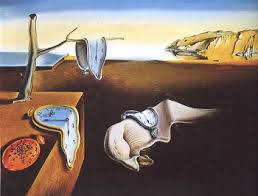

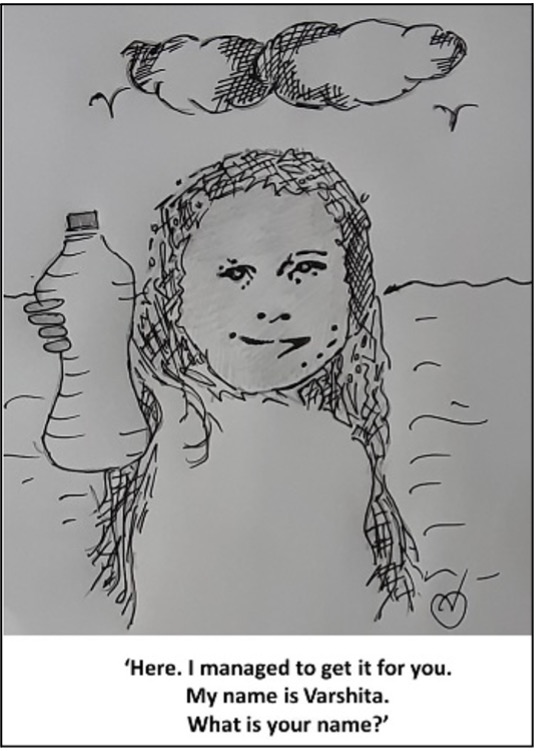




 Borderless