“Mom, if you stick this on your head, your splitting head will heal. Here, take it and stick it on,” said four-year-old Ravi, handing over a roll of round plaster.
“Who told you to stick this for a headache?” Rajani asked in surprise, not quite understanding what he meant.
“Earlier, you told the neighbour aunty that your head was splitting. That’s why I brought it. Whenever something in the house tears, Dad sticks it with this. You should stick it on your head so it doesn’t split,” Ravi replied innocently.
Rajani laughed at her son’s sweet words. As a festival was on in the village, Rajani had invited her parents, siblings, and their families to her home. With everyone staying at her house, her daily chores had increased. Even though she woke up at dawn to start working, she couldn’t finish everything. Just then, the neighbour had come asking for a loan of some sesame oil.
“No matter how much I do, the work never ends. My hands are hurting, and my head is splitting,” Rajani had told the neighbour.
Ravi heard these words, and to help his mom, he brought the plaster his dad used to stick his brother’s torn books. He told his mother to stick it on her head to ease her headache. Now, Rajani understood the situation and laughed at her son’s cleverness.
“Why are you laughing? Won’t the headache go away if you stick this?” Ravi asked innocently again.
“You don’t stick plaster for a splitting head. A splitting head means I have a headache. If I apply Amrutanjan[1], it will go away,” Rajani explained in a way he could understand.
Rajani shared the incident with the rest of the family, and they all had a good laugh.
.
That afternoon, the family sat down for lunch. Rajani served a curry made with chicken eggs to everyone.
“What is this?” Ravi asked. Rajani replied that it was a chicken egg.
“I want a donkey egg,” he said.
At first, Rajani didn’t understand what he meant. Everyone else also looked at Ravi with interest.
“There’s no such thing as a donkey egg. There are chicken eggs and duck eggs,” his grandmother tried to explain to Ravi.
“No, there is. I want that one,” Ravi insisted, starting to cry. No matter how much they tried to explain, he didn’t stop crying.
Ravi’s father suspected that someone must have mentioned it, as kids don’t come up with these things on their own. He took Ravi close and gently asked, “Who told you about a donkey egg? Tell me, and I’ll ask them to bring it for you.”
Hearing this, Ravi’s face lit up, and he pointed to his grandfather.
Everyone’s attention turned to the grandfather. “Did you tell him about it? Is there such a thing as a donkey egg?” everyone questioned him.
“Hold on! Why would I tell him that? Give me a moment to think,” the grandfather replied, trying to recall the incident. After some thinking, he remembered something.
That morning, one of the workers had done a job incorrectly, and in anger, the grandfather had said, “Is this how you do it? This is not a donkey egg!” Ravi, who was sitting on his grandfather’s lap at that time, heard these words. He had asked what a donkey egg was, but his grandfather, in his irritation, didn’t respond.
After learning the real story from the grandfather, the rest of the family laughed. Ravi’s father lovingly explained to Ravi that there’s no such thing as a donkey egg and that it was just an expression his grandfather used. It took some convincing, but eventually, Ravi understood.
.
Ravi also had an elder brother named Ramu, who was eight years old. Whenever Ramu came home from school, he and Ravi would fight over something or the other.
One day, as soon as they returned from school, they fought over the TV remote, leaving Rajani, already exhausted from housework, feeling more frustrated.
“I told you to change out of your school uniforms and wash your hands and feet when you come home. I’ve kept snacks on the table. Instead of eating, why are you fighting? Behave, or I’ll smack you with a hot spatula,” Rajani said.
“Mom, I want that. Don’t give it to my brother. Spank me now,” Ravi cried, running to his mom.
“What did you understand? Do you know what a spank is?” Rajani asked, calming down.
“Oh, I know. It’s a hot pancake. I’m hungry. Please spank me quickly,” Ravi said innocently. Hearing his sweet words, Rajani’s frustration disappeared, and she laughed wholeheartedly.
She kissed Ravi on his cheek and said, “Wait. I’ll get you the snacks,” and ran to the kitchen.
Rajani realised, “We shouldn’t use such words in front of children. They can misunderstand and repeat them in front of others, causing embarrassment.” From that day on, she learned to be cautious with her words around Ravi.
Naramsetti Umamaheswararao has written more than a thousand stories, songs, and novels for children over 42 years. he has published 32 books. His novel, Anandalokam, received the Central Sahitya Akademi Award for children’s literature. He has received numerous awards and honours, including the Andhra Pradesh Government’s Distinguished Telugu Language Award and the Pratibha Award from Potti Sreeramulu Telugu University. He established the Naramshetty Children’s Literature Foundation and has been actively promoting children’s literature as its president.
.
PLEASE NOTE: ARTICLES CAN ONLY BE REPRODUCED IN OTHER SITES WITH DUE ACKNOWLEDGEMENT TO BORDERLESS JOURNAL
The grand images of a historic event flashed before her eyes, as 11-year-old Jui, flanked by her sisters, sat still in the dark hall of Gulistan Cinema Hall. There was a great buzz about the new Technicolor documentary on the coronation.
The week before she had heard her elder sisters, Ruby and Shelly trying to convince their mother to let them watch it at Gulistan. For an affluent wealthy Muslim family, allowing girls to watch movies outside was unheard of. But the matriarch of the family, Zubeida, was groomed in a different manner. Born of a renowned family in Munshiganj, she was educated at the Sakhawat Memorial Girl’s High School in the 1920s. Inspired by the values of the Bengali feminist writer and the founder of her school– Begum Rokeya Sakhawat Hossein, Zubeida was an avid reader and extremely aware of the social issues of her times. When she was married at the age of 14, her husband, a renowned physician, encouraged her to read at home.
Zubeida’s sons and daughters grew up reading the latest literary journals and novels written by legendary Bengali writers. Being the third daughter and the fourth among all the siblings, Jui was surrounded by casual conversations of the latest plays in town or the scintillating songs from the All India Radio. Her immediate elder sister Shelly was a huge fan of Dilip Kumar’s songs and was often seen pressing her right ear to the battery driven radio, swaying to the mellifluous melodies of S.D. Burman. But life was not all play in Zubeida’s home.
In the evenings, as soon as everyone completed their Maghrib prayers, the children had to study. Seven children had several different techniques of playing truant during this special time. The eldest son being an avid football player, would often stay away from home playing in tournaments for the Mohammedan team. The next child Ruby looked at life in a more serious manner. She sat on her table with the hurricane lamp illuminating her social studies book. But sometimes, Jui would often see books by Kamini Roy, or Ashutosh Mukherjee or Tagore hidden within the centrefold of the schoolbooks!
Once, their father had just returned from his medical chamber to catch Shelly pressing her right ear to the small battery driven radio intently listening to the latest Dilip Kumar song.
“Ruby’s Maa!” he exclaimed, “These girls will all get married to rickshawallas! All they do, every day, is to waste time. How will they ever pass their exams?”
While the veteran patriarch was fuming in rage, Ruby’s Maa, Zubeida, appeared to be totally undisturbed by his lamentations. She never worried about the future. With her deep faith in God, she took life one day at a time,
Ruby and Shelly were intently looking at the screen transporting themselves to Westminster Hall amid all the grandeur of the Coronation. The sultry voice of Laurence Olivier wafted through the Cinema Hall of Gulistan as images of a sparkling crown being placed on the elegantly styled head of Queen Elizabeth II mesmerized the audience.
Zubeida, in her usual quiet persuasive way, had convinced her husband to give them permission to watch the famed documentary on the coronation of the new Queen — Elizabeth II. Abu Chacha– their darowan1 went to great lengths to get 5 rickshaws for the journey from Naya Paltan to Gulistan.
The ladies adorned themselves in their best attires. The older daughters gave special care to apply their homemade surma2 on their eyes. The younger ones were just too excited to have a day out with the ladies of the household. Zubeida wore a beautiful cream coloured saree with a black border, the dark kohl accentuating her dreamy eyes, and she had mouthful of paan that made her lips ruby red. With a splash of attar, the ladies wearing saris got on the rickshaws– all veiled meticulously — so that passersby would not see their faces.
Abu Chacha was relegated with the noble duty of guarding the ladies–perched on a sixth rickshaw keeping track of the ladies at the front. As soon as Zubeida and her daughters reached Gulistan Cinema Hall, Abu Chacha stood on guard at the front of the Hall. He was not interested in the coronation of a foreigner. His life was not affected by the wonders of the colonial rulers. His only loyalty was for Doctor Sahib — who saved his mother from her deathbed. He would dedicate his life to the service of Doctor Sahib’s family.
Jui was silent– perhaps a little overwhelmed by the discipline and formality of the whole affair. She wondered if she would ever break away from the confines of her home and see the world outside. She was always the quiet one. Since she was not as robust as her sisters, she was considered to be docile and shy. But the 11-year-old girl had a deep-rooted desire for breaking boundaries. The ornate gilded halls of Buckingham Palace flashed throughout the screen. Huge paintings framed in gold and the elegant procession of the Royal Guards clad in red and gold transported the audience to the glamour of the crowning of the new Queen of the United Kingdom. Jui, with her innate curiosity, watched the red canopy covering the Queen as she was anointed with holy oil. She had no idea about the significance of these actions. All she noticed was the splendour of a distant world – where women did not have to travel in covered rickshaws.
Queen Elizabeth’s calm but firm look seemed to send a message to this little girl thousands of miles away. As she sat on the cushioned seats of Gulistan Cinema, surrounded by her protective sisters, Jui suddenly felt her resolve strengthening. She wanted to know more and see more of the world. She dreamed of visiting the land of the Queen one day. She dreamed of breaking out of the confines of her home one day.
Two days after learning her husband is sleeping with another woman, Elena crashes her son’s moped. Later, she will remark it was fortunate the only vehicle in the garage at the time was the moped, and not something that could’ve gone a great deal faster.
It’s a Tuesday. Afternoon. All the husbands are at their offices downtown, taking two-hour lunches with clients and customers; their wives hiding indoors from the heat, impatiently awaiting September, the start of school and the cooler temperatures that accompany autumn in the Midwest. When Elena frees the moped from its tarpaulin and stomps the kickstart, she isn’t sure whether it’s her or the bike that’s vibrating like a plane about to sprint down the runway. All she has to do is release it.
She leaves the helmet she insisted Nathan wear on the sawhorse. She squeezes the throttle down as far as it will go and the moped responds in earnest, shooting out from under her so fast, she almost falls off the back like a cowboy from his reluctant mount. Never mind that Nathan’s friends christened it “The Orange Blimp”, after Elena and her husband told him he couldn’t have a motorcycle, that they were a death wish. Within a block, she is traveling fast enough that the wind lifts her hair off her shoulders, her green house dress flapping against the rear spokes. The whrrrrrr of the bike—somewhere between the throaty growl of a motorcycle and high whine of a lawn mower—erases all thought. She ignores the stop sign and pushes the bike faster, giving it all the gas the little bike has.
The odometer wobbles around 40 m.p.h. on the little glass dial. It’s hard to tell because everything is bouncing and rattling like San Francisco during a quake. The thought occurs to her like lightning out of a clear blue sky: She doesn’t know where the brakes are. No one ever showed her and she didn’t think to ask. Panic races down her arms, into her fingertips. Her mind goes blank as a classroom with the lights off. She releases the throttle, but the bike seems to have a mind of its own. Thirty-eight…thirty-five… She isn’t losing speed nearly fast enough.
The cul-de-sac at the end of Pine Street rises to greet her. In a split second, she decides to bail rather than crash headlong into the Georgesons’ above-ground swimming pool. Her shoulder smacks the pavement first, and she rolls four or five times before coming to a stop. The Orange Blimp hits the curb like a missile, careening into the Georgesons’ metal trash cans with a terrific bang that shatters the afternoon, momentarily interrupting the pressure-cooker hiss of the cicadas.
It takes Elena a long, stunned moment to recover herself and appreciate that she is, more or less, all right—minus the continuous scrape down the left side of her body and the throbbing bruise where her stubborn heart continues to beat. At least she didn’t hit her head, thank God.
The Georgesons’ youngest boy gallops from the house, his freckled, nine-year-old face caught somewhere between terror and excitement. The bike’s rear wheel is still spinning.
“Mrs. Jaeger!” the boy shouts. “Gosh! Are you all right?” He is wearing a cowboy hat, the string cinched beneath his chin, a pair of twin holsters riding on his hips.
Perhaps, it is the result of the tremendous spill she has just suffered, or maybe the fact that her quiet, comfortable life has just been pulled from beneath her unsuspecting feet. Either way, the first thing she thinks to ask is:
“Did anyone else see?”
“No, I don’t think so. Just me. But that was cool!”
The Gottliebs’ blinds twitch, she’s sure of it, and she thinks she sees a shadow in the MacKenzies’ front room.
Christopher and James used to play with the MacKenzies’ oldest, she remembers. Baseball in the spring; football in August. Patrick was it? Or Paul? She hasn’t seen Loretta since the news. It hits her somewhere in the middle of her chest: She will have to sell the house, of course. She knows this, has known it all along, though she hasn’t admitted it to herself until now. Already Loretta and the others are treating her like a deceased relative, the cold corpse of their friendship whisked from its bed before dawn, delivered to the undertaker’s back door.
“Nobody else’s mom would have done that!” The Georgesons’ boy is still there, still watching her. Perhaps he’s worried about her. She would be.
The clamor of the cicadas has returned, the air vibrating with their insect whine.
“Yes, well,” she says, teetering to her feet, “none of the other moms’ husbands are leaving them.”
Elena corrals The Orange Blimp and, with a defiant jut of her chin, marches it past her neighbours’ darkened windows, back to her silent, waiting house.
,
Joseph Pfister’s fiction has appeared in Oyster River Pages, PANK, Juked, and X-R-A-Y, among others. He is a graduate of the MFA Writing program at Sarah Lawrence College and teaches fiction at Brooklyn Brainery.
.
PLEASE NOTE: ARTICLES CAN ONLY BE REPRODUCED IN OTHER SITES WITH DUE ACKNOWLEDGEMENT TO BORDERLESS JOURNAL
Christopher Columbus (1451-1506)From Public Domain
I, Roberto Mendoza, in this year 1550, ship’s boy on Christopher Columbus’ first and second voyages to the West Indies before my promotion to sailor on his third and fourth voyages, testify to the veracity of the eye witness events that I record for posterity. And in spite of their devastating raw truth, it is my troubled conscious that has conducted my hand, goaded my intelligence to write down these sorrowful facts. For facts they are, regardless of the prestige and boons that Columbus received from his protectors and admirers.
Where shall I begin? How do I burrow through the layers of unquestionable fame that has marked that name to reverberate with the clanking of the slave chains, the death rattles in the gold and silver mines, the gnashing of teeth, the hangings and dismemberments … the insensible apathy of the subjugation or submission of the Indian masses?
It has always appeared to my young eyes that Columbus’ achievements were enveloped in an aura of mystery or incomprehension. I may even add an aura of fantastic falsifications, mainly initiated and authorised by Columbus himself and his unquestioning gallants.
I knew him well, too well to be duped by those seductive charms of his, that subtle cunning, a mask donned whenever a fruitful occasion arose, yet under which lay a brutal, tyrannical individual bent on attaining his greatest ambition: wealth and glory, and this at any price. What was the little ditty that some fool invented for innocent children and naive adults to recite: “In fourteen ninety-two Columbus sailed the ocean blue?” A ridiculous rime to recall that wretched year. Yes, I say that wretched year for it celebrated the Genoan hero’s glorious voyage.
During that fatal year of 1492, two other major events occurred in Spain which I believe to be in relation to Columbus’ conniving his way into Isabella’s confidence: the expulsion of the Jews to North Africa, Italy and Constantinople, and the capitulation of Granada, the last stronghold of the Muslims in Spain, to the Christian kings. Henceforth, Spain rid herself of those ‘impure’, centuries-laden ‘foreign’ plunderers. Did not Columbus write in his logbook (if we are to believe Bartolomé de Las Casas’s transcribed copy of it) that he was overjoyed by those two events: ”thus you (the Monarchs) have turned out all the Jews from your kingdoms and lordships”, and ”the royal banners have been placed on the towers of Alhambra”[1].
This being said, because of the expulsion and the reconquest, Columbus’ true birthplace had to be concealed, for any negotiation with Isabella or Ferdinand. This hero was not born in the city of spaghetti and banks, Genova, as commonly known. The darling of the Spanish monarchy was born in the land of the corsairs, in Calvi, a lovely port town in Northern Corsica, indeed conquered by the Genovans and governed by them during five centuries, but none the less born and bred far from the banks of Italy. Corsica, where for centuries Vandals, Ostrogoths, Greeks and Lombards, and ill-bred Aragonese and Genovans vied for domination, intermingling, integrating and assimilating.
Why would Columbus lie about his place of birth? Was it out of fear of a possible ‘corsair descent’? One that connoted piratry, pillage and other misdeeds [2]? Be that as it may, the rogue managed to cajole Queen Isabella into giving him enough maravedis[3]to undertake a voyage that would heighten the glory of the conquering Spanish Monarchy and the new-founded kingdom.
And that was how Admiral Don Christopher Columbus frayed his way to fame and fortune!
With the Queen’s glittering maravedis he commissioned three caravels : the Nina, the Pinta and the Santa Maria, the third of which he navigated himself, the other two by the Pinzón brothers. How I happened to be aboard the Santa Maria is a long story with which I shall not bore my readers.
So there he stood at the prow, mantled in a vaporous circle of pride and arrogance whilst we, his sea-faring companions, sweated away on deck or in the hold, were fed rotten food, furled and unfurled the sails without respite, hunted out the innumerable rats that ran amok below, withered under the insufferable heat of September. I myself almost fainted under the long, long hours of tedious work, boredom and especially fear; fear that we and our tiny caravel, surrounded by thousands of leagues of far from blue waters, would be food for the horrible undersea monsters that had swallowed many a brave crew and their vessels with yawning jaws and leathery tentacles. All of us were terrified, and the five weeks we spent crossing a swelling ocean towards the East, or so we all thought, triggered a feeling of panic, alienness and remorse. The admiral described the ocean like a river; I myself felt like a cork in a rainswept pond, jostled and jolted, no land in sight, our water and meat, taken aboard at the Canary Islands, foul-tasting, half-eaten by the enormous black rats.
Did the great Admiral not consult the stars? Eastward? There was nothing — only rolls and rolls of higher and higher walls of water battering the fragile sides of our vessels. And I, so young, asked myself time and time again, how did an incompetent sea-faring fellow like Columbus ever win the confidence of Isabella and Ferdinand ? Oh how I recall his bulky figure at the prow, oftentimes behind the helm, screaming orders or simply staring out into the watery vastitude, dreaming no doubt of gold … gold … and more gold … He had written the word ‘gold’ seventy-five times in his logbook during the first two weeks of our crossing!
How many of our poor sailors had been beaten for insubordination, had suffered the excruciating trial of keelhauling[4], one or two even hanged for attempting mutiny, so fearful were they of being devoured by sea monsters, dying of thirst or hunger or being bitten by the furry rats that thrived below in our beds of straw?
At long last I heard the cry “Land ahoy!” coming from the crow’s nest. Yes, we finally reached a cluster of islands that would be named Guanahani[5], Cuba, Haiti and the Dominican Republic on the maps of future cartographers. It was on these islands that my first glimpses of a barbaric and despotic Columbus would not only be corroborated, but magnified to the heights of psychopathic insanity. For it became more and more evident to me that the Admiral, whom I considered in my youthful age as a hero, had no intentions of treating the indigenous peoples of these islands either as equals or with a soupçon of humane sympathy. He indeed judged them somewhat higher than animals, yet whose only human value was how much they would bring him as slaves sold in Spain, or how much gold and silver they would extract for him from the mines and rivers. All he saw in these peaceful peoples was the glitter of gold fastened to their noses and the rings of equal glitter hanging off their ears and arms. He saw gold everywhere, even gold stones shining in the rivers! He wrote in his logbook that gold grew in clusters and could be plucked off trees like fruit!
The way in which he ferreted information out of the Indians about gold deposits turned my stomach. His obsession with gold drove him into periodical frenzies during which time he would beat, even torture the poor indigenous man or woman who failed to locate the deposits. He spent his sweltering nights tossing and turning in bed, totally possessed by this maniacal craving.
But his brutality was not limited in this direction: The Spaniards or other Europeans who disobeyed him or sought to outmanoeuvre him in the pursuit of power or riches were tracked down and hanged, accused of criminal acts. His barbarity knew no bounds, nor his slave-selling which began to enrich him immensely.
On our second and third voyages, which led us to the islands of Granada and Tobago, the abundance of gold extracted was tantamount to the number of Indians he enslaved for his own ‘household’ purposes, and those he sold into a slavery which by then had become a thriving, lucrative business. We navigated from island to island sowing the seeds of destruction as the stoic Admiral described their beauty, the exotic animals and birds, and especially the immense, awaiting riches buried under that beauty. How many of the indigenous he had killed when several tribes revolted against him, and how many committed suicide cannot be accurately tallied. I would learn much later that Las Casas put that tally at 1,500 Taion Arawaks.
Indeed, as time went by Columbus’ wrath found merciless outlets against Indians and Europeans alike as the settlements grew in economic and political importance. Indians who failed to extract enough gold from the mines had one of their arms cut off[6]. On many occasions he had rebellious Spaniards dismembered in public much to the outrage of the governors appointed to the settlements by the Spanish Monarchy.
The governors of these settlements began sending reports to the King and Queen relating the horrendous behaviour of Columbus, his obsession for power and riches, his masquerading as a ruling god-like figure over the ignorant natives. Testimonies piled higher and higher on the Queen’s pearl-inlaid writing-table, relating cases of rape, murder and mutilation.
On his return trip to Spain she immediately had him seized, chained and thrown into prison. She also expropriated all his extorted possessions, be they gold or land. There he rotted away for six weeks, so enraged was the Queen, betrayed by this ‘foreigner’. However, his brother Bartholomew, on his knees, pleaded tearfully in favour of his brother’s heart of gold, his innocence in all matters of governance, having been slandered by the governors and their lackeys who wrote defamatory reports to wreak vengeance upon a man whose glory and greatness surpassed theirs. The Queen hesitated. It was King Ferdinand who decided to have him released.
His release from prison had puffed up his ego, unlocked his megalomania.
Columbus’ fourth and last voyage, between 1502 and 1504 with four caravels, took us to Martinique, Honduras, Jamaica, Costa Rica and Nicaragua. I had been appointed a full-fledged sailor by then and relished the idea of accompanying the Admiral, jotting down all his actions, prudently of course, so that I would not to be arrested for bearing witness to his ruthlessness, perhaps even hanged as a traitor. The ‘civilising’ process undertaken by him included plundering, murdering, enslaving and mutilation. Amidst the unbridled violence and sadism, he posed as an evangelist, a disinterested zealot deeply desirous to convert the ‘savages’ into God-fearing Christians, into ‘civilised’ beings like himself.
Columbus returned to Spain a hero of piety, magnanimity, sanctity. The impostor even wrote two books : the Book of Privileges[7] in 1502, an indecent mass of statistics which enumerate all his accumulated rewards wrested from the Crown under which lay the beaten and mutilated bodies of the indigenous, and the Book of Prophecies[8] in 1505, a shameful scream of smut comprising hundreds of citations from the Bible, all of which spell out in his vapid style his Christian ‘mission’ in the New World, ever so charitable and lenient towards the ignorant, child-like ‘natives’ ; a mission, indeed, pure in spirit, rightful in act.
With Columbus’ death the unwarrantable fervour that he had kindled slowly shrivelled into ashes. I retired from sea-life and found work in the Custom’s Bureau, a most comfortable employment. Besides, I was disgusted by all the tales told about him by the sailors, especially their bawdy narratives about the native women in the New World. I wished to leave my sea-legs behind and tread more earthy paths. Furthermore, my new tasks gave me ample time to read the posthumous reports about Columbus[9], many of which belied the benignant deeds and bountiful achievements of the monarchial and New World idol. It was after these important readings that I decided to begin my memoirs …
The rogue’s Book of Prophecies created quite a stir amongst the aristocratic castes : Columbus’ fantasies of promoting Isabella and Ferdinand as heads of a new crusade to the Holy Lands to defeat the Muslims, and there spread Christianity kindled many a nostalgic and gun-ho heart. The monarchs, wary of the old Admiral’s apocalyptic inaccuracies and religious bigotry, never took him seriously. I wonder if they had even read his book …
None the less, Columbus certainly provided an excellent example for other freebooters to follow in the wake of his doughty adventures. The slave trade between the Old and the New World thrived as well as the gold and silver that flooded the Spanish markets. It is no mere metaphor that this period in Spain was called as El Siglo de Oro (The Golden Century).
.
[1] Bartolome de Las Casas (1484-1566) a Dominicain priest who spent forty years in Hispaniola (Haiti and the Domican Republic) transcribed an abstract of Columbus’ lost logbook. How accurate or truthful is this copy is difficult to assess. Journal of the First Voyage of Christopher Columbus (1492-1493), translated by Clements R. Markhma : London, Hakluyt Society, 1893, pp. 15-93
[2] Corsica : Columbus’ Isle, Joseph Chiari, edition Barrie and Rockcliff, 1960.
[3] Gold coins used in mediaeval Spain during the 11th and 14th centuries.
[4] A maritime punishment by which the sailor is ‘hauled’ under the ‘keel’ of the ship with ropes.
[5] As called by the Indians. Columbus called this island San Salvador. Today it is called Watling.
[6] On this point see Howard Zinn, Christopher Columbus and Western Civilization, Open Magazine Pamphlet Series, 1992.
[7]El Libro de Privilegios. The English edition : Book of Privileges, The Claiming of the New World, John W. Hessler, 2014.
[8]El Libro de Profesías. The English edition : Book of Prophecies, Repertorium Columbianum, Blair Sullivan, 2004.
[9] Columbus and Las Casas : Two Readings on the Legacy of Columbus(1542 (The Devastation of the Indians. A brief Account) and 1550 (In Defense of the Indians).
Paul Mirabile is a retired professor of philology now living in France. He has published mostly academic works centred on philology, history, pedagogy and religion. He has also published stories of his travels throughout Asia, where he spent thirty years.
PLEASE NOTE: ARTICLES CAN ONLY BE REPRODUCED IN OTHER SITES WITH DUE ACKNOWLEDGEMENT TO BORDERLESS JOURNAL
A Self-Portrait with Seven Fingers by Marc Chagall (1887-1985). From Public Domain
Tommy ordered a second pint of beer at the counter. The bar buzzed with the usual crowd, and a few groups of tourists, mostly from northern Europe, were beering it up as they did at home. Tommy had had a long day preparing breakfast and clearing the rooms at the Hotel Van Acker, Jan Willem Brouwersstraat, 14. Afterwards, he accompanied three Spanish tourists to the ‘high’ spots of Amsterdam: Anne Frank’s house, Vondel Park, the Rijks and Stedelijk museums, Rembrandthuis, Madame Tussauds, completing his tour at the ‘hot’ spot for all such tourists — the red light district. There he left the Spaniards, tired of having dragged them about the town while straining to understand their Spanish.
How long had he been at it ? Four … five years ? Who knows. Something in his mind had snapped. Oftentimes he suffered from bouts of amnesia or blackouts, a succession of synapse that triggered in him extreme panic, even paranoia. He felt an elbow nudge him lightly in the ribs: “ All right, mate?” asked a middle-aged man with long, blond, silken hair and ultramarine blue eyes.
Tommy eyed the man suspiciously. He had managed to squeeze himself in at the counter as imperceptibly as a ghost. “Yes, I’m all right. Why?”
“Oh, I just saw you staring into space as if you were in great thought or pain.” Tommy smiled leerily.
“No pain, just thinking small thoughts.” The other smiled. His teeth were very white. He reached over, took a few pinches of tobacco from a drinker’s pouch with unabashed effrontery and rolled himself a cigarette.
“Do you do that often?” Tommy enquired lamely.
“What?” the other asked puffing away dreamily.
“Pinch tobacco from people’s pouches.”
“Of course I do, it’s been my custom for ages,” answered the tobacco pincher with a whimsical gleam in his eyes. “What are you doing in Amsterdam, working I suppose?”
Tommy straightened up. “I work at the Hotel Van Acker doing odd jobs for the owner.”
“Ah, yes, Van Acker … Where they found that murdered dwarf.”
“He wasn’t murdered. He died of a heart attack.”
“The police never found the key to his room. That is strange. To die of a heart attack in a hotel room without the key.”
“So what?”
“Sounds a bit shadowy to me. But that’s all in the past. And who cares anyway, right ? What’s your name?”
“Tommy.”
“From?”
Tommy hesitated: “From Luton.”
“Luton?”
“It’s in Bedsfordshire.”
The pincher of tobacco nodded, rolling himself another cigarette. “I’ve seen you handing out leaflets or pamphlets in the streets.”
“That’s possible.”
“How’s the salary at Van Acker’s?”
“I get on. Van Acker gives me my meals and I sleep in the cellar room under the stairway.”
There was a very long silence — a silence so long that Tommy began to grow nervous. Finally, the man said: “Listen, I might have a job for you Tommy that will earn you enough money to live like a prince anywhere in the world for the rest of your life. One night ! Only one night, and you’ll become as rich as Crassus.”
“Who’s Crassus?” asked Tommy mistrustfully. The other laughed.
“The richest man in the Roman Empire. You see, my proposition deals with paintings; I’m an art collector.”
“Pictures? I like pictures. I take all my hotel tourists to the art museums.”
“Perfect. Here’s my address. Come by any time after eight at night. By the way, my name is Gustav.”
“Gustav … Gustav what?”
“Gustav Beekhot. I hope to see you soon, Tommy. Tot ziens[1]!” Gustav slapped Tommy on the shoulder and left the crowded bar, weaving through the mass of throbbing, bulky bodies like a shadow amidst a darkening, nameless stretch of land …
Five days later, after having wrestled with his thoughts, Tommy leaned his bicycle at the gate of a plank which led to Gustav’s house-boat on the Ruysdaelkade Canal. It was quite an impressive barge. He knocked at the door. Gustav, eyes a watery blue, opened the door and wished his visitor a hearty welcome ‘aboard’. “Just in time for dinner,” he said flippantly. When Tommy stepped in he couldn’t believe his eyes: they swept over a long ‘hold’ full of paintings of all sizes and colours, some hanging off the walls, others on easels, and still others scattered on the uncarpeted ‘bottom deck’, unfinished.
“You might open a museum here,” he suggested, strolling from painting to painting. “I like to look at pictures. When I accompany people to the Rijks or to the Rembrandthuis I always take my time to examine the pictures. The tourists just look at the title and at the name of the painter.”
“Yes, very few people really examine a painting.” Gustav placed two bowls of rice, shredded carrots and two pints of Heineken beer on a hackney table. “I for one prefer to paint them, buy or sell them, although I do often go to the museums for inspiration.”
“You sell your own pictures, then?” Gustav chuckled.
He gave Tommy a conspiratorial wink: “No, who would ever buy a Gustav Beekhot ? To tell you the truth I sell the ones I steal or have stolen from museums or from private collectors.” Tommy, who had sat down at the table dropped his fork. He stared at Gustav in disbelief. All that had been said with absolute aplomb. “Yes, Tommy my lad, sometimes I do buy them from contemporary Scandinavian painters living in poverty, but I prefer to steal them … It’s cheaper!”
“But … but how can you steal a picture from a museum?” questioned Tommy in alarm.
“It’s quite simple. It’s a question of know-how. Thievery is an art, my dear lad. And if you are willing, you will learn this art easily, and by doing so, earn a half a million dollars!”
Tommy jumped up. “No, please, let us eat, and I shall spell out all the niceties to you. There’s really nothing to it: a wiry, loose-limbed body like yours, will-power and the common sense to keep your mouth shut. And I do believe you possess all those aforesaid qualities. Am I correct?” Tommy remained voiceless. “Of course you possess them. But you doubt my word. Others too doubted, and today are living like kings in Tahiti, the Seychelles or in some Central American country.”
“A half a million dollars?” Tommy managed to stammer, sitting down slowly as Gustav glided between his paintings in a breezy, phantasmal gait to procure a bottle of Jenever in his kitchenette at the ‘prow’.
“Yes, Tommy. One night. One night only.” Tommy peered out the ‘porthole’, it had begun to drizzle. He watched as the drops gently fell upon the unruffled canal waters; they fell gently, rocking his host’s barge dreamily. He suddenly felt a seizure coming on. He strained to control it, the house-boat rocking … rocking so gently, like the drops of drizzle. Something snapped in his head; he shook it out. Gustav ate his rice and carrots as if he noticed nothing of the crisis that his visitor, and future accomplice, was suffering. He was smiling that engaging smile.
“What do I have to do?” came Tommy’s belated reply in spite of himself. He had asked that without being fully conscious of actually asking it.
Gustav stopped eating, sized him up, then thrust his taunt face forward. It had a ghostly white appearance to it: “Crawl through a very very narrow tunnel about two hundred metres long behind the Zadelhoff Café to the storage room of the Stedelijk museum. In that storage room you will find a painting by Marc Chagall, A Self-Portrait with Seven Fingers, which will be waiting for you to cut out of its frame with a razor blade. The nightwatchman has already put the painting exactly where you will pop up from the storage room hole.”
Gustav stood, went to a broken, plastic shelf over his wash-basin and picked up a razor-blade. “Look, this is how it should be done.” And the art dealer began to cut out a painting from its frame. Tommy gasped. The other laughed. “Don’t worry, it’s one of my worst chefs-d’oeuvre …” Gustave then rolled up the canvas and placed it into a plastic cylinder. “There you have it my boy,” he beamed. “Sling the cylinder over your shoulder, drop down into the hole and crawl back through the tunnel where I shall be waiting for you.”
“But this tunnel … I can’t see …” Gustav put up a hand.
“The tunnel was dug during the second world war and used either to store ammunition by the local militia or as an escape route for Jews and communists.”
“How do you know all this?” Tommy asked incredulously.
“I studied history, and have many friends who deal in these particular matters.” There was a shrewd, impish twinkle in his host’s eyes.
Tommy seemed a bit sceptical about the whole operation. Gustav’s eyes were all alit, the glow of which stabbed at his distrustful heart. Gustav noted his guest’s wavering emotions. “My buyer will be in Amsterdam in five days,” he proceeded in a haunting undertone. “He’s arriving from Tampa, Florida and will be paying me one million three hundred thousand dollars for the painting. You will receive five-hundred thousand.”
He went to a drawer. “Here, this bank card will permit you to withdraw your share of the profits in any bank machine in the world. It’s a Swiss Banker’s card. But under no circumstances must you withdraw more than two thousand a day; bank administrators may become suspicious.”
“Where’s my bank?”
“That I cannot tell you,” Gustav answered sharply. “I suspect that you are mistrustful of me?” he chaffed.
“No, I’m not, but still …”
“No buts. The card is perfectly valid once the money has been deposited. And it will be after your mission has been completed. But I warn you Tommy, you must leave Amsterdam immediately before the museum authorities realise that the Chagall has been stolen. My buyer will leave on a morning flight back to Florida.”
At that moment Gustav poured out two glasses of Jenever, raised his and cried — ‘Godverdomme’ [2]! And with that coarse shout they both gulped down the divine nectar. Tommy felt a mounting tension in his chest, throat and jaw. Had he made a pact with a man whom he hardly knew ? He left at midnight, benumbed, as if he were a bit tight.
For two days Tommy struggled to control his taut emotions. To weigh the consequences of this incredible proposition. He could become immensely rich after a few hours of mental and physical toil, yet something irked him. It all seemed so unreal! He walked the streets of Amsterdam in the late afternoons, flicking matches into the air one after the other, watching the lit sticks glide gently to the street where the last lingering sparks sizzled out. He repeated aloud, “Tahiti, the Seychelles … I wonder where they are?” over and over again. He would take out the bank card and study it carefully. “It looks real to me,” he assured himself, albeit nervously.
On the fourth afternoon they met for tea at the Zadelhoff Café, after which Gustav took Tommy behind the café and showed him the sewer lid which led to the tunnel. Then they strolled over to the Stedelijk Museum, and whilst promenading through the halls of paintings Gustave cautiously pointed out the storage room where the Chagall had been stored for a future exhibition at another museum. All that day Tommy had admired the art collector’s professionalism and precision in elucidating the details of this very risky, but lucrative operation.
“Will-power, nerve and stamina, my lad,” Gustav kept repeating until he told Tommy to meet him that very night behind the Zadelhoff Café at one o’clock sharp. The buyer had booked a morning flight back to Florida. “One night ! Only one night, my friend. Don’t let us down … “ Tommy clenched his fists. He suddenly felt a surge of unwonted force, a force he had experienced many years ago before his unexpected arrival in Amsterdam. Gustav slapped him on the shoulder and glided away like a phantom in the reddening twilight …
A far away church-tower bell struck the hour of one. And so it happened, happened like a dream …
Gustav cut a spectral figure outlined against an ill-lit, moonless night as he waited impatiently for his accomplice. At that moment Tommy arrived, a trifle late. They both set immediately to work to open the heavy sewer lid. Once pried open, Tommy climbed down the rusty rungs, a torch in hand, the plastic cylinder slung over his shoulder. “The rats! The rats!” he called, looking up, his lithe body trembling.
“Rats ? The rats will scramble away when you train your torch-light on them,” Gustav shouted down in a weird, stilted voice. “Don’t talk nonsense ; just move on …”
And he slid the sewer lid over the hole. Tommy stopped. Darkness engulfed him. The boy panicked. — All alone! All alone! — he lisped to himself in fear. He nevertheless carried on down into the damp darkness training the light along the broken stone walls dripping with age. There, the opening of the tunnel! It was true. There was the tunnel … But so narrow … so terribly narrow …
Poor Tommy was hardly able to push himself into the opening. He began to cry. He felt he had been buried alive in a toolless coffin. All alone! All alone! “Mummy!” escaped from his dry, chapped lips. Yet Tommy crawled on and on. The thought of a half million dollars flooded his inflamed brain. The brave boy elbowed a painstaking trail over root and rock, his torch-light cutting out a thin stream of blissful light that disappeared into a dark Nothingness. A Nothingness that frightened him, reminded him of vague scenes in some other life that he had once led, a former life of battling and crying out in a moonless, raging darkness …
His head struck stone. Yes, it was stone! The gallant Tommy had reached the museum storage hole. He straightened up with difficulty, touched the cold walls; a ladder had been provided for the Second World War escapees.
“The rest will be child’s play,” he whispered in an echoless vacuum. Up he clambered excitedly. The hole seemed endlessly deep. Was that possible ? Ah, the floor tile … Finally. He pushed it open as easy as that. “Child’s play,” he sniggered as if speaking to Gustav.
Tommy pulled himself out into a deep, deep darkness. A darkness he had never experienced before. He searched for the razor-blade in his trouser pocket, trained his torch …
A merciless neon light suddenly blinded him, absorbing all the darkness, save that which still lay heavy and hauntingly in his head. Four policemen stood pointing at him, laughing and laughing. A very stoutish, well-dressed man stepped out from the policemen and grabbed the boy by the scruff of the neck. “So this is the little twit that has been hiding out like a rat!” the man chidded in broken English. “Hiding in the storage pit, hey? Think you’d slip away from us? What on earth are you doing in here you scamp, playing hide and seek?” Tommy said nothing. Baffled, he had lost all contact with reality. “Deaf and dumb, hey? Let’s see.” One of the police officers struck the boy across the face.
“Please don’t,” he whimpered.
“There you are, he can speak after all, and with a British accent, too,” pursued the well-dressed man who happened to be the museum director. “So, why are you hiding here ? What are you doing in that pit? Look at the mess you’ve made.” Indeed, the storage hole was filled with empty cracker and potato chip bags that Tommy had been eating. “Were you drinking water from the lavatory tap ? Look at this floor, there’s water all over it.” He poked Tommy in the chest.
“I was sent to steal a picture … Marc Chagall …”
“Steal a painting ? A Marc Chagall ? How were you to get it out of the museum ? Are you masquerading as Honest Jack[3] ?” This was asked with biting irony.
“Through the tunnel back to the Zadelhoff café.”
“Oh, I see … a tunnel to the Zadelhoff café.” He turned to the policemen: “Is there a tunnel to the Zadelhoff café.” All the policemen laughed and laughed, pointing at the sulking boy whose filthy, ill-smelling clothes struck a grotesque contrast with the museum director’s well-tailored suit.
“And with a razor-blade cut it out of its frame,” Tommy hurriedly added.
“Where’s the razor-blade?” one of the policemen demanded, taking him by the arm. “Give it to me.” Tommy searched his pockets. He held out a safety-pin.
“No tunnel, no razor-blade,” broke in the museum director. “You’re either a liar or a raving lunatic.”
“But I crawled through it. Gustav Beekhof showed me the tunnel and told me to steal the picture when he invited me to his house-boat,” Tommy pleaded, tears flowing over the dark shadows of his wild, tired eyes.
“There is no tunnel you little liar!” screamed a policeman. “And who is this Gustav Beekhot? Where is his house-boat?”
Tommy racked his brains: “I don’t know the exact address but I can take you there.”
He was hustled out of the museum into the moonless night, bundled into a police van and off they sped through, along and over streets, canals and bridges … until …
“There, on the Ruysdaelkade Canal,” the boy shouted in triumph. “His house-boat is the second …” Tommy stared in horror: there was no house-boat ! A police officer pulled him out of the van and dragged him to the slip where the house-boat should have been docked. Tommy rubbed his red, stinging eyes : “But it was there … I …”
“Shut-up you impudent little runt!” the officer barked. “I’ll check.” He returned to the van.
A few minutes later, he returned. “There’s no house-boat registered in that slip, and we have no record of a Gustav Beekhof,” he stated stiffly, looking hard at Tommy. “You’re raving mad.” A bewildered Tommy stepped back, his thoughts running riot.
“No house-boat. No Gustav Beekhof,” fumed the police officer. “A little scamp of a thief, that’s what you are.” And he twisted Tommy’s ear until it turned beet-red. “What’s your name, boy?”
“My name ? My name is Outis,” he lisped, holding his smarting ear.
“And your papers?”
“Papers ? I have no papers … I’m …”
“Shut-up!” the police officer stormed, turning red. He took Tommy by the shoulders and shook him so hard that his teeth chattered. All of a sudden something snapped in his brain. The boy was seized by a mounting tension which sent him spiralling into a dark nothingness that he had never before experienced — a nothingness where he drifted through a darkened, nameless stretch of land …
DOCTOR VAN DIJK’S REPORT
The patient who calls himself Outis, as recorded by the police, most probably English-born, was found hiding in the Stedelijk museum storage room for two days with, according to the patient, the intention of stealing Marc Chagall’s ‘A Self-Portrait with Seven Fingers‘, which the aforesaid patient claimed had been deposited in the room for that purpose. This claim was disclaimed by the museum director, Mister Aalbers who avowed that the painting hangs in its usual place in the museum. The patient being questioned by the police, maintained that he was put up to the supposed theft by a certain Gustav Beekhof who apparently does not exist, according to police records, nor does his place of residence: a house-boat on the Ruysdaelkade Canal. The patient was promised a half a million dollars for the theft, which, as he declared, was undertaken by crawling through a tunnel from behind the Zadelhoff Café to the museum storage room. The police confirm that this tunnel has never existed. Furthermore, when the patient showed the police his bank card with which he was to withdraw his share of the theft, it turned out to be a library card whose owner’s name and library location had been thoroughly effaced beyond deciphering.
The patient has fallen into a coma for several days now. There seems to be no doubt that he is suffering from an acute case of schizophrenia, caused perhaps by a sudden mental or physical traumatism that has created an imaginary parallel world through which the patient wanders in and out whenever jolted by an unsual event or encounter.
The patient thus will remain in our clinic under strict observation until he emerges from his unconscious state.
Chief Psychologist of the Psychotherapierpraktijk Overtoom
[2] ‘God damn it’ in Dutch. A rather ‘informal’ interjection when making a toast amongst close friends.
[3] The notorious English robber John Jack (1702-1724). He was hanged for his daring thefts.
.
Paul Mirabile is a retired professor of philology now living in France. He has published mostly academic works centred on philology, history, pedagogy and religion. He has also published stories of his travels throughout Asia, where he spent thirty years.
.
PLEASE NOTE: ARTICLES CAN ONLY BE REPRODUCED IN OTHER SITES WITH DUE ACKNOWLEDGEMENT TO BORDERLESS JOURNAL
The Bangaloreans will mostly remember the spring of 2024 for bringing on only the heat wave. The Garden City’s temperature reached an unprecedented forty-one degrees Celsius (falling just nine short of a half-century. The summer was terrible for Bangaloreans on two counts – the heat wave and the RCB[1] Men’s team drifting further away from their slogan, hashtag ESCN[2]. But, all of it changed and changed suddenly. The pre-monsoon showers finally brought some relief from the heat wave. Although it initially teased everyone with sprinkles (making the entire city seem like a hot dosa pan, from which steam emanates as soon as the chef sprinkles water). The clouds took pity on the poor souls and became generous eventually. Similarly, RCB Men’s fortunes also changed and changed utterly as they stood with a legitimate chance of qualifying for playoffs after six consecutive wins on the trot.
Amidst the aforementioned cloudy weather, teasing the Bangaloreans, Alvin, a young advocate in a mid-tier law firm, enjoying his long-sought break from the court, finally decided to make himself a coffee from the coffee brewer. All thanks to the summer that preceded, he had forgotten the setting of the coffee brewer and had to rely on the manual. Finally, he found a way to set the brewer to make a cappuccino with 80 ml of milk and 40 ml of coffee. Just when he was about to press start, his senior colleague interrupted: “What the heck are you doing? Can’t you see that the milk is spoilt?” Alvin did not even bother checking the authenticity of the claim by himself as he knew he would not be able to figure it out. He directly took the matter to the only other colleague who happened to be working even during court vacation, albeit cursing her fate.
Avni, who was buried inside her file, was suddenly brought back to the office by Alvin.
Avni blurted, “Oh good you are here!”
Alvin showed her the container with the milk and Avni realised she made a big blunder by assuming that Alvin’s presence was a good sign.
Alvin confirmed her fear by asking, “Tell me whether it’s spoilt.”
“Spoilt? It has become curd, you idiot, ” retorted Avni, adding, “And here I was… thinking I would take your advice on my cheque bounce case.”
Accepting Avni’s judgment, Alvin proceeded to throw the milk (or curd) into the wastebin and just then… He noticed the empty aseptic tetra-pack milk sachet lying there craving his attention. He carefully picked it up, went straight to Avni and held it in front of her as a matter of fact. Avni had given up on Alvin’s antics and had decided to finish her work and go home.
Avni: “What?”
Alvin: “It was lying in the dustbin.”
Avni: “Ewwww gross. Throw it away.”
Alvin: “You don’t see?”
Avni: “I see trash but I don’t see why it is outside the dustbin!”
Alvin: “The maid clears the bin every morning around ten thirty…”
Avni: “Mhmm. You are the one to tell. Who’s never in office before 11!”
Alvin: “It is nonetheless. It is twelve forty-eight now. And the packet is still in the bin. Which means it was opened after ten thirty.”
Avni: “Mhmm.”
Alvin: “So processed milk, packed in an aseptic tetra-pack, gets spoiled within two hours?”
Avni, finding all the strength within her, dragged herself out of the file she was covered in and yelled, “What do you want me to do now? Sue them? For fifty rupees?”
Alvin: “No!”
Avni: “Yeah right. Let’s add damages too!”
Alvin: “No!”
Avni: “I must prepare for cross-examination in a Section 138 NI Act case. So why don’t you just blurt out whatever it is?”
Alvin: “How did the milk get spoiled?”
Avni: “Really? I’m asking you for a way to rebut the presumption against the accused in a cheque bounce case and you are worried about spoilt milk?”
Alvin: “Well…”
Avni: “You know what they say? Do not cry over ‘spoilt’ milk!”
Alvin: “What?”
Avni: “Forget it.”
Alvin: “You don’t get it. Cause milk can’t get spoiled for no reason. That would change everything. If you let it go then the very fabric of causality will be ruined and once that’s done… Well, it opens the floodgate and anything can happen.”
Avni stared at him with a dismissive look, “All that’s great but some of us are dealing with real-life problems like preventing a person from going to prison. So can we first focus on that?”
Alvin: “Ah, maybe you’re right. What is it now?”
Alvin sat beside her and cleared the long pile of files that were enjoying their summer break.
Avni: “Good! We’re for the accused. The complainant alleges that the accused issued the cheque in discharge of the amount he lent to the accused in cash on January twenty-seventeen, worth sixteen lakhs[3]. Well, the accused says he received no such cash and the complainant is misusing his signed cheques – but the presumption under Section 118 and Section 139 is against the accused, so…”
Avni was startled when she saw Alvin dozing off in the middle of her narration.
Avni: “Oh come on! For crying out loud! I am not narrating some chanda mama[4] story or singing a lullaby.”
Alvin: “Well you know me. I want my afternoon nap. That’s the reason I wanted to have a cup of coffee in the first place.”
Satisfied with his explanation, he laid his head to rest on the cleared table. Avni could not afford that luxury and she went back to her files. Alvin, who was struggling to stay awake, was now struggling to sleep. Coffee was supposed to help him not fall asleep, and now the thought of missing coffee kept him awake.
The entire event ran in flashes while he tried to sleep.
INT. MID-TIER LAW OFFICE – MID-NOON
Nitin, a middle-aged, office clerk, is running around haphazardly stitching a file. He is cursing somebody – “Even on vacations — these people won’t let me even have a cup of coffee in peace. Keep calling again and again, interrupting. Screw them.”
Alvin makes sure that the coffee beans are filled. Alvin presses the buttons to make the coffee. Nothing is working. Realises it is switched off. Finds the plug and connects it to the switchboard. The tray on which the coffee cup is supposed to be placed is dusty. Searches for a towel nearby, and finds it on the printer. The towel is also dusty. Ends up wiping the tray with tissues…
BLACKOUT
Alvin woke up suddenly, imagining himself to have exclaimed “Eureka”, except, he had done that only in his sleep. Avni felt she was oblivious to the world of Alvin and continued with her day out with the file.
Alvin ran towards the coffee brewer, completely ignoring Avni’s presence. He had reached the coffee brewer by the time he realised his mistake, and returned to the office cabin to drag reluctant Avni with him.
Alvin: “I got it!”
Avni: “There is no way I can escape this is it?”
Alvin: “So why bother?”
Avni: “I’ll listen to your crazy explanation only if you promise to assist me in preparing for the cross.”
Alvin proclaimed, “Done.”
Alvin: “You see the Bean Hopper? It is recently filled.”
Avni: “So?”
Alvin: “The brewer wasn’t even connected to the power source and I had to dust it before connecting. Obviously, everyone’s on vacation and it wasn’t in use so it was dusty.”
Avni: “Can we cut to your big reveal, where my exhaustion takes the form of beating you up?”
Alvin: “If these are dusty, the milk container must also be dirty.”
Avni: “Ewwww and you were making coffee with that?”
Alvin: “Hell no. The milk was already filled, and I saw Nitin running around, cursing the work that he had been asked to do.”
Avni: “Poor Nitin. Just like me.”
Alvin rushed past Avni to the washbasin where the sponge was lying on the washbasin, completely displaced from its actual position.
Alvin: “You see?”
Avni: “What am I supposed to see?”
Alvin: “Nothing is in order. The sponge is over there, the liquid soap isn’t even closed properly, and you can even find the soap smudges on the washbasin.”
Avni: “Don’t wait for me to react. Just get done with it already.”
Alvin: “Nitin came to the office, earphones plugged, listening to some merry song, thinking of starting his day by making a cup of coffee. He brought out a packet of milk, prepared to clean the milk container, and the office telephone rang – vibrations tearing through the melody of the song being played on his earphones.”
Narrating thus, Alvin walked towards the telephone and pressed a button revealing the call logs.
Alvin continued: “Nitin cursed his fate when they assigned work, but thought he could start with it after having his daily cup of coffee. He went back to cleaning the container and then again – as you can see from the call log – multiple calls didn’t let him have the coffee.”
Avni: “He spoilt the milk so that none can have coffee?”
Alvin: Nah! There is no mens rea[5]whatsoever. If that was the case, he would have made sure none would notice. He was constantly disturbed by the calls. He realised he couldn’t have his coffee so decided to clean it and pour the milk so that he could have it as soon as he was done with the work. While he was cleaning the container – you can see there were a few more calls – he hurried, after cleansing the container with the liquid soap, he forgot to soak it in hot water to remove the soap remnants.”
Avni: “How do you know?”
Alvin points at the water dispenser, which was switched off, which further implied that Nitin had no access to hot water.
Alvin: “Nitin, in that state of mind, added milk to the container which had soap remnants.”
Alvin pointed out the lemon on the liquid soap bottle and with a wide grin exclaimed, “…did the job of spoiling the milk”.
Avni: “That’s artificial lemon, you genius. They don’t add actual lemon.”
Alvin: “Yes indeed. What they add to get that lemon flavour is limonene — a colourless liquid aliphatic hydrocarbon classified as a cyclic monoterpene, which is the major component in the volatile oil of citrus fruit peels. That’s how we were faced with the curious case of spoilt milk.”
Avni: “You. Just you. Don’t you dare include me by saying we. Now, if you’re done playing Sherlock Holmes, can we switch to Perry Mason and find a way to rebut the presumption against the accused in our case?”
Alvin: “Ah, don’t worry about it.”
Avni: “Why? You have a few more spoilt milk puzzles to solve?”
Alvin: “You can disprove the complainant’s testimony.”
Avni: “How? The complainant says he gave a loan worth sixteen lakhs to the accused. The signature is not disputed. There is no way to prove that the complainant hasn’t given sixteen lakhs because the presumption in his favour.”
Alvin: “How much does the complainant claim to have paid?”
Avni: “Sixteen Lakhs.”
Alvin: “Date of payment?”
Avni: “Sometime during January 2017.”
Alvin: “Mode of payment?”
Avni: “Cash. How convenient?”
Alvin: “Denomination?”
Avni: “I don’t know. Five hundreds and thousands?”
Alvin: “There. You have proved him wrong.”
Avni: “How?”
Alvin: “In January 2017, he paid a sum of sixteen lakhs via cash. November 2016, we had demonetisation — five hundred and thousand notes were discontinued. Moreover, he couldn’t have paid more than two lakhs in cash to the accused as per the guidelines that existed. There. You have proved he is lying on oath.”
Avni ran to her chamber to verify the statements – “He says he paid the entire sixteen lakhs at one stretch” – Her facial expression screamed “Eureka”, while Alvin prepared coffee for both of them.
Avni, sipping her coffee, “So when did you realise this loophole?”
Alvin: “As soon as you told me the case.”
Avni: “And why didn’t you tell me?”
Alvin: “You would have gone home and I had to solve the curious case of spoilt milk alone.”
Avni: “One day… You’ll find poison in your coffee and you’ll die without ever knowing how it got there.”
Alvin sounded baffled, “You’re so mean”.
Finally, the rain made up its mind to show mercy on Bangalore by pouring down as they had their coffee in peace.
.
[1] Royal Challenger’s Bengaluru, a football team.
[2] Ee Sala Cup Namde translates to ‘This time, the cup is ours’
[3] A lakh is an Indian denomination equal to 100,000
[4] Chanda mama or moon uncle in Hindi… here used in lieu of fairy tale
[5] The intention or knowledge of indulging in a crime constitutes a criminal act.
Anagha Narasimha C N, an advocate by profession, is also a poet and writer. His poems in Kannada and English are published in various online journals and he is actively involved in playwriting and theatre production.
.
PLEASE NOTE: ARTICLES CAN ONLY BE REPRODUCED IN OTHER SITES WITH DUE ACKNOWLEDGEMENT TO BORDERLESS JOURNAL
Story by Naramsetti Umamaheswararao: Translated from Telugu by Johnny Takkedasila
Naramsetti Umamaheswararao
Naramsetti Umamaheswararao has written more than a thousand stories, poems, and novels in children’s literature over the past 42 years. He has 32 books to his credit. He was honoured by the Central Sahitya Akademi Award in Children’s Literature for his novel Anandalokam[1]. Naramshetty founded the Bal Sahitya[2] Organisation and is working for the promotion of children’s literature.
Photo from Public Domain
Parvathipuram’s Siddaiah roams the streets, selling vegetables and green leaves from a cart. He has two sons, Murali and Saradhi. Both are educated but idle, having picked up more bad habits from the street than good ones. Siddaiah also noticed an increase in their arrogance.
He called his sons and said, “We are poor people who need to be satisfied with what we have. I am afraid to see you behaving like this. You must be humble. We should learn to respect our elders.”
“Yours is an old way of thinking. Nowadays, we should be like this only. You should see us and change yourself,” replied the sons.
Siddaiah tried to convince his sons, but they did not listen. So Siddaiah asked Gangadharam, a teacher in their neighbourhood, for suggestions. Gangadharam gave him an idea to convince his sons.
The next morning, Siddaiah said to his sons, “I have brought vegetables, green leaves, and fruits for sale, but I am not feeling well and cannot go to sell them. If kept at home, they will lose their freshness by tomorrow. Can you both sell them?”
“We don’t know business. How can we sell these?” asked the sons.
“The saying goes that, ‘If you speak well, the village will thrive.’ Impress people with your speech and sell them at the prices I tell you,” Siddaiah retorted.
They took the cart and entered the streets, shouting, “Vegetables, green leaves, fruits.” Some women came out and asked their prices. Siddaiah’s sons told them the prices their father had set.
“How can you charge such a high price? If you reduce it by twenty per kg, we will buy one kg each,” said a woman.
“We do not lose if you buy or not, but we will not reduce the price,” Murali said.
“They are not harvested in the backyard. We also bought them. The prices can’t be reduced,” Saradhi said angrily.
She didn’t buy anything. Hearing their words, the other women also went away without buying. They said things like, “In business, there should be give and take,” but Murali and Saradhi went ahead without listening.
A woman stopped the cart on a side street and checked the freshness of the vegetables. “Your price is high… at least, will you weigh it properly?”
“How can we believe that you are giving real money?” Murali said angrily.
Even after asking the price, she did not buy it. She also told others not to buy from them. As the business did not work, they moved to another street.
The women started bargaining there too. This time Saradhi got angry and said, “People will post a WhatsApp status saying ‘Don’t haggle and buy from the small traders who come to the streets’. The true nature comes out only when you buy it.”
Everyone got angry. There was no business. They returned home without selling a single item.
Siddaiah, who saw his sons return in a hurry, said, “You are spoiling the business with your bad attitudes. I have been saying it from the beginning. You did not listen.”
“It’s okay, Dad. Even if you went, you couldn’t have sold it. None of them were ready to buy,” said both the brothers.
“Will you listen to me if I sell all the goods?” asked Siddaiah. Both sons agreed they would. Siddaiah told them to follow him to observe how he sold his goods.
First, Siddaiah went to a street and shouted that he had brought vegetables, green leaves, and fruits. Some women came to buy and asked the price. Siddaiah told them the prices. A woman among them said, “Some guys came earlier, their price is lower than yours. If you also give that price, we will buy it.”
“Buy it with your golden hands, mother. I just came into the street. If you buy first today, my business will be great,” said Siddaiah. She gave the money and bought the vegetables without saying a word.
To the second woman, he said, “Do you see the money, mother? Do you count ten or twenty for someone like me?” She also bought the vegetables without saying a single word.
“I will happily tell all others that Rangamma also buys vegetables from me only. So please don’t bargain and buy, mother,” he said. She bought vegetables with a happy smile.
“If you buy from me, other women in the street will also buy from me only. So please don’t ask me to lower the price. If I lower the price for you, I have to lower it for all,” Siddaiah pleaded. She also bought it.
After talking to each one of them, the sons saw Siddaiah had sold all the goods. “Didn’t you see what happened! Do you still think arrogance is necessary?” Siddaiah asked. Both nodded reluctantly.
“A friendly word we speak makes friends, and a hateful word makes enemies. Harsh words drive people away. Remember this,” said Siddaiah.
Later, Siddaiah noticed a change in his sons’ speech. Siddaiah didn’t forget to thank the teacher who gave him such a good idea.
Johny Takkedasila is an Telugu poet, writer, novelist, critic, translator and editor from Andhra Pradesh, India. His literary journey, which began as a Telugu poet, has seen the publication of 27 books. He has received numerous awards for his contributions. The Central Sahitya Akademi Yuva Puraskar for 2023 (National Award) was awarded to Vivechani, a critical study book in the Telugu language.
PLEASE NOTE: ARTICLES CAN ONLY BE REPRODUCED IN OTHER SITES WITH DUE ACKNOWLEDGEMENT TO BORDERLESS JOURNAL
CharminarGolconda FortPhotographs from Public Domain
When the last Hyderabadi man walked into the last Hyderabadi Cafe in the last Hyderabadi part of the city, he winced in disapproval at what lay in front of his eyes.
The metro rail — almost always championed as a resort of the poor but as heavy on the pocket as a plate of haleem[1] from Pista House — seemed to have overtaken the remnants of what was once the Garden Cafe. The construction workers were often seen munching on luqmi[2]before starting work in the bright sunshine of the day.
***
Had Garden survived, the last Hyderabadi would have survived too. He would have dipped his roti into the banal bowl of keema that had largely seen the innards of whatever chopping machine they used in the kitchen and digressed considerably to criticise the commercial fervour that Paradise Cafe (the World’s Finest Biryani — as it advertised itself these days), less than a mile away to the southeast, had embraced.
Yet, the way that Paradise had fallen on its face would not have seemed agreeable to him — the pride of the city intact in this wounded yet uninjured man — and he would have argued with the horde of loafers roaming in anticipation of a few pennies near the bottom of the Clock Tower, or booed with derision at the well-dressed middle-class diners approaching Baseraa for a meal they had envisioned a month ago.
Deccan Chronicle, about a hundred metres to the east from Baseraa, would have stood in silent vigil for what it had noticed, and in muted rebuke for what it had let flow from its murky torrents. Long having divested himself of the habit of reading a newspaper, the last Hyderabadi would have turned north in search of something a bit more appetising than the statistics of bribes taken and favours disbursed.
Wasn’t it George Bernard Shaw who said that politics was the last resort of the scoundrel? The last Hyderabadi remembered having read something of the sort during his time at the Nizam College; surrounded by biryani by the bucketful at the Grand and mutton seekh by the skewer at Cafe Bahar, his wakeful remembrances were engulfed by a sordid affair at the Public Gardens which he would much rather not recall.
***
Much given to lewdness in his youth, which included moments of sheer discomfort riding pillion behind a pillion on a two-wheeler — effectively three on the Honda that grunted in distress. Time — often seen as slipping past him like the silky outflow of the Irani chai at Blue Sea — was the great deterrent that forced him to fight for the movement that once engulfed, and now corrupted those who had vowed to not get enamoured by the corridors of power.
The last Hyderabadi now watched the last cricket match on the last pitch at the Parade Ground and grunted in discontent while crossing the road to the Gymkhana and witnessing one of the finest cover drives ever seen on its now-remodelled track; for all his impartiality, in his eyes, the Gymkhana remained the home of cricket — the home of Indian cricket at the very least.
***
When peppered with bouts of time — of which he had plentiful — he often dreamt of the ideal that had consumed his passions and ignited the fires that have long been dormant now. Inexcusably, he had juggled three jobs at a time when his friends were struggling to make ends meet.
The opaque waters of the Hussain Sagar at the bend around Sanjeevaiah Park had seemed inviting enough on nights when he had not had time to read the freckled Dostoyevsky acquired that Sunday from Koti. It was the timely remembrance of an embrace from a friend who ran his father’s steel bearings business in Ranigunj that finally restored the last Hyderabadi to sanity and greater aspirations than what The Idiot had suggested. Strangely enough, he had dreamt of Alexander Pushkin that night; the duel upon the Black River seemed to be disapproving of what he had evaded in life.
The last Hyderabadi was often given to understand that those of his kind were an extinct race now, those who still studied the scores on Monday morning and despaired when their Bajaj ran out of fuel in the right lane in the thoroughfare he had called ‘Kingsway’ all his life.
Rather pitifully, the memories of his childhood visited upon him infrequently, withering that which he had left behind and flowering that which he did not want to remember. Oftentimes, these recollections included little apart from the moments tiptoed from the dispensation that ruled with an iron fist and earmarked itself to the cause — perhaps too vehemently for its liking — that he believed in.
The dilkhush[3]scarred him on more than a few occasions when he hung around the Armaan Bakery in Ferozguda. His friends had called upon him to administer the immaterial wealth he had gathered over the years and embark on the search that had bruised his ego and slighted his soul for long; it seemed to be of a lifetime ago now. The sun had set that evening beyond the railway tracks as it did today, and yet his memories conveniently lied when put on the spot.
***
Those friends to whom he had clung for stability through those years of intransigence, with whom he had set back innumerable cups of tea and luqmi at the Rio, with whom he had shared remembrances by the plentiful at the Bawarchi — they had all disappeared without a trace in a world where public memory lives long enough for the good to be remembered and the bad to be dismembered. Bawarchi had been overtaken by Shah Ghouse, and Abids by Gachibowli, the empty streets of Jubilee Hills notwithstanding.
The last Hyderabadi had known this long before they started constructing the statue of the prominent lawyer who had been responsible for drafting that which held the people of this nation liable for their values and the politicians who ruled over them accountable for the promises they made. These now loomed larger than that of the ascetic whose refuge he had sought towards the end of his life.
Neither the ascetic nor the lawyer mattered much in the minds of the newly-minted, power-hungry class who turned their noses away from him; the ideals the former propagated had been flung into the much-insulted Osman Sagar with grandeur, with the latter swallowing them without a hint of disgust.
The last Hyderabadi meditated upon this as he turned back from where Bade Miyan used to exist. The patthar ka gosht[4] lingered long on the tip of his tongue, but with his pockets empty and resources nullified, ice cream from one of the myriad Bihari push-cart vendors on Tank Bund would have to make do for dinner, washed down by a bottle of lemon soda made from water rarefied by the Hussain Sagar[5]‘s numerous cousins.
***
Had he taken the bus from Patny southwest to Mehdipatnam on a lazy Saturday afternoon, the last Hyderabadi would have noticed the hawker who still believed in the incorruptibility of man, who sold ball-point pens at the traffic signal without haranguing his clientele too much, or the stout hijra[6] in Rasoolpoora whose self-respect had given way to hunger, or the blind beggar in Masab Tank, who died with Hyderabad in his eyes.
Had he been flogged that day by the marching crowd demanding employment for the destitute who neither knew nor chose to care about the latest matinee flick at the Tivoli, the last Hyderabadi would have known the extent to which his boundaries lay.
The aggrieved mob screamed in righteous indignation and discontent as he sat beside the conductor, who counted the day’s earnings with just about enough interest to murmur,
“Haibat me ye logaan kahan-kahan toh bhi fir lete rehte, kya-kya toh bhi kar lete rehte – apan khaali ye puron ku dekh lena fir gumm bol leke palat lena. Shukraan apne ku koi dam nai karte!
(With great resentment these people move about in protest, but nothing comes of it. All we have to do is look the other way when they come here. Thankfully, nobody bothers us!)”
The last Hyderabadi had cried that night.
***
Spring seemed to be around the corner, but the last Hyderabadi had little by way of hope, further less by way of reflection. For what he remembered seemed to hark back to the days when he could still think of himself as a man in a city that bore him, that gleefully harboured him.
Those of his ilk had disappeared long ago, men among whose shadows he had multiplied himself and sat in the peace of knowing that there were at least some who were like him, who understood him and who, perhaps, even loved him.
.
[1] Stew originating in the Middle East and South Asia
[2] A Hyderabadi variation of the samosa with mince meat
[3] A sweet stuffed bread of coconut and tutti-fruiti
Mohul Bhowmick is a national-level cricketer, poet, sports journalist, essayist and travel writer from Hyderabad, India. He has published four collections of poems and one travelogue so far. More of his work can be discovered on his website: www.mohulbhowmick.com.
PLEASE NOTE: ARTICLES CAN ONLY BE REPRODUCED IN OTHER SITES WITH DUE ACKNOWLEDGEMENT TO BORDERLESS JOURNAL.
I had gone on a five-week walking tour of western Ireland when a very perplexing and unsettling event took place. I am not one to believe in the supernatural or in anything more ‘alien’ than, let us say, a snowstorm in May. Nevertheless, what I experienced at Hog’s Head[1] in 1973 shattered all those former positivistic convictions …
My Irish jaunts led me through the Ghaeltacht areas of western Ireland where the majority of the Irish population speak Gaelic. Armed with my trusty walking stick, I tramped over sheep-and horse-dotted meadows, espying every now and then a fleeing fox; trekked near the massive cliffs that plunged into the Atlantic, alive to the thunderous roar of the puffing holes[2]. I pointed my stick at the numerous sea-caves — home to the black-headed gull and the common tern, and above these arched bulky flying buttresses with brilliant sheen.
One particular morning while lodging at a farm near Hog’s Head, I set out very early on the famed loop road all around which spread a series of blanket bogs[3]. The excellent hostess of the farm, a spirited gaunt-faced middle-aged widow with a florid complexion, advised me to stay on the road, the bogs reputed to be dangerous, especially when the fog lay low and thick upon them. As the sun rose, and the fog with it, I pressed forward breathing the clean air of Ghaeltacht Ireland, lands so enchanting both to the eye and the ear. At times my ears caught the echoes of ancient harps, strumming bardic ranns[4] of dead warriors and poets. My Irish was getting better thanks to the communicative people and my constant reading of Irish poetry and children’s stories written in simplified Irish. So delighted was I that particular morning that I broke into an impromptu tune!
I reached a sharp bend in the road which led me around to the other side of a long, grassy hillock. There, at the foot of the hillock, through the recalcitrant wisps of mist, my eyes fell upon the ruins of a homestead. The stone walls remained more or less intact, but its roof had caved in. What astonished me most were the layers of lime that covered the ruins, mantled them like a blanket of soft snow. The lime aroused my curiosity more than the remoteness of the ruins themselves, so far from hamlet or village. I thought of inspecting them but the advisory from the hostess of the house caused me to baulk … I carried on round the bend reaching the farm towards late afternoon.
That night after supper, the hostess, my co-lodger– a young, taciturn man from Devonshire — and I sat comfortably near the sizzling, glowing fire of the hearth in the sitting-room. Aligned like a row of sentinels on guard duty stood a dozen alcohol bottles on the chimney-piece, in between which were snugged two framed photographs of her late husband, a good-looking man with steel-blue eyes. For five evenings now it had been our wont to take our after-supper brandy near the welcoming hearth, listening to the crackling of the logs, inhaling the perfumed scent of resin mixed with the hostess’s excellent brandy.
No longer able to contain my curiosity, I asked the good woman about those ruins and the layers of lime. She turned her eyes from the fire and gave a piercing glance in my direction! I involuntarily fell back into my armchair. She placed her glass on the three-legged table adjacent to her armchair stared at me.
“Did you go into them, lad?” she asked sternly.
“No … no … the bogs.” I stammered.
“Don’t you be going into them,” she followed up, lowering he voice. “Don’t you ever be going into them.” She pulled up her wicket chair closer to us, eyes aflame, face wan.
“Why not?” enquired the other lodger. The young man appeared a bit put out by the change of atmosphere from the usual casual and flippant ambiance. She answered him in a sort of fey chant: “Ruined stone walls, roofless. Former homestead of the famine-stricken. Mournful black tombs never to be laid low.” An eerie silence followed. She took a quick glance out the big bay window as if expecting someone … or something! The logs crackled. The fire glowed. I felt the hour was ripe for story-telling. Had she captured my thoughts? A broad smile spread across her taunt face, one that invited listeners to ready themselves as the curtain slowly rises on a stage already set.
“So I see that both of you would like to know why …”
“Yes. Why?” the other lodger sputtered, taking up his brandy glass.
“Yes, why. Why the lime? Why do those ruins need to be left intact?” I added.
The setting had now been perfectly set; I imagined a reincarnated Mary Wollstonecraft Shelley[5] about to embark on a most disquieting tale. And so she did …
“I need not comment on the terrible Potato Famine that swept over Ireland in the 18th century[6], which caused a million deaths mostly because Irish farmers were forced to produce wheat and corn for export instead of potatoes to feed their families.” The hostess of the house looked sharply at the young man. He, slowly sank into his seat.
The Potato Blight (1847), painting by Daniel Macdonald (1821-1853)
“Do you lads know that one acre of potatoes can feed a family of four for a year?” We shook our ignorant heads. “Anyway, during that famine the Brits ladled out free soup only to those of us who agreed to Anglicise their Irish family names. No change, no soup! Many who refused, emigrated. The others died of starvation. Well, the parents of that poor family refused to Anglicise their names or emigrate. A family of six, three boys and one girl, all under ten years’ old, managed to scrape up some potatoes, but soon were eating the peels of them before they gave up their souls. First their dog, then the children, finally the parents (Here she made the sign of the cross). No one dared offer them food lest the Brits punish them either by a whipping or stopping their soup rations.
“My great grandfather wasn’t afraid of the Brits. One day he went by to help the family with his horse-drawn cart full of flour, corn and some vegetables. He thought to feed them, then ride them from their out-of-the-way homestead over to his farm near Waterville. He found the whole family lying on the only bed of the house, on their backs, the whole lot of them holding each other’s hands, eyes bulging out of their sockets staring into the void of death. Then it happened …”
“Happened?” I spurted out in spite of myself, taking a gulp of brandy.
“IT happened,” she repeated frigidly. “First he heard the horrible yowling of their dog, yet couldn’t really see the animal. The poor beast yowled and whined so much that he covered his ears. Then before his eyes they all rose from their death bed, all of them I say. They rose and floated up, and down on to the bare floor with outstretched hands and open, toothless mouths. They shuffled towards him, all of them huddled together, whining and crying, their cries rising above those of the dog’s! My great grandpa screamed and ran to the bedroom door, then ran for his life across the bogs to the cart. He jumped up to the seat, took up the reins but when he looked back at the homestead there was no one … No one!”
“No one?” squeaked the young man who had been swallowing liberal amounts of the hostess’s brandy.
“No one. It was their ghosts that rose up before my great grandpa’s eyes…what we call in western Ireland appearances or the unquiet dead. You know, they dwell in the invisible world and will emerge at the presence of the living. The living must never disturb the sorrowful slumber of the unquiet dead. They gave up their ghost, their spirit, and if the intruder to their slumber looks upon them, it is their mortal coil that we see (and again the hostess made the sign of the cross), although they be only spirits or ghosts of themselves. That’s why we say they are no longer ‘living’, but do retain ‘life’ in them.”
“Life?” I echoed.
“Yes, life. Because those poor souls have to be saved and not lose themselves in the throes of limbo or Hell … “ And her eyes were ablaze like the blazing flames of the hearth. She went on in fiery tones: “They have been freed from the misery of the living; and because their souls have so suffered we spread lime over their famine-stricken corpses and doomed home so that nothing would trouble their soundless sleep. Nothing! So that no one dares trespass on their earthly hardship and misfortune. Their home has been preserved like a memorial for everyone to see and feel the tragedy of that period. So I’m telling you lads, let them rest wherever they be. You can see it from the roadside but don’t you be going in there.” She paused, lowering her head. “My poor great grandfather; I’m sure those hapless souls were pleading for salvation or heavenly mercy from the only person who dared venture into their damned dwelling.”
By that time I was sitting on the edge of my chair. I managed to state emphatically: “But ghosts don’t exist.”
Her eyes grew fiery: “No ghosts, my lad ? No ghosts you say ? Let me warn you never to set a foot in those ruins; that homestead has been doomed. Don’t go in I say. The shock may turn your wavy blond hair grey in an instant.” She made the sign of the cross, threw a cursory glance out of the bay window then stared at me as if lost in thought. “You know lads I’ve seen them meself.”
Her story was growing thicker like the dense flames rising in the hearth …We sat still in anticipation.
“Yes, meself. I was too stupid or curious after listening to all the tales told about that wretched family. Told again and again by my family and neighbours …”
The young man asked abruptly: “You haven’t told us their name.”
Why he wished to know the name of that family was beyond me. The woman sighed, clearly annoyed at this interruption, and answered with overt irritation: “The Donnellans if that is so important to you, lad. A good Irish name if there ever was one.”
“And what is your good name?” I ventured with a faint smile, attempting to quell the compressed atmosphere of the sitting-room.
“O’Casey, if that makes you happy to know,” she responded, now quite ruffled by our ‘irrelevant’ questions. “Now lads, may I proceed or is there something else that you both would like to know ?” There was not.
“Good! Now, I must have been about twelve or thirteen at the time when one day I gathered courage enough to enter the house of the dead. The smell of lime almost put me off, but I wanted to see for meself ! And see I did: There they lay on the death bed, covered in a smooth blanket of lime, holding hands. I imagine that the lime conserved their bodies. As I stared down at them, little by little my head throbbed and my ears went mute. Everything became so estranged in the world that surrounded me, so blurry, as if I were caught up in a morning mist. Then as God be my witness, voices rose from the death-bed like soft flakes of falling snow. Then they slowly rose from the bed and floated upwards, then downwards to the broken limed boards of the room, slipping out of their bleached mortal coils. The soft voices and the shrivelled bodies all drifted in the air huddled up to one another, drifting closer to me, those skeleton-like hands outstretched, tiny, toothless mouths wide open, chests sunken. Closer and closer they approached in mid-air. I cried out backing away to the doorless bedroom then ran out across the bogs to the road crying sidhes[7], banshees[8]until I got home, my clothes covered with mud. When my father found out about my whereabouts he gave me a proper whipping.”
The hostess collected her thoughts. “Don’t do anything foolish. Stay away from the dead. The dead are the dead, the living, the living.” She stood up and bid us a good night.
Was she being ironic? A good night after that tale? I glanced at my fellow lodger. His face was as white as a ghost’s, if I may say so. We both sat in silence, listening to the crackling of the fire slowly dying into soft glowing embers.
As I trudged up the creaking wooden steps to my room, I will say that her story really spooked me. My pragmatic education had taken quite a few blows, knocked off its pedestal of pedantry. Needless to say my sleep was hounded by queer, saturnine scenes difficult to decipher much less interpret.
It goes without saying that the next morning I felt as if I were in some sort of trance. Ambiguous thoughts wrestled within my confused mind. Our hostess had left for the day to Waterville, and the other lodger had not as yet been down for breakfast.
I remember that it was a rather chilly morning. The fog undulated in rhythmic wavelets over the bogs. I bent my direction towards the homestead walking briskly. As the mist gradually lifted, the ruins rose to my left. The mist, for some odd reason, lay stationary upon the forsaken stones like a shroud upon its corpse. Suddenly I heard the barking and whining of a dog whose echoes filled the misty bogs with rueful omens. I had never heard them on my previous promenades along the loop road. I stole a glance behind me: no one …
Whatever impelled me to cross those bogs to the ruins God only knows! But there I found myself at the threshold of the baneful interdiction. I stepped in, tip-toed towards the bedroom, the thick lime sticking to my walking boots. I tried to chip it off with my stick. Shards of roof tiles and chimney bricks lay scattered under a layer of foul-smelling lime. At that instant the wailings of the dog grew closer. They almost brought tears to my eyes. I felt a sudden helplessness due to this odious intrusion into their mirthless home.
My ears began to drum, pulsating and pulsating an uneven tempo, benumbing my senses, deadening my limbs. A terrible fatigue overwhelmed me. The whining and barking of the dog somewhere out over the bogs aroused such a sadness in me, an uncontrollable desire to cry. The poor beast whimpered and wailed like a baby. I eventually reached the master bedroom: there they lay, the six of them, hands locked together. Sound asleep ? No, their eyes stared up into the now descending mist; eyes without pupils, only the rims of the orbits, blackened by starvation. And as the mist descended soundlessly like falling snow upon the prostrate corpses, the little girl turned her head towards me, lethargically, mechanically like a toy doll, an arched smile spread across her bleached face, widening her bloodless lips. Patches of caked lime clung limply to her tattered clothes as she rose out of the bed like a feather, stood up and began to limp towards me, her tiny, dirty hands outstretched, her eyes … no … no eyes, only empty sockets peered steadily at me, approaching … approaching. I couldn’t move. I screamed but heard nothing. Screaming … screaming my voice summoned no echo, no one flew to my aid. She approached, that horrible smile now an ugly sneer deforming a fleshless face.
How I reached the bogs and over them I’ve never been able to recall. I saw myself running and running, my screams now pounding the misty morning. I splashed through the bogs like a maniac, wallowing in the low, dirty waters, my clothes and long, blond hair mud-splattered. My only salvation was the loop road, which I finally gained, panting like a tracked animal. I remember hearing the voice of the young man calling out to me, his long, lanky figure looming out of the mist like a phantom’s! He caught me in his arms as I screamed a terrible scream. He struggled to get me to my feet and whisked me away as best he could. I looked behind. There was no one.
And still, as the courageous fellow dragged me over the salutary road, I carried on screaming much to his dismay. He tried to calm me down as I tried to explain … No explanation was needed: He understood, frowned, and soon had me hustled off to the farm. It was only late in the evening that I began to regain my senses thanks to the steadfast care of my fellow lodger who plied me successively with tea, brandy and spurts of lively conversation whilst I lay prostrate on my bed.
Luckily the hostess had not as yet returned; she surely would have sensed something amiss and if she did find out about my misadventure would have certainly broken out into a storm of abuse. Contrary to what I expected, however, I slept like a top, waking quite fresh at six in the morning, although I had sensed someone slipping into my room twice or trice that night, most probably my fellow lodger checking on me.
The next morning at breakfast, I said nothing. Our hostess was much too busy to ply me with questions of my whereabouts yesterday, and the Englishman, sipping his tea gloomily, uttered not a word. He departed an hour after breakfast, peering at me from under a pair of reproachful brows which, I suppose, meant to upbraid me for my irresponsible actions in the realms of the supernatural. Before closing the door, though, he gave me a conspiratorial wink and an uneasy smile. I myself took leave of the good woman and her wonderful hospitality en route for Sligo, thanking her warmly for such insights into Irish lore. She looked at me funnily and wished me all the best of Irish luck.
Sauntering towards Waterville, my stick beating out a well-paced rhythm, I suddenly stopped dead in my tracks realising that I never found out the names of my fellow lodger or the hostess. Ah well, no one would hold it against me. Off I went on my wary way in the opposite direction of the accursed homestead not quite avid as last week for any new ‘adventure’ …
Here I now write, back in my cozy house-boat in Amsterdam, somewhat recoverred from that shocking encounter. Although my hair has not turned grey and the ghostly vision of that little girl from the homestead still haunts my sleep every now and then, a gruesome vision that I find impossible to come to grips with. Was it real or a figment of my imagination ? Dangling, wispy threads of the Irish hostess’s eerie yarn ? I’ll probably never seize the reality of that horrible moment
One day as I strolled along the canals on my way to the Stedelijk Museum and the Rembrandt House Museum, my usual haunts, and recently, havens to calm my overtaxed nerves, a book caught my interest in the window of the Scheltema book shop: Visions and Beliefs[9] in the West of Ireland by Lady Gregory[10]. I bought the 1970 Coole edition. Since that purchase, I have read five to ten pages every night, rereading them until the effects of those gleaned encounters with the supernatural banalise mine! A curious woman this Lady Gregory — she learnt Irish and orally collected the stories of banshees, sidhes and ghosts from the inhabitants of the Gaeltacht regions before writing them down and publishing them. She might be acclaimed the Jacob Grimm[11] of Ireland ! So inspiring are her accounts that I am also reading her Poets and Dreams and A Book of Saints andWonders[12].
This being said, in spite of the many months that have passed since my encounter with the unquiet dead, and my readings of Lady Gregory, the image of that little girl has for ever left its indelible imprint on my mind and heart. Mind you, it no longer terrifies me, but I remain wary, none the less.
.
[1] A hamlet located in Kerry County of western Ireland.
[2] Large circular holes located above sea-caves out of which water ‘puffs up’ when the ocean waters rush into the caves.
[3] Wild areas that cover the lowlands of western Ireland made up of decomposed plants.
[4] A stanza of Celtic poetry. It is of Irish origin.
[5] Mary Wollstonecraft (1797-1851) author of the Frankenstein story told before the hearth to her husband, Percy Byshe Shelley and to Lord Byron one stormy night.
[10] Lady Gregory (1852-1932). A remarkable woman who was one of the foremost literary founders of the Irish Republic by her stage works and translations.
[11] Jacob Grimm (1785-1863) A German philologist who collected folk tales from German peasants orally, then had them published, retaining their orthographic and dialectal traits.
Paul Mirabile is a retired professor of philology now living in France. He has published mostly academic works centred on philology, history, pedagogy and religion. He has also published stories of his travels throughout Asia, where he spent thirty years.
.
PLEASE NOTE: ARTICLES CAN ONLY BE REPRODUCED IN OTHER SITES WITH DUE ACKNOWLEDGEMENT TO BORDERLESS JOURNAL
“Keep off my emotional lawn,” young Dorothy Carmody snapped, fourteen years young. “You’re trampling on my rhododendrons.”
“Geez, Dory.”
“Adventure. Need some ASAP, you know how it is.”
“Sure.”
And then a new girl, a transfer, came sashaying along the school corridor, her skirt whipping up a storm of self-assurance — Constance Harrington, known to the hoi polloi simply as Connie. And the moment Dory laid eyes on her, she knew. Here was a partner in crime. Here was a throw caution to the wind cohort, someone who wouldn’t back down from the prospect of adventure.
It was the very same week she had met Connie that she discovered a pack of cards buried in a pile of leaves beside her verandah. In the smoky autumn air, choked with swirling leaves, on her way up the walk she caught a glimpse of something out of the corner of her eye. She thought it was a discarded pack of cigarettes, but the colour of it seemed odd. It was a deck of cards, and hardly your run of the mill playing cards. These cards were mini works of medieval art, in vivid colours.
“What’s that?” her mother asked. “My guess, tarot cards.”
She thumbed through the cards and found herself in a strange world populated by cups and knights, pages, swords, pentacles, and collapsing towers. What in the world, she wondered, or perhaps out of it. Here were unusual cards that seemed culled from the mists of time. Runes from the leaf piles of autumn.
As she fingered each card, it seemed to speak of faraway places. The meanings, she felt, would instinctively reveal themselves to her. She would look them up on her laptop, but she knew no amount of research was a substitute for what she might intuit and how she might construe the meanings for herself. Spunky was funky that way.
Now young mistress Carmody needed to share her newfound treasure, even before absorbing the meanings of these odd cards. She retreated to her room and called Connie. “You know anything about the tarot?” she asked.
“Oh! billy clubs and chopsticks,” Connie retorted.
“Come on, Connie, don’t give me the stonewall treatment. I’m staring right here at a pack of tarot cards — they’re shaking in my hands, as though they want to speak.”
“I’m tone deaf, Dory, tired and tone deaf. Too many idiots got on my nerves today,” Connie said.
“Connie, I’m serious. These are hot, and there’s adventure here. Emergency confab — third period study hall. Tomorrow. In the stacks.”
“If you insist,” Connie sighed.
The study hall was sprinkled largely with numbskulls or brainy types toiling quietly in their heads. But there were tall metal racks of books, a modest library. And you could enjoy a bit of secrecy there. Dory slyly slipped the pack of tarot cards into Connie’s hands.
“Rider deck,” Connie said, to inquisitive eyes. “Yup.” “Well?”
Connie plucked a card at random from the deck. Wheel of Fortune.
Suspicious looks were exchanged and shoulders shrugged. “So?” Dory said.
And suddenly the room began to spin, and her eyes were tiny pinwheels. She felt a whirlwind coming on, a sweeping blur. “Con — ?”
“Grab my hand,” Connie said, and they were both caught up, heads spinning in a kind of wild vertigo.
When they regained their composure and the seeming gale had subsided, they were no longer in the school library. They were on some deserted beach in the tropics, complete with palm trees, and water as pale green, clear and pristine as all of creation. Waves rolled and crested, lapping the sands, and they were shoeless, and the heat stung their toes. They looked left, they looked right. The beach was deserted. Sure enough, they were alone.
“Our own private Idaho,” Connie joked. “Spunky Dory, what have you done?”
“No,” Dory said. “We’re dreaming. Snap your fingers, come on.”
Thumb and fingers snapped, but the portrait of paradise did not morph one iota.
“Now, Miss Thirst-For-Adventure, how do you propose we get back?”
“Who needs back? We’ve hit it, Con. Paradise. Park ourselves down in the palm shade and chill, Con, chill. Unless you’d prefer our private limousine.”
Dory pointed. There was a leaky old wooden rowboat at water’s edge tethered by a long rope that extended around the trunk of one of the palm trees.
“No,” Connie said. “We’re in Never Never Land, and that old boat is going to take us where?”
“Over the rainbow, beyond the blue horizon, take your pick.”
“And here they come,” Connie said, as out of the trees poured what appeared to be natives of some sort, and their cries shattered the bliss, not to mention the spears they were jostling in their hands. Had Connie’s imagination done a back flip?
“The cards, the cards,” she said, and she rubbed the Wheel of Fortune card, frantically rubbed and rubbed.
“Dor– ?” she said, terrified, and just as grass skirts, spears and painted warrior faces were all but upon them, angry ones at that, they felt their heads begin to spin dizzily again, and trees and sand and ocean swirl madly around them and they clung to each other and in what seemed like hours but was only an instant, they were back among the library stacks.
“No,” Connie shook her head. “No way.”
“Yeah,” Dory said. “Oh yeah. And we chickened out.”
“We sure as suds did, and not a moment too soon. What did we have for lunch today anyway, was it spiked? I mean, did we just — “
“Yeah, we just…”
“And you wanted us to, well, indulge our just, is that the just of it?”
“Where is your sense of adventure?”
“I think I left it in algebra class. Assuming we weren’t having one big hallucination, what just happened?”
“That’s what we’re gonna to find out.”
“Look, we are gonna be late for fourth period.”
“Saturday, Connie. My basement. Word of honour?”
“Dory, you’re crazy. No way.”
“Come on — besties?”
Reluctantly, Connie nodded: “Okay, besties. As in, it was the bestie of times, it was the worstie of times. You’re gonna get us in a mess, Dory, I just know it.”
Had they imagined this? Had the cards transported them to a temporary Shangri-la, an island paradise, or had too much cramming for school fried their innocent, developing, and surely hyperactive brains?
Those cards had some very strange pictures, and paradise island may or may not have been a figment of their imaginations run wild. But what if they dared investigate the rest of those cards, because Connie suspected that was the plan. She shuddered to think.
Saturday came, as it always does, with its wonderful sense of liberation and kick around freedom, and after lunch in the kitchen of Dory’s home, with the two girls munching on sandwiches, Dory gave the nod.
Connie was apprehensive, but down into the darkened depths of the cellar they went. The air was cool and a bit stale, and small windows didn’t admit much outside light. There was an old workbench there, and a cold room where her father stored paints and tools. They sat side by side on the workbench, and Dory fanned out the pack of tarot cards in front of them.
“Here’s the deal,” Dory told her friend. “There are twenty-two major arcana and fifty-six minor arcana cards. Fifty added to six reduces to eleven. That led me to eleven minor cards and twenty-two major.”
“I think you’re confusing me with key signatures.”
“Well, those are supposedly special numbers. You’ll have to do your own research there. Eleven and twenty-two. Back to the main game. The major arcana — that’s the twenty-two — are sort of major changes in your life, and the minor ones are day to day activity. Still with me?”
Connie was growing impatient.
“The cards with pictures of cups — well, the cups represent feelings. The swords represent actions. The pentacles, those gold coins, the five- figured ones, represent the material aspects of life — like work and business. And finally, there are wands, and those express action, passion and energy. Get the picture?”
“Pictures, Dory dearest. A passel of confusion. And what about that wheel card?”
“The Wheel of Fortune, the destiny card. There are also court cards — king, queen, knight and page.”
“Couldn’t we try something less precarious, like say gin rummy or hearts or something? Dory, lead us not into temptation.”
“I’ll shuffle, you get to make the pick.”
How lucky could a girl get, Connie thought to herself. Oh boy, here we go again.
Dory worked the deck, the cards crunching as she shuffled and cut, shuffled and cut. She was waiting perhaps for one of the cards to spring unbidden from the pack, for fate to play its hand. And wouldn’t you know, a card flopped out.
“Kismet, Connie.”
“Yep, that’s what my friends call me, good old ‘Kismet Connie.’ Never met a kiss I didn’t like. Or was that kiss, bat my eyes.”
The card that had flopped out was in fact the eight of pentacles, depicting a relatively young fellow in Renaissance squire’s costume seated at a workbench, wearing what appeared to be a doublet and red tights. He was intently using a mallet and chisel to hammer gold coins. There were five-pointed pentacles stamped on the coins, eight in all. He seemed amiable enough.
“Everything up to date in Kansas City?” Connie kidded. “Watcha got there, pentacle fellow?”
Just as quickly, the card seemed to respond, and Connie and Dory felt the whirlwind coming, the dizziness, and the wild spinning sensation. The room was going round and round, and where it’d stop nobody knew — like some kind roulette wheel spun by the hand of fate.
“Me and my big mouth,” Connie said, as the girls sought refuge by clinging to each other. “And to think, instead of this I could have been out there shopping for basics.”
Fate seemed to murmur: Fly me to the moon and let me play among the stars. . . Their heads spun and spun, the girls clung and clung, you really had to be there, and the scene around them was changing, and as they became lucid again, the spinning sensation had stopped. Lucid, in point of fact, now in a medieval workshop, just like the one depicted in the tarot card, as before them a lad was busy with hammer, chiselling away at his coins.
Connie leaned to her friend — “Thanks, pal. Thanks a ham sandwich.”
“Look at this, we’re in a medieval workroom or something. Come on, tell me you’re not digging this.”
“You want the long version or the short? Dory, you’ve done it again, and dragged me in a windstorm with you. When oh when will I ever learn?”
Dory gestured her friend in the direction of the busily hammering boy.
“You first,” Connie said. “Con?”
“I get it. I get the dirty assignments. Okay, little miss wizardry, I shall be so bold. As always, you are pushing the envelope. I won’t even ask where we are, but I’m guessing we made a wrong turn somewhere at Camelot.”
The young man seemed oblivious to their presence, as though they weren’t even there.
“Uh, excuse us, medieval person,” Connie said, “I believe we took a wrong turn at a traffic stop in the village. Yes, we are obviously from another time warp and out of our depth, so to speak. Think fish out of water. Twenty-first century hussies. Whatever you want but get us back to where we once belonged. You get the gist, even if gist wasn’t even a word that had been invented during the Middle Ages, Renaissance, what have you.”
“I like that,” Dory said. “Middle Ages!”
“Hey, I’m cutting edge,” came the sarcastic tone of Connie’s voice.
“Are you here for the coins?” he asked. Yes, the ‘he’ at the workbench who was pounding away at just such coins.
“No, we’re here to pick up the laundry,” Connie joked. “Actually, we’re sort of not here at all, imagine us as shadows, will-o’-the-wisps, ghosts. What we really could use is a lift somewhere, preferably back to the twenty-first century. I hear the distinct sound of reality calling. You got a spare oxcart or something?”
“One,” he said. “I will part with but one.”
“Oxcart or coin?” Connie couldn’t resist.
“Here, take it.” He handed them a gold coin.
“For good fortune.”
“Good fortune we could use,” Connie said. “And a couple of airline tickets outta here fast.”
Let’s face it, who could look a gift coin in the mouth, even if it was a medieval mouth?
Dory appropriated the coin, and the moment she touched it — uh-oh, spinning heads and flying saucers, whipping winds and wildebeests, and in what seemed two shakes of a lamb’s tail, they found themselves back in Le Present Age, also known as the here and now — yes, down in Dory’s dank basement.
It was still there in the palm of her hand, the gold coin, albeit it had somehow dwindled in size. It was now the regular size coin rather than the giant medieval family variety. But it did glitter and come to tell it was actually made of gold, as Dory found out later when she consulted a local precious metals dealer.
“And now,” Connie said, “can we do some clothes shopping and give that pack of cards a big hearty heave-ho where it belongs?”
“Aw Con.”
“Aw nothing. Ditch them. Dory, forgive me, but time machines are sooo yesterday.”
“Connie, Connie, Connie,” Dory muttered, shaking her head. She knew she could pretend to accede to Connie’s wishes, but she also knew she was going to hide that magical little deck of cards somewhere in her bureau drawer, for another day. If you couldn’t look a gift coin in the mouth, you sure couldn’t look a gift adventure, not with life being as humdrum as it was.
“Loosen up, Con,” she winked. “Yeah, yeah. Don’t say it.”
Dory smiled ear to ear. “Girls just wanna have fun.”
Ronald V. Micci, a native New Yorker, is a prolific author of plays, screenplays, novels, and short stories, both comedic and serious, many available for perusal on the Booksie, Simply Scripts and Amazon websites. A published playwright (Brooklyn/Heuer Publishers), former magazine editor and advertising proof reader, his one-act plays have been staged in Manhattan and throughout the country.
.
PLEASE NOTE: ARTICLES CAN ONLY BE REPRODUCED IN OTHER SITES WITH DUE ACKNOWLEDGEMENT TO BORDERLESS JOURNAL




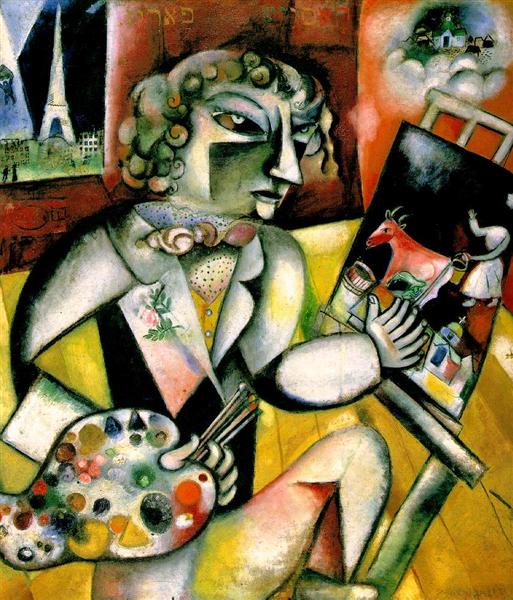



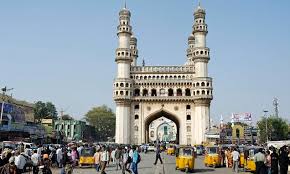




 Borderless