Categories
Slices from Life

From Diana to Daayan

Rajorshi Patranabis shares the philosophy and lore of Wiccans

What, if I say that 68% of the universe is dark? Well, this is not my statement. This is a scientifically proven fact. What is there inside the darkness? Sceptics will say, let science find it out. The spirituals will say there’s mysticism. A Wiccan will say there’s mystical magic. Magic, as in common parlance is entertainment, in Wiccan philosophy, it’s the basis of existence. Magic can be best explained as something that’s occurs yet cannot be fathomed.

The term, Wicca, came was popularised by Gerald Gardiner with his books. Many said, it was misogynistic. To be fair to him, 1925 was not as open as it is today, as far as societal norms were concerned. It is more accepted today. I, a practicing Wiccan, follow a way that is more open, more aligned to nature, supernature and the supernatural. What I follow was introduced into India by Ma’am Ipsita Roy Chakraverti.

While this movement may well be termed as historically the first ever feminist movement, the pagan practices involved are more than a thousand years old. Ritualistic worshipping of nature is seamlessly integrated into Wiccan practices. The ancient knowledges that had trickled down through generations are put together in the modern Wiccan practices. Wicca is a philosophy, and I detest calling it a religion. Here, we don’t believe, we seek. We use the knowledge to try and to unfathom mysteries that lie within the dark spheres of nature. Albeit, a miniscule bit, but we do delve into that 68% of darkness, once in a while.

From shamanism to voodoo, from the ancient Egyptian ways of healing to the 64 yoginis, this school covers every way by which the human soul and body can be healed. They say the basic apothecary of life is to align oneself to the directions given by nature. Manifestation of the female power of nature (shakti) forms the essence of this philosophy. The mind, the body and the soul form the complete sphere of the universe. Wicca believes that nothing is inanimate and that everything has a consciousness draped in a veil of conscience.

Everything that’s around us has been derived from this planet, and if this planet is living, Mother Earth is living, then, everything that comes out of it is also living. As the Law of Conservation of Energy says, the total energy is constant, it can neither be created, nor be destroyed. Hence, the body might change, the forms change but the energy remains. Energy is eternal. The metamorphic energy inside a human body that has derived its form mostly from the magnetic or the electric energies of this planet is called the soul. The soul thinks and decides with the mind and the body giving them a presence. A purified soul is the spirit and when this spirit raises itself to survive in unison with the nature, we call that person spiritual.

Chakraverti says every strong woman is a witch. The word ‘witch’ comes from the old English word ‘wik’, which means wise. A female spirit is more nuanced, stubborn, flexible and erudite. A witch is that wise woman who takes on her challenges head on. A witch or a wizard work on the same footing of aligning mankind to the deluges of nature to heal the spirit, the mind, which in turn takes care of the body. Historically, a Wiccan considers Joan of Arc, Robin Hood, Noor Jehan as witches / wizards. Witches were killed at a point due to patriarchal fears of powerful women. These women had been portrayed as negative women in many of the kindergarten folklores.

The Greek goddess, Diana, was worshiped by Wiccan by Budapest Wiccans. Did she metamorphose to Dayaan[1], when she travelled east? Dayaans were to be feared, to be killed if possible. We have come a long way, no doubt, but sporadic news of such killings are still rampant.

There are also certain myths about witches, one being, flying on the broom. The broom is symbolic of cleanliness — cleaning a society of the cobwebs of false beliefs and weak minds. Broom becomes synonymous with power. Flight is of the spirit. A potent spirit reaches places in such time that the body can never think of. There are innumerable examples of saints and sages being spotted at two or more places at the same time. Advanced Wicca philosophy is inclusive of the powers of Hatyoga and Tantra.

Wiccans are the worshippers of the mother Goddess Isis of Egypt. She’s the moon Goddess and the wife of Lord Osiris, the lord of the dark world. She’s the quintessential witch, the Goddess of magic, the Goddess of strength. Indian Wiccans are influenced by forms of Shakti known as Kamala and the Bhubaneswari.  The most ancient traces of worship of the raw female power of nature can be found in Kali.  Wiccans are also influenced by the Tibetan Tara and the concept of Dakini (the divine witch).

The basic Wiccan principle of worship is through sound vibrations. Chants take the centre stage. Chants of Buddhism are also regularly practiced as are those of Vodun faith with drumbeats. Healing is practiced with chants, as was a common practice in ancient Egypt. The sound of the singing bowl is potent in helping heal.

They have tools that help focus energies of the Earth. Some sound like falling rain. Then there are stones, as in a crystal, a rose quartz, an obsidian, the lapiz lazuli and so on. But the most important tool is the Athame. This is a blunt long knife that is charged and is used to tap the powers of the nature.

One of the oft asked questions is do Wiccans delve into the ‘other dimension’? Physicists have claimed for long, the existence of a celestial plane. Scientists have even said, that, there is a time difference between the celestial and the terrestrial plane. Dreams are said to be in the celestial plane, and hence, time moves differently in dreams. But in effect all humans would have had a brush with the two worlds through dreams. Wiccans believe the veil between the two worlds becomes very thin in autumn. Thus we have All Soul’s Day, Halloween, Bhoot Chaturdashi (holy night of the ghosts) all around the same time, in the autumn of the Northern hemisphere.

I would like to share a few supernatural experiences that I have had myself. These are all first-hand experiences, and I share them with no intention to influence the readers.

A psychic expedition at the Rabindra Sarovar Lake in Kolkata at around 9.30 am on a November morning revealed a figure in my camera. The lake was the psychiatric hospital for the American Soldiers during the 2nd world war. The spirit communicated with us and what could generally be fathomed was, ‘ 1942, Michael James, Death nail through my heart’.

Another time, I rode in an e-rickshaw with someone who had crossed over 20 years before. The driver was very much in congruence with my story when he said, he takes a ride every other evening. This place is a traditionally haunted village in East Midnapore district of West Bengal, India. And yet again, at one of the famous 5-star hotels in Delhi, I could feel someone removing the sacred thread[2] from my body.

I can go on and on. But when it’s Wicca, it’s the strength of  Isis that needs to be manifested for healing. And as a true Wiccan, I take leave with, Tebua Netr Anset (You’re the Isis, we know).

.

[1] Witch in Hindi

[2] A thread worn by Brahmins after they go through an initiation ceremony in their teens.

Rajorshi Patranabis is a poet, critic, reviewer and translator. A Wiccan by philosophy and belief, he is a food consultant by profession with 10 books of poetry and 4 books of translation.

.

PLEASE NOTE: ARTICLES CAN ONLY BE REPRODUCED IN OTHER SITES WITH DUE ACKNOWLEDGEMENT TO BORDERLESS JOURNAL. 

Click here to access the Borderless anthology, Monalisa No Longer Smiles

Click here to access Monalisa No Longer Smiles on Kindle Amazon International
Categories
Slices from Life

Breaking Bread

By Snigdha Agrawal


However much as one would like to get over and be done with doctor appointments, some days get completely derailed.  Never mind the fear lurking in the mind of the outcome of such visits. Perforce one has to sit patiently waiting to be called by the receptionist, clad in a short white coat, bursting with self-importance. And when she announces unapologetically “We are running behind schedule…please come back after lunch,” tempers justifiably hit the ceiling. Having to deal with sore bums and hunger pangs, further compounds the woes.

On such a day, with frayed tempers, we stepped outside in search of an eatery, and located one closest to the hospital, on the sidewalk. Small, with limited indoor and outdoor seating.  Serving the usual South Indian fare of crispy golden-brown dosas, idlis, pongal, and vegetarian thali meals.  Comfort food for hungry stomachs, most enjoy for its freshness, quick service and pocket-friendly prices. A few four-wheeler taxi drivers, construction workers, hospital staff along with us quickly filled up the space during the lunch break. Placing our order at the counter, we opted for the kerbside sit-outs.  Grabbing a vacant table and chair, we made ourselves comfortable enjoying the breeze under the awning of a big banyan tree. An altogether different and humbling experience.

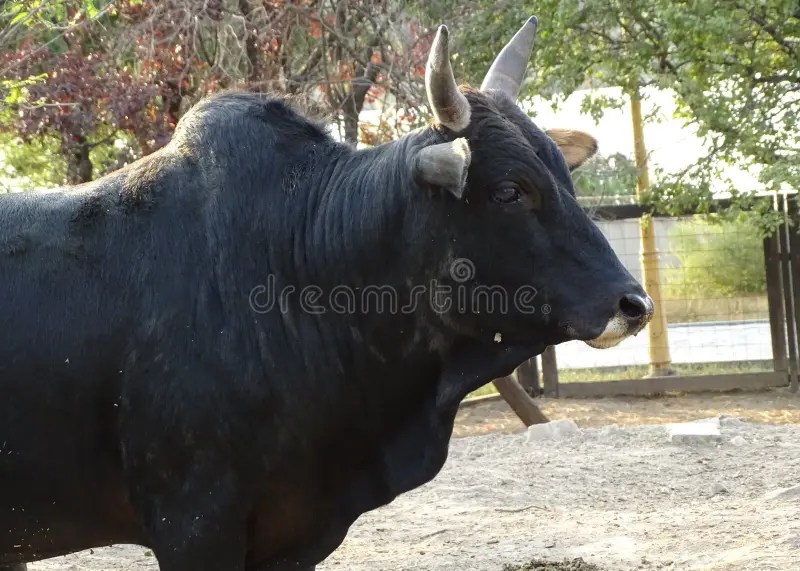
The food arrived in nanoseconds. And we dug into it pronto. The smell of clarified butter preceding it had already activated the salivary glands.  While we were at it, in walked Lady Moo, in her shiny black coat, udders full, demanding to have lunch with the rest of us.  No one seemed disturbed by her presence or irritated at her persistent calling out for lunch.  I confess it was unnerving to have her breathing down my neck, mortally scared of being guillotined with her ivory polished horns, ringed with a marigold garland. Unfounded.  She stood unmoving on her ground, polite and gentle, belying her size and appearance.

That she was a regular was evident with the waiter bringing out a steel plate heaped with idlis and vadas, which she polished off in no time.  Lifted her tail and took a dump right there in front of a ‘no-class distinction’ audience. Shook her tail a couple of times, as if to say “thank you” to the manager and the waiters.  Gently stepping down the kerb, ambled across to the opposite side, unconcerned about holding up the traffic flow in both directions. No one honked to upset Lady Moo, the privileged one who has the right of way in our country, at all times, disregarding any urgencies or emergencies.  Not uncommon in a marriage of the urban with the rural, across big cities. Mind calmed, we returned to the hospital to face the ‘wait challenge’. 

They say happiness comes in small bytes. This incident sparked a silver line of hope that suddenly made its appearance to lift the spirits that had taken a beating in the hospital. A complete volte-face!   

Snigdha Agrawal (nee Banerjee) is a published author of four books and a regular contributor to anthologies published in India and overseas.  A septuagenarian, she writes in all genres of poetry, prose, short stories and travelogues.


.

PLEASE NOTE: ARTICLES CAN ONLY BE REPRODUCED IN OTHER SITES WITH DUE ACKNOWLEDGEMENT TO BORDERLESS JOURNAL

Click here to access the Borderless anthology, Monalisa No Longer Smiles

Click here to access Monalisa No Longer Smiles on Kindle Amazon International


Categories
Slices from Life

Unveiling the Magic of Mystical Mangroves

Photographs and Narrative by Sai Abhinay Penna

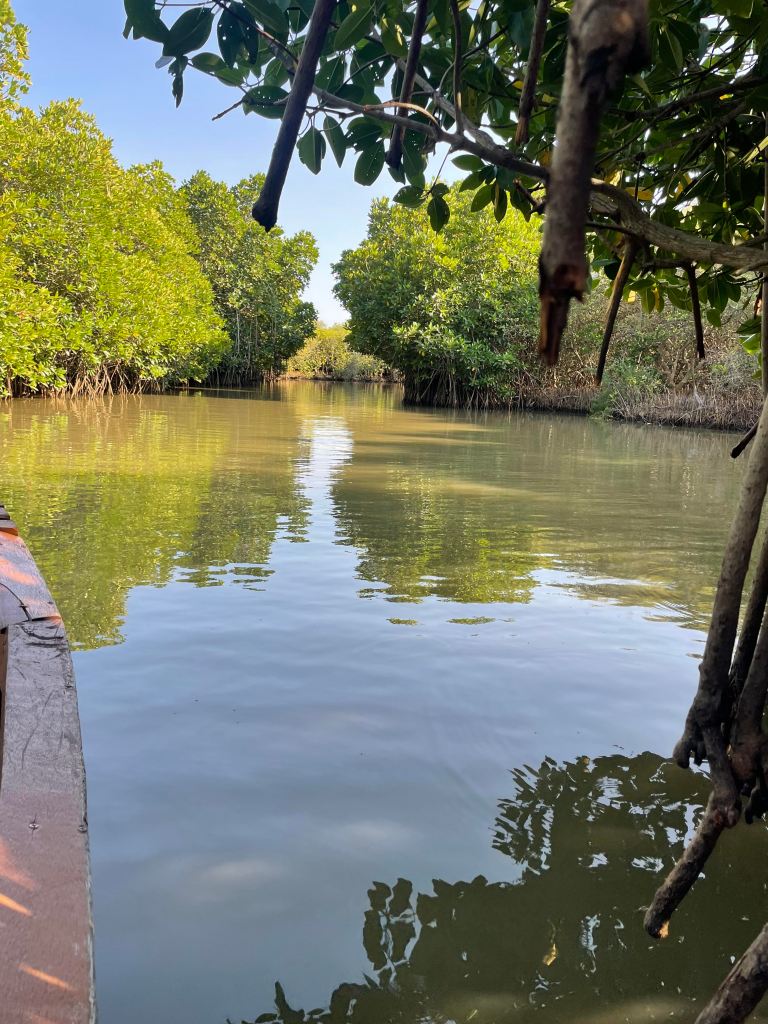
The air hummed with an enchanting melody, and the sun tipped below, casting long shadows that danced like playful spirits along the path. I boarded a small wooden boat, it’s hull adorned with intricate carvings that seemed to tell ancient tales of the forest that glides across the still waters.

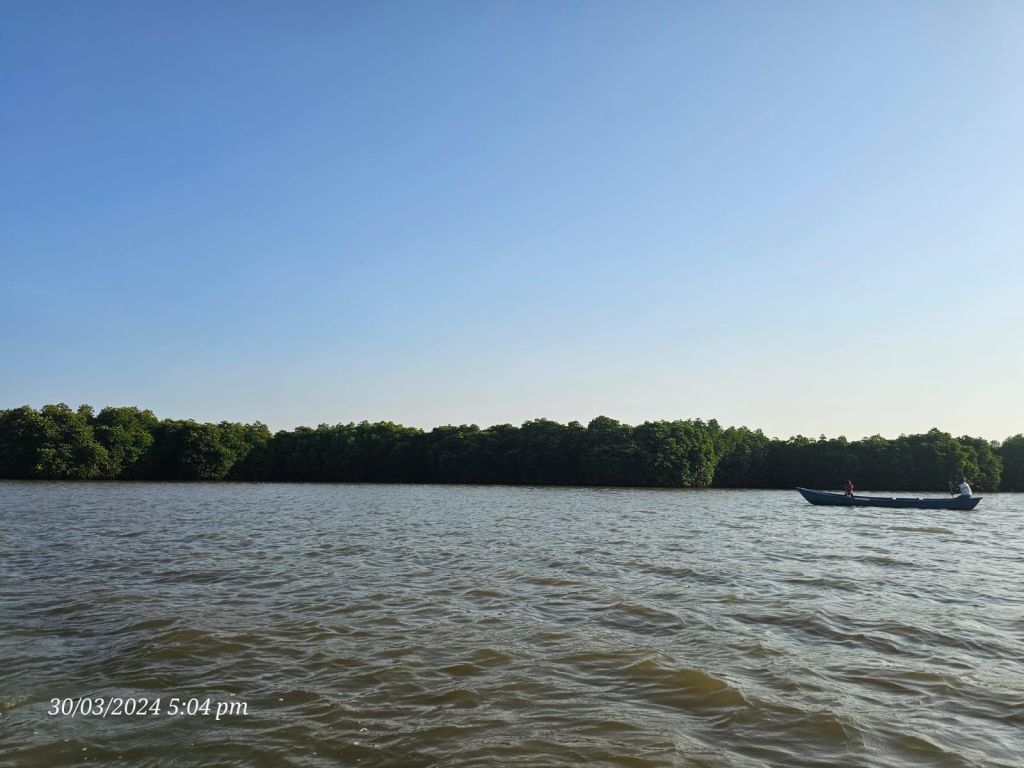
The mangroves that appeared tiny from afar now rose like towering sentinels, their twisted roots reaching down into the depths. Under the canopy rising up like a vast green cathedral, the sunlight dappled into a mosaic of varied hues. The boatman, a weathered old soul with eyes that gleamed with ancient wisdom, guided us through the labyrinthine channels with a steady hand. He spoke in a hushed tone, weaving tales of forgotten gods and spirits that dwelled within the heart of the forest,

Suddenly, the boatman pointed ahead to the other side, his voice barely more than a whisper through the mist. I saw it as a portal hidden among the tangled roots of an ancient tree. As they drew closer, the earth drummed with power, and I felt a sense of wonder wash over me.

With a gentle nudge from the boatman, we passed through the portal and into another realm entirely. The world around us shifted swirling colours, blending and merging into more hues. It seems strange but wonderful, the way nature’s law seemed to bend and twist, defying all logic and reason.

The trees danced with joy, their branches swinging in time to an unseen melody, while the leaves of the green mangrove stretched out in every line, shining in the sun as they unfurled like delicate works of art.

As we ventured deeper into the heart of the mystical realm, I could almost envision Lord Shiva himself taking on the form of Nataraja, the cosmic dancer. In the shifting shadows and shimmering light, I could see the divine figure gracefully moving amidst the swaying trees and swirling mist. His celestial dance seemed to echo through the very fabric of the universe, a mesmerizing display of cosmic energy and divine grace. With each step, he breathed life into the world around him, weaving together the threads of creation and destruction in a harmonious symphony of movement. It was as though the entire forest had become his sacred stage and I, a humble witness to the timeless dance of the cosmos.

All too soon, the journey came to an end. The boatman guided us back through the portal, and we emerged into the familiar world of the mangroves. I felt a pang of sorrow tug at my heart. I longed to stay in that magical realm forever, to lose myself in its wondrous embrace.

As we made our way back to the shore, the world around me seemed somehow different. The trees whispered secrets as we passed, their voices soft and melodic. The journey into the heart of the Pichavaram Forest[1] had changed me permanently, and I could feel the hum of unseen forces in the air.

And though I may never fully understand the mysteries that dwell within its depths, I will always carry with me the memory of this magical journey.

The journey made me conscious of the endless beauty the earth has to offer and revealed to me that real magic is found in the unending beauty of nature, not in spells and incantations.

[1] The Pichavaram Mangrove Forest, located in Southern India is the second largest in the world, the largest being the Sunderbans in West Bengal. https://timesofindia.indiatimes.com/travel/destinations/pichavaram-detailed-guide-to-worlds-second-largest-mangrove-forest/articleshow/110083320.cms

Sai Abhinay Penna is a professional cricketeer, investment banker and writer based out of Chennai.

.

PLEASE NOTE: ARTICLES CAN ONLY BE REPRODUCED IN OTHER SITES WITH DUE ACKNOWLEDGEMENT TO BORDERLESS JOURNAL

Click here to access the Borderless anthology, Monalisa No Longer Smiles

Click here to access Monalisa No Longer Smiles on Kindle Amazon International
Categories
Slices from Life

The Pearl of the Indian Ocean

By Ravi Shankar

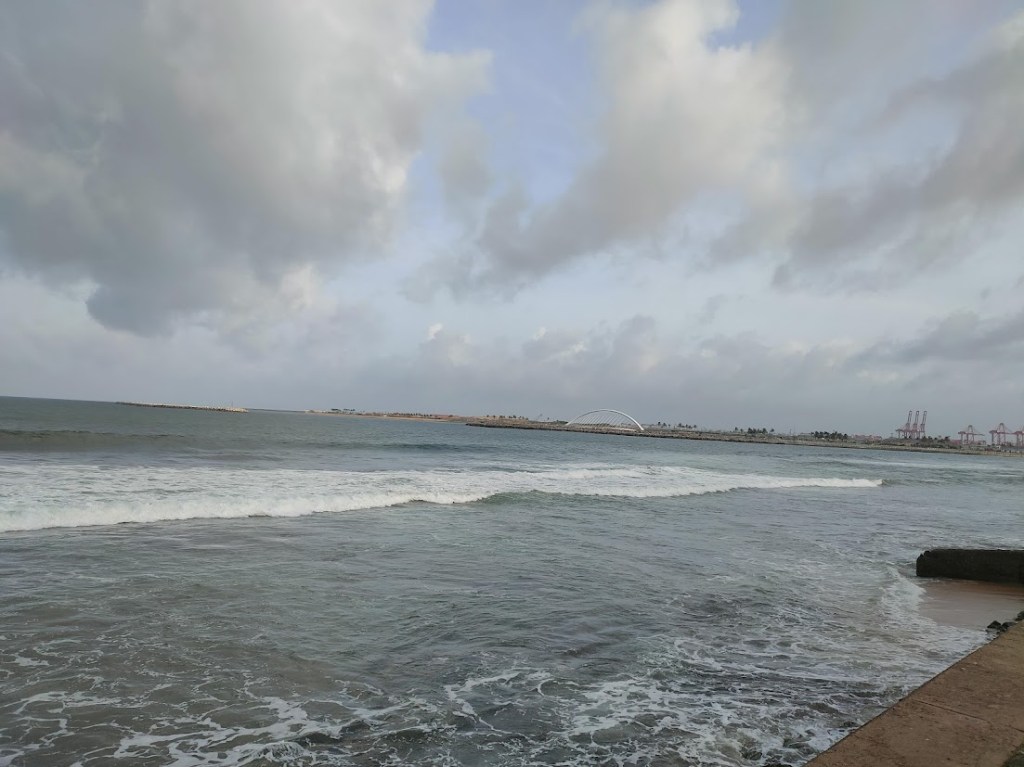
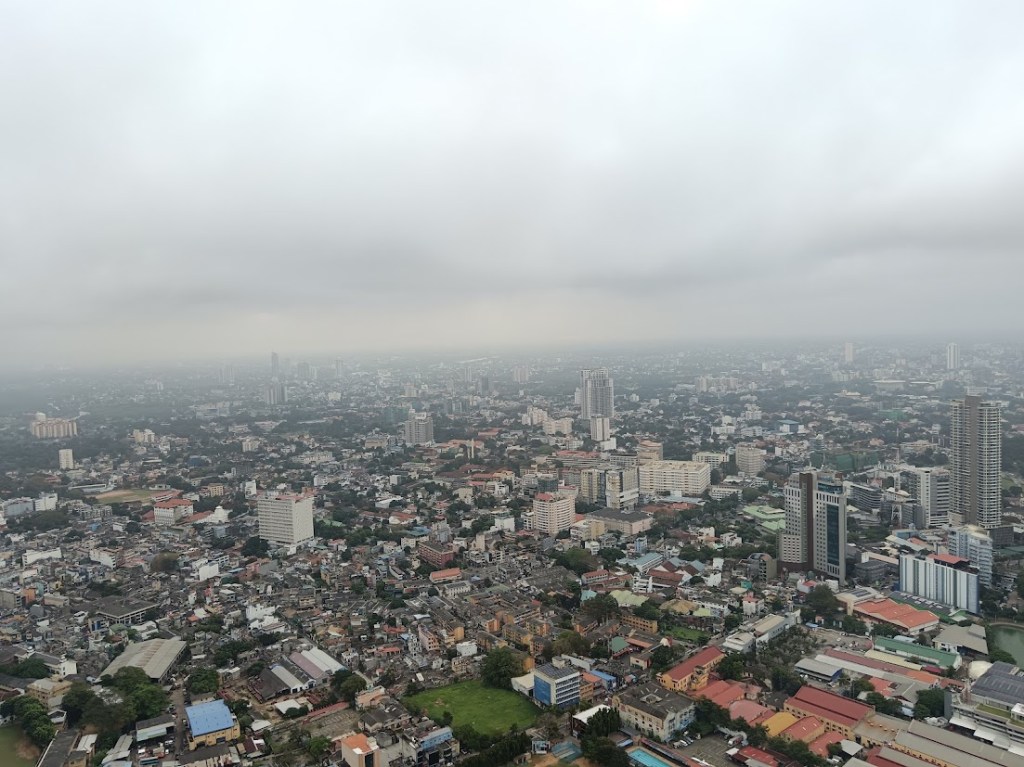
A panoramic view of Colombo. Photo courtesy: Ravi Shankar

My impressions of Colombo and Sri Lanka were positive. I was aware of the high human development indicators of the island nation, progress in access to essential medicines and the civil war. Sri Lanka shares many similarities with the state of Kerala in Indian in terms of topography, culture, food habits, high human development, outmigration, militant trade unions and a passion for egalitarian development. I also remembered the recent violent uprising against the former president and the image of the public frolicking in the pool at the presidential palace.

I was happy to receive an invitation to travel to Colombo in July 2023. I was invited to The Colombo Medical School, which was established by the British in 1870 and is one of the older schools in South Asia. It is the premier medical school of the country, and a new tower block has been constructed. The twenty-story tower is spacious and houses various departments. the humanities. The school was the first to start a Department of Medical Humanities (using art in the education of doctors) in South Asia. The physiology department has created a museum consisting of old instruments and apparatus that are no longer used. This is an excellent idea, and you remain in touch with the history of medicine.

The hotel where I stayed was located on Galle Face Road with the beach and the Galle Face green on the other side of the road. The beach was clean, and the park was originally laid out in 1859 by the British Governor General Sir Henry Ward. The Dutch had placed the cannons facing the ocean as a defence against the Portuguese. Sri Lanka had changed hands multiple times among the different colonial powers.

One of the striking features of Colombo is its cleanliness. The buses may be old and crowded but they are colourful. There are also rickshaws in a variety of colours, mainly green and red though yellow ones were less common. The kittul jaggery harvested from the fishtail palm or the jaggery palm is famous and I loved the gingelly rolls made with this jaggery. My second visit was in early January this year. The apartment where I stayed was attached to an old Sri Lankan house. The location was near to all conveniences but away from the noise and traffic.

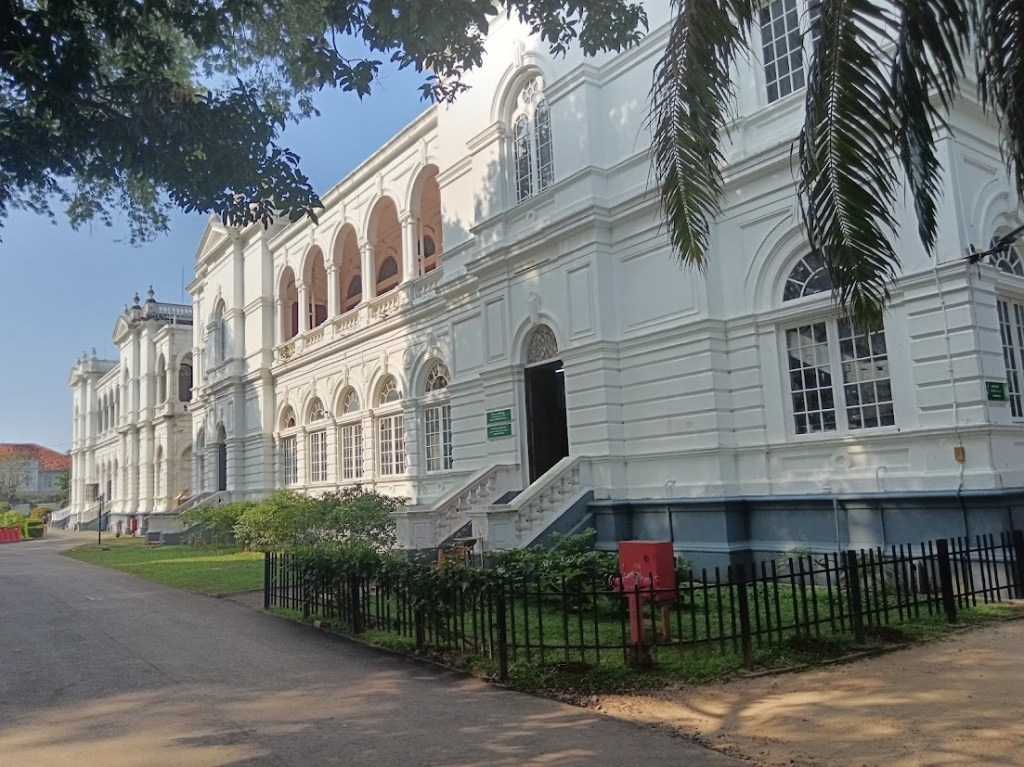
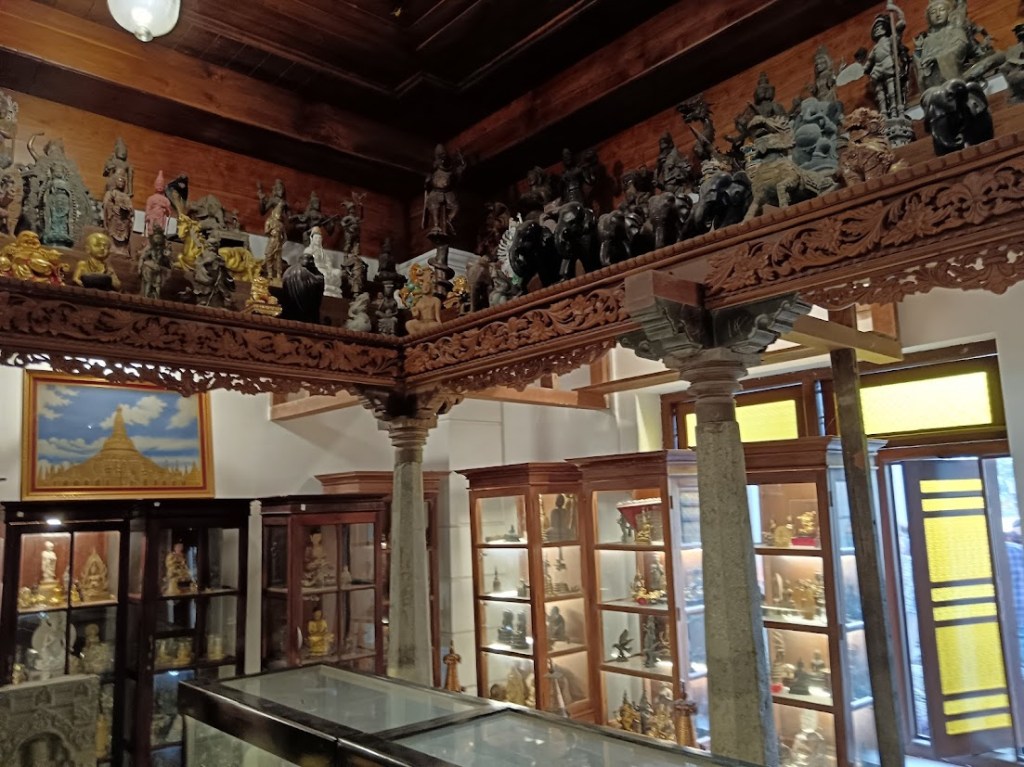
I visited the Sri Lankan national museum, the largest in the country. It was established by Sir Gregory, the British governor of Ceylon (as Sri Lanka was then called) in 1877. The museum is housed in a white, neo-Baroque building and offers a fascinating glimpse into Sri Lanka’s past. The museum is well maintained though it is not air conditioned. The humidity is a constant presence in Colombo. The collection of antiques at the museum is extraordinary.

On my last evening in Colombo, I did some sightseeing. We went to the Gangaramaya temple, the most important one in Colombo. The architecture is a mix of Sri Lankan, Indian, Thai, and Chinese styles. The temple was started by the famous scholar monk Hikkaduwe Sri Sumangala Nayaka Thera in the late 19th Century. The temple has a rich collection of Buddha statues and huge collections of ivory that must be worth millions if not billions. Our next stop was the Lotus tower at 351.5 metres, the largest self-supported structure in South Asia. The lotus is a symbol of purity. view of Colombo city from the observation tower at the top is excellent. I could see the Galle Face Road where I had stayed during my last visit. We could see the Sri Lankan railway depots and stations.

Colombo is a fascinating city. There is plenty to see and do. Recent economic events have hit the island hard. During my subsequent visit I plan to explore other parts of this magical country. Serendip/Serendib was the ancient Persian/Arab name for the country. The name is believed to be derived from the Sanskrit Simhaladwipa (dwelling place of Lion’s Island). The lion occupies a prominent place on the Sri Lankan flag.

The three princes of Serendip in an ancient story had the knack of making unexpected discoveries and is the root of the word serendipity in English. Visit Colombo and Sri Lanka, who knows what serendipitous discoveries await you?

Photo Courtesy: Ravi Shankar

Dr. P Ravi Shankar is a faculty member at the IMU Centre for Education (ICE), International Medical University, Kuala Lumpur, Malaysia. He enjoys traveling and is a creative writer and photographer.

.

PLEASE NOTE: ARTICLES CAN ONLY BE REPRODUCED IN OTHER SITES WITH DUE ACKNOWLEDGEMENT TO BORDERLESS JOURNAL

Click here to access the Borderless anthology, Monalisa No Longer Smiles

Click here to access Monalisa No Longer Smiles on Kindle Amazon International
Categories
Slices from Life

A Cover Letter

By Uday Deshwal

It’s been ten months since I quit my last job and have been attempting to gain employment. However, this isn’t my first rodeo. It has been my privilege to go on similar attempting-to-seek-what-I-really-want-to-do  sabbaticals twice before in the last decade. And each time the gradual-at-first-and-then-suddenly-debilitating desperation of needing to earn something to pay bills, cuts short the quests to seek happiness and fulfilment in work.

Whether it is fulfilled or not, whether it is life-changing or not, every quest for applying for a job comes with an unavoidable and annoying task that wears you down so much that all you are left with are bouts of self-doubt and PCLSD (post-cover letter stress disorder).

Before I go any further, I just want to say that it is not my intention to seem naive or ignorant about the hiring process, I understand and appreciate all the work that goes into it and how difficult it can be for recruiters and hiring teams. And, of course, it’s understood that some aspects of a job application are unavoidable and inevitable. But just like we all sometimes lament about other inevitable things like growing old, this is just some good old-fashioned cribbing about cover letters and CVs and such.

So, here are some of my thoughts, that I hope will resonate with others like me out there, about the mentally harrowing thing called ‘job applications’.

CV on File

“Hi, Thank you for applying to the XYZ opening at ABC. We’re grateful to have received many highly competitive applications for this role. After careful consideration, the team has decided not to advance with your candidacy at this time. Of course, we’ll keep your information on file and will reach out if there’s a new role that fits your experience.”

At this point I feel like at least 50% of the world’s data servers are filled only with people’s CVs/resumes/portfolios, given the amount of information all these employers claim to “keep on file”. However, I don’t know of one instance where anyone ever received an email in their inbox saying, “Hi, we had on your resume on file with us for 33 months, and of course you know we remembered the exact skills and experiences you had and so we immediately knew we must access the file and reach out to you with this amazing, fulfilling exact job profile you’ve been looking for. Would that be something of interest to you? If yes, then we need you to join latest by tomorrow. Do let us know. Kind regards, an unicorn of an HR/hiring team.”

If there Is A Hell, I would recommend adding writing Cover Letters as a Form Of Torture

Having to write about how you will be a good fit even as you are 99% sure that you are “not a good fit/not what we are looking for”, can really mess with your head as time passes and rejections pile up.

We all understand the hiring processes and the need for things like cover letters as a means to weed out the non-ideal candidates. But at the same time, it is also a nearly impossible task to constantly present yourself as an ideal, desirable candidate when all your mind tells you is that “you are not good enough … is this even worth it … why am I doing this”. After a few months in this loop, the idea of writing a cover letter, in order to apply for something, becomes so daunting that all you want to do is to curl up and cry. As unnecessarily dramatic it may sound, how am I supposed to write a cover letter that will make me stand out when I can’t even stand to look at myself and the failure I have seemingly become?

Constant rejections cannot possibly result in more earnest and more confident cover letters, period. And it is okay to acknowledge and accept that and stop berating ourselves at least for a day (before some expenditure sends you spiralling once again).

What those rejection emails actually feel like after the 3rd month of continuous rejections

“Hi worthless applicant, thank you for your interest in applying for this role we are going to hire for internally actually. We don’t really care about any highly competitive applications for this role. After three weeks of zero consideration, the automated email reply has decided not to advance with your candidacy at this time.

“While we are not able to give anymore ducks (*1 premium suggestion, see more in grammarly) about it at this point, we discourage you to keep an eye out for any new open roles and just forget about it. And, of course, we’ll keep your information on file and never reach out even if there’s a new role that exactly fits your experience and skills.

“We appreciate the mental breakdown you underwent to consider working with us, and wish you the best of luck as you continue your futile search.”

Don’t forget to give yourself some of those kind regards

It can be very daunting when you are stuck in a rut where you feel like nothing is going to change and you are doomed to keep struggling to even make it past the first round of the job application process. Some days will be worse than others, and you will feel no matter what you do you have no agency over your own career path and choices.

While struggling to navigate through such demoralising thoughts, it is important to keep trying to find moments where you micro-reward yourself with some hope, self-belief, and rationale. For example, even something as stupid as reasoning with your own mind about how it can’t just be you and there are many other reasons (global economic crisis, high unemployment rates, employers’ feudal mindsets, you don’t come from generational wealth, etc.) for your continued struggle to find a fulfilling job. But even a lost battle against your mind makes a little difference because you are at least contending with certain unideal realities.

On a slightly-not-as-worse day, you can use some of that as a catalyst to try and see what else you can do to make a better case for yourself (be it learning a new skill, doing an online course, reading/watching something that is inspiring, or attempting to write a piece like this and instantly regretting submitting it) for your next application. And most importantly, and for as long as possible, don’t lose hope and stay resolute towards your goals and what you want to do, because the only thing worse than rejection is regret… Actually having Rs 832.70 in your bank account in possibly worse.

Okay I must stop now because it has been two days since I last wrote a cover letter and applied for a job, and my PCLSD is kicking in.

Uday Deshwal suffers from an ‘always wanted to be a writer but was diagnosed with impostor syndrome’.

.

PLEASE NOTE: ARTICLES CAN ONLY BE REPRODUCED IN OTHER SITES WITH DUE ACKNOWLEDGEMENT TO BORDERLESS JOURNAL

Click here to access the Borderless anthology, Monalisa No Longer Smiles

Click here to access Monalisa No Longer Smiles on Kindle Amazon International
Categories
Slices from Life

Meeting the Artist

By Kiriti Sengupta


I wanted to see him for a considerable period, of course, for a purpose. I wished to offer him a few of my poetry books—not because I had read a whole bunch of his poems and considered him a great poet, but because alongside my poems, my books featured paintings and illustrations by a few talented artists from Calcutta. I wanted his remarks on the artwork, for the person in this context was the Padma Bhushan awardee Jatin Das, an Indian artist who rightfully deserved to be portrayed as a legend.

Jatin Das and Kiriti Sengupta meet for the first time. Photo provided by Kiriti Sengupta

I first met Jatin Das at the India Habitat Centre for an event organised by Oxford Bookstore on April 29, 2024. Honestly, I had no clue I would meet him there. Post-event, I introduced myself and offered him my new book, Oneness. “Ah, you are a poet. What do you do for a living?”—Das was eager to know. “I deal with books; I represent an independent press named Hawakal,” I answered. “Do you have a business card?” Das inquired, but I didn’t have one.

I need to be equipped with a visiting card. I’m severely laid back when presenting myself, even for “business”. I’m yet to learn where my inhibition stems from. I’m not otherwise lethargic.

Nevertheless, as I intended to leave, I humbly told Das, “Sir, Paritosh Sen was my great-uncle—my Dad’s youngest uncle.” His eyes glittered; he gently pressed my cheeks and embraced me in his arms. Das was visibly surprised. “But Paritosh-da was taller than you. Do you live in Calcutta?” I quickly responded to his last question for that evening, “I currently live in Delhi. It’s been three years.” Das shared his card, “Drop by my studio; call me when you want to.”

“I will,” I promised and introduced my wife (Bhaswati) and son (Aishikk) to him before I left the party. My son had a semester break at his college in Chennai. He had come to Delhi with his mother as we had planned a trip to Mussoorie. We headed to the hill station the next day, and on our way, I got a call from an unknown number. I was stunned as I found Jatin Das on the other side. He affirmed, “Your book is nicely done. I asked my staff to find you on the Internet.” After knowing that we were out for a vacation, Das asked, “When will you return? Do visit my studio when you come back to Delhi.” Receiving a surprise call from someone like Jatin Das was the least expected because he didn’t have my number. 

Photograph of Bitan Chakraborty and Kiriti taken by Jatin Das. Photo provided by Kiriti Sengupta

“Fold your hands when you greet someone to say Namaskar. You may not utter the word, but the right gesture is important. You are a Bengali, come on,” Jatin Das firmly put forward his directions as I met him again on May 6, 2024, at his studio in Delhi. I was accompanied by Bitan Chakraborty, who followed Das’s instructions as he introduced us to the studio members. There was a visitors’ book where I put down our names and other details. Das looked at us with a hint of bewilderment, “Ah, you guys don identical shirts and trousers? This is amazing. I feel energised seeing you. Let me click a photo; I must do it. Stand together.” 

Das isn’t tech-savvy. He categorically refuses to become one. “I am 83,” he proudly mentions his age. However, getting clicked by an artist of his stature is rare, especially his warm compliments for dressing up in similar clothes were overwhelming. 

What followed was a guided tour inside his large atelier, packed with his paintings, sketches, books, souvenirs, pots and vessels, numerous folders, paper documents, poems written in loose pages, hats, and other items of art and aesthetics.

Painting by Jatin Das

Every nook and corner of the studio brightly declared the presence of an agile artist who declined to halt his sojourn with art and creativity. Meanwhile, Das had another visitor. While wrapping up his conversations with her, he wanted us to introduce ourselves to the lady. As we exchanged pleasantries, Das pointed at my conduct, “Please stand up when you greet someone. I maintain the same stance even if someone as young as twenty comes to meet me.” Another lesson learned.

As I offered him three of my books, Das urged, “Sign them for me.” I was hesitant. I needed to be more confident; signing my books never comforted me. He skimmed through the books and paused at Shimmer Spring, an all-colour, square-back coffee table book I edited in 2020. He inquired, “Who’s the artist?”

“Pintu Biswas,” I informed him.

“I don’t know about him. He must be young, but it’s fine work, I can tell you,” Das remarked as he carefully probed Shimmer Spring.

We were offered water before a boy in his studio served tea in transparent glass cups. “Finish the water first,” Das directed us. He also warned me to check on my sugar intake as I added two teaspoonfuls of white sugar to the cup of tea. He checked on the water again, “Finish your glasses.” As we savoured the aromatic tea, we discussed several matters like poetry, publishing, Indian publishers, his acquaintance with Dom Moraes, Hawakal’s journey, Das’s first book of poems, which was published by Writers’ Workshop (Calcutta) in 1972, JD Centre of Art (JDCA, Bhubaneshwar) among other things.

We had a challenging two-hour-long intriguing session with the artist. Before leaving his studio, we bowed before him to pay our obeisance. “People don’t offer Pranam anymore,” quipped Das. While returning home, I asked Bitan, “Was it really important to empty the glass of water?” His face glowed when Bitan said, “Drinking a glass of water wasn’t a big deal; it’s an alert. Maybe he wanted to convey his concern about the wastage of water.” Jatin Das—the artist and his intrinsic consciousness dawned on us.  

Painting by Jatin Das

Kiriti Sengupta, has authored fourteen books of poetry and prose; two books of translation; and edited nine anthologies. Sengupta lives in New Delhi.

PLEASE NOTE: ARTICLES CAN ONLY BE REPRODUCED IN OTHER SITES WITH DUE ACKNOWLEDGEMENT TO BORDERLESS JOURNAL

Click here to access the Borderless anthology, Monalisa No Longer Smiles

Click here to access Monalisa No Longer Smiles on Kindle Amazon International
Categories
Slices from Life

Sundays are Only for Some…

By Snigdha Agrawal

He is at the door at 10 am on a Sunday.  Sleepy eyed. But all smiles.  A small frame for a twelve-year-old.  Neatly dressed in jeans and a t-shirt, sneakers on his feet, a size too big.  I presume he must have risen early to accompany his parents to their workplace.  A well brought-up lad, as is obvious from his body language, and impeccable manners.  So, unlike other kids I cross in the lift daily, studying in private schools where the annual fees runs into six digits.  

“Good morning, Ma’am,” he says, leaning against the door, while I hand out the laundered clothes for ironing.  I start counting the clothes.  He beats me to it.  One…two…three, right up to twenty-seven.  Bent on his knees he folds the clothes methodically and bundles them in the faded bedsheet, kept specifically for this purpose.  Heaving the bundle on his shoulder, he leaves, assuring the clothes will be ironed and returned by the evening.  Once again repeating the number twenty-seven and the cost of ironing per piece at Rs.7/-, making it obvious, that he is aware of the prevailing rates.  Homework done well. I see him off at the service lift, with many such bundles picked up from other apartments, piled into a trolley, crudely fashioned after luggage trolleys bellboys use in hotels for moving visitor luggage from floor to floor.

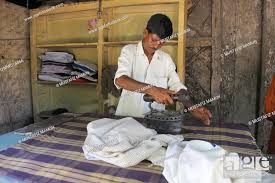
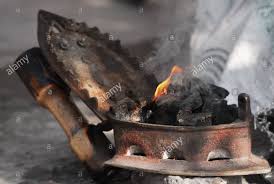
It sets me thinking.  Is he ironing the clothes himself?  It can’t be.  How could he ever lift that heavy charcoal iron box[1]?  And if so, does that make it grossly wrong and unacceptable — surmounting to child labour…?

I went to the basement of our apartment complex to search for the designated space allocated to the ‘ironing persons’.  Rent-free with power points, rarely used.  Comfortable with the traditional method. I find him sitting on a plastic stool, jotting down the number of clothes against the apartment number and the amount payable. That puts my fears to rest. 

At the workstation, Manorama, his mother, is busy preparing for the day’s ironing.  A makeshift ironing board of plywood sheets, salvaged from throwaway pieces, assembled to resemble a cabinet, with a tabletop and storage below.  Where was Bhaskar, I asked.  The little guy is quick to respond.  “Sundays… my mother and I take over from my father.  All week, he is busy from 8 am to 8 pm, returning home tired, and ready to hit the bed.” 

I was touched, to say the least.  Here was a caring twelve-year-old boy who was helping out his parents on a Sunday.  Collecting and delivering clothes from apartments, doing the book-keeping without any complaints.  Leaning against the wall, are his school books.  Presumably to catch up on weekend assignments.  To my question “Do you like reading?” his face lights up like a thousand-watt bulb.  His smile with a few missing teeth, stretches from ear to ear.  Okay…that solved a problem I needed to deal with. I decided to surprise him with books that were lying in the house, keepsakes from my childhood. Time to part with them. 

Around 7 pm, he arrives with my bundle, unknots the bedsheet, opening the four folds and proceeds to count the clothes, for his satisfaction and mine.  I can hear his sigh of relief.  Numbers match.  Contents are the same as was handed over.  He is surprised as I hand over the books.  “These are for you to read…I’m sure you will understand and enjoy the stories.  If you don’t, come over whenever you have spare time. I’ll explain.” The smile on his face is priceless.

“So, Mahesh what did your mother cook for breakfast and lunch today?” I ask, worried about his nutritional needs.  

I see the look of confusion on his face, wondering why this old lady was asking so many questions.  Pauses.  He seems to be churning something over in his mind and then says, “Sundays I make breakfast and allow my parents to sleep longer. Today I made lemon poha[2] and filter coffee.  Amma made curd rice for lunch.”   I was moved enough to want to give him a big hug.  Not sure, how he would respond to getting physical, instead gave him a bag of candies.  He was hesitant to accept it, till I pushed it into his little hands.  His pupils dilated and the spark in his eyes said the unsaid.  Admittedly, I was curious. I needed to engage him in conversation to know more about his plans for the future.

To my question, “Do you plan to take over your father’s trade once you are of age?” Pat is his emphatic reply:  “No…Ma’am! I am working hard to secure the qualifying marks for admission into an engineering college to study Computer Science and work in an office.  My parents are saving for my education.  Part of the earnings from ‘ironing clothes’ are kept aside for this purpose.  That is why I help out on Sundays and school vacations.” 

“What happens to your father’s business then?”

“Oh! It has been agreed that it will be discontinued, once I can provide for them.  Another ten years. My grandfather passed away early because of the occupational hazards associated with this profession.  I don’t want my parents to meet the same fate. They deserve a better life.”  That tears me up.  So much wisdom in that little head.  

.

[1] In India, there are people who make a living of ironing clothes for the more affluent. They normally use heavy charcoal irons and not electric irons… they could set up a stall under a porch or under a tree…

[2] flattened rice with spices/ flavouring

Snigdha Agrawal (nee Banerjee) is a published author of four books and a regular contributor to anthologies published in India and overseas.  A septuagenarian, she writes in all genres of poetry, prose, short stories and travelogues.

PLEASE NOTE: ARTICLES CAN ONLY BE REPRODUCED IN OTHER SITES WITH DUE ACKNOWLEDGEMENT TO BORDERLESS JOURNAL

Click here to access the Borderless anthology, Monalisa No Longer Smiles

Click here to access Monalisa No Longer Smiles on Amazon International

Categories
Slices from Life

Hooked for Life and Beyond…

By Ravi Shankar

I was hooked! It was my first exposure to a computer though I had read about these in the newspapers and seen them on television. I think it was a Spectrum personal computer popular in the 1980s. My friend, Sanjay and I did a few simple tasks and played a few games on the computer. The games of the 80’s were slow and clunky by today’s standards. In those days however they were interesting and enticing. BASIC was the most popular computer language then. We also had COBOL and a few others. My good friend, Sanjay Mhatre was a bibliophile and a free thinker, and I often used to visit his place and borrow from his vast book collection. However, even in the 1980s there was uneasiness and opposition to computers and the fear that it would replace people and lead to mass unemployment was often mentioned.

The rise of information technology (IT) and the important role to be played by Indian companies was still in the future. I expect artificial intelligence (AI) will also open new jobs in the future. At my medical college in Thrissur, Kerala, India computers were still rare. Communist Kerala had a love-hate relationship with computers and technology. Maharashtra (a western Indian state) was an early adopter of computers, and my tenth- and twelfth-mark sheets were computerised while my MBBS ones were handwritten. During my postgraduation at Chandigarh, computers gained prominence in our conversations. Our head of the department was gracious enough to offer the services of his secretary for typing our research manuscripts when she was free. The only other option was to pay for the service from outside providers. In those days WordStar and WordPerfect dominated word processing. 

Creating slides for presentations was a challenge. LCD projectors were not available, and we had to create physical slides with cardboard mounting. The slides were created on early versions of PowerPoint and photographed using a camera to create the physical ones. My co-guide, Dr Anil Grover (then a cardiologist) at Postgraduate Institute (PGI), Chandigarh mentioned how computers will become increasingly common and encouraged me to learn the Microsoft package of Word, PowerPoint, and Excel. PGI also started offering email facility on a limited basis. You had to write down the details of your email and take it to the IT section who will send your message. We had modems then, which took a while to connect and made a series of sounds with flashing lights while connecting to the internet.

In Pokhara, Nepal at the beginning of the twenty-first century, internet was still a luxury. Manipal College of Medical Sciences used to charge 10 Nepalese rupees to send a message. Faculty could type their message in Outlook and twice a day, the IT person would send and receive messages. In those days, a floppy disk was the most common external storage device, and I soon had a large and colourful collection of floppies. Floppies were not always reliable and sometimes the data on them could not be read. CD-ROMs were another storage device, but CD writers never became commonplace. At Mahendra Pul in the heart of Pokhara, a new cybercafé came up in the early 2000s offering internet browsing at 150 Nepalese rupees per hour. Compared to what we were previously paying, this was a steal!

The college also had an LCD projector though it was not commonly used by faculty members for teaching-learning. This was a large and clunky device. Earlier versions often had compatibility issues. You create your slides and hope for the best. These may or may not open on the laptop and may or may not be projected. One had to have a backup of the lecture on overhead projector (OHP) transparencies, just in case. We did not yet have easy access to computers or laptops. This came only later when the United States Pharmacopeia (USP) set up a drug information and pharmacovigilance centre at the teaching hospital. We got two excellent Dell computers, and the hospital provided us with internet.

The early computers were slow with a big, bulky, and heavy cathode ray screen. They had a blinking cursor and words appeared slowly after typing. The Hollywood movie, You’ve Got Mail (1998), follows the romance between Meg Ryan and Tom Hanks developed through email. The movie is a good introduction to the early days of the internet.  

We had purchased a home desktop computer in 2001 or 2002. This purchase was a financial disaster. The computer required frequent repairs and drained our finances. Google launched its beta version of email, Gmail in 2004, and I was one of the early adapters. I became a fan of Gmail right from the start. It offered significant advantages over the then dominant Hotmail, Yahoo mail and Rediff mail. The storage was larger and there was no need to delete your old emails. Kist Medical College in Lalitpur, Nepal had purchased Dell desktop computers, and these were among the best ones I had used. Fast and responsive with good memory and speed. These had LCD monitors and looked sleek and modern.  

Computer technology has made significant advances. I read that if cars had made similar advances to computers we could drive to the moon and back on a litre of gasoline. Chips started getting smaller and more powerful and are today fought over by the global technology superpowers. A variety of online applications started making their appearance with the spread of the internet. Some of these eventually became the internet giants of today. In India, internet became widely available, and the costs dropped significantly. Mobile technology also made dramatic advances. In India most people access the internet and carry out online tasks using their mobile phones. For around 12000 Indian rupees today you can get a decent mid-range phone. Today mobiles in the palm of your hands have greater processing power than the giants of the 1950s and 1960s. I remember reading a comic strip where a visitor from the future time travels to the present. He laughs on seeing the supercomputer, the most powerful one on earth. When asked why he shows a small ball and introduces it as a computer from his time with much greater processing power than the humungous supercomputer.

One of the major advances has been cloud computing and cloud services. We have Chromebooks that work on web-based applications and needs the internet to do things. Both Google and Microsoft offer a range of services including storage, meetings, messaging, and applications for text, presentations, and calculations. AI is now an integral part of applications. PowerPoint offers the designer option for slides and creates stunning backgrounds. I recently attended a workshop on Copilot, the AI support software from Microsoft that is fully integrated into all their applications. I like the transcribing option for interviews and focus groups offered by Teams and later by Zoom and this makes my life as a researcher easier.

Star Trek, Futuristic computing

When I was growing up, I had no clue about what would soon become commonplace. The world wide web, the ability to browse libraries and art collections, video conferencing, online work processes, applying for government and other services online, online fund transfer and remittance are now at our fingertips. The COVID pandemic shifted a lot of learning and even assessment online. Presently we mainly interact with computers using a keyboard. I am a fan of the sci-fi series, Star Trek, where people interact with computers mainly using their voice. Voice commands are already available and  steadily improving.

I was slow getting into social media. Their judicious use is to be recommended. Facebook keeps me updated on what my friends, acquaintances and former students are doing. LinkedIn is the professional face I present to the world, Twitter (now X) is a concise way to stay connected and YouTube is a major source of entertainment. Computers have changed our life for ever. At a basic level these are based on the flow of electrons through circuits and on the pioneering work in atomic physics done at the start of the twentieth century.

The last three decades have seen developments and changes at unimaginable speed. Who knows what the next three will bring? Will progress continue at an ever-accelerating pace or will we eventually hit a roadblock? We may have to wait for Father Time to provide the answers!

Dr. P Ravi Shankar is a faculty member at the IMU Centre for Education (ICE), International Medical University, Kuala Lumpur, Malaysia. He enjoys traveling and is a creative writer and photographer.

.

PLEASE NOTE: ARTICLES CAN ONLY BE REPRODUCED IN OTHER SITES WITH DUE ACKNOWLEDGEMENT TO BORDERLESS JOURNAL

Click here to access the Borderless anthology, Monalisa No Longer Smiles

Click here to access Monalisa No Longer Smiles on Kindle Amazon International
Categories
Slices from Life

Heatwave & Tagore

Once more, Ratnottama Sengupta explores the contemporariness of Tagore ….

The continuing heatwave in Kolkata that has defied the geographical reality of Kaal Baisakhi — the norwester that brings relief to sun-scorched beings — prompted me to continuously hum this Tagore song in Brindavani Sarang Raag, written in 1922.

Darun Agni Baaney Re... 
(Shafts of Fire)


Shafts of fire pour thirst on us --
Sleepless nights, long scorching days,
No respite in sight!
On withered branches,
A listless dove wails
Droopy doleful notes...
No fear, no scare,
My gaze is fixed on the sky,
For you will come in the
Form of a storm,
And shower rain on scorched souls.

And as I kept singing the song first penned in Santiniketan, I marvelled at the creativity of the giant whose words are true to this very day, more than 100 years later!

Kaal Baisakhi, the nor’wester known in Assam as bordoisila, is a localised rainfall and thunderstorm event which occurs in the Indian states of West Bengal, Bihar, Jharkhand, Odisha, Tripura, and Assam as well as in Bangladesh during the summer month of Baisakh (April 15-May 14). This first month of the Bengali calendar also saw the birth of Rabindranath Tagore. These storms generally occur in the afternoon or just before sunset, when thick dark black clouds appear over the sky and then bring gale-speed wind with torrential rain, often with hail, but spanning only a short period of time.

Kalbaisakhi

Tagore’s love for Nature had compelled him to set up in Santiniketan open air classrooms, where students would learn sitting on the ground in the bower, under trees where birds would chirp and gentle breeze would caress their tired brows.

And, his involvement also expressed itself in the 293 songs he wrote in the segment titled Prakriti (nature) Parjaay. There are songs about nature in general. But he himself further classified the songs under subsections — Upa parjaay — that focus on the six seasons: grishma (summer), barsha (Monsoon), sharat( early autumn), hemanta (late autumn or early winter), sheet (winter), basanta (spring). 

Tagore clearly was taken up by the wild beauty of monsoon with its dark clouds and thunderous showers. For, he wrote 150 songs on the drops of nectar from the heavens, while summer elicited a tenth of this number! If this is half the number celebrating sharat, the festive season of Durga Puja, it is thrice the number dedicated to hemanta, the confluence of autumn and winter.

I take heart in the fact that Grishma subsection includes Chokkhe aamar trishna, Ogo trishna aamar bakkho jurey… [1]

Thirst fills my eyes, Dear, 
Thirsty is my heart too...
I'm a rain-starved day of Baisakh
Burnt by the sun, heat stroked.
There's a storm brewing
In the ovenated air..
It sweeps my mind into the distance.
It rips me of my veil.
The blossom that lit up the garden
Has withered and fallen.
Who has reined in the stream
Imprisoned in heartless stone
At the peak of suffering?

And then, when it rained? The torrents poured balm on the angry burns. The fleet-footed lightning seared the heart of the cloud-covered darkness and extracted the nectar-like flow…

It assured us that no hardship lasts forever. It reiterated faith in the eternal words, “This too shall pass!” And, for me? It confirmed Tagore’s words that “You will come in the form of a storm and shower rain on scorched souls…”

Tagore lives on, 163 years after he came. In his words. In his imagery. In his empathy with every human situation…

[1] Thirst fills my eyes, Dear, /Thirsty is my heart too…

Ratnottama Sengupta, formerly Arts Editor of The Times of India, teaches mass communication and film appreciation, curates film festivals and art exhibitions, and translates and write books. She has been a member of CBFC, served on the National Film Awards jury and has herself won a National Award. 

.

PLEASE NOTE: ARTICLES CAN ONLY BE REPRODUCED IN OTHER SITES WITH DUE ACKNOWLEDGEMENT TO BORDERLESS JOURNAL

Click here to access the Borderless anthology, Monalisa No Longer Smiles

Click here to access Monalisa No Longer Smiles on Amazon International

Categories
Slices from Life

No Film? No Problem

By Ravi Shankar

The studio room was ill ventilated. The bright lights were making things hotter! We were at a photo studio in Bhandup, Mumbai, trying to take a family photograph. The photographer was trying his best to arrange us in a pleasing and photogenic composition. The process was however, taking longer than expected and my youngest brother was getting scared. He was beginning to cry and soon was bawling his head off. My mother has a knack of soothing and calming crying children, but this time even her efforts were not successful.

I was reminiscing on this episode recently and was thinking on how easy it has now become to capture photographs and video. For a long time, you had to use film to capture photographs. Photography was an expensive proposition then. Initially, you only had black and white films. Later colour films became widely available. The cost of films, of processing and printing photographs all added up.

Films were also only invented in only 1889, but they were highly flammable. ‘Safety films’ were introduces only in the last century in 1908. Before 1889, photographers had to lug around heavy glass photographic plates. The process of capturing images on film also took a long time. When taking portraits people had to stay still for minutes at a time. The older generation of cameras were bulky and heavy and difficult to carry around. Photography was a significant advance in human history. Before 1802, we had to depend on painters and portraitures to depict everyday scenes and special occasions.

The Eastman Kodak company invented flexible film to capture photographs and for several decades the company was a world leader in photography. Unfortunately, they were not able to fully adapt to the change to a digital format and after filing for bankruptcy the company is now back with commercial printing, film stills and movie production. The Japanese were the world leaders in cameras for several decades. Yashica, Minolta, Nikon, Canon, Pentax, Olympus are legendary names. For a long time during my student days and early medical career photography was an expensive hobby to indulge in. My first purchase was an Olympus. A small and compact camera that captured great images. The camera came with a remote and a timer. Olympus made great cameras and usually the lens was integrated into the body and could not be removed and changed.

My good friend, Sanjay Mhatre in Mumbai, is an architect with wide-ranging interests. He was the one who informed me about large format cameras and the Hasselblad series. Large format is especially important in architecture. Another major German brand was Leica. These were very expensive. Dr Unnikrishnan PS was my batch mate and hostel mate during the MBBS course. He had a keen interest in painting and has now switched to photography. Recently he has opened a museum dedicated to photography, Photomuse (https://photomuse.in/) in Thrissur district in Kerala. This is India’s first museum dedicated to photography.

My first single lens reflex (SLR) camera was a Pentax. I had purchased this from New Road in Kathmandu in 2000. A SLR is a camera that has a mirror in front of the film and when the shutter is clicked the mirror moves up and the film is exposed. The mirror otherwise helps photographers see what they are about to click through the view finder. The view finder was very important as you did not have screens that showed you what you were about to click. These came much later. With the advent of screens showing the scene in front of you, view finders began becoming less common.  

Himalayas — shot using the Pentax, Photo courtesy: Ravi Shankar

Kathmandu is a very photogenic city with ancient monuments and temples, and I tested out my new buy under a variety of conditions. I had to wait to get the film developed before I could see how my photos turned out. One had to be creative and resourceful as immediate feedback was lacking. I also invested in a polarizing filter, and this was very useful in highlighting the contrast between the snow-clad mountains and the deep blue sky.   

The camera was heavy and weighed around 1.2 kg but came with its own bag making it easier to carry. The camera accompanied me on most of my treks in Nepal. I was able to capture great images of the spectacular country. While hiking the hills, you had to stop, take the camera out of the bag, focus it, adjust the polarizer, compose the scene, and then click. Someone said that photography provided the sahibs with an excuse to rest and catch their breath during steep hikes. Karna Shakya is a famous Nepalese traveller and photographer who later he founded the Kathmandu Guest House in Thamel, Kathmandu. He has written about photography during his treks (in his books and articles) and the difficulty he faced while looking for colour films and developing the same in the 1970s in Kathmandu.

The cameras on mobile phones started becoming better from 2010 onwards. I had a Samsung mobile phone with me in Aruba that took good pictures. Aruba is a picturesque place with nice beaches and turquoise blue waters.

Aruba Coastline — shot using a Samsung Mobile. Photo courtesy: Ravi Shankar

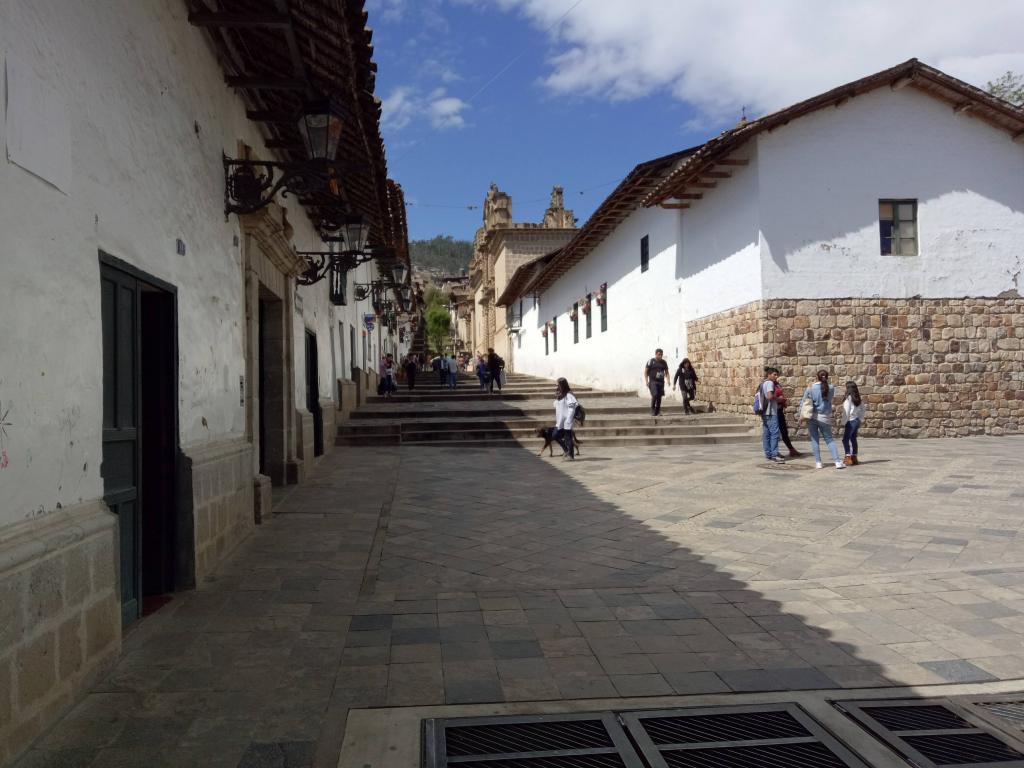
I eventually graduated to an Oppo smart phone with a better camera. This smart phone accompanied me on my travels in Peru. In late 2019, Realme introduced a new smart phone with a 64 Megapixel sensor.  

Cusco Peru – Shot using an Oppo. Photo courtesy: Ravi Shankar

Mobile phone manufacturers are constantly upgrading their cameras. The mobile camera war is hotting up. The image sensors started getting larger and cheaper. Samsung and Sony started investing in sensor research and development. Some mobile manufacturers collaborated with camera makers like Hasselblad and Leica to bring these cameras to mobiles. Around late 2023, I was looking to upgrade my smart phone and wanted a more powerful camera. There was a wide choice available. 200 MP sensors were available on some phones while others had 120 and 100 MP cameras. I did some research and found that most phones only shoot images of around 32 MP at the maximum. Usual photos are taken at a much lower resolution.

I eventually purchased an Honor phone with a 100 MP camera. I have used this widely during my travels and gives excellent results especially in good lighting conditions. Mobile phones are lighter and less obtrusive compared to a SLR. Most SLRs have also now shifted to digital sensors rather than film. With a mobile phone it may be easier to capture people in their natural situations. The trend today is to have one device that can do it all. Play videos, check emails, make online bookings, call, chat, capture images and video.

Capturing video has also become easier and many phones have image stabilisation and allow you to shoot in HD and 4K formats. There are a variety of software that integrate images from different sources and can edit and polish a video. Taking a photograph is no longer regarded as something special. Taking a video and posting it on social media is also very common. Many people earn their livelihoods through creating and posting videos on platforms like YouTube and TikTok. We have come a long way from dressing up in our best formals and going to a studio to get our photographs taken to capturing images, selfies and videos using our mobile phones. Only a very brave person can predict what the next hundred years will bring!

Dr. P Ravi Shankar is a faculty member at the IMU Centre for Education (ICE), International Medical University, Kuala Lumpur, Malaysia. He enjoys traveling and is a creative writer and photographer.

.

PLEASE NOTE: ARTICLES CAN ONLY BE REPRODUCED IN OTHER SITES WITH DUE ACKNOWLEDGEMENT TO BORDERLESS JOURNAL

Click here to access the Borderless anthology, Monalisa No Longer Smiles

Click here to access Monalisa No Longer Smiles on Kindle Amazon International